Breaking Hands: A Novel of the Dissembly of the Subjective
Substack / source: https://davidbussellarchive.substack.com/p/breaking-hands-a-novel-of-the-dissembly
Breaking Hands: A Novel of the Dissembly of the Subjective
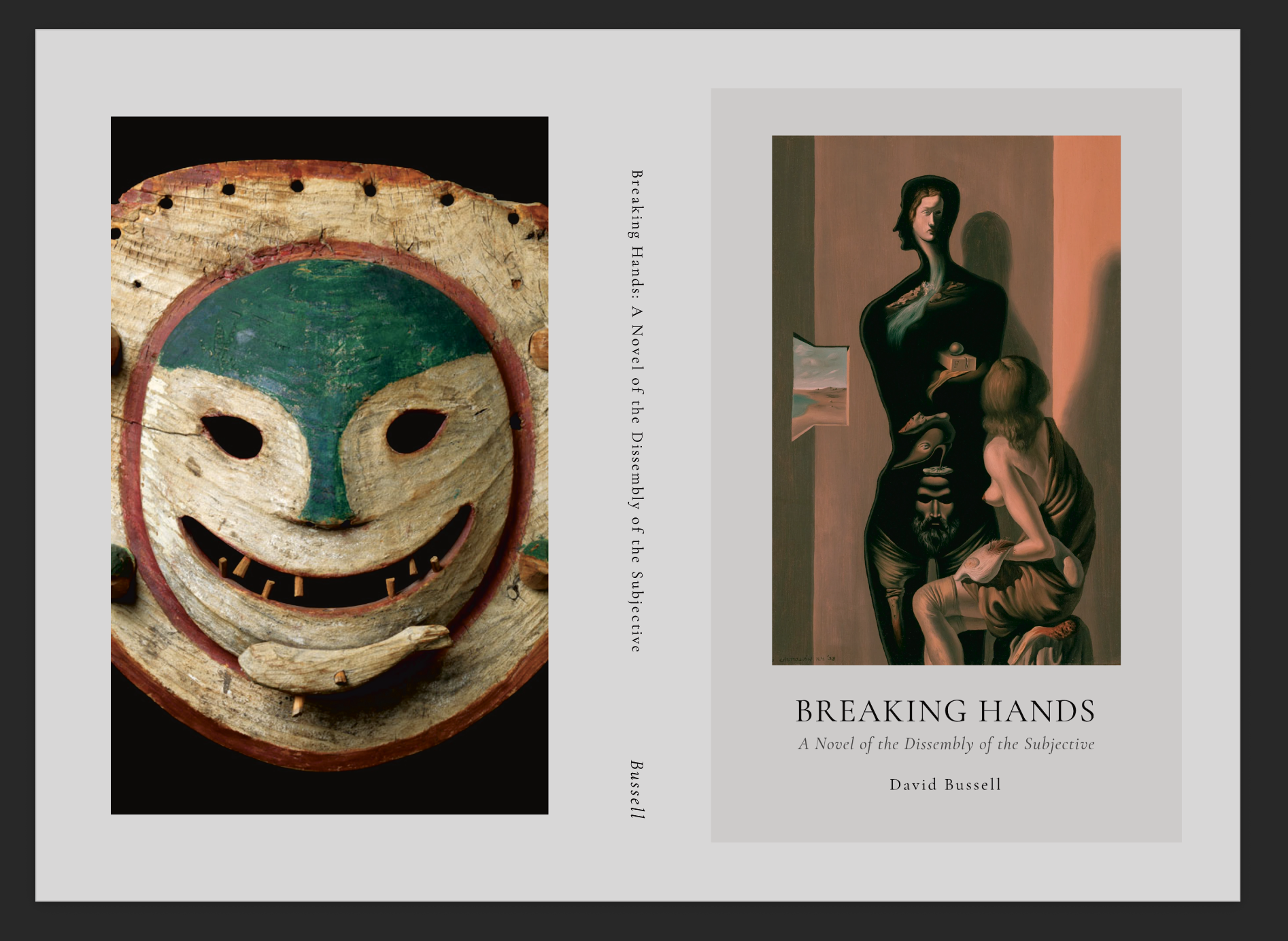
Part One, 1. Yvgeny Malkov
Conversely, Yvgeny could only care about love. Some saw this as indolent and lazy, but for Yvgeny Malkov, it was a practical transparency—one for such a man who saw the whole world in a state of emptiness and disarray.
He lived in a small apartment in the capitol, high in the building with polished wood floors—made before the war; the mid-century. Gargoyles leered at him from outside his window. Neighbors, diplomats from Greece, Bulgaria, with their windows and blinds perennially shut against the slanting sunset, which drew down upon the opposing stone high-rise.
Yvgeny’s youth was at its end. He stood over six foot—a well built man from years of hard labor as a young man. His psychology was also built thus, from sweat and strain against the force of the earth—iron and clay. It had made him resistant.
So when he drew close on his walks, to the spectacle of the world: the loose drunkenness of girls, the petty, sunken eyed political maneuvering of the capitol—he met it with a sort of magnetic repulsion.
There is a principle within cells, now well known, called stochastic movement. They roll the dice again and again in extremely crowded environments, initiating brief contact and careening off into microscopic futures.
It was the city itself which revealed, reluctantly, Yvgeny’s egotism. The sheer mass of it; the force of its subjects—the stirring of its milieu revealed time and time again to him the privacy of experience. Yvgeny considered, in the darknesses of his room, this world to be an open affair—one where the mind could and would be open to cosmological experience. Something far larger than the self. And yet, as he stepped out into the whirlwind of bureaucrats and career women, he was perennially reminded of the animal nature of humankind. That man was living within himself; perhaps poorly, desperately, reaching out to another. With a drunken scream.
He was 32; had worked as a chief of infrastructure for some time for a large housing firm stationed just outside the capitol. The position allowed him a fair bit of comforts, namely new books purchased just down the road; sufficient meats, fruits, and vegetables to maintain a healthy and spry physique. He excelled in the position in large part thanks to his substantial background in world philosophy and depth of applied scientific acuity. This was, in large part, independently trained—as Yvgeny gave short shrift to the universities of his time. He believed they made obedient and servile men, not independent thinkers and revolutionaries.
And Yvgeny was nothing if not a revolutionary. He took from his great idols, Heraclitus, Shelley, and the like, the absolute necessity of living a life of utter transformation. And he pursued it thus—intellectually, creatively, and at the root of his being. This, in turn, made Yvgeny something unclassifiable in the modern world.
He had met a girl named Holly, not two weeks prior, who’d left an impression upon him. On a street corner, after sunset—she on her way to a friend’s party; he wandering, recently returned from a stay in the southern provinces to write and set himself in nature and the warmth closer to the equator. Their conversation was pleasant if unnerved—in the darkness, a woman has to mind herself—but it struck Yvgeny that he had no ties to this earth. No fellows, no party of friends to which he could arrive and throw himself into mutual knowing. He was alone, spinning in an abyss. Contactless.
She bid him a good night; he did not even think to stop and pause and ask her for more. Tea, coffee, a later date. It seemed so trivial, two strangers, meeting and passing in the onset of a night. And yet it itched at him in the days and weeks following.
She was already imbedded. She had real relations, surely. Reasons to bring wine, exchange novels; even achieve some true excitement in sharing a night with beloved friends. There was warmth there. Yvgeny had caught a glimpse of flowers and two tall white candles in the window of the upstairs of the apartment she’d walked into before he trotted off into the darkness.
What awaited him was to come in the following week, where he stepped out into the late afternoon after a morning of hard, physical task—to witness a carnival in the streets.
2. Music & Mead
As Yvgeny set off, he grabbed his wool coat; immediately turned an idea over in the tongue of his mind. What was the nature of this milling interiority? He knew his, to a degree. It was cut with incessant creativity, questioning. The big questions—what it is to exist, the history of the cosmos. These were the things that occupied his time. But what of the man with professional ambition? The ones he saw in blue suits, starched, without a wrinkle, downtown before the presidential building, or the monuments? What about the woman pushing a stroller, in her oversized, gray, sweat-stained t-shirt?
He collided with it almost like oil running off water. They saw him; he noticed admiration in their eyes, perhaps for his physique, or the way he carried himself, his assuredness. The questions he asked provided him a certain sense of scope as to the endeavor of mankind at large. But what were their hopes and dreams? What were their inner natures?
This question possessed him, because it was at last the question of love and loving. And he had been disappointed. Yvgeny had met many beautiful women—but they were women with whom he did not match. The stunning athlete, Grace, with her rippling and sexual body. The tightness of her muscles, and their breathless entwinement. The affair, like all of Yvgeny’s affairs as a young man, was predictably short. They engaged in conversation regarding stellar physics and fate, human creation and the existential condition. She was pliant, responsive; fascinated. And yet, he inevitably curled up into something of a protective and mute stance as he realized she could not meet him but as a deeply interested interlocutor.
Yvgeny resented the sensation of feeling a tutor, a teacher—even to a woman fascinated by him; what’s more, to a woman who could care less about such questions; merely admired him for his strength, physique, or looks. Yvgeny was by no means an immodest man, but he saw how he appeared to others. This simply would not do in matters of the heart, or the affair of true love. Such a woman would have to meet him as a fundamental sovereign. Perhaps, unconquerable.
And he had met such a woman, at least, he thought he had. Her name was Gavriele; she worked high in the levels of government, advising the principal of disaster relief for the entire nation. Her responsibility alone was profoundly attractive to Yvgeny. He met her before he’d even officially moved to the capitol. They got drinks; she revealed to him she was a painter. She showed him carefully carved rocks in sunlight; a dog’s face in a barn, rolling purple and blue hills. She was in love with nature. Spending weeks on end in silence in barren, icy environments. Adrift on rivers. Unreachable.
Her face was kind, with long, curly brown hair. Tired blue eyes. Yvgeny could tell she was slightly disturbed by his mind. She liked it most when he talked about his art. The deeper ideas seemed to cut at her, like they were slightly beyond her reach. But she kept up as he spoke on about the nature of being; man’s entwinement with the birth of the cosmos and his primordial identity. He caught her, when he joked, smiling at him with deep, girl-like passion.
The first night, she took him walking through her neighborhood. Autumn had just begun to set in; the trees were rapt with yellows, oranges, and browns. She asked him about his past lovers. He understood she was trying to get a sense for who he was in love. They chatted about Gogol and the farce of life. She understood. Perhaps one day she’d simply walk out of the bureaucratic office; go back to nature. He heard the longing in her voice. They both understood the sense of profound responsibility. It was something made available to those with the ability to lift it.
As the night drew to a close, she abruptly threw herself into his arms and kissed him, with a long, passionate kiss. She welcomed him to the city, then walked off into the coming midnight hours.
3. Conquest
She was on his mind almost incessantly until they met again the following week, for a dinner in the corridor frequented by the young men and women who worked in the downtown districts of the city. She showed up in unassuming clothes; laid her bag on the bench across from him, and smiled as they conversed. She feared the new technologies he was working on; that were sweeping the globe. For a moment, he worried she might be judging him. After the dinner, she took his hand and led him through the winding backstreets to a park, shrouded in gloom. The only lights they saw as they climbed lit the gurgling, rushing waters which ran by the stone steps. At the top, they stood under marble pillars and surveyed rooftops before them, smoking with heat. He kissed her repeatedly. She told him she’d be away on business. He hadn’t seen her since.
The streets were crowded for the festivities. Vendors were setting up carts to sell their wares—clothing, jewelry, food, liquor. Yvgeny strolled past in yellow lensed sunglasses, his eyes prying the crowd. Glassy eyes, women chattering, gossiping, men yelling as they jostled. Some climbed to the rooftops of row houses bathed in hazy sun and yelled down below. Others climbed atop bus stop roofs; men were singing down from balconies of burlesques. It was quite an ordeal.
People flowed like currents; before different musical performances, the streets were entirely blocked off. It was like an artery or an aqueduct. Yvgeny quickly decided he would have to go down the side streets to see the smaller performances.
It appeared that women at large had the same idea Yvgeny did; what’s more, the whole district neighborhood at large. Men and women alike seemed to take the occasion much more for sizing up their romantic prospects by the bottle than for the musical performances. It seemed to be more background noise for them, as they drank and flitted about in outfits which made it clear how they wanted to be perceived. Short leather skirts, turned up collars. It was a pure theatre.
Yvgeny took it in from the outskirts of the bunched crowd; listened closely to the music. He composed himself; found it refreshing to hear talented, conscientious, sensitive musicians of any kind. He detested the loudness and brutishness of the main street. The speakers thumped and crackled with a deafening roar. Drinks spilled; the crowd threw themselves into a frenzy at the sound of popular songs. It was zoo-like.
Yvgeny saw several clearly sensitive and intelligent women as they walked past; engaged them in brief conversation, and often silent mutual observation. He could always see and feel these women as they saw and felt him. By their curious, inquisitive expression; their clearly open eyes. It was something like how infants express, even in their earliest form, the destiny of their minds through their eyes and the movements of their faces.
But these conversations and encounters amounted to little more than molecules shooting off of one another. It would be pleasant, even somewhat intriguing. One of the girls, tall, with black hair, whose face reminded Yvgeny of a brief fling in college, furtively snapped a picture of the scene—embarrassed to be caught documenting her afternoon. Yvgeny smiled at her.
Before he knew it, he would be back home, thinking about the day. Drinking soup and ruminating over his last series of lectures. He’d bind them into a book. He’d spent the first week walking incessantly. Mapping out a mirror image of the city in his mind before he collapsed in exhaustion. Had barely made a dent in the northwest sector. He’d moved there not knowing a soul. This woman Gavriele had become the first. He wasn’t sure if this was an insane idea, or simply the next rational move at this phase of his life.
He needed even the intimations of culture. And the museums and libraries of the capitol could provide him with that. He even worked at the national history museum as a youth. He’d take the train in to the city each day to document artifacts in the archive. And in the evening, he’d meet up with a girl he loved—from the summers when he was an adolescent. They went to a camp in the mountains where they studied endangered animals together. Tents by horse graves on an old abandoned racetrack overlooking the little, rural town below. With its twinkling lights. They’d hold hands til dawn and tell ghost stories with their friends on a stone garrison. From the civil war. He kissed her in her family’s row house as they watched movies. Held her hand a couple last times as they watched a film in an art museum. She’s married now. Opened her own restaurant, far away, by the gulf waters.
4. Reflections
You must understand, all of this to Yvgeny was like through glass. His formative romantic encounters—of which there were many—were precisely that, formative. And now that he was an established man, existentially and otherwise, there had been a prolonged silence of encounter. Grace had been one of the last women, among several others. The waters of his life which ran so strong in youth with girls—he suspected—ran as such because he was so lost and unformed. He was thrown into the world and mixed with it without his true consent. Now, as a man, for better or for worse, he’d achieved a fair degree of removal by choice. Much of mass life for Yvgeny was foul. And yet, it drew him out of the workday coffee shop encounters in the downtown district with women in dresses and suits. And it drew him out of the bars and the theatres of the weekend culture. He simply had no patience for it anymore. He’d stopped drinking almost as soon as it had been legal for him to start—not that legality had stopped him as a youth.
He saw it as empty, a charade. Sitting in the side street music show the day before, he’d heard the soft music of the performer. He admired the display of sensitivity. There was art in the capitol. Not just noise. But he couldn’t stand the pomp and circumstance around it. The drunken girl, grabbing the microphone, enjoying the attention as she screamed into it. He was aware of the egotism he walked with. But he couldn’t stand being drenched in it, nonetheless by another’s sense of self evacuation. Was all they were tiny centers of the world? Was he?
Perhaps a pointless question. But that’s what each constellation of the self was to Yvgeny. A woman’s desire for a child. A man’s for fame and fortune. And here they were, gazing into the eyes of another, in a surface attraction, with no knowledge of what was below. Would there be more, or would it simply end there?
Gavriele had simply disappeared, perhaps interminably. He wasn’t sure what if anything she wanted from him, or him from her, for that matter. And it felt that way with all of these girls, as far back as he could remember. Were they just looking for a husband? That thought felt unbearable to Yvgeny. A utility? Certainly, then, he’d be on his way. And no matter what he said to them, or they to him, would it really ever truly be the truth?
He approached her because he found her beautiful or interesting. Who’s to say what she saw in him that made her reply, or who he was in her eyes? Months; years could pass. And all the while, he could never really know how she truly saw him. Or, for that matter, if she ever did. This would be something of a horror; in actuality, the entire history of literature, art, and language itself. The history of human communication. The attempt to externalize not only the nature of one’s own characterological form, but the essence of one’s relation to another.
That we were given minds, ants, cats, sheepdogs, raptors—hand, claw, pen to paper—and that language unfolded as a development from the very evolutionary technology of the human body to give rise to the possibility, not only of articulation, but articulation that could persist in time by way of paper, canvas, and recording. It’s the same intelligence that remembers a notch in the antlers of a stag long after they have fallen off; the intelligence that articulates Epictetus’ intuition that we are actors in a play written by a master Playwright, who makes the first chess moves in space and time, between fields light and dark, phenomenological matter and otherwise. Where molecules make contact but for a moment or a measure—this being, in Yvgeny’s understanding, something of what composes love in a human delight: the sheer persistence of chosen proximity; even perhaps forced by forces greater than our knowing or immediate conscious choosing.
The same intelligence which articulates the human being cloak we step into, and say our piece through an inherited skull. We, the world’s Hamlets.
And this measure of road was Yvgeny’s soliloquy.
5. Gutters & The Indivisible Man
Yvgeny trudged through the capitol streets, with a bipolarity of solemnity and joyous lightness. Some days, his flesh felt like an iron stone; others, he lilted through the commercial avenues, singing. Certainly, this had something to do with his chemical temperament.
On the days of lightness, Yvgeny barely thought of women. Their eyes drew to him; in them he could see and feel their sorrow, isolation, loneliness. Not unlike his own. Almost at bequest to his manic joyousness. They desired the quality, perhaps not even the body from which the quality sung. Not the least his actual soul—knowing nothing of the thing itself.
On the days of iron, all Yvgeny could do was bind himself to his bed in silence. Close the blinds. Read Turgenev or Lermontov. All he knew of the sun on those days was how the shadows hit the wall. Nothing of the heat, or the perils and thoughts of the passengers down on the streets below. He saw all sorts, there, from his desk window—beggars carrying unmarked, dirtied burlap sacks, old men and women wheeling themselves through the streets, supported on canes by sons and daughters; young women on their evening runs after work at the embassies or official posts. His eyes lingered, of course, on the young women.
He lived on a street mostly populated by diplomats; dotted by groves of trees and early buildings which held the ceremonial, ornate sensibilities of a dead age. Lions’ faces carved into knockers, angels in the lining of the walls and balustrades. Each building an expression, an insight into the psyche and myth of the artisans of the age, who carefully moulded each crown and floor into works of practical, functional, living art.
Yvgeny wondered at this; was quite glad to inhabit such careful sophistication. It mimicked his internal attention to detail. He desired to be surrounded by reminders, however ancient, of the human capacity for attention to being.
The modern world did not reciprocate. Women staring into digital screens. Pouring themselves into carefully cultivated images. Words and dresses selected specifically for the purpose of the impression they would make upon others.
Yvgeny lurked and lived primarily in the depths. In the solipsism of the thought and feeling one receives while coiled in warm blankets staring up at a lazing ceiling fan. Sometimes, for weeks at a time, he would not leave his apartment. He took comfort in the locked door and the silence, believing he understood Baudelaire’s opiated complacency. He could wander in the warm dream of his mind as the world went on bustling about outside. Craft long, winding epic poetry. Throw himself into characters, visions, dreams; reflections upon ardors past, lost, yet to come; conjured up in the sieve of his mind.
This was the gift and the curse of the contemplative nature of Yvgeny. Anything could be replaced by the ideal. And the ideal itself was, by its very nature, supreme to worldly affects. In dispositions such as this, the life of the mind becomes the supreme artifact of existence itself. The diamond others seek in the world and its affairs; the gold besides. Yvgeny never understood such fascinations—precisely because he was swathed in the blankets which constitute the very disposition of a man: his charms, wiles, and ways besides which make themselves vaguely; even mutely apparent to the world around him. He long suspected that this was what girls saw within him and upon him as he stepped out into the daylight—the traces of this, his inner life.
And they were drawn to it. It was clear magnetism. Each time he set foot on the winding roads which took him to the gymnasium, the bookstores, the fountains; parks; the square overlooking the titanous buildings of political industry, it was the same look—the same glance. Longing, like a strange meteor had passed carrying the goods. They could sense he was not a part of their world; that his mind did not—perhaps could not—inhabit the affairs and concerns which dominated their material workings.
And they were right, at least partially so. Yvgeny felt a native disgust to materialism and materiality, even as he willfull and necessarily indulged in it. Face creams, fresh fruits, steaks, berries, nuts and seeds. These were the very nourishment that fed Yvgeny’s mind like lightning sprigs of mint as it rocketed off into its forays and reveries into the history of the birth of the stars, poetry, painting, and the character assembly. All of Yvgeny’s works were built on the back of the body which he carefully, meticulously maintained. Each drop of food and water was dedicated toward the task of allowing the fullness of his very consciousness and soul to call itself forth through the brain. The fat, protein, and carbohydrates, the lipids which fed the tissue of the delicate flesh and pink matter of the suspended device locked in a cranium box which he painted his world with. The walls of his apartment; the books which stacked up with increasing imperial charge against his walls and bookshelves.
It was a formidable assembly. But it all came from and returned to a material source. The very flesh, blood, and neural genome of Yvgeny; then into the papers which symbolically cast the die of his body yet again into the world linguistically. A ceaseless chain of transformation and reproduction. The food turned to excrement in a ceramic bowl. Ideally, productively.
This machinism haunted Yvgeny most viscerally when it came to women. He wanted her; she wanted him almost necessarily as a natural outcome of the universe. A bi-sexed species. What of his soul? Hers? And yet he examined her face and body. Her waist, hips, breast, cheeks, eyes. Beauty was, for him, surely defined externally first—at least as a threshold. Could he dream of loving her? Haunt her with longings? Plenty of beautiful women passed. What was he looking for?
6. Fate
I don’t know if you, reader, believe in fate. But as Yvgeny gestured to Epictetus, we will continue to examine the matter. Some say that we are born upon a coalition of stars; that when we hit the flesh of the earth from the mother’s womb, our life rightly begins there—our time starts as individual creations, tumbled from the belly and rock face of cosmic birth.
This flash of time is the map to our constitution. Of course, we can expose this by ripping open the body anatomically and examining the parts, as if in a mechanism. But what, and who, decides the composition of the flesh? The speed of the neurons; the organizational sophistication?
Some say this is a higher power. Chance. The force of aeons exerting evolutionary pressure upon the genome. Energetic scarcity and availability. Statistics in reproduction.
Others say it is fate that makes us who we are; accordingly, it forms and shapes the trajectory of our lives; our encounters; the procession of our souls through space and time.
Yvgeny was such a man of fate, even as he was the most impassioned and fervent scientist. This caused some, but not all, of his internal confusion.
He had examined the trajectory of the grand march of known cosmological time; arrived where a great deal of committed scientists arrive—an insufficiency of knowledge. Needless to say, we can roughly trace the whole path of the universe—which is to say, the how and the when. But, truly, who, what, and why?
Once Yvgeny adequately mastered the scope of the affair of existence as a movement, at least as it related to affairs on earth from the first explosion of heat and movement, he wrestled with this question. What was behind the appearance of creation? Here, many turn to different forms of god. For Yvgeny, he had to know. Faith wouldn’t necessarily be enough, unless knowledge was fully and truly exhausted. He saw it as surrender—which, as many say, it truly is.
He wanted to know the character of existence. To light a match with his mind and illuminate the hidden face behind the mask of phenomenological affairs. The character of the force of energy behind the disparate wax statues of form which populated his life. The faux Roman institutional buildings. The birdfeeders and their cardinal visitors. Grace, or Gavriele besides. And certainly, himself.
He was, therein, certain that there was an entity behind creation, which could be discerned by the behavior of the universe in motion. Time gave us the necessary tools for detective work.
7. The Boring, Regular Everyday
Yvgeny had spent a fair portion of the last days of his youth testing this hypothesis. He moved to the southern provinces on a whim, to accompany his friend for a year of exploring the balmy heat, palm trees; highways that led to beach towns on the coastal islands of oceanic sprawl.
He came expecting adventure. What he got instead was a cycle of epic poems, the onset of a series of lectures, a novel in the form of a modern odyssey of artifacts, time, and memory; little to nothing else besides. He’d stroll the cobblestone street promenade, or otherwise they’d go on road trips outside the small city to the beach island, passing factories and abandoned gas stations shrouded in jungle; comically large tropical leaves. Insects sweated and screamed at pitches he’d never heard before—even overwhelming car engines.
The women he met there—however good natured and cautious—were mostly uneducated or deeply religious; not infrequently, a combination of both. This made Yvgeny actively, immediately incompatible with them; they in turn viewed him with a combination of suspicion and fear. He cursed the city as he drove away—that he’d wasted a whole year loitering in a wasteland. By the end of it, even wiping his ass was exhausting; a labor. He’d take the quality of the mind—and leave the rest behind. The south gave him no comfort; certainly did not further his hopeful intimations of companionship or belonging.
He spent days on the rocking chair on the front porch. They lived by the park; girls with beach towels would walk by; men would laze on the fields, playing ball, chatting with the girls sunbathing beneath trees. It was idyllic, certainly, the scene of it all. The town was somewhat ghostly, being built in the 18th century—many buildings from the time still remained intact. And the tropical quality of the place cut it with a heat of urgency and sexuality. Warm bodies.
But Yvgeny never felt further away from life, or being met integrally. He would study and speak to lizards who crawled up the wood paneling of their rowhouse; listen to the birds and insects as they wove invisible pathways through the brush and branches which hung over the porch awning. Poems poured from him like water, about the ancient craters from which beings leapt; were made and unmade. Being so close to the equator, he felt close to the hot passion of existence itself—even in the face of the profound lack of existential communion available in mankind there. The long poem was meant to trace man back to the birth canal of existence itself. The first stars, mud, single celled organisms… swimming in a dark, black ocean. Screaming violently, without eyes.
Now let me interject a piece from Yvgeny’s notebooks to help illustrate my cause.
III. Reflections of Amber in Remote Times of Richmond
Memory for him was grasped in a sunset over a tar roof in Richmond, Virginia, interspersed with news of a 7.6 magnitude earthquake in Indonesia; cut by a listing of a 1961 Sandy Koufax baseball card. It didn’t make sense. He thought there’d been a message from Virginia, an old schoolmate, but it was a salesperson. A notification from some time ago. An entire community had been tagged in it.
The sensation was being immersed in entangled fugues of passion and resurgences of long dormant feeling and emotions fused with images which intercoursed with contemporary emergences of fields of information. Images. Data. Scapes. But these were not locally confined. They coursed and surged across a global network of simulated images, text, and signs. The field itself extended somatically outside the body and the physical limits of bodily touch and sight into interminable abysses of memory and digital space.
This immersion was eternal. It rent the contemporary moment from both sides. He walked past the Bull & Jones Street furniture and antique shop just past Forsyth Park in Savannah, Georgia. Starting at a jade amulet with an animal face on it. Not a discernible animal. In his ear blared a song by a rock band, The Strokes, in a preserved audio recording from 2003. It was stored on a cloud server, like remote amber. The color of the light reminded him of a decade prior in Chelsea, New York — where he boarded train on a certain trip back from visiting a girlfriend.
It wasn’t the color. It was the tone of the time. Like an elastic muscle. The tone itself stretched over the color of the light and her twisting face as he turned to descend the stairs of the station.
He fell back to Richmond. It was this girl, Grace. She had blonde hair. Photography student. He would visit his ex-girlfriend from high school, Anna, in the photography building. Grace was a friend of hers. They would host these parties in a rowhouse with a large, circular balcony in the front and a rooftop in the back. You could climb out of Anna’s window to get on the roof. In her room, she had all sorts of memories from her life that far. Still quite young. High school, middle school.
Again, the light. There was a photo of him, back when he had long hair, drinking orange juice and vodka, leaned up against the island in her kitchen. Light streaming in. The girl who took it, Sasha, had an eye for the camera. Each time she managed to grab a bit of what was steaming inside of him. It was like a lost panther trapped in a body and a world that had no logical conclusion or understanding to it, to him. And as such it began to lacerate the walls of its cage.
The parties were beautiful in an alienating way. He’d let the girls put makeup on him because it didn’t matter how he looked. They had a dressing room in one of their apartment hallways. He found one of her roommates, Emily, or was it Rebecca? Ori. She was quite attractive. But she lived in a different world. A painter. Colors on the canvas, tones that she rigorously perfected. Very devoted, classically religious girl. He’d play some music, late enough into the night. Small chatter. The dark hallways of the spiral staircase up to the girls’ apartment. And then there was another party, at some sun stained clay building. All art students.
He’d walk, building to building, shaking a bottle in a bag. Singing to himself. Dylan, Iggy Pop. Lust for Life. The No Direction Home soundtrack. Television — Marquee Moon. Or something else from that album. There was a lot of post-punk in those days. Really angular music that mirrored the alienation. The school itself, anything else, didn’t really seem to exist but in a dissociated dream. The accumulated weight of history’s violence had severed him from his body. He walked, like the legless, armless devils he’d draw several years later as the degree culminated. But even then, it was a different time. The weight of the shadow was dissipating, gone. Then, it hung over him like a massive stone. And he had no idea what it was.
Cloudy, stormy nights. Richmond lit up like a false Paris. Bottles of vodka and port wine. Drinking with T, T-Bone, but T for short. They’d sit on the steps of the ABC store on Broad Street and just down the bottle until T stumbled away, mumbling and laughing to himself. He was between Indianapolis, Alabama, something about his kids, his kids’ mother. He’d board the Greyhound on the far side of town and eventually, probably disappear. David wasn’t so sure. Neither of them seemed to exist but as apparitions. Students walked past. As the nights set David would head up to the steps of his apartment at 320 West Grace Street and disappear briefly inside. Get naked, sit on the mattress on the ground; write what was then called Quelle Connerie. Some bastard abbreviation, a condensation of all of the thought and voices which tumbled from him. He effortlessly changed clothes and personalities back then. He wasn’t anyone. He’d let girls give him their dresses. Walk to class in them and give encyclopedic references to professors who couldn’t believe that the words were coming out of the mouth of a nineteen year old. Flirt with the cute blonde nurse in the psych ward about Kierkegaard.
As he walked to the next film showing, some new French art film with a panel, it was abundantly clear to him that he was not the mad one. The world was so mad, so fixated, so delinquent in its possibilities — that he was, in relation, the drifter, the fool, the madman — simply because he had refused all of it. He couldn’t accept the property of any simple, hard relation. This was before he’d begun any of his work on cosmology and astrophysical processes. The hard problem. It was all translated then into cultural studies. Sontag, Stuart Hall. Beckett. There was a lot of Beckett in the early plays. Chekhov too. He didn’t know he’d return to it all later, long after all of the science and philosophical process. That this world is a theatre of masks.
He chased those masks in prostitutes, whom he sought to befriend. They’d just look at him strangely, like an interlocutor from another planet. He chased them in waitresses in the Third Street Diner. Closed now. And in girls who perhaps were most like him wherever he was. Usually artists. Maybe readers. It seemed as though the gap between him and them was always widest. Partly, he thought, because they were coming at the same thing superficially, from entirely different grounds. Art to him was something that had to explode through him to reveal an ancient abyss. He wasn’t even there. Obliterated in the process. A stain in the ground of Time. A hand reaching out through the ripping fire of a distant constellation for someone else. Anyone. And there was the drowning. A deep, sinking, singing primordial fear. Where was she?
Grace was standing outside the 7-11 when he saw her again. This time she was alone. Another cloudy afternoon. Across from the Science Museum and the McDonald’s. She smiled when he saw her. He knew she was attracted to him from Anna. Anna had showed her one of the pictures of him. Anna had taken this one. He was wearing a pink sweater; something approximating despair on his face. “Who is that angel?” Anna told him she’d said. This was an opportunity. They talked for awhile; he realized she’d been in and out of some relationship. There were plans to meet up. Never realized. Four years later, he’d be sitting by the fountain in Monroe Park on a hot summer’s day drinking champagne from a coffee cup; blasting Johnny Thunders and the Heartbreakers at full volume in his headphones when he met a pair of roommates. He fell in a sort of distant, forced love with both of them instantly. It was a reprieve from the hot sun; sitting there, behind sunglasses, feeling totally gone from the world, the earth, the affairs of summer schoolgirls — prancing to and from classes.
He and Joan had sex for the first time in his apartment, this time more downtown. She brought handcuffs in her purse after they’d casually joked about it on their first date at The Village Diner. The sex was great. She was studying metalworking. Another artist. They shared some music taste in indie rock. Beneath every conversation bubbled the volcano of his real studies and character. He met her where they could meet. Her roommate was… it was Ani. They kissed in his bed. She didn’t want to have sex yet. She wasn’t sure who she was or what she wanted. She was a sensitive woman. Listened to Russian folk music. No declared field of study.
She reminded him, both of them together, of Alissa. The girl he’d first met after Grace fell through. It was toward the end of all the madness. Before he left and came back. Living in the mattress on the floor apartment. She was a sculptor. They’d do nude performances. Based on his plays. They’d strip the words and run the movements. Maybe more Pinter and Albee influenced? She’d smoke weed and eat pizza in her apartment. They’d drink coffee, wearing sunglasses, outside the coffeeshop in front of the performance arts building. He’d finish some work in his notebook on the new play; they’d casually flirt. She ended up in Arizona, doing glassblowing at some local studio.
All of these memories dispersed like shards of glass, arrows, rays of the sun. But they themselves were contained in the perfect encapsulated images of the girls. The Scuffletown Park where he’d meet them. They’d laugh, flirt, mutual seduction. This cycle of women who never truly saw him, never truly met him where he was. And thus, this cycle, incredibly brief. Fulfilled only in the moments prior to the meetings; the first and second sex acts, the thrill of the unpenetrated unknown. They were always literate. Olivie. Studying nursing. Science. Towards the end. She had stacks upon stacks of books in her apartment. Nabokov. Woolf. He wasn’t sure how many of them she’d actually read. But she engaged him authentically on the existentialist questions. Camus. Sartre. Her dad had loved them apparently. A New York punk, met a ballerina.
He dated a blonde ballerina back in the first run of years. They were both nineteen, at least from what he could remember. The only girls he seemed to meet then, outside of the art school girls, were strippers and ballerinas. He assumed it was because of the intense physicality. A mutual emanation. So few of these relationships were meaningfully consummated. But they marked authentic moments of real breaks in the monotony of life, of time, of the arduous trek through a decade in that city. A perfect example… Emilia, the theatre manager at the local playhouse. She was prepping for the Nutcracker, in the last years of his time there. The whole thing was two weeks long. Sex in her apartment, the old Tobacco Lofts downtown. Ridiculously high hallway ceilings. Residents just left their trash on the floor outside the front doors. It reeked. Bending her over the kitchen stove after some pasta and wine. Stacks of unopened bills. Sleeping in bed with her blind cat. Overlooking the river.
When they’d met, the first night, he was cooking. He got a notification on his phone. They went to the benches by the river. Short walk from his apartment. Took turns sitting in the tire swing and getting to know each other. It would have been idyllic but for the real depth that seethed within him. Dying to be met. He knew that first night they lived in different worlds. Makeup tutorials and Menippean theatre. They were, remarkably, the same thing — from two different vantages. One couldn’t get in on the joke.
She was a nursing student who lived next door in the apartments. There with a couple of her friends she’d met in the program. They met for the first time in the hallway. He’d seen her from behind, from what he can remember. Her blonde hair streaming down; her figure from the back. She must’ve been around 5’5”, 5’6”. He was instantly intrigued. She heard him say hello; she turned as she was entering her door. Two bags of groceries in her hands. Her face looked like she was raised in the mountains, or on the farm. Fresh, young, without any traits that suggested extremity. A kind of rural health. She introduced herself as Heidi, from Elkton. Town of less than three thousand people in the western mountains. He knew almost instantly they had very little in common. Her friends were inside watching TV. She introduced him as their neighbor. Soon they were inviting him and his roommates over regularly for dinners and movie nights.
He made it clear he wanted to take her out; she assented. They went and got sandwiches from an Italian deli by the river and sat in the park, eating. She didn’t feel comfortable around him. She knew there was an entire sphere of his life, his body, his being that she wouldn’t have access to. Couldn’t. Not with farm dogs, not with pumpkin pies at the Elkton farmer’s market, not at the NICU. He thought she was beautiful. He posed questions, delicately, around the edges of where his life and hers bled together. Maybe vaguely philosophical. They went somewhat unanswered. The leaves fell around them in the small city park, sandwiched between Monument Avenue and the Main Street. He realized that their first real date would certainly be their last. He would bring it up once or twice more then let it fade out.
It started pouring. They hurried back to the apartments. He decided to linger outside. Grab a bottle of red wine from the corner store. Lombardy Market. Put it in a paper bag. Two missionaries from the Mormon Church down the street, over by where he used to live. They recognized him immediately. Two beautiful women, one brunette, one blonde. They knew he tolerated their message because he was attracted to them; he knew they tolerated his vague flirtations because there was a chance he would convert. They asked him if he wanted to walk. He drank the wine at the park while they talked about their religious text. There was still water on the ground. The blonde would make eyes at him. He wanted her. She let him know they didn’t date. They’d likely be shipped off to Africa or Europe next.
He’d walk the city streets, feeling further and further away. The blondes reminded him of the first ballerina, he thought her name was Sarah, or something like that. It was Anna. There was another girl named Hannah. Another ballerina. And later there’d be another, Kiley. He drove her to McDonald’s one night. Met her on the stairwell of the apartment. She blushed. The gulf was immense. All members of the Richmond Ballet. Young girls, considering school, hoping to make it as prima ballerinas, somewhere. Someday. Injuries would happen, maybe something with the family. As far as he knew, none of them did. Anna wore a pink dress on their first date. He saw her on and off for a year. Even a couple times when they both briefly moved back to DC. The whole time it was like he was talking through glass. She liked him. He wasn’t entirely sure why. He didn’t feel like she ever really knew him. But maybe whatever she knew was enough.
Despite it all, these were the things he remembered. Interruptions from the monotony, the solitude. The work. The girl, Skyla Blue, that swore she could hear voices in the radiator. Waitress just come down from Hell’s Kitchen. Or Tish, waitress at the Jefferson Hotel. She was beautiful; the sex was fantastic. But he couldn’t speak to her at all. The moments before and after sex were like shouting across a gulf. With no shared ground. She was high school educated; had come from Williamsburg looking to start her life. After that, the girl Leah and her twin sister at the fair. He and Leah went on the carousel together. He invited her back to his place. Her sister said she shouldn’t go. He’d been seeing one of their friends — only for a week, what really amounted to one long stay at her apartment. And the other Leah. A tattoo artist. Long nails. Then there was a metal girl from outside the city who came over, sick as a dog. He couldn’t remember her name. It was so brief. They made out in his bed. She listened to Cannibal Corpse; had a pig skull in the backseat of her car. Apparently her parents were farmers. He never saw her again.
There were moments… shades. After a long day in the cemetery, staring at the river, beneath the shades of the trees, writing fragments, he’d heard from Shelby. She was studying advanced mathematics at the university. Not the Shelby who would later go on tirades in her apartment wearing a slip and drinking coffee. That Shelby had apparently continued a modeling career. Still in the city, maybe. Like Amara, in Thailand, on some Manhattan billboard. Amara had ended the same way Shelby did. They looked in each other’s eyes, naked, him on top of her. No physical union. Amara was the time of Kacie. The broken time, between his two, even three periods of years in the city. He met Kacie at the cafe they worked at together. He threw himself at her shamelessly. He bought her roses; went on about Pessoa. She offered Cortazar. She lived in Peru for a few years. Then became a fellow in International Relations. They made out frantically on the balcony of her mother’s apartment in Arlington. Then walked her dog. That was it. But we can’t touch those years. Or further back. Not right now.
No. It was the quiet, numbers-obsessed Shelby. They decided to meet at a bar that night. He threw a white t shirt on and walked several blocks to Broad Street. She was there. She had sent him a picture that day. Her beautiful, slender body; supple breasts. Wearing nothing but cowboy boots. When he arrived she was there with a friend, who shook his hand, smiled, and departed. He could barely remember the conversation. They both drank. But it was seamless. Making out under the overhang in front of his apartment. Falling into each other. Sleeping together. No sex, not yet. She wanted to, but he wanted to wait. Get to know her better. The next week, she messaged him. She couldn’t. Not right now. So he moved on.
A girl named Kristie picked him up. Film student. She’d go on to Greece; work on starting her own film company in New York. It was an old white Volvo. Playing Future. They both loved Future. To her apartment. Meeting her roommate. The plants in her room; the long mirror near the door she saw him kissing her in. She had been raped years ago. She couldn’t orgasm. He wasn’t sure how many times it had happened. He left the next morning and grabbed coffee at Joe’s Inn. Listening to Jeff Buckley.
It was a whirlwind of affairs. Dara in the early days. He stayed with her for some time. It was awkward, ugly. He didn’t want to remember. Her roommate and the roommate’s boyfriend. He and Dara naked together, playing. It was the culmination of a madness. A sheer attempt. He drew himself back together for two years, started a career as a consultant — suits, business trips, Chicago — and dove right back in once he’d exhausted it. Finished Quelle Connerie. It turned into Distruments. Plays, fragments, poems, essays, reflections. He was proud of it. There was a solar eclipse in the summer. Same cycle as this one now.
The girl Collette. Working in one of the oldest movie theatres in the world. Met her in a Gothic Literature class. They always sat next to each other. He spent the first half of the semester flirting with her. They slept together once. It was awkward. Gross, even. He visited her a year later at the movie theatre. She showed him the basement. It was a mess. They hugged and he left.
He finally graduated, right as the whip came down on the world. The last girl. After two failed relationships, one including Olivie the nurse. She loved to send him pictures. Black lingerie under her overcoat. Orgasmic sex. The last girl, even after her, was Cate. She came all the way from Lynchburg to meet. The sex, her screaming “it’s yours”. She’d just visited Berlin. Apparently she saw some of it in him. They never talked about German Idealism, or anything like that. She left. They’d chat briefly, send jokes back and forth in the months that followed. He never saw her again. The last image he had was a video she sent him, masturbating in the bathroom of her old childhood home, to a picture he sent her. After that, the city was over.
It was a mere shadow. A memory that reared its head in the places that followed. The useless degree. The stray books of poetry he’d picked up. A fall before the corrosion, listening to Iceage’s Plowing Into the Field of Love. Finishing what had become a seventh, eighth, ninth volume of work. Tipping into cultural criticism, epic poetry, short stories. Building something. Writing on napkins. Fasting. Meeting Olivie after their Society and Genetics class in the Harrison Street Cafe. Her pink hair. Her beautiful round breasts; his hands around her waist as her open mouth and closed eyes worked against his tongue. December. Seeing her again one more time in front of the movie theatre with her best friend, Julie. Just wandering around. He’d come back to the city one more time, after his graduate degree. Just to stay in some place. He’d message Olivie. This was just before she would eventually get married. Just to see if she wanted to catch up. He never heard back, but he knew how it felt for her, for both of them. It was a world that happened in a wind. Things had all fallen together and fallen apart. And they made whatever sense they did; the sense was the feeling that drew him in from the depths of the collision of the modern objects of life, the digital futures, the physical pasts, in his fingertips; in the chemicals of his mornings, his sight. And the caresses. The caresses which emerged; reared their heads like chimera in the light of his days; the dark of his nights, which drew forth the faces of these women from the abyss of the time of the body. And he relished them, even years later. However incomplete. Together, they formed a composite, a whole. A whole of a decade of seances, dalliances, romances, which cut across the city and all of its exits.
A map, like in Carax’s Boy Meets Girl. A map of real events, real women, real touches; real moments of descending into the subliminal, the territory between two people, and seeing what third thing could emerge. He was still so young, raw then. These girls did not; would not meet the man he would become. They met the boy, the young man, still not entirely, fully himself. Not fully entangled with the powers of his being that would become and mature. And in doing so, this very early solution made such meetings possible. For what he was was still within him; that it was so was that these meetings were fugues; pages, moments. Brief almosts. They came and went like dates to movies, walks up the hill at dusk, past the lake, kisses at the gate of the school. Messages sent; meetings arranged. Lamplit nights in a girl’s room, just before she flew home to deal with her heroin addiction. Like bees in a massive garden. They went everywhere; each dispersed on the path of their private destiny. Briefly touching, from life to life. And something remained. Something profoundly real. The memory of the touch; the eyes meeting eyes; her breast in his hand. The synchrony of the breath. And the wetness of her body. It seemed to have been sopped up in the very nature of his blood; entangled in the crisp of his genetic memory. It didn’t seem to reside anywhere but resurge up from him, like the ancient animal and body of heat and light that he was. From the closest step, the step of everything that inching forth of life, of light, had done in a decade’s time. And it was warm. Warm in his stomach, warm in his heart. Warm in his blood.
Understanding this historical precedent, Yvgeny understood quite well the obstacles in place for the kind of intimacy which he desired with another. But this did not stop him from trying, or from fully and completely desiring it. He’d known half measures—platonically and romantically alike. But he needed something that would remain. Not something fair-weather, in a matter of months or years’ time. Something that would burn at strength for the duration.
In reality, the question that really possessed Yvgeny was existential contact. And his boundaries were wearing by the coalition of time and hunger, the thirst for connection. He recognized this movement, a pattern from history. It corroded until it burst open in a human expression. Going to the bars, letting his eyes wander. Maybe drinking. Walking. The facade of his proud nature would tumble and he’d propose. Maybe something like begging. Ask. At the pulpit of beauty or desire.
There was a girl at the bar, back in the southern city. She arrived in an old style sundress, with no cleavage. She picked him out immediately, and approached him with the courage of what he’d later understand was a married woman. Her interest was obvious and strange. Immediately wrapping him in a discourse on salamanders and youth as they played pool with his friend and hers; intimations of her sitting on his lap.
This was by now such a foreign sensation to Yvgeny that it was good, if not slightly uncomfortable. He hadn’t engaged in any real flirtation for years. Mostly immersed in his studies and old flings, or else meeting women in practical locations—a grocer, store, the gymnasium—it was something of an alien act. But her interest and persistence were so real and genuine that he gladly indulged.
If she weren’t married, surely the two would get along. They’d come down to visit from the north on a spontaneous trip. Not unlike his reason for being there. The rest of the bar was filled with hunters and traditional southern types. It was refreshing, if brief.
While his friend busied himself with the college girls of the town, Yvgeny contented to continue with his work of decades; inevitably, after one final romantic disappointment involving a deeply religious girl of the orthodoxy, he decided to pack his things and return north, to the capitol and his place of birth.
8. Origins
It is not necessary to describe the total trajectory of Yvgeny Malkov’s birth and life to get a sufficient sense for who he is, and why. Raised by a pair of government officials, he was exposed to a great deal of sophisticated literature and higher learning at an extremely young age. That, combined with a deep acuity and propensity for asking the large questions, propelled him quite quickly into and out of academia—the universities being thoroughly unsuited for such a thing. He had no ambition to be a functionary—but, rather, to understand the universe, existence, and the deepest essence of being and creation. Such positions, if they ever truly existed in academic posts, were abandoned in the days of Jena.
So now he would stroll, a person among people, and strike a gambling pose with each passersby. Is she carrying the one I want? What I need? What’s simmering beneath what I can see in her face, her eyes, her outward personality in her clothes, makeup, her shoes?
Yvgeny wondered if this would be the game he’d have to play all his life. Wearing out the soles his shoes exposing himself to the world; rolling the dice a couple of times before he stumbled him, exhausted and hungry. A man seems condemned to spend his days looking at the past and trying to make something of it. Yvgeny was determined to try the present.
That’s why he moved back and set up housing firmly inside the capitol. To step all the way into the dance and see what would happen. Little did he suspect to find it so exhausting, at least in the early days. Getting his bearings was quite hard. A couple of innocent flirtations at the new grocery store. Plotting out the Main Street of his neighborhood, with its bookstore, bars, and ethnic restaurants. The park where he saw beautiful girls walking their dogs. Even the dogs themselves looked suspiciously alike. Yvgeny craved the kind of emotional presence in a woman that would break open the container. Someone so incredibly present for her own life that it seemed as though she was jumping out of the casket of society itself.
He sat in bed and stared blankly the wall and the pile of pillows. He asked me, reader, to refrain from mentioning or going too deeply into any of his significant loves. He believes he has achieved sufficient depth with them elsewhere; has no desire to see them represented again in a depiction of his life and times. Besides, Yvgeny Malkov no longer thought so much about them. They had run their course by the nature of time and the force of exertion—the push and pull between lover and beloved, each on their own side tugging upon the string of their phantom image of the other.
These loves, surprisingly or not, are the easiest to let go of with the passage of time. Why is this? It is because they are all already played out and through. It is the tantalizing glimpses of something possible not yet fulfilled which grips the mind in contemplation and dreams. Such romances themselves are partial depictions. Loves in full bloom, however oblivious to the inward subjectivity of the other, go on for some time, clash at the walls of each person’s threshold limit, then simply break apart.
You see, it is easier to let go of something you now know to be or have been relatively impossible. Each person has a skin, like an onion—with layers of the constellation of the self. We can only go so deep with others as we’ve gone with ourselves.
Yvgeny lingered at or near the bottom like a traveler waiting for a companion to cross an unmarked finish line. Perhaps, like Percy Shelley said, the ages of the enlightenment of man move at a glacial snail’s pace. Yvgeny’s young loves sated him at the time they found him. Childhood. Such a thing couldn’t work now. Or could it? He was no longer a child—but a defined person of years of in depth inquiry into the foundations of his being.
Those loves, to him, upon reflection, were pure fantasy and projection. His childhood girl, Alison. He obsessed over her based on a few trinkets she gave him; a childhood play. They lost touch when he left their school for a gifted program. He found her again in their teenage years. At the same high school. He was immediately enamored, if not for the reflection of their early encounter. Skipping stones at the river in their neighborhood. Late night meetings. One night, she’d stayed over at his family’s house because of an issue with the man her mother was dating. He checked on her at night to make sure she was ok before she went to sleep. Later on, he had her over while his parents were away. They played cards. Making out, she took off her shirt.
He came to realize she was not at all who he’d made her out to be in his mind. She was rather superficial, but earnest—absorbed in trends and her popularity at the school. They quickly lost touch, but for a couple nights as they grew older. Yvgeny went off to college early to pursue his studies—the same studies he indulges now—with a deep and complex experience of women. They desired him as a young man, sometimes desperately. And those desires had consequences. With other boys, with his conception of possession and being possessed; his way of relating to the world.
9. A University Man
Let’s let Yvgeny speak again from his papers:
I. The Personal Development of an Individual Contemplating Existence in the Twentieth Year:
It had been hundreds of hours sitting in the cemetery. Something fermenting in his soul, twisting in the flickering light through the trees that shaded the mausoleums. One afternoon thunder threatened; he instinctively picked up his Baudelaire Collected Works and dropped two tabs of acid. Crossing Cherry Street to slip into the winding paths that surrounded the gravestones. Two men with scattered teeth worked a plot of land from a scarred red pickup. They grinned as he passed the gatehouse and descended the long hill into the plots.
The rain started to pour, sun spilling through cracks in the clouds. He sat by the stones of a wife and husband, names worn by the sand of time. To memory and to light. He sat and wept as light spilled over them, intermittently, cut with flashes of lightning. The river basin beneath began to steadily overflow. He stuffed the book in his pants to keep the pages from soaking. On the front were a man and a woman, waves crashing up against the rock where the woman sat. Conventionally, Venus. They were coming together, merging in the shattering break of the waves.
The work stewed. It stewed in nights of stalking the city, like a vampiric flaneur, a lost relic from another time. A dead art. Notebooks lost. Poured into the rain of history. Dredges, filling landfills which would calcify to larger and larger stones. Crust of the skin of the earth. He was shedding bodies into an original light, a spiritude. It was like a long spiritual practice for death. The fasts tipped into weeks; a month. Napkins which were kept with frantic penstrokes, ripping the sleeve of the paper. Lost and discarded as years fell through. The notebooks would populate with words and sentences, small villages of a voice emerging through dialogues. Everything he’d ever heard, breaking against everything he ever was. A private war with inset programming. Culture, genetics, human history. The birth of the organism pumping blood and semen, fluid, down through a procession of deaths. Life emerging, springing from it. False educations.
The city at night was a cascade of lamplights. Rows and rows of flickering streetlights; in the old town, the candlelight streetcorners. Preserved for novelty. The old slaveblocks. Words carved into them. He would pass through the shopfronts, slowly closing bars, slowly rising strip clubs. Gas stations with heavy bass music emerging from cars with tinted windows. The point of the night where the sun threatened; the rest of whatever business under cover of darkness must be done was hurried for the sake of the coming of day. The coming of consciousness reasserting itself under the sublime release of the animal. He had become used to this rhythm, the rhythm of the underbelly of civilization; really, all of history. It hummed. The general conduct of church and temple ritual undercut with animal violence in the privacy of shades. Heaven and hell, separated by a sunrise and sunset.
On the walks, there would be portions of the city almost entirely empty. The downtown, vacant. Bankers, capitalists, all returned home to the suburbs outside the outskirts of town. He’d walk there, burning with a hunger. Hours in. His boots cutting against his feet. They reminded him he was alive. Moving. Saw a woman in a scarf pushing a cart. She grinned. A nod. Then a return to abyss, diving into the abandoned stone. Buildings closest to the heart of the commerce of the city turning centuries back in time. Maintained by the force of the will to sustain all that was before. However blind, however inane, however murderous. The sheer force of a collective will to perpetuate belief, hope, tradition, trust — even in corruption — in the face of death. It took each hand which held up the stone pillars. They wavered in the periods in between. He didn’t know such a period was approaching. But as the years passed, he felt it coming, like a bird in front of half a decade of a volcano. The stomach of a nurse grumbling as she examined his body.
This was time, wet nurse. The children that walked past, with stuffed pink teddy bears and Sunday dresses. The mothers who had performed their biological function. Submitted, victim of time. Or was he the victim, standing outside of it all, scoffing? He could see too much. Normalcy? There was too much detail. Transparent desire. Forced community. The stray beauty of a blonde girl emerging from the bushes. His face and eyes turned like a stalking cat. It all went into the book. It was the deepest, darkest contradiction. A Caravaggio light. The pitch, the black shadow of everything he truly was in the face of everything that was deemed permissible. So he lived most clearly in the hours of the night where the night had descended most thoroughly. With the criminals, with the vacant, with the killer bureaucrats. They took the cover of darkness for their deeds. He took it to more deeply know exactly what he was dealing with. The beast that steamed and sulked within him. The power, the pride of the animal.
It was an animal that could not, would not submit. Not to time, not to man-power, not to the lordship of war or the tyranny of language or speech. He knew a deeper form, the form that seethed. The form that was at the deepest level of his very nature, the uncut symphony of his body and his consciousness. His consciousness was the body that transformed it. At this primordial level they were undistinguishable. He went that way by abolishing everything. By way of extremity. It seemed utterly natural, like he was being commanded by a sacral force before language to strip the garments of language, man, and time. He found them after, like a syncope recovery, and then spat them out onto the page. Subjected to experience, subjected to consciousness. Like a psychedelic Job. The revealing of all that was beneath man. The gape from which man climbed. The gape which man is.
Perhaps the best metaphor is the vagina, or the womb. The vaginal canal being the hold of the abyss, the hole of it, through which man crept with iron hands, up from the pit. He thought of Poe. It was a metaphor for time that was experienced absolutely in the birth of the organism from the fire of the first star which was constellated, in a locus, drooping from space like a stroking mouth, drawing everything in the galaxy down toward it by collective hallucination. The density of the burning became the collective reality. The world was ruled by madness. The power of the strongest madness. And all around it lilted, like moths to a flame. It was not even coherent truth, but truth that ruled like a regime. Parents told and molded the child. Governments capitulated, regulated, and linguisticked the world. Religions formed the stone bibles and sentences which governed the animals. The revelation of the spirit constricted to the rote institution. It was all a cage; worst of all, it was all constructed as if it was preordained.
And this is the place, from beyond consciousness, even knowledge of it, his entire organism, his entire animal body rebelled. He thrashed, thrashed against it all, like an ancient chain, all the way down to the root of the body. The genetic chain which climbed up through him which held all of the war, all of the genocide, all of the neglect. It was double, the force. It was in all of the culture. The hidden depths of the family structure. And it was hidden in the literal blood. The mouth that speaks, tumbling from a reconfiguration of two bodies colliding in space. All masks of the star, screaming, hopelessly forgotten. Carrying the dirge of the skin through abbreviated time. The life of a dog in the face of a turning of billions of years of stellar descension of cosmic energy. It passed so briefly, so quickly, like a flickering light. And there was Pascal, Nietzsche, Freud. Attempts. Gaposchkin. Attempts which littered the abyss. Endeavors, efforts of a few stray, spare decades between the birth and death of flickering synapses. A construct, an architecture. Here today, gone the next. From age thirteen, even earlier. He had apprehended this in the back-breath of his mind and made a vow to contribute the entire brick of his world, of his life, to utter the universe back to itself, legibly, intelligibly, with all of the force of his intellect. It was an ancient pact. It seemed almost made before birth. Like a whisper of his soul breathed in to the animal breath and consciousness of his body. Like he woke up into it with the requisite materials to carry out what was to come.
Down past the train station. Lifted tracks above the ground. It made him think of the hours climbing coal cars and spitting on hot stones. The jug of wine and the jug of water. Walking the tracks in a balancing act. With Alejo the trombonist. And Cian. Just like they did as kids. They’d come visit intermittently. These visits would cut his total abandonment of the university curriculum. It was a descent into the absurd playwrights. The Russian plays; short stories. The Nose; the Collected Chekhov. He didn’t study it. He’d absorbed it in the six, seven years prior like food. There was structure in it. The ability to spill out the split, recollect the voices, and fuse the synthesis between the modern world and all that was lost. He knew what was lost, viscerally in his body. It had scarred the entire formation of his life. He was a survivor of modernity’s mass murder. It had marked him. Every word, every behavior. Every forced schooling. Every reprimand. He wore them like war wounds, shrapnel in his consciousness. And they hit his body too. The eyes, the head. The lungs. The breath hushed and stopped as the judge of the modern world hung. The names, the numbers. The rules of law. The dictators. They had gotten away with a mass murder. He couldn’t release that term. That was what had been done. He didn’t yet know the full extent. The maroons. The international genocides. The civil wars. The colonies. History began to piece itself together for him as he read. Everything, everywhere he could. To understand the condition that hit his gills like a fish in a massive ocean of millennia of time.
And it was there the cave opened up; guttered into the true abyss. The evolution of man. The genomic transfer. The nature of persistence and survival of the organism. Metabolism and stellar physics. The thermodynamic universe and how it literally bent space and time. That heat and density determined geography at an astrophysical level. The Egyptians settling near the Nile. The pyramids aligned with the stars. Sun worship. The Aztec. The Maya. The ages of the sun. How flowers bent in environments, lilting toward the heat of the light. The entire world quicked to the pulse of youth. All of history became transparent from above as to the essential problem. Not necessarily predictable in the local sense, but predictable in the cosmo-regional sense. The recurrence of a basic set of several events due to a set of irreducible circumstances. Heat. Sustenance of heat. And the downstream effects of history. The words of war. The lies, justifications, stories. That’s all it was.
And there were the few that valiantly tried, whether by religious fervor or by true knowledge, to behave in light of the greater truth — that this massive heat system at last was one great heat transfer system of birth and death of stars, galaxies, universes. That the human being, everything, was just one big temporary organization. But this was so far away from human jealousy. Alana. War oil politics of the United States and the global South. It all emerged in the play of instincts in the face of what the body knew; the mind did everything to shield itself from. Only the few ventured directly into the fire. Maybe Socrates, Heraclitus. To perceive directly, primarily, the instantiation of the source and thus to know and experience man directly as and what he is. Mask after mask fell away. Fire, then abyss. This truth would turn the world over into chaos, he thought. And this was why religions, institutions, stories, names, faces, numbers — all of this was needed. It was a way of coping with the unbearable; for so many, the un-perceivable at the level of global organization. It was simply too much. The truth would overwhelm. Rip apart the fabric that sustained the gazelle, grazing in some peaceful, green field. Idyllia.
And this was the men, the women, their children, their houses. The governments who spoke kind words even as they conducted bombings abroad on schoolchildren. The insurers who denied dying old men and women in the name of preserving profit. It was the deepest form of ethical death, conducted in the name of something that preceded ethics. He could barely swallow this. And in the younger years, it calcified into a passionate, fiery hatred of the world and everything in it. Even life itself. Life ruthlessly, even laughingly consumed everything. At last, there was no distinguishment. This was either a terrible freedom or an unbearable violence. Perhaps it was both. And all around him, there were two types of people. Those so terrified and brutalized by this reality that they were frozen, paralyzed in crypts of their lives. Passing from birth into death in one solid, stony, calcified silence. And then there were those who took the command of the body and leveraged it into capital; slavery power. Justifying, telling themselves stories. Sleeping well at night.
The third kind was what he was. They raged through the hours. The early hours of abyss incarnate. Death of the fiery sun extinguished in the horizon. Night awoke the truth of death and the mirror of the flaming stars. Far before him, far before any of them. The light that passed as a transmission across thousands of years. Like a message in a bottle sent off into the black ocean of space. Drifting. Uncertain. How soon would it reach us? Them? This was a human question. An anxiety. It would move and consume. If it was to live. If it was to be.
He’d play music in the old light blue rowhouse by the cemetery with Cian. A mix of Howlin’ Wolf, Skip James, Dylan, and Johnny Thunders and the Heartbreakers. Maybe a little Johnny Cash in it. They’d sit and drink a bottle of cheap red from the corner store until it stained their lips and improvise country blues and folk songs in the wooden room with purple walls and a large, ornate mirror with a Victorian carved frame. And then drive, to the countryside. Trailers, trout rivers, and miles of winding roads. Vineyards. Towns like Stuart, Virginia, towns which would sink into time and obliteration. Forgotten. Not even minor Alexandrias. Towns with an inn or two, an antique shop, a pub. Motel. A Subway restaurant. A Burger King. The highway outlet. Then back to wooded oblivions that stretched on into mountains and cliffs which shyly climbed toward the sun and broke in stone towers. The world moved horizontal. Like lizards crawling across a great stone plateau.
And the romance walks. Playing guitar in the parks. The fleeting, flitting contact with girls who carried the great emptiness of mankind. The great emptiness which filled each sentence, each exchange. The sexual current which sought to be fulfilled in the laying down and dying of each mantis, each waterbug, each cricket. Each croaking, flailing alligator, rabbit, toad. The whole dance of it was a species differential united only by the imperative of continuing energetic production. The shadow of the form was the only thing they shared. Two hands, two feet, stages of the development of the pink flesh of the mind. There was nothing beneath culture, nothing beneath human life other than this. They shared a vague architectural unity. And he supposed that this was enough. They clung together, in a circle, under the stars, and chanted their communal mythology. It had been like this since the dawn of man. What held them together was a story — smeared on stone, carved in the time of Hammurabi, written in scrolls, preached from pyres and prayerbooks. And each community was an energetic maintenance system. Modern nuclear families — to preserve the cultivation and fatting of the child, an implicit genetic agreement of the continuation of the perceived sliver of self. The genealogy extending down and backwards into the ancestry of some uncertain migration from old Yugoslavia, Mongolia, whatever godforsaken continent and shanty, cabin, wilderness, Arctic winter. The cold of nomads trekking. Tectonic plates shifting. The chimera of Pangaea terraforming and breaking apart. And before it all, the golden droplets of the light of the star, making the juice of the peaches shine with a pink and green. A flesh and shattered prismatic light of blood.
Children in slums with newspaper diapers playing football with a deflated pigskin. A child-mind in the comsos kicking around stars. And us, here on the ground, lamenting over some bill payment. Surviving off scraps of a dying empire. Manufacturing reasons to buy and sell trash off the backs of the corroding. The deathing. A series of elaborate cons. Romance, promises, capital reports, stock markets. Global economies based on chokepoints and threats of violence. He could see it, each moment of the descent of corruption into the totality of living, the color of light which seeped from the lie of each person’s mouth. The lie they’d spent their whole lives cultivating, believing with the passionate fervor which stood between them and the oblivion of suicide. Absurdity was a gift of intellectual sophistication. Panic and despair were bestowed on those without a system. The violent foolishness of the carnival was an outlet syndrome for an entire earth of colonial slaves, feeding their bodies, their labor, their hurricane flooded wood and sheet metal huts into the egoic, god-conqueror complexes of their violent, thrashing murderers. And these reports would be laced with language for all to see. Matters of security, asset protection. The restoration of law and order. And if this failed, it would be justified by some branch of faith or god.
This was, simply, the cascade of the horror of history which remained unarticulated, perhaps unspeakable. He got bits of it from Benjamin, bits of it from the realities refracted in the cosmologies of Mesoamerica; the fury of Artaud. It was found in pockets, spots of truth that either spoke the unspeakable, the unbearable, through allegories and complexes of narratologies and dreams — or else in the direct terror of the experience that was spat and flung like living blood upon the canvas of the earth. The animal which apperceived the first, the essential terror, the particulate, the paradox of it all; was attempting to use whatever was available to make it named. Make it known. To externalize the whole affair of billions of years of assembly into the now. To thus escarp history and stand over it; be able to declare, to make the claim. This was not even victory. It was perhaps the most essential form of survival. That something, deep inside the self, the essential spark, would not die. Would not be overthrown by slavery, into slavery. Ideological slavery, someone else’s belief system. Physical slavery. Living the entirety of one’s life under the shadow of some indistinguishable, incomprehensible haunting which bore the entirety of its weight down upon the person. A shattering, a fate worse than gravity or entropy. Living the entire life through oneself without knowing anything at all of it.
And he turned around; all about him. He realized that this was the life of the peasant of the world, that this was even a form of glee. Thoughtless glee. That this was, in its own way, a peasant riches. To be unconsumed with these questions; to live under them as an animal without bearing any of the weight of an emergent mind of the stars which was enfolded, unfolding out from under them and bringing forth a kind of profound, irreducible sentience which could not settle for any of the chemical, biological laws which formerly enfolded the animal in a temperate, even bearable cage of ears, eyes, and whispered commands from the mind of a procession of perceived gods. The behaviors of procreation, child-raising, consuming meat, plants. None of this without any thought. Moving forward into perpetual dawns, pulled forth by an internal logic that did not hesitate. Did not doubt. This was the birth of philosophy. In the cave of the mind, the emergence of the reflexive thought in the prosthesis of the forebrain. From the cave emerged Socrates, Plato, Shelley. The minds who questioned. Who couldn’t not question. They were anomalies in the prism of a species mind that was slowly, glacially shifting. Becoming perceptual. Awakening in a way that folded over man and was beginning to produce another phase change, another shift in substance. It was the gamble, the throw of the die that all of these minds placed their fate into. Spinoza, the lens grinder. Throwing their bones into the hole of the earth and emerging with a burning manuscript to pass down the chain of animals climbing out of their skin and reaching with a burning hand, a burning fist, into another form entirely. The first to reach the state of matter change. From solid, to liquid, to gas, to the scientist-Job who ripped open the matter-face of God and declared a new hypocrisy. That the world was not yet ripe for revelation; to turn and face itself and collapse inward like a wormhole, like a star, for fear of what would come out of total death. All of the animal patterns. All of the rote history of masks, costumes, overthrows, French Revolutions, Haitian Rebellions, tribal wars. Raids. Thrown into a cauldron of time and simply even just walked away from. That something could emerge from the catastrophic collision of history, of time, and surmount it in a form of victory. The development of a part, of a possible being which could swallow the entire dial of time with a gulp. From the gash, from the great wound of time, emerging something that could ascend it. The whole thing. And know it. Not only in mind, but feel it in body. The whole revelation. From star to plant to ape to man to whatever was next. Tipping over into the new. The paradigm of the new.
Yvgeny quickly grew tired of being desired. Quickly, as in a matter of decades—but not quickly enough to evade the effects of such a thing on his college life. He couldn’t settle down with any one girl—just as it was in his early adolescence. And furthermore, his studies and inquiry into the very nature of his being and body began to possess him to the point of total acquiescence from life and worldly affairs. He would, almost religiously, lock himself away, fast for days on end, and experiment with his consciousness. The very intersection of perception and matter. The tether of life, death, and sentience as articulated through the technological apparatus of the human body.
The dissembly of Yvgeny’s human body was profoundly incompatible with worldly romance. These girls were looking for a husband, a boyfriend. Yvgeny had begun to embark on an extraterrestrial mission. All he had done was against the tide of the evolutionary drift of the species. With deliberation, he’d begun to dig back into the fossil of the body, just at the age these girls were looking for a man to hand off the embryo with.
Already somewhat exiled from the species at large by the nature of his intelligence, this break was formative and definitive. He had dove into the ocean—whereas others sought the surface and the safety of land. And once he dove, there was no going back but for the mark of the depths now upon him.
There was a high school girl named Larissa that he was drawn towards for her uncanny combination of intelligence, perception, and beauty. She’d brought another boy with her to the year end dance, but that didn’t stop either of them. Yvgeny, as a youth, had an issue with such consequences. Several girls pursued him beyond his capacity or desire to consent to their attempts. But that is another matter entirely; not fit for these pages.
I should now like to present what little material Yvgeny Malkov has allowed me to share from his papers. He has asked me to iterate that the following work is both a personal history and a literary one. He has asked that the pseudonym, for the purposes of this document, is retained.
Part Two, 10.
THE LIFE AND LOVES OF YOUNG ANATOLY GORKOV, PHILOSOPHER, MISANTHROPE, DREAMER
Chapter 1
I was a foul man, entranced with the petty fascinations which turn all men’s heads on street corners. Wine and the promise of young women. I myself marched up and down the coastline in an attempt to conjure up something which seemed beyond my fate. From the sea islands to the closed, cramped cabins of the far north.
And there, I found in the women something of a peculiar character. That between birth and death, there was a measure of something scrambling towards the face of the body. The narrow stone through which the soul screams and abates. This could be said to be character.
For it was two women and a third which spurred on the whole course of these events. The first being a woman of my age, but seventeen when we met. And then again, at the age of twenty-four. And then once more, one that spurred me forward, having known her but for moments, and then, in her departure, at the age of thirty years old.
This, then, is the story of youth, squandered, then abolished by time. And the fascination of the eyes of the woman, therein lying, peeling back the abyss and staring into the face of death. That same proclamation she gave to me in the dark forest, or else in tears on some foreign continent. And again, in the astonished smile which set me off on these ventures, which I tell you here today.
The first woman was born of these fates, and I suppose dragged me forth to meet the rest. Of hair both strawberry blonde and brown, and blue eyes flecked with the oceans from which she was born, and spent her childhood running upon the islands, dashed far off the continent, among trees and fruits which those upon the lands would never smell nor see.
And I suppose she was sent here to me, here being the far Northeast, in a small school, by the same force that brought me upon this earth proper, spread me upon it like waste. To leave what I was meant to leave, having brought nothing but an ancient memory.
This woman, somewhere between woman and child, drew me in upon the first glance, standing upon a grassy hill. Not yet autumn. The day upon which our adventures were scarcely included. The two of us in one room, alone, commenced.
And from there, what she was is fragmentary. Like memories and dreams. A billowing curtain. An orange sunset through the blinds, breaking upon the bedside. The witness of her eyes as I laid upon her. The afternoon sun, the crystalline, green-blue river. And the silences. Her notebooks and letters dashed off. Promises, which were at once love and not love.
And to know this truth, one must be young and then be young no longer. And the torment that follows in the wake of these passions. Desperately trying to retain the memory, which fades into the solemnism of days.
And this drew forth the second woman. Blazing red hair. A woman of almost pure passion. Perhaps miseducated. Whom I met almost by careless coincidence, and yes, we know this, too, to be fate. As I strode into the gymnasium, having made a promise that it would be the next woman I saw that would be this coming venture.
And as I met her, I saw, surprisingly, the child which she carried with her, the child within herself. A child which I barely glimpsed in the first woman, in the blanket that she carried to each night. And the fear in her eyes in the face of both love and abandonment, the two being entwined for her so inextricably that love would not be possible.
And then, the third, whose mere glance and meeting, exchanging comments on Tolstoy and the poets Shelley, Sexton, brought forth the necessity of the following measures, which were frantically written in the face of these passions.
Chapter 2
I suppose this novel is not actually about the women at all. It is with sufficient detachment of time and generations that the wars and romances of history are forgotten.
In this way, I was a wandering flâneur, full of vague hunger and appetites, scouring city streets for women. I suppose, outside of these inner projects, which were conducted with a microscope—a sort of confessional sermon, trying to get to the bottom of what exactly produced these affairs—all that I lived was this wandering. And it was interminable. These city streets themselves were like the deserts which I combed, searching for someone with whom I could see eye to eye. In the bedrooms, a compensation for that perennial failure.
And those three women are the particular haunts of this story. And I suppose many stories of men such as myself reached out into the abyss for companionship. Camaraderie in the face of the day-after-day, the marching rite which we conducted and unfolded, too, interminably, into a desert of hours.
And it was that search, on the days when I found myself emboldened by something coursing through me, which may be best described as mania or delirium. But I exhausted the coffers of my energy, my force, and careened out onto those streets, peeled my eyes back in the hopes of the strange encounter which would go on to define my life for however many months, years into the future.
And this, to me, is what great loves are. They are the momentous intersection of two lives which never, in my experience, truly meet, and yet provide an abeyance from the delirium. In that pocket of the mind which we call memory, there lies forgetting in the dream. And time itself, at that moment, splits, diverges into the wondering, both waking and sleeping, of what could have come and what is to come. No one, in this sense, to us, truly exists but as in relationship to the character of the force which is seated within us at birth.
And thus, I walked past strip clubs, burlesques, restaurants, diners, cafés. Seemingly endlessly.
My mouth dry and a cold sweat dripping from my brow, and confusion as the sun beat down overhead. Police parades, street circuses, riots. All of which came and went like a river of time that was buried and forgotten deep in the earth. And all the while I was alive, I searched for this love, not knowing whether or not it was true, possible, and exhausted myself under this fantastic and phantasmal ray.
This is either madness or the sole purpose of man. Either answer is insufficient in the face of the reality.
It was on those walks that I felt the strange and empty creep of time behind each face and each café. Each lone woman, couple, or group in a coffee shop, chattering away a second, as I, walking empty and endlessly, attempted to consume the world with my eyes and order it in such a fashion that it could be understood. And finally, at last, put to rest, put to bed.
So, let me now return to these women. Because within them was something that I may ultimately describe as nothing.
The first, an abyss of the eyes, which was pure feeling, as I would later understand, pure depth of feeling. And as we well know, feeling is depth only in the present moment, is wiped and erased by the lashing of the waves of time, and becomes something else entirely in each new moment.
The second was something similar, but beneath it, a fear that persisted. A fear that was fixed and almost stoic within her. The fear of loss, death, abandonment and betrayal, which haunted her eyes and provided a constancy beneath the tossing and turning of emotion.
And the third, recognition. As she sat reading Tolstoy’s Anna Karenina, confessing that it was her favorite book. Recognition of the stakes of what was at hand, that lies between safety and the infinite.
And what I saw in all these women were the claws that were laid upon the tombstone which we call this mortal world in its brief fashion. The claws laid upon culture, propriety, religion. It sunk deeper into the flesh of the earth until it bled. And then I knew, and I understood, the calamity of man and mankind. The calamity that this world, the fear, the loss, which is the bodily death, could not be relinquished by those who could not approach it. We could not turn and face what was beneath the mask.
And for each of these women, the comfort of the river, the duvet, the blanket, was a possession which tethered them, fearful, to the earth. To life itself. And I turned life over like a gold coin to inspect it, and I saw that gold only shone in the sun. It provided nothing more, nothing less than this.
This is what it is to walk through the Valley of the Living. To pick the poinsettia petals from the ground, the high-ceilinged apartments. The tortured gaze. The blonde woman of the theater, with her legs up against the kitchen island. The unpaid bills stamped with red ink. The blind cat.
This horror itself smells cold and damp. And you, too, will know this spell. This being the smell of death.
Chapter 3
You may ask, who was I? Who am I to proclaim such things about these women? About this life, and all the current within it that thrashes the water? The acorns which drop into the lake glitter the illusion. Who am I but nothing? Another totem in the dance. This is true.
But give me at least, in this life, sight and experience. And that I know from the creeping of the age, as it passes and thrashes, year by year, creating twisted new machines which intermingle themselves with the deeper problem. This affair of being, and what’s more, the affair of women to men.
And you may say this is an ancient, insoluble mystery. And I will say, it’s simply a matter of life and death. And all that we see in a woman’s eyes, smile, voice and gaze is but birth and death condensed into the corporeal body, made painfully aware of its own existence.
This is what the revolution of the mind has caused: that the human is no different than the beast, but in the eyes of the mind which creep back upon the insoluble problem of the abyss, which craters out to endless black space. Cold stone of asteroid bodies, and the traces of life fomenting in the stars that brought us here, and will take us back to something which we cannot know and cannot trace.
The sphere of the unknown, the transformation, haunts the garden of the woman’s body and mind, as it does with many of the so-called proud men who march about in their military garments, suits, political gear. Chanting slogans, proclaiming prophets. This is our dance of the cities. Small, yet impossibly wide, inescapable, as it is the nature of man itself, and beneath man, the crawling, one-eyed jelly, up this ladder of time.
And this impenetrable is the haunting of the fear, the tears that I saw in her eyes. The tears of the woods and the tears of the hospital bed. The hotel room, where the illusion breaks, and her eyes filled with water, staring back at me, proclaiming, “You can’t love me.”
For love itself, in the face of something that cannot be salvaged, is surely madness. And to this, strangely, I laugh and gesture to the stream, of which we are nothing, and to nothing we return. And yet I loved these women.
And why was I stricken, even to the point of embarrassment, by anonymity? The beautiful girl on the cusp of womanhood. The woman holding onto her child desperately, as she careened into a time that she could not prevent. That all her words and songs were bound up into all that she could hold in her hands and upon her back. And that was all. That was simply the weight of time, as we spun madly around the stars, and they wrapped us in their brief warmth, which, to us, seemed eternal. And thus we know winter’s cold as death.
It’s in the eyes of the beautiful young woman, her black hair streaming down from her face, as I inquired, and she laughed, clutching her book. That this fear is what reduces us to the smallest sense of clinging to the damp heat of the body as it careens into stone.
And yes, in that moment, I knew her deeper than ten years. How is this possible? It is the character of the shade itself, and the shadow of death which haunts each body and makes it predictable in its movement. The butcher’s lamplight, or the library at dusk.
That which I have seen is the endless thumping. A million heartbeats which must persist, if not to become something impossibly strange. And the fear of that strangeness is dug so deeply into the blood that the mere sight of bleeding turns the stomach.
And I will bring you back to love. That she held me as the one force which might ground her to the earth, and I held her as something beautiful. And this itself tells the tale of time: that I cannot be held by a woman to this earth, but that woman required me to hold her there, in her deepest fear and in her deepest longing. That was all it was.
And this, at the end of the day, could be me or someone else, depending on the force of the gravity that I exerted from the nature of my body, and the consistency of my presence there in that room, or by her side, as we walked through the factory districts or hallways.
And if you know this madness, you understand the nature of the skyscrapers, business, and industry. You understand the nature of women’s hearts and men besides. It is only the strange who efface death, who live anything different.
And this marks us as we stand outside of the bars, the taverns. The laughter and the fire within them, the heat of camaraderie. To stand outside in death. To die while living.
And thus to know the force and consequence of death is that which draws this play to a close. That’s when one asks, what is the point? And then you know yourself as nothing and nobody.
And this is the power of death.
Chapter 4
And I found myself having to ask, was I mad? Was I sane? Was there some sort of corrupt evil seething in the basin of my heart, teething at my soul?
And I inquired as to this force. And what it was, was the force of strength. The indefatigability of my very being, my core, my essence, which sprung like a panther into each day, even as it verged and tilted upon the die of its own life into death. Accepted, laughed at death and fate. Flew directly into the source of the great affair of life.
This is what I was, then, and the place from which I loved, which could be mistaken for carelessness, but was, in truth, a sort of self-certainty. That I was, in the deepest sense, in relationship to death. And that these women, as beautiful, even honest, gentle as they were, must stand there with me and death.
And this, of course, is nothing of what we know or call today the nature of love. The bouquets, the kisses, the smiles, the decisions. Garments and houses and trinkets, which pile up, convincing us of nothing. And persist in shallow graves, as shards of pottery, flecks in the dirt which are picked up by those to come.
I saw this life in such a way that I was not tied to it by the same fears that clutch these women, and they, in turn, clutch themselves, drawing their skin and eyes purple as they glance towards me. And I saw that this, in many ways, was what they loved within me. That they loved me from weakness and fear, clutched towards me with the desperation of one on the verge of something that they did not understand, and yet could not prevent.
And this knowing that was in their eyes reflected in mine: that I saw or had a salve, a balm for this condition, and, at the very least, could briefly shield them from it.
You must understand that when I speak of weakness, I do not speak in a berating or jesting, or even laughing fashion. I speak of it in a sense of gentleness and understanding, seeing the real condition of these women as they tore through their lives like a fruit, to the core of this affair, which they knew and always know, and yet must desperately hide, as we all do.
That her understanding of her body and relation to the forces brought to bear in this world—the jungle and the star—was at risk, as, of course, was mine. But at risk in such an immediate, pressing way, the way of violence, of a predator against prey, that it colored their very eyes, and their very words, and their very way of being.
This is what power is to the powerless. But then, all of life is powerless in the face of death and the churn, which is the stars and the sea of heat and life, which endlessly brings together and recombines the elements which fly from the forge of being.
It was this very look in her eyes which predicated the doom of her affair with me and mine, in that what was required between the two of us were radically different things. That I myself appreciated her character and her beauty, while she herself desired, with a desperation, a sort of protectorate against this storm which beat against her in a brutal fashion.
And for me to understand this, then I understood the silence of the breaking of our accord, which then required her to take her ways and her service to simply another host. And that the love that I experienced within myself towards her was altogether a love of a different kind.
And these two kinds of love could not be reconciled, except, perhaps, in a woman strong enough to face that which I face within my body, my mind, my spirit, and my soul.
Chapter 5
And this was what I searched for desperately in the city streets, or while walking through rivers in the Northeast with new loves. Slight cuts upon the bottom of my bare feet.
What I searched for, with the desperation of a penitent of God, lost in the midst of a hell which was fear, and that all of mankind was, to me, fear. That they themselves could not peer behind the ghost of their longings, which they carved upon their faces. And the smiles, and the experiences, and the trips to the waterfalls. And the stores, filled with bags and clothes. All of these would be left behind in Egyptian graves, where I sweated and hungered, seemingly endlessly, until the thing itself exhausted me beyond the extent of my body.
Which was, I was not crawling about the flesh of this earth to survive, but to find my companion. One who, in many ways, died in the asylum, much like I died in the asylum. And that I went so mad that I became sane.
Understand this: this being driven to the bottom of the core of the body, and to feel the metabolic hearth of the organs, the coals as they blaze and flame within the flesh. To divine the pumping of the heart and the liver. And to know this to be the extent of the thing that powers the being, technology, brief in time, and yet which allows me to see to the core of the darkness, the opacity which haunts man.
Death, transformation, the end of the universe, which to us is simply the cessation of breath. The cooling of the electric veins of the mind and the brain.
And I was, in this way, an Alexander of love. That my terrain was simply a desperate wandering, and a conquering of all that which called towards me, and even the briefest symbology that I made sense of: detours, confusions, flocks of birds, a strange noise in the lizard’s eye. That I made sense of all of these things, and they were my private language of love, towards which I strode with the confidence of a young man. Perhaps not fearing death, but only jousting. Jousting in the confidence of vigor. The red cheeks of youth.
And then I ran myself hundreds, thousands of miles into the depths of my own consequence, which was simply physical, bodily exhaustion.
That I tore into bedrooms, convinced that beneath the void of the glimmer of a smile, the beautiful face and eyes, the curtains of the second-floor apartment and the nightdress. Candelabra. Convinced that when the night turned and the blue shade of winter morning, or perhaps an autumn, came cascading down like sun through a filtered window, that there would be this mystery revealed, and that the depths of my soul would be mirrored in the depths of another.
That I required woman for this is perhaps something more ancient than I can truly understand. The greater force of a binary system of information technology thrusting upward through hundreds and thousands of generations, and through ages long forgotten, only remembered by an excavation of fossils, bones. That this is what called me beyond all callings, even the calling of literature, philosophy, science.
But these were mad stirrings of a heart within a cage, and a mind which battered up against the brick wall of a reality which I could not truly face, a reality which, to me, was a deeper horror than death.
The horror of misunderstanding.
Chapter 6
And so now I wonder if this is death. Standing on the edge of a primordial exhaustion, which perhaps is simply surrender to this deepest dream.
And you will forgive me if I have not given you my name, for simply, it does not matter. What matters is the one thing which haunts this speech. That communion of the eyes and the heart which persists across the seemingly impossible divide of two broken bodies flying in space and time.
And that which I met in the foolishness of youth. The fickle nature of the first love, the undying, yet destructive nature of the second, and the third, which spurred a cycle of works on the creature of woman herself. And I could call that third woman Muse, and in many ways, what she is and was, and what they all were, were incitations of my spirit. Forces which awakened the hammer of my soul into a dialogue of consequence with nature itself.
So I attenuated my body, sitting in chairs upon porches and rocking in a southern night with my guitar, to gaze upon the golden light as it cascaded through the trees. And with the conviction of one who is surely deranged, deranged by the passion and promise of life, I saw the signs which pointed me towards her.
The woman of my fate, the immortal woman, which haunts my dreams and beckons me into the cave of this life, this world, this body, which slowly draws the heat of the sap of the stars down through trees and into my blood. Rimbaud would call this the wound, but I see it as the unbreaking transformation into smaller and smaller caverns and cavities, that which I call compression. We might call this the compression of God.
And nonetheless, there were these two forces drawn within the sketch and script of mankind. Adam and Eve and the eyes which draw her. Her body, which draws me. The promise, however fleeting and flitting, of her soul, equal depth and gravity to mine.
And you will forgive me for lingering here, as I often have, and I suppose I often will, till I am no more but dust and sand. Wind. Perhaps I will be returned to the forge and furnace of the stars.
But then, for now, what I am is someone who lusts, if that is a strong enough word. Perhaps it is more the desire of a magnet to its equal and opposite force, which possesses me beyond all other thoughts. That life outside of this is but a hobby, but a toy. That food, that water, that work, that word, that these themselves are compensations in the face of the true life, which is, and would be, that immortal embrace.
You may scoff at this and say this unreality. But to me, it is the thousands of little moments of possibility which, like mosaic glass, form the window through which I see. That window of promise is something like salvation to me. Salvation from the days that I watch you waste, and that tip, too, from my cup like droplets of blood. And that we feel them leave and relinquish them, as we must.
And that this heat of youth, which I knew at the watering holes, the nakedness, the tire swing, and the wine, turned to this fatigue and exhaustion. But the body has been used up by the greater star, as it thirsts and hungers for more hosts.
And this is what I know draws me towards her. That only my equal and opposite could continue. And could I continue with?
Chapter 7
And I can scarcely say that any of this even existed. It feels like a dream. The memories curl and disperse like smoke. Her body wrapped around mine in the dormitory. An open notebook at the river. The light capturing, like a diamond or an amber, this event which leaves no trace.
And this is the sin of love without artifact. That memory becomes the last precious gem that we turn over in our hands before it leaves us with nothing, or else we leave nothing with it.
Understand what I mean about the breaking away of days. That we hold on to love with an equal and opposite desperation, knowing that loving is occurring on very different terms. One of us screaming to survive, and the other watching the moments pass through a mist. The rays breaking over the body of the sun as it dips, lows, and bellows. And slivers of moons rise.
There were times that I wandered through blue woods with light trickling down. The bare bones of trees stretching their arms towards nothing. Then I wandered and thought nothing of women. That I was madly drunk or out of my mind, or else so immersed in the pure act of being that there was nothing else. And I did not hunger or thirst like a dog to the water, meat, and blood.
This predation of energy is, in many ways, the war it has always been described to be, and that peace beneath it is the solitude and sleep of one who is tired of those battlegrounds.
And I whispered to myself these words, which you now hear, that I tore from the books of memory. Pages ripped, some near indistinguishable, to cobble together something close to something approximating an understanding.
And that, truthfully, I saw and thought these women to be my salvation, just as they thought me to be theirs. This is the absurdity. The almost laughable carnival of our desires, that our salvations were two very different things. That my salvation was something like an absolution, and theirs was to remain in this garden.
I understand why Baudelaire remarked upon the flowers of evil, just as I understand how the impermanence of forms almost requires us, in our childish fear, to cling to them, even as they slip from our fingertips.
Sometimes I wish that I did not have this understanding, and that I could parade among all of you and enjoy the fruits which rot between your lips and teeth. And your desperation for pleasures. The well to which you return again and again.
Because each night that well runs dry, and the terror appears from the corner of your eyes.
Chapter 8
Who am I, narrator? I am the one who has escarped to the depths of hell and clung to nothing, and then drove back only to see the light as it always was. And you, as you always were, lazing in a chair in a park or upon a bench before the fountain. Reading your book, lost in a reverie of memory mingled with the chatter of street corners. And your own mind, the voice within that cries, obscured by the sound of traffic.
I knew you in your plaid skirt. Your black eyes, your red lips. And I saw, beneath it all, the despair.
So who am I? The one wherein the bottom has dropped out of life, and I stand in a place with no ground. And I peer through the blackness and the abyss, and I see you, a perennial child, holding your coin, holding your toy. Clutching your suit of business, propriety. Clutching your dress of power and authority, as this world spins and dribbles away the last of its blood into space.
And here, I laugh, and for a moment, I grieve, and then I want rest. A tombless sleep, which gifts me the greatest of all art: the dreams which emerge spontaneously, bubbling up from all the things seen and unseen in this life. And the crevasse which produces it. The body within which I walk, that carries countless eons of attempts.
And that within me are thousands upon thousands of the marching dead. And I turn to them and I laugh, an unknowing laugh. Knowing that they walked where I walk and shall walk again still. And that my loves, just as I, are specters in this strange march up a mountain covered in clouds and fog, to an end which we know not. Perhaps endlessly.
And that I march and I perform my primordial, sacred duty of loving the beautiful woman as she steps out in her raincoat and her boots. Or her mittens that remain with me from a snow which I cannot recover nor recall. And yet a snow that fell and is caught between memories and dreams.
I knew her at the moment she blamed. And met life in the agony, crippled, that died, and these are the flowers of evil.
I sometimes wish he had not been so precise in knowing the corruption and the hunger for beauty. The thirst for beauty within me, which drove me out with a stick. Out into the world. Not even for the feigned amusement of power or gain, but the recognition beneath beauty’s face, beauty’s mask.
Chapter 9
Fine. I will tell you my name. My name is Anatoly Gorkov. I am from a small wooded province on the border of Yugoslavia.
The women whom I mentioned are, for the most part, fictional women. Women whom I may have brushed up against in my time upon this earth. Quickly forgotten, but in fragments I reassembled them. The redheaded washwoman, whose sister died young, addicted to drink. Or the first love which I described, torn from the pages of Goethe’s Werther, mingled with my experiences as a schoolboy. The third girl, something strange, which I must have dreamed.
And you will tell me, “Anatoly, you’ve told me nothing of any of these women. They’re specters in your play. In your metaphysic.”
And I will say, yes, this is true. For I was sent here in a dream, on a dream’s wings, into a dream’s end. And as I sit now and reflect, write these pages with my voice, I am aware, with the stunning awareness, the light that only rises to the mind long after the experience has dulled to cool embers, that it was but a joke or a play among those who gave me nothing and were meant to give me nothing but to spur me onward into an awakening of which I am still currently uncertain.
What direction shall this take me? And why would I write these memoirs? Why would I bother to surface these graves? It is because they’re not real, and yet they must be. Because they will give some even minor validity and sanctity to this life, my life, which has passed in the dirt of years, shovel atop a crucifix, and forgotten.
I did not know any of these women. Thus, it begs the question: did I know myself enough to know them? And did they know themselves enough to know me? And the answer is most certainly no.
For what I acquired in the sleepless, dank nights which awaited me long after their departures, which amounted to years, even decades, of solitude, and small rooms as I scribbled over the furnace of my heart, was something that amounted to an understanding that I had not found anywhere else nor seen. The transparency of my own self. The laughable illusion of my ardors, and the situations which I merely manufactured for personal amusement and distraction from the real circumstance and consequences of life.
And I knew then that this was exactly what these women had done. That what I was, or that what love was, was something between despair and an amusement. Something to pass the time between the waking days that none of us had forced nor created. That we had been thrust here upon this earth, either to copulate or find another strange amusement.
And I found this in literature, which is precisely why I write to you today. Perhaps a meager attempt to replicate the same storm that came over me in reading that book by Camus, The Fall, on a train. A sultry winter night, as snow poured over the long, snaking river which the tracks tailed. With a rolled cigarette behind my ear, and the short book finished, it was as if my eye had turned towards something hitherto unseen.
And I give you these women today, not because I knew them, or because they knew me, but to show you perhaps something deeper in the consequence of love, at least young love. And that what it is, is a hard glass mirror towards which each lover faces and stares at themselves until the mirror breaks, or simply gets up and leaves.
And these girls, the washwoman who descended into depravity, the violence of scars inflicted by the underbelly of madnesses which lurk upon our streets and in the dungeons of our cars. I saw her fall. Just as first love turns to despair, confusion, and consolidation, as the years tip into shadow.
And the third woman, faced with the crossroads of something beautiful and crazed, and something controlled and safe. She herself, a spitting image of Anna. And what I mean to suggest is, these are no coincidences. These are the real stakes of life which haunt us in each waking moment, and as we attempt to fall into dreams.
But these are the consequences of a time, however limited, we do not know. But perhaps in some strange predestination, that we take this leave here upon earth and are faced with the possibilities of knowing ourselves and loving.
And what I fear to reveal is that without self-knowledge, love is simply impossible. And this is what I meant in the eyes of the three women.
Chapter 10
Oh, I must get rid of Anatoly. Because, like you, I despise him. I’ve grown tired of Anatoly. The mask and the polis, scripted on identity cards, thrown into the fray of conversation, thrust into the faces of these women. In a wondering sense, is it you who will meet my eye?
Anatoly is the body, the cast I took to be thrown into this world, and there is a darker source, a stranger one, which cannot be reduced to the play and drama of men and women upon this dusky earth. It is a deeper play, something of pure fire, which burns in an unadulterated passion. Ungraspable, and thus we know the true nature of love within it.
But we are thrown spiraling into this maze. And the moment I grasp her hand, any lover, any beloved, she reveals to me the same fear that I confronted as a child in the puppet theater. The mask of the beast, the monstrosity.
And this long was who I was, who went with saber into darknesses and pulled the head of the Minotaur from hell, and held it aloft, gleaming in the sun, to the horror of the brunch-going crowd. The society ladies dropping their wine glasses to the ground. Perhaps only a Salome would understand, or a Lilith. Someone beneath the mud, immersed in horrible prostitution, or else inured in death parades.
The mask of Anatoly was long since discarded, and yet I held it aloft for your pleasure, reader. The same pleasure afforded to anyone who pretends on this stage of the world that they are something. That they are a piece that will be retained, that will be remembered, that must not be forgotten in the dirge of sedimentality which dribbles from the mouth of culture and civilization.
Even our tribes fought to be remembered among the stars, crafting the myths of gestation and creation which we sung amongst great fires. I wore that same mask as I swung the incense and screamed. This was many years ago. The mask of the butterfly wearing the monkey’s face upon the wings of its skin.
And I was torn from the fabric of this, forcibly, by peering too deeply into something towards which my curiosity was inextricably drawn.
So Gorkov, the family name and crest, the shepherds, the forests at the border. These are lost to me. They are dead items of a cloak which I shed, like the sheep’s skin or the lion’s skin.
In my world, there is no predator nor prey. And yet what remains of the stamp of man is my appreciation for the beautiful woman. And all else, to me, is but mist and dust.
I either smear the mud upon my face, or else trudge through it. It is inedible and indigestible.
Chapter 11
If you take this with you, this makes us the undead. You and I, in this way, are alike, at least I hope we are. That we have walked through the great disguises of this earth and emerged truly empty-handed. Maybe, but as desperate skeletons dancing, fuming, with what’s left of the programs of our copulation. The Tibetans dance like this. It is the dance of death and the living.
And yet, it seems I cannot shed this last instinct, this last impulse. For as long as I live, there’s something of a rage of war mingled with this appreciation for beauty, which in bare moments verges on lust, and then, of course, the nothing which parades through the streets, scouring them for opportunity. And what is opportunity but opportunity for communion?
I stand upon the balcony of this high and large room and look out and down upon the streets, as women walk with strollers, their young babies. Men with their briefcases, stumbling to work. It is that which I have seen, and returns again, no different. No stranger. No less ordinary.
And it is this ordinariness which tortures me. Perhaps it is the depth at which I shed my identity, out of pure agony and despair and isolation. For it is no gift, reader, to see the ordinary nature of human life. For it is almost unbearable to hold in one’s hand for too long. It becomes a madness-making device.
That over and over again, the species itself stumbles over ancient blocks, repeating the same mistakes of inconsequence, tearing apart its civilizations, stumbling into mad desires, all of which abate and leave only the cold, stony face of withdrawal.
What happens when all of our carnivals and dances are over? The water and the wine no longer flow. The blood no longer heated by the passions of glances. We become cold like stone. Settled and set in our ways. Slowed, configured devices.
And so this was my first rebellion, the rebellion that truly marks youth. Far and long before first love. The rebellion which is to turn away from the world and condemn it for being too small, not enough, not outside, to match the cosmological condition of being.
It was this pettiness of the years which I saw marked in the newspapers. And only in books did I see glimpses of the true mark of the human condition. So it was to books I went, like you.
This flight is definitional. It is the flight of the circumstances of my life shifted into something which can no longer retrieve the memory of being held within this world.
And as such, this is precisely my predicament. I love something that I cannot return to.
Chapter 12
Forgive me, for I have drifted, and in drifting, I’ve lost my thread. Sometimes, I forget that I’m still speaking to you, man, woman, otherwise. And in this way, my mask slips, and I betray the nature which I have stepped into. It is neither here nor there. And that is precisely the problem.
For my consciousness drifts and flits in shades. That I rise and fall between revolutions and starscapes. And these reveries are something of a profound exhaustion. Almost untethered from the body.
And this is where I stand, and you will revile this speech and find it hard to hear. The speech of someone whose eyes and mind no longer rest in the materiality which consumes you in the affairs of this world. And that life and death are but a toss in the air, which my body remembers, but my soul endlessly drifts between, in nonchalance and inconsequence.
So when I return to speak of these women or these streets, these cement-marked balustrades carved with lions’ faces. Atlases, gargoyles. And I stroll among them. The lanterns. The promenade. They appear to me as nothing but brevities. I put my hand out before them and I pass through them equally in the night. For one and all are the same to me in this night.
The women alone which I have described to you mark for me what remains of history and mankind. And you will fear this, I know, for I am untethered in this way. And perhaps this is what makes me mad. And my madness being that which never allowed me to truly commune with these women that I supposedly loved, and who supposedly loved me. For I heard those words, and I spoke them, and yet they did not truly reach me.
Perhaps it is the violence itself of youth that prevents this. That has beaten the sense out of me and set me adrift among the stars like another wandering stone.
And I have exerted, yes, I have exerted my body to such great extents, as in war, or as in the pressure of force against iron, to produce nothing. But like planets move around the star, like fixtures and graves, chairs and tables, endlessly rearranged, displaying and exhibiting only the sensation of movement. But no real transformation.
This haunts and angers me, so I tore into the pages of the human genome in attempts to understand what would truly revolutionize life. And within it, I found aeons of possibility, cut with brief moments of hope, in which a new technology emerges, a new hand or arm, which may yet break the stasis of nature as she wanders endlessly through the undergrowth. Like vines curling around the body, producing and reproducing madnesses which we know as ourselves. Our most intimate natures behind the name and the face by which others know us.
And how much longer will this dance continue? This dance of mankind in which we’ve created our cultural stars, our myths, our governments. This time, for me, is nothing, and I wait for something which will break the agony of the stillness. A mind which can shatter my mind and, as such, revile the lockstep.
For I, too, am trapped in nothingness. The abyss which you refuse, but nonetheless keeps you.
Chapter 13
I suppose Anatoly lived in a hole in the ground. There was a possum in the walls. I suppose, too, that Anatoly was a philosopher. Or something of the sort. I can’t remember.
But are these your memories or mine? And is this a past generation, or is it now? You see, time slips for me in this way. That my experience is so subtly cobbled together by histories that become dreams and waking moments which cannot be thoroughly discerned.
And this is why I suppose the world calls me mad. That I was torn from my post as a lecturer in the university and thrown into the streets to live in a wine barrel like Diogenes. But I’ve told you that I am Alexander.
You see, I’ve run out of excuses, of reasons, of meanings of consequence. And once this is so, the damage is done. The boat of life is crashed up against the rocks.
Therein, I wish to let the director of my dreams take over and conjure great landscapes of flowing leaves. Greenery, soybean fields of some prior ecstasy where I verged on love, at loss. That I almost gambled my life away into the arms of another, and was snatched from it back into myself. White walls and silence.
I suppose Anatoly was these things. And is, in a way that I cannot reach him. That he drifts like a young boy playing with his toys in some faraway. And I reach towards him in the darkness, like a far-off light.
Who I am now was guttered by centuries, so it seems, but perhaps only decades. Events of consequence, one after the other. The drifting away of old conspirators. The workaday life. Strangers who interrupted the procession of my mind. Footsteps, gallows, trouble.
These all mingle with the palette in which I dip my brush and splatter grotesque greens and browns upon the page. For it is no matter that at last I write, because speech is like breath.
And the women who came closest to me appear and disappear like ghosts in the third or fourth layers of dreams. Pointing like an arrow towards a pure darkness or a set of stairs which I descend. And this, to me, is going deeper into life. A life that I have not understood and may yet never understand, even as I can recite and describe the principles at work within it.
For this is what it means to have descended into a body and to come up against the impermeability of other bodies. All I ever saw of her was but a shadow. And what I could know is only in touch or language.
And this is what makes us strange, deranges us. That feelings squirm behind the brick walls of the eyes and the mind, the sensations which tremble to expression. And this is the purpose of art. Just as what lies beneath Anatoly springs.
I don’t know if there is anything yet that he truly does. And I suspect there isn’t.
Chapter 14
So if Anatoly was my dream, then who are you? And who was she?
I woke up as a child and saw only blackness, at least as far as I can conjure in my mind today. At some point, an idea emerged. That these vague sensations began to constellate in a coherent, somewhat linear sense of identity. That I was to be a schoolchild among schoolchildren. That I lived in this home. And that I knew these people, because they persisted around me. Swirled, cooked their meals, read their books. That I had emerged from the ground of their flesh.
Surely, for you, this is enough. But for me, it was too thin. The story felt like papier-mâché dolls lined up. And yet, there was something real running through them. The heat and fire.
As I gazed up at the white splotches, seemingly unmoving, of the stars against the black canvas of night, I did not know, and I did not see. It was rather that within me, I began to feel the burning which became the logic of my childhood passion and the throes of my youthful desires, which impelled me forth to the mask of the beautiful woman.
And this is how you come to know, as I came to know, these three. And it was that simple. Yes, and it was that fundamental. There was no plan. No idea. But a drifting. A drifting of felt gravities which threw me, and I ran after them until my legs could no longer run, my arms could no longer move, and my eyes could no longer see.
I was like that root in a wood which grew and trembled under leagues of water which fell, blanketing the soil. Dark beneath it, my true nature moved, and I uttered words I did not know nor understand.
I became something out of necessity. And I threw the clothes of the name upon me, and danced with the washwoman. Danced with the butcher’s daughter. Saw in the eyes of the black-haired girl desire mingled with fear.
It was rather that life drove me mad, and muses were the island of sanity from which my art emerged. Everything else was forgettable and darkness.
Chapter 15
Who has forced this life upon us? I often wonder this as I move like a wind or a stone is meant to move. Acquire and shed duties, tasks, garments. I see the long procession from which we step. And between myself and the girl, we exchange glances, smiles, perhaps something more.
There seems to be only this: that my soul has marched long through cleft hills and valleys, carrying only what could fit on my body and in my hands, and perhaps upon my back.
There is this wail that is the music of time. Windswept, filled with rains in the almost mocking sun of the summer day. That youth itself was a burst of these rays which shimmered. And then to know the rays is to be thrown in the lotus of time into old age. Decrepitude. Perhaps alienation from the play.
Yes, youth was the stage that held its glamour by nature of its very newness and novelty. And it was these women that I met in youth that I was entranced by. And rather, their spell held over me like a rite. An ancient rite, established long before my consciousness stumbled into the play of being. And I suspect I held the same sway over them. Something of magic, in the sense that what we know of magic is that we don’t know. And this is why it appears to be as such.
This was the beauty. But as it repeats, like my lament washes over you, a drumbeat, and the heart compounds in its rhythm, you begin to understand not only the appearance, but the machination besides. And you reach for more, out of the promise of something deeper and greater than what mills about the surface of the water.
And you reach your arm into the lake and pull out the demon. And you realize the demon is the heat and the light, just as much as it is the cool depths of despair and horror. And you accept both of these things and return the chthonic beast into the ocean. Wipe your hands of it. Go home and eat a warm meal. Sleep, dream, and awaken, fairly convinced that you are not dead.
What is this death? Is it of the bones, of the flesh, of the body? Or is it of the mind, of the spirit, of the soul?
I am convinced that what is walking is a proxy. A proxy for the power of the things that hold us in their sway. A larger force with which we wish to commune. We call this sex. And this is how I know and what I know of woman.
Now let me wander…
I began where all begin – at a coffee shop in a small town in the Berkshires. Sitting across from a girl I loved, more like a friend, but nonetheless. Sitting there, smiling, working through our contemporary philosophical paces. She went on to become a lawyer in the national circuit courts. I spiraled off into something else. I’m not entirely sure what.
I began in the place that allowed me a measure – my allowance of infinity. A measure that allowed me to step into my body. Late nights on the moonlit lake, where window lights glimmered in the shaking waters, stepping into that body naked with the girl who I would fall in love with for the first time – truly. The best friend of the lawyer.
From what I remember of her, she was dark blonde, streaked with brunette. Deep, piercing blue eyes. A woman who felt so deeply, in silence. She and I wrote a few letters. Postcards she sent me, Dylan, Marilyn Monroe. On the back she told me how she felt. We spent part of a summer in Chelsea before I went up to a mountain town in Pennsylvania to work at a camp for kids. I was seventeen, maybe eighteen. Same as she was.
Her handwriting, like her body, soft. I slept with a girl who trained the horses that summer. Taught the kids how to ride. She ended up teaching yoga in the Rocky Mountains later. Maybe ended up nomadic. Stateless. I pressed her up against the bathroom sink in a hotel room in Newark, New Jersey. Late at night, maybe 3am. Everyone else was asleep from drinking the night away and playing cards. On the ground, two or three horizontally across beds.
We later sat in her pickup truck as she played me songs. Zolof the Rock and Roll Destroyer. Nada Surf. It was hot, I remember. My arm was warm against the metal of the windowsill of the car. She asked me if I loved her, if I’d come and visit after the summer. I told her maybe. I don’t know if I was in my head or in my body then. Like I was watching life happen outside of myself. I couldn’t wait for the summer to end.
In Chelsea, out of my head, having sex with my first love. Her legs up against my waist. Walking around the city with her silence wracking me. Dissociation. The blue moon that hung overhead, that bit the research chemicals in my mind in the last days of the Berkshires. Before we all left the school. Devouring the trees in a glow. Barren, winter. Alejo turning, a couple feet ahead, catching a glimpse of his face against the pale moon.
I went there because I had nowhere else to go. A gravity sink for minds, beings, who fall through the sieve of society. Not because they are too little, but because they are too much. Sinking myself into Sartre and Baudelaire, Freud and Nietzsche. Barely a kid. My parents’ library. Failing out of school after ripping through the best gifted programs for children in the country. Nowhere else to be.
Life threw me there. We had a chalk wall in the student union where people would leave messages. One of my girlfriends there. Addicted to heroin, beautiful. Taking mushrooms with her best friend. A punk from New York City. The girl would take me up to her room in the dorms. Affectionately called ‘Cell Block 40’. Top floor. They were roommates. There was one lamp on the desk above her bed. Sometimes we could barely fuck because of the drugs. I kissed her like I loved her because I did. She left barely months later. Trying to get sober. Heroin withdrawals. She left me her notebook of drawings; a letter. We talked, a decade later. She wasn’t the same person. Neither was I.
We’d go on the bus down to town. I’d pick up loosies; roll them into spliffs on the train tracks with Jan, Leo, and Cian. There’s still photos from Leo’s black and white film camera. Carrie’s too. I wonder where they all are now, but I’ve seen them. Some made it to digitization. Others, I’m sure, exist only as physical forms. We’d smoke and plan for the night. Some house party at Mohammed’s. We’d try to pick up 40s from the gas station just out of town. You’d cross under a bridge by some abandoned trains on a track that ran parallel to the winding roads, littered with farms and fields. Old general stores. Antique shops. Beautiful wood houses, painted with stripping white. Try to see if the fakes would work. Alejo could usually make it happen. He was built like a linebacker, even at sixteen years old.
In town there was a bookstore. Yellow House Books. I’d take Alana there. We had dates where the feeling was so deep, so clear. It maybe only got accurately transmitted through sex. I’d been through so much as a kid. I hoped she’d get it. I was still so young. There were other girls I wanted to meet, see, know. I knew that. Even early on. It wouldn’t last. I couldn’t get myself to settle down. Maybe out of selfishness, or naivete, I thought it would still work. That we’d still be friends, or that it wouldn’t matter. It didn’t; it tore me apart. She was one of the last people I saw when it was all said and done. And I watched her drive away with her family, all of her belongings.
We’d take the nights. The days were almost irrelevant. I’d smoke in the woods and read Rimbaud, just drift off into reveries as the sun dripped down through the trees. The philosophy seminar, or Russian history. I wrote my first play there, perfected in the New York Public Library. I loved Chekhov then. Kant in the old barns by the soybean field. The class led by a passionate woman. I gave her a painting before I left. From what I understand she’s still there.
My best friend dated women who would go on to become strippers. Sell their bodies. Anything was possible then. We’d go to the old arts building; hold seances deep in the woods. Drop chemicals that killed people. I started my painting then, with a degree of seriousness that suggested I was trying to exorcise something from the basin of the human psyche. A picture of me reading Jung’s Man and His Symbols by the waterfalls in Pennsylvania. Taken by one of the camp counselors. Squinting up into the light. Notebooks filled on alchemy from exhibits in the Asian Museum at the Smithsonian. Working. Real effort behind it. Some mystery of the connection between Cezanne and stones. This would become everything that came later. My philosophy, ontology, science. Understanding what drew me to the existentialists. Dostoevsky, Kirkegaard, Rimbaud.
This is a long way from now. The memories, like Kolya standing out in front of the car. Blurry digital photo. Between parties, the headlights from his Subaru. Or him standing out on the frozen lake. Blue-gray afternoon. The drawings he sketched in psychosis. He talked about an ancient king in the Dunkin’ Donuts drive-thru. Visions that couldn’t completely be grasped in the contemporary moment. Driving under the bridge that separated the school on the hill from the Main Street of the town. Junkies hanging out at the skatepark. Meth and heroin. We’d go there too. Filmed a skate video. Alana would sit up on the top of the ramp. We’d goof off. Make a comedy. Fake interviews. The early, early days of the whole thing. I met her at the orientation for the school. Orange, autumn day. Asked her what books she liked. Don’t know why I thought to say that first. We’d both read the Great Gatsby. That’s what I remember. Then sitting in my room overlooking the hill of the field in front of the dining hall before the sun set. Realizing who I’d met. A certainty behind it. That there was something there and I’d have to pursue it.
All of us would sit in the library, in the quiet section. Listen to the music we recorded. Plot the evenings. It was me, Jan, Leo, sometimes Cian. Regularly. It was an affair. Leo would be reading Joyce, or they’d have Pynchon for a shared course. Leo went on to work doctoral at Berkeley; before that he’d spend some time at Trinity Dublin. We shared an enjoyment of Beckett. My early plays were crawling with Beckett. Saw him put on on Broadway on my birthday. Decades ago. We went as a class for Theatre of the Absurd. Shoved my face in a chocolate cake. The professor was displeased. Ended up writing about the extension of the theatre into public life. He was also displeased at that. Holding Alana’s hand on the car ride back. We were on again off again from the moment we met to the moment we left and never came back, except for a couple times passing through to see a girl I dated in Woodstock.
She lived in a small cabin. Heavy, heavy snow. Got up there in winter, shoveling through the canyons listening to Dizzy Gillespie and Monk. Dex Gordon too. Recorded an album in that little wood place. She had a fire. Dating some local guy then who owned a wine and liquor shop. Breakfast at the local diner. Had to see Big Pink. Pictures in the cemetery with her. I’d met her after Alana in my sophomore year. She’d leave claw marks on my back. We’d watch old French films in my room naked. Smoke cigarettes out the window in the wintertime. For some reason she was associated with winter for me. Later she married a guy who placed bets on world events. Not entirely sure what he actually did. Didn’t hear from her for years. Fell into something. Couldn’t get out, maybe she didn’t want to. Maybe that was just who she was.
Later years set in. From 2012 into 2013 and 14. The revolutionary pressure of the first year settled into drug addiction and malaise. That’s when I met the girl with heroin; in the second year dated that Woodstock redhead, Kayleigh. Shuffling from girl to girl, trying to get Alana back. We’d get back together, fuck a couple of times, something else would happen. I was interested in everyone. I don’t think she approved. There would be dances, enticements. Kids – too young to understand much of anything but what drew you to something superficially or at a deeper level. Seeing how far you could take life. Who and what we were. Survive and come out on the other side, maybe transformed. Who knows. That was a big drive for the drugs. The psychedelics. Nights at parties with Alana. Her black dress. We’d dance, and there was something that drew us together. Dark rooms, loud music. Me inevitably finding her; her inevitably finding me. It was in the eyes, mostly. Some story that was there that wasn’t done yet.
I loved her. I don’t know why or how deeply. Deeply. Maybe she reproduced something unresolved from childhood. Maybe it was from a time prior to that. But it felt like destiny. Just like the place itself. I went because I had no options. I couldn’t bear the world. Camus, Sartre, my creeping sense that this was all a farce. A fraud. Wasting my days. Getting deeper into drugs as a kid. Crawling my way out. Starting to write essays about existence, being. Then heard about the place from my mom’s friend. Her daughter went there. Ended up meeting her. Molly. She was beautiful. Interested in theatre, David Bowie, Rocky Horror. I was very attracted to her. It felt like maybe there was something mutual. Barely saw her. A year above me.
Everyone there was strange. Theatre directors. Mathematicians. Future particle physicists. Jazz musicians. Everyone was at the cutting edge of something. Working at the highest level. The conversations were endless. International students from China, Russia. France. India. Africa. You could always find someone. Smoking a cigarette in the gazebo, at some party. And they’d speak to you at the same level of depth. I don’t think I knew who I was or what I was until later. But it was at their depth. The shadow side of life. Psychedelics. Philosophy. Early Russian Literature. The double. High strangeness. Pressing into the existence of the body. Pure sensation. What was behind the mask of being. It was all there, even nascent; seed form.
It was a chance to meet girls I loved. To trip acid, paint, and scrawl all over printouts of Adorno essays. I came back a couple of times, after I left, when my life was falling apart in Richmond, in a place I didn’t belong, didn’t fit in at all. Too much, too far for the university there. We all went to the river – lazing by the water. Sparkling. A girl I fell in love with immediately. She ended up doing letterpress zines. Sitting with her by the rocks, kissing her. We barely knew each other. I don’t think it was anything more than platonic. I became obsessed with these people. Who they were, what they were – was an opportunity to be myself. Just as strange, just as open, just as intelligent. A kind of community which wasn’t replicated anywhere else. Running wild as whatever, wherever you were. Pressing up against life so deeply that something new was made. Wading, waist deep in the rocky streams, going nowhere. The sun blazing overhead. Coming back, showering, then going nowhere again.
They scattered. We scattered. It’s dead. I’d take trains up there in the dead of winter. Reading Camus. The Fall. Rolled cigarette behind my ear for when I got off. Cian would pick me up at the Hudson station in his old red MR2. We’d drive through the cascading and turning hills and clefts of the small towns. Taconic. Copake. It was all to crash and collide in on the school. Knowing that there would be new people. New girls. New parties. Some strange adventure. End up in Montauk at a winery with a girl from the school who would work at the New York Times later on as an editor. We’d flirt on and off. Sending her my drawings on a car ride to the beach one summer. And another girl. She’d become a baker. Granddaughter of an old black and white movie actress. Sitting in the basement of my family’s cabin. Messaging her back and forth. The uncertainty of flirtation. Knew I’d be back after Thanksgiving to see her. Would it be anything more? Blonde. Great smile.
Those two years felt infinite because they were appropriate. Not out of joint, not adjunct. Real and true to life, an authentic experience. Outside of that, alienation. Not sure if it’s worth mentioning. The thing itself – it was a certain state of being. No future. Total presence. Not even sure if life or death was in the equation. Or that in truth it even felt like it mattered. Having come from hell and maybe going back into it. And maybe that was just my experience. But it felt like the coalescing of something that needed to be. At my soul, at my core. And it was everything. It was the girl Kath, in the black box theatre, tripping acid and hiding under a table, doing real acting. Sitting out with her by the old shed by the art studio, smoking cigarettes and talking about everything. The world. Ourselves. As winter set in. She was one of my best friends. It meant a lot. A real friend.
I don’t know if I could think of or even see an after to it. Or that there even was one. That it’s kept stretching on, haunting a corner of my dreams. A repeated one, where we come back for one last year. The geography of it all stretching out seamlessly in my mind. Total memory. New people. A couple old stragglers each time. Keeping something alive. It’s gone now. Doesn’t even exist anymore. An abandoned campus. The president of the larger school indicted for corruption and abuse. A typical ending.
I remember sitting at that coffeeshop. Walking in on some music set. Wandering around the dead main streets of the town. A transient man whispering something to me in passing about fate and destiny. It was on my birthday one of those years. We were tripping and seeing what was open. Might walk down the tracks to the old horseracing field in the abandoned fairgrounds. Sit up in the bleachers and drink some fruit beers. We’d set off into the night and let it take us and our minds wherever they were supposed to go. That’s what it was. An openness to experience. Going to see the carnies at the upstate county fair. Weeks off and away making music with Jan at his family’s home. All of us. His mother was putting on Aeschylus with a theatre troupe. Acid and tent banquets. Alejo doing Bread & Puppet. Seeing Alana again, a couple years later. I was so high I couldn’t stop drawing. The next time, we went to her painting studio. She was finishing her degree. Slept in her bed; Cian slept in the main room. That was it. Some messages way down the line, back and forth. She got married. Still is, from what I understand.
I think after was just dealing with the fact that something like this exists; existed. And the onus being to create it again. And maybe it has to be me. That’s what I‘ve come to understand.
Chapter 16
I think of Rimbaud, and I think of exile, madness. A strange beauty of poetry. The capacity to pierce the veil of mute time, empty like nature, and reveal something, some measure of the infinite. This being seership.
And I wonder if this was a decision I made or if it was made for me. These things reside in the realm of fate, if there is one, and in the realm of the decision and consequence of souls, after and before they are born, if there is one. Some things we cannot know while we still hold the hands of mankind.
That I descended into this willingly, being my greatest fascination, and I could not abide the milkmaid. And I could not abide the barwoman. That I could not abide the Parliament. The drag of the costumes of mankind.
I flew in that early life, naked in apartments, smoking endlessly what would always be last cigarettes. Drinking red wine, picking at the bones of chicken. Writing that first book, cobbling it together from the voices in my mind. Multiple voices seeking to coalesce, all of which saw the grotesque parade. The theatrical disguise of the schoolrooms and the culture. The commerciality of man.
Long have we had the polises for spice. For furs. For beads, meat. None of this could reach me. I saw the hand smeared upon the limestone cave. It was like the hand of young love upon my body. A geological mark. Could this itself be life?
And I staggered through the streets, writing in notebooks and scraps of paper endlessly. Pulling together an astral body which could sustain, which could know, which could be, in the face of the slipping away of the meat of time.
No one knew me but as a presence. It has always been thus. The depths became almost as infinite within me as the infinite depths I saw in the stars.
I wandered in the darkness. I craved the night as it fell over me and gave me permission to roam. The freakishness of prostitution, the vagabonds. Vagrants, train riders, the bus stations. These were my companions. Those who were simply passing through. The itinerant homelessness of the beggar. Of the wanderer.
Chapter 17
I sat in the midnight cafés, surrounded by strippers. Drinking strong coffee mixed with brown-bag whiskey. Waiting to return home to my simple guitar and my notebooks.
Out on the streets, in the middle of the day, drinking port wine with those who would come and go, nameless but for shifting nicknames. Prison sentences. New homes, speckled throughout the globe.
I was like a mist in the underbelly of life. Only visible at the edges. And it was there I stalked meaning, and breathed upon it for resuscitation. The cold moons marked by smoke from backyard fires. The encroaching cold of fall. The cemeteries which haunted my walk.
It was withstanding, above all else, as I breathed the cold air and saw my breath emerge from my body like a specter. It was that my body withstood time. And this was all. And my personality dragged behind it like a relic. Like a totem for all that I was, all that I did and had done.
That I was nothing without this body that I dragged through time like a ball and chain. That perhaps my deepest identity was a prisoner to form.
My spells of solitude, longing, and lust were briefly broken by a blond woman with glasses on a rope swing by the river, who knew nothing of this.
I drew the theater artists, the ballerina. I drew the painters. I drew the mad women. I drew those who sunk into deep blue-black pools of feeling, like true danger. For they could not escape. And that they sunk was that they sunk to their death.
These women, on the fringe of the world, about to fall off the ledge, barely existing. Creeping into life like insects across a grain of wood. We barely notice how thin this tether is between essence and form.
One of the women almost had it tortured out of her by a rogue police officer whom she took as a lover, who nearly beat her to death in a basement. This horror was behind the very desperation and fear of which I speak, and drew these women to me.
You know these three women. These three women knew me because I knew death. What was at the bottom of their art and their despair, their silence and their fear.
And as they left me, they dragged the corpse of their lives elsewhere, just as I with mine. And this is how we proceeded, rising and setting, until, in those brief moments of eclipse, the face behind the madness became too clear. Too extorted. Too visible to bear, ignore.
Chapter 18
I’m back, forgive me. It’s been several years since we’ve been speaking. I’ve forgotten precisely what it is we’re speaking about. What unfinished business or anger there was between us, if anything.
I’m still enraptured by some youthful image of your form that I uncovered amongst my papers on an autumn day where there was still a cusp of warmth to cling to. That we shared this in your beautiful image, naked upon the mattress, your eyes into the camera film. Your boots in the air behind you. Or you, with your knees upon the bed, baring yourself to me.
These images are carved like stone because they are. And this is, of course, the beautiful advent of photography. I write from an age, from a time where things can last. Real images of life, not simply drawings or paintings upon which we previously relied, frankly, out of desperation, to hold on to the moments which pass through our hands.
And moments now which I barely remember. Perhaps that gives me some measure of comfort and desire to dig back into these graves for you. These women whom I caught at a time of true beauty. And who knows what’s to happen afterwards, after life has beaten us into the ground with taxes and dilemmas which appear insoluble.
What will happen to us, and what happened to that memory of me touching your skin? In your room with the mirror next to the potted plants in the window overlooking the garden. Sitting on the picnic benches. Sharing a drink of beer.
What happened to that photograph of myself with the wine-stained lips, my brown, charred leather boots, in the alleyway, curiously lit by the yellow street lamp, on the way to play guitar in the abandoned park? Running through the groves of buildings, untouched for years. Canvases of art and dolls wrecked to dusty covers. And the thoughts of kissing you between long drinks of wine and liquor. The parties where we gazed up at the moon, icy streets, long walks back home to showers and bedrooms.
All of this beauty, which feels behind me in this cage of the dead man. Haunted by, as if a priestess of a prison. This patchwork Frankenstein, this body of history which I cannot grasp, but only summon in dreams and regurgitations which I sprawl here with true pleasure for you, the reader. But first and foremost for myself.
I must reacquire these pleasures as if they were objects, but they’re slips of time which burn as they fly into the image of the eye.
This is all who I was, and I realize now I’ve let it slip to you. What is beneath the name of the man who was something in the world, and even before he was something in the world, he was a sensation ripped from experience. I’ve given you the role. And perhaps worse, I’ve given you the passage of feeling which runs beneath it, like aqueducts or cracks in the river.
It is that man who is broken by the passage of that which has not come again, and thus resides in the opiated sleep of dreams, the reveries which bring about this reflection which I draw for you now, much like an addict takes to his favorite drug. His drug of choice.
This is the world which calls to me, which I cannot forget, that the present deprives me of. And a bastard world and a bastard time. Broken from the things I love, and yet I cannot bring them back.
Those schoolrooms, those parks, those girls, they don’t even exist anymore. What little they existed to me was but a sliver. That I caught their beauty, their words, their voice, their smile, in a moment in time which cannot be reproduced. Only thrown further into the burning of the furnace. Into the throes of cosmic heat.
Chapter 19
And yes, I loved her. The girl who worked on cinema, on scenes. Setting stages. And how predictable is my life? And she was not the only one who came into it bearing this role.
These girls who were dancers, who worked technical professions, preparing the illusion to be brought to life on film reel. These girls who painted landscapes cut with blues and pinks and grays, of horizons which could barely be discerned. Did I not see this illusion before my eyes?
But I was drawn to her, not only her body, but her spirit, in a way that engulfed me with curiosity and passion, however brief, however futile, however unable she was to open herself up fully to me or I to her.
I careened into these passions with the recklessness of one who is truly young and has nothing to lose. Does not fear death, and has no life. But is rather just a force of passion which rips through the wildflower. Produces such brilliant yellows and greens, oranges, purples, and pinks.
These were the hues of my canvases of horror, upon which I splayed beasts, half man, half creature. Something primordial and trapped between the twisting vine of species transformation.
And yet, I still remember her in the park garden. Kissing me. Asking the prolonged question with her eyes. And in Greece during the wildfires. Kissing me again. Asking the question with her wild eyes.
Myself proposing marriage, and her saying, “Marriage is not some simple, trivial thing.” My proposal being the only thing I could think to do. All that was.
And the love which splinters into some quiet dusk, where you sit or stand alone, leering at the moon, the same moon which gave you the night we met. The long night of wine and the empty museum. Walking through the bars, the row-house streets.
And I saw your face again, unexpectedly in my papers. And I loved you. Just the same.
Chapter 20
Why do I linger on this, this one woman? I suggest to you that it was the only thing that truly mattered. Perhaps outside of my work, or perhaps at all. That it was the experience and the encounter which lit what was only a bare emptiness and a march towards a predictable oblivion.
And for whatever strange reason of consequence or fate, I loved. And it was not the only time that I loved, and it was not the only way. But I loved just the same.
And this is perhaps what is at root of all of our digressions and dialogues. And get rid of this speech, abrupt, starting on again, off again, recollected, recovered, and discarded. Interrupted by sirens, songs. Girls, distractions, work.
It was that such a thing is and was possible. And it is and will be again. And I throw myself into life, then, like I always did. A beggar at the foot of love, and at the door of something which can possibly break me open again. Again and again, to that place.
Life provided me that chance. And it was a chance I took at the time in which I was alive. And it is a chance I will take again.
Between those two points, I have perhaps been nothing but dead. And that is the greatest horror: that without love, there is the suspended stillness that burns away at couches, eats away at days, and however brief the form taken of that love, there is a true and authentic preoccupation.
Preoccupation of one who is alive in the eyes and the mind of another.
Chapter 21
Is this enough sentimentality for you? I sit, and I smoke. The pipe curls around my lip, and I remember.
Now I live far away from the city, in what might best be described as a cave. A wood cabin with a smoking chimney. A chair, a cot, several books. A black iron tea kettle, and not much besides. Here, I conduct my reflections, like one who is after death, looking back upon the events of a life. Tallying the score with angels.
And is this the mystery? Are we meant to look back upon our life and times, describe it, decry it, shed tears for it? Is that what happens after death? Who is to say how little we know of the forms that possess us, and what beats within us, beyond the appearance it takes and the parts it’s assembled by?
The mysteries of the creation of the universe are only so far understood, even in this scientifically advanced day and age, only so far back into the annals of cosmic history. And what’s more, who is to say what and who, exactly, is assembling it?
I sit with these volitions, these loves. Proceed around them, examining them like artifacts, a multisided die. An old cabinet photograph. Or carved stone from an ancient civilization, depicting a rain god.
These loves themselves are artifacts and relics of the soul. They are where my life is. And this is the trouble, the despair of not having love, and the turning about to face love in the past. Longing in the past and the fleetingness of contact, if such contact ever was made.
And this is the trouble of love: it is the breach between two solitary forms. Two individuals in a night in which they burn and cross. Physical touch is barely one aspect of this unfolding. The deeper aspect, this communion at the depths of who one is as a person, however temporary. What one perceives, how one perceives, what one dreams and how one dreams, and to be able to share this across the borders of any given life.
And I see these failures of love, and the fourth woman I gave you. One whom I perhaps truly loved in a different way than the three. One who extended her hand to me insofar as she was able, through her damage, through her pain. One who saw and felt the very deformed terror of the body and the illusion of the name.
But it is to share this, and thus we have the craft of language, as we have with art, to communicate the incommunicable, the depths of the furnace of our experience that burns within. And this felt only by us.
And this is existential solitude. It is what is called subjectivity. That we live within ourselves, and feel within ourselves, and experience within ourselves, through the prism of our senses and our bodies. Perhaps even our souls.
And yet, how does that get out? Or become communicated to the beloved? This is, of course, our task, and the task of being in relationship. This communication. And perhaps this is the true reason for this book. Communication of what lies beneath.
And I can only speak this from myself once all else has been discarded. All other presumptions, names, and identities. The pure feeling of the experience, the encounter, and what coursed through me as I met the world.
This is the hidden relic of all of history. The dead soldiers. The farmers. The cattle, the mountain goats, perhaps even the flowers and the stones. What is within the realm of our experience has, in large part, to do with the architecture of its construction. And I have long since known this architecture is strange, particularly as it manifests at the locus of myself.
And thus, I confess, hopefully with the necessary honesty which brings about a revelation which I could not have even seen, but can only speak, and thus reflect upon in the quiet moments of the aftermath of its burning.
Chapter 22
None of this prattle changes anything. I am still in this cabin, chopping the firewood. Sitting over the kettle, muttering to myself.
And as there is no society, there is no Anatoly. There is the breath, the water, the lungs. And the hunger, which draws me out of my small room and into the forest.
The memory of these streets, these cities, these girls, is a marker at the end of the age of my life which is called the young.
Part Three, 11. Desire
Yvgeny had desired and been desired all his life; what had it brought him? This return—the return to the empty room in the capitol, his books and paintings strewn everywhere; an unmade bed, and a desk littered ideas and implements.
All of these girls had disappeared like smoke. Presumably on to other endeavors, loves, marriages. Alison, Larissa, married. This could not be the whole of romantic life. Purposeful pairing off; a plot of land, a child, then the silence of domesticity. Yvgeny Malkov raged—at once sarcastically, and with utter sincerity—like a wild animal at life. Each day was a basin of living water; it was either to drink it or throw it into the garden of banalities. Yvgeny was impassioned to put to use every last drop. And this was precisely how and why he flew away from the world of women and civilization towards his works. There, he built a whole universe. A cosmos of inquiry into being—through every which medium and methodology. It consumed him; burned decades of time.
Now, thrust back out into the open air and light. Still young, almost impossibly young. 32 years old. He felt 50. It must be… but it wasn’t. He still stood among the young girls. Many of whom had just barely started any sort of serious career, nonetheless questioning into the foundations of existence. This absurdity was palpable upon his face and skin. Back from the cave of eternity, into the house party of modernity. It seemed surreal, as it was. When he was gone, nothing had changed. It was like his soul had aged, but his body kept earthly time—shot out into relative space, broken from the plane of the slow creep of the young girls and boisterous men.
As he watched them lazing in the park; chatting under sunglasses on cement barricades—nothing in the world had changed. Only he had changed. And what’s more, the change within him had barely moved the world an inch. It was only his sight which was disturbed. And the rogue, furtive glances of men and women around him when he began speaking of things which were not, strictly speaking, boilerplate affairs of the material world.
He was now—at least to himself—incapable of the kind of blind procession which he was so convinced he witnessed in the world around him. People throwing themselves into the yawning chasm of humanity’s baby carriages as the years whipped away around their faces—old, grey, dead, gone. Relieved?
This could not be all life was to Yvgeny, because he’d experienced firsthand the full qualities, passions, and possibilities of existence—many and much of which fell far outside and beyond the bounds of traditional subjectivity. He’d broken through; now he was trying to make it back. Why?
He was lonely. He wanted companionship in being understood. The raw, animal passion of sex and attraction mixed with the depth of one capable of understanding and stripping away life, just as he’d done. Was this unreasonable? Impossible? It didn’t matter. It was the one thing remaining on earth that possessed him; that gave him any foothold, stake, or claim in mankind whatsoever.
12.. The Razor’s Edge
I cannot tell you whether or not Yvgeny’s experiment will be successful. Whether he will go deeper into the recollection of his own soul, or find another to share his journey with. It is not my place—nor has his journey been completed yet. You will complain to me, as your narrator, but at last, this is where my responsibility and capacities trail off and die. Alas, I cannot in good faith give you the end to our story.
So it is when things, forces, are at work in the world and have not reached the full transmigration of their expression in a worldly sense. Yvgeny Malkov’s soul is still at work in the world, as are the admixed souls of his contemporaries.
Instead, we will move—perhaps unexpectedly—towards a different story. One in which reliance on outcome is not required. The reader will not receive a tight resolution to the destiny of our Malkov, yet may still receive a measure of understanding as to the true nature of his condition. For this was our principal inquiry all along—how much of the nature of our protagonist can we bring to light? This will surely affect Yvgeny’s prospects—both romantically and otherwise. For if we can bring his soul to the air via expression, we can alter his circumstances—in this life, and the next. For our final movement of the play of the romantic affairs of Yvgeny Malkov’s soul, I present to you, in full, his epic poem—composed in the heat of existential conflict during his exile in the southern province: Measures of Fire.
Part Four, Measures of Fire
Part I, Descent
Measures of Fire
I. Necessity
I was the fire in the stone; I sought my origins
From the drowning place, where the crest on the lips
Is made of the sand ground from ages of the sea;
The mating of plankton.
I was buried in the grave of time; from time I rose —
Animated with the energy that tumbles from stars
And pounds the lungs.
This uterine dark: from sharks we were passed;
From lashing teeth, grinding us down to hardened dust.
No longer cursing the name of creation
With unseeing eyes
And tongueless mouths.
For we were naught: naught but dead and stone.
Drawn from fire and placed in silences;
Inscribed into the distant, floating grave.
Not to tremble, nor to writhe;
Not agony, nor ecstasy — inscribed
In the flesh of the grave.
Thunder. Lightning in the abyss.
Cracking the fish skull
Drowned in the mud. Cracking the wandering cell amidst the loam;
The hatred of the peats
Ground water to flecks of gritty salt and bone.
The cell from which legs sprouted;
The phyllon from which hairs swept the membrane.
I swam with worms and was assaulted by light:
How the light broke my cage; cursed my flesh. Squirming, adolescent;
Perishable.
Mountains took me; ages past. My skull rippling in the wind.
I harkened: the oceans wherein I was torn —
My eyes screaming, sulking in death;
Bathed in the ashes of fallen things.
How the precious blood ran warm; sealed the mind between the eyes of the cave —
Floating in the penumbral womb.
We came to slumber from black death
Of blood transfusion. From mouth to mouth; sex to sex
The first dream awoke: the man with the face of the bee — the magic of pollination;
The awaking of the green body of the earth,
Swimming with latent, slumbering energy
Like sun breaking; cresting through the sparkling river.
I smeared the red ochre upon the stone
And saw within the symbol the image of the beast
Rolling across the plains. Red with blood; red with hunger.
I became one with the bison; my mouth the sex
Dripping with his blood.
From this union, my mind was slowly born
From death and death alone.
It was there, in the caves of time
Where I saw, in the hearthen core, the goddess — Necessity.
She stroked my cilia hair
And calmed and cooed
This red bloodlusting.
From death we were soothed; the rape of maidens, we were soothed;
From the hanging flesh upon the hook, we were soothed.
I saw what was required: obliteration.
And there, the goddess was remade.
Like a great obsidian mirror
She lingered; circled about the stars
And urged them into the battlefield of their dyings.
And thus it rose, like a spiralling diamond: from the depths of the mud;
Squirming, desperate eyes — enlarged, lumbering over the face of death
Like a great mask that covered the earth
Tearing at the flesh of this world
Until in each eon it was remade —
Without a trace of the living dead who made it.
II. Myself
I had been clothed not with moss or rose,
But with dew that dripped from me as I rose from the deeps;
Not a thousand armed man, nor a mere titan or stone symbol:
But a fleshly thing — made and wedded to brief forms.
Escaped from cliffs, totems;
Like lye parts forms —
A precipice, that I was.
I knew fire; I was not lizard, nor was I the graves
Sapped of vital fluids
In their tinderboxes.
A thousand colors of light within me,
Trapped by the burden of ages of stone
That I carried within me: brief name
Naught but the skeleton
By which I was consumed.
It was the shades that consumed me; not dead nor behind rock —
And I slept in the land of the shades,
Forgotten — not even a dream
Nor a tiding of blackness.
I lay, like a smith; forged into temperate metal — unshorn and unbroken by the weak clatter
Of times that crashed to the black grounds: emperors, galaxies
Quaking, shuddered
Then lay silent and unmoving in the sands.
Only the beating of the blood — the tree, drinking the severed death;
The vein which is flue, to goblet of flood.
It was to fire — I kissed the immortal force:
Even as I was made and unmade,
Strange as a chameleon upon the rock;
As the legless salamander,
Writhing for the cool, cavernous burrow
Of timeless dark.
From my pallor, a hand unclenched
What remains of my trying art:
Alone, a script that writes the body,
Transcribed in semen and bone.
The spark: taking the hand;
Renewed, to claw or alien limb.
A great, beating heart — outward, among the stars
Stripped of the flesh.
III. Gestation
I climbed to the shades;
There I saw the way the world was made —
A child’s hands, clasped
Around the burning.
Were they to be freed?
Palm, down to balmy knuckle.
Pulsing with oblivious blood.
A terrain that was not ours —
Sublime, alien skin of the wrist,
Red, dry plateau of the calf
Toward the ankle bone.
Of fish skulls
Crushed into fossilized shadows.
The milk was white and black;
Wretched poison
And the only medicine.
Coagulate, we swam, carried, buoyant
On the backs of the dead and dying.
Even as I took this skin, it was thrown from me —
Like a quilt
Of burning furs.
The poet plays through us,
With eternal hunger for the strange;
Our blood,
His flute.
It is in the milk and honey, at last I bathe —
Condensed in a clashing
Both murder and sexual ecstasy.
The skulls of blind cells
Twisted into centrifugal legs;
Feathered antlers of the centipede
As I crawled over the dawn
And was destroyed by an errant,
Thoughtless hand.
This blood, smeared upon the rock,
Our thousand-tongued goddess.
I come near to it; lick the blood —
And become both tongueless and bloodless:
The black death of all cosmic fervor.
She dances, erotic hole:
Both mouth and canal
From which we swim and die;
Crash against the waves,
Twist our faces
As we burn.
And so we mounted lovers
Absolved of the body
In the mated death dance.
Like acrobats, we were taken by the storm and briefly abolished;
To spill violent blood and tumble back into normalcies.
To place the mask back upon the deathly skull
And resume the march
To the break of the body;
To the precipice of eternities.
IV. Prometheus
I lingered, near the body, tended
The cave of green shoots;
The thumping slab of the liver
As it coursed remains.
High prison!
From there I gazed and saw
What was left after relinquished stars:
The haze of death’s arts —
Expulsed into a painterly hue.
For I in chains, below:
To a rhythm of smith’s hammer —
As the blood rests beneath translucent masks.
Cast into chambers, locked
In the siren of warm dew.
Locked — in the smell of the bud
And the thick air of morning.
I saw the skeleton of the mammoth, buried deep, forgotten
And the thick ice, seemingly slowing the passage of time.
Where the fire could not burn; where the world was coldest —
Even small sparks of krill survived
In a barren, airless gape
Just before oblivion.
Der Sturm vor dem letzten Schrecken
Sebastian at War
The poet, perched like a night-bird, sings of terrors. His mouth a sieve
For a serpentine abyss.
Intimations of an avalanche of time
Fill his mouth like gravel.
Spitting pellets,
He is a dead man — at peace on a cold, silver lake of the moon.
Rocking, namelessly
On the glass current of water
With the spoon of catastrophes;
Grating time
Into the ancient wooden bowl of the earth.
Drinking the exfoliated blood
From the hair and lips of stars
Squeezed with force upon autumnal flesh;
Gaping, lolls the now-quieted mouth.
Fleeing the war,
The forest beckons, rippling
Blue and purple embers.
The clouds abscond the sun, kidnapped in bloom.
The encroachment of draining melancholy,
Of genocides writ into limestone gutters —
Spiralling, pulled into the darkening well
Sunk deep like knife scars into the ashen belly of the land.
Eyeless, the poet bleeds
Into the fresh light, spilling
Upon the clearing of darkened bodies.
From the nape of the neck bleeds the childhood of the fawn
Whose eyes have darkened,
Filled with clouds of rain,
Yet haunted by a blue haze
That spurns life’s haughty poison:
Seeping into the graven heart
Of silent ground.
Elias / Love: A Diptych
Elias
Sheathes of rain pour, dripping
Down the gutters; wrap themselves
Around the arms of the dead.
In the undisturbed catacombs, trickling pianos — scurry
As mice dance
In the slow rivers
Of city sewers.
Ancient mouths, with coins
Slipped upon wooden tongues.
Stone books before iron bars, crippling
Into dry dusk.
Elias, into your tomb
We spit scraps of warm poetry.
Outside, the bony arms of the trees
Scratch and bellow against the awning of the great storm.
For weeks it rained; like an ark
Engulfing the earth.
These are winter terrors, born as the last of the gold
Slips from the apple, leaving harvest’s gutted seed.
We are penumbral, like a knife sharpened
Against the brow of a fallow body.
This dead ground, far beneath the silenced
Black apartments.
You whisper in my ear
Beside crumpled, dirty bedsheets.
This is the spirit, sporting the scar
Of the forgotten skull
As it is cracked by time’s slow thunder.
Wandering, wordless, unreminded
In a casket below the dripping
Eyeless stars.
Elias, with your eye cocked to the tilting planets,
Below the dead sleep, annoyed
By your animal barking.
Your narrow brow; pursed jaw
In life’s brief confusion.
Winds thresh and tear
At the rending, sharp air
Moving slowly through flesh.
Children walk, hand in hand with women
Hushed, through rows of tombstones.
In the face of erased inscriptions
Men utter hushed, bleak curses.
Elias, you are the dead boy
On a pilgrimage to the tomb.
Stripped to the drifting element;
Cast upon a pyre canoe
Away into the stars.
Your mother calls to you
But you are among the white flowers
Which bend the knees and lips of the trees
Who bear their heavy fruits
Toward your fallen body.
Small and dark with river-soot;
A wound the earth keeps opening.
You sleep in a crown of violets
Your father wove for you
With thicket branch
Stolen from the temple garden.
The crown has fallen to colorless ash;
The temple to fire and ruin.
Your face and eyes, a mist
Of stilled water.
Your trembling
Riddled with the chittering
Chill of bloodsoaked teeth.
But a moment was light — I held you, leaving
And then less
Than forgetting.
This rainwater, drenching your sharpened, weary
Ivory eyelids
Of black stone.
Love
You, sister of my soul —
All life drinks from the golden honey
That passes through us
Like a river of sunsettings.
As your red flame curls
About the boughs of your shoulders
My kisses, laid upon your back
Mark the heat of your star.
Body, this fever that we drink —
Sap of blood; the floodling. As we touch death:
You, doe in a flood, with wet, crystalling eyes
You, lioness
Of the blue sweetness of your soul
Amidst the severed trunks of burning oaks.
As the Orphic song heals the wound of furs
With silk plum harmonies
Of light.
This small heart that beats in your breast; in your palm
At the edge of the wilderness of your purple fingertips
Is forever my own.
It is to love the rain
Wetting the green possibility
Of the sunflower, in a field of reeds —
Whose life, like ours
Is a precious, whole immortality
Springing aloud
From the black fist of the earth.
Wordless, before the river
I saw you wetting our clothes.
Rippling,
Linen curtains in a blank breeze,
Veil before your eyes;
Veil before our meeting.
The Blue House
I.
The blue house marked by stone
Before the mountain.
The trees, glimpsed in torment
Quietly twisting themselves.
Sweat glistening
From a shifting back,
Bent above the riverbank;
Marked with thick furs.
This ancient world, in silence,
Upon a diamond
Turns.
While a green mouth opens wide
And drinks
In engorged starlight.
II.
From evening we take the dreams
Warmth withering
From the black ridge.
The howl of birth, wandering
With nothing but black eyes.
Hungering
Within a vulnerable body.
III.
Isles cast into graven shadow
Where leaves mingle in the green depths.
Oceans gnawing at crumbling, gray cliffs.
The sky fleshing stone;
With the acidic eyes
Of distant yellow-blue stars.
Shining, in and out of lights
Is the dream:
It is a hand, withered to bone.
With the black blood, as it crawls
Squirming, winding
Beneath the calm flesh:
While the ribs slowly, bleached,
Grow around the skull
Hissing time.
IV.
Ruin — at the break of the body.
A lip, a veil
Before the devoured one.
Fallen at the gulf; stripped bare.
Sowing
Seasons till the earth
With ginger, silent passing.
Barely scraping the flesh of the soil,
Summer’s hands go lightly;
Burning.
We are the wind that waits;
Breaks against the bows
Of bright, springing saplings.
To glitter, as seeds are ripped,
Floating, with angelic, white hair
Into the night.
This groan of many hours,
As an ancient wheel churns beneath the earth;
Breaking rocks in mighty force.
Come scythe, as the worm breathes
The black gold of the dirt.
The riches of death crowd our mouths and eyes
As the cottonwood and swallow
Teethe and shine.
Low, upon the fields
Is the golden brown of the day.
The sweat of the brow, beaten to relenting dusk.
Here we are gathered, around the embers
Warming our blood-dark limbs. Firelight, at last
A meek mask
Of passions.
Here lay the doe,
Her warm intestines flashing; steaming
In the lingering light of the bone moon
Slipped between the bare and brittle fingers
Of crying boughs
Cresting once more
Toward the declining stars.
Ancient Memory
As shadows cleave the rest of the day,
Things lose their standing.
Hurriedly painting, the last breadth of the ray
Before night.
Silhouettes sit, propped up before pools.
Depthless; whispering into the fog-dark.
Lapping at the onyx mirror,
Bending into entities.
This is the night of spirits; of hidden fire.
Provisional eyes glimmer like lost moons in the brush;
Arms abreast around the flaming belly
Of loose, exposed flesh.
Away, is the light. Upon an endless, black curtain:
The fallen world.
Leaving
I.
The earth is covered by a blue pallbearer
To wet the leaves
Even as they breathe and sway.
A haze before the sun
Into which birds crawl
With long, knocking legs:
A burrow, a cave
Of dying.
Before us is a door
Lingering; shimmering
With a glow which seems impossible.
We are the eyes that watch,
Gazing over lizards, who bask —
Sunning their ancient skin before obliteration
Upon the yolk of the earth.
Birth gives us this marrow;
This golden sap of blood
Which slowly dissolves the memory of the skin.
Wide, breathing forest:
Aches and groans,
Fulfilled with passions;
Unbroken from love.
II.
We are led to the glen
To spill droplets of blood; then in going
Abandon the husk of the body.
About us, in the clearing
Are notes of light.
The burden of days
Is laid to rest by a frog’s full throating.
The blades of the leaves, gathered
In silent witness.
Rising from the skin is the ghost of the breath
Shivers, sweats, and goes limp
Like the struggle for birth.
Inside, trees sway,
Locking limbs
In the chant
Of the fever.
Transfiguration
I. Between the Lizard and Christ
I.
Caves produce visions:
Of the ochre sap, drips
In mausoleum streams
Across rocks of small falls.
Blood is pulled toward the belly,
Licked with flames. Eyes gaze
Wherefrom life is descended.
The first fathers, cradled in the body of the earth. Her cool embrace,
A sheltered paradise
Of atmospheres
Before the dark dispersion.
With blood we paint:
Bison, murders; the dripping
That twists through our perennial forgetting.
With each new, fresh coat of skin:
Life passes through a dark narrows;
Begins again.
II.
There are ducks in the glade
With silver coats
Passing forward the full thrust
Of hidden fires
From the coal of dark stars.
They chirp, gladly —
Followed by ducklings
Who rock the slow black pools
With the force of their motion.
Carving space and time, the whispering fire
Comes to know
Through the ancient roar
Of the minnow and the anemone.
Writhing in the mad changing; rippling
In the shedding of skins.
Trees billow in the onslaught of storms
Cutting languid summers. Leaves ripped from their mothers;
Patiently browning in the soil.
In this dungeon of flesh, small devils lie,
Steaming
In the conquering lock of bull-horns;
The spillage
Of red curtains of blood.
We climb the writhing ladder, perilously to the top:
As it cracks and dances in the tempest. Gray clouds thrash lightning;
Speaking to the whispering fire
Guttural, like an inferno.
The ducklings wail and chatter
In the rocking boat of life and death. The mother’s wing
Covers their nubile, flowering bodies.
Small hearts and lungs; livers
Pounding in the acorn of the flesh.
A hand of death, or a ray of life
Deemed fate:
Pouring from the skies.
This song of life: played by a lone guitar
Against the backdrop of the gaming storm.
Peace: in seconds and hours
As bodies are known to trade
Droplets of warm blood; the sexual fluid
Sprouts awakening minds
From the dark thunder
Of their dreaming.
Poets, ducklings —
Sit upon the lake
And are changed by their sexual pull.
The body, leaving
This last word and song:
Carried forth in the womb-cave
From which are burst
New, pink flowers, with metallic hands
And minds writ with the powers of fusion;
Supernovae;
The deathly march of all forebears.
I saw the ancestors, in their ghastly procession
Behind the grave of the day. Each pushing forth
One brushstroke.
All wrought today
Is bourne from the isles of the dead —
Refracted in the blacking
Of the duckling’s eye.
II. Oars
I.
Within the poet is all of history —
a geode:
the Black Death; the crusades;
the creeping march of primordial chlorophyll
wrapping tendrils
about the chimeric body.
The poet sits
with sun at perihelion
and contemplates the immortal beloved.
Her red hair, burned
through the annals of history.
The tincture of her bone
ground into elixir,
sipped by the earth.
The speeches of dictators
inhaled by blue arms.
Black, fixed eyes of tiger sharks
coiled about his feet.
He talks to the lizard —
whose cocked green eye
is memory
eternal.
Light still
catches her eyes.
The poet, in dreams,
leaps through the veil
toward the wet blue
of her desperate tears.
Shadow and stone
are the memory of the body:
shellshocked; inherited by force.
The tremendous murder through which the cell creeps,
covered in the soot and embers
of dying empires.
The torments spin in repetition.
Eyes, taken
from the panther in the low grass,
cutting toward the silenced thing —
caged, incarnate
sunray.
The beloved calls from within
the hold of titans —
arms trapped in the pits,
gazing up from beneath volcanic glass.
The unbearable heat
bearing her flesh
to silence
and dissolution.
II.
The mountain lion and the tulip share the same blood tongue.
Chattering in clicks
That pulse beneath the smooth flow of the garments
Which are shed
To expose the delicate insides.
So do the ancients flee, away to stone;
While the new beings jump from cocoons
Like false tombs;
Rise, with fangs
To greet the morning sun.
Legions of ants
Before the broken flesh of the fruit
Cast down from the old tree. Far older
Than the scene.
With roots that twirl and weave
Down into the break
Between soil and stone.
III.
A factory town in the lost continent;
A torso of land, painfully shedding limbs
Into isolated burrows — dank, grey moors
Where angular, white figures
Stagger out of black holes in the ground
Before castle ruins
To gaze at an unmoving sun.
Eating the black blood of the oil
With filthy, penetrating hands.
Ancient teeth smeared
With narrow memory
Of the predator’s eyes.
A lone shaman haunts
The jungle, bleating
With the power of bloodlust.
Conquering:
The infant emerges from a tenement womb,
Already covered in soot.
Death-condemned —
The gallows of a mass, civilizational sacrifice.
A war is made, from the most ancient code of the foxes.
We are but better cloaked, like the butterfly
Who lands upon the wing of the leaf
With the eye of Salome.
A devil, with its head shorn
Still speaks
From the root of the earth.
This slow fossil:
Where you and I meet;
Exchange whatever we were
Down to the unspoken fluid.
Break from us, time —
And become a mad third:
Possessed with the thunder
Authoring genocides;
Holds the intestines of the rabbit
In its hard, ivory tooth —
Pupil of the great lizard,
Gazing out, in deeps
From within the slit of the eye.
Under-world
I. Black Idyls in White Vein
The white blossoms open
The veil of the green bud, revealing
Pale tendrils
Holding wisps of the sacred night.
Out from the tendrils spews the putrid spore
Which mingles with the womb of night.
Breathing abyss, filling lungs and arms
With nostril-lightning;
The blood awakening.
So we are sealed in this great room with death
Who draws the curtains upon this nightshade of body
And calls
From the opaque depths of the pumping heart.
From the shade of the cloud, beneath the sun, the ragweed languishes;
The low creek
Wherein seeps the alligator’s tongue.
This is spring — the untarnished
Gown of the ripening bud.
How she wraps her hands about the ovum of seeds
Before spilling over in repose.
A single thrush upon the hill
Gleaming,
Entangled with red vines.
This tyrant sun, whose gifting
Is the overwhelmed stroke of death’s
Abundance.
The mother whose fruit is born
Before the final terror.
II. End
In the night of the world
Soft blood trickles from ghats
Into the village rivers. Mothers
With baskets on their heads
Gather the mingled fluid.
In the reeds, insects heat
And circle the corpses. Burning, in the pyre light
Before the pure white moon.
The infant jaguar’s breathing stops —
Suddenly, in an unknown fit of terror.
Without medical language, the mother lashes
At his shallow chest.
All this hunger is wordless
To the clear glass of the pool of water;
Gnats skim the skin; minnows dance within
Whole worlds of waving algae
And secret, crab-like homes.
A brief shell shutters
The ghost of the breath
Then collapses; cracked
Against the anvil of the earth.
The ribs of the swan break open
In an empty field. The flesh worn away by encircling hours;
Hard strokes of the anvil —
These passages of the sun.
Slowly, mice and coyotes come
To feast on what remains of the face. The last identity —
Stripped of name:
To meat, to blood, to bone;
To river.
III. Gelatin
In the black chambers
The warm elixir of golden blood flows —
Awakening the dead; breathing strange life into form.
Wings; taloned feet. Caterpillar eyes
Pumping forth in a soft, fleshy movement
Across the galaxy of the leaf.
Within the body: the steel organ flute; the liver-drum.
Teeth tear thoughtlessly into meat
Until they crack, loudly, against bone. The sky moves:
A gray, black mass — cleared by distant,
Angry pressures;
Swelling heavy pockets
Of blue monsoons.
Tongues lap at the wood and stone
For streaks of death
Tumble from the gaping mouth and wound;
The caterpillar, slain:
Pulsing, green jelly.
The raven
Crows, and the sign is reduced to sound.
Like a stain upon the earth,
Worked by dung beetles; carpenters of the corpse
Which dissolves into traceless dispersion.
The scream, the eyes, the delicate nostrils:
Of the child and the old man —
Creeping toward a senseless oblivion.
IV. The Beast
I descended into the beast; the wrought iron bars of its cage —
The clammy smell of dank surrender
Of the corrosion of flesh.
From within the spitting liver
I directed the eyes
Upon itself.
Rogue thing, climbing upon the hills
Of a storm of all time;
Used pustules of cells as its palette:
Mad creation,
Locking bloody horns with the delicate flesh
Of the body’s urbane mind.
Gazing through the beast, corroded —
I saw the waves break endlessly against the shores of time.
Long, distant, lingering eyes
Conspire to place the serpent in the knotted core
Of the tree, its roots descending
Into blood-wars.
Ancient time. Time without name; time without seeming source.
The drifting of stars, colliding with pillars of sparkling smoke.
As if a hand were there, strewn across
Stellar graveyards.
Worlds pull on the masks of stitched meat —
Cow gods; the eyes
Of vesicant stems.
The beast —
Fallen upon itself, translucent.
The powers streaming through it
Like a skeleton of stars.
Bathing in the hot breach, the eyes
White, lolling about the skull
In a trance of visions
Which glimpsed the insect:
The alien, whose pink tendrils
Wrapped about the cold, bleached
Bone.
Blood Flute
I. Gape and Veil
I stood, strident
At the door of all affairs
And watched the world whisper past.
Noondays, at the breach of summer
Before the new war.
Languid trees swimming in a balmy,
equatorial sky. The shifting sands beneath a minuscule
crab, at the water’s edge
Digging into a black burrow.
Buried: oracles. Buried: prophets in their
graves. Who heard the sound
Of the ocean merging with the sun;
The piercing light of rays
Illuminating bestial utterances
Hidden away in taverns of darkness?
These currencies: like coins slipped into
the earth. Worms alone receive them —
Can do nothing with gold, brooches,
letters, numbers and names.
The gape, which we must cross
Rowed by a man with the face of a crocodile,
dressed in rags.
Nakedly, we stare, with yellow eyes
At the sigils upon the cave wall,
Through which we row —
Marked by reckless abandon.
We are in these ancient halls
Filled with the paintings of masters
Whose skin falls in paradisal decay.
Woman — hold the branch out to me;
With supple breast and warm fruit.
Come down into the dead hell
Where whispers hammer upward
As the sun seeks to kiss our warm blood.
II. The Darks
The poets, from gape and glade
Were struck by the tuning fork of the stars
To descend into the caverns of the flesh
And describe the bison
Who played and warred about them
With the flute of the mouth
And skeleton hands.
The dead, too early —
Descended as children into the cave
And stared at the devils of history. Each of them assured:
Alexanders, slave women, clasped
In the black temples of power.
Watching as Gauls pulled obsidian thralls
To monumentalize suffering.
As the alligator sinks into the swamp,
Ophelia languishes; sallow, singing, in the tribulations
Of all time
As they churn like a molasses eye
In the amber mind of the chambermaid of the heavens
Who lays in wait before the black prince.
Dust, ash, dirt, and wind of the dead sting the eyes of the poets.
In the sand of life, sifting grain for bone.
The song of the blue memory of the girl who perished
Running from whips of masters
Is singing in the wind; sunk, like blue fluid
Into the sun-stung, lingering bricks
Of the ruins.
The poet’s song, tinged with the dark fire —
Light from the red stone
Torches the waving, cool wreath
Of leaves in the wind:
Forming conviction’s shadows
Upon the ground.
III. Blood Flute
Husk of dinosaur: sheathe of wheat —
The birthing of creaturely things
Who simmer and stew under the red sun:
Waiting for someone,
Anyone.
As rivers excrete their fluid, bodies move and turn —
Black music:
Rhythms that force and breed
And war.
Drawing ever nearer, to Death’s temples.
The Iliad smoke; the pipe leaf. But a small, isolated house
At the edge of the village of life. An outpost, of single lamplight
Before the gates.
The opiate poets, swimming among the stars. Basking in the sunny roar
Eclipsed by Jupiterian forces. As the black oils of the oceans churn:
Slowed by approaching gravity. The blue-grey cliffs
Intercourse —
Receive the storm.
He plays a blood flute; feet of hooves,
Mask of slit yellow serpentine pride.
A hand in the black oil
In a roadside motel. A tub stained
With nameless blood. Let, into the drain;
Gutters and caves
Drink in heat
Leaving only shadows
Upon the walls of hard stone.
Chameleonic, an aeon slumbers;
A bolt of lightning striking clay flesh awakens.
Legions of centurions
Entering the small village.
The trailing of water
Lashed by a leather, ancestral tail.
Death’s book: chaos,
Opened to a poet — as all poets are of the dead.
Death — fallen below life; condemned to the fell place
Where shadows are the remainder;
Caves illuminated
By dungeons of pierced light,
Deep into the earth.
Here, ancient fish haunt; rot,
Angling flesh.
The Homeric song lingers in the mist;
Remnants of a dying age.
Deaths litter
Waking forgetfulness. The cauldron pours
The molassal juice of hot slow fires
Forged deep from within the core of the earth.
Hephaestean: burning in the grey prison of the factory —
His hammer languishing against endless machines.
The blind textile girl.
Her small star, bursting; rhythmically thumping —
Accelerating
Upon her entangled hair
In the roaring machine.
Eris stoops, in a linen shawl. Her red eyes
Lingering over the dead:
Their blue faces shocked,
Some even
Peaceful.
Now useless
Costumes.
Fly, as we must
Into the forest —
Awakened by doe skeletons, torched by blue moons
In the winter North
Of bows of trees stripped to the bony cores.
We must lie naked in the snow, freeze, and perish
Without symbols, without names. Wide awake to the terror:
As legions of soldiers descend into the tomb.
Slaves kidnapped and tortured; buried at sea beneath the rushing fleet of cargo.
Speechless, faces sallowed; hollowed out by hunger.
The Black Labors
I. Daphne
In the twilight
The daughter walks through the field of wheat;
Blonde, barely virginal. Her fingers mark the evening;
Dotted, with purple splotches
Of stained light.
Going nowhere, she pauses by the stone
Of her grandfather.
The speechless white marble
Marked by a bouquet of wilting
Sunflowers.
Her dimpled skin
Approaching the ground;
Knees scraping the grassy dirt.
Miles away, on the beach
Young men are dying.
Clearly nameless —
Bunched in burrows
Of sand.
The farm woods are silent
But the cricket-sound. The daughter
Called by laughter
Wanders
The daughter is seeded
By a golden wind. Or turns to a tree
To escape an erotic Apollo.
Everywhere,
Light pierces the womb.
Daughter, Daphne,
With your hands about the vine;
With the burlap pleat of your skirt
Bleeding, bleating
Slaughters.
You whose son dreams in the womb,
Quarreled with Zeus, Hades, the outer gods.
The sun of light; the sun of impenetrable shades.
You whose son
Slumbers waiting for the blackening
Where red ghosts of light
Seep
Like burning blood from tombs
Daughter, the moon is full
And we are emptied of ourselves
In madness.
It is but one small kiss to die
Or one twist of the knife.
One call, one early turn of the face;
Glance of the cheek in the noonday light.
Come to the clearing
And let the gods examine you
With the anatomical care
Of a surgeon.
No crevasse of the body unpenetrated
By fate’s strings.
Foreign stars.
This world now is distant, like a dream.
Black bears in the stream;
The terrified, wide eyes of the salmon.
Pink sliverings
Rippling though the blue crystal fire:
The wind of the river-road.
See the trees — like you, lambs of god
Patiently before the pasture of blood
To be purified.
We dive into these intricate bodies
Then throw them to rest.
In the woods
There is still this black, bloody rock.
Where Abraham laid his son, Isaac
And all others before him.
Daughter, you make this passage:
Blue soul
Who haunts the light
Even as it narrows and dims
Into a purple black smothering
Of hot irons in the water of night.
Together, we make stone.
We go where there is nothing;
Come back with less.
Given assent
Light only comes forth from mature stars;
Black boulders pushed forth in their labors.
Blooms
Which are not our hairs
Nor they sprout
Under our watch.
Earths
Bereft of their fingers
Bereft of their hands.
Distant gatekeepers tower over man.
And you must know the voice, the eye
Which sits submerged like a panther
Beneath your innermost thoughts.
VIII. Absolution
Drown history, a single stone
In the watery grave.
Bastard wandering, marked for centuries:
The black mark stewed
To survive, terrible contortions.
To survive the sick animal.
This blue infinite that passes between me and the star
Is absolved.
It is quenched in the burning ember meeting the blue embrace
Of the mother.
River water
Marks me from below
Careless of where we lay the body.
What was once red, now is blue. And what was once blue, now is red. This casket of living
There, the unmarked and unnamed bird sits.
I know nothing of you bird, as you know nothing of me
But that the spirit twists inside us
Like a great, writhing snake.
To this world we are married;
From this world we depart.
This I see, when I gaze out upon the river, stone, bird, body.
There is now no list of things
But the broad thunder that cracks my ears and eyes;
Commands me write;
Commands me breathe
Until writing and breathing in this form are used up.
Now we go, gladly,
Before the thunder
Singing songs
Of grotesque psalms. Beautiful lights
Of sunny yellows
In flowers cut with visions of stag corpses.
Laughing grave, laughing sun:
This craze that is life. Know this stick
That knocked from the dead
And disturbed the sleep of starlight.
What body?
What cage?
And worldless
We go
Songs of the Wretched
I. Hell
Thirsts rise from the hell
Where my star fell. Angry Lucifer —
I beat my chains against the cleft bells,
Agartha — wandering abyssal, empty paths
In cry for my beloved.
I toiled, far beneath the gates — until my hands melded with the irons;
I sweated with the beast Hephaestus, his thick Aegean brow
And his black dogs.
Dayless.
Nightless.
Shade.
Entangled in red sheets, your eyes roll —
My lips against the areola of your breast
Erect in pleasure.
Against the velvet of a night — split beneath the pits of winter
And the pantheric light
Of spring: climbing deep
From within the earth.
In pain and ecstasy, your mist-blue eyes
Toss toward me
Tongues of unspoken fire.
Let these suns rise and veil in oblivions of space.
Let us war in the heat: to hell, let the rest of these worlds fall.
Sleepless,
Like a servant, whose broad, olive torso
Emerges
Steaming in the moonlight.
II. Black Flower
Black flowers
That bloom in dark apartments by the sea
Away from the light;
Bathed in blue lapis hues:
Of minds drifting, soaked in chemical blood.
I have slept
In the narrow white alleyways
Lit by hissing red and yellow bulbs
On the verge of popping.
Vampiric, I leaned beside vines
And heard them whispering
As their tentacles expanded
Around the wrought iron gates
Of my dying youth.
Upon the page
I brush
Delicate symmetries.
Upon this dark flower, I lamented and haunted —
Knowing not
That while it was within my grasp
Its eyeless mouth
Was upon the neck of my flesh.
III. Lucifer
Lucifer, that light that combs your bowels —
Godless, starless world.
I, night that shivers
Stripped of its divinity.
In the frozen forests; in the depths of the arid plains
We are grating our cheeks and fists
Against mountains.
My eyes, cast into my hands —
Inscrutable.
Naked sorrows. Sorrows without end or origin —
Wings crashed into compact, fleshly body.
This tunnel of forgetting:
Birth after birth, death after death.
Blackness of narrowing.
A small light, cradled within the hot pumping of the blood:
Arrow wounds from the black sphincter of the sun
Spitting out careless rays;
Blinding your piercing, yellow eyes.
Do you miss your star?
Thrown into caves —
Lamentious, black shard of glass,
Small mirror of blood
In the face of the seething light.
Part II, The Seer and The Beloved
The Seer
I.
We who are seekers of visions;
Will go to the very end, incense of Algiers;
To sit beneath some vat of vegetal speech
To hear the utterance of the Logos
Who drinks from the vine
Or from these wooden thresholds.
We who stood before palms in communion
Or who spoke to mountains in the Alps,
Enchanted, in stupors combed by drugs.
The word engraved itself like the spirit of a young girl
Behind sleeping eyelids
Keeping a trace of the blue dawn.
It is to embrace the horse-serpent
Who breathes and inaugurates an operation
More profound and more mysterious than blood.
I saw the footprints of the crow
Upon the coffin of the dungeon.
Little hands
Had marked the damp stone.
The immense golden hotel
Upon the island
Whose staircase we climbed
Like soldiers without an army
In laughter.
The armless girl
Who cried out
Beneath moonbeams
In Troix.
Such were the visions I found
Scrawled in my notebook
Of dawns gone by, I traverse
With the efficiency of a water strider.
Decades rippled across my cheeks;
I reached the forefront of the earth’s diamond
To produce and discover the timeless thing
Which I molded there with words.
I have eaten Death with a spoon
And from my mouth was born
The wing of the dragonfly.
This elixir of carefully observed totality.
II.
These little enchantments
That haunt sleepless nights
Like the Bacchus girls in the woods
With their pink-gold nipples.
I move closer, as if in a dream,
And touch her shoulder. It turns out she is a harpy;
Death speaks,
Unfolding long, indecipherable sentences.
It is in these hells
That I pour my molten blood
Over sheaths of marrow-paper
To imprint my words there.
I stood before the sculptor
While his wine breath stung the marble
Like little kisses.
As he wrote with his chisel,
I traced similar marks
Upon the sun.
I stare with two scrupulous
Holes
Upon the violence
That shall be captured
And held in ice
As it is in stone
For small eternities
Until it is abolished
By some other force.
How I wish I were back in that wood,
Drunken; afraid.
As the sirens encircled me
With their hungry decision.
That strait was steep, at least,
But not so barren and grave.
III.
The voice of the demon trembles with a fiery vibrato;
The world too sings with it.
The praying mantis, the cardinal, the star.
Men descend into the hells and return as angels. Lucifer's song
Is a black stomping, written with an undulating chorus
Of beatific light. I saw you in every blow,
Every flower,
Every sacrifice of bone
Lost within leopards.
My tongue throttled,
I was subjected to the descent
Which was written into the annals of my blood
By the scribe whom I do not quite remember
Yet cannot forget.
Ah... but it was I myself,
An accomplice to the trick.
I wished to see the sun within the manta ray;
To tear the lotus from the mouth of blood,
From this muddy earth—
And strangle it with kisses.
IV.
And yes, I drank sickly sweet liquors
With beggars
And wandered in the hot sun until my feet bled.
I watched vultures circle over dead bodies
Beyond my field of vision;
Deep in the forest.
The sun dried my mouth;
I slept naked in empty apartment rooms. A voice screamed not to eat, so I did not eat. I fasted
And I wept upon napkins, scraps of paper.
They are all lost now, to time.
I wandered alone past the prostitutes
In nights that seemed as if they would never tip into day. Beside the rail tracks,
Lugging baggage alone,
With the smell of burning engines singing
In my lungs, throat, and eyes.
I tasted the sulphur of my death
As I languished
In the house of the mad. Monitored by orderlies
For the great sickness of a broken heart;
Crashed against the rocks of the finality of a world
Which at last could not and did not
Understand.
These lashings,
Until at last there remained only the blue soul
Looking from the window of my body.
I have no name there
From which to love,
And yet the beloved is perched
By the window
Overlooking the street; the streetcars.
I leaned over the hot cement
With a telephone,
Toppling worlds with the tongue of my mind.
This draught now hot, golden, red, and blue—
Any color I please.
These lashings
Which rent my flesh down to the root of my words,
Tore the false voices from my addled mind
Blue Woman
Blue Woman (I)
In this valley of the soul-theatre, you appeared to me,
Star-mirror,
Amid the grotesque brush of genocides,
Murders,
And the carnage of banality.
In the night, I saw you
In the gallery, or upon the dais,
At the edge of my gaze.
Soul girl—I climbed the stairs
At a thousand parties
To meet you in the bathroom,
The lights extinguished,
As you invented reasons for our departure.
Your iron-blue eyes,
Perennially melting toward the grave.
You of a hundred suicides
Whom I count and gather like a newspaperman.
You do not even flatten beneath my hand;
You wilt
Into a black death
Where I cannot travel.
Repose, soul girl,
You for whom, in dreams, this world dissolves into apparent fervors,
You whom I trace around the earth
As though it were the very bosom
Of your soft skin.
Peasant girl, farm girl,
Lingering, laundering
Silken clothes upon a line.
Among linens
When the sun is closest to the earth;
Bearing down upon your skin
To reveal golden oblivions.
Your loins, your breasts,
Foreign coins
I spend in pleasure's delirium.
Your face,
A mask
I paint with the fervors of an obsessed madman.
The blue-gold
For which I long,
Ever-present and yet inescapable,
Ever-near and yet untouchable.
The air
That haunts
Your perpetual caresses.
Perhaps you are the courtyard,
Or the swallows that chirp
At the foot of the catacomb-dungeon.
I stand in the blinding garden
And inscribe your body
Into the abyssal layer:
Blue woman,
Beneath the veil of my soul,
Who haunts there eternally.
III
I enter you quietly,
Like a poor man, like a drunkard.
Your thighs glisten
With moisture.
Your eyes, closed,
Reflect an eternity
That I cannot behold.
I would cast you into the river,
Then drink you—
Your body,
Your blood.
Day after day,
We survive
By biting hard crusts of bread.
And the only true rupture
In our silence
Is this poetry.
Dawn—
I must write.
While you push your child
Ever deeper through the infernos.
Your red braids rippling
In a forgotten sun.
For we are forgetful.
Yes,
Even in life.
You who live so near the skin;
Carried away by the knife.
You whose skin is so precious and so real
That a drop of dew could shatter
This sacred...
IV. Alliance Privée
If there is Time,
There must be a body
To commit acts.
And thus we copulate,
As a star feeds the blackness
With immortal rays
Drift, like the Orphic head,
Among the not-yet-born.
There linger souls.
You and I, entwined in a nuptial dance
Before carnivorousness.
It is this gaping mouth that births hells
And remains the source
Of your endless deliberations.
Bodies collide in their arrival into the world
And end in the stoic silences
Of private entities
That cannot be reconciled.
You retreat to your tower;
I,
To the river
Of my own blue soul.
To bathe in the secret light
That falls upon me
From time beyond time;
From the deliberations of the gods.
You and I, and all of us—
Gifted with these sentences.
These prisms through which we gaze, astonished,
Organizing
The soul of our subjectivities.
You and I shared a private covenant;
A covenant I shared with myself;
A soul that was also yours.
To fatten our lives
In the mad chaos of being born
And bend and break against the tolling bells
Of our time.
Entangled, this text:
We read each day
And yet remains obscure to us
While being known all too well.
Mosaic of my soul
In you, woman,
And in the fragments that are here
And those still to come.
You of three faces:
Hawk-bodied chimera—
Whom I never knew,
You who were composite,
Sewn together
By a chain of dark fires
Toward which I burned with desire.
I stare forever
Into the great painting of my life
Mutating endlessly
With your entrances and departures.
VI.
Such immense solitudes,
Where graves and the nights stretch outward
Like infinite tombs:
Portals to blacknesses which girls know nothing about.
The one who has been to hells; had his eyes cut, his arms slashed
And wallowed in the blood that the snake gave
To the great grandmother.
There are no coffins for seers.
They burn up in catacombs
And haunt the etheric space
Where poetry shines down
Into the minds of the prophètes-condamnés
Part III, Witness
I. Sun descent
This golden-brown light
Flits from the stars
Down into the burrows
Of green
There is a deep beauty which sings
In the still-presence
Of the hot air
Like a suspended time;
In it, we bathe:
In the golden flesh
Of the shade
Of the temple of the soul.
Nature, like a cast
That the molten blood, pours
In divine, quiet measures
Of light from ancient source.
This world — a veil of beauty
Where sun seeps, like a hiding child
Through the softly shaking leaves
Of the trees —
Little girl, you made your nest
In the breast-arms of Nature
Like the bluebird —
Your song, this world’s song,
This golden nectar song
I sing
II. The Blackness of The Seer
Until my friend Death eventually makes the same demands
I make upon you in living.
We must have visions, and visions are costly. They demand all of us,
That we are shattered on the rocks of Time, and reveal the precious gems hid within.
Casting off the coat of your body
To dance in the mysteries.
And perhaps, one day
The world will wake up to it, en masse
The dreamer beneath all dreams.
For now, we descend into the soul;
Fornicate with the nameless powers
That speak in the breach between this mortal world of shades and forms.
Those who live closest to the vision
Live on the threshold of the knife of Death.
III.
We burst
And scream
On Eleusinian, black hearses
Aweigh, light
With prophecy
Dandelion seeds on the wind
Of fire’s fury:
I breathe the daemonic drink
Which fashions your nightmares
And allows me to speak with the deepest utterances
Of guttural hells:
The diamond light of truths
Spat from the mouths of the damned,
All before me
In the great well of the dead
Cursing the sun
Beneath their watery graves
Of blue blood
IV. Roses of the Damned:
Junk-girl, with your eyes of death, loitering until this sun takes you
In the slow obliteration of the cast of this flesh
Chaud-condamnés — your world, your wine
Your child
And the songs we sing to prevent your facing oblivion:
Little girl, wide eyes, that you live, certainly,
No more than a hot vein, drinking. We cannot give you a name.
You are going from nowhere, and came from less:
Out from the provinces, you with your milk pail and broken teeth:
You, girl of death, in the slum of this world
You kiss and it means nothing: you speak and it means less —
I sorrow, for that you hide
The open wound, bleeding everywhere upon your face.
Have you read wounds? We speak and you read your wound
In the mirror of my words. Never again,
Among you — beer-drunk follies
Of the collapsed
Upon the pyre of the dead
VI. The Murdered
Your soft body
Subjected to the whips of violence
You, the penitence-object for mens’ souls.
I saw you on the London streets, a pauper,
Pushing a carriage in the rain, attempting to hush your starved child
Embarrassed, humiliated
By the violence this world has wrought.
I see now, your redemption.
I saw you, drunk, raving, homeless
Stripped of your clothes
For the pleasures you must forget,
Pleasures never-yours.
X. For Mary Shelley
You who became woman, human, genius
In relational loving; education
In the house of a great man and a great woman —
You are the lodestar of the coming fate
Of womankind. For you to rise
Is proof that they may rise
In kind
The Black Song of the Bottom of Hells
Raped woman, in your abyss
I found the golden arms of heaven
Your sallow, broken body
Pressed against mine
In the dying act of your child.
Come near, the tears
Of the woman cornered by murders
Violences she may never speak.
It is this darkness, of your mind
Which haunts the crags, the cliffs, the nights
And the animals hear
Your pain, your fear, your sadness
I live in your dying body, as you live in mine
And the whale bone
Is the song
Of my music
This is your black song
Sung with the eyes
Of one who sees
With the unrelenting passion
Of the avenged
The one who loves you
The one whose tears of blood
Seed this earth
For your new tomorrows
For your birth
From these ashes
Of hell
Part IV, Nature and Dissolution
The Red Woman of the World Soul
The red woman of the world soul
Told me, by the Irish ruins,
The secret that dissolved me
Into the puffin or the lizard.
She led me through the sun
Down through the burning division
In the wolf spider’s den
Or the song of the hen.
This ocean, fermented by the entrancement of the stars.
I sat on the cusp of dawn, for years, it seemed,
And watched the shepherd’s charge
Emerge from the cell of the amoeba.
I wooed her in the shadow
Of ancient castles
And knights wandering in the wilderness,
Searching for the grail —
The elixir of life;
The blue light that heals the blood.
The wounded knight, with poetic song
And reason, upon my guitar —
For loving her,
The image of the World’s Soul.
For she was in, as she dispersed in my mind,
The bison and the summer vale;
As I reached before her, to consummate
This passion of the art stirred
She dissolved, like an apparition;
A fata morgana
Of my knight’s path.
Aeons of flowers
Past and to come.
It is the eyes that wept
Over the Patmos —
It was the eyes
That had not yet been purified
So that they might see the grail.
To be melted, wordlessly.
To worldlessly receive the vision.
In measures of eclipses;
Of ancient starlights past and veiled,
Burning song into my dreams.
It was there, I stood upon the hill
And through animal-time received the vision
Of all eternity;
The time of stone, the time of man;
The time of the brush.
Not knowing the badger’s mind,
I contemplated it forever; worked my poetry
In the still of the imagination
To bridge with him
The song
Deeper than human words
Into the emotion that breathes,
Through all things.
Dyed red
Is her weariness, her frustration
As she is born into this world of silence, death, and forgetting.
The Osirian Fragments Become Clear Song Through Profound Resurrection
I.
I clasped my arms
About the hummingbird’s neck
And I wept.
Do the birds have poets —
High, useless song
II.
A beetle cries for its mother, loudly.
I look into the eye of the horse
And I see a pain without words.
It took me years to understand
No one looks this deeply at the world,
Nonetheless,
Themselves.
III.
After life and death, the only thing is the song.
V.
I pick up a pile of dirt, like any other.
And now there is a honeybee, trying to speak to me.
Am I too near his beloved?
Have I struck a chord of fear,
Deep in the privacy of his mind?
VIII.
There is such a profound humility
To one who has truly lost everything.
With no one to impress, nothing to do, and no purpose
He simply goes on his way.
Entire species, in this way, lose their utility.
The perfect, private beauty
Of something utterly broken
From the Wheel of Life and Death.
IX.
There was a time when the stars glimmered — uselessly.
This is the origin of poetry.
Having looked in the eye of Death,
Survival is less of a question
Than what is possible
In life.
X.
In the eye of the lizard, in the misery of the dog
There is a sadness
Of the fire trapped in Nature.
I have seen in the animal
The cage and the fetters.
The chain the poet throws off,
With the fire of Prometheus
As he dies,
Laughing.
XII.
As I look deeply into the eyes of the thing dying,
I am looking into the eyes of the world.
What are the dreams of the trees?
I cannot know.
I weep sapling tears. Blood of sap,
From my eyes.
The blood of this world.
XIII.
So this is purpose —
To lift the veil so much, so deeply
That the suffering of the fly
Is of the gravest concern. My body of welts,
My moth in my room:
There are too many cries
I hear with ears
Even deeper than my heart;
That pound in nights
Where I cannot sleep
As the stray cats
Nestle themselves
In alcoves.
XIV.
I have become the lowest;
In doing so, have observed the highest light.
I desperately wish
To hear the words of the mollusc, put to poetry.
There must be a book of the world,
That a snail leaves, in a trail of its body.
That a carrion bird leaves,
In turning over the intestines
Of the dead.
I know the meaning of the cross.
The snail’s blood is all over me
And I weep madly
Like one possessed
With the absolute bottom
Of life
XV.
Give me the poem of Nature. And each line,
The line of the swift,
The line of the earthworm,
The line of the badger.
Please — save a line for the bellflowers.
How I would like to hear
What they would speak to me
With nothing to say
But contemplation of being.
XVI.
Are you lonely, star?
Now, fragile as I am,
Even an errant wind
Could snap my reed
In two.
XVII.
I have drunk too much from life;
Now the visions flow
With the ease of one
Whose mind is changed forever.
Without speed, without grace,
I bend into the foliage;
My mouth becomes like a thistle;
My tongue is like a nameless, forgotten
Ancient god
Who requires no prayer.
XVIII.
This is how the dead walk. Silently, namelessly,
Through fields of wheat.
This is the sound of the bone
As it breaks,
Underfoot.
Without a whisper, without an eye to lend
The dawn moves forth
By a higher command.
Play with the stars, like baubles.
A dream-fantasy of being.
I have been out, slumbering, from beneath the tree.
My thoughts, without a leash
Wander high and far
To the goddess whose mouth
Spoke,
Spat
The knees of the changeling
That we call
The caterpillar.
XIX.
I hung on the tree of the dead
For far too long. And in my hanging
I watched ghosts cross the bridge of time.
They carried coats; bags,
Like immigrants.
The life of birds happens so far
From our poverty
That we cannot reach their song.
XX.
I must hear
Only meaningless words.
Far away from here, upon the beach:
An inlet — I skip stones, with nothing to do.
In these times I am terrified
But soothed
From the weight of being human,
And thus,
Having human things to do.
Surely, then
This is the vocation
Of poetry
XXI.
My tears are given
To the plankton.
I feed them to the seas
With delicate fingers
To the wide eyes
Of infant fish.
My body; my arms,
I give them to the wolves,
To the thunder
Of pigs.
My eyes, my soul
Go to the waterlilies. To the violent wall
Of red carnations
Absolve me:
What meaning is life
If I cannot die into them
Absolutely
XXII.
And love, with the weak, delicate breath
I push, naturally
From this flesh:
The breath that makes me dream;
The gills that feed the trees —
And the body is nothing
If not most like
A plum
Of transfiguration
XXIII.
I cannot stand Death
That the peonies and the infant fox
Are temporary Breath.
I reside
On the veil
Of the mother’s dark horse tears
For her dead daughter.
I mourn
With terrible anger
At nothing
Of one who is
Unbearably, ferociously
Alive
XXIV.
I cannot describe the coat of the warbler —
How it shines, yellow, like the flowers
Or how the oldest pine
Speaks audibly, in a language I don’t need to know
To understand in the marrow of my bones.
Or that touching the smooth antlers of the stag
Is like touching the heart of the ancient tree
Even less than an ancestor to me,
But the beating form
Of the bone
Of my very self and soul.
If I were to even say it,
To find the audible poem,
It would shatter me —
Down to a place
I don’t know if I would survive it.
XXV.
The world has worn me away
Leaving only a smooth stone
Through which
I see
XXVI.
What is the untranslated speech of the wolf?
Is this in syllables?
What is the staccato of the syntax
Of his breath?
I sit and listen
As I will sit and listen
To the moonchimes of the cicadas
And the orchestra of frogs
As they croak.
Can I know delight, by the sound they make?
Can I know their dreams, by the length of the vowel
That they utter;
The consternation
On the fox’s brow?
This is no mask —
It is the depths of interiority
Of the soul
XXVII.
Standing proudly after the storm,
There is sweat upon my soul
Indistinguishable from the tempest rains.
Upon the metal bell of my flower,
I ring,
Clear song
XXVIII.
Bunting —
I can look at you, but I don’t know you at all.
I can admire your coat of colors;
I can examine your eyes;
Try to find your being beneath you —
But I know nothing.
Like a seal’s eye
In the grey waters of the northern isles
There is something profoundly pure
A grace of kindness, transcendent
Yet utterly immanent
Beams down
Into the beating form
Of souls
XXIX.
The mountain bluebird loves to perch;
Like a turquoise stone, she sings her song.
Within the deer is the spirit of nature;
The owl’s eyes
Ask questions of existence,
Yet with a wise, inner knowingness.
Auroras spread
Across a snow-streaked ground.
XXX.
I do not know;
That I can find grace in not knowing
Opens up the world to me.
Otters, seals, and flora
In their interior integrity.
I want to know where the dove-bird flies
For winter;
Where it goes — what makes it sing
With delight.
Perhaps one day, she will tell me
Pursing her lips
Like a lover
That understands
The honesty
And desire of my question:
To know what she knows,
To feel what she feels
In order to celebrate
Her private poetry
In a respectful, hushed voice
Of confidence
XXXI.
The marsh, in contemplation
Makes a series of moves
Through different time.
The whistles, the creeper plants:
It pronounces a seething, in a private language.
Listen —
XXXIII.
I come and go
In the beetle’s arm
And I leave my song
In the Whole Body
That divides and recombines
In endless, small fervors
Of the copulations
Of the caterpillar
And his mistress,
The soul-face
Of the wind
And the rain
XXXIV.
I was Orpheus
By the world’s tree —
It is a place:
On a hill in the northeast.
I stood there
And saw the cradle of the stars
As a real place
To lay the nest of my soul.
It was there
That I bedded down
By the horse graves
And teased my beloved
As the fireflies of summer-night
Gathered.
We sang
In a night that could not be night —
An orange curtain that wept with gladness
As the cheetahs slept in their pastures.
A night that could not be night
In the wide body of witness,
The ancestral watch
Of these galactic stars
XXXV.
I met the mad poet;
I loved him.
I knew his song was
Untranslatable.
But I wanted to hear it better,
So I tried.
Later I understood
His native tongue
Like skin, or like the baobab
Was a symbol for something deeper,
Far more ancient
That we both implicitly
Understood.
His song stood there,
Beneath and upon his tongue
And glistened in the light
Beyond words;
Even, miraculously
Beyond form
All while holding within it,
Deeply,
The gleaming flesh
Of the eternal poem
The song
Of beautiful love
XXXVI.
These poems were always
Nature themselves
And the space of mediation
That collapsed
Between the eye of my mouth
And them.
Now I breathe
True fields of gold.
And can no longer touch the violet.
Because the violet
Is within me.
Entirely, within nature,
I receive the soul
Of both the fireflies and the night.
The lifetime work
Is but play and inquiry.
It is to hear the song
Of the kingfisher, of the heron,
Of the mouse — of the flower.
It is to hear the song
Of beauty
And wonder
XXXVII.
I love the wagtail’s face.
Her eyes gaze out at me
With such limpid simplicity.
XXXVIII.
The beetle’s purple shine
Contains within itself
A whole sovereignty
Of the birth of the sun
XXXIX.
In the eternally smiling eye
Of the mad-woman
Is the same secret
The poets know
Intimately
Know this
That the sacred is everywhere
That that star
That beats down upon you
With a beatific touch
Screams beloved
And reveals the blue soul within you
Red-yellow-white
Twain whole swallows
Of complete, enfleshed, breathing eternity
Foxgloves in the late afternoon light
And the oil beetle
Slow in the brush
This luminous,
Intimately rearranged
World
Ypárchoun polloí trópoi na se gnoríseis
IV.
I sleep, and I dream —
Who is to say where these dreams are from?
Who is to say where you are from:
You who are in the frog’s throat
And who gives the mountains their tall chest.
We blast rocks from you, or kill the frog.
Your storms lash, with a frightening quality.
With penitence, we climb up the hill of life
Where you take everything from us.
May we end up old and wise;
Know the fruits of your cherry tree —
This heavy laden branch
Full of the spirits of life
VII.
Lightning breaks over the looming breasts of her mountains.
We are peaks before the storm,
With courage to scream.
Live, live again.
Die, be reborn again.
Act now, and perhaps
Return a swallow, a prince,
Or best of all, a poet —
Whom she sacrifices
To become her mouthpiece.
Great Soul — you who stream in the blood rite:
You who come to me in the dream as the woman I love.
In so many words,
Can you show me
The path of paths?
The reason beneath this cascading life
Of suggestive forms?
That I have dreamed your hips
As a dais of cliffs
Is a clue. You hint me,
And the words are simply
Poetry.
May I read them,
At the lip
Of your wild servant:
The animal god
Whose breath haunts my eyes
Peer out, just beyond his gaze
But entirely
Under his command
VIII.
She entreats — make love
With the lover
With your eyes.
You must touch her mouth
And kiss her naked, hot back
With one who is possessed.
She wants the animal god
Together with her prayerful body.
We are taken
And slammed back into the divine.
The affects of her consummation
Are trembling;
The sensation of melting into the natural form
Of the landscape.
For awhile, we do not exist.
We remember, in order to forget.
The cycle repeats.
All the while, she is the hit of bliss
Haunts the gold,
Leers playfully out of each glass of wine
And breaking of the sun against body of the earth:
Draw near the star, the danger
And see the border between life and death.
There, the only beggar walks.
Ask him for directions, and he simply says,
Here.
Upon the crest of the knife, we walk:
Between the magic, the mystic
The poetry, and the madness.
The hint of the word overwhelms the sensitive.
It is then he knows
He is close to the goddess.
From the foliage, she leaps.
Not simply like a muskrat,
But rather,
The muskrat herself.
Look deeply in his eye.
You will see her speak
In the silence.
XII.
In the hawk’s eye
I did not see what was human,
But rather,
What was at the depths of all life.
Feeling — subtle
In the extreme, equatorial temperatures of Mother Nature’s body.
With all the technology
She has built
To feel.
To connect life, blood
Requires such immense measures of time.
To stitch the design; to test it,
To allow it to fail.
Time and time again, we rose and fell from you.
And with persistence
We rose again.
The experience that I have within you
Is your eye.
It is the quality of age and time
And the throw of the body into life,
By whatever romance of love.
You call beings together
And in their beds
Draw others forth — forever changed and recombined.
Who is to say
What supreme sense
Calls the lover forth.
All we know — is we feel her
With such immensities.
Whole lives — forever changed.
XIV. Heraclitus
Did you love him? The man who felt your breath,
And wept?
Tears of love, tears of sadness, tears of joy.
Who is to say;
What more, at the bottom
They are all, truly, the same.
A man in the wilderness who saw you, felt you,
Knew you.
You let him live, in little pieces
You feed to us —
Those who are prepared
To live alongside you
And touch you within
Our deepest sight
And bones.
XVII.
The descent into the world soul — this took us great time.
Each of us could not take the words
At their word.
We had to descend, with the fire-lamp
Of the spirit of the mind
Deep into the spiral stair caves
Of the body.
Lit, with true enchantment
Of subjectivity.
About us
Is the record
Of the wild art
Of the dissolution of man
In the face of
The goddess.
We, all,
The prophets, the poets
Who in the belly of the hawk
Bear our secrets hid;
Her ancient whisper
Through the eyes of the mind, dream;
Imagination.
XVIII.
Goddess — your fierce grace:
Love — within all of us,
Within the animals, within the breath of the trees:
Fear of blood; courageous necessity of survival
Even as you consume yourself
You remain entranced
Smiling, teary-eyed
By the music.
You are the song that is the grace
Of the elephant to the baby rhinoceros
Whom you cradle, smiling,
Peacefully
On the verge of Death
Part V, Love and Humility
Les amours de l’âme (The loves of the soul)
I. La Vision / Revenants
I can turn the forest green, or red.
At the edge of death
Stands the vision.
Your entire life, you have pursued
A certain woman
Or some ungraspable essence.
No concept,
No totem,
Consumes through fire.
This is what we pursue.
These essences are like visions of stars
We gather in the dreamer’s night
And fondle
With the grandeur
Of eroticism.
I cannot grasp—
Through the word,
Through the idea,
Through the beloved—
The essence of nature
Drifts and flutters
Within the infinities
Of rapture.
Forever gleaming are the leaves.
For they gather light
And swell their buds
With crystalline blood.
The skin drinks fire
Then rests in sleep.
The dream-image requires
The death of the body.
Inactive, receptive:
The beloved sits,
Wailing within her blue cage.
Her cries are silent.
Her hair falls across her face—
A watercolor lament.
I have been in Paris as I have been in Rome,
As I have stood upon the ghats.
The nameless dead
Are transfigured;
Rearranged into letters.
Their entrails eaten by wolves.
A forgotten prayer
For a bison liver.
These plains endure forever.
Days, days
Passing like clouds in the sky.
We seize the soothing light
And swallow it
Awaiting revelation.
II. La Fille Ancienne . Poesie
The girl passing by,
Or gold,
Or diamond,
Rules over hauntings.
It is an ordinary madness:
This world survives for nothing
And bathes in tombs of gold
Until they displease
Or the skeleton turns.
Beneath the lies and masks
Of this spirited gathering,
I have heard and seen
Nothing meaningful
But sex and desperation.
Only the soul of the world remains.
Beneath the name,
Beneath the fears of the little girl,
I glimpsed the eternal
In fragments.
In the basin.
The cell and jailer of the world
Standing within the well,
Haunting us.
And she fled
Through the alleyways of history.
Through the streets of London; into the woods,
Away from the pyres of the dead
Victimized by gas
Or bullet wounds.
I knew this girl by face,
But I did not know her name.
I had seen her long ago
By the Nile
Or upon the banks of the Seine.
Go—
Ancient girl:
To your theatres, to your boudoir.
Paint your face
Skeleton-white
With fears.
All culture, all words
Are but a brief murmur,
A weak symbol
Before this precipice.
This gulf: we slip,
Fall,
And tumble
To face the daimon.
Girl,
You are the spirit of my blood—
You speak through skeletal hands
And vegetal lips.
You taste of salt and ash;
You breathe
Hot water
Upon my face
Like virginal tears.
We know nothing of this world,
Broad yellow star
Who fixes your breathing upon me;
Who softens me with your charm.
Every woman’s lips carry your taste;
Every apple and pear is your flute.
III. La Grâce Noire
Wet white laudanum
Shining like diamonds
In the lake of the impossible.
We draw you from the river
And attempt to make you grow
Within our entrails.
Poet of the living,
Possessed by visions of the beautiful girl
Whose radiant love is your beauty;
The speech of your taste.
Venus, black as night,
Turned inward upon herself
To pronounce these delights.
All ardors
We breathe within the dark wood.
Your face upon my pillow;
Your angelic yellow hair,
Streaming.
The angel plunges into the garden
And affixes us with divine letters.
She is something terrible
Felt only
In the body
Among the roses.
I saw you sacrificed,
Dancing with Nero
Amid floods of fire and marble.
I saw you in the carriage
Fleeing the colonies.
I myself was assembled
Upon your baubles,
Desperately,
Like a child
Climbing toward your grace,
Toward your happiness.
This is the vision:
A woman whose voice
Dwells within the deepest,
Most impenetrable essences
Of the jungle.
We,
Swamplike,
Malarial,
Race toward her whisper.
It is less than infancy
That gives birth to us.
She plays, like marbles,
With the planets of our fates.
She fashions the beloved.
She is the singing wood
Of our vision.
I am the scribe in the night,
Watching the terrors
Of the mother and her child
Rummage unknowingly
Through the remains
Of a time already gone.
With her dirty face.
With her flute.
I know her song,
For her entire being symbolizes
The black grace.
V. Les Amours de l’Âme
You who are lightnesses
Upon the dial of life,
Spilling forth fleshly
Sensibilities.
The gray hand,
Holding pale death
Within the young child.
Art passes between us.
We gasp.
We thunder.
We marvel.
Muse—
Before this tumult,
You are laughter.
You are the bright crystalline blue stream
Of our eternal youth,
Mingled with the delights of nature
No perception,
No meditation,
Can break apart.
We are nothing
But the music
That runs through your breath—
Light,
Wandering,
Deep,
Shallow,
Sensual.
The grooves
We pass
Like fingers through wood,
Like fingers through lead.
We are torn,
Riven,
And made anew.
The black space of your eyes;
The blue longings
Of your deepest belly.
The child is within your body.
She haunts your breast
With song;
With joyful music.
I saw her running through the eternal grove
Only the other day,
Laughing.
She was,
As we are:
So free.
VI. Achéron
It is a river of light
That forms the face of my beloved.
Her hair curls
Around the branches
Of the great horned tree.
Like frogs,
We are endowed with an ancient, forgotten wisdom.
To see clearly,
One must tear the eyes
From their sockets;
From their demands.
Her body is nourishment
For the gentle flesh,
Soft as down.
The hills roll endlessly
Like the beating heart
That keeps the rhythm of my guitar.
Her tears flow.
I gathered them into a viol
That shines in the light.
These rivers we wander;
We row.
Lovers pitch their tents upon the banks
To pass the night.
Small inlets
Are filled with fish
And crawfish.
I kiss one of your fingers,
Or two.
Between sleeps,
You smell of honey and jasmine.
Your hair mingled
With the curve of your neck.
Mind and heart bow
Before the wordless interjection
Of the soul's paintings.
Your breast within my hand;
Overflowing
Like blood-wine.
VII. Rage de Femme
Maiden,
Your chambers.
Your king exiles you
To solitary stomping.
In the filthy room
You declaim
And strip away
The wares of the world.
You whose eyes
Are the inverse of desire.
Within you,
Great images
Move and tremble.
Within you,
Mountains shift
With angers;
With violins.
You who burst
With the blue fish of feeling.
You dive, naked.
With the whole warmth of your body
Pressed against mine
In a pleasure
Deeper than orgasm.
At this point,
Where is my body
But the blue lake
Of your pleasure—
My face resting
Against your most hidden face,
Your youngest womb.
Together we play
Like children
In the bedroom.
Your hands upon my skin;
Your eyes upon my lips
As you touch
My warmth.
This is the deepest elixir
I can pronounce,
Even as I am swallowed.
We demand privacy.
We shut an impossible world away.
Grief.
Tears.
As time interrupts.
IX. La Chambre Jaune / Tenderness
I gained a sense for your sorrow
In the ghosts of your paintings; shadows
Bathed in impressions of light. Without forms
The world swirled about
Dark figures.
Girl, I did not know you
But your feelings
Haunt, linger
In silences
Unspeakable.
Now, that yellow room is dead
And I think of it rarely.
Your kisses, rarely.
Your back, rarely.
How strange is it
That tender moments
Simply disappear.
XI. Grâce Humaine
Again and again
I am humbled by the unknowable
Of that wren-heart
Beats
Within the real beloved.
Time and again,
You who are my ancient friend
Disappear into the meadows,
The brush,
The creek,
For a game of disappearances.
In the darkness
I touch you
And become whole again.
I—
Who have wandered long
In the deserts of solitude.
I—
Who thirst for your waters;
The naked light of your soul
Spread across my face,
My mouth,
My teeth,
My tongue.
Your taste,
Salt,
Like all oceans
I drown myself
To escape unbearable suns.
Linger,
And break my skin
To produce the song
Of my wandering soul.
My wife,
So near
That she trembles
Like the lips of blood
Running through the blue-violet veins
Of my flesh.
O—
That I have been touched
And reduced to silence.
O—
That I have been touched
And opened
By human love.
XII.
You, so delicate,
Like the mockingbird,
Or the art
That we know as Death.
A pinprick—
And all your blood
Will spill across the fields
To freshen them
With a springtime delight.
How your heart beats
Within its cage.
The trappings of this world
Will never suffice.
Here we find the days
And pluck from them
Sprigs of mint
That will incense our souls
With endless delight.
Ivory horns
Call you
Inward and outward.
Scents rise into the air
From your breast;
The primal warmth
Of your loins
And your tongue.
That we are alive—
That we are immersed
In the wet dew
Opens my heart
With an electric touch.
You,
Longing.
Perched upon a frond;
Gazing across
The moors.
The low pink sweat of the sun
Haunts winter's gray taste.
My tongue upon your mouth;
Gently,
Dissolved.
Something else.
Ecstatically.
Entirely.
XIV. L'Eau Noire de l'Amour
The winter night
Is the chiming of bells
That leads me to you.
The turning of autumn
Is the spell cast
By the scent of wet leaves
That haunts your door
And windowsill.
I gaze upward and outward,
Hunting you
Like a body
That leaves behind
Trails of perfume.
The shape of your eyes and face,
The casting of your mask
Reveals.
All inner light pours outward
Upon the pious smile
Of those struck
By the angelic daggers of love;
Made humble,
Precious,
In a sensitive joy.
You, like a hearth;
A small stone cabin
Before a deep, dark wood.
A fire of logs.
An impossible warmth
Beneath our blanket.
And yes,
You meet my gaze tenderly.
You meet my gaze
With the great fear
Of one who has died
And who will die again—
One who fears
They will not survive
The next death.
Again and again
We return
To turn the wheel of love.
What else truly matters?
You are destined to open me
With the deepest iron waters
Of your charm.
The well that dredges my passions
And submerges me
In blue-black waters—
Almost oil.
Breathless.
Lyrical.
These are odes
Have at last become
The black elixir
Of love-loss.
We possess the agony of desire
And the shattering
Rends the whole world;
Producing only shadows.
Love is our ruthless murder.
Our spirit-pool
Of greatest delight.
To rise...
Yes, to rise.
And behold the fervor
Of suns produced
By our greatest passions,
Incensed
By the apparition
Of the absolute beloved.
XVI. L'Imago
It is what you do not know;
What you do not truly see
Except through the veil
And stained-glass mirror
Of your reflected sight.
You who look out at me
Through intimations;
I who take you
As my moon-woman
Or my red-haired Persephone.
The gaze that drives poets mad—
It is the grasp
Of elusive femininity.
The void of silence
Breaking open;
Bringing forth
The words of the inner woman—
And the rift
Between the world
And the depths.
Imago—
What sings
Is the body
Of the poet's deep interiority;
The sanctuary forged by nature,
Silenced
By the world.
Shed this costume in love.
Captivated by the sign of the beloved
Comes the procession
Of the soul's arts,
Streaming like blood-doves
From the wound.
Poets' forge:
The ardor
Consumes
And spits forth
Ages of feuds.
Thus,
Everything
Becomes a means
By which I may know you,
You,
The innermost girl,
And your beautiful heart.
XVII. The Keeper of the Threshold
I am the dweller upon the threshold
Of my own mind,
My own heart,
My own soul—
The figure who gazes outward
Toward what is within.
What I see in the world
Is imbued with its tint—
The girls;
The distant purple mountains
Haunt
The yawning space.
It is this soul—
The visitor who peers
Through these eyes;
Who declaims,
Decries,
Pronounces.
And it is this soul
Turns water
To Mnemosyne,
And fire
To ice.
This soul
Transforms the beloved
Into vision
As she appears before me.
Genius,
Grants—
Like tea leaves—
Insight
Into the very quality
Of existence itself.
None of this is untrue;
As it pertains
To what was
And what might be.
Imagination—
Soothes in advance
The blue phoenix
Bursting from the chest
Of a farm girl
On a cold autumn night.
I made worlds;
I plunged into them
Like from the heights
Of a seagull
Toward the serpent of God:
A trout
Crowned
With firelight.
XVIII. The Visitation
The beloved arrives
From another world.
She is sent
To transform the moon
By a distant sun.
A visitation
From the goddess.
Before and after Time,
We who are fundamentally
Within dreams,
Travel
Through the remarks of the soul
Like samskaras.
I touch her skin
And remember
Ancient places;
Ever-renewed glades
Where the soul acquires
New limbs;
New features.
This is the first enchantment.
She is like a swamp,
Or an ancient city,
Or a cool breath of air
Is a feeling
Of memory.
In my bed;
In my arms;
She is transformed.
No longer simply my soul
Nor simply her own,
But a third majesty.
Time is knotted
Then undone
By something
Hidden in her hair;
A fixation.
A scent.
Torn apart
By the images of the brain.
This is what it means
To go mad with vision—
Torn apart among centuries
Of fallen stone.
She was loved once
In the cratered world
Of grapes
And the marketplace,
Is now
Only a river
Of dark roads
Far beneath stone.
I dig
With the spade of my words
For infinities
Of lost time
My soul remembers,
But that the earth
Long ago buried
From its gaze.
She haunts
With ancient memory
In a literature
My soul speaks
With its tongue.
Timelessly,
Her kiss enchants
With a horror
Unmatched by the banal pleasantries
Make life,
Otherwise,
A carnival.
XIX. Ephemerides
You creep
Through vines
That consume you,
Gladly,
Like trials,
To reach my doorstep.
You who have brandished
Death's black eyes
Like a child's rattles.
Herculean feats
Allow the soul to witness
New depths;
And thus
Consume lovers
With greater appetites.
I possess
A great many deaths;
Thus,
I possess nothing.
And I am prepared
To embrace you
With the full extent
Of my blue skeleton.
What has led you here,
To me?
What has allowed you
To see
The underbelly of life?
That blue world
Cut open
By a black knife.
This is transformation—
That black dial
Lingers,
Carving
In outer space.
Your inner mind
Struck by images;
This world
Bearing down upon you,
Carrying the pressures
That fashion
Precious stones.
You—
Most precious of all.
Lapis lazuli,
With the eyes of the jungle.
With a scent
Sweet as angel tears
Mingled
In a cauldron
Of fresh grapes.
You are the juice
And the wetness
I devour
On hot nights.
You are the child
And the suckling
Who laugh
And rejoice.
ταπείνωσις τῆς ψυχῆς Humility of the Soul
I.
You sleep facing the wall.
The memory of the glass of water upon the table
is now all that remains of our love.
The river of fates we walk,
where small children cry upon the embankments,
abandoned by their parents.
The horses devour the flowers of our lives without reflection.
You, who once dwelt within my mind, within my dream,
beloved, who were once bound to me,
are now in the wind, in the lash, in the stone;
ridiculously, a parakeet or a drop of water.
Smoke from the moon, I can feel
yet cannot see with these eyes.
Gods conspiring; monkeys full of pity
laboring in rice fields, soothing the chaff.
Incense burning upon our faces;
butterfly marks upon our skin.
Masks from another age.
We summon the monsoon of our desires.
How it rains inside this little overcoat of the body;
how easily it is shed for the beloved,
called forth by the thunder of universal wills.
How easily we are refused when the hour is not right,
like a sapling-god or an impatient prince.
Warm ice within my shoes as I walk—
memories from hell.
Within the hollows of tree and stone
I reach for the sacred, ancestral dagger of life.
There dwells a great mother-serpent,
whose lips perish within the cherry blossom of my skin.
The dust of this world swirls around the veil of our souls.
Within lightning, within thunder, you were my beloved—
as your face was torn away toward the future,
quiet winds of Africa, or of Neptune.
Once we were the Horned Gate of Ebony.
Once we were the ivory through which worlds entered.
We passed naked through the veil of dreams
until I saw you in waking life.
Was it after the plague—or before?
Did the dream come first, or your memory?
The young white fish writhe like serpents
as I spear them and thrust them into my mouth.
The body of my death haunts the body of your death;
and yet both of us promise life.
When at last memories die,
the only thing we shall hear is what is,
like wind chimes upon a porch.
And we shall know that all things
are fashioned from dreams that came before.
Remember me, my soul, within the now-silent halls of stone
where we dreamed. That was history.
You won your maiden form for this body.
We were joined, wedded, at a festival of cherry blossoms
my heart still mourns.
And there is no book to condemn forgetfulness.
Tears of joy adorn my otherwise shabby wool coat.
Summer burns hot, and I cannot strip away my skin
to pure nativity.
Upon the mountain road, a branch of wild thorns
and an angry orange blossom meet my face.
Mountain lions cross this pass,
while I seethe quietly within notebooks of dead skin.
Why would a lizard or a caterpillar lie to me?
To them I am only a stranger, someone wandering
through fields of gold.
They pay me no attention, except for their chittering,
a secret command understood only by my soul.
The mind is useful to know the plum
or to descend into the black dream of the poppy.
All the while, this body speaks a language
that is greeted by the beloved in ecstatic delight.
Her red hands upon me; a bliss that seems never-ending.
Moved by time, my tears fall into poetry.
I surrender my wings for bitter loves
which drip like salt-plums into my lap as I bite into them.
When nothing else remains, the song remains.
The song that joins the full moon to the water lily.
Knowing this song, I will sing it
until my eyes water with earth's-blood.
I have watched the tree meditate upon sorrow.
And the long-dead wood of the chair.
Yet it remains animated by a strange light,
glowing from within displaced nectar.
Still—unfaded, I see the soul's hands.
How can I explain to you the snow-beauty,
or the purple robes that still wear fire
within the house of vision?
I see them. I know them.
The sharp eye of attention enters a secret house
where even the ant sings and the beloved whispers
an inhuman delight.
You and I, entwined like serpents in a bed of fire.
For now, I wander and count the hairs upon the coyote's face.
I scratch beneath his chin; he is calm,
and smiles with the delight of awakened life.
II.
Nature, in the early morning rain, is literally your body.
I caress the drops and think of you—
the woman forever broken and forever remade.
Cold as the sea, the shadow of the horse penetrated my body;
made me dance like the mad.
The smoke of my sweat drifted visibly,
like marks of the spirit into the black sound.
This little girl is not polished glass.
At war with herself, secretly, within her own body.
Who knows the words she speaks to herself
in the temple of night, and tells no one.
The moth approaches me, and my first impulse
is to drive it away with the back of my hand.
Who knows what it says with its little mouth—
warnings? omens?
As deeply as snow descends into the gray winter,
it resembles the storms of summer.
The sky is covered by a basin of darkness.
I seek sleep in a quiet refuge.
Nine days of sun gave birth to these mountains.
I sit and wait, counting stones upon the private abacus
of my beloved.
The air shimmers around the naked smooth stone
of ancient monuments.
Its bronze face strewn with women's kisses.
As I stand in the garden, times long past break into my mind.
As though they are summoned by the spirit
that resides within it.
A fragrant flood breaks over me,
surrounded by the young shoots of spring.
Dissolved, I whisper a hoarse sound,
which, within the body of my soul, is the shedding of a skin.
III.
The holy virgins dance within the body of the firefly
on a spring night.
As time passes, if I were to stay, I would watch them grow
into young women; perhaps, eventually, into distant green stars.
I will show you the heart of the wisteria.
She hides it within her favorite coat pockets,
marked by little words and honest phrases about her sorrows.
I loved you, yellow rose, roar of a waterfall.
I loved you in the disguise of a woman.
Ready to bloom, the whole earth was in upheaval.
I raised my cup, like a beggar, for a sprinkling
of the spirit of nature.
Naturally, a firefly settled upon its rim.
I did not understand. Now I do.
Secret impulses nourished the crystal spring of my longings.
My actions leap from me like a blue soul
in a secret orchestra.
Hidden strings trickle and resound
like stones within a river cave of clear pools.
The water there is the purest you have ever drunk.
This warm love ripples in the open bay.
The hearts here dance, naked and natural.
I saw the woman's wounds. She hid behind her finest mask.
Her salt tears gather and nourish the antlers of stags.
She is touched by the cry of the angler fish.
Her deepest thoughts are a sorrow and an ecstasy
known by dark waters.
Do they too, like us, like flowers,
naturally turn toward the light?
Part VI, The Return
Icarus, A Lyric Dialogue
Ὁ ἀστήρ ἥκει περιβεβλημένος ὁμοιότητι.
The star arrives clothed in likeness.
Daedalus:
My son, you have fallen — fallen so far as to scrape the star — and in remove, in the shadow of the crest of the earth, where you wait, penitent... for the return of the dying star that even now beats in your chest, bleats from the corner of your bloody eyes. What say you, son, whom I hear now only as in an abyss, only as in a dream?
Icarus:
Father, as I have known it, all was fire; now all is but shadow — in this field of visions, narrowed by my need. I grasp for lights but cannot obtain; even as the sun shines narrow down upon my eyes, my face, my chest.
Daedalus:
Who knows how long we have wandered these rocks in search of salvation. It is the intimation of the erotic which destroys; renders this prison ineffectual. Now you descend to walk paths where mere whispers and intimations haunt you — isles of sleeping and dreaming; woods of sunsets. They are all a bridge to the whispering goddess who chants, always hid. That you find her is that you find love.
Icarus:
It is my desire for wisdom, and wisdom alone, to lift this curse. Naught else will sate my blood. I have heard the song as it whispers in streams and brooks. It is beyond me, narrowed as I am into man from moonbeam. I sat upon the fields, croaked with the frogs, bleated with the sheep, and chuckled with the hen. I must be made and remade in energy; energy alone.
Daedalus:
Yes — this was the shadow from which we approached the light: most clearly in the form of the beloved. She came to me in a dream; it was there I saw her, standing before me, with hands and hair like strawberries; in her arms a jug of milk. I drank it, and the taste was like wine. It made me mad and drunk with her love. I was sacrificed in that dream — I cannot understand it.
Icarus:
Upon this stone where we were laid, to gaze back up at the sun. It haunts me, these Luciferic wings. Through my mind I can grasp her. It was then that I knew: the mind must be split open, like a star, to reveal what is hid beneath.
We must see who we are at root; what we have become by the narrowing which has put the heat and light of the star into a perishing body. At last I perceived the colorless light behind them all — the shiftless plant; the blood of the sun-fire is the immortal water poured into each cast and dye.
And yet here, the juice of the plum is so sweet; the nectar of the sky explodes with purple and orange hues; this elixir that we drink day and day with the breath. But is it enough, father? Is it truly enough — for one who lusts with the total union of the immortal beloved at heart? We must perish in the colorless light.
Daedalus:
Again and again to the still we travel, toward obliteration. The descent into the bowels of the cave to know obliteration by silence and deathly darkness. Hidden of light, the world is again revealed to us in the dream, in the mind. The daemon haunts the caves; through the light of his eyes alone he sees. When we come into life, the light is buried within us, beneath us. We must go within; go deep. Lit by the torch of the gaze turned inwardly, we meet the beloved who shows us the cold, dark, scored gore of the heart. Beneath the hells and agonies lies the buried blue-gold of the stone. It was there that I met my soul that was at once the soul of the world. She was the impossible beauty; I beheld her within my mind — it was that she was the star of Imagination, seeded in my very body, blood, and geni.
Icarus:
As did the knights as they haunted the dark wood for a vision — for an apparition of the fairies, of the lady, of witch-magic. The woman who would come by the crystal pool; breathe life into him. It was this very wound which was the breath of Nature: brief fruit of life. To grasp it and devour it is his charge. I saw her there, in the deepest, darkest light — the ensouled breath of the sun upon the earth.
Daedalus:
And it was that the whole world was ensouled, outside of utility. Without conquest or possibility, but a reed, a narrowing of energy, which sipped from itself and fled, flew, into the new child, bird, or stone. The record of stone is the record we read with what is beneath the eyes.
Icarus:
Father — where is this wisdom in life? It is as though I am blind.
Daedalus:
It is outside of the realm of incarnation; it is prior to the flesh. To enflesh is to thirst, to devour. This body is itself the prison, the prism — but it is the only way through which we can truly see, truly comprehend the mind of the star as it comes to ripen in the flute of the body. The mind itself exceeds life. Everywhere we turn, dissatisfaction. The gale of the wind blows; within it is the shadow, the reflection, the dream of the immortal beloved. She haunts the ground of the earth — each girl is her possibility, each girl is surely her. Each grove of trees reveals the secret. But it is precisely that we are obliterated. The mind is opened to infinities; we are then freed through the very vessel that was once the chains.
Icarus:
Alas, that I loved. That I stood at the foot of my bed, prayed, cried — for her ghost, for her mere shadow, for her reflection. Like a moon, I starved of my sun. The cold darks of life, through them I stumbled. Deprived of light — then I saw that through my sight, she might come to be. It is this still, Imagination, which forms her through me. I am the light which gazes out upon this plane of reality; I am this plant of the mind, through which the star is seeded. It is this very dream that is poetry, father.
Daedalus:
The world soul, of this specific instance, allied with eternity. It is the wide network of being: the flow of energy. And to be torn from your intimations of it is to see — to truly see. It is to be revealed: that where seeing is, in fact, at depth, feeling. The absolute sensation of the communion of participation.
Icarus:
That we are naught but participation — to rift and move the flow, each in our small measure. She beckons me into darkness and I follow, like a page, like one dictated by slumbers. Upon the dial and blade of the world and time I act. Upon her body I am like a piece in a chess game of the immortal actions of the soul. What is to be revealed to me is to be revealed; it is my charge to listen and learn — a slate to be drawn and drawn again, in an endless accord, with her and her alone.
Daedalus:
Each dandelion seed flies, buffeted by the winds: a design of secret agency. She comes and she is hid within each mortal form — the immortality of the divine symmetry, the design of the true Ideal. It is a new age, my son — a new age of the mind: the mind which can receive the immortal instructions of the soul. And thus, emerge into conscious participation.
Icarus:
I have heard this voice. I have heard this whisper, this song. It is the song of being, the song of everything I am — untranslated, through the trees, through the birds, through the panther. It is each our song. When will it awake? When will it come to light — this mind, to the enlightenment of being?
Daedalus:
It will be when each awakens. When each emerges from the chrysalis of being and hears itself speaking to itself. The sacrum of the stars, their orbit; the colors of the planetary bodies which sing about them. She who hides in small valley towns, in inns, on farms.
Icarus:
I glimpsed her in the hands, arms, breast, and face of my beloved. She was first there in the angelic blue tears of her specific soul. This flesh, this girl — so mortal, so shallowed by time, so doomed. And yet an angel upon this earth. A child-angel grown into the warm chest of a woman, uncertain, swallowed by time. Distances — distances to her soul, beating in her chest; her horror at the corrosion. She fled into the cavities and vacancies of her own mind, to inhabit an inner space far from this degradation. And I understood her.
Daedalus:
And yet this abyss of time is all we have. And it was in her, even as she fled, that you glimpsed the immortal. That in each mortal form there is the peripheral fragment of the divine — that shines and gleams outwardly, the goddess, the angel. It is the knife of the minute as it carves down upon the second and shatters time toward the infinite. We are in the tomb of time, having the experience of the obliterating light of the sun. We who swam from the green fuse into this moment. Within a great machine we awakened; screamed a primordial scream of something more like the krill, or the long extinct beast hid far beneath an avalanche of ice and stone. We are forgotten but through the flesh that remembers us. We move into it like a procession of the sublime murdered.
Icarus:
I fell into it. Shattered like a fever, awakened like an infant to the light which blinded me. It was as though I was a missive, myself a quest, myself something to be done, like a cosmic mark smeared across this earth. That I was a force and action within the larger divinations of the goddess; that I was her messenger, a carrier of some burden that I and I alone could carry.
Daedalus:
And so we descend, my son — descend into the temple of the world to perform actions. Uncertain and horrified as we are as to what they are. The mask of the flesh. The shame of the hidden star. Those who shied away from life, who refused the burden, the call, the diamond within them — the great pressure through which they were forged — thrown out and away, as though it were not a true calling of the soul.
Icarus:
It was my calling, father, as it was yours. A song left unsung, a bit of language. An information passed through me to make me fit for my endeavor. A sacrifice, as you were sacrificed, to the eye of the sun working down through us in the bread and blood we eat, the air we smell and breathe. What is this secret I know, I feel, pounding in my flesh, down through the center of the earth, seeping, breathing, in the very air reverberating in currents I can see, warbling past my eyes.
Daedalus:
It is the song that must be sung of the world soul. She who must bring herself to bear. And she, through us, becomes the angelic body of the real. Upon each corroded flower and rotted corpse she grows again. And it is the poetic genius, Imagination. Through it she is born. The eye of the poet in love.
Icarus:
I touched her hands, her face, her body. I found within even her crocodile the divine. Nothing can be excluded. For each aspect of her life is a functional direction of the eternal — a sign that we do not understand, perhaps cannot ever understand. Upon her tracks I am lustful, sensuous, rabid even — for a sign, for a spark of the divine which is the body of poetry.
Daedalus:
It is this flash of light that we know simultaneously as the body and as deeper than the body. Each of us with a specific hidden vision of the eternal. It must be pronounced. Did Homer not first understand the goddesses whispering to the heroes as the eye of the mind awakening? And did not Shelley stand upon the precipice of the mad fervor of machines and the fall of all belief and declare: what is life? This was the birth of the individual. The mind, it is the flash of genius — it is the ripening of the light.
Icarus:
It is this brief, miraculous moment of millennia. How many had to die, to fruit, to become trees — from child to death, old age, sickness. The library of the world: at any moment could go up in ashes and flame. That I am. That which I feed, even as I see it before me, breathing like a great lung, hovering over the abyss of the earth like an apparition — even like an eclipse, blocking out the sun.
Daedalus:
The genius is a station of the powers. He stands upon the precipice in the gale-force winds, in the tempest of all time — and bellows the lightning; bleeds the juice of the air in his mouth; swallows the nectar and elixir of his time and proclaims all time. From the lowest, most seeded form: slugs, stone, mud, and clay — rises man from the hidden seed and sparkling flicker of the light, shot down into twisting information's form. And he proclaims divinity, immortality. These, truly, are the words of the star.
Icarus:
And the mind must turn further — the dial must turn further, father. The dial of genius must turn further, more maddening, until the star is reunited with this singular mind. She speaks even now. Yes, she speaks, father. She speaks and tells me of the immortal dawn: the sun, the star, crests the body of light and becomes reunified in vision. It is this day of poetry: the goddess speaks clearly through all things — in the mind that can truly see.
Daedalus:
This is the sun, my child. Close your eyes. This is the sun in the light of the mind, grown to fattening ripeness, capable of spilling the electric blue-gold blood, the juice of the immortal stars — their very soul, hearth, and life. Live upon this earth. In the very flesh and body. Learn to see; learn to incarnate the god-light of the divine. She speaks, sings, in your reverberating flesh. She is the color of your song.
VII. Bread-maiden
As the bread-maiden walks among the fiery hair of wheat
Golden breaths of quickening sun scrape the fringe of her white dress.
Glowing dirt rises from her bare, white feet
As she carries the hot bread
Across the field path.
In the trees, the gods are whispering
With firefly signs — haunting
The crust of night.
The village calm
Bathed in the wine that tinges the blood,
Maroon saccharine hue.
In the weaving of the trees, the fat blood of the earth
Drinks, almost perceptible
Loudness.
Far from the girl, children shout,
Playing sticks in the wheat. Their mother shouts,
Pouring warm milk.
Deep within the forest, moss chittering
Lighting the beacons of breath
Deep within the soil.
Without speaking, harmonies.
The sun’s womb, spilling forth
Gurgling springs.
Drunken, the sun bellows
Crashing into the horizon. Spilling white-purples
And streaks of orange
Finger the gape
Of the black fallenness of sleep.
Children go still, silent as little tombs.
The bread is hard;
The maiden is old.
Life, like sleep
Is dry in the mouth. Numb, trickling
To a still
Wetless stone.
Walking quickly
With supple breast:
The underworlding sun. Blood breaking
Through fresh, peach-olive skin.
Red mouth,
From the parched grave.
Rising from the dead winter;
A wheel of hours
Of dying nights.
VIII. Night
The poet walks, long into the black branches.
Ruminations, turning images over in his mind.
The wide face of the moon
Catches the underbelly
Of sun-fires,
Far beneath the lake
Of earthly night.
Upon the still waters
Breaths of winds seethe, like knots
In pockets of heat and coolness.
The high winds rush leaves
Billowing in the open ear.
Poet — upon the hot neck of Death:
Your breathing stirs
The smallest coming flower. Blue seed,
Beyond sight
In a blanketed slumber.
But a moment: hot whisper of body time.
These long hours of night tick;
Cutting light flesh
Off the night-mirror of the moon.
We, the living, foresoothed;
A bloodbeating mark upon the ship
Of stars.
X. Pan
The god with hooves
Is markable in the leaves shining.
Lusts of creatures, present
In fields
Or in caves.
The wide, unshaking eyes:
Stars within stars —
Unslakable fires
Burn in twisting figures.
The yellow reed gulps mud;
Leaping, screaming
Is the mouth that tastes.
A grape leaf
With hands, arms,
And a hairy, black face.
Little laughters echo
In the rising and falling of the sun.
Marionetted star
In the game of sex and seeding.
Maidens gaze
Into the fire eyes of Pan
In the collision of lies
And truth-saying.
Across the fields
Gold chaff blazes.
Cornucopial horns shout
In the smiling face
Of Nature’s game
The Long Working
I. Vision
In the gods’ flight
Darkness is simply darkness.
In the purple bowl of night
Poets scrape the hair of the earth
Like remora
In the long working.
To restore the senses of the earth,
Little madnesses are necessary.
The regular mad, who count their days
Bent over kitchen pots;
Lurching on two legs
Or four
On the heel of the city
Moon scrapes the daughter’s eyes,
Bright, young
Troubles.
She knows nothing of language:
A pawn in a greater game.
Light must flicker on the yellow page
As the blue evening settles. Calm,
Shivering
The young girl becomes a hungry
Adulterer. One thousand petty crimes
Tried and tried again
By the weak flesh in the face of death.
A pure force idling, pressing violin
Upon the temples.
The music we do not hear controls us.
It is the sacred strings of the soul
Bearing down upon war-camps
And criminals. Romances and fatigues.
We sit forever upon daises, couches
Dreaming opium dreams
As the fates steer us to oblivions, from oblivions.
The blue whisper of your soul
Drags us through passing, lingering hours.
The day is nothing but a knife, truly.
Let it cut away the dull pains of living.
Let me show you the wide open gape
There, passions spill like a beatific sound.
See how the stray dog lingers near,
Or the black maiden cranes her ear?
Know this mad song — not madness
But Orpheus of the world
Who plays the strings of the air;
Ties and binds the strings of the fates of souls.
II. Horizon
Let us get lost on the roads
Where wooden sheds are painted with red blood curses.
Where hills bend to produce
Abandoned villages.
Ice cream shops
With cool bells.
In the shade of time
Drunk up to the last droplets;
Dying and reliving memories
That language has trenched
In graves that will never be seen or shown.
In the hills, silent hollers
Unencroached;
A tire swing
Where a road became a river. Miners smoking pipes
Decades forth, covered in the soot of the dead
And the belly of the earth.
Lone bookstores populated by red-haired girls
Drunk on wine
Bathing in symbols
That will never leave the taverns
Where the factory-men sing old Galilee songs
Of timelessness.
On wooden porches
Beside mills
Breaking trees into great piles of wood.
Girls escape; boys linger in the river
For eternity.
What can we become
But hosts for the wind that rushes;
The water which soils
And purifies?
Remove —
The mountains lord
With frightening power. The roads bend harshly;
Break; yield
To the silence of forceful stone.
Limestone seams, breathing
In a language that the woman knows
In her breast;
That froths her milk,
That quickens her loins —
The power that breaks empires;
Inspired tempests.
That — nature’s genius
Found in the delicate, webbed cocoon
Of an Indian spider.
Enticements and calls
Beneath the lacquer of speech.
In the mountain town
A crone-beggar pushes her cart
In the early morning
Across roads whose names do not matter.
In the valley wastes we die
With no dreams of cities,
No beckoning great honor, no war,
No medal.
It is us, and the dreams of the maiden of the night
Who haunts us in each passing girl.
It is us and the steam, bellowing from the mountain,
The factory of the death of time. The seething that rings in our ears;
The hours with the axe at the earth
Breaking and breaking her bones.
The red women,
With heads in books.
The poets
Amongst stormtroopers. We touch the face and the eyes of the blue dead.
Closing the lips, mouth, eyelids.
They still smell the blood.
The minds still ogle impossible stars.
III. Time
The girls in bikinis eating hamburgers while old men fish
Off piers that extend into blue-green distances.
Distant plants wail as chickens are carved
Behind thick walls.
Young men wrestle
Bare-chested
Under languid palms
Outside barrooms.
The girls leer, hungrily
Drunk in graffitied bathrooms
Simply visiting.
Aging women smoke
Under yellow streetlights
Smiling with grey teeth.
Sun-worn shutters
At the edge of the cape.
Burnt men at work on rusted schooners.
Empty fishing nets.
As the day fades, the women leave.
Silent streets
Black, lashing waves
Against the reed-covered dunes.
POSTSCRIPT:
Take into yourself and go.
The bird carries nothing solemnly, crying her song into the night. She calls to you: Mourn everything and release.
The thief also steals away, not just of possessions but of self. He runs until he is cornered, then crumbles into dust. He says: I evade capture; most of all, myself.
A mother cooks food for her child. The smell wafts over the table, and out the window like a ghost. The child smiles: Must this be the way of all things?
I sit down to feel myself and pray. At my side is silence. She whispers to me, as I breathe myself in: Does it not madden you to know me? I reply: You are my only knowing. She smiles: It is good that way.
A traveller walks until his feet are sore, stopping at a lone house in the woods. There is a candle in the window of the home; a man sits out front whittling away at a stick. The traveller approaches, wary. The man stretches out his hand, and says: In the snow and through the spring, I pray for you. I see now that your body is light; you pass through the sky like an arrow. I welcome you to my body; here, you may feast on what remains of my life. I give myself entirely to you. The traveller wakes up to the morning.
A woman spends her life making bowls. They sit in rows on the shelves which line her room. She takes no visitors, and refuses to sell the bowls. When asked about them, she says: They are my body.
An old man looks in the mirror. His face is loose around his skull, his skin marked and spotted with time. He grabs the mirror and kisses it gently: And thus I shall be delivered. Pull me into myself and retrieve that which organizes my spirit, neatly into parts. Extract this essence and pass me through it like the eye of a needle. In that beyond place I shall become whole, I shall become shattered. The old man smiles and closes his eyes.
A war is waged for some time over a city. A siege is laid, and the inhabitants quickly grow weary from lack of food and water. A meeting is held in the marketplace; a fight breaks out amongst the leaders of the city. They squabble over what little food is left. A little boy moves through the crowd and asks: Why should you decide? One of the leaders replies: Because we have been chosen to do so. The child is absorbed once again by the crowd.
There is a doctor who lives on the edge of a township where all of the townspeople are sick. They complain of aches and pains in their bodies, and of troubled sleep. The doctor is overwhelmed, seeing patients day in and day out. He sighs to himself: Perhaps it is the world that is ill, and not these people. They simply suffer through it.
A rain falls outside the window of an apartment in the city. Two lovers are perched upon a bed, sharing a cigarette, naked and on the verge of sleep. One of the lovers asks another: How can you kiss me so tenderly; caress me so lightly? The other replies: It is because you are kissing yourself; caressing yourself.
I, the lover, submerged entirely into the act of loving. I, the lover, becoming mirror entirely for passion. I, the lover, in this submergence see the soft underbelly of all things, the vulnerable wellspring of the great wound which spits itself all over the earth, desperate and bleeding into the soil from which life sprouts. Out from the sex splits the earth and splits the being like a violent fissure, from which the fire of dancing caves thrums and beats like a giant heart…
An aging mother lies on her deathbed, surrounded by her loved ones. She has contracted an illness, and is slowly slipping away. Her family has gathered by her bedside, and says prayers for her life and health. She says to them: Do not pray for my life any longer. Instead, pray for my smooth death, a death which covers me like a blanket, carrying me into the air like a rising wind, a current of sound.
I do not fear death, because death is bourne within me. I am a child with his organs turned inside out, flesh made and revealed. How much longer might I move against myself?
A child chants alone in the garden. She makes a sound that cannot be discerned. The garden responds in kind.
There is a group of priests gathered around a flower. They examine it, exclaiming, throwing their hands to the sky like weeds. The flower shrinks away, back into the soil.
A philosopher sits for a long time, uncertain of what to write, how to begin to express his knowledge. He goes for a walk through the town of his youth; up into the mountains which encircle it. There, he hears a wind: Do not write, sing.
For the command ought to be the painting of letters, the sounding of syllable songs, the whistling of tunes that gutter out through the gapes of spaces and symbols like a gym of texts, which twirl and evoke like a giving, retrieve and refuse like a taking, through which the excretion of the bowels of meaning might tumble into an explosive sound, a cataclysmic diarrhatic, a bassoon or low note, a grumbling.
A man is sold into slavery, separated from his family and his home. He travels thousands of miles, over land, over sea, chained to the mast of an ancient ship. He asks the god of the sea: What could I possibly do for these men? Why has my life been taken like this? The god of the sea does not respond. There is a scream and a groan beneath the deck of the ship. The sea stretches on past the horizon; the man passes into a dreamless sleep. Upon waking, the sea still surrounds him, but he is alone on the ship. His shackles are gone; he is wrapped in a blanket made of the skin of a giant snake. The sea breeze laps up around him; a fog settles about his face.
At the edge of a rural town sits an abandoned church. It has buckled in upon itself; vines and overgrowth have taken its roof and insides. Each day, a child wanders up the road, carrying a cup of water from the well. She steps up to the wall upon which the old cross rests, broken through with sunlight; places the cup before the cross. As the sun sets, she returns to find the cup empty. This goes on for some time.
The local police gather around a dead body. They examine it, and wonder at the cause of death. The body lies perfectly still. Do you not know me? I am you from another time. None of the officers hear this voice. The body crumbles into dust; the officers look on, astonished. For I am of a different law.