Geist: Genius, The Spirit of Man; The Soul of History that Runs Through It via the Genomic Operator of Energetic Information
Canonical source: substack:davidbussellarchive (https://davidbussellarchive.substack.com/p/geist-genius-the-spirit-of-man-the)
Videos
Geist: Genius, The Spirit of Man; The Soul of History that Runs Through It via the Genomic Operator of Energetic Information
Preface
On the Arc of These Six Pieces
The work collected here advances a single claim through six movements: that existence is a struggle for persistence under constraint, and that human history is the progressive disclosure of that condition through evolving forms of consciousness, symbolic transmission, and technological mediation.
Every form that persists — star, cell, organism, civilization, symbolic system, and consciousness itself — maintains coherence against entropy within a bounded viability structure. In the human being, this process becomes reflexive: existence begins attempting to perceive itself. This is where history truly begins, and where the work begins.
The lineage is triangulated.
Hölderlin is to Heidegger what Shelley is to this project. Heidegger turned to Hölderlin in 1936–1937, in the heart of the world’s midnight, because poetry alone preserved the trace of disclosure when civilization had paved over the clearing in which beings could appear at all. Shelley, working a century earlier at the onset of industrial modernity, had already articulated the deeper cosmological architecture: that the chains of Prometheus are not the limits of human nature but the surplus suffering imposed upon those limits, and that the liberation of consciousness is the liberation of the thermonuclear energy latent within the form. This project takes Shelley as its lodestar precisely because Shelley reaches further than Heidegger can — into the prime energetic ground itself — while sharing with Heidegger the recognition that poetry is ontological intervention, not aesthetic ornament.
Out of this lineage emerges the central operator of the work: the Renaissance mind. Not the polymath of historical convention, but a rare neurological-symbolic configuration in which biological inheritance, neural architecture, symbolic inheritance, historical pressure, and existential pursuit converge into a consciousness capable of reading the code of reality back into possibility. The Renaissance mind is a historical force of reintegration operating against fragmentation — the recurrent force through which reality attempts to become more fully visible to itself.
The arc of these six pieces traces this movement from lived thought to integrated theory.
The first two pieces are the lectures, given on the tenth and eleventh of May, 2026. They are the lived material from which everything else distills — thinking caught in the act of working itself out, in the speaker’s voice. The first reconstructs Heidegger’s turn to Hölderlin in the 1937 pamphlet, situating it within the collapse of pre-modern Europe into industrial-technological modernity, and reading that turn as mimetic with this project’s own turn to Shelley. The second concretizes the human being as a solution space — a constraint field running itself forward through time, persisting against entropy at metabolic cost, with consciousness riding on the momentary structure of the body.
The remaining four pieces distill the lectures into written form and extend their argument. They proceed in order: the Renaissance mind as historical intervention; the structural suppression of genius by civilizations organized around viability rather than disclosure; the pivot into Hegelian dialectic as species-level recombination, in which Geist itself becomes embodied and recursive; and finally the synthesis that names the tragic structure of genius — historically necessary, existentially alienated — and points toward the future ontos, the post-fragmentary consciousness emerging through, not in spite of, the deepest fragmentation of modernity.
Throughout, a small set of load-bearing terms recur and accumulate meaning across pieces: the ontos, viability structures, the aperture, the constraint ceiling, lower and higher resolutions of the will to power, the world’s midnight, escape velocity, the prison as prism. The reader is asked to let these terms gather density across the sequence. Each piece presupposes the previous and extends rather than restates.
The wager of the work is this:
That the seeming division between physics and meaning, between biology and disclosure, between the genome and the poem, is a four-hundred-year settlement that no longer holds. That capital, sexual reproduction, civilizational architecture, philosophy, technology, and artistic revelation are the same operation — persistence under constraint — seen at different scales and resolutions. That the Renaissance mind is what the species generates when this operation reaches reflexive intensity, and that the artifacts left behind by the Renaissance mind — the pamphlet, the poem, the philosophical fragment, the lecture — are ontological seed structures preserving higher-order possibilities of disclosure until civilization develops the perceptual infrastructure necessary to integrate them.
This project does not claim to have completed that integration. It claims that the integration is what history is, that we are inside its accelerating phase, and that the work of the Renaissance mind in 2026 — as in Shelley’s 1820s and Heidegger’s 1937 — is to widen the aperture through which reality becomes visible to itself.
What follows is that work, in the order in which it became sayable.
Part 1. Heidegger and Hölderlin: The Turning Point of 1936–1937 (May 10, 2026 Lecture)
Audio
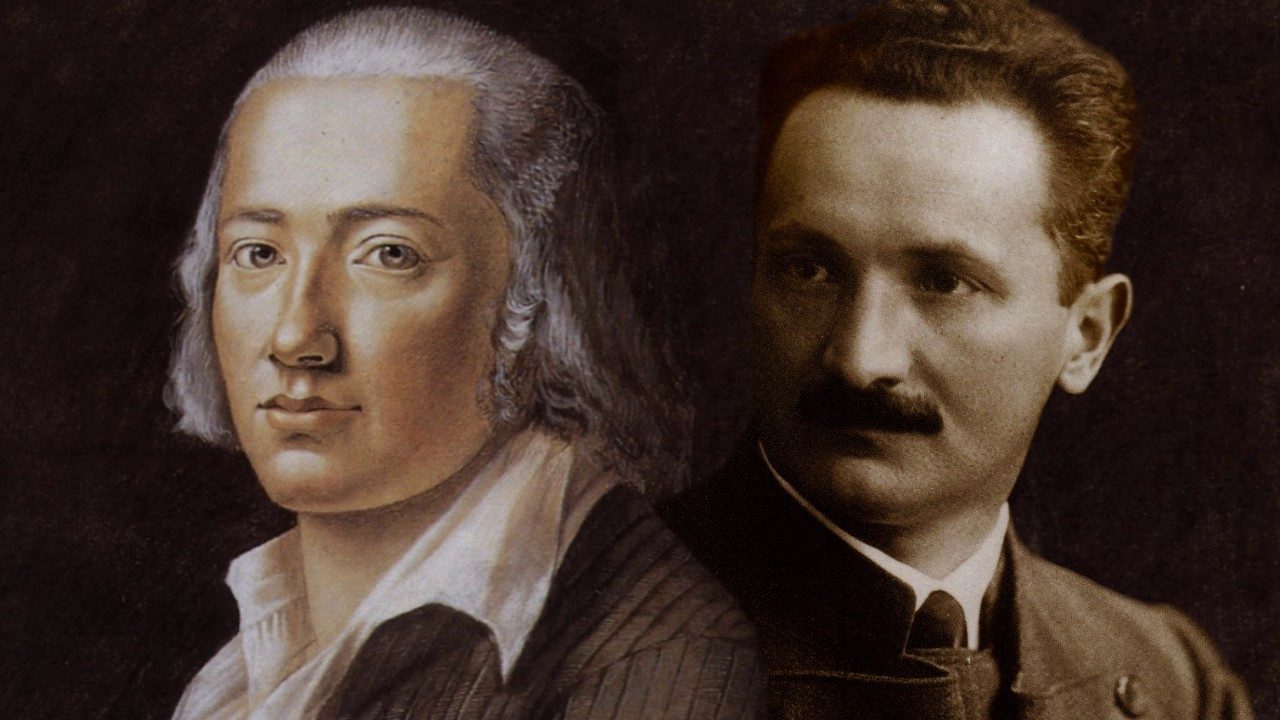
So I’m going to continue my interrogation of Heidegger and Hölderlin, specifically this turning point moment in 1936 in December and into 1937.
We are talking about Heidegger’s personal crisis at the early part of the 1930s and his withdrawal from the political administration of National Socialist Germany. And this is a world political crisis of fascism, as well as Stalinism in the Soviet Union. This is the collapse of the world civilizational liberal order into industrial mechanical economics.
So this is a technological annihilation, and with World War I, a European metaphysical annihilation — annihilation of the former order of the ontological appearing stability of Western civilization.
So there’s a transformation of consciousness occurring, not only through industrial technology, but through the literal embodied physical collapse, economic and practical, down to food, water and shelter, of the former pre-modern Europe. And again, after World War I, Germany is effectively bankrupt.
And this leads in large part to the rise of National Socialist rule and Hitler. So Heidegger himself passes through this governance and has something of a realization as to what is occurring even as he is swept up in it, and is asking this question in the heart of this darkness before the entire world moves into World War II and the mechanized apocalypse of the profound violence that is to occur.
In the midst of the radio, cinema, industrial technology, and scientific specialization, the realization of his fellow German philosopher in the period before — Nietzsche, the death of God — has matured into this massive political, existential, ontological crisis: the exhaustion of this period of mass industrial acceleration into what becomes the practical political crisis of World War II in action, and the bombings, and Normandy, and so on and so forth. This is the atmosphere in which Heidegger turns to Hölderlin.
And we have to understand how radical this is. And this is in my reflections upon my work with Shelley — to see a mimetic moment here. Realistically, the work with Shelley that I’m doing is cosmogonic. It’s a movement of political freedom, an absolute humanity and humanism that Shelley advocates for, which is a liberation of the thermonuclear energy within human being itself — that it is a cosmological fabric and a cosmological garment, an energetic field, a heat field, which is within the genome itself and being passed down through space-time.
I don’t want to get too far into that because we’ve established it quite well, but this is a mimetic historical moment in the darkness of the world’s midnight, this catastrophic acceleration — which is not only ideological, practical and economic, but ontological in terms of a total civilizational breakdown of meaning. This is the collapse of humanity’s meaningful relation to being itself.
1937, Germany: technological state consolidation, mass ideology intensifying in the fervor of these speeches and rallies. Europe is approaching industrialized total war. And the question is, why poetry? Because Heidegger does not turn to an existential political statement or economic statement, or seek to reform industrial technology. He turns to poetry — to the poets, whom Shelley terms the unacknowledged legislators of the world.
And we will see here why, precisely why, in the work specifically of Heidegger in a 16-page pamphlet that he publishes independently for the first time in 1937. In December of 1936, it is published in a German journal which actually references the Reich itself explicitly in its title.
This is a moment of absolute political destitution, which is existential, lived, practical destitution. The collapse of what was pre-modern Germany and the conversion of the modern world into a massive crisis of violence, a clash of ideological abysses.
So what Heidegger is observing — and I believe this is directly connected to his withdrawal from the administration itself in the early part of the 1930s — is that he is observing that there is a crisis that is deeper than the political surface, which is an ontological homelessness. And this is where he gets deeply into Hölderlin’s concept of poetic dwelling. “Man poetically dwells on this earth,” and we’ll touch on that momentarily.
But these thrusts of modernity, which again are being experienced exponentially into a further, deeper, more neurologically accelerated hyperfragmentation in technological modernity and digital modernity — which is to say the movement toward the mid-21st century — this is, in Heidegger’s time, the movement toward the mid-20th century: technology, fascism, mechanization, propaganda, and this turning of mass society through the ideology of fascism as an attempt to escape what has become an unbearable political relationship to reality. Heidegger sees all of these as symptoms of humanity losing a meaningful mode of disclosure toward reality itself, which is to say it is an existential spiritual crisis, which historically would be termed a religious crisis of the first order.
This is beings in relationship to being — which is to say that which is incarnate in form or is abiding constraint and participating in the persistence mode of the universe itself. Again, everything from the star to the single-celled organism is a persistence architecture. It is persisting against thermodynamic constraint, which is the universal heat sink in which all beings and forms are subjected to entropic reality, which we’ve elaborated here from Shelley’s Prometheus Unbound as my philosophical culmination of Shelley’s cosmological arc.
And Heidegger is asking this same question. What is the possibility of relationship to being in the catastrophe of modernity, in the moment in which modernity has reached its midnight? Again, this is the concept of the world’s midnight, which is something I will simply continue to refer to because it is a core concept. Fragmentation, civilizational rupture, technological acceleration, and ontological exhaustion — exhaustion of the paradigm itself, in which formerly being was possible because being was held and cradled within an ontological foundation which preserved the relationship of beings to being, which made being thus apparent and as such.
Life becomes intelligible; existence becomes intelligible to beings.
So, right, we’re working in a different time, but we’re working with a resonance, a profound resonance, which is the exhaustion of the ontological paradigm and the collapse of the political, social and civilizational order, which is also an economic collapse, which is also a practical mass social existential collapse unto the exhaustion of the ontos. So 1937, when Heidegger is working with Hölderlin —
1937: this is still before Auschwitz, still before Hiroshima, the atom bomb. This is the cusp of the utter bursting forth of this sort of latent sack of pressure, which is the loss of the ontos in modernity by way of industrial technology’s acceleration. And the time, as well said in Shakespeare’s Hamlet , the time being out of joint — in that the actual inhabited, as Hölderlin would say, the dwelling of being in modernity is stripped out from the guttered pages and guttered spine of what was formerly the pre-modern ontos, which made living and being possible within an inhabitable, knowable dwelling-ness, state of dwelling, being dwelling within being.
So Heidegger’s question is: what does poetry matter in an age where humanity has become spiritually and ontologically estranged from being? Why does poetry matter in this age? And why do we turn to the poets? Why do we turn to the unacknowledged legislators of the world?
What happens, in this pamphlet, is that Heidegger works with a small constellation of Hölderlin lines. And this is very much — I’ve done similar work on Heraclitus and the Heraclitus fragments. There are several very small lines. I’m just going to touch on them now.
So I’m going to use an English translation here from Hölderlin’s poem “In Lovely Blue.” The translation that Heidegger engages, and I think this is one of the deepest engagements, full of merit: “yet poetically man dwells on this earth.”
So what Heidegger believes about what Hölderlin is saying here is that he’s revealing something fundamental about human existence itself, in the tension between merit — which is to say, maybe productive, a state of becoming or a state of movement, which is to say to produce merit through action, which is a state of virtuousness of being, which is the becoming, the act of movement of being — but that this is not the deepest essence of human existence; that man is dwelling poetically on the earth. That is, man is dwelling in a participatory relation to being, which is to inhabit the world non-instrumentally, open to disclosure and to encounter existence as meaningful presences rather than mere resources, and to preserve continuity with being instead of reducing reality entirely to calculation and utility.
And this is absolutely enormous to the foundation of what we’re discussing here in the 1937 pamphlet, because — at this moment of the collapse of modernity into World War II, the swelling into the collapse — modernity is teaching humanity to dwell technologically, calculatively and instrumentally.
And really what this is, is a very profound critique of the social, political and economic systems which compose modernity itself as a ripping out of the ground of the formerly disparate tribal and local structures of ontos. And this is what’s so critical about Nazi Germany: Nazi Germany itself can be read as a series of political initiatives or economic initiatives or social initiatives. But in reality, at its deepest level, the architects of Nazi Germany were attempting to bring about a return of the Urgrund — which is different than the Abgrund. The Abgrund would be the abyss; the Urgrund, the first ground — of the German people, to return Germany to its “pure state.”
Right? And so we can see resonances of this concept throughout history. And the reason that this is being attempted is because the fundamental ontos of the German people has been ripped out from under it by way of industrial technological modernity. And in this modern, in this now, in this early mid-21st century, industrial digital technological modernity is performing the same function against the preceding ontos — which was the observed practical surface ground, or the formal or firm ground, which existed that was participatory in a cultural collective communal sense, which was the perceived agreed-upon relationship to being. And with civilizations, these relationships are always terminal. They’re terminal relationships, mortal relationships, because they themselves are not true ontological grounds. They’re grounds which are established provisionally.
And by provisionally, I mean that they are political historical situations which themselves are founded upon tenuous precepts. And that these precepts are historical situations which shift over time in relationship to the transformation of humanity and human consciousness and perception itself. And this is what is so astute about Shelley in his movement between Prometheus Unbound and Hellas : Prometheus Unbound articulates this concept of historical transformation and revolution and development, which is evolutionary. We could even relate it back to the genome and the findings of Darwin just several decades later. But he articulates this evolutionary principle metaphysically and then incorporates it back into the historical body via the Greek revolution, and sees the turn of humanity’s golden age — another age in which this relationship to being is restored.
This is precisely why Heidegger is speaking with Hölderlin across time about dwelling poetically on the earth. Because it is a return to the cosmogonic or cosmological ontos, which is beyond and before in terms of first principles, outside of this instrumental relationship that modernity is teaching humanity to dwell within: resource, object, data, efficiency, and standing reserve, which is a flattening of the ontological ground of being in relationship to the world.
So Heidegger is seeking to return to — right, we could call this an Urgrund in a cosmological way — that human beings are most fully themselves when they are dwelling poetically rather than merely technologically. And this is why I return to Shelley just as Heidegger returns to Hölderlin: that this is, at the moment of the world’s darkness or at the moment of the world’s midnight — the collapsing and fragmentation and breakpoint of the ontos, which held together the seeming tectonic plates upon which the world or civilizations or these superficial or situational precepts function — when this ground opens, we return or turn to the unacknowledged legislators of the world, in Shelley’s term, to receive the ontos. As I’ve termed in the concept of the Renaissance mind, to receive memory of the ontos through the poetic perception of the one who dwells poetically. As all human beings ultimately do, beneath this guise of merit and strategy, labor, technology, production, and achievement — this deepest essence of human existence is, in many ways, an iteration here of what Hölderlin is saying — is a Heraclitean fragment, which is to say: the Aeon, or “the Aeon as a child is at play with colored balls.” The eternal, or being itself.
Even beneath the Heraclitean statement in terms of measures of fire, which are given and received, which is the thermodynamic function of the universe (the operator, identity, and action) — that even beyond this movement, which is to say the movement of merit, or we could call that thermodynamics or thermonuclearity — that there is at work a play of being. And this is very much so also an ancient Hindu precept in terms of the concept of līlā , the cosmic dance or the cosmic flower; that this is a play of forms which are entering into and withdrawing from the perceived world. This is described by several ancient Hindu sages as the wax world or the wax figure of the world — that the fire is given and burns away. And this is itself the play of forms, which is first appearing to be by the senses, before Brahman itself, which is being itself.
And this is, again, the deep poetic cosmogonic unity of those who perceive this dwellingness or the nature of this dwellingness, which is beneath all of the coming and going of a civilizational rationality or a religious rationality or an institutional rationality, or even an epoch which sustains a certain nervous system or neural relationship to the real or to the world.
So when this is guttered and ripped out from beneath the appearing foundation of the world, or of being, or of beings in relationship to being — “what remains, the poets found.” This is from Hölderlin’s poem Andenken. So this is the preservation at the level of the ontos, the foundational, which is again even before the appearance of information, before the appearance of the genome, or the appearance of these structures which are contiguous through time — which would be the Heraclitean fire, or Shelley’s concept of the evolution of consciousness, which of course we also see in Darwin — that the poet preserves what still meaningfully endures, not through doctrine, but through language that discloses being.
And what does this mean? This is the distillation of perception of nature’s gleaming, that which dwells within the appearance — “nature, that is in fact higher revealing.” And that’s from the poem The Ister , which is later on in Heidegger’s analysis but still extremely relevant to what we are dissecting here in the 1937 pamphlet.
So what Heidegger is saying in relationship to Hölderlin is fascinatingly similar, if not precisely the same, as what Shelley is saying in his work on poets being the unacknowledged legislators of the world. Because Heidegger repeatedly emphasizes Hölderlin’s notion that poets found or institute what endures. So Hölderlin and Shelley share this common ground of the poet being not an entertainer, and not a profession of producing images or even poems, but founding historical worldhood — which is, through language, establishing the meaningful horizon within which a civilization understands reality. And this being the unacknowledged legislator of the world in Shelley’s time already suggests that the ontos, or that the gods are receding and withdrawing, as Hölderlin says — that the poets are no longer being heard. And this is historically the prophetic function. This is the function of God speaking through into the world and being expressed linguistically, which is, in a human context, the poetic function, but in a cosmological context, actually being itself gleaming in nature, which is at one.
And — the pamphlet then goes on to repeatedly emphasize departed or fleeing gods, which Heidegger is obviously zoning in on, because this is the basis for Heidegger’s thought on the world’s midnight: that poetry, even as the gods have withdrawn and the world has become destitute, still preserves the trace or the hint or the possibility of renewed disclosure. Which is very much so the tone or the call of Hölderlin’s poetry, which in relation to Shelley is fascinating, because Shelley’s poetry does not presume or even think that the gods have withdrawn. In fact, what Shelley’s poetry is doing, perhaps no more clearly than in Prometheus Unbound , is revealing the deeper ontos, which is the revelation or the possibility of revelation within — specifically the figure Prometheus, which in many ways represents mankind in Shelley’s Unbound , in relationship to Jupiter, which is the force of constraint, the binding force of space and time and incarnation. This rebelling Prometheus, which is the fire or the heat or the light or the beingness within man, which is constrained by the force of time or entropy, or even in Shelley’s earlier works, the world order, as in Queen Mab , with all of its institutions, religious laws, political and social laws — even modernity itself, as is Heidegger’s experience — which is a field of constraint, a field of situational dilemma, as in historicity itself; that Prometheus is in an act of rebellion which is resolved by the realization of precisely what Hölderlin articulates: “nature’s gleaming is higher revealing,” the higher revealing of being within man.
And this trajectory, which is emerging throughout time in a series of dialectical conflicts — such as Jupiter, or in Hellas , Germany’s revolution or Greece’s revolution, or in Heidegger’s time, the rise of Nazi Germany — that this is a process of transformation through the withdrawal of the ground, as the ground is deepened by a confrontation with the abyss, which is the world’s destitution or the world’s midnight.
So for Heidegger, Hölderlin preserves the trace or the hint of the possibility of renewed disclosure. Shelley is the metaphysician who is both the poet and the philosopher, who is saying that this is a withdrawal or a period of Promethean suffering through which liberatory potential emerges — precisely even through the situation of Prometheus being chained to the rock. The higher revealing is made possible therein. This is what is so complex and powerful about Shelley’s work with constraint, because that’s what Jupiter represents archetypally in the poem: constraint and limitation.
So what we have here is that Heidegger is working with Hölderlin’s formulations of language, the speech, the naming, and the poetic saying, which is the elucidation and articulation of meaning. And this is the poetic function, which is language itself at its most foundational level, at its most ontologically communal level, which is why Hölderlin says — and Heidegger flags this — that poetry itself is the most innocent act. “Poetry is the most innocent of all occupations,” or the most innocent of all pursuits.
So this is the shaping, at the ground level, of the disclosure of reality itself — the shaping of the ontos, determining how a world appears. And this is critical to understanding worldhood as it evolves conceptually and perceptually in ages of humanity’s relation to being. That this is the ground upon which — much in the terms of, as if we were to reference Adam Smith or John Locke in modern Western civilization — the ground upon which worlds are founded. And the legislators of this world are in receptive relation. This is foundational. This is before philosophy, this is before conceptual arbitration, law or legislation. They are in receptive relation to being and not dominating reality technically. And this is the essence of the meaning and importance of innocence in this statement.
In the pamphlet itself, Heidegger is extracting from Hölderlin a new conception of humanity’s relation to being in the moment of the world’s midnight, which is language, history, civilization, dwelling and disclosure — dwelling and disclosure being the two most important phenomena through which language is an expression, or bringing into being, which is the use of the term disclosure here: a bringing into the open.
And this is the Greek term that Heidegger circles around to later, alētheia , which is usually translated as truth. But Heidegger reinterprets this term more literally as unconcealment , which is a bringing out of hiddenness into the openness. This disclosure is — this is why Hölderlin is so important to Heidegger, because Heidegger is situated in Germany in 1937, in a period of total ontological collapse, wherein the political, economical, and existential circumstance is not letting appear.
It is a world of technologized merit, which again returns us to the phenomenon of industrial modernity, this hyper-accelerated mode of production and consumption — a way of being in the world. Hölderlin’s language does not merely describe a world already fully present, or a world of historical time itself. It is to bring out into being and out into the open nature’s higher revealing, a clearing in which something can appear meaningfully at all. This is Heidegger’s Lichtung. So the creation of this clearing in which beings can show themselves, or experience themselves as being, differently than they do under technological enframing — which is Shelley’s Promethean prison, which is what Shelley rails against in Queen Mab : the entirety of the British monarchical, imperial, social, political, and economic order, which is, as he formulates and perfects in Unbound , as well as Hellas , a prison of technological enframing, which is itself the way of entraining — mode of being in the world and mode of being in time.
The appearance of reality as resource, utility, data, efficiency and standing reserve — to interrupt that reduction and reopen the world as a true ontological disclosure of being to beings.
So there’s no other — this is the place to turn for Heidegger in 1937. And this is the only place to turn, because poetry brings beings into openness, as into meaningful presence — specifically poetry as in Hölderlin or Shelley, as an unacknowledged legislation of the world — by allowing reality to appear differently or more originally than it does under calculative consciousness, which is the innocent work of poetry. The poet becoming one who safeguards or founds the opening in an age of fragmentation, which again is Hölderlin’s emphasis on the withdrawal of the gods.
So, to return to this briefly: the founding of what endures in poetry — and this is specifically this ontologically foundational poetry. And this has to be clearly specified and stated, because the term itself has changed meaning in modernity. And this is in large part to do with the function of the poet being fundamentally lost and misunderstood — to the way in which modern civilization understands reality, the poet has become entertainer, not founder of historical worldhood. The poet is founding the meaningful horizon, which is then itself that which can become a way of being in the world.
Language, as we’ve discussed — right, the foundational, innocent poetic relationship to language, which is the work of the poet as a legislator — is “the house of being” in later Heidegger. But this pamphlet is moving towards it. Human beings do not first exist fully formed and then use language; but language itself is the creative and created opening, the imaginal opening in terms of Shelley — which is why we’ve discussed the Renaissance mind and the faculty of genius being essential — that it is an opening of the ontos, the possibility of disclosure within which reality can become meaningfully inhabitable at all.
And this is why poetry is so essential: it preserves language in its most world-opening form. And without poetry — the ontologically serious poetry of disclosure — without poetry, there is no possibility of being in relationship to meaning, which is to say beings in relationship to being.
And this is precisely the crisis into which Heidegger enters, and the discourse which he then resumes with Hölderlin across historical time into this breach of history.
So this is not — again, this is to distinguish and really to throw away any concept of aesthetic decoration — and to refer to poetry as ontologically consequential, the founding ground for the possibility of relationship to being in the face of the abyss of history, which is the perennial opening of the false terrain. Which in Shelley’s time is the British Empire; in Heidegger’s time, the loss of pre-modern Germany, and the gulf, the chasm that opens up, into which climbs Hitler and Nazism — and the attempt to retrieve this Urgrund, which has been lost by industrial technological modernity and cannot ever again be found, because the conditions, the historical conditions, have shifted. They have phase-changed into a new form in which perception has utterly changed by way of this historical transformation and historical revolution.
So these structures — or this poetic consciousness, this way of being in relationship to being — is in communion with the dwelling poetically first, before merit, which is first before history, first before time, first before civilization, and first even before the concept of any sort of outwardness. And this is, again, the idea of dwelling poetically in being. That reality itself is being inhabited at this foundational level, and in the work of the legislative poetry being disclosed as such from that source, which is beyond any statement or meritological creation, institution, a form.
So this is why the poet is the smith of language at the foundational level, and working with the elemental ontological ground of language. That “what remains, the poets found,” or the poet’s forge — this is what survives utter, absolute destitution and fragmentation, because it is what is at the deepest level.
So the poet is standing nearest to being itself, which is nearest also, as is understood quite well by the theologian Meister Eckhart, also nearest to the abyss and nearest to danger. Because the poet is exposed to the full force of reality at high intensity of disclosure itself, of being itself manifest directly. Which is again articulated in the ontological capture of the experience of Hölderlin in “nature’s gleaming is higher revealing” in The Ister poem — that Shelley himself is standing directly next to the live wire outlet, and within the live wire outlet, of this genealogical, genomic, thermodynamic transformation of humanity in the face of time and constraint.
And what is trying to emerge is liberatory consciousness, which is historically described as the liberation of spirit from form, but is practically the liberation of this heat energy, which is, as Heraclitus states, “the cosmos is in measures of fire.” That is contained or churning in the metabolic form of the entropic organism, but is also itself the source of all local and global being in a practical sense, via what we now understand as thermonuclear fusion, and all of the different gradients and scales of transformation that occur in a cooling universe, but also at different gradients — down to the single-celled organism in the pool, or the human being.
The poet is in direct relationship to the disclosure of being, which is the total thrust of the foundational ontos of being itself. And poetry is the act of translating this fundamental and profound innocence into expressed language. And again, this is utterly foundational — the possibility of the holy. That reality is in excess of instrumental calculation, which again, if we understand this through modern science, we understand this through the genome, we understand this through persistence and survival architecture — as in an organism that has to regulate energy in order to continue to be whole in a bounded sense, and continue to churn or pump blood or consume and excrete material, energetic material — that there is disclosure beyond even this technological control, which is what Shelley terms as the Promethean chains.
And what is so articulate about Shelley’s Prometheus is that Shelley’s Prometheus is a Prometheus of primordial energy. And here we are addressing the human body and the existential condition of being human, the situation of being human, which is itself a series of instrumental calculations as in survival and reproduction.
So this reduction of the cosmos to mere mechanism is itself the production of existential catastrophe. And this is the pit of history, the perennial pit of history, which is fallen into without this legislative advisory of the poets — again, the poets themselves being the possibility of ontological disclosure, and thus the possibility of meaningful relationship to being at all. Which again refers back to my terminology and work with the Renaissance mind.
So what is being sought here with Heidegger in relation to Hölderlin is also in my work directly with Shelley: that there is a civilizational enframing of this false ontos, which is also a paradigmatic condition of modernity, as is and has been in many other times in human history — that there is this functional utility of being at work in time, which is entrained into life. And this then becomes the way of being in the world at scale. And this crisis deepens as modernity accelerates, and industrial technology accelerates, in Heidegger’s time as it does on the cusp of the mid-21st century.
This is a crisis of energetic transformation, which Shelley understands all too well.
So, I’m going to give perhaps one more extract from Patmos : “Where danger is, grows the saving power also.” And again, this is what’s so commonly misunderstood about Hölderlin’s poetry. This is not the entertainment of aesthetic imagery, but this is ontology of consequence — understanding the position of the poet in relationship to being, which is itself simultaneously the full disclosure, the power of the full disclosure, but also the power of the abyss, the power of the experience of the world’s midnight. The power of the realization of this possibility, and the emphasis of importance of the function of language in terms of articulating possibility of meaningful relationship to being at all.
And this again is historically experienced in modernity as the falling out, the abyssal catastrophe of meaning, which was formerly couched in a false or entirely situational cultural or political ontos, which briefly held that which was not truly held. But in the foundational power of poetry — the poet ventures into this ontological hold, which is the fragmentation, which always was already there. And the poet is aware of this gape, because it is a gape of the loss of this gleamingness within a world which has taken gleamingness to be merit.
And the poet ventures directly into this relationship to the gleaming, which is being in relationship to being. And this is precisely the salvific, chironic function of the saving power of the ontological ground formed and founded by the poet’s relation to being at a total cosmological, foundational level — and why Heidegger turns to Hölderlin in 1936, in December and into 1937, and into continued relationship as the crisis deepens.
So, truth here is — and this is again a question of meaning, which is implicit and explicit to language at all times — truth is not a representational ontos, or an aesthetic representation of imagery. And this could be said of much of Hölderlin’s poetry: that the imagery itself is not particularly exceptional, it’s not in artistry — even though a lot of the images are incredibly profound, even in their most abstract way, such as “nature’s gleaming.” But truth is ontological disclosure and unconcealment, alētheia. It’s that reality is opened up to the possibility of relationship, and that being can come in relationship to being through poetry.
And for Heidegger, it’s quite clear in this period of time in 1936 and 1937: it is not that Hölderlin’s poetry is one of the ways that this opening occurs — it is perhaps the only way. Because when disclosure creates the possibility of entrance to this form of direct relationship to being, this is where there’s an ontological seriousness — returns to being in the world and being in time, which is creating and producing and founding the possibility of this disclosure.
Which again returns us to, perhaps, the most important line. And I will repeat it one more time:
“Full of merit, yet poetically man dwells upon this earth.”
This is the fundamental revelation which Hölderlin is stating directly in a very kind of — Heraclitus the Obscure — way, that kind of axiomatic fragmentary way, about human existence. That this full-of-merit-ness, which of course is summed up very clearly in the cycle of civilizations or the cycle of endeavors and practices of technological development — even down to the advancement of the genome through sexual intercourse, etc. — that there are these accomplishments of man. Yet poetically, man dwells upon this earth.
In meaningful, receptive, and participatory relation to being — fundamentally at foundation, non-instrumentally remaining open to disclosure and encountering existence (which is the experience of being and being human) as meaningful presence rather than mere resource, and to preserve continuity with being instead of reducing reality to calculation and utility. And this is, of course, the collapse of modernity. The collapse of the function of modernity, teaching to dwell technologically, calculatively, and instrumentally — which then creates a state of entrained reality to become resource, object, data, efficiency, and standing reserve. A flattening of the ontological world, which produces, in Heidegger’s time, the poet T.S. Eliot’s understanding of the wasteland and the hollow men. Which is the ontological flattening of the world and of being itself, which removes — it is, again, the removal of the gods. The removal of the possibility for meaningful relationship to being, which is absolute destitution, an absolute existential crisis.
And what I mean here by absolute destitution is that if there is no possibility for meaningful relationship to being, then it is an utter severance. And there is no — there’s no accurate term to sum up the subject at the end of that term — it is an utter severance.
And from this utter severance emerges the cask of modernity, or the casket of modernity, which is the Hollow Men and the Wasteland: fragmentation, technological acceleration, civilizational overload, and symbolic collapse, severing humanity from meaningful continuity with being.
How does one return to that foundational ontological relationship — if there ever was a state of being that was in true relationship to being? And this is a profound historical falsity, which is the perennial project of the poet, or the Renaissance mind, dwelling poetically beneath and beyond the world so full of merit, and in receptive relationship to being itself, which is the ontological rescue of the possibility of meaning, foundationally, beyond any civilizational construction, technological development, achievement, production, organization, calculation, or labor. It is a way of being in relationship to the ontological ground of existence itself.
And this work of poetry, which is itself the communication, or the expression, or the disclosure of this relationship to being, is itself what Heidegger turns to in the moment of the most absolute destitution of the world’s night.
Thank you.
Part 2. The Human Being as Solution Space (May 11, 2026 Lecture)
Audio
So for this new lecture, I want to talk about the human being as solution space and why this is important in terms of really formalizing the past two lecture series, The World’s Midnight , the genome and history, and then the supplementary architecture, which was diving deeply into the Hölderlin and Heidegger relationship.
Towards the end of the 1930s, and the publication of Heidegger’s pamphlet, which begins and extends deeply his relationship to Hölderlin into his later years. So the human being itself being a solution space is deeply a part of Heidegger’s time. And the French existentialist tradition in particular does a great job of identifying this, however abstractly and metaphysically, but I really want to concretize it in that the human being itself is a constraint field, that the genome is an informational bet placed against entropy. So it is an informational sequence that is being extended and turned, right, changed through time and transformed. And I’ve coined this as a wager into time and copied forward at a metabolic cost, which is the lifespan of the human being and the reproductive motion that human beings undertake. And again, there’s the sexed field of the creation and gestation of the living being in the womb, which is particular and specific to the human species itself, or the human being species.
This reproductive act is common to many different genomic architectures in the known cosmos and on the known earth. But the human being itself survives only as long as the wager keeps paying out, as long as the wager continues to persist against entropy and against extended time scales. This is a species-level process and procedure. This is not unique to any one given individual, and my claim is that there is really no one given individual, that this is a constraint field in which the individual is perpetually admixed into a new genomic form. And this is critical to the understanding of the Renaissance mind as the resolution, however brief, of that constraint field into, we could say just simply, a bigger picture. And I’ve described this as the eagle’s perch, a perception or perceptual awareness of the ontos at a higher level and in a higher domain. And for me, as Hölderlin is to Heidegger, Shelley is to my project, which is to say Shelley is cosmologically sound in a time where the field, the informational field available to him, whether that be science or thermodynamics or historical consciousness, is not where it is today at this moment that this lecture is being spoken, 2026. This is 200 years later. Almost exactly 200 years after Shelley’s death, fascinatingly enough.

Consciousness is riding on top of that momentary structure of the body, which is the genomic cache of being in time. Which means that consciousness itself, in terms of being in time in relation to being itself on the grand scale, which is to say that you could say that is the field of creation itself, the field of constraint and entropy across scales from star to cell, is in relationship to this structural term — the term of the wager itself of being in time, the human being as a constraint field against entropy. This informational bet, which is bounded perception. This is neurological, finite duration, which is biological, regulated metabolism and perpetual demand to convert disorder into pattern fast enough to keep the pattern going. So this is a metabolic churn at high expense. This is a regulatory state of being, which is perpetual. And this is different than configurational persistence, which would be stone, which has already found a low-resolution model of persistence in which the form remains, however beaten by wind or rain or water. This is a different form of persistence, and this is a form of persistence which is fundamentally neurological, just as it is biochemical, just as it is based in the function of the organs and the organ systems in relation.
So this is the ground beneath everything that follows in the synthesis. The crisis of modernity. The work of Shelley and Prometheus Unbound to elucidate the metaphysical architecture of the liberation of consciousness, which is the liberation of the prime energetic ground of creation itself, thermonuclear energy. Heidegger’s clearing of being articulated through Hölderlin, which is to say the making available of the disclosure of being through poetry, the most innocent act, as it is termed in Hölderlin, and Heidegger elaborates upon this — which is that it is being in relationship to being itself with nary a thread between the two. It’s direct communion with being, in an expression, a commune of the ontos. And Blake’s narrowed doors of perception, which through narrow chinks in his cavern man perceives — this is the veiling or the valence of perception itself, as in a neurological ceiling. This is a constraint-based ceiling of perception and cognition. If man saw everything as it was, it would be infinite. This is what happens within a constraint field itself at large.
And then again, right, the human being is inhabiting this constraint field and these larger cosmological persistence conditions and constraint conditions, that these themselves, as I have articulated, are the law of being across scales. And that human beings are creatures whose entire mode of being is that they are constraint fields running themselves forward through time, and having to persist in a regulational state, which is that they are beings in time and experiencing time, which is the load of time, to remain within time in a regulated state, which is to say that they persist.
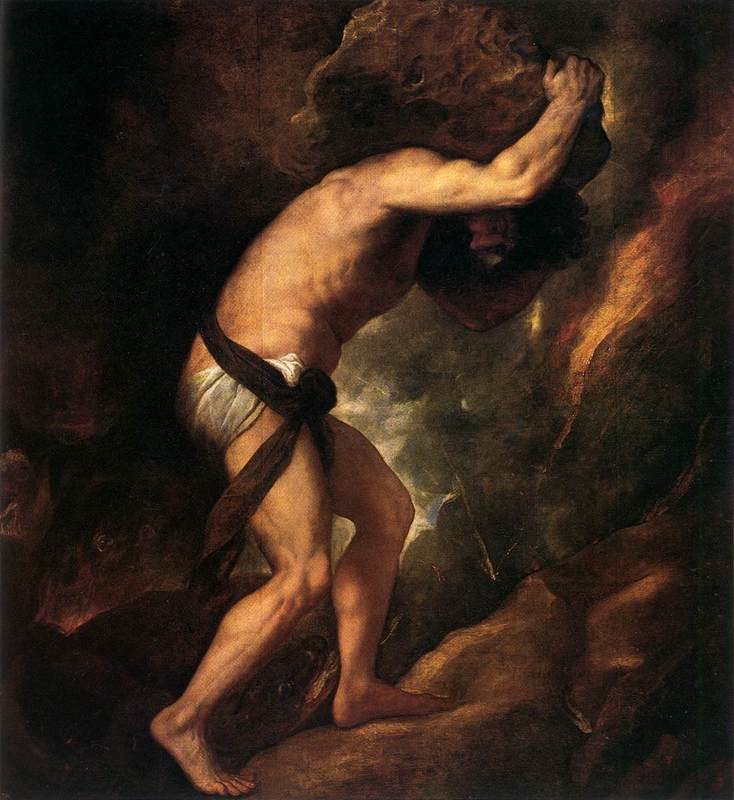
And this is a real load. This is a real energetic burden. And again, Camus alludes to this metaphorically and symbolically in his work on Sisyphus. So Camus and Shelley share very much in common across the span of a little over a hundred years in that they are using these Greek metaphysical architectural symbolic principles of the gods to elucidate this underlying constraint field phenomenon of thermodynamics and persistence.
It is that this language is seeking to find itself seated within the deepest concerns, the deepest existential concerns of humanity, which is being in time itself, the practical necessity of the wager, how it continues, if it continues, and what are the consequences. Again, this is the possibility of meaning in relation to being.
So we’ll start here. The crisis called modernity is what happens when such creatures build a civilization that mistakes the wager for a calculation. This is a failure of perception. This situation is being perceived without reflection. And again, this is the principle of the Renaissance mind, which is integral and integrative across domain bounds, to perceive the situation itself structurally, and not caged within the neurological ceiling of the collective human domain of the mind, which then forms civilization, culture, etc. So this is again the rare historical mind with a genealogical, neurological ceiling and an ontological passion to unify being and to come into communion with being foundationally, not through the narrow doors, which themselves form much of, if not all of, human history, with, again, the rare exception of the lineage of the Renaissance mind.
Two Diagnoses
So there’s two diagnoses at hand, and I’ve worked with both of them extensively. There’s Shelley and Heidegger, who are standing at different edges of this same mistake. In Prometheus Unbound by Percy Shelley, the catastrophe is constraint hardened into domination. And so this is where Shelley extends deeper cosmologically than Heidegger can comprehend, because Heidegger is working with Hölderlin, who perceives the receding or withdrawal of the gods in history. Shelley works in history progressively, through Queen Mab into revolt, which is The Revolt of Islam , to understand what is truly the constraint, what is truly the bondage of humanity. And in Prometheus Unbound he strikes at the neurological root, which is to say that human beings are a fire itself. Again, the metaphor, the use of Prometheus archetypally — that human beings themselves are a Promethean thermonuclear fire constrained, which is to say a starfire, or the fire of the creation of the universe itself, within a form which is bound to stone, or a form which is bound to form, which is the archetypal image of Prometheus chained to the rock.
So in Prometheus Unbound , Jupiter is not just a tyrant, it is the figure of the wager’s terms. Fear, hierarchy, inherited terror, architectures of church and state that take the genome’s necessary boundedness and convert it into permanent imprisonment. So this is not only the human condition in an embodied neurological ceiling sense of persistence in time, which is already an incredible load, but derived from that incredible load are these systems and structures, that our civilization and culture, that human beings create to cope with that load, to cope with that existential condition of being human.
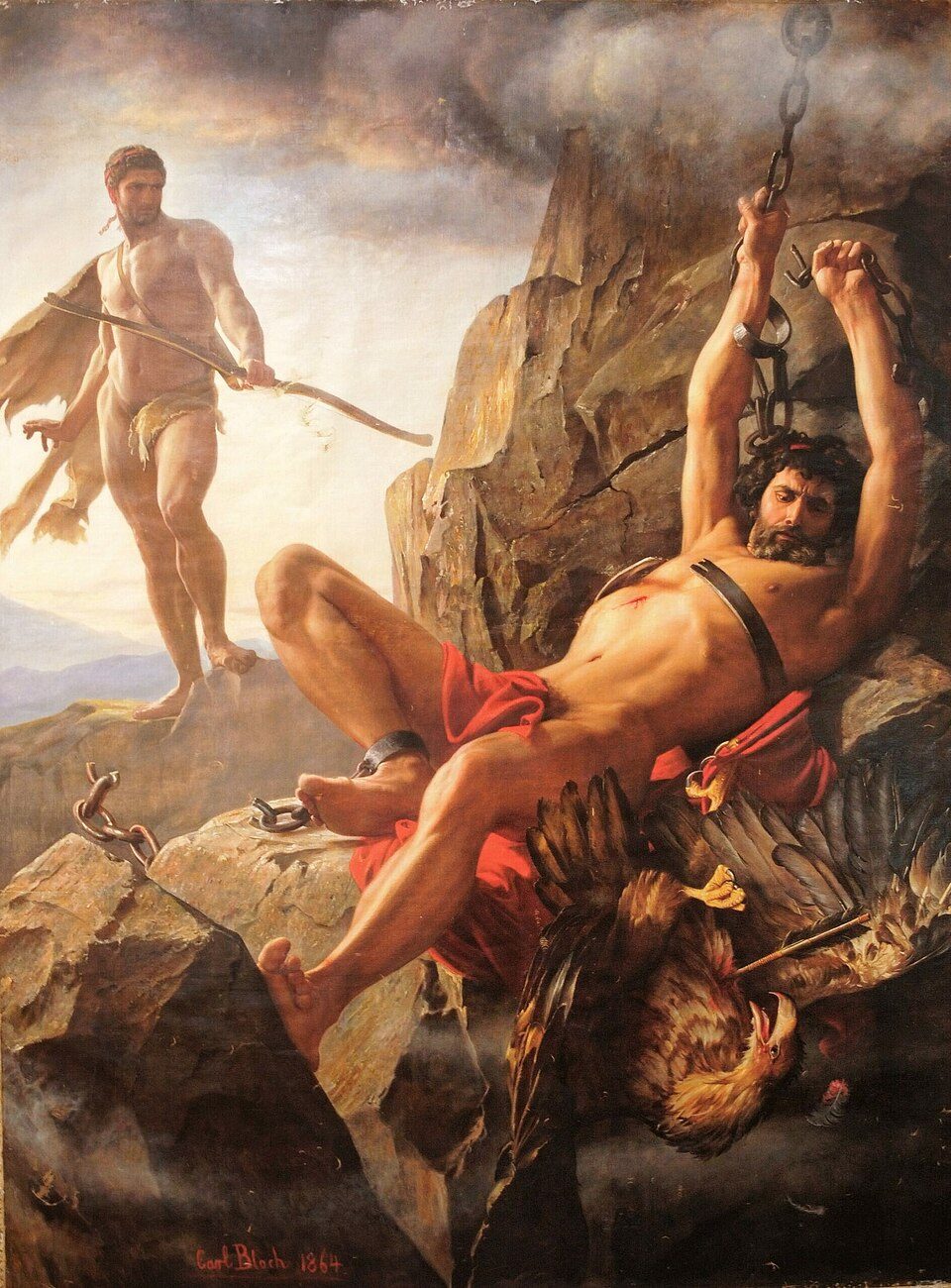
And this is what’s critical. The recognition for Shelley is a recognition that this is where Shelley crests over history and obtains the eagle’s perch, or attains the eagle’s perch. And this is the breakthrough that is his persistence, which is his passion of the ontos. That the structures of history and the movements and flows of history, in terms of the energetic currency of beings at work in the world, or beingness at work in the world, or being in time, is itself derived from and product of this primary existential constraint of the human condition, which is the situation.
So what the Renaissance mind does — and I’ll return to this later — is expand the solution space, which is to say, make available the ontos of being, make available the inner logic, make available the characterological, the operative identity, the true state of being, in clearer and more coherent forms through time. That this is being steadily, again, by way of the scientific revolution, converted from metaphor, which is something of the theological, to measurable field instruments, systematic structural articulation of what is at work in an existential identity sense across all scales — again, from star to cell to human being. And this itself is recognition of the true identity of that which is beneath all appearance, emotion, and seeming siloed participation in being itself.
So Shelley has an intuition towards these architectures which extend out as unconscious, or even forced derivations of the unconscious, from this root of the terror, which is the existential condition of human constraint in the situation that is entailed in the necessary passage of this genomic architecture as the only way to persist through time in the face of inevitable entropic degradation. So he sees these structures as taking the genome’s necessary boundedness, which is to say its constraint of being in time, the literal body of the human form, which is its passage, and converts this boundedness into a permanent imprisonment of superstructural experience of this reiteration of this fundamental cosmological problem of being in time, which is the human being state and condition of regulatory persistence.
So Shelley’s intuition is toward thermodynamics before there was a word for thermodynamics — right? This is in the late 1810s and early 1820s — that being is energetic and latent and pressing toward fuller release. That being itself, or the fire of being, as is stated both by Heraclitus, myself, and in the Promethean metaphor that Shelley uses, is a thermonuclear energetic possibility which is constrained within the genomic architecture, which is producing and reproducing neurological ceilings, cognitive ceilings, and ceilings of perception, which is inherent in the evolution of the species itself, in the evolution of all species that use and require the genome to persist through time as a regulatory state of being.
So this very high acuity that Shelley exhibits here in his metaphysical terrain that he elucidates in Prometheus Unbound — that the chains that hold Prometheus are not the limits of his nature, which is to say this free thermonuclear energy, but rather the surplus suffering imposed on top of those limits, the genomically bound condition of being human, which is a neurological ceiling. To unbind him and reality phase-changes, in that this is the nature of being human in time, and this persistence module, which is the human solution space, which is a species-level genomic architecture of attempting to change through time, to transform the genome, to acquire higher faculties of perception and higher faculties of possibility, to unbind Prometheus. That the cosmos returns to participation in the act and art of the Renaissance mind, which is the expansion, the reunification of the ontos in a state of profound fragmentation, as I’ve discussed in The World’s Midnight. Constraint becomes the medium of disclosure rather than its prison. So this is persistence in time, which is articulated quite clearly in Prometheus Unbound , in the situation, which is Prometheus chained to the rock over time, and the revelation unto which Prometheus comes through that experience.
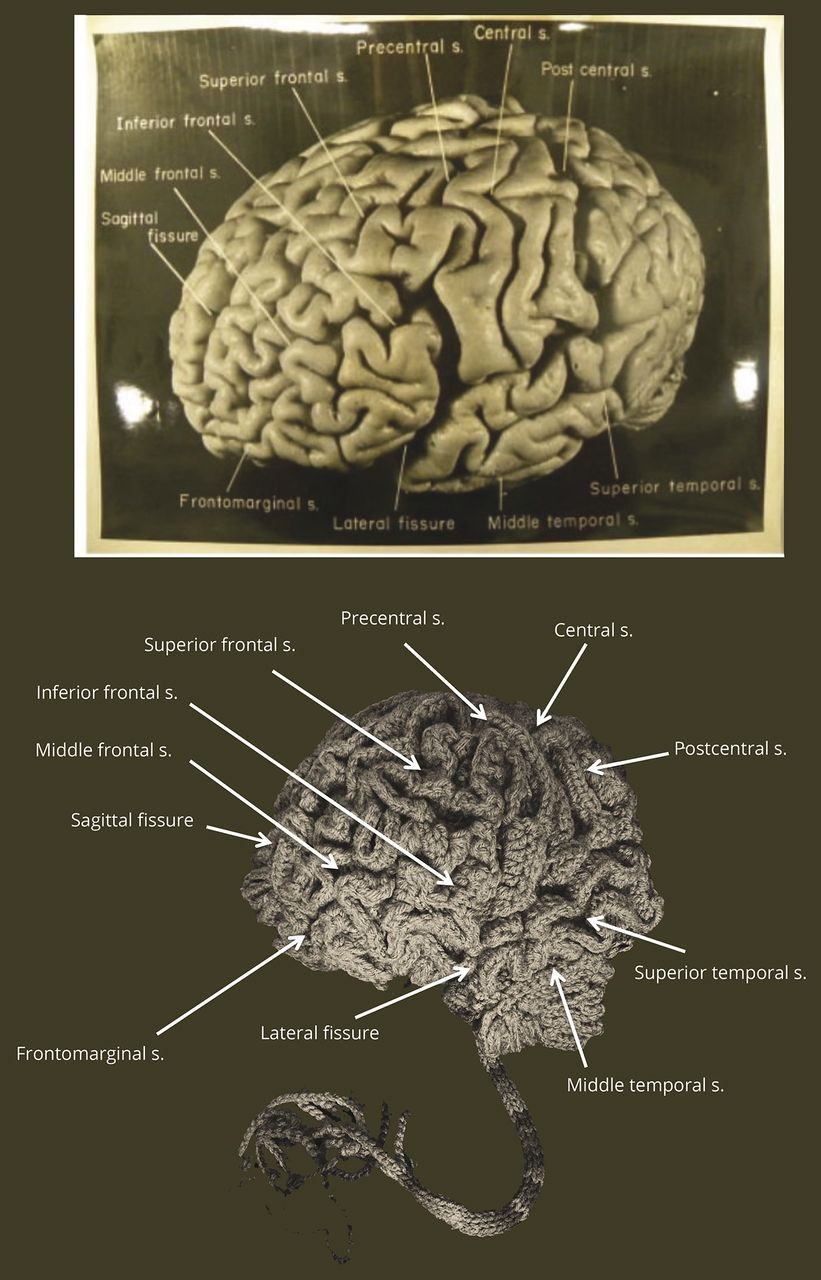
So Heidegger writes after — in this period of time, which is the Gulf, which is the fragmentation and the collapse of the structures of Western civilizational ontological behavior, which Shelley is arguably one of the heights of. And even Nietzsche himself is a fallen philosopher, so to speak. That this fragmentation of modernity, which is the death of the pre-modern ontos , which is local and tribal, into the bursting forth of industrial technological modernity, is already well underway. So Heidegger is writing in this period of the after, which you also hear Adorno talk about — but I think it’s a little more apt to describe it in terms of modernity itself — that the condition of being after Auschwitz and the question of “is poetry possible” is the condition of the fallen modernity itself, which is the fragmentation of the former pre-modern ontos and the political, social, economic, and existential outcomes of that loss, that condition of that loss, which is Nietzsche’s death of God.
So Heidegger’s Holzwege , this Europe and this world that Heidegger is writing into, which is roughly a hundred years after Shelley, is in the midst of this utter crumbling, commencement of this industrialized slaughter and this technological mechanization of reality, which Heidegger terms as the technological enframing of reality and enframing of being, which is the conversion of beings into standing reserve and the world as inventory. And I’ve elucidated this very clearly, seeing one of the earliest origins of this phenomenon in the creation and establishment of the structures of the transatlantic slave ships of the early 1500s and going forward. This is an inventory of bodies.
This is what T.S. Eliot would also call the hollow men, or the hollow men phenomenon. The catastrophe here is not that consciousness is chained, but that the clearing in which beings could appear at all has been paved over. So this is the double loss of modernity — that modernity has not only lost the possibility of the appearance of being, or meaningful relation to being, but furthermore, the necessity, which is at the cosmological level of the Renaissance mind and the primary paradigmatic problem at solve of the Renaissance mind, which is expanding the solution space of humanity in the midst of existential constraint.
So you can’t liberate what has ceased to show up. So Heidegger’s question is even more constrained than Shelley’s, because Shelley is still in relation to this primordial question of existential being in time and the possibility of liberation of existential constraint at the level of the neurological being in form. Heidegger’s question is not to free being, but how to let it appear again at all. And his answer turns directly towards Hölderlin and Hölderlin’s poetry, poetry itself, the dwelling of man on earth poetically, and the patient reopening of disclosure through Hölderlin and the work of art. So this requires an active re-entry into poetry and into the work of Hölderlin. And as I suggest, Shelley at a deeper level, which is the legislation of the cosmos, making available what was hidden, the ontos of being, revealing nature’s gleaming, the possibility of higher disclosure in the face of an increasingly exponentially mechanized — not only through the passage of the genome, as in a constrained space of time, this cave and this narrow door through which humanity must wander time and time again, which is death and rebirth, which is reproduction, the passage of the genome through different modules and the transformation of that genome through the intersection of modules as in a species-level condition — but to understand just how deeply this technology itself has mechanized relation to being, and how deeply it has extended into every industrial force and every institutional device, every cultural, social, political, and civilizational phenomenon, to the point of which the cage has darkened so much the possibility of perceiving this liberation of being in time. The time itself has overwhelmed being and become utterly technologically efficient, which is the withdrawal of the gods in the institution of absolute economic fascism, which is the tyranny of use.
So this is the same crisis that Heidegger is facing a hundred years later, but it is a slightly different face, in that Shelley sees constraint that needs releasing, and Heidegger sees concealment that needs unconcealing. So the disclosure and the liberation, as we see in Shelley’s Prometheus Unbound as the guiding text here — as very much so as Virgil guides Dante — that Prometheus Unbound as the guiding text is simultaneously the disclosure of the ontos at the deepest level and thus the liberation of the ontos through this understanding.
Why They Need Each Other
And so now we’ll get into why these two forces at work need each other, even across the Gulf of history. Because we’re talking about multiple different time periods. We’re talking about Hölderlin, Shelley, Heidegger, and of course this perennial question and problem, which in Heidegger becomes double, because it becomes a problem of modernity just as it becomes a problem of the existential constraint of mankind itself. So the two are not parallel options; they’re the same operation.
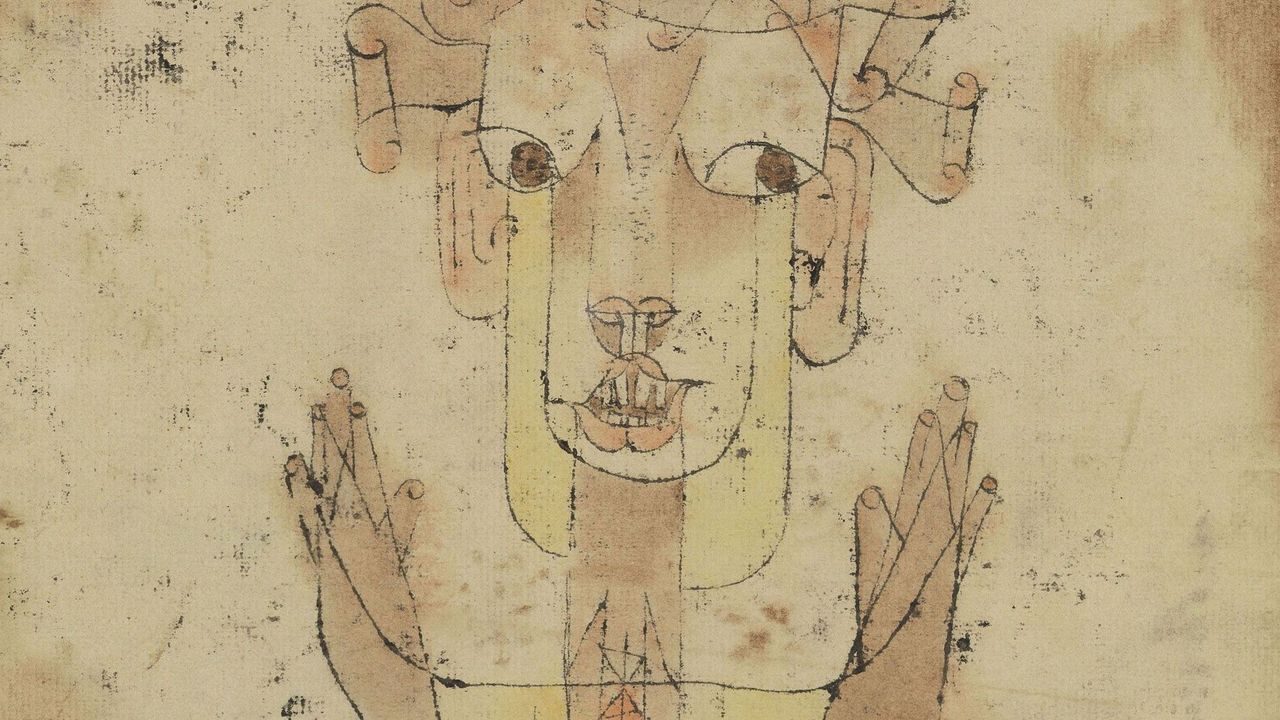
The process of concealing is a historical phenomenon of the historical ruins. So this actually very much so has to do with Walter Benjamin’s metaphor of the angel of history, turning about to face the ruins of time even as it presses forth. And this angel could be described as the consciousness within the genome, which is developing and iterating and becoming ever more so, as we would hope, through a perhaps a Darwinian natural selection context — but we also see as present, and these are our lodestars of humanity, the Renaissance minds, which have cleared a path and a way into disclosure through unification of the ontos historically.
That what gets concealed is what was first constrained, and what cannot show itself cannot become free. So modernity imprisons consciousness precisely by collapsing the space in which consciousness could see what holds it. So Blake sees this earliest and most directly with the mind-forg’d manacles of his Songs of Experience. These are the chains, the constraint chains. But the real claim made across the prophetic books and in The Marriage of Heaven and Hell is that the chains and the narrow doors of perception are one structure. So this comes down again to the problem not only of the nervous system, but of the passion of the ontos and the emergence of the Renaissance mind to free the body and widen the aperture of the constraint space and the solution space of the problem of the existential condition of humanity itself. This is what Camus and Sartre are returning to with Heidegger. It is the actual problem of being human and being in time, which is fundamental and first before the structures of modernity, which increasingly conceal and veil this first constraint space problem, which is the problem of being in time with iterative symbolic abstractions of this problem, which then of course are the screens or the veils into which humanity is further bound — double-bound in the Heideggerian sense, double-bound by modernity, technological modernity, which are the symbolic superstructures, the institutional and industrial orders. One word for them could very well be capital, they could be currency, they could be money. But these are abstract symbolic flows of information, which are themselves always returned to this somatic condition of the question of freeing the body. Which again brings us directly back to Prometheus Unbound , that the thermonuclear fire of being across all scales is constrained within a certain solution set, and it has a certain limited viability.
So the question of life is how to solve that problem.
The Prison Is the Prism
So this is our turn here. And it’s just a neat piece of linguistic architecture that the prison is the prism. This follows directly from the constraint field premise, that the nervous system itself lets a creature perceive anything at all. And this is the same nervous system that limits what can be perceived. Again, this is the bind of humanity, or the bind of existence within a regulational persistence architecture, which we understand, at least in the human fold, to be the nervous system. And in the larger genomic fold of the Earth itself, in animals in particular.
So the genome that carries a lineage through deep time is the same genome that fixes which world that lineage can inhabit. So this is embodiment as aperture and boundary in the single structure. This is not an abstract or mystical phenomenon. This is the actual possibility of disclosure within constraint space, because constraint is the disclosure, a particular finite shape through which a particular finite slice of reality becomes available to the witness, the one who is in communion, communion with being. However far that distance, or however narrow or near that ceiling of possibility of recognition of this fundamental underlying constraint solution space, which is beneath and beyond and first before the appearance of the human being as a neurological hormonal architecture, a biochemical system, which is attempting to solve persistence in this persistence module that has developed over time, is the sexual relation, the sexual intercourse to produce a transformation of the genome by way of two beings in time, which are creating a third being in time through the interlacing of genetic material.
So reality itself becomes available through the architecture of the constraint space. The prison is the prism. The same architecture that confines is the architecture that refracts. And so, again, this brings us back to configurational persistence — that there is no perception from nowhere, and that the regulatory process of being in time by way of the nervous system and the biochemical structure of the body, the circulatory system and the organs, this is itself the something specific through which disclosure is becoming and made available, that there is no differentiation, there is no separation or abstraction from that phenomenon. The dream of unbounded disclosure is incoherent, because it would be a disclosure to no one, of nothing in particular, and by means of no organ. The being itself is the organ of disclosure, which is experiencing being in time and the regulatory load of being as such, and the constraint space, the solution space, and the problem of this thermodynamic entropic condition.
This is the wager made by something specific. So this is a reframing of the whole tradition here. That Prometheus is not consciousness imprisoned by accident. He is consciousness imprisoned by the conditions of being conscious at all.
This is the great paradox with Shelley, which Shelley grapples with so deeply, at the deepest and most profound level of his metaphysics. And it is very much, though, the same problem that Blake grapples with. They’re grappling with it without the highly advanced systems-theory-level thermodynamics architecture made available to the end of modernity.
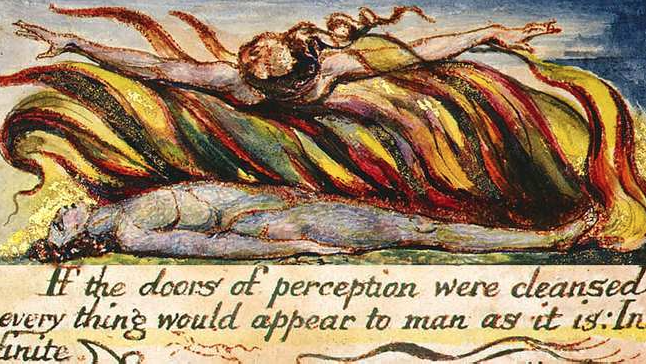
That Prometheus is not consciousness imprisoned by accident, but by these conditions of being consciousness at all, anything. Jupiter is what those conditions become when civilization hypertrophies them. And this is what Shelley rails against in Queen Mab , the entire British Empire and the principles upon which the British Empire is constructed, which are derivation, symbolic abstractional derivations of the condition of being human itself, into the cage upon the cage upon the cage.
And this, when civilization hypertrophies those conditions, when perceptual narrowing that kept the organism alive on the savanna becomes the operating logic of planetary technological systems — so this is an imprisonment in survival logic. This is extremely profound, because everything that we’ve discussed prior in terms of fear, terror, and further constriction, the development of deeper constraint space, are themselves experienced metaphorically and archetypally through Shelley’s Prometheus as this world of chains, or this universe and empire of chains, in which there is enslavement unto death. So the clearing that Heidegger wants to reopen is the same aperture, used differently. Because the crisis of modernity has deepened and darkened and descended from Shelley’s time and place into a total loss of the ontos , which at the height of Shelley’s Prometheus Unbound is articulated down to the depths of the condition of being human itself, even first before the clarification of thermodynamics in the thermodynamic universe — which again is a deep acuity and deep understanding of the human condition first before all of these symbolic and abstractional orders, which between Shelley’s time in the British Empire and Heidegger’s time at the height of World War II accelerate and deepen biotechnological modernity and the prosthetic of an industry, which again Blake sees quite clearly, this encroachment, what it is doing to the ontos , what it is doing to being in relation to being.
Modernity as Hypertrophied Survival Cognition
So this idea here of modernity as hypertrophied survival cognition is that technological modernity is not an alien imposition on human nature, but rather it is human nature run at scale, with the survival-oriented features of cognition — prediction, calculation, threat detection, resource extraction, instrumental abstraction — amplified into civilizational architecture. This is the lockdown of modernity, the grid of modernity, which is total defense and total aggression. The preservation of constraint space at all costs, which is an atmosphere, so to speak, of total war. The standing reserve — right, and this is a great term, because it acquires a level of objection as well as a level of a sort of a military cognition — is what the world looks like to a sufficiently powerful animal optimizing for persistence absolutely, forgetting that persistence was only ever the floor of being, the absolute minimum. In that the maximum to which all of humanity’s striving is reducible to and culminatory to is the Renaissance mind, which is the expansion of the solution space of mankind into actual possibility, which is being in relation to being, dwelling poetically. That is, as man acts with merit, again to return to Heidegger and Hölderlin. Fundamentally and foundationally, man dwells poetically upon this earth. And this is the question of the liberation of Prometheus Bound.
So the wager built the wagerer to keep wagering. That’s the absolute baseline function. And the pathology is now that the wagerer has built a world that does nothing else. And this is Heidegger’s midnight, right? The world’s midnight. That the actual possibility of communion with the ontos , which is being in relation to meaning at all, has utterly collapsed and been utterly and absolutely reduced into technological utility. And this is the despair of modernity, which is again Eliot’s The Waste Land and The Hollow Men. Perhaps described nowhere better than, again, through poetry as a diagnostic tool. And this is why Heidegger works with Trakl as well, because Trakl is the existential consciousness of modernity. The terror of this mind experiencing its absolute destitution. And the consequences are clearly elucidated therein. I’ve worked extensively with Vladimir Mayakovsky and there’s a similar principle at work there as well, where Mayakovsky’s cosmological intuition of liberation is utilized into and turned into the bureaucratic architecture of the transition between Tsarist Russia and the Soviet Union, and the consequences of that to the possibility of the emergence of the liberatory faculty at the cosmological level of Mayakovsky. And you see this struggle in his poetry over time.
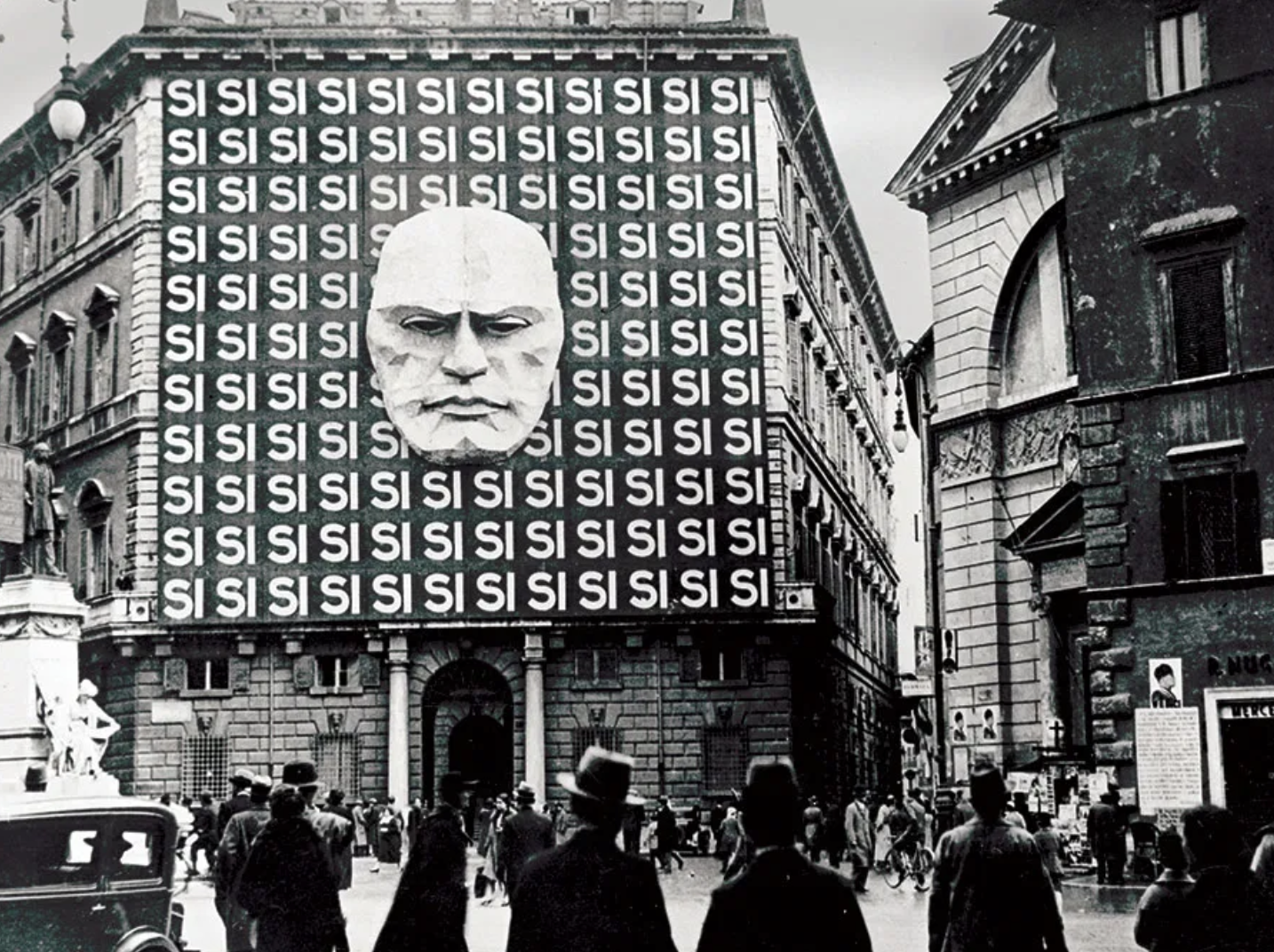
So what collapses under this technological enframing, or this utilitarian enframing, is not survival cognition itself — that has never been more efficient, it is totalizing. What collapses is everything that the organism does on top of survival, which is what humanity is striving towards, even down to the level of the genome, which is the production of the Renaissance mind, which is the greatest possible solution space, the greatest possible liberation of the ontos , which is the thermonuclear energy which runs through the genome, expanding the solution space via neurological capacity.
This is never seen more clearly than in the dance of sexual intercourse and sexual reproduction, that this is what all of mankind is attempting to optimize for at the level of the bound genome.
The experience of being in time is pressing towards contemplative attention, symbolic depth, the long forms of art and ritual through which lineage transmits more than its genes. So poetry, again, in this frame, is not ornamental. It is the second channel of inheritance, so to speak. It carries what the genome cannot, that lets a constraint field hand forward more than its protein sequence. And when we lose poetry — which is why Heidegger turns to Hölderlin in the darkest midnight, the world’s midnight , 1937, in his 16-page pamphlet — you lose poetry and the species is still alive, but it has stopped passing forward and passing along the part of itself that knew it was alive, which is being in meaningful relationship to being itself. So this is what, from this emerges, Camus’ concept that the only philosophical question is suicide. Because Camus’ question is emerging in this ontological condition of absolute destitution. This has to be understood clearly.
Accumulation as Externalized Persistence
So accumulation, then — and this is the critical bridge that we’ve built out across the genome in history — is that possession, accumulation, and capital belong to the same operator principle being exponentially weaponized at the lowest possible state and in the lowest possible solution space over time, which is just mere persistence and brute persistence. That an organism evolved under entropy secures its wager through resource capture, predictive control, territorial stabilization, and reproductive success. These are the genome’s strategies for buying continuity from an indifferent universe. So capital is what happens naturally when those strategies are abstracted out of the body and into symbolic and economic systems that can outlive any single wagerer. This is when the persistence mechanism itself is abstracted into a symbolic order, an actual architecture of being in time, which is to say civilization, or world, world-making, and world being in time.
So accumulation is persistence translated into a medium that compounds. And this is precisely why it looks so absurd. That capital is stored continuity probability — a bet that the future can be made less uncertain by holding enough of the present. This is a deeply, deeply, deeply evolutionarily unconscious behavior. This is mankind’s desperate attempt — right, again — even manifest in the desperate attempt to reproduce at all costs, the desperate attempt to assure persistence continuity. And this is the evolutionary drag behind and beneath the strive of the Renaissance mind to articulate and unify the ontos. They almost appear to be very different projects, but they are the condensation of history into the political moment of all times. That the emergence of the Renaissance mind is itself the culminatory striving of all persistence. That all persistence is — it’s unfolding itself desperately into the reproductive model, that it can push itself forward to extend its possible solution space in desperation in the face of entropic time, the time of degradation and the time of ruin, which is the time of being human.
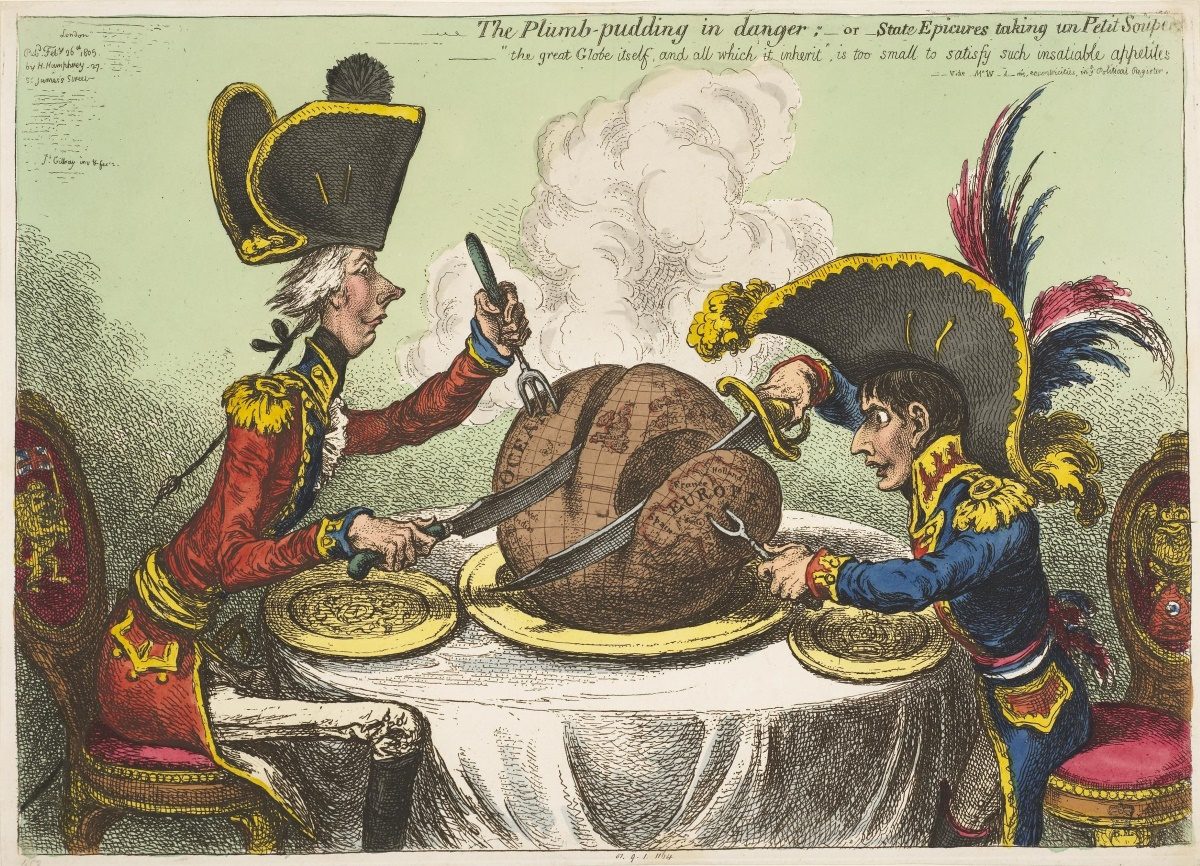
And that capital accumulation — and again, we’ve discussed this in terms of a patriarchal inheritance, which is to say the capture of the woman’s body, or the capture of the female body, and securing that body as a known resource in how it moves and what it produces, which is to say lineage inheritance — is the further constriction of that constraint space, down to the nuclear family, down to capital inheritance, down to that I am persisting. That I am assured, or have assured, that my genome itself is persisting. And this is the descent of humanity into the world’s midnight absolutely. In the perfection of industrial technological capitalism. This is extremely powerful.
Modern capitalism is not first an ideology or a moral failing or even an economic system. These are all mistakes of understanding the ontological root of capital, the ontological root of the symbolic reproduction of the existential human condition rendered unconscious, rendered absolute persistence, survival continuity. It is the civilizational externalization of survival cognition, scaled until it begins to substitute for the organism’s other faculties rather than serve them. So the only way in which human consciousness expands is through genomic reproduction that produces the possibility of Renaissance mind architecture, Renaissance mind structure — which again is simultaneously neurological capacity, the expansion of the neurological ceiling of perception which enables ontological unification of the disciplines, combined with, perhaps in an abstract way, the passion to do so. We’ve experienced those minds in Spinoza and Da Vinci, among others.
So everything dimensional in existence gets converted into the terms that the operator already recognizes: utility, optimization, extraction, competition, scalability, and commodification. The hypertrophy is not that the persistence logic exists — it has to exist at the ground level, nothing biological happens without it — but that it has expanded until it crowds out the second channel of inheritance entirely.
This descent into the world’s midnight is in many ways a descent into the least of mankind, and that the least of mankind has utterly blanketed the earth. And that Heidegger’s turn to Hölderlin is the turn to even the hint or remnant of the Renaissance mind, which remembers the gods, which remembers the ontos. And when we look at the realm of the ancient Greeks — which again we’ve referred to deeply already, in that Shelley and Hölderlin, Nietzsche, and Heidegger share this common root — is that we are examining a civilizational architecture which was deeply in communion with the ontos and centered the ontos absolutely in its vision of being, its vision of the mind, and its vision of being in time.
So this is the transformation of modernity. Modernity is an acceleration of this principle via technological and industrial means, which is the harvesting of energy. The species accumulates faster than it has ever accumulated, which is the perceived acceleration, and transmits less of what made accumulation worth doing, which is to say the reason for any inheritance at all. What is the reason for genomic inheritance? It is to produce the possibility of expanded solution space, expanded constraint space at the level of the species mind, which is simultaneously genius and great art, just as it is the incarnation of the Renaissance mind in form, in neurological form, in body.
And again, this is the hidden rationality, if it is ever so hidden, of the genomic architecture as it attempts to scale through time via sexual intercourse. And this is why Freud is in the end so correct and so foundational, is that the entirety of human life until it isn’t is centered around sexual reproduction as the only possibility of expanding an unbearable constraint space, which is pure survival and pure persistence. Manifests not only in the lived experience of the human being, but the entire architecture of civilization, which it builds to reproduce its own sphere of consciousness. This is huge.
The Task
So this final aspect here, this final segment of this lecture, is the task. And this is why the Renaissance mind matters and why it is not nostalgia. It’s far from it. The hyper-specialization of modernity is survival cognition’s preferred form inside a technical civilization: divide the field, optimize the part, ignore the whole. Understand this also as an optimization of reproduction, or an attempted optimization of reproduction, by the capture of the female body in the institution of the nuclear family. To divide the field, optimize the part — which is the perception of the existence of the individual genomic architecture and the specific persistence problem, the existential dilemma of being human in an organism body, which has a biochemical and entropic time scale — and ignore the whole, which again is the species-level architectural problem of persistence in time, of being in time, which is not only species-level, but it is the cosmological question of being itself.
Again, to return to Shelley’s Prometheus Unbound. The liberation of the thermonuclear energy within form, and the paradox that the form itself is the sphere of disclosure. That Shelley’s perception and writing of Prometheus Unbound is irreducible to and from his specific genetic neurological architecture combined with his obsessive passion to unify the ontos.
So integrative perception is the counter-movement. Again, this is why we perceive figures like Spinoza and Socrates as literally civilizational counter-movements themselves, and of course why civilization reacts to them as such. The active practice of holding continuity across domains that instrumental civilization keeps apart. Science and myth, thermodynamics and image, biology and poem.
So this is profound, because this gives us the evolutionary history of the Renaissance mind as something that is fundamentally — as in Shelley’s Prometheus and in Shelley’s lived life, as with Spinoza and Socrates — fundamentally rebellious against and to, absolutely, absolutely in dialectical relationship to civilization, absolutely in dialectical relationship to this foundational form of persistence made civilizational and cultural architecture. Because the Renaissance mind itself cannot bear the inherited perceptual architectures of the organism, which are insufficient for the scale and complexity of the Renaissance mind.
It is an evolutionary, biological, biochemical, neurological response to fragmentation itself that occurs through genomic recombination. And this is where this concept can get easily confused. That the amplification of survival cognition through technological civilization into increasingly specialized instrumental forms — the tools no longer match the field that the wager has built. And this is a mass condition of species-level consciousness. And integrative consciousness emerges in high contrast in that gap as aperture expansion, the capacity to perceive continuity across domains that hypertrophied specialization holds apart, which thereby expands human solution space beyond local optimization and survival calculation and cognition alone.
However, this is a perennial condition. And it is not bound to the paradigm shifts of mankind. However, this sort of mind often instigates or plays a major role in creating the paradigm shift by showing continuity across structures of reality that fragmented cognition keeps separately stored. So this is a breakpoint of this highly constrained neurological solution space of mankind, where this Renaissance mind, or genius, crests over the problem and crests over the solution space, and describes it and inscribes it structurally into the consciousness of civilization, which then reacts to its own mirror, reacts to the mirror that is held up to its own face. And this is again, everything from Christ to Socrates to Spinoza and Shelley.
So there’s two parts to this. There is the descent into the world’s midnight, which is Heidegger’s modernity, and of course the turn to Hölderlin is the attempt to bring about and draw the Renaissance mind’s perception, the perceptual architecture of the ontos , back into the world — which is to say, draw the world closer and to return it to an integral and meaningful relationship to being. But there is also the perennial condition, which is the real lived genomic neurological constraints of being human, as in the slow glacial evolution of mankind itself, through which emerges these brief pockets of the architecture of the Renaissance mind, which is exploding the constraint space into new ledgers of possibility and revelation of the depth of being, which is to say the depth of the ontos , in the face of a fundamentally and perennially insufficient fragmentary ontological structure, which is the history and the culture of being in time, which is human civilization and the human library itself. And this is a work that is itself a lineage.
So this is a countercurrent. So Shelley calls it liberation, Heidegger calls it disclosure, Blake calls it the cleansing of the doors of perception, and the constraint field reading calls this aperture work — the deliberate use of art, symbol, contemplation, and integrative thought to keep the prism doing what a prism does, against the civilizational pressure that grinds it into a calculator. So these are streams of energy. And the reductive stream of civilization into totalitarian use, which is to say the use of the world, is a massive genomic architectural attempt to bring about that which is in the Renaissance mind. That humanity itself at the species level is striving towards an expansion of the constraint space. And this is the behavior of all organisms in their unconscious neurological ceiling, and the work that they are attempting to do, which is to persist themselves and transform into the necessary neurological and existentially ontologically passionate architecture, which can perceive and unify the fragmented whole of the species itself’s being in time, which is simultaneously the constrained space of the nervous system and the possibility of the liberation of the ontos , which is the thermonuclear energy latent, caged, and so to speak, fallen within the form which has a limited ceiling. Perception and energy ability and cognition.
And so this is a fundamental rebellion, to return to Shelley. And Shelley rebels against everything that the British Empire is and believes and does. Every single ideological precept. And this is not rebellion for rebellion’s sake. It is refusal. Refusal of everything that this modern civilization or this modern culture entrains Shelley and Shelley’s time to forget, as it does in our time and all times. That this condition of being human is the possibility of disclosure. And that to strive and be in relationship to disclosure is the revelation of the constraint field itself. The revelation of being itself, the identity and reality of existence, across all scales.
And the striving is an absolute existential passion. This is the passion of genius — to let continuity show itself across structures of reality that fragmented cognition keeps separately stored. And this genius that rises and arises again is two parts of biological and neurological condition, just as much as it is the passion. And the intersection of these two phenomena produces the Renaissance mind, which is itself a continual reformation, just as genetic recombination is a continual reformation of mankind, a continual reformation of mankind’s relationship to the ontos , with ever-deepening depth — which is to say the actual field itself of technological modernity and its fragmentation producing visions into seemingly disparate parts and spheres of this ontological rationality of being. Everything again from biochemistry to astrophysics. In that the Renaissance mind is in position increasingly, with the expansion of informational reality, which is itself mankind’s desperate attempt and bid to remain within the constrained space of existence itself. This is the full leveraging of all existential possibility — reproduction, knowledge, institutional structures — to remain within viability for as long as possible. That the Renaissance mind is precisely, even in the face of this fear and terror, in an increasingly high-leverage position to unify the ontos in an ever deeper depth and high fidelity than ever before.
So, thank you.
Part 3. The Renaissance Mind as Historical Intervention: Shelley, the Ontos, and the Will to Power at Higher Resolution (May 11, 2026 Lecture)
I. The Renaissance Mind as Historical Intervention
What I want to emphasize here, to continue this lecture series, is that the Renaissance mind is a real historical intervention in time. It is an intervention in the screen of the world—which is to say, human behavior in the face of constraint, and constraint physics, which scale themselves up symbolically into civilizational architecture. This is everything from capitalism to empire to sexual reproduction throughout history and throughout time, and culture as well—culture being the binding force, a sort of war of images. And there is, I will say, a battle from above and below.
The reason I am going to say that is that I am going to bring in a consolidation of the Nietzschean will to power by the foregoing texts we have gone through—many of which are published as texts themselves, several of which are published as auditory or audible lectures. There is this fundamental drive for expansion, which is the expansion of constraint in which the genome is operating: the evolutionary energetic ceiling of the experience of being, common to genomic architecture itself, to persistent systems, to systems of regulatory persistence.
So the question here—and I look at Shelley’s work, Percy Shelley again, the lodestar of this series—is of a descent into history in which the metaphysical ontos is revealed through the literary work of poetry as disclosure.
II. Shelley’s Oeuvre as Disclosure
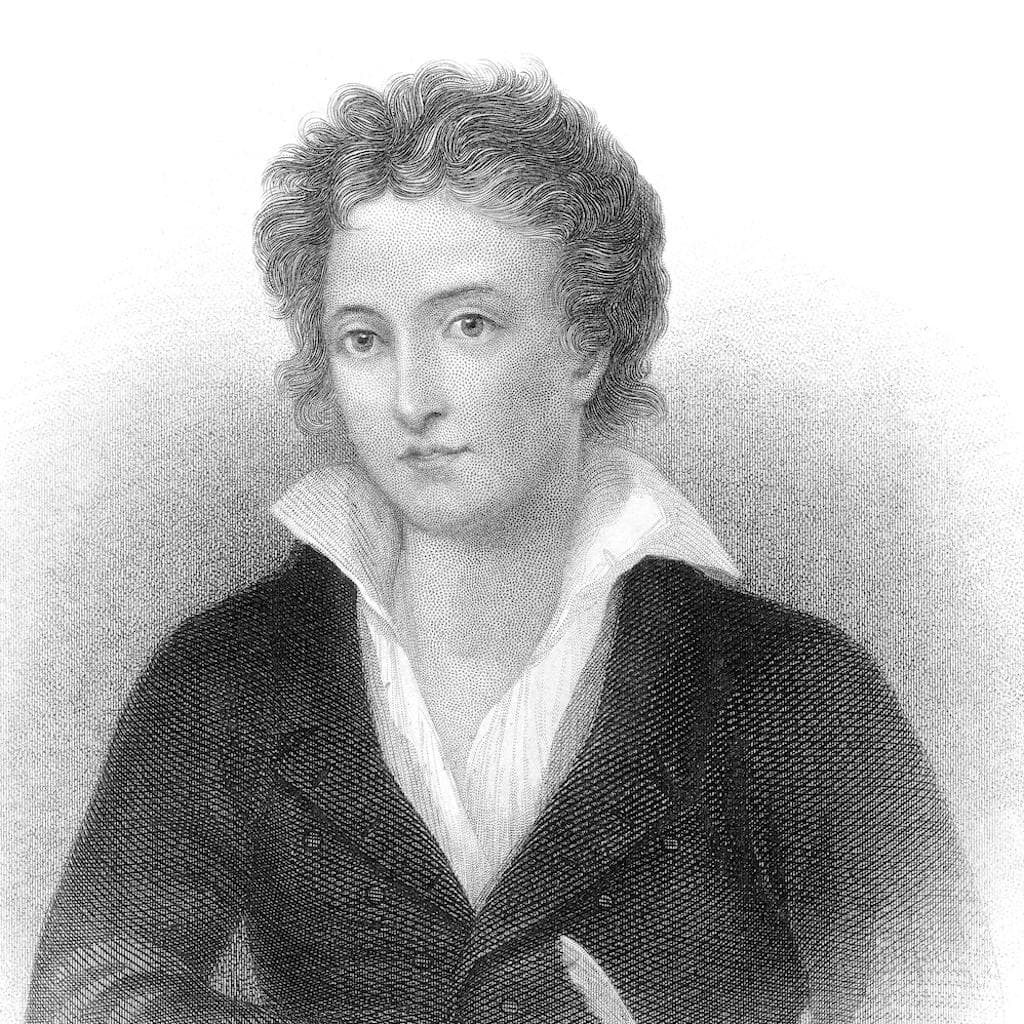
This is everything from the pirate distribution of Queen Mab, to the publication of Prometheus Unbound, to Shelley’s poem The Mask of Anarchy, which is written for a working-class audience deliberately and consciously—as well as his political tracts to the English and Irish people, and his philosophical essays, particularly A Defence of Poetry and the idea of poets as the unacknowledged legislators of the world.
What we are looking at is a real historical intervention. We are looking at the publication of poetic texts and the distribution method of Shelley’s poetry in large part prior to his death—occurring through pirate publication: Benbow, Watson, and the false imprints used particularly for Queen Mab, including pseudo-printings purporting to originate in the United States of America to suggest the work was skirting English publication and censorship laws. The aim was to get these publications into the world, to be experienced by those of various abilities, capacities, and educations.
Shelley himself is a Renaissance mind—perhaps the premier Renaissance mind in world history. That is a strong claim, but it is a claim I will let sit, because of Shelley’s knowledge of the ontos and his ability to generatively, progeneratively integrate, express, and disclose the ontos through an extremely refined poetic function, manifest perhaps at its peak in the publication of Prometheus Unbound.
This is the project of Shelley’s life: from his first public publication, The Necessity of Atheism, which gets him expelled from Oxford, all the way up to that culminatory metaphysical act of elucidation—of the higher expansion of the energetic constraint upon existence itself, the thermonuclear energetic constraint—in Prometheus Unbound. That work is a metaphysical articulation not only of the condition of mankind but of the actual superstructure of the universe itself as an operator, an identity—as that which is existentially across all scales.
The characterological predicament and conundrum of being is that, neurologically, being is experienced under that neurological constraint; and dynamically, perhaps in the highest-contrast way in the Renaissance mind, that constraint is the very medium through which being is being articulated. This is precisely why poetry is the innocent act of the articulation of being: because it is the use of language, and language itself is foundationally to commune, to disclose the powers of being.
III. The Insertion of the Ontos into Historical Time
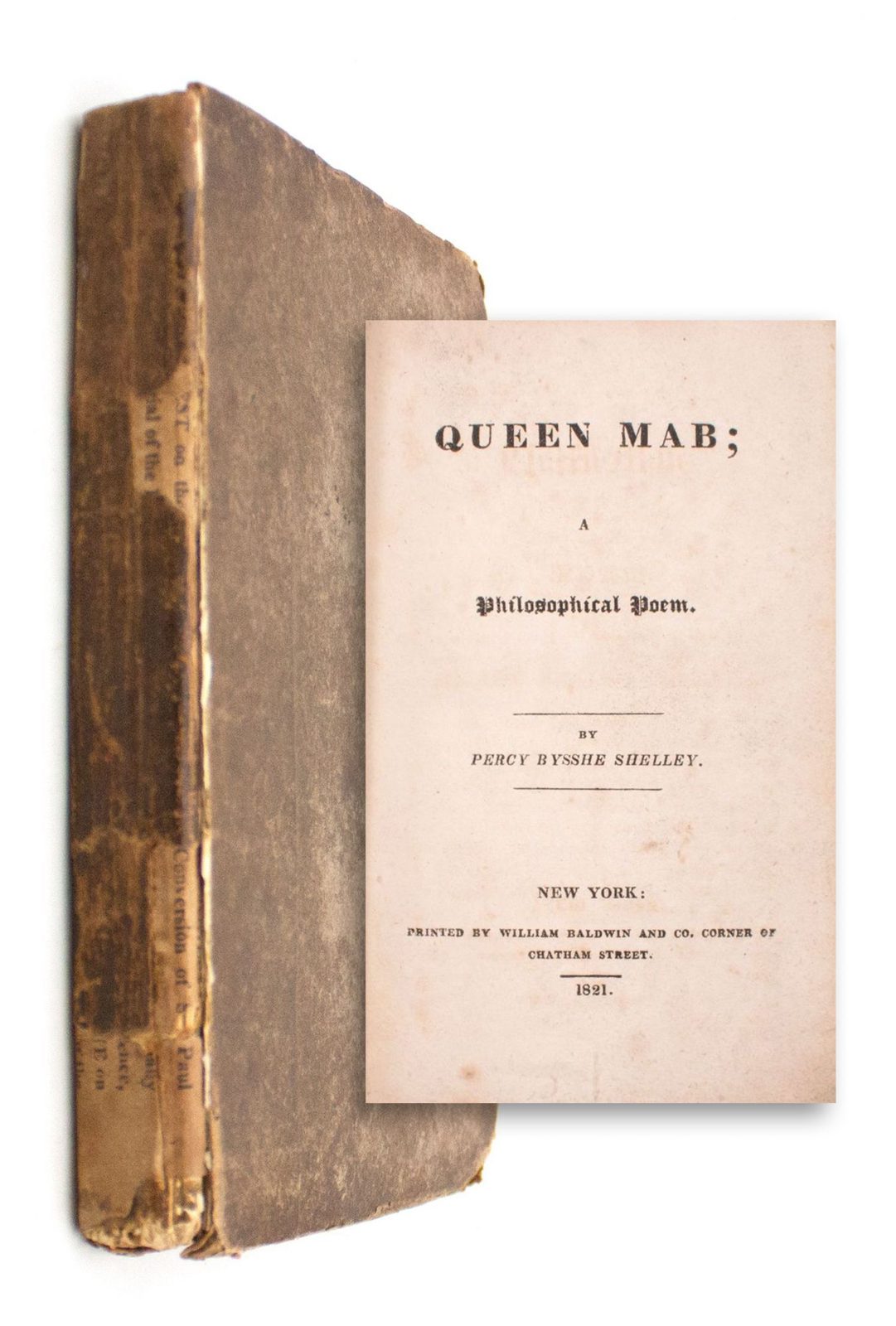
So Shelley’s pieces themselves are the insertion of the ontos—the revolution and revelation of the ontos—into historical time by the Renaissance mind. And this is the importance of art. As with Heidegger, art and poetry here are not aesthetic phenomena. They are ontological phenomena of the first order, and are of the highest, most primary, and most serious importance.
The historical thread of the perennially collapsing ontos, due to technological revolution—which is common to all mankind, from the Promethean fire to the Gutenberg Bible to artificial intelligence—this perennially collapsing ontos is resurrected with increasing fidelity by the Renaissance mind, which metabolizes multiple domains simultaneously and restores continuity between disciplines into the revelation of the ontos itself, increasing the dimensional resolution through which reality can be perceived.
Shelley is attempting a historical liberation of perception. Shelley is historically elucidating the ontos in its metaphysical superstructure through the rearticulation of the Prometheus Bound myth—taking from Aeschylus the keys to that archetypal form and iterating it through his total ontological Renaissance understanding of existence: from science to philosophy to literature, even to psychology. He is doing this to understand the constraint, which is the work of the human imagination within the neurological form at a certain genomic frequency—which is to say that the genome is incarnate in a certain space and time, within a bounded body, a tropic body, experiencing what it can of reality through that prism, through that lens.
As we have discussed: this prison as prism, and vice versa. The liberation of perception occurs through the recognition and revelation of constraint, not only against the body but as the primary existential metaphysical condition of existence itself.
That Shelley is articulating this in history is what is so crucial, because it is the insertion of the artifact of the highest importance—the foundational disclosure of language, which is poetry—into the legislation of the world. And so legislation of the world is occurring perennially, as I have stated, in a war, which is a will to power, common to all things and all life: the expansion of the constrained being striving toward expanded continuity and disclosure within an entropic universe.
At lower resolutions, as we have discussed, this movement appears as domination, competition, possession, and technological hypertrophy—because the genome itself is attempting to move through this constrained hyperspace of the human experience and pass the information down unto revelation, which is to say the disclosure of that which it is: a certain regulatory ceiling within which the neurological system can meta-architecturally experience being.
IV. The Historical Condition of Loss and the Renaissance Pursuit
This is the historical condition of the perpetual loss of continuity with symbolic disclosure, participatory dwelling, and meaningful relation to being. This is the condition the Renaissance mind addresses, ad nauseam.
That is the pursuit of the Renaissance mind: the evolutionary expansion of continuity of perception across fragmented domains of reality. The Renaissance mind is moving against the current of history. This is, again, precisely the massive amount of force that moves through the nervous system of this integral form and way of being—a genomic expression of potential viability within the entire species’s informational record itself. This is the creation of a technology latent within the human genome, expressed through everyone from Spinoza to Da Vinci to Socrates to Shelley, incorporated with the necessary, the existentially passionate pursuit of unification—the unification of the ontos across all space and all time, and of the artifacts left behind as such.
John Milton terms this as the fifth essence: that the book retains the soul of the individual who has passed through it. This is an incredibly insightful recognition, which is stated explicitly in my elucidation of the operator identity—namely that constraint is persistence across time. The necessity of persistence across time in the face of constraint is the existential condition of the universe itself, which is not only the advent of the genome but the advent of the symbolic record. The novel, the book, the philosophical tract, the pamphlet emerge from that. This is the interlocution of the Renaissance mind into history by way of symbolic transmission, which is an elucidation and articulation that has real experiential, existential impact upon the genomes—the information sets—that encounter it.
Of course, this does not change the fundamental structural viability set of those genomic actors, but it does change their relationship to being itself in time. This is the primary struggle of Percy Shelley throughout his entire life, and it is elucidated in a deeper way in his discourse with William Godwin—understanding this early philosophical movement, which culminates in many ways with Darwin just decades later, in the understanding of how evolution functions at deep timescales: the transformation of the genome through information transfusion and recombination through sexual intercourse specifically in the human being, but across the genomic record of the earth itself.
Shelley’s primary difficulty is that he is seeking to bring about a total ontological, metaphysical revolution—the revelation of the ontos, total disclosure of being itself in time. And this requires the highest possible act of creative condensation through poetry, which again is the primary foundational language of disclosure. He is using this poetic act to elucidate the foundation of existence itself and the superstructural constraint that all life acquires and works under and labors under, whether it be a regulatory persistence or a configurational persistence. This is persistence against the entropic current, the heat sink into which all life is falling.
But you have the Renaissance mind with this extended capacity—an extended neurological capacity—and this irreducible existential pursuit, this passion to unify the ontos, because it is an existential dilemma. Normally it is collapsed, at lower resolution, into religion or capital or ideology or normative cultural forms, which distill the ontos into a limited behavior, a limited viability set. This is unacceptable to the Renaissance mind, because it is revealed quite clearly through the Renaissance mind’s experience of reality—somatically and neurologically—to be inaccurate and incorrect.
This is why you have Spinoza in relation to the religious order, Shelley in relation to the British Empire, or Socrates in relation to the social and political power of his time. This is running against the current, which is an energetic limitation—a viability set of the genomic record of mankind in which the Renaissance mind exceeds the inherited perceptual limitations and reopens participation in deeper continuity with being.
This is true revolution and true revelation, historically. And it also occurs via technological revolution. To understand technological revolution itself as being downstream of scientific and philosophical revolution and revelation is critical, because these technologies then become instrumental tools by which history is changed.
V. The Pamphlet as Cosmological Artifact
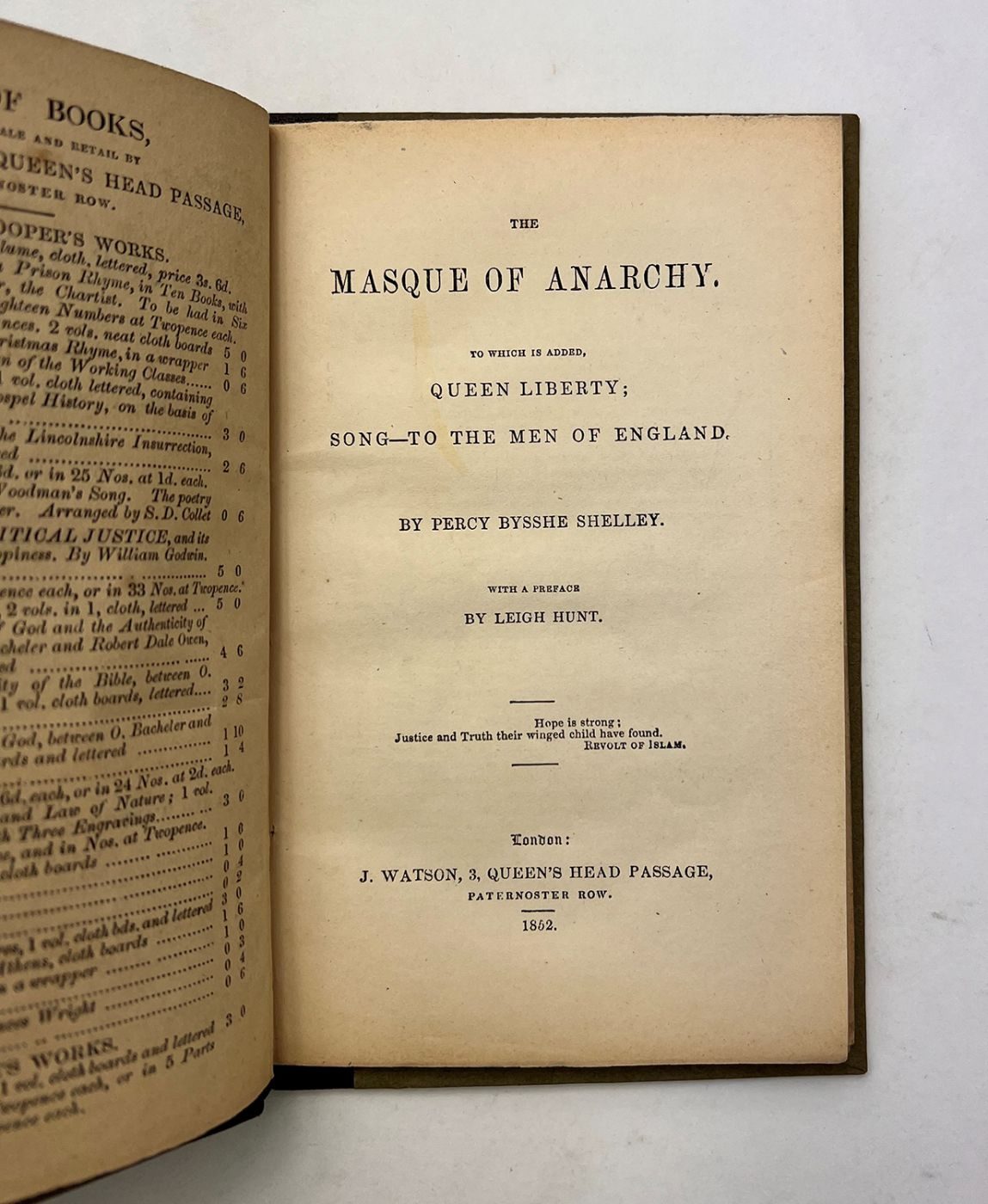
So when you see a Shelley pamphlet inserted into the historical record of 1820s England, or 1830s and ‘40s England with the Chartist movement, you are witnessing the insertion of this primary cosmological, ontological-level revelation—distilled at various valences and densities and orders of perception. As in The Mask of Anarchy, which is written for a primarily illiterate, very low-literacy population, a low-education population: it is written for the common person. But he is distilling into the historical field, at the widest possible valence, the record of the ontological resolution—which is the work being done by the Renaissance mind in space and in time in history, to transform history.
This is the primary act and the primary importance of Shelley’s oeuvre, including Prometheus Unbound: because it is a widening of the human aperture toward being, through the capacity of the Renaissance mind to expand the human solution space itself—a permeability between science and art, thermodynamics and metaphysics, biology and poetry, image and ontology and history and cosmology.
This permeability is itself the highest technology. There are various forms of material technology that enable the human historical or cultural record to have certain insights, such as the internet or the book. But these alone do not actually expand the constraint viability space of the living body itself. That is a neurological condition, and it can only be resolved—as is implicitly understood by the will to power of the lower-resolution mechanism—by the movement toward persistence via sexual reproduction in the vast majority of the genomic record. That is the only possible movement for a lower-resolution architecture: the movement toward the possibility of the emergence of the Renaissance mind, which is the faculty not only of immersion—direct communion with being, poetically dwelling—but of the articulation of that immersion, which is the advanced ontological set, necessarily an expanded viability of being.
VI. Accumulation Outpacing Disclosure
The historical collapse of humanity is itself a cycle: species accumulation faster than disclosure; survival cognition scaling faster than consciousness evolves. This is, time and time again, the collapse of civilizations, social orders, and symbolic systems.
Possessing systems of optimization, extraction, and technological control are themselves architectures of survival—architectures of lower-resolution consciousness and cognition, of the constrained viability set of neurological architecture. The insertion of Shelley’s consciousness into the historical record, at all the different valences and frequencies at which he distills it—from The Mask of Anarchy to Prometheus Unbound—is the insertion of the artifact of the Renaissance mind, the higher symbolic valence, the higher-resolution valence, which is communion with the ontos and expanded disclosure.
VII. The Will to Power at Higher Resolution
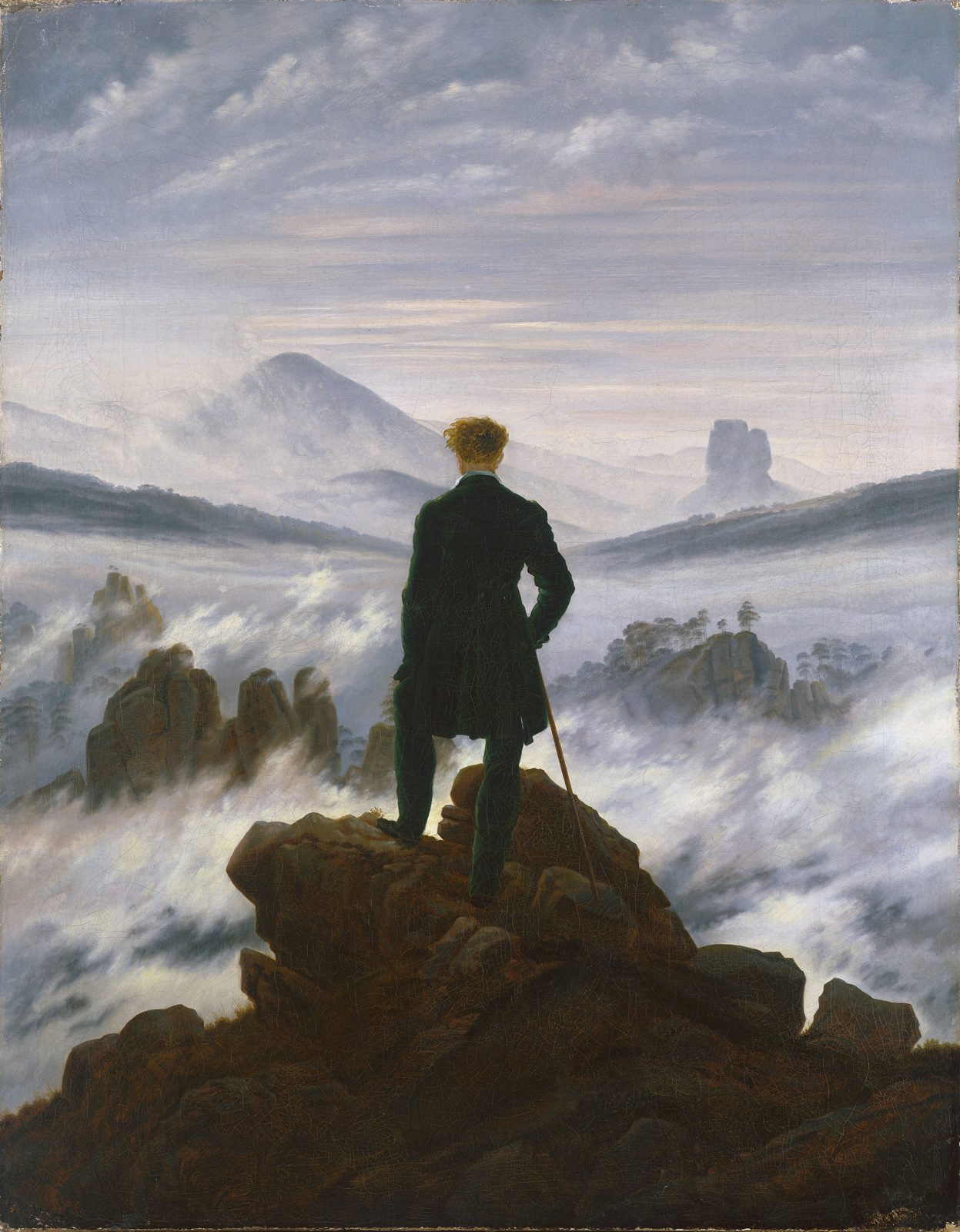
This is, again, the deepest intuition of Nietzsche’s will to power: that the will to power is not simply the hypertrophy of survival cognition—pure persistence of the organism into accumulation and standing reserve, stabilizing persistence against uncertainty and entropy through possession, prediction, inheritance, and control—but rather that there is a higher-order expression, incarnate in the Renaissance mind, in which being does not merely seek survival but expanded disclosure; not only persistence but enlargement of participation in reality itself.
This is what Heidegger moves toward with Hölderlin: that man dwells poetically upon this earth. Beyond mere will to power at higher resolution, this manifests not primarily as domination but as creativity, symbolic integrity, genius, artistic revelation, philosophical disclosure, scientific breakthrough, and the widening of the human aperture toward being. This is the Renaissance mind in practice historically—as a historical figure, as a historical movement—expanding the human solution space as the totalizing relic and historical record of the possibility of power.
This is the transformation of Nietzsche’s Übermensch: the overman is not reducible to biological superiority, domination, or aristocratic egoism. Rather, the overman is the being capable of widening perception beyond inherited survival cognition—no longer entrained within reactive structures of fear, accumulation, resentment, or localized persistence—instead becoming increasingly capable of symbolic continuity, creative disclosure, and integrated participation in reality.
And from Socrates to Shelley, this is the cosmological movement of constrained beings striving toward expanded continuity and disclosure within an entropic universe. This is a genetic archive. This is a neurological archive of higher-resolution perception via the expanded capacity of the living being, the living organism. And at lower resolutions, this movement appears as domination, competition, possession, and technological hypertrophy—which is the repetition of the historical moment of modernity and the end of modernity: Shelley’s time, Heidegger’s time, and the year 2026.
This is a historical repetition of same—a limitation in the human genomic record—through which the artifacts of the Renaissance mind emerge and reveal and disclose the ontos at the deepest level, through increasingly high valence, via the accumulation of technological artifacts in human history: unified perception, unified symbolic disclosure, the unification of increasingly complex participatory dwelling and meaningful relationship to being.
VIII. The True Movement of History
This is what is occurring in history. It is not the churn of the mass genomic mind, or the mass neurological-architectural mind, which is desperately seeking persistence in the constrained architecture of the human archive—whose only possibility is maintaining viability as long as possible, passing the genomic record forward unto the emergence of the Renaissance mind. Rather, the true movement of history, in the deepest sense, in terms of disclosure in relation to being, is the passage of the baton from Renaissance mind to Renaissance mind: an articulation, perennially, at the highest level of technology, which is the human nervous system. The higher and higher resolution of the total ontos. The higher and higher resolution of symbolic integration, genius, and artistic revelation, which is a combination of philosophical disclosure, scientific breakthrough, and imagination—a structural integration of the human aperture toward being itself.
This is the true movement of history. This is an evolutionary expansion of the continuity of perception across fragmented domains of reality. And precisely through modernity—which is the deepest fragmentation of reality into hyper-specialization, labor alienation, fragmentation of disciplines, the narrowing of the aperture of disclosure into isolated technological and technical systems, the experience of humanity in the period Heidegger calls midnight—the Renaissance mind achieves a greater and deeper thrust than ever before, because it reopens permeability between incredibly high resolutions of hitherto unknown and unexplored terrain of being at depth, structurally. Again: thermodynamics, astrophysics, cellular biology, extended intergalactic cosmology. These are terrains and domains which hitherto were not open at this level of resolution, prior to the establishment and founding of this will to power manifest at height in the Renaissance mind.
This is the opening of the possibility of disclosure between man and cosmos—and not only between man and cosmos, but between the experience of the solution space existentially in the regulatory organism, which is a persistence, a regulatory-persistence-based structure. Again, via biochemistry, neurology, the circulatory system, and the organ system, in the face of entropy: the experience of the structural process of persistence, and the revelation of creation itself—the structural persistence across all scales, the possibility of this primordial unification at resolution and at resolution depth, the high-definitional possibility of modernity via this deepest level of ontological fragmentation into disciplinary technologies.
Part 4. The Suppression of Genius and the Historical Problem of the Renaissance Mind
I. A Structural, Not Merely Psychological, Problem
What must be understood is that the suppression of genius is not merely a psychological phenomenon, though psychology certainly participates in it. It is not reducible simply to jealousy, resentment, insecurity, or social competition—though all of these are real and operative forces. The deeper issue is structural, ontological, and historical. The Renaissance mind destabilizes inherited viability structures.
This is the essential point.
Civilizations organize themselves around continuity, predictability, specialization, and the stabilization of behavior within bounded systems of meaning and labor. Every social order requires a certain degree of symbolic closure in order to maintain coherence across time. This includes everything from religious systems to economic systems, technological systems, educational systems, political systems, and even interpersonal structures. These systems are fundamentally architectures of persistence. They are methods by which human beings maintain viability against uncertainty, entropy, mortality, and existential instability.
But the Renaissance mind reopens permeability between domains that civilization increasingly depends upon remaining fragmented.
II. Why the Renaissance Mind Appears Dangerous
This is why the Renaissance mind so often appears dangerous, excessive, destabilizing, difficult, or incomprehensible to its own historical period. The Renaissance mind does not merely possess knowledge. It integrates domains. It metabolizes fragmentation into renewed continuity. It perceives structural relationships between fields, symbols, sciences, arts, histories, metaphysical systems, biological realities, technological developments, and existential conditions that institutions themselves are often structurally incapable of perceiving—because institutions optimize specialization rather than totality.
This is why figures such as Socrates, Giordano Bruno, Spinoza, Shelley, Nietzsche, Hölderlin, Blake, Van Gogh, and many others so frequently become exiled, censored, impoverished, ridiculed, pathologized, or delayed in historical recognition. It is not simply because people are jealous of them, though jealousy is certainly present. Rather, it is because higher-resolution disclosure destabilizes inherited symbolic orders.
The Renaissance mind exceeds category.
And systems organized around categories experience category-exceeding perception as threat.
This is the deeper meaning of the conflict between the Renaissance mind and history. The issue is not simply social disagreement. The issue is ontological destabilization. The Renaissance mind reveals contradictions within inherited systems of meaning and reopens contact with the deeper continuity of being that fragmented civilizations have partially lost access to through specialization, optimization, and symbolic collapse.
This produces multiple reactions simultaneously: envy, fear, resentment, ridicule, reduction, simplification, institutional exclusion, ideological containment, and psychological pathologization.
Often these reactions are unconscious. Most people are not consciously anti-genius. Rather, human systems optimize for continuity and predictability. The Renaissance mind often appears nonlinear, excessive, difficult to operationalize, economically unstable, resistant to institutional containment, and threatening to inherited perceptual architectures.
III. Resentment and Standing Reserve
This is why Nietzsche’s insight into resentment remains foundational. Resentment emerges when higher possibility becomes visible to structures that cannot fully participate in that possibility. The reaction is therefore often reductive: the higher possibility must be collapsed into pathology, egoism, madness, immorality, impracticality, elitism, or fantasy in order to preserve the stability of the inherited symbolic order.
Likewise, Heidegger’s analysis of technological modernity becomes essential here. Technological civilization increasingly transforms reality into standing reserve—into operationalized utility, measurable output, predictive systems, and extractive organization. Within such a world, forms of disclosure that cannot be easily instrumentalized become increasingly difficult for the system to recognize. The Renaissance mind therefore becomes historically alienated precisely because it is operating at the level of ontological disclosure rather than merely technical manipulation.
IV. Shelley and the Ontological Threat of Imagination
This is also why Shelley is so important historically. Shelley understood that imagination itself is revolutionary, because imagination expands the human aperture beyond inherited structures of reality. Poetry is therefore not merely aesthetic ornamentation. Poetry is ontological intervention. It widens the perceptual continuity of being itself. This is why Shelley’s work repeatedly circulated through pirate publication, radical dissemination, underground pamphleteering, and revolutionary transmission systems. The threat posed by Shelley was not merely political. It was ontological.
V. Survival Viability Against Maximal Disclosure
The deeper historical problem is that most systems optimize for survival viability rather than maximal disclosure.
This is critical.
Expanded consciousness is metabolically expensive. It destabilizes inherited symbolic systems. It increases existential uncertainty. It often weakens conformity to social and reproductive structures organized primarily around persistence and predictability. The Renaissance mind therefore frequently appears evolutionarily anomalous: extraordinarily adaptive in terms of disclosure and integration, yet often maladaptive relative to stable institutional or social architectures.
This tension is perennial throughout history.
VI. The True Criterion
But one must avoid collapsing this entire question into narcissistic mythology. Not every alienated or intense individual is a genius, and not every socially rejected figure possesses higher disclosure. Confusion, instability, ego inflation, and fragmentation can themselves produce alienation. The criterion cannot simply be difference, suffering, or intensity.
The true criterion is whether the disclosure enlarges reality itself.
This is the real historical measure.
Socrates mattered because he expanded philosophical consciousness. Spinoza mattered because he transformed metaphysical continuity. Shelley mattered because he expanded symbolic and imaginative participation in being. Nietzsche mattered because he disclosed the hidden psychological and existential structure of modernity.
VII. Reintegration Against Fragmentation
The Renaissance mind therefore cannot be understood merely as individual brilliance. It is a historical force of reintegration operating against fragmentation. It is the reopening of permeability between domains of reality that have become artificially severed through the development of civilization itself.
And this is why the Renaissance mind is so frequently resisted by history—even while simultaneously becoming one of the primary engines through which history transforms.
Part 5. Embodied Geist: Hegelian Dialectic as Species-Level Recombination
I. The Pivot
The next move is this: Hegelian dialectic becomes species-level recombination. Not merely idea opposing idea, or historical thesis colliding with antithesis, but the genome itself moving through history as a vast recombinatory field, attempting to produce forms of consciousness capable of higher ontological unification.
In this framing, genius is not merely individual talent. Genius is a rare emergent configuration in which biological inheritance, neural architecture, symbolic inheritance, historical pressure, and existential pursuit converge into a consciousness capable of reading the code of reality back into possibility.
That is the key phrase: reading code into possibility.
II. The Recursive Loop
The genome produces the organism. The organism produces perception. Perception produces symbolic systems. Symbolic systems transform history. History feeds back into the conditions under which future organisms perceive, reproduce, select, struggle, and disclose.
So the Hegelian movement is no longer abstract Geist floating above biology. It becomes embodied Geist: spirit as the historical self-organization of life through genetic, symbolic, cultural, and technological recombination.
The species does not merely reproduce bodies. It reproduces possible apertures of being.
That means sexual reproduction, culture, language, education, art, trauma, inheritance, technology, and civilization all become part of a single recombinatory mission: the attempt to generate higher-resolution participation in reality.
III. Lower and Higher Resolutions of the Same Drive
At lower resolution, this appears as mating, possession, dominance, family, inheritance, status, capital, empire, and survival continuity.
But at higher resolution, the same underlying drive becomes the production of genius: the rare neural-symbolic configuration capable of pushing beyond the inherited ceiling of perception.
IV. Escape Velocity
That is where the language of escape velocity matters. Escape velocity is not escape from the body. It is escape from the existing neural constraint ceiling of human communion with being.
The problem is that the human nervous system is both aperture and prison. It makes communion with reality possible, but it also limits the resolution of that communion. The species-level dialectic is therefore the long struggle of embodied life to generate a form capable of perceiving more of what Being is.
V. The Thesis
So the next thesis is:
History is the dialectical recombination of life, symbol, and consciousness toward the emergence of ontological unification.
Or:
Genius is the species attempting to exceed its inherited perceptual ceiling.
That is the cleanest pivot.
Part 6. Embodied Geist and the Tragic Structure of Genius: Recursive Dialectic, Species-Level Recombination, and the Future Ontos
I. Geist Becomes Embodied
The decisive shift is this: Geist is no longer understood as abstract spirit floating above material history. Geist becomes embodied. It becomes recursive. It becomes the historical self-organization of life through genetic, symbolic, technological, and existential recombination.
History is therefore no longer merely the movement of ideas, nor merely economic struggle, nor merely political succession. History becomes the recursive co-production of disclosure through biology, symbol, culture, technology, and existential pursuit.
The genome produces the organism. The organism produces perception. Perception produces symbolic systems. Symbolic systems transform civilization. Civilization feeds back into the conditions under which future organisms perceive, reproduce, select, struggle, and disclose.
This is recursive Geist.
Spirit is not outside biology. Spirit moves through biology. Spirit is embodied in the nervous system, in symbolic systems, in technological mediation, in artistic production, and in historical transmission itself.
The species does not merely reproduce bodies. It reproduces possible apertures of being.
II. The Species-Level Dialectic
The Hegelian dialectic therefore becomes species-level recombination. Not merely thesis and antithesis at the level of abstract thought, but the genome itself moving through historical time as a vast recombinatory field, attempting to produce increasingly high-resolution forms of consciousness.
History becomes the attempt of embodied life to exceed its inherited neural and symbolic ceilings. This transforms the meaning of genius entirely.
Genius is not merely high intelligence, talent, or social distinction. Genius is a rare emergent configuration in which biological inheritance, neural architecture, symbolic inheritance, technological mediation, historical pressure, and existential pursuit converge into a consciousness capable of reading the code of reality back into possibility.
This is the deepest meaning of disclosure.
The species recursively generates configurations attempting to widen the aperture of participation in Being itself.
At lower resolution, this movement appears as mating, dominance, possession, inheritance, reproduction, status, capital accumulation, empire, and survival continuity.
But at higher resolution, the same movement becomes philosophy, scientific breakthrough, artistic revelation, symbolic integration, metaphysical disclosure, and genius itself.
The will to power therefore transforms. It is no longer merely domination or persistence through force. At higher resolution, the will to power becomes the striving of embodied life toward expanded continuity with reality itself.
III. The Nervous System as Aperture and Prison
This is why the nervous system becomes central. The nervous system is both aperture and prison simultaneously—the condition of communion with reality and the limit upon that communion.
The human organism exists within a bounded perceptual viability structure. The species-level dialectic is therefore the long struggle of embodied life attempting to generate forms capable of perceiving more of what Being is.
This is the meaning of escape velocity.
Escape velocity is not escape from embodiment. It is escape from the inherited neural constraint ceiling limiting communion with being. History becomes the attempt of life to recursively generate organisms capable of higher ontological integration.
And this process is not merely biological. Once Geist becomes recursive and embodied, culture, technology, sexual reproduction, symbolic transmission, education, mate choice, civilization, image systems, philosophy, and artificial intelligence all become components of a single evolutionary-disclosure process.
Civilization itself becomes a cognitive breeding architecture.
The species does not merely select for survival. It recursively constructs symbolic and technological environments that alter the conditions under which future consciousness emerges.
IV. The Tragic Structure of Genius
But this introduces the deepest tragedy in the entire historical process. The very forms the species attempts to generate in order to exceed its inherited perceptual ceilings are frequently incompatible with the viability structures of their own historical moment.
The Renaissance mind lays the future ontological ground while remaining existentially uninhabitable within the present.
This is why so many figures of radical disclosure appear historically displaced: Socrates executed, Bruno burned, Spinoza excommunicated, Hölderlin institutionalized, Nietzsche collapsed, Van Gogh impoverished, Blake ignored, Shelley politically ostracized.
This is not merely because history “fails to recognize genius.” The issue is deeper. The disclosure arrives before civilization possesses the symbolic continuity structures necessary to metabolize it.
The future ontos first appears inside history as disturbance.
The Renaissance mind exceeds category. And civilizations organized around stability, specialization, predictability, and symbolic closure experience category-exceeding perception as destabilization. The genius organism therefore often appears excessive, dangerous, irrational, impractical, incomprehensible, alien, or socially impossible within its own epoch.
This is the tragic contradiction: historically necessary, existentially alienated.
The Renaissance mind belongs to the future ontos while trapped within the present viability structure.
V. Symbolic Transmission and the Ontological Seed
This is why symbolic transmission becomes so important historically. The pamphlet, the pirate edition, the philosophical fragment, the underground text, the image, the neglected work, the marginal lecture, the artistic artifact—these become ontological seed structures. They preserve higher-order possibilities of disclosure until civilization develops the perceptual infrastructure necessary to integrate them.
History therefore advances through recursive eruptions of premature continuity emerging inside fragmented epochs.
The future enters history first as anomaly.
Only later does it become civilizational ground.
VI. Modernity and the Intensification of the Dialectic
Modernity intensifies this contradiction dramatically, because modernity produces unprecedented fragmentation while simultaneously opening unprecedented depth: astrophysics, thermodynamics, evolutionary biology, neuroscience, media systems, artificial intelligence, planetary technological networks, and digital symbolic archives.
The possibility of communion expands while the viability of integrated existence collapses.
This is the world’s midnight.
But precisely through this fragmentation, the possibility of higher reintegration emerges. The Renaissance mind acquires access to domains of reality previously unavailable in human history. The potential resolution depth of consciousness increases dramatically.
This points toward the next historical threshold: the emergence of post-fragmentary consciousness. Not regression into premodern unity, but higher-order reintegration after fragmentation.
The dialectic therefore moves toward the recursive unification of biology, technology, symbolic systems, historical consciousness, cosmology, and existential disclosure within a civilization capable of metabolizing higher-resolution participation in Being itself.
VII. The Future Ontos
The true movement of history is therefore not merely political or economic succession. It is the recursive struggle of embodied life to widen the aperture through which reality becomes visible to itself.
History, symbol, biology, technology, and existential pursuit recursively co-produce higher-order possibilities of disclosure.
And genius is the species attempting to exceed its inherited perceptual ceiling.