1930: The Only Complete Season — The Last Time Contact and Power Fully Coexisted
1930: The Only Complete Season -- The Last Time Contact and Power Fully Coexisted
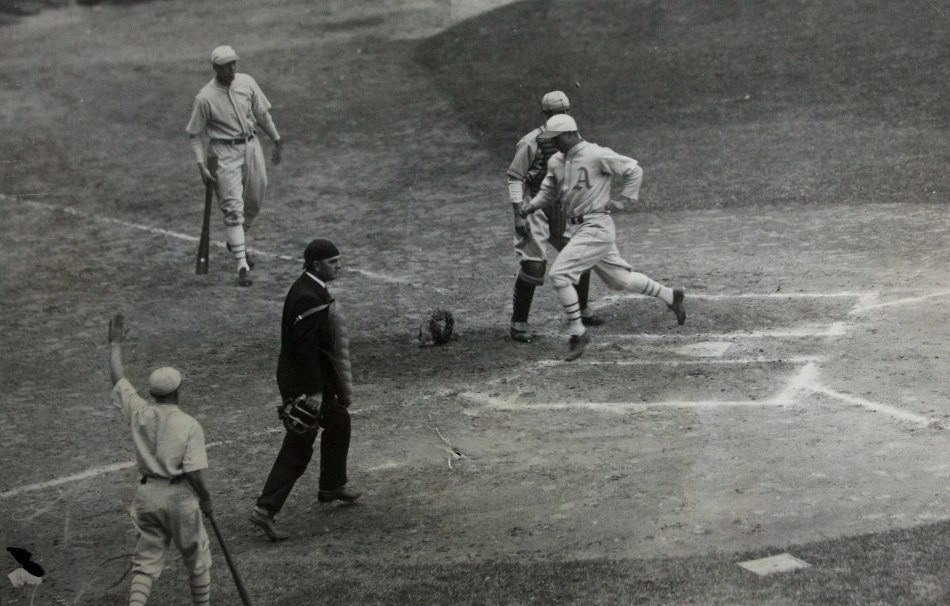
1930: The Only Complete Season
The Last Time Contact and Power Fully Coexisted
I. The Limit State
The 1930 season is not simply one of the highest offensive years in baseball history.
It is the only season in which the system reaches full integration.
MLB batting average: .296
National League batting average: .303
Total runs: 13,695
Total home runs: 1,565
(Source: Baseball Almanac)
These numbers matter not because they are large—but because they occur together.
High contact and high power do not normally coexist.
In 1930, they do.
II. The Three Offensive States
Across baseball history, offense appears in three structural forms:
1. Contact-Dominant (1880s–1890s)
High batting average
Low power
Runs through sequence
2. Power-Dominant (modern era)
Lower batting average
High home run rate
Runs through isolated events
3. Integrated (1930)
High batting average
High power
Runs through both simultaneously
III. The Proof: System-Wide Alignment
1930 is not defined by individual greatness—it is defined by universal elevation.
Six NL teams hit over .300
Over 30 qualified NL hitters hit .300+
League-wide power increased alongside contact
Individual seasons confirm the system:
Bill Terry — .401
Hack Wilson — 191 RBI
Chuck Klein — .386 / 40 HR
The New York Giants hit .319 as a team.
This is not a collection of outliers.
It is a system with no binding constraint.
IV. Why It Was Possible
1930 sits at the peak of a specific configuration:
The lively ball (post-1920) increased carry
Pitch manipulation had been reduced
Power hitting had emerged—but not yet displaced contact
Pitching had not yet adapted structurally
This created a narrow condition where:
Power could scale without destroying contact
V. Why It Collapsed Immediately
The system did not stabilize.
In 1931:
Batting average drops to .278
Runs fall by nearly 2,000 total
Home runs decline sharply
(Source: Baseball Almanac)
Documented causes include:
Elimination of the sacrifice fly
A deadened baseball
(Source: Society for American Baseball Research)
VI. Why It Could Not Persist
The integrated system contains an internal contradiction:
Power incentivizes force and elevation
Force increases variance and swing cost
Increased variance reduces contact frequency
Over time:
Power scales → contact degrades
This is exactly what later eras show.
VII. The Irreproducibility of 1930
No later era replicates this structure:
Late 1990s
High power
Moderate contact (~.260s BA)
Modern era
High power
Low contact (~.240s BA)
Deadball
Moderate contact
Minimal power
Only 1930 produces:
High contact + high power at full system scale
VIII. Final Statement
1930 is not a peak.
It is a boundary condition.
The only season in which baseball achieves
full offensive integration—
before the system resolves into trade-offs that still define the game today.