Atmospheric Share and the Deadball Constitution: A Single-Sky Regime for Deep Baseball History -- Cobb · Charleston · Jackson · Hill
Atmospheric Share and the Deadball Constitution: A Single-Sky Regime for Deep Baseball History -- Cobb · Charleston · Jackson · Hill
Atmospheric Share and the Deadball Constitution
A Single-Sky Regime for Deep Baseball History
Cobb · Charleston · Jackson · Hill
I. The Structural Problem of Deep History
Baseball history is not a continuous offensive field. It is segmented by regime shifts in scoring environment.
Any serious cross-era framework must account for the physics of scoring rather than rely on league-relative separation alone.
The correct question is not:
“How far above average was this player?”
The correct question is:
“What fraction of the era’s scoring atmosphere did this player generate per game?”
That fraction is defined here as Atmospheric Share.
II. Regime Constitution
The Deadball “Single-Sky Blanket” (1900–1919)
The Live-Ball constitution (post-1920) permits a two-league membrane because two stable league universes existed:
MLB (AL/NL) with complete schedule totals
A recognized Major Negro League structure (post-1920 NNL and successors)
This allows environmental midpoint integration.
The Deadball era is structurally different.
There was no sustained, centralized Major Negro League schedule between 1900–1919.
Black baseball existed as a competitive ecosystem, but not as a single ledger-stable league universe.
Therefore:
Deep history does not permit baseline dualism when one baseline cannot be constituted.
The constitutional solution:
Declare one prevailing run atmosphere for the epoch — MLB — and treat it as the Deadball sky.
Stability outranks symmetry.
III. Declared Skies (Run Atmospheres)
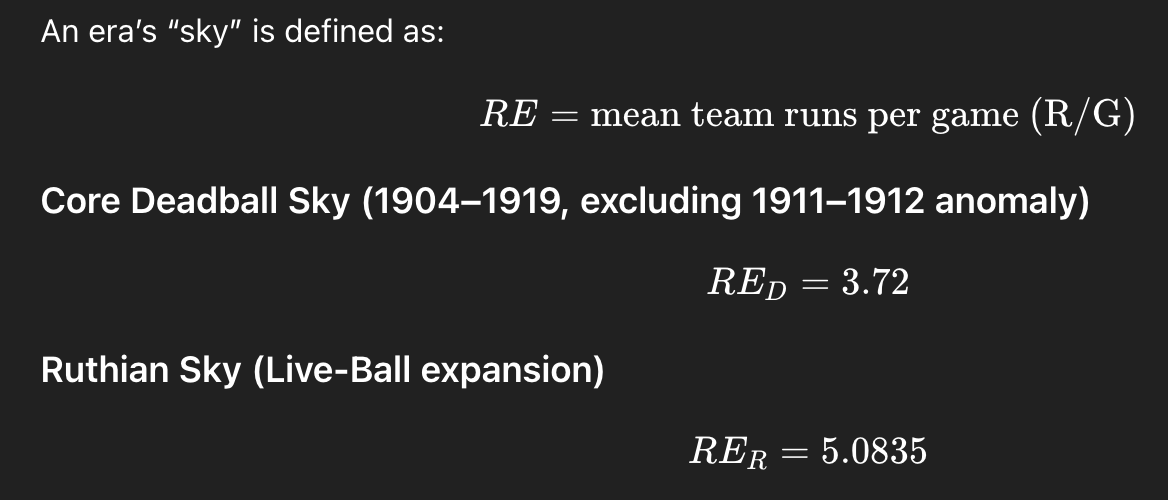
Deadball players are evaluated under the single-sky constitution.
Transitional players are evaluated under split-sky treatment.
IV. Dominance Translation
Runs Created (Component Form)
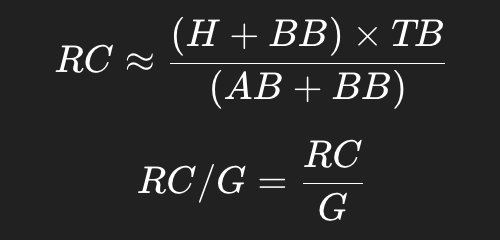
Atmospheric Share

Interpretation:
A share of 0.20 means the player generates approximately 20% of an average team’s scoring per game within that era’s scoring climate.
For transitional players:

V. Player Evaluations
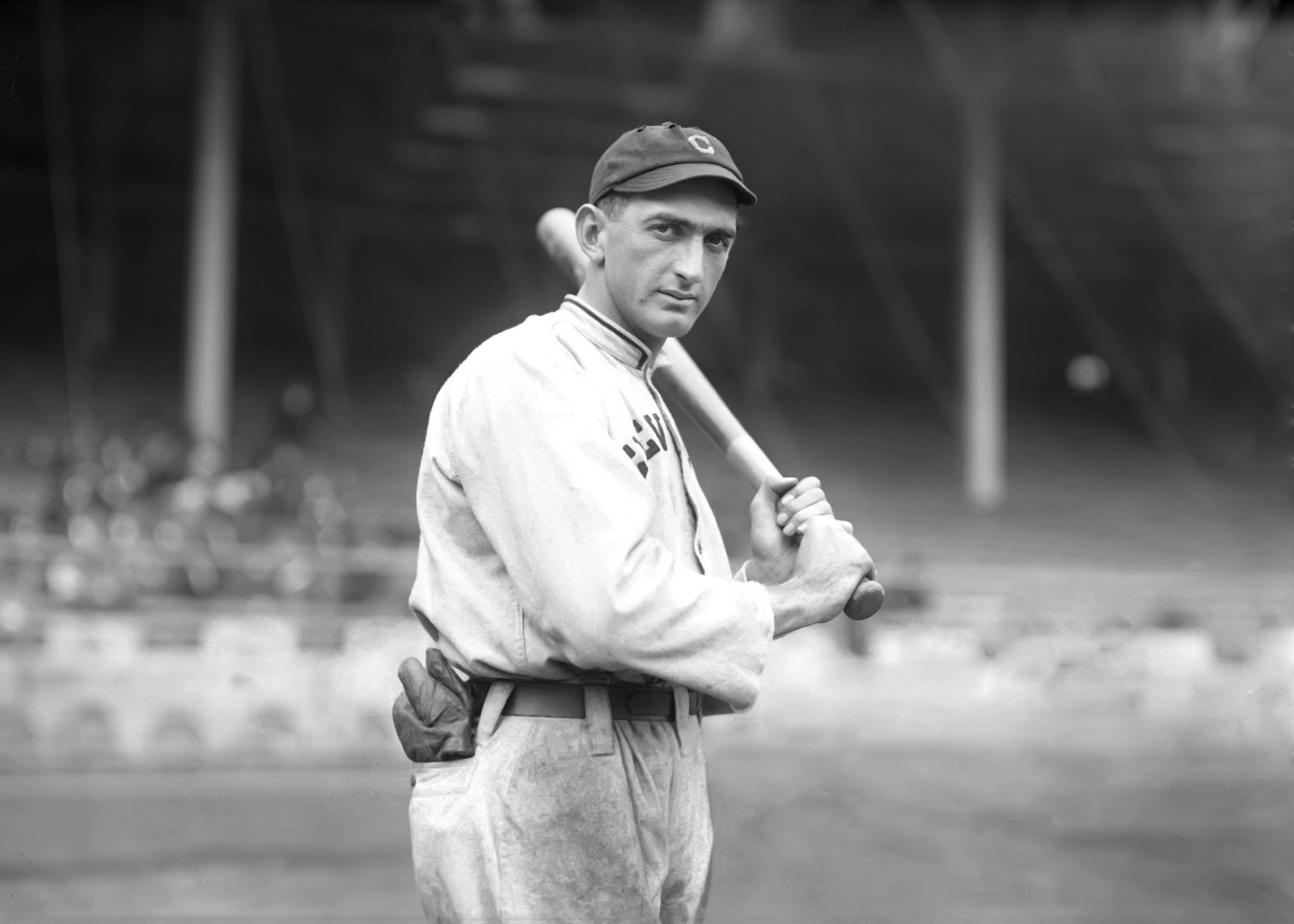
Shoeless Joe Jackson
Deadball-only (1908–1919)
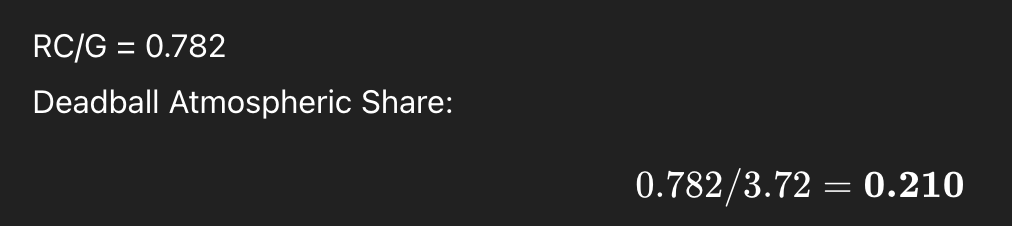
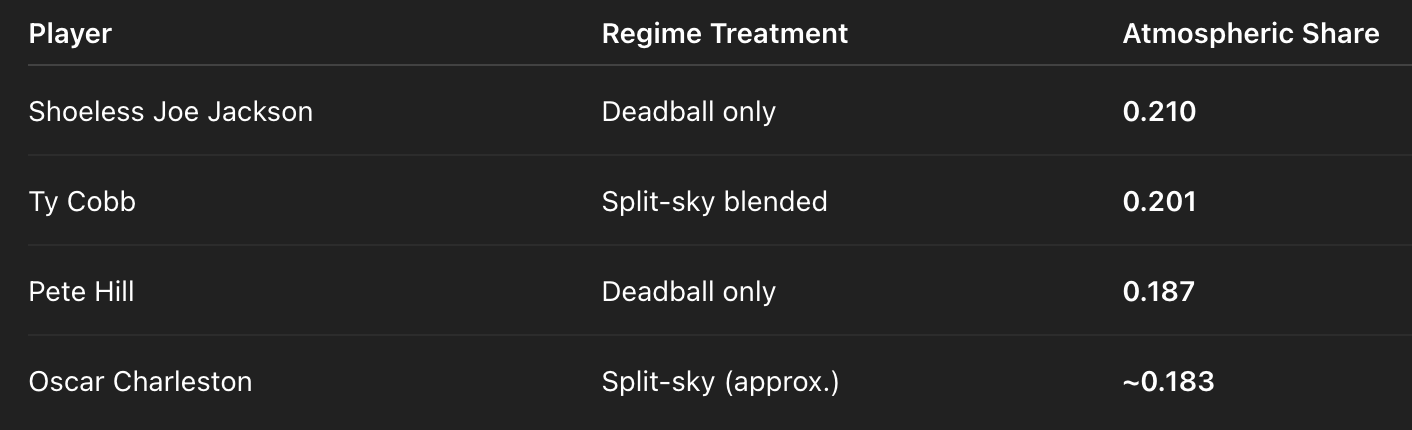
Jackson: 21.0% of Deadball team scoring per game
Ty Cobb
Split-sky (1905–1919 Deadball; 1920–1928 Ruthian)
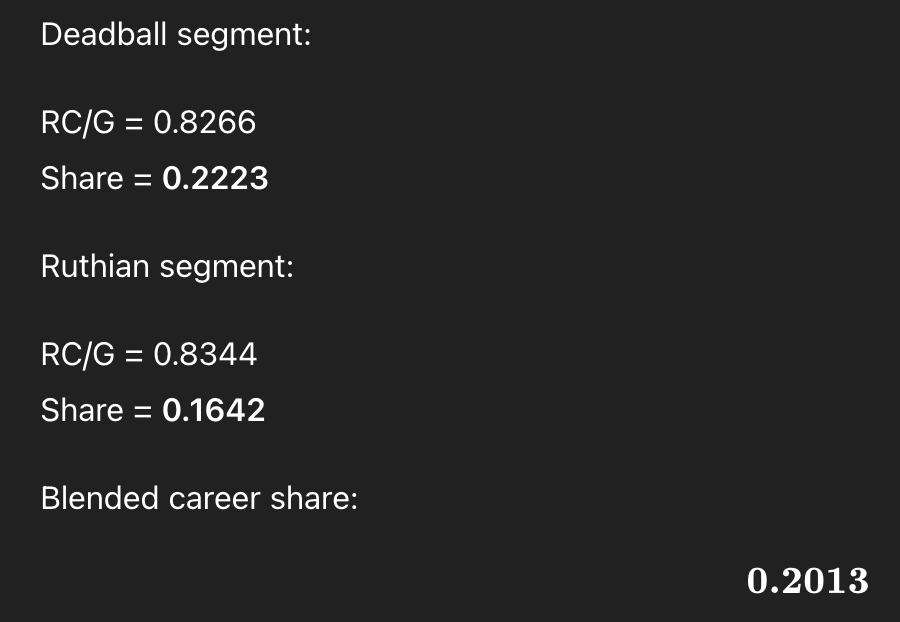
Cobb: 20.1% atmospheric share (career blended)
Deadball-only share: 22.2%
Cobb’s per-game output remains stable; relative dominance declines once the sky expands.
Pete Hill
Deadball-only

Hill: 18.7% of Deadball team scoring per game
Oscar Charleston
Negro Leagues aggregate line (spanning regimes)
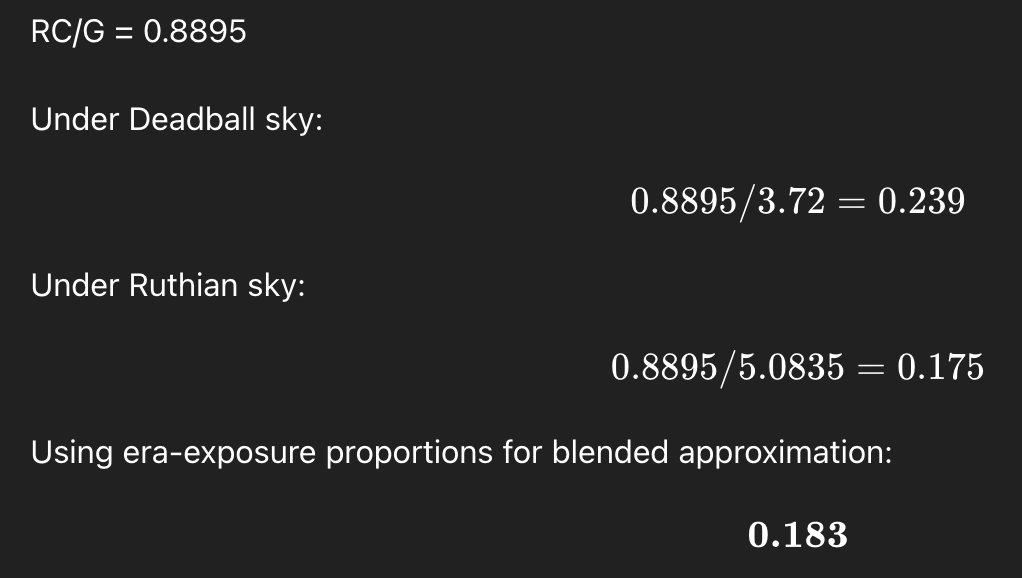
Charleston: ~18.3% split-sky blended atmospheric share
An exact split requires separate Deadball and Ruthian component totals from the same dataset.
VI. Comparative Atmospheric Shares
VII. Structural Conclusions
Deadball requires a single-sky constitution because a second baseline cannot be coherently constituted.
Dominance becomes portable across segregated leagues once the sky is declared.
Atmospheric Share is physically interpretable:
It measures penetration into the era’s scoring field.
It avoids league-average distortions.
It respects environmental shifts.
Under pure Deadball normalization:
Cobb (Deadball segment) and Jackson penetrate deepest.
Hill and Charleston cluster slightly beneath.
Split-sky blending moderates transitional exposure.
The framework does not flatten eras into one field.
It declares the sky.
Dominance becomes:

And deep history stabilizes.