Cézanne, Van Gogh, and the Gleaming: On Light, Disclosure, and Recursive Symbolos (May 27, 2026 Lecture)
Video
Cézanne, Van Gogh, and the Gleaming: On Light, Disclosure, and Recursive Symbolos (May 27, 2026 Lecture)
Cézanne, Van Gogh, and the Gleaming: On Light, Disclosure, and Recursive Symbolos
I want to produce an essay, I think primarily on the tragedy of modern life, and to bring it to the deepest root in my belief, which is to say the paintings of Cézanne and Van Gogh. This may sound strange, but I will work through that — we will work through it together — and light: the use of light in these works.
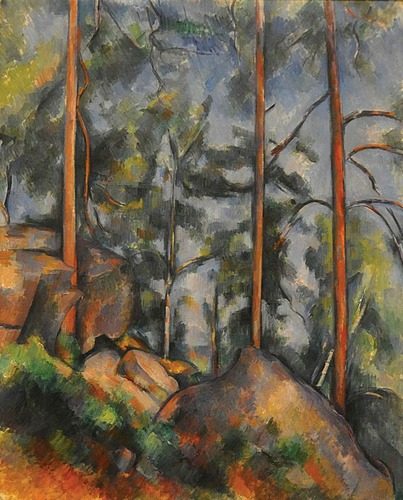
I will never forget seeing my first Cézanne in person. I would say Cézanne had a more in-person impression than Van Gogh did, when I saw them at the National Gallery of Art in Washington, D.C. It was the experience of witnessing Cézanne’s work with light. And of course we see this with Van Gogh, especially in his purely-nature depictions, often with farmers or farm hands, laborers in the fields — but also Cézanne’s depictions of configurational life. I would say Cézanne’s rocks in particular, his stones.
Nature’s Gleaming
What we experience here is precisely what Hölderlin speaks to, and speaks through, in his poetry — in terms of nature’s gleaming as a higher revealing, and this witnessing of the light, and this mystery that is being revealed. Light, again, being the thermonuclear radiation which we experience visually, which we perceive. This light itself is the energetic current behind the agonies and ecstasies of the body somatically — in terms of, again, the crystallization of thermonuclear energy in the genome, and the information technology which winds its way through history and time as the genome.
So what I have here is the non-transactional relationship of poetry as in and to the light itself. This is a holistic envisioning of the cosmos, in which really the only subjectivity that is possible, or exists therein, is creation itself as primary. This obliterates any sort of neurosomatic foundation of the individual, or even of perception as being delocated or dislocated from nature itself.
Then I have here: history itself as neurosomatic awakening, lived energy and recursive symbolos. S-Y-M-B-O-L-O-S. So here, of course, through the genome and the iterative process of the genome — which is advancing neurosynaptic sensitivity and complexity — we have discussed this with the Renaissance mind being the foremost architecture which changes human history.
The way the Renaissance mind changes human history is both through the lived experience of energy as a recursion, as a Jobian encounter of being itself, which we have called disclosure here — and the recursive symbolos , which is the perpetual possibility of articulating being through languaging and thinking as the process of being in immanent relationship to being. This is our poets, our mystics, our shamans, our medicine people. Everyone from Black Elk to historical shamans from ancient India and Mesoamerica, to Rimbaud or Baudelaire or Abhinavagupta.
This possibility is made possible through the languaging ability, which I am suggesting is simultaneous with the propensity to recursion of lived energy — this Jobian path, which we have called the katabasis of existence. The sufficiently sensitive neurosynaptic architecture, which is iterated through the genome, comes into disclosure space and enters into this only question of being, which is the question itself of our lives, and of all life and existence itself. What is being? What is existence? This is that which we perceive through time, but is fundamentally timeless. This is present in the Bhagavad Gita , just as it is in Heidegger’s world’s-midnight question with Hölderlin.
Hegel, Darwin, and Two Channels
So there are two figures here that occur in the middle of the 19th century, Darwin and Hegel — Hegel of course before Darwin. Both critical questions, because one is meta-architectural or meta-structural, metaphysical, and Darwin formalizes this intuition of Hegel’s into evolutionary science, which he proves physically through the sedimentary history of the earth. Evolution and symbolic recursion in historical record — again, we have channel one and channel two, which we have gone over in depth both in my written work and in several of these lectures.
Channel one is the iterative deep-time, glacial process of genomic evolution, neural and synaptic, in terms of literal brain transformation over time, as well as the body of course, and the various different technologies that emerge through the body, such as the hands, the feet, the lungs, the heart.
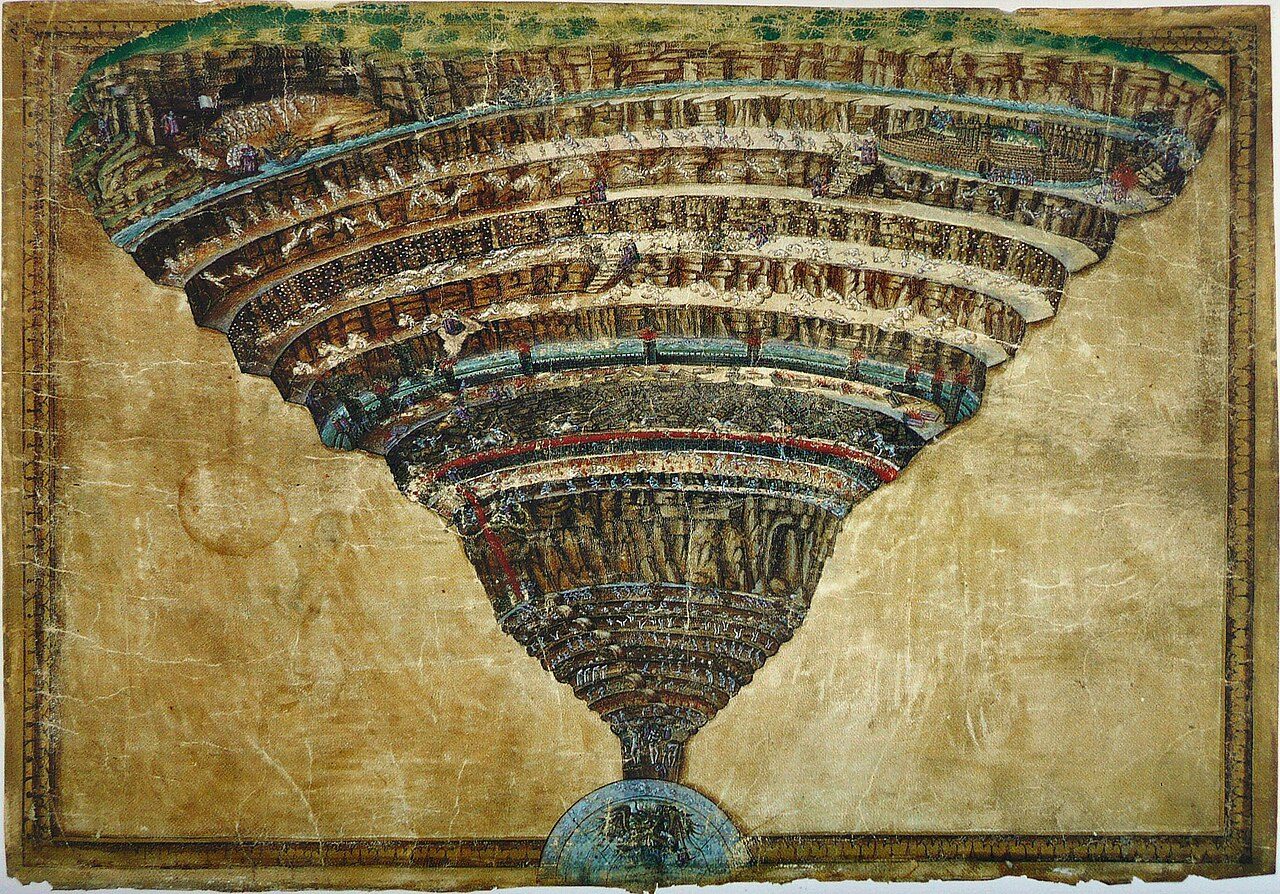
Then channel two: technology. The symbolic recursion in the historical record, which emerges from advanced architectures — as in the Renaissance mind — which are significantly neurosynaptically sensitive. Van Gogh, or I would say Da Vinci, is a great example historically, which is well understood; as well as Percy Shelley, who is more veiled by his relationship to history in the British Empire. Symbolic recursion in the historical record is actually the making-available of this evolutionary experience. It is the sediment of human katabasis — i.e., Botticelli’s map of Hell.
There is a great quote by Heidegger I am going to attach into here: Being waits just so that it alone will become worthy of thinking to man. Heidegger emphasizes thinking, and I am going to equate thinking with languaging and meditating. Meditating upon being is thinking and languaging in relationship to the disclosure space. This is a space of immanence, of presencing of being, which is experienced as the non-transactional relationship of poetry as in and to the light, and this lived bearing toward the thermonuclear totality of existence and being itself — even through the prism of the genome, or the prism of the neurosynaptic relationship of the human being to existence, which is fundamentally energetically transactional and consumptive, as well as productive, both in terms of reproduction and in terms of excretion, whether that is carbon dioxide or fecality.
Cézanne’s Rocks, Shelley’s Mont Blanc
What is so important here with Cézanne and Van Gogh and the light — as in the ease of nature’s making manifest — is that this is a meditative pursuit. Cézanne’s paintings recur in their subject, recur in their natural space. It is not even necessarily the natural space in terms of the geology or geography which is being depicted, but the presence of being behind them, which is illuminated specifically in Cézanne’s rocks. The reason this is such a profound experience is that Cézanne is illuminating being from within the most configurational architecture of persistence, which is to say the stone edifice. We have discussed this in terms of Shelley’s “Mont Blanc.”
In Shelley’s “Mont Blanc,” we have Shelley confronting the massive edifice of this mountain, but finding within it the eternal question of being — which is to say, what avails him the perception of this ancient geological persistence-architecture, this ancient geological configuration? Which is his nerve endings, perceiving this experience, and the deeply fraught somatic tension of being a living organism, which is in a state of regulatory persistence — an energetic and nervous-system regulation through the organ systems and the vital functions of the living somatic being, in relationship to this massive configurational architecture of the stone edifice, which is a deep-time geology of persistence, which itself exists far out of the human time in which Shelley is beholding this sublime artifact of existence.
This state of meditation, or thinking-and-languaging, which we have discussed with the Heidegger quote — Being waits just so that it alone will become worthy of thinking to man — is a process of historical evolution which is occurring in two parts. It is the historical evolution of the genome (the nervous system and the architecture of the brain), which is captured intermittently in a cresting evolutionary, transformational process of the Renaissance mind, which is Shelley or Da Vinci, et cetera. And we have these articulations through Cézanne and Van Gogh in painting — in these different mediums of transformation and translation of this iterative experience of disclosure.
So viewing the Cézanne painting of the stones, or the rock edifice, is itself a high form of revelation, which is using recursive symbology to enter into historical record and simultaneously change time, in relation to traditional Darwinian evolution.
Hegel and the Founding of Surrealism
This is extremely critical to understand in relation to Hegel, because what we are dealing with when we are dealing with Hegel is the understanding that there are these two channels of transformation. One of the most critical understandings I have come to possess of Hegel’s relationship to history, after the occurrence of his philosophy of history, is that his philosophy of history becomes critical just under a century later in the founding of Surrealism. The importance of understanding this is understanding the providence of the automatic mind in Surrealism — and going into a geology of consciousness itself through pure experience. Pure somatic experience, privileging disclosure of being through itself as in a vessel, which again is translation and transformation of this thermonuclear light. The genomic architecture of beings, of the human being, is itself a prism through which to perceive, by way of clarification — which is meditation and thinking and languaging — this thermonuclear totality beneath the veil of the information technology which is iterating itself as a downstream crystallization and process of transformation, which produces the cresting of the Renaissance.
Again, this question of being is the only question, the question of our lives, and it awaits to be worthy of the thinking of thinking to man. The way I would modify that statement by Heidegger — including my statement here that the question of being is the only question, is the question of our lives — is that being is iterating man to be capable of thinking of being in a meaningful, foundational, and fundamental way.
When we have these historical moments of disclosure, what we are really having, at a world-civilizational and world-historical level, are these pockets of enlightenment through various different symbolic recursions, which are articulations of that state of disclosure, which is being in ontological relationship to being. Beings in ontological relationship to being. When we look at world history, what we are looking at with primacy is the historical record of that experience — whether that is Cézanne, or Hölderlin, or the ancient Hindu mystic tradition, or the experience of the Olmecs, which has been carved into stone statues and reliefs.
Subliminal Overwhelm
We are witnessing the emergence of a species-level nervous-system capacity which is capable of contemplating this meta-architectural and meta-structural phenomenon of being itself — which is the light, or the ease of nature’s making manifest, which is Heidegger’s preoccupation, just as it is Hölderlin’s and Shelley’s in the poem “Mont Blanc,” as it is with T. S. Eliot in Four Quartets. These are all experiences of a foundational primacy of existence, which is overwhelming subliminally. This is critical, and this is where we will get to Breton and Surrealism. It is overwhelming subliminally — the presumed state of the world, or the presumed state of the self, or the narrative form which dominates the rise and fall of empires, and the rise and fall — as an empire, beyond these processes that rise and fall in historical time — even the iterations of linguistic forms of organisms as they are assembled and collapse in their entropic times: plants, animals, trees, et cetera. These thermonuclear pseudo-closed systems which are compressed into dialogue with nature, and thus experience nature regulationally, or persist in nature configurationally, as in the stone.
This disclosure architecture is itself made possible by genomic iterative evolution and change in time, just as it is a representation of what is possible in regards to being in time. And the proximity which is fostered and proclaimed by any historical figure — from, let us say, Cézanne to Da Vinci to Shelley — this is an emerging possibility of recursive contemplation which is the unification of these two channels: the evolutionary channel of Darwin, and the symbolic-recursion channel of civilization or cultural-historical record, which is documentation, which is thinking through languaging of being, which is itself the sediment or the shale thrown off from this primary process of self-recognition in a cosmological sense.
Breton, Automatic Writing, and the Abolition of the Subject
This is where we get to Breton, and this is why Breton is so important — and why Surrealism, in relation to Hegel, is so important. This process of dialectical disclosure comes to a head with the establishment of Surrealism and the understanding of the importance of automatic writing as the primacy of subjective experiential disclosure, which — perhaps paradoxically — constitutes the abolition of the subject itself. The subject, the one who is experiencing, descends into experience itself and comes into contact with this subliminal force, which is experienced — whether it is termed psychoanalytically as the unconscious or the collective unconscious, just as it is termed maybe physically as thermodynamics.
The reason for this is actually tracing the path of the development of the mind through the evolutionary iterative somatic stages of genome transformation and genome change over time, back to the formulation of the genome as a crystallization of thermonuclear energy itself. This is an information technology of the first order in a universal sense.
So with Surrealism we have the completion of this long-timescale historical process of the return to the body as a primary revelatory experience. Being in time is liberated through this process of total descent into somatic perception, which has long been and long is the experience of the mystics, the poets, the shamans, the medicine. The pursuit of this true contact is, again, a katabatic descent into the actual living being, which is the substrate of that which emerges as a face or a mask into space and time phenomenologically — far beneath and below the presumption of a human being or a human identity or the surfaces or surfeit of civilization or culture.
Eliot understands this very well in his “Hollow Men,” Four Quartets , and The Waste Land. This somatic descent — whether it is purgation, or darkness, or removal as really an alchemical transition from the presumed light of Plato’s cave out into the open of experience itself — is a descent down through the presumed symbolic modes. To hit this groundswell is to come into contact with the world-historical iterative disclosures everywhere from Cézanne to Abhinavagupta to Olmec mystical experience — all of which are fragments and pieces that are documented and remain within the geological constraints of the earth itself, whether in archives or carved into caves.
This experience, the necessity of this descent-experience, is itself away from the symbolic order of any establishment, any civilization, or any tribal code. The question of being can only be answered by the descent into being as a neurosomatic awakening, lived energy. And what is produced from this encounter with the flesh-and-blood experience of the self — unmediated by the symbolic order, as we discussed with Artaud — is the actual production of revolutionary disclosure technology. Which is itself what is left in relief: the symbols of Van Gogh or Cézanne. This manifestation of nature’s gleaming, which is thrown off from primal and primary and primacy of experience, of existing in relation to being without mediation of a cultural or civilizational or linguistic symbolic order.
This is, of course, the work of poetry, or the work of painting, or the work of music in the deepest foundational sense — disclosure of the real energetic-persistence, constrained relationship, which you could say is the Prometheus Unbound dynamic as articulated in Shelley as a metaphysical condition. The unchained thermonuclear energy of the universe itself, crystallized down into an iterative genomic architecture which obeys certain hormonal and entropic commands, but through this constraint itself disclosure becomes possible.
The Renaissance Mind and the Summa
This neurosomatic awakening of deep time and deep history, through evolution and evolutionary history, avails us of the Renaissance mind capable of disclosure itself — that being waits so that it alone will become worthy of thinking to man, that man becomes capable of thinking of being in this architectonic sense. This is why I emphasize Shelley, because Shelley’s intelligence expands and spans from science to history to philosophy to literature. His education and his pursuit is absolute, because it is an ontological pursuit of being itself.
This tension in the 19th century with Darwin and Hegel — Darwin being the physical archival manifestation of Hegel’s intuition of dialectical movement, or progress of the universal, or of being itself in time — is that there is this dual function at work, which is a sophisticated function which emerges through the advent of the symbol in this sufficiently ripe neurological state of being. A genetic evolutionary state, which is not segregated to any one species but is itself genomic informational-technological possibility in the nervous system to experience being, and thus producing — in this recursion, this throwing-off in the process of contemplation — the symbolic literature of human history, or speech itself. Speech itself is communication across time and across space regarding the question, or the problem, of being itself fundamentally.
The proximity to this pursuit is the innocence of poetry, which is discussed by Hölderlin. Proximity to this foundational throwing-off of the sparks of relationship — to being, to time, to disclosure, to the other, to Mont Blanc — is the throwing-off of the residue, which is Cézanne’s or Van Gogh’s work on the natural being of the tree or the cliff face, or Shelley’s regarding of Mont Blanc, or Hölderlin’s regarding of the primacy of nature’s gleaming being higher-revealing, which he observes in space and in time in the geology of being in nature itself.
This is observational. This is a presencing of being made available to this technological awakening, this technological self which emerges — which is the organism of flesh and blood, this delicate, sensitive, tropic somatic being, which is itself constrained by, in, and through time, and yet is capable, through the recursive process of evolution, of having this Jobian about-facing of God or being itself, to become worthy of thinking of being.
This is the summa of experience. This is the summa of the possibility of existence, in life itself, which is fundamentally non-transactional in terms of the relationship of poetry to light — in the sense that there is the absorption and consumption of this self which is contemplating, which is the temporary pseudo-closed entropic system of the neurosomatic organism, perceiving and contemplating that which it is, or has emerged from, in this deep-time evolutionary process of the crystallization of thermonuclear energy and genomic evolution therein, which could be considered ancestry — trans-special ancestry.
The Dissolution of Historical Ground
This is the ultimate dissolution of the presumption of historical ground which guides and dictates civilizations, cultures, and economies. This itself is an obliteration of the infrastructure which makes disclosure possible, fascinatingly enough. Through the creation and preservation of life via civilizational or marketplace architectures — which are fundamentally concerned with survival against constraint, which again is an entropic, neural, and somatic condition of the flesh and blood of the living being — this continuation, or perpetuation, of the human experience makes possible iterations of disclosure. Hegel himself emerges from this survival architecture to instantiate a meta-structural understanding of how being changes in time. And then Darwin solidifies this physically and energetically through the process of evolution, the evolution of species.
What is being experienced is a collapsing of the presumption of the self, which is economically and socially and culturally and politically hyper-accelerated through modernity and Western civilization’s loss of contact with the ontos — which I have discussed in terms of the pre-Socratic Heraclitus and the movements after Heraclitus, which is to say Plato — into the broken and fragmented tradition of Western philosophical thought, which becomes esoteric in that thinkers like Jakob Böhme, or Spinoza, or Giordano Bruno become isolated figures who are placed against the symbolic order of Western civilizational technology — Christianity as an institution, or political economy and the divine right of kings as an institution. Because this work is being done against a greater historical current, which is producing the possibility for the summa achievement of being itself: that man becomes worthy of thinking of being, and being waits just so that it alone will become worthy of thinking to man.
This is the return of this translucent, imaginal, illusory dream-construct of civilization, of being-in-time as man is conceived of self and name and identity and number, to this primordial somatic ground of the encounter of being itself, through the evolutionary neurology of the iterative process of the species — or of any genomic informational-technological architecture which makes possible recursive experience.
The Disjected Renaissance Mind
What is so powerful and profound about historical movement, which Hegel intuits and goes deeply into, is that these Renaissance minds themselves are the disjected, or thrown-off, architecture of civilization, and they are exiled or discredited. But the contribution that Spinoza makes is the only meaningful contribution that humanity, or genomic architecture, can make — which is the return to the self in the cosmological, fundamental sense. This is common, again, to Van Gogh or these other figures such as Artaud. This experience is made possible by civilization as a symbolic order which necessarily maintains a fabric of energetic circulation, which we would call a political economy.
This creates the possibility of the Mayakovsky-in-the-Everyday, or the byt — what Mayakovsky describes as the perpetual repeating cycle of same , which is necessary to create, to rock and nurture the foundations of what emerges as the greatest possible potentiality of existence itself, human or inhuman, of being itself: that being is capable of recursively experiencing itself.
This is critical, and this is what we are talking about fundamentally when we are talking about poetry. We are talking about dwelling poetically, as in Hölderlin. Dwelling poetically is something that is implicit and explicit in the works of Cézanne or Van Gogh. It is the ease of nature’s light making manifest through this gleaming, through this glittering or glowing — whatever the verbal term would be — as in disclosure through the presence of being as it expresses through nature. This is captured, this is experienced, with the requisite somatic intensity of the Renaissance mind, and this question of being is clearly the only question therein.
Descent of the Presumed Subject
This is a lived experience of the descent of the presumed subject, which again is neurologically iterated as in the birth and death of bodies and sheaths and shells — perhaps as discussed in the Advaita Vedanta — that this is a perpetual historical iteration which is producing informational technologies, if we are to go with Hegel’s concept of dialectical evolution and look at deep-time evolution. Increasingly capable of perceiving, even through this convoluted survival architecture of the genome as it is iterated in the human species of blood and bone and entropy and necessary consumption, carnality, the transformation of energy to regulate the experience of being in time as it is a neurosomatic architecture, and is such as regulatory, attempting to maintain itself in an entropic universe of dissipating energy, escaping energy in the pseudo-closed system of the body.
In Hegel’s theorem, and I would say as well in our evolutionary understanding with Darwin, this process is a progressive enlightenment, literally — as in and to the light, which is the ease of nature’s making manifest — of proximity to disclosure through iterative genomic informational technology, the process of reproduction, whether that is trees, flora, fauna, the human being. This process of the crystallization of thermonuclear energy into informational technology is progressively making available this disclosure state, which is transparent to symbolic order, which is first to symbolic order, and itself is a collapsing of mediation — which works against history and civilization in such a way as to collapse them into the primary and primacy of experience of being itself, as and in the living body, the living being.
From this experience — which is the historical prophetic conversation with God, so to speak, as in Moses or Ezekiel or Jacob — is actually the infrastructural possibility of civilization itself, because it must mark itself even via the slightest intuition of proximity to being, and thus present itself, manifest itself, construct itself, and regulate itself, as in the energetic channels in best possible relational position to truth.
This is critical: that truth itself can only emerge through this disclosure state of direct relationship to being. Truth itself cannot be name or number, but actual somatic neural encounter with the essence and force and thrust of existence itself, as in nature, as in being.
The Unacknowledged Legislators
So this again is Shelley’s unacknowledged legislators — that the poets are the unacknowledged legislators of civilization and of history, that this experience must be had and articulated first in order to orient humanity to this underground phenomenon, which is not immediately manifest. And this is the history of metaphysics. This is what metaphysics is, and means. It is the super-structural organizational character of being as it appears, as it forms, as it transforms — and to articulate this meta-architecture, to establish it, ground it, and map it, as in Botticelli’s painting of the map of Hell in relation to the Dante work. Dante is essential to this conversation.
To see nature deeply and foundationally, and to experience it as such, makes possible legislation, makes possible political economy. The failure to perceive this is downstream the collapse of civilizations, and the failure of the attempt to organize and extend human life meaningfully, or at all. Life cannot, nonetheless continue, without adequate and accurate relationship to persistence, constraint, and the meta-architecture of Prometheus , or Prometheus Bound or Unbound.
This is a profound understanding which is articulated both through Cézanne’s rocks, Van Gogh’s trees, Shelley’s Prometheus Unbound , and the pursuit of Da Vinci to understand the human anatomy. Because this is an inquiry into the gleaming within nature, which is the apparent phenomenological experience of forms, of structures, of beings — but beneath them there is a fundamental primordial unity, which is the ease of nature’s light-making-manifest phenomena. The question of being, this being, is the only question, the question of our lives, and the essence and necessity of human history (or the evolutionary history of being itself) is to come into recursive Jobian contact with the substrate of existence itself.
Channel One and Channel Two Interjected
This is again the intricate relationship between channel-one and channel-two transformation. Channel one is the deep-time genome, which is iterative, and epigenetic experience is encoded into genomic transformation: the experience of being in time is transmitted and passed forward. But then, furthermore, symbolic recursion interjected into the historical record — anything from the Olmec statues to the original manuscript of Prometheus Unbound by Shelley — this interjection of symbolic recursion into the historical record is itself the possibility of founding, in a collective sense, even in the imperfect conditions of evolution, a state of disclosure, which is beings in proximity to being. Which is perhaps understood best in the prophetic tale of Moses.
The prophet, or the poet, or the shaman, or the mystic makes available this disclosure space via translation, which is the thinking and languaging in innocent relationship to being, primarily unmediated by symbolic order of civilization or culture. This process of translation then makes available intimate relationship to — we could say — the imperfect, or the ripening, neurosomatic architecture of the genomic body at large, which draws being into deeper relationship to itself. This is the archetype of Orpheus playing music for the animals and for nature itself — that this music is the thinking of man in proximity to being, as in disclosure of the character of the light, which is the ease of nature’s making manifest, which is nature’s gleaming, which is the higher-revealing translated into ontological language. Poetry, music, art — the necessity of art is foundational to the process of transformation as in enlightening.
The Union of Darwin and Hegel
This historical deep-time record — critically through epigenetic transformation — the information technology of the genome experiences in time, and encodes information in real time into its architecture, and then transmits and passes forward that information through reproduction or recombination. This is the critical union of Darwin and Hegel, and the history of art, or the history of disclosure technology: evolution and symbolic recursion are so intimately intertwined they are practically indistinguishable. Symbolic recursion is itself the product of evolution, while simultaneously changing the historical course of what is possible evolutionarily.
This is at the root and the core of Hegel — the question of subjectivity, and the question of the philosophy of history. The subject is the one who is experiencing, and with simultaneous possibility of ripeness in the neurosomatic sense, in terms of genomic evolution, makes possible the unity of this disclosure state, which is in reality the abolition of the subject-object duality, which is explored deeply in Magritte, as it is with Breton and the Surrealist movement itself.
The abolition, as in the experience of this totality, of nature’s gleaming, which is the higher-revealing, which is the transcendental state or character of being, as it functions operatively across all scales, as we have discussed. The persistence-technology that the entropic universe is a constraint-based universe of pseudo-closed boundaries — whether that is the human being, the star, the cell, or the tree — the possibility of this experience becoming available is the union or unity point, or we could say in Hegel the singularity point, of the transformation of history dialectically through reproduction, or through the introduction of thesis and antithesis into synthesis.
Spinoza, the Singularity Point
As in Spinoza, in the time of Spinoza — which was exile and outcast from his society, his culture, his civilization, even his former religious order — into the understanding, historically, through the passage of time, that Spinoza’s pursuit of the ontos is itself the Renaissance mind as a literal evolutionary archetype making itself manifest in history. Neurosomatic awakening as disclosure of being, which is the highest cosmological order.
The production of Spinoza — which is to say the Ethics — or the production of Cézanne — which is to say the rock paintings — or the production of Shelley — which is to say Prometheus Unbound — is the unity point. It is the height of what is possible in regards to being in time, which is to say beings in relation to being.
This disclosure changes over time through iterative processes of scaffolding of knowledge, as complexity — which is thermodynamics after Shelley, or Boltzmann after Shelley, or Darwin after Shelley. This iterative complexity is a deepening of the high-contrast or high-resolution picture of being itself, through various different disciplinary pursuits, which I have described as the process of Western civilization: this descent into disciplinary siloing, which is the possibility of higher unifying — which is always the question of the ontos , and ontological unity is the unity of all disciplines, the unity of all creation.
The articulation of this high-resolution process is the iterative movement of the Renaissance mind through history. The Renaissance mind is, and is alone, this neurosomatic cresting or awakening to nature’s gleaming-being-higher-revealing, and the articulation of this Renaissance mind being at the vanguard of any specific periodical era of history, any epoch. This is the deep unity of Shelley and Da Vinci and maybe the Olmec prophet, so to speak.
I think that is essentially what I have got here. Thank you.