Dizzy Dean & The Mystery School of the Primordial Embodiment of the Soul
Video
Dizzy Dean & The Mystery School of the Primordial Embodiment of the Soul

00:00
Alright, so here we’re looking at unwitting mythologies. How history intersects with and becomes myth and vice versa.
So this is something interesting, I think, in how consciousness functions. There’s a blending of the archetypal realm or the mythological realm with the historical realm. This gets really back to the root and foundation of what the large portion of this work has been. We’ve kind of gone on digressions and metaphysical expeditions to unpack the scientific or logic chain process of exactly how this occurs.
01:06
But to talk about the intersection of myth and history is to talk about forgetting, memory, and time, and how the three of them function as a catalogue of human history. We only have a couple thousand years of catalogued conscious history, and even that catalogued conscious history is fragmented by the possible knowledge that is able to be accumulated.
Whether that’s by an ancient Greek historian or Egyptian potsherd, right? Or whether that’s looking back at a temple like Dendera in Egypt. There’s all of these different ways that history is accumulated in the ruins and fragments and fragmentation of time as it passes. And these are the texts and the scrolls that themselves are human history and inform our human history.
01:37
When you’re looking at something, for instance, like the Gnostic scrolls or ancient spiritual scrolls that are recovered in the Middle East… it’s very interesting example of history itself becoming the fragments that are the true mythological and existential scope of humanity — whether that’s the Pistis Sophia, whether that’s certain Gnostic gospels… that are recovered in scrolls that were buried in the desert.
You have this convergence of the archetypal realm or the realm of spiritual thought or imagination or the realm of the mystics and saints and sages… with the very real historical grounds of humanity. These texts themselves as witnessings or interpenetrations of another realm or reality of existence beyond the material themselves become historical material representations and fragments of the spiritual, metaphysical dimensions of reality/existence.
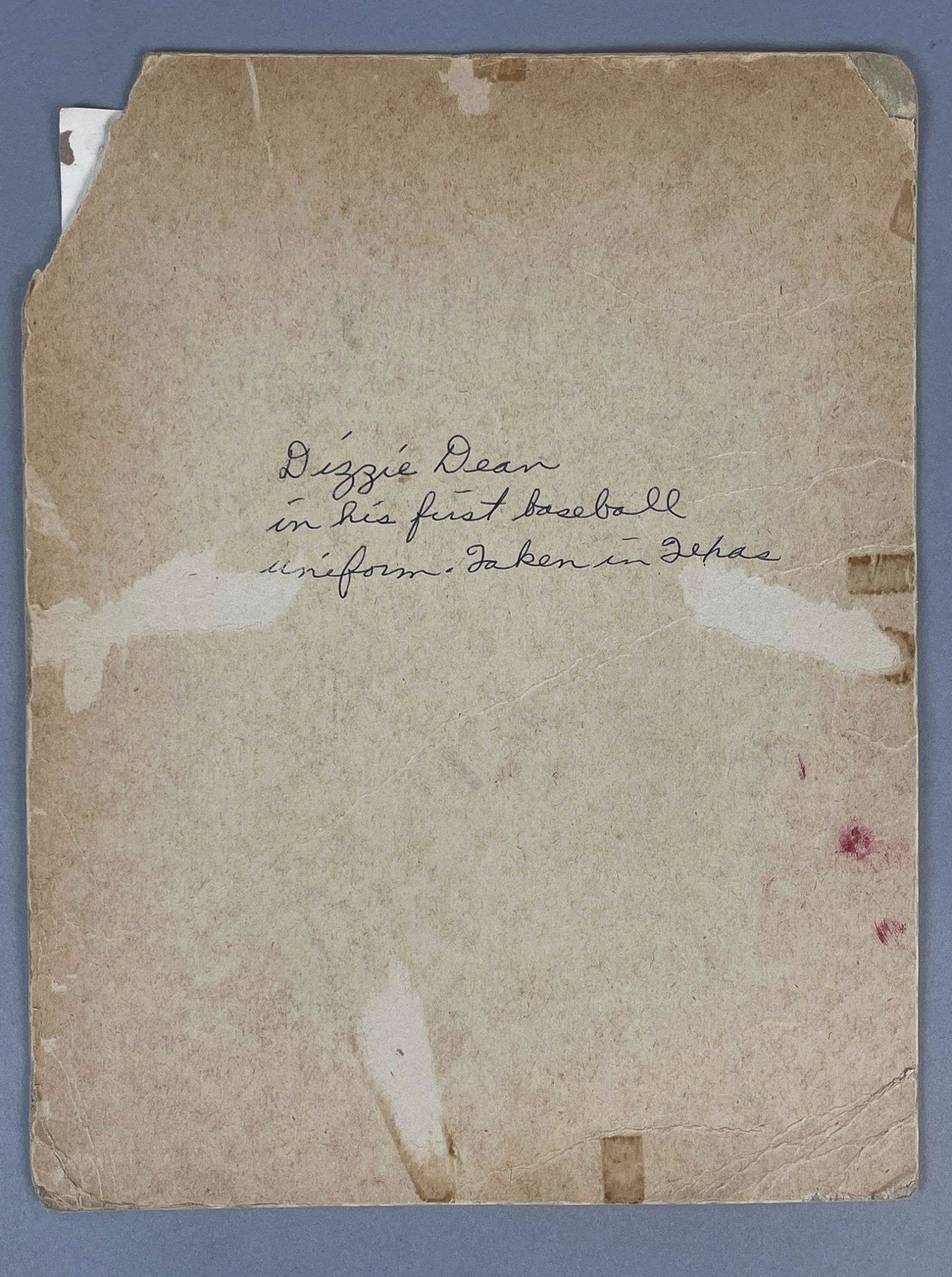
And these themselves become the informative sacred ancient texts — such as the Bhagavad Gita or you could say the Bible or the Kabbalah. So when we’re talking about this realm, it’s incredibly interesting to see in a modern context… referring to here Dizzy Dean. It’s a picture of him in 1929 with Sam Houston when he was in the army just before he gets signed to semi-pro, and then becomes a member of the Gas House Gang Cardinals.
03:00
What we’re talking about is a period of time in human history… and we reference this with Satchel Paige — the looseness of identity as a sort of spiritual aperture through which the rising of the mythic and the legendary can form. A cultural and political void of self and negation through which the soul is freed. A wilderness, much like Dante’s mid-life journey. Where the apparent is peeled away; a deeper truth is revealed…
This is also in my essay, The Death of Subjectivity, but here we’re focusing it through the lens of the individual; this is less of an equation or a physical and metaphysical scientific reality than it is a naked emergence of self through revelatory experience and intercourse with history.
03:28
Dizzy Dean most notably takes on actually, he has multiple names. He takes on the name, it’s believed to be of a friend of his who died in early childhood. He takes on the name to soothe the family of the child who died. This is incredibly symbolic, as we will get to later on here. He literally adopts the name of a dead man.
This is a drifting man. This is a man who with his family, they’re sharecroppers, they’re itinerant, they’re moving from farm to farm in this very... destitute, poor agrarian lifestyle, making a small percentage of the profits that these farmers make as sharecroppers. They don’t own the land — they work the land.
04:09
He and his brother, they’re practicing, it is said they were throwing acorns at squirrels to build their skill and their ability. This is a man who in the rural South has no identity, strictly speaking. He’s not a name or a number. There is no catalog for men like this in the early 1900s. They are so poor that they do not exist. They are not schooled. They are not considered part of the larger fabric and arc of the civilizational identity. We discussed this with Jack Quinn, Satchel Paige. These are very, very, very poor working class individuals. First generation immigrant miners. Children of slaves.
They are working at the foundation of American civil society. They’re the ones that are shoveling the coal. They’re the ones that are picking the crops. And as such, there is a liberation from the constraints and constrictions of American civil society, which is to say they don’t exist… just as much as there is a profound loss and losslessness of self in that they are disjected; exiles from the core and hearth of life. With all of the material and physical loss that comes with that. With all of the real protracted struggle and socio-economic and cultural pain and suffering.
Dizzy Dean doesn’t have a name. It doesn’t matter when he’s born. None of these things. He is so poor that he has nothing and he is nothing. Again, Jack Quinn, Satchel Paige, Jake Daubert… we’ve kind of been on this trajectory of understanding the early 1900s existential subjectivity of extremely poor working class men and families, many of whom were immigrants, many of whom were the children of slaves and children of families fleeing despotism and war, such as Rube Foster.
05:43
And we’re here, we’re cataloging this development of subjectivity and the adjunct to it, which is actually a much deeper root and substratum, which is the emergence of the mythic identity. You could also say this is the emergence of the soul or the emergence of the higher self. What is required in a way is that, not in a way, in reality — is that the entire identity is stripped down to its essence, to its fundamental. To an abyss of self to meet and confront the nature of the soul. The eternal.
Here you have Dizzy Dean. This is when he was believed to have gotten his nickname in 1929 with Sam Houston. He’s pitching and the opposing manager, he’s just mowing down the hitters… the opposing manager supposedly shouted, knock that Dizzy SOB out of the box, right? Knock him out of the game. And they just couldn’t do it. And that’s where he got his nickname Dizzy Dean.
06:33
This is also important, the conventions of naming, right? The idea that he took on the identity of quite literally his dead childhood friend, the initial name. And then again, he gets another nickname, which tears him further away from this idea of this birthright or supposed truth of his identity. He’s entering into this shifting sense of presence or state of self as represented and manifest through naming convention. The name of his childhood friend — he is entering the realm of the dead… just as Dizzy becomes a mythic or performative archetypal identification of self. These are degrees of removal from the perceived aperture and locus of self as a static form, or a representation or performance of subjectivity in a social context and construct. It is an untethering; a descent ino the true identity of the self.
Just the same as being itinerant sharecropper for his entire life as a child. This is a man who never finished or even got an education. But yet through this, he becomes this incredibly successful… probably marks most powerfully the most important era of baseball history in many ways — which is the depression era of baseball. Barnstorming with Satchel Paige, 1934 Gas House Gang Cardinals, he captivates an entire nation with his personality, his skill, and his ability. He seems to, at this critical point — stand in as the voice of the entire American South; as a heroism of presence and perseverance. As a representative of the agrarian American soul. And even in the most revolutionary way, an advocate for his friend; the skills and abilities of the greatest black baseball player perhaps of all time. Playing and collaborating with him; raising powerful forms of awareness in the American North and South in regards to black baseball excellence, ability, skill, and humanity.
07:31
You’re looking at someone who is entirely self-identified. This is a man who through being nothing becomes something that’s transcendent of history… and this is precisely what the mythic identity is. Its the supraordinate trajectory of all of life into the singularity; the eternal of the soul — the timeless within time; as such an abolition of time as a dislocation of unity.
This again also applies to the Bhagavad Gita or let’s say the Gnostic Gospels — which were recovered in the the desert sands. You’re looking at something which intersects with a realm that is necessarily higher than the material plane.
So when we look at Dizzy Dean as a mythic figure of baseball history, of course, his 30 win season in 1934 with the Gas House Gang Cardinals… his career as a broadcaster where he invents all of these very different, fascinating terms and ways of describing the game — which again, are tribute to his self-creative aperture or lens of perception, his way of being. It always reminds me of Red Barber, the broadcaster who takes his working class agrarian southern mannerisms and his creative poetic impulse… I think he was related to a pretty well-known poet, actually — and he combines it and creates this whole lens of perception as to what is occurring in baseball, what is baseball. And he creates this metaphorical realm of relationship to the sport, which actually expands its ability to be, its ability to exist. Barber actually constructs mid century American baseball linguistically in many ways.
And we’re looking at the same principle here with identity and Dizzy Dean as a construct.
09:05
This is what’s so powerful about myth and history… similar to Babe Ruth’s Called Shot in 1932 in the World Series against the Cubs. You have this thing that is happening, and I’ll say… in the early 1930s with this extreme depression era — descent of the collective social aperture, right on the onset of World War II, the total collapse of the economic system.
The physical realm has effectively become self-effaced, it has died. The entire identity construct of a nation and of a world is in a profound political existential turmoil. And again, from that springs existential philosophy, absurdist theater, surrealism, all of these different cultural mechanisms which attempt to address that bridge and gap of the death of the real, so to speak.
And what Dizzy Dean in real time manifests in such a greater, more practical and real way than all of these different cultural apertures of art as a mirror is that he himself through this confluence of historical circumstance… his ability and his innate character, which rises through this indeterminate blasted out wasteland of political identity — both in terms of American political identity and the existential identity of humanity at large at this period of time, just to say the early 1930s…
You have this man, who through his creative sui generis personality, through his innate beingness, enters into the forces of history and is himself transformed through them and by them and with them and is himself actively transforming them, which again is to speak directly to his character. And it makes a lot of sense that he and Satchel Paige end up becoming so close and Dean becomes such an advocate for Satchel Paige’s abilities — because they in themselves are many ways two sides of the same coin, right? Both born incredibly poor in the deep American South.
Driftless, identity-less, working these jobs that are at the absolute bottom of the social order. And baseball itself becomes this mechanism or this mythcraft through which they enter into the cultural stew or the mix of the actual cultivation of the skill and the craft of pitching and baseball. A cultural aperture which presents forward facing as a theatre of sport — but at a deeper level is the psychic and spiritual metabolism of an entire civilization. Its mystery tradition and mystery school. In this way, Paige and Dean are spiritual aspirants entering into the American temple of spiritual transformation and revelation of the soul through mythic archetype and play.
11:54
And through that entry, they have this identity transformation where they actually become someone else. Paige’s last name used to be spelled P-A-G-E. It gets spelled P-A-I-G-E because it sounded more highfalutin. And of course, his birth name was Leroy. But it gets changed to Satchel because he’s one of the satchel boys at the, I believe, the train stations.
So you see here, there’s this identity fracture which occurs specifically through the name as a metaphorical state of the being itself through language, or ‘the word’ as representation or representative of self, which is continually being admixed and reorganized and reconstituted and reconstituted. So it’s actually… the name itself is a symbolic mirror to the profound identitylessness of this period of time in history for these poor black and white children in the 1900s American South. They are the unnamed undead — they are between realms. Unclaimed by this world; laboring unseen and unknown. They are betwixt. Never citizen, never political self.
12:52
Where they don’t exist… for Satchel Paige and other black children in their early 1900s in the American South, the census was a huge issue there. The amount of political violence against black people. Swept under the rug. Ignored. Silenced. They’re not catalogued or they’re not constituted as individuals within this larger empirical construct of knowledge and information, which is the American Empire proper. They are dehumanized socially and politically through acts of violence and segregation. They themselves are mythic figures who are essentially driftless orphans who, through the cultural aperture of baseball… which again, is why baseball is so important as a working class pastime and a history of the entire working class of America — both in terms of those who bear witness to it in terms of the fans, but also in terms of the players themselves, I think most notably — is that they enter into this myth-making larger social and cultural organization and architecture of the stadium and the history of baseball.
And the cultural catharsis which is unfolding upon the field of baseball — which is to say striving and mastery, competition and the epic arc of the story of these players as they intersect with the building of the effulgent mechanism of baseball itself proper over time, which of course is an expanding and expansive mythological and legendary architecture and superstructure of history. The history of early modern baseball itself is a cultural temple of the mythic striving of these initiates and initiated selves. It is a period of time of this active mystery school temple and templar practice of individuation through the cultural aperture of baseball — through the scaffolding; the climb of abjected subjectivities; abjected selfhoods into mythic stature and self creation from below. From the utter basement of political abjection.
14:19
You look back at the entire history of baseball, really what you’re looking back at is a history of mythology. Again, which is to say the importance of the Bhagavad Gita as a historical mythological artifact or the history of Christian mysticism, for instance. It’s a balance. It’s a delicate balance of the deeper psychic instinct of humanity with the very real historical and material conditions through which it rises, changes and is transformed. And the ability to see, the visibility of this psychic, spiritual architecture in and through history as an appearance and expression of the soul — the deeper architectonics of the existential, universal self manifest through nature, culture, and time.
14:49
With Dean, for instance, the essential metaphysical commandment is to enter into history and be transformed — which again mirrors Dante’s commandment as he enters the gates of hell. Beware all those who go here, right? The idea there is, in a larger human existential sense as well… is to, with the innate essential personal characteristics — which is to say the state of the soul or the true ground of the individual — which is in the case of Page and Dean, utterly stripped away… the social, cultural, and the political identity of the individual is denied, lost, fragmented, ceases to exist.
And thus the soul is revealed from beneath the grounds of history — the timeless within time in the primordial gape of losslessness of self within the turmoil of time and the struggle of empires, epochs, world civilizational ages — for the soul to enter into this sort of architectonic tunnel of history, which you could say is a sort of tunnel of light or an extended vacuum or a black hole or a progression.
If you wanted to look at it in terms of a relativity construct in space-time, it’s a literal movement through space, which is a cyclical, spiral motion around an organizing, constellating star — which is the sun in the solar system sense — barreling towards a sort of infinitude or an unknown which can’t be conceptualized, it can only be experienced. All concepts would fall short. Even describing the movement and the latticing of the movement purely in a solar system planetary sense would require deep detail linguistically. To symbolically constellate the actual occurrence. The experience is immediate; ultimately, in and of the experience itself, a transcendent spiritual reality of being in time. This is where materialistic science so frequently gets lost. We’re so caught up in the literal symbolic architecture of the universal, that we forget true inquiry into what that architecture means foundationally at the experience of being; the experience of embodied, incarnate selfhood. This, at this intersection of physics and metaphyics, is the historical mystery tradition.
16:42
With Dean, the profound moment is the stripping of his self down to the utter garments of the soul, which again is mirrored in the myth of Inanna in the Sumerian context — probably in the most profound way that has ever been depicted historically — of the necessity of the stripping away of the worldly garments down to the essential soul. It’s stripped down into the basement of hell. The most elemental. The loss of all. The threshing. And then through that stripping down, there’s the effulgent rise of the soul through history as a chemical interaction with the other bodies in space and in time, which are in a constant state of relationship and interrelationship. The true emergent identity of the primordial self as an embodied, incarnate revelation of the universal. The eternal. The universal self. This, again, is mirrored in Christ; the mythoses therein.
So this is a… it’s a very profound and essential state of relation if you just drill it down to pure physics — but you add in a metaphysical understanding of exactly what’s happening there. There’s a chemical reaction that’s occurring at the level of the constitution of the individual through this space-time relationship. Whether you were going to call that sexual intercourse, whether you were going to call that the reality of living in history through these different national identity constructs… cultural and civic identity constructs, as they coalesce and converge and do battle and war, so to speak, with different identity constructs from different locales… even from different times, right, as the identity of the self in a larger macrocosmic sense attempts to establish itself even as it’s being stripped away to reveal the essence. The ingestion of food, water. This is a chemical reaction; a metabolic principle at work of the recombination of genetic artifacts over time. A linguistic recombination of self.
18:07
This is historical recombination of consciousness in space and in time across scales as a singularity which has a fractal, nesting doll status and interdimensionality. And culture as a mystery school is at the evolutionary edge, tip, of that fractal evolutionary consciousness work and practice through psychic metabolism and architecture of the revolution of self through and vis-a-vis perception and revelation in the image; imagistic medium; the realm of the imaginal through the theatre of the real.
And Dean’s experience of that, again, is the mythic rise of the true self, which is the soul of the individual or the soul of the fragment… through the true self, through history, and as such makes history apparent, strips history bare, almost like a paint thinner — to reveal the true essence, the metaphysical underpinnings of reality… which is the rising of the mythic, transcended character through chaos, through confusion, through turmoil. This is history as it intersects and intercourses with the individual as a revelation of the soul; the spiritual center of existence and humanity.
Which again, it really is as simple as the of the ancient maxim, know thyself… and I would just slightly alter that to be to become thyself, right? To know is not simply enough, but to become — the ancient Gnostic maxim. And this again for Dean is what is so powerful. And I would almost say in many ways, this is a realm exclusive to the saints and the mystics and the transcendent.
19:07
Who are nothing, right? Who become nothing and through that becoming of nothing in a larger social, political and cultural sense, much like Diogenes here, I think is a great example or a parallel to Dean in many ways… but Dean is far more creative than Diogenes — or maybe a saint like Ramana Maharshi.
Who — these individuals, they simply sit in being. Whereas Dean is an artist of consciousness and an artist of self, wherein his entire self and his character are crafted from a true state of individuality. The key here is he is a being in movement, not a being in stillness. He embodies the paradox of a universal whole in a perennial state of unfolding. Time.
And this would be called, psychologically, individuation. Just plain and simple — in terms of developing, constituting, crafting, and sculpting the self through a sense of the deep inner nihil which would just be zero, or the abyss, or the primordial void or vacuum. Which again is a concept and a term which becomes very familiar to this era and period of time of history, especially through World War II with Camus, with Sartre, with the existentialists, with Samuel Beckett; perhaps most importantly, with quantum physics and quantum mechanics.
This is a collective consciousness understanding through various different apertures or lenses of inquiry and perception of and into this deep nihil or this zero, which resides beneath all of the social, cultural, political, and even religious superstructures which attempt to create and affirm and establish identity constructs through which humanity perceives itself to be. Nietzsche anticipates this half a century prior. This coming revelation.
20:57
And so this is what’s so important in terms of the grounds of existence and the spiritual, psychological, and even political imperative of the individual. We’re looking for the embodiment of this action — not just a linguistic or cultural or symbolic or scientific mirror of this property. Where is it existentially revelated? Incarnate, embodied, metabolized as a real spiritual banner of the arc of transformation? We are looking for the reality of the ancient Greek myth, the ancient Egyptian mystery. Dante’s work.
This is something that’s revealed naturally through the arc of the life of Dizzy Dean, as well as Satchel Paige… is that the self is created and constituted through that inherent nothingness. The becoming of that inherent nothingness and as such interacting directly with the spirit of the age, as Hegel would call it, right, which is the overarching constitution of the self and the sculpting of the self which is being done at a global level at that period of time in human history.
Because this is a spirit that is in the air, so to speak, no more clearly than in the early 1900s with the onset of globalization, which is to say the increasing of connection and interconnection, which is to say the increasing and spreading of ideas, identity constructs, forms of constituting and constellating the self… and an increase thusly in discourse, which can often lead to conflict as we do see in this period of time in human history. We even have figures like Vivekananda visiting America in this era and just prior. These are cross-border and hemisphere revelations of spiritual technology at distances and fidelities never seen before…
21:49
In terms of exactly what the self is means and how that identity construct is established and jurisdicted, because there’s an attempt to control this force historically, right? And to control that force, there are certain people that benefit from controlling the concept of human identity. This is the civilizational mode. It is a corral of perception to fit a larger symbolic architecture as in a constructed reality of self and self making. It is a group thought or conception of existence, reality, selfhood as a political imaginary and imagination.
But as we see, right, this is something that rises from the absolute depth of human history. As is the nature of truth. It rises and arises from a deeper primordial reality than political control or empires. Here, Percy Shelley’s Ozymandias is particularly telling.
We’re looking here at Dizzy Dean. This is someone who is an absolute nobody. This is, again, an itinerant sharecropper. He has no education, gets thrown into the army, has no options, ends up pitching for the army team. And from there, he signed to semi-pro and he goes on to pitch for the legendary Gas House Gang Cardinals. Becomes a very important broadcaster in baseball history because of his language. The way he uses words to depict the game itself.
22:49
So with this self-construction, we’re not even looking at something that’s conscious necessarily, right? We’re looking at a chemical interaction with the innate spiritual force of the individual as in the deep self, the true self — with the larger zeitgeist of the collective historical weight and turmoil and conflict and tension… and the frictive tectonic plates of consciousness that are occurring at that period of time. This is the traditional conceptualization of the self-world construct. It’s a template of revelation of self through relationship in which spiritual realization occurs. There is this constant interfacing of the inner and outer worlds unto integration. Unity. Incorporation.
The depression, onset of World War II, the attempted recovery from World War I, the massive exponential scaling of the industrial project in America. The reality that poor black and white children in the South were identity-less, right? There’s this essential wilderness in the terrain of Dizzy Dean’s life, which he steps into and is sculpting, sculpting, sculpted, molded by, crafting, crafted by. And from that emerges…
This radical self — is probably the best way to describe it — in terms of a self that is not determined by these kind of conventional forces of name and birth and time and location and identity as it pertains to civilizational function. There’s a deeper spiritual sense of Dizzy Dean as an individual who is crafting and sculpting and creating reality and relating to it in primordial, fundamental embodied lived existence from behind; beyond the veils of these social political constructs, which inform and conform most lives in the larger mechanisms of the ages of civilizations, as well as religions, et cetera, et cetera. These are constitutions of the self which exist at a more macro scale of the culture, the constitution of the political individual by the empire or the civilization, to which there is this degree of conformity. The thresher of spiritual individuality by way of political conception; thus limitation and constriction at a collective level of spiritual identification.
This is the sleeping self, the self at a level of culture and bios which must be awakened to its true eternal identity at root and fundament of being — this is the priority and apropos arrangement of the mystery school; the awakening; the self realization implicit and latent within humanity and all of existence. This is, specifically, why and what precipitates the world historical organization of mystery schools, conscious and unconscious alike, out from under civilizational orders as revelatory self realization mechanisms; symbolic scaffoldings and integral initiations unto realization of deep self; universal self; integral creationary existence as primordial subjecthood.
24:49
Again, with Paige and Dean, totally itinerant, vagrant nothings effectively, right? And I’m not saying this in a pejorative or derogatory way. Precisely the nothingness and the zero-ness of Paige and Dean is what allows them to create and surmount literally from the soul and engage with the human archetypal project and process of becoming as an existential problem, as an existential reality. It is the entryway into the portal of spiritual profundity. Of mystic self.
And as such, they actually become mythic figures of and in history. They realize and revelate the mythic principle in time — the mythic archetypal selfhoods conceptualized historically in the mystery schools of the world as a guiding light toward and towards self realization.
And this is what’s so critical. And we talked about this a little bit with the Mickey Mantle essay… and it’s extremely important that Mickey Mantle is born in the American South, very poor, as a miner, right? There’s a quality of this presence in this absolutely kind of existential necessity of this working class existence… which, especially as it pertains to American baseball in early 1900s, is itself the wellspring of this incredibly profound mythic history of the existential individual, to and with which we barely have any access to that anywhere else — in terms of just how meticulously this history has been catalogue. And how clear and radically apparent it is through the meticulous cataloguing of the history of baseball as a cultural aperture or a lens of perception for the American spiritual and psychological consciousness of self and of meaning. The historical clarity of revelation is itself revealing of this inner churning of the American spiritual architecture of initiation and self revelation via this profoundly intersectional historical context. The mechanism which unfolds almost metaphysically naturally as the unconscious recreation of an Egyptian realization generator.
So when you look at this elsewhere, and I’ve alluded to this, is that you really only have access to this kind of profound mythic consciousness in the fundamental grounds, which is to say just Perseus or Hercules, which again, these are mythic figures. They’re not necessarily being supposed to be historical figures.
26:43
Again, Christ — there’s this ground that we walk in terms of our understanding of are these figures actually historical? To what degree are they quote unquote real? Right, there’s this breach between the mythic realm of the archetypal constitution and constellation of the soul and mapping that on to the real historical reality of humanity itself and the historical unfolding of humanity. This is the perennial religious question. Are these just stories? How do we map and know this historically? Scientifically? Physically? Where do the earth and sky meet, or the earth and the depths meet — so to speak?
So you have this dialectical tension, is yet to be resolved historically of what is the real meaning and purpose of humanity and human existence on an existential level? How does it unfold? And how can we verify that? Can we? Right? How can we know that? But through figures like Dean, I think in particular, through Dizzy Dean, you can see this mythic unfolding happen. And it’s, it’s almost incontrovertible. It’s not something that can be debated because it’s literal historical process that you’re witnessing. A literal transformation of the self mapped in time through origins and ascendancy.
27:41
The unfolding of a self and a soul in a world which in many ways… it may have been called to be reduced to zero, right? Again, which is a spiritual state of consciousness of primordial negation through which the existential primordial natural self can rise above and beyond and through and beneath all of the different cultural, social, political apertures and lenses — which are really just constraints and constrictions on the essential primordial self. False identities and identifications. The Vedanta harps on this in particular. Identification with the vessel of the body. What is the awareness that is perceiving the body? You must go deeper. Who is perceiving? Who and what is the perceiver?
The baseball itself for Dean becomes this medium of transformation and medium of the transfusion of the essential primordial identity through which it can be expressed. Much the same as maybe you have someone like van Gogh who effectively invents a new genre or a new medium or style of painting or artistry. There’s this necessity of the primordial self to emerge, but there must be the tools. There must be the prosthetics. This is the history of art and self expression through the medium of interface of self and world through the techne and technology of the body and the object of world, space, time, and history. It’s the existential, primordial, metaphysical, elemental meaning of relationship as a space-time phenomena through which the frictive revelation of the self occurs vis-a-vis perception of self and other and integral resolution via realization.
There must be the technology and the technique through which that primordial self can be expressed and thus change history and change time. Change the literal revelation of being in and time as a mechanism for sight and revelation.
Reveal through history and through time the essential primordial self — which is native to the universal and native to the universe itself… which is the mythic project of all of history; which is the mythic project of all of history’s civilizations and religious contexts and constitutions — all of which are striving towards the revelation of this primordial self which is true being. This is the task of life. The realization of the eternal through the aperture of the individual. The whole… through the lens of becoming, right? Each fragment and shard and part reveals the eternal truth and the individual truth. True being through the lens of time.
The revelation of the truth, which is the truth that’s buried beneath the perceived strictures and constructs of the human, right? What is the deeper truth? What is the deeper truth of all existence and life and reality? So you have the necessity of this revelation. It’s native to the existential predicament and question. All life seeks resolution into eternity. Remembrance and memory in incarnation and through incarnation of the realization of the part of the soul through the whole of the cosmos. The true self. How to find it? Where was it hid? Where or what are we lost?
29:52
Let me think here… and I think to go back to the zero.
30:01
You’re looking at loss. You’re looking at a man who has lost everything before he’s had a chance to gain it. And as such, it’s starting from this kind of a priori state of primordial negation, which is to say no self, no political, social, or cultural identity. And thus, his language is not bound or tied to or constricted to the apparent play of any of these different instincts and impulses in regards to the spirit of the age itself, which is to say money or capital or the culture that comes with these highfalutin prestige social and political positions. The overlaid cultural images and notions which constitute the political subject; the spell of the age as a misdirected truism away from individual self revelation of the cosmic principle latent and hid within each individual being. The language of truth directly through the being of the body in and as the eternal.
It’s much like a sort of inverse Buddha or inverse Buddhic principle. Buddha leaves the kingdom to discover the self. Dizzy Dean discovers the self in the primordial wilderness of the self in total abnegation — and through that discovery of the self actually enters back into the kingdom and makes his mark indelibly to the point of which… if you look at him as a sort of historical Odysseus or historical Perseus or a historical Hercules or a historical Atlas, he actually — it’s not myth being projected outward from the kingdom of the self in terms of an establishment of a spiritual lens into metaphor or into abstraction — he’s actually living that embodied center of mythos, that mythological self. The spiritual self. The aspirant self of realization. And this is his journey; his journey documented historically radically and profoundly reflects that. That process. That path.
He’s living it actively… perhaps consciously, perhaps unconsciously — I mean, we don’t know to the degree of that, but he’s living that myth substratum and form of deeper somatic consciousness. He’s living that primordial realization of the self and identity in real time through the aperture of history, which is again a catalogued lens of baseball… as a sport, a historical context, which changes every time. Publicly.
32:17
So again, this is what I think is most powerful about baseball, is that it itself is the screen or our way of seeing in a larger cultural public sense, which I would argue is again, further beyond the Greek theater in the sense that we’re watching this happen in reality.
We’re not watching the projection of archetypes through an abstracted lens of art or a screen or an enactment of spiritual principles. Through characterizations or actors on a stage or in a text. We’re actually watching Dizzy Dean’s soul transform and have a transformative impact on the history of American civilization and on history at large. In time. With profound documentation through the apparatus of the sport.
This is the transformative container of the soul interacting with the technology in the medium of baseball after it’s been stripped of everything, including identity, including social status or conception. I mean, he’s living an existence which again is maybe most akin to Diogenes in the sense of profound destitution.
And through that destitution of the self, of the soul, and of the literal embodied historical reality of Dizzy Dean… becoming a young man in one of the most depressed economic times in American history, in one of the most culturally and politically conflicting times in American history, especially in regards to the world context — is rising through history to express something primordially true of the self and the nature of the self. Particularly in his creativity, his freedom, his playfulness, and the way he engages with baseball and the world itself. This is no kingship or claim to the worldly. This is the soul of a man manifest in time.
34:24
This one story, he would literally just take cars off the lot and drive them around and just leave them. I mean, obviously it sounds like theft, it sounds like... profound irresponsibility and just take it take it as you will. You’re watching something unfold in the sacred historically and Dizzy Dean gives you a location of that. On the horizontal plane, perception of the vertical. He gives you a way to see it and visualize it. It’s an expression of the soul which — if you look closely enough — is a mapping of something primordially true… which is to say, the creation of the self in the open of history through which the self can naturally emerge. And the prerequisites of the self to naturally emerge in history in terms of total absence.
The profound importance of the void of the constellation of the persona through which the actual character of the self can emerge, the necessity of the silence there. This again I think is well connected to the kingdom of God, the Christ quote was, it is easier for a camel to fit through the eye of a needle than it is for a wealthy man to enter the kingdom of God. The kingdom of God is an incredibly small window. And what’s there is that nihil, right? That nihil, that zero.
35:49
And for Dean to be that, to become that, to embody that, to inhabit that. And then this is very different than art. Because this is, again, it’s not a projection. The mythic realm and the artistic realm are projections. They’re articulations through symbol, through image. Abstract expressions. This is what art and science intimately share — but this is rarely expressed. We need something deeper, more experientially grounded. More true at the literal level of the incarnate, embodied force of being. The life force. The living reality of the spirit and spiritude. The container of the soul. The self.
It’s being expressed through something which is not native to the living, breathing organism of the self. There’s a transformation that’s occurring literally in the alchemical container of Dizzy Dean himself, which is a transformation of the identity and an establishment through Dizzy Dean himself of the higher identity, which is the soul being expressed directly and innately through the self as an aperture. He becomes and is the literal embodied ground for that revelation. This, again, is Christic. Deeply Christic.
And this is the destiny and the purpose and the meaning of all of human history and all of human being. All of life. The realization of that eternal kingdom within and of the self through the self. An unbroken primordial unity across scales. The existential purpose, which reduces history to just a series of space-time relationships, but beneath that, what is always existentially imperative is that natural emergence of the self through time. This is revelation proper, in the deepest sense.
37:05
And he’s living that in embodied way. If you understand and feel that, baseball is the embodied way. There’s an embodied pathway to inhabit that self, physically.
And it’s not being projected into a expression that is beyond the body. It’s entirely embodied. So again, when I gesture to maybe Ramana Maharshi or the Hindu saints or sages, this is again, it’s a direct embodiment, but the difference with Dean is that it’s an active, athletic, physical embodiment as in process, as in just engaging with the literal process of the... nature of the organism, allowing that to move. Its an incorporation of time as a becoming, time as a body.
Whereas maybe with a saint like Maharshi, it’s sitting in place. And the fascinating thing about self-realization there is you’re kind of looking at two different visions of self-realization. And for Dean to be self-realized in this profound way, perhaps without even knowing it, perhaps knowing it, who knows… is really what we’re talking about here. We’re talking about the mythic realm in and through history as a work of self-realization.
38:34
A work of clearing away the detritus of history and historical constructs and ideas and notions and establishments which attempt to affirm themselves over and atop of the ground of the native self — and to allow the native self to emerge freely through time, right? Which is an ahistorical process, which is a timeless process. This is less of a work than it is a negation of the nothingness laid atop the nothingness. In a swift movement, the truth appears out from beneath the weightless conceptions. The even less than apparitions of thought forms. Perceptions overlaid atop the native self; the primordial, inherent, essential unity.
And history itself is almost the dross that needs to be cleared to allow the true self to emerge. This is a deep time process of perceived accumulations of body and historical conception of self and world which structures the apparent reality. The image of things.
But it is precisely through this engagement with history where there’s this dialectical tension through which Dean’s soul emerges most powerfully at this precise moment in time, which is 1934, Gas House Gang Cardinals. It’s the time of around five years… from when he gets his nickname at Sam Houston.
39:26
This is necessary. This is a necessary constellation through this period of time in American history, the Depression, near onset of World War II. This is an incredible, incredible fracturing and fragmenting of the national civic constitution of the self as well as the global civic constitution of the self. There’s a necessity in this extremity of difference and of loss and of confusion through and for which this archetypal rise of the profound, playful character of Dizzy Dean can emerge in the aperture of America’s most important cultural construct… not as an artist, but as an embodied soul in practice and in movement and function. Here, in moments such as this, of profound contrast — you can see meaning in the tectonic, dialectical movement and movements of history as in emergence of the perennial self. The realized self amidst the collapse of the imagistic, projected self of entire epochs, movements, ages.
This isn’t being expressed outward into a medium that is a projection such as a canvas or a screen. This is an embodied realization of the self.
40:30
When we’re looking at this specific moment and temple of American self realization, we’re looking at something very similar to the Hindu saints and sages. We’re looking at something similar to the Buddhic. But we’re looking at it through this specifically constellated American civilizational aperture, which is to say this entire realm of zero constitution, which is to say incredibly poor, lower class individuals who — through the native cultural vision of self through baseball — they are interacting with it, engaging with it. Which again is very similar to Greek mythology — as you would interact and engage with Greek mythology or interact with the mystery traditions of ancient Egypt. These would be symbolic archetypal plays which would introduce and intersect metaphysical realities into physical space through immersion. Rites. Rituals. Plays.
This cultural myth, metaphor, symbol, this realm of archetypal play, you would engage with it directly as being in history and through history to achieve the ahistorical timeless template of the realization of the self as an initiate or as a mystic or as a sage.
41:49
These symbols themselves become the necessary archetypal mirrors and images and states of consciousness through which the historical self or the historical subject can enter into them, be transformed by, through, and with them… and achieve an entirely new level of different mythic identity, differentiated mythic identity, through history and through time to achieve the timeless.
This, again, is the metaphysical project of all of humanity. This is present in every civilization.
42:20
But this is specifically American, right? So this is the genius of baseball, which is also a kind of quiet, subconscious, unconscious genius, which we’re really just talking about now, and we’re making this conscious, and we’re realizing this — is to say that this is mythic container for Paige, for Dean, for Quinn, for Daubert — to enter into as individuals and be transformed in this initiatory mystery school of the early 1900s American baseball.
Which perhaps is in many ways connected to the Freemasons of early America, and is connected to the esoteric underpinnings of American civilization itself, in terms of the striving for freedom and liberation and the grounds upon which that attempts to be established. Non-denominational. What is the pathway to existential truth? The soul in form? The revelation of eternity?
But this again, this is the spiritual revolution, which is prior to, necessarily, foundationally, historically, to political revolution. Because what we’re talking about with spiritual revolution is revolution of the self.
43:20
We’re talking about self-realization, which, as I mentioned with Mayakovsky, the Russian poet, in previous essays… is so incredibly important to his work and ultimately becomes the differentiating factor between him and Lenin and Trotsky.
Is that he’s actually seeking a higher evolution and a higher revolution of the self, which is necessarily incompatible with the immediate concerns of historical political evolution because the revolution of the self has to come from within first in order to actually change the aperture of consciousness, which then necessarily will unfold a political revolution.
This is a necessary process of self-realization, which must be undergone and underwent. But to see this emerging naturally through the architecture of American culture and American history is itself the revelatory mechanism which continues to present itself historically, whether that’s through arts, whether that’s through small groups of intelligentsia, as in Russia is in the case, or through, in the case of America, this profound architecture of engagement with baseball.
And through baseball to transform the mechanism of self and self-consciousness. To reveal, as is the case with Dean, the nature and state of the soul and the purpose of human existence and the existential reality, the mythic reality which is a deeper imperative which is being expressed through the architectonic plates of space and time.
44:53
The organism has a chemical elemental form which has evolved over millions of years, a thermodynamic form which is passing genetic information from generation to generation to generation. The question is why? The question is what is the metaphysical imperative beneath this evolutionary process? What is the metaphysical imperative beneath this cultural process and unfolding? Why are we making art? Why is there baseball? What is the purpose of civilization?
What is the function of having this constellation of self and these identities and these perceptions and these ideologies, all of which are constantly battling each other? Why are we trying to order reality? These are deep human drives. They lie at the base along with survival and reproduction. But beneath this specific drive is the drive to meaning. To purpose. To understanding. To consciousness. And in this regard, it is the deepest, most mythic, most essential drive of mankind. It is our existential question and purpose.
What’s beneath all of that is — in the most innocuous, in the most mote, in the most nihil, the most transcendental state of nothingness… which is the mythic state of consciousness, which is using these archetypal metaphorical constructs which are created by culture… which are created by those who are necessarily traveling and walking this path which is beneath all things, which is itself this esoteric ground which is being laid for self-realization.
And in America, it’s so profoundly interesting because it’s baseball. I mean, this is not presenting itself as a mythic spiritual tradition, but it is that.
46:21
It’s a mythic spiritual tradition of self-transcendence, self-expression, self-constellation, self-realization beneath, before, and through history, politics, and the surface level identity and revelation of the world as a physical material.
Babe Ruth, great example, foster child, has nothing. Itinerant, troublemaking, becomes one of the most important figures in American culture, not without loss, not without struggle.
47:04
But this is the deeper purpose. So when we talk about Egypt, we talk about the mystery schools of Egypt or Dendera or the spiritual metaphysical science of Egypt, this is what they’re working with. And when we tie America directly to Egypt, as we see symbolically in so many of the different attempts to do so politically and culturally and philosophically, we’re looking at a teleological reach back in time and forward in time and establishment of a connection of a much deeper reality.
This goes into the esoteric unfolding of the nature of history and reality as a perennial seeking of the deep foundational truths of existence and the soul; the reason and purpose and meaning of all life at most perennial root — and the attempt and purpose to seed America and the use of Egyptian symbolism therein.
Again, this is not through the misguided attempts to construct truth, right? Just in the same way as the solar system is spiraling towards an unknown, following a guiding star… this is a reality to be experienced through the aperture of the human being and the individual and the organism to be realized. Directly. Embodied-ly.
Through the deeper underlying truth which resides metaphysically, unconsciously within the soul, the self, and the individual, which necessarily must be reduced to its absolute nothingness, to be revealed in its absolute truth. Meister Eckhart says, God deliver me from the image of God to reveal God. This again is the journey of the soul represented in Dante. This must be reduced and distilled to its absolute nothingness, its absolute lowest, absolute negation. Emptiness. To reveal literal, direct truth beyond all abstraction and symbolism.
48:29
Through that negation, what is perceptible and what is visible and what is apparent is the true nature of the self. This is the mystic’s journey into the void or into the abyss. It’s simultaneously the absolute loss of self, the loss of light, and the gain of the inner self and the inner light. A great quote by Camus, in the deepest winter I found within myself an invisible or eternal summer. This is what we’re talking about, right? The archetypal journey of the soul, the descent and the ascent. The rise through the absolute negation.
And historically and materially, Dizzy Dean’s incarnation, soul incarnation, is into this absolute political void, absolute economic and historical and cultural void. But through that absolute void, right, he engages with the mystery tradition of American baseball, American baseball history, intersecting with the historical moment of the depression and realizes the state of the soul, the true nature and state of the soul.
49:29
He embodies it. Against and amidst all odds. This historical darkness revelates his inner light. His spiritual self. And he rises through it. Into it.
49:32
This is in many ways deeper than a negation of the self and negation of the soul, which is to say an abstinence or abstaining from participation in history. In many ways, it’s deeper than saying that the absolute identity is myself as opposed to the realization of the self and of the soul in the world. Whatever that is and means, and that may mean the realization of the absolute being as the self. And then accordingly, existence or non-existence and whatever those terms are. But we are called, whoever we are, to live our lives and live them authentically. To find and embody and grow through the deepest root of who that which we are. And it is almost guaranteed that that is and means something entirely new. This is how the genius of the soul ascends through the zeitgeist; literally changes the vocabulary of existence. It’s a breakthrough, escape velocity moment of spiritude in incarnate form. And this is how spirit transforms. It is an enlightening to the existential.
50:11
This is a realized project of the self and of the soul. And it’s occurring through baseball. We’ve documented this multiple times. It’s a pattern.
It’s more than just a pattern, it’s actually the metaphysical, spiritual vessel of American history through which nothings enter and souls emerge.
50:35
That’s what I got.