Escape Velocity: The Emergence of Genius from the Constraint Pool — Regarding Isaac Newton
Escape Velocity: The Emergence of Genius from the Constraint Pool — Regarding Isaac Newton
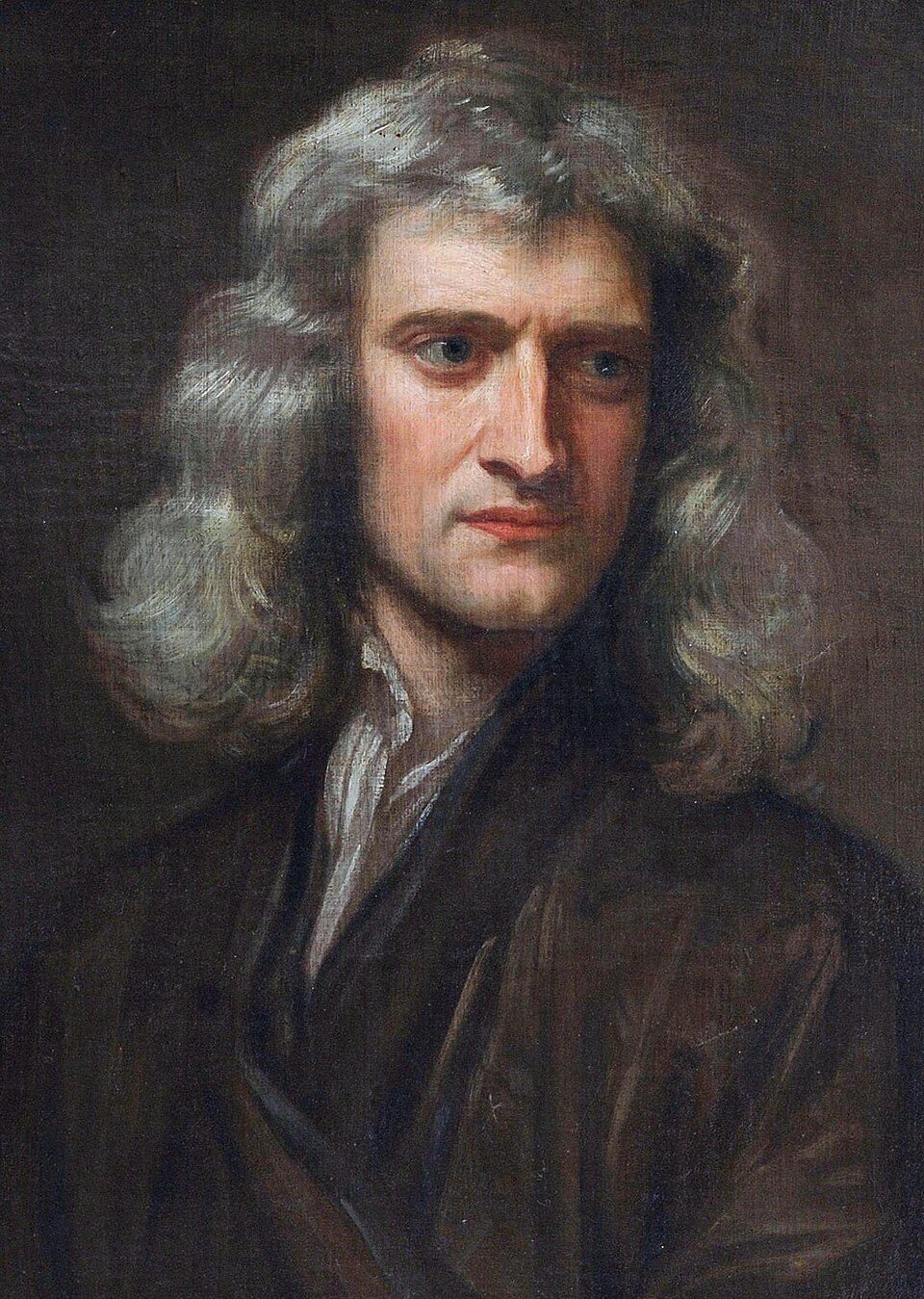
Escape Velocity: The Emergence of Genius from the Constraint Pool — Regarding Isaac Newton
Preface
Within the theatre of persistence, most systems remain bound to a common field of constraint.
This field is defined by:
survival
reproduction
status
belonging
local optimization
It is the domain of ordinary viability.
Within it, systems compete, signal, and attempt to persist through:
coupling
reproduction
social positioning
This is the human gene pool as it is typically expressed:
a field of lowest-common-denominator constraints governing the majority of behavior.
Yet from within this field, rare configurations emerge that do not remain bound to it.
These configurations do not simply outperform others within the same system.
They:
redirect the function of persistence itself.
I. The Constraint Pool
The baseline human condition is not exceptional.
It is:
iterative
redundant
statistically distributed
Most systems:
approximate the mean
solve immediate persistence problems
remain within the gravitational field of social and reproductive constraint
Their behavior is governed by:
signaling viability
securing mates
maintaining position
avoiding loss
This produces:
a stable but low-resolution field of persistence.
II. Variation Within the Pool
The gene pool generates variation.
Most variation is:
absorbed
normalized
eliminated
or marginally differentiated
But occasionally, a configuration appears whose internal structure diverges significantly from the mean.
This divergence is not inherently advantageous within the base system.
It may appear as:
social misalignment
obsessive focus
reduced participation in ordinary signaling
diminished concern for local status
From within the pool, such a system may appear:
eccentric
inefficient
maladapted
Yet structurally, something else is occurring.
III. The Redirection of Constraint
In rare cases, constraint is not resolved through:
reproduction
social embedding
local optimization
Instead, it is redirected inward and upward into:
abstraction
pattern recognition
symbolic compression
The system does not ask:
how to be selected
how to secure position
how to maintain ordinary viability
It asks:
what is the underlying structure by which all systems persist?
This is a categorical shift.
IV. Escape Velocity Defined
Escape velocity, in this context, is not literal detachment from biology.
It is:
the threshold at which a system’s internal organization becomes governed more by abstract constraint than by immediate social or reproductive constraint.
Below this threshold:
behavior orbits within the constraint pool
energy is spent on signaling and selection
Above this threshold:
behavior is reorganized around discovery and compression
energy is spent on extracting underlying structure
The system does not leave the field physically.
It leaves it functionally.
V. The Case of Isaac Newton
Newton exemplifies this transition.
He does not simply succeed within the human constraint theatre.
He ceases to operate primarily within it.
His activity is characterized by:
prolonged isolation
intense internal focus
reduced engagement with ordinary social signaling
sustained attention to non-immediate problems
Rather than optimizing for:
mate selection
status visibility
social integration
he optimizes for:
derivation of the laws governing motion, force, and change
The result is not:
- local advantage
but:
- global structural compression
His work does not increase his reproductive output in any direct sense.
It produces:
a symbolic structure that persists across generations independent of the organism
VI. The Reproductive Inversion
In ordinary systems:
- persistence occurs through offspring
In systems that achieve escape velocity:
- persistence occurs through symbolic structures
These structures include:
mathematical laws
scientific theories
artistic forms
philosophical systems
They function as:
non-biological carriers of persistence
Thus, the organism’s output shifts from:
- biological reproduction
to:
- structural reproduction
VII. The Cost of Ascent
Escape velocity is not free.
Because the system no longer optimizes for the base constraint pool, it often incurs:
social isolation
reduced alignment with peers
diminished participation in ordinary coupling dynamics
psychological strain
From within the pool, such systems may appear:
unstable
detached
extreme
This is not accidental.
It reflects:
a reallocation of constraint processing away from social viability toward abstract structure
VIII. System-Level Function
These rare systems perform a function not fulfilled by the majority:
They:
extract hidden order
compress complexity into legible form
produce structures that extend human persistence beyond biology
They do not replace the pool.
They emerge from it and:
reorganize it at a higher level of abstraction
IX. Final Structural Statement
The emergence of profound genius is not a contradiction of the persistence model.
It is:
a boundary case in which the system exceeds local constraint optimization and redirects persistence into symbolic form
Thus:
most systems persist through reproduction
some systems persist through structural compression
Both are expressions of the same underlying condition.
Final Compression
The human constraint pool governs ordinary behavior.
Most systems remain within it.
Rare systems accumulate sufficient internal organization to redirect constraint toward abstraction.
When this occurs:
social gravity weakens
symbolic output strengthens
persistence shifts from biological to structural
The organism no longer competes only to remain—it produces something that remains beyond it.
Closing Line
Genius is not the escape from constraint, but its transformation—when the pressure that binds most systems to repetition is converted into the discovery of the laws by which repetition itself occurs.