Excess and Ruin: On What the Industrial Body Could Not Contain
Excess and Ruin: On What the Industrial Body Could Not Contain
Excess and Ruin: On What the Industrial Body Could Not Contain
The question is not how the industrial pipeline produced great ballplayers. That part holds together. Hard physical labor from childhood builds bodies of unusual durability. Poverty forecloses alternatives and concentrates the force of escape. The logic is legible enough.
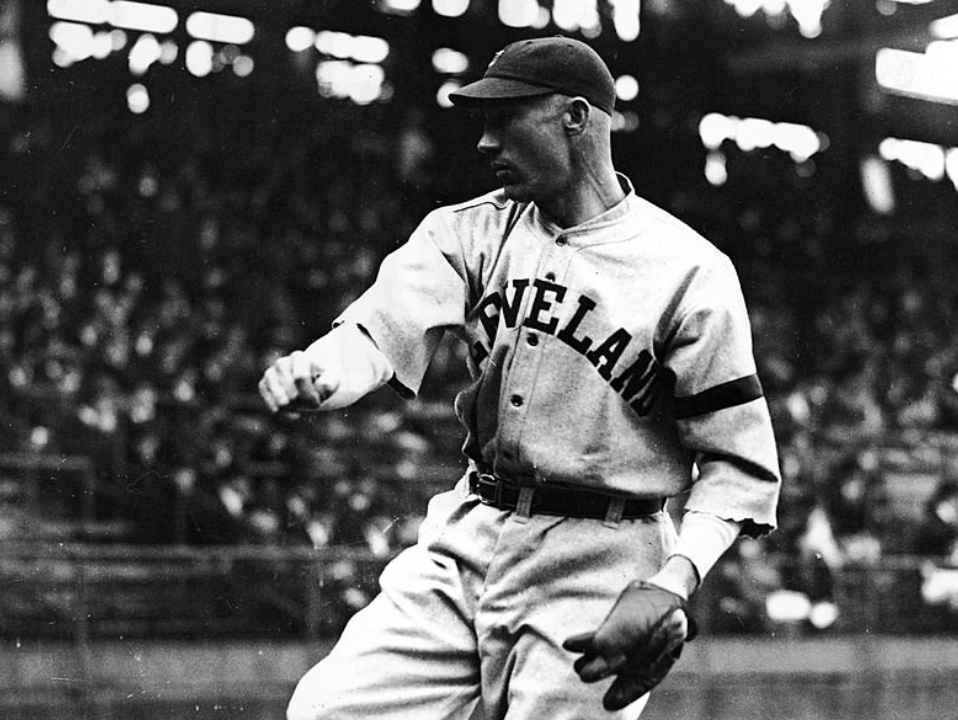
What resists explanation is the excess. Not that Coveleski became a good pitcher, but that he became that pitcher — the one who threw three complete game five-hitters in a single World Series at a 0.67 ERA, who needed only 90 pitches to close out Game 7 with a dead arm, against a Brooklyn lineup that had just beaten him in Game 3. Not that Wilson became a capable slugger, but that he produced 191 runs batted in across a single season — a number that has stood for ninety-five years, that survived the chemical era of the game, that no player in that era came within fifteen of equaling. The outcome in both cases is not proportionate to the input. Something exceeded the system that made it.
That excess is what demands accounting. Because it points at something real — about the nature of extreme deprivation, about what sport at its outer limit actually is, and about what it costs.
I. The Recalibration
When a child enters a coal mine at twelve — as Stanislaus Kowalewski did in Shamokin, Pennsylvania in 1901, for $3.75 a week — something happens to the internal economy of effort and reward that cannot afterward be undone. The lesson of twelve-hour shifts in the dark is not primarily a lesson about endurance. It is a lesson about proportion. Everything that follows will be measured against that standard, and almost nothing will meet it.
This is the clarifying gift that extreme deprivation gives: a permanent recalibration of what constitutes difficulty. A nine-inning baseball game, even a World Series game with 27,000 in the stands and the championship on the line, is not as hard as the mine. This is not metaphor. The body knows it as a literal fact, metabolized over years, prior to thought.
Coveleski acknowledged this indirectly but unmistakably. On pressure: “The pressure never lets up. Don’t matter what you did yesterday. That’s history. It’s tomorrow that counts. So you worry all the time. It never ends.” This sounds like anxiety. But read alongside twelve years underground, it is the mine’s epistemology made permanent — the cognition of a man for whom vigilance had been a survival mechanism for so long that it could not be switched off even in triumph. The mine had taught him that the moment you stop worrying is the moment the roof caves.
And then what he said after winning Game 7 of the 1920 World Series — the shutout that closed out Brooklyn and gave Cleveland its first championship: “Pitched that game and won it, and walked back alone to the clubhouse. And nobody said a word except maybe ‘Nice game, Covey.’ Just another ball game.”
Just another ball game. This is not false modesty. This is the mine’s scale applied to the World Series, and they do not match, and Coveleski did not pretend they matched. The pressure of the occasion — the kind that causes experienced pitchers to lose command, to overthink, to feel the crowd — simply could not register on a scale calibrated against what he already knew difficulty was. The excess of his performance across those three games is partly explicable here: he was pitching in a context that, by the measure of his formative years, was not that hard.
II. The Automation of Effort
The recalibration accounts for the immunity to pressure. It does not account for the transcendence of the performance itself — for the fact that across 27 World Series innings he surrendered two earned runs total, that he worked each game in 90 pitches or fewer, that his control remained precise even when, by his own account, his arm had gone dead.
What the mine had also produced was a specific and rarely discussed relationship with repetition. Not the purposeful repetition of structured athletic training, where the coach corrects and the goal is measurable improvement. The repetition of the mine is indifferent and totalizing — the same motions, the same darkness, the same physical demand, day after day, without audience or feedback or any particular interest in technique. What develops in that environment is not skill in the athletic sense but something older: a body that has learned to execute without motivation. The continuity of effort detached from the emotional states that ordinarily sustain or disrupt it.
This matters because baseball’s hardest problem — the one that separates transcendent performers from merely excellent ones — is sustaining command across the long arc of a game, a series, a season. The mind flags. The body compensates for fatigue in ways that corrupt mechanics. Emotion enters and distorts. The players who perform best under sustained pressure are invariably those who have found a way to make execution automatic enough that thought and feeling cannot interrupt it.
Coveleski’s mine had achieved this, not as intentional athletic development but as a consequence of survival. After enough years underground, the body learns to perform without the luxury of motivation. You swing the hammer because you swing the hammer. The coal comes or it doesn’t. You return the next day regardless. When that same automaticity is applied to a pitching motion already honed to precision — when the muscle memory is so deep that pressure cannot reach it — the result is a man who pitches 90 efficient pitches in Game 7 of the World Series with a dead arm and still does not give up a run. Not because of heroism in the romantic sense, but because the mine had made the act of continuing, under any conditions, simply what his body did.
III. The Breach
Wilson’s excess requires a different account entirely, because it is a different kind of excess.
Coveleski’s transcendence was the transcendence of control — of a man so calibrated to sustained effort that the occasion could not disturb him. Wilson’s transcendence in 1930 was the transcendence of force — of a man whose physical capacity for violence against a baseball was so anomalous that the season’s statistical output reads almost as category error. 191 runs batted in. The number has resisted ninety-five years of attempts including those made by men whose bodies had been chemically augmented specifically toward the production of such numbers.
The locomotive factory and the print shop and the shipyard and the silk mill had produced a body that was not merely strong but structurally strange: the eighteen-inch neck, the size five-and-a-half shoes, the barrel torso, the forearms built by years of carrying hot lead and swinging sledgehammers. This was not an athletic body in any conventional sense. It was an industrial body that baseball found a use for — and the use it found, the swing of a man who generated force the way a machine generates force, without elegance or economy, purely through the application of mass in motion, produced something the game had never seen.
What those 191 RBIs represent, considered against the full history of attempts to approach them, is not simply an excellent season but a breach — an identification of the outer boundary of what a human body, under specific historical conditions that no longer exist, could accomplish in a single baseball season. The industrial conditions that formed Wilson are gone. The record remains, as evidence of what they once produced and could produce only once.
IV. First Paradox: The Gift and the Wound Are One Event
The conditions that produced the excess also produced the destruction. They are not separable, and this is the first and most fundamental paradox.
Coveleski’s immunity to pressure was inseparable from his inability to feel triumph. He walked back alone to the clubhouse after winning the World Series and it was just another ball game — which means it was also not more than just another ball game. The mine gave him everything needed to pitch three complete games in a World Series, and nothing needed to receive what those three games meant. The formation was total. The same depth of conditioning that made the performance possible also foreclosed the experience of the performance as extraordinary. The gift is the wound is the gift.
Wilson’s version is more visible and more violent. The locomotive factory and the shipyard built a body capable of 191 RBIs. They also built a body that had learned to manage its own pain through the same substance that had been in his bloodstream since before birth — alcohol, the chemical solution of the industrial Pennsylvania working class, which surrounded both his parents, which marked his body in the womb with fetal alcohol syndrome, which he reached for throughout his life with the same automaticity that Coveleski reached for the next day’s work. The capacity and the destruction were not merely coexistent. They were produced by identical sources. Wilson drank because he was in pain, and he was in pain because of everything that had made him capable of 56 home runs, and the drinking that managed the pain also eroded the capability, year by year, until by 1934 he was out of the game and by 1948 he was dead at forty-eight, his body unclaimed by his son, claimed instead by strangers.
The mine and the factory do not stop their work when the season ends. Nothing ever stops its work.
V. Second Paradox: The Record Does Not Save the Man
Neither Coveleski’s 0.67 World Series ERA nor Wilson’s 191 RBIs rescued the men who produced them from the consequences of how they were produced. This requires stating precisely, because the archive’s treatment of these performances tends to read them as vindication — as though the peak justifies the path, as though the revelation retroactively redeems the formation that made it possible.
It does not.
Coveleski went on worrying, without relief, for the remainder of his career and his life. The mine’s epistemology was not dissolved by the World Series. Wilson went on drinking, the same drinking that had shaped him before he was born. The record did not interrupt either of these trajectories. The record exists in a different register than the man — permanent, unaffected by what followed, present in the archive independent of the life that produced it and then continued past it into its own undoing.
What the record gives is not rescue. It is witness. The 0.67 ERA and the 191 RBIs are not rewards granted for suffering. They are evidence that the suffering happened — compressed into numbers the game could not contain and that time has not erased. The archive receives them not as trophies but as facts: irreducible, unretractable, present.
This distinction matters. To confuse the witness function of the record with a redemptive function is to misread what sport, at this level, actually is. It is not a system of justice. It is a system of documentation — of the outer edge of what the human body, under specific historical conditions, could produce. The record documents the edge. It makes no claim about whether arriving at the edge was worth the cost.
VI. Third Paradox: The Grandeur Was Real and Largely Inaccessible
Neither man set out to be historical. Coveleski set out to escape the mine. Wilson set out to make a living with his body. The records they produced were byproducts of efforts aimed at something much more immediate: not dying underground, getting paid, surviving the month.
This means that what the culture receives — what the archive preserves, what baseball history holds — was not what these men were trying to give. The grandeur was real. It was produced by their bodies and their histories and their capacity for continuation under conditions that would have ended most careers. But the same formation that made the performance possible also made the full reception of it structurally difficult. Coveleski’s mine had not equipped him to stand in triumph. Wilson’s industrial Pennsylvania had not equipped him for the specific difficulty of being exceptional in public, of holding the weight of a record, of navigating the aftermath of achievement.
The grandeur was theirs and they could not quite hold it. This is not a personal failing. It is the consequence of what it took to produce the grandeur — of the depth of conditioning required to throw three complete games in a World Series with a dead arm, to drive in 191 runs across a season. The performance demanded the full self. The full self, so constituted, could not then step outside the performance and receive it as extraordinary, because the formation that produced it had left no remainder.
VII.
Coveleski in the clubhouse, alone, after Game 7. Wilson at a Baltimore public swimming pool in 1948, his last job. The record in the archive, untouched.
These three things coexist without resolving. The performance was transcendent. The men were not saved by it. The numbers survive independent of either fact.
What the industrial pipeline finally shows, pressed all the way to its consequences, is that it could produce human capability at a level that exceeded anything the game had seen before or has seen since — but that the same formation which produced that capability could not produce the interior resources to receive it, to hold it, to live inside it after the season ended. The mine and the factory built bodies for sustained effort in the dark, for continuing without motivation, for applying force past the point of exhaustion. These are precisely the qualities that produced the World Series and the record season. They are not the qualities that allow a man to walk back to the clubhouse after the seventh game and feel, at something below the level of language, that he has done something that will last.
The record lasts. That is something. Whether it is enough depends on questions that baseball can document but cannot answer — that perhaps nothing can answer — about what it means to build a civilization on the extracted labor of its own people, and what remains when the extraction is complete, and who keeps the record of the remainder, and what the keeping is for.
The numbers are still there. Coveleski’s 0.67. Wilson’s 191. Permanent, accurate, exactly what happened. The men who produced them are gone. The mine and the factory that made the men are gone. What persists is the evidence of the event — the record of what human bodies, formed by specific historical conditions that no longer exist, once produced on a baseball diamond in October 1920 and across the summer of 1930.
The witness outlasts the witnessed. This is what archives are for.