From Hamilton to Williams: Translating Baseball History
From Hamilton to Williams: Translating Baseball History
From Hamilton to Williams
Translating Baseball History
Between the 1890s and the 1950s, baseball did not simply evolve. It translated itself.
The game that produced Billy Hamilton is not the same game that produced Ted Williams. Rules changed. Distances shifted. Talent densified. Run environments expanded and collapsed.
Yet across those ruptures, one skill clarifies as the constant:
The defiance of the out.
I. Hamilton: Possession in a Volatile Sky
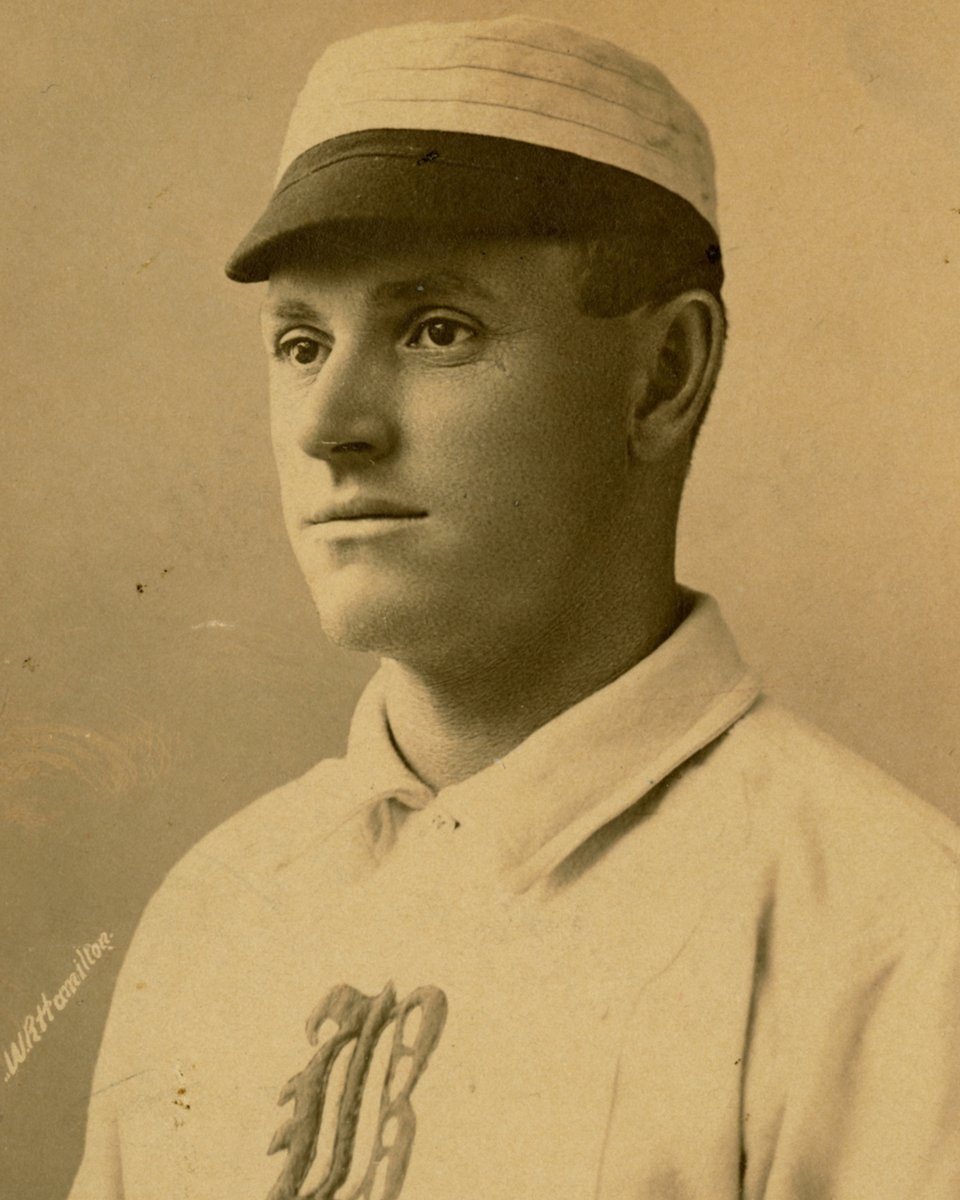
Hamilton’s career (.455 OBP, 7,609 PA) unfolded inside one of the most unstable competitive systems in baseball history:
Pre- and post-1893 mound distance shift
High defensive error rates
League churn and talent dispersion
Inflated run climates
In unstable systems, variance widens. Peaks exaggerate. Power separates dramatically.
But Hamilton’s dominance did not depend on variance.
He refused to make outs.
Across fourteen seasons he accumulated:
1,697 runs
1,189 walks
914 stolen bases
Multiple seasons above .470 OBP
His game was not built on damage ceilings.
It was built on possession control.
He turned base occupancy into pressure.
He discovered, in chaos, that outs were expensive.
II. The Structural Illusion of 19th-Century Peaks
The 19th century exaggerates separation.
Small competitive fields and unstable defensive quality allow extreme OPS+ spikes. That is why figures like Dan Brouthers tower statistically over their leagues.
But OPS+ privileges slugging variance in volatile systems.
OBP isolates something deeper:
Zone judgment
Bat-to-ball command
Sequencing discipline
These are less dependent on defensive infrastructure and more dependent on cognitive control.
If the question is:
What survives system tightening?
Possession survives.
Hamilton becomes a bridge figure — the early articulation of a skill that grows more valuable as competition densifies.
III. Compression Reveals the Constant
The Deadball era collapses the run climate.
Margins shrink. Power recedes. Scoring contracts.
In compressed environments, each avoided out increases in marginal value.
The game shifts from expansion to efficiency.
Here, the defiance of outs becomes structural necessity rather than stylistic choice. Figures such as Ty Cobb and Tris Speaker refine contact precision and zone control under reduced scoring skies.
What Hamilton practiced in volatility becomes indispensable in compression.
The portable skill is revealed.
IV. Williams: The Formalization of Refusal
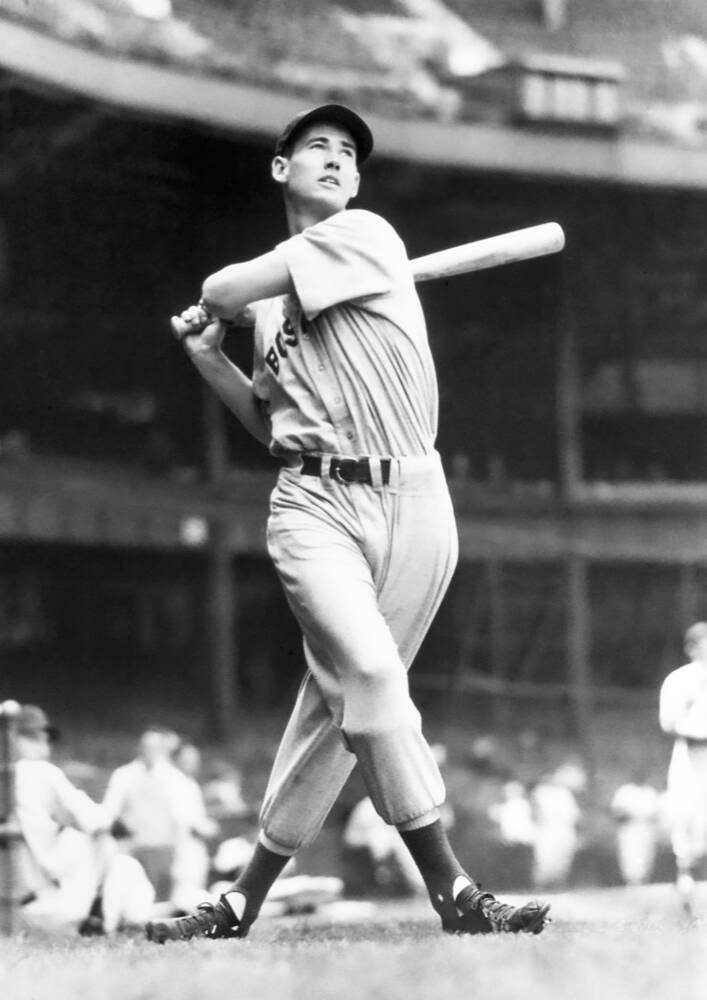
By the time we reach Williams, the translation is complete.
Williams does not merely reach base.
He systematizes the avoidance of outs.
His .481 career OBP is not environmental accident. It is deliberate strike-zone geometry.
Hamilton discovered that outs were costly.
Williams proved they were mathematically intolerable.
In a fully densified league — post-Deadball, post-integration, post-specialization — the refusal to surrender an out becomes the highest offensive art.
Where Hamilton survived instability, Williams mastered density.
The principle remains identical.
V. The Translation
From Hamilton to Williams, baseball clarifies itself.
In periods of expansion, power dazzles.
In periods of compression, possession endures.
The through-line across regimes is not damage magnitude but out avoidance.
Hamilton represents proto-modern possession dominance.
Williams represents its scientific culmination.
Between them lies the structural translation of the sport — from ecological volatility to cognitive precision.
VI. The Larger Insight
If baseball history is evaluated only through peak separation, it rewards volatility.
If evaluated through portable skill architecture, it reveals continuity.
Moments of greatest compression expose the game’s invariant law:
The refusal to make outs is the deepest offensive constant.
From Hamilton to Williams, baseball does not simply progress.
It clarifies around that law.
And what clarifies with it is the modern strike-zone mind.
Addendum: The High-Volume OBP Filter
One way to test the thesis is to apply a strict constraint:
Filter for players with:
At least 7,000 career plate appearances
Historically elite on-base percentage
Sustained performance across multiple seasons
When that filter is applied across baseball history, the field narrows dramatically.
At the very top sit:
Ted Williams (.481 OBP, 9,700+ PA)
Babe Ruth (.474 OBP, 10,600+ PA)
Billy Hamilton (.455 OBP, 7,600+ PA)
No one else with comparable volume sustains an OBP at that altitude.
This is not a claim that Hamilton equals Ruth or Williams in total offensive impact. Ruth and Williams combine possession with extraordinary damage density.
But it is a recognition of tier placement.
Hamilton is the only 19th-century player who clears the dual threshold of:
Extreme OBP
Modern-scale volume
His presence in that group is structurally revealing.
It suggests that the refusal to make outs — at scale — is not a modern invention. It predates the power age and survives into the era of strike-zone science.
That he is often omitted from inner-circle discussions reflects a cultural weighting toward visible power rather than possession control.
But when the game is filtered through compression logic — when the marginal value of each out avoided increases — the list tightens.
And Hamilton remains.
In this sense, he is not a relic of a chaotic era.
He is an early articulation of baseball’s most durable offensive constant.