Incorporating Sluggers: Power, Continuity, and the Limits of Force
Incorporating Sluggers: Power, Continuity, and the Limits of Force
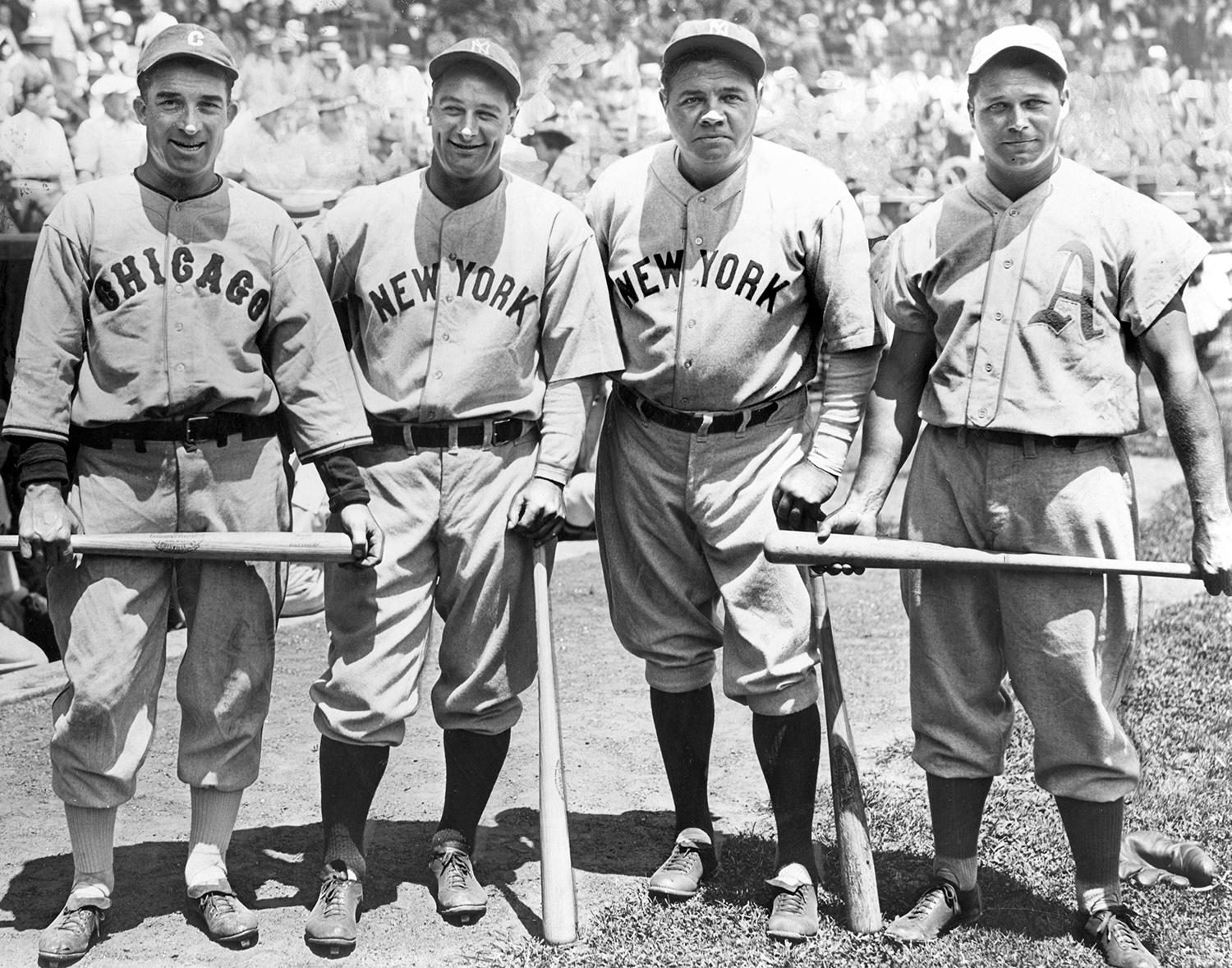
Incorporating Sluggers: Power, Continuity, and the Limits of Force
Baseball history has long treated sluggers as a distinct class.
They are framed as:
power hitters
run producers
drivers of offense through impact rather than frequency
But this separation is artificial.
When hitting is modeled as a unified system—one that forces conversion, access, force, and continuity to operate simultaneously—sluggers are not outside the system.
They are stress tests of it.
The System
Total Hitting Mastery (THM) is defined as:

This structure enforces four constraints:
AVG → ability to convert contact into hits
OBP → command of the strike zone
SLG → force generation
H/G → continuity of production
Because the system is multiplicative:
No single dimension can dominate without support from the others.
The Entry of Sluggers
To test the system’s robustness, two of the most powerful hitters in baseball history are introduced:
Jimmie Foxx
Hank Greenberg
Computed Results

Placement Within the Unified Field
When inserted into the full THM ranking:
Foxx (~1.991)
→ enters the edge of the elite band
→ sits just below Burkett (2.015)
→ above Lajoie (1.967)Greenberg (~1.87)
→ settles in the upper-middle field
→ alongside Wagner and Heilmann
→ above Terry, Collins, and McGraw
What Sluggers Reveal
These results clarify something fundamental:
Power alone cannot solve the hitting system.
Even at extreme levels:
SLG > .600
OBP > .400
Neither Foxx nor Greenberg enters the top tier dominated by:
Ruth
Williams
Gehrig
Hornsby
Cobb
Why
The limiting factor is not force.
It is continuity and conversion.
Jimmie Foxx
Elite OBP and SLG
Strong overall system
But AVG (.325) and H/G (1.142) fall short of full activation
→ result: just below the elite band
Hank Greenberg
Comparable SLG to Foxx
Strong OBP
Lower AVG (.313)
Moderate H/G
→ result: further compression downward
The Structural Law
The system reveals a consistent principle:
Force amplifies — but it does not replace frequency.
Slugging can elevate a player into the upper field, but without:
high AVG
sustained hit density
it cannot produce full-system dominance.
Reframing Sluggers
Traditional framing:
Sluggers = separate archetype
Power = alternative path to greatness
THM reframing:
Sluggers are not outside the system — they are incomplete solutions within it.
They represent:
high-energy systems
capable of extreme output
but dependent on sufficient continuity to fully stabilize
Three Modes of Elite Hitting (Now Complete)
With sluggers incorporated, the system resolves into three structural forms:
1. Amplifiers
Ruth
Williams
Gehrig
Extreme OBP + SLG
→ overwhelm the system with force
2. Continuous Pressure Systems
Cobb
Delahanty
Burkett
High AVG + H/G
→ sustain constant production
3. Hybrid Sluggers
Foxx
Greenberg
High SLG + OBP
→ approach the elite band but remain constrained by continuity
The Boundary of Mastery
The hidden elite band (~THM ≥ 2.00) remains narrow:
Foxx nearly enters
Greenberg remains below
This reinforces the core discovery:
The highest level of hitting requires not just power, but the continuous ability to generate outcomes across every plate appearance.
Conclusion
Incorporating sluggers does not break the system.
It strengthens it.
It shows that:
power is real
power is impactful
power is necessary
But:
power without sufficient frequency cannot fully solve the problem of hitting.
The greatest hitters are not those who hit the ball the hardest.
They are those who:
combine force with relentless continuity—turning every game into sustained pressure across the entire field.