John Ward and the Limits of the Sisler Parallel: High Exposure, Minimal Escape, Controlled Outcomes
John Ward and the Limits of the Sisler Parallel: High Exposure, Minimal Escape, Controlled Outcomes
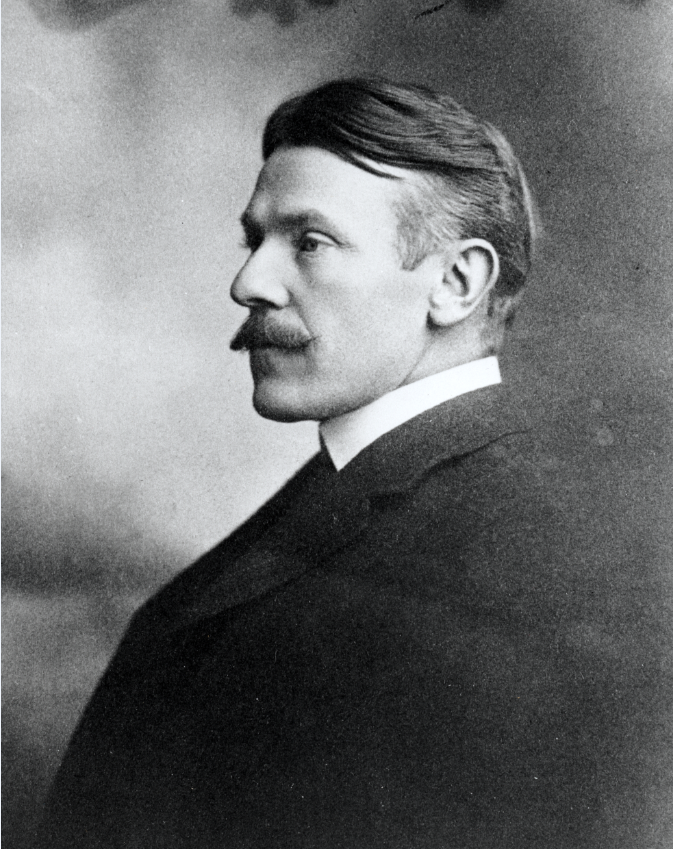
John Ward and the Limits of the Sisler Parallel
High Exposure, Minimal Escape, Controlled Outcomes
In hitting, the system can be reduced to a single act:
Turn contact into hits
A rare class of hitters—most clearly George Sisler—solve this problem without relying on secondary pathways.
minimal walks
minimal strikeouts
maximum balls in play
elite conversion
It is a closed system : everything flows through contact.
The Pitching Question
Can pitching produce the same structure?
A system where outcomes are resolved almost entirely through contact—
without relying on strikeouts or walks?
At first glance, John Ward appears to fit.
Ward’s Profile
2,469.2 IP
2.10 ERA
1.04 WHIP
0.92 BB/9
3.4 K/9
10,164 batters faced
This is a pitcher operating at extreme scale with:
almost no walks
sustained run suppression
heavy exposure to contact
What He Actually Removes
Walks → nearly eliminated
0.92 BB/9
very few free baserunners
This part of the Sisler analogy holds strongly.
What He Does NotRemove
Strikeouts → still present
- 3.4 K/9
In context, this is not negligible for his era.
Ward still retains a secondary control mechanism
He is not purely resolving everything through contact.
The Structural Reality
Once corrected, Ward’s system looks like this:
Walks minimized
Strikeouts reduced but active
High contact volume
Elite outcome stability
This is not a pure system.
It is:
A highly efficient system operating inside a contact-heavy environment
Why the Analogy Breaks
The deeper issue is structural:
Hitters control contact
Pitchers do not
A hitter can choose:
when to swing
how often to put balls in play
A pitcher cannot fully choose:
whether contact happens
what happens after contact
Which means:
A true “Sisler-equivalent” pitcher may not exist in pure form
What Ward Actually Represents
Ward is not the mirror image of Sisler.
He is something slightly different—and arguably just as interesting:
A pitcher who minimizes free outcomes, absorbs massive volume, and maintains elite run suppression without relying heavily on dominance
The Refined Parallel
Sisler
removes all alternate channels
maximizes exposure
sustains conversion
Ward
reduces alternate channels (especially walks)
absorbs exposure
sustains run prevention
The Key Insight
Most pitchers improve efficiency by:
missing bats
avoiding contact
limiting exposure
Ward does not fully do this.
Instead:
He allows the system to run—and keeps it stable
Final Line
John Ward is not a perfect analog to Sisler’s pure contact system—but he is one of the clearest historical examples of a pitcher who minimizes free outcomes, operates under extreme exposure, and still suppresses runs with remarkable stability.
Addendum: Why No True Sisler Equivalent Exists for Pitchers
On Control, Contact, and the Limits of Symmetry
The search for a pitching analog to George Sisler reveals something deeper than a missing player.
It reveals a structural limit.
The Asymmetry at the Center of the Game
At first glance, hitting and pitching appear to be mirrors:
hitter produces contact
pitcher prevents damage
But they are not symmetric systems.
They are governed by fundamentally different forms of control.
Hitting is a Closed System
A hitter determines:
when to swing
whether contact occurs
how often the ball is put into play
This allows for a complete collapse of the problem into a single domain:
Contact becomes the entire system
This is what makes Sisler possible.
He removes:
walks
strikeouts
and resolves everything through:
controlled contact and conversion
Pitching is an Open System
A pitcher determines:
whether a hitter walks
whether a hitter strikes out
But once contact is made:
control fragments
The outcome is now distributed across:
defense
positioning
environment
variance
Which means:
the pitcher cannot fully own the result of contact
Why the Parallel Breaks
A “pure system” requires:
control over inputs
control over outcomes
Sisler has both.
A pitcher never does.
Even the most efficient contact-oriented pitcher cannot:
guarantee weak contact
eliminate variance
stabilize every ball in play
What This Means
The implication is precise:
A true Sisler-equivalent pitcher cannot exist
Not because one has not been found—
but because the system itself does not allow it.
The Closest Possible Form
What pitching can produce is a limit case:
minimal walks
controlled strikeouts
high exposure to contact
stable run prevention
This is where figures like John Ward emerge—not as perfect parallels, but as boundary cases.
They do not eliminate the system’s openness.
They simply:
operate within it with unusual stability
The Deeper Insight
This distinction reveals something fundamental about baseball:
Hitting is self-directed execution
Pitching is mediated interaction
One is an act.
The other is a negotiation.
Final Line
The reason no pitcher mirrors Sisler is not historical accident but structural necessity: hitters can fully control contact, while pitchers, once contact is made, must surrender part of the outcome to the world.