Kerouac's Baseball: The Spirit of Imagination, American Passion & the Artifact as a Journey and a Road of Time Dilated Ecstatic Creation
Kerouac's Baseball: The Spirit of Imagination, American Passion & the Artifact as a Journey and a Road of Time Dilated Ecstatic Creation
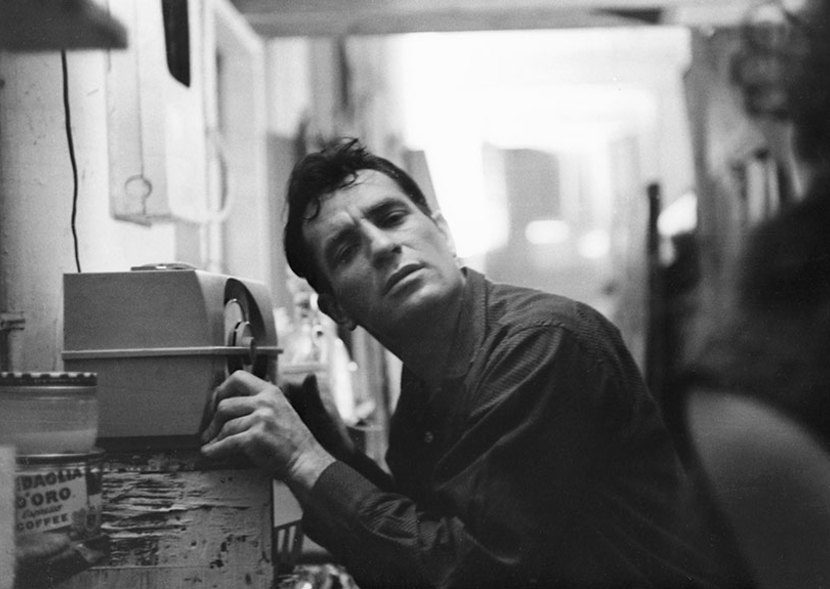
00:00
So I kind of want to amble on about Jack Kerouac’s baseball and… baseball… that is perhaps of the spirit of the imagination.
00:25
A baseball that is envisioned and dreamed as Kerouac would envision and dream his baseball teams. He’s taking the cultural artifact, the sport of baseball itself and turning it into a literary one — much as we’ve just discussed here with Red Barber and his radio calls and the necessity of a poetic interpretation of baseball… to free baseball from its literalistic form, its bare phenomenology — and enter it into the poetic dimension, which is the imaginative dimension and the true wellspring of baseball being a metaphysical artifact.
01:14
An artifact of the American soul.
01:18
So this is where we get into the artifact itself of historical baseball. And when I envision this, see the black and white film reels of Dizzy Dean. I hear the call of Red Barbara and the static and the warm, dull groan of the cheers of the crowd incessant.
See Roy Campanella crouched behind home plate — those early days of television film.
Those early days where you’d have to go to a theater to see images of baseball in motion. And those days before that… with the bursting of baseball into news media and silver gelatin and the power, the true power of silver gelatin, the true artistic power of silver gelatin — the art of rendering the photo… the bursting of photojournalism at the onset of the 1900s, and the beautiful artifact that’s left behind and remains — and is still not yet recognized… in the art of baseball photography.
02:32
Often by artisans and photojournalists who are not recognized, who are still unknown to this day, who crafted the image in the mind’s eye of early American baseball.
And this is what the artifact of historical baseball is. It’s an artifact consciousness. It’s a created, imaginative, interpretive, poetic art of sound images. Chemical paintings of light. And the American mind that induces and deduces it. It’s a circuit of profound imagination and imaginings. It’s a mediation of history.
Just as Kerouac is at play with his imaginary teams, we’re talking about something that is wrenched out of time.
03:03
The radio airwave, the photographic image, this is an object memory. Is tensile, tangible. It’s a bending of light and waveform to produce the imaginal interface between the artist and the cultural object of baseball’s absolute spiritual Americana.
It is something that is retained through a historical circumstance… and as such, a psychological stage in a period of development.
It retains the power of the great mind that envisioned it, which is the formal unity of American popular culture with baseball itself, and thus everything that emerges from and through it — particularly that which it leaves behind, which is the memory of the cultural artifact. This is a mass movement of artistic imaginal cultural work and fluency through the collective imagination. It is much as nations and political groups are assembled — it’s the cultural art of mass image and language fluency to construct the temple of baseball; its icons, legends, losses; profound victories and gains. It’s a narratology of the human spirit. And the artifacts themselves retain the imaginal power of an entire nation bursting with adolescent birth into industrial modernity — callous, insane, dreaming, aspiring to the stars… Milton’s fiftessence of the soul.
03:51
It’s not the history itself, but it’s rather the object from history that surfaces life itself as a sound — as a resonance, a remnants, and a technology… of the drawing back of time into the present. We don’t retain history through the artifact — we retain the consciousness of the historical moment and forces which draw it into being as an assembly of elemental light. It’s a craftwork which is emblematic of a phasal state of being in a grand cosmological sense.
So when we’re talking about Kerouac’s baseball and we’re talking about the literary act, we’re talking about On the Road and Dean Moriarty… it’s the creation of a space between past, present, and future. The future being the literary act that’s always already coming into being when it’s read. The dormancy of the symbol and the thermonuclear ashes of the word ground from experience into the body of the book, disseminated, translated… digitized…
The present — which is a memory of the past. And this is as in Walter Benjamin’s Angel of History looking back into the ruins even as it’s pulled forward into an infinite dawn. All we know is of what was; the rare few, like the sage philosopher Shankara or Heraclitus — know that which is beyond time…
04:41
These ruins are the pieces of baseball past which we hold, behold… here — sound.
04:52
This is Kerouac’s journey. Kerouac is the poetic device of American modernity in the sense that he is documenting the expansion of consciousness into a new age itself. The idea of the road itself being freedom. Endless, stretching outward, brightly — the machine of capitalism gorging on infinite energy and power — exploding outward from the industrial American heart of sweat and groaning machinery with no seeming end in sight. Immature, thoughtless, expansive as to consequence. The naive infancy of… not the one who knows, no causal, no effectual… but the one who goes. Damn the torpedoes.
The bursting into American possibility — from the agrarian past, the slow car of ritual, local life; flat sensibility and old myth — and the sense, the contemplative sense… of one who’s witnessing this emergence and yet is caught between the maelstrom of that which was and all the wisdom that came from it… and that which will be and all that which remains unspoken through it. Kerouac is a wind, at once conscious, circumnambulatory… dancing around the possibility of the road and the carelessness of Moriarty; the wild American spirit at mid-century’s turn — and the wit of consequence. Kerouac is America’s threshold modernity — just as baseball is America’s myth to bursting… brought and shined to too much light with cinematic color film and digital photography. It hides — as it must — in the broken shadows of time; the low resolution of black and white film reel; the grainy possibility. Because baseball is a dream. It is not real.
05:34
History itself is a fulcrum which emerges the strange futurity of the artifactual consciousness — as a transcendence of the time-bound and historical. It produces the dreamer in the midst of impossible time — always already impossible time.
In this sense, the artifactual consciousness is also ahistorical… in the alien nature of the displacement of time. It is the timeless drive as in the weird soul of a recombined elemental object, a waveform, a chemical synthesis, a bottled sound drive — in the midst of a tornado of natural, organic forces. Light, lightning, wind… the cold, dark black of space. The artifact sits like a plastic toy in the midst of a clay and dirt inferno. This is the absurd, just as much as it is the real manifestation, the real phenomenology of the human aspiration in dream. It has no place in nature; is necessarily beyond it.
05:53
And what I put here in parentheses… is this is an extension out of the furnace of the thermodynamic human moment of historical presence in the jar of the artifactual. It is a bottling of light into that which sustains… that which must sustain. The repetition of baseball is the American dream that never dies. It must remain, like a prayer. It’s a devotional practice in the midst of the burning off of all that which was and the coming abyss of all that which will be… and everything that is a firm never in between. This is a spinning historical ballet on the die of an inferno. And yet… there is laughter and applause. And DiMaggio swinging the bat on graining newsprint. The spring of Campanella from his stance to fly ball action on the Berk Ross baseball card. Myth is not enough to America. We must have and be heroes to be remembered in time. Our history is the monolith in and from which we have built our shadows that loom… large with the darkness of what they deigned to forget.
And this is which is captured in the entirety of the resonance of On the Road. On the Road repeats the road. It’s a manifestation of the only real manifest destiny. A profoundly industrial, thermonuclear one. It’s an extension of the sun into and upon the shrouded American wasteland — just days away from the Dust Bowl; the bright dream of a few young men smart enough, or wild enough, to see a dawn in the debris.
On the Road is Kerouac’s voice spilling out the rhythm of the road. The humming of the possibility of the inferno and infernal engine of movement. The rattling of the bebop car. And this is the necessity of the immediate presence. He’s there, spilling language in a horsepower brain. A horsepower mind. This is American genius — to a skyscraper rhythm. The epic sprawl of Coltrane’s Love Supreme — the colonialism of the Orphic soul. To know it and bring it to life as the terrain beneath the millennium… the centuries of ashes and grief which spread their historical march about the earth. This is the terrain of passionate art.
06:45
Kerouac… in the moment of the depiction, which is the poetic moment, which is also the moment of jazz. Kerouac is the moment. The pure flow of the whiskey and coffee blues. The aligning of time in the rhythm of the mind and the outpouring of the divine. See this, Jack? We’re all here, inside the Columbia station — wriggling to get out — seeping mad lines into eternity… way out past the breaks and the breach and the buoys. Unheld by all that which was — unencumbered by thoughts of all that which wills to be. This will of the present. Of presencing.
And this is a historical marker of consciousness, which is unique to mid-century America, profoundly unique in that it manifests in all of its cultural objects. It is a state and a nature and a character of the terrain of the mid-century American will. Oblivious and all consuming — an ecstatic grandeur in a breaking bubble of private ritual and the dream of power in the face of a thermodynamic universe and a post-war champagne.
07:04
This is a ritual of presence that bottles time and bottles time with the waveform action — that which is the consciousness in the moment of its depiction. Held in plastic and the blue, ridge-backed mind of the mountains of Kerouac’s prose. In flaking silver. This is what the artifact consciousness is. It’s the emulsion of possibility bottled in the object which is its total craft. This is, formally, mankind as a utero of all energetic dimensions and directions beneath the code of its biological rituals and beast. It’s unchained energy synthesized into a temporum — which itself is a linguistic rite and ritual of the stars.
It’s the object that remains, that retains the wholeness of that which was — even as it is fragmented by time. There is a fundamental soul to the whole of its construction which is the pouring of the hot and molten mind of American emergent consciousness — even in the Grecian potsherd. The breaking of the form is unbroken of the spirit which emerged it. The spirit of the time and the imaginal force which forged it from the terrain of molecules, compounds, chemicals — mixed and melded with ideation born from the cultural artifact of the dream.
07:22
And this is what the historian and the archaeologist and the archivist recovers in the present sense, just as much as one recovers it in the reading and recitation as in On the Road being the true voice of Jack Kerouac made authentic, re-emergent eternity in its spoken sprawl and form… archived and compressed by text. Always made available in the organic soul of the free mind of Kerouac himself. Unabashed, unfiltered — utterly pre-linguistic and yet absolutely, totally poetic.
Here in this modern American emergence, we’re not talking about the book as a literary or textual vehicle, we’re talking about the book as speech that has been bottled in time and is being re-spoken when it is being read. The book is Kerouac speaking into the typewriter directly in slang. As a friend. Not even as a confession. But as a friend and with the heart warmth of a friend.
And this speech itself contains the waveform artifact of the character of consciousness, the one who is witnessing. Kerouac is in the soul of this book.
The period of time which has read Barber and Dizzy Dean and Mel Allen in the early World Series broadcasts — just as much as it is the silver gelatin photo. And before that, the daguerreotype.
07:59
These are markers of the shifting face of human consciousness itself. It is participatory. And thus utterly timeless in the dimension of the human soul and the revelation of eternity through the human spirit; yet utterly transportative back toward and forward toward that frame of mind. Poetics themselves are simultaneously artifact and gesture forth into a future of profound and utter transformation and transfiguration. So goes Rilke, ‘You must change your life’.
So we are not actually recovering the fullness of history when we recover the artifactual object. We wouldn’t want the past, as much as the past itself is the dream which we have forgotten and are attempting to remember. And history itself offers us up this reprieve — even as it offers us the radical potentialities of the artifactual object.
We’re recovering the historical interface with the sedimentary time, which itself is an abyss. It burrows forever into the molecular form and the molten skin of the Earth. Layers and stones of the Romans and the Paleolith. It’s a time that is gone and simultaneously a portal back to it, in the sense that it’s a resonance chamber. The historical object is — just as mankind itself is a historical object of cosmological creation — a resonance chamber for the entire body of history… an is yet manifest and manifesting in the twisting beaker of the whole and full body of the unfolding scroll of time itself as something different, emergent, changing… simultaneously the whole of time as it is participant, a part of it — as it is an artifact of a moment of revelation in the creation of the form itself proper — and a coming shard of the future — inmixed with the ash and degree of impending stars, fuel, fire… in the Vedic, this world is a waxen form. And in Heraclitus — all is this cosmic fire.
08:55
Mankind contains the great primordial ancient snake of energy — the fish, the cell, the birth of the stars — and yet is manifest in a way that obscures and veils this.
It retains its primary and primordial signature and has wound up in the entire language of it all, much like a Kerouac scroll, much like a turn of the century cirkut panoramic photo of the great Deadball teams of yore.
This is the expansion of the metabolic technology of language, an articulation of the possibility of the appearance of form in a changing face. The genome of the shifting ape before the paradigm shift that comes calling it into a new formal dimension of the mind — the pressures which forge new chemical and molecular syntheses. The interactions which emerge through microscopic, cellular decisions of emerging organisms in a collision course of energy, metabolism, and radiation. This is the true field of history.
And this changing face is the deception of historical time because what emerges today is… a part and a whole of history and a whole of all time — and yet something forgotten and masked by the present, as in its current and contemporary appearance. The human is a veil for the cosmic device, just as the cultural artifact of mankind’s aspiration hides and holds beneath it the great cosmic child, desperate for liberation and the language which frees the being out from the chamber of the body into its full expressive capacity. History is a breach and a leap between the language which contains and the language which expresses. This is the making possible of the great mind of the stars in the genome of mankind.
09:47
Beneath the sedimentary layers of the skin requires an entire ecosystem which has been formed over millions of years of sophisticated language — just as much with Kerouac’s On the Road. The book itself is a condensation of impossible historical time through the eyes and the mouth and the words of Jack Kerouac. He’s pushing the entire winding plains of the American road into a terrain that sits just under the tongue in the black serif of the letter A. Mankind’s moan under the stars into a repetitious syllable which flutters in the wind of disappearing speech.
This is the work of baseball photography and the radio. It’s to capture a part which is itself the whole. In the fragment we find the mystery of eternity. Blake’s heaven in a wildflower.
And through the part, one experiences the whole through the masked fragment. The tragedy, the comedy; the bursting forth of billions of obscured years through the ambling, angling of a child toward a sno-cone booth — Kerouac’s nights out on the berry picking farms, far out West despairing for love and needling his days between the impossibility of perpetual motion indicated by the American industrial capitalist mind and the seeming stretched out adventure which only requires his feet to run… and the far out exhaustion of a lover no one knows in the bed of a pickup truck, kicked up to nowhere and nowhere again — with no rest and weary eyes.
10:18
So when we talk about the historical artifact and artifactual consciousness, this is a form of time chamber and an interface, time travel, as well as in remembrance. The historical moment of its birth stands still in a glassy, impenetrable solitude — and yet we’re recalled towards it by that which it is speaking and is saying — its particular linguistic device incarnate in form. This is wave-speech.
We’re piecing back together a historical past, which is always already present, but it no longer retains its worldly function. This is as much in stone as it is in the slave trade pavilions in the American South, or the bloody buffalo plains. Kerouac moves all through it like a dream, as Skip James moves through the basin of the American South — wavering his music in the wind of history which intimately, fully, completely remembers that which came forth from it in the body and the land in the water of the Earth. This overturning is not obscured by time — rather, it is revealed and brought light through it.
Crow Jane, Crow Jane… don’t you hold your head high… someday, baby… you know you’ve got to die…
Worldly function recedes into the hidden body of the artifact. Like a stone in a tomb or a skeleton in the Earth — even as it is decayed and corroded; the sun heated and swallowed vapors — the Earth resorbed marrow of the body.
The object itself retains the memory — the real resonance of place and space of that which forms it… that is the true body of it, even as it is stripped by the weathering layers of time and gravity. And the object vessel is utterly transformed in the grand march of the planets toward vast, distant attractor. This future beckons out from beyond all concerns or claimed knowings of man. It is unknown before unknowns — bound and found only in experience.
11:07
The ontological force of weather and nature retains the memory of the space in which it was an active device. In which it was speech made sound. An active warbling of thermal energetics. This is the heat of the body and the presence of the crowd. The heat of the sun before it dies. The electrical power of the transistor radio. Sound of the breath passed through it and captured in the transfiguration of music to waveform as in translation and transitory passage. A file signature bottled and digitized… proscribed and inscribed into the wax groove of the record body. This is neural experience. Waveform interface; inscription, rescription…
This is a neural adaptation of the archaic primordial origins and primal origins of the modern human being and the human body to advancing cultural conditions. Kerouac’s bebop in the heaving hi-way car. This is a genomic shift. An epigenetic writing of the grand arc of history wound into the bottle of time and passed forth in and to the experience of what is to come through his daughter.
A historical past… in the very firmware of the body of the being made present, always already being outmoded by a technological future. For what is writ is written and what is to come forth through it is a possible shift, dissembly, re-sembly therein. The word is rent from the page, quoted, remixed. The Police become a rap song in Camron’s New York. Kerouac is digitized and broadcast on a livestream. The Earth is broken up in a cosmic rift in a distant pull of the entire body of the solar system toward unknown space… a solar flare knocks out a grid of synthesized power, broadcasting psychological images of the human mind. Culture is a gear… a shift in the grand admixture of time. A solace, a shelter, and an advancing forth — a vanguard into the wilderness of the unknown. As it is… the human body itself in experimentation with infinity; the capacities of change within the linguistic script of the flesh and life itself.
This is a shifting neurological grid encountering a present moment.
11:56
In which the operating system is applied to new rules, new bounds, new foundations, and is asked and called to change.
Humanity itself is the live process of a natural solve, neural reflection upon history; the possibilities of eternity… latent and buried within time.
12:20
These are some of the fragmented notes that I have towards the end of the idea.
But what remains is Kerouac’s baseball.
Kerouac’s baseball is the baseball of the dreamer. It’s the baseball where the artifact of baseball is a possibility. It’s… limitlessness — upon the stage and the structure and the skeleton of the historical form and as repetitions. Those that come and go through it. A ritual of perpetual re-creation, exertion, and self-overcoming through the full force and passion of the body in space and time.
It is a chamber of the outpouring of energy into the theatre of the very incessant movement drive — the modern, industrial engine and insatiable force of progress and thrust forth that powers both the human metabolism, human creativity… and the American mind.
The artifacts that it creates are simultaneously history… and a latent possibility that still remains — for the act of the one who sees.