Kid Nichols and the Endurance Archetype: The Stabilization Pivot from 60’6” Shock to Deadball Suppression
Kid Nichols and the Endurance Archetype: The Stabilization Pivot from 60’6” Shock to Deadball Suppression
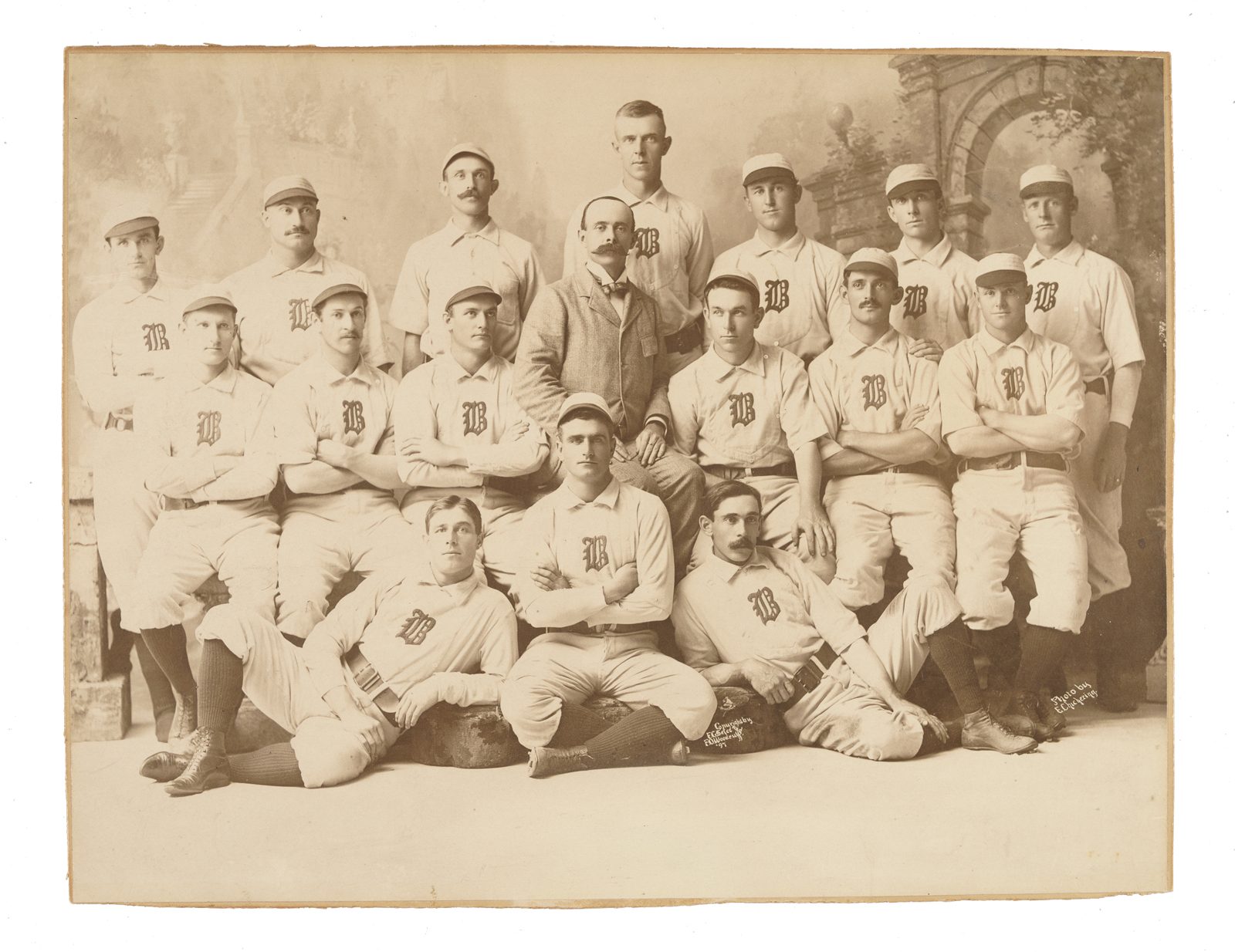
Kid Nichols and the Endurance Archetype
The Stabilization Pivot from 60’6” Shock to Deadball Suppression
In 1893, Major League Baseball moved the pitching distance from 50 feet to 60 feet 6 inches. The change expanded the batter’s reaction window and destabilized the run environment. By 1894, National League scoring exceeded seven runs per game—one of the most extreme sustained offensive climates of the 19th century. The sport entered a structural rupture.
The surface narrative centers on hitters. The deeper question was whether elite pitching could survive the new physics.
Within that rupture, Kid Nichols emerges not as a flamboyant revolutionary but as something more historically consequential: the endurance archetype —the model of pitching that scales across expanded reaction geometry and anticipates the Deadball suppressor.
I. The Rupture in Context
National League runs per game:
1892 (pre-change): ~5.1
1894 (peak shock): ~7.3
1895: ~7.0
1897 (stabilizing): ~6.1
This was atmospheric expansion. Many pitchers’ ERAs inflated sharply and never fully normalized relative to league context. Arms built primarily on short-distance compression—velocity and deception—were exposed.
For equilibrium to return, a suppression model had to demonstrate viability under expanded timing conditions.
Nichols provided that proof.
II. Statistical Continuity Across the Shock
Nichols debuted in 1890 under 50-foot conditions and was immediately elite. After the distance change:
He remained a high-volume workhorse.
His raw ERA rose during the 1894–95 detonation—as did everyone’s—but he stayed suppressive relative to league scoring.
In 1897 , with the league still elevated (~6.1 runs/game), he went 31–11 with a 2.64 ERA.
That 2.64 figure must be read atmospherically. It represents dramatic separation from the scoring baseline in a still-inflated sky.
The record shows three things:
He did not collapse in peak volatility.
He stabilized quickly as the league adapted.
He maintained elite run prevention while carrying extreme innings loads.
This is structural resistance, not coincidence.
III. Method: Refinement Within Expansion
There is no evidence Nichols declared a new philosophy in 1893. What the record supports is that his foundational traits scaled effectively to the longer reaction window.
1. Command Over Velocity
Nichols was not a pure intimidation arm like Amos Rusie. His edge was precision and location. In an expanded timing field, command gains relative value.
2. Efficiency and Endurance
He continued to shoulder massive workloads, preserving structural stability across seasons in a volatile environment.
3. Contact Management
Rather than chase strikeouts in a hitter-friendly sky, Nichols controlled sequencing and trusted the architecture behind him.
That architecture matters.
IV. The Beaneaters as Defensive Model
The 1897 Boston Beaneaters were not simply a pitching team. They were a defensive machine.
The roster included:
Jimmy Collins — redefining third base range and arm strength
Fred Tenney — pioneering defensive positioning at first base
Bobby Lowe — stability and double-play efficiency
Billy Hamilton and Hugh Duffy — elite outfield range
This was not a collection of bats. It was a coordinated field-prevention system.
Nichols’ method—pitch to contact, control location, limit clusters—paired naturally with a roster built to convert contact into outs.
This is predictive of Deadball structure:
Pitching is not isolated dominance.
It is integrated run prevention.
V. The Strategic Layer: Frank Selee
Manager Frank Selee is essential to understanding the hinge.
Selee’s approach emphasized:
Defensive excellence
Roster balance
Situational execution
Structural coherence over spectacle
In a post-shock landscape, Selee’s strategy anticipated Deadball managerial architecture. His clubs were disciplined, positionally strong, and strategically unified.
Nichols was not operating alone.
He was embedded in an early model of system-based run suppression.
This is not chaotic insurgency.
This is managerial order.
VI. The Endurance Archetype Defined
Nichols represents a suppression model built on:
Command and location
Inning-eating stability
Run-cluster control
Defensive integration
Strategic composure
This is the endurance archetype.
It does not rely on overpowering force.
It governs volatility.
VII. Expansion into the Deadball Suppressor
The Deadball era (roughly 1900–1919) did not invent this archetype; it amplified it.
Pitchers such as:
Christy Mathewson
Walter Johnson
Cy Young
Ed Reulbach
Hooks Wiltse
operate within compressed scoring environments, but the governing logic mirrors Nichols:
Command-based suppression
Heavy workload endurance
Defensive trust
Managerial integration
Deadball compression made this model dominant.
Nichols demonstrated it was viable even in expansion.
That is the bridge.
VIII. Why Nichols Is the Hinge
A hinge is not the loudest performer. It is the stabilizer who proves the system can survive rupture.
The 60’6” change could have permanently shifted structural advantage to hitters. It did not.
By 1897:
Suppression models were reasserting viability.
Defensive architecture was systematized.
Managerial structure anticipated Deadball order.
Nichols stands at that pivot.
He did not revolutionize pitching form.
He demonstrated that command-based endurance, integrated with elite defense and disciplined strategy, scaled to the expanded reaction window.
That proof allowed equilibrium to return.
Final Assessment
Kid Nichols is best understood as the first fully realized endurance suppressor under expanded geometry.
His statistics show sustained atmospheric separation across rupture.
His method shows scalability rather than fragility.
His team environment models integrated defensive architecture.
His manager anticipates Deadball strategic form.
The Deadball archetype does not suddenly appear in 1900.
Its operational template stabilizes in 1897.
Nichols is not the revolution.
He is the proof that the revolution did not permanently destabilize pitching—and that endurance, properly structured, could govern the expanded field.