Mary Shelley's Frankenstein: CRISPR, The AI Age; Visionary, Romantic Hubris
Mary Shelley's Frankenstein: CRISPR, The AI Age; Visionary, Romantic Hubris
00:01
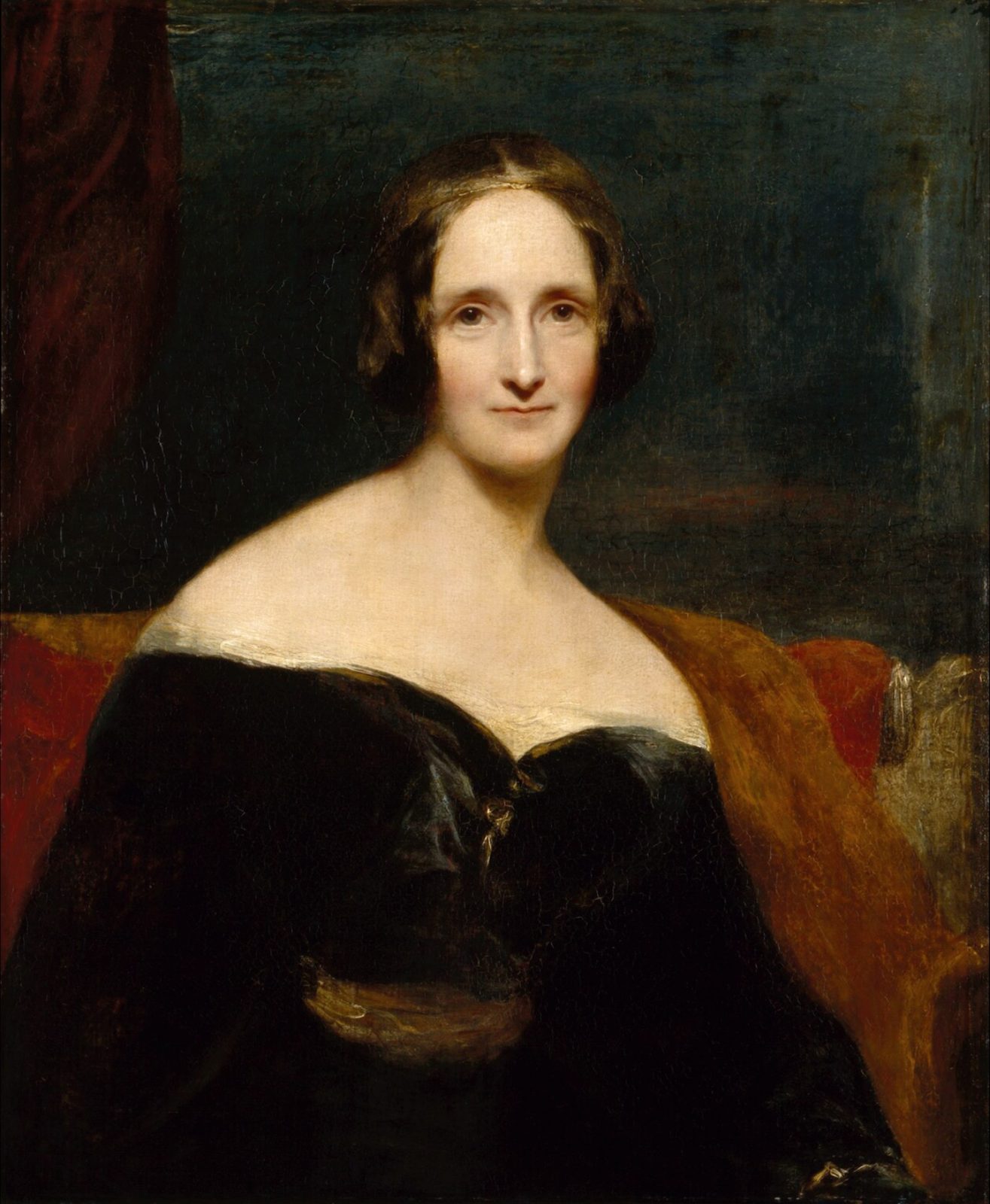
So this one will be called Mary Shelley and the Transfiguration of the Real.
I think… the issue when we look back on Mary Shelley and Frankenstein — and the various different literary forces which converge with… Lord Byron and Keats and Shelley, Percy Shelley — is that we’re looking at a figurative circle which is drawn in England.
During a period of massive technological, industrial, scientific transformation.
Which is what we’ve gone very deeply into, into this larger work — the work of the stage of these several volumes.
01:22
And it draws us a little earlier back into this period and the importance of electricity and the theatrical components of the science which Mary Shelley observes being assembled in real time before her eyes, just before the outburst of the Industrial Revolution proper of the late 1800s and early 1900s.
And what I want to suggest here is that the literary products themselves are unimportant.
It’s that they are a psychological aperture or a vessel into the specific predicament. And that what Frankenstein is for Mary Shelley, just as much as what Percy Shelley’s attempts… through incorporating the mythic cycle into his modern experiences to transfigure consciousness and to reflect in upon consciousness… and the difference between Mary and Percy is that Percy is actively attempting this transfiguration.
This is a man who was deeply obsessed with alchemy, science, chemistry, and is... by no mistake, deeply intertwined with Mary’s depiction of Victor Frankenstein as the brilliant, albeit tortured, passionate genius who is attempting to construct something that is unnatural.
And this returns us back to the conversation that Percy Shelley had with her father, William Godwin, about the nature of human evolution and the process of change towards human enlightenment.
02:34
And Godwin’s suggestion… that this is a process that occurs over massive periods of time.
And Shelley’s revolutionary idealism is clearly unfit for the age, as much as he tries to fit it into a world of British parliament and colonial empire control. He has a vision of transcendental unity in humanity through knowledge and striving and liberation in the midst of a vapid, genetically midwifed culture that is like a slow sludge or sewage rising up from the abyss of history to barely… dimly comprehend even a thin notion of the real — which is navel-gazing itself into increasingly profound (as in technologically additive) acts of slavery, decadence, and control over women… et cetera. And Percy rails against this with fits of passion in his most maximal philosophical and poetical works — pointing toward the great possibilities latent in man; latent within Nature itself. If only… to be seen and harnessed by mankind.
He is always the outlier outside of civilization… gesturing towards a greater possibility. Scorned and reduced to the margins, with his tiny vanguard of benefactors and supporters — among them Byron and Keats.
And this is the tragedy of Percy Shelley, the visionary.
03:30
And for Mary Shelley… this is what’s so important here.
And this is where I really want to get at… is that her work is a work of the admonition of nature.
And this is specifically in relationship to her femininity. That being that she is childbearing and child rearing.
This is a...cautionary.
It’s a cautionary of many things.
03:42
But it’s primarily that of what Mary Shelley witnesses being surrounded by visionary genius — and herself being a genius of the highest order. Of course, being fit to be in such a circle of primarily, if not absolutely male visionaries in the Romantic tradition.
What she observes is the hubris, the intellectual hubris, the philosophical hubris of visionary genius and its real effects upon the slow growing terrain of nature itself.
04:19
Mary Shelley’s Frankenstein is a reflection of passionate visionary genius upon human reality. And Mary bears this reality directly in relationship to her life with Percy Shelley. Intimately.
And Percy Shelley’s life is an entirely consumed pursuit of visionary truth and the possibility of transfiguring the world into a utopian future.
04:44
It is important to distinguish… he’s very far beyond a political revolutionary, even though his work itself is quite political.
04:55
He is attempting to usher in a new conscious age — and for Mary, growing up with her father, William Godwin; reading the books of her mother, Mary Wollstonecraft — and The Vindication of the Rights of Women…
05:13
Her education, combined with her sensibility, which is to say she is childbearing and childrearing. She’s experiencing the world through a different aperture than Percy, fundamentally. Percy, too, being well-educated — from Eton. Expelled for anti-dogmatic sentiment… as he was a noted and pronounced atheist.
05:38
But this is not a question of education, it’s a question of truth.
05:45
Shelley’s life, Percy Shelley’s life as a visionary force — is in direct relationship to Mary Shelley’s life as a childbearing and child raising mother, from a very young age..
Who is living very firmly in the material world — and yet has the capacity for fantastic and profound literary metaphor.
And this is the nature of her Frankenstein. She’s able to craft a post-lapsarian technological future of the electrical creation of human, organic life in a period of time where the industrial forms which would come to dominate the next two centuries were just beginning to emerge.
06:37
She’s able to reveal a deeper metaphysical vision of the recombination of the human body — the elements and the chemicals and the genius of the scientist using electricity to construct life, life outside of reproduction… which is to say life that’s created by hand.
And this is the great hubris of human technology at large, and — I’ll say Western civilization at large — it’s the attempt to construct something outside of nature through the means of nature, whether that’s the computational device, whether that’s cloning, whether that’s genetic manipulation. Whether that’s the fossil fuel powered or coal powered metropolis or flying or driving vehicle. It’s a scalar force of repurposing nature… born first from fire and the hieroglyph. As we discussed… it’s a movement of creation which is a radical split — the power of the Promethean mind and developing and advancing forebrain; the latent energies hid in the soil and Earth and even the mind of creation itself; the prelapsarian birth of the child as a human genome technology which is the ‘natural’ process of evolution, so to speak — the Edenic, vine covered growth of mankind… aligned most clearly with the garden. The Promethean mind is electric; in a spark and in a flash, like lightning… it can produce the innovation which shatters the glass ceiling of the known and the slow growing; rapidly, even hyper-accelerate — as in the exponential development — of evolution, consciousness, life, and mankind. And accordingly… as with yet unknown consequences…
07:21
These are all philosophical ideas that return to the passionate hubris of the human mind and human genius attempting to accelerate or change or recombine or distort the natural process of evolution. This is native to the origins of technology as a prosthetic device which changes the conditions of space and time through energetic appropriation, re-conduction, and recombination. It is, again… the immaculate conception through the hand of man into the heart and womb of nature; rearranging the metaphorical furniture and carpet of the genome, the atom, the chemical, the molecular and elemental. To spark fire; to trigger reaction.
07:47
And she’s anticipating this larger technological age, which is… the moment in which, as we’ve discussed, a child is birthed by the hand of man — which is to say, industrial technology itself, particularly the computational device, and then into artificial intelligence. This is just one hundred and fifty years more or less after the advent of the lightbulb. This is hyperaccelerative. And it is radically shifting the ecosystem — not only of conscious thought and human function, as in action and drive and work… but the real ecosystemic effects of pulling and conducting energy and burning it. In coal.
08:16
And it’s no coincidence that in the year of 2025 that I’m writing this. That Shelley’s novel is emerging back into the public eye with the film by Guillermo del Toro.
And it’s no coincidence that artificial intelligence is gathering such incredible steam… because humanity itself senses the birth from it of something that may actually exceed it. This is the primary domain of Frankenstein’s creation — the paradox of the love of the father which is both tender and self protective. The monster exceeds its creator… both tenderly sensitive and acutely inquisitive. The monster itself is — too sensitive for this world, the world of Victor and his father before him. This technological monster… if it is that, a monster — is too advanced for mankind. It is called monstrous precisely because it represents the greater aspects and impulses latent within mankind. It is, as is the nature of all invention and technology — an advancement upon the former by way of the alighting of the mind between two poles — the apparent Earth and the implement through which to spark an energetic procedure which was latent therein, but with and from the encounter of the creative, conscious mind to the potentially additive circumstances. In this way, invention is never moral, but activating.
And this is always the nature of the parent and the child and the dynamic which is codified into Greek myth as in Saturn and Saturn’s children… immortalized in the great painting by Francisco Goya.
09:14
So, and this is ultimately the fate of Frankenstein’s monster, of course, towards the end of the novel, where he’s chased into the far reaches of the Arctic abyss… by his creator, to destroy him.
And the monster, of course, is educated on Paradise Lost and the great enlightenment texts — and is incredibly sensitive and astute and yet is utterly rejected by the human world. To reiterate this is to include here that this is just a very obvious transfiguration of Percy Shelley himself. Shelley is both the monster and the scientist.
10:07
And this returns us to Mary Shelley’s genius — where her genius is not forward thinking in so much as… her genius is profoundly reflective upon the real conditions of her life. She’s applying not only the forward thinking of her hubristic, profiteering technological age — but the forward thinking of its philosophical vanguard… whom she is in direct and personal and intimate relationship with — the Romantics.
Mary’s genius… it’s not an abstracted genius towards a utopian goal. It’s a reflection upon those who have abstracted genius and oriented towards a utopian goal.
So she’s talking about the hubris not only of Percy Shelley — but of visionary genius itself.
10:28
And she sees the consequences of being surrounded by such men. Men blind to the affect of what they leave behind in their utterly careless pursuit — which to Percy is all consuming. It is a total passion… and as such, has the great paradox embedded within it of the pursuit of freedom and the creation of slavery in the wake of his history. A slavery of those who love him to his absolute goal — a transcendental force and a higher power incarnate on the Earth — this utopian vision. And in the way, is the life of his personal. His immediate reality and conditions. And this itself is the slow, gesticulating, evolving Earth. Percy wishes to whip history forward millennia by way of poetic enlightenment.
And in doing so, he leaves great destruction in his wake. Percy is far too awake to accept man at face — for his awakeness is a bearing sight into the heart of reality; thus, the heart of its real possibilities for a better world.
10:59
These men… who in the most indelible and profound and important way color the possibilities of human history — past, present and future — in their creation and devotion to the discipline not only of romantic poetry, but romantic philosophy. This is, fundamentally, as is implicit in the name — a totalizing, absolute idealism. They stand in opposition with the British, parliamentary world of the infantile drag of all of history and all of time. They exceed their time; thus, they necessarily demand the impossible of it with the anger, heart, passion, and pride of all true genius.
This is her milieu. And this is who she runs away with.
She runs away with the great and complicated man, Percy Shelley.
11:07
Who runs from town to town and place to place, chasing down publication… places to stay, working with his debtors. Geneva with Byron to fervently debate the philosophy behind their poetic works. To convene with one of the only if not the last powers on this Earth even proximate his true equal. To Italy… in self imposed exile.
This is a man who is on the run from the world… attempting to change it and to change it through poetry. He is the monster… banished from everywhere and is of nowhere. And yet — has the sensitivity and intelligence to right it on its axis. And yet… all around him is only the stoic madness of the pitchforked villager — bought into the political fashion of his time. It is his time that traps and imprisons him; with increasing frustration, anger, violence and bitterness — Shelley lashes and thrashes about in his cage of the world.
11:32
Poets are the unacknowledged legislators of the world, Percy says. And Mary, too, understands the importance of literature. She also has the capacity to see.
And instead of looking without, she looks within her circumstances — and finds the material for Frankenstein, finds the whole of it… and transfigures it into psychological metaphor to elucidate precisely what is occurring — not only in genius, but in the technological age, and the unity of the two.
The passion and the hubris that goes into the creation of the technological monster, so to speak — which is not reproduced from the womb of nature or the womb of woman, but by the hand of mankind. By the hand of man.
12:40
And this not only describes this specific moment in time, but is itself the entire project of civilization and civilizational history. It is the breaking from the womb of nature into a mad experiment with unseen ends. This madness… perhaps destined — resides in the spark of the first fire.
12:51
This is the hubris of human culture outside of nature. It’s the hubris of plastic. It’s the hubris of CRISPR and the smokestack factories of the New York City tenements in the early 1900s.
It’s the hubris — even of the light bulb — that drags mankind into an unknown future… because it is shifting the way in which nature functions in real time; with impacts that it cannot necessarily foresee. These reactions, like the birth of the universe, extend into time and unfold in relationships with forces that mankind does not yet or quite have sight for, for sight to see. And as Percy so often astutely attributes, much of that sight is blocked and barred and rejected by the mass of mankind in the name of religion.
13:24
And of course we see this a hundred years later, after the primary sparking onset of the modern industrial age at the opening of the 20th century — the repercussions that such radical work with energy from the Earth as in fossil fuels and natural gases… has done on the larger ecosystem.
This is the place from which she speaks. And from this place; the fusion and synthesis of her deepest, most intimate personal life; the grand, prophetic gesture which she elucidates and distills into timeless, metaphysical, poetic metaphor… she crafts the greatest work of her time — in an alchemical marriage, truly, with Percy’s great poem, Ozymandias — the tale of Victor Frankenstein and the technological birth of his monster.