Perception at 95 MPH: Ted Williams and the Neuroscience of Elite Hitting
Perception at 95 MPH: Ted Williams and the Neuroscience of Elite Hitting
Perception at 95 MPH
Ted Williams and the Neuroscience of Elite Hitting
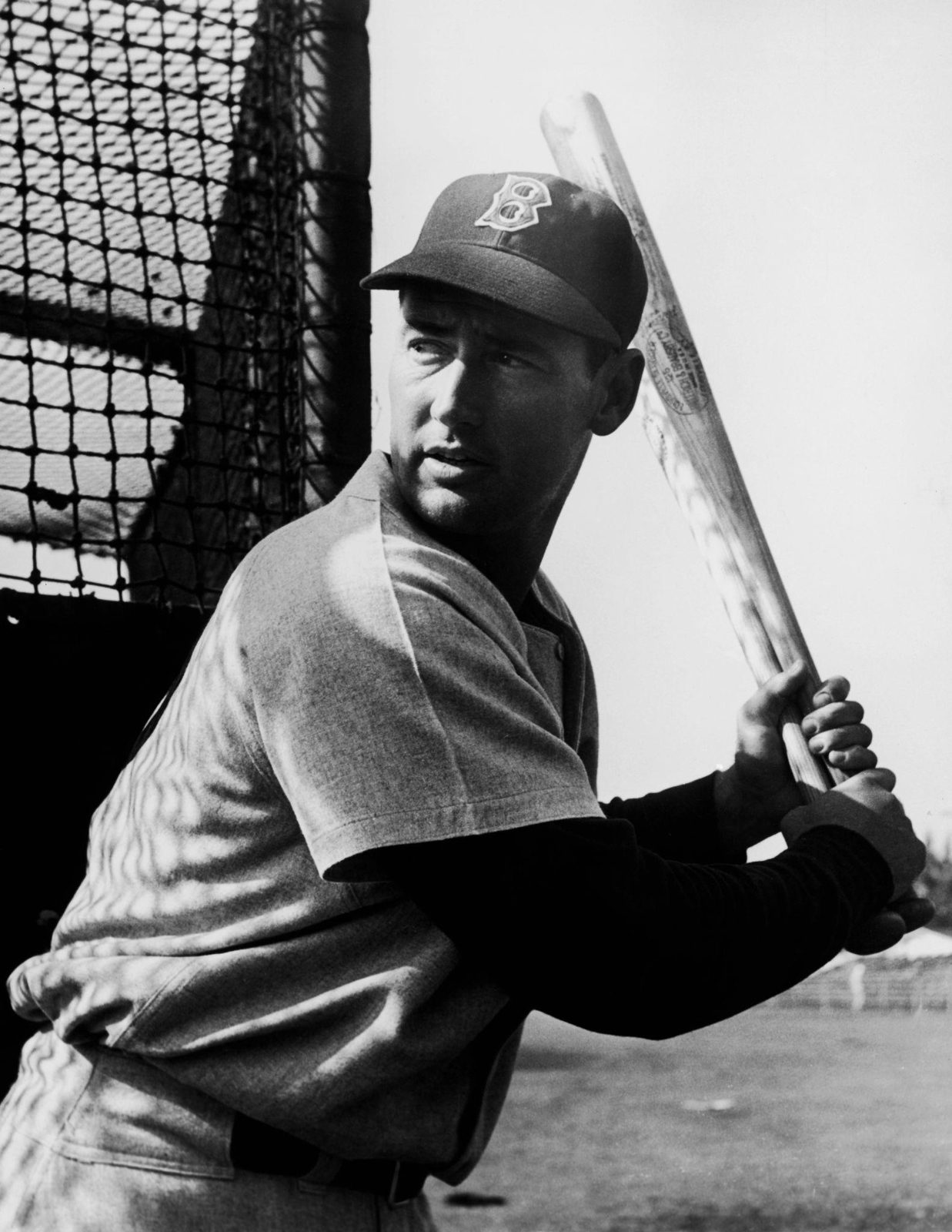
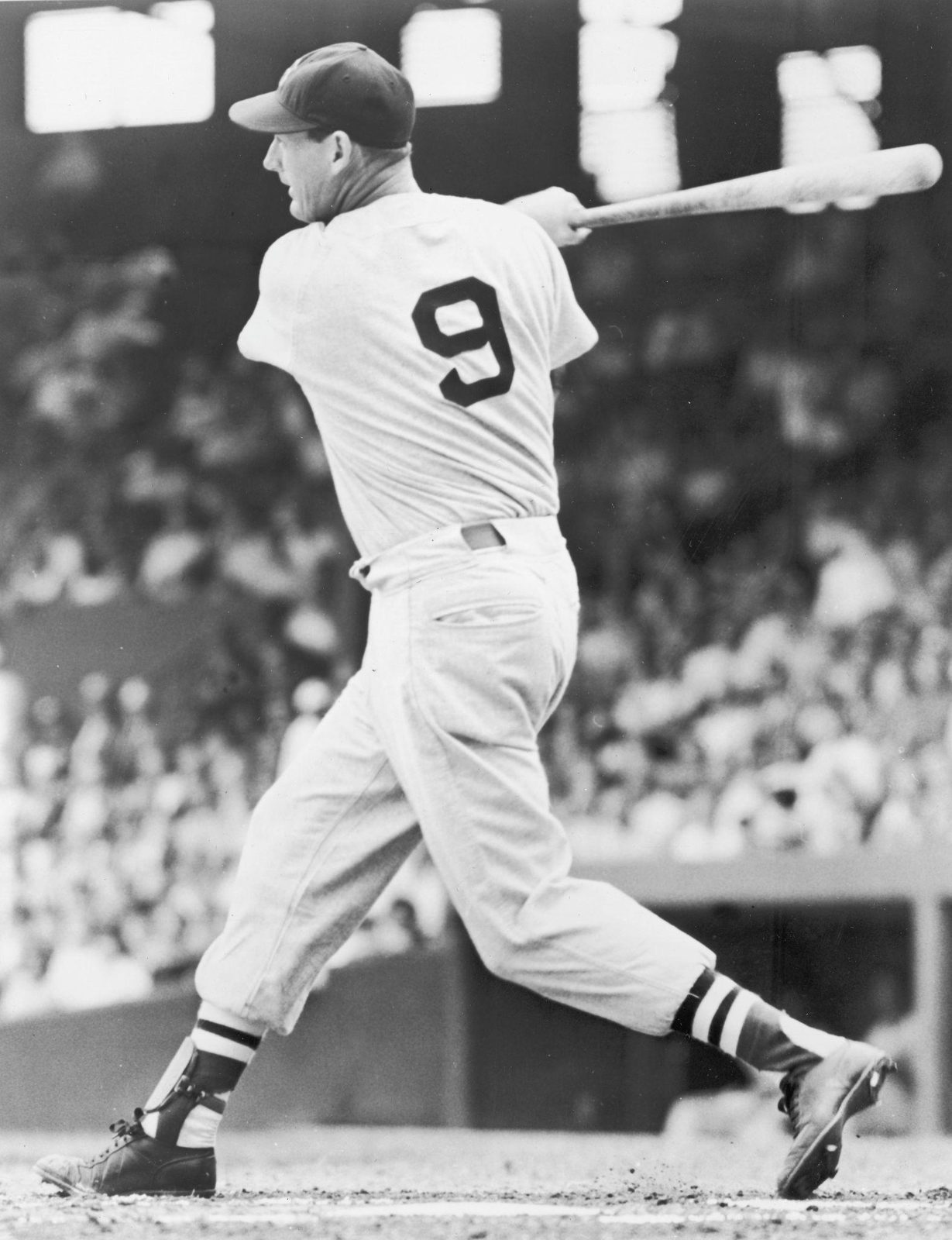
Ted Williams is often described as having “20/10 vision.” While definitive clinical documentation is not publicly available, contemporaries consistently attested to his extraordinary visual acuity.
But even if he possessed exceptional eyesight, acuity alone does not explain a career OPS+ of 191 or a .482 on-base percentage.
To understand Williams scientifically, we must shift the frame:
Elite hitting is not a story about eyesight.
It is a story about sensorimotor prediction under extreme time constraint.
I. The Temporal Constraints of Hitting
A 95 mph fastball reaches home plate in approximately 400 milliseconds.
Empirical measurements show:
Visual reaction time to simple stimuli: ~200–250 ms
Swing initiation latency in elite hitters: ~120–180 ms
Full swing duration: ~150 ms
This means that the decision to swing must occur roughly 150–200 milliseconds after ball release.
At that point, the ball is only about halfway to the plate.
Therefore:
Elite hitters do not wait to “see” the pitch fully.
They act on early information and probabilistic prediction.
This constraint is well-established in motor control research and baseball biomechanics literature.
II. Visual Processing: What Matters (and What Doesn’t)
Visual acuity (e.g., 20/10) measures spatial resolution under static conditions.
However, hitting depends more heavily on:
Contrast sensitivity (detecting seam rotation)
Dynamic visual acuity (tracking moving objects)
Motion perception speed
Peripheral awareness
Studies of expert batters show they extract meaningful cues from:
Pitcher’s release point
Arm slot consistency
Initial ball trajectory
Spin axis within ~80–120 ms of release
This early cue extraction provides the informational basis for prediction.
Thus, superior eyesight may contribute — but only as one component in a larger perceptual system.
III. Predictive Processing and Internal Models
Contemporary neuroscience describes motor behavior using predictive processing or internal forward models.
The brain does not passively respond to stimuli.
It generates predictions about future sensory input and updates them based on error signals.
In high-speed hitting, this involves coordinated activation across:
Primary and extrastriate visual cortex (early feature extraction)
Posterior parietal cortex (spatial mapping)
Premotor cortex (movement planning)
Basal ganglia (action selection and gating)
Cerebellum (timing calibration and prediction error correction)
The cerebellum is especially critical.
It supports:
Millisecond-scale timing precision
Adaptive recalibration across repetitions
Motor learning through error correction
Elite hitters exhibit refined internal models of pitch trajectories built through thousands of repetitions.
Williams’ famously obsessive study of pitchers likely strengthened these predictive priors — a phenomenon consistent with modern Bayesian models of motor learning.
IV. Inhibition and Executive Control
One of Williams’ defining traits was strike-zone discipline.
This reflects not just perceptual skill, but executive inhibition.
Research in cognitive neuroscience shows that response inhibition depends heavily on:
Prefrontal cortex
Anterior cingulate cortex
Basal ganglia circuitry
Suppressing a pre-planned swing when new information indicates “ball” requires rapid top-down control.
In high-speed tasks, inhibitory control is often more differentiating than raw reaction speed.
Williams’ high walk rates and low chase tendencies indicate exceptional threshold control — a measurable behavioral marker of inhibitory precision.
V. Fast-Twitch Fibers and Motor Execution
Explosive bat speed depends in part on Type II (fast-twitch) muscle fibers.
However, muscle physiology is secondary to neural recruitment timing.
Force production in elite athletes depends on:
Motor unit recruitment synchronization
Rate coding efficiency
Intermuscular coordination
The nervous system determines when and how efficiently muscle fibers fire.
Thus, bat speed reflects neural efficiency as much as muscular composition.
VI. Perception–Action Coupling
In motor neuroscience, perception and action are understood as tightly coupled processes.
Rather than sequential stages (“see → decide → move”), they form a continuous loop.
Elite hitters display:
Shortened perception-to-decision latency
Efficient integration of visual and motor systems
Reduced neural noise in movement execution
Studies comparing experts and novices show that experts:
Fixate earlier on relevant cues
Use fewer but more informative visual fixations
Show lower variability in motor timing
Williams’ performance profile aligns with what we now understand about expert sensorimotor integration.
VII. What This Means — Without Myth
The popular myth says:
Ted Williams had superhuman eyesight.
The scientifically grounded interpretation is more precise:
He likely possessed above-average visual acuity.
More importantly, he exhibited elite early cue utilization.
He operated with highly refined internal predictive models.
He demonstrated exceptional inhibitory control.
He executed motor programs with efficient neural timing.
In a task constrained by 400 milliseconds, small neural advantages compound dramatically.
The difference between average and elite is often measured not in strength, but in milliseconds of prediction.
VIII. Conclusion
Ted Williams’ greatness does not require mystical explanation.
It fits cleanly within established principles of motor control and perceptual neuroscience:
Early signal extraction
Probabilistic prediction
Executive inhibition
Cerebellar timing precision
Efficient motor recruitment
He did not merely “see the ball better.”
He processed earlier, predicted sooner, and committed more precisely.
In high-speed sport — as in cognition generally — the ability to model the immediate future with greater accuracy is the core advantage.
Williams exemplifies that principle.
And modern neuroscience provides the language to describe what mid-century observers simply called:
“the greatest eye in baseball.”