Pre-Portable Greatness: Why Joe Jackson and Bill Terry Align Across Baseball’s Structural Divide
Pre-Portable Greatness: Why Joe Jackson and Bill Terry Align Across Baseball’s Structural Divide
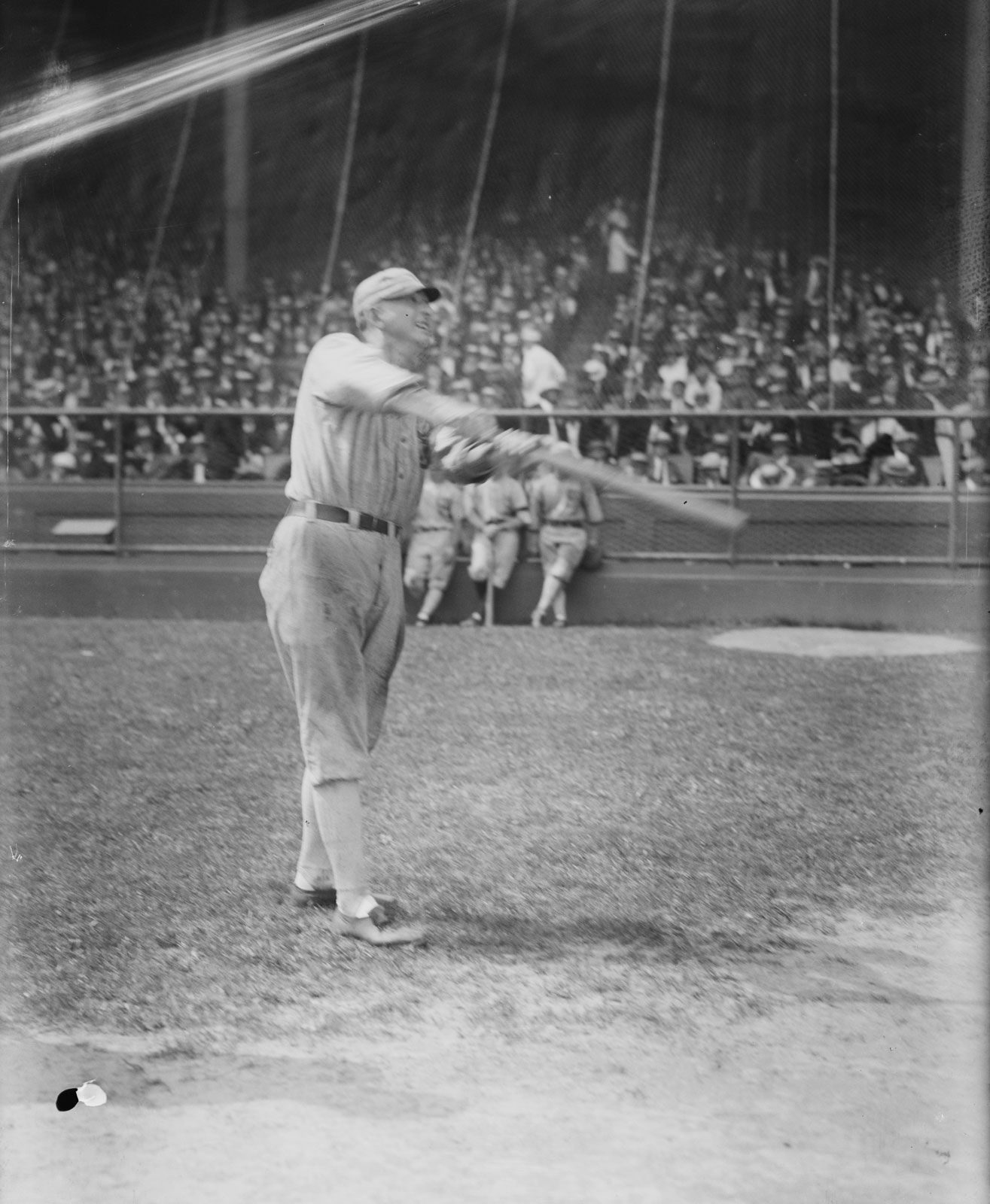
Pre-Portable Greatness: Why Joe Jackson and Bill Terry Align Across Baseball’s Structural Divide
I. The Apparent Paradox
Certain players refuse to stay contained within their era.
On paper, the separation is clear:
The Deadball era is a compressed system
The Live Ball era is an expanded one
And yet, when the profiles are laid side by side:
Shoeless Joe Jackson
Bill Terry
…resolve into nearly identical structural forms:
.340+ batting average
.400+ on-base
.500+ slugging
This should not happen.
If eras are truly distinct constraint fields, their optimal solutions should diverge.
But here, they converge.
The question is not whether this alignment exists.
It is:
what kind of alignment it represents
II. The Structure Beneath the Numbers
The run environment curve reveals the deeper shift:
Deadball (~3.5–4 runs/game) → low-bandwidth system
Live Ball (~5+ runs/game) → expanded system with new dimensions
In the Deadball system:
contact dominates
extra-base production is limited
success pathways are narrow
In the Live Ball system:
power becomes scalable
multiple offensive pathways emerge
the system widens
This is not an increase.
It is:
a dimensional expansion
III. The Expected Outcome
Under this model, players should fall into two categories:
Those optimized for the closed system
Those optimized for the expanded system
Which implies:
Deadball profiles should fail under modern load
This is exactly what happens with players like:
- Jake Daubert
Their excellence is real—but confined.
When evaluated through expanded constraints, the profile loses force.
IV. Jackson as a Structural Anomaly
Jackson does not behave like a Deadball hitter.
His profile:
.356 AVG
.423 OBP
.517 SLG
emerges before the system has expanded to support it.
This is the critical point:
Jackson expresses a two-dimensional solution (contact + force)
inside a one-dimensional system (contact-dominant)
He is not:
- merely dominant
He is:
structurally ahead of the constraint field
V. Terry as System Equilibrium
Terry arrives after expansion.
His profile:
preserves elite contact
incorporates sustainable force
But unlike Jackson:
he is not ahead of the system—he is aligned with it
Terry represents:
the stabilization of a solution the system now supports
VI. Pre-Portability Defined
From this, a third category emerges.
Not just:
system-bound
system-portable
But:
Pre-portable
A pre-portable hitter:
expresses a solution that is not yet required
operates ahead of the system’s dimensional capacity
becomes fully legible only after expansion
Jackson is:
the clearest example of pre-portable greatness
VII. Why the Alignment is Real
Jackson and Terry align because:
they occupy the same region of the solution space
Both solve for:
high conversion (AVG)
high access (OBP)
meaningful force (SLG)
The difference is temporal:
Jackson → anticipates the solution
Terry → realizes it within the system
VIII. The Subtle Distinction
However, the alignment is not identical.
Jackson’s production:
is rarer within his environment
sits further from the league baseline
Terry’s production:
is more reproducible within his era
exists within an expanded distribution
Thus:
Jackson is more extreme relative to his system
Terry is more stable within his system
IX. Reframing the Curve
This resolves the apparent paradox.
The run environment curve does not distort the comparison.
It reveals it.
Jackson does not “look like Terry” by accident.
He looks like Terry because:
he is already solving the future version of the game
X. Conclusion
Greatness, when viewed through portability, is not uniform.
It unfolds in stages:
Closed-system mastery (Daubert)
Pre-portable emergence (Jackson)
Portable stabilization (Terry)
Jackson and Terry align because they share a form that survives expansion.
But they do not occupy the same role.
One discovers the solution early.
The other confirms it as the system evolves.
Final Compression
Daubert → perfect within constraint
Jackson → ahead of constraint
Terry → aligned with expanded constraint
The alignment between Jackson and Terry is not an error.
It is:
evidence that certain solutions to hitting are not bound to their time—but anticipate what the game will become