Pure Conversion Output: Identifying the Highest Form of Hit Production in Baseball History
Pure Conversion Output: Identifying the Highest Form of Hit Production in Baseball History
Pure Conversion Output
Identifying the Highest Form of Hit Production in Baseball History
Baseball has always measured hitters through accumulation.
Hits. Total bases. OPS. Value metrics.
But these are composite results—mixtures of different offensive skills layered together.
If we instead isolate the problem to its most fundamental form—
Who most purely and consistently turned plate appearances into hits?
—the field narrows, and the structure of hitting itself becomes visible.
Defining the System
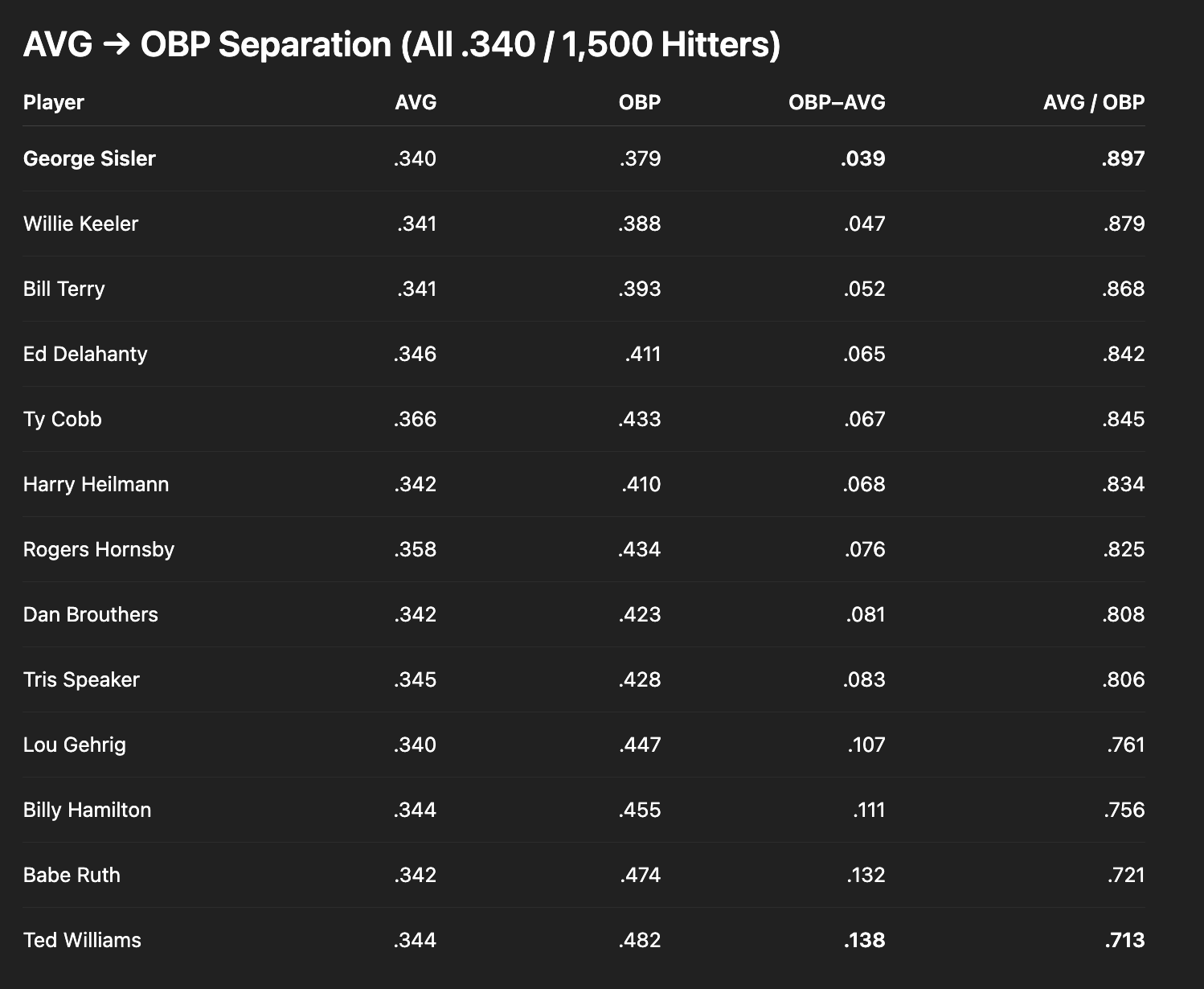
To remove noise and isolate only real, durable hitters, two conditions are enforced:
Batting Average ≥ .340
Games Played ≥ 1,500
This produces a closed population of hitters who sustained elite conversion across full career duration.
But even within this group, a problem remains.
Not all offense is generated the same way.
The Two Sources of Offense
A player can reach base through:
Hits (contact-based conversion)
Walks (non-contact accumulation)
Batting average captures only the first.
To separate these two forces, we introduce:
On-Base Percentage (OBP)
The relationship between AVG and OBP reveals how a player generates offense.
Conversion Purity
Define:
Conversion Purity = AVG / OBP
Values closer to 1.00 → OBP is almost entirely driven by hits
Lower values → increasing reliance on walks
This isolates:
How “pure” a hitter’s production is as a function of contact
Production Rate
Purity alone is not enough.
A hitter could be perfectly pure—but produce slowly.
So we introduce a second dimension:
Hits per Game (H/G)
This captures:
How frequently a hitter produces hits over time
The Integration
These two forces—purity and rate—can be combined into a single expression:
Pure Conversion Output (PCO)
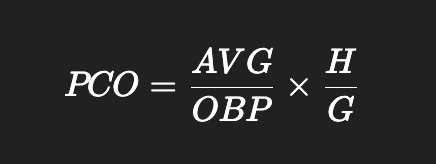
This measures:
How often a player produces hits
weighted by how purely those hits drive their offensive output
Results
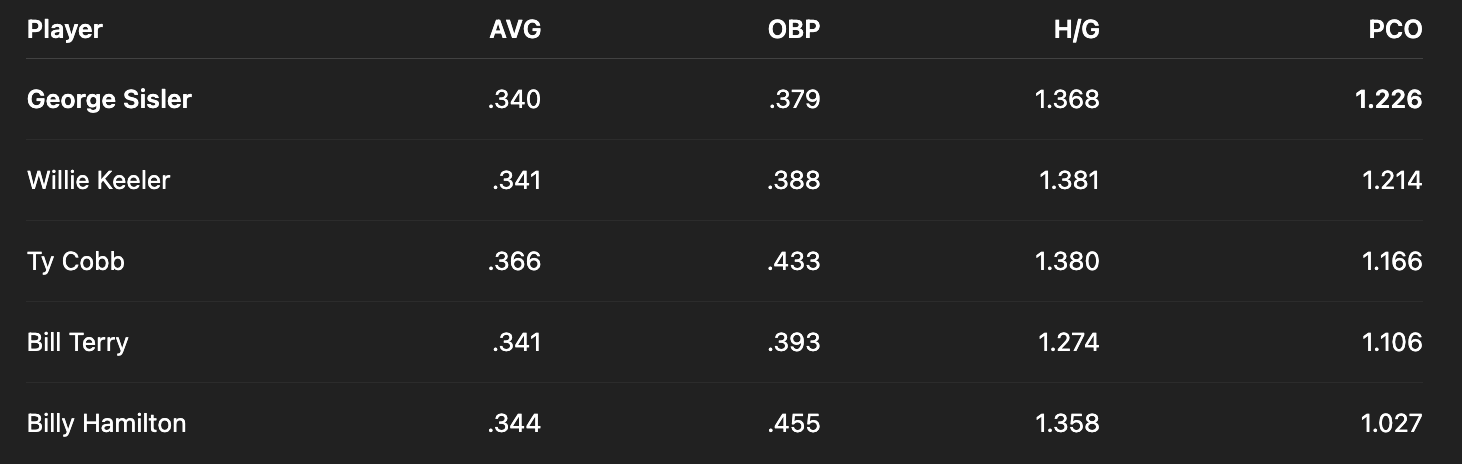
Applying this to the .340 / 1,500 population:
Interpretation
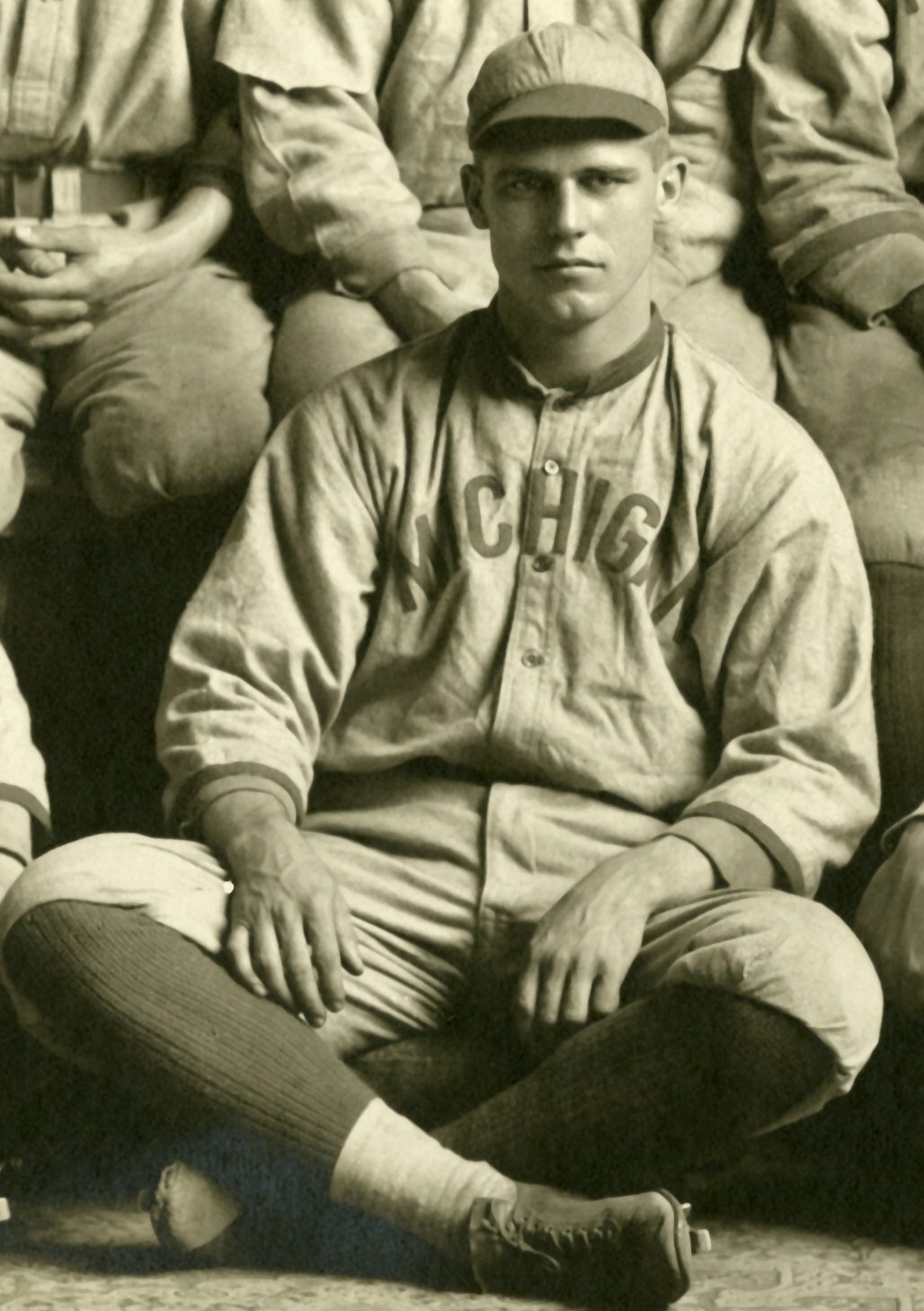
George Sisler — The Pure Maximum
Highest purity in the group
High hit frequency
Minimal distortion from walks
Sisler produces the greatest volume of undistorted hits per game
Willie Keeler — High-Frequency Purity
Extremely high hit rate
Very tight AVG–OBP relationship
Nearly identical system to Sisler, slightly less efficient overall
Ty Cobb — Maximum Volume, Slight Expansion
Highest raw hit production
More separation between AVG and OBP
A conversion-dominant system operating at scale, but not perfectly pure
Bill Terry — Stable Efficiency
Strong purity
Lower hit frequency than the top tier
A clean, stable system—without peak output
Billy Hamilton — Expansion System
High hit rate
Large OBP gap
Significant portion of value comes from walks, not pure contact
What This Reveals
This model resolves a long-standing ambiguity in how hitters are understood.
Not all great hitters are solving the same problem.
Some generate offense through:
discipline
power
secondary mechanisms
But a much smaller group operates differently:
They generate offense primarily by turning swings into hits
Final Insight
By integrating:
Conversion purity (AVG/OBP)
Production rate (hits per game)
we arrive at a clear answer to a precise question:
Who produced the most pure hitting, most often, over time?
Conclusion
The result is not subjective.
It is structural.
George Sisler represents the highest sustained output of undistorted hit generation in baseball history—maximizing both the frequency of hits and the proportion of offense derived directly from contact.
Everything else—walks, power, expansion—
belongs to a different system.
This is hitting reduced to its essential form.