Returning to Vintage Baseball Radio: Meditations on the Poetics of Red Barber
Returning to Vintage Baseball Radio: Meditations on the Poetics of Red Barber
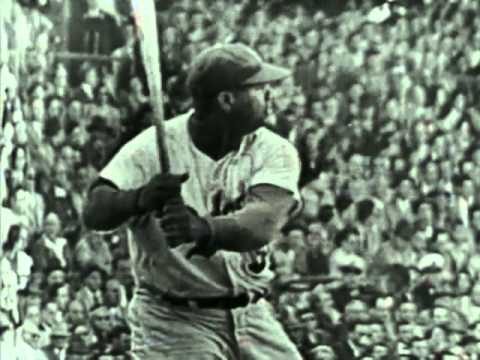
The poetics of Red Barber on early baseball radio is the animation of form via sound; the translation of form via sound. This is to say — a translation of sight to sound; a conversion and condensation of full sensory as in full body information in presence to the verbal coloring the microphone noise of the entire spectrum and scope of the ballpark proper.
Lopat… walking around… solid pitcher… doesn’t get flustered… knows his trade, studies it… deals — fastball over — called, strike three… and Miksis, is just caught looking. Well, that’s the sort of pitcher Lopat is, he works around ya. He is a head pitcher. That’s three strikeouts for him.
… And not another Dodger has been able to turn to the left at first base. They’ve all had to go to the right.
… He acts as unconcerned as if he were at an afternoon tea in somebody’s backyard…
Barber’s work is a deduction, a distillation, a constellation — a drawing out of the essence of the game to the symbolic register, even as the game plays out with an auditory backdrop behind and beneath his linguistic symbolism. The task is to draw out space and time — to draw out the phenomenological event — and reduce it to language; in doing so, actually enable the act of insight , which is to say perception into the realm of the event and draw out what is occurring within and behind it.
Baseball itself is a basic principle, a series of repeatable and repeating actions and movements. It is the cultural stakes and names and faces therein that revolve, fluctuate, spike and dive — like a waveform in the face of the resonance of human interpretation. Barber, in this way and sense, is a bardic principle and a bardic force unto the game of baseball — animating its ritual function, which, in turn, gives it its energetic state and nature of meaning. By animating with language the otherwise meaningless (being that baseball is outside basic human biology), culture is created and formed.
This is enacted not only in the register of Barber’s voice — describing intensive action (Rizzuto or Pee Wee Reese making a timely dive or play in the context of an escalating World Series matchup between Brooklyn and the Bronx in the mid century); escalating it with the urgency of his speech. This somatic fluctuation creates in the listener attunement to the importance of the event; furthermore, the layering of casual, poetic language creates a sense of baseball being extra-physical — an interposition between the world of the dream; mythic as an atmosphere; the stage upon which the game of play is occurring. This is the same principle which allows for the cultural elevation of figures like DiMaggio and Robinson — descriptive importance of the cultural function which is fundamentally poetic, as it is extra-life — the batting averages, the social and performative, theatrical function of the golden plaque influence of the figures within the cultural context of baseball who not only changed the way the game was played and perceived, but the way that American civilization at large perceived itself.
This is to say that baseball itself is a consciousness transformation device; a psychological device of the creation of interpretive, non-immediate frameworks of meaning using theatre; furthermore, that baseball radio is a necessary teleological extension of that initiative in the transference of event into sound; the interpretation of the event by the broadcaster (in this case, Barber):
He stands up there, like a workman with that stick… the sun is getting through a little brighter, sort of glare-y… nothing across for the Yankees in the top of the second inning; still no runs in the ballgame.
Barber is picturesque; narrating momentous, breaking images in the game — drawing press photographic snapshots from the phenomenologically unbroken flow of the game. This is linguistic camera-work — wherein through radio sound poetic liberty stretches the real events of the game into literary, poetic, painterly devices which reveal the mythic cracks and crevices of the repetitious, shamanic drum of the entirety of baseball history condensed into the eternal return of the 1949 World Series. Barber’s mythic context; myth breaking of Ebbets Field into the substratum of blurred figuration — between painterly image, poetic incursion of action, the historical device of the imminence of time in the passage of moment by way of baseball knowledge; the legacy of teams, stadiums, and the clashes of the mid-century Dodgers and Yankees — creates a ritual space where the listener feels the active condensation of all of history and time into an imminent mythic device which reveals; reveals cosmological meaning without articulating it or telling it.
This is the function of pre-verbal language, a paradox which acts not as an elucidation, but an incision in upon the apparent to speak to it in a way which changes and shifts perception and orients it toward the ontos, or the super-real. The state of the mythic beyond the seeming transposition of formal, opaque ‘reality’ as a imminency of time which seems to veil the grand history and the intuition of the mythic which brings about baseball as a mass cultural ritual and rite. The very grounds of the game are built upon a recurrence — a recurrence of form and regularity of structure which opens up space for the crack in the perception of the beating of the historical drum to glimpse all of the drumbeats within one; furthermore, the nature and the origin of the drumbeat itself. Barber’s poetic devices are the keystone of this process; an absolutely necessary medium and intermediary which calls baseball out from under the pure silence of the event into the fugue realm of the mythic and the eternal and the archetypal, by way of drawing out the poetic, painterly device from the phenomenological via visionary communication.