Rhythmic Scaffolding: Baseball and the Mechanical Synchronization of America, 1900–1960
Rhythmic Scaffolding: Baseball and the Mechanical Synchronization of America, 1900–1960
Rhythmic Scaffolding: Baseball and the Mechanical Synchronization of America, 1900–1960
Abstract
Between 1900 and 1960, the United States underwent an unprecedented technological consolidation of space and time. Railroads standardized geography. Telegraph and telephone compressed communication delay. Radio and television created real-time national simultaneity. During this same period, baseball emerged as the only cultural form capable of migrating across each successive distribution technology without structural rupture. This essay argues that baseball functioned as a rhythmic stabilizing system within America’s accelerating industrial synchronization — not merely as entertainment, but as a recurring temporal scaffold that helped regulate collective attention during a period of rapid infrastructural assembly.
I. The Mechanical Assembly of the Nation
From the late nineteenth century through mid-century, the United States transformed from a regionally segmented republic into a technologically unified organism.
Key infrastructural shifts included:
Continental railroad consolidation
National time zone standardization
Telegraph and telephone networks
Industrial print scaling
Electromagnetic broadcasting
Corporate distribution systems
These developments did not merely improve efficiency. They altered the physics of social experience.
Geographic distance lost primacy.
Communication delay collapsed.
Temporal synchronization intensified.
The nation was no longer a loose constellation of localities. It was becoming a coordinated machine operating across shared time.
But rapid synchronization introduces instability.
Acceleration fragments unless something regulates tempo.
II. The Need for Rhythmic Stability
Industrial systems require timing mechanisms.
Factories require shifts.
Railroads require schedules.
Broadcast networks require programming grids.
Similarly, populations undergoing technological acceleration require recurring patterns that stabilize collective expectation.
Between 1900 and 1960, baseball provided precisely such a pattern.
It possessed:
Daily recurrence
Seasonal continuity
Statistical accumulation
Fixed rule structure
Predictable pacing
These characteristics made baseball a low-variance system inside a high-variance environment.
While infrastructure stretched the nation spatially, baseball stabilized it rhythmically.
III. The Tobacco Phase: Standardization Before Synchronization

In the early twentieth century, baseball first scaled nationally through commodity distribution — particularly via the American Tobacco Company and related manufacturers.
Baseball cards inserted into cigarette and tobacco packaging achieved:
National iconographic standardization
Repeated daily exposure
Cross-regional familiarity
Associative embedding within bodily ritual
The semiotic chain was materially grounded:
Commodity → Image → Body → Repetition
This stage did not yet create shared simultaneity.
It created shared recognition.
Before a nation can synchronize in time, it must standardize in symbol.
IV. Radio: The Emergence of Shared Time
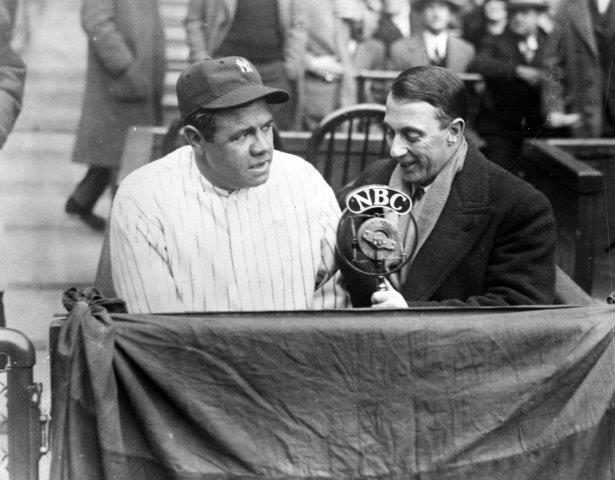
With the rise of radio broadcasting in the 1920s, baseball entered a new infrastructural layer.
The game became signal.
Unlike packaging, radio enabled:
Real-time narration
Nationwide simultaneity
Shared unfolding tension
Listeners in multiple states could experience the same pitch at the same moment.
The semiotic chain shifted:
Signal → Event → Listener → Synchronization
Baseball no longer merely unified recognition.
It unified temporal experience.
In a rapidly industrializing society, this mattered.
It introduced synchronized collective attention across dispersed bodies.
V. Television: The Expansion of Perceptual Field
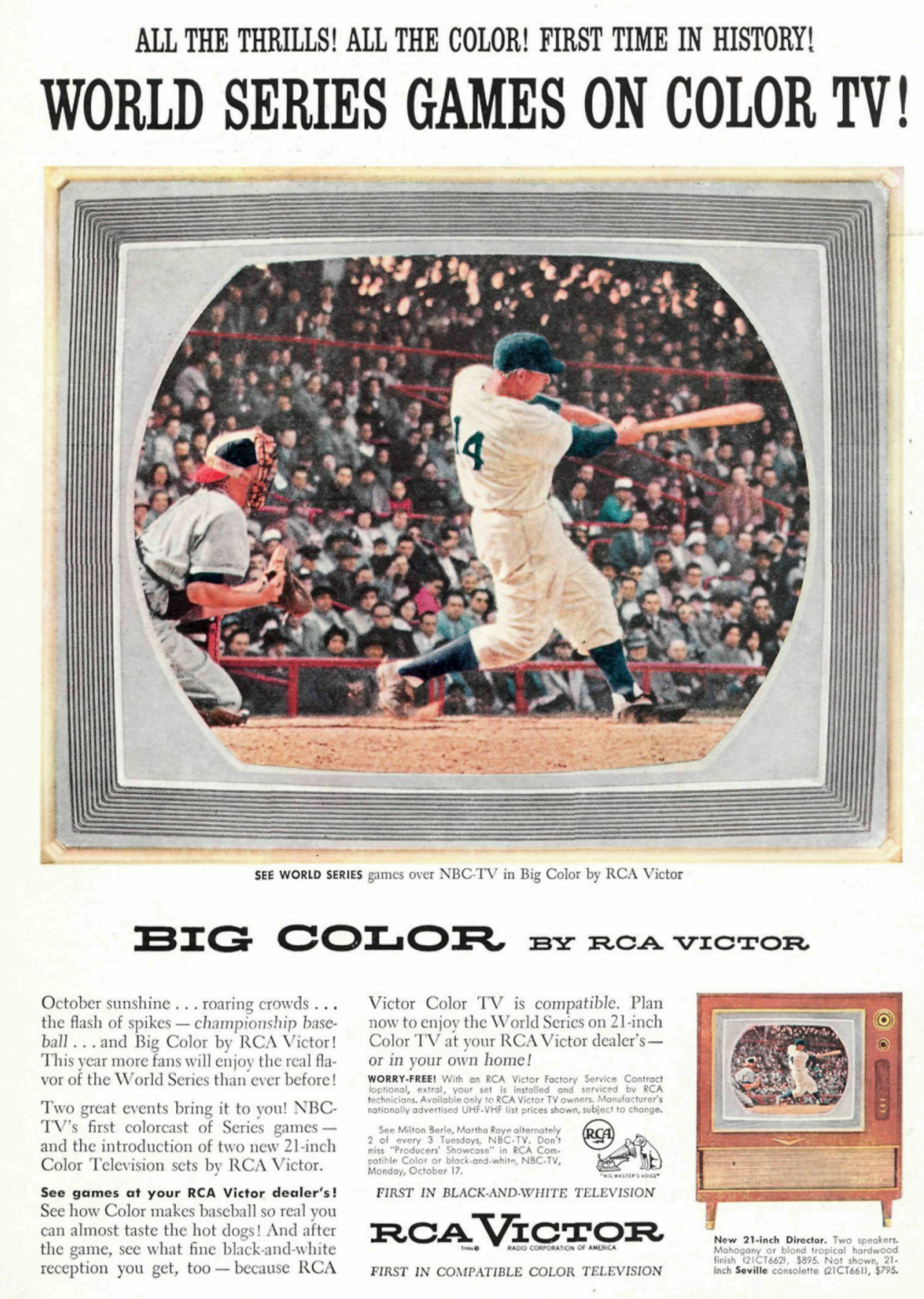
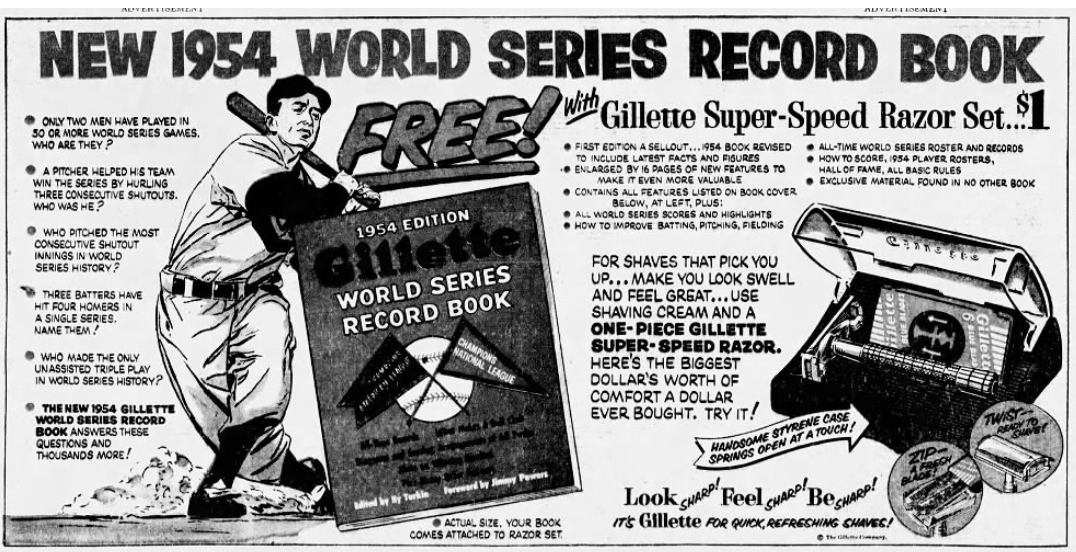
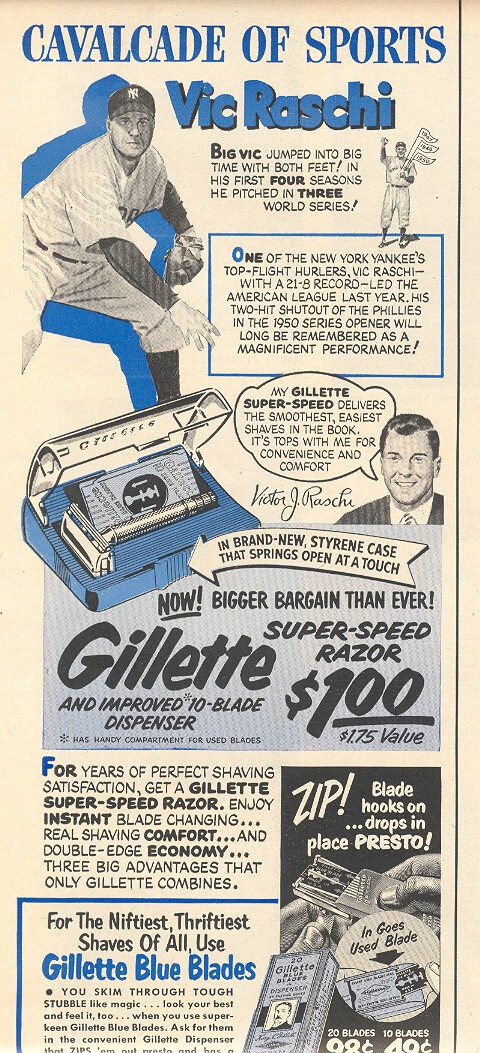
Postwar television intensified this synchronization.
Under sponsorship models such as those advanced by Gillette , baseball broadcasts entered domestic space as immersive visual events.
Television introduced:
Visual simultaneity
Emotional amplification
Household ritual integration
National spectacle
The stadium was optically imported into the living room.
What had begun as standardized imagery and evolved into shared time now became shared perceptual field.
Baseball occupied not only attention but vision.
VI. Rhythmic Scaffolding in an Accelerating System
From 1900 to roughly 1960 — a span of approximately seven decades — baseball survived and scaled across:
Industrial print capitalism
Electromagnetic radio transmission
Domestic television immersion
Crucially, its internal structure did not fracture during these transitions.
The rules remained stable.
The pacing remained recognizable.
The seasonal rhythm remained intact.
Very few cultural forms survive successive infrastructural migrations without losing coherence.
Baseball did.
This durability allowed it to function as rhythmic scaffolding during a period when American society was assembling itself technologically at unprecedented speed.
It did not create the infrastructure.
It regulated collective tempo within it.
VII. Scaffold or Passenger?
Two interpretations are possible.
Baseball simply rode the wave of technological synchronization.
Baseball actively stabilized collective attention during infrastructural acceleration.
The second claim is stronger but must be stated carefully.
Baseball did not assemble railroads or invent broadcasting.
But by providing a stable, repeatable temporal structure, it offered a predictable rhythm within a system otherwise defined by expansion and compression.
In that sense, baseball operated as a timing mechanism within the national machine.
VIII. Conclusion
Between 1900 and 1960, America underwent rapid spatial compression and temporal synchronization through industrial and broadcast technologies.
During this same period, baseball migrated from:
Commodity-bound image
toElectromagnetic signal
toImmersive visual field
Without losing structural coherence.
Its rule stability, episodic pacing, statistical continuity, and seasonal rhythm made it uniquely compatible with emerging infrastructures of distribution and broadcast.
Baseball was not merely popular within industrial modernity.
It functioned as a rhythmic stabilizer during the mechanical synchronization of the nation.
While infrastructure assembled America in space-time, baseball provided a recurring temporal scaffold through which collective attention could align, stabilize, and repeat.
For roughly seven decades, as technological physics reconfigured distance and simultaneity, baseball offered rhythm.
And rhythm, in an accelerating system, is not ornamental.
It is regulatory.