Rogers Hornsby: Genius, Devotion & Baseball as Religion
Rogers Hornsby: Genius, Devotion & Baseball as Religion
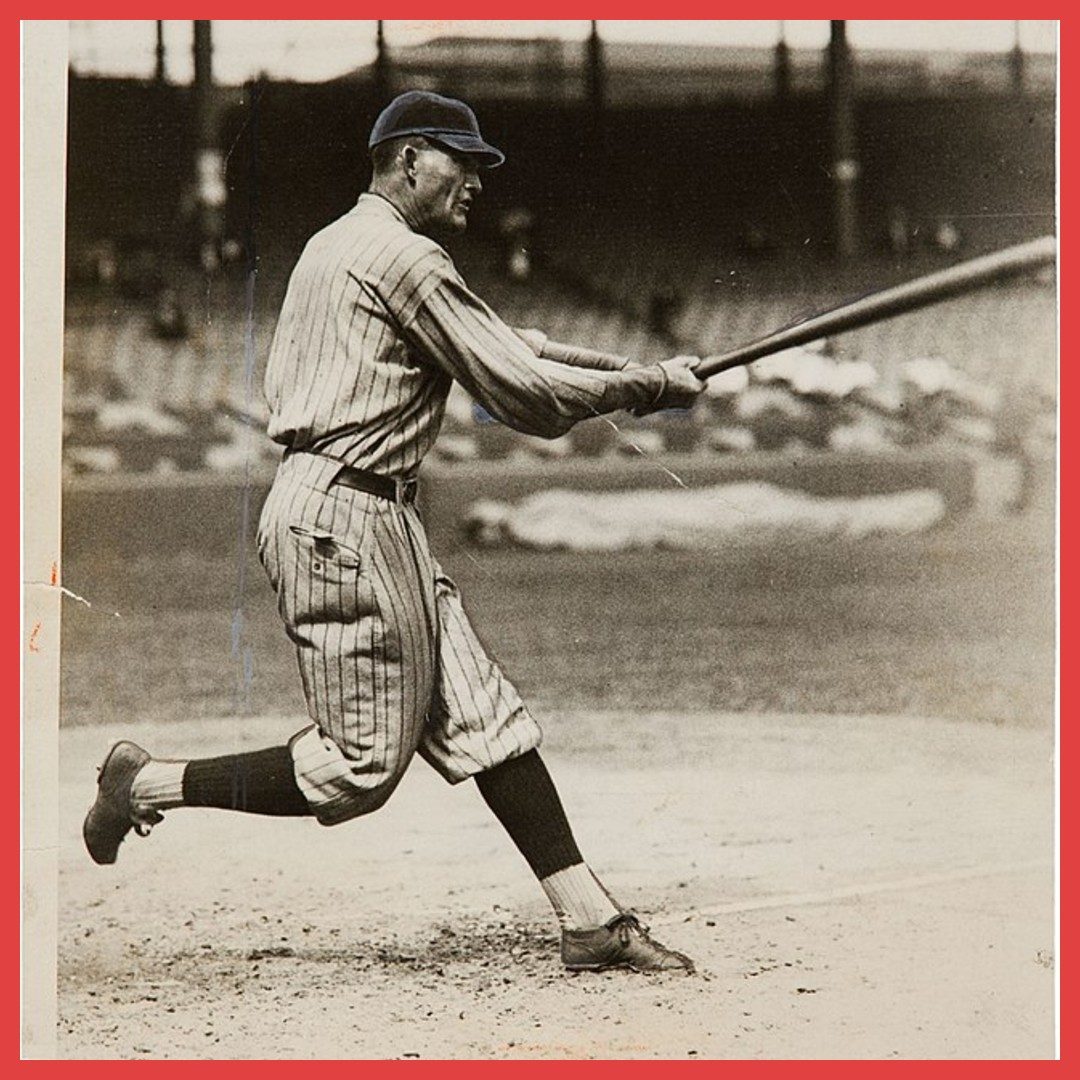
Rogers Hornsby driving a ball, 1922. He won the Triple Crown in 1922 hitting .401 with 42 HR and 152 RBI.
Hornsby’s devotion came from a fervor and passion for baseball which perhaps marks him as the priest of the game’s modern age. He understood, intuitively and directly, the importance of baseball to America’s burgeoning spiritual consciousness; bore the load of discipline and commitment to the game directly.
Hornsby’s entire life revolved absolutely around the game. His very being was centered around the craft of hitting; the discipline of hammered, practiced, and forged perfection as a state of grace and bliss in direct relation to that which he cultivated: the concentration and task and focus of hitting the baseball at the highest level in the world.
Baseball possessed Hornsby. He was not Cobb nor Speaker in that both of his fellow megalomanical all time great hitters of the era were driven by emotion, psyche, control, or power. Insecurity, hierarchy, rage of domination. These traits constituted Cobb and Speaker’s behavior throughout their careers and players and managers; contributed to their forge of discipline and assertion of fear and structure as rule to the players beneath them. Hornsby was possessed purely and absolutely by baseball; lived and worked baseball as a total cosmology which necessarily dictated and lived and breathed his work to the highest efficiency and efficacy of perfection.
It was, for Hornsby, a unity of passion with craft which purified his entire life. The act of hitting was the pursuit of perfection which occupied him absolutely, entering into a state of pure ecstatic sight which is perhaps best described as a shamanic or monk-like pursuit: a dedication which stripped his life to the absolute and essential in this pursuit. Food, water, sleep — the rhythm of Hornsby’s everyday life was dedicated to cultivating his batter’s eye; the unity of his psyche, nervous system, and body to create the perfect instance of focus, perception, and contact.
This is why when we look at the history of madness of the three great Deadball men, Hornsby stands out before Speaker and Cobb. His life was focused; his soul was filed absolutely unto consecration within and as, ultimately, the sport of baseball itself. Although Hornsby excelled in the field, the art of hitting was his truest craft; his deepest, most passionate obsession. Like an unsurpassable master; a great artist in the vein of Rembrandt, he perpetually filed the craft of the unity of his body and his eye; the fast twitch muscle and the ability to perceive the speeding pill until baseball itself became a vessel for transcendence and absolution experienced immediately and directly through the body.
Hornsby’s greatest seasons include the year of 1922 — the year pictured in the image above — wherein he hit .401 with 42 home runs and 152 runs batted in. Another notable season occurred just two years later when he hit .424 with an astounding 222 OPS+. Year in and year out, day in and day out; with the precision of an initiated practitioner in the art of meditation and presence, Hornsby’s inner unity with the craft grew and sustained. His persistence and dedication — notably abstaining even from reading, watching movies — was historically exceptional. He persistently would eat red meat, whole milk, and ice cream — seemingly atypical and counterintuitive one hundred years later, but clearly quite functional for him in his athletic pursuits. His diet and his habits; the way he lived each moment of his everyday life was required inherently in his inner cosmology — his private inner reason and method through which he surmounted the legendary ark of baseball history and inscribed his name at the bow as the greatest right-handed hitter of all time.
It is not the stats that constitute the legacy of Hornsby — is the absolutely possessed dedication, devotion, and vision which guided him through the game. It was a private fury which was a purgative fire of absolute passion for the art of hitting, a passion which carved him through the world and time of his game and made him absolute; a rule of persistence amidst all ballast and storm in his life — personal, cultural, political, amongst his teammates; as a manager, and so forth. The fifteen years of absolute greatness which Hornsby cultivated emerged from a fanatical presence of mind which is the hinge of madness and genius — the thin line between total possession and the dispossession of the entire world. It was this line that Hornsby walked; this line through which he accomplished feats of staying power and focus which reverberate like an absolute historical node — a node that requires profound remark and attention.
For Hornsby, unlike Ruth, Cobb, or Speaker — was the act and art of hitting itself. His very being was merged with his craft; in this way Hornsby is the spiritual figure which represents baseball’s coming of age as America’s secular religion and field of purgation, mythos, and catharsis. It was Hornsby, often forgotten; unrecognized in the face of Cobb and Ruth — who was the true carrier of the spiritual nature and essence of discipline in baseball; the mad, passionate fury of discipline which made him seem otherworldly; ultimately, pronounced his fundamental detachment from the world and absolution in the craft and sadhana in the art of hitting.
The art of hitting made him who he was — however notably ornery or strict or unmanageable he appeared to be to the various managers, owners, and teammates he played around. His emotional passion for the game could not be surpassed. And it was a passion, clear in the records, that was translated into each moment of his life; totally integrated into the foundations of his being. Thus, the practices and speech and methods that sprung from it and from him were natural outcroppings of this mad pursuit of the hitting genius toward full manifestations of the powers and possibilities latent inside him in relation to his intensive craft.
This is what distinguishes Hornsby in all of baseball history: unabashed, spiritual unity with the art of hitting, through which he expressed the full palette of emotion. This is the nature of passion, the heightened experience channeled through the artifact, the vessel, the body, the instrument. We could consider relevant parallels to Hornsby with the bat perhaps most completely in Beethoven; the archetypical qualities of the obsessive genius noted clearly but infrequently throughout human history. The attention of cultivating perfection through his craft is what marks Hornsby; this attention is the single most important quality or metabiographical remembrance we can have of him. It is the lesson of what is possible when one invests one’s entire mind, body, and soul into the pursuit of that which one loves.
Considering Hornsby in retrospect is to place him where he truly stands — perhaps the foremost player of his era who understood the magnitude and possibility within baseball as a practice, craft, and art. And therein, his complete investment in the craft: echoed in the rising powers of the disciplined Lou Gehrig. That as they gave to baseball; as Hornsby gave to hitting, it gave back to him in ways that the world could not quite understand or define. It was beyond statistics, beyond the apparent world; the Triple Crowns, the batting titles. It was a way of being in the world that was total absorption in the refinement and perfection of the passion of the soul.