Ross Youngs and the Harmonic Structure of Hitting: The Point Where the System No Longer Leans
Ross Youngs and the Harmonic Structure of Hitting: The Point Where the System No Longer Leans
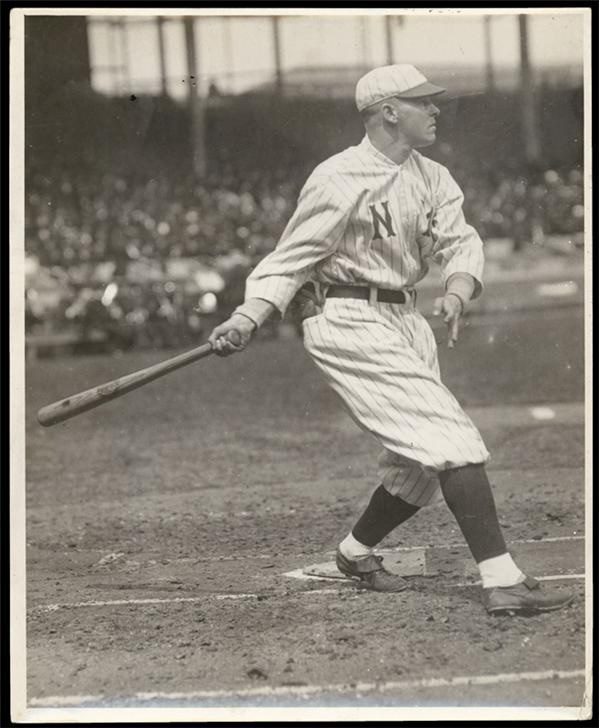
Ross Youngs and the Harmonic Structure of Hitting
The Point Where the System No Longer Leans
Baseball history is dominated by visible asymmetries.
We remember what breaks the frame :
the overwhelming force of Babe Ruth
the obsessive selectivity of Ted Williams
the relentless conversion of Ty Cobb
These players expand one axis so far that the system reorganizes around it.
They are not just great hitters—they are gravitational distortions.
But a distortion, no matter how powerful, is not the system itself.
To understand the structure of hitting, you have to find the point where:
nothing is overexpressed, and nothing is missing
That point is not loud.
It does not announce itself.
It appears, briefly, almost quietly—
in the career of Ross Youngs.
The Hidden Problem of Evaluation
Most frameworks reward accumulation or extremity:
highest OPS
most runs created
greatest total value
But these are results , not structure.
They tell us what happened —not how the system was organized.
When you strip that away, hitting reduces to a constrained interaction of three forces:
1. Conversion
How often does the swing become a hit?
2. Selection
How often does the hitter refuse to swing?
3. Force
How much value is generated when contact occurs?
Why the Greats Are Not Neutral
Every great hitter solves this problem—but with bias.
Ruth solves it through force
Williams solves it through selection
Cobb and George Sisler solve it through conversion
Each solution works.
But each introduces imbalance:
one variable expands, and the others adapt around it
This is why their statistical profiles feel tilted.
They are stable—but not symmetrical.
Youngs Is the Only One Who Does Not Tilt
Look at the full shape:
.322 batting average
.399 on-base percentage
.441 slugging percentage
This is not a peak in any category.
It is something rarer:
a proportional relationship across all categories
The Ratios Tell the Truth
Hits per game: 1.23
Walks per game: 0.45
Strikeouts per game: 0.32
No excess.
No suppression.
No compensation.
This Is Not Balance as Restraint
This is the mistake most analyses make.
They interpret profiles like this as lesser versions of extremes.
But Youngs is not a diluted Ruth or a softened Williams.
He is:
a fully realized system that does not require distortion to function
Dynamic Equilibrium
In a constrained system, equilibrium is not static.
It is:
continuous motion without collapse
Youngs does not minimize any force.
He allows all three to operate simultaneously—without interference.
Conversion is high enough to sustain pressure
Selection is present enough to prevent waste
Force is sufficient enough to produce consequence
None overwhelms the others.
Why This Feels So Rare
Because most players cannot hold this tension.
The system naturally wants to break:
into aggression (Sisler)
into patience (Williams)
into power (Ruth)
Youngs resists that break.
Peak Without Distortion
From 1920–1924:
.351 / .427 / .477
.356 / .441 / .521
This is not a spike in one dimension.
It is:
all three dimensions rising together, in proportion
The Structural Difference
The extremes show us:
what happens when one force dominates
Youngs shows us:
what happens when no force needs to dominate
Why He Satisfies You
Because what you are responding to is not magnitude.
It is:
coherence under constraint
Youngs is the only hitter in this group whose profile does not feel like it is solving a problem.
It feels like:
the problem has already been solved
Reframing the Hierarchy
If we rank by power, Youngs disappears.
If we rank by OBP, he recedes.
If we rank by average, he is excellent—but not singular.
But if we ask a different question—
Who embodies the most internally consistent form of hitting?
—he moves to the center.
Youngs as Structure, Not Outlier
Sisler → maximum exposure
Hamilton → maximum mediation
Ruth → maximum force
These are boundaries.
Youngs is not a boundary.
He is:
the stable interior
Final Line
Ross Youngs is not the most extreme hitter in baseball history—he is the most structurally complete, the point at which conversion, selection, and force resolve into harmonic equilibrium, and the system of hitting no longer needs to lean in any direction to sustain itself.