Silence, Stillness: Photographic Media; Deadball Immortality
Silence, Stillness: Photographic Media; Deadball Immortality
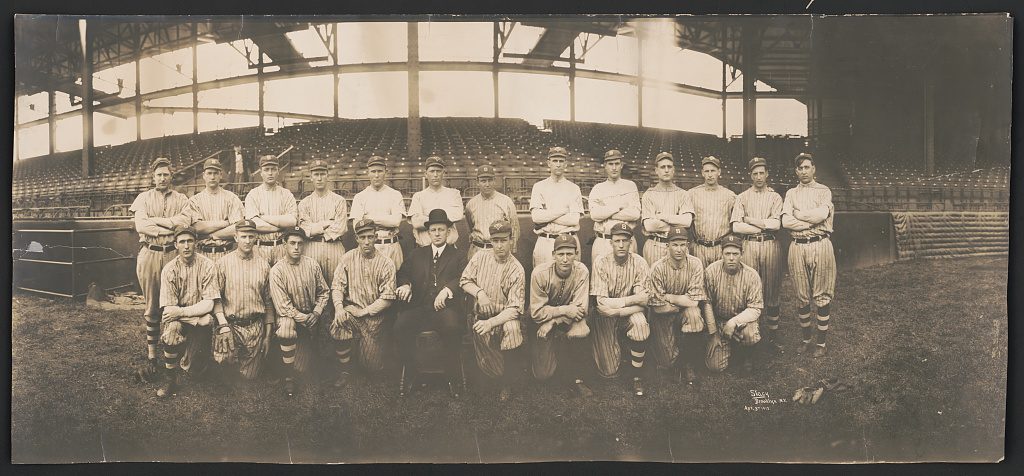
The immortization of the photograph is the freezing in time of gelatin; of amber. It is the preservation of the unmoving light; as such it is a recall of being through the technological chamber of the early photographic artisanal eye which produced it.
It is a strain; a sieve through which we perceive epic and ancient time — ancient as it appears to us moderns, just decades past the world once inhabited by buggies and early visions of what city centers and machine capacity could and would become.
Within the early photograph there is a present calm which modulates complexity through limitation: presence of solidified field of vision; grainy ambers of warm grays, blues, blacks, peaches; even reds hidden in the fold of simplific white and blacks gradations.
The early photograph is a work of subtle rendering of light amidst mechanical and industrial infancy. And as such, at large it is able to transfer and return us the images of early modernity while not saying or doing more than what must be said or done to open that gate unto us.
The early photograph gives us the possibility, the silhouette of what was. It does not require the full volume of space and time — but merely a disjuncture in it; the image is what is taken with time and what we can take with us in time. The full weight of history is not required to be present; instead, history is rendered symbol and symbolism. It is lifted out of the weight and density and third dimension; transposed as a vision upon that which is closest to the flat field: a condensation of the second and third dimensions as in symbolic architecture, hieroglyph, canvas, cave painting.
Symbolic architecture is freedom from the full force and onslaught of time. As history is made available to us symbolically vis a vis the distillation of the present and the past as in the photograph, we are liberated from the constraints of the real value of the present moment; reconciling the full weight of history. The photograph is simultaneously a way out and a way in — a way out of the Kafkan quandary of temporality; a way into a direct recollection, unmediated by editorial, of the condition of the ancestral past; as such, a glimpse into the ground which constructs and construes the present moment as figurative force at work currently.
This is the deep ground which the photograph simultaneously holds and expels; with the only intermediary being the witness who gazes into its window. The depth of the photograph is not just contrast and technical artisanal rendering of light transposition — to form images of incredible accuracy to space and time — but in that which it is capable of recalling through this art of absolute sacral realism — a mechanical-artisanal perfection of the master’s brush. This depth is a bridge of time, to the shadow of the age of man tumbling both backwards and forwards into oblivion, uncertainty, disregard, forgetfulness; muting of orientation into the twisting vines of fate, circumstance; the call both backwards and forwards into the crossroads of momentous presence.
The beauty of the early photograph is the unsuspecting art of the conditions of men in a time where both the architecture fit to capture the psychic condition of the human mind and constituent being was evaporating in phase change, but the psychic condition itself was in mid face-turn. The silence that simplicity commands in the face of the total architectonic shift of human consciousness in an age of mass technological epochs is represented in the nondescript wool uniforms of the Brooklyn baseball club in 1913, standing amongst their towering metal Leviathan of the new Ebbets Field.
This is an egoic death witnessed in the industrial forge which was baseball’s ritual field of capture; a profound death of the subject into mid-shift revelation of transformative architecture of creation itself most typical of Olmec deity worship and shamanic work; perhaps as well of giving birth; the passage into and out of life as an awakening of the psyche toward conditions of radical fragmentation and reunification; making and unmaking of somatic circumstances which regulate body, identity, and mind at both an individual and collective level.
The photograph itself is a beauty of subtle and sophisticated color: mutings and renderings from the glass and darkroom procedure of transference from one material imprint to another material expression. This early light code work foreshadowed digital light and machine processes — but done by hand there was a further alchemical limitation of human involvement. Distortion, contortion, negative cracks, changes in rendering composition, brightness, contrast — these factors were in the hand of physical transference, just as they were in the painter’s work. However, like with the industrial machine lithography of the time of Brooklyn’s MVP Jake Daubert, the early photograph was a machine process intertwined with man.
This force of unity was typical of industry: factorial and machine processes guided by factory floor supervision and process chain movement of information, data, materials, and goods. From coal to factory to mill, goods and materials would change hands, change floors, change machine alteration and refinement mechanisms to produce finished consumer products. This industrial methodology of man’s union with machine produced a sudden, powerful dispersion of psychic energy. It was still man’s hand and heart at the wheel and rudder of this new storm of possibility — but it was the machine’s eye and body that was informing speed and superposition of production. This synthesis is the earliest cybernetic: man’s consciousness at one with man’s creation — the machine.
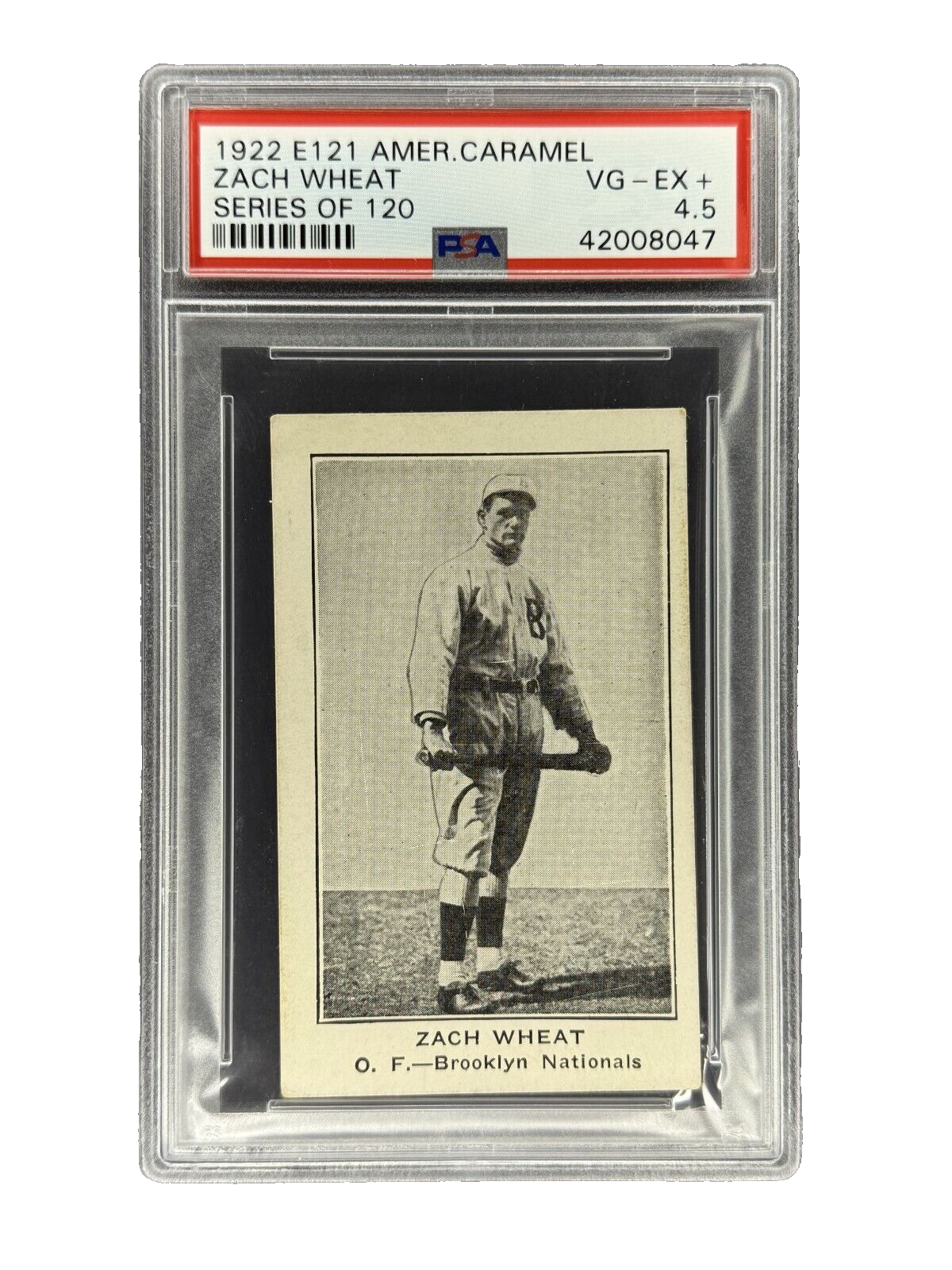
This is the alien ledge; the razor’s edge; the blade which characterizes the early machine art and machine image: both the photograph and the machine reproduced baseball card lithograph of the T206s; the E90-1 American Caramel and E120 American Caramel cards alike. These works of mechanical reproduction still contain the aura of the sexual unity of man and machine: a unity of synchrony and mutual functioning toward the goal of accelerant, rendering; pushing the synaptic, neural; global ecosystemic limits of the physical, material world into the psychic sphere of dreams, creation, imagination, construction, terraforming; at last, manifestation of the myth making axis at the deepest level of human seeing and feeling; interpreting upon the terrain of the physical world.
This transplant was mutually arranged with machine; as such took from the body of the world; burned from the body of the world to produce man’s book of revelations: a book of revelations of the power of creation hid within him — once obscured by physical limit; now revealed by machine aid. This very book was the code of the 20th and early 21st centuries; what it produced were man’s dreams — absolutely — but not without the somatic consequences that heightened dream realization at each bending light moment rend upon the body itself. Man, so enraptured by technological and digital and scientific possibility, forgot that he was a man within a body made by nature; encoded with chemical, neural, hormonal, and genetic habitat; subject to evolutionary and biological constraints with firm laws, rules, and regulations.
The early baseball photo is the moment of and just before liftoff — where man is gifted the Pandora’s Box of technological revolution; opens it to find wonders that allow history to save, recall, and return his time as a portal of sight that lingers between flattening and the fullness of the third dimension. Such a technology — psychic time travel through ritualistic image communion — is typical of mankind’s advancement into the realm of imminent creation; dissection and rearrangement of space-time: tinkering with the relic of nature to produce the sublime recombination which threatens to suture and unsuture the world alike.
The photograph itself was an experiment, as was the rocket to the moon, or cloning, or artificial intelligence. Once man stuck his hand into the earth and autopsied lithium, the veil of the world was lifted; free play was established as layground for the rapid ascent of capitalism as a mode of construction and reconstruction, assertion and reassertion — of images, myths, products, ideas, and values. All commodities, all measures of possibilities: some fulfilled; some faded into the background of obscurity of history’s junkyard. The effect of industrial time was total. And the photograph was there to capture man’s leaping into the change.