Slaves, Servants, The World's Poor: An Era of Beggars in Baseball (1895-1930)
Slaves, Servants, The World's Poor: An Era of Beggars in Baseball (1895-1930)
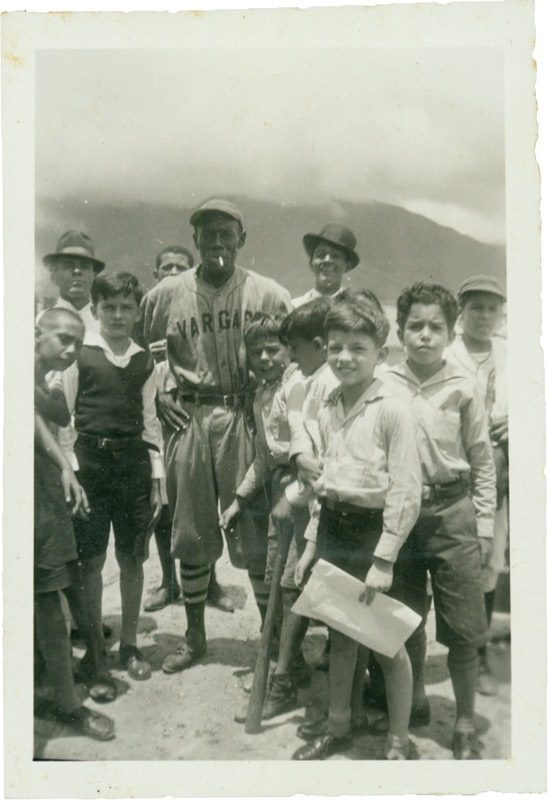
Alejandro Oms, depicted in Venezuela in 1939. Born to a life tied to sugar plantation and mill labor, Cuban baseball histories are consistent with understanding that Oms was born into the lowest rung of Cuban society. Oms would go on to become, on a consensus basis, considered to be one of the best Cuban born baseball players of all time.
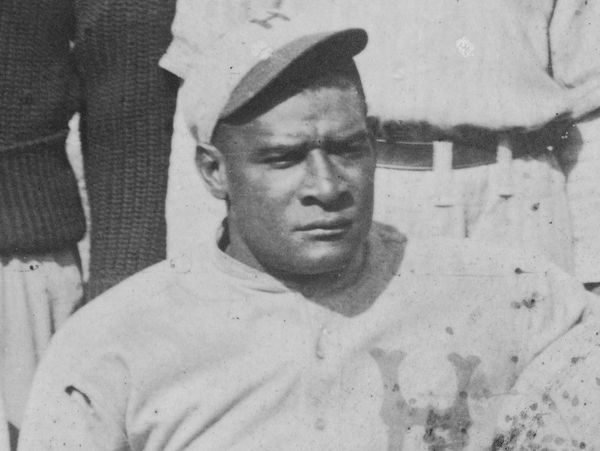
Cristobal Torriente. Born into a dockworking economy, he too became known as one of the game’s all time greats: the “Cuban Babe Ruth”.
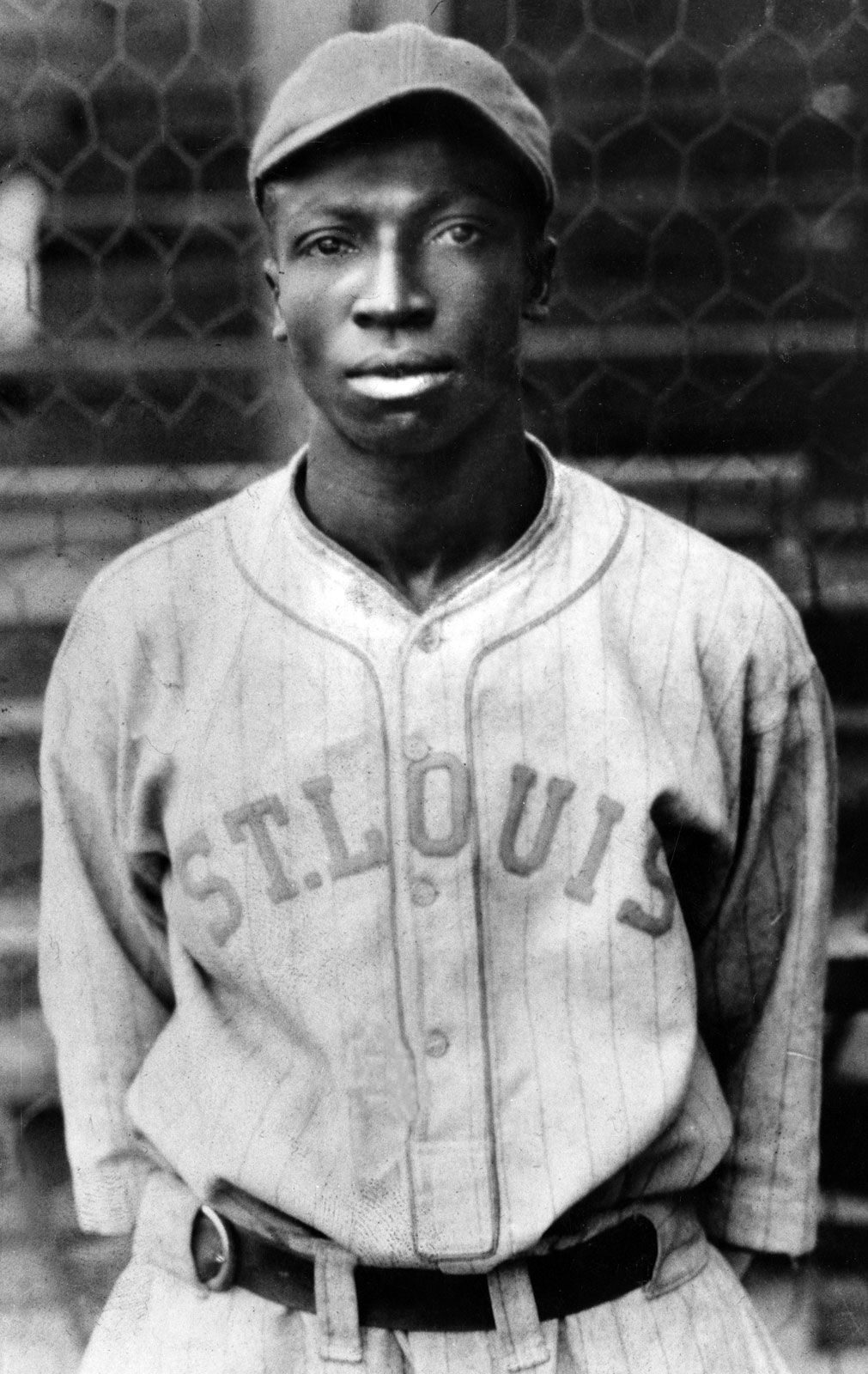
James “Cool Papa” Bell. Born into extreme poverty in 1903, Missouri. His father worked as a porter; in manual and service labor. As Bell grew up, he worked odd jobs and was a street laborer.
The profound spiritual power of the early modern game is condensed in the realization of the backgrounds of the great players of the Cuban, Negro, and white major leagues at this moment in time in human history. A profuse condensation of working class; absolutely impoverished men made history on Western civilization’s biggest stage — and built the enduring legacy and legend of the Caribbean and American game.
In the Negro League and Cuban circuit, players with such fairy tale like power, speed and skill — from Josh Gibson to Papa Bell to Satchel Paige, Oms and Torriente — made their way up and down the American stage for teams such as the Chicago American Giants, the Pittsburgh Crawfords; across the southern border of the United States into the Cuban Winter Leagues — where they played with enduring franchises such as the Habana Reds and the Almendares Blues.
It was an era of profound movement of talent in the most important cultural artifact; talent emerging directly from the dust, dirt, mud, mill, and factory of the emergent industrial legacies of a Cuban nation grappling with the end of the colonial era; the onset of rapidly intensifying American attempts to control the new native political economy — and the American industrial era of tenement housing and production plants and mining towns gaining exponential speed: piloted by young children; immigrants as young as four and five years old.
The high contrast of this era as it pertains to baseball as the consensus most important cultural artifact in both of these nations stands to be examined with ever deeper detail, focus, and awe. For it was the men who came from the deepest stratum of political and economic destitution in these emerging modern nations riddled by colonialism, genocide; racial slavery — it was these men who became the icons, idols; defining figures of the American and Cuban eras: still revered and well known to this day for their legendary feats; the oral histories of their stories passed down.
Papa Bell could hit a light switch and be in bed before the light went out. Torriente drove a ball two feet into the ground. The folk heroes of American and Cuban early modern national history were heroes who came from the zero ground of the political hierarchies of their nations. Poor, black, children of slaves, immigrant miners, factory workers, millers, plantation laborers, dock workers, itinerant men — whose investment and rise in the game gave them mark and name in history.
It was this factor and this factor alone that lent the developing modern game its deepest sense of awe and reverence — a cathedral of dirt and poverty, wherein the game’s heroes rose from the unmarked collective grave of proletarian suffering; with the swing of the bat or the advent of Paige’s “whipsy-dipsy-do” pitch, captivate entire nations embroiled in one of the largest en-masse technological shifts in human history.
These men — men whose lives were marked by continual poverty and destitution such as Oms and Torriente (Torriente died in utter poverty in New York after battling tuberculosis; Oms lost sight in one of his eyes, likely due to the illness as well) became writ in the stone ledger of civilizations; became living mythological forces still spoken of one hundred years later with curiosity, beauty; in a hushed tone among those who observe the game’s intricacies and interconnected, international histories.
Players like Honus Wagner and Goose Goslin in the white American leagues were sons of coal miners; orphaned farm children — found playing semi-pro or industrial league ball in their coal towns; local enclaves as boys and teenagers. Many of the early modern ballplayers received little to no formal schooling; could barely read or write. And yet, like Wagner, they stood as moral bedrocks in the game — wherein Wagner regularly refused to have his photograph or likeness used in advertising materials and cards for tobacco, as he did not want to promote the use of tobacco for children.
Oms was known as “The Gentleman” for his grace on and off the field; players like breaker boy Jake Daubert led unionizing efforts. Daubert was vice president of the Players’ Fraternity, wherein he played a major role in incrementally improving labor conditions and wage freedom for all ballplayers — alongside the Brown University law educated leader of the organization, Dave Fultz.
It was an era where the impoverished, destitute man was at the front and center of American and Cuban culture — not as a man of low class, or as an example — but rather as a man of great strength, ability, talent, and character. Baseball was a prime outlet for the reorganization first of culture; culture being an exemplar and display, as in the case of baseball, of the innate humanity and ability and equity within those even lowest born; cast out of the city walls as vagrant, vagabond; even as black man.
Josh Gibson — worked small jobs in the steel region of Homestead, Pennsylvania in the early 1900s around the mills. From a poor black working class family, the man who is known as one of the greatest power hitters of all time in any league was not from an atypical circumstance. Baseball was the game that was suspicious of elite culture; regularly found men of rural and industrial backgrounds alike carousing; participating in circuses, burlesques; in many cases, the most morally upstanding and upright figures in the game and American culture at large: such as the figures of Christy Mathewson and Walter Johnson. Mathewson, farmer in Factoryville, Pennsylvania; son of a Civil War veteran, was one of the rare few of his time to receive a college education — his obtained at Bucknell University. Johnson, too a farmer, from a poor Kansan family.
Baseball culture was an entire ecosystem organized around tens of thousands of rabid, attending fans; hundreds of thousands more eagerly listening on the radio or awaiting updates on scoreboards — dancing at Cuban games, serving food, music — to hear of and witness the exploits of men who in other times would have only been accepted or seen as human beings by the hands and eyes of Christ. The entirety of the early modern game — just beyond the seeming appearance of the ballfield — is a history of vagabonds; triumph, tragedy, and participation in the community that the game availed the exiled modern man.
Rube Foster, poor farmer in the Jim Crow South. Little to no formal education. Yet with his innate ability and eye for the game and industry, forged from the disparate black leagues a united force: the American Negro Leagues — leagues in which Torriente and Oms would go on to participate in as black Cuban ballplayers, journeying north for opportunity and possibility in the black American circuit; just as Foster had once journeyed south for opportunity in the Cuban Winter leagues at the outset of the 1900s, upon Cuban liberation; the desegregation of Cuban professional baseball.
Early modern baseball was a network of professionalization; a channel wherein industrial and agrarian laborers single-handedly — with their sweat, dirt, play, character, and collaboration — created one of the most enduring cultural historical mythological forces in world history. That the early modern game persists to this day in the awe and wonder of the child’s eyes is that it persists through their stories and dedication; passion, drive, and love for the game in near untenable circumstances. It was not the statistics that made these men, but rather the grace that lives on in quality and story alone.
Oscar Charleston, another black baseball great, was born into a poor black working class household; like Papa Bell, worked odd, street, and service labor jobs. Enlisting young into the military (like the sharecropping Dizzy Dean), he was found by way of his participation in semi-pro and barnstorming circuits. The early American baseball pipeline was scouting at the deepest level of Southern and Northern destitution — the mining towns and regions of anthracite in the Northeast; the small black local clubs of the South, such as Satchel Paige’s early days on the Mobile Tigers.
“Shoeless Joe” Jackson played for the company mill teams of the American South in the Brandon Mill League; moved on to semi-pro; eventually signed by Connie Mack as an illiterate young man who could not even sign his own name. Baseball was woven inextricably into industrial company culture — giving young, impoverished, uneducated working men and immigrants a collective, communal language which to speak; providing passion, joy, and a sense of personal and self sovereignty in a world otherwise entirely marred by their social and political and economic status as undesirables; the unnamed, unlanded, forgotten masses.
Black, white, Cuban — the early game was an entire, elaborate network of scouting, industry, agrarian lifestyle — all centered around finding the waiting great men of the great game. The children like Lefty Grove and Stan Coveleski, laboring anonymously in the small coal towns of Pennsylvania and Maryland; Paige and Ruth at their respective reformatory schools. It was a profound interconnectedness — a collective, communal witnessing: a witnessing which required the ascent of young men otherwise destined and doomed to living in anonymous rural and industrial poverty — to come to the stage of America and Cuba; perform the ritual action of displaying the powers and possibilities inherent in man — no matter his background, race, or creed.
Untamed, uncensored; unmarred by the provisional language of the elite and high class stratums of American society, players such as “Shoeless Joe” (who simply decided to remove his shoes in a game as a young man because they did not fit properly, hence the nickname); Paige, Ruth, Oscar Charleston — displayed a profound sense of individualism and character: a strain of self making born only from the facing up to the poverty, destitution, and trials which formed them as children, boys, and young men.
Ruth’s life as a Baltimore street urchin; as well as Gehrig’s as a poor son of immigrants in New York City; Dean’s as a poor sharecropper; Paige as a working child in the Jim Crow South — these men displayed diverse and diffuse yet extremely potent traits. Ruth’s carnal excesses, Gehrig’s discipline and dedication, Dean’s irreverent humor and slang; Paige’s bardic abilities — these feats emerged directly from the early industrial man’s direct and about facing to the nature of his soul in trying times; times of destitution, suffering; seeming no way out. These were American times like Marcus Aurelius’; Cuban times like the times of the great Stoics of old. And yet men like Oms persevered in grace and dignity; uprightness of moral stature — even in the face of the loss of his sight. Oms continued to play, building on his astounding .345 career batting average in the Cuban Leagues.
Little still is known of Oms, as it is with Torriente. Undocumented histories, as with the racial discrimination that plagues the United States, intersect deeply with the legacy of black baseball as it traveled back and forth across the lines of the fledgling modern Cuban nation and the emerging industrial American power. These men, seen perhaps best in pictures: surrounded by rocky terrain, dirt, sand, rail tracks; looming industrial buildings and smokestacks: a team picture taken of a young Josh Gibson on the Pittsburgh Crawfords — in a line with his fellows.
They are seen on passport photographs — bureaucratically reproduced at border crossings. In the Venezuelan mountains, smoking cigarettes. The images, as is the case with the black Cuban and black American ballplayers of yore — are scarce to nonexistent. Being seen as lesser than; even lesser than the breaker boys and printers’ devils, they were not given the requisite media attention afforded to the great ballplayers of white American and European immigrant impoverishment — such as Gehrig and Ruth. The histories themselves are in a state of decline; being pieced together like broken windows of a long abandoned factory floor, one hundred years into the future.
The photographs assist us in this work, as do the news scraps from legendary black newspapers like the Chicago Defender , which functioned as information highways for news on the emergent black baseball greats. In baseball historical work, we are not merely documenting the feats and achievements of these men on the field of play — we are remembering them. Their hearts, their souls, their labors, their struggles; their time of turmoil, tragedy, victory, and grace.
This is at last why early modern baseball is deserving of our memory; utmost attention and focus. It is a domain where the legacies of the poorest and most destitute and forgotten American and Cuban working men and children are told and revealed with all of the casual nature of purely remarking baseball history. It is far more important than this. The early baseball histories provide us with insight into the lives and spirits of the most forgotten; the most shamed and the most cast out of our ancestral humanity; in a time where their names still sound with the aura of mystery, intrigue, passion, and legend.
It is still a fresh time; the earth has not yet dried upon this mark of history; this moment in which the greatest men of civilization were those who were most unlike the image it attempted to portray and accumulate through wealth, power, dominion and control. They were the men formerly without voices, formerly without names. Uneducated, illiterate, forged by the brutal conditions forced upon them by historical circumstance; the rolling snowball of historical time down upon abolitionist and decolonizing Cuba; the hands of American political power in its sugar trade and resources; the legacy of the Jim Crow American South — sons of former slaves, the Civil War’s blood not yet dried on the battlegrounds of Gettysburg and Antietam. Iron clanging out on the factory floors of Pittsburgh and New York City — churning out smoke so black and total it blanketed the town.
It was a time like many times — especially those recent. Times where man was overcome by the forces of historical change; changed alongside them. A time where the only agency an abandoned child in a boarding house had was to hone the thunder of the swing of the bat. A locomotive factory boy named Hack Wilson, immortalized in his thund’rous Hack — an image of his 46th home run of his legendary 1930 season; an image held in the Baseball Hall of Fame. These were men with no agency. Compressed, condemned; tossed aside by history as angrier, more desperate, deeper footholds of political power threw their weight around in the industrial footrace of mass production in America; the Spanish colonial regime lost its foothold; tipped into chaos and war in Cuba in the late 1800s and into the turn of the 20th century.
They were migrants and sons of migrants escaping war and famine to Ellis Island; impoverished Canadians in search of any work that would have them — in the case of the skilled second baseman “Nap” Lajoie and his family. Immigrants like long-time spitballer Jack Quinn had histories that — to this day — are unknown and shrouded in lack of documentation. It was this total and true working class milieu that tells the collective tale of early modern American life with the literal potency of biography after biography — sculping a mosaic of profound humanity, struggle, suffering, and ascent to the cultural victory of nations that were often not their home nations, with languages, words, and letters that they could not pronounce.
Beneath the seeming legacy of historical power lies a truer, more human story of history; America’s included. And for a fifty year period, the bounds of record were perhaps never quite so porous. Historical ledger was flooded with documentation. Newspaper stories. Newspaper photos. Real time histories written by men as diverse as Sol White and Raul Diez Mauro. Recounting of feats by thousands of fans. Stories which permeated generation after generation as legacy. Cards. The institution of the Baseball Hall of Fame in the 1930s.
Cards stuffed in Cuban tobacco. Photos placed in family albums. Stories that passed from seasoned Cuban baseball lover to another — in back rooms of stores, bars; seats of ballfields. Cards in caramels and gum, collected by rabid baseball loving kids in the American 30s. Scrapbooks. Stories of meetings and radio World Series games, passed down generation after generation. Baseball history, when it is all said and done, is profoundly anti-institutional. It is a collective history by the people, for the people; told by the factory workers and their children who labored alongside the legends on Pennsylvania rail cars; a history writ by those whom history is always least likely to remember: those with no money, no power, no wealth, no land; no heritage of name.
It cannot be summed up. The stories escape; the true stories evade institutional capture of number, marble, and cement. The photos are still scattered across the hemisphere and globe — held by children of old news photographers; Cuban historical scrapbookers; buried in seemingly innocuous postcard and paper ephemera sellers’ archives; comic book stores, antique shops. The documents, the letters: these are composite and never kept, or never kept with serious measure.
Because baseball was a game — a game that meant something while it was happening, but no one was particularly certain why. Why it meant what it meant; to the degree it meant it — as factory workers, paper boys, and young black workers filed into Muehlebach Field, Comiskey Park, and Yankee Stadium to watch players like Mule Suttles and Joe Jackson tell the story — not with words, but with their bodies. The story of American struggle, American suffering; the lives of those who, before the game of baseball reached its full prominence and heights, had no true voice, language, or word.