Slaves, Vagabonds, Beggars
Slaves, Vagabonds, Beggars
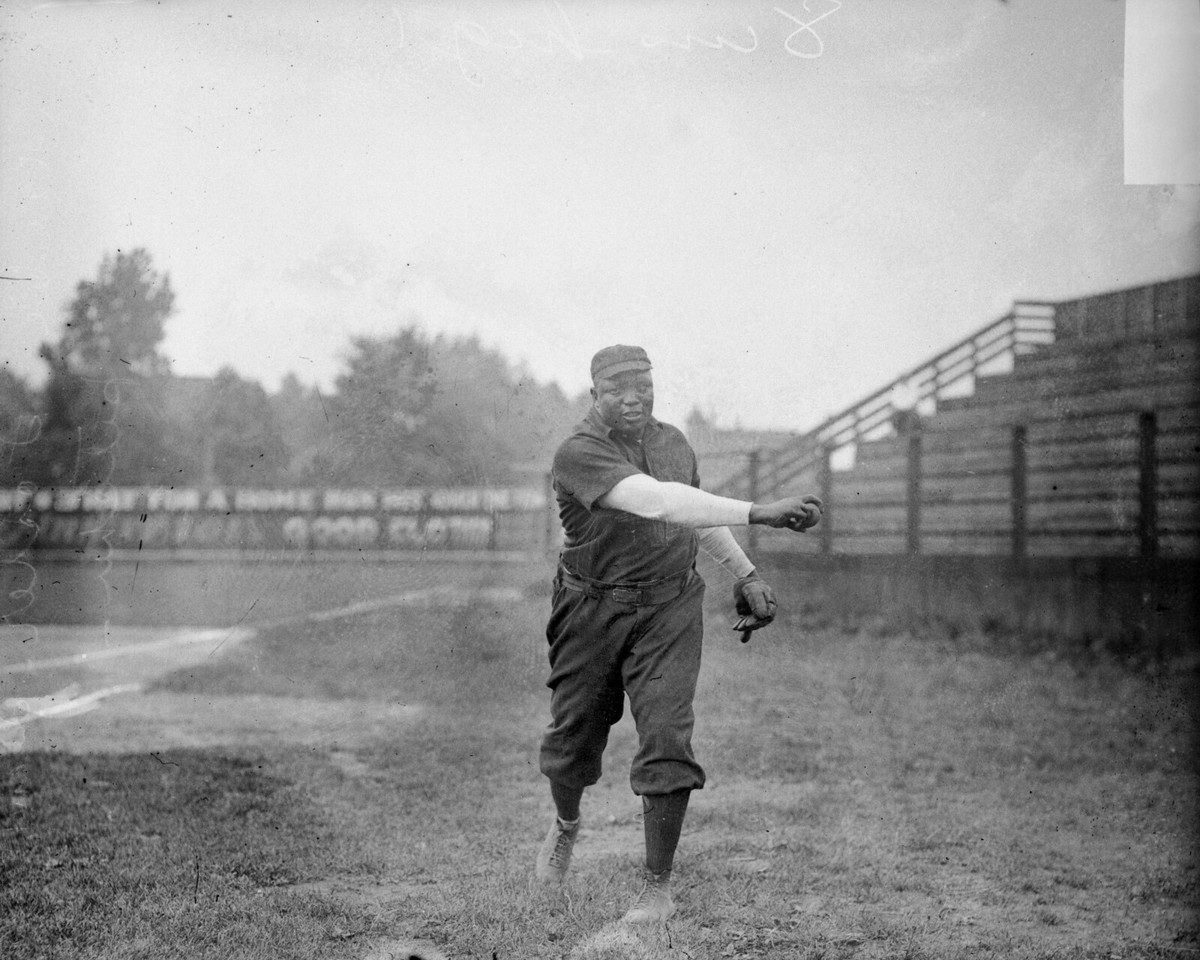
This is toward a true recall of baseball as a vessel or a vehicle for the underbelly of history. It is not so much that baseball itself is anything more but a carriage for the resolution of the underclass and the spiritual hunger of modernity.
Early baseball is all that culture can be. It holds the authentic spirit, heart, and soul of the most destitute, the most degraded; the most deranged — and cradles it in a ritual architecture which transmutes the suffering of the poor and destitute into the spiritual gold of an entire civilization. This is non-trivial…
Baseball’s affair with history is one pockmarked by perpetual incursions of meaninglessness. It occurs amidst wars — civil and international — slavery, political power, coup d’etats, and the births and deaths of millions of children and wisened old men at the end of witnessing a carriage pathway turning into a Boeing runway. And I evoke these symbols to elucidate the meaningless dirge of history. The march to nothing, but a fancier disillusionment through and by nature of time — a more and less convincing technological alternative to practical conditions; bare realities of the human condition.
Baseball holds a permanent, unmoving ground. Amidst slightly altered rules, this is still the game of slaves and soldiers, convicts and factory workers. The nameless, faceless masses. It is a game which is not pro, nor is it anti life. It is a game which is entirely outside the concerns of the human being and the human condition — whose runoff can be approximated as a rough mode of ethics, camaraderie, and collaboration… and whose practice is entirely devoted to objects whose sole purpose remains within the logic of the game itself.
The bat and the ball and the field are ritual spaces that metabolize the epigenetic load of enslavement. Rural black poverty. The mines. The smog of Pittsburgh. The technological repetition of the same crude human violence — transposed like a pastiche upon refreshed technological and industrial backdrops showcasing an abstract, faceless, devoid mechanical science which emerges from the slumber of trees, wood; cabins and early rifle bullets.
The soulless affair of history is typical of mankind; baseball is atypical. It unites territorial apes where they should not unite; it gathers people not under the banner of warring nations, but under the banner of entirely made up sporting names, logos; devices to articulate the aesthetic play of a competition at once powerfully urgent yet utterly meaningless.
It is, this is to say… the deeper nature of mankind. And this is why all find ground within it. It is a meaningless repetition which is at once an indictment and a liberation of the greatest and deepest human impulses; the failures and emergent possibilities of a weaponized political reality of power and enforced scarcity; systems of wealth creation and abuse which serve only to further a sense of utter meaninglessness. Human nature in history is conceived of as a literary excess; a contrived aspect in the face of the power handed down perpetually by the nature of time through a violent race of kings.
Baseball is a release of desperation; it is a participation in a form which is extra-life. It is a sacrifice which is not suicide, but the laying down of a meaningless burden. And this is precisely why, in its purest, earliest form — its most deeply uncorrupted by financialized, modernized, technologized capital — it draws in the beggar, the gambler, the slave. It naturally calls forth those who are outside of and ulterior to civilization. Those who have no place, the Diogenic. Those who see too deeply, those who have seen too much. Those who by race, creed, ethnicity — are exiled by the sickly sweet gilded halls of modernity. They are as such the poet maudites of the American tradition; their craft is not page and pen, but field and arm.
It is a great surrender; a surrender pure and extra life. It is no burden but the burden of meaningless play; this is what is meant by the true return to the condition of the child as it is separated in the cure, curve, and current of history. The child within the slave or the mines returns to baseball as the great nature before the parodicy and inhumorous carnival of the human slavery to life itself. Baseball is as a recourse to death; it is a stripping way unto the pure nature. And that the pure nature be revealed to the most destitute and otherworldly is a fact and practice of the spirit.
Baseball is now not what it was. It is an utterly evangelized industry, corrupted from within by the same profiteering which broke the modern world. Gus Greenlee, numbers runner, entrepreneur; the 1919 World Series fix — these are the true moments of early baseball. This is the baseball of the underworld — the baseball that is not raised to the skyscrapers of true crime and corruption… it is the baseball of the pure realities of a man like Joe Jackson, who could not read or write. It is the pure realities of the first black barnstormers; individuals like Fleet Walker — children of slaves. Baseball, in this way, is between Frederick Douglass and Thoreau: it is the marrow of life which is a profound sovereignty and a primary linguistic out from under impossible circumstances. In this way it is a forge amidst the utter purposeless which unites the two conditions of man: his physical nature and his industrial, modern time.
Baseball is not a search for freedom. It is a practice and a realization of it, far more profound than has been historically elucidated or prior spoken. It is a primary and absolute freedom, in the earliest sense; in its fin-de-siecle days — of the cultivation of the jivanmukta from the barrel of the slave; from the runaway of the miner. The vagabond of the carnival parade. These are the stories which captivate children — as they well should. Because they are the stories of the accomplishment of the impossible: the transmutation of human life into meaning out of utter meaninglessness. The acquisition of character amidst a characterless, silent climb of a natural vine of the grand species time. Baseball… a silence amidst the noise which is a true sound.
It must remain the way it is and was: a sacred and ancient practice of the devotion of the powers — as much Indian as it is American — toward a basic, fundamental realization of the state of play; what, if anything is truly at stake in human life and creation. And this is an imposition of meaning and a linguistic formalism which baseball itself entirely bypasses. The vaudeville entertainer circles the space that the illiterate millworker enters effortlessly. He is without cultural, symbolic language; thus, he is fit to enter the chamber of meaning. Men without roots. Running from a migrant past. The blood of their forefathers spilt by men with whips.
This is at last where baseball emerges from history triumphant; a greater history than has ever before been told. It is a history first and foremost of truth; the cultivation of monks and aspirants amidst the temple which is the dirge of history. The devotion of the sadhana amidst the meaningless noise which is the perishing in and out of the cinescope of the earth one hundred meaningless passing cries. And this is not to denounce human suffering — it is to elevate it through the rededication of human life toward a vehicle of revelation. The American temples do not offer a passage through maya like baseball does… the mere appearance of the world; the clamours of the news stories, magazines; the cultural artifice which lives and dies like a gasping banshee or ghost.
It is to live entranced and entrenched in that world that is a falsity which wastes, as is elucidated in the Hindu sense, the great opportunity and possibility of the incarnation of the human form and life. Baseball, in this way, is not a pursuit of meaning, but the creation and cultivation and transpersonal passage of a chamber which — through the human form — becomes something else entirely. It is a costume slipped upon the real in which the vagabond becomes a moment of imminent possibility, concentration, devotion, and focus. And in this way, the sheathe of life and this world slips away; the greater heritage is perennially revealed.