Softness, Motor Efficiency, and Constraint Violation in Elite Hitting: A Structural Comparison of Ted Williams and Mickey Mantle
Softness, Motor Efficiency, and Constraint Violation in Elite Hitting: A Structural Comparison of Ted Williams and Mickey Mantle
Softness, Motor Efficiency, and Constraint Violation in Elite Hitting
A Structural Comparison of Ted Williams and Mickey Mantle
Abstract
This paper formalizes the concept of “softness” in batting mechanics as a measurable biomechanical and informational property rather than an aesthetic judgment. We define softness as a low-entropy, low-variance motor solution that minimizes late-phase corrective effort while preserving impact efficiency. Using this framework, we show why Ted Williams satisfies the criteria of a Constraint Violation Index (CVI) hitter, while Mickey Mantle , despite comparable mythic stature and peak output, does not. Williams’ swing represents a stable, technical solution that breaks expected tradeoffs among plate discipline, power, and strikeout rate. Mantle’s swing represents extreme athletic throughput within those tradeoffs. This distinction clarifies the difference between optimization and true constraint violation in historical performance analysis.
1. Introduction: From Aesthetic Description to Structural Mechanism
Descriptions of elite swings often rely on qualitative language—“smooth,” “violent,” “effortless.” This paper reframes such descriptors as mechanistic signals. In particular, the notion that Ted Williams’ swing was “technical, even soft” is shown to correspond to identifiable properties of motor control, information processing, and outcome stability. These properties are directly relevant to CVI, which evaluates not peak performance but sustained incompatibility with known performance tradeoffs.
2. Defining “Softness” in Biomechanical Terms
In striking mechanics, outcome quality is governed by the impulse delivered at impact:
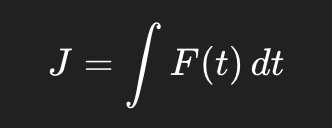
High impulse can be achieved either by increasing peak force or by improving temporal and spatial efficiency. A “soft” swing is not one that produces low impulse, but one that achieves required impulse with:
Minimal extraneous movement
Tight kinematic sequencing
Reduced late-phase corrective action
We define softness operationally as:

where

represents the vector of motor corrections applied in the final decision-to-contact interval. A softer swing achieves elite outcomes with lower variance in late motor control.
3. Motor Control and the Late-Correction Constraint
Batting occurs near the limits of human sensorimotor latency. Once a pitch reaches the final segment of flight, feedback control is severely constrained. Performance therefore depends on the quality of feedforward planning rather than reactive correction.
Reducing late corrections requires:
Early and accurate pitch inference
Stable swing plane geometry
Efficient force transmission
Swings that rely on extreme athletic correction tolerate higher internal noise. Swings that minimize correction reduce noise at the source. This distinction is central to understanding long-term distributional behavior.
4. Plate Appearances as Signal-Detection Problems
Each pitch presents a noisy signal (S) (velocity, movement, location). The batter forms an estimate,

and error
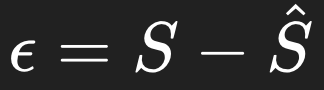
propagates into swing decisions and contact quality.
Higher inference error increases variance in outcomes. Williams’ selectivity indicates unusually low inference error variance, allowing him to:
Take more pitches without forfeiting damage
Preserve power despite selectivity
Maintain contact efficiency without aggressive correction
This configuration weakens the usual couplings between decision quality, power, and strikeouts.
5. The Structural Origin of Hitting Tradeoffs
Observed tradeoffs in hitting emerge from coupled constraints:
Speed–accuracy tradeoffs in decision-making
Power–contact tradeoffs in swing mechanics
Selectivity–opportunity tradeoffs in pitch selection
Adaptive opponent responses
Elite hitters typically occupy extreme positions along this constraint surface. CVI identifies hitters whose sustained distributions behave as if portions of the surface have been bypassed.
6. CVI Criteria and Williams’ Distributional Profile
CVI-H evaluates the joint behavior of:
Walk rate (decision dominance)
Strikeout rate (uncertainty and miss suppression)
Home-run rate (damage per contact)
Williams exhibits a historically rare profile in which all three variables remain simultaneously elite across long time horizons, environments, and strategic adaptations. Crucially, this profile is stable , not episodic. Stability under changing conditions is the signature of structural advantage rather than transient optimization.
7. Mantle as a Control Case: Throughput Without Violation
Mantle’s swing expresses:
Exceptional rotational power
Extreme bat speed
High athletic correction capacity
These properties allow for extraordinary peak output but also produce higher internal variance. When Mantle’s power rises, strikeouts rise in expected fashion; performance becomes sensitive to timing, health, and mechanical degradation. His outcome distributions expand rather than remain compact.
Thus, Mantle represents maximal exploitation of the feasible frontier , not a redefinition of it.
8. Energy, Entropy, and Stability
The contrast can be summarized thermodynamically:
Williams reduces entropy in the decision-impact system
Mantle injects energy to overwhelm it
Low-entropy systems favor repeatability and long-term stability. High-energy systems favor peak output but increase variance. CVI necessarily privileges the former.
9. Testable Predictions
If softness is a true CVI mechanism, then CVI hitters should exhibit:
Lower year-to-year variance in BB%, K%, and HR%
Persistent positive residuals from league HR–K frontiers
Resistance to opponent adaptation
Reduced dependence on peak physical condition
These predictions are empirically testable using rolling-window variance analysis and league-adjusted residual modeling.
10. Conclusion
Ted Williams’ “softness” is not metaphorical. It reflects a low-variance, high-information hitting solution that weakens the structural couplings governing batting performance. That solution produces exactly the kind of sustained, joint-distribution anomaly that CVI is designed to detect. Mickey Mantle’s swing, while among the most powerful and consequential in baseball history, remains fundamentally shaped by the same tradeoffs that govern elite performance more broadly. The distinction clarifies why Williams qualifies as a constraint violator and Mantle does not—without diminishing either player’s historical stature.