The Body as Capital: Industrial Labor and the Making of the American Ballplayer, 1900–1930
The Body as Capital: Industrial Labor and the Making of the American Ballplayer, 1900–1930
The Body as Capital: Industrial Labor and the Making of the American Ballplayer, 1900–1930
I. The Map
Before there was a farm system, before there were scouts blanketing the country with radar guns and laptops, professional baseball in America was recruited from a single, vast, largely invisible institution: the industrial workplace. Between 1900 and 1930 — the period in which the professional game consolidated itself into the structure we recognize today — the men who would define the sport emerged not from sandlots and schoolyards but from the deepest and most physically punishing strata of the American economy. They came out of the anthracite coal seams of northeastern Pennsylvania. They came out of the cotton and silk mills of the Carolina Piedmont and the silk towns of New Jersey. They came out of railroad yards in Atlanta and Chicago, out of the oil fields of Southern California and Oklahoma, out of the steel furnaces of Pittsburgh and the shipyards of the Delaware River. The game’s geography was the geography of extraction and manufacture. Its pipeline was the industrial body.
This was not an accident, and it was not a metaphor. It was a material fact produced by two intersecting conditions: the poverty of wages in early professional baseball, which meant that players needed to work, and the physical logic of industrial labor, which produced bodies capable of playing the game at a high level. The coal miner who swung a sledgehammer for ten hours a day developed forearms and shoulders that could drive a baseball. The mill hand whose daily work was repetitive and rhythmic developed the hand-eye coordination and muscular endurance that translated to the diamond. The railroad worker who loaded freight developed the explosive lower-body strength that made a first baseman’s scoop look effortless. The oil field roughneck who climbed derricks and worked pipe-joints in the California sun developed the arm strength that made hitters give up and go back to the bench. These were not metaphorical correspondences. They were the actual developmental pathways through which the bodies of the early professional ballplayer were formed.
What follows is a map of that system, organized by industry, anchored by specific men, and read against the larger landscape of American industrial capitalism in its most compressed and violent phase of expansion.
II. The Mines: Pennsylvania and the Coal Seam Pipeline
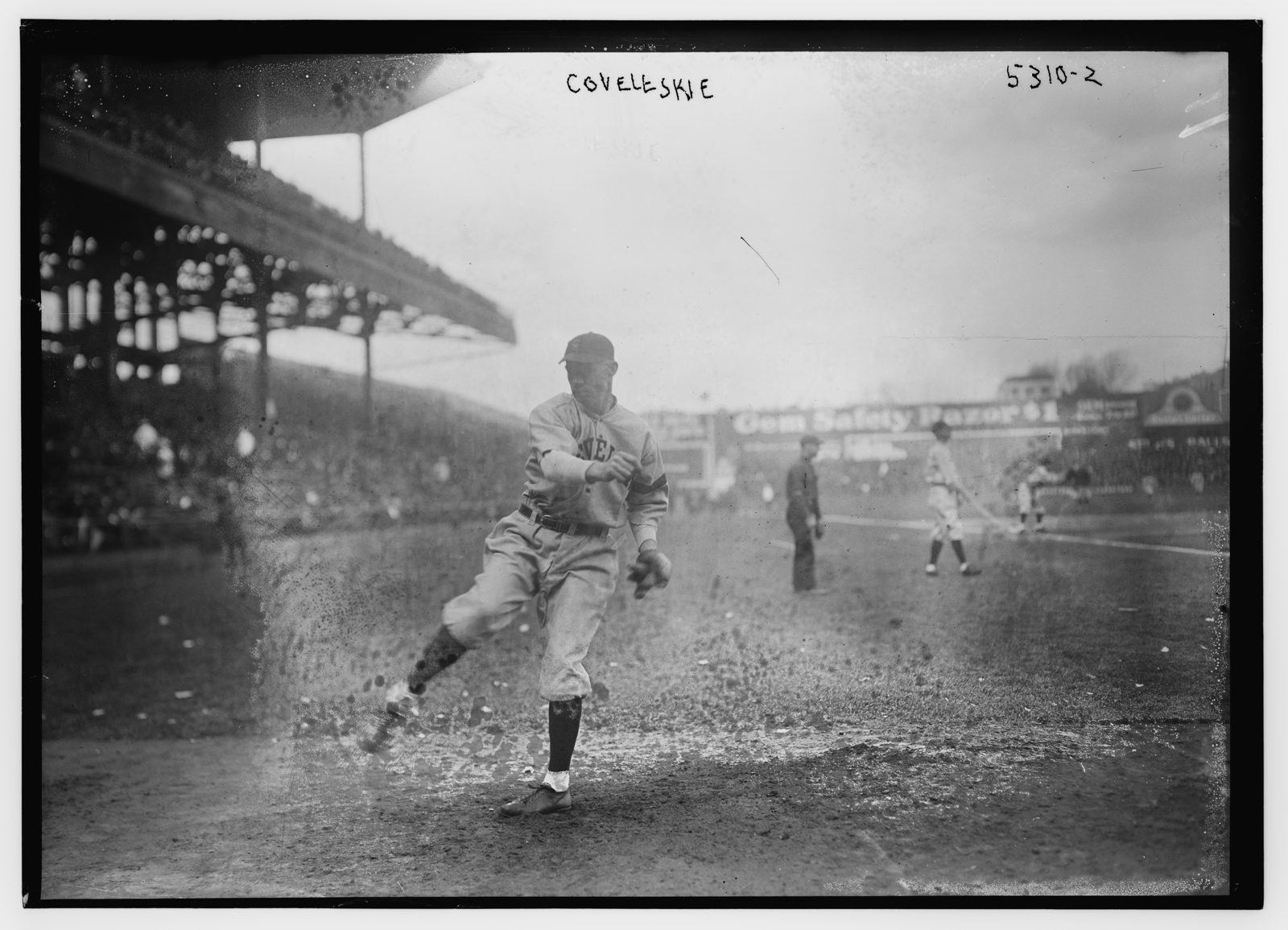
The anthracite belt of northeastern Pennsylvania — a narrow corridor running from Scranton and Wilkes-Barre southwest through Shamokin and Schuylkill County — produced ballplayers the way it produced everything else: at child-labor wages, underground, in the dark. The industrial logic of the coal camp was total. You lived in company housing, bought from the company store, worked in the company mine, and if you were fortunate, played on the company baseball team. The game was embedded in the structure of extraction itself.
The archetypal figure here is Stan Coveleski, born Stanislaus Kowalewski in Shamokin in 1889 to Polish immigrant parents. He entered the mines at age twelve, working twelve hours a day, six days a week, for $3.75. “There was nothing strange in those days about a twelve-year-old Polish kid working in the mines for 72 hours a week at a nickel an hour,” he would recall decades later. “What was strange is that I ever got out of there.” He got out through baseball, becoming one of the dominant pitchers of the dead-ball era, winning three complete games in the 1920 World Series with a combined ERA of 0.67. Four of his brothers also worked the mines, and three of them played professional baseball — the Kowalewski/Coveleski family constituting a kind of dynasty of the coal seam. His older brother Harry won 81 games in the major leagues. Stan honed his arm by throwing stones at tin cans nailed to trees in the evenings after his shift, the only time available to him.
Jake Daubert, born nearby in Shamokin’s orbit, entered the mines at twelve as a breaker boy — sitting on a plank over a coal chute, separating slate from coal with his bare hands. By sixteen he was a full underground miner, swinging a sledgehammer ten hours a day, a thousand feet beneath the surface. He credited the mines explicitly for his abilities: the hammer swing translated directly to the batting stroke, and the physical conditioning of years underground gave him the endurance that kept him productive in the major leagues into his late thirties. He became the National League’s Most Valuable Player in 1913 and led the league in triples at age 38.
The five O’Neill brothers — Mike, Jack, Jim, Steve, and John — came out of the Scranton anthracite fields in the 1890s and early 1900s, all having worked the mines before reaching professional baseball. Mike and Jack formed the first pitcher-catcher brother battery in major league history and confounded opposing hitters by calling their signs in Gaelic. They were preceded in the same small corner of coal country by the five Delahanty brothers, whose combined professional careers span from 1887 to 1915 — two baseball dynasties from the same compressed geography, both products of the same extractive industry. That two such families, in the entire history of the game, came from neighboring blocks in the Pennsylvania anthracite region is not a coincidence. It is a structural fact about what coal country produced.
The coal camps in West Virginia, Virginia, and southern Illinois replicated the Pennsylvania pattern at a smaller scale. Mining companies sponsored baseball teams, and skilled ballplayers were hired by the mines specifically for their athletic ability — sometimes given easier surface jobs rather than underground work, though, as documented in the coalfield leagues of southwestern Virginia and Raleigh County, West Virginia, the race line determined who got the underground assignments. White players of ability were often moved above ground. Black players were not. The segregation of industrial labor was reproduced on the baseball diamond and in the mine simultaneously.
III. The Mills: Carolina Textiles and the Shoeless Joe Pipeline
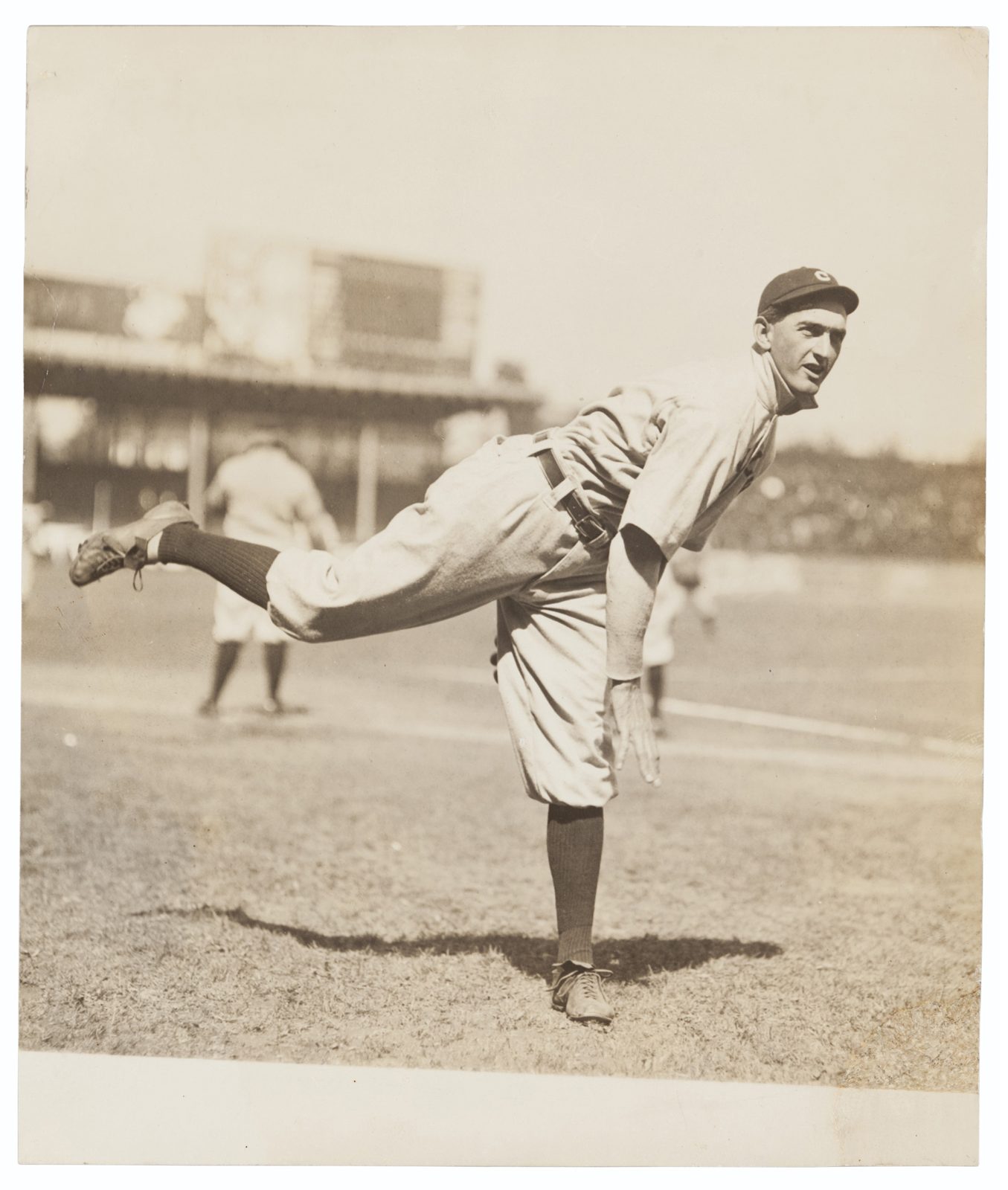
The cotton and textile mill towns of the American South produced the other great industrial pipeline into professional baseball, and they produced its most mythologically resonant figure: Joseph Jefferson Jackson, born 1887 in Pickens County, South Carolina, who entered the Pelzer Mill at age six or seven and worked in the Brandon Textile Mill by age eight, sweeping floors for twelve hours a day to help support his family of eight. He was illiterate throughout his life — the mills did not require reading — and he never attended school. The lint-filled air of the mill gave him a sickly childhood. His unusually long arms, inherited from his father, gave him his swing.
Shoeless Joe’s career is inseparable from the mill league ecosystem that created him. The Brandon Mill sponsored a baseball team that competed against teams from other mills and factories throughout the Carolinas. At thirteen, Jackson was playing on the Brandon Mill men’s team. He moved from mill team to mill team in search of better pay, as the mill leagues operated as a semi-professional circuit with genuine competitive intensity and significant local investment. Crowds measured in the thousands attended games between rival mills. When the semi-professional Greenville Spinners finally signed him in 1908 for $75 a month — a raise from the $45 he had been making between mill work and mill-league ball — Jackson recalled the transaction as liberation from a life sentence. He signed the contract with an X.
The mill league was not an incubator. It was an alternative economy. Many of the players who passed through it never reached professional baseball, not because they lacked ability but because the mills often paid better than the minor leagues. The dynamic was structurally identical to the coal camps: the industrial wage competed directly with the baseball wage, and frequently won. The result was a vast reservoir of baseball talent that remained embedded in the industrial economy, playing on weekends and evenings for company teams while doing the actual work of industrial production during the week.
After his banishment from organized baseball following the 1919 Black Sox scandal, Jackson did not disappear. He returned to the mill ecosystem that had formed him, playing for semi-professional teams in the South Georgia League and other unorganized circuits throughout the 1920s, leading teams to championships, living in the shadow economy of baseball that the mill towns had always sustained. The mill town and the ballfield were the same world.
The parallel pipeline from the silk mills of Paterson, New Jersey produced Mike “King” Kelly, the first celebrity in professional baseball. Kelly, the son of Irish immigrants, worked the Paterson silk mills as a teenager before departing at nineteen for professional baseball in 1877. He would become the dominant personality of the game’s first celebrity era, the man for whom the phrase “slide, Kelly, slide” entered the American vernacular. The mill had given him the body; the game gave him the platform.
IV. The Railyards: Atlanta to the Majors via Standard Oil
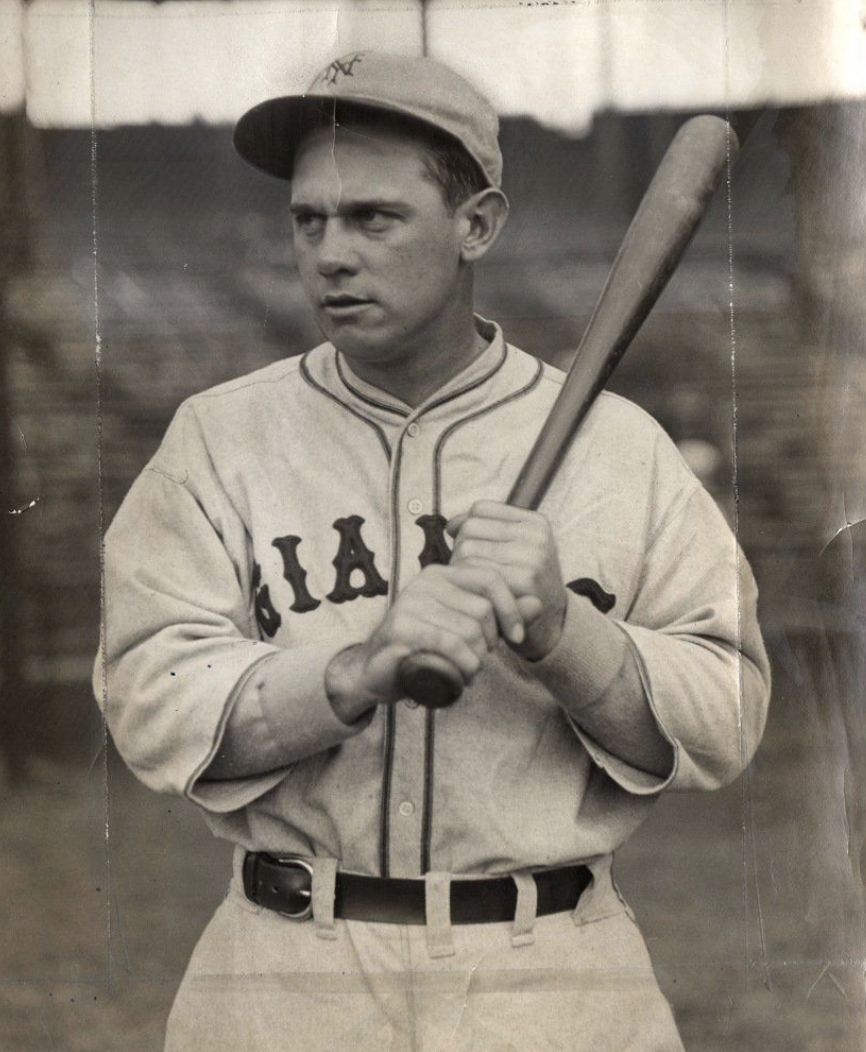
Bill Terry’s trajectory is the railroad pipeline compressed into a single life. Born in Atlanta in 1898, into a broken, impoverished family that moved seven times before he was twelve, Terry never attended high school. By age fourteen or fifteen he was working in an Atlanta railroad yard, loading and unloading freight, building the physical frame — six feet one, eventually two hundred pounds — that would make him one of the finest first basemen in National League history. His introduction to organized baseball was through a church league team in Atlanta, the Grace Methodist Baraca Sunday School League, where he played his first game in 1912 while still working the yards.
The railroad work shaped him in ways that went beyond the physical. Terry was famously unsentimental about baseball — he played it, he said, only because he could make more money doing that than anything else. It was the worldview of a man who had worked for wages since childhood, who understood labor as a transaction and had no patience for romance. “I played baseball only because I could make more money doing that than I could anything else.” This was the voice of the railroad yard.
His path out ran through Standard Oil of Louisiana, where he took a sales job in Memphis and played semiprofessional ball for the company team, the Polarines, from 1918 to 1921. The industrial league team was the critical bridge. A Giants scout passing through caught him playing first base at twenty-three, five years out of organized baseball. He negotiated his Giants contract with the same hardheadedness he brought to everything — demanding a salary higher than what Standard Oil was paying him before he would consider signing. The railroad, the oil company, and John McGraw’s Giants form a single continuous line in his biography.
The railroad also figures structurally throughout this era as the institution that nationalized the game itself. By 1876, game schedules were being set around train timetables. The game could not have become a national industry without the railroad network, and the railroad network produced players for the game at both ends: as the infrastructure that moved teams between cities, and as the industrial employer that gave ballplayers their pre-professional bodies and work ethic.
V. The Oil Fields: Walter Johnson’s California and the Roughneck Pipeline
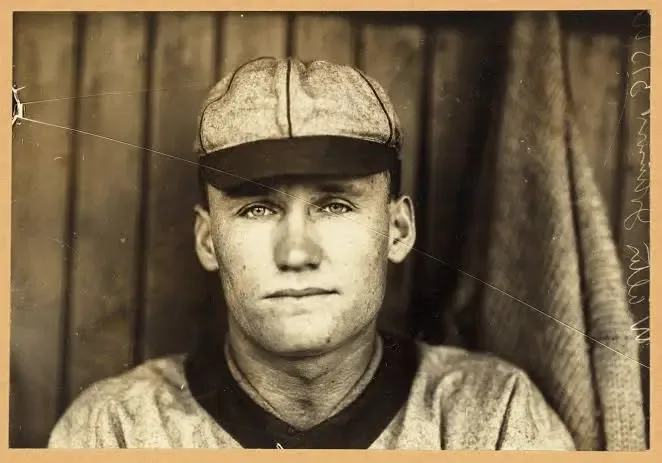
The oil field pipeline differs from the coal and textile pipelines in one significant way: it was geographically dispersed and chronologically concentrated. The great oil discoveries — Spindletop in Texas in 1901, the Cushing field in Oklahoma in 1912, the El Dorado field in Kansas in 1915, the Oklahoma City field in 1928 — created company town ecosystems virtually overnight, and those ecosystems, like the coal camps and mill towns, included sponsored baseball teams as a standard feature of worker management and community cohesion. A larger oil camp was, according to the Oklahoma Historical Society’s documentation of oil-field culture, “a self-contained community with baseball teams, club activities, and company-maintained parks.”
The most consequential figure in the oil field pipeline is Walter Johnson, arguably the greatest pitcher in the history of professional baseball. Johnson was born on a farm in Humboldt, Kansas in 1887, but when drought forced his family off the land around 1901, they followed the migration to the oil fields of Southern California, settling in Olinda, a small oil boomtown east of what is now Brea in Orange County. His father found work with the Santa Fe Oil Company as a teamster. Walter split his time between the oil fields and baseball, working the fields while pitching for the company-sponsored Olinda Oil Wells semiprofessional team. The oil field work built his body: “Working on the Kansas farm and in the oil fields,” his SABR biographer notes, “Walter developed a strong, muscular, 6-foot-1 frame which eventually filled out to 200 pounds.” The arm that would throw 110 career shutouts and strike out 3,508 major league batters was developed in a California oil camp. He was, from the beginning, a company team player in the most literal sense.
Lefty Gomez, who later played alongside Ruth and DiMaggio on the great Yankee teams of the 1930s, worked off-seasons removing sludge from refinery tanks for Union Oil — a post-career survival job, but emblematic of the relationship between the petroleum industry and the game. Bill Terry’s critical middle passage was through Standard Oil’s semiprofessional league, the Polarines team serving as the bridge between railroad work and the major leagues. The oil company team functioned as a de facto minor league for players whose skills had developed in other industrial contexts.
The oil field connection also runs through the Negro Leagues, where the industrial league structure was even more important because Black players were excluded from organized baseball entirely. The oil camp teams of Oklahoma and Kansas — where the great Mid-Continent oil region was expanding rapidly in the 1910s and 1920s — provided playing grounds for Black workers who were formally excluded from the white industrial baseball circuits, as they were formally excluded from the mines’ above-ground jobs. The Kansas City Monarchs, who would become the most storied franchise in Negro Leagues history, drew from precisely this world.
VI. The Steel Towns: Hack Wilson and the Multi-Industry Body
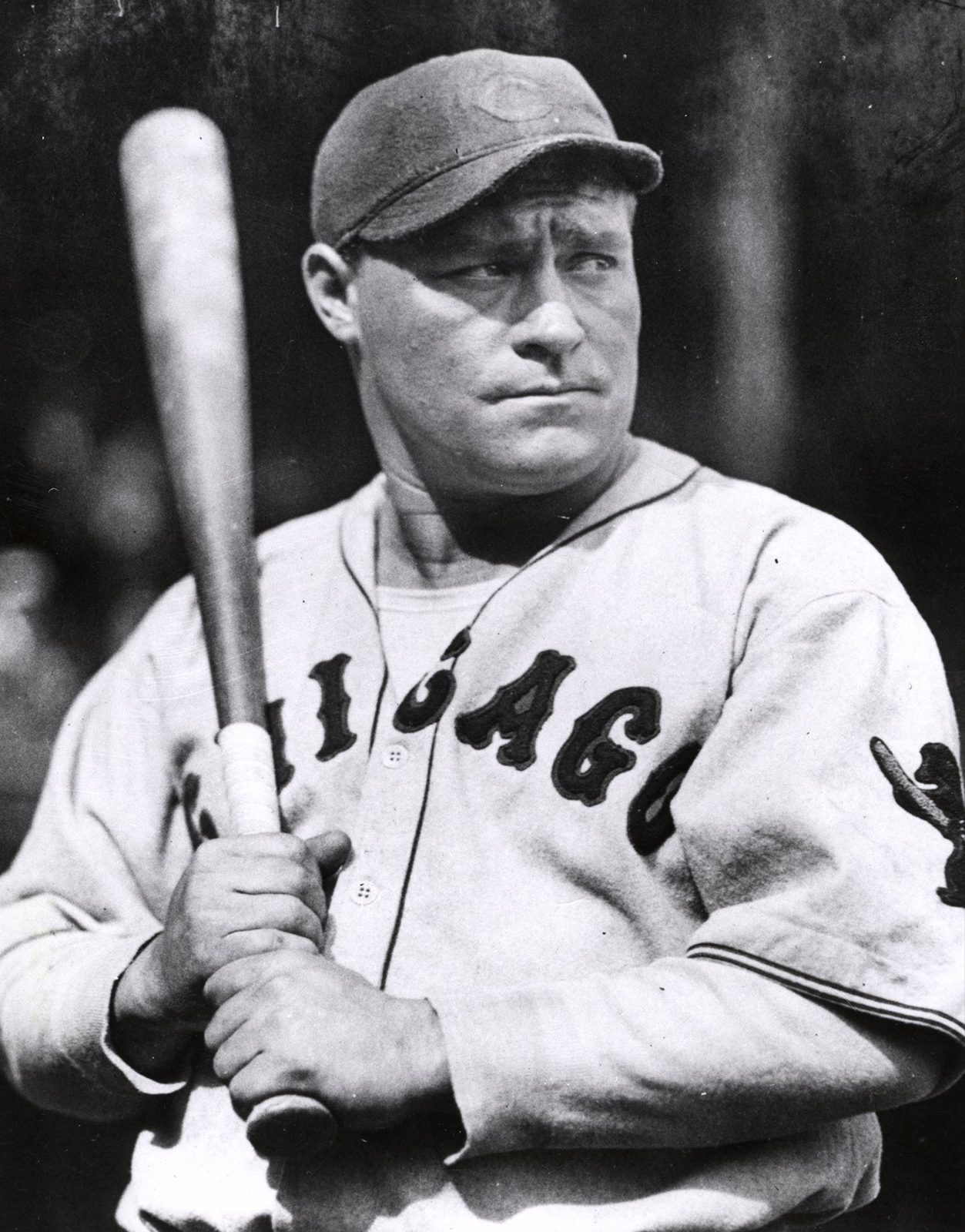
If the industrial pipeline produced a type — physically durable, unsentimental, formed by repetitive labor before any professional coach got hold of them — then Lewis Robert Wilson is that type at its most extreme and most legible. He was born in 1900 in Ellwood City, Pennsylvania, a steel mill town thirty miles northwest of Pittsburgh, the illegitimate son of a steel worker and an itinerant sixteen-year-old mother who died of appendicitis when Hack was seven. His father, a laborer who followed the steel mills from town to town, deposited him with a boarding house keeper and largely disappeared from his life. What Hack Wilson had instead of a childhood was labor, and what he had instead of education was the body that labor produced.
He left school in the sixth grade at sixteen and entered the workforce through a sequence of industrial jobs that reads like a map of western Pennsylvania’s manufacturing economy: first a print shop in Eddystone, Pennsylvania — twelve hours a day carrying buckets of lead and mixing ink for the presses at four dollars a week. Then a locomotive factory, swinging a sledgehammer. Then a shipyard. Then a silk factory. He worked all of these jobs before he was twenty-one, cycling through the industrial economy as it cycled through him, each workplace adding a new layer of muscle to a frame that was already structurally anomalous: five feet six inches tall, 190 to 200 pounds, with an eighteen-inch neck, size five-and-a-half shoes, and arms and shoulders built by years of hammer work and heavy lifting. He was, as Shirley Povich memorably put it, built along the lines of a beer keg.
What the industrial work did to his body is documented in the record. The locomotive factory gave him the sledgehammer swing that translated directly — as it had for Jake Daubert a generation earlier and a hundred miles away in the coal seam — to a batting stroke of extraordinary force. Hack Wilson’s 56 home runs in 1930 stood as the National League record for 68 years. His 191 RBIs that same year remain the major league record, untouched in nearly a century. No player who was not chemically assisted has come within 26 of it. The hammer that built the record was the one he carried into the locomotive factory at sixteen.
He is also, of all the players in this essay, the one who most visibly carries the industrial world inside his body as a pathology rather than merely a capability. What sportswriters and contemporaries read as pure physical oddity — the disproportionate torso, the tiny feet, the broad flat face, the neck that seemed to belong to a different species — modern medicine recognizes as the hallmarks of fetal alcohol syndrome, produced in the womb by two heavy-drinking parents who had met in a bar. The industrial Pennsylvania that shaped him had already begun its work before he was born. The steel town, the boarding house, the print shop, the locomotive factory, the shipyard — these were not the background of Hack Wilson’s story. They were its entire first act, and they left marks that no amount of major league success could fully conceal or correct.
He was spotted playing amateur ball in Chester, Pennsylvania by a minor league president who signed him at twenty-one, five years after he had entered the workforce and four industrial jobs deep into his working life. A scout who found him in the Blue Ridge League sold his contract to John McGraw’s Giants for $5,000 — a sum that would later haunt McGraw when, through an administrative oversight, the Cubs claimed Wilson off the waiver wire for the same amount and then watched him drive in 190-plus runs in a single season. McGraw, who had built his career identifying talent from exactly this industrial labor pool, had failed to see what the locomotive factory had made.
Wilson’s trajectory after his peak is the essay’s other essential truth. By his early thirties, alcohol — the companion and consequence of the industrial Pennsylvania world he came from — had destroyed his career. He was dead at forty-eight, penniless, his body claimed by strangers because his son would not come to Baltimore to claim it. The industrial pipeline that produced him had no mechanism for what came after. It built the body and abandoned the man.
VII. The Shipyards and Steel Mills: The Work-or-Fight Interlude
The First World War produced a brief but revealing moment in which the industrial pipeline was made explicit and official. The federal government’s “work or fight” order of 1918 required all men of draft age to either enlist or demonstrate essential war employment. For professional baseball players, this created an immediate crisis that resolved itself through the industrial league system. Players flooded into shipyards, steel mills, and munitions factories, bringing major league talent into direct contact with the industrial workforce.
Shoeless Joe Jackson found employment at a Delaware shipyard building battleships and played in the hastily assembled Bethlehem Steel League — leading the shipyard circuit in batting average at .393 and winning the championship. He was among the first prominent players to take the shipyard option, and he was pilloried for it in the press as a draft-dodger, the industrial alternative carrying a social stigma that the military option did not. The Bethlehem Steel League briefly became one of the highest concentrations of professional baseball talent in the country, as industry barons competed to field company teams by hiring professional players who needed to demonstrate war-essential employment.
This one-to-two year interlude made visible what the industrial pipeline had always been doing quietly: using the labor of professional ballplayers as industrial workers, embedding baseball skill within the industrial workplace, making the company team the connective tissue between the factory floor and the diamond. The work-or-fight moment simply removed the pretense that these were two separate worlds.
VIII. The Logic of the System
What the industrial pipeline produced was not merely players. It produced a particular kind of player: physically large, physically durable, accustomed to hard labor, unsentimental about money, and ruthlessly practical about the economics of sport. The ballplayers who came out of this system — Coveleski, Daubert, Jackson, Terry, Johnson, Wilson, the O’Neills, the Delahantys — share a biographical grammar that is entirely distinct from the college-educated gentleman amateur who represented the other major recruitment stream of the era. They were workers who happened to be able to play baseball. They remained workers in their self-understanding even when they became stars.
The wages confirm this. Professional baseball salaries in the early decades of the twentieth century were genuinely competitive with industrial wages but not dramatically superior to them. Mordecai Brown, a 26-game winner for the Cubs in 1906, made $2,800 for the season and took a coal mining job in the off-season to cover his expenses. The mill league players in the Carolina Piedmont frequently declined minor league contracts because the combined income from mill wages and mill team baseball exceeded what the minor leagues were paying. Stan Coveleski parlayed from $3.75 per week in the mines to $250 per month in the minor leagues — a significant improvement, but not the categorical leap that modern baseball salaries represent. The pipeline flowed because baseball was a better deal than the mines or the mills, but not by so much that the industrial alternative was irrelevant.
The industrial workplace also provided what the early professional game did not: stability, community, and team infrastructure. The mill town, the coal camp, and the oil field company town each sponsored teams, provided equipment, maintained fields, and organized competition. This was the minor league system that did not officially exist — an informal developmental infrastructure funded by industrial capital for the purposes of worker management and community cohesion, which happened to produce a continuous supply of professional talent. The oil company did not build the Olinda Oil Wells to develop Walter Johnson. It built it to give its workers something to do on Sundays. That Walter Johnson emerged from that team is the historical residue of a system aimed at other ends entirely.
The period ends approximately in 1930, not because the industrial pipeline stopped functioning but because two parallel developments began to transform the game’s developmental infrastructure. Branch Rickey’s farm system — which he was constructing with the Cardinals throughout the 1920s — represented the first systematic attempt by organized baseball to internalize its own developmental pipeline, removing the game from its dependence on the industrial workplace. And the Depression, which devastated the mill towns, the coal camps, and the oil field company towns simultaneously, disrupted the economic foundation on which the industrial league system rested. By the mid-1930s, the company team was no longer the central institution of American working-class baseball culture that it had been for three decades.
But the map of the system at its height — 1900 to 1930 — is the map of American industrial capitalism in its most expansive phase, traced in the biographies of the men who played the game. The anthracite seams of Pennsylvania, the cotton mills of the Carolina Piedmont, the silk mills of New Jersey, the railroad yards of Atlanta and the industrial cities of the Midwest, the oil fields of California and Oklahoma and Texas, the shipyards of the Delaware — these are the geography of early professional baseball. The bodies of the men who played it were formed there, in the dark and the heat and the repetitive violence of industrial work, before they ever stepped onto a major league diamond.
Walter Johnson throwing a baseball for the oil company team in Olinda. Bill Terry loading freight in an Atlanta railroad yard. Stan Coveleski throwing stones at tin cans after coming up from the mine. Shoeless Joe Jackson sweeping lint off the floor of the Brandon Mill before dawn. Hack Wilson carrying buckets of hot lead through a print shop in Eddystone before moving on to the locomotive factory, the shipyard, the silk mill, cycling through western Pennsylvania’s industrial economy before anyone discovered what the hammer had made. These are not colorful biographical details. They are the system. The industrial labor pipeline into professional baseball was not a tributary of the game’s history. For thirty years, it was the main stream.