The Call of The New: The Emergent Radical Political, Social, and Cultural Consciousness Towards Freedom of the American Mid-Century
The Call of The New: The Emergent Radical Political, Social, and Cultural Consciousness Towards Freedom of the American Mid-Century
There’s another work that I’m feeling into here… in relation to the black and white early television film of the Dodgers vs. Yankees duels of the 1950s World Series productions, jazz, and the quality of Kerouac’s aspiration towards the starry dynamo.
Kerouac is a penitent; his penitence is particular to and distinguished from the mid-century art movement — as a mostly Dostoevskiian Christian in his discourse on the soul and his turn to the Buddhic (including his work on the life of the Buddha himself).
The quality is, as we discussed in the last essay, an ambulatory one. It’s a focused on becoming motion — a movement around movement which is the American time — the time of the swing in the big band and the time of jazz amphetamines. Greenies, as they were called on the diamond.
The uppers and the downers… the inners and the outers. The lull of the fans in the crowd as Scully or Allen or Barber chattered a bass line rhythm. The simplicity of the call, an umpirical ‘Ball, 1 and 2’… cut by a Brooklyn ‘in the catbird seat’.
Kerouac’s On the Road is a scroll that stretches like the road it was paved and polished upon into one seamless line. Ginsberg remarked that Kerouac’s line is as long as the breath; he aspired to the fevered brass of a improvisational jazz linguist. Kerouac’s words were a music of the human body as a woodwind. They are and were inseparable from the mouth — as in a full, breathy meditation.
The genome is writ and coiled like a Kerouac scroll in the body — 34 billion miles of road.
What we are discussing… is playing the song of the body. Tuned in and tapped in to play the song of the bursting emergence of ancient history. From the thermonuclear tunnel of the birth of the universe to the contemporary humming, thrumming engine of the metabolic body like an insect, a flapping bird in flight; the rumble of the stomach in the hungry pie and ice cream wanderer.
From Kerouac emerges Jim Morrison… the hitchhiker in the American night. Too, a wanderer of the full capacities of the human soul. Unafraid of death, stretching, acrobatically, toward the Dionysian light of creative ecstasy. The poetic art that would reveal the soul; strip the apparent from the human body and reveal the ancient scroll… that he wandered down the hall — amidst the masks in the ancient gallery. Frog, beast, demon, leopard, man… cell, star, mystery….
All of this is about the face of God and the idea and ideal of the sacred American in Kerouac. The truck driver. The farmer. The immigrant. Seeing the face of God in all of them. Being and bearing witness as in being on the road. It’s a public act of witnessing.
This is first an aesthetic act of translation — the entire act of the American road on Kerouac’s tongue; the entire act of genetic transfusion on the tongue of Morrison. This is necessarily an American mysticism and metaphysics by way of compression in a revolutionary age. The low resolution emergence of the television. Civil rights. Vietnam.
Basie and Armstrong; the friendship of Satchel Paige and the Count in the refuge of Kansas City. Billie Holiday and Hughes mingling in Harlem. Manhattan jazz revues all the way down to the New Orleans cobblestone corridors — where music floods the high streets with shutter windows and shrouded by heavy oak trees.
This is a spiritual age — where technology is transforming the American light — which is a fringe of consciousness stretching toward a profound realization… which appears to be of the world, but is really an unfolding of the scroll of human potentiality from deep within the night of history. An acceleration of the movement of the technological world mimicked and mirrored in the frenetic bebop of Parker and Davis; the disappearance of the flickering, shuttering frame rate from the television; the unity of radio consciousness with the spinning, diving catch of Carl Furillo — way out there in the Brooklyn grass.
Kerouac hums and smacks his hands across the dash, willing the car to wild faster into the night to the radio tune of Ballin’ the Jack in the approaching ice of the New York winter. The engine strains on the Massachusetts border… gutted by the cavernous, glassy stone of the leering Appalachians up around him.
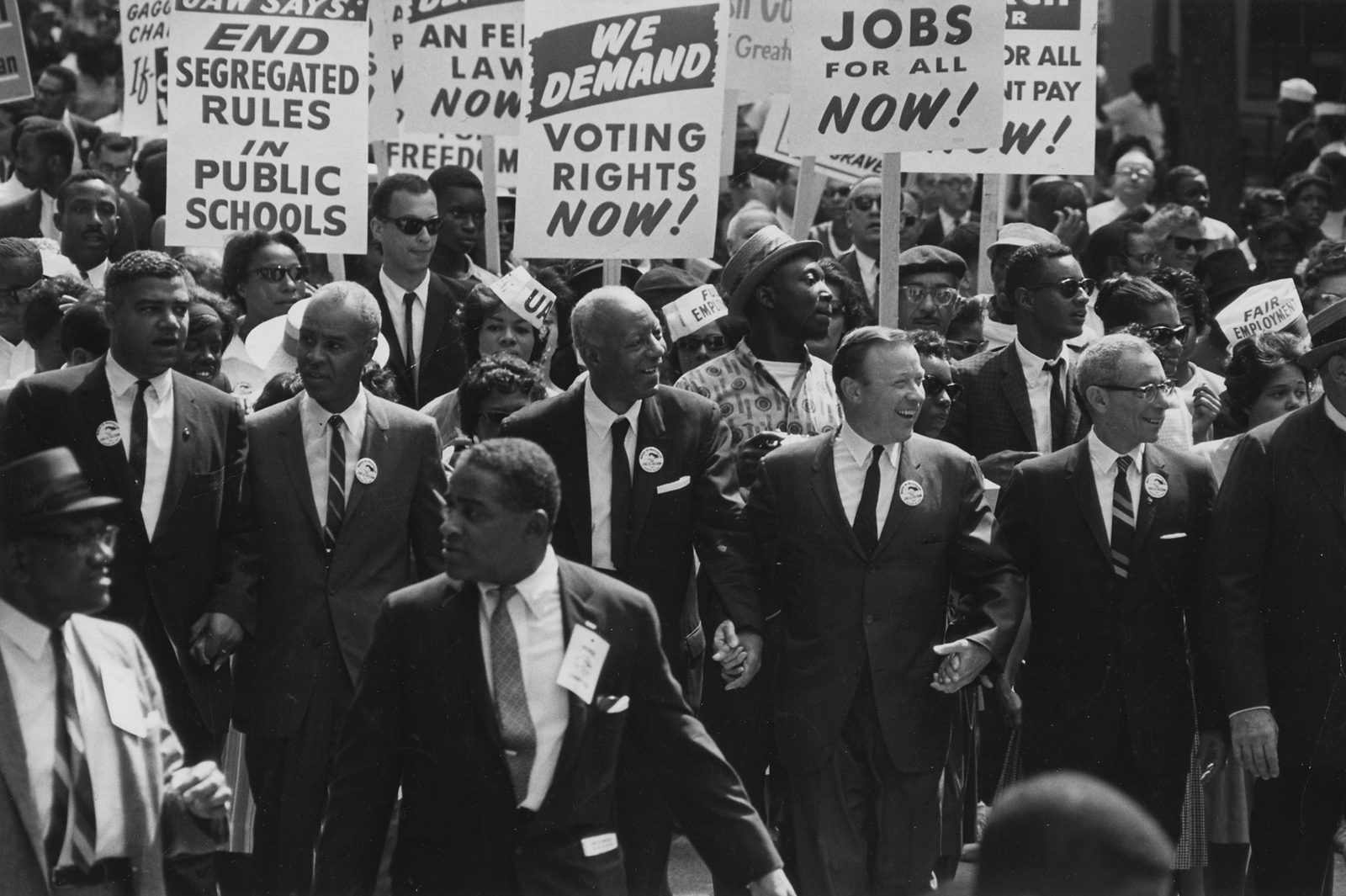
Culture is a mirror to this — a whole, thick fabric out from under the frozen black and white film of the camera to the space race and the technicolor protests of King, Malcolm X, Fred Hampton, and the students against the Vietnam War. This is a closeness of the room of seeing — the world is expanding wider with convincing aperture. It is now the film camera which stretches space and time… not horizontally, but into depth of movement.
This is the howl of Mingus’ bass; the persistence and into the quiet introspection of his piano improvisations. Monk’s color photographic album portrait — surrounded by a charnel house room of history. Characters and styles are amalgamated. Jazz and pastiche give way to hip hop and from Cubism to collage to Basquiat’s grand historical collage of the mind. The world is being broken up and remade under the technological vision of hyper-acceleration of perception and sight. A new unity is being formed out from under the frozen dream; out from under the ideological, agrarian ice of the pre-modern, pre-industrial age of mankind.
And this is truth… felt in Jack’s private room in Big Sur. It is a stretching of the ages that is too much for him to bear. He retreats into alcohol; retorts political and religious belief. But for a moment he glimpses the infinite — young; on the road… Parker, too, like a dying star… loud, ferocious, inimitable — even as he takes the classics of American yore and tears them to shreds with the passionate tenor of a true player and artist. History takes the time of the artist at the moment of absolute exponential acceleration and makes the artist artifact of a world at once bent, broken, and being remade from the ashes of the old.
For the 60s is already too far… it’s past the moment of true death and the winking groan of the old order being shuffled quietly out the backdoor of historical time. It’s Kerouac, young, fresh out of Columbia… puffing on a cigarette on a fire escape in the city — wearing a jean jacket. It’s Basie and Satchel Paige at a Kansas City pool hall — Paige, as always, dressed to the nines. He said to avoid society life…
The last of it seems to be the World Series matchups of the 1950s… a recapitulation of the first Battle of New York that set modernity into firm motion — McGraw’s small-ball New York Giants against the new order, power hungry New York Yankees, led by the newly converted outfielder, Babe Ruth.
It all revolves around New York… even as Billie Holiday sings her song of the South to the enraptured crowd; Satchel Paige winds up for the Black Yankees at Yankee Stadium — leased by the Negro League team in agreement with the segregated professional squad. This is a rupture heard by the street kids on the corner of Ebbets Field, reading the paper on the Dodgers being shipped to Havana for Spring Training in the year of 1947 at the quiet but adamant behest of Branch Rickey — to avoid the sure racism of Jackie Robinson on the squad in Florida, the Bums’ normal destination. They’re excited for the Dodgers’ extended pre-season run of exhibition games against the Yanks — not knowing what is to come.
These too are the days of Morrison at UCLA film school… pouring in Nietzsche and Rimbaud and contemplating the possibilities at the edge of death and the polarity of order and chaos on Los Angeles rooftops on Ruthian doses of LSD. The world is on the verge of a breaking into the mad howl that emerges from Morrison’s mouth at the Hollywood Bowl in ‘68… the same scream of Ginsberg’s loss and being remade as a true living entity in Kaddish…
The breaking free from the institutions — the racing toward a yet unknown spiritual peak from within the latent capacities of mankind… the presence of Nina Simone’s ‘Mississippi Goddamn’. This is a conscience from the silence of the ashes of American history. It is a loud boom and a convergence… from the repressed histories of the enslaved… the subtle silence of the mining towns… the tenements turned stickball temples of worship.
This is all only a poetic ordinance, and there is only a poetic way to speak of it. Because it is a great change in and at the mouthpiece of culture — a change that is totally aesthetic… jazz, music, art, baseball, literature. It’s a change that is the sound of the fracture of industrial modernism remaking itself in the new generation — a mosaic of the shattered glass of the Dionysian body which fell into the silence of war and the factory mechanism of oil, gear, sausage, machine. A body and a man made machine remembered in the generation come of the mad star which Kerouac circles and gesticulates frantically towards amidst the waking bar of mankind. This is the same star Mayakovsky, his Soviet counterpart; another subject of Ginsberg’s teaching, not but forty years earlier.
This is a call to the memory of being human crossed with the innovations which projected the living movement and body and made the spread of the song and music of mankind even more possible. Just seventy years later, we are now met with machines that can manufacture music and painting and poem entirely — predicted by Morrison toward the end of his life; by the band he most profoundly influenced in the coming generation, Joy Division, with Stephen Morris and his drum machine constancy.
This is the last of the analogue… the wail of Coltrane before the machine becomes soldered truly to the body and arm of man. It is as much a moment of resistance as it is a moment of revelation and awakening from the entirety of the industrial age prior and former. It is the cry of a young generation in the face of the storm of their fathers; in a moment of declared resistance in the face of the very wars they fought for reasons that no longer apply — nor did they ever apply to these children. This is Morrison’s story to the exact letter… in that his father commanded the U.S. Naval forces at the Gulf of Tonkin in 1964.
It is a generational shift… a break in the genomic thread between a call to liberation and the onslaught of history as a dirge of forces of the political power, influence, and sway of kings and their propaganda machines; industry and whole towns and cities controlled by mining companies and their requisite Carnegies. Gone is the age of Fitzgerald, Hemingway, and the wild flappers — the mad drunks partying each night into a fancy oblivion.
Gatsby has been replaced with the bandana and afro of Hendrix; a guitar on fire as he guts the polite principle of the American anthem with irreverent respect. This is a fiery individualism undercut by a refusal. Hampton, Huey Newton, Angela Davis — met in kind by Simone and Kerouac as individuals possessed by freedom. Freedom both political and religious — freedom both spiritual and applied in real time to the workers and miners and long suffering of American mankind. A seeking of a true brotherhood in the witnessing of the suffering and the art of the American bluesmen; an anthem by Simone of the twisted racism in the American South.
This freedom… however imperfect — however flawed and fragmented, unrealized and idealistic — is and was a freedom symbolized perhaps best in the Free Breakfast for Schoolchildren Program of the Black Panther Party as the 60s came to a close. This was an inclination and a human witnessing made as apparent in the speech of King on the Memorial steps, as it was Red Barber’s long thought on continuing on in the Dodgers’ radio booth in learning Robinson was to integrate the Major Leagues. It is a coming to light of the profound humanity underlying the most insidious and pernicious beliefs which constructed and orchestrated and maintained the violence of ages former; ages old. And the call of the new.