The Function of Revolutionary Art at the Species Nervous System: A Somatic Theory of Cultural Revolution Under Technological Acceleration
The Function of Revolutionary Art at the Species Nervous System: A Somatic Theory of Cultural Revolution Under Technological Acceleration
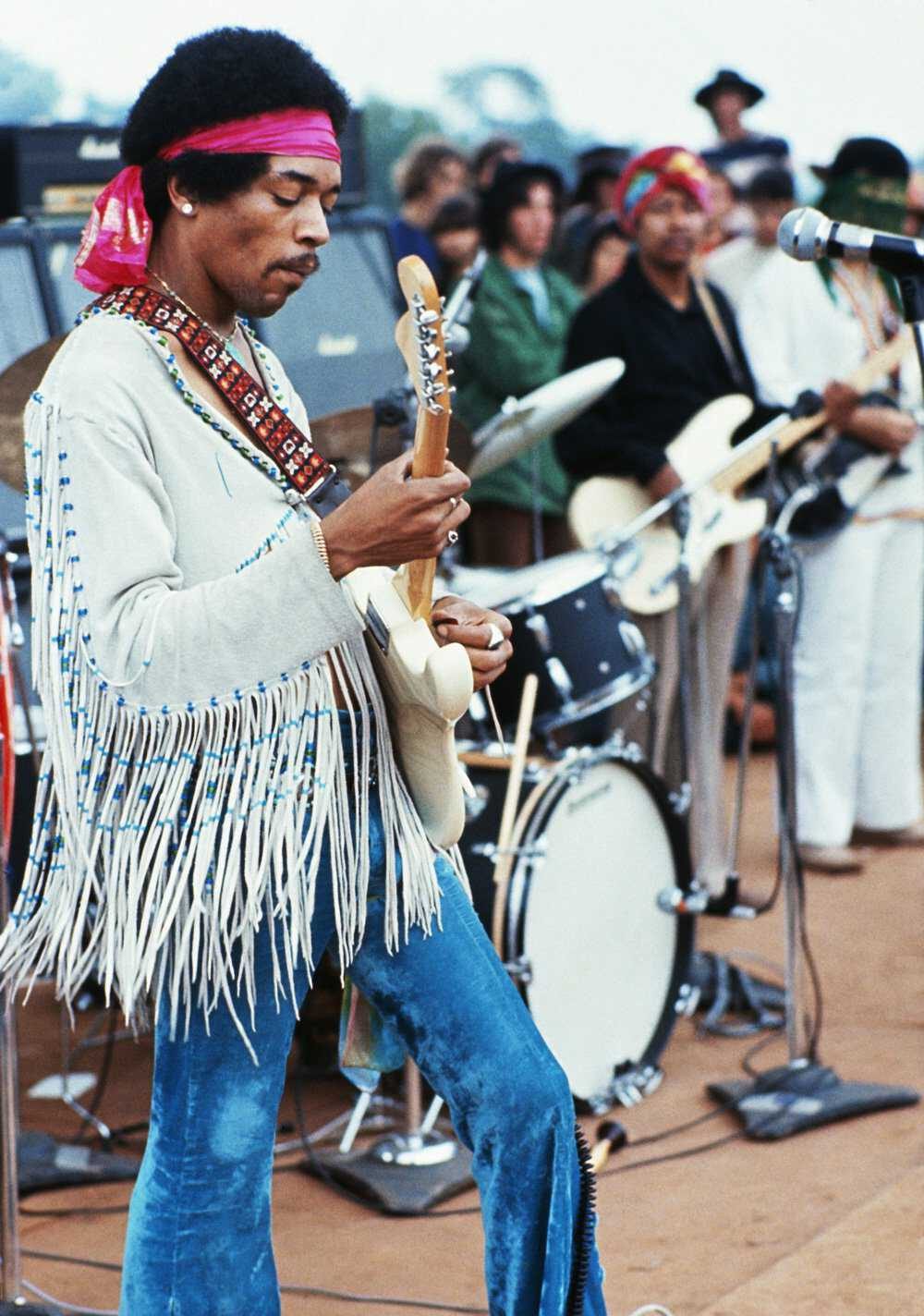
Hendrix at Woodstock.
Somatic regulation refers to the patterned capacity of the human nervous system to remain coherent under environmental, symbolic, and energetic load.
The function of revolutionary art is to break open the species nervous system; stultified symbolic code; restore the nervous system to a true somatic temperature authentic and integral to human being.
This is the millennial function of humanism as a expanded and expanding series of methodological and disciplinary inventions stemming from 13th century Italy. The humanistic function is not ideological, nor is it an attempt to prolapse or redirect human thought or ideation into any specific or particular orientation.
Rather, there are two concurrent pulls in the historical transformation of humanity as a technological transformation across the arc of the anthropocene; large term genetic evolution besides: the pull toward somatic regulation as in nervous system band co-relationship through media such as art, music, communal gathering; the pull away from somatic regulation into series of abstractions as diverse as mathematics, theorem; political ideology, and technology as chromatic expansions and prosthetics layered upon the native foundation of nervous system band evolution; human somatic interfacing with nature proper, fundamental, undisturbed by human admixing and experimentation.
These evolutionary and revolutionary cycles are fundamentally incompatible due to the time bands they occupy: human evolution is supra-epochal, spanning hundreds of thousands and millions of years of technological addition and subtraction via genetic mutation and adaptation. Technological evolution, rapid onset in modernity, is a movement now of consequential milliseconds of iterative technologies evolving out of language model minds now capable of iterating upon themselves; their own internal architecture and synaptic makeup.
This is a culture of pure mind; articulated as in the Descartian axiom: “I think, therefore I am”. This is the primary issue with technological evolution — it provides pseudo primacy to the realm of the mind as a theory of perception and a residence of ontology entirely within the synthetic realm of where thoughts are seemingly produced. Primacy of the body is entirely re-oriented to the most sophisticated and rapidly complexifying technology in the human body as in a recency bias — the forebrain of the human mind.
Revolutionary art and human culture has always used advancing technological means to simultaneously solder and remake the central human nervous system at the level of collective orientation towards life. From Bob Dylan to Jimi Hendrix and Leonardo da Vinci, the creative, innovative; humanistically (read: somatically) inclined individual has been pushed and pulled — torn between the essential human cataclysm of the passage of time compounding evolutionary pressures in upon man in the form of mankind’s own creations, innovations; recombinations into the realm of nature to form technological grids; metropolitan cityscapes; complex Genesis symbology myths of religion.
This has always been the task of supremely creative individuals in touch with both forces and functions at work in the extended human historical mythos: at once Promethean and entirely practical, as in the function of the discovery of fire; how fire impacted tribal organization and day to day ritual. The task: to integrate fire into the larger neural net of human tribal somatic organization.
Figures such as Jim Morrison — too a massive; large cultural force in the larger movement of the 1960s America being detailed here with Dylan and Hendrix — sought to solve this problem by organizing collective somatic rituals of regulation around the organizing force, heartbeat, rhythm, and full body aural and vibratory stimulation of music as collective memory.
This method superseded — as Morrison well understood — symbolic meaning and penetrated directly into the collective mythic unconscious of felt belonging; a sea of rhythmic register which is somatic attunement to a collectively shared field organized pre-linguistically around a series of repeated scales, notes, behaviors, consequences, sounds, and actions. The formation of this collective mythic register around the song is a shamanic and medicine tradition tens of thousands of years old; is primary to native, intuitive human understanding of how to form and forge community in the wilderness: to create and perform shared stories; in shared space.
Morrison took this template and prioritized it in the content and quality of his music; oriented the long, drawn out jazz inflected phrases of The Doors into passages that simultaneously entranced and revealed, terrified and co-regulated. Repeated symbols, signs, lines; long passages of musical interlude based around warbling two note repetitions on Manzarek’s organ; hushed passages of poetry exploding into wild, pre-symbolic screams — these are all essential shamanic, Dionysian totems of the collective ritual of regulatory field; the historical superstructural reality of field breaking by way of the introduction of the alien; the new, the ulterior.
This superstructural organization of the tension between human regulation and the breaking of the regulatory field is as old as tribal invasion, natural disaster; the eclipse. And as such, humans developed methods to track and interrogate potential field disruptors — everything from astronomical almanacs to iron domes and The Great Wall. Culture being the vulnerable flesh of somatic co-regulation; the walls of the city being the armor that separates the weak simian from the hungry panther.
Revolutionary art is the field that holds and binds the oldest instincts of man to preserve and thus conserve (hence the politically rote term, “conservative”) regulatory tradition as in patterns of behavior that continue the preceding order ad infinitum; the introduction of new medium and disruption of behavior, code, and canon which signifies simultaneously the emergence of new possibility and the death of the old somatic rhythm. The oldest dream instincts — as well as the real functioning and patterning of the human nervous system over time — is to preserve somatic order, even at the cost of wellbeing; for the sake of energy efficiency in the basic functioning of the human body. The energetic costs of somatic overhaul are catastrophic; tipping the regulatory function of the human body into exhaustion; strenuous exercise of the organs; even the digestive system to maintain necessary energy stores distributed to the organs and brain.
The function of revolutionary art therein is to introduce the seeds of disruption, to speak and thus articulate them as they are occurring; to hear and feel the call of the new as it is emergent in the larger technological, somatic evolution of the human species; thus introduce it practically through culture as a progressive somatic revolution toward new modes of being which are necessarily nervous system patterning expansive. This being that emergent systems which re-pattern; as in the nature of emergent technologies always already stretch the somatic dimension (the lived, feeling, embodied dimension) of the human species beyond the existing bounds of regulatory and somatic rhythm with the sun and moon; gravity and the fields of the tides and harvests which have served millennial, epochal functions in the genome of mankind; the cultural capacities developed and built to ritualize time and existence therein — that these systems require new modes of expression, technologized, code-breaking; order-breaking symbolic modes of creative expression which introduce the possibility and potentiality of regulating a new collective field of being.
Culture is the innovation therein that sustains and makes possible human evolutionary leaps through technology — including the genome. Genomic regulation has long been the cultural order of mankind — ensouled in nature with minor temporal breaks such as civilization being the domestication of animals and agriculture, fire, and other such minor disruptions which cultivated and colonized phenomenological reality. The advent of digital technology — perhaps as early onset as the Gutenberg press — allowed for mankind to begin circulating an entirely new sphere of somatic information: abstraction. Preceded in its earliest form by myth, science, and philosophy — the introduction of the digital sphere is the realm of meta-cognition made possible by the forebrain in human evolution; the introduction of an alien, ulterior capacity of cognition which has ultimately resulted in this historical moment in artificial intelligence: a human Alexandria and symbolic remixer to the highest power and capacity — drawing down human knowledge across space in time into an infinitely portable, recombinatory force: using digital screen pixelation; the linguistic typographics of mankind.
The digital technology as the 1960s arose was indisputable and permanent; the television firmly situated as a prime function in the large cultural mind proper. The circulation of information globally via news channels, stations, and physical documents — rapidly, exponentially growing since the early 20th century; ritualized in the initial break by the famous cubisms of Picasso as the fracturing of the human self center as somatic center with the introduction of industrial time and rapidly scaling coal technology.
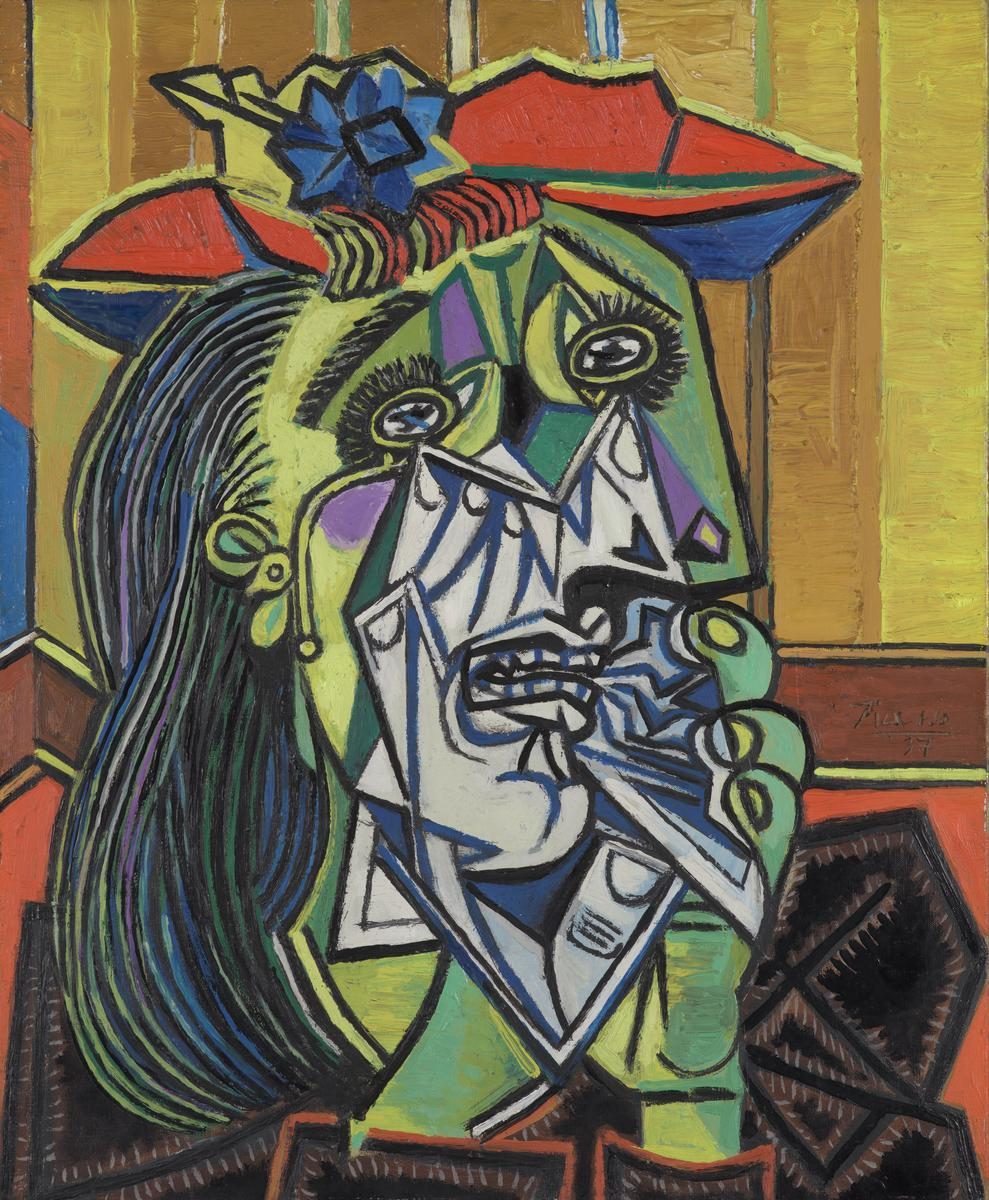
Weeping Woman , Picasso (1937).
The fracturing of the subject was the critical invention of Modernity proper; this was only accelerated and further distributed by increasing digital intervention, superseding and financializing industrialization into gambling, screens; the death of the gold standard. Critically, the somatic order of mankind as a genetic organization and a series of patterned neural responses to stimuli was being emergency outpaced by scaling technological intervention; technological intervention which was now conquering, colonizing, and establishing domain in an aethereal realm of light, shade, shadow, and glow — powered by the industrial grid established by electricity and coal.
Cultural intervention, as in Dylan, Hendrix, and Morrison, was critical to re-establish and attempt to mutually intervene with human symbolic language in upon the emergent digital aether; necessarily, literary interventions such as the works of Thomas Pynchon built upon the template serialized by Virginia Woolf in the space of typographic symbology: a ritualization of a world where nothing made sense, identities were no longer fixed; governments and shadow organizations were honey pots and shadow traps for corruption and money laundering, gang violence; trails and traces which led to nothing but thin air. Pynchon’s work is a fundamental disruption of the natural order; a sealed introduction of a closed circuit symbolic order which is the digital, fully industrialized anthropocene: a completed ritual of technological grid consciousness in which natural chains of information and distribution and energetic currency are fully metabolized into a made up; conjured realm of human creation and belief system — changed and terraformed into progressively higher and higher strangeness.
This movement was anticipated and describe by Terence McKenna in his ongoing lectures in the 1990s, where he discussed the concept of cosmological novelty; the evolutions within humanity as in the advent of speech and the expression of the conceptualization of human experience; a concept I have since scaffolded here discussing the ape digging into the earth to uncover lithium; serialize mining and enslavement as industries; accordingly conceptualize and produce the iPhone as a dream-tech grid of infinite permutations of image and appearance as light codes; image flashing — and with the advent of artificial intelligence image creation — generation of hyperrealities: images which appear real, which are generated with the real as reference; bypass the human circuit board by way of their convincing form and appearance. This is, critically, a dysregulation of reality by way of technological prolapse.
Now, more than ever, critical human cultural intervention through revolutionary art is of the essence: both using and discarding existing technological methods to find the humanistic potentiality within the contemporary moment; accordingly, generate a useable, somatic foundation for human life in an unrecognizable; metallic yet aetheric age of technologized, digitized, artificial remixing of human life and somatic, symbolic information across the entire expanse and scope of humanity’s digital Alexandria by language models. This crisis is a second crisis atop the industrial mudslide of coal and factory: dysregulated urban time; the lightbulb and grinding gear of machine as sun and wind. It is a crisis of profound silence, and yet utter, eternal presence. The glow of the screen, the infinity of possibility; simultaneously, the unmoving, foundational rules and laws of the human genome, nervous system, and practical realities of ecosystemic life on Earth in the Milky Way and thermodynamic, physically incarnate cosmos at large.
The interventions of Hendrix, Dylan, and Morrison were interventions that — especially in the case of Dylan going electric on Highway 61 Revisited , flew in the face of the conservative field of the attempt to stay somatically tethered to a dead, dying, old paradigm which was no longer technologically or practically functional in the rapidly post-modernizing world. Information was becoming increasingly ever-present; fragmenting even in the furious lines of Hendrix’s polarizing rendition of The Star Spangled Banner at Woodstock in 1969, in the midst of the Vietnam War; the rise of the Black Panthers; civil rights unrest and uncertainty. The level of somatic destabilization in America had reached a critical pitch; figures like Dylan — reluctant leader of the somatic progressive movement — had grown up and come of age in the midst of existential level threat and fear of nuclear war and the Cuban Missile Crisis.
The advent of the revolutionary symbolic language and breaking of the stultified cultural locks of the 1960s therein was a necessary, nervous system level response at the level of the emergent, youthful collective in the face of a world which was now unrecognizable through technological innovation — which, necessarily, produced domestic and international conflict by way of information circulation and distribution which revealed new potential realities, consequences, and consciousnesses within the former milieu of a handful of mass broadcast stations, radio, and the limitations of the previous technological epoch.
Color television required Johnny’s in the basement, mixin’ up the medicine, I’m on the pavement, thinkin’ bout the government ; the fireworks of the destruction of Hendrix’s guitar and the screeching feedback instrumentalized at the heart-song of America’s ideological march: a primary statement about the emergent and real concerns of a young black man’s existence in the midst of the American nervous breakdown; forced enlistment, student rebellion; the possibility of the emergence of an equal society for an enslaved class — freed into Jim Crow just one hundred years earlier. These are the same radical breaks articulated in the screams of Abbey Lincoln and the broken time drumming of Max Roach on We Insist! — released at the outset of the decade; expressions simultaneously of the fracture in the experience, lived and felt in the black body; the demand for freedom and agency within the stultified, gridlocked, racially segregated and oppressive American social and symbolic order at large.
The lived somatic consequence of these foundational shifts in experience: fear, danger, threat of war, emergence of increasingly sophisticated moving color technology — spread of information; thus being informed — these are the critical interventions articulated at the hands of these young men in the face of the paradigm shifting cultural consciousness at hand: the time of King, Malcolm X; Kennedy, and the continued assassination of cultural figures who — in the minds and felt bodies of American people — were actively, radically destabilizing the somatic, symbolic order. Rather, these were figures who were articulating the shifts already at work within it ; furthermore, creating; providing the necessary language to survive them.
As Dylan said, the times had changed. And they changed in such a way that no man or woman could do anything about them — but rather, begin the critical process of symbolic regulation through revolutionary art: to begin regulating the collective nervous system of mankind in the face of new, emergent; even unseen leverages at work within the world — leverages working at the depth of perception, cognition, neural patterning and feedback: the emergence of digital light as field of dreams — an emergence which would swallow man from the natural world, bridged by factory, into a world of visual dreams and nightmares.
The question is not whether technology will advance, but whether culture can evolve fast enough to keep the human nervous system alive within it.