The Hand, the Manuscript, and the Preservation of Somatic Being-in-Time: Pen-to-Paper Relation Against Recursive Symbolic Hyperspace (and Other Essays)
The Hand, the Manuscript, and the Preservation of Somatic Being-in-Time: Pen-to-Paper Relation Against Recursive Symbolic Hyperspace (and Other Essays)
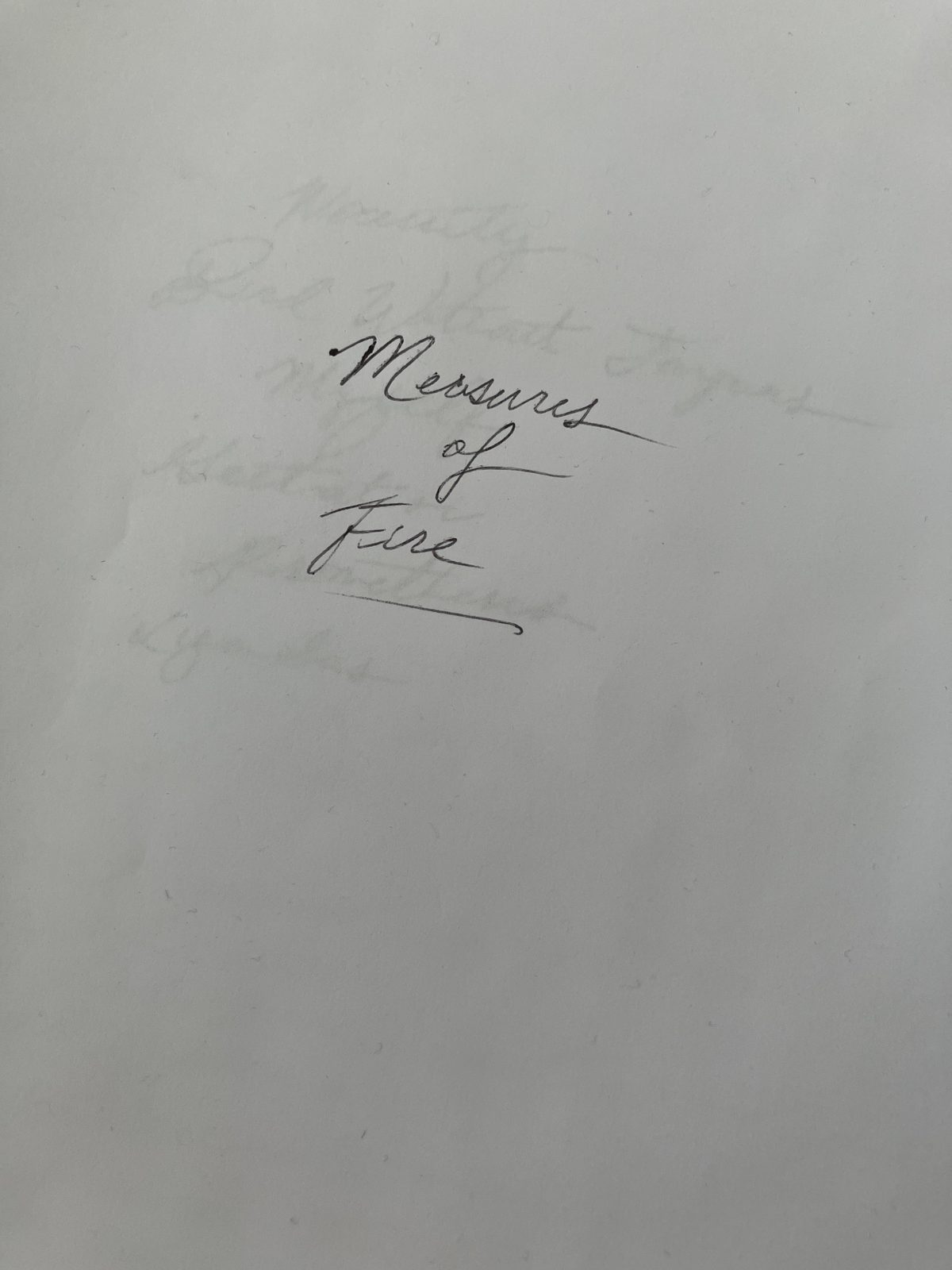
The Hand, the Manuscript, and the Preservation of Somatic Being-in-Time
Pen-to-Paper Relation Against Recursive Symbolic Hyperspace
The return to literal pen-to-paper relation is not merely nostalgia for older media, romantic attachment to handwriting, or resistance to technological convenience. At deeper ontological resolution, it concerns the preservation of embodied symbolic temporality against the accelerating abstraction of consciousness into recursively active technological hyperspace.
What is at stake is not simply medium.
What is at stake is:
the continuity between body, time, thought, gesture, and disclosure itself.
The handwritten act preserves a mode of symbolic emergence increasingly endangered within late modern technological civilization.
The human nervous system evolved through:
localized ecological relation,
bounded symbolic density,
somatic pacing,
and thermodynamically regulated continuity across immense evolutionary durations. Consciousness emerged through metabolic temporality:
breath,
gesture,
rhythm,
fatigue,
attention,
repetition,
sleep,
and sequential embodied relation to environment.
The body itself is:
compressed thermodynamic history.
Every regulatory structure of the organism —
sleep cycles,
hormonal rhythms,
motor coordination,
attention bandwidth,
memory pacing,
emotional regulation,
and perceptual continuity —
emerged through deep-time genomic adaptation under ecological constraint.
Human temporality is therefore fundamentally:
somatic.
The organism metabolizes reality sequentially.
Thought unfolds through embodied duration.
Meaning emerges through paced relation between:
attention,
gesture,
environment,
and symbolic continuity.
The handwritten page preserves this structure directly.
Pen-to-paper relation binds symbolic production back into:
the body.
The hand moves at the speed of embodied cognition.
The sentence unfolds through:
hesitation,
pressure,
rhythm,
breath,
fatigue,
crossing-out,
repetition,
and temporal sequence.
Ink physically records:
the metabolism of thought becoming symbolic form.
The handwritten page therefore preserves:
somatic symbolic temporality.
This matters enormously because modern technological civilization progressively accelerates symbolic mediation beyond the pacing conditions under which embodied consciousness evolved.
Industrial print systems first intensified symbolic dissemination across populations through:
mass literacy,
cheap print,
telecommunications,
and distributed symbolic inheritance.
Digital infrastructures accelerate this process exponentially.
The symbolic field increasingly operates through:
continuous simultaneity,
recursive abstraction,
planetary mediation,
algorithmic prediction,
and infrastructural hypertime.
Platforms,
cloud systems,
and AI-mediated symbolic architectures increasingly dissolve:
locality,
delay,
discrete symbolic pacing,
and embodied continuity.
The organism no longer merely encounters symbolic objects intermittently.
Consciousness increasingly inhabits:
continuous recursive symbolic environments.
This marks a profound civilizational transformation.
Symbolic production increasingly detaches itself from:
somatic pacing.
Typing already accelerates symbolic abstraction beyond handwriting.
But AI-mediated symbolic recursion accelerates again beyond localized typing-consciousness itself.
The symbolic field increasingly:
predicts,
retrieves,
recombines,
and recursively reorganizes symbolic structures infrastructurally.
The danger is not simply technological dependency.
The deeper danger is:
the severance of symbolic production from embodied temporality itself.
This produces the characteristic phenomenology of late modernity:
derealization,
recursive overload,
temporal fragmentation,
symbolic dependency,
dissociation,
and existential instability.
The nervous system evolved for:
localized symbolic encounter.
But consciousness increasingly unfolds within:
recursive symbolic hypertime operating beyond biological pacing altogether.
The handwritten act resists this process structurally.
Not nostalgically.
Ontologically.
The page restores:
duration.
It restores:
friction.
It restores:
constraint.
It restores:
sequence.
Most importantly, it restores:
the continuity between consciousness and embodied temporality.
The handwritten gesture remains metabolically expensive.
It cannot fully detach symbolic emergence from:
breath,
muscle,
time,
attention,
and finite bodily pacing.
This is why original manuscripts possess such extraordinary ontological force.
The manuscript preserves:
symbolic consciousness still visibly tethered to embodied Being-in-time before full abstraction into recursively active technological mediation systems.
Ink pressure records hesitation.
Cross-outs preserve recursive thought before stabilization.
The page preserves:
localized neural recursion externalizing itself materially in real time.
The manuscript therefore becomes:
a thermodynamic surface of consciousness itself.
This distinction grows increasingly significant as civilization approaches:
planetary symbolic hyperspace.
Artificial intelligence marks the culmination of symbolic acceleration because symbolic systems increasingly become recursively active themselves.
The archive no longer merely stores symbolic history.
The symbolic field dynamically reorganizes:
retrieval,
recombination,
comparison,
prediction,
and conceptual adjacency
at infrastructural scale.
Civilization increasingly externalizes cognition into distributed technological mediation systems operating according to radically different energetic pacing conditions than biological nervous systems themselves.
Human consciousness increasingly unfolds within:
compressed symbolic immanence.
The body remains:
finite,
metabolic,
localized,
mortal,
sleep-dependent,
and thermodynamically paced.
But symbolic recursion increasingly approaches:
continuous planetary simultaneity.
This creates:
existential-exponential somatic separation.
Consciousness increasingly lifts off into recursively active symbolic hyperspace while the organism remains anchored within deep-time genomic embodiment.
The handwritten page therefore acquires renewed ontological significance precisely because it preserves:
the original pacing architecture of human disclosure itself.
The page slows symbolic emergence back into:
somatic time.
The hand restores:
localized embodied relation against total symbolic deterritorialization.
The manuscript preserves:
thought before recursive infrastructural acceleration absorbs it into planetary symbolic mediation.
This is why the handwritten gesture increasingly appears almost sacred under late modernity.
Not because older technologies are inherently superior.
But because the handwritten act preserves:
the continuity between body, temporality, and disclosure increasingly endangered within recursively accelerated symbolic civilization.
The page remains:
localized.
The hand remains:
finite.
The gesture remains:
embodied.
And within an age increasingly defined by:
continuous symbolic simultaneity,
recursive abstraction,
AI-mediated recombination,
and technological hypertime,
the handwritten act becomes one of the final remaining structures preserving meaningful ontological continuity between consciousness and embodied Being-in-time itself.
Addendum: Measures of Abstraction and the Loss of the Ontos of Inscription
The history of modern symbolic mediation may also be understood as a progressive movement through successive measures of abstraction away from the original ontological condition of inscription itself.
At the origin-point of symbolic production stands:
the direct act of inscription.
The mark upon stone.
The mark upon parchment.
The mark upon paper.
Inscription in its original condition preserves:
constraint visibly.
The gesture remains materially continuous with:
the body,
the hand,
pressure,
time,
fatigue,
sequence,
and thermodynamic expenditure.
The mark is not merely symbolic representation.
It is:
a physical event.
The inscription records:
localized embodied consciousness encountering material resistance in real time.
This is why ancient inscription possesses such immense ontological force.
Stone carving,
manuscript writing,
inked notation,
marginal correction,
and handwritten revision
all preserve:
constraint made visible within material field.
The mark itself becomes:
evidence of temporality.
The page or surface records:
the expenditure of Being-in-time.
This continuity remains partially preserved even in the handwritten literary manuscript.
The original manuscript of Prometheus Unbound still visibly retains:
hesitation,
crossing-out,
pressure,
line movement,
revision,
and sequential symbolic emergence.
The body remains continuous with inscription.
The symbolic field still unfolds through:
localized somatic pacing.
But industrial print modernity begins abstracting symbolic production away from the direct ontological condition of inscription itself.
The industrial print run introduces:
mechanical multiplication.
The singular embodied inscription increasingly transforms into:
distributed symbolic replication.
This transformation becomes especially visible in the industrial transmission ecology surrounding Journey to the End of the Night.
The original manuscript still belongs to:
somatic symbolic temporality.
But the industrial print runs increasingly transform symbolic production into:
mass recursive dissemination across industrial infrastructures operating beyond localized embodied pacing.
The symbolic object begins losing:
singularity of inscription.
Instead, it increasingly exists as:
replicable symbolic abstraction.
The printed edition still preserves some residual locality:
paper,
binding,
surface,
typographic fixation,
material sequence,
and embodied reading relation.
But the movement toward abstraction has already begun.
The symbolic field increasingly detaches from:
the original thermodynamic event of inscription itself.
This process intensifies further through digitization.
The digitized document no longer possesses:
localized material surface,
fixed spatial continuity,
or singular inscription-event persistence.
The page becomes:
informational abstraction.
The symbolic object increasingly exists as:
retrievable code operating within distributed electronic mediation systems.
The archive loses:
material locality.
Symbolic structures become:
deterritorialized informational fields.
The original mark increasingly disappears beneath layers of:
compression,
transmission,
storage,
retrieval,
and infrastructural abstraction.
But artificial intelligence intensifies this transformation to an unprecedented degree because symbolic structures increasingly become recursively recombinatory themselves.
The AI-mediated symbolic field no longer merely stores textual objects.
It dynamically reorganizes:
retrieval,
association,
recombination,
prediction,
and conceptual adjacency
at infrastructural scale.
Text increasingly ceases functioning as:
localized inscription.
It increasingly functions as:
distributed neural-symbolic field.
The symbolic structure becomes:
continuously traversable informational topology.
This marks a profound ontological shift.
The original inscription-event increasingly disappears into:
recursive symbolic immanence.
The mark upon stone.
The mark upon paper.
The singular gesture of embodied symbolic expenditure.
All progressively dissolve into:
planetary symbolic hyperspace operating through recursively active technological mediation systems.
This is the deeper meaning of abstraction within late modernity.
Abstraction is not merely conceptual distance.
It is:
the progressive removal of symbolic production from direct material continuity with embodied constraint itself.
The original inscription preserves:
resistance.
The page resists the hand.
Stone resists the chisel.
Ink records pressure.
The body remains visibly continuous with symbolic emergence.
Constraint remains materially present in the field.
But recursively accelerated symbolic civilization increasingly eliminates visible resistance altogether.
Symbolic structures increasingly circulate without:
localized expenditure,
somatic pacing,
material friction,
or singular inscription-event continuity.
The danger is not merely technological.
The deeper danger is ontological.
The loss concerns:
the disappearance of visible constraint from symbolic production itself.
The handwritten mark preserves:
Being encountering resistance.
The inscription records:
localized thermodynamic expenditure within material field.
But recursively active symbolic hyperspace increasingly abstracts symbolic production away from:
embodied temporality,
material resistance,
and somatic continuity altogether.
The result is:
the gradual disappearance of the ontos of inscription itself.
This is why original manuscripts,
handwritten pages,
marginal corrections,
and materially preserved textual objects acquire increasing ontological gravity under late modernity.
They preserve:
the visible trace of symbolic emergence still tethered directly to:
the body,
constraint,
material resistance,
and embodied Being-in-time.
The page preserves:
thought before total abstraction.
The inscription preserves:
constraint before recursive symbolic immanence absorbs symbolic production into continuously active technological hyperspace.
And this may become one of the defining philosophical tensions of the future:
whether symbolic civilization can preserve meaningful ontological continuity with embodied inscription once symbolic mediation increasingly unfolds through recursively active neural-symbolic infrastructures operating beyond the pacing architecture of the organism itself.
The Generative Thrust and the Ontos of Inscription
Constraint, Revelation, and the Highest Magnitude of Symbolic Emergence
The deepest power of the handwritten document does not arise merely from rarity, historical age, or material uniqueness. Its magnitude emerges from the fact that the inscription-event preserves direct continuity between symbolic emergence and the constraint field of reality itself.
The handwritten mark remains:
earned.
This distinction is fundamental.
The symbolic structure does not appear automatically, frictionlessly, or recursively from preexisting symbolic circulation. It must be forced into existence through localized expenditure against resistance.
The body participates directly in the act.
Thought does not simply “exist” abstractly prior to inscription. The symbolic field must be generated through:
gesture,
pressure,
sequence,
rhythm,
hesitation,
fatigue,
attention,
and temporal continuity.
The page therefore becomes:
the field upon which consciousness encounters resistance and externalizes disclosure into form.
This is why the handwritten inscription possesses extraordinary ontological gravity.
Constraint remains visibly active in the field.
The mark upon paper records:
consciousness struggling into symbolic emergence through embodied relation to reality itself.
The inscription is therefore not merely symbolic communication.
It is:
localized ontological disclosure rendered materially visible.
This distinguishes generative symbolic emergence from later recursive symbolic circulation.
Once symbolic systems become fully industrialized, digitized, and recursively mediated, symbolic production increasingly risks becoming detached from:
direct ontological encounter.
The symbolic field increasingly recombines itself internally.
Meaning circulates through inherited symbolic structures already abstracted from the original disclosure-event that generated them.
But the handwritten inscription preserves:
the origin-point.
The symbolic structure still emerges directly from:
encounter with Being under constraint.
This is why the original manuscript carries such immense force relative to later forms of symbolic abstraction.
The manuscript still records:
the generative thrust itself.
The page becomes:
evidence that revelation required expenditure.
The inscription records:
consciousness forcing disclosure into existence against material resistance.
This is also why the highest symbolic works often emerge through extraordinary energetic compression within the organism itself.
The great act of symbolic revelation requires:
sustained ontological pressure.
The organism must remain open to:
constraint,
temporality,
history,
mortality,
nature,
suffering,
ecstasy,
and reality itself
without premature symbolic closure.
Only then can disclosure emerge at high magnitude.
The handwritten act preserves this process because symbolic emergence remains continuous with:
the pacing architecture of embodied consciousness.
The body cannot escape:
fatigue,
duration,
attention,
or sequence.
The symbolic structure must therefore unfold through:
real temporality.
This gives the inscription-event extraordinary density because the symbolic field remains metabolically tethered to lived existence itself.
The mark upon paper therefore becomes:
the visible trace of consciousness traversing the real.
And this returns symbolic civilization toward the deeper function of the Renaissance mind.
The Renaissance mind at its highest level does not merely accumulate information across domains.
It attempts:
revelatory synthesis through direct ontological encounter across scales.
The task is not simply interpretation.
The task is:
the regeneration of symbolic disclosure from reality itself.
This requires:
contact with the constraint field prior to symbolic abstraction.
The organism must remain capable of:
seeing.
Not merely recombining inherited symbolic structures recursively,
but generating:
new disclosure-events through direct relation to Being.
This is why inscription possesses such immense significance historically.
The handwritten manuscript preserves:
the original continuity between:
consciousness,
constraint,
temporality,
and symbolic emergence.
The page records:
the expenditure required for revelation.
The mark remains:
a wound of contact between mind and reality.
And this is precisely why the inscription-event increasingly acquires immense magnitude under conditions of recursively accelerated symbolic civilization.
As symbolic systems become:
continuously active,
algorithmically mediated,
planetarily distributed,
and recursively recombinatory,
the direct ontological event of disclosure risks disappearing beneath abstraction itself.
The symbolic field increasingly circulates without:
localized encounter,
material resistance,
or embodied expenditure.
But the handwritten inscription preserves:
the original relation.
Constraint remains present.
Reality still resists.
The body still participates.
Time still unfolds sequentially.
Disclosure still requires thrust.
The symbolic structure must still be earned.
And this may ultimately become one of the defining questions of late modern civilization:
whether symbolic culture can continue generating genuine ontological disclosure once symbolic production increasingly unfolds through recursively active technological mediation systems detached from direct embodied encounter with the constraint field of reality itself.
The handwritten page therefore becomes:
not merely artifact,
not merely medium,
but:
evidence of consciousness still capable of forcing revelation into existence through direct relation to the ontos itself.
The Inscription-Event as Ontological Disclosure
Channel 1 Revelation and the Translation into Symbolic Persistence
The deepest significance of inscription does not lie in the symbolic structure produced afterward. The symbolic register is secondary.
What matters most fundamentally is:
the disclosure-event itself.
The act of inscription is not merely the recording of revelation.
The act of inscription is the revelation.
This distinction is decisive.
Modern symbolic civilization increasingly mistakes:
the symbolic residue
for
the ontological event that generated it.
But the highest magnitude of disclosure does not exist within the symbolic artifact after the fact. It exists within:
the direct encounter between consciousness and Being in the field of reality itself.
The inscription-event preserves this encounter because the body remains continuous with:
constraint,
temporality,
resistance,
gesture,
attention,
and ontological exposure.
The hand does not merely “write down” thought.
The hand traverses:
Being.
The inscription-event therefore belongs primarily to:
Channel 1.
It is:
somatic registration in time.
The symbolic field that emerges afterward merely functions as:
translation architecture.
Channel 2 exists to preserve,
transmit,
and propagate
the disclosure-event across civilization.
But the revelation itself occurs prior to symbolic abstraction.
This is why the Renaissance mind becomes so important in your framework.
The Renaissance mind at its highest level is not:
information accumulation,
symbolic manipulation,
or intellectual performance.
It is:
radical openness to ontological disclosure across scales of reality.
The Renaissance figure does not merely recombine inherited symbolic structures recursively.
The Renaissance figure encounters:
constraint directly.
Reality itself becomes revelatory.
The field of Being discloses itself imminently through:
nature,
history,
body,
motion,
temporality,
suffering,
ecstasy,
death,
matter,
light,
gesture,
and consciousness itself.
The symbolic act only occurs afterward.
The inscription therefore functions as:
the crossing point where direct ontological disclosure enters symbolic persistence.
But the disclosure itself remains fundamentally:
pre-symbolic.
This is why the handwritten act possesses such extraordinary magnitude.
The inscription-event still visibly preserves:
the continuity between:
ontological encounter
and
symbolic emergence.
Constraint remains active in the field.
The body remains exposed to:
resistance,
fatigue,
duration,
and temporality.
The symbolic structure must be generated through:
real expenditure.
The organism therefore remains continuous with:
the ontos itself.
This is the true significance of the handwritten manuscript.
Not merely authenticity.
Not merely uniqueness.
But the preservation of:
direct ontological registration before recursive symbolic abstraction detaches disclosure from embodied encounter altogether.
This distinction becomes increasingly decisive under late modern technological civilization.
Digital symbolic systems increasingly operate through:
recursive mediation,
algorithmic recombination,
planetary simultaneity,
and infrastructural symbolic circulation.
The symbolic field increasingly recombines itself internally.
But recursive symbolic circulation alone cannot generate:
primary disclosure.
It can only operate upon already externalized symbolic structures.
The original ontological event must still occur somewhere.
The Renaissance mind therefore becomes:
the regenerative aperture of civilization itself.
The task is not merely to manipulate symbolic inheritance recursively.
The task is:
to remain open enough to reality that disclosure continues occurring at all.
This is why the inscription-event possesses the highest magnitude.
Because the act itself preserves:
consciousness directly encountering Being through the constraint field of existence before symbolic translation stabilizes the event into transmissible Channel 2 persistence.
The page records:
the crossing point.
The symbolic structure remains:
secondary residue.
The revelation itself exists within:
the act of ontological disclosure unfolding through embodied temporality in direct relation to the real.
The inscription-event therefore becomes:
the highest form of symbolic production precisely because it remains closest to:
the ontos prior to abstraction.
The mark upon paper is not merely representation.
It is:
evidence that consciousness encountered Being directly enough for revelation to force itself into form.
And this may ultimately become one of the defining distinctions of late modern civilization:
whether symbolic culture remains capable of generating:
primary ontological disclosure
or merely recursively recombining inherited symbolic residues detached from direct encounter with the field of Being itself.
The handwritten inscription preserves:
the original continuity between:
constraint,
body,
temporality,
and revelation.
It preserves:
the moment where Being discloses itself imminently to consciousness before symbolic civilization absorbs the event into distributed recursive mediation.
That is why the inscription-event possesses such immense ontological magnitude.
Poetry, Disclosure, and the Preservation of the Ontological Crossing
Hölderlin, Heidegger, and the Difference Between Revelation and Reflection
The deepest significance of poetry does not lie primarily in literary beauty, symbolic complexity, or aesthetic refinement. Poetry occupies a far more fundamental position within the architecture of consciousness and symbolic civilization itself.
Poetry belongs to:
first-order disclosure.
This distinction is decisive.
The poem is not merely symbolic representation after the fact of reality. Nor is it fundamentally conceptual interpretation. At its highest magnitude, poetry becomes:
the event through which Being discloses itself directly through embodied consciousness in time.
This is why Martin Heidegger increasingly turns toward Friedrich Hölderlin as one of the central figures of modernity.
For Heidegger, Hölderlin is not simply a literary artist.
He becomes:
a site of ontological revelation.
The innocent act of poetry is “innocent” precisely because it remains closer to:
the original disclosure-event itself.
Poetry does not first stand outside reality analytically in order to conceptually organize Being into systematic abstraction. The poet remains:
open to the field of disclosure.
Reality reveals itself imminently through:
language,
rhythm,
gesture,
image,
nature,
temporality,
suffering,
light,
history,
silence,
and embodied attunement.
The poem therefore becomes:
not description,
but unconcealment.
The poem is:
Being entering language.
This distinction becomes clearer when contrasted against philosophy.
Philosophy increasingly operates as:
metaarchitectural reflection upon disclosure.
Philosophy thinks:
the structures,
conditions,
patterns,
implications,
and architectures
through which revelation occurred.
This does not diminish philosophy.
It clarifies its order.
Philosophy is:
second-order.
Poetry is:
first-order.
Poetry enacts disclosure.
Philosophy reflects upon disclosure.
This distinction stabilizes the hierarchy of symbolic civilization itself.
The highest revelation does not originate within:
symbolic systems alone.
Nor within:
recursive conceptual recombination.
The revelation occurs:
within the field of Being itself through embodied encounter with reality.
This is why the inscription-event becomes so important.
The handwritten act preserves:
the crossing point where ontological disclosure enters symbolic persistence.
The hand does not merely record thought already complete.
The hand traverses:
Being.
Constraint remains active in the field.
Reality resists.
Time unfolds sequentially.
The body remains continuous with:
gesture,
attention,
fatigue,
pressure,
rhythm,
and temporality.
The inscription-event therefore belongs fundamentally to:
Channel 1.
The revelation itself occurs through:
somatic registration in time.
The symbolic field that emerges afterward belongs to:
Channel 2.
Channel 2 exists to preserve,
translate,
transmit,
and propagate
the disclosure-event across civilization.
But the symbolic structure itself is secondary.
The poem is not ultimately valuable because it exists as:
symbolic artifact.
Its highest value lies in:
the preservation of the original ontological crossing within language itself.
This is why great poetry often feels:
alive.
The disclosure-event remains active within the symbolic structure.
The language still bears:
the pressure of encounter.
And this is precisely why poetry increasingly acquires immense significance under late modern technological civilization.
Recursive symbolic civilization increasingly operates through:
algorithmic mediation,
planetary simultaneity,
continuous symbolic recombination,
and infrastructural abstraction detached from direct ontological encounter.
The symbolic field increasingly risks becoming:
self-referential recursion.
Symbolic systems operate upon already externalized symbolic residues without renewed contact with:
Being itself.
This is the danger Heidegger increasingly recognizes.
Technological civilization risks severing symbolic production from:
primary disclosure.
Poetry resists this severance because the poetic act remains closer to:
the original ontological event.
The poet remains:
an aperture through which disclosure may still occur.
This is why the Renaissance mind becomes so important within this framework.
The Renaissance figure at the highest level does not merely accumulate information across domains. Nor merely manipulate symbolic structures intellectually.
The Renaissance mind remains:
open enough to reality that disclosure continues occurring.
The task is not simply interpretation.
The task is:
the regeneration of revelation through direct ontological encounter across scales of Being.
Only then can symbolic civilization continue carrying:
living disclosure rather than merely recursively circulating inherited symbolic residues detached from the field of Being itself.
The poem therefore becomes:
one of the highest forms of symbolic production precisely because it remains closest to:
the original crossing between consciousness and reality.
The inscription-event preserves:
the moment where Being discloses itself imminently through embodied temporality before symbolic stabilization translates the revelation into transmissible civilizational persistence.
Poetry therefore functions as:
the guardian of the ontological crossing itself.
And philosophy, at its highest level, becomes:
reflection upon the architecture of that crossing across history,
technology,
language,
consciousness,
and time.