The Historical Correction of Josh Gibson: Black Baseball, Structural Racism, and and the Mathematics of Historical Repair
The Historical Correction of Josh Gibson: Black Baseball, Structural Racism, and and the Mathematics of Historical Repair
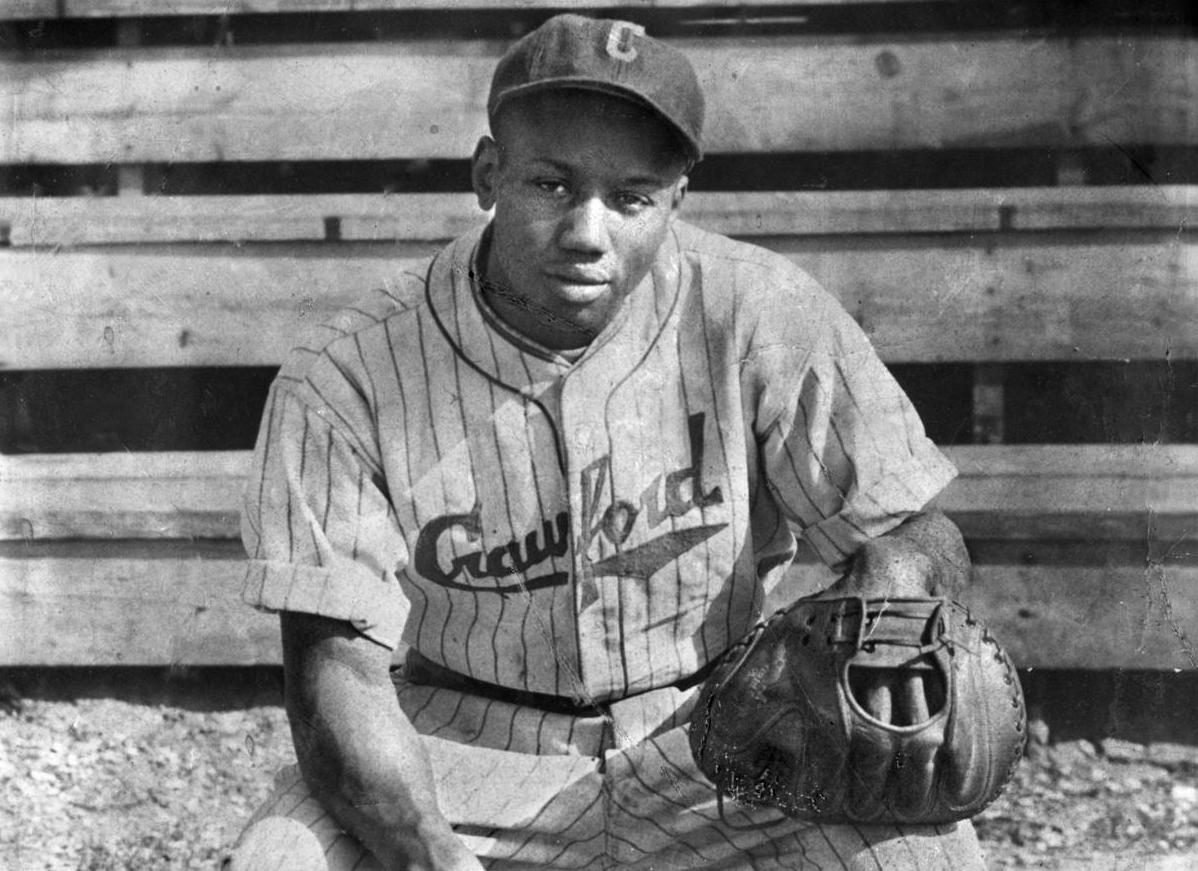
It is difficult to believe that the legacy of Josh Gibson has been and all but was systematically erased by the institutional racism and structural exile created by Major League Baseball and America at large throughout the 20th century — until Gibson’s posthumous induction into the Hall of Fame alongside his teammate and “Thunder Twin” Buck Leonard in 1972. This erasure is the product of a downstream avalanche that is still flowing in the American psyche and subconscious mind; the real political affect still observable on our streets today: the criminalization and discrimination against black American people.
This affect produces our current political environment, which bars black Americans from critical resources — such as food, water, shelter, and healthcare. The economic discrimination stimulated at the onset of the trans Atlantic slave trade pouring into the Eastern coast of the forming and formative United States; failed, nonexistent economic reconstruction and reparations for newly freed slaves at the end of the American Civil War, has produced the current condition of American history. The attempts of black American people to create black Wall Streets and community initiatives to stimulate growth and support growing schoolchildren were so frequently vehemently protested and violently shut down by angry mobs.
Gibson and Leonard’s inductions into the Baseball Hall of Fame in 1972 came in the midst of an ongoing movement for the rights of black people in America; the injustice experienced by Gibson and Leonard in their exile from the professional American league — in which they traveled across southern borders to continue to play — is an injustice that stands as a great letterhead for American inequality and discrimination: one changed ineluctably and incompletely with Jackie Robinson’s entry into the Major Leagues in the year of Gibson’s death. And yet — this discrimination continues, even and especially in baseball history: due to the downstream effects of erasure.
This erasure occurs most obviously and immediately in segregated data; lost information from the lack of institutional presence and resources to foster the economic and social stability of the Negro Leagues. Due to the segregated wealth which permeated early industrial and plantation age America, the black baseball leagues sprung about and were sustained due to money running entrepreneurs such as Gus Greenlee, children of coal industrialists such as Cum Posey; passionate ballplayers with an eye for systems and organization such as the legendary Rube Foster. These leagues sprung about from community necessity: a passion for baseball without an institutionalized, structured, supported place to play. And as such, much of what is retained is also of a community spirit: the photographs of Pittsburgh chronicler “Teenie” Harris; his newspaper the Pittsburgh Courier; its sibling in the Midwest, the Chicago Defender.
These endeavors constitute en masse a passion that rose up from an oppressed class of peoples in American history to continue to participate, craft, sculpt, and innovate culture — even as they were actively cast out of the country as second class citizens. Many of the greatest ballplayers, including the two-way star Bullet Rogan, even served in the American military corps during WWI and WWII — fighting for a country that fought to keep them out of its resource and spirit at large.
Without institutionalized media and data and memory systems, the Negro Leagues were kept alive by oral tradition, storytelling; personal, family, and local community memories, documents, and studio photographs of the game as it occurred in the black community. Events such as the East-West All Star Game, where legends like Mule Suttles and Josh Gibson played, drew tens of thousands of black fans across the country — who would trek to Chicago and New York to see the greats of the game play on one field, all at once. What we mourn today is a lack of support for these leagues; the great paradox that the legend and power and myth and majesty of the Negro Leagues rose precisely out of the conditions of mass exclusion, segregation, and profound racial violence. The American Major Leagues are themselves a marble hall, a force told and afforded and fronted by the donor of empire — wherein, and meanwhile, the Negro League games where Gibson dueled Paige were held on straining budgets; constantly in a state of migration to where the pay was good, and thus made life and living possible.
This is what took Gibson and Paige — the greatest hitter and pitcher perhaps the game has ever seen — from Pittsburgh to Cuba to the Dominican Republic to Mexico. Living in flight, on the road, sleeping on buses, traveling with bags — the migratory condition of the Negro Leagues emerged from precisely the lack of economic stability coupled with the threat of violence in cities, towns, and neighborhoods through which teams passed to reach their playing destinations; even upon those fields. It was the game that drove Gibson, even through the tragedies of his personal life — the loss of his wife, the deterioration of his physical and mental health; addiction. This is what forged the community of these men: not power, not status, not glory afforded on the front page of civilization.
Baseball formed a bastion of black culture — as did jazz and the blues. It was a place to express and enact the frustrations; the struggle of liberation — the sound of the bat and the roar of the crowd; the lingering of Miles Davis’ blue note and the fury of Max Roach’s beat; Coltrane’s spiritual tether between this world and the next. It was a place of refuge to players like Leonard — a place to immerse oneself in craft; discipline — the struggle and trials of mastery. This is what culture is in sum and at root: a place of play and scaffolding of the self in the face of an uncertain and tumultuous; violently unjust world. And this is precisely why black culture — from music to the Negro Leagues — has come to define the American condition.
Without the data available to us in regards to the entirety of Gibson’s career and performance, we cannot possibly fully understand the deepest extent of his legacy — nor can we compare and contrast him with the great of his time; all time. The Negro Leagues — established in 1920 — show us a critical breach by contrast in the game prior to their founding at the YMCA: a lack of organizational scaffolding to formalize competition amongst the game’s greats; thus, a comparative mechanism to truly know and understand the extent of their greatness. This is what statistics and math and comparative formulae across time afford us — the ability to truly know the extent of any man’s (or woman’s, in the case of Toni Stone and others) contribution to the game in the real time of the environment and ecosystem produced by hitting, pitching, fielding — et al.
Baseball itself is the work of thousands; hundreds of thousands of our historical ancestors — decade through decade; generation through generation of the sport. From the barnstorming and early Cuban integration teams of Rube Foster and Pete Hill to the modern stories of Juan Soto and Mariano Rivera — coming from a place not altogether different than the great Cuban stars Alejandro Oms and Cristobal Torriente — born amongst the sugar mills, docks, and conscriptions of poor laboring Cuban people. Rivera made a glove out of a cardboard box — because, in his words, “expensive… I couldn’t own no glove, you know… my father wasn’t… I mean, it was a lot of things to take care before a glove and a bat — so, you know, I made my own glove. And I was happy with thing — I was the happiest kid the neighborhood.”
Gibson was born to a poor black family in Georgia; his father moved the family up north to Pittsburgh to find work in steel. His legacy began and ended in economic obscurity, poverty, difficulty. This was the case with the vast majority of the great black ballplayers prior to integration: from Foster to Oms and Torriente. He never lived to receive acknowledgement of his profound successes in baseball; the possibility of participating in an integrated league with financial dignity and opportunity.
This is what is of the essence — to correct the historical record and restore the status of the Negro Leagues and black baseball history to equitable primacy — even as the act cannot truly and fundamentally be done backwards in historical time: it can be done forwards through data analysis and forming mathematical bridges to reconstitute and unify and integrate the efforts of black baseball’s historical community, to form a total analysis of the highest professional levels of play in the game’s history.
To do so is to restore Gibson; his works — just as it is to restore an ecosystem which was unjustly persecuted and abused.