The Hitter as Conscious Energy: Orr, Hamilton, and the Thermodynamics of the Plate Appearance
The Hitter as Conscious Energy: Orr, Hamilton, and the Thermodynamics of the Plate Appearance
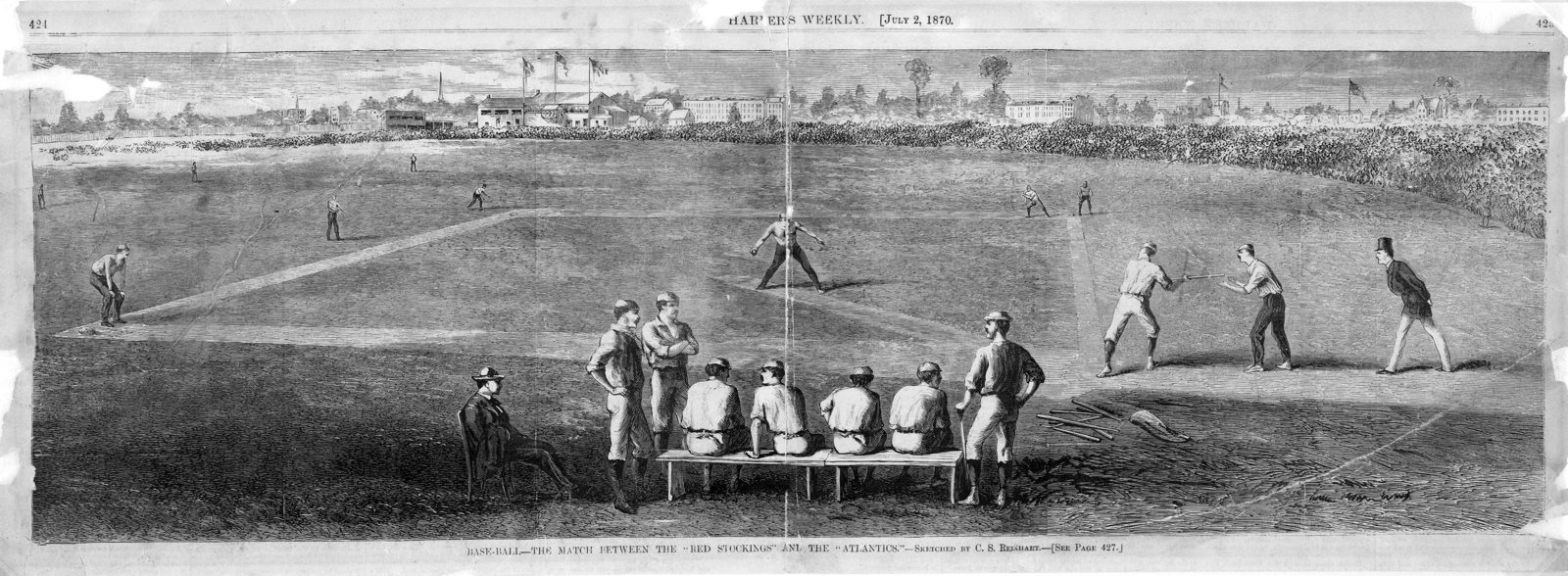
The Hitter as Conscious Energy: Orr, Hamilton, and the Thermodynamics of the Plate Appearance
Every plate appearance in baseball is a constrained energetic event.
A finite amount of time passes. A finite number of pitches are thrown. A finite amount of physical and cognitive energy is expended by both pitcher and hitter. The event must eventually resolve into one of several possible outcomes.
In this sense, the plate appearance resembles a thermodynamic process: a bounded system in which energy flows toward resolution under strict constraints.
From this perspective, the hitter is not simply a performer of athletic skill but a conscious participant within an energetic system.
Each hitter must decide how to deploy his limited energy inside that system.
The contrast between Dave Orr and Billy Hamilton reveals two radically different strategies for participating in that process.
Hamilton and the Expansion of the System
Hamilton extended the thermodynamic event.
Rather than forcing the plate appearance toward immediate resolution, he prolonged it. By exercising extraordinary discipline over the strike zone, he converted many of these energetic exchanges into walks.
Statistically the result is obvious:
0.75 walks per game
.455 on-base percentage
Hamilton effectively expanded the energetic window of the plate appearance. Instead of resolving the system through contact, he allowed the system to dissipate toward a passive equilibrium—the walk.
Once on base, his speed introduced a new energetic dynamic into the game: stolen bases, defensive disruption, and pressure on the pitcher.
Hamilton’s strategy therefore diffused the energy of the plate appearance across the broader field of play.
Orr and the Compression of the Event
Orr represents the opposite mode of participation.
Where Hamilton prolonged the system, Orr compressed it.
Orr’s statistical profile reveals a hitter who almost entirely removed the passive outcome from the plate appearance:
1.42 hits per game — highest in major league history
0.12 walks per game
Nearly every plate appearance resolved through contact.
In thermodynamic terms, Orr forced the system toward immediate energetic release. The event did not dissipate gradually through patience or negotiation with the strike zone. Instead, it collapsed into a single decisive moment: the ball meeting the bat.
What makes Orr extraordinary is that this aggressive compression did not reduce efficiency.
Despite forcing contact almost constantly, he maintained a .342 batting average and produced a .502 slugging percentage in the 1880s.
The energy released in those contact events was not merely frequent but forceful.
Conscious Participation Under Constraint
The difference between these two hitters illustrates a deeper principle about performance in constrained systems.
Every hitter operates under strict limits:
limited plate appearances
limited physical energy
limited reaction time
limited opportunities per game
These constraints resemble the thermodynamic boundaries that govern physical systems.
Within those boundaries, the hitter must choose how to participate.
Hamilton chose to extend the system , extracting value through patience and base acquisition.
Orr chose to collapse the system , resolving the event immediately through contact.
Both strategies succeed. But they represent two fundamentally different modes of conscious participation within the same energetic structure.
Stars Becoming Conscious
At a deeper level, this contrast echoes a broader phenomenon that appears across natural systems.
Stars release energy through thermonuclear reactions constrained by gravity and mass. Within those limits, energy organizes itself into stable patterns of release.
Human beings participate in analogous systems on smaller scales.
In baseball, the hitter stands within a tightly constrained energetic environment. Each plate appearance represents a small thermodynamic chamber in which energy, perception, and time converge.
When a hitter learns to navigate that chamber with exceptional efficiency, something remarkable occurs: the system begins to express itself through conscious action.
In this sense, great hitters resemble stars becoming conscious —localized centers of energy release operating within strict thermodynamic limits.
Hamilton and Orr represent two different ways that consciousness can participate in that process.
Hamilton spreads the energy outward across the field.
Orr concentrates it into the moment of contact.
Both illuminate the same fundamental truth: that even within the narrow boundaries of a baseball diamond, human action reflects the deeper energetic structures of the universe.