THE LAW OF BEING: TWO MORE INSTANTIATIONS -- Satchel Paige and Shoeless Joe Jackson
THE LAW OF BEING: TWO MORE INSTANTIATIONS -- Satchel Paige and Shoeless Joe Jackson
THE LAW OF BEING: TWO MORE INSTANTIATIONS
Satchel Paige and Shoeless Joe Jackson
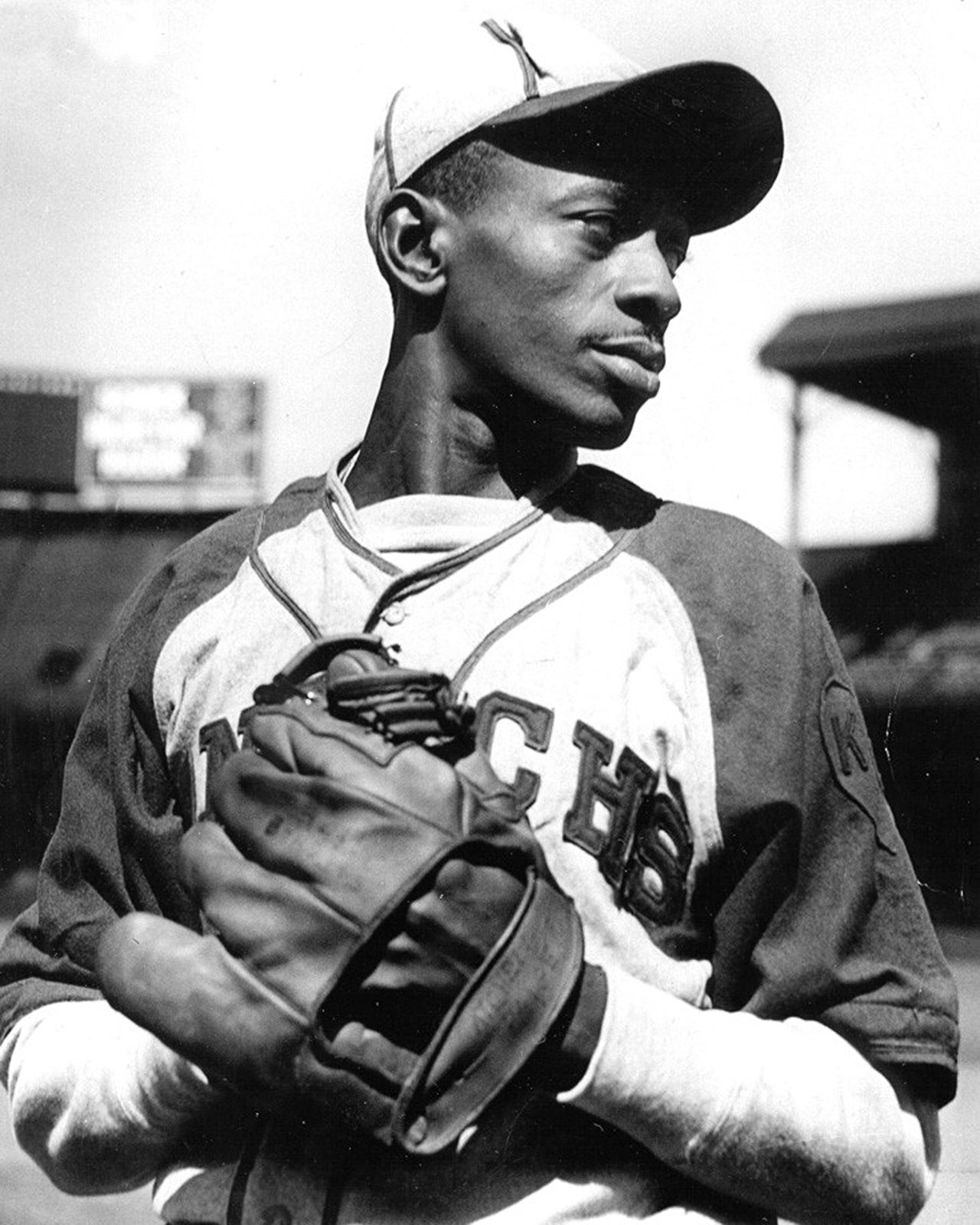
I. THE REFORM SCHOOL
Leroy Robert Page was born in 1906 in the Down the Bay section of Mobile, Alabama, the seventh of twelve children. His father tended gardens uptown for white families and spent the rest of his time on corner stoops. His mother was a washerwoman. In his autobiography he wrote: “We played in the dirt because we didn’t have toys. We threw rocks. There wasn’t anything else to throw.” He learned to throw by hurling rocks at anything that moved — birds, squirrels, the glass insulators on telegraph poles. He carried bags at the Louisville & Nashville rail depot to earn money for the family, rigging a pole with ropes to carry four satchels at once because one at a dime wasn’t enough.
Seventeen days after his twelfth birthday, Leroy Page was sentenced to six years at the Alabama Reform School for Juvenile Negro Law-Breakers in Mount Meigs — for shoplifting and truancy. The sentence ran until his eighteenth birthday, whichever came first.
This is the formation event. Not the beginning of hardship — that was already fully established — but the moment constraint became total. A twelve-year-old Black child in Alabama in 1918, sentenced to an institution for Negro lawbreakers, with no exit available for six years. The lower free energy states were not merely scarce. They were legally closed.
What Mount Meigs gave him, in exchange for his freedom, was a baseball field and unlimited time to throw on it. The coach was Reverend Moses Davis, a graduate of Tuskegee Institute, a trustee of the school, and the man who taught Paige to kick his front foot high and release the ball at the last possible instant with maximum arm velocity. Paige later said: “You might say I traded five years of freedom to learn how to pitch.”
The exchange rate is the law operating in plain sight. Extreme constraint with no fallback, bounded within an institution, with one discharge pathway available: the baseball mound. The system drove all available energy through that single channel. When Paige was released in December 1923, seven months short of his eighteenth birthday, he was already something that could not be produced by any other means.
What followed was the most extreme sustained-output case in the history of the sport. Paige pitched across the Negro Leagues, in the Dominican Republic, Mexico, Venezuela, Cuba, Puerto Rico, and in barnstorming tours across the continental United States — California, Maryland, North Dakota, everywhere there was a game and a gate. He pitched nearly every day, four seasons a year, for over four decades. By his own records, kept in a personal notebook that tracked innings, scores, strikeouts, walks, and gate receipts, he appeared in more than 2,500 games. He claimed over 2,000 wins, 55 no-hitters, and 64 consecutive scoreless innings at one documented stretch.
The numbers are only partially verifiable because the Negro Leagues could not afford statisticians, because barnstorming records were not kept, because a man who pitched every day across five continents for forty years generates a record that outpaces any institutional framework designed to contain it. The output exceeded the measurement apparatus.
Dizzy Dean, who faced Paige in barnstorming contests repeatedly, won 30 games in 1934 — the year he beat Paige 1-0 in their most famous matchup — and later called Paige the best pitcher he had ever seen. Joe DiMaggio called him “the best and fastest pitcher I ever faced.” Paige won that Dean duel 1-0 in a 13-inning rematch before 18,000 fans in Los Angeles, a game Bill Veeck described as the greatest pitching duel he ever witnessed.
The major league door did not open until 1948. Paige was forty-two years old. He went 6-1 with a 2.48 ERA in half a season, helped the Cleveland Indians win the World Series, and became the first Black pitcher in the American League. He was the oldest rookie in major league history. In 1965, at age fifty-nine, he threw three shutout innings for the Kansas City Athletics. He was still operating from the same recalibrated baseline that Mount Meigs and two decades of total-immersion formation had set.
The framework predicts that formation magnitude is inversely proportional to fallback availability. Paige’s fallback was a reform school sentence at twelve followed by a racial exclusion wall that held for twenty-two professional years. The output was proportional. No designed development system has produced anything comparable — not in the volume of innings, not in the duration of sustained performance, not in the cross-era, cross-continent verification from witnesses who faced the best hitters in every league on earth.
When he was inducted into the Hall of Fame in 1971 — the first Negro League player elected — he said: “I am the proudest man on the face of the earth today.” He had been the best pitcher in the world for at least two decades before that sentence became true.
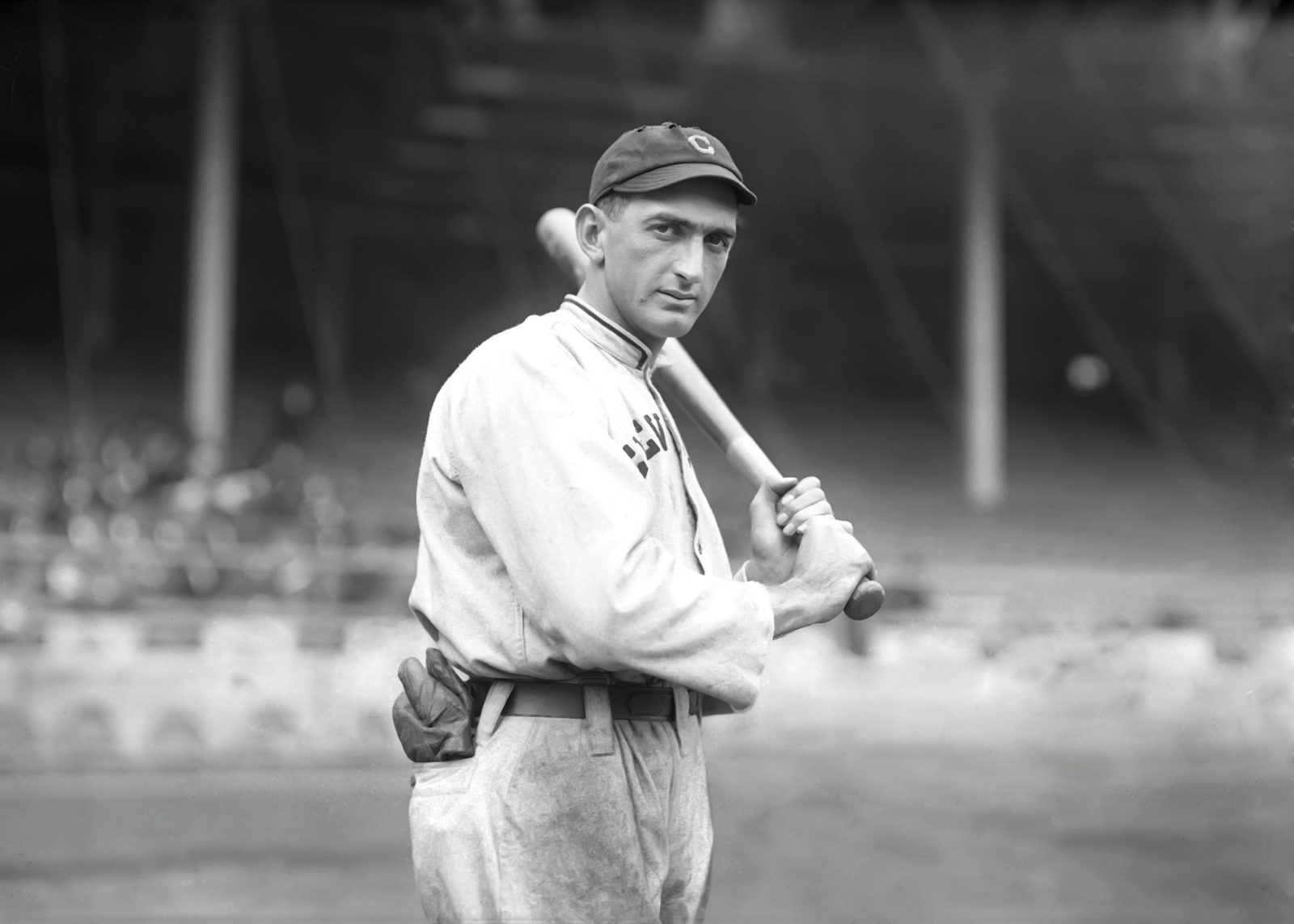
II. THE MILL AND THE EXPULSION
Joseph Jefferson Jackson was born in 1887 in Pickens County, South Carolina, the eldest of eight children. His father was a laborer who settled in Greenville and found work at Brandon Mill, a textile factory paying $1.25 a day. Joe began working at the mill at age six or seven, sweeping cotton dust off wooden floors. He never attended school. He never learned to read or write. He signed his first professional contract with an X.
The formation structure is direct: twelve-hour shifts of industrial labor beginning in early childhood, no education, no institutional buffer, no fallback of any kind. The only discharge pathway available beyond the mill floor was the baseball diamond the mill sponsored to keep its workers content. At thirteen, Jackson earned a spot on the Brandon Mill men’s team. He was the youngest player on it.
What he produced there was not developed. It was formed. A body built by mill labor — the long arms, the powerful chest, the hands conditioned by industrial work — meeting a baseball, producing a swing that Babe Ruth said he copied because Jackson was the greatest natural hitter he ever saw, and that Ted Williams spent years wishing he could have studied directly from the man who ran the liquor store on Pendleton Street.
Jackson’s career statistics require no adjustment for era or environment. A .356 lifetime batting average, third highest in major league history. A .408 rookie season in 1911 that remains a Cleveland franchise record. Eight seasons at .340 or better. An OPS+ of 170. The instrument was functional across every competitive environment it entered — mill teams, minor leagues, the American League at its most competitive in the Deadball era, when run scoring was at its lowest and every hit carried maximum resistance.
Then the institutional machinery intervened.
In 1919, Jackson was a knowing participant in the scheme by which gamblers paid White Sox players to lose the World Series. The degree of his participation — whether he understood the full structure, whether he actively suppressed his performance, whether his illiteracy made him susceptible to manipulation by men who did understand it — has been debated for over a century and will not be resolved here. What the record shows: he hit .375 in that Series, the highest average on either team. He led both teams in hits, setting a World Series record that stood for 45 years. He committed no errors. He threw out five baserunners from the outfield. He hit the only home run in the Series. Statistical analysis published in The American Statistician concluded that his contribution actually enhanced his team’s chances of winning. He accepted $5,000. Whether the hand and the money were ever connected in the same intentional act is the question.
What happened next is what the framework addresses.
Commissioner Landis banned Jackson for life in 1921 — after he had been acquitted of criminal charges by a jury, after the grand jury confessions mysteriously disappeared from the Illinois State Attorney’s office, after baseball’s own evidence against him had collapsed. The ban held. Jackson returned to Greenville, opened a dry-cleaning business in Savannah, then a barbecue restaurant, then a liquor store on Pendleton Street near Brandon Mill — two blocks from where the formation occurred. He played semiprofessional baseball under assumed names to evade Landis’s reach. He maintained his innocence for thirty years. He died in 1951 having never been reinstated.
The expulsion is the critical event for the framework. Not the scandal — the expulsion.
Jackson’s formation was complete before 1919. The instrument was fully bifurcated, operating at maximum output, with a legitimate discharge pathway open: the American League, the highest competitive environment in the world for the game he had been formed to play. He was 32 years old in 1919, in his prime. The projected career ahead of him — had the discharge pathway remained open — was a continuation of what the formation had already established as its baseline output.
Landis closed the pathway permanently. This is the structural event: not C exceeding K(R) — not formation conditions converting to collapse because the load exceeded regulatory capacity — but the external enforcement of zero fallback after the formation was complete. The instrument was intact. The environment refused it.
This is a different case than Gibson. Gibson was never admitted. The door did not exist. Jackson was admitted, played twelve full seasons at formation-level output, and then had the door closed behind him by institutional machinery that operated independently of what his formation had produced or what his performance had demonstrated.
The result: thirty more years at Brandon Mill. Not in the major leagues. Under assumed names on semiprofessional circuits. Teaching baseball to children in Greenville who didn’t know until years later that the old man giving them batting instructions was one of the greatest hitters who ever lived. Ted Williams said he wished he had known Jackson was still alive so he could have stopped in Greenville to talk hitting with him. Jackson died eleven days before his scheduled television appearance on Ed Sullivan’s show, the largest audience that had ever been offered to him, the first time the mainstream would have seen him since the ban.
The framework does not evaluate the justice of the expulsion. It registers its thermodynamic structure. A formed instrument — bifurcated, operating at maximum output, with a functioning discharge pathway — had that pathway closed by institutional enforcement. The pressure accumulated without release for thirty years. The formation stayed intact, visible to anyone who watched him throw batting practice to mill-town children in Greenville. The output had nowhere to go.
III. THE COMPARISON
Both men: poverty-level formation, no institutional development infrastructure, no education, labor before baseball, the discharge pathway blocked or closed by external enforcement rather than by the failure of the instrument itself.
The divergence is the mechanism of the blockage and its timing.
Paige’s exclusion was racial and absolute from the start. Twenty-two years of formation and peak performance with no access to the highest level. When the door finally opened at forty-two, he walked through it and performed. The instrument had been fully formed and had been operating at maximum output for two decades in whatever competitive environment was available. The major league appearance was confirmation of what everyone who had faced him already knew.
Jackson’s exclusion was institutional and retroactive. Twelve seasons of fully expressed formation-level performance, then permanent expulsion — not because the instrument had failed but because the institution decided, rightly or wrongly, that the instrument had participated in its corruption. The ban closed the pathway after the formation had already proven itself. What remained was the instrument without an environment adequate to its output.
Two cases. Two mechanisms. Both demonstrating the same underlying law from different angles: the output of a formed instrument is determined by the formation conditions, not by the institutional pathway. The pathway determines only whether the output gets recorded, rewarded, and remembered — or whether it dissipates into semiprofessional circuits and liquor store batting lessons and a Hall of Fame plaque that arrives twenty years after the body that earned it is in the ground.
Paige’s plaque: 1971. Gibson’s plaque: 1972. Jackson has no plaque. The instruments were comparable. The institutional verdicts were different. The law does not distinguish between them. It only registers what was formed, and what the environment did or did not allow it to become.