The Life of Shoeless Joe Jackson
The Life of Shoeless Joe Jackson
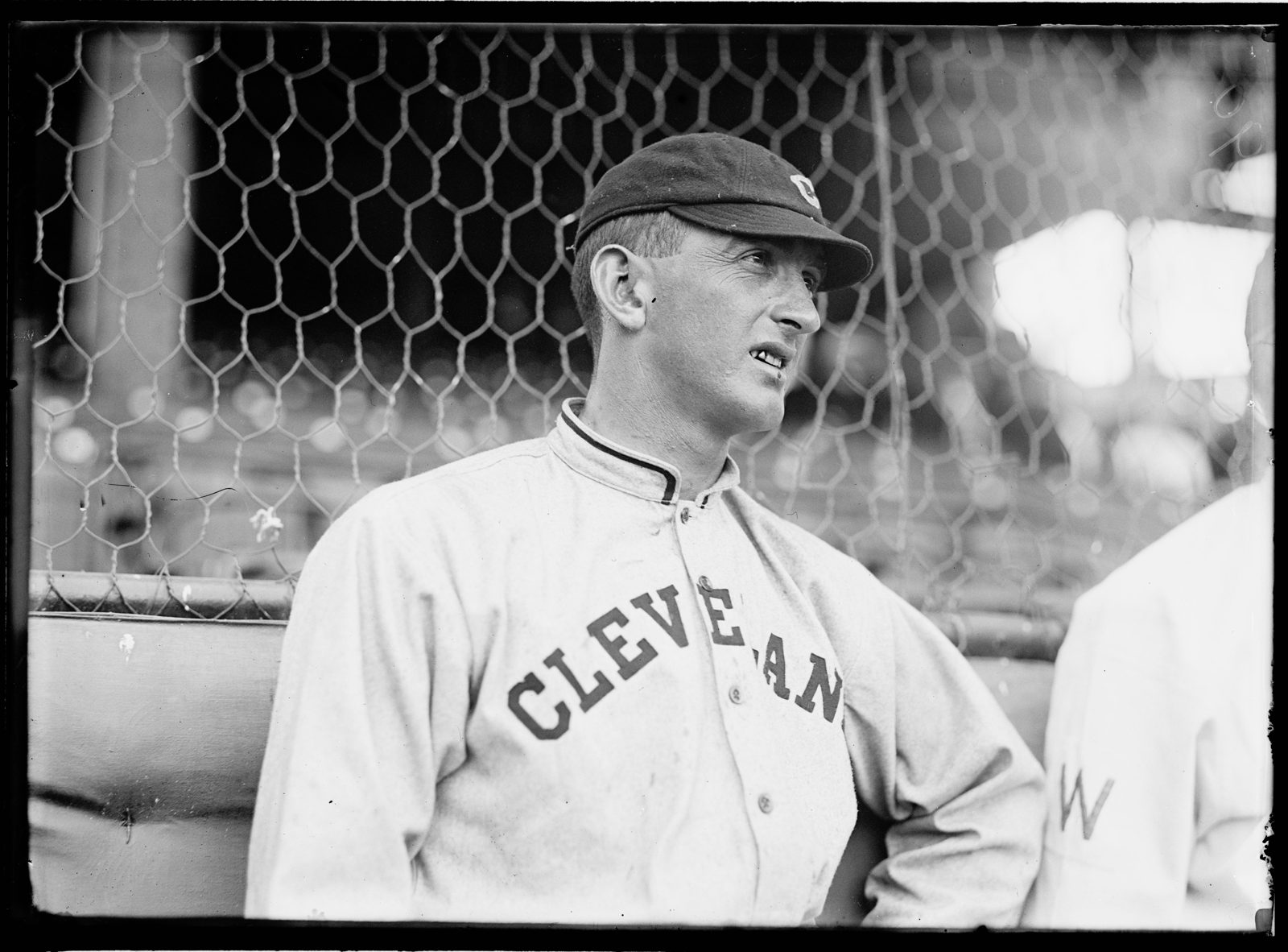
The Life of Shoeless Joe Jackson
He was born in Pickens County, South Carolina in 1887, the oldest of eight children, into a family that moved to the mill town of Brandon, just outside Greenville, while he was still small. His father found work at the Brandon Textile Mill for $1.25 a day. By six or seven, Joe was sweeping cotton dust from the mill floors. He never attended school. He never learned to read.
This is not incidental biography. It is formative structure. The illiteracy was not simply an absence, but a total condition—a world without abstraction, without mediation, without the distance that reading introduces between a person and the real. What he possessed instead was something else entirely: a direct, embodied intelligence. And within that world, one fact emerged with overwhelming clarity—he could hit a baseball with an authority that exceeded the observational limits of early twentieth-century sport.
Babe Ruth said he modeled his swing after Jackson’s. Ty Cobb called him the greatest natural hitter he had ever seen. Neither man was inclined toward generosity. They were describing a reality they could not deny.
The swing came from the mill—not metaphorically, but materially. The long arms inherited from his father, the coordination honed in mill-league games, the bat—Black Betsy—cut from local hickory, darkened with tobacco juice, weighing forty-eight ounces when most players used thirty-six. Nothing about it was refined by theory. It was produced by environment and repetition, and it remained inseparable from them.
He tried to leave early and could not.
When Connie Mack purchased his contract from Greenville in 1908 for $325, the nineteen-year-old boarded a train to Philadelphia—and failed to stay. He was homesick for Katie, the girl he had married that summer. He was disoriented in a city of two million people, unable to read a menu, mocked by teammates who saw only what he lacked. He got off the train in Richmond and returned home. Then tried again. Then returned again.
What appears here is not weakness, but structural tension: the pull of origin against the pull of capacity. He was not simply a ballplayer rising out of poverty. He was a man whose identity was anchored in a specific place, entering a world that had no vocabulary for him.
When he eventually stayed, it was not a triumph over origin. It was a negotiation with it. The mill did not disappear. It traveled with him—into the swing, into his manner, into the life he would return to when baseball ended.
After the ban in 1921, he did not vanish. He relocated.
First to Savannah, where he and Katie built a successful dry-cleaning business. Then back to Greenville in 1932, when his mother fell ill. A barbecue restaurant followed. Then a liquor store on Pendleton Street, within walking distance of the mill that had formed him.
That store became the center of his final decades. He was not an exile in any meaningful sense there. He was a known and valued presence. Children learned to play baseball from him without understanding who he had been. Only later did they realize that “Mr. Joe” was one of the greatest hitters in the history of the game.
He continued playing into his fifties under assumed names—usually “Josephs”—because Kenesaw Mountain Landis had made clear that his ban would be enforced. The disguise did not hold. The swing revealed him. It could not be hidden because it was not superficial. It was structural.
There is a moment late in his life that condenses everything.
Cobb entered his store. Jackson sold him a bottle of bourbon without acknowledgment. Cobb finally asked: Don’t you know me, Joe?
Jackson replied: Sure I do, Ty. But I wasn’t sure you wanted to know me. A lot of them don’t.
This exchange is often read as tragedy. It is not. It is clarity.
To read it as diminishment requires assuming that the center of value remained elsewhere—that Cobb’s world carried more reality than Jackson’s. There is no evidence for that. Jackson had constructed a life: a lasting marriage, a stable business, a community that knew him not as myth but as presence. The stillness in his response is not shame. It is equilibrium.
He died on December 5, 1951, in Greenville, two weeks before a scheduled appearance on Toast of the Town, where Cleveland Indians planned to honor him, with Tris Speaker presenting a gold clock.
He died before the ceremony.
The timing feels constructed, but it is simply precise. The pattern holds: the mill offered no ceremony; the major leagues offered limited recognition; the ban imposed decades of exclusion; and at the threshold of institutional acknowledgment—the moment of formal return—the body stopped.
He was buried in Greenville. Katie joined him eight years later. Visitors still come, many guided by representations— Field of Dreams , Eight Men Out —that capture only fragments of the man. The historical Jackson was more complete: a businessman, a teacher, a figure of local continuity, a man who wore expensive shoes in quiet defiance of a nickname he despised.
What does Shoeless Joe Jackson reveal?
He reveals that systems produce more than they intend. The textile mill sought labor and output. It produced, incidentally, one of the most precise hitting instruments in the history of the game.
He reveals that origin persists. The environments that form individuals are not shed through mobility. They remain embedded—in gesture, perception, and decision.
He reveals that capacity exists independently of permission. His career batting average—.356, among the highest ever recorded—remains. It was never revoked. Institutional exclusion did not erase it; it only limited where it could be expressed.
And he reveals something about the structure of American life in his era: that categories—illiterate, laborer, ballplayer—were insufficient to contain what he was. His intelligence was not textual. It was kinetic, perceptual, exact. It existed in the swing, in the arm, in the discipline of contact—fewer than 233 strikeouts in nearly 5,000 at-bats—and in the practical intelligence that sustained decades of business success.
He did not need literacy to understand his position. When Cobb entered the store, he understood the entire social geometry of the moment immediately.
Sure I do, Ty. But I wasn’t sure you wanted to know me.
That sentence is complete. It contains recognition, history, exclusion, and acceptance—without excess.
He lived the majority of his life after baseball.
He ran the store. He taught children to hit. He remained in the place that had formed him and occupied it fully.
Seventy-four years after his death, formal recognition arrived.
He was not there to receive it.
But nothing essential required that recognition to exist. The swing endured—in record, in testimony, in memory. What the world could not give in time, and could not take away at all, remained intact.
He knew that.
He had always known.