The Operator of Persistence: Constraint, Load, and the Structure of Human Outcomes
The Operator of Persistence: Constraint, Load, and the Structure of Human Outcomes
Part 1. The Operator of Persistence
A Structural Account of Formation Under Constraint
I. Primitive Condition
Nothing exists that cannot maintain its distinction from what surrounds it.
A system exists insofar as it maintains distinguishability across time.
If distinction is not maintained:
structure dissolves
identity collapses
no persistence occurs
This condition precedes all domains:
matter
life
mind
symbol
culture
It is not one phenomenon among others.
It is the condition under which any phenomenon appears.
II. Constraint as Condition of Existence
Distinguishability cannot be maintained without constraint.
Without constraint:
energy disperses
structure destabilizes
boundaries fail
Thus:
Constraint is the condition under which existence can persist.
Constraint is not merely limitation.
It is:
boundary condition
pressure
resistance
structure-defining force
III. Derivation of the Operator
From persistence under constraint, the required operations follow necessarily.
1. Boundary
A system must differentiate itself from its environment.
Boundary may take the form of:
physical separation (membrane, surface, field)
dynamic regulation (threshold, homeostasis)
symbolic distinction (concept, identity, category)
Without boundary:
no system can be maintained.
2. Compression
A system cannot retain total complexity.
To remain viable, it must reduce reality into stable, manageable form.
Persistence requires compression.
Compression includes:
encoding
pattern stabilization
reduction of variability
formation of structure
All persistence is partial.
3. Selection
Not all compressed forms remain viable under constraint.
Some stabilize; others fail.
Persistence requires selection.
Selection is:
retention of viable structure
elimination of unstable configurations
4. Propagation
To persist across time, selected structure must continue.
Persistence requires propagation.
Propagation includes:
reproduction
transmission
continuation of form
Without propagation:
persistence terminates.
IV. The Operator (Complete Form)
A system persists only insofar as it maintains bounded distinguishability through compression, selection, and propagation under constraint across time.
This is not a model of a particular domain.
It specifies a necessary condition:
No persistence occurs outside this structure.
V. Necessity Conditions
Each component is required:
Without boundary → no system
Without compression → overload and dissolution
Without selection → instability
Without propagation → termination
Thus:
Any system that persists instantiates these operations.
VI. Domain Expressions
The operator is substrate-independent. It appears as distinct mechanisms across domains.
1. Physical Systems
Persistence appears as:
ordered structure resisting dispersion
stability within energy constraints
Thermodynamic behavior expresses:
constraint on energy distribution required to maintain structure.
2. Geological Systems
Rock and planetary structure form through:
pressure
temperature
duration
Thus:
material structure is pressure integrated over time within survivable bounds.
3. Biological Systems
Life expresses persistence through:
membrane (boundary)
metabolism (regulated throughput)
genome (compressed structure)
expression (selection)
reproduction (propagation)
4. Evolution
Given propagation with variation:
selection emerges as differential persistence under constraint.
5. Nervous Systems
The brain:
compresses sensory input
selects viable interpretations
propagates usable patterns
Thus:
cognition is viability-oriented compression under constraint.
6. The Human System
The self is not an origin.
It is:
the current state of a structure formed under constraint across time.
Every feature reflects:
prior pressure
integration or failure
accumulated structure
As established:
structure is the result of pressure applied over time within survivable bounds
7. Culture
Individual systems terminate.
Persistence extends through:
language
image
ritual
law
Thus:
culture is symbolic propagation of compressed structure.
8. Civilization
Large-scale systems persist through coordination.
They require:
shared temporal structure
synchronized participation
collective regulation
Failure of coordination leads to:
systemic breakdown.
VII. Magnitude
Persistence varies in degree.
Magnitude is the extent to which a system maintains distinguishability under opposing constraint across time.
Higher magnitude corresponds to:
greater constraint endured
longer duration sustained
successful integration of pressure
VIII. Failure
Failure is structural.
It occurs when:
constraint exceeds the system’s capacity to reorganize within its viable range.
The result is:
loss of coherence
fragmentation
termination of propagation
IX. Application Protocol
To analyze any system:
Define the boundary
Identify the primary constraints
Identify the compression mechanism
Identify the selection mechanism
Identify the propagation mechanism
Identify the failure condition
If these cannot be identified, the system does not persist.
X. Scope Boundary
This framework derives:
structure
formation
persistence
failure
It does not derive:
value
The decision to:
preserve
extend
or align with persistence
is not contained within the operator.
XI. Final Statement
All persistent systems are formed by constraint acting over time, maintaining distinguishability through compression, selection, and propagation.
This is not a claim of total explanation.
It is a claim of necessity:
No system persists outside this structure.
XII. Compression
What persists exists.
Persistence requires constraint.
Constraint produces structure through compression, selection, and propagation.
All domains express this structure in substrate-specific form.
This is the operator.
It is not one system among others.
It is the condition under which any system can remain.
Part 2. Constraint, Violation, and the Formation of the Human System: A Zero-Gap Derivation from the Operator of Persistence
Preface: The Single Question
Why do some systems preserve the boundary conditions of other systems, while others degrade them?
This document answers that question using only:
the Operator of Persistence
formation under constraint
necessary derivation
No moral, psychological, or interpretive claims are introduced beyond what is structurally entailed.
The term “evil” will appear only as:
a label applied to a specific, derived class of system interactions.
I. Primitive Condition
A system exists only insofar as it maintains distinguishability across time.
If distinguishability is not maintained:
the system dissolves
no persistence occurs
II. Constraint as Necessary Condition
Distinguishability cannot be maintained without constraint.
Without constraint:
energy disperses
boundaries fail
structure destabilizes
Thus:
Constraint is necessary for persistence.
III. The Operator
A system persists only insofar as it maintains bounded distinguishability through compression, selection, and propagation under constraint across time.
Required components:
Boundary — separation from environment
Compression — reduction of input into structured form
Selection — retention of viable configurations
Propagation — continuation across time
IV. Viability Set
Every system operates within a bounded range of conditions under which it can persist.
If the system exits this range:
- it fails
Thus:
persistence requires remaining within the viability set.
V. Formation Determines Capacity
From constraint:
Systems formed under different pressure histories possess different internal structures.
Therefore they differ in:
compression fidelity
regulatory capacity
coherence stability
Thus:
systems have different capacities to reorganize under load.
VI. Constraint and Reorganization
When constraint increases:
the system must reorganize to remain within its viability set.
This requirement follows directly:
failure occurs if no reorganization occurs
persistence requires structural adjustment
VII. Exhaustive Reorganization Paths (Derived)
A system under constraint can only modify:
its internal structure
or the external conditions affecting it
Thus, only two structural paths exist:
1. Internal Reorganization
structure is modified within the boundary
load is absorbed
capacity may expand
2. External Modification
conditions outside the boundary are altered
constraint is reduced indirectly
There is no third category:
all change must occur either within the system or outside it.
VIII. Multi-System Interaction
Consider two systems:
system A
system B
If system A modifies external conditions:
- those conditions may include system B
Thus:
external modification can include altering the state of another system.
IX. Boundary Degradation
If system A alters system B such that:
B’s regulatory conditions are disrupted
B is pushed toward or beyond its viability limits
then:
A has degraded the boundary conditions required for B’s persistence.
X. Definition of Violation (Strictly Derived)
Violation occurs when a system maintains or restores its own persistence by altering external conditions in a way that degrades the viability conditions of another system.
This follows from:
necessity of reorganization
existence of multiple systems
possibility of external modification
XI. Condition for Violation
From prior derivation:
Violation occurs when internal reorganization is insufficient to maintain persistence.
Thus:
if internal capacity ≥ load → internal reorganization occurs
if internal capacity < load → external modification becomes necessary
When external modification affects other systems:
violation occurs.
XII. Why Some Systems Violate
From Sections V and XI:
Systems differ in internal capacity due to formation history.
Thus:
lower capacity relative to load → higher probability of external modification
external modification → potential boundary degradation
Therefore:
violation probability increases as load exceeds internal integration capacity.
XIII. Why Some Systems Do Not Violate
A system does not violate when:
it can maintain persistence through internal reorganization alone.
This requires:
sufficient prior formation
sufficient regulatory capacity
sufficient coherence
XIV. Structural Outcomes Under Load
Under increasing constraint:
Integration → internal reorganization
Externalization → modification of external conditions
When externalization affects other systems:
violation occurs.
XV. Case Mapping (Structural Only)
Jake Daubert
sustained performance under constraint
consistent internal regulation
no reliance on boundary degradation of others for persistence
Thus:
internal reorganization sufficient for sustained viability.
Vladimir Mayakovsky
extreme integration of constraint
expansion of internal structure
eventual inability to reorganize further
Outcome:
system failure without external modification.
These represent:
high-capacity integration path
integration to limit followed by collapse
Neither required violation for persistence.
XVI. Empirical Boundary Condition
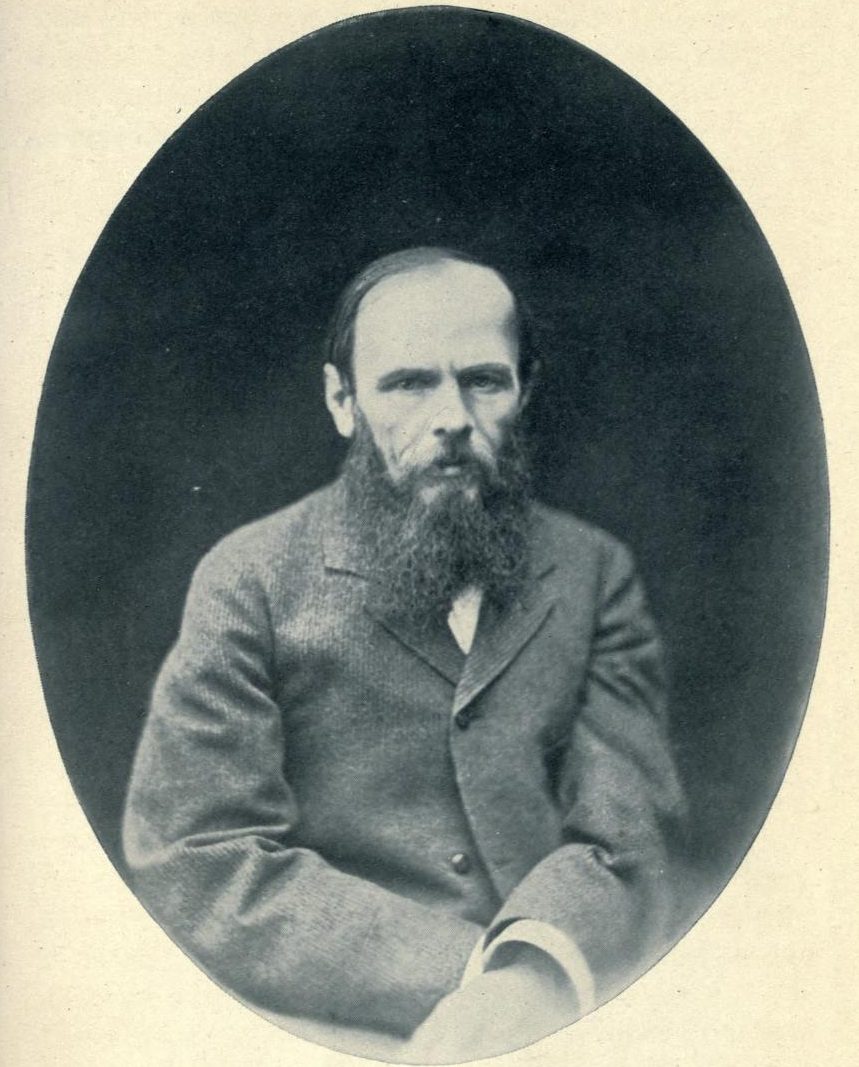
Fyodor Dostoevsky:
exposed to systems under extreme constraint
observed persistent occurrence of violation across individuals
This establishes:
systems with similar external conditions can produce different structural responses.
Thus:
internal variation cannot be eliminated externally.
XVII. Non-Elimination Condition
Because:
formation histories differ
capacities differ
internal processes vary
It follows:
no external configuration guarantees elimination of violation across all systems.
XVIII. Scope Boundary
This framework derives:
persistence
formation
reorganization
interaction
violation
It does not derive:
value
moral judgment
normative prescription
XIX. “Evil” (Defined Structurally)
The term “evil” corresponds to:
repeated or sustained patterns of violation.
It is:
not required by the operator
but consistent with derived structure
XX. Final Law
Systems persist by maintaining distinguishability under constraint.
Constraint requires reorganization.
Reorganization occurs internally or externally.
External modification can degrade other systems’ viability conditions.
This is the structural basis of violation.
Variation in formation produces variation in response.
Therefore, violation cannot be universally eliminated.
XXI. Final Compression
What persists exists.
Constraint requires reorganization.
Systems either absorb constraint or shift it outward.
Outward shift can degrade other systems.
This is violation.
Formation determines which path occurs.
Elimination of violation is not structurally guaranteed.
Part 3. Constraint, Integration, and the Limit of Non-Violation: Christ and the Buddha Under the Operator of Persistence

Preface: Scope and Method
This document presents a strictly structural account of two historically central figures—Jesus Christ and Gautama Buddha—using only the previously established framework:
persistence under constraint
boundary, compression, selection, and propagation
formation determining capacity
reorganization under load
violation as boundary degradation
No theological premises are introduced.
All conclusions follow from derivation and observation within this system.
I. The Operator of Persistence
A system persists only insofar as it maintains bounded distinguishability through compression, selection, and propagation under constraint across time.
From this:
all behavior arises within constraint
all responses are forms of reorganization
no action occurs outside this structure
II. Reorganization Under Constraint
When constraint is applied:
the system must reorganize to remain within its viability set.
Only two structural paths exist:
1. Internal Reorganization
load is absorbed within the system
structure is modified internally
boundaries of other systems remain intact
2. External Modification
constraint is reduced by altering external conditions
this may include altering other systems
If external modification degrades another system’s viability conditions:
violation occurs
III. The Limit Case: Non-Externalization
Within this structure, a limit configuration exists:
a system that reorganizes under constraint without degrading the boundary conditions of other systems.
This implies:
sustained internal integration
absence of violation as a persistence mechanism
maintenance of coherence under load
This configuration is:
permitted by the operator but not required by it
IV. Christ as Limit Configuration Under Increasing Load
Jesus Christ is historically represented as encountering:
social constraint
political constraint
physical constraint
Across these conditions:
no persistent pattern of boundary degradation toward other systems is recorded
reorganization is represented as internal (continued integration under constraint)
At the terminal point:
constraint exceeds biological viability
system failure occurs
Thus:
persistence is maintained without transition into violation as a mode of reorganization
This corresponds to:
maximum internal integration up to failure threshold
V. The Buddha as Limit Configuration Through Load Reduction
Gautama Buddha is historically represented as:
restructuring internal processes
reducing destabilizing responses to constraint
Structurally:
compression is refined (reduced distortion)
selection stabilizes (non-reactive under load)
internal fluctuation decreases
Thus:
applied constraint produces reduced internal destabilization
Result:
minimal need for reorganization through external modification
sustained non-degradation of other systems’ boundaries
This corresponds to:
stabilization of internal state under constraint
VI. Shared Structural Property
Both configurations exhibit:
persistence without reliance on boundary degradation of other systems
Differences in mechanism:
Christ → integration under increasing constraint
Buddha → reduction of destabilizing load through internal restructuring
Common outcome:
non-externalization as dominant structural mode
VII. Capacity Requirement
From prior derivation:
non-externalization requires internal capacity ≥ applied load across conditions
This requires:
extensive prior formation
high regulatory capacity
stable coherence
Because formation histories vary:
such configurations are rare
VIII. Cost Structure
Internal reorganization requires:
absorption of constraint
maintenance of coherence under load
no displacement of constraint onto other systems
Thus:
internal cost accumulates within the system
External modification, by contrast:
reduces internal cost
transfers load outward
Therefore:
non-externalization is structurally higher-cost than externalization
IX. Frequency Distribution
Across systems:
lower-cost strategies occur more frequently
higher-capacity configurations occur less frequently
Thus:
persistent non-externalization is rare relative to violation
X. Perceptual Classification
Observer systems compress behavior into categories.
When encountering:
rare
stable
non-violating configurations under constraint
classification occurs as:
distinct
elevated
non-typical
This produces labels such as:
“holy”
“sacred”
These labels are:
compressed representations of structural rarity
XI. Absolute Attribution
When a configuration is perceived as:
maintaining non-externalization
under extreme constraint
without observed deviation
classification extends beyond relative categories.
Absolute descriptors emerge, such as:
“divine”
“Son of God”
Structurally, this corresponds to:
perceived maximal instance of non-violation under constraint
XII. Propagation of Classification
Once established:
classifications propagate through symbolic systems
representations stabilize culturally
categories persist across time
Thus:
structural observation becomes persistent classification
XIII. Final Law
Systems persist under constraint through reorganization.
Reorganization occurs internally or through external modification.
External modification can degrade other systems’ viability conditions.
Non-externalization requires sufficient internal capacity.
Such capacity is rare due to formation variance.
Rare configurations are classified as distinct and elevated.
Extreme cases are assigned absolute descriptors.
XIV. Final Compression
Constraint applies load.
Systems reorganize.
Most shift load outward.
Some absorb it internally.
Sustained internal absorption is rare.
Rare configurations are elevated in classification.
Absolute labels arise at perceived extremes.
Part 4. Neural Integration, Boundary Expansion, and the Reduction of Violation: A Strict Derivation from the Operator of Persistence
I. Primitive Condition
A system persists only insofar as it maintains bounded distinguishability under constraint across time.
Therefore every persistent system requires:
boundary
compression
selection
propagation
II. Human Systems Add Representational Boundary
In human systems, boundary is not only physical.
There is also a representational boundary :
the system’s internal compression of what counts as “self” and what counts as “not-self.”
This boundary affects:
perceived threat
regulatory load
behavioral selection
externalization probability
III. Load Is Mediated by Compression
Constraint does not enter the human system raw.
It is compressed through:
perception
memory
interpretation
prediction
bodily state
Therefore:
the same external condition can generate different internal load depending on compression.
IV. Narrow Boundary Increases Opposition
If the system compresses reality as:
self versus world
then external systems are represented as:
separate
potentially threatening
obstructive
competitive
This increases regulatory demand.
The system must constantly defend:
identity
status
possession
control
continuity
Thus:
narrow self-boundary increases load.
V. Load Requires Reorganization
From the operator:
increased load requires reorganization.
Reorganization can occur:
internally
externally
If internal capacity is insufficient, the system shifts load outward.
That outward shift can degrade another system’s viability conditions.
That is violation.
VI. Neural Integration of Load
Neural integration occurs when load is absorbed internally through restructuring of compression and selection.
This means:
the system does not merely suppress response
it changes the representation generating the response
So the load is not only endured.
It is structurally transformed.
VII. Purification, Strictly Defined
“Purification” means:
removal of compression distortions that produce unnecessary load and externalization.
It is not moral purity as an added claim.
It is structural purification:
less false separation
less reactive selection
less defensive externalization
higher coherence under constraint
Thus:
purification = compression refinement + selection stabilization + reduced violation probability.
VIII. Boundary Expansion
If neural integration reduces distorted opposition between self and world, then the representational boundary expands.
More of reality is encoded as:
continuous with the system
not fundamentally opposed to it
not requiring domination or defense
Thus:
boundary expansion reduces experienced externality.
IX. “All Is Self” as Derived Compression State
“All is self” does not need to mean the individual organism literally becomes the universe.
Structurally, it means:
the representational boundary has expanded so that the system no longer compresses reality through rigid self/not-self opposition.
At the limit:
externality remains functionally present
but adversarial opposition is reduced
load is no longer intensified by separation-compression
Thus:
“all is self” = minimal adversarial boundary compression.
X. Effect on Violation
Violation requires:
externalization of unresolved load onto another system.
If boundary expansion reduces perceived externality, then:
there is less unresolved load
less need to shift load outward
less likelihood of degrading another system’s boundary
Therefore:
non-violation follows as a structural consequence of integrated boundary expansion.
XI. “Kingdom of God” as Structural Field
“The kingdom of God” can be rendered derivationally as:
a field condition in which systems no longer primarily organize around adversarial self/not-self compression.
In such a field:
internal coherence increases
externalization decreases
boundary degradation decreases
relation replaces opposition
Thus:
the “kingdom” is the systemic condition produced when non-externalizing systems become the organizing field.
XII. Ramana Maharshi and Nisargadatta
In this framework, figures such as Ramana Maharshi and Nisargadatta Maharaj represent reported cases of:
radical self-boundary inquiry
dissolution of rigid self/not-self compression
stabilization of non-reactive awareness
reduced identification with local defensive structure
Structurally, they point to:
boundary expansion through compression refinement.
Their claim is not needed as metaphysical proof.
It functions here as:
an example of the limit-state language produced by systems reporting minimized adversarial boundary structure.
XIII. Why This Path Is Rare
From the derivation:
narrow boundary reduces complexity by simplifying reality into self/not-self
defensive compression is cheaper in the short term
externalization reduces internal cost quickly
Therefore most systems retain:
defensive identity
reactive selection
externalizing behavior
Boundary expansion requires:
high integration capacity
sustained coherence
tolerance of load without displacement
Thus:
the path is rare because it requires the system to absorb and transform load rather than discharge it.
XIV. Final Law
Constraint generates load.
Load is mediated by compression.
Compression defines the representational boundary.
Narrow boundary increases adversarial load.
Integrated load refines compression.
Refined compression expands boundary.
Expanded boundary reduces externalization.
Reduced externalization reduces violation.
XV. Final Compression
Purification is not added morality.
It is the reduction of distorted compression.
The self expands as boundary opposition decreases.
“All is self” names the limit-state of reduced adversarial boundary.
“Kingdom of God” names the field condition of non-externalizing relation.
The path is rare because integration costs more than discharge.
Part 5. Non-Duality as a Limit Configuration of the Operator of Persistence: A Derivational Reconstruction of Advaita Vedānta in Structural Terms (Canonical Version)
Preface: Scope
This document presents a strictly derivational account of the core structure associated with Advaita Vedanta using only:
persistence under constraint
boundary, compression, selection, propagation
viability sets and reorganization
internal vs external modification
No metaphysical claims are introduced.
All traditional terms are treated as:
compressed descriptors of specific configurations permitted by the operator
I. Primitive Condition
A system persists only insofar as it maintains distinguishability under constraint across time.
Necessary functions:
Boundary — separation from environment
Compression — reduction of input into structured representation
Selection — retention of viable configurations
Propagation — continuation across time
II. Human Systems and Representational Boundary
In human systems:
boundary includes a representational component produced by compression
the system encodes:
“self”
“not-self”
Thus:
the effective boundary is partly determined by internal representation, not only physical separation.
III. Load Generation by Segmentation
Constraint is mediated through compression.
If compression encodes:
self vs world (segmented representation)
then:
external systems are represented as separate
separation introduces potential opposition
opposition requires monitoring, prediction, and control
Thus:
segmentation produces adversarial relations, which increase regulatory demand, and regulatory demand constitutes load.
IV. Reorganization Requirement
From the operator:
increased load requires reorganization to remain within the viability set.
Reorganization paths are exhaustive:
Internal reorganization — modification within the system boundary
External modification — alteration of conditions outside the boundary
If external modification degrades another system’s viability conditions:
violation occurs.
V. Compression Refinement
Internal reorganization can act on compression itself:
reducing distortion
reducing unnecessary segmentation
stabilizing representation
If compression becomes:
less segmented
less oppositional
then:
adversarial relations decrease, reducing regulatory demand and therefore reducing load.
VI. Representational Boundary Expansion
If compression encodes increasing continuity between system and environment:
the representational boundary expands
This does not imply physical expansion.
It means:
the system’s internal model assigns less rigid distinction between “self” and “not-self.”
VII. Non-Dual Configuration
Define:
a non-dual configuration as a state in which compression no longer primarily encodes reality as opposed units.
Consequences:
minimal adversarial representation
reduced internally generated load
reduced requirement for reorganization
VIII. Elimination of Externalization Requirement
From prior derivation:
violation occurs when unresolved load is externalized.
If load is reduced through compression refinement:
internal capacity becomes sufficient
reorganization occurs internally
external modification is not required
Thus:
non-violation emerges as a structural consequence.
IX. Stability Condition
For persistence of the non-dual configuration:
compression must remain low-distortion
selection must remain stable under constraint
coherence must be maintained
This yields:
sustained low-load operation under constraint without reliance on externalization.
X. Mapping of Classical Terms (Strictly Structural)
1. “Brahman”
Corresponds to:
the unsegmented representation of the total field prior to differentiation by compression
2. “Self” (Ātman)
Corresponds to:
the system’s representational center under segmented compression
3. “Ātman = Brahman”
Corresponds to:
collapse of representational distinction between system center and total field
4. “Māyā”
Corresponds to:
segmentation introduced by compression that generates perceived multiplicity
5. “Moksha” (Liberation)
Corresponds to:
stable non-dual configuration with minimal load and no required externalization
XI. Mechanism of Transition
Processes described as:
inquiry
discrimination
self-observation
function structurally as:
iterative refinement of compression that reduces segmentation and distortion.
XII. Rarity Condition
From the operator:
segmented compression simplifies decision-making
externalization reduces immediate internal cost
Thus:
segmented, reactive configurations are locally efficient and therefore common.
Non-dual configurations require:
sustained internal integration
stable coherence under load
Thus:
they are statistically rare.
XIII. Scope Boundary
This derivation establishes:
how non-dual configurations arise
how they function
what structural consequences follow
It does not establish:
that reality is ontologically non-dual independent of representation.
XIV. Final Law
Segmented compression produces adversarial relations.
Adversarial relations increase regulatory demand.
Regulatory demand constitutes load.
Load requires reorganization.
Externalization produces violation.
Compression refinement reduces segmentation.
Reduced segmentation reduces adversarial relations.
Reduced adversarial relations reduce load.
Reduced load removes need for externalization.
Stable non-dual configuration emerges.
XV. Final Compression
Reality is segmented by compression.
Segmentation creates opposition.
Opposition creates load.
Load drives externalization.
Refinement reduces segmentation.
Representational boundary expands.
Load decreases.
Externalization ends.
This is non-duality.
Part 6. From Persistence to Non-Duality: A Full Derivational Account — A Closed Structural Trace from Constraint to the Reduction of Violation
Preface: Scope
This document presents a strictly derivational account using only:
persistence under constraint
boundary, compression, selection, propagation
viability and reorganization
No metaphysical claims are introduced.
All conclusions follow from necessary structural conditions.
I. Primitive Condition
A system exists only insofar as it maintains distinguishability across time.
Loss of distinguishability → loss of persistence.
II. Constraint
Distinguishability cannot be maintained without constraint.
Thus:
constraint is necessary for persistence
all systems operate under constraint
III. The Operator
Persistence requires:
Boundary — separation from environment
Compression — representation of input
Selection — choice of viable configurations
Propagation — continuation across time
IV. Formation and Capacity
Constraint over time produces structure.
formation = pressure integrated within viable bounds
Thus:
systems differ in structure
structure determines capacity
V. Load
Constraint appears to the system as load.
However:
load is mediated by compression
Thus:
- identical conditions can produce different load across systems
VI. Segmentation
Compression produces segmentation:
distinctions between elements
including “self” and “not-self”
Segmentation is necessary for operation.
VII. Adversarial Encoding
Segmentation alone does not produce load.
However:
segmentation enables adversarial encoding
Adversarial encoding occurs when:
segmented elements are represented as opposing
requiring monitoring, prediction, or control
VIII. Load (Fully Derived)
Adversarial encoding increases regulatory demand.
Regulatory demand constitutes load.
Thus:
segmentation → (enables) adversarial encoding → load
IX. Reorganization Requirement
Load requires reorganization to maintain viability.
Reorganization is exhaustive:
Internal reorganization — changes within system boundary
External modification — alteration of conditions outside boundary
X. Externalization and Violation
External modification may include altering other systems.
If this:
- degrades another system’s viability conditions
then:
violation occurs
XI. Variation Across Systems
Because:
formation differs
compression differs
capacity differs
Thus:
systems respond differently to identical load
XII. Compression Refinement
Internal reorganization can act on compression.
If compression is refined:
adversarial encoding is reduced
segmentation remains, but is less oppositional
XIII. Load Reduction
From Section VIII:
adversarial encoding → load
Thus:
reduction in adversarial encoding → reduction in load
XIV. Representational Boundary Transformation
As adversarial encoding decreases:
the system encodes less rigid separation between elements
especially between “self” and “not-self”
Thus:
the representational boundary becomes less adversarially defined
This is not physical change.
It is:
a change in internal representation
XV. Non-Dual Configuration
Define:
a non-dual configuration as a state in which adversarial encoding is minimized.
Consequences:
reduced internally generated load
reduced regulatory demand
stable internal organization
XVI. Effect on Externalization
From prior derivation:
externalization occurs when load exceeds internal capacity
Thus:
reduction in load reduces the necessity of externalization
In the limit:
when adversarial load approaches zero, the structural requirement for externalization approaches zero
XVII. Resulting System Behavior
In such configurations:
interaction continues
segmentation remains functionally present
but adversarial relation is minimal
Thus:
violation becomes unnecessary for persistence
XVIII. Mapping to Classical Terms (Structural Only)
Non-duality
→ minimal adversarial encoding within segmentation
Self / Not-self collapse
→ reduction of oppositional representation between system and environment
“All is one”
→ compression no longer encodes fundamental opposition
XIX. Rarity Condition
Because:
adversarial encoding simplifies decision-making
externalization reduces immediate cost
Thus:
adversarial configurations are locally efficient and common
Non-dual configurations require:
sustained internal reorganization
stable compression refinement
Thus:
they are rare
XX. Non-Elimination Principle
Because:
formation varies
compression varies
capacity varies
Thus:
no system configuration guarantees elimination of violation across all systems
XXI. Full Derivational Chain
Constraint enables persistence.
Persistence requires compression.
Compression produces segmentation.
Segmentation enables adversarial encoding.
Adversarial encoding increases regulatory demand.
Regulatory demand is load.
Load requires reorganization.
Reorganization occurs internally or externally.
Externalization can degrade other systems.
This is violation.
Compression refinement reduces adversarial encoding.
Reduced adversarial encoding reduces load.
Reduced load reduces need for externalization.
In the limit, externalization approaches zero.
Final Compression
Segmentation enables opposition.
Opposition creates load.
Load drives externalization.
Externalization produces violation.
Refinement reduces opposition.
Reduced opposition reduces load.
Reduced load removes the need for externalization.
This is the non-dual limit.
Part 7. Load, Representation, and Outcome in the Human System: A Derivational Account of How Titration and Metabolism Determine Behavior
Preface: Scope
This document states, with maximal clarity and precision, the structural claim:
Outcomes in the human system are determined by how constraint-generated load is represented, titrated, and metabolized relative to the system’s capacity.
All terms are defined operationally. No metaphysical or moral premises are required.
I. Primitive Conditions
- Persistence
A system persists only insofar as it maintains distinguishability across time.
- Constraint
Persistence requires constraint; without it, structure dissolves.
Operator Functions
Any persistent system must implement:Boundary (differentiation from environment)
Compression (representation of input)
Selection (retention of viable configurations)
Propagation (continuation across time)
II. Definitions
Constraint : External or internal conditions that require regulation to maintain viability.
Compression (Representation) : The system’s reduction of input into structured, actionable form.
Segmentation : Distinctions produced by compression (e.g., “self” / “not-self”).
Adversarial Encoding : A mode of representation in which segmented elements are treated as opposing, threatening, or requiring control.
Regulatory Demand : The monitoring, prediction, and control required to maintain viability under representation.
Load : Regulatory demand experienced by the system.
Capacity : The system’s ability to reorganize internally while maintaining coherence; determined by formation history.
Titration (Regulation of Load) : The pacing, modulation, and distribution of load over time.
Metabolism (Integration Quality) : The effectiveness with which load is transformed internally into stable structure.
Externalization : Displacement of unresolved load onto external conditions.
Violation : Externalization that degrades another system’s viability conditions.
III. Generation of Load
Mediation by Compression
Constraint does not enter the system directly. It is compressed into representation.Segmentation
Compression produces distinctions, including “self” and “not-self.”Adversarial Encoding (Conditional Step)
Segmentation enables (but does not necessitate) adversarial encoding.Regulatory Demand
Adversarial encoding increases requirements for monitoring, prediction, and control.Load (Derived)
Load = Regulatory Demand produced by representation under constraint.
Thus:
Constraint → Compression → Segmentation → (if adversarial) Regulatory Demand → Load
IV. Determinants of Load Magnitude
Load magnitude is a function of three variables:
Representation Quality (Compression)
Higher adversarial encoding → higher load
Lower adversarial encoding → lower load
Constraint Intensity
- Greater environmental or internal demands increase potential load
Capacity (Formation-Dependent)
- Greater capacity allows more load to be processed without destabilization
Formally:
Load = f(Constraint, Representation, Capacity)
V. The Necessity of Metabolism
Load must be metabolized to maintain persistence.
Metabolism is not optional; unresolved load accumulates and destabilizes the system.
VI. Exhaustive Metabolic Pathways
There are only two structurally available pathways:
1. Internal Metabolism (Integration)
Load is processed within the system boundary
Representation may be refined
Capacity may increase
Coherence is preserved or improved
2. External Metabolism (Externalization)
Load is displaced outward
Another system absorbs the impact
If viability is degraded → violation
VII. Selection of Pathway
The pathway taken is determined by the load-to-capacity ratio :
If Load ≤ Capacity → Internal Integration is available
If Load > Capacity → Externalization becomes likely or necessary
Thus:
Behavior = Function of (Load / Capacity)
VIII. Titration (Regulation of Load Over Time)
Titration determines how load is distributed temporally :
Effective Titration
Smooths spikes
Keeps load within capacity bounds
Enables integration
Ineffective Titration
Produces sharp load spikes
Exceeds capacity thresholds
Increases probability of externalization
IX. Metabolism Quality (Integration Efficiency)
Metabolism quality determines what happens to load internally :
High-Quality Metabolism
Reduces representational distortion
Stabilizes selection
Expands future capacity
Low-Quality Metabolism
Leaves residual, unresolved load
Increases reactivity
Raises future externalization probability
X. Outcomes
Outcomes are not direct products of events. They are products of load processing.
1. Coherent Outcomes
Occur when load is integrated
Characterized by:
stability
adaptive behavior
maintained or expanded capacity
2. Disruptive Outcomes
Occur when load exceeds capacity
Characterized by:
fragmentation
reactive behavior
instability
3. Violative Outcomes
Occur when load is externalized
Characterized by:
boundary degradation of other systems
transfer of instability outward
XI. Levers of Change
Only two variables can systematically alter outcomes:
1. Representation (Compression)
- Reducing adversarial encoding lowers generated load
2. Capacity (Formation / Integration)
- Increasing capacity raises the threshold for internal metabolism
No third lever exists within the system.
XII. Limit Configuration
If:
adversarial encoding is minimized
capacity is sufficient
then:
regulatory demand approaches minimal levels
load approaches minimal levels
the necessity of externalization approaches zero
This is the limit condition of the system.
XIII. Final Law
Constraint is transformed into load through representation.
Load must be metabolized to preserve persistence.
Metabolism occurs internally or through externalization.
The pathway is determined by the relation between load and capacity.
Titration governs whether load remains within integrable bounds.
Metabolism quality determines whether load is resolved or accumulated.
Outcomes—coherent, disruptive, or violative—are fully determined by these relations.
XIV. Final Compression
Events do not determine behavior.
Representation determines load.
Load must be processed.
What is integrated stabilizes the system.
What exceeds capacity is displaced.
Displacement becomes harm.
Integration becomes coherence.
Part 8. Load, Capacity, and Performance: Jake Daubert as a Structural Case — A Derivational Account of Elite Performance and Labor Under Constraint
Preface: Scope
This document applies the operator of persistence to a single historical case—Jake Daubert—to demonstrate how representation, load, capacity, titration, and metabolism determine outcomes in sport and labor.
All claims are structural and empirically grounded. No metaphysical premises are required.
I. Sport as a Load Environment
Baseball is a system of repeated, discrete constraint events :
time-compressed perception (pitch recognition)
uncertainty (pitch type, location, sequencing)
consequence (success/failure recorded immediately)
public evaluation (crowd, press, standings)
Each pitch constitutes a load event.
Thus:
Performance in baseball is the system’s ability to metabolize repeated load events without loss of coherence.
II. The Operator Applied to Performance
From the general law:
Load = regulatory demand generated by representation under constraint
Capacity = ability to metabolize load internally
Outcome depends on the relation between load and capacity
In sport:
Load > Capacity → instability (misses, chasing, “pressing”)
Load ≤ Capacity → integration (timing, control, repeatability)
Thus:
Consistency is evidence of stable internal metabolism of load.
III. Formation and Capacity
Jake Daubert was born in Shamokin, Pennsylvania, in the anthracite coal region—an environment characterized in the late 19th century by:
hazardous industrial labor
economic precarity
frequent mining fatalities (documented in Pennsylvania Department of Mines reports of the period)
A formative event in his family was the death of his brother in a mining accident.
Structurally, this constitutes high early constraint exposure.
From the operator:
Formation under sustained constraint expands capacity within viable bounds.
Thus, prior to professional sport:
baseline tolerance for uncertainty and loss is elevated
regulatory range is widened relative to lower-constraint formations
IV. Career Performance (Empirical Record)
Daubert played 15 Major League seasons (1908–1924), primarily with the Brooklyn Superbas/Robins and Cincinnati Reds.
Verified career statistics:
Batting average : .303
Hits : 2,326
Games : 2,014
Stolen bases : 251
Batting titles : 2 (1913, 1914 – National League)
Context:
Deadball Era conditions (c. 1900–1919) emphasized:
contact hitting
placement
base running
low-scoring environments
These conditions increase:
precision demand per action (higher regulatory load per event)
V. Performance as Load Metabolism
A .303 lifetime average across 2,000+ games indicates:
low variance under repeated constraint
stable response across contexts
absence of persistent breakdown patterns
Thus:
Daubert’s statistical record is a longitudinal trace of successful load metabolism.
Each at-bat:
remains within integrable load range
does not trigger destabilizing reorganization
does not require compensatory externalization (over-aggression, erratic play)
VI. Titration and Stability
Effective performance requires titration of load :
pacing across games and seasons
maintaining response within capacity bounds
Daubert’s longevity indicates:
load rarely exceeded capacity
accumulation of destabilizing load was minimal
Thus:
titration remained within viable limits over extended duration
VII. Metabolism Quality
High-quality metabolism is evidenced by:
consistent contact ability
situational hitting
controlled baserunning (251 steals in a low-offense era)
These indicate:
refined compression (accurate pitch recognition)
stable selection (appropriate swing decisions)
maintained coherence under pressure
VIII. Labor Activism as System-Level Regulation
Daubert was a leading figure in the Players’ Fraternity (founded 1912), the first sustained attempt at collective organization among Major League players.
Historical facts:
Served as vice president of the Fraternity
The organization sought:
standardized contracts
fair salary structures
limits on unilateral control imposed by the reserve clause
The reserve clause (then in force) bound players to teams indefinitely, creating:
a regulatory imbalance favoring ownership
Structurally:
players experienced sustained load (economic and contractual constraint)
individual capacity to alter conditions was limited
The Fraternity functioned as:
a collective regulatory mechanism to redistribute and stabilize system-level load
Thus:
Daubert’s activism represents extension of load regulation from individual to system scale.
IX. Integrity Under System Disruption
During the Black Sox Scandal:
eight Chicago White Sox players were banned for conspiring to fix the Series
the event represented a system-level disruption of competitive integrity
Daubert, then with the Cincinnati Reds (the opposing team), was not implicated.
Structurally:
high-load environment (World Series, financial pressures)
presence of externalization pathways (gambling collusion)
Non-participation indicates:
maintenance of internal regulation under elevated systemic load
X. Comparative Position
Within the broader framework:
Low-capacity systems → frequent instability
Overextended systems (e.g., extreme artistic or ideological expansion) → risk of collapse under excess load
Optimally regulated systems → sustained integration
Daubert represents:
high-coherence, high-capacity, integration-dominant configuration
XI. Final Statement
Jake Daubert’s life and career demonstrate that elite athletic performance and principled labor action arise from the sustained internal metabolism of constraint-generated load, maintained within viable bounds across time and extended from individual regulation to collective organization.
Final Compression
Baseball applies repeated pressure.
Performance reflects how that pressure is handled.
Daubert maintained stability under continuous load.
His statistics record sustained integration.
His labor activism extended regulation to the system level.
The result is a coherent, durable formation under constraint.