The Opposite Extreme: Billy Hamilton and the Expansion of the Plate Appearance
The Opposite Extreme: Billy Hamilton and the Expansion of the Plate Appearance
The Opposite Extreme: Billy Hamilton and the Expansion of the Plate Appearance
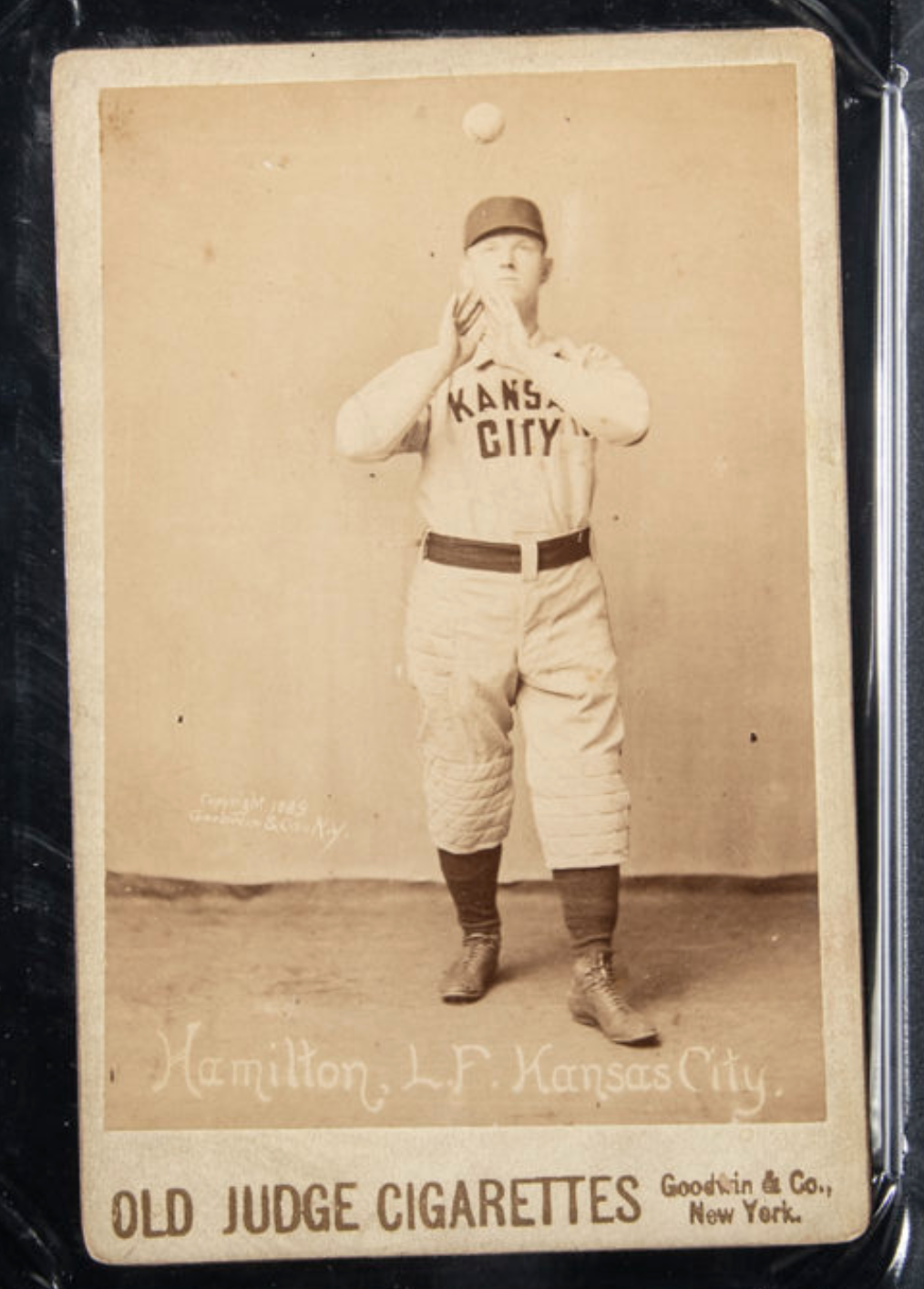
If Dave Orr represents one extreme in the structure of offensive baseball—the near elimination of the walk—then Billy Hamilton represents the opposite pole.
Hamilton did not minimize the walk. He weaponized it.
Where Orr compressed the plate appearance into a hitting event, Hamilton expanded it into a negotiation with the strike zone. The result is one of the most unusual offensive profiles in baseball history.
The contrast becomes immediately visible when examining the walk frequency of elite high-hit hitters.
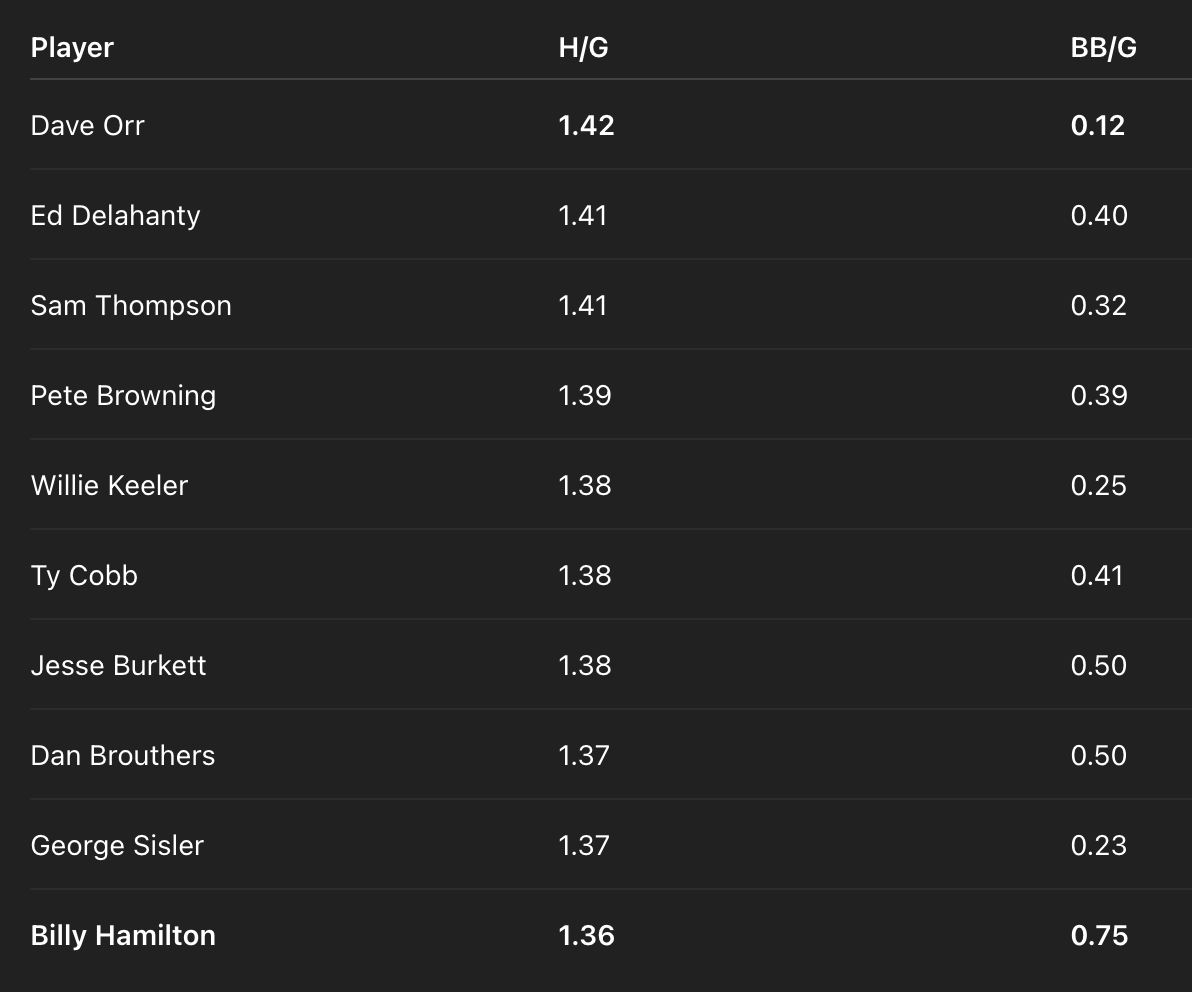
Within this elite group, Hamilton stands completely apart.
He walked roughly:
six times more often than Orr
50% more often than Burkett or Brouthers
nearly twice as often as Delahanty
Hamilton’s offensive system therefore operated through a completely different mechanism.
The Architecture of Hamilton’s Offense
Hamilton’s career statistical line reflects this structure.

The batting averages are essentially identical.
But the on-base percentages diverge dramatically.
Hamilton’s OBP sits 111 points above his batting average.
Orr’s OBP sits only 24 points above his average.
That difference reflects Hamilton’s extraordinary walk frequency.
Hamilton accumulated 1,189 walks in only 7,608 plate appearances , an astonishing rate that allowed him to reach base constantly even without putting the ball in play.
Orr, by contrast, recorded only 98 walks in 3,411 plate appearances.
For Orr, almost every trip to the plate became a hitting attempt.
For Hamilton, many plate appearances ended before the ball was ever struck.
Contact Versus Patience
The two players therefore represent opposite offensive philosophies.
Orr forced nearly every plate appearance into contact.
Hamilton frequently allowed the plate appearance to end without contact.
Seen another way:
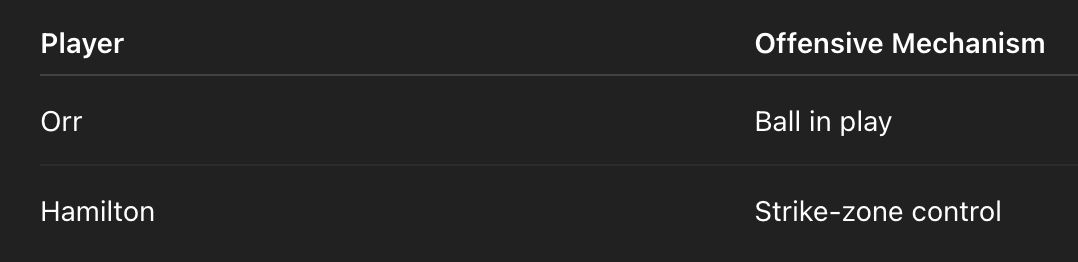
Hamilton expanded the plate appearance.
Orr compressed it.
This structural difference explains the divergence between their OBP and slugging profiles.
The Role of Contact Quality
The difference between the two hitters is also visible in the nature of the contact they produced.

Despite Hamilton’s enormous ability to reach base, Orr produced far more total bases per plate appearance.
This reflects the power embedded in Orr’s contact.
Orr’s .502 slugging percentage in the 1880s was exceptional for the era. From his 1,125 hits he generated:
198 doubles
108 triples
37 home runs
Nearly 30 percent of his hits went for extra bases , a remarkable figure for the period.
Hamilton’s offensive engine worked differently. His value came from reaching base and then using speed to generate runs rather than from producing extra-base contact.
Two Solutions to the Same Problem
The comparison ultimately reveals two radically different answers to the same fundamental challenge of hitting.
Every plate appearance presents a decision: swing or wait.
Orr chose to swing.
Hamilton chose to wait.
Orr attempted to convert nearly every opportunity into a hit.
Hamilton attempted to convert many opportunities into walks.
Both strategies worked. Both produced elite offensive value.
But the statistical fingerprints of the two approaches could not be more different.
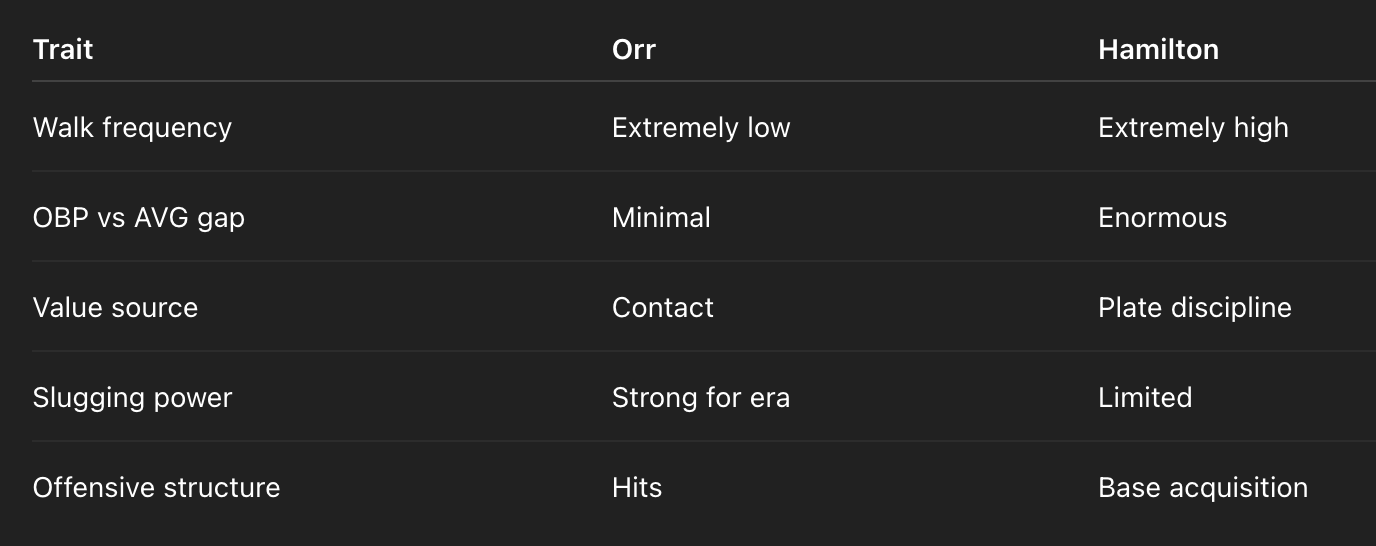
Hamilton maximized the probability of reaching base.
Orr maximized the probability that a swing would become a successful hit.
The Two Poles of Early Offensive Strategy
Taken together, these players define the outer limits of offensive design in early baseball.
Hamilton demonstrates the extreme potential of patience and strike-zone mastery.
Orr demonstrates the extreme potential of contact hitting.
Their statistical lines therefore reveal something deeper than the careers of two nineteenth-century players.
They expose the two fundamental pathways through which offense can be created in baseball.
One pathway runs through the strike zone.
The other runs through the bat.
And in the history of the game, few players have ever pushed either pathway as far as Billy Hamilton and Dave Orr.