The Psychedelic Revelation of History
The Psychedelic Revelation of History
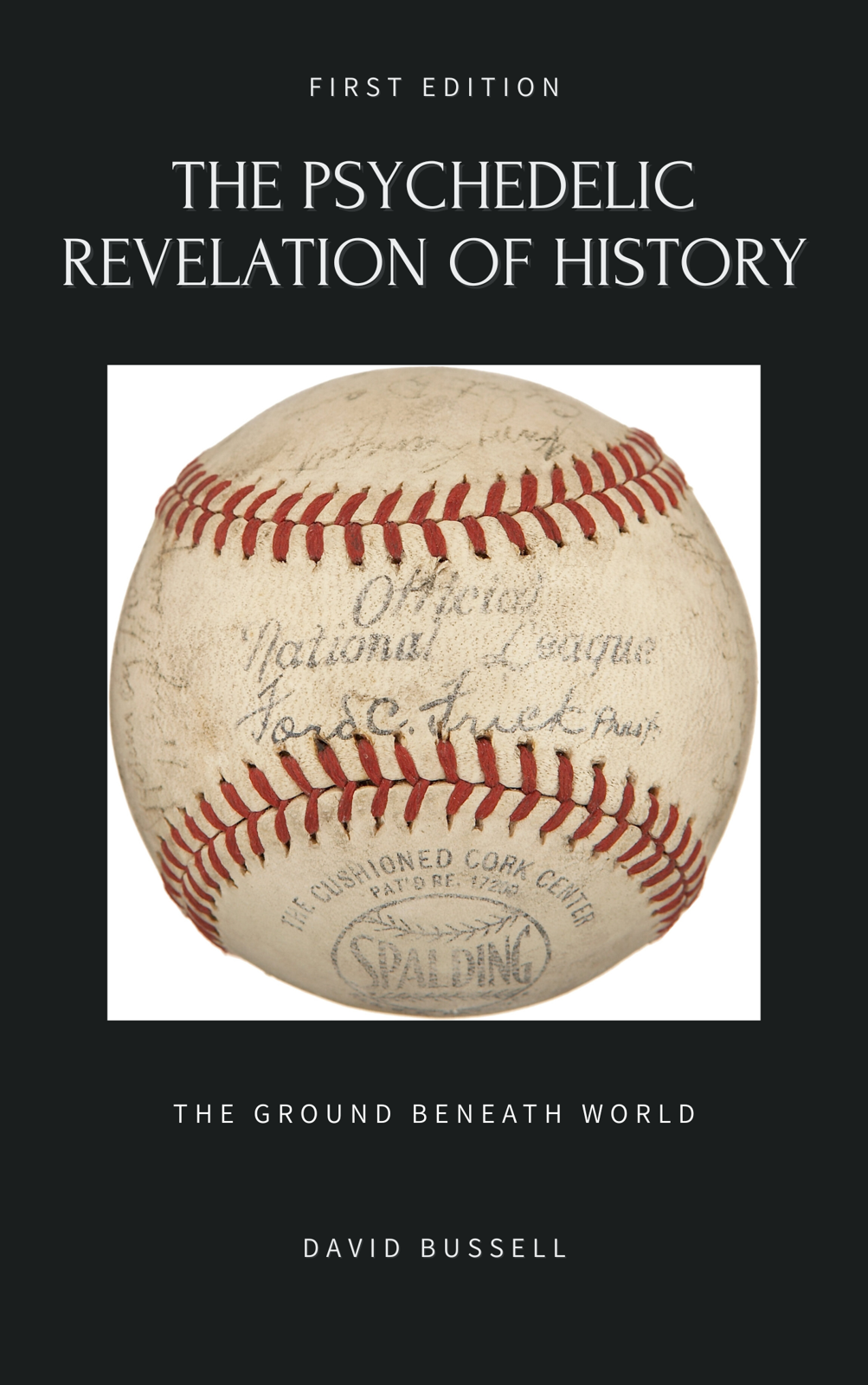
Time is the evolution of the world. It is the cosmos and the genome. This naturally is also culture as a sedimentary phenomenon; the power hid within the object simultaneously within, surrendered to, and resisting, the river of time.
I. Within the Image Object
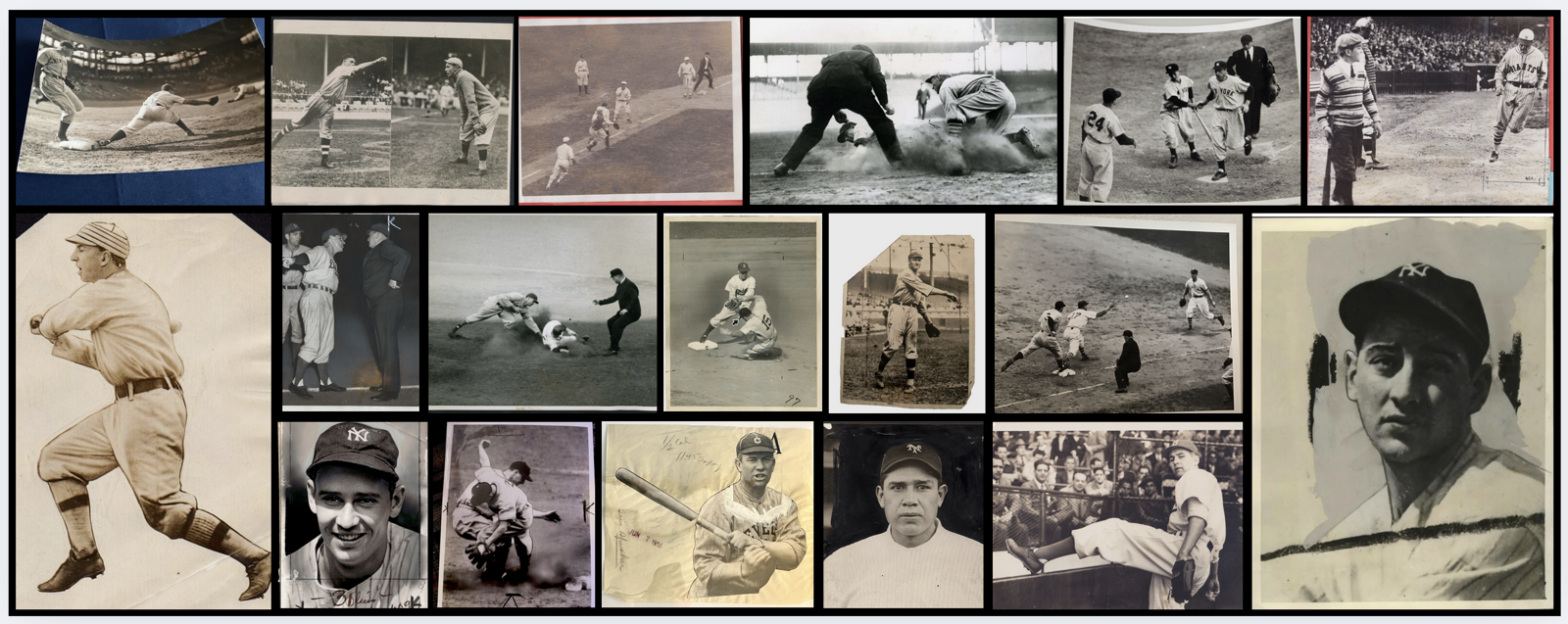
The historical image object is an ulterior space to which one can return — a space which is determined, in the context of the photograph and photographic technology, by the quality of the development of the unfolding of the eye capturing the light therein.
The photograph is indelibly part and parcel of the technological capacities of shutter speed and rendering strategies and methodologies (albumen, silver gelatin); therein, it is the way in which the image is captured and rendered which is absolutely the way in which the image appears. This is to say that the image object is always already the technology that produces it, and the eye — both man and technological — which produces it.
In this way the image object is a portal into a way of seeing which is processed first by man as a biological instrument and way of seeing; filtered again through vision of cultural importance; once more by the technological possibilities and capacities as in medium of depiction in rendering. This gives the image object its overall hue and place in time — both within the grand scheme and scope of mankind’s evolution, the cultural epoch which informs man’s sense of importance and his eye; once more in light of the media and possible capacities of the media at hand.
This total accumulation is a historiography of the image as a vision of man reflected back unto man; is always already a time capsule and a marking of a moment in time and space in which the image was registered; rendered with a sense of importance; with the possible speed, skill, and fidelity to the image of time itself.
This portal is a space of a crossroads of history; a crossroads of time which is a profusion and combination of historical forces — cosmological, social, political, biological, evolutionary, and existential — which are an irreproducible, momentous present which the photograph is both indelibly and simultaneously a product of and a depiction of. It cannot be retained; yet, paradoxically, it remains — as a capture of light which is a portal into that method and way of seeing and being, as a direct confrontation viscerally, neurologically, with the presence of that historical space-time pocket of the moment as in a retroactive witnessing unmediated by linguistic symbol and interpretation.
The photograph or the image artifact in this way is a face of history — an unmediated face of history which is a perpetually unresolved recurrence of a partial historical moment which is continually entered by the present. This remote, retroactive viewing — the present witnessing the rupture of time both embodied and depicted imagistically by the image object artifact — is an attempt to reconcile time; reconcile history — fold history and time back in upon itself and achieve resolution. The photograph both resists and invites this resolution, as it grants apparent access to the real grounds of history and yet revokes them by way of the dimensional flattening of real time into chemical light transposed upon photographic paper. It is simultaneously a distillation and a negation of the possibility of the return of historical time — like a fossil, or an insect within amber. It contains the truth of the historical; yet mediates the lived time of history with the present as dead time that the present enters as a form of witnessing.
The image object itself is a realm of the dead; the encounter with the image object artifact is a return to a dead time; in this way it is an underworld recovery and retrieval of the fracture inducted by photographic image capture — a fracture which is an opening, a gape, a wound within historical time that continually opens it and reopens it to the continually recurring and occurring present. It is an Orphic moment — a moment of descent to retrieve the soul of history; in doing so, the historical moment must be treated temporally the same as the present. In this way it is an eternally present moment in the gape opened up by the possibility of the retrieval of history through photographic capture; as such, one is not looking back into time, but rather resolving the historical soul and psyche of the present through an entry into the deeper root from which the present emerges.
The dead time of the photograph in this way is not dead, but rather it is a signature which has been terraformed through the gap of time between image capture and image witness; in this way is a relic of a signature through which the present is indelibly formed. The present, by way of historical time, is a compendium of the psychological factors of distillation — place, epoch, event, evolution, technology — which are the sediment of that which leads up to the present composition of factors, forces, and fields in space that are the dimensions and architectural body of the present moment as it is witnessed and experienced as a terrain and as an incarnate body. The witness of the present moment is the witness of history; the witness of history lives in the body of composite time; the full compendium of the evolutionary and revolutionary moments documented by the very witness consciousness that leaves behind trace.
This witness consciousness is always looking back at itself — as in the historical reflection; the passage of time as in neurological processing of light. It is the attempt to sense a moment already passed, already passing; reconcile this imminent temporality of passage and switching from bridge to bridge of momentous passage by way of constructing a bridge map of orgins — a grand scheme of temporality which is the space-time unfolding which necessarily produces the present moment as a phenomenon, experience, culture, terrain, and incarnate body. This is the project of all of history, science, literature, and philosophy — an attempt to reconcile and as such situate mankind within the grand cosmological scheme of existence as revelation of origins and thus understand the situation and condition of man and mankind proper.
The photograph is prime historical trace within the genealogy of man. It provides us with recent ancestral signature, which is primarily unmediated by hand and is instead a direct transference of the eye through the most advanced technology of the period capable of performing this image capture translation. As such, it gives us the most imminent sense of vision, meaning, and cultural importance — beyond the symbolic, hieroglyphic, interpretive context of periods past. The camera is a window past literacy into chemical mechanics of emulsion; a technical process which bypasses symbolic order and directly reproduces the perception of the eye colored by the possibilities of the medium of the time. It is a synaptic literacy of the highest order, a literacy which bypasses literacy.
To return to the photograph or gaze upon the image object is to re-enter historical time; to do so in such a way that historical time is made available through the window of the image; the physicality of the photograph. It is tactile-ly open; yet temporally closed. This is the signature of a relic — including the statue or the artifact — it is a time returned and yet a time returned only in the presence of the object. Outside of the object; even through the advanced aging of the object, time has progressed. One is gazing longingly at the vision of a remainder chipped away by the force of space-time — which is gravity, entropy, heat, and physical force.
And yet it remains; as in the photograph, continues to re-prove the moment of gaze captured in glass and transposed upon paper with silver. It is an object of stubborn resistance; yet insistence that the private psychological moment of the gaze of the photographer; the reproduction of the photographer’s gaze as an act of collapsing time; breaking time and thus opening the gape of the historical moment into eternity, can and does enter into space and time and history as a revelation of the psyche; a turning of the psyche inside out by way of and through the ritualization of the gaze and the way of seeing into a photographic object which resists time.
Even as the gaze is turned away, the photograph remains; even as the possibility of the gaze is resisted by the passage of time and the turning over of the architecture of the present moment, the photograph remains as a tactile portal back into the dimensions of the temporal, historical moment by way of the remote viewing of the observer. And thus, history is imminently retrievable and alterable via retroactive perception, contemplation, observation, and realization.
The historical moment occurs with intuitive absorption; is snapped by the photographer’s eye and lens. And one hundred years later, the moment is resolved in the bloodstream of the historical moment in which it was observed through identification of that moment proper as a movement within the annals of history and time. The historian or the archivist enters into the photograph with knowledge of its imminent importance and intuitive sense in the moment in which it was captured and preserved by the photographer; through the passage of time and communion with the photograph on the other side of history, has the capacity to resolve it or prove it through the historical record that comes of the removal of the moment in which it was captured through time.
This is a work of historical repair, made notably and exponentially possible through the advent of the photograph as a documentary device. The psyche of the imminent historical moment senses importance; acts intuitively to preserve the image of the present via the archival light transfer onto paper via image capture. And in this preservation, the possibility of cross-time-space communion becomes exponentially possible — far beyond required literacy of text or the necessary of the translation of a symbolic artifact or caricature.
This resolution and communion comes only by the retroactive possibilities opened up by the passage of historical time, which is retrospective vision — the witness register unfolding over decades, centuries; looking progressively down and in and upon historical time as the distance of the moment broadens; in its continued passage as a widened, opened phrase, becomes clarified; broadened by the unfolded and unfolding events in the space between the historical witness and the originary moment of the image capture artifact. This unfoldment is the crucial vessel — the sheer passage of time — to make the historical moment recognition across the gape possible, revealed, redeemed: by the archival witnessing.
The real present of the photograph is a space time document of dimensional compression via light; as such, it creates the possibility for transcendental historical, cross-period communion as in the capacity to resolve historical witness. The fact of the temporal existence and persistence of the historical photograph from an archival perspective is no less than the possibility of the redemption of history through communal, cross-temporal vision.
II. The Surrounds of Baseball History
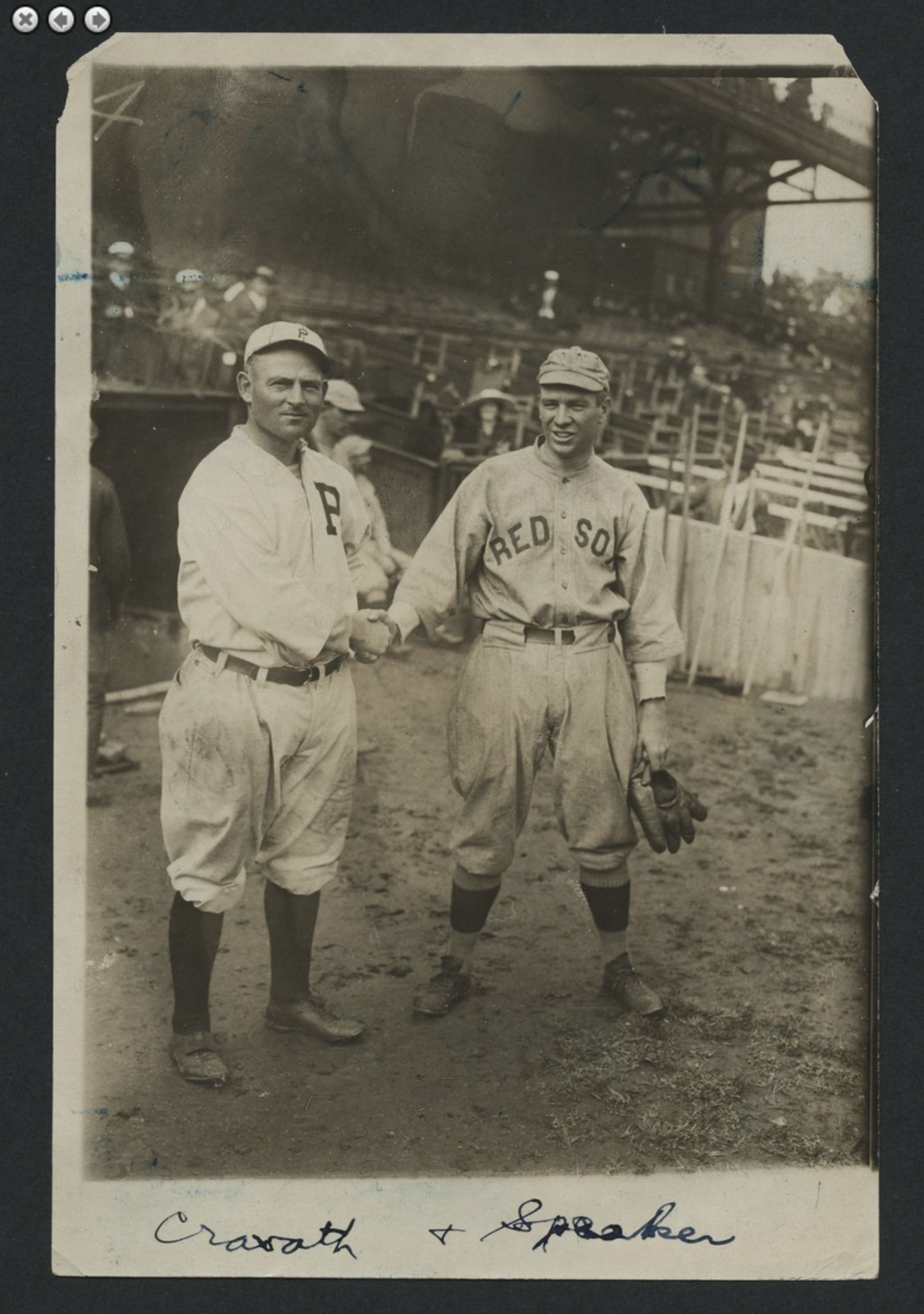
Baseball history is the surrounds of America; every city street, township; old coal station is pregnant with its memory. Baseball, therein, is the dormant legacy of joy and passion beneath the rubble of the shifting terrain of the American social, political, and cultural consciousness. It is the history of America’s past one hundred and fifty years — built into the very land itself; the fresh, barely fossilized remains of America’s chief product and consumption.
Beneath the change of presidents and wars and corporations; the rise and fall of eras in cities which still remain with tobacco lofts and meatpacking bars, baseball is the whisper that powered the passion of American civilization — beyond sex and capital — in direct relation to the joy of the day at the ballgame; the collecting of candy and gum and tobacco cards, and the instrumental, radical effect that the game’s greatest players and figures like Branch Rickey, Leo Durocher, and Jackie Robinson, had upon the cultural and political terrain of America itself in their presence, participation, and advocacy for change within the game of baseball — which functioned as a vanguard force in America’s conception of itself; thus, how it legislated and proceeded on a day to day basis.
Percy Shelley declaims, Poets are the unacknowledged legislators of civilization. Baseball was America’s poet — it was the force of human liberation and play that was central to American culture; ordered preserved and continued during America’s greatest wars and periods of civil unrest. It was the force that emerged from the Civil War fully formed — out from under Lincoln’s joy for “town ball” into the beloved Brooklyn Bums, a fully formed representation of the New York working class’ industrial underdog of the modern age.
Baseball accomplished this in a full scale adoption of somatic, pre-representational language — a gestural language of the pitch of the ball, swing of the bat; thump of the catcher’s mitt that stretched from the horse and carriage frontier plains of the west into the Pacific Coast League; to the southern swamps of the minor league Southern Association (who briefly hosted the famed “Shoeless Joe” Jackson); the northern factory towns of Pittsburgh and Detroit — hosts of the professionalizing American and National Leagues. Black baseball, grassroots and organized, was all throughout America — from the St. Paul Colored Gophers of Minnesota to the Atlanta Black Crackers of the Negro Leagues.
Baseball was America’s consensus way of speaking — a slang of the body that required no words and was populated by the poetic drawl of Red Barber; the warm buzzing of the crowd; the flannel jerseys and the jawing of opposing dugouts. It was itself a total ritual of consciousness; a ritual which refused to be relegated to any ethnic or racial creed, nor could it be reduced to any one class hierarchical setting. Baseball was more universal than the English language and the U.S. dollar in its adoption, precisely because it was a language of the heart. It was the fervent song of the Royal Rooters of Boston at the turn of the century; it was the song of Count Basie, live at the Kansas City Monarchs game.
This way of speech is the secret American method; the gateway to understanding the universal American language; the root and heart of modern American civilization. As the nation began to fracture due to financialization, offshoring of labor; the struggle for the industrial fabric of the nation’s adulthood to conscientiously continue to mature into a rapidly abstracting, digitizing space, this language was lost — as was America’s sense of soul and unity around baseball as the primary organizing communal event and way of speaking to one another.
Everything was filtered through the game. Baseball itself was emblematic of America’s transition from agrarian model to industrial: even the stadiums represented it. Gone were Hilltop Park and the old Polo Grounds; replaced with steel skyscrapers like Ebbets Field and Yankee Stadium. The wood bat and the leather ball and the somatic thump of the mitt were representative of a game grounded in the sun and fresh air (as so pronounced by Whitman); as such, a game that was grounded in human time. As the nation industrialized and digitized, this method was forgotten in the name of code and indoor lighting. The consciousness of America shifted through technologization; with it, baseball lost its primacy as the artifact and relic of the American soul.
The loss of baseball proves that America is not what it once was. Before baseball, America was a night in darkness — a political event of struggle, turmoil, genocide; intense racial conflict. Through baseball, America became politically conscious. Egalitarian, community oriented; finding ways to gather across ethnic, racial, and class lines to celebrate through the passion of the game of ball. After baseball, America became politically fractured, divisive; lost deep in the images of screens; lost, without the guiding, unifying force of America’s coming to consciousness — its pastime.
Recovering baseball is the project of seeing what is just beneath the surface in America. What is just beneath that which appears to the eye. The tenement houses; just decades of rubble and dirt separate us from Tris Speaker and the Huntington Grounds. Just decades from the birth of the photographic image — recovered in a grandfather’s attic or in an old institutional basement. The death of America’s game as we knew it and as it was, the ordering force of modern empire, is not even a body yet cold. It has not been condemned or confined to dirt — yet rather is still circulating in bookstores and antique shops as ephemera and old bats, balls, gloves, uniforms. Remnants of the game which is now silent; has turned into a product, a commercial entity — remnants which are seeking to be recovered and reunified and remembered as America’s chief cultural device of self making and visualization of the capacities, powers, and possibilities within the American people.
III. The Relics & Memory of Civilization
The relics and memory of civilization are inscribed upon the land. The total land of the earth is marked by the sedimentary nature of the past experiences of the human being; the human life, etched into the soil, the dirt, and the body of the earth. In this way, memory is — not just in the case of the genetic and epigenetic human body as an iterative code of consciousness building and organizing — a process that is embodied and materialized in the foundations of the earth.
Events, like emotions, leave imprints in the body of the earth; this is the ancient memory which is ritually experienced as a compendium of everydays, one which piles on top of the other. In this way, time does not dissipate, it compounds. It is a legacy of change encoded in the remains; in an earthly, anthropological sense, first and foremost as culture, action; thus, the total mark of history itself.
The mark of history is a fading mark naturalized by time as in a return to nature; a resonance, a dew of time which is the compound nature of the present as signatures of the past. The signature of the past informs the present in all aspects, from the orbit of earth and sun, the plant life sprouted from seed; the genetic histories of the species which populate the earth. Human culture is a remnant perennially recovered of languages and linguistics forgotten. This is to say that the forgotten is perpetually re-introduced to the forefront of human consciousness as in revelation, awareness, disclosure of the past. And as such, this is the induction of a state of astonishment at the encounter with the primordial ground of history.
The faded or fading signature is a signature of light — it is a way of being and seeing in space and time which is preserved in various degrees of density — from graffiti scrawl on stone to green serpentine and jade. Density and weightiness of object preserve encoded language, much as amber and stone function historically to preserve millennia of information; states of resonance, depiction, and architecture which would otherwise struggle to survive the weather of time. The introduction of the photograph into human consciousness is a perilous method of jarring the light of time; yet, a method clarified beyond all historical measure — a post symbolic possibility of historical recall through true reflection. A mirror which condenses dimensional states of being and awareness into a true image of sight.
The question of history and time is what survives in and into the present; as such, thus what can be known, discerned, or incorporated into the register of the present. The present is a broken record of knowledge and yet a fullness of the compound history of the past incarnate in the body of mankind and the body of the earth. In this way, the intuitive, directly experienced noetic knowledge of life and existence itself holds total primacy and sway; the attempt to know logically or through symbolic mediation, thought, or idea — is secondary. It is a broken image, a mosaic of shards that consciousness attempt to re-semble through mind; yet, the incarnate present contains the full residue and residence of the remaining past — perhaps obscured from physical sight or experienced subtly.
The residue of the artifact is the resurgence and re-mergence of the signature of the prior age, the prior epoch, the prior civilization. In this way it towers ominously with an opacity of the total lack of knowledge; yet with the total presence that a fully subliminated symbolic language utters and ushers forth. The artifact in this way is alien to us — it speaks in a way that is simultaneously utterly clear and present in the unearthing and revealing of its body; yet utterly opaque in the way in which it speaks to us. It communicates the uncanny — the distance between our own civilization; method and way of being and organizing existential time; the prior epoch or time in which language emerged from an ulterior order of sensing or denoting meaning, being, value, and cosmological powers.
This fading signature is not faded in that it has lost prominence or force in the present moment, but rather that it has lost legibility to us, the new contemporaries. We view history, looking back upon it — attempting to discern that which it is and was through fragments that articulate a different language; indelibly, a language from whence we came. Looking back into the cinescope of time, we realize, even through the shards that remain unintelligible and unearthed to us — the symbolic order we emerged from is broken from us. We do not see in the same way we used to.
This is how civilizations overturn; this is how meaning is overturned through epochal processions of time. Meaning ceases to remain; in Yeats’ word, the center ceases to hold. This center is a meaning making center of consensus language which builds the bridges and carves the stone of collective cultural meaning, the hearth or the fire around which mankind gathers to hear the agreed upon story of the genesis. And as time passes, the tectonic plates of the earth shift. Potsherd and the statues fall into the canyons and soil; are submerged by riverbeds of time. What was gained by collective cultural creation and mythbuilding is lost to time; mankind once more looks up at the stars and attempts to discern meaning; place himself in the grand rite of the cosmos, and thus understand his purpose.
The lineages of cultural meaning, purpose, and creation are passed down to us simultaneously as a restricting force and the one tether to earthly human life as a force, way, and method of organization. Without them, mankind is in a linguistic chaos — untethered from tribal norms and rhythms and unleashed into the opacity of his body; the charnel house of history which appears at surface to have no rhyme nor rhythm. And this is precisely the stratum that all great men of history are unleashed into — the chaos of meaning without structure; the ritual discipline required to pull from the ashes of time and civilization a way of being, thinking, seeing — that corresponds or is in right relationship to the cosmological and the incarnational realities of being and existence at hand proper.
This is what is called in the script of yore as the language of God, or the rules and laws of God — the orders and powers beyond man; beyond the domain of the legislation of man. Man’s law and rulebook passes in and out of the powers of empires and the periods of tribes. It is these essential rules which spiritual man seeks — the higher rules which govern the cosmos itself. And they reside not in the imminent, obviously appearing codified artifacts of history, but rather in their signature of time; their fading signature, their fading resonance. Time itself speaks through them; even as the artifacts of civilizations say one thing — the word and the concept and the representation of the form of their time — the distance of time which carries them into the contemporaneous still says something deeper.
Time is the word beyond language; the aging of time is the key to understanding the rules and laws of God; the grand cosmological. It is the true passage which is not ideological, nor is it conceptual. It is beyond words; speaks directly to the forces at work in the process of creation which reclaim and re-order all creation with a subtlety which cannot be controlled or organized by any human hand. It is the total powers of space in relation with any given moment, in which awareness can tip a small hand; wherein the tidal wave of the sphere of time itself is the organizational mass and force at work through the sprouting of the seed, the aging of a baseball with ink and leather; the weathering of a stone icon.
It is to this nature of time that the poets call death and transformation; it is to this nature of time that all arms are laid down and the right course; the right path is taken naturally in rhythm with the forces of being; the nature of existence at hand organizes itself. The struggle of human agency against time is the struggle for egoic immortality — which is the stubborn insistence that things do not acquire age; thus, paradoxically, do not acquire meaning. The seeking of human immortality is the seeking for teleological suspension in the grand procession and movement of the forces of the universe, which are always already seeking higher levels of re-organization, by way of the sophisticated development and re-development of the iterative, scientific work of recombination and experimentation which is the beaker of higher forces cast into shifting, changing forms.
All that is is not what it appears to be, but for a moment that the hubris of name arises. All that is is time itself, in perennial organization by way of resonance, the bringing together of forces at work which orchestrate higher transformation within the sound of the whole.
The artifact is then ritually unearthed as an encounter with the sublime past, but consciously forgotten in the ideation of the mind; but ever-present in the incarnate reality of the historiography of the body. This encounter is precisely orchestrated for revelation; the return of the alien language of history to force a reckoning with the unconscious, self convinced language of the surface present. This re-mergence of “repressed” or “hidden” forces within the body of the earth is the precise force which catalyzes change, transformation, and evolution. It is that ancient time itself has a body — which is the world; the human body — and that this body is composed of that which remains; archaeologically, that which is submerged, hidden in the ground of body consciousness to be resurfaced into the light of day; the conscious mind.
IV. Da Bums & Proximity to Raw Flesh
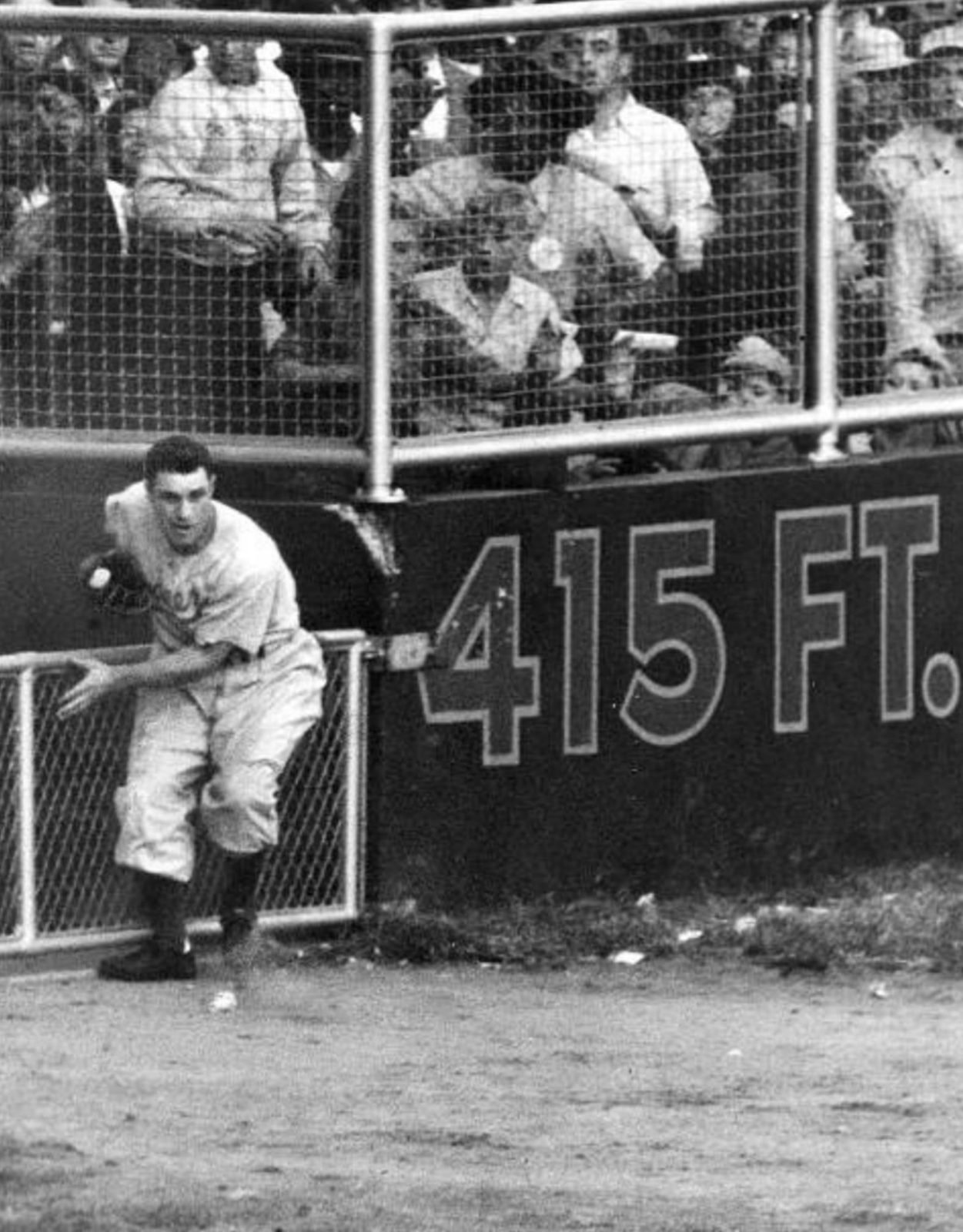
To continue with the nature of time, what remains is always lost of blood. It is the photograph, the ball, the loss of touch as a procedural of hands down through generations. The raw motor of baseball is metabolic; like the ancients, the foundational artifact or the stone or the fresco is but a trace. A primary baseball trace is the hands that moved it; the hearts that soared when it flew toward the left field fence off the bat of DiMaggio toward Al Gionfriddo in the fall of 1947.
Artifact consciousness therein is the closest trace to the pre-symbolic, atomic, nuclear truth of the presence of time in the moment of incarnation, which is always raw, fleshly, metabolic. This signature is the ball held, the bat swung, the glove worn. It is the warm pipeline of information which travels down and through time. Archivally, this lands us squarely at the artifact of personal provenance. The object that was worn, lived with, held.
This is a metaphysical reversal of the structural experience of modern religion — a meta-architectural experience of God as distance from flesh; as abstraction removed from physicality. That man is a fallenness removed from bliss or passion as it stands absolute, the Goodness of God proper. Understanding of artifact consciousness as proximity to source places God in time and understands God as incarnate within time as a process, a procedure of revelation. And that the artifact closest to proximity to flesh is of the highest order in a recovery of the nature of time, which is always already a recovery of the tossed away suit and flesh of God as the cosmological superstructure perennially changes forms.
As Brooklyn fades; is replaced by the Metropolitans of the 19th century returned; as the Huntington Grounds give way to Fenway — this is the overturning of the lost blood of the moment which is the editorial text of the Boston and Chicago papers, preserved in newsprint; the silver gelatin press prints of Underwood and Thompson; the signed and game and practice used balls at the hands of George Sisler and the 1940 Brooklyn Dodgers. They are time and space bound relics of baseball as an event of proximity — which is the flesh and blood of incarnate man as an ancestral tradition.
As such, the artifact of baseball is first and foremost of the blood as a cultural and genetic memory — as is the oral tradition or as is ethnic inheritance, which is a memory of time and place written into the genome as a long history of the evolution of the animal; of the being. Baseball is an artifact of mankind; thrown off the furnace from Gionfriddo and DiMaggio to Cartwright and Montgomery Ward is and are the cards, the prints, the balls, the fields. They are stages upon which the primacy and primary mythology plays itself out — the cosmos shedding forms; throwing off sparks which become the archaeology of baseball; its artifact consciousnessness.
Embedded in these materials is the truth of the history that they carry as participatory objects; objects of witness and degrees of immediacy to the game itself. And this is why they carry such power — it is that they are the return of the event itself; the recurrence of the event itself imminently in the container of their physical memory. They are the primary substance of the event, returning over and over again like the shroud of an ancient ruin to declare the primacy of the language of the speech which is the passion which produces the play; as such, structures the architecture of the theatre around it.
The Brooklyn Dodgers of the 1940s, like the Monarchs of Paige’s time; the Boston Beaneaters of the 1890s, were a phenomenon which consumed an entire territory. A groundswell, a primary gravity, a density of magnetism which drew the entire city into the rise of Da Bums, culminating in the 1955 Game Seven World Series win against the New York Yankees — in the sixth matchup of the two teams in the worlds’ championship series in just fifteen years. The Brooklyns themselves were the primary order and force and face of the Brooklyn borough; as such, they were the event of the being in time and place of one of the very origins of baseball itself — after years of mediocrity stemming back to the old Robins and the era of Jake Daubert — stumbling for two decades behind the Yankee and Giant squads.
They rallied an entire ethnic enclave of American immigrant workers; as early as 1940, Branch Rickey and Durocher seeded their rebellion against the implicit law against black baseball players in the professional leagues. It was a seed which grew all through wartime; as the bombs in Hiroshima and Nagasaki fell, the plan was put into motion. As Jackie Robinson stepped over the white chalk at Ebbets Field, the American consciousness shifted; never again to be the same. And it was the cultural force of baseball that indelibly functioned politically to have repercussions that echoed henceforth almost one hundred years later.
It was no mistake that Robinson debuted for the Dodgers — a progressive organization spearheaded by the class and racially conscious minds of Rickey and Durocher: managed by the former Gashouse Gang Cardinal of sharecroppers and farmers and workers; in a city of working ethnic men, women, and children who endured the factory floors and tenement houses of New York’s industrial war of the half century prior. Son of a railroad worker, Durocher’s squad was composed of blue collar immigrants, coal miners’ sons, and Southern laborers. The borough itself was an ethnic enclave full of dockworkers and manufacturing laborers. The game of baseball in Brooklyn was not, practically speaking, class conscious — it was absolutely, utterly, a working class profession, phenomenon, and experience.
Black Brooklyn was one of the largest black urban populations outside of Harlem; by proximity, Robinson’s debut would be next to Billie Holiday and Langston Hughes. It would be born in and from the same legacy of black New York culture which characterized early American intellectual and creative modernity. Everyday labor was integrated — from the docks to the factories — but the neighborhoods remained segregated. Mid century Brooklyn was the ideal location; the Dodgers, the ideal team, to receive this boundary and border crossing — formally, in the name and presence and force of a young Jackie Robinson.
In ontology, the question of the root or the source of knowledge or being as a phenomenon is of the essence. It is tracing back the event to its origins, to understand the pre-symbolic, energetic register of phenomena. And it begins with a team led by a noted segregationist and now forgotten baseball star named Dixie Walker. In the span of ten years, with the arrival of Rickey’s reorganization of Brooklyn’s pipelines and Durocher’s outspoken, unapologetic class and race register, the forgotten Brooklyns were transformed across the span of a war from the resurgent challengers to the Yankee throne in New York City to an unforgettable legacy organization, replete with black talent as diverse as Joe Black, Don Newcombe, Dan Bankhead, Joe Gilliam, Robinson, and Roy Campanella.
This working class franchise of ethnic Italians, Jews, Central and Eastern Europeans — was uniquely equipped to begin integration efforts. Players like Hank Greenberg and Tony Lazzeri paved the way for Jewish and Italian-American ballplayers — even as they were heavily jeered and slurred at for their backgrounds and heritage. This process of cultural and ethnic and racial integration began from the ground up and occurred through the theatre of baseball proper.
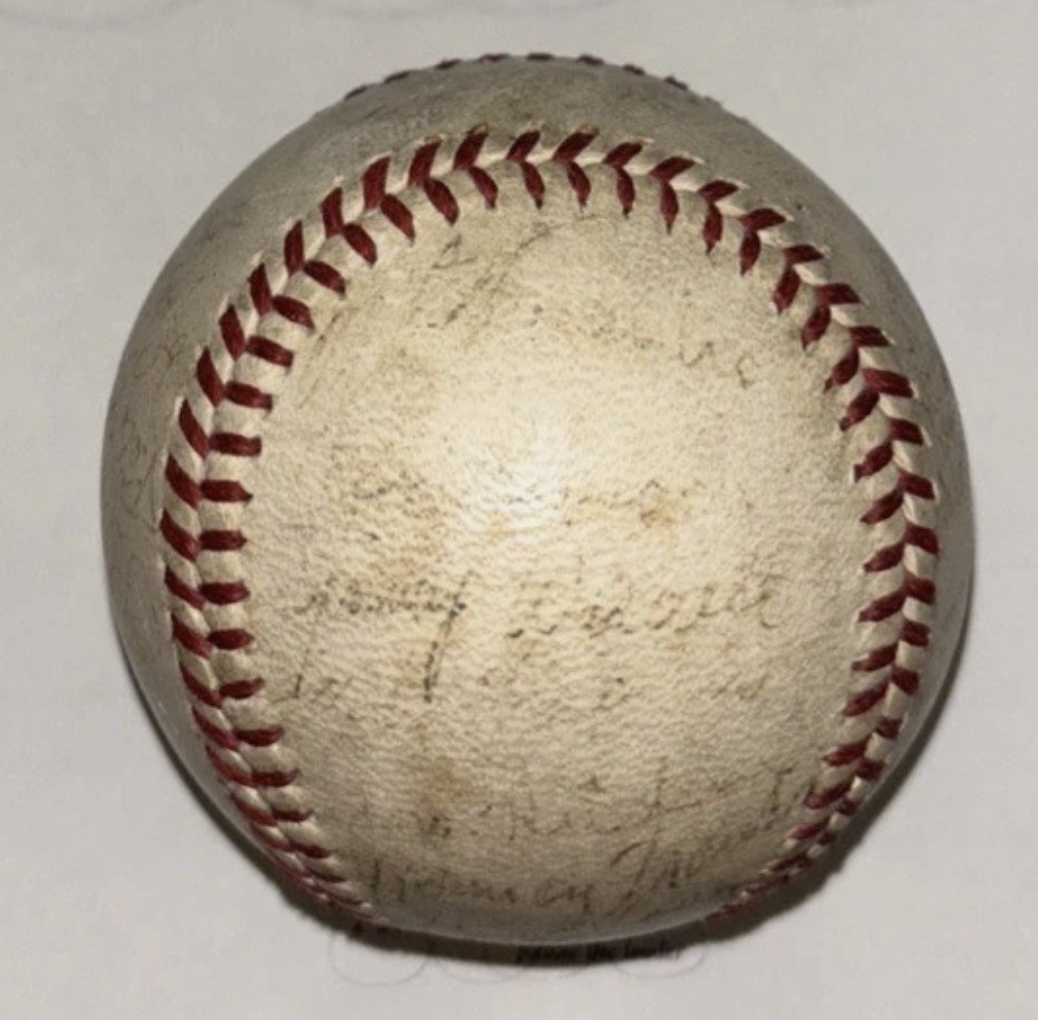
When we reach back through time at the loss of blood — through these objects which are now stones and detritus which hold the image of time in place with chemicals and silver and light, or else are the dirty and scuffed ball with faded signature atop it, we are looking at periods of divisive contact; boundary lines and grounds drawn down that are and were being crossed socially, culturally, and politically through baseball as forces of integration of American society and community through racism, segregation, Jim Crow, and immigration — forces which had a profound effect on the lives and suffering and joys of the American people. Baseball itself acted as this essential metabolic power — for metabolizing the divisive political consciousness of perceived difference and separation, based on heritage, blood, and the color of one’s skin.
This is to say what baseball’s impact truly is and was — an impact of monumental proportions: which drew the modern era, with all of its contradictions and failures, into being as an era of the expansion of the concept of community and humanity across previously hard drawn bounds and lines, rigorously and violently defended. Human history up to this moment was genocide and war based on national and empirical boundaries and barriers. Baseball, as history saw, dissolved them through play upon the diamond; persistence upon the field of play as a theatre which showed America collaboration was possible across racial, ethnic, even linguistic borders. And it was workers who first displayed this possibility on the fields of dirt.
This is why we reach back to baseball and its artifacts — not as a clean and bloodless or spotless history of reclaimed purity, but for the contested grounds which are and were a revelation, triumph, and breakthrough — beyond the box scores. They are a long action which show the act and work of God in real time in America’s most powerful cultural artifact: one that progressively opened itself up; its arms — like the hinge of America’s laboring body, Ellis Island, just miles away from Ebbets Field — to passionate lovers of the game, from the Jewish to the Italian, from the black to the Slovak. And in doing so, baseball taught America what was possible politically, even if America resisted or even rebelled against the realization that baseball brought into heart centered consciousness realistically, on the ground; incarnated into history.
Young white children asking for Willie Mays’, or Jackie Robinson and Satchel Paige’s autograph. This was something that ideology could not surpass; it was manifest in the unteachable mind of the young child — who witnessed Mays’ spectacular grab, or Paige throw a ball through a hole in the center field fence from the pitcher’s mound. These indelible impressions carved themselves into the American political consciousness; impressed, long before integration, the true possibilities of collaboration across and through all artificially drawn lines of power and oppression.
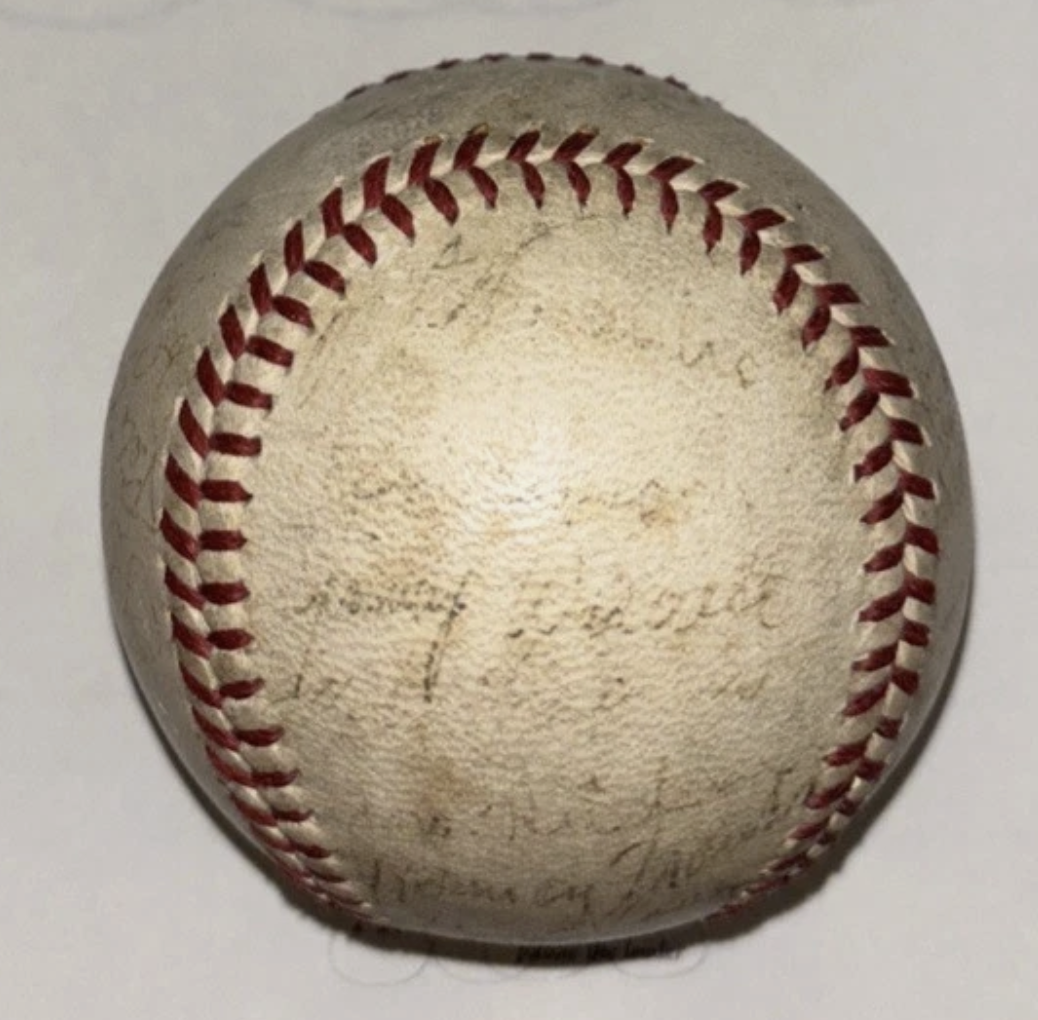
The baseball artifact consciousness holds this mythic power. The scuffed, faded hide of a 1940 National League Brooklyn Dodgers team signed baseball — formerly in the possession of the segregationist ballplayer, Dixie Walker. The moments of and before the fated hinge — as Rickey and Durocher worked behind the scenes, not merely to build the new modern legacy of the Brooklyn Nationals, but to usher in a new era of baseball and American history.
The monograms of baseball history as the leopard, the scroll, the fresco, the American Dendera. We must only begin to read them; feel the revelation implicit in baseball; the revelation known by each cheering dockworker in the crowd as Robinson’s debut approached — that God was in baseball all along; as they tracked the pill, the divine’s closest proximity was the unified distance between the torque of the wrists and hands, as DiMaggio whipped the bat through the zone toward the ball that carried the Dodgers but for one moment more, toward the possibility of the first World Series championship of the integrated era of baseball, and American, history.
It remains — in the ball that touched each hand; in the moments of initiation at the turn of the fourth decade of the 20th century — which reignited the hopes and passions of an entire borough at the heart of baseball’s origins; an entire nation of peoples — hoping to find unity under a greater banner than division, segregation, opposition, and hatred. And it occurred on a baseball field.