The Remedy of Distorted Measurement Fields: Baseball History as Structural Recovery
The Remedy of Distorted Measurement Fields: Baseball History as Structural Recovery
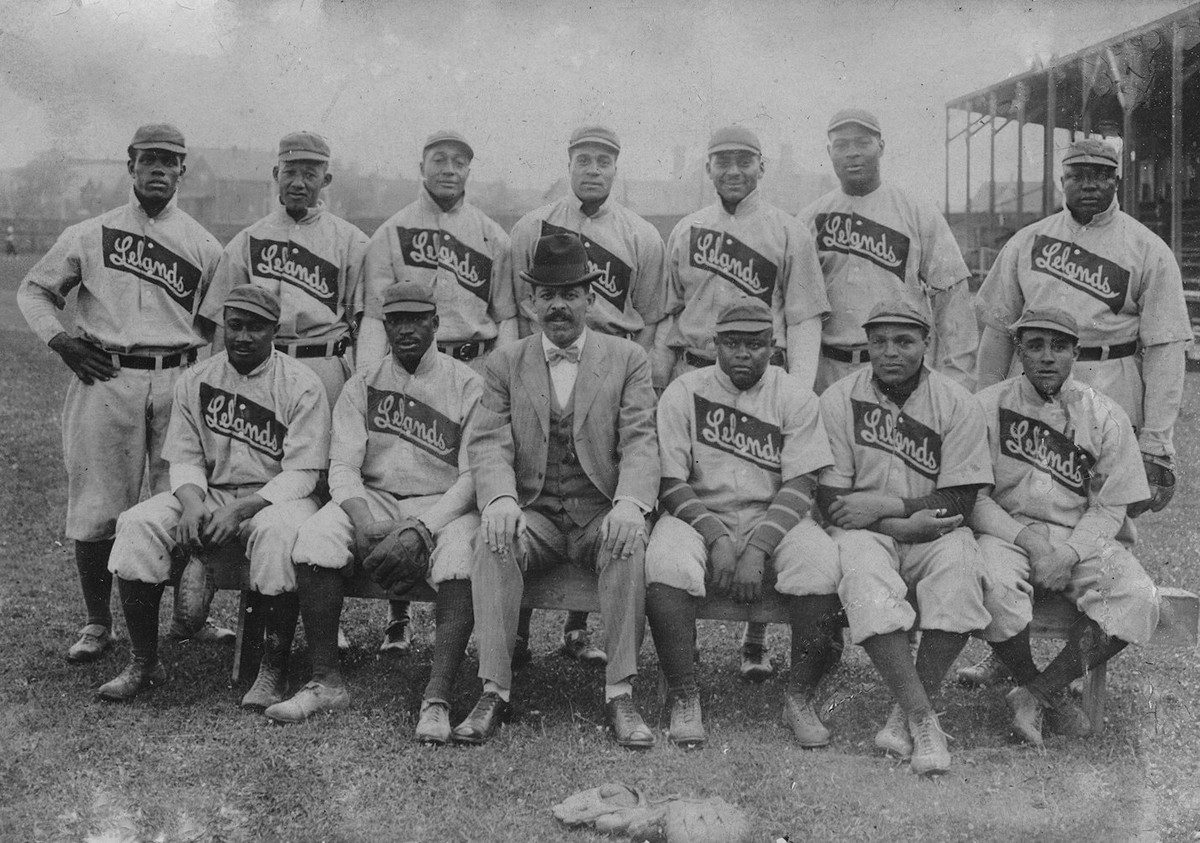
The Remedy of Distorted Measurement Fields
Baseball History as Structural Recovery
Abstract
Baseball history is not a continuous evaluative field. It is segmented by regime shifts in run climate, fractured by segregation, distorted by incomplete archival density, and flattened by league-contained baselines. Traditional metrics such as batting average, ERA, OPS+, and ERA+ adjust for league context, but they inherit structural exclusions embedded within those leagues.
The result is a distorted measurement field.
This document proposes a structural remedy: normalize performance against declared atmospheric conditions rather than isolated league averages, integrate suppressed parallel ecosystems into the same climatological framework, and treat baseball as a thermodynamic system governed by regime-specific boundary conditions.
The objective is not reinterpretation.
It is restoration of competitive signal.
I. The Structural Problem
A measurement field becomes distorted when:
The competitive population is artificially restricted.
Environmental conditions change but are treated as uniform.
Parallel ecosystems are excluded from baseline construction.
Survivorship bias shapes the preserved dataset.
Baseball history contains all four distortions.
1. Segregation as Baseline Distortion
Before 1947, elite Black players were barred from Major League Baseball. The result was not simply separate leagues, but a restricted measurement universe.
Players such as:
Josh Gibson
Buck Leonard
Pete Hill
Satchel Paige
and brothers Willie and Rube Foster
competed within parallel but structurally equivalent professional systems.
Metrics that rely exclusively on MLB league averages silently encode this exclusion into their baselines. Dominance is measured within a filtered competitive pool.
This inflates relative separation and obscures suppressed excellence.
The distortion is mathematical, not moral.
2. Run Climate as Atmospheric Resistance
Baseball is not played in a constant scoring environment.
Representative regime climates:
Deadball Era (1900–1919): ~3.7 runs/game
Ruthian Live-Ball (1920–1935): ~5.0+ runs/game
Integrated Mid-Century (post-1947 through 1950s): ~4.6 runs/game
ERA+ and OPS+ normalize relative to league average. They do not treat run climate as an independent difficulty field.
However, scoring volatility constitutes environmental resistance.
A pitcher suppressing 40% of a 5.0 run climate is managing greater volatility than one suppressing 40% of a 3.7 climate. A hitter generating equivalent separation in a suppressed run environment penetrates a denser field.
Run climate is not cosmetic context.
It is atmospheric physics.
3. Archival Density and Survivorship
Major League Baseball maintained centralized recordkeeping, media amplification, and institutional continuity.
Negro League and Cuban League ecosystems relied on:
Local press
Broadsides
Community scorekeeping
Traveling circuits
Fragmented preservation
This produced asymmetrical archival density.
The surviving dataset reflects institutional stability, not necessarily competitive completeness.
A distorted archive generates distorted conclusions.
II. Methodological Remedy
The corrective framework rests on four principles.
1. Declared Atmospheric Baselines
Each regime receives a declared run climate (RE). Performance is measured as a share of atmosphere:
For hitters:
Run Generation ÷ Run Climate
For pitchers:
1 − (Runs Allowed ÷ Run Climate)
Dominance becomes penetration into or suppression of the era’s atmospheric resistance.
This replaces relative separation from average with proportional impact within environment.
2. Single-Sky Deadball Architecture
The Deadball era lacks a sustained centralized Negro League schedule universe.
Rather than fabricate dual baselines, the framework applies a single atmospheric blanket for 1900–1919. All professional competition during this period is evaluated against the same declared scoring environment.
This preserves environmental integrity without imposing artificial league symmetry.
3. Regime-Specific Boundary Conditions
Each era possesses accessible competitive ceilings determined by:
Equipment
Ball construction
Park dimensions
Integration density
Strategic norms
Deadball hitters cannot be evaluated against Live-Ball power ceilings. Live-Ball pitchers operate in elevated volatility fields. Integrated competition increases density of talent distribution.
Dominance must be measured against the boundary conditions physically available to the player.
Flattened global ceilings introduce distortion.
4. Artifact-Driven Historical Stabilization
Quantitative correction alone is insufficient when archival asymmetry exists.
Primary artifacts serve as stabilizing anchors:
Cuban winter league photography
Negro League broadsides
Program proofs
Early industrial-era baseball imagery
Broadcast-era sponsorship materials
These objects confirm competitive existence, community density, and institutional structure where centralized statistical continuity is fragmented.
Material evidence reinforces structural legitimacy.
III. Purpose
The objective of this project is structural equalization.
Not narrative correction.
Not sentimental elevation.
Not retrospective moral framing.
The aim is to reconstruct the full competitive field and measure:
What did dominance cost within its own atmosphere?
When properly normalized:
Deadball suppression gains proportional clarity.
Live-Ball volatility receives appropriate weighting.
Negro League excellence becomes mathematically visible.
Integration registers as measurable density shift rather than symbolic moment.
Baseball history becomes multi-phase climatology rather than flattened mythology.
IV. Philosophical Ground
The foundational principle is simple:
That which is excluded from the baseline is erased from measurement.
Baseball history has been partially measured because its baseline has been partially constructed.
The remedy is not rewriting history.
It is remeasuring it.
V. Conclusion
A distorted measurement field does not require reinterpretation. It requires recalibration.
Baseball is a segmented atmospheric system shaped by:
Scoring climate shifts
Institutional exclusion
Archival asymmetry
Regime boundary conditions
When dominance is normalized against declared atmospheric baselines and regime-specific ceilings, suppressed signal re-emerges as structural fact.
The purpose of this framework is to restore competitive geometry to its full dimensionality.
Baseball history, properly measured, is not a flattened narrative.
It is a multi-phase system of resistance, adaptation, suppression, and revelation.
The work of recovery is measurement.
And measurement, when correctly constructed, reveals what was always present but structurally obscured.