The Same Latitude: How the Industrial Condition of Baseball Migrated South and Never Came Back
The Same Latitude: How the Industrial Condition of Baseball Migrated South and Never Came Back
The Same Latitude: How the Industrial Condition of Baseball Migrated South and Never Came Back
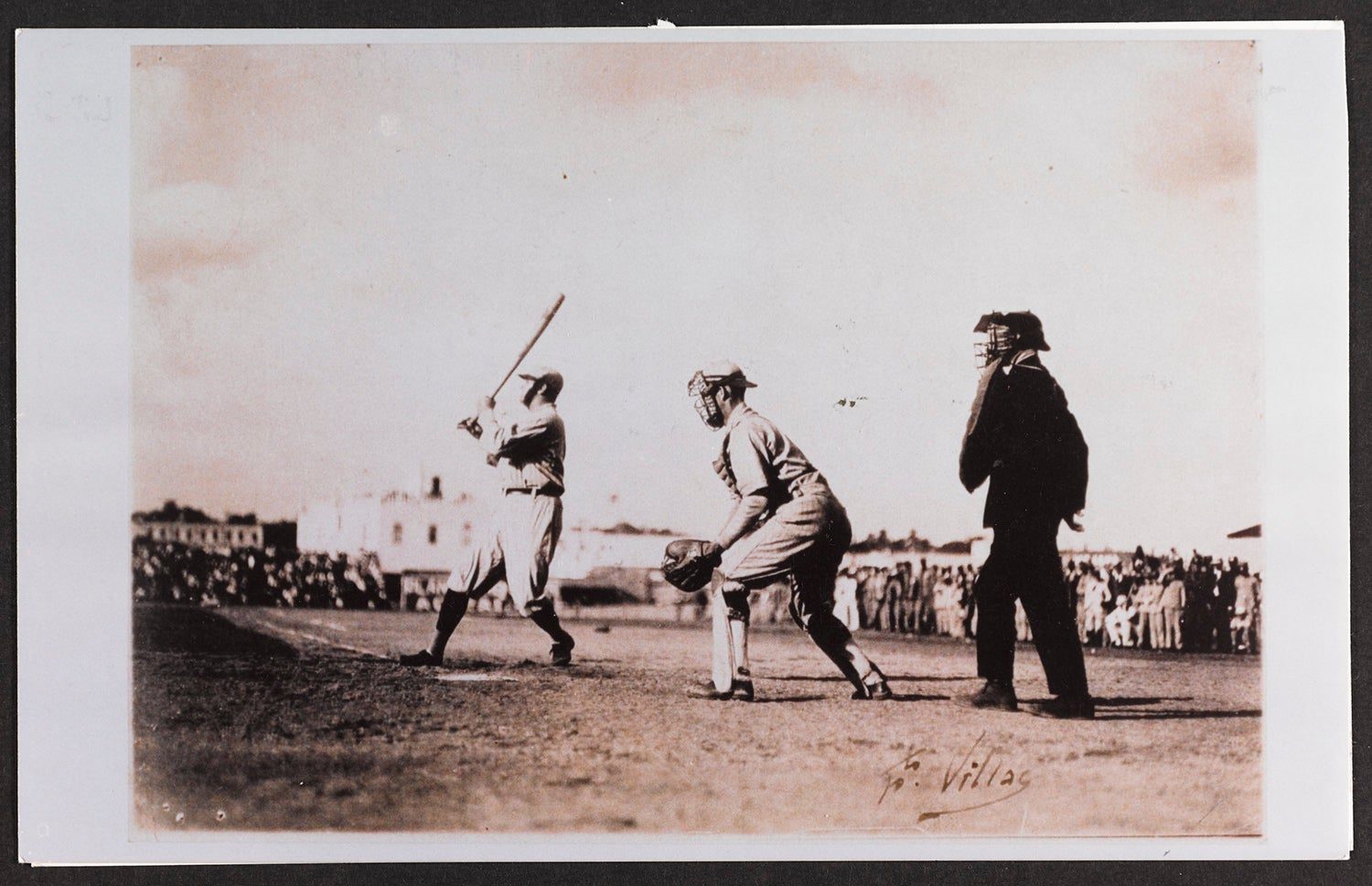
In 1920, the New York Giants toured Cuba with Babe Ruth added to their roster as a spectacle — the greatest slugger in the American game, imported to demonstrate what organized baseball had produced. Cristóbal Torriente, a stocky left-handed center fielder from Cienfuegos who could not play in the major leagues because of the color of his skin, outhit and out-homered Ruth across the nine-game series. Almendares, Torriente’s team, won the series five games to four. In the game most remembered from that series, Torriente hit three home runs and doubled, driving in six. Ruth acknowledged afterward what was already known to anyone paying attention: if Torriente could play in the major leagues, the team would win the pennant by July and go fishing the rest of the season. The compliment was also a confession. The greatest talent in the American game acknowledged that the men being excluded by law and custom were at minimum his equals, and possibly his betters.
Torriente died in New York City in 1938, at forty-four, after a long descent into alcoholism and poverty. His body was returned to Cuba draped in a Cuban flag. He was inducted into the Baseball Hall of Fame in 2006, sixty-eight years after his death. Alejandro Oms — called El Caballero , the gentleman — was his contemporary, his Cuban League rival, and in some years his peer at the plate. Oms led the Cuban League in batting average three times, hit .432 in the 1928-29 season, and finished his career with a .345 average across sixteen Cuban League seasons, second all-time behind Torriente. In the Negro Leagues he hit .332 with an on-base percentage of .404. In the twilight of his career he played in Venezuela, still the league’s best defensive outfielder past forty. He died in 1946 with no money. A Cuban teammate arranged for him to be placed on a winter league roster near the end of his life so he would have money to eat.
Two men of historic, Hall of Fame–caliber talent, formed by Caribbean baseball in the first decades of the twentieth century — conditions that were not development programs or academies or pipelines, but simply life — and barred from the only professional structure that would have given them institutional recognition. They played anyway, in Cuba, in Venezuela, in the Negro Leagues, in whatever structure would have them, and they produced performances that the men allowed to play in the major leagues regarded as the standard by which everyone else should be measured. The talent was there. The structure that would have recorded and compensated and remembered it was legally prohibited from acknowledging its existence.
This is the origin point: the industrial condition of baseball — the particular formation produced by scarcity, necessity, and the absolute relationship between performance and survival — did not disappear when the American game professionalized and suburbanized and built its apparatus of development. It migrated. It went south. And it has been south ever since, producing, generation after generation, the men who most completely embody what the game was before it became a product.
The industrial condition of Pennsylvania coal country at the turn of the twentieth century produced a particular kind of baseball player because it produced a particular kind of man: someone for whom the alternative to performance was visible, proximate, and known. The alternative was the mine, the mill, the furnace — not as abstraction but as the daily life of the father and the grandfather and the neighbor who didn’t make it out. Performance was not aspiration. It was exit. The men who played baseball out of those conditions were not playing for love of the game in the way that phrase has come to mean something decorative and sentimental. They were playing because the game was the only door, and they had seen what lay behind every other door in the house.
That condition does not exist in the American game anymore. The apparatus built to replace it — the travel ball system, the college programs, the draft, the minor league infrastructure, the biomechanical analysis and sports psychology and nutritional science — is real and it works and it produces physically extraordinary athletes. What it cannot produce, because no designed system can produce it, is the formation that comes from actual scarcity. The formation that comes not from being coached toward excellence but from having excellence as the only exit. That formation went south with the game, to the Caribbean and Central America, and it never came back.
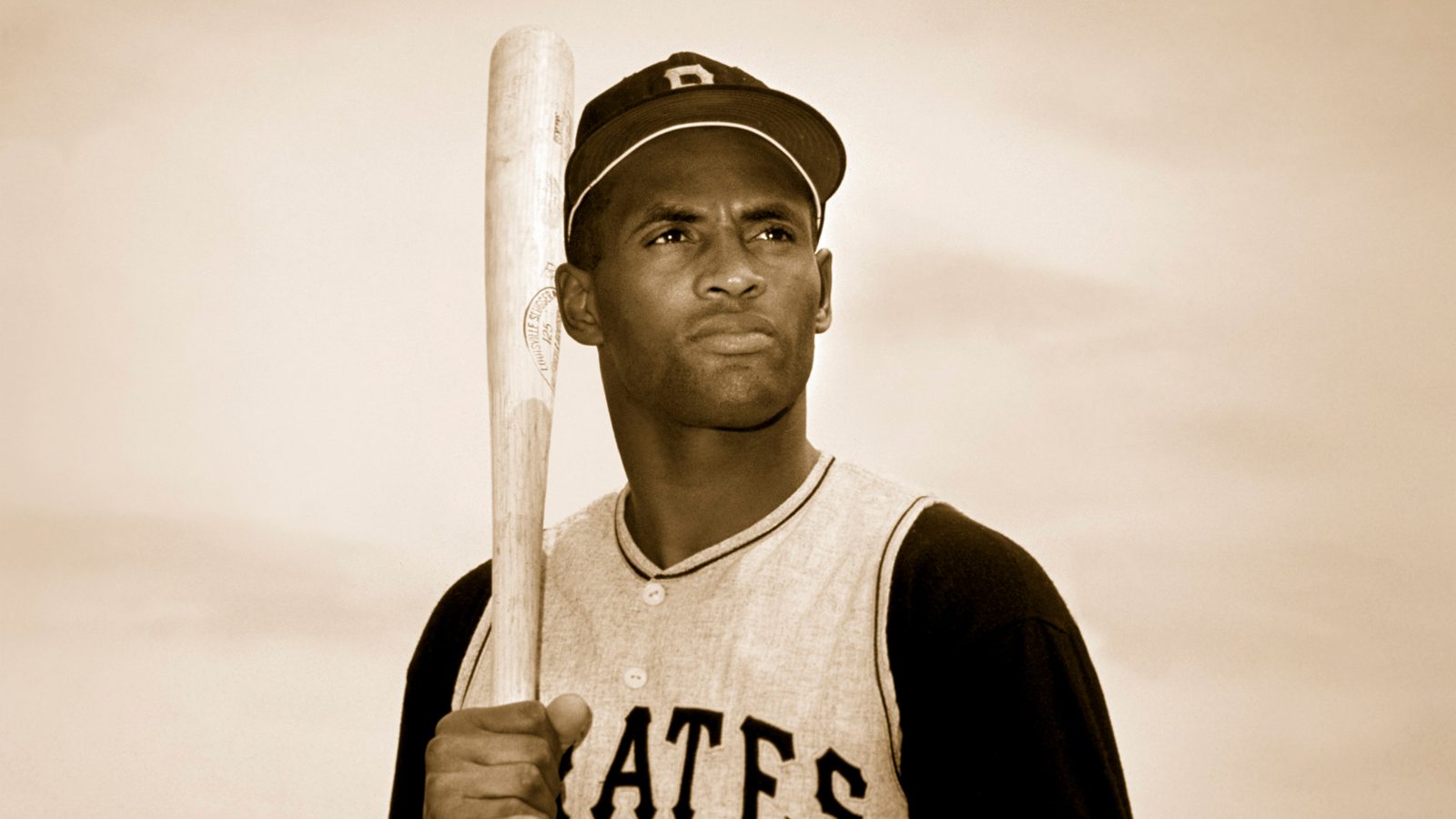
Roberto Clemente was born in Barrio San Antón in Carolina, Puerto Rico, in 1934, the youngest of seven children. His father was a foreman overseeing sugarcane workers. The family was not destitute — Clemente himself said they always had food and clothing — but Carolina was a town built around a single industry, and the alternatives to that industry were not many and were not good. As a boy, Clemente hit tin cans with a stick, bounced rubber balls off walls to strengthen his arm, and played wherever and with whatever was available. He signed with the Santurce Crabbers of the Puerto Rican Winter League at seventeen, earning forty dollars a week. The Brooklyn Dodgers signed him at eighteen. The Pittsburgh Pirates took him in the Rule 5 draft for four thousand dollars because the Dodgers tried to hide him.
What the Dodgers were hiding, and what the Pirates spent eighteen years discovering, was a right fielder whose arm was so strong that Vin Scully said he could field the ball in Pennsylvania and throw out a runner in New York, a hitter who won four batting titles and an MVP, a man who died at thirty-eight on the last day of 1972 trying to deliver relief supplies to earthquake victims in Nicaragua, on a plane that went down off the Puerto Rican coast. The story of Clemente is always told as a story of individual greatness and individual nobility, which it is. What is less often said is that his formation was identical in structure to the formation of every man who played his way out of a Pennsylvania mill town: the son of a laborer in a one-industry town who knew, with total clarity, what the alternative was. The tin cans were not a charming detail. They were the equipment available. The arm that resulted was not developed by a program. It was formed by conditions.
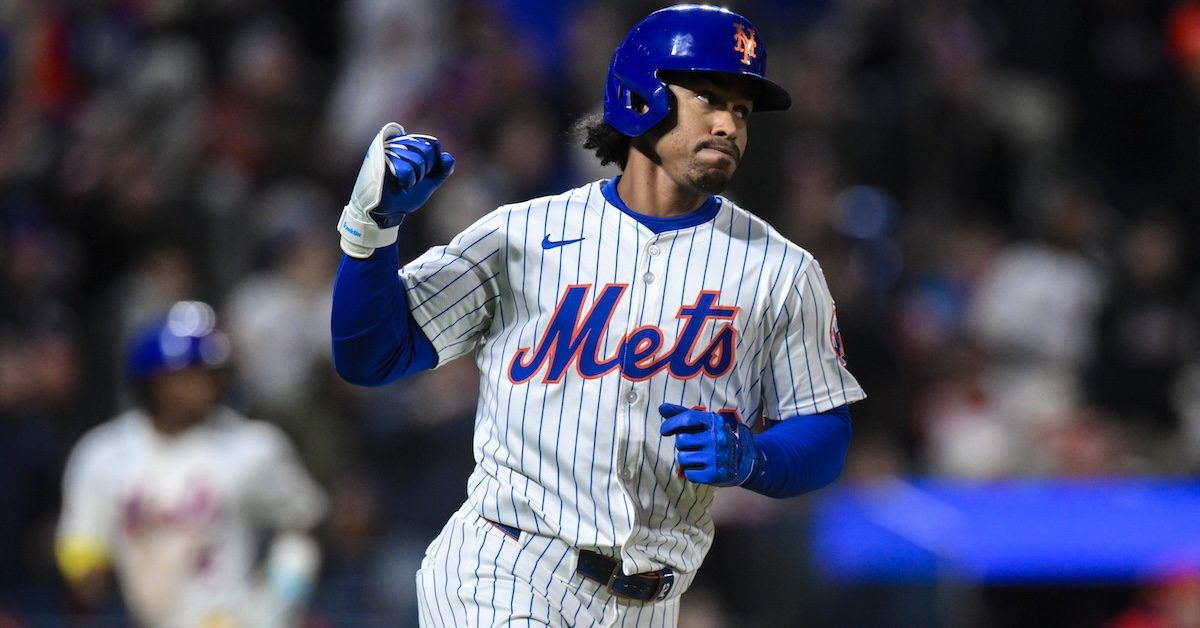
Francisco Lindor was born in Caguas, Puerto Rico, in 1993. His father hit him ground balls from the top of a hill while Lindor stood partway down the slope, fielding them as they came off at unpredictable angles. At twelve, Lindor moved to Florida to attend Montverde Academy and pursue baseball more seriously. He arrived speaking no English. He learned it within two years by insisting his teammates speak to him only in English and ordering food at McDonald’s to practice. He was drafted eighth overall by Cleveland in 2011. He is now under contract for $341 million with the New York Mets.
The ground balls off the hill are the relevant fact. The slope changed the angle of every ball, made every routine play nonroutine, required the fielder to read and adjust and commit without the certainty that the standard bounce provided. This was not innovative coaching. It was a father with a hill and a baseball and a son who would be in the major leagues at twenty-one. The shortstop you see today — the hands, the reads, the arm angle, the ease under pressure that makes the position look like it requires no effort — was made on that hill in Caguas, not in any academy, not by any professional instruction. The system found him after the formation was already complete. It always does.
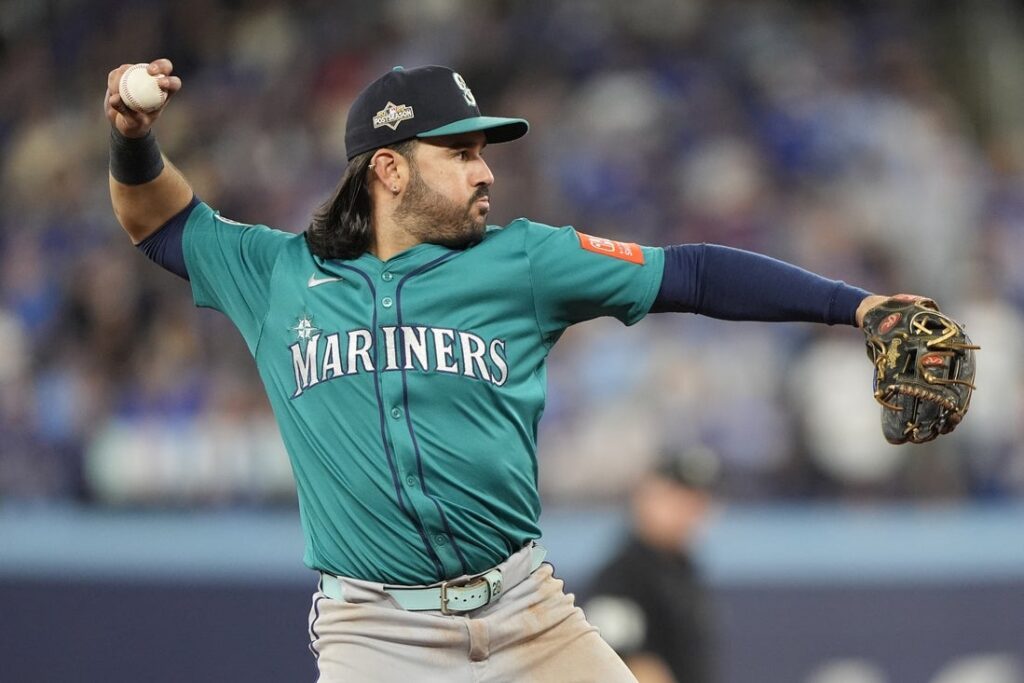
Eugenio Suárez was born in Puerto Ordaz, in Venezuela’s Bolívar state, and raised in Ciudad Piar, a mining community of fifty thousand people near the Orinoco River. His father played amateur baseball and took a six-year-old Eugenio to baseball fields near their house, throwing ground balls and batting practice. Suárez was rejected by multiple Venezuelan academies before the Detroit Tigers signed him in 2008 at sixteen. He spent six years in the minor leagues. He made the major leagues at twenty-two. In 2019, he hit 49 home runs for the Cincinnati Reds, setting the single-season record for Venezuelan players and for National League third basemen.
The rejections are the relevant fact. Not the record. A boy from a mining town near the Brazilian border, in the part of Venezuela where soccer rivals baseball for primacy, told repeatedly by the professional apparatus that he is not good enough, who continues anyway — because what is the alternative? Return to what Ciudad Piar offers? The formation produced by that combination of circumstances is not reproducible by a development system. It is produced by conditions. On the night of March 17, 2026, Suárez stood in against Garrett Whitlock in the ninth inning with the game tied, the championship on the line, and his U.S. citizenship application canceled by the government of the country whose team was on the mound. He hit a double to left-center. He said afterward that nobody believed in Venezuela. He was right. He hit anyway. Ciudad Piar taught him to hit anyway.
The thread running from Torriente and Oms in 1920 to Clemente in 1955 to Lindor in 2015 to Suárez in 2026 is not ethnic or geographic in the way baseball coverage usually treats Latin American excellence — as a cultural tendency, a flair, as if men from warm climates play with more emotion and men from cold climates play with more discipline, as if these are simply flavors of the same game. The thread is structural. It is the industrial condition, migrated and preserved.
Torriente and Oms were formed by Cuban baseball in the 1910s and 1920s the way Honus Wagner was formed by Pennsylvania in the 1890s: by a society in which the game was the exit and the alternative was visible and known. Clemente was formed by a Puerto Rican sugar town. Lindor was formed by a hill in Caguas. Suárez was formed by a mining community near the Orinoco. The geography changes. The structure is identical. A boy in conditions of real constraint, where the game is not leisure but path, where failure is not a developmental setback but a return to conditions he has seen and is determined to leave — this is the factory. This is the only factory that has ever reliably produced the specific quality being described. The American development apparatus is extraordinary. It has not replaced this factory. It has not come close.
The numbers confirm what the performances demonstrate. On 2025 Opening Day rosters, the Dominican Republic — a country of eleven million people — placed 100 players in major league baseball, the highest total of any foreign nation, a distinction it has held every year since MLB began tracking the data in 1995. Venezuela placed 63. The Dominican Republic produces major league talent at roughly five times the per capita rate of the United States. It does this while spending a fraction of what the American development apparatus spends per player. Cuba, whose players have been defecting for decades at enormous personal risk — because the alternative to defection is to never play at the highest level of the sport to which they have given their lives — Cuba produced Torriente and Oms and continues to produce players whose formation was complete before any MLB organization ever found them.
This is where the World Baseball Classic becomes something other than a tournament.
In the Caribbean and Latin America, the WBC is called the Clásico Mundial. The 2023 Pool D game between the Dominican Republic and Puerto Rico was watched by 62 percent of all households in Puerto Rico. These are not the viewership numbers of a sporting event. They are the numbers of a referendum, a census, a collective reckoning with who a people are and what they have produced. When Puerto Rico plays the Dominican Republic in a WBC pool game, the stands at loanDepot Park in Miami fill with people whose families emigrated from those islands and who are watching their countries — not franchises, not brands, not media properties — perform. The distinction matters enormously. For the men on those rosters, the WBC is the only occasion in their professional careers when the formation that made them is fully legible to the audience watching them.
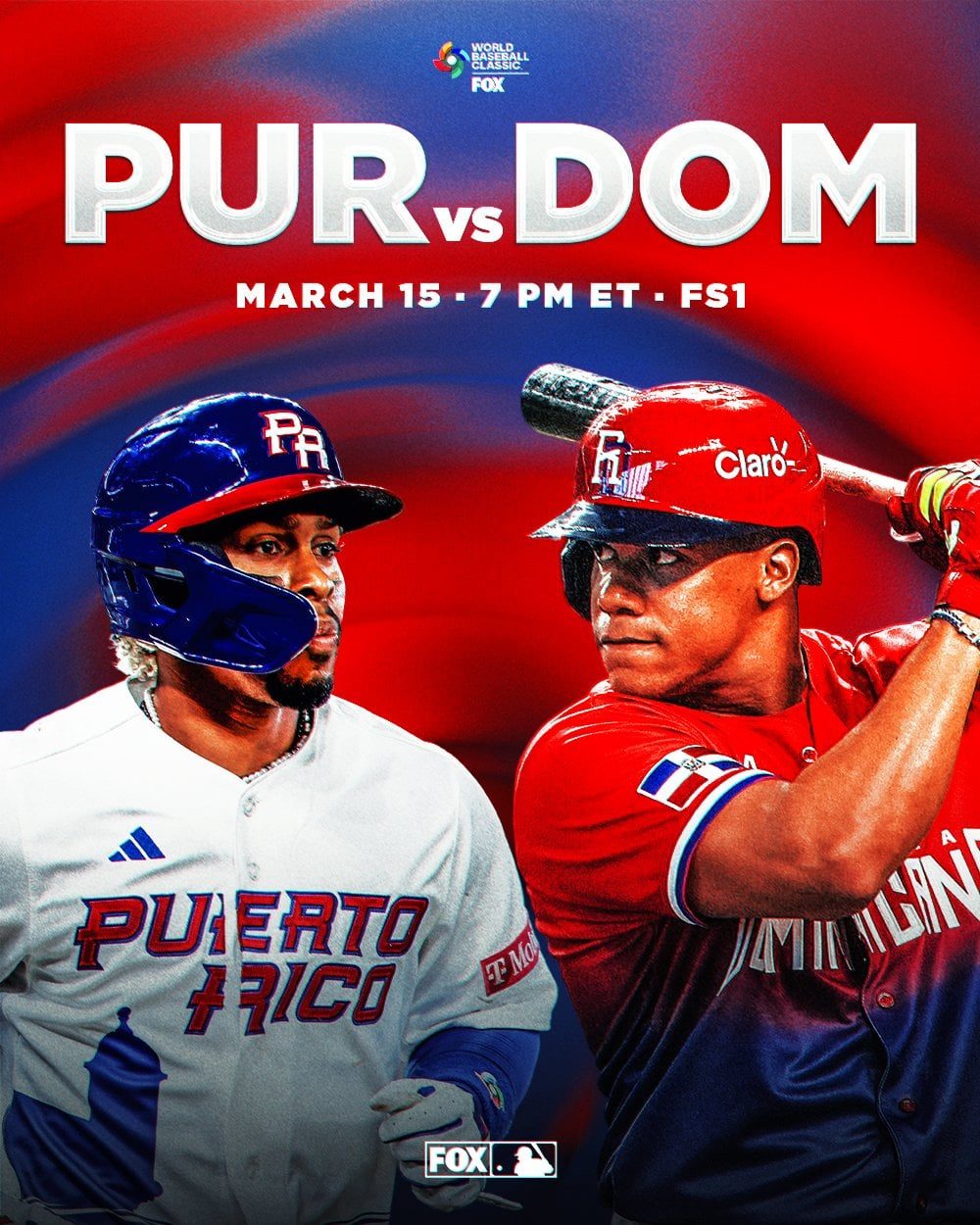
In the regular season, Francisco Lindor is the New York Mets shortstop. In the WBC, he is Puerto Rico — he is the hill in Caguas, the forty dollars a week his predecessor earned with the Santurce Crabbers, the Roberto Clemente whose number the island has permanently retired. The formation that the regular season obscures behind franchise identity and statistical categories and market positioning becomes visible again the moment players put on their national jerseys. This is why Caribbean players speak about the WBC with an intensity that American players — for whom the tournament is one more exhibition, one more commitment during a long preparation for the season that actually matters — find difficult to fully understand. The American game produces players who represent organizations. The Caribbean produces players who represent conditions. The WBC is the one stage where the difference between those two things becomes undeniable.
Eugenio Suárez had never played for Venezuela in any international competition before the 2023 World Baseball Classic. He was thirty-one years old, twelve years into a professional career that had taken him from Ciudad Piar to Detroit to Cincinnati to Seattle to Arizona, and the first time he wore his country’s uniform in international play, he became the emotional center of a Venezuelan team that went to the quarterfinals. Three years later, in 2026, he drove in the run that gave Venezuela its first championship. The citizenship application that had been canceled by the U.S. government was still canceled when he came to the plate in the ninth inning. He hit the ball to left-center and watched his country celebrate on the field of a stadium in Miami, in the country that had decided his path to citizenship was politically inconvenient. The WBC gave that moment a stage. The formation that Ciudad Piar produced gave it a result.
This is what the tournament preserves that the regular season cannot: the original relationship between the game and the conditions that produced it. In the regular season, baseball is a product. In the WBC — specifically in the Caribbean games, specifically in the games that mean the most to the people playing them and watching them — baseball is still what it was in the Pennsylvania coal towns and the Cuban sugar leagues and the Venezuelan mining communities. It is the path. It is the exit. It is the one door. And the men playing it play accordingly, with the absolute focus of people for whom the alternative is not an abstraction.
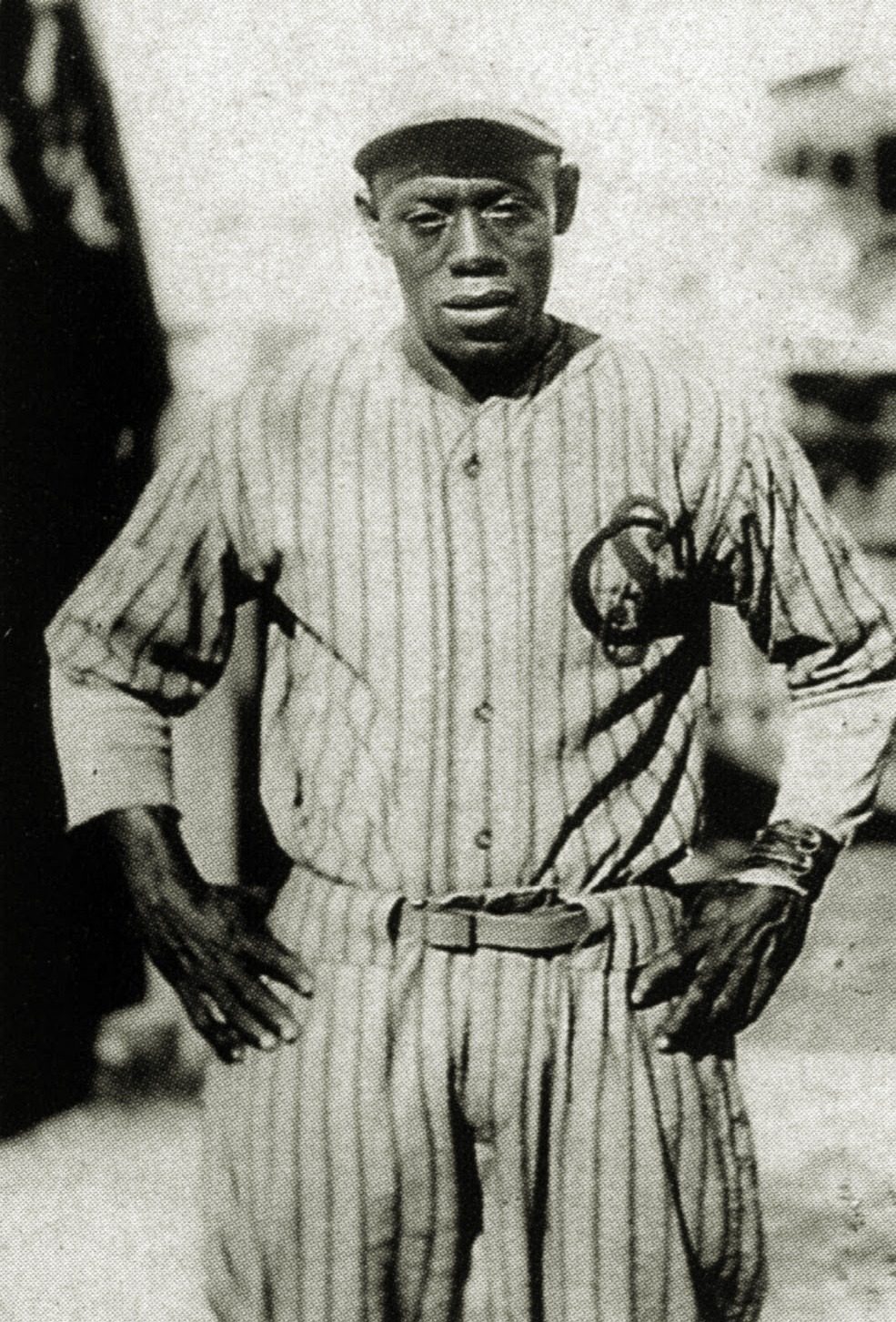
Alejandro Oms pretended not to speak English for years throughout his time in the Negro Leagues, navigating a country that had decided he could play its game but only in its designated shadow structure. He blew his cover once, when he was hit in the head by a pitch and asked his teammates for water. It is a small story, well-documented, that contains something essential. A man of Hall of Fame ability, playing in the only circuits available to him, managing the daily reality of that constraint with the same intelligence and patience he brought to the batter’s box. The at-bat was not separate from the life. It was the same performance, requiring the same skills, under the same kind of pressure. You see exactly what you have to see. You respond to exactly what is in front of you. You do not have the luxury of anything else.
This is the industrial condition, stated at full compression. And it is still being produced, south of whatever line the American game has drawn between itself and the conditions that originally made it what it was. The academies in the Dominican Republic, the amateur leagues in Venezuela, the fields in Puerto Rico where fathers hit ground balls from hills toward sons who will be in the major leagues before they are old enough to vote in the countries that will eventually pay them — these are not romantic alternatives to the American development system. They are the thing itself, preserved. The original factory, still running.
Torriente’s body came home to Cuba under a flag. Oms died with no money to eat. Clemente’s body was never recovered from the ocean. These are the costs the industrial condition extracts, and they are real, and they should not be sentimentalized. But the record these men produced — the record that the American game could not produce, that the American game in the years when it was most itself tried to steal by exclusion and failed — is permanent. It is the record of what actual conditions, pressing on actual bodies over actual years, produce in the men who survive them. The World Baseball Classic, for all its administrative machinery and commercial structure, is the only stage in the contemporary game where that record is still being made in plain sight, in front of audiences who recognize it because they came from the same conditions and know exactly what they are watching.
No program has ever replicated it. No program ever will.