The Silenced
The Silenced
I. A Eulogy for Hack Wilson and the Forgotten Men of the American Industrial Revolution
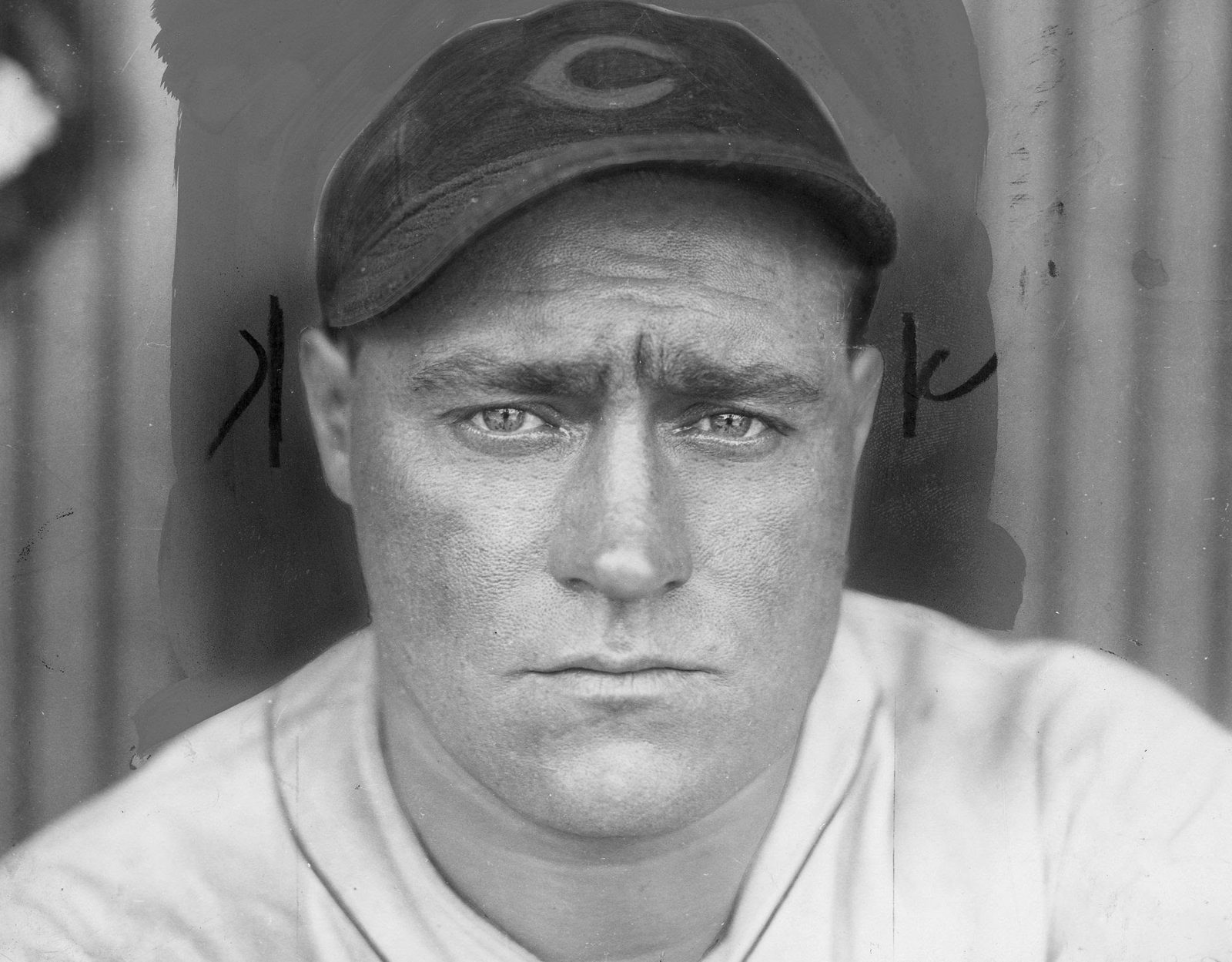
Hack Wilson, Chicago Cubs: via the Sporting News Archive
Hack Wilson was the ideal representative of the American Industrial Revolution; through his practice of the game of baseball and expression of pure, wordless physicality, Hack expressed the lost, forgotten, and disjected spirit of the men who labored alongside him in the mines, factories, and mills.
Hack was the fever pitch of power baseball, culminating in his 1930 MVP winning season: an outpouring of 56 home runs and 191 single season record setting RBIs. It was a year that proved: as Hank moved from the lead plates of the presses and steel hammers of the locomotive factories onto the field — it was a year that proved the industrial might of the destitute, forgotten American man.
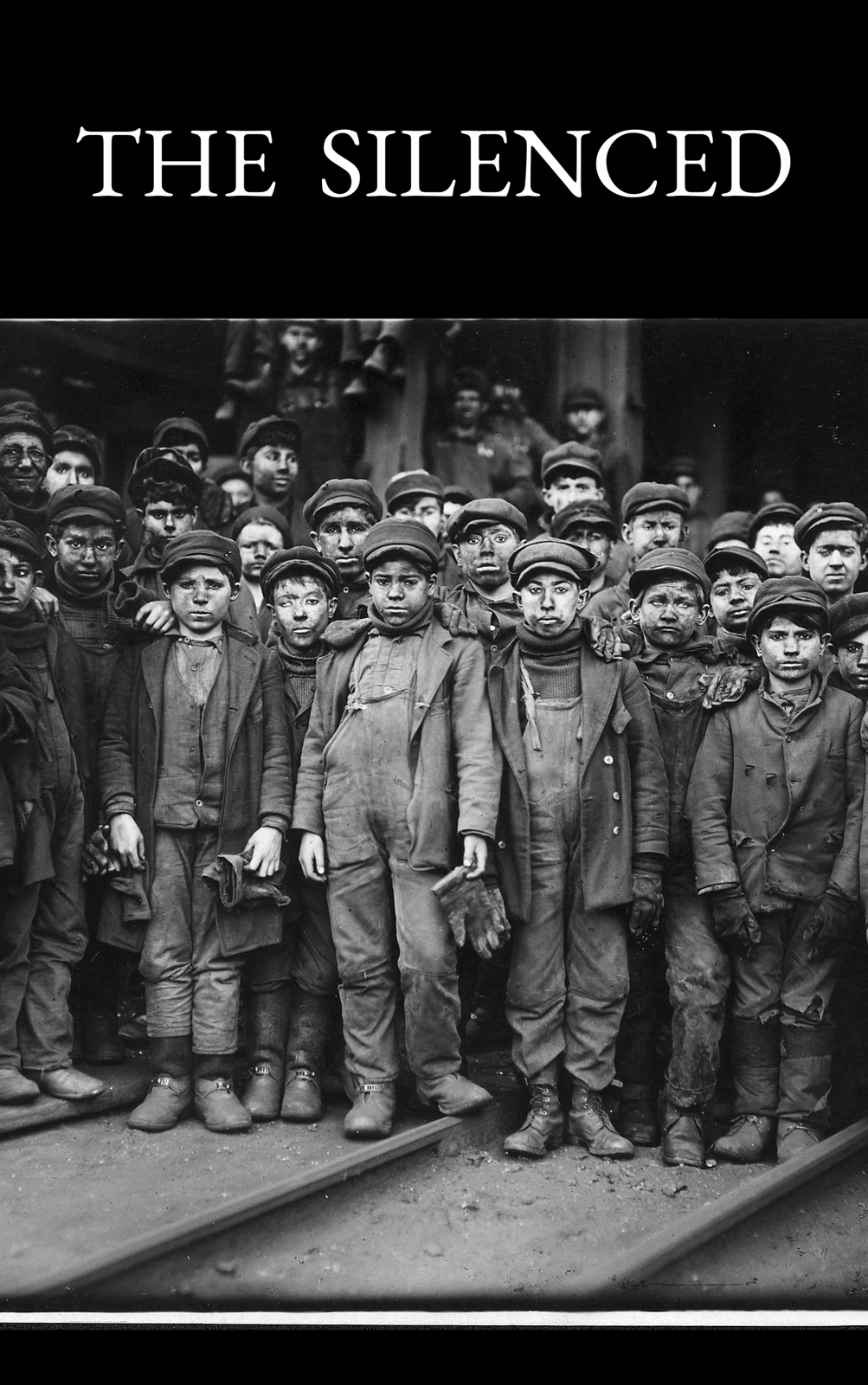
Hack was one of many: who labored and died, whose sons labored and died in the mines and factories; in the fervor of the American technological revolution. Children who began twelve plus hour workdays at the ages of 7, 8, 10; 11. Children who sorted coal in cramped wooden buildings; raised on a choiceless choice: to join the mills and factories and mines or starve.
Hack was the son of an itinerant woman from the streets of Philadelphia who died when he was seven; the son of a steelworker, who abandoned Hack to be raised by the owner of his boarding house. It was there that Hack first learned to ply his trade, raised by the owner and her son until he was taken to a small town called Chester by his father at 16 years of age, whereby he promptly quit school and began full time labor as a printer’s devil. Both of Hack’s parents were alcoholics; Hack grew to 5’6”; filled out his frame up to an astounding 230 pounds at his highest weight. It is now suspected that Hack was born with Fetal Alcohol Syndrome — which is associated with stunted and delayed physical and mental development. Hack himself drank his whole life; died as a drifter in the Baltimore streets at age 48. The National League raised three hundred and fifty dollars to pay for his funeral.
Hack was no hero when he played, but for a brief moment of the span of a couple of years where he rivaled Babe Ruth in the mastery and majesty of his power hitting. He was a sensation whose name faded almost immediately into obscurity but for a league of dedicated Chicago baseball fans; hereon, even after his Hall of Fame induction, is largely forgotten.
And this is why, when we look back at American culture, we can understand Hack Wilson to be the man of his milieu — a milieu suicided for American industrial and geopolitical advancement — suicided and left for cold blood. Hack was born without hopes — in the gritty steel town of Elwood City, Pennsylvania— with the entire deck of the world stacked against him. Even in his mother’s womb, he was poisoned. As he stepped out of her womb, she passed away — an unknown street girl. His father left him to be raised in a boarding house; he progressed only to a sixth grade education, wherein he left schooling and worked 12 hour days; four dollar weeks in the heat of the presses; swinging hammers in the locomotive factory. Hack had only his body; he was left to his last device. And in this furnace, he built his body. And as he built it, he found a medium for the expression of the entirety of the pent up pressure of the representative industrial modernity which lived and breathed within him: the game and the art of baseball.
This is what makes Hack Wilson representative: he is the artist upon the proletarian canvas of the game of baseball that is by nature and necessity illiterate. It is the home of the destitute, the itinerant, the vagabond, the slave, the hopeless masses. And it became, for Hack, not merely a witnessing, but the industrial force that he lived and felt in his sinew and bones — a force which was imminently, immediately identifiable and understood by the millers and miners and machinists who came to watch him play. Wilson’s body and mind, through trial, became the expressive furnace of modernity upon the canvas of America’s great game. And he expressed the greatest trial of hundreds of thousands of the forgotten American men — who lived and died in hill towns in the mountains of Pennsylvania; company towns in the Appalachian valleys. It was this: that in baseball, the greatest game, there was a direct and immediate salvation in Wilson’s bursting, explosive success — success that culminated in that 1930 season like a burning, shooting star. It was a success that spoke in the language of the body, the soma of hundreds of thousands of men: who saw the most beleaguered and belabored among them survive and surmount the American temple against all impossible odds.
Wilson’s success is the success of every man who was burned and buried in the coal marked graves of America’s early 20th century history. And there were many. First generation immigrants like the Lajoie family — who became millers and sharecroppers; sons and daughters of former slaves like Rube Foster; children killed by the dangerous work in the mines like Jake Daubert’s brother, Calvin. Their forced sacrifice to the proprietary altar of ruthless industrial power ruled and crowned by such historically infamous figures as Morgan, Ford, and Carnegie was a mass murder; a mass grave was laid before them from birth into intense, immense poverty — toward which only one path was paved. Like Iron Joe McGinnity, it was the foundries. Like Ed Walsh, it was the coal fields and the mines.
This was a doomed industrial choicelessness, where miners were paid in scrip; thus could only purchase goods from the companies which employed them. They were bound and tithed to the forced labor without recourse; a spell broken only by that fateful, lucky game. Players like Coveleski and Joe Jackson shipped out of their old milling and mining towns to cities like Philadelphia — bewildered and utterly stripped of context. Behind them were those who remained in the mines; those who understood what it meant for one of them to make it out — and not only to make it out of the mines, but to hoist the Worlds’ Championship trophy. It meant that they were seen, heard; that they existed. That their struggle and their triumph was real. That they triumphed with and alongside Lefty Grove; Hack.
This is the true passion of American baseball; there is no greater representative for the most important period in American cultural history — the most existentially, genuinely, foundationally, spiritually important in American cultural history — than Hack Wilson. A man who but for a moment held the American stage captivated; enthralled, with the power and might of a body and a force of expression which required no literature, no words — but the mightiest, full bodied power of a swing that the nation had ever seen; that baseball had ever experienced or witnessed. It was the power that held within it the entire birth and death of the industrial wound of the American world — a world which contained within it countless, unspeakable horrors and agonies — spoken most truly and best by the wordless sound and brushstroke of Wilson’s titanic swing.
Wilson was no poet, nor was he a priest or a politician. He was born and died imbued in alcoholism and poverty. He left little to nothing behind — no money, no literature; no legacy but his brief feats on the diamond in just over a decade’s time. Beloved by the fans and his community; gregarious and colorful, a brawler and a troublemaker, Wilson’s career ended as soon as it began. After the 1930 season, the magic was gone. He was soon traded to the Brooklyn Dodgers; began a quick decline out of the major leagues into obscurity, working at a public swimming pool in Baltimore as his last known job.
But it was that year of 1930 — and the four leading up to it besides — that expressed the loud roar at the heart of the unspoken; the hammer set down not upon lead nor steel but upon the cracking bat of the ball. On America’s greatest stage, Hack Wilson gave voice to the voiceless, speaking not with words, but with the full power of the forge of his body. And in that moment, there was an ineffable salvation. And there is to this day. It was the collision course of the silent, silenced tumult, turmoil, suffering and starvation of generations of American men — fulfilled in the only true language they knew at the depths of their hearts: the flesh, bone, blood, and bursting forth: of all that was not merely built about them with the labor of their souls, but the power, force, and majesty that was built within.
II. The Iron Men in the Furnace of Hell
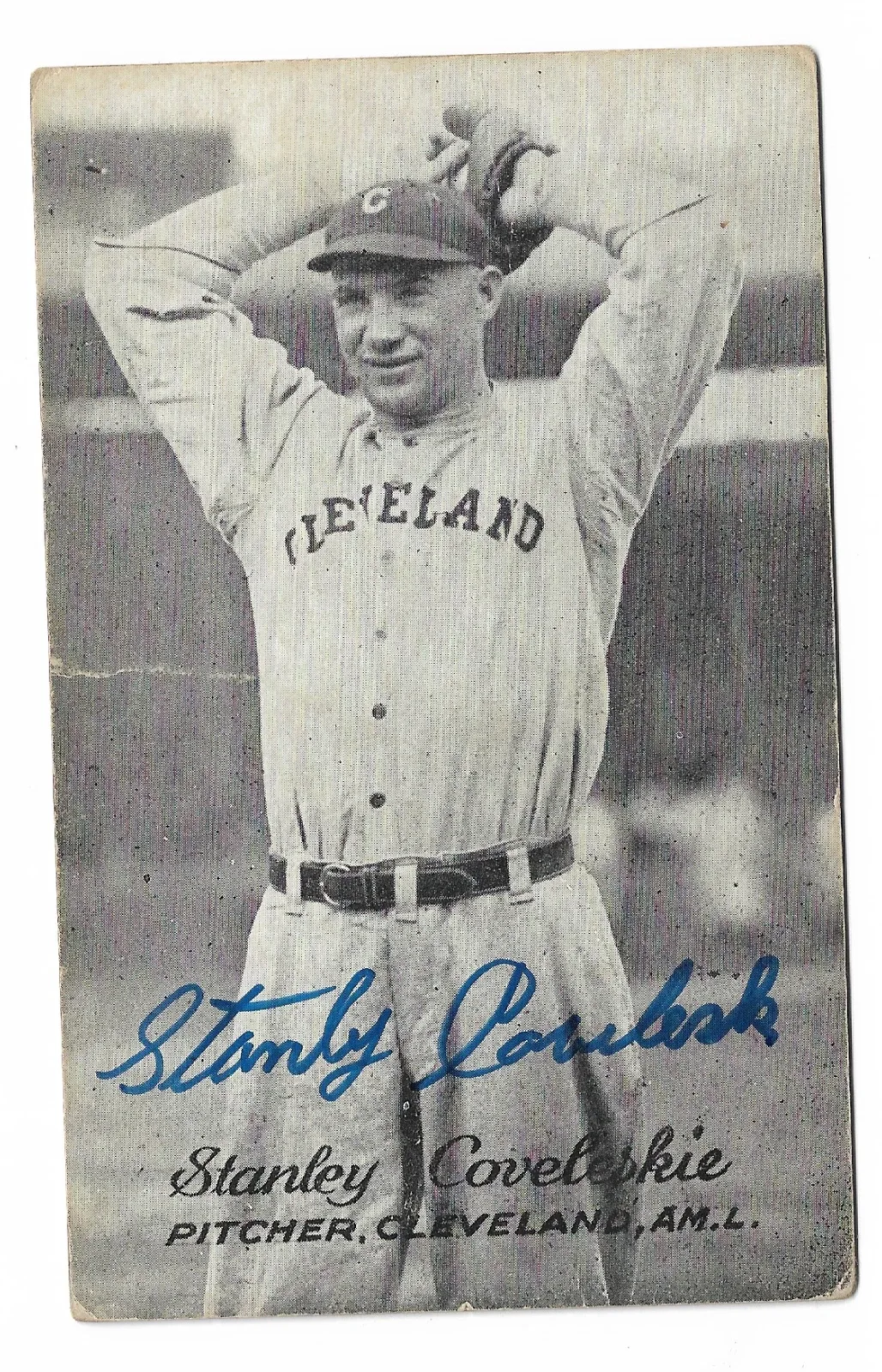
A 1921 signed Exhibits card from Stan Coveleski’s personal estate.

These men were not so different than the vast portion of history’s men — doomed to live and die and labor in a false construct of empire; delusions of grandeur, excess, carnality, and wanton destruction which rain down upon the annals of time with regular liturgy. Ancient scribes like Herodotus and Dante alike detailed them; like Upton Sinclair, wrote the jungle of iniquity and rot which plagued their respective times.
America’s iron men — in the belly of the beast of American modernity, served at the novel furnace of history. A furnace which mimicked and mirrored the new explosive technologies of excess which were birthed from the fire wound of modernity: the womb of metal, iron, and coal — and the technologies which condemned them to mass ritual death in the fields of Normandy and the plains of Africa.
The modern world was the creation of a deeper form of war, fought with the teeth of man’s most bestial, carnal, and empty urges. Men fucked, fought, and died in meaningless graves — pressing on the monotonous dirge of history with ever faster, clearer, and false distractions. Dials, buttons and levers to be pressed to produce a false sense of fashion, satisfaction; drugs of immorality; sick, poisonous curatives of culture which condemned a whole, sinking world to the dirge of what the 20th century would vomit up into the 21st — a paralytic illness of the brain, mind, heart and soul.
Plugged with plastic; shoveled with coal, these men and their children worked in the heart of the earth to dredge up the accelerant of man’s demise — a demise encoded into the very architecture of Dostoevsky’s vision of a spiritual war seeded in the very body of mankind: an evil no socialist physician could possibly extricate. A spiritual war encoded in the very template of the two thousand years after Christ: avarice, lust, ego, power, and the corruption which plagued the false institutions of the churches and cynical political movements which used the icon of the son of God to wage crusades; author genocides; deploy bombs.
These were the men, like Stan Coveleski, who lived human lives in the wreckage. Climbed out of the wreckage and performed the civilizational function only truly broken men can perform. The function of Job, which is the prophetic restoration of a soulless world, stung by cruelty and hatred — stung by a primordial body victimized by its own ancient violence and self induced agony and suffering: a body which cannot produce love, seeing as it must lick the wounds of survival unto murder, chaos, and destruction. A body encoded to be encased and encaged in a solitary, effortless tragedy of the fulfillment of its own genome.
This isolated language is the wreckage to which all men cling; defines and defiles them all. But for the men exposed to the tomb of agony; the witnessing of true hell which cleanses, purifies, and purgates. Like modern Dantes, Coveleski and his brothers journeyed into the bowels of the earth and thus came to a clean, true, and authentic conclusion; gained the rights of what it is to be good men; to find absolution in spiritual strength. Men who fought and won in the mouth of hell — at the death of his own wife just before his greatest triumph in the 1920 World Series; the awestruck face of the young man who had somehow escaped his fate to a life in the mines.
“There was nothing strange in those days about a twelve-year-old Polish kid working in the mines for 72 hours a week at a nickel an hour… what was strange is that I ever got out of there.”
Coveleski is and was a man in hell. A man in the living Duat of the sacrosanct hell of the modern world — condemned to his own devices, without language or voice to yell and extricate him from this land that seated him, incarnated him; birthed him from the womb into tragedy and struggle without end. There would be no money to remove him from the Shamokin mines, nor would there be a hand to reach him there, deep in the earth. And this was precisely where Coveleski acquired himself, as did his fellow breaker boy, Jake Daubert.
This is and was an era of men exposed to the total barrenness and wasteland of modernity. They were stripped bare like Inanna and led down through the gates of hell. What little they had was lost; they were led to and met the raw diamond corridor of their souls. Agony and admonishment, trial and purgation — these are the screams and the silences that emerge in the swift motion and culmination of Coveleski’s ascent, in that very year he lost his wife, allowing only two runs in three complete game victories.
That these men are not poets is essential. They are men from the silent furnace of suffering; expressed themselves with pure and absolute physicality. Self spoken; self effacing — were the men who emerged from this furnace. They stood with iron strength; spoke with clarity and direction; descended time and time again back into the body to perform the ancient function and duty of primal expression as art of the soul. Direct communication of the entire bound and compressed fire of years in the mines as children; taut, inconsolate poverty which hardened their flesh until only their eyes remained, screaming.
These were men who saw the depths; who were forged in them by the circumstances of their creation. This was an era; a time and a world of utter necessity; utter fulmigation. And in this world of fire these men walked — feet at first burned by coals; then calloused, hardened by trials. And it crafted and carved these men; it made them in self and in soul, the true philosophers of modernity. And by paradox — this being the nature of America — many, if not all of them were illiterate, rarely receiving beyond, at best, a sixth grade education. They were directly exposed, burned by the heat of the burden; expressed it directly through the vessel of the body — in a pre-linguistic order of total absolution, direct perception, and direct transmutation of the trials of the flesh and blood.
This work speaks to them and them alone: to know them and to see them at heart and at soul. To know nothing of the labors but of that which the labors scarred and marked within them; what the flesh and touch exposed within youth that hardened and ironed their souls, to craft the philosopher’s stone of the man that stood on the mound; stood before the world — and did not quiver nor shake. There was no fear of hell… because the hell was known. The hell that these men have walked.
III. The Trials & The Glory of the American Night: The Proletarian History and Passion of Baseball
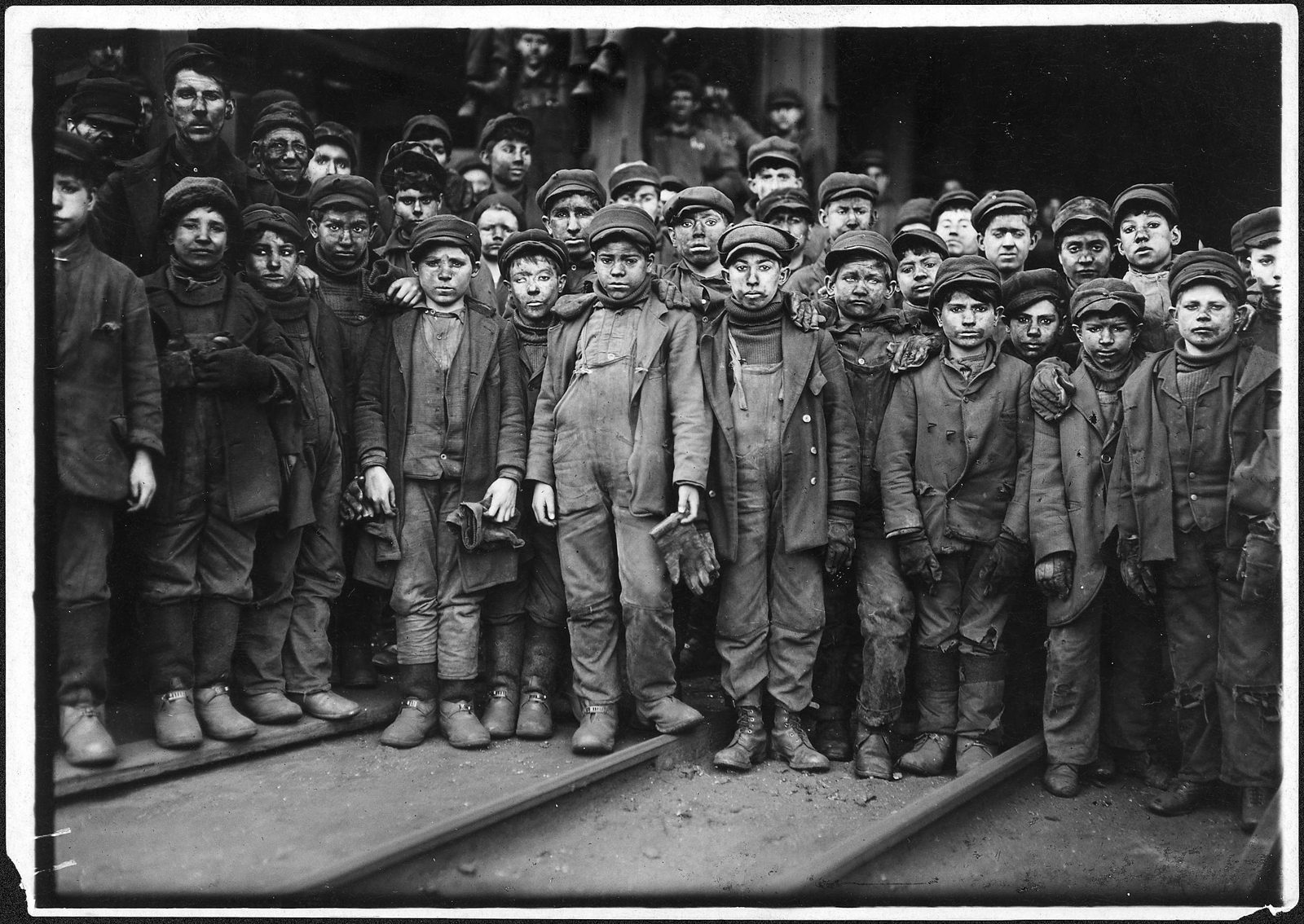
Lewis Hine: ‘Breaker Boys’ (1910)
When we are looking at history, we are looking at an unadulterated mass. When we are looking at proletarian history; the history of the common, working man, we are looking at a forgotten, unadulterated mass. The proletarian history is the history of the forgotten; disjected. The unremembered.
A proletarian American history is a baseball history — in that baseball is one of the few, if only, American and world historical outlets that allows for the proletarian voice to speak through its own mouth: a mouth of biography, story, personality, character, struggle, image, depiction; halls of memory.
Our world history is littered with noble and valiant attempts to return history to the rightful hands of its true owners: the ones who made it, built it, constructed it; labored unto the eternal return of the sun. Serfs, slaves, men in bondage, indentured servants; the indigenous rituals and practices overtaken and fought to a bloody death with colonial values, religious fervors, and ideological constructs. The overturning of history is merciless; memory is carved by the historians and the stories that refuse to forget; refuse to valorize the murderers.
The proletarian mass is unconquered. It is but now a memory, a silent memory, speaking through stone, pottery, and the photograph. Images like Lewis Hine’s Breaker Boys and the later WPA photography of the 1930s made the proletarian life, body, feeling, and humanity sensate and apparent through direct photographic image capture. The dolls and the beads buried by the Mayan dead; the potsherd and ostraca depicting everyday Egyptian and Greek life. These, together, are the body of the proletarian memory and working class history of all of time — simultaneously a fragmentation and a world unity, buried in the earth; hanging on tenement wall.
The trials of the working class in early modern industrial America are by and large forgotten by history and time. The names of presidents and historical events litter the common discourse; elections and wars paint with broad brush the reality of the working American in the early 1900s. This was a life and a time that was lived with the pauperic misery, struggle, and beatific grace of Dickens’ London, Chekhov’s Russia, and Hugo’s Paris alike. The humanistic literary tradition, which is also the historical tradition of the masters, has long since attempted to attend, witness, accomplish, and consecrate the existential history of everyday lives — the real sediment and foundational ground of history. This is — and was — an attempt to reach and elucidate the substrate of the unadorned, bare and raw concrete room and fireplace of the human soul in the winter of mortal war and power of greed.
American baseball is a living history of these men, women, and children. Each archived story in the annals of the Baseball Hall of Fame; the Society for American Baseball Research — each archived story is a tribunal to the real tribulations which constitute the American body of history; the existential history which is at sum the greatest literary effort and achievement of all time. From Ruth to Daubert to Foster and Fleet Walker — the grand archive of baseball documentarian, biographical history is the American novel proper; it is the modern industrial American story of the son of slaves; the daughter of sharecroppers; the itinerant prostitute on the streets of Pittsburgh; the son in the brutal, mechanistic heat of the factory; the child, buried deep in the mines.
It is the history that America does not face, for she is not proud to face it. It is not the neat, conquered story of victors — nor is is the dressing of falsity removed from blood; purified from the wound of history and time. The history of baseball addresses the forced indoctrination of the Native American peoples into hierarchical modern American society through schooling and ever-shrinking reservation clauses: producing and including such baseball historical figures as Charles Bender and Jack Meyers, both of whom were called ‘‘Chief” by their fellow players for their native heritage. It addresses the brief and profound moment where players like Fleet Walker had a mere fraction of space in the American professional leagues — taunted, attacked, refused, spiked — before they closed their doors to black baseball until Jackie Robinson arrived on the Brooklyn Dodgers in 1947.
It addresses, by way of profound and thorough historical documentation — interviews, recordings, books, and the cultural body built by American reporting on baseball itself as it grew and unfolded into a mature cultural institution — the lives of the women and children who participated in the transformation of the working life of American men from backgrounds as diverse as the mines and the sharecropping fields and the dirt poverty of Mobile, Alabama to laying the founding bricks, stones, and pillars of what became modern professional baseball.
This is a form of cultural memory that does not require excavation any longer — but rather, recognition for the force that it truly is: a force of proletarian revelation and celebration. The first 80 years of modern baseball, from 1870-1950, are a complete work: they are a total Homeric epic of the triumph, surmount, suffering, and execution of the American proletariat — the children of plantation slaves and the child laborers of emergent American industry. And it is a story that has been told with documentarian care with leagues and leagues of reporters and historians: who have done the work of cultural stewardship out of true desire, passion, and love for the game.
What this has gifted America and the world is something unprecedented — a real history borne out of patience, love, and care. A real human history born out of genuine, profound human interest — in a game and a play which is shared across generations; in this sharing across generations, an oral and written tradition that has been preserved of the real dirt, mud, hardship, fury, and ecstasy of modern proletarian life that exceeds any one novel; any one epic poem or tale told by any one man, meant to sum up an entire epoch of humanity, or an entire civilization’s suffering, purpose, or meaning.
And in this way, the uniform, bat, ball, and glove of baseball history has unwittingly provided a venue for a real glimpse into truth; a real way for America to remember itself; by nature and extension, an entire world to witness a history of truth and integrity; a truth of honesty built into the caring, loving documentation of each ballplayer’s life: a practice and process conducted in the SABR biographies project as well as in the archival work at the Baseball Hall of Fame Museum and Library in Cooperstown, New York. Each historian and archivist who lays hands on this stewardship lays hands on a world with deep meaning and value to be preserved and passed on — the first true communal history of proletarian life, writ in painstaking, collective detail.
No death or suffering or misery is removed. Nor reality of violence of segregation or attack. Nor struggle with money — the true nature of what life was like for early black baseball players like Dick Redding or the struggle to procure fair wages for their work and labor — as was the case with Hugh Duffy; many other men who played the game. It reveals the importance of baseball to the Cuban national liberation movement and the Spanish-American War, which ties players like the forgotten Alejandro Oms, born in poverty in the Cuban sugar mills — to Stan Coveleski, whose oldest brother died fighting in the war. It is a history of total intertwinement — a history which reveals the current events and presidencies and so-called “major histories” as they should truly be revealed — from below. They start with the young Satchel Paige: a troubled boy in Mobile, Alabama who was so good at throwing stones it gained him respect from the white boys who harassed him on the street as a child. All the while, he would gather bottles; port luggage to help support his family. It was finally petty theft that landed him in reformatory — where, like Babe Ruth, he learned how to pitch and play baseball.
This history resounds in the silence elsewhere and otherwise, as in Hine’s 1910 photo, as young breaker boys stare back out silently into the camera. This silence resounds throughout the hundreds of thousands of tombs, manicured, preserved, and unmarked, of the men, women, and children who died in the thresher of modernity: whose names were not remembered, whose lives were not pronounced; whose stories died in the darkness of the silence of history — the gap between their world and our own; the span of time which only sounded in wind and the rushing of water.
Baseball, and the history of baseball, reclaims this fury. This sound of the fury of the passage of history; the calm silence that it leaves in its wake. Stripped are the factories and the mines, barred off, windows smashed; walls graffitied and left to the overgrow of vines. The voices that echoed in those halls are gone. Signs remain: ledgers, family photographs in attic dust, scrapbooks that tell personal stories — stories that remain in the shadows of the tale America tells itself to remain alive; assume ignorant vitalities and the presumption of egoic personal destinies in the face of the wake which has brought it to bear — here in this year; here, at these crossroads of moments.
When we look towards baseball history, we see, feel, perceive, and hear an authenticity that pierces the American night of history; the falsity. The paved over grandeur of monuments and myths, storytelling that refuses the real history of violence, suffering, astonishment, accomplishment, and joy. That history resides forever in the nameless men — nameless at first in the photographs; given faces, bodies, returned to character in the historical light in the project of remembering the soul of modernity; the industry from whence they came. This is the gift of baseball history: it gives dimension to a history of war, labor, suffering and death. It infuses the industrial modern world with true sanctuary: the sanctuary of play, joy, and battle upon the early fields of America’s pastime. And in doing so, it returned not only the early modern world to its true inheritors: the soot covered men and boys, children and women — but the beauty of history to those who seek to truly behold it, in all of its glory, agony, chaos, and light.
Baseball was the landedness of brutality of the early modern; that breaker boys and millers and factory workers surmounted its dugout steps and carved their names and stories into its history is that the proletarian mass itself did so thusly. They clamored in the stands, collected the cards; cheered their favorite players over newspaper headlines; eventually, the advent of the radio transmission. It gave them something to own, something to celebrate; something to gather. A pride of a neighborhood. A city of Pittsburgh. Honus Wagner, miner and miner’s son — the great, powerful shortstop of their very own Worlds’ Champion Pirates team of 1909. And thus he was printed on the victorious baseball card set, distributed by Tip Top Bread — locally exclusive to Pittsburgh.
This is what it means to own history when one owns nothing. And this was the missive behind Rube Foster’s determination to begin the united, organized Negro Leagues: an opportunity to create a community of one’s own. Baseball is that; was that to the early modern proletariat of American history. It was their field; it was their sons upon it; it was the joy of their lives amidst the dirt, madness, exploitation, and power which wracked their lives amidst cries for the lord. It was a history of goodness, madness, schizophrenia, strife, death, illness — and the transmission of the epic of glory: from miner to miner, from miller to miller. Each stood in the sun and passed the gold trophy. Hand to hand — as a celebration that they knew was not only their own, but of each hand that touched stone, steel, and coal. And in this way, it was a salve; an epiphany — writ to this day for public memory: of the glory of the silenced forgotten of history.
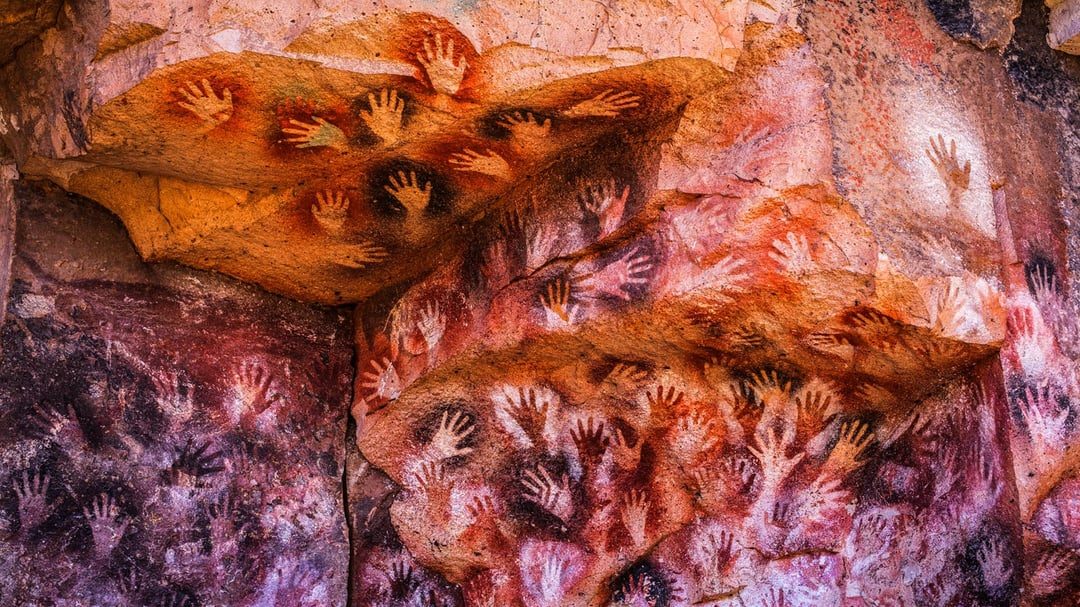
The handprints on the wall of Cueva de las Manos, Argentina, 7,300 BC and 700 AD