The Sisler Limit, Continued: A System Where Every Plate Appearance Becomes a Hit Attempt
The Sisler Limit, Continued: A System Where Every Plate Appearance Becomes a Hit Attempt
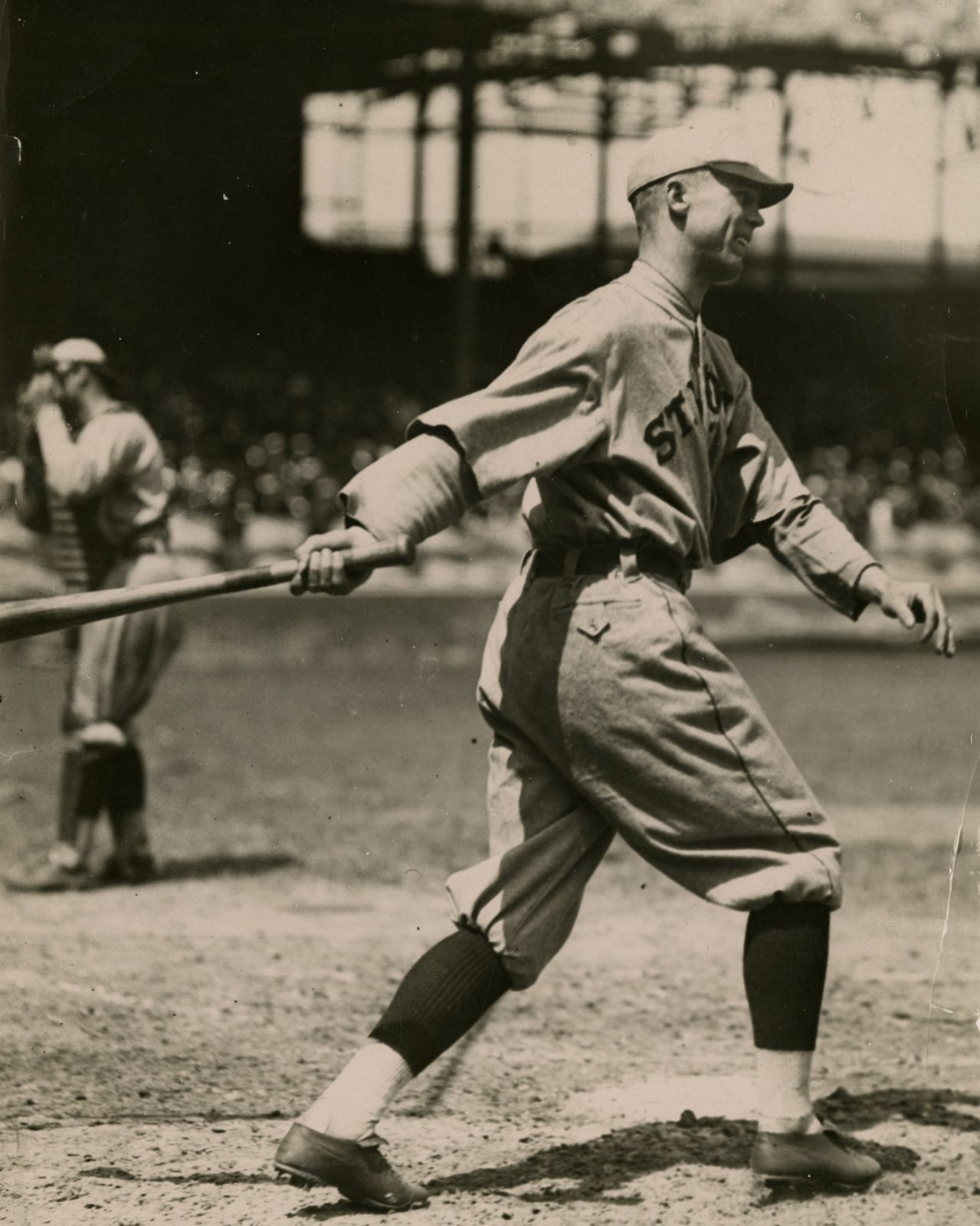
The Sisler Limit, Continued:
A System Where Every Plate Appearance Becomes a Hit Attempt
George Sisler is not just an outlier in batting average.
He represents a fundamentally different structure of hitting.
Across more than 9,000 plate appearances, his career resolves into a simple and highly unusual pattern:
Minimal walks
Minimal strikeouts
Maximal balls in play
This is not incidental. It is systemic.
A Collapsed Outcome Space
Every plate appearance in baseball can end in one of three ways:
Walk
Strikeout
Ball in play
Most hitters distribute across all three.
Sisler does not.
He simultaneously suppresses walks and strikeouts, forcing nearly every plate appearance into contact
The result is a collapse of the outcome space:
Almost everything flows through the bat
Why OBP Collapses Into AVG
Because so few plate appearances are resolved without contact:
walks rarely add to OBP
strikeouts rarely remove opportunities
What remains is a direct relationship:
On-base percentage becomes a near-function of batting average
This is why Sisler produces the smallest gap between AVG and OBP among all sustained .340 hitters.
It is not just that he hits well.
It is that:
his entire offensive system is routed through hitting
Compression of the At-Bat
This structure begins at the level of time.
Most hitters extend plate appearances:
they take pitches
they work counts
they create branching outcomes
Sisler compresses them.
Plate appearances resolve quickly, decisively, and through action
This has a critical effect:
fewer deep counts
fewer chances for walks or strikeouts
more immediate balls in play
He removes the temporal space in which alternative outcomes develop.
No Negotiation
Walk-driven hitters operate through selection.
They negotiate with the pitcher:
refusing marginal pitches
waiting for leverage
forcing mistakes
Sisler does not negotiate.
He accepts the interaction and transforms it
Where others filter opportunities, Sisler converts them.
Maximum Exposure
Because he avoids both walks and strikeouts:
He generates more balls in play per game than almost anyone
This creates a different path to greatness.
Not through:
selectivity
or leverage
But through:
volume of attempts combined with elite conversion
He does not reduce the number of chances.
He increases them—and wins them.
Risk Transferred to the Field
Putting the ball in play introduces risk:
defense
variance
loss of direct control
Most hitters avoid this through:
walks
strikeouts
Sisler embraces it.
He routes nearly all outcomes through the field—and still succeeds at elite levels
That is the difficulty of his system.
No Secondary Engine
Most great hitters have fallback mechanisms:
when hits decline, walks rise
when timing slips, they extend at-bats
Sisler does not.
When his batting average drops:
his on-base percentage drops with it
his production declines directly
Because:
there is no second channel to stabilize output
His system is:
pure
but exposed
The Limit of Pure Hitting
This is what makes Sisler unique.
He is not simply a high-average hitter.
He represents:
the upper boundary of a contact-only offensive system that can still sustain elite performance over time
Push further:
less force → the system weakens (insufficient impact)
more aggression → the average collapses
Sisler sits exactly at the point where:
maximum contact purity remains viable
Conclusion
George Sisler is not operating within the modern, multi-channel structure of offense.
He exists at the edge of an earlier system:
one in which nearly every plate appearance is decided by the act of hitting itself
He does not optimize the at-bat.
He compresses it.
He does not expand offense.
He contains it.
A fully contact-dominated system, where reaching base is almost entirely a direct function of making contact—and doing so better than anyone else ever has at scale.