The Three-Sky Bridge: Hybrid Cost, Regime Adaptation, and 19th-Century Pitching Greatness
The Three-Sky Bridge: Hybrid Cost, Regime Adaptation, and 19th-Century Pitching Greatness
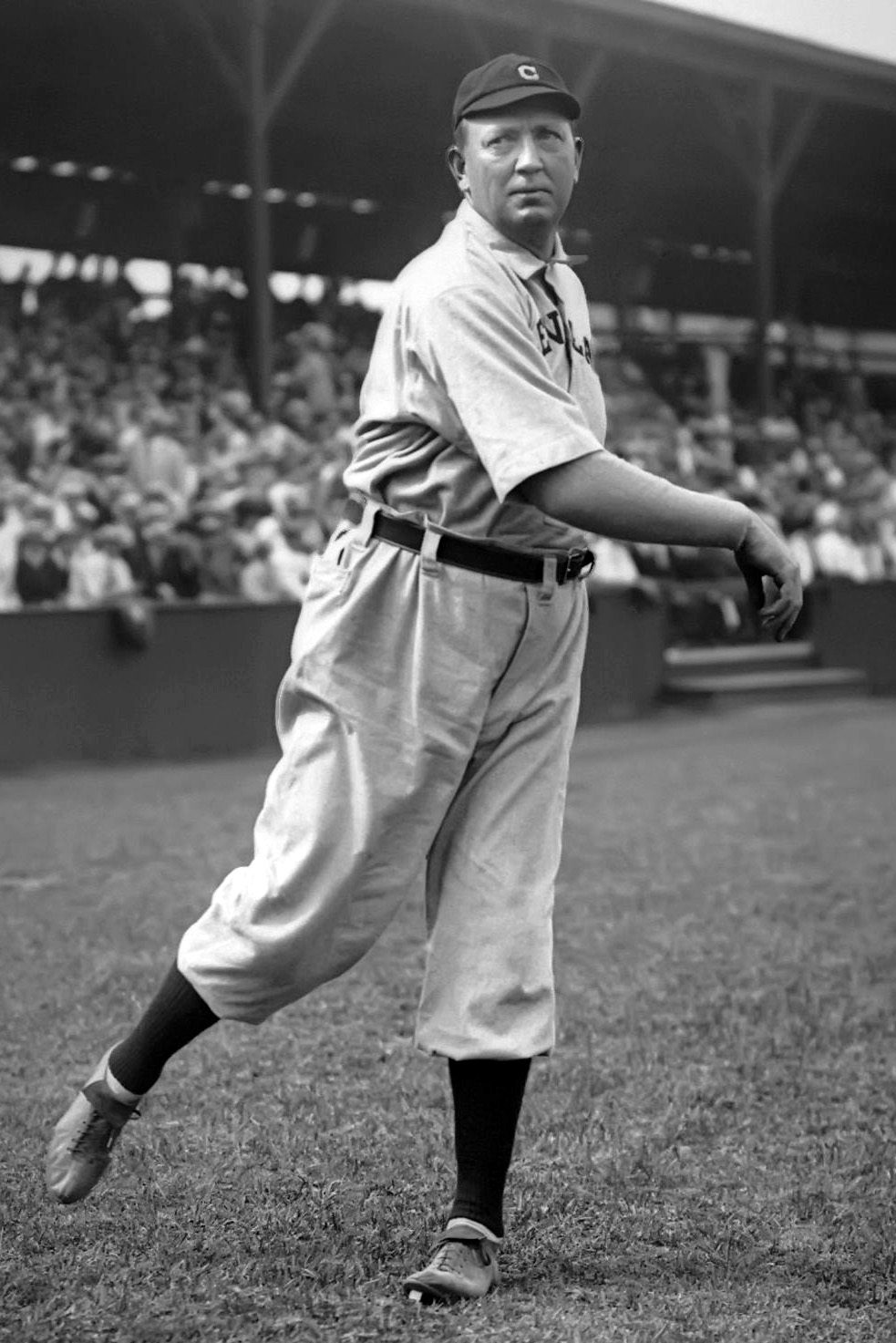
The Three-Sky Bridge
Hybrid Cost, Regime Adaptation, and 19th-Century Pitching Greatness
Baseball between 1880 and 1910 was not one scoring system.
It was three different physical environments:
Pre-1893 (≤1892) — pre-distance pitching geometry
The 1893 Shock (1893–1900) — mound relocation, sustained offensive expansion
Deadball Stabilization (1901–1910) — low-run structural reset
Pitchers who span all three do not simply accumulate innings.
They must adapt, survive, and re-establish dominance under new denominators.
That burden is measurable.
I. The Model
Atmospheric suppression is defined as:
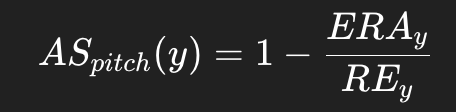
Where:
(ERA_y) = season ERA
(RE_y) = league runs per team per game
Interpretation:
What fraction of the scoring sky did the pitcher erase?
For each regime:
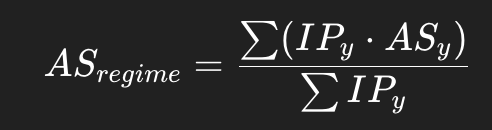
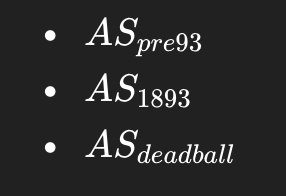
This produces three structural identities per bridge pitcher:
II. The Single-Regime Archetypes (Contrast)
Tim Keefe (Primarily Pre-1893)

Keefe is overwhelmingly a pre-1893 suppressor.
His dominance lives in one sky.
Amos Rusie (1893 Shock Specialist)
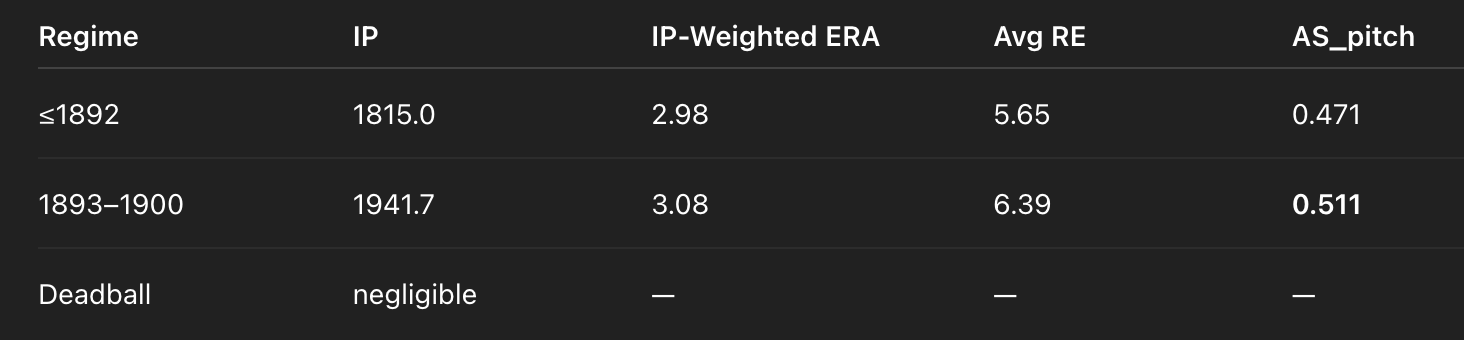
Rusie’s peak suppression occurs inside the 1893 expansion sky as an elite two regime pitcher.
He does not materially revalidate in the deadball core.
Keefe and Rusie illustrate both the clean, single-regime identity and the physics of 1893 transitional pitching genius.
Nichols and Young take this a step further.
III. The Three-Sky Bridges
Kid Nichols
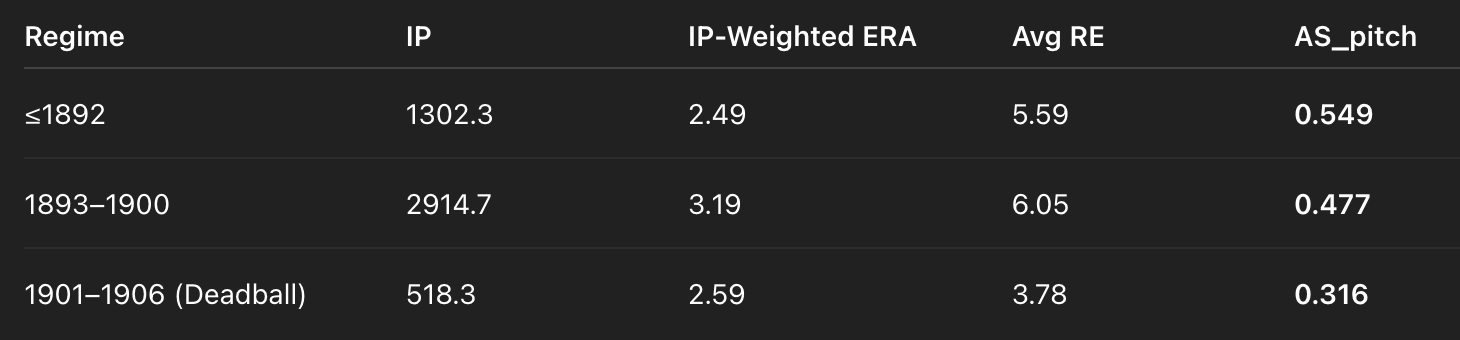
Nichols is dominant pre-1893 and strong in the expansion era.
But his atmospheric share falls materially in the deadball core.
Cy Young
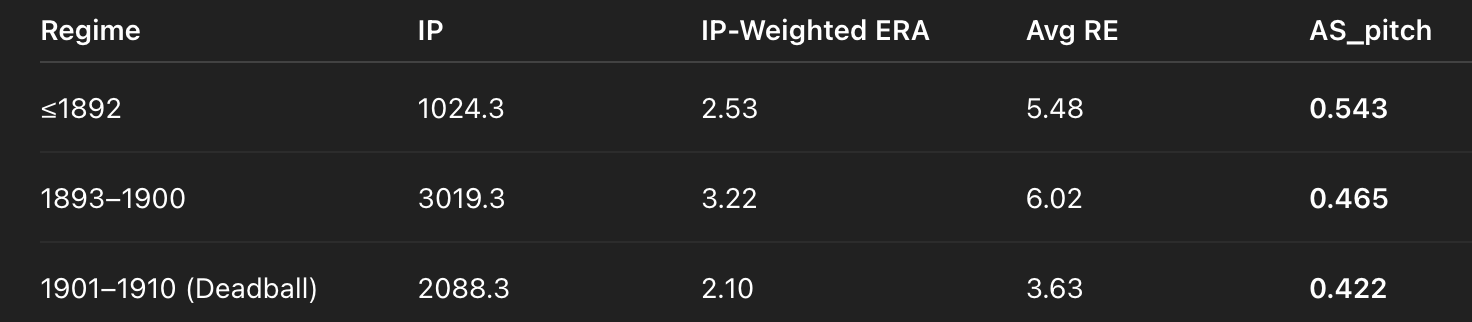
Young maintains strong suppression across all three skies, including over 2,000 IP in the deadball phase.
IV. Hybrid Composite (Three-Regime Survival)
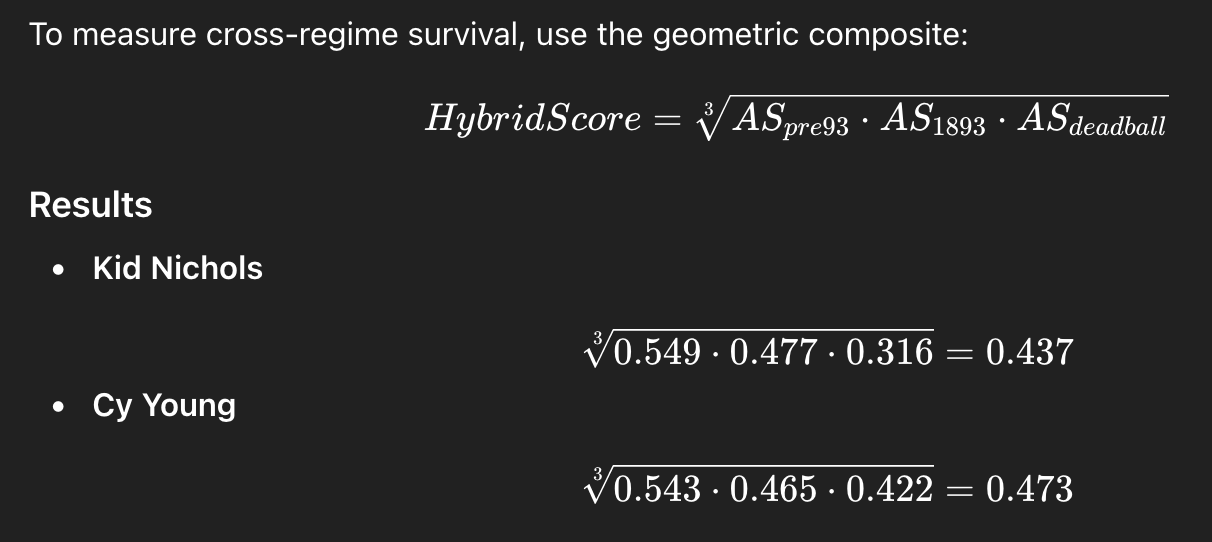
V. What the Numbers Show
Keefe = pre-1893 mountain
Rusie = 1893 shock ace
Nichols and Young = three-sky bridges
Young has the stronger three-regime composite
The difference is not cosmetic.
It appears specifically in the deadball leg.
Nichols’ suppression drops to 0.316 in the deadball core.
Young sustains 0.422 across 2,000+ innings.
That is the hybrid cost expressed numerically.
VI. The Structural Meaning of 1893
The 1893 distance change is not just a rule tweak.
It is a denominator reset.
Pitchers who dominated before it had to:
Recalibrate mechanics
Adjust approach
Reconstruct dominance in a new run climate
Nichols and Young both survived this shock.
But Young did more than survive.
He:
Dominated pre-1893
Re-established suppression in the expansion
Re-established it again in the deadball stabilization
That is not career longevity.
That is epochal transformation.
VII. Final Thesis
Single-sky legends dominate one environment.
Bridge legends must:
Adapt to structural change
Re-engineer suppression
Re-establish atmospheric control under new physics
When measured across all three regimes:
Keefe is supreme in one sky.
Rusie is supreme in another.
Nichols is a bridge with decline in the third.
Cy Young is the cleanest three-sky suppressor.
The hybrid cost reveals what peak numbers obscure:
The greatest transitional pitchers are not those who dominate once —
but those who recreate dominance when the structure itself changes.
And in 19th-century pitching, the 1893 shock is the hinge.
Those who reassert suppression after it — and again in the deadball reset — stand apart.