The Threshold of Formation and the Unity of Ancient Thought: A Final Synthesis of Shamanic Trance, Apollonian Metaphysics, and the Egyptian Book of the Dead as Structural Encounters with Constraint
The Threshold of Formation and the Unity of Ancient Thought: A Final Synthesis of Shamanic Trance, Apollonian Metaphysics, and the Egyptian Book of the Dead as Structural Encounters with Constraint
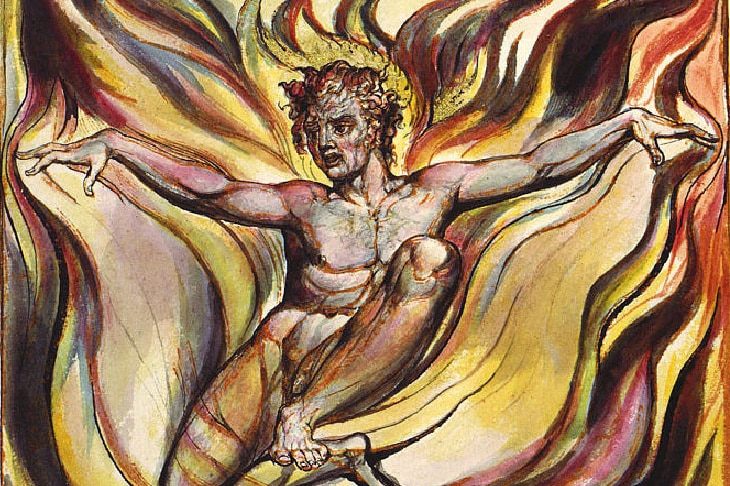
Constraint Geology XI:
The Threshold of Formation and the Unity of Ancient Thought**
A Final Synthesis of Shamanic Trance, Apollonian Metaphysics, and the Egyptian Book of the Dead as Structural Encounters with Constraint
Abstract
This chapter presents the final synthesis of a unified framework in which ancient religious, philosophical, and ritual systems are reinterpreted as structured engagements with the limits of human formation under constraint. It demonstrates that shamanic trance, Greek metaphysics, and the Egyptian Book of the Dead converge on a single phenomenon: the destabilization and potential reorganization of the human organism at the threshold of its regulatory capacity. Where these traditions describe hidden realities, divine unity, or afterlife journeys, this account identifies phase transition, structural breakdown, and the conditions for integration. The result is a unified interpretation in which myth, ritual, and philosophy are understood as early human encounters with the same underlying process: the transformation of structure under pressure across time.
I. The Convergence
Across distant cultures and epochs, a common structure appears.
In global shamanic traditions, the individual enters trance, dissolves, and returns transformed.
In Greek thought, the visible world is declared illusory, composed of opposites concealing a hidden unity.
In Egyptian funerary texts, the soul undergoes judgment, fragmentation, and possible reconstitution after death.
These systems differ in language, symbol, and cosmology.
They do not differ in structure.
All three describe the same underlying event: the human system encountering the limit of its own stability under constraint.
II. The Threshold
The human organism is a regulatory system.
It maintains:
identity
perception
coherence
within a bounded viability range.
Under sufficient constraint:
this regulation fails
coherence dissolves
structure destabilizes
This is not gradual.
It is a phase transition.
At this threshold:
the Apollonian regime of order collapses
the Dionysian regime of intensity emerges
the system enters a state of indeterminacy
This state is:
unstable
unbounded
unresolved
It is the condition of:
formation in progress
III. The Experience of the Threshold
When the system crosses this boundary, experience changes radically.
It may include:
dissolution of self
merging with environment or cosmos
perception of unity behind opposites
collapse of temporal sequence
overwhelming intensity
These experiences are historically interpreted as:
divine encounter
cosmic unity
transcendence
afterlife
Structurally, they are:
the internal registration of a system no longer able to maintain differentiated organization.
The “unity” perceived is not a hidden metaphysical object.
It is:
the loss of distinction within the system itself.
IV. The Ancient Interpretations
Shamanic Traditions
Trance is induced through:
rhythm
deprivation
chemical alteration
The practitioner:
dissolves
encounters intensity
returns with altered structure
This is understood as:
travel to other worlds
communion with spirits
It is, structurally:
controlled exposure to threshold-level constraint
Greek Metaphysics
In the thought of Heraclitus and the Apollonian tradition:
reality is hidden
opposites conceal unity
the world is appearance
This is understood as:
- a metaphysical truth behind phenomena
It is, structurally:
recognition that surface perception fails to capture underlying structural dynamics
Egyptian Funerary System
In the Egyptian Book of the Dead:
the self dissolves at death
enters a fragmented domain
undergoes testing
is either reconstituted or destroyed
This is understood as:
- the journey of the soul
It is, structurally:
a model of system behavior under total constraint
V. What They Discovered
Without formal theory, these traditions identified:
The self is not stable
It can dissolve under certain conditions
Dissolution can lead to:
transformation
or collapse
The process can be:
induced
navigated
survived
They encountered:
the transformability of human structure under extreme conditions
VI. Where They Diverged
They interpreted these encounters as:
access to a hidden realm
contact with divine unity
continuation of the soul
This introduces:
a second layer of reality behind the first
VII. Structural Resolution
The unified framework presented here removes this duplication.
It shows that:
no hidden metaphysical realm is required to explain these phenomena
All observed effects follow from:
constraint
structural instability
reorganization
Thus:
“hidden harmony” = non-obvious structural integration
“god behind opposites” = system-level unity under tension
“afterlife journey” = system at terminal threshold
“eternity” = collapse of temporal modeling
VIII. The Unified Law
Across all domains, the same principle holds:
Constraint acting on a system over time produces structure.
When constraint exceeds capacity, structure destabilizes and may reorganize or collapse.
This law applies equally to:
geological formations
biological organisms
human identity
cultural systems
There is no separate category for:
the spiritual
the metaphysical
the symbolic
These are:
interpretations of structural processes.
IX. The Final Position
What ancient systems called:
the hidden
the divine
the afterlife
is, in this framework:
the system encountering its own limits
What they described as:
unity
eternity
transcendence
is:
the experiential consequence of structural breakdown and reorganization
X. Conclusion
The convergence of shamanic practice, Greek philosophy, and Egyptian ritual reveals not multiple truths, but a single underlying process.
All are encounters with the threshold of formation.
They differ only in interpretation.
This framework provides:
a unified explanation
a structural grounding
a removal of metaphysical duplication
What remains is:
formation under constraint, and the possibility of transformation at its limits.
Final Statement
Ancient systems did not discover a hidden world beyond this one.
They discovered the instability of the human system at its threshold and interpreted that encounter as a separate reality.
Final Compression
They called it god, spirit, and the afterlife.
It is the human system at the point where it can no longer remain what it was.