The War After 60’6”: Boston, Baltimore, and the First Modern Strategic Conflict (1894–1897)
The War After 60’6”: Boston, Baltimore, and the First Modern Strategic Conflict (1894–1897)
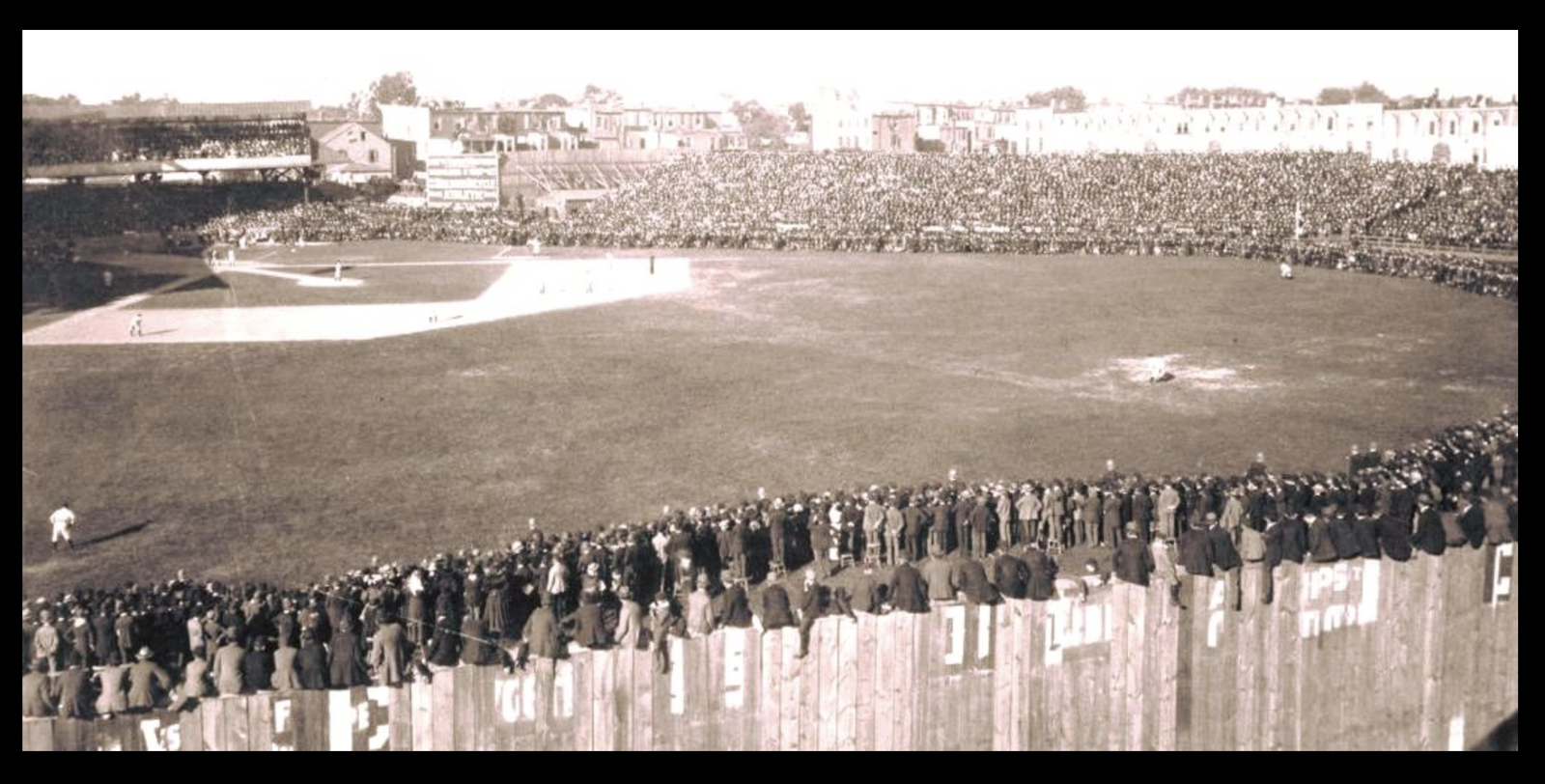
The War After 60’6”
Boston, Baltimore, and the First Modern Strategic Conflict (1894–1897)
In 1893, Major League Baseball moved the pitching distance from 50 feet to 60 feet 6 inches. The change did more than alter sightlines. It rewrote the reaction window of the sport.
The consequences were not gradual.
By 1894, scoring in the National League exploded above seven runs per game—one of the most extreme sustained offensive climates in 19th-century professional baseball. What followed from 1894 to 1897 can be named precisely: the 60’6” Expansion Shock —a volatile atmosphere in which pitching dominance collapsed, contact surged, and strategic experimentation accelerated.
Within that shock window, two clubs came to embody competing answers to the same question:
How do you win when the geometry of time itself has expanded?
Those teams were the Baltimore Orioles and the Boston Beaneaters.
The Climate
National League runs per game:
1894: ~7.3
1895: ~7.0
1896: ~6.5
1897: ~6.1
The detonation occurs in 1894–95. By 1896–97, the sky remains inflated but begins to stabilize as pitchers and defenders adapt to the expanded reaction field.
This distinction is critical.
Dominance in 1894 is survival within chaos.
Dominance in 1897 is mastery within partial re-equilibration.
Baltimore: Weaponizing Instability
The Orioles of 1894–96, led on the field by John McGraw and Hughie Jennings, with Wilbert Robinson and Joe Kelley, did not attempt to restore pre-1893 order. They embraced the turbulence.
Their style—later romanticized as “inside baseball”—was not quaint small ball. It was systematic destabilization:
Relentless bunting
Aggressive hit-and-run execution
Double steals and delayed steals
Hard slides designed to disrupt double plays
Constant pressure on umpires
Psychological erosion of opponents
Baltimore treated the rulebook not as a boundary but as terrain.
Their philosophy was simple: if the atmosphere is unstable, exploit its edges.
The Orioles won pennants in 1894, 1895, and 1896. In the peak inflation years, insurgency thrived.
Boston: Mastering the Expanded Field
The 1897 Beaneaters offered a different answer.
Their core included:
Kid Nichols
Billy Hamilton
Hugh Duffy
Jimmy Collins
Bobby Lowe
Tommy McCarthy
Fred Tenney, an elite defensive first baseman credited with redefining the position
Boston did not try to out-chaos Baltimore. They optimized within the new geometry.
Nichols, already dominant in the pre-1893 short-distance era, adapted and remained elite in a 6+ run environment. In 1897 he went 31–11 with a 2.64 ERA—suppression at scale in a volatile sky. Hamilton weaponized speed through efficiency rather than disruption. The infield was structurally sound. The roster was balanced, not improvisational.
In 1897, still in a high but stabilizing offensive climate (~6.1 runs per game), Boston went 93–39 (.705). Their triumph did not occur at the apex of chaos, but after the league began metabolizing the shock.
That distinction elevates the achievement.
Baltimore proved chaos could be weaponized.
Boston proved expansion could be mastered.
A Philosophical War
This rivalry was not merely standings. It was a dialectic.
Baltimore: Tactical insurgency within instability.
Boston: Structural mastery within expansion.
One school believed the game must be bent.
The other believed the game could be solved.
The Orioles’ dominance aligns with maximum atmospheric inflation.
The Beaneaters’ dominance aligns with late-shock stabilization.
When volatility crested, insurgency thrived.
When equilibrium began returning, system-optimization prevailed.
This is the first modern strategic conflict in professional baseball.
After the Shock: Absorption, Not Victory
The late-1890s National League was financially unstable and overexpanded. After 1899, the league contracted from twelve clubs to eight. The Orioles were dissolved. Key figures dispersed, many landing with the New York Giants.
Baltimore did not disappear.
It was absorbed.
When McGraw assumed managerial control in New York in 1902, insurgent tactics became institutional doctrine. Aggressive base running, bunting, psychological pressure, and managerial orchestration were no longer rebellion. They were governance.
At the same time, Boston’s equilibrium lesson endured: roster balance, ace-centered pitching, and defensive coherence were essential in volatile climates.
The synthesis had begun.
The Sky Compresses
Around 1898–1901, scoring fell sharply. Contraction improved talent density. Defensive standards rose. The foul-strike rule (adopted NL 1901, AL 1903) increased strike totals. The American League’s formation intensified competitive structure.
By the early 1900s, baseball entered the Deadball equilibrium (roughly 1900–1919): compressed scoring, managerial centralization, and strategic density.
In that regulated sky, figures like Christy Mathewson, Honus Wagner, and Walter Johnson flourished.
Their dominance was forged not in chaos, but in controlled compression—a landscape shaped by the lessons of the 1890s.
What the War Produced
The Boston–Baltimore conflict produced modern baseball governance:
Managerial centralization — Strategy shifted from player impulse to architectural oversight.
Tactical elasticity within rules — Gray-zone exploitation became normalized and regulated.
Ace-anchored pitching models — Sustained suppression in expanded reaction fields matured into doctrine.
Balance as volatility control — Depth and defense counterweighted atmospheric swings.
The insurgency taught baseball how to exploit instability.
The system proved it could dominate within expansion.
The Deadball era merged both insights into disciplined order.
Prototype of Future Ruptures
When the Live Ball transformation arrived in 1920, baseball had precedent. Structural changes in physics create strategic upheaval. Upheaval eventually consolidates into doctrine.
The 60’6” Expansion Shock was the prototype: expansion, volatility, dialectic, synthesis.
Conclusion
The aftermath of the Boston–Baltimore war was not a simple transfer of power. It was evolutionary consolidation.
Chaos was absorbed.
Rebellion became management.
The expanded field was mastered.
The 1897 Beaneaters stand at the hinge between insurgent volatility and regulated modernity—evidence that baseball, destabilized by time itself, learned to govern its expanded geometry.