The Weird, The Wild, The Wonderful: Why Capitalism (Briefly) Succeeds Libidinally but Fails Sustainably; Collapses Nervous, Endocrine, and Eco Systems
The Weird, The Wild, The Wonderful: Why Capitalism (Briefly) Succeeds Libidinally but Fails Sustainably; Collapses Nervous, Endocrine, and Eco Systems
Capitalism as Civilizational Overdrive: Libidinal Gain, Allostatic Debt, and the Collapse of Integrative Organs


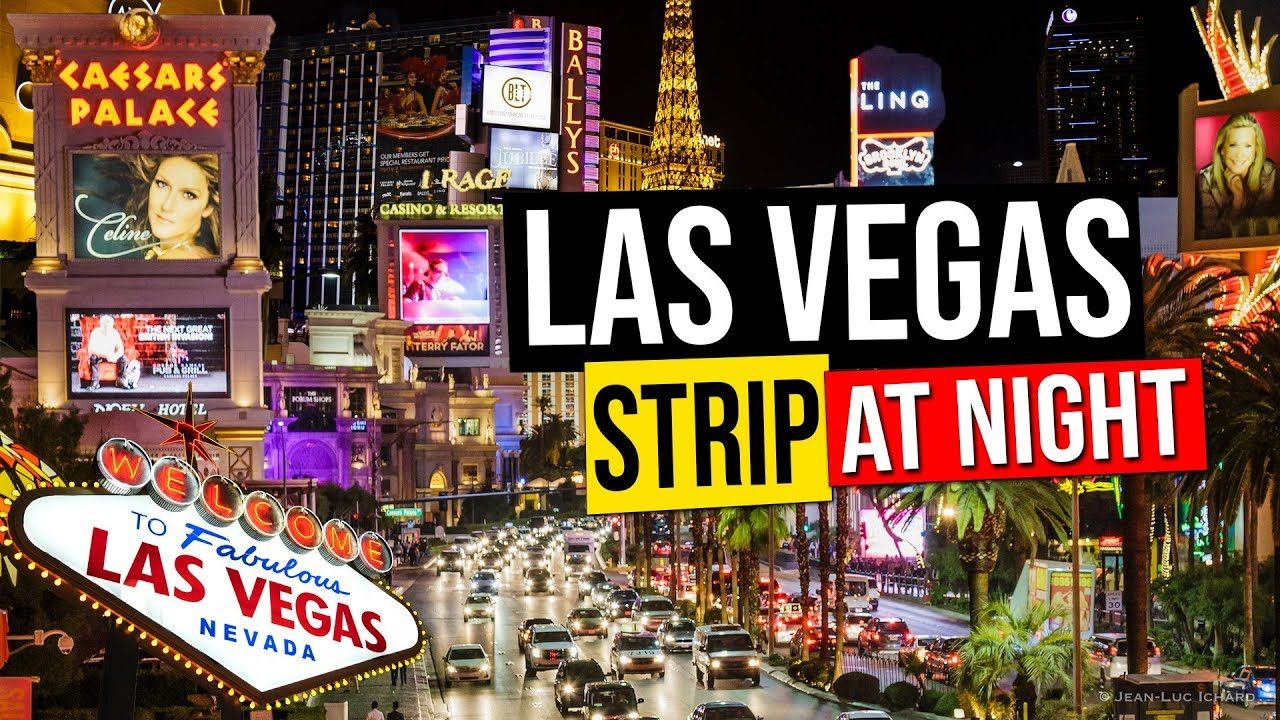
Capitalism does not hold a civilization together because it is true, fair, or wise. It holds a civilization together because it is regulating for a while. Not in the way ritual regulates, or seasons regulate, or a mature nervous system regulates—but in the way a stimulant regulates: by driving energy through the system fast enough to create the experience of coherence.
Its power is that it can temporarily substitute activation for integration.
This is why it presents as brilliant. It is not merely a way of distributing goods; it is a method of converting the human organism’s novelty circuits into a continuous engine of arousal, pursuit, and belief. It generates futurity on demand—micro-promises, micro-escapes, micro-renewals—fast enough to mask the deeper fact: the system is spending capacity it does not replenish.
Capitalism is weird and wonderful because it can make a civilization feel alive while quietly dissolving the organs required for long-term aliveness.
It is wild because it runs the collective body at speeds it cannot metabolize.
And it is terminal because the same mechanism that produces its exhilaration also produces its irreversible debt: allostatic, endocrine, ecological, and meaning-level.
I. Capitalism’s Real Innovation: Synthetic Coherence Through Stimulation
A civilization requires distributed regulatory machinery—institutions and practices that keep rising load from turning into panic, fragmentation, or rigidity. When those organs are robust, a society can tolerate contradiction, delay discharge, metabolize aggression, preserve memory, and keep the future legible.
Capitalism does something else.
It creates a kind of coherence by saturating the field with incentives and spectacles that recruit attention before attention can ask what it is serving. It doesn’t integrate experience; it recruits experience. It doesn’t resolve arousal; it extends arousal. It doesn’t deepen meaning; it outpaces meaning.
The trick is simple: accelerate novelty to the point where the organism interprets activation as vitality.
This is its libidinal achievement: it makes wanting feel like living.
And because the wanting never terminates, the system never has to arrive anywhere. Arrival would require integration. Arrival would require satisfaction. Satisfaction would lower throughput.
So the system remains in motion: not because motion is the point, but because motion is the only way to keep the belief structure from collapsing into stillness, where assessment becomes possible.
II. ATLAS Translation: A Permanent Zone-3 Economy
If you translate capitalism into a load-and-capacity model, what you see is not “growth.” You see a civilization deliberately organized around chronic supra-threshold demand.
The system is designed to:
increase informational intensity
increase relational vigilance
increase economic precarity
increase competitive signaling
increase ambient comparison
decrease recovery time
privatize regulation as an individual responsibility
This is not a moral critique. It is a physiological description.
A living system can expand under load only if load is graded and paired with repair. But capitalism treats the repair function as wasted time. Rest is non-productive. Silence is non-monetizable. Integration is invisible.
So the system becomes an engine that trains organisms and institutions to remain mobilized while losing the mechanisms that metabolize mobilization.
This is why it “works” while producing collapse: it builds output while eroding the substrate of output.
III. The Degradation of Civilizational Regulatory Organs
Historically, civilizations built shared structures that helped distribute intensity: bounded competition, non-instrumental time, seasonal rhythm, collective witness, ritual constraint, symbolic continuity. These are not “culture” as entertainment; they are regulation as infrastructure.
Under capitalist acceleration, those organs are not merely neglected—they are repurposed.
Ritual becomes content.
Spectatorship becomes monetized attention capture.
Calendars become productivity schedules.
Architecture becomes extraction geometry.
Sport becomes gambling throughput and brand logistics.
Public art becomes marketing.
The regulatory function gets inverted. What once metabolized load becomes a load generator.
This is the moment a civilization loses its integrative nervous system function—not because people stopped believing in values, but because the machines that kept arousal bounded were replaced by machines that profit from unbounded arousal.
The system no longer preserves time.
It consumes time.
IV. Individual-Level Consequence: Arousal Without Repair
At the scale of the organism, this shows up as the now-familiar pattern: a population trained into relentless readiness.
Not readiness for war, or hunt, or crisis—even though the body reads it that way—but readiness for the next signal: message, price change, headline, algorithmic reward, micro-validation, micro-threat.
The central wound here is not stress. Stress is normal.
The wound is stress without completion.
A civilization can expose its people to intensity if it also guarantees rhythmic repair. Capitalism increasingly does the opposite: it increases intensity while dissolving the shared means of recovery. The body becomes the site where the external system’s unpaid costs accumulate.
So we see:
attention that cannot stay coherent
sleep that cannot anchor
desire that cannot complete
pleasure that collapses into compulsion
numbness that masquerades as “coping”
irritability that masquerades as “principle”
Over time, organisms cease to be integrative. They become defensive.
V. The Endocrine Ledger: Allostatic Debt Becomes Hormonal Reality
If the nervous system is the immediate interface, the endocrine system is the ledger.
A society organized around chronic urgency will run on stress chemistry. It will reward cortisol-driven performance and adrenaline-based responsiveness, while leaving the costs to be paid later—in exhaustion, immune dysregulation, metabolic damage, sexual flattening, and the slow corrosion of resilience.
What’s called “burnout” is not metaphor. It is what happens when mobilization becomes habitat.
And here’s the deeper point: when endocrine rhythms degrade, ethical and relational complexity degrade with them. The ability to tolerate ambiguity, delay discharge, hold contradiction, repair after rupture—these are not purely psychological virtues. They are functions of regulated physiology.
A dysregulated organism will seek discharge.
A dysregulated population will seek scapegoats.
A dysregulated civilization will seek certainty.
VI. Counter-Integration at Scale: How Civilizations Stabilize When Integration Is Too Costly
When a system cannot integrate rising load, it does not remain neutral.
It reorganizes into defensive attractors.
This is where counter-integration becomes the missing key: capitalism does not only overload the organism. It produces the exact conditions under which societies begin freezing meaning to keep panic from surfacing.
Under rising load, meaning cannot circulate.
So meaning hardens.
Positions replace process.
Identity becomes a bunker.
Moral certainty becomes a sedative.
Ideology becomes an analgesic for overwhelmed regulation.
This is not primarily about beliefs. It is about stabilization.
The civilization experiences integration—true integration, which would require slowing down, confronting costs, redistributing load, restoring repair—as too threatening. So it chooses the easier path: freeze the interpretive field, generate moral narratives, externalize danger, and maintain throughput.
In this sense, capitalism doesn’t just exploit counter-integration; it manufactures it by making integration structurally unaffordable.
VII. Ecological Mirror: The Biosphere Under the Same Algorithm
What the system does to the body, it does to the planet.
Extraction without repair.
Throughput without cycling.
Acceleration without regeneration.
The biosphere is not “environment.” It is the outer layer of regulation that made complex life possible. If you strip the planet’s recovery cycles, you are doing at planetary scale what chronic stimulation does to the organism: running a system above its regulatory ceiling until it simplifies.
Ecosystems don’t become “immoral.”
They become less complex.
They collapse into lower-dimensional states—fewer species, fewer buffers, fewer redundancies—just as a stressed psyche collapses into fewer options: fight, flight, numbness, compulsion.
Same pattern. Different scale.
VIII. Why the System Cannot Voluntarily Downshift
A civilization can sustain restraint only if it has institutions capable of holding meaning without constant stimulation. Capitalism progressively dismantles those institutions, then offers stimulation as replacement regulation.
So downshifting is experienced as threat.
When novelty slows, the system’s synthetic coherence begins to unravel. Anxiety rises. Markets seize. People seek stronger stories. Leaders offer harder certainty. The machine responds the only way it knows: intensify signals, escalate arousal, accelerate extraction, generate crises to keep motion going.
This is why sustainability is structurally difficult inside capitalism—not because no one wants it, but because the system’s coherence mechanism is bound to activation. It cannot easily trade excitement for continuity without confronting the fact that it has been confusing aliveness with arousal.
IX. The Tragic Recognition: It Was a Breakthrough and a Catastrophe
Capitalism is not reducible to villainy. It is a spectacular evolutionary event: a system that unlocked invention, coordination, and power by turning libido into a civilizational engine.
It is also the event that revealed a limit.
Not a moral limit.
A biological one.
Complex life persists through regulation. Civilization persists through shared organs of integration. When a society reorganizes around permanent mobilization, it may gain speed, wealth, and novelty—but it spends down the very capacities that make human life coherent: nervous stability, hormonal rhythm, ecological cycling, interpretive permeability, repair after rupture.
The system achieves brilliance by violating constraints.
And it fails because constraints are not opinions.
X. What Remains: Rebuilding Integrative Organs Without Returning to Innocence
There is no return to a pre-modern rhythm. The acceleration has happened. The knowledge is in the bloodstream. The technologies exist.
So the question is not “abolish capitalism” as slogan. The question is whether a civilization can develop or recover integrative organs strong enough to hold high energy without collapsing into either overload or frozen meaning.
The future—if there is one—is the engineering of regulation:
load distributed instead of privatized
arousal bounded instead of exploited
recovery restored as civilizational infrastructure
competition ritualized without becoming total war
meaning allowed to move without triggering panic
time preserved as continuity, not consumed as fuel
Not a new ideology.
A new nervous system function—built at scale.
Because what capitalism revealed is real: the creative power of high energy.
What it destroyed is also real: the rhythms required to survive it.