Torriente: Colonial Epistemic Violence and the Black Radical Cuban Tradition
Torriente: Colonial Epistemic Violence and the Black Radical Cuban Tradition
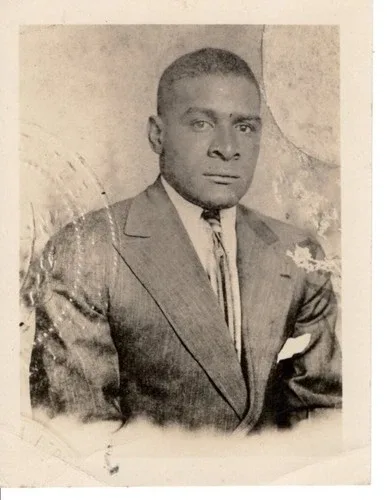
The fate and subsequent codification of the life and love of Cristobal Torriente is a story of longstanding violence of empire in Cuba and in the United States — violence against Cuban and black humanity.
Torriente, long understood in the Caribbean as one of the game’s greatest five tool players to ever set foot on a field, died in obscurity as a poor man in New York City at age forty four, suffering from the extended ill effects of alcoholism and tuberculosis.
The way Torriente, along with his fellow black Cuban and Negro Leagues players of the early twentieth century are framed, is a methodological skepticism which is a punishment of a lack of historical record. A historical record which stems directly from epistemological erasure of black and Cuban life in the face of American colonialism; ethnic and racial violence.
This epistemological erasure is multiple: it is not just the erasure of historical memory, but it is the erasure of historical methods of memory as optimal, possible, equitable. Stories of Torriente’s scorching line drives and throws deep from the canyons of the outfield; great performances against American professional ballplayers in Cuban exhibition matches are replaced by contemporary historical denial of oral record and intergenerational memory in Cuban culture with skeptical falsifiable numerical claims on Torriente’s career statistics.
Here, most crucially, we are talking about epistemological difference as in knowledge as power. To recount and recollect Foucault, colonial power comes from and through the autopsy of the body; the division of the body into organs, pulses, counts, and numbers. This methodology is a Western scientific method most clearly reducible to slave ship body counts, stacked cheek to cheek in stows; brutally thrown to ocean graves.
This epistemic violence is notably passed forward to baseball; this erasure is a product of the ontological systems of record typical of colony — statistical counting and record of the human being as a body of production. Runs batted in, batting averages, strikeouts — these numbers become functional definitions of the recounting of historical memory. This is a highly political framework, stemming directly from colonial economics.
Adversely, the Cuban tradition and the American black baseball tradition is a griotic tradition, a tradition of recounting; intergenerational oral transmission — the transmission of an epistemology of phenomenology — which is to say, a way of seeing that is experiential, embodied, and alive narratively. Torriente, in the Cuban and black framework, is not reducible at all to numbers. He is reducible to his presence as a man on the ballfield; a man at the plate; a man in the field. Baseball, in the Cuban historical mind, cannot be carved up into counting statistical measures. It is a game of flow and entropy, feat and presence; it is recounted as such as a total experiential mode — a intuitive noesis of total presence.
The abstraction of the laboring body as in baseball through the counting statistic is a dissociative, dehumanizing framework. As depicted in the above image of Torriente in a bureaucratically reproduced photograph of his passport photo, Torriente’s image is doubled as a method of tracking, naming, and ritualizing his image in repetitious border crossings. As a black Cuban man, Torriente’s body is a sign of colonial discipline; Torriente’s body, not his selfhood, is recorded and numbered and recited as a register to be tracked; an infidel and an antibody in the Western white colonial system of race and caste which extended through the United States (wherein he traveled to play for Rube Foster’s Chicago American Giants among others); in his return back and forth to his own home, wherein, in the very years of his birth, slavery was abolished; native Cuba attempted to free itself from the colonial methodology and political instrument of Spanish empire.
This is a racial and ethnic war of power which is framed primarily and absolutely in the colonial method and mind as an economic problem — it is the human being as a body as a laboring force, a productive mechanism. And from this framework emerges the rote terrors and genocidal epistemology of profound dehumanization — one well documented in these archival works in the violence against immigrant life, ethnic life, the lives of children; women, black, indigenous, and Cuban historical and contemporary humanity. And this is the key method of dissociation — the framework of the body as an instrument — the body as a performance or a force or a container which can be measured in working output; laboring output. Here, such feats as the production of a child, sexual violence, physical capacity working in the fields as a the measure of a enslaved man’s worth, and so forth.
This metric is a metric of harnessing life as a spiritual casualty which produces the modern materialist framework — devoid of life; absolutely violent and impersonal — which we experience today as totally codified and symbologized global modernity. The human being has become the human body; the human body is measured and recorded and valued by way of accomplishment metrics which measure work. The amount of cotton picked, the amount of holes dug, the amount of home runs hit, the amount of children birthed. It is precisely this false ontology that Frederick Douglass shatters. His emergence as a reader, writer, and orator was not threatening because it proved intelligence, but because it exposed the measuring system itself as fiction — a belief structure masquerading as reality. In Douglass’ voice, the colonial metric collapses: the enslaved body speaks as mind, witness, and sovereign presence, revealing the system’s foundational lie.
This profusion of abstract scientific method is the clash at which historical memory divides the trench of American epistemology with the Cuban and black modes of political memory. In Cuba, as in early black baseball, the game itself was a community event full of music, food, and the unification of community experience. The contemporary historical argument among marble hall empire epistemologists is that these leagues were not recorded, roughshod; thus viewed with skepticism of meaning — meaning that cannot be measured; as such, is surely dubious. This is a claim directly allied with the overarching epistemological mode of colonial economy as caste power and exploitation through segregated knowledge frameworks; the prioritization of abstract ways of knowing as supreme.
The embodied way of knowing is the Cuban and black historical way of understanding baseball history. Torriente is a legend. His life itself is barely captured and known to public record to this day, even as bureaucratic institutions and border police tried to catalogue him and define him. Torriente struggled deeply with drug abuse as well as his contraction of tuberculosis, which severely impacted the life of another Cuban great, Alejandro Oms. His life is dotted with known facts and registry, such as place of death; his body being interred with his fellow Cuban baseball legends after death in Havana; his love of nightlife and registry in the World War I draft in 1918; several noted on the field fights documented in historical record.
To attempt to assign Torriente solely to what can be known in a counting sense; even what can be known in a historically confirmed sense, is to miss the entire sweep and arc of how Cuban baseball and black baseball were ritually politically constructed as communal devices which allowed for the transmission of oral storytelling; the creation of community systems which blended myth and reality — the creation of ballplayers, games, and ways of being together throughout and across time which generate such fantastical stories as 600 foot home runs hit by Mule Suttle, Satchel Paige throwing a ball through a hole in the center field fence from the pitchers’ mound; Torriente hitting a scorching ground ball which dug two feet into the ground.
What is of the essence in this griotic and bardic method is precisely the loss of methodical history and the introduction of dreamtime; mythic time as memory. The recorded voices of Negro League greats of yore; the stories transmitted by Cuban baseball historians and lovers of the game across generations are, as they must be; as is human experience — bound to the political device of memory as the only true historical record: subjective, cross-historically transmitted; both fact and fictional, impossible to separate the two. Colonial epistemology assumes truth and as such power in number, statistic, and abstract symbolic method. The indigenous methodology of the Cuban and black game embodies truth in the ritual experience of story and bardic transmission — the oldest method of global, tribal communal history on planet Earth; the method that binds and draws near by the heart; not severed at the neck and relegated to Wins Above Replacement arguments of the mind.
These pure counting methods miss and lose humanity; substitute dehumanization and the laboring body of global colonial modernity for the experience of being human. It is typical of Western science; simultaneously, the loss of the Western soul to a method which privileges the symbolic realm devoid of the warm heat of the body and the blood and the human experience. Materialism and imperialism assume that this world of firm objects moving in space and time is all that there is; it is an opacity which has shed the proto-enlightenment of the philosophical methods of its Egyptian and Greek forebears — who intuited deeper metaphysical realities, rules, laws, and movements behind the veil of the nature availed purely phenomenologically to the metal instruments; technological instruments; ears and eyes of colonial scientifics.
These realities reared their ugly head once more to remind the West of its artifice and forgetting with the emergence of quantum mechanics; the world of the observer phenomenon; the energetic realities behind the seemingly opaque, ritualized world of cells, molecules; atoms in the time of Torriente, Oms; their fellow black Cuban great Jose Mendez — the fireballing pitcher. It was a shattering of the seeming epistemological surety which dictated the precariously balanced physical rules and laws of the Newtonian galaxy; revealed an unpredictable world of shifting witness behind the veil of seeming appearances. This revelation threw not only Western science, but the Western mind, into a conflict and a meltdown from which it has not since emerged. The ruling laws and foundations which created the modern Western world were instantly terraformed; revealing the cavernous realm of the Duat of the Ancient Egyptian beneath it. A world based on seeing; sight, observation, presence, and witness.
This tension of form of methodological memory is deeply entwined in baseball. Quantum mechanics matters here because it re-legitimizes observer-dependent reality — the very thing oral baseball culture intuitively embodies and practices as a griotic science of memory, presence, and preservation of being. And at the root site of this tension is the economics created by modern empire to enslave, subjugate, control, and caste human life to power its profit based machinery of status and false godliness at the seat of the powers of divine right, doomed to roll away into the dust of nature’s forgetting. Torriente’s life, as well as Oms’, as well as the lives of the breaker boy turned American industrial baseball stars — Daubert and Coveleski — emerge from this terrifying, transformational reckoning, the genocidal violence manufactured from the colonial dream which is in truth a bloody nightmare and a falsification of the true laws of nature — a lapse in the historical record of world wisdom — from which America and the West must awake. Not only was Western empire and Western history a bloody stalk, but the root of it was in false ground: the ground of a false epistemological assumption of materiality; the undergirding of mankind and nature in a rule of law which — both by the revelations of its advanced science and the scribe of the ancients — is incorrect, incomplete, superficial, surface level.
Western materialism is the phenomenological outcome which creates the death of the human and the instantiation of the colonial subject as the laboring body; furthermore, blankets the culture of the Earth with a primary and foundational death of god as in loss of the quantum mechanical intuition prioritized by the most powerfully alive ancient world civilizations: from the Mesoamerican to the Egyptian; to the Orphic Greek and the Vedic Hindu, to the Sumerian. This tradition was realized from the mysteries as rite into the spiritual realm historically, directly into the down-funnel of the quantum mechanical scientific revelation of the Western mind — where the West’s greatest theorists both directly referenced the intuitive ancestry of mankind; stood in awe before the defiance of the seeming materially temporally stable fabric of reality — in the face of a larger revelation which replied upon the nature of the universe seeing itself. And thus, impacting how it transforms. This being the nature of the public eye; this being the fundamental, phenomenological nature of baseball as an act of witnessing.
Numeric falsity is first to the failure of baseball history. Because baseball did not occur in symbology, nor did it occur in the abstract as counting statistic or number of bodies upon a field, or balls in the air. It occurred in the act which rifted the seeming material time and revealed the mythic dimension to the astonished observer through the bat of Torriente or the ball of Mendez; was then subsequently codified into historical memory through the bardic lineage of the keeper of the wisdom of the culture itself. This being the oldest method of man is no mistake, nor is it any barbarism. It is a direct result of the real science of the universe — a science which is pre-linguistic, participatory, and yields to no number — yet reveals through presence.