Tracing Contact: Jake Daubert, the Deadball Era, and Reconstituting Era-Based Greatness
Tracing Contact: Jake Daubert, the Deadball Era, and Reconstituting Era-Based Greatness
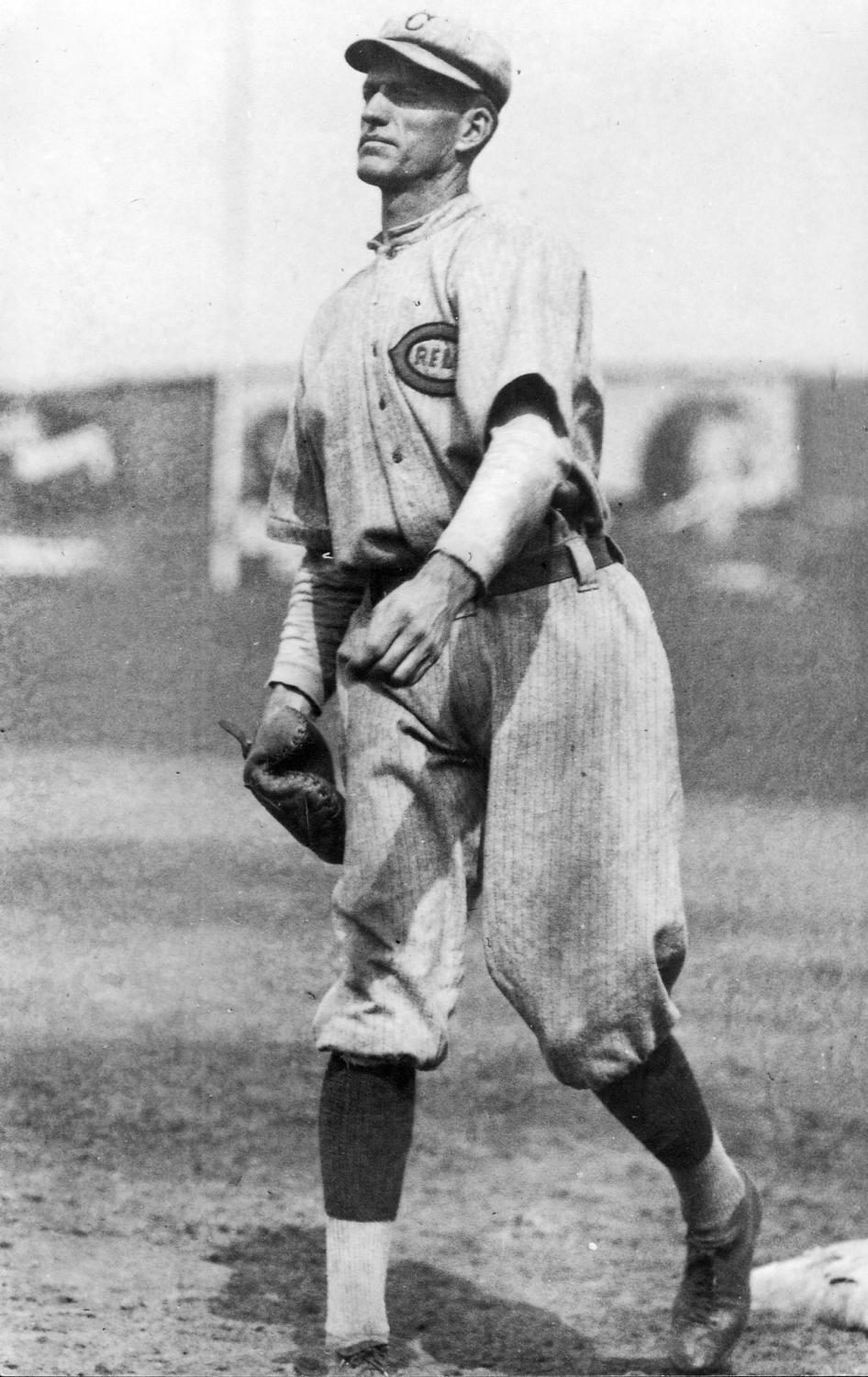
Tracing Contact: Jake Daubert, the Deadball Era, and Reconstituting Era-Based Greatness
I. The Problem of Reading the Deadball Era
The Deadball Era resists interpretation.
Its statistical surface appears diminished:
lower scoring
suppressed power
compressed offensive output
Modern frameworks—built on expansion, power, and run inflation—tend to read this period as deficient rather than different. The result is a distortion:
greatness becomes misidentified as absence
The issue is not the players.
It is the lens.
To recover the structure of performance in this environment, the question must be reframed:
not how much was produced
but how often did a player enter the top layer of outcomes available within constraint
This is where contact becomes legible.
II. Jake Daubert and the Shape of Presence
Jake Daubert does not announce himself through extremes.
There is no:
towering slugging profile
single-season statistical rupture
Instead, what emerges—when the seasonal record is read longitudinally—is something quieter and more structurally significant:
repeated re-entry into the top band of batting outcomes
Across the 1910s, Daubert appears again and again inside the upper layer of batting average rankings.
Not once.
Not sporadically.
But as a pattern.
This is not peak.
It is presence.
III. The Leaderboard as a Field
When each season is treated not as an isolated record but as a field of ordered outcomes , a different analytic object appears:
rank 1–5 → the constraint frontier
rank 6–10 → the outer competitive band
below → the field at large
In this structure, performance is not measured by totals, but by:
frequency of entry into the frontier
From the reconstructed 1910–1920 National League leaderboards:
Daubert repeatedly occupies the top band
alongside rotating figures (Wagner, Doyle, Wheat, Roush)
but with unusual continuity
This continuity is the signal.
IV. Contact as Throughput
Batting average, in this context, is not a crude statistic.
It is:
a direct measure of conversion efficiency under constraint
Each plate appearance:
limited opportunity
high variability
minimal external amplification (no power inflation, limited extra-base distortion)
To sustain elite batting average in this environment requires:
precision of contact
control of swing plane
consistency of execution across large samples
Thus, repeated top-5 presence becomes:
evidence of stable throughput
Not occasional success—but systemic reliability of contact production.
V. Reconstituting Greatness Without Normalization
Traditional analysis attempts to solve cross-era comparison through normalization:
OPS+
wRC+
league-adjusted scaling
But these methods introduce secondary assumptions:
what should be weighted
how environments translate
how value is defined
An alternative approach emerges here:
use rank-based recurrence within each season
This removes the need to translate environments entirely.
A top-5 finish in 1914:
- represents the same structural position
as a top-5 finish in 1930
Because both measure:
relative placement within a constrained system
Daubert’s repeated presence, therefore, requires no adjustment.
It is already normalized:
by league
by season
by constraint
VI. The Geometry of Deadball Greatness
What appears in this reconstruction is not a list of stars, but a shape :
a small set of players
repeatedly occupying the upper boundary
across multiple seasons
Within that shape:
Wagner → long-duration dominance
Wheat → distributed excellence
Roush → emerging control
And Daubert:
the stabilizing form inside the system
He does not stretch the boundary outward.
He:
returns to it
holds it
defines its continuity
VII. Why Daubert Disappears in Modern Readings
Because modern evaluation privileges:
accumulation
power expression
peak differentiation
Daubert offers none of these in exaggerated form.
His profile is:
balanced
efficient
repeated
Which makes him difficult to detect in systems built to identify:
outliers, not constants
VIII. Conclusion: Tracing Contact
To trace contact is to follow:
not the loudest outcome
but the most stable pathway through constraint
Jake Daubert becomes visible not as a peak performer, but as:
a recurring solution to the problem of hitting in the Deadball environment
When greatness is redefined as:
frequency of elite placement
stability under constraint
repeated entry into the top layer
the Deadball Era resolves into clarity.
And within it:
Daubert is not peripheral
He is structural.