Two Databases, Two Careers: Structural Divergence in Negro League Statistics and the Case of Willie Foster
Two Databases, Two Careers: Structural Divergence in Negro League Statistics and the Case of Willie Foster
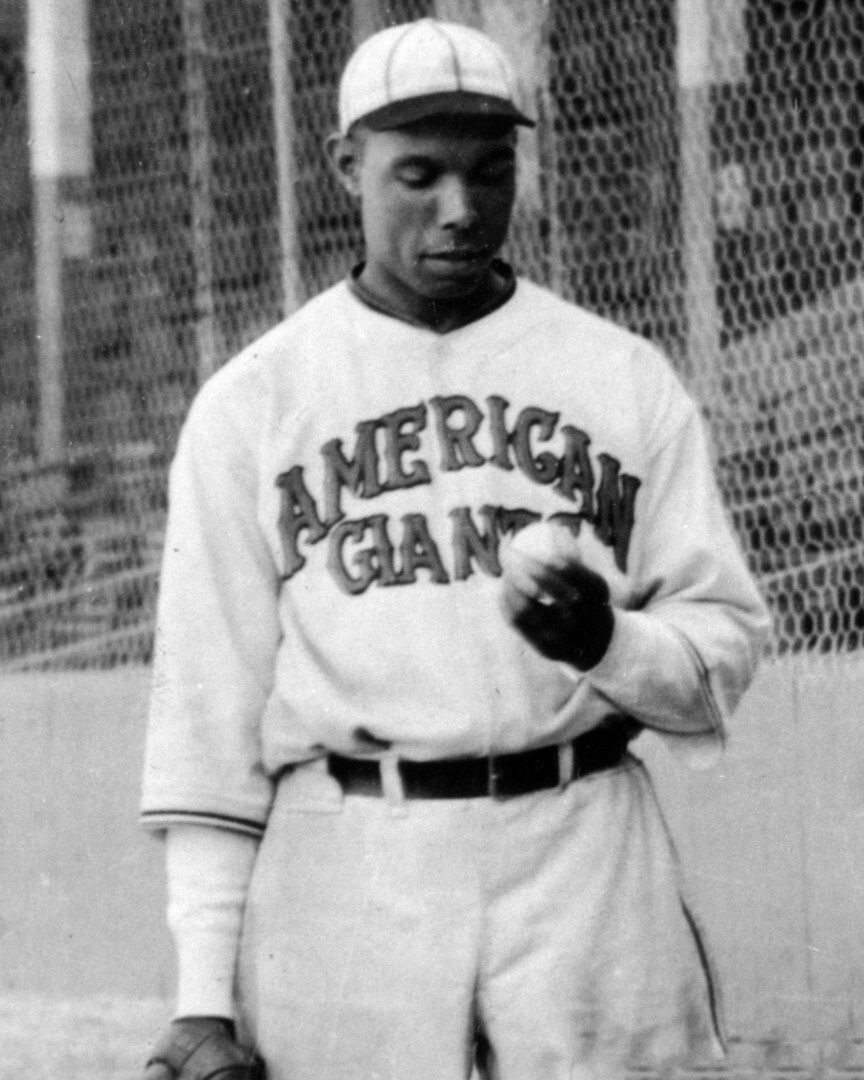
Two Databases, Two Careers
Structural Divergence in Negro League Statistics and the Case of Willie Foster
Abstract
Depending on which database one consults, Willie Foster is either a strong Hall-level ace or one of the greatest pitchers in Negro League history. That discrepancy is not arithmetic error. It is structural philosophy — specifically, differences in league designation, international inclusion, seasonal boundary construction, and denominator weighting. Using Willie Foster and Buck Leonard as case studies, this paper demonstrates how historiographical design alters career rate statistics in reconstructed ecosystems and why pitcher evaluations are far more sensitive to inclusion rules than hitter evaluations.
I. The Stakes
In modern MLB history, career rate statistics are stable across databases because the underlying league structure is stable.
In Negro League history, that stability does not exist.
League boundaries shifted.
Schedules were uneven.
Cross-border competition was routine.
Statistical recovery is ongoing.
As a result, career metrics are not merely calculated — they are constructed.
And construction choices alter historical hierarchy.
II. The Discrepancy: Willie Foster
Career ERA+ comparison:
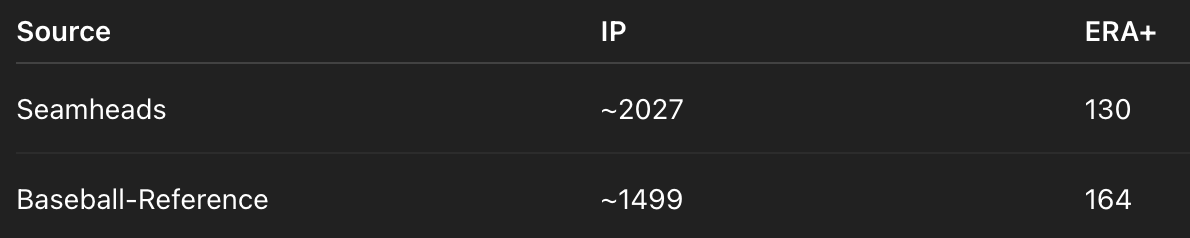
A 34-point ERA+ swing is not trivial.
It is tier-shifting.
At 130 ERA+, Foster profiles as:
Elite
Durable
Below apex-tier pitchers
At 164 ERA+, Foster profiles as:
Near apex
Possibly top 2–3 Negro League pitcher
Historically underrated titan
The difference is structural.
III. What Is Actually Changing?
1. Denominator (Innings Pitched)
Seamheads includes ~500 additional innings.
Those innings largely occur in:
Transitional league periods
International structured competition
Later-career seasons with ERA+ in the 110–140 range
Baseball-Reference excludes or classifies some of those seasons differently.
Removing moderate seasons shrinks the denominator.
When denominator shrinks, peak seasons dominate the weighted mean.
2. League Baseline Construction
ERA+ is defined as:
(League ERA / Player ERA) × 100, park-adjusted.
If league boundaries change,
league ERA changes.
Small baseline shifts alter ERA+ materially.
Negro League ecosystems are reconstructed season-by-season.
Seamheads uses historian-driven league definitions.
Baseball-Reference aligns more closely with MLB’s 2020 major-league designation framework.
They are modeling slightly different competitive universes.
3. International Inclusion
Seamheads often integrates documented international league play (Cuban League, etc.) when structured and competitive.
Baseball-Reference applies narrower major-league recognition windows.
Negro League players did not exist in a closed domestic system.
Including or excluding multinational competition changes career totals.
IV. Why Pitchers Are More Sensitive Than Hitters
To illustrate denominator sensitivity:
Suppose a pitcher throws:
1000 IP at 180 ERA+
500 IP at 120 ERA+
Weighted ERA+:

Remove the 500 moderate innings:
ERA+ becomes 180.
A 20-point swing.
This is exactly the mechanism operating in Foster’s case.
Now compare to a hitter like Buck Leonard.
V. Buck Leonard: Structural Stability
Career OPS+ comparison:

Minimal divergence.
Why?
Because Leonard’s dominance was plateau-based.
He sustained 170–190 OPS+ seasons across his prime.
Removing marginal years barely moves his mean.
Hitters with sustained plateau dominance are structurally stable across database philosophies.
Pitchers with peak-heavy careers are not.
VI. Peak vs Magnitude
Willie Foster had a legitimate apex stretch (1924–1927) with ERA+ seasons exceeding 180.
That peak survives both systems.
What diverges is how much weight that peak receives.
If magnitude is defined as:
Dominance × Duration across full professional footprint
Then inclusion philosophy determines weight.
Seamheads emphasizes full documented career ecosystem.
Baseball-Reference emphasizes designated major-league windows.
Different philosophy.
Different magnitude.
VII. Implications for All-Time Ranking
Using Seamheads:
- Foster is elite, but clearly below Satchel Paige.
Using Baseball-Reference:
- Foster approaches apex-tier status.
Buck Leonard, by contrast, remains near apex under both systems.
This reveals an important structural truth:
Pitcher hierarchy in reconstructed ecosystems is more volatile than hitter hierarchy.
Any Negro League all-time ranking that does not explicitly state inclusion philosophy is incomplete.
VIII. The Broader Lesson
Negro League statistics are not corrupted.
They are reconstructed ecosystems.
Rate statistics encode historiographical decisions.
When denominators shift,
hierarchies shift.
Understanding that architecture is not optional.
It is prerequisite to meaningful evaluation.
IX. Final Structural Insight
Willie Foster’s legacy appears elastic because it is peak-dependent.
Buck Leonard’s legacy appears stable because it is plateau-dependent.
That distinction explains the database divergence.
And it explains why pitcher magnitude in Negro League history requires methodological transparency.
Two databases.
Two careers.
Same player.
Different historical construction.