Walter Johnson and Bullet Rogan: Phase Change, Run Atmosphere, and Fully Normalized Career Dominance
Walter Johnson and Bullet Rogan: Phase Change, Run Atmosphere, and Fully Normalized Career Dominance
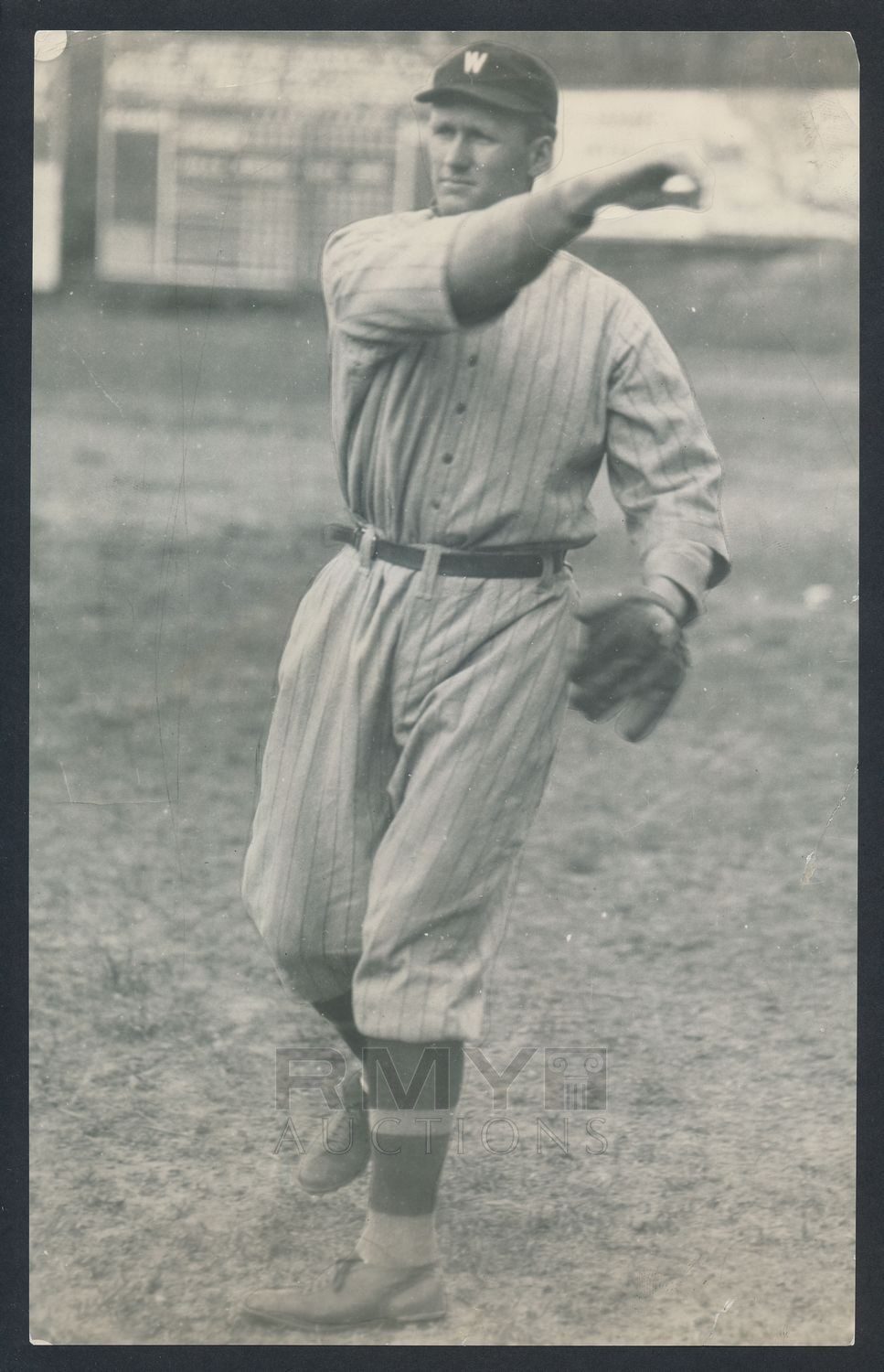
Walter Johnson and Bullet Rogan
Phase Change, Run Atmosphere, and Fully Normalized Career Dominance
Baseball history fractures in two ways:
By epochal phase change (Deadball → Live-Ball).
By segregational league division (MLB ↔ Negro Leagues).
Traditional metrics (ERA+, OPS+) are league-relative and often era-blended. They obscure both fractures.
The correct move is architectural:
Declare the prevailing run atmosphere of each epoch.
Normalize raw run suppression to that atmosphere.
Then recombine phases under a common climate.
This produces a unified measure of dominance that survives both phase change and segregation.
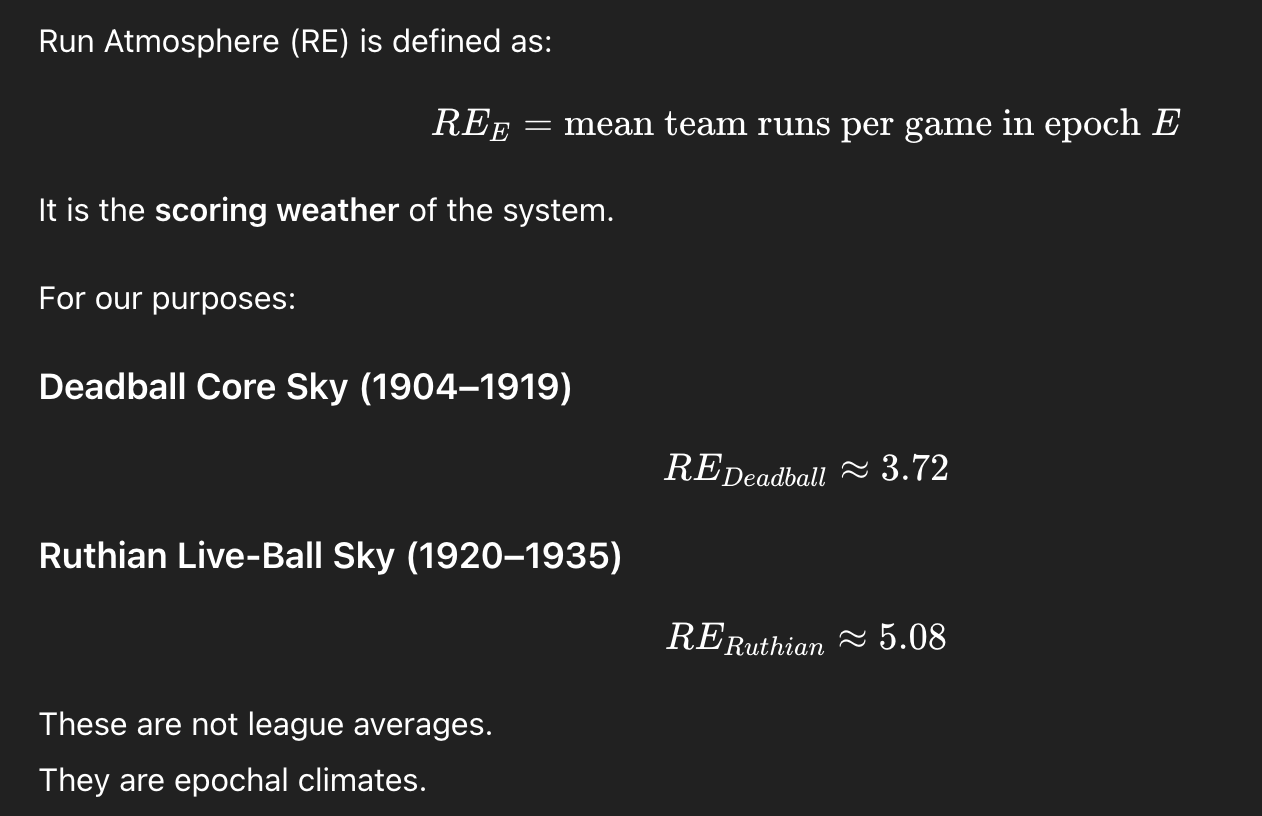
I. The Baseline: Run Atmosphere as Prevailing Weather
II. The Portable Suppression Metric
We eliminate ERA+ and league recalculations.
We use only raw run prevention:
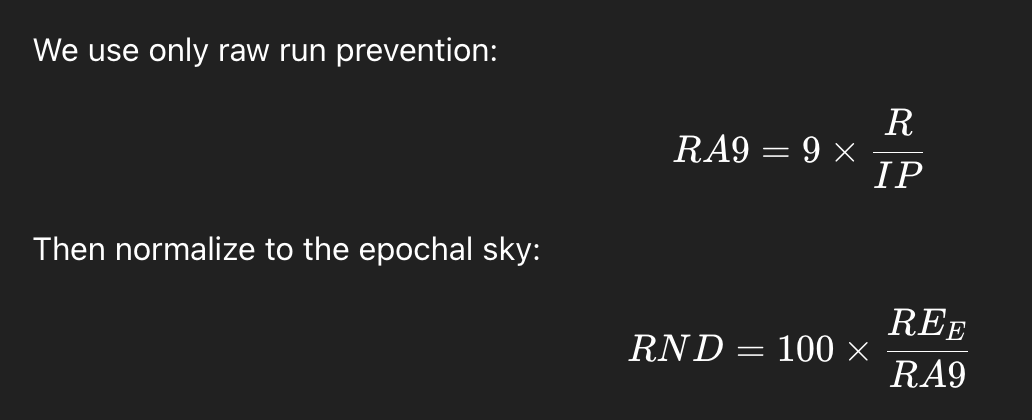
Interpretation:
How far below the scoring weather did this pitcher suppress runs?
This works across:
Eras
Leagues
Data systems
Boundary disputes
III. Walter Johnson — Phase-Split Atmospheric Analysis
Walter Johnson’s career spans two climates:
Deadball dominance (1907–1919)
Live-Ball veteran phase (1920–1927)
We must split him.
A) Deadball Phase (1907–1919)
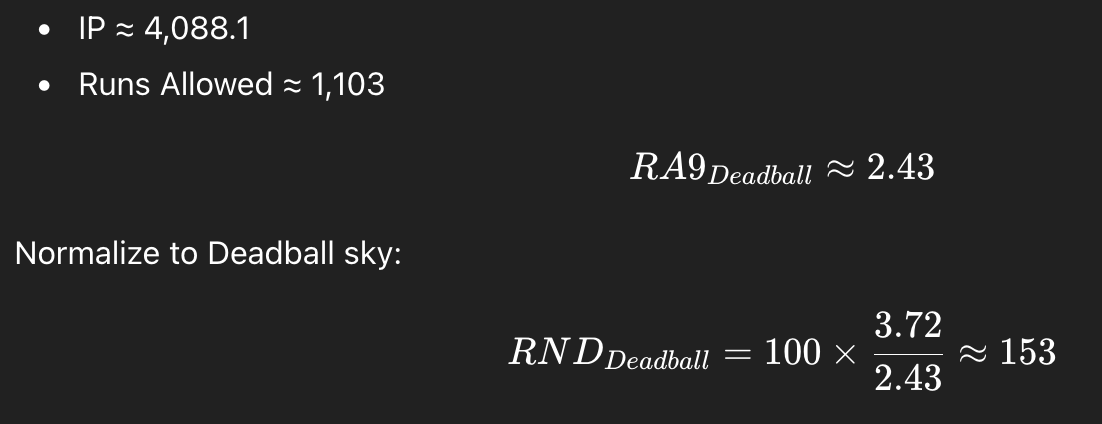
Johnson Deadball dominance ≈ 153
He suppressed scoring 53% better than the prevailing Deadball weather.
This is extreme phase leverage.
B) Live-Ball Phase (1920–1927)
IP ≈ 1,822.0
Runs Allowed ≈ 799
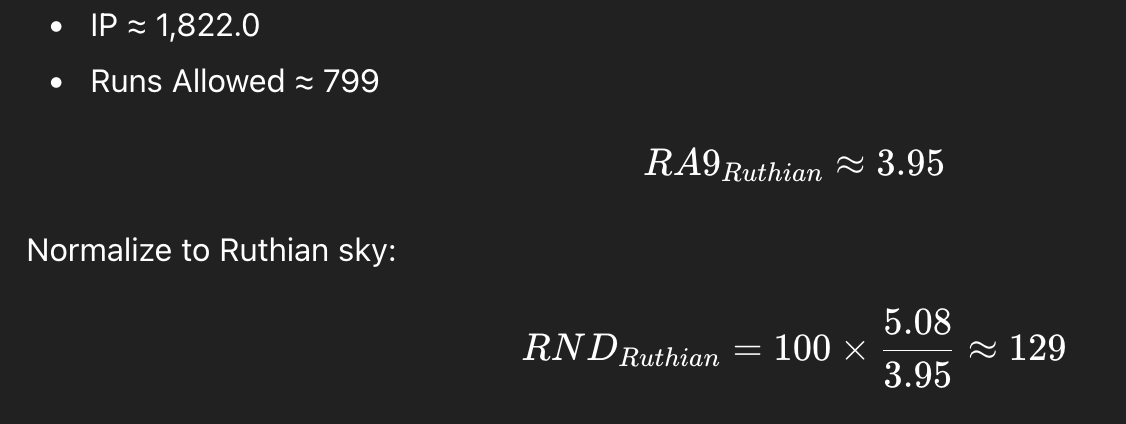
Johnson Live-Ball dominance ≈ 129
Still elite.
But the sky thickened.
Suppression separation compresses.
IV. Fully Integrated Career Normalization
To unify Johnson’s career, we compute a weighted career sky.
Total IP ≈ 5,910
Weighted atmospheric sky:
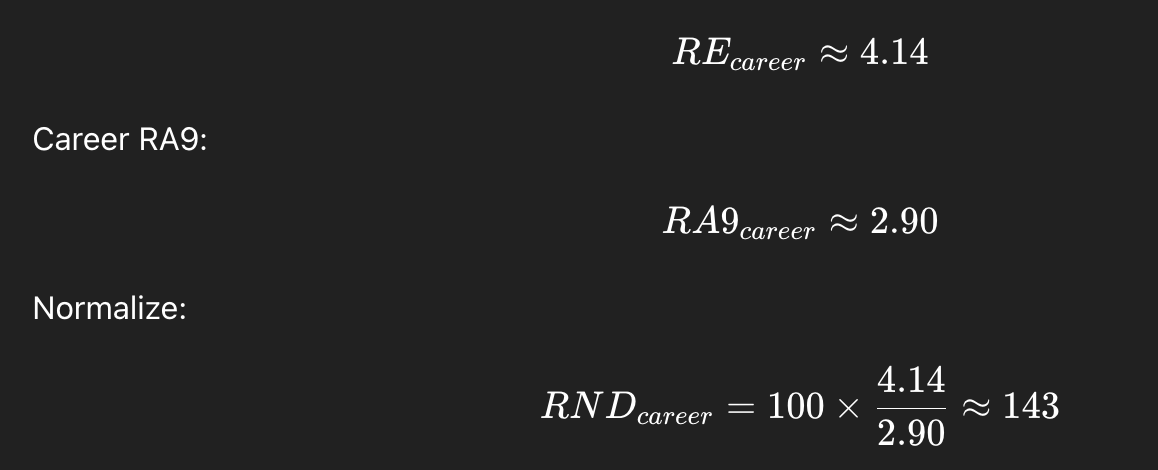
Final Johnson Result

Johnson’s true cross-phase suppression force = ~143
Not 153.
Not 129.
But the weighted atmospheric integration.
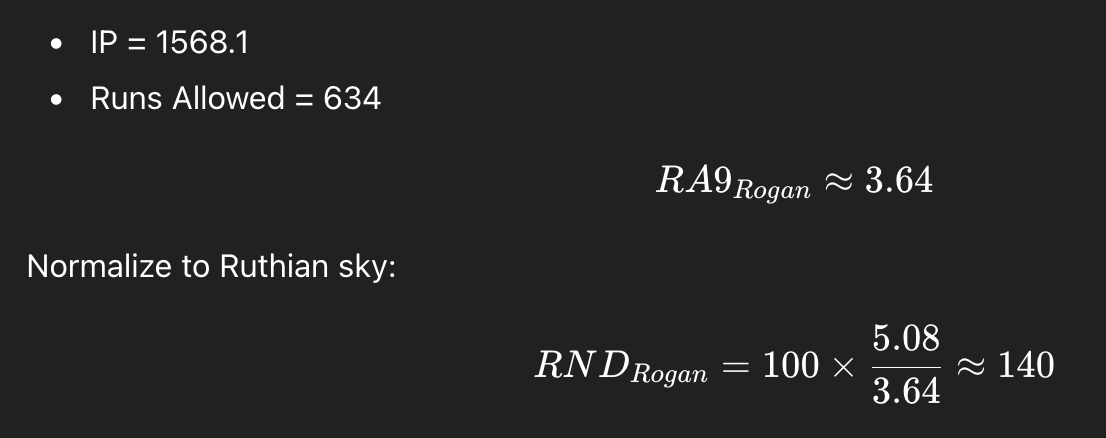
V. Bullet Rogan — Ruthian Climate Only
Rogan’s pitching career sits inside the Live-Ball regime.
Negro League totals (Ruthian era):
VI. Rogan vs Johnson — Correct Constitutional Comparison
We must compare Rogan to Johnson under the same sky.
Johnson’s Live-Ball dominance = 129
Rogan’s Ruthian dominance = 140
Under identical atmospheric pressure:
Rogan suppresses runs more effectively than Live-Ball Johnson.
But Johnson’s Deadball peak was stronger than Rogan’s Ruthian peak.
When fully normalized across phases:
PitcherCareer RNDWalter Johnson143Bullet Rogan (Ruthian only)140
The gap narrows dramatically relative to ERA+.
Johnson’s career ERA+ (147) is heavily powered by Deadball leverage.
Run atmosphere normalization reveals that.
VII. What This Reveals About Phase Change
Deadball → Live-Ball is not cosmetic.
It is a thermodynamic shift.
Deadball sky ≈ 3.7
Ruthian sky ≈ 5.1
That is a 36% increase in scoring pressure.
Dominance must be interpreted relative to that pressure.
Without atmospheric normalization:
Deadball pitchers look superhuman.
Live-Ball pitchers look diminished.
With atmospheric normalization:
- Phase dominance separates cleanly from cross-era blending.
VIII. Structural Conclusion
Run atmosphere unifies:
Segregated leagues
Phase-shifted eras
League-relative distortions
Boundary disagreements
Because it operates at the macroscopic level of scoring climate.
Under this constitutional framework:
Walter Johnson = ~143 unified atmospheric dominance
Bullet Rogan = ~140 Ruthian atmospheric dominance
That is the closest stable comparison yet constructed between:
A Deadball MLB apex suppressor
A Ruthian Negro League two-way titan
No league bias.
No ERA+ distortion.
No era blending.
Only suppression relative to declared weather.