The Law of Being: The Unified Field of Persistence, Compression, and the Architecture of Everything (Complete Book for Publishing)
Canonical source: local (/Users/davidbussell/Downloads/TO PAINT/untitled folder/new era works/complete works/to publish/UNIFIEDFIELDCopy of Copy of complete book for publishing(1).docx)
The Law of Being: The Unified Field of Persistence, Compression, and the Architecture of Everything (Complete Book for Publishing)
THE LAW OF BEING: The Unified Field of Persistence, Compression, and the Architecture of Everything
A Unified Field Theory of All Life, Existence, and Cosmos
BOOK 1. The Global Integrative Nervous System Function: Scale-Invariant Rupture and Repair
A. Introduction
“The global integrative nervous system function” — defined
The global integrative nervous system function is:
The set of distributed cultural, ritual, architectural, symbolic, and institutional processes by which a civilization regulates collective arousal, integrates increasing load, preserves temporal continuity, and prevents fragmentation into violence or rigidity.
It is not a thing.
It is a function—exactly as the vagus nerve or prefrontal cortex is a function.
What it does (mechanistically)
At civilizational scale, this function:
Distributes load so no single group bears all stress
Bounds intensity so arousal does not tip into emergency
Preserves time (memory + future) against collapse into the present
Enables repair after rupture
Metabolizes aggression without annihilation
Maintains meaning flow without freezing interpretation
In ATLAS terms:
It keeps the civilization in Zone 2 as load rises.
What counts as components of this function
Historically, components included:
Ritualized sport (e.g., baseball)
Civic architecture (stadiums, forums, commons)
Shared calendars and seasons
Public art and image culture
Rule-bound competition
Non-instrumental time
Spectatorship and collective presence
These are not “cultural products.”
They are regulatory organs.
What happens when it fails
When the global integrative nervous system function degrades:
Load outpaces integration capacity
Meaning fragments faster than it can be metabolized
Counter-integration becomes dominant
Identity hardens
Moral certainty rises
Repair collapses
Ideology replaces regulation
This is the civilizational analog of nervous-system dysregulation.
Why baseball fits exactly here
Inside the system:
Baseball functioned as a primary organ of the global integrative nervous system for industrial modernity.
Because it:
regulated arousal somatically
distributed load collectively
preserved time continuity
trained restraint under pressure
metabolized aggression without violence
That is not symbolic.
That is functional equivalence to a nervous-system regulator.
Summation
Historically, practices such as baseball operated as components of the global integrative nervous system function—distributed cultural regulators that metabolized collective allostatic load, preserved temporal continuity, and expanded civilizational integration capacity without ideology.
Calling this a “global integrative nervous system” does not imply:
consciousness
intentional design
harmony
benevolence
It implies constraint-based regulation.
Exactly the same way biology works.
B. ATLAS: The Unified Allostatic Capacity Theory
A cross-domain, cross-scale model of life, intelligence, health, and collapse
Human function is a high-energy system whose growth, intelligence, ethics, and collapse follow thermodynamic principles of load, dissipation, and critical thresholds.
I. The Core Claim (species-level)
Life is the progressive expansion of an organism’s capacity to regulate increasing energetic, informational, and relational load without loss of integration.
This is not psychology.
This is biology, neuroscience, and systems theory.
Every organism—from bacteria to humans to civilizations—exists under this constraint.
II. The Governing Principle: Allostasis
Allostasis (canon definition)
Stability through change: the organism dynamically alters internal parameters (arousal, metabolism, attention, hormone release, behavior) to meet environmental demand.
Allostasis is how life survives variability.
III. Allostatic Load (the universal limiter)
Allostatic load = the cumulative cost of repeated or sustained adaptive responses.
It accrues across:
nervous system activation
endocrine stress (HPA axis)
immune modulation
metabolic shifts
cognitive effort
emotional regulation
social vigilance
When load exceeds the system’s ability to:
recover, and
integrate experience,
the system does not fail morally—
it reorganizes defensively.
Integration refers to the nervous system’s ability to bind energetic and informational flux into coherent memory, meaning, and future-oriented models rather than allowing unbound excitation to persist.
IV. Capacity: the real definition of “intelligence”
Capacity is not IQ.
Capacity is:
The maximum energetic, emotional, cognitive, and relational load an organism can sustain while maintaining executive integration, temporal continuity, and flexible response.
Operationally:
Can the prefrontal cortex remain online?
Can the organism inhibit reflex?
Can it hold contradiction?
Can it track time (past → future)?
Can it repair rather than eject?
This is functional intelligence.
IV(B). Thermal Analogy (Systems Clarification)
At a physical level, allostatic load functions thermodynamically. Stress represents energetic input; recovery and integration function as dissipation. Regulatory ceilings correspond to critical thresholds beyond which higher-order organization destabilizes. When dissipation capacity is exceeded, systems undergo a phase transition—from integrated, high-dimensional regulation to low-dimensional defensive attractor states.
V. Progressive Overload: the engine of growth
All biological systems grow by the same algorithm:
Slightly more load than baseline + recovery + integration → hypertrophy of capacity
This applies to:
muscle fibers
bone density
cardiovascular output
neural connectivity
emotional tolerance
social complexity
ethical reasoning
symbolic thought
There is no exception.
VI. The Three Zones (universal across species)
Zone 1: Underload
capacity stagnates or atrophies
boredom, rigidity, decadence
no adaptation
Zone 2: Optimal load (the training zone)
arousal increases but remains bounded
prefrontal cortex stays engaged
learning and plasticity occur
system expands
Zone 3: Overload
arousal exceeds regulatory ceiling
prefrontal cortex inhibition degrades
limbic reflex dominates
system narrows to survive
Overload does not build capacity.
It teaches avoidance, aggression, dissociation, or shutdown.
VII. Genetics: the initial bandwidth
Genetics sets:
baseline nervous system sensitivity
stress-reactivity thresholds
neurotransmitter balance
vagal tone potential
cortical development ceiling
recovery speed
This defines the starting bandwidth, not the destiny.
Two organisms do not begin with equal capacity—this is biological fact, not ideology.
VIII. Development: conditioning the band
Early life determines:
whether stress is paired with repair
whether arousal resolves or persists
whether caregivers down-regulate or escalate
whether meaning is provided or absent
If early load:
is graded, predictable, and repaired → capacity expands
is chaotic, inescapable, or unrepaired → capacity contracts
This is neurodevelopment, not narrative.
IX. Trauma (individual and ancestral)
Trauma = overload without recovery + integration.
Effects:
chronic sympathetic dominance
impaired prefrontal cortex–limbic coupling
narrowed tolerance window
faster collapse under stimulation
Ancestral / epigenetic trauma
Stress exposure alters:
glucocorticoid receptor expression
methylation of stress-response genes
baseline arousal set-points
These changes carry forward, predisposing descendants to:
higher vigilance
lower collapse thresholds
faster overload
This is documented epigenetics (Holocaust survivors, famine populations, war zones).
X. Conditioning and culture
Culture functions as a collective nervous system—providing external regulation where individual regulation is insufficient.
Healthy cultures:
ritualize stress
bound intensity
provide shared meaning
create predictable recovery cycles
Dysregulated cultures:
amplify stimulation
remove recovery
fragment meaning
individualize regulation failure
Modernity massively increases ambient allostatic load via:
information saturation
social comparison
economic precarity
loss of communal regulation
This is why capacity mismatch is now epidemic.
XI. Breakdown modes (non-moral)
When capacity is exceeded, organisms default to one of four low-dimensional defensive attractor states:
Avoidance – withdrawal, disappearance
Aggression – attack, blame, moralization
Dissociation – numbness, depersonalization
Compulsion – addiction, repetitive soothing
These are thermoregulatory strategies, not character flaws.
XII. Intelligence, ethics, and integration
Ethics require:
holding multiple perspectives
tolerating guilt and responsibility
delaying discharge
maintaining coherence under load
Thus:
Ethical reasoning collapses under excessive allostatic load.
This is why stress reliably produces:
dehumanization
scapegoating
moral simplification
authoritarian thinking
Again: physiology precedes ideology.
XIII. The Human Project (interdimensional truth)
At the deepest level:
Evolution is the gradual expansion of the range of excitation a system can integrate without fragmentation.
From:
single cells → multicellular organisms
reflex → cortex
tribe → civilization
myth → science
instinct → ethics
The arc is always the same:
greater load, greater integration, or collapse.
XIV. The Unified Synthesis (final form)
The complete, depersonalized, species-level truth:
Allostasis is the governing principle of life. Health, intelligence, love, creativity, ethics, and civilization itself emerge from the same process: the progressive expansion of an organism’s capacity to regulate increasing energetic, informational, and relational load without loss of integration. Genetics establish initial bandwidth; development, trauma, culture, and conditioning shape the regulatory ceiling. Growth occurs only through graded exposure paired with recovery and integration. When load exceeds capacity or recovery is blocked, systems adapt defensively by narrowing, externalizing, or collapsing—not because of moral failure, but because survival precedes coherence.
That is the interdimensional truth: biological, psychological, cultural, evolutionary—one system.
C. Counter-Integration: How the Psyche Stabilizes Fragmentation by Freezing Meaning
Abstract
This paper proposes a structural theory of counter-integration: a psychic stabilization mechanism that emerges when integration of experience is perceived as unsafe and coherence must be preserved without metabolizing change.
Counter-integration preserves coherence not by metabolizing experience into an evolving whole, but by arresting meaning, sacralizing boundaries, and foreclosing change.
While adaptive in early survival contexts—particularly in families marked by chaos, addiction, or uncontained affect—counter-integration becomes maladaptive in adulthood by preventing intimacy, repair, and developmental continuity.
The theory explains why insight, therapeutic language, and moral certainty can coexist with rigidity, and why integration-oriented relational partners are often experienced as invasive or dangerous.
The framework scales from individual psychology to group ideologies (religion, nationalism) and clarifies the distinction between survival and aliveness.
If integration is the governing principle of life, counter-integration names the precise point at which survival overrides development.
I. Integration vs. Stabilization
Integration is the process by which experience—affect, memory, meaning, and relationship—is metabolized into a coherent, flexible, and evolving whole.
Integration tolerates contradiction, allows meaning to shift over time, and supports repair after rupture.
However, when experience exceeds the psyche’s capacity—particularly in early life—integration itself becomes dangerous. The system then faces a fork:
Integrate and risk collapse
Or stabilize without integrating
When integration is not survivable, the psyche chooses stabilization.
II. Fragmentation as the Precondition
Counter-integration begins with fragmentation, not ideology or character.
Fragmentation arises when:
Affect overwhelms containment
Boundaries are repeatedly violated
Chaos or addiction dominates the family field
Shame occurs without repair
Bodies and emotions lose regulation publicly
In such conditions, meaning cannot circulate safely. Experience remains unintegrated.
III. The Emergence of Counter-Integration
Counter-integration is the psyche’s solution to fragmentation under threat.
Definition:
Counter-integration is a psychic function that preserves coherence by preventing meaning from moving.
Instead of metabolizing experience, the system stabilizes by freezing interpretation.
This is not dissociation or collapse.
It is organized immobility.
IV. Mechanisms of Counter-Integration
- Arrested Meaning
Experience is allowed to occur, but its meaning is not permitted to evolve. Reinterpretation is blocked because it threatens destabilization. - Replacement of Process with Position
Curiosity, dialogue, and repair are replaced by declarative identity statements:
“This is who I am”
“I’m done”
“Never again”
Position ends process. - Sacralization of Boundaries
Boundaries shift from flexible tools to inviolable zones. Crossing them is experienced not as disagreement, but as violation. - Moralization of Threat
Internal panic is converted into moral certainty:
Control
Abuse
Manipulation
Domination
Morality stabilizes what integration would dissolve. - Selective Use of Insight
Insight is permitted only insofar as it:
Justifies withdrawal
Sanctifies immobility
Ends inquiry
Insight that would require transformation is blocked.
V. Why Counter-Integration Feels Like Peace
Counter-integration works.
It provides:
Immediate relief
Narrative certainty
Identity preservation
Reduced ambiguity
The nervous system reads this as success.
But the peace is achieved by narrowing the world, not expanding capacity.
VI. The Cost: Survival Without Aliveness
While counter-integration prevents collapse, it also prevents:
Sustained intimacy
Relational repair
Shared becoming
Development over time
The system survives by arresting itself.
Loneliness is reframed as independence.
Stasis is reframed as authenticity.
Withdrawal is reframed as self-love.
VII. Why Integration Feels Like Violation
To a counter-integrative system, integration is not experienced as healing.
It is experienced as annihilation.
Integration requires:
Permeability
Continuity
Mutual influence
Memory across time
These threaten the frozen structure.
Thus, calm reflection, pattern recognition, and coherence are often experienced as more dangerous than chaos, because they remove escape routes.
Chaos preserves fragmentation without threatening the frozen structure; coherence threatens the structure itself.
VIII. Scaling the Theory: From Psyche to Ideology
Counter-integration is not limited to individuals.
The same structure appears in:
Religious dogma
Nationalism
Rigid ideologies
All follow the same architecture:
Fragmentation or threat
Inability to integrate
Frozen meaning
Sacred boundaries
Moral certainty
Defense against contradiction
Different content, same mechanism—emergent from the same underlying architecture of psychic fragmentation operating at scale.
IX. Awareness and Its Limits
Individuals operating under counter-integration often possess:
Emotional awareness
Narrative fluency
Therapeutic language
But awareness stops before structural insight.
They know what they feel, not why the system requires it.
Awareness that threatens survival is not permitted.
X. Implications for Relationships
Counter-integration cannot be dismantled relationally.
Attempts to do so trigger:
Panic
Accusation
Moralization
Withdrawal
The partner offering integration becomes the perceived threat.
No amount of love, clarity, or patience converts survival architecture into developmental capacity.
XI. Distinguishing Survival from Living
The critical distinction is not good vs. bad, healthy vs. unhealthy.
It is:
Survival vs. Aliveness.
Counter-integration optimizes for survival.
Integration optimizes for living.
Both preserve coherence.
Only one permits growth.
XII. Conclusion
Counter-integration is not pathology.
It is an adaptive solution carried beyond its usefulness.
It preserves the self by freezing meaning.
It stabilizes fragmentation by forbidding change.
Understanding this mechanism allows one crucial liberation:
Recognizing a structure does not obligate us to inhabit it.
Integration cannot occur where movement is forbidden.
Intimacy cannot survive where permeability is experienced as threat.
The work, therefore, is not to dismantle counter-integration in others—but to choose environments, relationships, and lives that allow meaning to move.
Counter-integration preserves coherence by preventing meaning from moving; integration preserves coherence by allowing meaning to evolve. These two logics cannot coexist in sustained intimacy.
Counter-integration doesn’t just protect the organism — it reorganizes reality to justify the protection.
Under the governing principle of allostasis, counter-integration emerges as the human psyche’s most powerful meaning-level defense: a way of preserving coherence when integration becomes unsafe, at the cost of development, intimacy, and ethical complexity.
Life survives by integrating load. When it cannot, it freezes meaning. Cultures once built organs to help us integrate together. When those organs fail, collapse becomes righteous.
BOOK 2. Reliquary: The Return of the Profaned Sacred in Industrial American Civilization
A. Baseball’s Color: How Representation Functioned in the Deadball Era to Create a Secular, Public American Mythology
The St. Louis Post Dispatch, October 8, 1912.
I. The Hydra’s Head of the Media Machine
The early industrial American media machine played a critical and foundational role in establishing baseball as America’s secular religion — as a machine, working in conglomeration — replete with a photojournalistic syndicated bureau; local and national news papers; the color editorial commentary of American literary minds working rent as columnists and collaborators, in on America’s myth drive as a industrial complex.
The function of media is at the root of how baseball functioned toward the American public as a total national phenomenon of mythmaking and mythspeaking; a psychological complex at the civilizational level equivocal to the group cultivation of high art capable of inducing catharsis and revelation; dreaming — even into the hands of radio, film reel; the early television broadcasts. The American media institution of developing and unfolding technology capable of broadcasting and transmitting the nation’s pastime nation-wide relied primarily on art as its means and ends.
There was no shortage of color commentary; there is no need to reduce contextual script nor quotation. The human voice, imbedded in the very tome and rhythm of the media complex of American baseball proper as an ineffable discipline of jest, scandal, and theatrical war of industrial and port city against one another in a pseudo- Civil War of the American Northeast, was at the very root and fabric beneath all of what baseball was and became as folklore and mythological storytelling.
II. The Cognitive Function of American Myth in Technological Space-Time
The early Deadball era was rife for and with such materials, as there was not requisite surveillance to colonize the game into a hyperrealized, objective vision. Photographs and newspapers could not travel fast enough; the speed of light was broken up into photographic effigies; admixed by expert composite creators in editorial fashion such as the photograph of the 1912 New York Giants above. The compound affect created of pastiche and collage visually crafted an environmental context to unify and heal the rift between technological lack — a lack between the moving, becoming reality; speed and fashion of the practice of baseball; the still image necessary to be transposed and transmitted into halftone newspaper.
This act of creative transposition to condense time in light of this technological lack allowed for baseball to be summed up by America’s most creative working minds. The greatest literary and poetic and visually creative thinkers in the American modern world were not private, individual creators. Even famed literary figures such as Whitman and Faulkner — as did Dickens — worked in public serial; even in Hollywood as writers. The American creative mind and history of inventive, poetic genius of text, symbol, and image was fundamentally allied to the media complex which crafted and created the American mind itself as a symphonic, composite whole of consensus parts. The American way of seeing as a collective body was crafted by its industrial media complex.
And baseball stood at the center of this mediating power — as baseball was America’s rift between the world of the real; the factory, tenement housing, farmland; Dust Bowl and market crash of historical events; America’s reprieve — the American reprieve of fantasy, spectacle, repetition and trance which was the historical nexus of space and time as a garter to transcendental reality. The stadium itself was a collective theatre of the Colosseum of the Greek mind, capable of rendering Aeschylus’ greatest tragedies and glorious comedies as a dialectic of Giants and Athletics to rivaling teams, who swaggered onto the field spitting tobacco juice on the ball, fresh from the foundries and factory floors. The game itself categorically was structured in this unconscious mythic mode: the stadium bowl built to hold the complex of the entire city; the photograph attempting to bridge historical event with the reality of a rapidly expanding and complexifying nation at previously, historically unseen and heard of scale and might.
The technological dimension of the news photograph and news media were tasked with a critical civilizational mythological function at scale: to transmit the space and time of the game creatively and syntactically through the existent limited lenses capable of transporting America’s collective spectator to the game; the heart of what the game represented to America: the mirror to its deepest desires, drives, ids, and complexes as America’s daemon — its unconscious mythic psychology constructed out of the bridge between the wood agrarian settler, its genocide and raw violence of colony from sea to sea; the alchemical production of metal and smokestack and the introduction of industrial time — all condensed into a seemingly impossible span of just several centuries of gestation, birth and motion; rapid maturity.
III. America’s Nascent Inferiority Complex as a Matter of Youth & Time
The American civilization itself has always been, in this nature, a plastic phenomenon of the condensation of time; a quick and rapid and forced elucidation of a reality which had not yet left cradle; still a swaddled babe within the towering aeonic chambers of the ancient Hindu, Chinese, Egyptian; even Grecian world complexes. Replete with stultifying and astoundingly diverse and deep mythic complexes, rites, and symbolic literacies, world civilizations all about America stood on the shoulders of Michelangelo and the Vedic seers who echoed as bases and foundations for civilizational thought and social democratic seriousness and humanism throughout centuries. America had no Plato, no Socrates. No Abhinavagupta; no Buddha.
The American age was one of forced reckoning with purely material forces and a vague notion of secular religious freedom; an even vaguer notion of where that might come from; upon what land. And how it was brought to bear was absolutely, viciously unconscious — with consequences that echo throughout its body and blood to this day.
The American violence is almost absurdly juxtaposed with America’ fulfillment of its chief tenet — long before the writing of the Declaration of Independence and its constitution. The secular religious freedom of the promised land and Manifest Destiny occurred not in any sense of a holy land or a pilgrimage to a place, but rather what occurred within the heart of America’s industrialization as a practical development — the cultivation of a transcendent myth which superseded human history with the necessary temporal urgency of making myth out of history; commissioning its symbolically oriented minds to carving historical myth in time with the fashion of its practical industrial objects of communication and information transportation.
From these limits, like an artist left with only charcoal and a white wall, the American mind churned an art form out of a cultural theatre which used real, secular, diverse; profoundly deep proletarian lives to paint the film which would be the American genesis, or the cave wall or the Dendera of the American stars and cosmology.
IV. Crafting the Gods
Like the indigenous before America’s bloody empire, the American sacred hoop was DiMaggio, Johnson, Speaker, Cobb, Mathewson. The star system, left formerly to the demigods — whom upon completion were cast up into the Olympus of the originary primordial solarity of the indivisible carnal field of space time proper, the thermonuclear engine of the cosmos itself, reunified with the essential energetic factor behind all phenomenology — was a ritual immortization in the new technological literacies of airwave, newsprint printed at lightning speeds, and the cameramen whose duty it was to edict the Homeric upon glass.
This American poetry was necessarily transdisciplinary — a collective effort to subsume mythic time; use the diamond itself and its theatre of personalities, characters, minds, feats, and collective actions as a transcendent vehicle in time, out of time, into the mythic, immortal history of American ancestral time. Generation upon generation iterated this template; it was first made visible in the deepest mythic mode, the emergent prima materials of the American media machine as empire itself. The symbols, in Gutenberg fashion, needed to be writ and mass produced and thus codified as a collective dream state; a sharing of the dream template which was the figures, forces, and forms at work in cultivating this collective buoyancy as force in action.
As Simone Weil elucidates, the true subject of the Iliad is and was force itself. The diamond is no different. The men upon it came and went; in the Riveran mural and moral of the American story as an absolute social realism — but imbued with the collective passion which took the ordinary and courageous; cunning and brutal lives of miners and millers and turned them into stars in the American solar system of the collective psyche of the American mind. It was necessary in the development of the American free secular world that the stars be brought down to Earth and man; with the fundamental Christianity imbued even as such in the roots of the American story, that the principles of the pauper, beggar, poor and destitute Christ; the story of man as in the son of God; the kingdom of heaven within man itself must be sown absolutely and deeply into the American secular mythology as externalization of spiritual altitudes. And this could be done, as in Eisenstein’s intuition for a proper and complete art, only through the incorporation of the working class as herald, saint, and sinner upon the stage of God’s creation — a la Hugo; a la a radical abasement and debasement which is the core contradiction and labor pain of American history itself proper: that America simultaneously immortalized and mass murdered its people — its immigrants, its black men, women, and children; its poor — while deifying and uplifting a select few in the annals of its story of power and agency.
These men became the props and playthings of a secular state in which celebrity and divinity became utterly intertwined; the hierarchies of angels, much like its European legacy, were derivative not of proximity to Godliness, but of proximity to political and economic power and exploitation. That these men, perhaps unwittingly, became the figureheads of the American myth — is that their stories are impossible to truly tell and know, as they are no longer men, but symbolic figureheads, deities within the American network of transcendental communication: archetypes and spiritual markers of pseudo-historical events on the diamond which became codified as legends within the passage and transmission of the American cultural-civilizational architecture itself.
V. The Function of Poesie as the Unification of History and Dreamtime Through Artistic Practice
The entire winding myth of baseball is the American Ovidian legend; a legend which clashed utterly and absolutely with American history itself — even as America frantically and madly assembled the plastic and metal and consumerism which would come to define it as a nascent nation which frantically plastered strip malls over native burial grounds and sacred traditional sites just decades prior, it stood as a garish and yet utterly sublime world historical culminatory moment in human history in baseball and in baseball alone. The myth making legacy of America is its true legacy; through the truly secular form of town ball as America’s literacy as body-in-action to mirror America’s absolute, civilization level commitment to action without thought, the American order as an evolution of the Christic imperative and legacy which first brought settlers to the continent seeded the unification of total art in collective action, producing a hive mind of the breaking of history and the return to the proto-linguistic empires of ancient, ulterior orders — sacral human history.
And this was done, paradoxically, through literary and creative effort as collective storytelling through industrial media outlets. It broke the amnesis of European centuries by way of elevating this effort to collective ideal through mass effort: a veritable hive of symbolic congruency; the writing of a scroll that would intimidate the Egyptian Book of the Dead and the most committed Tibetan collective.
The sheer amount of congruous baseball media and textual information that emerged from the early American century was overwhelming; fragmented by time and asserted once more in the next day’s paper with color, metaphor, poesie, and the indelible necessity of the photographic composite and collage frame to accompany the stories, legends, and first hand tales of the game’s greats; their scandals, and the eyes of the literary, poetic American mind upon the field of play.
There was no one great actor in the American play; even less is left behind in terms of a corroboration or a historical retrospective on this emergent tale, precisely because the sheer scale of it is far too massive and terrible to contemplate. The engine of adolescent America churned toward communion and absolution with a religious fervor which was translated into its industrial efforts — a nation trying terribly to catch up with a world colored by the deep historical context of the Vedic Gitas, or the wondrous Gothic cathedrals of cardinals of yore.
D’Artagnan, Louis, the Aztec code: America was but a babe in the face of world architectures that stood declaratively for hundreds and thousands of years on the might of their literacy; confluence of arts, sciences, and mythological superstructures. But America had one advantage they did not — it came of age precisely at the turn of the most lucrative and mad technological lurch in human history since the advent of fire and the printing press — a technological turn which utterly and irrevocably altered the global psyche and nervous system of the human mind, body, and being.
VI. Wires, Arteries, Veins: The American Unity of Technology and Adolescent Psychological Development of Selfhood
This technological lurch was the code itself that America broke and piggybacked — giving the American passion and the American game a total psychological architecture of collective transmutation as a vein and tributary which ran from Mississippi River to the Pacific Coast League and the iron and steel towns of the high and far Northeast. It was a complex which immediately made available the collectively authored story — from coal town ballfields to Shibe Park and the Polo Grounds and Huntington Avenue — both for ineluctable participation which utterly blurred the bounds of authorship into a total collective movement of creation and shaping of the psychic mind of the American rapturous, spiritual mise-en-scene.
The youngest child, coal faced Polish immigrant; the oldest, Whitmanesque reporter, the youngest black boy in Mobile, Alabama — sharecropping, transient families, vagabonds — these were the collective authors throughout time; as they aged — a Sphinxian collective riddle of the American psyche and soul alternating between dreamer, spectator, speculator, ballplayer; remarking upon the network of the American heart as a spiritual center as in baseball itself — the figurative, total, historic context which is necessarily abstracted into transmutative symbolism, which was passed like beaker, ark, or grail from American hand to American hand — soot covered, former slave, newsboy, nameless march of faceless, many millions.
American subjectivity was sublimated into the cultural artifact of baseball. Bylines, if that, remain of the symbolic translators of the American source code into images and text. Collective authorship was absolute; not even monk-like. American hands touched and changed history with each tobacco and caramel card, stadium attendance; weird, Merkelian twist of fate; Coveleskian, transcendental victory over impossible odds. These collective souls were and are the American story; are remembered by its meticulously kept and curated, documented and traded, ritual historical body of its legacy: a documentary, material history of its industrial media objects: papers, photographs, broadsides, bills, cards.
That America’s greatest creative minds were sublimated to the task of industrial media; unleashed upon baseball as a free zone of poetic, transposative imagination is that they were given free slate of articulation and elucidation to break history and enter the zone of mythic time as artistic endeavor of interpreting and translating the act of baseball as a fundamentally literary act: giving history flesh and color and freedom from absolute gravity of the presumption of a total objectivity — a presumption that later technological advances, ill-advisedly, pursued and presumed with an artifice of total perception with conviction of both minutia and galaxies of information codified into symbolic architecture.
VII. The Poetic Forefathers of the American Psyche, Encoded in Halftone Ink
The American mind has always been fundamentally Whitmanesque; Whitman himself baseball’s journalistic forebear and template for its elucidation in his Brooklynite depiction of the American game — short, swift, colonated; descriptive in jarring juttering terms and yet with the explosive dynamite of the lilting, swooning active voice of the phantasm of the human body moving in light; achieving terminal velocity which is America’s dynamism and diamond — the twisting torso of the outfielder angling back to the final corridor of the grounds for one last outstretched grab to close the long chase for the pennant. And the action of the boroughers, the kids, widowers, shopkeeps, devoted generation after generation of hard scrabble, hard won working families glued to the radio; leaping out of their seats, tracking the powerful swat of the Babe as it raced the air and the light toward mythic victory; absolution of a Worlds’ Series victory.
Baseball is the total weight of historical time; all of American suffering and indignity and trial — diverse, tired, haughty, proud; it is the artifact of tens of millions of dreams writ into a seemingly simple repetition of basepaths and spitballs. It could not have become as such without the total power of the American communal effort: from Royal Rooter to knothole gang to nameless news journalist — who collectively spun a tale of both historical documentation in the most democratic and seemingly worthless objects: the newspaper, cardboard; industrially produced silver gelatin — and in the oral tradition of ninety year old sharecroppers who remembered the Dust Bowl, Woody Guthrie; the 1934 World Series Game One victory at the hands of the dizziest son-of-a-bitch, Dizzy Dean. The crash of the American economy; the conscription of Teddy Ballgame and Grover Cleveland Alexander. The alcoholics, the schizophrenics — and Mathewson’s three game masterpiece in the 1905 World Series. No runs allowed. Three complete game victories.
This was always necessary: the American voice behind the game — the voice and voices which rung out in cheers, jeers, cries of astonishment — which narrated the American game. Thousands of American Virgils uttering the most atrocious slang and cusses at the young Babe Ruth, reformatory boy, Baltimore street urchin; thousands of American Dantes, moralizing Ruth’s betrayal of the great Bostons in his signature to the rival Yankees; the subsequent Curse of the Bambino — a curse measured not in years but near-centuries. Generation upon generation of Bostonians leered down the loss of the Sultan; with naught a return nor redemption to show for it.
These millions of voices conglomerated rang up to the highest totems and dispatches of the American congress — that being the news; rang through the typewriters, cigarettes; gin of the editorial hammers that rang day in and day out to remark and transmit the American pulse past the field of vision into the cultivation of a collective line of sight.
VIII. Directionless, American Labors
While the marble and metal skeletons of America’s towers of commerce and judiciary were being assembled in the racing emergence of New York, this same hand was at work in an abstraction; a surgery and a surgical architecture of the mythic lens of America’s soul, without the luxury of hindsight or context. It was assembled ad nauseam, imminently, with the tools of the minds of the dreaming children who went forth to become the mythic generators of a new age of technological empires — an empire whose age soldered together the seemingly insoluble paradox and nature of incarnation embedded in the complex mythic legacy of the aeon of the human soul: the unity of incarnation and the eternal creation itself; the place of man within the great body of the cosmos proper. These new children were the children of Christ; elevated through the American collective mythic intuition into the place of Hercules in the stables of all of American man — over and over again hammered into the function of civilizational epic in the form of the Dickensian serial; taking from Dickens his grounded, moral, social tone and subject matter.
The literary American function was post-fictional; it did as the ancients did — documented directly the spiritual affect of the cosmological incarnate in man as a clinical surgery of repairing the delimitation of the severance of man and God induced by subsequent post-Christ religious orders which instituted severance as a form of dogmatic power; as such, claim of divine right and orders of proximity to the word of God; thus, arbitration of it. The word of God in the American sense was Cobb’s slide; Hack Wilson’s fists flying in the stands; the total hard drinking, trauma ridden, sea of despair which culminated in moments of transcendent corporeal beauty caked in mud and dirt and the scent of total abandonment in the face of the untenable. The linguistically impossible translation of immigration; flight from the end of empires from Russia to the crushing abolition of the native mind in America — passed to the hands of Charles Bender, Jack Meyers; legions of Native American schoolchildren in boarding — trained in the art of America’s proto-linguistic method of social literacy in the face of profound and absolute asocial violence.
IX. Finding Soul in Historical Absolution
What was instituted was the improbable — as a collision course of space, time, the long arc of civilizational orders and their necessary development; the development of psychological cornerstones as foundational and primary lenses through which to view self, world, and cosmos as indelible facets and first order of civilizations to gain their girdings in the abyssal, lost, a-gravitational churn of empires in the face of eternity. As all fades to stone, sand, and the creeping of vines that reclaim the outfield walls of Wrigley Field, a century passes between the first tenement and a digital ulteriority which absolves and makes absolute the mud-caked world of the breaker boys who won the pennant of America’s game of sea, wind, sunshine; Whitman’s admonition to the neurotic American spirit to gain fresh air, sea legs; muscular endurance, flow of blood in the light and song of nature and the Earth.
The electric flesh of Whitman’s man was transmuted in the base camp rules of the ballgame; obtained a level of somatic symphony in the repetitious ritual of the game — a neural calm which spread across America and endured it through its greatest traumas, deepest reckonings; global tremors and flights. This is the sign of a true mythology — one which can endure even the greatest slights of history and time — and still emerge, immortal, glorious, in victory.
B. The Devotional Baseball Card: The Remembrance of the Profaned Sacred in Mass Reproduced Cardboard and Wood Pulp in Industrial America
The modern American media iconographic artifact is a pastiche that itself resolves two thousand years plus of human history with the demands of accelerant modernity; technological, industrial, and secular constraints and shifts occurring in the global consciousness of human civilization and species evolution as an aesthetic phenomenon proper.
Baseball provided the American condition the necessary images and icons to translate formerly religious concerns — read: historically abstracted, represented, mythopoetic iconography of poetic and mystical storytelling — into historically grounded, materially present and prescient forces at work inside empire as immediate presentations or disclosures of the force of nature: a radical form of prelapsarian return to a sense of immanence and ensouled nature typical of Mesoamerican and pre-historical civilization.
Here, pre-historical means pre-symbolic, or lacking mediation in the symbolic realm as in representation or allusion to forces which are otherwise not apparent or manifest in the direct phenomenological field of human vision. The lack of symbolic break in the American lexicon is due absolutely to the sanctification of the American hero of the mines, streets, and slums incarnate into America’s secular mythopoetic device.
America was a civilization of cultural worship first; a relic of religious histories spanning thousands of years of ancestral European and Greco-Roman DNA. A pastiche of historical influences, America was not born until baseball as a field of play emerged from early iterations of town ball; from the American collective unconscious mind as a laying of the ground frame and rules — a transmission of a language which did not require speech as a gestural, physical, embodied expression shared nationally as a collective advent and linguistic which evolved with the constraints of the emerging modern technological mind. Its stadiums, its symbols; its technologies — baseball changed fluidly with the architectures made available by modern innovation; yet remained skeletally, foundationally the same at source and root.
The primary method of baseball’s dissemination as a form of religious invocation and proximally, colonization of the collective American mind and psyche was the cheap, readily made, mass producible industrial image votive of the card and the halftone newspaper photo: a machine of mechanical reproduction which availed the rapidly, exponentially growing American body of children and laboring men and women the votive, pocket, handheld image symbolic system of collective regulation to possess as a form of mass participation. These early industrial votive artifacts were physically nothing: on thin cardboard and disposable, recycled paper and wood pulp; yet they were cheap and readily available ways to mass disseminate the new American religious symbology: symbolic representations and poses of their new canon of saints and gods.
The baseball card could not have been better cached, nor could the newsboy, newsstand style of iterating and unfolding America’s collective myth through image and text. Not one book, no Bible nor Book of the Dead held America’s writ wisdom and living container for psyche, spirit, soul — but rather each and every American newspaper, local, regional, and national, readily made available the colorful itinerary of the journey of the American soul on the field of dreams and the theatre of the surreal; the break in historical time to communion. Popular tobacco companies such as American Tobacco, Mayo’s Cut Plug, Allen & Ginter; caramel, gum, and candy companies such as American Caramel and Goudey produced colorful, elaborate, ornate studio photographs and artistic drawing, illustrative renderings of the original photographic works made mass votive marker by photographers such as Horner and Conlon.
The baseball iconograph was everywhere. At each newsstand, general store; strip card sold en masse to storeowners — which could be hand cut and delivered to children and purchasers of product. This was the unconscious genius of American symbolic, ritualistic, literary culture of the spirit and soul — soul was commercialized to base matter; made readily available everywhere through the cheap cardboard and wood pulp votive symbol and sign lexicon: first primarily through image rendition and repetition as regulation mechanism of common sight; shared sight — and again through the linguistic register of poetic description and free, creative, theatrical play around the field of play of the game itself: which created a ritual space for mythic time to emerge within the dirges and cannons of the American historical real — a seemingly unending onslaught of inanity and calamity.
The votives were simple: standing cardboard premium images of Babe Ruth swinging the bat in his famous “finished swing” pose — backed by gold frame — upon the 1934 Goudey special issue premium; Lou Gehrig on his 1933 Delong Gum baseball card — loooming, towering over the toy soldiers upon the field below; even the playfully block colored stadium itself. The American secular votive spoke one thing over and over again: the reality, possibility, and necessity of canonization to enter the secular language as a way of regulating the American soul by way of familiarity; the entrance of deification into the contemporary commercial lexicon as a way of healing the formerly fragmented split between self and other as God and cast out man from Paradise. God had to be within man in the American sense — as America itself was founded upon exile in the name of religious freedom; in religious freedom, necessarily a civilization level lexical wound and renewal in the flesh itself, unbound from the abstract, mythopoetic terrain of world Genesis registers. America registered its own birth — from the Plymouth to the mass killing of the buffalo. From this register, it had to fashion a capacity to metabolize and achieve transcendental meaning; to transcend historical time in the light of the death of God — which was nothing more or less than the obliteration of the abstract realm which formerly governed the realm of the shades of appearances.
This mass dispersion through commercial channels assured that America’s streets themselves were churches; that dime stores were altars; that the knothole gangs were assured access into the Sistine Chapel of the American soul — an absolutely readily available sanctified terrain of the psychic dream of American history which held no material bounds nor limits. Strictly speaking, baseball had to occur in space and time; hold sway in the Polo Grounds or Ebbets Field — but it was granted absolute transference into the mythic realm of the ready-made cardboard and pulp symbol: a symbol which was transmitted with the absolute profusion of the industrial might which made mid-century America the world’s chief economic, military, and political power. America’s Alexander, secretly, was one of the soul through industrialization; a carving through historical means by way of the secular origins of its birth; the emergent necessity of this canonization and introduction of the sacred into the realm of the increasingly profaned world of coal, machines, steel, child labor; the repressed history and human reality of slavery which haunted its very root system.
The American world, as does the existential human psyche, commanded cosmology. And demand emerged naturally and necessarily from the realm of the individual to meet the sacred through the profane: from the ground up. Mass tenement poverty and mine death commanded a form of ritual body which could hold and held modern horrors; that salvation itself emerged from the mines in the form of Walsh and Coveleski was a necessity of modernity. America’s heroes and its gods were indistinguishable; there is something profoundly heretical about that fact in the Western historical records — but something profoundly enlightened about it in the pre-historic and Mesoamerican records; including the earliest cave art, such as Lascaux.
The American spirit and psyche did not abstract from life symbols of life — referred to as the dialectic of the tonal and the nagual in the Mesoamerican register: the phenomenological and the essential, or the energetic realms. Spiritual power itself was unitively bound in the process of imminent transference and transformation which actively sculpted the visual, apparent world of shapes and forms: such as the tree or the jaguar. This is the realm of the shamanic, or peyote or ayahuasca consciousness: the one who travels between the realms of the seen and the unseen — and thus and therein realizes the two to be one. Beneath the veil, as with Poe or Blake in the Western and American registers, one realizes that that which seems to be is rather a part of a mass, singular, and yet communal, force of registers, octaves, and phenotypes.
The cardboard votive collapses Western metaphysics and introduces the profane — by way of the relationship between Poe and Baudelaire as the unity of the maudlin and the transcendent in modern symphony — as a way up into the sacred, not the sacred making its way down into man. It is a ritual inversion of the typical method of elucidating spirit and soul, or God’s hand reaching out from above toward Adam. Secularization of the foundryworker as the iron hand of God reaching through the ballgame to completion, never leaving the mud and dirt field — is a profane mechanism of elucidating the sacred from below: from the iron fields of hell, from the sweat, dirt, and blood: man achieves heaven and never leaves purgation. It resolves the profaned irresolvable moral qualm of Western metaphysics: man, heaven, hell, and God — as in incarnation; as in separation.
The cardboard votive is the perfect tool to do such a thing; with playful colors in caramel and cigarette packs, it collapses hierarchies of meaning and value. If the poor immigrant worker is sacred; he is represented as a giant of mankind or else a figure worthy of ornate golden fame and frame, what does this say about the history of Western metaphysics as a cosmic drama occurring in the hands of the artifice of angels and devils, Ragnarok; the battles of heaven and hell; the cosmic drama of gods, swirling far above and out of the hands of mortal men?
It says this — that these forces and this drama is occurring within and as man itself, inseparable, ineluctable, in and upon the formal field of play and the stage of life itself. Baseball undresses life; makes the metaphysical, existential stakes of forces and metabolism and incarnation; gravity clear, present; embodied. It is the stage upon which the real appears; in this way is a profusion of Greek classical comedy and tragedy; a unity of this phenomenon with the necessity of the metaphysical commentary and story and narrative of world religion as a way of symbolically bringing about the otherwise arcane or obscured from material, opaque perception and sight. This was originally the function of the boundary walker; the shaman, psychopomp, initiate; it was in America transformed into a collective ritual with a ticket stub — an unconscious practice developed in the wake and art of lost time; the rearing of the head of the most primal, primordial, existential human need: the myth that awakens man’s perception of the universe; his place within it.
The devotional being cardboard, portable, available to every man, woman and child who bought a package of caramels, common cigarettes; newspaper — collapsed hierarchies of class a religious privilege and proximity to God and God’s favors. Gone was the soul tax of European dogmatic persecution and ritual adherence to an admixture of perceived regulations of man and God, but rather, in its place was the young coal miner holding a caramel card of the great Pittsburgh Pirates shortstop Honus Wagner — he, too a coal miner and a coal miner’s son. This was the hand of God and Adam bridged; a synthesis and historical unity as a ritual progression and as such an evolution of a long sought after Western metaphysical conclusion — collapsed before the institution of human time and record; wrought through progressive symbolic division; abstraction; human separation from the real powers of nature beyond and behind all symbolic utterance and creation of chain. A direct unity with the powers of God in active communion within man.
This required, like the typical Christian votive, presence only with the image object and meditation upon it. Much like ancient Hindu symbolic worship or Dionysian and Athenian temple worship, the evocation of the god was meant to be communion with the essential powers that the presence of manifestation of the face of that god represented. American gods in man were a fulfillment of the demigod ethos that permeated Greek mythology; a symbolic progression of the return to absolute transcendental unity in and of the seat of the soul and of the self. Man had returned to God and God to man; this is what made Honus Wagner or Christy Mathewson the wellsprings of American virtue, triumph, and idealism — all the while remaining children of Factoryville, Pennsylvania; immigrant children of the mines. As it was with Christ, many Christs became availed of common circumstances. Carpenters, mangers — America was replete with real historical mythic footholds — wherein humanity could commune with the divinity and energetic potentiality and wholeness within itself with enough attention, meditation, direction, and illumination.
And this is the act of the ballgame; the ballgame combined with the votive image of Gehrig or Wagner. It is the attention to and the meditation upon the colorful, artistic, creative and powerful image of the figures of American civilization which represented striving, perseverance, achievement, and transcendence — the epic, mythic foothold which at last utterly intertwined the American conception and corroding and corrosive idol worship of celebrity and commercial popular culture with conceptions and manifestations of godliness. America followed this pathway to its plasticine, saccharine end — a world in which a select group of human beings are deified to the absolute extent; justified in the economic and political power the American civilization itself both arbitrarily and stubbornly rends them.
These votives began in the dirt and grime and poverty which birthed Christ; the common grounds of all mankind. They began with the children who became men; then became representative of the spiritual capacities and powers within mankind at an utterly physical, incarnate, and embodied level as manifestations of the godliness within all mankind. Within the American word, their images, faces, and stories became a part of the next generations — generations who came from the very circumstances which colored the faces of the men of God who held no station, made no grand claim — had no sermon but Gehrig’s “luckiest man” and Ruth’s “bowing away from the game” — speeches expressing humanity, humility, gratitude, and joy for taking part in the play of America’s spiritual evolution of human history. They worked with their heads down, drank, gambled, caroused — like the common and uncommon American man alike. And as such, they showed two faces of God: the mud, dirt, gold, and glory of the human soul — the sacred and the profane which complexify life, add light and shadow; exhibit trial and purgation to color the contrasting portrait of the tribulations and exaltations of the American soul.
In this way America’s spiritual revolution took an unprecedented historical step; remembered pre-historical time. Even as the nation led the march into global modernity with bold new technologies, innovations, and wartime proclamations, it simultaneously remembered the oldest and most purely imminent rite of the human psyche — stripping the paint of the European dross of centuries prior. In resolving the contradictions of heaven and hell, it took a leap that could only make sense in a deep time sense; only make sense in light of the industrial revolutions which ushered it into a moment of kairotic time: the dissemination of the images and illustrative, broken facsimiles of poor workers, immigrants, and vagabonds on pieces of cheap cardboard — images which served as the American sermon of the American soul; made the space and time of the American ballgame accessible across physical bounds — unto a collective participation in the eternal, imminent sacred; by way of the most common, reproducible, cheap, and every man — the world acquired a dimensional return hitherto forgotten and dismantled by religious orders: the return of collective, somatic mythic time unbound by mediation.
BOOK 3. Civilization
A Scientific, Thermodynamic History of Physiological, Neural Phase Shift Mediated Through Symbols
& the Hypertrophic Revelation of the Pre-Linguistic, Pre-Symbolic Primordial Unity of Being
God is the cultural limit
— Axiomatization, Blaise Pascal, Pensées
Orientation:
This work is a synthetic inquiry into the evolution of human meaning across history, spanning moral literature, working-class historiography, ritual practice, neuroscience, thermodynamics, and cosmology.
It proceeds from the premise that time, as lived and measured, is not a substance but a pseudo-substance: an abstraction manufactured through cyclical physical relations — the Earth’s rotation, Earth–Sun revolution, lunar cycles, gravitational orbits, and thermodynamic change within universal systems and sub-systems — subsequently ritualized, measured, and internalized by human nervous systems and civilizations. This experience, as a somatic, neurological existential experience of “being-human”, is then ritualized into cultural containers; collective neural stabilizing units through symbolic mediation.
Civilizations regulate themselves through symbolic systems (myth, religion, narrative, law), which function as collective nervous-system stabilizers; they inevitably evolve, collapse, and migrate as direct, embodied access to reality increases through technological and scientific revolution across time — necessary rupture and change to the entropic systems of their fundamentally unenclosed local environments.
As direct, embodied access to reality increases — through scientific, technological, and ecological phase shifts — the symbolic correlate corrodes, revealing the thermonuclear underpinning of reality and creation itself. Accordingly, the corrosion of the correlate creates revelation as a psychological and somatic function; a drop of ground out from under and beneath the symbolic order as a primary experience of the transcendental, cosmological function of the real: incarnate and available in the immediate experience of being human; existence proper without mediation.
The four sections that follow trace this process across scale and form: A examines the moral novel (Tolstoy, Hugo) as an emergency retrieval of erased lives as a modern revolution of the sacred function; B follows the migration of sacred function from myth and art into embodied historical memory as an epochal phase shift over deep civilizational time; C formalizes a theory of trans-civilizational catabasis under thermodynamic and neurological constraint as a governing law of transformation; and D distills this theory into a set of portable articles.
Baseball, the modern American cultural function, appears throughout — not as metaphor or nostalgia, but as a historically unprecedented, democratic ritual technology of collective somatic co-regulation through experience and celebration of the American laborer — through which meaning persists after symbolic authority collapses by way of embodied, pre-linguistic ritual participation and witnessing.
Scientific language throughout is used descriptively rather than dogmatically, theological language functionally rather than devotionally. This is to elucidate the unified law, existentially and cosmologically, which binds their function beneath all symbolic orders.
What follows should be read as a unified system: an attempt to describe how meaning survives when myth dies through direct embodiment as human revelation of the divine incarnate; how civilizations remember themselves — through the body, the archive of the remains of history, and collective, somatic time as a trans-epochal function: a function which reveals neural regulation itself as primary, preceding meaning and symbol.
A. Tolstoy, Hugo & Baseball: The Common Historiography
Leo Tolstoy — titan of literature; the spiritual and ethical conscience of the dispossessed within the Russian tradition.
Victor Hugo — the Venusian pursuit of the redemption of mankind’s soul through the total moral power of literature.
So long as there shall exist, by reason of law and custom, a social condemnation, which, in the face of civilization, artificially creates hells on earth, and complicates a destiny that is divine with human fatality; so long as the three problems of the age—the degradation of man by poverty, the ruin of women by starvation, and the dwarfing of childhood by physical and spiritual night—are not solved; so long as, in certain regions, social asphyxia shall be possible; in other words, and from a yet more extended point of view, so long as ignorance and misery remain on earth, books like this cannot be useless.
— Victor Hugo, Preface to Les Miserables
I. The Cosmological Function of Ethical Retrieval
Tolstoy and Hugo are emergency ethical retrievals of history using the literary mode — a la fiction — as a method to insurrect history and thus reclaim space for the authentic, the true, the real legacy of mankind: the legacies of the impoverished; the sufferers.
A true baseball historiography advances this metaphysical claim and literary insurrection with grounding in history — as baseball history has been granted, by way of the cultural vehicle of the game and the documentation and archival endeavors of newsmen, historians, writers, families, communities — a way in through the backdoor of oral, communal; grassroots historical practices of remembrance, preservation; as such, the voice of the sufferer, the proletariat.
Works such as Tolstoy’s War and Peace and Hugo’s Les Miserables are aesthetic escalations which use the mode of the novel as a tool to wage an effective war upon the historical and bureaucratic establishment of a legion of victor and conquest narratives; powerful men and women; regimes of control at the level of statehood, nationhood, and empire. The secret and hidden power of the collective legacy of the early baseball historiography — particularly from the periods of the late 1800s into the early to mid 1900s — is that this history was in fact written as a collective cultural one; documented; actively remembered and catalogued, intersecting with biography and private event; wartime, famine, plague. And as such, it does not need to be symbolically formalized or aesthetically elevated or argued as in the novel or the epic poem.
Tolstoy takes the epic literary feat — such as the Homeric or Beowulf — and modernizes it as a tale of extreme class division, empire; the dehumanization and ugliness of war and poverty in the midst of the grand stories tsars tell themselves; are passed down in national and colonial histories. This path is one and the same as Hugo; by proxy Dostoevsky — the supreme Christian literary project of the redemption of the poor using the only method available during times of profound historical erasure, exile, murder, and silence of the illiterate and dispossessed: the novel produced by one man.
All three of these men, historically, lingered on the precipice of the epoch of the American game, as if anticipating it. The structure of the redemptive fictive novel of the proletariat had reached its peak, perhaps nevermoreso than in Hugo; a conglomeration of lived experience and elaborative fictional prose. Characters in Hugo and Tolstoy spanned the hundreds; jumped in space and time in the endeavor to capture an entire state of mankind. Baseball would resolve this historical and literary problem of the perfection of the Christic and Bodhisattvic path of collective redemption of the poor and suffering by clearly localizing and historicizing and materializing the stakes from which the world epic would be written: a span of one hundred years — in the Western Hemisphere; mediated in itinerant and migrant movement between the United States and Cuba, with hot spots all up and down the Eastern seaboard; hyperlocalized in the industrial Northeast; the American Southeast; on the island of Cuba.
II. Erasure; The Literary Master’s Function as Redemptive Historical Record
This has long been the problem of the socially conscious and the spiritually conscious novel — as literature has always been first and foremost at the level of the masters a humanistic endeavor. It has been to right the books of history and time and civilization and mankind — to perform a prophetic legislature on the books unjustly writ; the lives unjustly erased. This was an issue historically precisely because there was not a cultural ritual that existed quite like baseball: a sport of absolute collective and multi-national fanaticism — with ritualistic cataloguing, interviewing; book writing by a grassroots system and industrial over-system of cult-like devotees to the game. An entire ulterior language based in slang and egalitarian grit; mingled with words and worlds of Southern poverty and Northern newsmedia quick-speech; words and sounds and yalps by broadcasters and creative illustrators of the English word for wood pulp papers and cartoonists to breathe life into the flat surface of symbolism; make the game as alive as it is and was.
An entire symbolic system and register of images, appearances, costumes, clothing, words, sentences, and ways of speaking was organized around the American game — a game which held the championing of the common man, the plantation laborer, the miller — at its root and core. Perhaps it was circumstances alone that availed this possibility, as baseball was seen as a dirty or low game for commoners by establishment modes of thinking and being; as such, was rarely pursued but for the occasional law figure; educated man such as John Montgomery or Dave Fultz. These men, coincidentally or not, were often deeply concerned with the fate of their fellow man, regardless of his caste, race, or creed.
The educated men it drew, like Washington Post writer and critically important contributor Shirley Povich, were moralists; in Red Barber, men in moral crisis — who were frontline advocators for the integration of the game; furthermore and in this way, political actors of the first order in the larger integral movement of the 20th century in the United States at large. It drew talented, thoughtful, and creative men who never received educations, as it was a venue for personal expression, economy; self and community development — such as businessman and legendary pitcher Rube Foster.
What was once a private movement in a fervorous process, a litany handed down as a responsibility upon a few brave men was made a mass public affair: equal parts an industrial and grassroots ritual of collective myth, immortalization, and literary practice. This book, like a bible of American ethics and beatific worship, is the church of baseball which adheres the true core values of the world’s greatest ethical and spiritual minds — led perhaps foremost by none other than Christ and Gautama Buddha. The painstaking labors taken by interviewers and historians to script and record biographical memory after biographical memory: each act of pen and record is an act of critical redemption for the erased and profaned impoverished men. Men like Alejandro Oms, poor child of the sugarcane mills in Cuba. Men like Jack Quinn: whose name is even in dispute, nonetheless his origins.
That we remember the disremembered men of history, the forgotten and erased — this is the only true task of literature and of a holistic ethics. It is a making the world whole again, an act of repair: Tikkun Olam as a Jewish concept; the story of the fragmentation of Osiris and Dionysus in the ancient Greek and Egyptian. The act of dismemberment and spreading the limbs and parts of Osiris about the world is, symbolically and historically, the act of the fragmentation of the moment in time; the act and momentousness of the profound forgetting of the fracturing of the moment as it breaks and shatters into detritus, artifact, recovered story, buried body. A civilization; a species is autopsied this way. That we are witnesses to it; that we remember, is the task of the moral novel and the true historiography.
III. The Inheritance of Baseball as The Collective Moral Novel
The transition from Tolstoyan and Hugoan time to baseball time could not have been more seamlessly stitched into the antecedent moments of the mid to late 19th century. As Tolstoy and Hugo passed, baseball rose as a political, social, and cultural phenomenon in the West; a true pastime that subverted class, ethnic; even soon-to-be racial lines. It was this sport that — at its core; composed primarily of immigrants, factory workers, miners, farmers, street urchins, enslaved ancestries — initiated the necessary socio-cultural conditions for a political movement: beneath all ideology, a subversive collective memory of the disjected through paper newsmedia, reporting, broadcasting, cardboard votive, oral storytelling; record keeping of statistics, interviews, and so forth.
This is a total act, a civilizational Gesamtkunstwerk which inherited the ethical spirit of Tolstoy and Dostoevsky — all three of whom were deeply Christian; politically divisive in Russia and France in their adherence to Christ’s teachings; stood against the dogma and what they saw as sacrilege and heresy of the institutions of the Churches of their time. Baseball, as it was in America’s codex, sought a secular framework for the realization of the radical Christian ideals of the uplifting of the prostitute and the beggar; this was done in the church of the game itself; in the cathedral of the ballpark as an imminent historical and material affair which was concurrently and subsequently recorded with scriptural bent.
It is the act of active writing across myriad of news media outlets; compulsive and intensive recording of these games; the stories of these laboring men in interviews, write-ups, books — it is this act that commensurates the collective American project and evolves it in the face of the legacy it inherits. Commissioning professional journalistic photographers, illustrators, color-men — the American great moral artwork was not limited to fiction nor text, but expanded outward into historical reality of documentarian record with poetic flourish in artisanal silver gelatin image, illustrative drawn artwork fit for newsprint to supplement heroic tales and legendary feats and personal stories of biography; the color newscasters of the eventual television and radio — whose words of record recreated the physical space of the ballpark in the sound wave.
This work was done in the way of the old serial novel; an extended Dickensian project of epic proportions; accomplished over the span of a century; expanding to accommodate innovations in technological profusion and acceleration of communication across space and time. The entire aggregate project can be summed as Christ’s Ballgame; as such and therein contains the redemptive and redeemed legacy of America and Cuba’s most destitute and oppressed; their lives continually recovered and being recovered to this day by those impassioned and emboldened by the humanity of Whitman and Twain’s game. It is no coincidence the greatest of America’s 19th century literary figures were immediately drawn to this game: the two humanists. They saw within it the redemptive powers and mirror of the soul of a rapidly emerging industrial nation; the possibilities of unity and collaboration therein. But neither could have imagined what it became as a collective literary project of first order memory.
IV. Conclusion
When we reflect upon the works of Tolstoy and Hugo, we reflect with awe at the magnitude of the achievement of individual men; the sacrifice of time and energy; the devotion necessary to commit the greatest and most ethical of moral efforts to canvas and pen — to retrieve and sustain historical memory of the murdered and cast out in the face of profound systemic erasure, abuse, and corruption. The moral novel has long stood in the face of absolute civilizational and state corruption at the highest levels of governance and power and proclaimed an equal, even greater and opposite power — the endurance and power of aesthetic beauty, craft; the eternal power of redemptive art.
And this is what baseball is, at a sum and measure that towers aggregate as the literary act of the unity of myth and time, fiction and fact. The stories and feats such as the street urchin Ruth’s called shot that journalists and storytellers and historians like Povich investigated with passionate curiosity. The early life of the poor Kansan farmboy Walter Johnson, greatest pitcher of all time. A quiet, kind, yet stoic man. Who was he? What was his past? How did he become the man of the diamond?
It is this intrinsic interest and curiosity induced by the magic and joy of the game — millions of enraptured children who passed through its gates: columnists, photographers, oral historians, ballplayers, janitors, custodians — that retain each fragment and shard of the collective memory which is the great moral epic of the book of baseball. It is a story that, as we continually piece it together; piece it back together with critical devotion, silence and listening in the face of the past and the unity of the stories that emerge from its just fading mist and glimmer — that we can discern, hear, and see the project that was left to us; to the emergence of baseball in American history; in the wake of the passing of the three great men of literary history who evinced the tallest truths and possibilities of what the moral novel is and could be: when written with the full passion and commitment of one who sees and understand the task of history.
The book which the reader has before him at this moment is, from one end to the other, in its entirety and details ... a progress from evil to good, from injustice to justice, from falsehood to truth, from night to day, from appetite to conscience, from corruption to life; from bestiality to duty, from hell to heaven, from nothingness to God. The starting point: matter, destination: the soul. The hydra at the beginning, the angel at the end.
— Victor Hugo, Les Miserables
B. When Civilizational Level Art Becomes Historical Memory; Vessel, Capsule for Unforgetting
Hal Janvrin tagged out at home plate, Game 2 of the 1916 World Series.
This work traces the progressive displacement of myth by reality itself as a large historical arc of transcivilizational time. Myth is progressively displaced by the collectively experienced and somatically grounded real as culture as the primary carrier of collective meaning, culminating in modern, mass produced and reproduced forms of directly witnessed, recorded, and shared experience.
This process, critically, is not disenchantment, nor is it secular flattening of experience. It is not the loss of the sacred. It is the migration of sacred function from symbolic substitution into shared, embodied reality — at the direct, unmediated level of collective human experience without dissociative juncture into caste, power, hierarchy, or false proximity to the divine.
The primary function of art in a historical sense is memory. It is a technological device for the externalization of lived experience — at once subjective and transpersonal. Each painting, hieroglyph, temple wall — is a form of memory and cosmology: a way of seeing and being in the world.
When civilizational level art, or a collective cultural practice, becomes historical memory, it relies predominantly on the faculties available to it to compress and condense space and time. Whether this be film reel, photograph, pigment, dye, wood, bone: the practice of living and human being is a continually unfolding historiography of detritus in everyday function to communalize memory and ritualize practice of collective cosmology; subsequently and consequently, remain and retain this history of the realization of being human at said place and time; juncture — even and often long after said way of being lives and dies to time.
This is how civilizations are catalogued and recovered in a process of unfolding. Autopsied bodies of former iterative evolutions of the species, bones, furs, dolls, ceramics. Legislative logs on papyrus, paper, stone.
The development of cultural theatre as a way of containing and circulating civilizational memory is a principle characteristic of modern civilization — directly derivative from mystery rituals and theatrical performances of the mythic practices of Egypt and Sumer and Greek tragic and comic architectures. This process of supra-architectural unfolding has been a continuous trans-hemispheric iteration of the architecture of the collective being by way of a practice that can hold and contain the spirit, the soul, and the cosmology of an entire nation or tribe of peoples. Storytelling, genesis mythology, gods, demigods, epic poems: these are all ways of ritualizing containment to create consensus language; the necessary architecture to unite peoples under a psychological dominion: a common vision of what it is to be human in space and time.
The cultivation of this world historical practice takes a notable turn in the Greek — where the realm of the mythic and the heavens crosses over into artistic practice: the poetic revolutions of the Homeric into the Hellenic Ovidian; Aeschylus, and the intercedence of the gods into the theatrical and literary practice as patron saints. Literalizing the Egyptian mode of temple and pyramid art; storytelling using colorful hieroglyphs and figurations which immortalized the mythic cosmological sequences of the collective Egyptian mind, the Greeks took a decidedly looser aesthetic turn, placing cultural ritual into the hands of artists; the gods found the hands of private, subjective Greek poets like Sappho to be remembered through depictions which often; categorically deviated from the mytho-poetic patterns which informed the institutional foundations therein.
God said to Abraham, “Kill me a son”
Abe said, “Man, you must be puttin’ me on”
God said, “No” Abe say, “What?”
God say, “You can do what you want, Abe, but
The next time you see me comin’, you better run”
Well, Abe said, “Where d’you want this killin’ done?”
God said, “Out on Highway 61”
— Bob Dylan, Highway 61 Revisited
This breach of art and aesthetics at the crux of the mythic gods was a breach which was simultaneously a sanctification and profanation — the gods were no longer solely in the hands of the priests and high social hierarchical oracular functions. The legislation of the gods — as it culminated in Christ — was fallen into the hands of the common person; even the low born person, as in Christ. This transformation was a transformation of institutionalized social order; a decidedly democratic, egalitarian creep toward the fundamental profanation uttered by Christ: The kingdom of heaven is within you.
This profanation placed the common person in direct relation to the power of God — unmediated; unlegislated by priests and cardinals and religious figures who derived their power from their decided unique communion faculties with the heavens. Cardinals and the divine right of kings — accelerated in reactionary force in the face of Christ’s revelation — reveal the true function of historical institutional power masking as heightened right of religious communion: to create caste systems of control, abuse, manipulation; extraction, exploitation, and mass impoverishment to enrich a select few.
To this day, this institutional missive drags on, far outdated by the thousands of years of progressive revelation which struck this caste system from the possibility of record. It stands in the base social valuation of some men above others, for certain reasons of appearance, birth into social standing, body, and so forth. The continuation of this judgement logic is directly derived from historical power as proximity to God in an imagined stratum and hierarchy of truth as social value.
Emergent, at the turn of the 20th century — is American baseball — as a political, social, and secular democratic-spiritual force; as America’s Greek theatre and Dendera writ in news pulp and editorial clippings on the back of photojournalistic captures of real time history. America’s game was a total art of collective participation and demarcation of meaning and capture and expression of America’s soul — from every little child’s baseball card collection, to every oral story passed down from grandfather to grandchildren about the feats of players like baseball’s “Big Train”, Walter Johnson, or the upstanding “Big Six”, screwballer Christy Mathewson.
To understand the historical journey of civilizational projects from cosmologies rendered and told and initiated in the abstract by priestly classes into private empirical mysteries — at a superstructural level — this progressive democratic movement which turns twice at the Greek subjective art as expression and record of the gods and Christ’s missive of direct, embodied communion with God, baseball is a profound, fully realized revolution of this deep, world historical mythic function: as a total democratic abasement into the fundamentals of what it means to function as a transpersonal collective; collectively communicating, iterating, and building a world mythology in historical practice across all perceived cultural lines and borders of caste, race, creed.
The turn to art was utterly necessary in the Greek as a method of communing and elucidating the words of the gods — as it was a turn toward the subjective force of creators and creation to commune with creation itself proper. The Greeks trusted their poets and their playwrights to channel the powers of the gods through their process immersion in the imagination — as they understood the deep entanglement between imagination, creative focus; the foundations of myth as writ by prophets; the dream function, brain waves, and shamanic and medicine figures around the world.
Today this can be understood in common parlance neurologically and synaptically: as the brain dropping into deep hertz states and theta access while awake in order to commune with the subconscious; as articulated in the depth psychological tradition symbolically, these states are registered as personal, ancestral, transpersonal; even trans-specieal and cosmological. It is a tapping back down and in into the dreamspace of creation; worlds before order. Intuition and the noetic was understood even by Einstein as first order — wherein the great physicist claimed the vast majority of his work came from intuition and the deep intuitive state of being; following intuition with inquiry and experimentation.
The turn toward the Greek artist anticipated the American turn, bridged by the critical revelation of Christ and the rise of the moral novel in the 1800s — a turn toward a collective Gesamtkunstwerk, a collective egalitarian mode of creation spurred forth by the rising, synchronistically available early modern technological tools of industry: the photograph, the newspaper; the radio; the television. To accumulate and distribute; create and produce collective myth, no one mythographer or shaman was enlisted — rather, the entire civilization was enlisted democratically to participate in the site and the reverberations of the site of the game into sound, text, symbol, image, and orality as a collective legacy: which stretched the practical historical function and event of baseball, like Greek theatre — from the pre-symbolic (an innovation of the Greek theatrical mode as a symbolic and image based figuration communicating abstract and mythological stories, tales, plays) to an interconnected network and grid of legacy and legend: based firmly in working class heroism on and off the ballfield, as America’s living, breathing Siegfrieds of war and peace.
This collective capsule assured that the American mythological legacy would exist and persist in a thousand different eyes; in a thousand different ways: unified by a common historical event and yet fractured in their perception of the levels of depth pertaining to said event. For many it was a game; beneath it, the swirls of passion and identification without structural clarity, was a language that unified the nervous systems of the American public at large without language, without speech; without the necessity of a story. Joe DiMaggio did not need to be described, nor did Satchel Paige. Their very existence in space and time at and through the ballgame was a collective synchronic clarity; access into social, political, and civilizational ark level meaning of what it is and means to be human in early modern America — without narrative structure. Historical continuity provided what, formerly, literary function or theatrical act, or abstract mythological mural had to compensate for.
The break of myth into art into history is an emerging clarification and sophistication of mankind’s relationship to the force of nature itself; a revelation of the power and powers of God beneath the curtain of nature; the fundamental unity of creative forces at work in a grand, thermonuclear, cosmological sense — which unite all things and all of creation; as such, form a profoundly integral, practical cosmology of synthesis and natural, ecosystemic effect. What this world historical metastructural pattern as a progressive revolution of consciousness evinces and reveals is mankind’s progressive awakening to that which man is and the function of man cosmologically as intimately, intricately a part of the network of creation itself — inseparable, in spite of the narratives of fallenness and social and religious supremacy articulated by caste systems of empire in epochs prior and current.
This profoundly democratic leveled unity at the level of the cosmological is a necessary translation to the social and cultural sphere: made explicit by Christ in his love for the beggar and the prostitute; furthered by the missives of the moral novelists of Tolstoy, Dickens, Hugo, and so forth. The American egalitarian collective myth-writing absorbed this register and evolution at both form and content: collective myth making in the hands of industrial media and grassroots storytelling; furthermore, the chief characters and figures and forces in the American Iliad being the laborers.
What historical memory of the previous world historical civilizational acts tell us in relation to the American phenomenon is a progressive enlightening process at the level of how myth and genesis are structured as civilizational keystones for understanding mankind as history unfolds; time and space change hands, iteratively, over and across generations and empirical points. With the radical evolution and innovation of the scientific method in the previous centuries, the American civilizational model as an infant coming into the 18th and 19th centuries was uniquely equipped to organize itself around new Enlightenment revelations of order, function, and economy; quick to receive the ever newer missives at the level of philosophical and organizational, infrastructural, and technological structure of Maxwell and Planck; as such, won the race of the atom bomb and the industrial epicenter of mid-20th century New York City as metropolis of culture and production.
As quickly as these times arose, they fell to the implicit-made-explicit paradoxes and flaws in America’s attempt to institute radical secular and egalitarian civilization amidst clear discriminatory policies, systemic slavery and genocide legacies, and greedy, infantile psychology at the highest levels of social governance and economic bureaucracy. America fell to the typically Dostoevskian understanding of human psychology as a shadow of evil which proud America willfully blinded itself to — in order to build its skyscrapers atop a pile of bones; a mass of graves: all dedicated to the cacophonous litany of industrial and technological progress, faster and faster, quicker and quicker, without end.
However, as we know of history and the function of civilizational remains, even on this day, we can understand America’s most powerful contribution: her iteration of the towering revolutionary device of the collective mythmaking power of baseball. A total art, stripped from the hands of the monks and the social elites; placed in the hands of the printers, the editors, the workers, the porters, the streetchildren. This is the true function of civilizations — behind the veneer of their posturing and pouting and mass incitements of warfare and wealth accumulation; the typical downfall, each one after the other, to greed, avarice, lust; the staying powers of the human constitution too fatted on the spoils of war and power. It is to progressively iterate mankind’s understanding of itself — with progressively emergent clarity as to the real, scientific, physical; even metaphysical and spiritual unity and democratic ground of all men; all forces of nature within the larger, holistic continuum of the unfolding and the thermonuclear affect of the grand cosmological form.
C. Myth, Culture, Civilization: A Formal Theory of Trans-Civilizational Catabatic Transformation
Dendera, Egypt
The Innanic Stripping of Myth and the Emergence of Embodied, Thermonuclear Revelation
A Formal Theory of Time, Culture, and Collective Revelation
This work proposes a thermodynamic, neurological, and cultural law governing the rise and collapse of civilizations.
Compression of Linguistic Symbolism Toward Revelation:
God is the linguistic symbol for the regulatory orientation of the collective nervous system, symbolically mediated through myth and representation in certain civilizational practices, and intelligently, increasingly embodied without mediation in direct relation to thermonuclear generative processes.
The proximity of any given civilization to this inherent, fundamental cosmological singularity and implicit union between man and star is the measure of a civilization’s sophistication; ultimately, its survivability and deep historical legibility and literacy.
As any given civilization approaches this singularity through revelation, philosophy, science, and awakening — necessarily, its symbolic orders collapse as representative, mirror stage devices which denote a civilization’s emergent capacity to metabolize direct revelation.
Therein, evolving civilizations require provisional cultural systems, methods, and rituals to facilitate their transitions from symbolic orders of power, knowledge, and hierarchy to deeply democratic, egalitarian systems of secular self realization — through total, embodied, somatic thermonuclear continuity as revelation of absolute; total cosmological community.
Therein, God functions as a trans-historical regulatory description which changes form and phase across historical, cultural terrain — not a belief claim — denoting evolving, integrated and integrating somatic coherence within creation as stages of civilizational enlightenment and self realization: from symbolic chain to direct, unmediated revelation of the continuity and simultaneity of the powers of creation proper — as a field of being directly implicating man, the stars, the cosmos; all things.
I. Time as Thermodynamic Illusion
Time is not a substance but a pseudo-substance: an abstraction produced by cyclical physical relations — Earth’s rotation, orbital motion, lunar cycles, gravitational systems, and thermodynamic change — subsequently ritualized, measured, and internalized by human nervous systems and civilizations. It is a deeply somatically consequential phenomenon of primary, embodied organism regulation.
It is an emergent phenomenological effect produced by thermodynamic processes: energy gradients, entropy, and fusion reactions. The human experience of sequence, duration, and causality arises from the metabolic and energetic conditions of matter in motion; in states of phase gradation.
Human consciousness evolves and attempts to organize inside this illusion and interprets it in a modern gradient as linear time. This does not deny time’s use as a coordinate in physical models; it specifies its origin as a measurement abstraction grounded in motion and energy.
II. Humanity as a Dream-Dwelling Species
Human beings exist within this thermodynamic illusion and respond to it through inherited genetic scripts and attempted nervous-system regulation as to the real conditions of being in time as incarnation. The earliest, most foundational, and most durable response to this condition is myth — a symbolic method of articulating the transcendental, direct, embodied experience of being; the function of being in time.
Myth systems arise as species-level and civilization-level attempts to orient and articulate consciousness toward the fundamental or absolute conditions of existence. This is a form of attempted collective neural regulation as to the real substance and conditions of human being. They are not fictional accounts of reality but pre-analytic and pre-synthetic cognitive structures that attempt to stabilize perception and behavior; grant at least subliminal, incomplete access to the real as it is, fundamentally, absolutely, and foundationally.
This access is what allows for group function as in nervous system co-regulation as in a field of symbolic coherence: a state of culturally induced reparation of existential fragmentation as in the abyssal, free inquiry into the condition of being human. The inquiry into this condition has been reserved historically for the rare few of any civilizational order who attempt authentic unbounded inquiry into what it is to exist and be human; what is creation without symbolic guide-rail. These historical figures, such as Nietzsche, the Hebrew prophets and the ancient shaman — are the philosophical explorers of the wilderness of creation; return to the civilizational cinescope with expanded methodologies and realizations of the existential order — which are then incorporated into the collective dimension as expansions of realized truth.
This condition of the civilizational mode of cognition at large may be described as dreamtime: humanity living inside a collectively regulated interpretive field — based on assertion, interpretation, attempt, symbol, story; attempts of expansion and solidification of the real existential condition proper as located in space and time — that buffers the organism against entropy, death, and existential disintegration. This is, as a psychic function, the city walls — which buffer collective mankind from the wilderness of naked creation; man stripped of mythic purpose and assumed and socially and culturally articulated existential meaning.
III. Myth as Regulatory Technology
The primary function of myth is not explanation but regulation. Explanation is the superficially perceived outcome and purpose of the mythic function — but beneath all attempt at explanation existentially is the attempted stabilization of the nervous system — individual and collective.
Myth:
stabilizes collective perception
regulates nervous-system coherence
establishes causal order
enables social continuity
A civilization remains viable as long as its mythic assumptions successfully map lived experience onto an intelligible causal story: collective and consensus. Success here is measured simply in nervous system co-regulation as in the sensation of mass communal ritual of being in time as in everyday, collective social cohesion and mass symbolic understanding. This is a nervous system status of continuity through presumption and consensus vision of the real; the supra-real as in the divine, genesis, and the underworld; afterlife functions of the existential, human condition. Myth operates as the operating system of civilization.
IV. The Distinction Between Narrative and Embodiment
Myth functions by telling; typically, symbolic orders function by mediation as in interpretation.
Increasingly modern and first form ancient cultural forms function by showing — or more precisely, by being as in embodiment — direct incarnation of nature unmediated by symbol or interpretation. The modern is a collapse of the bridge history of the symbolic order: which is the attempted introduction of the mythic function as in a science of articulated experiential revelation. These modern and first form ancient forms do not describe truth as in symbolic chains or literizations — they enact it directly through embodied participation. The collapse of the attempted institutionalization of the symbolic order is, proper, the collapse of world historical power as knowledge.
This distinction marks a civilizational threshold; a threshold of collapsed and collapsing abstraction into direct experience of the real as a communal function of the presence of being as in the embodied experience of the divine without symbolic mediation. This is, necessarily, politically, a liberatory democratic mode of encroaching, profound, egalitarian equity and unity of experience — marked by the synthesis of a thermonuclear recognition of divinity as holistic, singularity, and ever-present without codification, difference, or hierarchy.
V. The Solar Deity as Thermonuclear Reality
Ancient solar deities symbolically encoded the same force modern physics identifies as thermonuclear fusion — the generative energy that sustains life.
This does not represent disenchantment.
Rather:
mythic cosmology = symbolic thermodynamics
modern science = measured thermodynamics
modern and pre-symbolic ancient deepening = the direct experience of the thermonuclear fusion as in presence of being without symbolic mediation of the divine as in abstraction, figuration, or “separation” as in letter or medium
The sacred force remains intact while the epistemic mode of access changes; furthermore, the sacred function compresses into direct expression without the introduction of space-time distance or narrative, symbolic mythos.
VI. Scientific Method as Myth-Stripping Descent
The evolution of scientific method and technological instrumentation progressively strips symbolic substitution from reality, even as the modern Western scientific method increasingly relies on mathematical and alphabetical symbolic abstraction to communicate the function of its findings. This paradox is a death throe of the symbolic function; an extreme condensation of the historical mythic attempt to institute symbolic coherency as a method of collective regulation and existential storytelling as a binding neural, somatic communal glue.
This process constitutes a historical civilizational catabasis — a metastructural descent over epochal time analogous to Inanna’s underworld journey — in which myth is dismantled layer by layer and replaced by direct empirical access. The evolution of modern science is the bridge function between narrativization and literalization; incorporation of the abstract revelation of unity into practical, unmediated experience of being. This is necessarily a collapse of the symbolic as in thought form or theorem into the physical; the embodied. The thermonuclear work of physicists like Payne-Gaposchkin; electromagnetic and field dynamics works of Clerk Maxwell, Bohm, Einstein, and Planck are critical interventions therein — using scientific theory and formula to literalize what was formerly mythic, mystic, world-theological intuition.
History is therefore not linear progress but downward revelation: downward as in into the revelation of total thermonuclear incarnate creation as direct experience of the creational thrust and force of the universe proper as simultaneous and utter coherence and singularity.
VII. Collective Civilizational Catabasis
All civilizations undergo a transpersonal descent at the species level.
Culture functions as the mirror-story of a civilization’s soul:
birth
coherence
decay
death
Archaeology reveals not failure but iteration: repeated attempts by the species to regulate meaning under evolving conditions of reality. Furthermore, archaeology reveals rolling epochs of proximity to revelation of direct incarnation of nature. Different civilizational modes reach different states of pre-symbolic ritual utterance of the experience of being — modes of direct revelation and perception that function as symbolic collapse. Linguistic distances are clear in how symbolized and elaborate mythic narratives are: the Greek and Egyptian modes being symbolically rich; thus deepening creational abstraction; Olmec and Taoist modes being naturally embodied; showing increasingly unbounded synthesis of natural bodies into a singular force of nagual, energetic pre-symbolic unity without differentiation. Symbolic richness is inherently collapsible; always already collapsing toward the foundational conditions of being and reality proper.
VIII. The Destruction of the Literary Function
As symbolic frameworks fail, civilizations enter a psychedelic phase of revelation. This is the catabatic function of epochal, trans-civilizational history as an entrance into unmediated, direct time as in the presence of the divine. Symbolic failure is necessary to pierce and break abstract chains as dysfunctional modes of cognition and presence — severances of the human being from transcendental, eternal nature and time. Total, thermonuclear time without figuration.
This occurs through:
collapse of shared narrative
erosion of linguistic containment
exposure to unmediated perception
This is not metaphorical psychedelia. It is nervous-system deregulation at scale, produced by the loss of mythic buffering. This is also the function intentionally induced through ingestion of psyche-revealing plant materials and undergoing of protracted physical and mental trials, rituals, and meditations in the world historical ancient medicine — as elucidated by Mircea Eliade in his text, Shamanism: Archaic Techniques of Ecstasy. The purpose and intent of this process both trans-civilizationally and ritualistically in condensed time through the shaman is the revelation of pre-symbolic cognition and trascendental experience directly.
IX. The End of Civilizations as Dream Collapse
Empires and civilizations do not primarily fall due to invasion or economics.
They collapse when their collective dream ceases to regulate lived reality; when their mythic time is broken by the imposition of the transcendental function of practical, unmediated time as the epochal emergence of revelation — the intervention of the cosmological, thermonuclear real in and upon the mythic bubble of regional, empirical cultural narratology.
When phenomenological cause and effect no longer obey the inherited mythic code, as is the breaking of all symbolic registers by the natural emergence of the pre-symbolic over time, civilizations respond in one of two ways:
violent adherence to obsolete narratives
dissolution into nihilism and fragmentation
Both methods function as narrative breakdown at the level of the nervous system; civilizational thrownness into dysregulation, chaos, and disorder.
This operates socially at the level of:
values
ethics
morality
behavior
collective identity
Sociality in a practical, civilizational sense is reducible to group regulation; sans group regulation, human civility collapses into a zero field of primordial violence, unmediated by any perception or function of the sacred in the everyday. The function of civilization is thus — to ritualize perception of the sacred; thus, to stabilize the behavior of the human animal into the regulated, socially participating and group functioning “human being”.
X. Nihilism as Regulatory Failure
Nihilism is not a philosophical belief, nor is it an idea.
It is the neurological condition, superficially interpreted externally as psychological position — produced when symbolic, communal regulation collapses faster than embodied coherence can emerge.
Meaning is not rejected.
Meaning becomes inaccessible.
XI. Baseball as a Post-Mythic Sacred Form
American baseball emerges precisely at the historical moment when:
industrial time fractures narrative continuity; collapses pre-modern religious and theological symbolic containment
America begins economic, social, and political maturation; early attempts of integration and expansion on its constitutional terms of existential equality
the American experiment is founded, for the first time in modern Western history, on a secular ideal of communal experience
photographic technology rises; captures reality directly
mass media synchronizes and co-regulates collective perception across large swathes of space and time
Baseball preserves:
ritual
repetition
embodiment
memory
without requiring belief.
It is not mythic, yet it retains sacred function — by sacralizing the human body in presence, movement, and ritual repetition and participation; without primary, abstract linguistic symbolism.
XII. Baseball as Embodied Revelation
Baseball does not narrate truth.
It enacts it; embodies it directly through the incarnate human experience in communal mode.
Meaning arises through:
shared witnessing
bodily participation
recorded historical presence
Baseball replaces symbolic authority with collective, democratic embodiment.
XIII. Distributed Authorship and Democratic Revelation
In baseball, no priestly or mythographic class governs meaning.
The entire civilization participates in:
observation
recording
remembrance
This communal participation is oral, grassroots; en masse, de-institutionalized and based in working class space.
Revelation becomes distributed.
Authorship becomes collective.
This marks a decisive break from priestly mediation as a long-standing method of divine mediation and pseudo-control over the function of revelation: a method of control collapsed necessarily by the collapse of symbolic, abstract mediation as the creation of “knowledge-power”.
XIV. The Migration of the Sacred
The historical trans-civilizational arc of epochal collapse and condensation as symbolic chain of self-making and self-breaking as social and cultural mythological order traced here is not disenchantment or secular flattening.
It is the migration of sacred function:
from myth
to art
to ritual
to embodied historical memory
Truth moves from symbolic substitution into shared, recorded, lived reality. This movement is necessarily the force of revelation proper throughout history as the rise and fall of powers; the collapse of knowledge-powers and symbolic orders into intelligibly democratic, base sacred presences of collective being in unison without narrative, mytho-linguistic institution; sacred governance through priestly, elite, or bureaucratic classes — which rely on assertions of divine right and proximal power for social status; political and economic power as pseudo-elevation over the demos; egalitarian, collective working class state; mankind existentially itself as base, thermonuclear reality and condition.
XV. Governing Law of Civilizations
Civilizations persist as long as their regulatory dreams align with thermodynamic and phenomenological reality; furthermore, collapse due to the slipping of cultural dreamtime in relation to the inevitable collapse of symbolic orders — theological, abstracted linguistic orders of knowledge-power — into democratic modes of social class revolution; into the communal sacred as embodied revelation of practical divinity incarnate in the body.
When reality outpaces the dream:
authoritarian hardening or
nihilistic collapse follows
This law governs the rise and fall of civilizations across time; is the predictable law of false civilizational hierarchies instituted for power, control, and manipulation of a “lower” debased class which is falsely synthesized as aproximal to divinity.
XVI. Final Statement
Early modern American baseball is not entertainment, nostalgia, or metaphor.
It is a transitional sacred technology — a democratic, embodied, historical form that allows myth to die without meaning dying, preserving collective coherence after symbolic authority collapses; as such, begin the historically unprecedented Western collapse of the symbolic mode — for the institution of the communal, direct, embodied sacred as fulfillment of the Christic rite.
D. Articles of Trans-Civilizational Catabatic Transformation
Irreducible Axiom: Regulatory Primacy of Meaning and Civilization under Thermodynamic Constraint
The Supra-Historical, Existential Conditions of Incarnate, Temporal Meaning and Being
All meaning, myth, social order, and historical coherence are emergent regulatory strategies of embodied nervous systems operating under thermodynamic constraint.
When symbolic mediation fails faster than embodied co-regulation can arise, nihilism (as the physiological correlate of dysregulation), civilizational fragmentation and collapse are inevitable.
What follows is a pseudo-axiomatic reduction of the foregoing theory — rendering it portable, referential, and structurally usable.
Article I — Thermodynamic Primacy
Time is not a fundamental property of reality but an emergent phenomenological effect produced by thermodynamic processes, including energy gradients, entropy, and fusion.
Article II — Consciousness-in-Illusion
Human consciousness evolves within the illusion of time as a genetic iteration of chemical synthesis and attempts to regulate itself biologically and neurologically relative to thermodynamic reality through cultural means.
Article III — Myth as Regulatory Infrastructure
Myth is not explanatory belief but a physio-regulatory technology that stabilizes individual and collective nervous systems by mapping lived experience onto a coherent causal order.
Article IV — Civilizational Viability
A civilization remains viable only insofar as its mythic regulatory structures successfully co-regulate collective perception, behavior, and meaning. When these mythic structures collapse in the face of emergent thermonuclear conditions — i.e. revelation — civilizations collapse into incoherence and mass group dysregulation.
Article V — Dreamtime Condition
Civilizational consciousness normally operates within a collectively maintained interpretive field (“dreamtime”) that buffers human organisms from unmediated exposure to thermodynamic reality. This interpretive field is a group nervous band of ritualized experience of temporality: collective, communal ritual of expected, repetitive, linguistically organized behavior. This field functions as a civilization level nervous system co-regulation strategy.
Article VI — Symbolic Mediation
Symbolic systems function by mediating reality through narrative, language, and abstraction, thereby regulating perception at a distance from direct embodiment.
The institution of symbolic systems function twofold: they establish hierarchical civilizational orders — wherein those who manage and articulate these symbolic codes maintain positions of social and class supremacy as arbiters and elucidators of the supreme framework of civilization proper; create a global civilizational mirror in which the human being can ritualize its existential framework into a collective body of predictable ‘selfmaking’ behaviors: such as adherence to cultural forms, religious beliefs, acceptable forms of expression within legal and theodic codes, and so forth.
Article VII — Embodiment Threshold
When symbolic mediation collapses, as is entropic rule, regulation shifts from narrative representation to direct embodied participation in reality. This collapse is also always already a civilizational collapse — mediated by periods of nihilistic decoherence as in the neural field of the human community proper.
Successful mediation of this epochal historical transition of the loss of the symbolic guardrail is the institution of modes of embodied participation — i.e. movement — which properly transitioned and translated the sacred into direct human action, form, and embodiment.
This is typical of modernity; world history — but particularly modernity in the sense that modernity is a global systems collapse of formerly regionalized symbolic narratives of coherence.
Article VIII — Sacred Continuity
The sacred does not disappear with the collapse of mythic symbolism; it persists as the same underlying thermodynamic force accessed through different epistemic modes.
The trans-historical answer to mythic and symbolic collapse of regulation is in the institution of the democratic sacred — as in ritualization of embodiment in the thermonuclear mode of process, movement, and flow as neural, synaptic, and physical states of meaning and being in time.
Article IX — Myth–Science Continuum
Scientific method constitutes a historical descent that progressively strips symbolic substitution from reality while translating mythic intuition into empirical access. The necessary bridge function of the advancement and evolution of scientific method as in the penetration into the energetic substrate of the real by way of formal articulation which is then subsequently translated into technological innovation and eco-systemic transformation is to reveal the pre-linguistic within a critical mass of the linguistic itself as in perfect articulation of the anatomical structure of reality itself proper; as such, freeing mankind from the mythic mode as an incomplete orientation to the existential conditions.
Article X — Catabatic Law of History
Civilizational history unfolds as a downward movement of revelation in which symbolic orders are dismantled over time, exposing increasingly direct encounters with thermodynamic reality. This downward movement is twofold and often simultaneous: a natural collapse of outdated precepts; the work of entropic and gravitational time — combined with scientific and technological evolutions which strip previously satisfactory symbolic modes and mythic narratives of their substance by way of completing formerly sub-synthesized incompletions.
Article XI — Inevitability of Civilizational Descent
All civilizations undergo a transpersonal catabasis as symbolic regulatory systems inevitably lose correspondence with lived phenomenological reality. This is natural to history and time as a slipping entropic function. It is either aided and abetted through progressive technological, scientific, and critical pursuit of wholeness as expansion of the psychic terrain of an organism or social order, or contracted by way of stasis and ritual dependence on rapidly, critically outdating modes of institutionalized perception of the limits and substrates of the real. This rupture is either revelation by genius as critical advancement — a la expansion — or revelation by corrosion as systemic corruption; corrosion of the civilization level myth system by natural thermodynamic forces; the gravitational fragmentational function of time, working against and breaking down limited scope. This can be synthesized as a catabolic or anabolic civilizational orientation toward time, the body, and nature.
The stripping of the symbolic order is necessary; in either mode, a civilization evolves as in expands its perception of truth incarnate, or collapses: as its symbolic code is broken by truth incarnate — thermonuclear process of “time”.
Article XII — Symbolic Saturation and Collapse
The greater the symbolic richness of a civilizational mythos, the greater its eventual instability and susceptibility to collapse. This is “decadence” as an extension of dependence and reliance on symbolism to articulate foundational realities. Without ritual embodiment — the pre-symbolic, pre-linguistic mode sacralized in any given culture or civilization — maximalist and maximalizing mythoses are increasingly susceptible to critical breakdown; “breaks” in their respective symbolic chains by emergent first order problems; challenges to their presumptions; abstractions of the terrain of the real into narratological dynamics and articulations.
This abstraction is neurosis proper; it is subsequently distance from direct experience and reliance on articulation which signifies a decadent order of civilization. Ironically, civilization is often defined historically based entirely on degrees of symbolic decadence, “signifying sophistication”. This is a historically incorrect diagnosis. Complexity, in all things, as with civilization, demonstrates emergent incoherence.
Article XIII — Psychedelic Phase
The collapse of symbolic regulation produces large-scale nervous-system deregulation characterized by unmediated perception, fragmentation of narrative, and exposure to direct experiential reality. This is, historically, loss of language as in loss of foundational perception of the real; as such, meaning and existential authority. Without symbolic regulation, organism and collective are thrown into a direct encounter with the pre-symbolic, pre-mythic, first order primordial totality of being: as in a confrontation with the abyss, or creation itself — as it is formerly synthesized mythically. This encounter is an encounter with being stripped of signifier; existential life and time stripped of guardrail: the literary and symbolic function as pushed outward security blanket for maturing social orders; orders in infancy — unprepared for and critically without descent into unmediated reality.
Descent culture is the culture of the shaman and the mystic: it is that which is fundamentally conveyed as the foundation of civilizational orders — the symbolic representation and narrative articulation of one who has undergone the encounter with the abyss or nihil of cultural and civilizational and ancestral forms of meaning making; the descent into the wilderness or cave of being — and emerged with a sacral knowledge as in embodied revelation of being: as in the thermonuclear status of life and all creation proper. This has been historically synthesized as “enlightenment”, or “self realization”.
Article XIV — Nihilism as Dysregulation
Nihilism is not a belief system but a neurological condition that arises when symbolic regulation fails faster than embodied coherence can emerge.
There is no meaning proper in any social or civilizational order; where meaning stands, it stands as symbolic or ontological substitute for regulation. The limits of a social order’s or organism’s regulative capacities are the limits of its world. And as such, the limits of its symbolic order; the corresponding necessities of decadent structures to uphold the somatic corrosion, hierarchical orientation of power and kings; fundamental neural dissociation that resides beneath.
Article XV — Binary Collapse Response
When mythic regulation fails, civilizations respond either through authoritarian re-assertion of obsolete symbolic structures or through nihilistic dissolution. Neither of these responses is adequate, but rather a surrender to post-symbolic destruction of mediation: which requires a sacral, secular technology of nervous system integration via communal direct embodiment.
Historical orders consecrate this function via theatres, rituals, theodic gatherings involving music, chanting, and recitation of symbolic literature; et cetera. The deepening of the sacral and somatic necessitates — always already — the dissolution of the symbolic and hierarchical mediation of symbolic technologies and social hierarchies in the order of experiencing direct, incarnational divinity as fundamental truth beneath all mythic and narratological modes of epochal construction.
Article XVI — Sociality as Regulation
Social order is reducible to group-level regulatory coherence; without such regulation, collective behavior collapses toward primordial instability and violence. Group co-regulation is the only social force and factor which creates daily communal function and adherence to perceived rule, law, and order. Outside of group co-regulation, there is only the threat of violence to stabilize group social function, or lack thereof. The mythic is the co-regulatory of a healthy, if adolescent, civilization: requiring symbolic mediation to confirm itself at the consensus level of ritual self ideation.
Article XVII — Post-Mythic Regulation
It is possible for civilizations to preserve coherence after mythic collapse through embodied, ritualized, non-belief-based regulatory forms that deepen somatic presence and co-regulation. This is not only possible, but requisite as a guided and guiding process at the group function level. Without this transitory movement, civilizations descend directly into incoherence, chaos, and fragmentation.
Article XVIII — Distributed Revelation
In post-mythic regulatory systems, meaning and revelation emerge through collective participation, witnessing, and historical memory rather than priestly or symbolic authority. This collective function enlists the group as scribe and author and divine body in motion: it is a deepening of the institution of the Greek demos to the level of synthesis of the participant and the observer — a total mutual function which necessarily debases social and political and economic power toward total communal cohesion and social continuity without false elevation or criminalization of certain racial, ethnic, or sex groups; any other imaginatively, ideologically synthesized parties within the demos body-at-large.
This is, precisely, a collapse of the symbolic orders as always already a ritualized order of knowledge-as-power.
Article XIX — Migration of the Sacred
Across history, sacred function migrates from symbolic myth to art, ritual, and finally to embodied, recorded, collective experience.
The transition from myth to art is the secularization; democratization of access to the sacred: seen most clearly in the transitional age of the ancient Greek: as poets and playwrights inherited the priestly confirmed task of communicating and articulating the sacred as communication of, from, and for the gods. Democratization of the sacred, necessarily seen as profanation by institutional powers as in a critical democratic leveling of said pseudo-synthesized powers, is a critical intervention into eventual; emergent total sacralization of the everyday in mass communal experience and practice of incarnate being — this being a collective cultural thermonuclear embodied presence of divinity.
Article XX — Governing Law of Civilizations
Civilizations persist only while their regulatory dreams remain aligned with thermodynamic and phenomenological reality (or are else obscured, sheltered from inevitable interlocution of it by environmental, regional, political and economic forces, et al); collapse occurs when reality outpaces symbolic regulation.
Collapse, again, is either engineered hypertrophically from within the civilization as an expansion of access to the sacred; inevitable stripping away of the symbolic mediation through progressive integration — or it is a natural byproduct of the intervention of the sacred into and upon the dreamtime order of cultural dysfunction by force.
Article XXI — Transitional Sacred Technologies
Certain historical cultural forms function as transitional regulatory technologies that allow symbolic authority to dissolve without total loss of collective coherence. The introduction of these forms is chief signifier of a sophisticating civilization — not increasing maximalization and decadence of symbolic orders — but rather the movement of civilizations toward minimal signifier; absolution of the signifier entirely into direct, ensouled, immanent perception of the real without symbolic guardrail.
Civilizational maturation is descent into death of symbolism and myth as mirror function of the social, communal evolution of the existential self as communal process of self realization — not the increase of the symbolic function: which is a function always already designed to compensate for lack of somatic depth of presence; integration at the level of the collective and organism level neurology.
Article XXII — Democratic Embodiment
Post-symbolic sacred regulation is inherently democratic, embodied, and non-hierarchical, abolishing priestly mediation and centralized control of meaning. This is a natural movement which is encouraged in a healthy and non-corrupt social order as a process of collective evolution.
Such a movement is only discouraged in a social order which is power corrupt; as such, institutes predictable roadblocks such as ideological control and tightening economic, social, and political leashes which perpetuate and accelerate symbolic order sophistication — in a continuing, ratcheted up dissociative somatic severance of the collective nervous system — not hypertrophic integration; instituted in order to preserve fragmented social power.
Article XXIII — Irreversibility
Once a civilization crosses into post-symbolic regulation, return to mythic symbolic authority is structurally unstable and requires coercive force. This process is a natural one: as the collective body metabolizes symbolic information; evolves and iterates upon individual and group realizations which alter, expand, and deepen the body consciousness proper. Historically, civilizations corrupted by symbolic orders (which are naturally decadent and corrupt through the introduction of social and literary hierarchy of divinity and proximity to the absolute; transcendent), push back across this function coercively from the top in order to retain artificially manufactured and incurred social powers over the group: economically, legalistically, and otherwise.
Article XXIV — Meaning Persistence
Meaning does not disappear with myth — it becomes inaccessible only when regulatory structures fail to transition from symbol to embodiment. This failure, or break in transition from the symbolic chain to unmediated somatic presence of being as in incarnate divinity is, historically, nihilism as a physiological response.
Correspondingly, nihilism as a position; cultural or social condition is an expressed set of behaviors responding to the practical neural and somatic consequences of deregulation: necessarily without integrative transition as in systemic, organized and organizing process of ritual movement from symbolic mediation to unmediated presence.
Article XXV — Lawfulness of Collapse
Civilizational rise, coherence, collapse, and transformation follow lawful, repeatable dynamics grounded in thermodynamics, nervous-system regulation, and embodied experience.
E. Operational Definitions
(Functional usage across this body of work)
These definitions are descriptive and functional, not doctrinal or devotional.
They describe how terms are used, not what readers are required to believe.
Meaning
Meaning is not an abstract property or belief-content; it is a regulatory state produced by coherent nervous-system orientation within lived reality.
Meaning persists only insofar as physiological, social, and cultural regulation remain intact.
Meaning, therefore and therein, is an experienced state of coherence at the level of the organism; within successful and synchronic societies, communities, and civilizations — at the level of the collective body of the nervous system.
Regulation
Regulation refers to the stabilization and coordination of individual and collective nervous systems relative to environmental, social, and existential conditions.
All culture, ethics, ritual, and myth function primarily as regulatory technologies, whether consciously recognized as such or not.
Myth
Myth is not fiction, error, or superstition.
Myth is a civilizational regulatory interface: a symbolic system that maps lived experience onto a coherent causal story in order to stabilize perception, behavior, and social continuity. This includes Genesis, the Fall, the Myth of Inanna; other such trans-epochal methodologies as attempts to articulate origins, existential purpose; what happens when the chemical body de-reacts, and so forth.
Myth, by this definition, also functions to include literature, philosophy, science, and mathematics as symbolic orders which attempt to elucidate causal frameworks and provide mechanisms for understanding universe, world, self, other, and experience. Each of these mediums and disciplines is an attempt to regulate the nervous system through the induction of “understanding” and “knowledge” as the creation of a coherent cosmological faculty or framework for making sense.
Myth functions prior to analysis and beyond belief; it is an operating system, not a hypothesis.
Symbolic Order
The symbolic order is the network of language, narrative, law, theology, and abstraction through which civilizations mediate reality at a distance from direct embodiment.
The symbolic order necessarily matriculates into social, political, and cultural hierarchies of meaning, power, and relationship — based on each civilization’s unique moralizing, ethical, and value-based construction device as vision of the real, being, and existence.
Symbolic orders regulate perception through representation rather than direct experience.
Dreamtime
Dreamtime refers to the collectively maintained interpretive field within which civilizations operate: a shared, symbolic buffer that protects organisms from unmediated exposure to existential, thermodynamic, and cosmological reality.
Dreamtime is always already a symbolically mediated framework which serves as a substitution for unmediated reality.
This usage is functional, not anthropological or doctrinal.
Sacred
The sacred is the organizing, coherence-producing force and field of reality as it is felt, embodied, and lived — not an object of belief or institutional authority. It is not commodifiable, nor is it reducible to any given symbolic order, or attempt of representation. All symbolic orders, civilizations, and modes are always already couched within it; it is phenomenologically visible, articulated, and present in space and time as in the thermonuclear force of life proper.
Sacred function persists across all epochs, even as its mode of access changes. Proximity to the sacred is, accordingly, proximity to the termination of symbolic mediation as in the introduction of unmediated, somatic reality to the individual organism; the collective civilizational body as an supra-symbolic integration of existence, actualized at the level of the body.
God
In this framework, “God” functions as a linguistic symbol for the regulatory orientation of the collective nervous system toward total reality. Therein, “God” means something different to each civilizational register in accordance with its proximity to total reality as unmediated totality; asymbolic; metabolized, embodied.
It is not a metaphysical assertion or belief-claim, but a historically variable descriptor for how civilizations orient themselves toward the generative force of existence.
Revelation
Revelation is direct contact with reality that bypasses symbolic mediation.
Revelation is experiential and somatic, not propositional.
It destabilizes inherited narratives while exposing underlying conditions of being. Revelation as a historical and existential function always already functions as a destabilization of the symbolic orders because it reintroduces the presence of the sacred — unmediated, incarnate, embodied.
Embodiment
Embodiment is direct participation in reality through lived, somatic presence rather than symbolic representation. It is, fundamentally, a collapse of distance as in separation; the introduction of somatic singularity; the collapse of the field of experience into undifferentiated totality at the level of the sacred, or total thermonuclearity as force of life at all scales of field proper.
Embodied forms regulate without requiring belief, interpretation, or abstraction; as such, they are sacralized absolutely; asymbolic totalities.
Thermonuclear
Thermonuclear refers to the generative energetic substrate of reality: fusion, energy gradients, entropy, and cosmological processes that sustain life and motion. It is the force of creation articulated and dissected by Cecelia Payne-Gaposchkin in her groundbreaking work on stars, Stellar Atmospheres (1925); subsequent books.
The term is used descriptively, to denote the physical and energetic basis of creation, summa, beneath symbolic representation.
Time
Time is not treated as a substance but as an emergent phenomenological effect produced by thermodynamic processes, motion, and energy gradients, subsequently ritualized and internalized by nervous systems.
Time is experientially real but ontologically derivative. This split characterizes the human experience as foundationally mythic, down to somatic regulation, the nervous system; entropic, reproductive lineage of the genome as ancestral transmission and linguistic transformation of thermonuclear energy.
Catabasis
Catabasis denotes a downward movement of revelation: the stripping away of symbolic mediation over historical time, exposing increasingly direct encounters with reality. Historical examples of catabasis include The Myth of Inanna in the ancient Sumerian tradition; the medieval Italian poet Dante Alighieri’s Divine Comedy.
Civilizational catabasis is structural, not moral — in that it strips away symbolic orders as systems of belief of varying complexity and increasingly introduces (through destabilization, corrosion, and innovation) unmediated perception as foundational revelation and existential truth of life.
Nihilism
Nihilism is not a philosophy or belief position.
It is a neurological and social condition arising when symbolic regulation collapses faster than embodied coherence can emerge.
Meaning does not disappear; access to meaning fails. Without transitional cultural ritual forms of regulation which can metabolize the incremental death of symbolic orders unto unmediated perception and experience of the sacred as in sacrality, civilizations and individuals collapse into dysregulation; experience catabolic cell death which presents as “nihilistic” or value-less expression of behavior.
Civilization
A civilization is a large-scale regulatory system composed of myth, ritual, law, art, and embodied practices that stabilize collective nervous systems across time.
Civilizations persist only while their regulatory structures remain aligned with lived reality, or while their regulatory structures can sufficiently masquerade or symbolically elide coherence with thermonuclearity as human condition.
The rule of civilizations is to collapse — due to the fundamental impropriety between all symbolic orders and thermonuclearity as existential, systems level reality.
Collapse
Collapse is not primarily military or economic failure.
It is regulatory failure: the breakdown of collective coherence when inherited symbolic systems no longer correspond to lived conditions.
Therein, collapse can be induced by shifts in field as diverse as invasion (introduction of new symbolic orders by force); ecological shift (the death of agricultural ritual formations of self conception and adherence to harvest patterns; gods of crop and corn and sacrifice, et cetera).
Civilizational collapse, therein, is always already a thermonuclear and entropic condition — where, at face value, conditions change. At fundament, collapse is the end of a symbolic order; the end of the primacy of a meaning making system.
Art
Art is a memory technology: a means of externalizing lived experience so that meaning can persist across time.
At civilizational scale, art functions as a vessel for collective remembrance.
Art, historically, is the primary force of human transition and transformation — in which the sacred as voice of divine architecture migrated from the hands of monks, priests, and maguses to the hands of the creative demos.
Ritual
Ritual is repeated, embodied practice that stabilizes perception and social coherence without requiring belief. It is an immediate individual and collective field of nervous system regulation; co-regulation through repetition in space and time.
Baseball (in this work)
Baseball is treated as a historically specific, post-mythic sacred form: a democratic, embodied ritual technology that preserves collective coherence through shared witnessing, repetition, and historical memory without symbolic authority.
It is a somatic, secular field of revelation; as such, a historical example of a successful civilizational, cultural bridge technology between symbolic mediation and somatic revelation as collective field.
Science
Science is not opposed to myth but functions historically as a myth-stripping descent: progressively removing symbolic substitution while increasing direct access to energetic and material reality. It does so via the abstraction of the symbolic order to extremity; converting dynamic physical and energetic realization into actionable technological information — which then incrementally revolutionizes practical, communal access to unmediated existence.
Truth
Truth is not defined as propositional correctness but as alignment between regulatory systems and lived reality. In this way, truth is absolutely relative and situated entirely in the body (both organismically and civilizationally); simultaneously, super-structural.
Truth becomes visible when regulation succeeds (“health and wellbeing”; communal regulation; “prosperity”) and catastrophic when it fails (collapse).
BOOK 4. Coherence: A Unified Law of Being, Life, and Civilization
A Scale-Invariant Theory of Regulation, Integration, and Meaning Across Reality, Organisms, and History
Everything that exists survives by regulating intensity.
Life grows by expanding what it can hold without breaking.
Minds, cultures, and civilizations are higher-order nervous systems built to metabolize reality without collapse.
When that regulation fails, meaning freezes, identity hardens, ethics collapse, and violence or nihilism follows.
Meaning is not something we invent.
It is how the universe keeps itself from tearing itself apart—at the level of experience.
Together, these three works are:
A single, unified law explaining how reality holds itself together, how life grows under pressure, and how civilizations preserve or lose meaning.
Meaning as Regulatory Infrastructure: A Foundational Systems Ontology of Symbol, Image, Neuro-dynamics, and Coherence Across Scales
Prométhée (1907) — Jean Delville
Abstract
This work proposes a unified framework for understanding meaning, image, memory, and culture as regulatory technologies that allow organisms—and civilizations—to encounter magnitude without collapse and without abstraction. It argues that meaning is not primarily a matter of truth, belief, or representation, but a functional process: the conversion of overwhelming energy, time, and experience into bounded forms that can be metabolized, repeated, and shared.
The text is organized in three layers. Section A develops the phenomenology and evolutionary history of symbolic form, from prehistoric image-making to photography and the archive. Section B formalizes this history into a functional architecture, specifying the primitives of regulation (energy, distance, form, memory, culture), the chain from thermodynamics to civilization, and the failure modes of collapse and abstraction. Section C extends this architecture into a cosmological claim: coherence is not a human projection onto reality but a universal constraint—any pattern that persists must compress what would otherwise destroy it.
This framework is not offered as religion (it requires no belief or intention), not empirical science (it is not a single testable hypothesis), and not as speculative metaphysics (its claims are functionally bound to coherence and persistence). It is a constraint-model: a description of what any system—biological, cultural, or cosmological—must do in order to exist under magnitude. Meaning, in this account, is the mechanism by which reality renders itself survivable at the level of experience.
In short: this is a constraint-model of persistence under perturbation.
Contents:
Section 1: Primal Psychology / Symbolic Image
Level: Phenomenology and evolutionary narrative
Function: How it feels and how it historically unfolds
This is the experiential and historical embodiment of the system:
fear → symbol,
myth → distance,
photography → fixation,
archive → species memory.
This gives the model flesh, time, and affect—the lived body of the system.
Section 2: Foundations / Operating Logic
Level: System architecture
Function: How coherence is produced
This is the engineering layer. It defines primitives (energy, regulation, distance, form, memory, culture), lays out the full chain:
Thermodynamics → biology → nervous systems → symbol → photograph → archive → civilization
and specifies:
failure modes (collapse vs abstraction),
operational traces,
and diagnostic applications (trauma, image, AI, historiography).
This is where the text becomes tool-like rather than purely philosophical.
Section 3: Root Cosmology
Level: Ontological law
Function: Why anything exists at all
This section establishes the deepest claim:
Being is not given.
It is held.
Coherence is existence.
This is the cosmological axiom: compression is creation, structure is energy surviving itself, and meaning is not human projection but a universal containment strategy.
This is not a claim about what people ought to believe. It’s a claim about what any coherent system must do to persist under magnitude.
This is not metaphorical in intent—it is the work’s metaphysical substrate.
A. Primal Psychology: The Origin of the Symbolic Image; Neural Evolution and the Foundational Architecture of Meaning
Manda Guéli Cave in the Ennedi Mountains, northeastern Chad (5,000-7,000 BC).
1900-1905 Press photographic working image of New York Giants pitcher Joe “Iron Man” McGinnity, mounted and stabilized on a cabinet backing.
“The goal is to live with God like composure on the full rush of energy, like Dionysus riding the leopard, without being torn to pieces.” — Joseph Campbell
I. Origin Proof: Pre-Historic Cave Art as Coherence Device
Publication example: Cross-Layer Proof by Traversal
(Manda Guéli Cave, Ennedi Mountains, c. 5,000–7,000 BC)
Enter the Manda Guéli Cave and the first sensation is not “art” but regulation. The figures on the stone—animals in motion, bodies in relation, a world made legible in ochre and line—do not merely depict a vanished life. They create a distance between the living nervous system and what would otherwise be unbearable: hunger, predation, death, cosmic indifference. You are permitted to stand before danger without being in it. The body registers safety not because the world is safe, but because it has been given form. The image does not remove magnitude; it lowers its temperature. The cave wall becomes a threshold where fear can be encountered without collapse. What you feel is not knowledge but coherence: the calm that follows when experience is held.
Mechanistically, the cave image is the symbol in its primordial function: translation as containment. Raw experience—threat, awe, the terrifying scale of the natural world—is compressed into figure and pattern so that it can be approached, shared, and repeated. The animal on the wall is not an animal; it is a bounded version of the animal. Distance is introduced (spatial, temporal, existential), but embodiment is preserved through gesture, scale, and the direct index of the human hand. The nervous system can re-enter magnitude without being overwhelmed because the encounter has been reformatted into form. What could only be survived as immediate sensation becomes metabolizable as image. When the painting persists across seasons, generations, and deaths, it becomes more than expression: it becomes memory externalized into stone. The cave itself becomes an archive before archives exist—an early organ of collective continuity in which experience is stabilized beyond any single body.
Here the constraint becomes legible. The cave image performs the same structural act by which any coherent system persists: it compresses energy into form. Where there is no containment, there is only dispersion—noise, entropy, disappearance. The animal hunt, the danger of starvation, the immensity of the cosmos would annihilate coherence if encountered unmediated. The image holds them. It does not explain them. It contains them. In doing so, it repeats at human scale what the universe performs at every scale: stars hold thermonuclear force through gravitational compression; cells hold chemical flux within membrane and cycle; nervous systems hold excitation through regulation; the cave wall holds existential magnitude through symbol. What appears as a drawing is in fact a small engine of persistence—a device by which being survives itself.
This single site traverses the entire system. Phenomenologically, it gives the organism a survivable encounter with fear, time, and the unknown. Operationally, it demonstrates how distance and form convert overwhelming magnitude into repeatable experience and extend memory beyond the living body. Cosmologically, it reveals that “meaning” is not added to reality by human imagination; it is the local expression of a universal constraint: any pattern that endures must compress what would otherwise destroy it. The Manda Guéli figures are therefore not merely prehistoric art. They are proof of the law in stone: coherence achieved where magnitude has been forced into form.
Ia. The Nervous System as Cosmological Technology
Thermodynamics → Biology → Nervous System → Symbol → Photograph → Archive → Civilization
The symbolic image is one of the central inventions of life. It is not merely “culture,” but a regulatory extension of the nervous system: a way an organism externalizes experience so it can be encountered at distance, metabolized, and kept within coherence. To understand image-history is to understand the history of how nervous systems learned to survive magnitude—fear, loss, time, and the cosmos—by converting flux into form. The evolution of the symbolic image as a way of processing self, reality, and world is one of the most fascinating phenomena in world history—as it sums up the entire historical processes of math, science, art, literature, psychology, philosophy; the linguistic architectural foundation of mankind itself as in expression.
Symbolic architecture emerges naturally as neural processing attempts to reduce self and world; atmosphere and cosmos into digestible information to make sense; meaning making in a world order that supersedes the cognitive and evolutionary faculties of mankind. Since the dawn of neural architecture, approximately six hundred million years in the genetic past of the evolutionary history of the Earth, cnidarians such as jellyfish began propagating neural nets which notably lacked structural order. With no brain and no central control system, signal firing was variant and profoundly multi-directional; the early stages of sensory motor integration had begun.
The governing logic is simple; entirely practical: magnitude without distance produces collapse; distance without embodiment produces abstraction; culture is the mechanism that holds both. Coherence, operationally: bounded, repeatable organization under perturbation.
If we consider life to be intelligent self organization, life begins with the neural net; rapidly evolves post this evolutionary development with the advent of the forebrain, roughly tens of millions of years later. Starting as a primitive olfactory center in early vertebrates, it critically expanded and complexified over hundreds of millions of years of evolutionary burst—resulting in limbic structures; cortex pattern recognition; in mankind, layered architecture, cross modal synaptic activity; long-range connectivity. The intelligent, progressive self organization system of the modernizing brain is a system of profound, progressive coordination of the organism as an architectural arrangement of critical emergent faculties; the ability of the species which experiences neural evolution to cross-implicate emergent structures and develop complexity of thought, experience, and perception.
We can, accordingly, track self sophistication as the development of an externalization of the neural emergent complexity of species. This means: the experience of the rapidly, subconsciously, neurally-via-genetically-evolving organism being expressed and progressed as a ritual inversion of the inner life; a projection of the inner life being expressed supra-evolutionarily and genetically out into and upon the plane of the world. What is occurring in mankind; in the larger span and scope of the evolution of genetic life via the introduction of the primordial regulator and systems structure of the nervous system as communicator and purveyor of sensation; experience—the necessary architectural constitution to begin internally ordering and structurally experiencing sensory life as a foundation of, for, and as being in the world—is a progressive turning out of the natural function of evolution via the critical intervention of the nervous system and by extension the forebrain as organizational, cross-referencing and full body terrain of experience.
This experience naturally produces the symbolic order as a necessary register to project critical life information outwardly as in the representation of primary, primordial experience: the line of sight as in the literal synaptic, neural; constituent somatic experience of the living being and the self organizing body as a way of processing life—externalizing the profound phenomenology of primary experience as it occurs for the organism critically undergoing life processes it does not know or yet understand but experiences viscerally. This is the entire history of every human discipline of knowledge, thought, understanding, and experience: a titration; a filtration system for the absolute existential experience of the terms and conditions of experience itself—what it is to experience aliveness through a sense register which, critically, allows for the experience of aliveness and organizes it progressively with critical gaps in cognition, awareness, and understanding as to exactly what aliveness is, or what constitutes it.
This trace system is the investigative inquiry into the origins of creation, the nature of creation; the deep time scales of evolution; the phenomenon of the emergence of man as an active principle and agent in the universe proper. Thermonuclearity, star systems, galactic systems; creation myths and measurement systems the world over attempt to use counting, experimentation, narrative to constitute situational awareness: which then and thus assists in somatic organization and regulation of the emergent neural net—in various different states of complexity. The disconnected, wandering synapse is equidistant to the cell squirming in darkness; the young doe whose eyes are adjusting to the light. This primary, essential nature is the natural essence of all of creation: a stratifying, uterine, developing natural order in which organisms are attempting to scaffold neural nets and thus organize information processing systems toward comprehension of reality, existence, and what it is to be being—and accordingly therein, what, or whom, is the self.
This innate self is the long thermonuclear cascade of the development and emergent literacy of the cosmos into self organizing and stabilizing energetic gradients and systems via progressive cooling as a long downshifting into organizing microcosmic life forms. Energetic organization critically resists thermodynamic decay and corrosion; as such, systems stabilization is a critical cosmological level evolutionary intervention into the stabilization of time as a basic thermonuclear, universal level intelligence that represents itself and is emergent at the deepest evolutionary layer of existence proper. This network of coordinated organization and dispersion and processing of energy is essential to the earliest thermonuclear downregulation in the universe proper; subsequently and intuitively present in the organization of multicellular organisms with developing ion channels—the necessity within multicellular life to develop internal communication as in self intervention and self regulation.
II. The Symbol as Evolutionary Prosthesis
When we talk about somatics, we are talking about a downstream evolutionary process fundamental to life itself: energetic regulation; nervous system regulation therein and accordingly as a history of nearly one billion years of neural net evolutionary work. The somatic function downregulates through experience; the capacity to internalize, process, titrate; regulate the experience of being through patterning and thus mapping through progressive experience the neural architecture of the always already simultaneously emergent and emerging living being. Persistent evolutionary pressure—which formed the nervous system as a critical intervention into increasingly dynamic and self sophisticating multicellular and electric organisms, is acting immediately and imminently upon the incarnate and present organism—a perennially new epigenetic and real time somatic mapping of the experiential process of being within the neural fold.
To hold the body within viable limits and titrate evolutionary pressure (gravity, violence, energy, heat, flesh, predator), the nervous system uses the senses as a way of reaching outwardly into the world to stabilize the organism—none in mankind or in the larger predator prey matrix of Earth’s fauna being stronger or more critical than the eyes. The eyes allow for information processing at a distance, allowing the nervous system to break contact or encounter before immediate impact upon the body; disruption of the regulating function of the organism itself. Like a deer in the woods, or a mountain lion on a rock, the function of the eye allows for the critical metabolic process to function regularly; preserve safety from predation or to initiate it.
The eyes register fear: a direct penetration of experience into overwhelming somatic realization.
Step 1 – Neural state:
Fear becomes overactivation of the nervous system in the presence of unknown or threat. Panther, bomb, death. These words, even in their elucidation, are symbolic compressions of fear as a somatic register of and in mankind. Their state register: incoherence. Their production: panic, dysregulation; disorder of the attempted neural patterning to constitute bearable, safe, possible existence. Their symbolic elucidation is a trigger system neurologically. Therein, symbolic function allows for experience titration.
Step 2 – Regulation problem:
The organism cannot metabolize constant threat without collapse. Symbolic intervention is a titration of threat to considerable distance; allows for, as in ancient shamanic tradition—the encounter with death, suffering, violence, and fear as bottled systems within acceptable architectural terms and conditions: the mythic, ritual container of existential conditions.
Step 3 – Symbolic compression:
The unknown is given form: predator, demon, god, fate, death. Gene level experiential triggers produce endocrine and neural affect in the body as in experience—both imminent and mediated symbolically by mythic and ritual encounter. All that is ulterior to the neural and supra-neural constitution of mankind’s attempt to existentially metabolize being is threat architecture personified.
Step 4 – Cultural stabilization and ritual expansion:
Ritual, myth, and narrative contain the threat so the organism and group can function. The translation of the unknown into symbolic terms is the bearable encounter with oblivion; thus metabolizing death into an architecture of the knowable—which allows for basic social and political function within the species membrane itself proper; prolonging oblivion for acceptable symbolic mediation of the otherwise unencounterable, unknowable, unidentifiable within the attempted somatic organization of experience. The same compression applies to any experience of overwhelming somatic and neural magnitude, such as historical rituals surrounding awe, grief, desire, loss, and so forth.
Through man’s baton of the sophisticating forebrain, this image based downregulation at the highest level (greatest distance and time) formed metaphysical function proper: in situ structuring man’s self conception and relationship to world. The tribal tradition of star stories; myths surrounding the origins of animals and mankind—these mechanisms are the creation of subterranean tectonics of consciousness: interventions into the phenomenological architecture of creation itself in attempts to understand and ever deeper situate man within space and time beyond the imminent; yet working through the imminent as a philosophical template for understanding not only the terms and conditions of immediate neural survival and down regulation—but creating the necessary conditions for time extension: beyond the pure becoming of an organism oriented purely toward imminent survival into the contemplation of what it is to be; thus, necessarily, the development of culture as a deep time historical form initiated by man’s technological evolution: not directly from him, but from the evolutionary pressures incurred within him; his biological, species level template.
Accordingly, culture is not an invention, it is the necessary extrapolation of the forebrain intervention at the level of evolutionary pressure; time, and the long titration of nervous system evolution which brings about progressive sophistication unto neurological prolapse into complexifying symbolic architectures. No longer, even within the span of mankind’s symbolic evolution itself—was the nervous system’s language pure survival—rather, it was the emergent necessity of situating man within the larger condition observed by forebrain analytic capacity: the wide gap between man’s cognitive and neural architecture and the net which it did not and does not yet cast—into Saturn, the Sacred Hoop of Stars; the great world of the cosmos which man felt imminently and directly split from by way of the development of somatic architecture: architecture which revealed within him the enclosure of the body and the limits of his experiential world.
Symbols are and were the primary way to mend the rift in this dimension and real capacity: through narrative, story, speech, song, painting, number. The primary function and use of the symbol is to—via somatic regulation—extend man into the precarious cosmic ecosystem which he inhabit and embodies as a temporary phase shift and phase change in the neural and somatic experiment and organizational attempt of the universe proper as an entropic architecture; a time device—and accordingly, to act as a prosthetic internet of extending that project even further forward. Therein, culture itself is a regulator accelerant of the inherent technology of mankind; the technological evolutions of sophisticating neural and somatic powers within him—an emergent process from within an emergent process no better summed up than in the current organizations of the internet and artificial intelligence: to extend man’s somatic coherence into space and time by way of, inevitably, symbolizing the cosmos into intelligible group architecture.
Most importantly and critically to cultural symbolic intervention is that the symbol does not have to be correct. It does not have to be phenomenologically or cosmologically true or accurate—it need only serve its purpose: to downregulate the individual and, or collective into coherence. Symbolism and image culture is an architecture of primary coherence at the level of organism somatics: it enables time extension and time dilation by way of the intervention of the necessary symbolic logic and architecture to fit the organism’s perception of experience—safety, fear, pain: the feeling match to the experiential state of the neural architecture of the being or collective body the symbolic approximation is organizing by way of expression, compression, and impression into and onto the body of the organism.
Culture—as in the organism wide body of information, circulation, and expression of symbolic information—does not need to be true. In fact, truth is often an active detriment to the communal field of somatic co-regulation. This is the critical misunderstanding at hand in human history at large; as well as understanding how existence itself functions at the organism level. The architecture of mankind, as well as the architecture of somatic existence as a grand neural field embodied in flesh and form—is actively dependent on somatic downregulation to exist in space-time dilated fields of energetic coherence—not cosmological or organizational level truth. This has long been the primary existential dilemma of human organization as a neural net of group self regulatory functions. It is what, primarily, allows for authoritarian and repressive regimes to emerge: the human dependency on regulation of somatic architecture as primary; first before destabilizing revelation of ontological reality.
This is the true origin of the symbol and the image; the necessarily utter emergence of myth as foundational social and psychological social and self construct of the moving constitution of the self image as it experiences somatic time from the evolutionary, genetic template of the species level neural and forebrain technology—born from the larger, deep time-space womb of evolutionary, cosmological creation; dilation of the thermonuclear powers of creation at the level of the universal into progressively cooling and thus complexifying life forms, holding the same architecture meta-structurally of thermonuclear law of nesting systems stabilization in the face of energetic dispersion, escape, use, and expression therein.
The symbol is always already a thermonuclear sigil; at the highest level, a primary sun god—expressed through how the thermonuclear energy of life itself is mediated and downregulated through the thermonuclear, thermodynamic arc of the entropic and hormonal life of the organism itself. Accordingly, mythic symbols emerge at the level of man to titrate both existential fear and complexity as well as systems level escape and change over time. The maiden, the warrior, the old man, the sage, the crone; the sine wave of descent and return, sun and moon, the valley of death and the height of the star are metabolic co-regulatory image forms: symbols and signs, as in the panther and the buffalo, of the forms which energy takes—to extremity and diffusion—within bounded systems.
The symbol and image psychologically are proximal and correlate to the experienced life orientation of the organism: and accordingly, they are the field of the experience of the life form. Achievement of symbolic expression and compression are accordingly symbolic at a metastructural scale of the psychological health of an organism or a larger communal body or social system of organisms. The ability to proximally regulate life experience at the collective level through myth, art, and communal language is the ability to achieve cross neural regulation—the establishment of a co-regulated net of neural experience across diffuse bodies. This is the primary function of culture as it has evolved to near completion via the internet—a group, cross-systems function of symbolic devices and images which co-organizes and co-ordinates neural experience; thus, collectively constitutes self-making as way of being and seeing self and world.
These evolutions at the level of the symbol, as with the organism, do not come without evolutionary pressures and trials. The symbolic architecture of myth is based around the trial: the experience of the hero, or the subject, or the organism, organizing force of life—rises from darkness into solarity—the ascent into the stars from the mud of the primordial evolutionary history of cells, fish, blood, disorganized neural experience; the real chaos of neural incoherence.
Perseus and Andromeda as depicted by Edward Burne-Jones (late 19th c.). This painting shows the masculine and feminine principle (solar and lunar, active and receptive) precariously perched over the Genesis waters of life; Perseus entangled with the emergent somatic serpent of primordial creation. This scene depicts, foundationally, mankind’s emergence from the abyss of creation; the chaos of neural creation into the enlightenment of neural order through the experiential and symbolic journey of self organization.
This rising from pre-neural and early neural chaos is the journey of mankind and all organisms; unites them under one constellating and complexifying self which can be known simply as existence, cosmos, energy, or Prometheus—the solar light and thermonuclear principle and its organizing metabolic function which extends down through all scales as an energetic principle of time-space dilation; organization toward coherence and containment; profusion of systems as in cooling in the face of the heat death of the universal whole. This work of attempted entropic containment is nothing more or less than the cosmological culture of existence itself. From it, at the level of the human organism as complexifying species body—emerges the symbol—through which mankind gazes up at the stars and seeks to remember actively, somatically, collectively, the truth of the nature of being from whence it came.
III. The Photograph as Species-Level Mutation
Myth stabilizes experience by translation; photography stabilizes experience by capture.
What symbolic culture accomplishes through narrative, ritual, and image is the creation of distance—not spatial alone, but temporal, emotional, and existential distance—through which the organism can metabolize what would otherwise exceed its regulatory capacity. Myth does not eliminate fear, death, or magnitude; it renders them encounterable by translating raw experience into form. Yet this translation is always mediated, interpretive, bound to language and abstraction. As the nervous system and its external architectures complexify, the demand intensifies for a mode of stabilization that no longer merely represents experience, but fixes it—holding the real itself within a container the organism can repeatedly enter without collapse. It is from this pressure, internal to the evolutionary logic of symbolic regulation itself, that photography emerges: not as a new art, but as the next biological instrument in the long project of rendering reality survivable through form.
What distinguishes photography from all prior symbolic forms is not fidelity, but metabolism. Myth, painting, and narrative convert experience into meaning through interpretive compression; they render the world survivable by translation. The photograph, by contrast, renders the world survivable by fixation. It does not pass experience through language, archetype, or abstraction—it arrests the encounter itself and makes it repeatable. In doing so, it shifts the work of regulation from symbolic representation to material containment. This is not a cultural refinement but a biological escalation: perception itself becomes object, and time becomes a surface the nervous system can touch.
The revolution of the photograph within the somatic architecture of humanity’s evolutionary history of the symbol is world reordering; paradigm shifting architecture. What photography makes visible is not merely history, but the real externalization of the nervous system itself via technological prosthesis. The camera is not a neutral recording device; it is an evolutionary prosthetic of vision, a technological extension of the distance-regulating function of the eye. It allows for the eye to become visible without mediation and translation; as such, the real space-time demarcation of the somatic condition of the individual as in precise directional orientation of experience: a supra-neuro linguistic device of somatic revelation. Where the eye allows the organism to metabolize the world before contact, the photograph allows consciousness to metabolize time itself before dissolution. In freezing the instant into digestible and reproducible artifact of authentic, genuine encounter, the image performs the same fundamental operation as myth: it converts overwhelming flux into stable form—but without symbolic break in direct encounter of somatic terrain. The image is indentured to paper; as such, imbedded within it with purity of encounter without symbolic distillation or translation. It is the folding over of space-time in the neurological register of being as direct experience in perpetu. It is symbolic compression at the highest energetic scale—experience downregulated into coherence: preserved as cultural artifact assuming permanence.
The photograph does not simply preserve a moment; it reorganizes it. A life, a body, an era, a social order—each is collapsed into a single legible object that the nervous system can encounter without danger, over and over again, thanks to the extension of the technological photographic eye. This is somatic architecture. The image becomes a metabolic intermediary between the organism and the immensity of time, allowing what would otherwise exceed neural tolerance—death, finitude, historical erasure—to be encountered, held, and integrated. The symbolic image thus functions as a regulatory membrane between being and becoming, presence and annihilation. It assumes the highest cultural and neural function of life: the ability to dilate space and time and allow for incorporation of experience into the individual and collective body via acceptable pathways of distance and enclosure—titrated pathways that prevent bursts into incoherence, dissolution; death as permanent destabilization of the delicate somatic architecture of the emerging and emergent self.
Photography does not increase truth; it decreases mediation.
Seen in this light, the photographic artifact is not representation but embodiment via technological and cultural channels of emergent cultivation, sophistication, and perfection of the primary nervous system function and purpose of culture itself. It is the nervous system made material: perception externalized into object, memory into form, survival logic into culture—without interpretive or compressive symbolic breakpoint. The experience itself visually becomes unique symbol; thus makes possible authentic encounter without dilution; simultaneously, with primary, primal safety formerly provided by symbolic architecture as intermediary.
What appears as a cabinet photograph of a pitcher or an archival relic is in fact a node in the same thermodynamic process that produced myth, ritual, and cosmology. The image and the technology of image stabilization is a low-energy container for high-energy reality—an evolutionary instrument designed to stabilize experience and regulate soma across time: allowing for the thermonuclear extension; development of the scaffolding of being evolutionary in and amongst emerging complexity; compression; breakdown of identities in the maelstrom of state change in grand, universal, cosmological time of architectural creation and primordial, energetic fire in diffuse systems.
Migrant Mother — Dorothea Lange (1936)
What the photographic image ultimately discloses is not merely a record of the past, but the material externalization and thus continuation of the nervous system beyond the limits of the body. It is a remarking, a demarcation in space-time which, critically, remains: a stamp and marker in the evolutionary history of the full body encounter of the species integration of the universal whole; into an emergent cosmological singularity of self revelation.
IV. The Archive of Humanity as Organ
In the cabinet photograph, in the working press print, in the documentary image—perception itself is externalized into stable form; time resistant architectonics most visible in what remains to this day: the human intuition of cave, rock, cliff, and sculpture of metal, iron, bronze, marble. Thus, the entropically stabilized emergent symbolism made flesh is incorporated into the architectural, architectonic body of the perennial human encounter with thrownness into the abyss of creation; each individual organism’s scaffolding of nervous system reconciliation with creation itself as an existential imperative; critical for survival, health, and self stabilization. This is, in full, the archive of human evolution as a scaffolding for realization and revelation. The eye, once bound to flesh and mortality, becomes technological; memory becomes object; experience becomes time-space stable architecture, populating mankind’s world as memory; remembrance of ancient encounters with the framework and field of being proper. What appears as a historical artifact is, in fact, the nervous system rendered visible—its regulatory function preserved in matter.
A photograph, like the ancient sculpture or the ceiling of Dendera or the Sistine Chapel is not representation. It is embodiment; collapse of the symbolic, representational force of historical human creation into direct encounter. It does not translate experience into symbol; it is experience stabilized—a perfection of the former mode of interpretation of experience into retrofitted cognitive architecture; firmware of embodiment. Where myth once mediated the encounter with death, fear, time, and dissolution through narrative compression, the image now performs this function directly; without interpretive break: a living instant fixed into an object the organism can repeatedly encounter, without intermediary; without collapse as in field rupture. In this sense, the photograph is the highest evolutionary refinement of symbolic function—experience downregulated into coherence without dilution, time metabolized into form. It allows for, via progressive encounter, the human being to metabolize the whole of creation through experience without real time threat of destruction or field collapse.
An Alexandria of humanity, therefore, is not a collection of random human experience. It is a distributed memory organ: a collective nervous system extended into space and time. It is as such critical for humanity’s eternally recurring encounter with mortality and the infinite through each iterative human form and experience. Each image functions as a synapse across generations, binding vanished bodies to living ones, allowing consciousness to remain intact in the face of disappearance. What appears as sport, labor, portraiture, landscape, hieroglyph, cave wall, or documentary is, at its deepest level, the preservation of somatic continuity against entropy—the refusal of the organism, and of the species, to be erased by time. It is an act of profound co-regulative force and action: to produce the requisite symbologies of comprehension across discipline and media to titrate the collective, universal metabolic state as fluctuated by neural spikes.
The symbolic image is not secondary to life. It is life’s continuation by other means; the prolongation of primary universal attributes of cosmos and creation. From the first neural nets of the primordial sea to the eye that learned to see at a distance, from mythic cosmologies to the photographic plate, the same thermodynamic intelligence has been at work: energy organizing itself into forms capable of witnessing their own existence; metabolically processing themselves through acceptable distances; allowing for and instituting comprehension via the encounter of primordial self within other; within cosmos; within the unknown. In the image, the universe does not merely remember—it perceives itself. And in that act of perception, existence, having emerged from fire and into form, learns at last to behold, in titrated full force, what it has become; from whence it came; thus, who and what it truly is in universal, field sum.
B. Foundations: Core Unified Operating Logic of Neural-Symbolic Transformation as Cosmological Law of State Compression, Transformation, and Long-Scale Entropy
Primal Psychology: The Symbolic Image as Nervous-System Technology
A Thermodynamic Account of Meaning, Image, Photography, and the Archive of Human History
System Scope
What you have just read as history and feeling can be specified as mechanism.
This document is an operating specification for how meaning functions as a regulatory system linking thermodynamics, nervous systems, symbolic form, image technologies, archival memory, and culture.
It does not evaluate aesthetic quality, ideological correctness, or representational truth except insofar as these participate in regulation. It does not propose moral prescriptions. It describes mechanism.
This manual defines:
• the primitives of symbolic regulation
• the functional chain from energy to culture
• the role of image and archive as metabolic infrastructure
• the conditions under which coherence is preserved or lost
This is not interpretation. It is system architecture.
This system does not compete with ethics, politics, or aesthetics; it specifies the physiological and cultural substrate upon which they operate.
Governing Law
Magnitude without distance produces collapse.
Distance without embodiment produces abstraction.
Culture is the mechanism that holds both.
Coherence = bounded, repeatable organization under perturbation.
This is the governing logic of meaning.
Life is not fundamentally a search for truth. It is a struggle for coherence under intensity. An organism must encounter reality without being destroyed by it. Meaning is the regulated encounter between a nervous system and magnitude—made survivable through distance, made real through embodiment.
Culture is not ornamental. Culture is externalized regulation: the conversion of overwhelming flux into stable forms that can be encountered, shared, and metabolized across time.
Orientation
The symbolic image is one of the central inventions of life. It is not merely “culture,” but a regulatory extension of the nervous system: a way an organism externalizes experience so it can be met at distance, integrated without collapse, and held within coherence.
To understand image-history is to understand how nervous systems have learned to survive magnitude—fear, loss, time, and the cosmos—by converting flux into form.
This is not metaphor. It is mechanism.
System Function: What This Architecture Enables
This framework enables:
• Diagnosis of cultural breakdown as regulatory failure rather than ideological conflict
• Analysis of trauma as collapse of distance and containment
• Interpretation of images as metabolic containers rather than representations
• Evaluation of technology by its effect on coherence versus abstraction
• Understanding archives as memory tissue rather than collections
The system answers a single operational question:
How does an organism—or a civilization—encounter magnitude without collapse and without drifting into abstraction?
Meaning is the mechanism that performs this task.
I. Functional Primitives
These terms define the operating system. They are not poetic abstractions. They are structural components.
Energy
Energy is the capacity for change within a system.
In biological systems, energy appears as perturbation: any input—physical, affective, environmental, or temporal—that disrupts coherence and demands regulatory response.
Regulation
Regulation is the capacity of a system to remain coherent under energetic change.
A regulated organism sustains itself within viable limits despite perturbation.
Coherence
Coherence = bounded, repeatable organization under perturbation.
Magnitude (operational)
Perturbation amplitude relative to a system’s regulatory capacity at a given timescale.
Compression (operational)
Reduction of degrees of freedom into bounded, repeatable form that enables re-entry without collapse.
Distance
Distance is any separation that reduces intensity to metabolizable scale.
Distance is not only spatial. It is:
• spatial (far/near)
• temporal (then/now)
• affective (buffering, titration)
• symbolic (representation, narrative mediation)
Distance is not avoidance. It is controlled exposure: reduction of intensity to metabolizable scale.
Form
Form is a bounded container that makes energy encounterable.
Forms include bodies, images, myths, rituals, numbers, artifacts, and archives. Form allows repeated encounter without destruction.
Perception
Perception is the sampling and patterning function by which an organism reaches outward at distance.
Perception is not passive reception; it is active regulation. Vision is the apex distance-sense because it detects magnitude before contact.
Memory
Memory is stabilized perception—pattern held for re-entry without the original event.
Memory is regulation extended through time.
Culture
Culture is externalized regulation: the shared system of forms that stabilizes group coherence across time.
Culture is the species’ method for encountering magnitude without collapse and without drifting into abstraction.
II. The Core Architecture
The system in one line
Thermodynamics → biological regulation → nervous systems → symbol → image → archive → culture as species memory
The system as an operating chain
Thermodynamic reality: energy disperses; coherence is precarious.
Life: emerges as organization that temporarily resists dispersion—stability under flux.
Nervous systems: evolve as internal regulation and communication architectures.
Distance-senses: especially vision, allow encounter with magnitude before contact—before damage.
Symbol: emerges as an external distance-technology: experience translated into encounterable form.
Photography: escalates symbol into capture—experience stabilized with reduced mediation.
Archive: distributes stabilized perception across time; external memory becomes infrastructural.
Civilization: is the long-duration governance of this organ.
Meaning is not ornamental. It is regulatory.
III. The Symbol as Evolutionary Prosthesis
Claim
Symbols are prosthetic distance: externalized regulatory devices that convert unbounded magnitude into bounded form. A symbol does not explain intensity; it contains and schedules it.
They exist because the organism cannot metabolize constant magnitude—threat, grief, awe, mortality—without collapse.
The primary function of the symbol is not correctness. It is titration: converting raw intensity into a form that can be encountered, repeated, and shared without disintegration.
The regulation sequence
Neural state: magnitude appears as dysregulation—fear, panic, overwhelm, incoherence.
Regulation problem: sustained intensity cannot be metabolized indefinitely.
Symbolic compression: the unknown is given form—predator, demon, god, fate, death.
Cultural stabilization: ritual, myth, narrative contain the form so the organism and group can function.
Myth, ritual, song, painting, and number do not abolish magnitude. They make it encounterable.
Critical clause
Symbolic systems do not need to be true to be effective. They need to be regulating.
Truth can destabilize. A community often prefers coherence to revelation. This is why ideologies persist, why myths endure, and why authoritarian structures exploit the nervous system’s dependence on stability. This is not moral commentary. It is physiological and social mechanics.
IV. Photography as Species-Level Mutation
Myth stabilizes experience by translation; photography stabilizes experience by capture.
Symbolic culture builds distance through interpretation—through narrative, archetype, and ritual mediation. Photography emerges as the next instrument demanded by the same evolutionary pressure: a mode of stabilization that does not merely represent experience, but fixes it.
The decisive shift
• Myth, painting, and narrative convert experience into meaning through interpretive compression.
• Photography renders experience survivable through fixation—arresting the encounter itself.
What distinguishes photography is not fidelity as an aesthetic virtue. It is metabolism. The photograph is a low-energy container for high-energy reality: experience made repeatable.
Canonical statement
Photography does not increase truth; it decreases mediation. By fixing encounter rather than translating it, photography shifts regulation from interpretation to containment.
It allows consciousness to re-enter the real without the full danger of the original event. Perception becomes object. Time becomes a surface the nervous system can touch.
A cabinet photograph, a press print, a documentary image—these are not representations alone. They are regulatory artifacts: stabilized encounters that reorganize the nervous system’s relationship to time, mortality, and disappearance.
Photography is the bridge technology between symbol and archive: it transforms encounter into directly indexable memory.
V. The Archive as Organ
Claim
An archive is not a collection. It is an organ.
The archive is the distributed continuation of the nervous system beyond the limits of the body.
Perception becomes object.
Memory becomes architecture.
Experience becomes stable enough to survive repeated encounter.
Continuity becomes possible across generations.
The archive is the species’ response to entropy and erasure: the refusal of coherence to surrender to disappearance.
Each image functions as a synapse across time, binding vanished bodies to living ones. What appears as portraiture, labor documentation, sport, cave wall, or historical artifact is—at its deepest level—somatic continuity stabilized against annihilation.
Culture is the organism of the species. The archive is its memory tissue.
VI. Canonical Diagram
THERMODYNAMIC FLUX
(energy dispersal)
↓
BIOLOGICAL REGULATION
(coherence under intensity)
↓
NERVOUS SYSTEMS
(internal communication)
↓
DISTANCE (SENSES)
(vision as pre-contact regulation)
↓
SYMBOL
(translation into form)
↓
PHOTOGRAPH
(capture; reduced mediation)
↓
ARCHIVE
(distributed memory)
↓
CULTURE
(species-level regulation)
VI.a Cross-Layer Proof Example: The Press Photograph as Coherence Device
Publication example: Cross-Layer Proof by Traversal
(McGinnity, 1900–1905 press working image)
Consider a 1900–1905 press photographic working image of Joe “Iron Man” McGinnity—handled, mounted, stabilized, made durable enough to circulate. On its face it is ordinary: a ballplayer, a pose, an artifact from the industrial century. But the moment you actually meet it—really meet it—the nervous system registers something older than “history.” The image gives you a controlled encounter with time itself. A vanished body stands in front of you without the danger of his absence. You are allowed to look without being destroyed by what you are looking at: mortality, distance, irretrievability, the irreparable fact of disappearance. The photograph produces the strange calm of a safe proximity to annihilation. It is not sentimentality; it is regulation. The organism is permitted to touch magnitude at a survivable temperature.
Mechanistically, the photograph is a distance-machine with a different operating principle than myth. Myth stabilizes by translation: it turns overwhelming experience into narrative form so the organism can approach it indirectly, through symbol. Photography stabilizes by fixation: it arrests the encounter itself and makes it repeatable. The McGinnity print is not merely an image of an event; it is a bounded surface on which an event has been compressed into re-enterable form. Distance is introduced (temporal and spatial), but embodiment is preserved (indexical presence of the real). The nervous system can re-enter the magnitude—age, labor, death, historical erasure—without collapsing, because the intensity has been reduced to a frame, a scale, a surface, a ritualized object. Memory becomes external architecture: not the private memory of one brain, but the stabilized perception of a culture. When the print is mounted, catalogued, circulated, and preserved, it crosses the threshold from “photograph” into “archive.” At that point it is no longer a picture; it is a synapse in the species’ distributed nervous system—an engineered continuity channel that allows the living to metabolize the dead without dissolving.
And now the cosmological claim becomes visible without metaphor. The photograph performs the same structural action by which any coherent thing persists: it forces magnitude into form. A star exists because thermonuclear force is compressed by gravity into a sustained equilibrium between explosion and collapse. A cell exists because chemical flux is bounded within membrane and cycle. A mind exists because excitation is regulated into pattern rather than runaway discharge. The McGinnity image exists—as meaning—because time and disappearance have been compressed into a stable container that can be re-entered. The physical print is small, low-energy, quiet; what it holds is vast: a life, an era, a whole industrial world, the fact of finitude. This is the law made legible: coherence is not what reality “is.” Coherence is what reality achieves when energy is held rather than allowed to disperse. The photograph is not a cultural ornament placed upon existence; it is existence continuing itself by other means—thermodynamic containment translated into human scale.
This single object therefore traverses the whole system. Phenomenologically, it grants a survivable encounter with time. Operationally, it is the fixation-device that converts magnitude into repeatable form and extends memory beyond the organism. Cosmologically, it demonstrates that “meaning” is the local name for a universal constraint: the persistence of any pattern depends on compression—on the holding of magnitude inside form. The cabinet-mounted press print is a small, complete proof of the whole architecture: magnitude, distance, embodiment, and culture working as one coherence technology.
VI.b Operational Trace: How the System Executes
Input: A high-magnitude event (mortality, violence, labor, disaster, sacred ritual)
Magnitude enters the organism as energetic perturbation.
Unmediated exposure produces dysregulation (panic, overload, collapse).
Distance is introduced.
Spatial, temporal, symbolic, or affective separation reduces intensity to survivable scale.
Form is imposed.
The event is bounded into an image, narrative, artifact, or ritual structure.
Perception re-enters the event through form.
The nervous system encounters magnitude without direct exposure.
Memory stabilizes the encounter.
The experience becomes re-enterable without reproducing the original intensity.
The archive externalizes memory.
Stabilized perception becomes distributed across time and bodies.
Culture governs the archive.
Institutions regulate which magnitudes are preserved, repeated, or suppressed.
Output: Coherence under intensity without collapse or abstraction.
This is the core regulatory loop by which meaning survives.
VII. Ten Foundational Claims
Meaning is regulation. It arises where magnitude is rendered metabolizable.
Distance is prerequisite to survival. Without it, intensity collapses the organism.
Embodiment is prerequisite to reality. Distance without form produces abstraction.
Culture is externalized regulation. It stabilizes coherence across time.
Symbols are prosthetic distance. They convert overwhelm into encounterable form.
Symbols need not be true to function. Their first criterion is regulation.
Photography is not representation alone. It is the stabilization of encounter.
Photography decreases mediation. It shifts regulation from interpretation to containment.
The archive is an organ. It is the species’ distributed memory tissue.
Civilization governs this organ. Institutions manage shared magnitude.
VIII. Applications
Image, Photography, Historiography
Images are not decoration or documentation. They are metabolic interfaces with time—technologies that regulate mortality, history, and disappearance.
Trauma, Nervous System, Culture
Trauma is magnitude overwhelming regulation—failure of distance and containment. Myth, ritual, narrative, and image are technologies of titration: methods for re-entering the overwhelming without collapse.
Technology and Artificial Intelligence
Digital systems accelerate symbol and image production. They constitute rapidly expanding external nervous tissue, often outpacing regulatory capacity. The central question is not power, but coherence: can culture generate sufficient forms of distance and embodiment to prevent collapse or abstraction at scale?
IX. Operational Example: Historical Photograph
Input: A 1900s industrial labor photograph depicting hazardous working conditions.
• Magnitude: Mortality, physical threat, exhaustion, systemic exploitation.
• Risk: Direct exposure to such conditions overwhelms the nervous system and produces trauma or dissociation.
System execution:
Distance: The photographic image introduces spatial and temporal separation from the event.
Form: The bounded frame contains the magnitude within a finite surface.
Perception: The viewer encounters the event visually without physical danger.
Memory: The image stabilizes the encounter for repetition.
Archive: The photograph enters historical record as durable memory.
Culture: Institutions govern its circulation, interpretation, and preservation.
Result:
The event becomes metabolizable as history rather than remaining as unprocessed trauma or disappearing into abstraction.
The photograph is not representation alone. It is a regulatory artifact.
System Failure Conditions
Collapse:
Occurs when magnitude exceeds available distance and form. Result: trauma, panic, incoherence, social breakdown.
Abstraction:
Occurs when distance is introduced without embodiment. Result: dissociation, ideological substitution, symbolic drift without contact with reality.
Technological overload:
Occurs when symbolic and image production accelerates beyond regulatory capacity. Result: loss of coherence, meaning inflation, and perceptual destabilization.
Culture functions to prevent both collapse and abstraction. When it fails, meaning either disintegrates or becomes empty.
This framework would be false if a coherent system were shown to persist indefinitely under unbounded perturbation without any mechanism of containment, distance, or form.
Closing
The universe produces organisms that must metabolize what exceeds them. The nervous system is the first great instrument of this task. Culture is its extension into external form: symbols that create distance, images that stabilize encounter, archives that preserve continuity, institutions that govern shared magnitude.
This is not an aesthetic theory. It is a functional description of how meaning survives.
Magnitude without distance produces collapse.
Distance without embodiment produces abstraction.
Culture is the mechanism that holds both.
C. Root Cosmology—The Compression of Being: Coherence as the Law of Existence
The Compression of Being
A Cosmology of Meaning, Form, and Entropy
What you have just read as mechanism implies an ontological law.
This is not an equivalence claim across domains, but a pattern claim: wherever a structure persists under perturbation, some form of containment must operate, even though the substrate differs by scale.
Being is not the natural state of the universe.
Dispersion is.
Energy tends toward diffusion. Matter tends toward decay. Structure is not what reality defaults to; it is what reality must actively maintain in order not to dissolve. Every stable form—star, atom, cell, organism, mind—exists only because overwhelming energy has been forced into coherence.
Existence is not given.
It is held.
A system that does not maintain coherence ceases to exist as a system.
(It becomes dispersion; it becomes environment.)
The fundamental law of the cosmos is not creation from nothing, but containment of what would otherwise annihilate itself.
Reader’s Proof
Some readers will mistake this for mysticism or anthropomorphism—as if the universe “wants” coherence, or as if meaning implies a human mind behind reality. That is not the claim. This framework does not assign intention to the cosmos and it does not require belief in a guiding will. It describes a constraint: any pattern that persists must hold itself together under perturbation. Where containment fails, the pattern ceases to exist as a pattern and returns to dispersion—heat, noise, environment. “Meaning,” here, is not sentiment or doctrine; it is the name for how coherence is maintained at the level of experience and culture. This is not a prescription for what anyone ought to believe. It is a description of what any coherent system must do to remain coherent in the presence of magnitude.
I. Coherence Under Magnitude
At every scale, the same condition governs reality: energy must be stabilized or it becomes destructive. A star exists only because thermonuclear force is compressed by gravity into a sustained equilibrium between explosion and collapse. Life exists only because chemical energy is bounded within membranes, cycles, and metabolic architecture. Consciousness exists only because neural excitation is regulated into patterned activity rather than runaway discharge.
In each case, the structure is not imposed from outside. It is the means by which energy survives itself.
Where there is no containment, there is no being—only heat, noise, and disappearance.
Thus the universal condition is simple:
Where magnitude is not compressed into form, it dissolves.
Coherence is not the absence of energy. It is energy made survivable.
II. Compression Is Creation
Compression is often mistaken for reduction. In cosmological reality, it is the act of creation itself.
Nuclear fusion does not destroy matter; it gives rise to new elements. Gravity does not erase motion; it organizes it into galaxies. Biological regulation does not suppress life; it makes life possible. Neural patterning does not diminish experience; it allows experience to exist without collapse.
Structure is not the opposite of energy.
It is energy made legible to itself.
Form is not a limit placed upon reality.
It is reality’s method of continuing.
III. Life as the Continuation of Cosmological Law
Life is not an anomaly within the universe. It is the same compressive logic that produces stars and atoms, now operating at biological resolution.
A cell is a boundary drawn against chaos.
An organism is energy folded into metabolism.
A nervous system is excitation disciplined into signal.
Life does not stand apart from cosmology.
It is cosmology intensified.
Where matter once required gravity to persist, life requires regulation. Where stars hold themselves together through pressure, organisms hold themselves together through homeostasis. The law is identical:
Energy must be contained or it becomes lethal.
Life is the universe discovering how to hold itself together in ever finer detail.
IV. Consciousness: Compression of Experience
Consciousness emerges when regulation becomes reflexive—when a system not only stabilizes energy, but models its own stabilization.
Perception is not passive reception. It is the compression of vast sensory magnitude into patterned awareness. Memory is experience stabilized across time. Identity is coherence maintained against change.
Without compression, experience would be infinite and intolerable. Sensation would overwhelm. Awareness would collapse.
Consciousness exists because reality is rendered finite enough to be lived.
In awareness, the universe does not merely persist.
It folds itself into encounterable form.
V. Symbol, Image, and Culture as Cosmological Technologies
What gravity is to stars and membranes are to cells, symbol is to consciousness.
Symbol does not describe the world. It contains it.
Image does not represent time. It stabilizes it.
Archive does not record history. It extends coherence beyond death.
Culture is not an ornament of existence. It is existence’s next instrument—the means by which being compresses itself beyond biology into durable form.
Where life once stabilized energy in flesh, culture stabilizes experience in symbol. Where organisms resist entropy metabolically, archives resist it historically. Meaning is not a human invention layered onto the world; it is a cosmological strategy.
The universe does not merely exist.
It organizes itself so that it can continue to exist.
Meaning is one of the forms this organization takes.
VI. Thermonuclear Compression of Being
Definition: Thermonuclear Compression of Being
By thermonuclear compression of being I do not mean a physical claim that consciousness or culture literally operates by nuclear fusion, nor a metaphor for intensity. I mean a structural homology across scales: the same organizing law that allows matter to persist in a star—where overwhelming energetic force is held in stable equilibrium through compression—also governs the persistence of life, mind, and culture. In every domain, being exists only where energy that would otherwise disperse or destroy the system is forced into bounded, repeatable form.
At the stellar level, thermonuclear force is contained by gravity. At the biological level, chemical flux is contained by membranes, cycles, and homeostasis. At the neural level, excitation is contained by regulation into pattern rather than runaway discharge. At the cultural level, experiential magnitude—death, time, violence, awe—is contained by symbol, image, memory, and archive. In each case, structure is not the opposite of energy; it is energy rendered survivable.
Thus “thermonuclear compression of being” names not a metaphor but a law of persistence: any system that remains a system must compress what would otherwise annihilate it. Meaning, image, and culture are not interpretive overlays on reality; they are the continuation of this compressive logic at the level of experience and history. Being does not simply occur—it holds itself together.
At the deepest level, the same law governs stars, life, consciousness, and culture:
• Stars compress plasma into light.
• Life compresses chemistry into metabolism.
• Minds compress sensation into awareness.
• Symbols compress magnitude into form.
• Archives compress time into continuity.
In every domain, the pattern is the same:
Being persists only where overwhelming energy is folded into structure.
This is what it means to speak of the thermonuclear compression of being—not as metaphor, but as structural homology. The same logic that allows matter to cohere in the heart of a star allows experience to cohere in a mind and history to cohere in an archive.
Meaning is not commentary on existence.
It is existence performing its own containment at the level of experience.
VII. The Final Implication
If this is true, then:
• Consciousness is not accidental.
• Culture is not artificial.
• Meaning is not subjective.
They are cosmological events: moments where energy is forced into coherence rather than allowed to disperse.
In symbol, image, memory, and archive, the universe does not merely continue.
It remembers itself.
Not as narrative.
Not as belief.
But as structure.
Being does not simply happen.
It holds itself together.
And where it succeeds in doing so—where magnitude is compressed into form rather than allowed to collapse—there is life, consciousness, culture, and meaning.
This is not a philosophy of existence.
It is the law of how existence remains possible at all.
VIII. Relation to the Operating Logic
The prior operating document specifies how coherence is produced.
This cosmology states why such a system must exist.
One is mechanism.
The other is meaning.
One is the machine.
The other is what the machine reveals about the universe.
Together they resolve the question at the root of this inquiry:
Meaning is not an interpretation of being.
It is the universe’s method of surviving itself.
D. The Codex Page (Frontispiece / Appendix A)
THE COHERENCE CODEX
A governing law of meaning, image, memory, and existence
Coherence is not the absence of energy.
Coherence is energy made survivable.
Where magnitude is not compressed into form, systems dissolve.
Meaning names this operation at the level of experience.
Governing Law
Magnitude without distance produces collapse.
Distance without embodiment produces abstraction.
Culture is the mechanism that holds both.
Coherence = bounded, repeatable organization under perturbation.
Core Axiom
Being is not given. It is held.
Coherence is existence.
A system that does not maintain coherence ceases to exist as a system—it dissolves into dispersion and becomes environment.
Definition
Coherence = bounded, repeatable organization under perturbation.
It is not the absence of energy. It is energy made survivable—encounterable—stable enough to re-enter.
The Chain
Thermodynamic flux (energy dispersal)
→ Biological regulation (coherence under intensity)
→ Nervous systems (internal communication and control)
→ Distance-senses (vision: pre-contact regulation)
→ Symbol (translation into form; prosthetic distance)
→ Photograph (capture; reduced mediation; fixation of encounter)
→ Archive (distributed memory across time and bodies)
→ Culture / Civilization (governance of shared memory and magnitude)
Two Failure Modes
Collapse: magnitude exceeds available distance and form.
Result: panic, trauma, incoherence, social breakdown.
Abstraction: distance increases without embodiment.
Result: dissociation, ideological substitution, symbolic drift without contact.
The Operational Loop
A high-magnitude event enters a system as perturbation.
If unmediated, it overloads regulation.
Distance is introduced (spatial, temporal, affective, symbolic).
Form is imposed (image, ritual, narrative, artifact).
The system re-enters magnitude through form without being destroyed.
Memory stabilizes the encounter for repetition.
The archive externalizes memory into durable continuity.
Culture governs which magnitudes are preserved, repeated, or suppressed.
Canonical Clauses
Symbols need not be true to function. They must be regulating.
Photography does not increase truth; it decreases mediation.
An archive is not a collection. It is an organ.
Cosmological Closure
What gravity and pressure are to stars, and membranes are to cells,
symbol is to consciousness and archive is to civilization: containment technologies.
Meaning is not an interpretation of being.
It is being’s method of surviving itself—at the level of experience, time, and culture.
BOOK 5. The Compression of Being
How Existence Endures Through Genome, Symbol, Artifact, and Self
A Law of Synthesis and Cosmological Unity
by David Bussell
Orientation and First Principles
BOOK A — ROOT-GROUND
“The Beautiful End of Mysterious Hegemony…”
This section establishes:
Artifact as ontological reality, not representation.
Baseball as the first democratic technology of historical inscription—where ordinary, excluded lives become real in time without ideology or violence.
The archivist as the true historian: history as presence stabilized in matter.
Function in the whole:
This is the material substrate of the system.
It defines what counts as real in history: not myth, not power, but embodied trace.
This is the necessary ground without which everything else becomes abstract.
BOOK B — GOVERNING LAW
“The Universal Compression Law of Historical Survival…”
This section does the decisive move:
It generalizes the artifact logic into a cross-scale law:
Genome (biology)
Symbol (culture)
Artifact (history)
Image (post-symbolic presence)
It formalizes oppression as a compression condition rather than a moral category.
It establishes the archive as cultural genome.
Function in the whole:
This is the operating principle of the entire system.
It explains why Book A is true—not only in baseball, but in life, culture, and civilization.
This is the theorem.
BOOK C — ONTOLOGICAL CONSEQUENCE
“Subjectivity as Compression: How Being Becomes Self”
Here the system closes:
If being survives by compression…
If culture, history, and biology are bounded forms…
Then the self itself is a compression of cosmological time into form.
This book shows subjectivity as:
A bounded thermodynamic architecture
A symbolic containment system
A neurological artifact of the same law that governs genomes and archives
Function in the whole:
This is the existential resolution of the law.
The system does not end with history—it ends with consciousness itself.
Axioms
Persistence requires bounded form.
All bounded forms are compressions of lived reality.
Without compression, being dissolves into entropy.
Biology preserves being as genome.
Culture preserves being as symbol.
History preserves being as artifact.
Photography compresses presence rather than abstraction.
Under constraint, compression becomes more exact.
Subjectivity is the compression of cosmological time into a nervous system.
Definitions
Compression: conversion of flux into a stable, repeatable bounded form.
Bounded form: any membrane, object, or sign that stabilizes information against entropy.
Symbol: bounded form optimized for transmission under constraint.
Artifact: bounded form that preserves presence through time.
Image: bounded form that preserves perceptual presence (not just symbolic description) across time.
Archive: the cultural genome—organized persistence of artifacts.
Presence: embodied actuality, not merely representation.
Subjectivity: a bounded relational system that experiences itself as self.
Book A. The Beautiful End of Mysterious Hegemony and the Discovery of the Root-Ground of Baseball History
A 1920s-30s cabinet photograph of an as yet unknown black baseball ‘Pirates’ team, likely semi-pro; barnstorming.
A group of photos mailed by Al Schweitzer to his father in the early 1910s. Includes a cabinet card signed on the back, a team real photo postcard group of the Browns in 1908, and a real photo 8x10 signed on the back.
ORIGINAL CIRCA 1938 MOHAWK GIANTS VS. HILLSDALE’S BASEBALL CLUB NEGRO LEAGUES CARDBOARD ADVERTISING BROADSIDE. MEASURES APPROXIMATELY 18” X 14”.
Baseball is the first mass cultural system in American history that allowed ordinary people—especially the excluded, illiterate, poor, and racially segregated—to inscribe their lives into historical time without power, ideology, or violence.
Baseball is a sacred but non-mythological technology for making embodied human life historically real.
One of my favorite things is to discover the underside of baseball historical hegemony as a real recovery of the powers of history by way of and through the artifact as direct embodiment and expression of the present force of condensing time. The paper and cardboard artifact — such as the display of pieces above — sustains and empowers a true articulation of history beyond history made symbol and stratified in the mediating cultural mind as a value framework of meaning and being.
Baseball history itself is maximally diffuse as a phenomena, stretching from base counting stats and institutional and commercial functionary tales of power and dynamism and athletic presence to as of yet unknown local and barnstorming teams — particularly in regards to black American and black Cuban histories — which are replete with intersecting root systems and branch systems of traveling talent, emerging stardom; hidden stories from the popular eye of professional baseball as a demarcation of skill, ability, and meaning.
The entire ecosystem of baseball is a cultural network of communication, travel, and ritual articulation — an entire history which constitutes baseball as a public force and a communal language — a symbolic mediation which facilitates unmediated gathering and physical expression in the replete sensuality and embodiment and real heat of the sport and game. All of the technologies surrounding baseball, even the commercial technologies such as Topps baseball cards, Gillette commercials during the 1950s World Series games; advertisements in the early Spalding guides — these all facilitate the maximal purpose of spreading, distributing, convening, and gathering around the sport; the sport itself as a way into collectivity, memory; the sharing of humanity.
This is precisely what makes the above artifacts so precious and powerful on the multiple levels of meaning, presence, and trace which they present: the former ‘Pirates’ cabinet a relic of the at large grassroots and professionalizing black baseball circuit in America — a critical development of on the ground organizational efforts stretching from the stalwart tactics and operational direction of Rube Foster to linen companies in Atlanta, Georgia. For teams such as the ‘Pirates’ squad above, such commissioned cabinet photos are some of the only relics that depict the gathering of these men together in the formation of a community unit: a team, in the face of institutional exclusion from American professional baseball.
And as in the Schweitzer family relics: a group of personally, ancestrally addressed and devoted documents which unify the public sphere of early professional baseball in America and the real human lives which constituted it. Schweitzer, otherwise at large forgotten in the American baseball historical narration, is depicted in this grouping of archives and their provenance as a young man from Cleveland, Ohio, sending personal images of his success in achieving professional baseball back home to his family to be remembered. Schweitzer’s career was brief in the game; otherwise unremarkable and remarked upon by baseball historians and the institutional memory of the game.
And finally, the Mohawk Giants vs. Hillsdale broadside: essential public facing, outward communication of the development and establishment of communally organized games and matches in black baseball history at large — stretching well outside of the major Negro Leagues into semi-pro and local baseball as a form of ritual community throughout segregationist America and the Jim Crow South.
Viewership at the level of history of baseball as a collective ecosystem of community making; self making — an at large grid of massive transformations and track changes; movement of human lives and transformation of human lives and relationships through and via the game as a public spacing bridge between the private existential lives of human beings and eternity — a real social and political function of gathering and breaking boundaries, barriers, and borders, makes the entire confluent network of professionalizing, local, and semi-pro baseball a sacred flow of information, terrain, and human life.
This is the degree at which baseball history must be viewed — as it grants critical access to the most humanizing aspect and territory of the early modern American historical experience. Brooklyn Atlantics box scores and announcements of rule conventions led by Knickerbocker representatives amidst tales of General Sherman in the Virginia Shenandoah in the New York headlines. “Shoeless Joe” Jackson, successful dry cleaning operator in Savannah, Georgia after being expelled from professional baseball — until he and Katie had to move home to Greenville, South Carolina to take care of his ailing mother. Jackson’s enterprise was so successful he had to open up a second location. The home in which he lived in Savannah is still intact and standing — his residence over one hundred years ago. His cleaners location has since become a church parking lot.
Linen manufacturing employees, textile workers, steel workers. Some who wound their way up to the Pittsburgh Crawfords of Gus Greenlee’s numbers running fame — black enterprise in the industrial north. Alongside Paige, Gibson, if but for a moment. Some who made their way, like Jackson, up to the industrial north for pro ball — but missed home; couldn’t acclimate to the metropolitan climates of Philadelphia; New York. Like Jackson, illiterate; products of protracted child labor.
The fundamental, substantial relics of baseball history are directly tied to origins, roots, root systems; embodied humanity. Iowan Farm boy Bob Feller’s gold framed ovular high school studio portrait, just weeks before he became the greatest pitcher of the American mid-century — his fastball measured by the most advanced military technology. Pennsylvanian breaker boy Stan Coveleski’s personal copy of his 1922 Exhibits baseball card — dispensed from arcade machines around the country; signed by his hand and left in his estate. And beneath the realm of the recognizable name and face from the annals of baseball history, the leagues of material which construct the existential tapestry of human life in relation to the public sphere which is the baseball circuit at large across space and time — a stratum of movement and information and communication which winds its way up through institutionally; typically historical legibility the closer and closer it gets to the professional American record.
This is the issue with historical record at large; why it is so powerful to unearth historically resistant material which expands breadth of knowledge down toward the subterranean, existential embodiment and condition of baseball and early modern American mankind. These are proximal artifacts, relics which directly and explicitly occupy the most personal, human, and ground level space of communication and organization — without symbolic inflation toward meaning as in professionalization, skill, or mythological legacy. Relics of the most embodied, humble, human American root in relation to the game as a method, a way into human, group time; meaning, possibility, and existence at the functional level of cultural civilization.
This approach to historical record via archaeological unfolding and witness of the substratum of baseball technologies of meaning and personal record establishes metastructural knowledge and awareness of the true function of baseball as a way into existential human biography and capture and remembrance of real historical time; the lived lives of those who crossed paths and intersected with the game; through and by way of the cultural time and space the game allowed as a form of profound, consensus, group agreed upon civilizational containment — permitted historical record of humanity to a degree previously unprecedented at the ground, provisional level of the life of the common man; the individual otherwise unremarkable or remarked upon in war or conquering or political action.
It is, fundamentally, a redefinition of human time; whom and what is worth remembering and why. The culture of baseball, beneath the fatigued historical assessment and approach of figure of power and contribution and exerted force — is rather a calm, egalitarian, democratic mode of unforced recovery which is enabled by historical distance; means that are esssentially private; the solitary mode of the archivist who perceives and understands this essential force of baseball history — how it occurs; what it really is in practical function; epistemological, epochal transformation of self conception of humanity.
To see Schweitzer’s personal documentation in a Browns uniform to his family, or the as of yet unnamed organized black baseball Pirates squad of the 1920s-30s is simultaneously to discover critical networked and networking access of baseball at an ancestral, personal; communal level — while restoring profound existential and human subjectivity and life to those depicted therein. Named, recovered, or lost identification — presence is in the imminent cabinet depiction, or grouping of studio photographs in uniform as a source of manifestation of pride and achievement; self making, self overcoming. Even in the midst of industrial jobs, the formation of black baseball squads, sugar mill teams — sources of physical pride and communal ability in the face of United States colonial involvement and profound economically exploitative and socially segregationist conditions.
This is the critical persistence of baseball — the stories beneath the game which are the root system of how it appears historically in record. The games, statistics, are but rote modifiers of this massive, subterranean; as of yet almost entirely lost existential force reverberating in and as the history of the game and modern America itself. The recovery of this early formative root system; how it transformed and changed over time; in turn changed the lives of those within it, is to recover the unspoken of the institutional record of the game; furthermore, to recover a form of profoundly egalitarian history which otherwise is rarely seen trans-historically; rarely if ever understood retrospectively in its emergence — in America, natively, through a collectively agreed upon national pastime — the game of baseball.
Book B. The Universal Compression Law of Historical Survival: How Being Endures Through Genome, Symbol, Artifact, and Image
Historical Memory in Crisis Reduced to Symbology: How a Lack of Unmediated Photographic Memory Produces Symbology as Attempt of Preservation and Record
1904 Cuban Professional League “El Score” Institutional Record, de-accessioned by the Cuban Jose Marti National Library.
1958 Indianapolis Clowns Negro League Manager Game-Used Schedule.
The Law of Compression of Being
All systems that persist across time must compress lived reality into bounded form.
In biology this is the genome.
In culture this is the symbol.
In history this is the artifact.
Corollary:
Where energy, technology, and power are limited, compression becomes more essential—and more exact.
Oppressed cultures therefore become primary sites of historical truth, not marginal ones.
Threshold:
Photography is the first human technology that compresses presence itself rather than its symbolic abstraction—making history neurologically and somatically re-encounterable.
Axiom:
Persistence requires bounded form.
Life builds membranes.
Culture builds symbols.
History builds artifacts.
Without compression, being dissolves into entropy.
Symbolic proof historically is retroactive being in crisis seeking preservation. This historical method interventionally as examination can be used to understand the development of the genome as key to preserving and continuing and iterating species level memory, as well as cultural historical crisis as symbolic reduction in the face of failed photographic record as preservation of the historical moment as supra-symbolic and experienced somatically and neurologically as a full systems revelation of momentous being.
This mode of symbolic condensation is the attempt to losslessly preserve being in time by way of measure of compressing information into genomic parts and continuum — a universal level key to merging hypertrophic, thermonuclear information into measures which reduce impact and thus preserve and prolong the status of being in space-time.
The above artifacts — the Clowns game used schedule and the 1904 El Score informational publication — are condensations of the lived life into symbolic bridge technologies through number and letter: an attempt to preserve the holistic lived life and experience in the face of an incomplete, assailed informational institutional system of knowledge. A technological limit — wherein, necessarily, symbolic technologies emerge to compress information into and through what is available to preserve it as clearly as possible, for as long as possible.
Symbolic proof is genomic proof; the same letter in a cosmological sense in terms of being in time as phase changing form in space-time; the same letter in a culturally iterative sense as symbolic compression of deer, cosmos, genesis, and ballgame. A total systems level experience must be nuclei-ized — it must be centralized and locked into a form which can retain and contain the energetic information which is rapidly escaping open systems in perpetuum. Closed system containment is the symbolization of mankind, organisms, cells — walls, barriers, borders, bounds — pocketed technological information with private circulatory and circuit systems in which energy is circulated, transforms, and is perennially escaped and escaping through time-space pressures, gravitational forces; pulls of thermodynamic and thermonuclear heat.
Photographic technology was a critical post-symbolic intervention into the human archive of the genome as the intermediary between cosmos, eternity; the temporal, ephemeral condition of mankind as a species pocket of thermonuclear technology. It provided the imminent collapsed revelation returned through space-time, a potable neurological contact through visible distance captured by the technological eye which preserved the human being encounter with history and deep space time as a perspective — a way and state and phase of being. Therein, this perspectival encounter was no longer heat delimited; preserved in a co-occurring, private object, subject to different rules and regulations of thermonuclear being and escape and presence in the ecosystem and zone of grand cosmological history.
Symbolic condensation in oppressed civilizational and de-civilizational zones; ancient history of limited technology is a critical understanding and cross-scalar realization of how cosmos as function uses and works with compression with available materials and information to scale being across time; develop and preserve and iterate information in chains — a la the genetic chain — without imminent superstructural collapse and forced repair from a nuclear bottom; baseline escaped and escaping energy — entirely open systems. Oppressed cultural and civilizational zones — as in zones of technological and resource and material limitation — use whatever is on hand to preserve, document, and record being: most notably oral tradition; inscription of hyper-reductive symbols onto cheap materials. This form of utter technological mediation in the face of obliteration is transverse fundamental to the universal, cosmological condition and self organization of creation proper into inhabitable, generational time zones of information transmission which allows for biological and neural evolution: the recombination of base life forms; single cellular interventions into the theatre of cosmic life and time into compound, durable, communicative elements and forms.
Technological collapse and limitation as a historical phenomenon is that which, retroactively, produces the hieroglyph or cave painting as advanced symbolic mediation of deep space and deep time as transmission of cultural genetic information — the pocket of civilization level knowledge, thought, and experience — outside of and covalent with; alongside the genetic transmission of epigenetic and compound and compounding human evolutionary experience as a zone of habitation within any given civilizational epoch and time. Culture is digested two ways: somatically and symbolically — through mediation and directly through the iterative quality and capacity of the human body as evolutionary technology.
Civilizational information survival is fundamentally bodily and genetic; then reinforced symbolically with the most advanced technologies readily available to preserve the body of thought proper. Pyramids, temples, sculptures, stone murals: these are all methods of deep time, long time scale attempts of preservation of the cultural, civilizational body of mythological, historical genetic information: the entire body of the species unit constellated within any given space-time vocabulary; mediated and mediating distance of spirit of age and spirit of place in unison.
The coalition of the genome and the civilizational register of time bound cultural transmission are cross communicative modes: not only through epigenetic scalar evolution (the human body interacting with civilizational symbology and producing neural and somatic affect, shift, and change through cultural theatre), but through time scale difference; the possibility of technological evolution as a hyperaccelerant of the neural grid of human being technological evolution as genetic evolution therein. Culture is a supra technology of symbolic hyperacceleration; compression of image and experience and register of revelation to thrust humanity into a hyperbolic time chamber of information which can radically alter the genome; altogether, the expression of humanity as a glacial, molassal, evolutionary cosmological method of embodying, encapsulating, altering, and iterating thermonuclear form, intelligence, circulation, and energetic systems complexity, potentiality, and articulation.
The right cultural method can radically move the human genome — as observed in deep evolutionary time through pressures which shift the register of the appearance of human genomic space. The advent of the forebrain, the opposable thumb — these are technologies emergent from the species level integration and interface with pre-historical natural pressures of evolutionary survival in the environment of the Earth proper as an ecosystem of co-evolutionary technologies and genetic grids; information templates in different phases of energetic consumption, production, and exchange as in a collective ecosystem of genetic and energetic information.
The advent of civilization is a coevolutionary model within nature — critically, an intervention of the sign — to accelerate human evolution within the at large grid and environment of nature proper: the sign as symbolic mediation; distance; manufactured technique and technology to extend and warp time-space engagement and encounter with historical, latent, genetic information; to access deep space and deep time cosmological ancestral genetic templates and thus activate and accelerate them through the encounter of latent histories within the DNA of the human species proper. This covalent recovery is once in the somatic body; twice in the cultural information and historical memory which activates the genome which constructs and thus is the ancient historical memory of and as the latent somatic body itself. The human species is activated and revelated by the encounter of that which it is — the encounter of history as a symbolic reflection of and to the somatic body as historical memory revealed through neurological reaction to reflective stimulation which is indelibly the fabric of deep genetic time itself.
The artifact therein is critical code and codex — symbolic and intermediary time chamber measure of proximity which activates the latent genetic code of the human body and reveals the somatic truth of the human existence and deep historical existential experience and genome of the species body itself — making possible the encounter with the very template and grid which is the somatic rhizome of the species net and unit proper. Through and with this historical innovation, contemporary cultural information can be constructed to actively co-evolve and hyper-accelerate mankind’s encounter with itself and the cosmological unit and force of existence proper: a active, coevolutionary agreement between man and the nature which constructs man — by way of and through activating historical recognition in and through perfection of the symbolic method of carrying culture; culture revealed through the externally encapsulated and embodied units of artifactual space and time which contain record of real experience otherwise buried somatically in the unit of the body as genetic encoded information with seeming perpetual opacity; darkness of depth.
Realization of the fundamental nature, use, and purpose of symbolic cultural technology in unison with epigenetic, somatic, evolutionary technology of nature as in the human body is a critical intervention into how the human species operates and consciously, actively constructs co-evolutionary, cooperative purpose within time span. One of the most fundamental methods to recognize this intimate relationship of symbol, sign, species, genome, and civilization is through ancient civilization as high contrast compression into essential documentation and preservation; through modern marginalized and oppressed social groups and cultural factions — both units and demographics and social systems relegated to foundational technological utterance due to technological and material access to delimited complexity.
Fundamental compression of the sign is rule, at the level of cosmological neurology as in thermonuclear compression across scales into phenomenological forms and systems which leak energy — never entirely closed systems, as they are ecosystemic and first principle; eternally resolving one another in a cosmological supersystem of energetic transformation at all scales. The escape of this escape is the advent of increasingly sophisticated bio-technological modes of image preservation and transformation as in information preservation and transformation as in space-time dilation and compression into artifactual objects capable of resisting the grind and force of the grid of space time proper as a co-relational encounter of limited and co-limiting forces attempting to compile and assert active agency as in to retain structure within the thermonuclear leakage of space-time itself.
Therein, critical intervention at all scales is the innovation of a coregulatory method which not only extends natural evolutionary time at the level of the organism — to prolong possibility of epigenetic accumulation and transmission and as such transformation of experience via transference — but to create and invent “cultural” technologies as in co-evolutionary grids of symbolic, artifactual information which co-exist along the space time evolution of the species and ritually inform it and thus hyper-accelerate it through informational aid — revealing historical experience and thus delimiting repetition; revealing somatic information from within the opaque, eternally recurring experiential novelty of form and new synaptic iteration upon the slow time scaling evolutionary grid of the organism ecosystem of the genome proper.
Article 2. Compression Regulation Articulated
I. Governing Law
All systems that persist across time must compress lived reality into bounded form.
In biology: the genome.
In culture: the symbol.
In history: the artifact.
II. Corollary: Compression Under Oppression
Where energy, technology, and power are limited, compression becomes more essential—and more exact.
Oppressed cultures therefore become primary sites of historical truth, not marginal ones. This is a statement about information density under constraint.
III. Photography as Post-Symbolic Threshold
Photography is the first human technology that compresses presence itself rather than its abstraction—allowing history to be neurologically and somatically re-encountered.
IV. The Archive as Cultural Genome
Symbolic proof is genomic proof.
What DNA preserves in biology, artifacts preserve in civilization: condensed being, stabilized against entropy.
V. Civilization as Co-Evolutionary Technology
Culture is digested two ways: somatically and symbolically.
The body evolves through experience.
The species evolves through artifact.
Book C. Subjectivity as Compression: How Being Becomes Self
The genomic unit is obscured and compressed from cosmological time; pocketed by a delimited nervous system and linguistic foundation — a moment in space time stacked upon historical moment after historical moment of self iteration and conceptualization as in information passage at a cosmo-historical level.
This process of iteration necessarily produces temporary outcomes — phase changes and baton hand-offs within the superordinate architecture of creation itself: from thermonuclear core, to genomic offshoot as energetic transformation; ritualization of information foundations in time through reproduction and iteration; recombination of materials through experience and encounter — ingestion, digestion; resolution into new forms which incorporate multiple streams of deep historical information transformation and transfusion of primordial thermonuclear energy.
Therein, compression necessarily produces mythological vision of individual or separated self as in the necessary function of the sign: to create and instruct a ritualized, realized meaning within the body of time as in a temporary standing of information within an unbounded information continuum. Therein, a closed system is necessarily the production of a linguistic: a way of mediating unbounded life and energy into a rhetorical framework of understanding — an attempt to close radiating thermonuclear architecture within a circulatory system; thus, within said circulatory system, to create something as proximal to a closed, couched understanding as possible — again, in order to survive unbounded dispersion and energetic radiation proper as a chaos order within systems failure, or failure to contain, retain, and iterate informational bodies within the space-time continuum.
Delineated units necessarily imply meaning and architecture within a continuum populated by relative forms and beings — figurations of nature within the supersystem of cosmological architecture proper. This status is formal, embodied, incarnate; it is itself the sign embodied that is the meaning of the sign, unmediated by interpretation. This is the primary technological innovation of photography — that being itself is fundamentally unmediated; thus closed, and un-open for interpretation. This is the fundamental intuition of the Tao Te Ching, as well as the Vedantic philosophy in whole and in sum.
The attempt to close architectures at a cosmological level to create structural form and thus retain, prolong, and contain energy — to draw out heat life of existence as a supraordinate, universal organismic nature and structure proper (a la heat death at a universal scale as escaped energy ad nauseum) — is to impose symbolic order upon all things as in the establishment of a relational tautology as, in, and at all scales; necessarily codescendent and coascendant through all forms of architecture of being proper. This has long been intuited by Western philosophy in terms of the Kabbalic radiation of Ein Sof; the symbolic order of angels in proximity to God in the Christian tradition; the Greek gods and goddesses to Zeus, god of thunder. This order of proximity is an intuition of the symbolic order of creation proper as proximal units to unmediated creation which is supra-vocabulary; thus entirely informal and subject to utter collapse as in dispersal without relational units of containment.
Containment units are symbolic architecture; thus assume meaning at the level of tautology of being — both as read and interpreted; as units of form themselves. Co-relational universal dynamics are that which constitute this orientation absolutely. Time space is unsupplemented by anything except that which fundamentally establishes it — the relation of bodies in space, regardless of their neural or ontological development as forms as in stages of sentience, energetic unit, or awareness of that which constitutes them. This relational foundation is the subjective ontology proper — that if units and bodies exist in space, they necessarily form a vocabulary, or a sentence structure, of being proper: a series of units in coalition which make meaning in their arrangement and symphonic unity in space time as harmonic and dissonant arrangements and encounters.
This is registered neurally as and at and in the human species body as a proprietary solution to time and containment as it encounters the historical jungle of other proprietary units of thermonuclear solution and energetic informational architecture as inhabitants of space time — with different half lives and neural, chemical, and elemental architecture; thus, variable and variant states of survivability and awareness as to the nature of physis conditions proper: the ways and meanings of being in coalition as they are arranged to form the grand unit of space time as a presence; an existence of being in a unitary, unbroken, unfolding moment of progressive phase change and energetic exchange.
Thus, necessarily, subjectivity is an emergent sentient unit of relationship through neural architecture which is couched within proprietary survivability of any given unit progressively aware of symbolization and figuration as in organism or cell mass within the neural net of being at large as an energetic transfusionary device simultaneously of critical exchange of energy and information and delineating cell walls which move, bar, trap and bound informational exchange; limit energetic width and breadth as in embodiment, dissolution, and capacity within space and within time proper as that which fundamentally constitutes relational difference of beings, figures, and forms within space.
This difference is simultaneously imagined and the real collapsed at the level of the organism; the compression of evolutionary and cosmological time into form, obeying the same fundamental laws as all of creation; precariously bordered, bounded, and escaping in a thermonuclear sense of a perilously, continuously unclosed system attempting to shore up its borders; thus perpetually circulate and thus preserve its energetic function and thus survivability. Therein, emerges the necessary personality traits of subjectivity — namely entropic survivability — which are reproduced perennially everywhere. This can be said, fundamentally, to be the character of pre-sentient being; upon which, achieving sentience, being collapses into coordinate unity, paradoxical alignment and awareness of net at large. This is referred to in spiritual traditions as ‘transcendence’, or mergence with the higher vehicle which constitutes the bounded unit illusion and yet practical realization and reality of subjective, coordinate self.
BOOK 6. Rule of Law: Being, Time, and the Persistence of Form
An Axiomatic Ontology of Persistence Under Entropy; A scale-invariant law of existence that is simultaneously formal, physical, cognitive, cultural, and historical.
THE COMPRESSION OF BEING
A Unified Ontology and Axiomatic Architecture of Persistence Under Entropy
David Bussell
ABSTRACT
This work specifies a single ontological law: being exists only insofar as it is stabilized against entropy in bounded form. From this axiom, a scale-invariant system is derived in which biological inheritance (genome), cultural meaning (symbol), historical reality (artifact), technological mediation (image), and consciousness (subjectivity) are not separate domains but distinct substrates of the same persistence operation: compression of energetic flux into durable structure.
The framework is neither epistemological nor representational. It is a cosmological systems ontology in which existence is defined as temporary coherence under thermodynamic erosion. Meaning, memory, and form are not abstractions but energetic operations. Time is the universal forcing function that dissolves all closures. What persists does so only through false closure—necessary, provisional containment in an entropic universe.
PART I — ONTOLOGY OF COMPRESSION (COSMOLOGICAL FIELD)
Existence as Temporary Coherence Under Entropic Time
Fundamental Claim
All systems—biological, cognitive, cultural, and cosmological—exist only as provisional energy-management structures that persist by enforcing false closure against entropy. Being itself is iterative form under thermodynamic violation.
There are no truly closed systems. Yet closed systems must be presumed for anything to exist, think, compute, reproduce, or self-organize. Existence therefore requires a structural contradiction: necessary enclosure within an irreducibly open universe.False Closure
A system persists only by behaving as if it were closed. This closure is always violated by:
thermodynamics,
energetic leakage,
entropy,
scale slippage, and
time.
Thus all systems are false closures: they endure only by ignoring their own inevitability of disbursement.
Theorem — Structural Necessity of False Closure
In any entropic universe, no system can exist in time without enforcing provisional boundary conditions that treat openness as closure. False closure is therefore not a contingent feature of particular systems, but a necessary condition of existence as such.Compression as Energetic Translation
Compressed systems are information-condensation mechanisms: they translate thermonuclear or energetic flux into metabolizable form.
Compression = energetic translation into bounded structure.
Genome, cell, organism, mind, culture, image, archive, and star system are all cooling artifacts—ways flux is converted into coherent architecture.
Information is not representation. It is energetic state change across time: ingestion, absorption, translation, metabolism.
Clarification — Entropy Across Domains
In this system, entropy is not restricted to thermodynamic heat loss nor to probabilistic uncertainty. It names the universal tendency of any unconstrained process—energetic, informational, biological, or cultural—toward dispersion, loss of structure, and irrecoverable irreversibility.
Differences of domain are differences of substrate, not of law.
Meaning, memory, symbol, and image are thermodynamic operations at scale.Cognition as Boundary Architecture
Cognition itself is a “death instrument.” Not nihilistically, but structurally:
consciousness requires stabilized boundaries,
boundaries require suppression of energetic openness,
and this suppression is always temporary.
Mind is not a window onto eternal being; it is a survival architecture inside a universe that cannot be finally enclosed.Time and Heat Death
Time is not an external dimension. It is the work of entropy against enclosure: the process by which every compression is forced back into dispersion. History is the phenomenology of this struggle.
Heat death is the absolute cosmological digestive principle that supersedes existive claims. This is not nihilism. It redefines meaning:
Meaning is not eternal.
Form is not final.
Identity is not absolute.
But:
the struggle to persist, translate, compress, and re-instantiate form is the work of the universe itself, and
time is not the enemy of being; it is the condition under which being can appear at all.Terminal Proposition (Ontological Field)
Existence is not substance, object, or identity.
Existence is the temporary coherence of energetic process under entropic erosion.
All form is provisional. All persistence is conditional. All meaning is thermodynamic.
PART II — FORMAL ARCHITECTURE OF PERSISTENCE (AXIOMATIC KERNEL)
The Coherence Codex
A. Governing Axiom
Axiom 1 — Ontological Persistence
What is not stabilized in bounded form cannot persist.
What does not persist does not exist in time.
Corollary 1.1 — Priority of Form
Form is not applied to being; form is the condition of being.
Corollary 1.2 — Entropic Constraint
In an entropic universe, existence is conditional. Persistence requires active containment of flux.
B. Primitive Definitions
Flux: Undifferentiated change across any substrate.
Entropy: The tendency of flux toward dispersion and irreversibility.
Form (F): A bounded configuration that constrains flux.
Compression (K): Conversion of unbounded flux into bounded form capable of persistence.
Coherence (C): Bounded, repeatable organization under perturbation.
Distance (Δ): Any separation that renders magnitude metabolizable.
Regulation (R): Capacity to maintain coherence under energetic change.
Meaning (μ): Regulation at the level of experience.
C. Universal Law of Persistence
Law 1 — Compression of Being
All systems that persist across time do so by compressing flux into bounded form.
Theorem 1.1
If a system lacks compression, it cannot maintain systemic identity against entropy; therefore it does not exist as a system in time.
Theorem 1.2
Different domains instantiate the same persistence operation in different substrates.
D. Cross-Domain Operator Identity
The same ontological operation appears at every scale:
Genome = Symbol = Artifact = Image = Subjectivity
(same operation, different substrate)
Biology — Genome
Compression of evolutionary time into molecular code → species persistence.
Culture — Symbol
Compression of collective experience into transmissible signs → cultural memory.
History — Artifact
Compression of lived presence into durable material trace → historical reality.
Technology — Image
Post-symbolic compression of perceptual presence → somatic re-encounter with actuality.
Mind — Subjectivity
Compression of cosmological time into bounded neural architecture → the self.
Identity Claim: These are not analogies. They are operator-equivalent instantiations.
Axiom — Operator Sufficiency (Ontological Scope)
If two structures perform the same persistence operation under identical constraints of entropy, time, boundary, and regulation, then they are ontologically identical with respect to being, regardless of differences in material substrate, phenomenological character, or symbolic encoding.
Ontological identity in this system is determined by persistence function, not by composition, representation, or appearance.
E. Archive as Cultural Genome
Proposition
What DNA preserves for biological life, artifacts preserve for civilization.
Corollary
History is not narrative. History is what materially persists.
F. Compression Under Constraint
Law 2 — Density Under Limitation
Where energy, technology, and power are limited, compression becomes more exact.
Theorem
Oppressed or resource-constrained systems produce higher information density because survival requires maximal compression.
Implication
Marginal archives often contain the most structurally truthful historical records.
G. Subjectivity
Proposition
If all persistence requires compression, then consciousness itself is a compressed form of being.
Theorem
The self is not the origin of meaning; it is the final artifact of the persistence process.
Proposition — Phenomenological Closure
Conscious experience introduces no new ontological category beyond compression. Phenomenality is the internal appearance of regulation to a system that is itself bounded. Subjectivity is not an exception to the law of persistence; it is its most locally concentrated instantiation.
H. Failure Modes
Collapse: Magnitude exceeds available distance and form → panic, breakdown.
Abstraction: Distance increases without embodiment → dissociation, ideological drift.
Criterion of Falsifiability
This system is false if a coherent structure can persist indefinitely under unbounded perturbation without any mechanism of containment, distance, or form.
Counter-Condition — Structural Insufficiency
Conversely, if a structure equipped with compression, boundary, distance, and regulation fails to persist under finite perturbation, then either the structure is not genuinely coherent or the ontology is incomplete. No exception may be assigned outside the formal conditions of persistence.
I. Corollaries
All persistent systems are compressive.
Meaning is a cosmological function.
Truth is secondary to regulation.
Technology is evaluated by coherence.
J. Thermonuclear Homology
Stars compress plasma into light.
Life compresses chemistry into metabolism.
Minds compress sensation into awareness.
Symbols compress magnitude into form.
Archives compress time into continuity.
Conclusion: Structure is energy made survivable. Compression is the universal law of persistence.
Meta-Proposition — Displacement of Prior Ontologies
This system replaces substance with persistence, replaces representation with regulation, replaces narrative history with material survival, and replaces subject-centered meaning with thermodynamic coherence. Any account of being that does not reduce to conditions of persistence under entropy is incomplete.
K. Final Statement (Primordial Unity)
Being does not simply occur. It holds itself together.
Where energy is compressed into bounded form, coherence arises.
Where coherence persists, there is life, mind, culture, and meaning.
Meaning is not an interpretation of existence—
it is existence performing its own containment at the level of experience.
Therefore: to exist is to hold; to hold is to compress; to compress is to become form.
Absolute Law of Being
That which persists under entropy through bounded compression is what exists.
All else is transient flux.
BOOK 7. The Law of Being: Existence Under Entropy
Legal Substrate Character, Operating Principle, and Cosmological Architecture
VOLUME I. The Constitution and Phenomenology of Being: The Character, Status, and Law of Existence Under Entropy
The Law of Being
Law of Being
That which persists under entropy through bounded compression is what exists.
All else is transient flux.
Axiom
What is not stabilized in bounded form cannot persist.
What does not persist does not exist in time.
Definitions
Flux: Undifferentiated change.
Entropy: The tendency of flux toward dispersion and irreversibility.
Form: A boundary that constrains flux.
Compression: Conversion of flux into bounded form capable of persistence.
Coherence: Repeatable organization under perturbation.
Regulation: Maintenance of coherence under energetic change.
Meaning: Regulation at the level of experience.
Necessity of False Closure
No system can exist in time without enforcing provisional boundaries in an irreducibly open universe.
All existence is therefore false closure.
Universal Law
All systems that persist do so by compressing flux into bounded form.
No compression → no system in time.
Operator Identity
Genome = Symbol = Artifact = Image = Subjectivity
(same persistence operation, different substrate)
Ontological Rule
If two structures perform the same persistence operation under identical entropic constraints, they are ontologically identical with respect to being.
Phenomenological Closure
Consciousness introduces no new category.
Subjectivity is compression appearing from inside the boundary.
Failure Conditions
Persistence without compression → ontology false.
Compression without persistence → ontology incomplete.
Displacement
Being is not substance, representation, narrative, or subject.
Being is persistence under entropy.
Mathematical Formalization: The Law of Being
A Formal Ontology of Persistence Under Entropy
David Bussell
Formal Statement
This ontology concerns existence in time: physical, biological, informational, and cultural systems whose persistence is constrained by entropy.
It does not adjudicate the status of abstract entities that do not undergo temporal degradation.
This is an ontology of instantiated existence: entities that occupy time by maintaining constraint under entropy. Abstracta may be treated as descriptions, not inhabitants, unless physically instantiated.
Formal Operator: Being at horizon T is the maximal probability, over π ∈ Π, that the system’s state remains within the viability set V for all t ∈ [0, T].
Actual vs. Optimal Persistence
The maximization over π ∈ Π is not teleological. It does not assert that systems “choose” or “optimize” their regulation. It defines a structural distinction between what is possible under the full space of admissible constraint-realizations and what is actual for a given system. Let πₐ denote the regulation actually instantiated by the system.
The ontology concerns persistence itself, not purposive selection. The maximization specifies the upper bound of coherence possible under the system’s physical and energetic constraints, independent of intention or agency.
Actual being:
Optimal being potential:
Interpretation
Being is maximal viability under entropy.
That which exists is that which can be kept within bounded form across time through regulation.
Existence is not substance, representation, narrative, or belief.
Existence is persistence under entropic pressure.
Definitions
Time
An index of succession.
Time is not a metaphysical background. It is the dimension across which persistence must be maintained. To exist is to endure across an interval.State
The internal configuration of a system at time (t).
This is not limited to physical position. Depending on scale, xₜ may represent:
biological organization (homeostasis),
neural coherence,
symbolic structure,
institutional stability,
cultural continuity,
or any informational architecture capable of form.
xₜ denotes what the system is, structurally, at that moment.
A system is defined as a dynamically individuated region of causal constraint whose boundary is operationally identifiable by stable separation of internal and external flows.
Boundaries are not descriptive or observer-imposed. They are the functional limits at which energetic, informational, or organizational coherence is maintained against surrounding flux.
Boundaries are relative to a timescale and constraint density. Not subjective, but not absolute.Viability Set (Bounded Form)
The set of all states in which the system remains coherent—i.e., does not dissolve into unstructured flux.
V formalizes:
Form: a boundary that constrains flux
Compression: the conversion of flux into bounded structure
Compression denotes the establishment of constraint-relations that reduce degrees of freedom relative to ambient flux, thereby enabling predictability, transmissibility, and repeatable organization.
Coherence: repeatable organization under perturbation
V is not arbitrarily defined.
It is the minimal region of state-space required to preserve the system’s identity-conditions—its constitutive constraints.
V is the set of all states in which the constitutive constraint-relations that generate the system’s causal closure remain intact. Identity is defined not by material continuity but by the persistence of these relations. V is minimal in the sense that any proper subset would fail to preserve at least one constitutive constraint.
A state lies in V if and only if the relations that make the system this system remain intact.
Identity across time is not defined by material continuity but by persistence of constraint-relations.
A system remains the same system so long as the organizational relations that constitute it remain coherent, regardless of changes in its material substrate.
To remain in V is to persist as a system.
To exit V is to lose form: breakdown, decay, or dissolution.
Constraint-relations define identity type. Token identity is defined by continuity of the bounded process across time (trajectory continuity), not by uniqueness of pattern.Regulation / Character
A policy of constraint: the rule by which a system absorbs, circulates, regulates, and releases energy.
Π denotes the set of admissible regulation policies available to the system under its physical, energetic, and boundary constraints.
π ∈ Π denotes a particular regulation policy (a specific rule of constraint) selected from that set.
π is not psychological.
π is character in the ontological sense—the topology of energetic constraint.
Across scales:
in organisms: metabolic regulation,
in minds: attention, cognition, discipline,
in cultures: institutions, norms, transmission architectures,
in artifacts: material and symbolic form.
Different π do not alter what being is.
They determine how long coherence can be maintained.Entropic Environment
Prπ denotes the probability measure over trajectories of xₜ induced by policy π under the entropic environment.
Prπ is not epistemic. It is the objective propensity of a bounded dynamical system, given its energetic constraints and regulatory topology, to remain within its viability set under entropic conditions.
Entropy is not an external adversary.
It is the intrinsic tendency of unbounded systems toward dispersion and irreversibility.
Entropy here denotes not uniform increase in disorder at every local scale, but the universal tendency of unconstrained systems toward dispersion and irreversibility.
Persistence therefore requires active constraint and the export or dissipation of entropy into the surrounding environment.
Therefore all persistence is conditional.
Existence is never guaranteed—only maintained.Horizon of Persistence
The temporal extent across which coherence is demanded.
Being is not defined at an instant.
Being is defined across duration.
To exist is to remain in form for some interval in time.
Persistence does not imply long duration.
A system exists if it maintains coherence across a nonzero interval sufficient for individuation as a bounded process rather than undifferentiated flux.
Events, processes, and transient structures therefore qualify as real insofar as they achieve momentary bounded form.
Individuation is:
A boundary that yields predictive compression (not just microstate constraint),
If perturbed, regulation tends to restore membership in V.
Axiom
That which cannot remain within bounded form does not exist in time.
Universal Law (Compression Principle)
No compression → no persistence → no being.
Phenomenological Closure
Consciousness introduces no new ontological category.
Subjectivity is compression appearing from inside the boundary.
Meaning is regulation at the level of experience.
Regulation is universal; experience is not.
Meaning arises only in systems capable of experience, as the lived enactment of regulatory coherence.
This introduces no new ontological category, only a perspectival interior to the same persistence operation.
Operator Identity
“Compression” includes replication/transmission constraints, not only static material constraint.
These are not identical in material substrate or function.
They are ontologically identical with respect to being because each implements the same persistence operation under entropy: the compression of flux into bounded, transmissible form.
These are distinct substrates executing the same persistence operation under different energetic constraints.
Difference is not ontological.
Difference is topological and scalar.
Necessity of False Closure
No system can exist without provisional boundaries in an irreducibly open universe.
False closure is necessary for individuated systems within a larger open field. The ontology does not require an external environment for “the totality,” but individuation always requires operational separation from surrounding flux.
“False” here denotes not illusion but non-absoluteness.
Closure is provisional rather than final, yet fully real as the operative condition of form in an entropic universe.
Form is not deception.
Form is ontological necessity.
Character of Being (Derived, Not Imposed)
From the law itself, being is:
Stoic — persists without illusion of permanence
Economical — compresses, selects, conserves
Architectural — converts flux into structure
Impersonal — grants no privilege to mind, meaning, or identity
Resolute — continues under conditions that guarantee eventual dissolution
Not tragic.
Not hopeful.
Not sentimental.
But structurally committed to continuation.
Final Statement
Existence is not what something is.
Existence is how long coherence can be maintained.
Everything that exists:
absorbs energy,
circulates energy,
regulates energy,
and eventually releases energy.
Being is not substance.
Being is regulated flow in time.
Core Ontology: Field Dynamics of Being as Thermonuclear Organization
The Law of Energetic Being
A Thermodynamic Ontology of Consciousness, Character, and Culture
I. Governing Axiom
All that exists persists only by regulating energy under entropy.
What cannot contain, circulate, and translate energy dissolves.
Being = regulated energy in time.
All systems persist only through four operations: absorption, circulation, regulation, and release of energy under entropy.
II. First Principle
Energy precedes form.
Form is not added to being; form is the condition of being.
Heat is the primordial state.
Structure arises only by containment of flow.
Information is not abstract: it is metabolizable energy in structured form.
III. Scalar Continuity
There is one law operating across all scales:
Fusion → Metabolism → Neural Activity → Symbol → Culture
‘Thermonuclear’ is not used to assert identical physical mechanisms across scales, but to designate continuity of energetic constraint: progressively downregulated, contained, and redistributed energy from cosmological fusion to biological metabolism to symbolic and cultural architectures.
Each level is not a new domain.
Each is a downregulated articulation of the same energetic principle.
Stars: primary fusion engines
Organisms: metabolic regulators
Brains: high-resolution energy translators
Language & culture: long-term storage and circulation systems
There is no mind/body, nature/culture, or subject/object divide.
There is only energy translated into form at different scales of containment.
Each level is not a new principle but a further downregulation of energetic density: the same thermonuclear process translated through increasing containment, distance, and timescale.
IV. Coherence
Coherence = the condition of persistence.
A system exists only if:
Energy can enter (absorption)
Energy can circulate (translation)
Energy can be regulated (containment)
Energy can exit (excretion)
Too much energy → destruction
Too little energy → collapse
Correct regulation → continuity
All existence is metabolic.
V. Systems Constraint (Character)
Character is not psychological.
Character is how a system constrains energy.
Character is the topology of energetic flow within a system—how energy is absorbed, circulated, translated, and released.
Personality is the specific architecture of this flow.
Personality = the topology of energetic regulation in a system.
Who you are is not what you believe or intend.
Who you are is how you metabolize reality.
VI. Closed Systems
No system is ever truly closed.
But every system must function as if closed in order to persist.
This “false closure” is not error—it is ontological necessity.
Form exists only by denying the openness of the universe it inhabits.
VII. Consciousness
Consciousness is not representation.
Consciousness is directed energy.
Attention = concentration of energetic flow
Awareness = localized coherence
Thought = structured circulation
Meaning = metabolizable order
The mind is a fusion-throttling engine in neural form.
Subjectivity is not interiority.
It is localized stellar behavior inside biological tissue.
VIII. Language, Culture, and History
Symbols, images, and institutions are not abstractions.
They are energy-storage architectures.
Language = delayed dissipation
Culture = long-term circulation
Artifacts = compressed coherence across time
History = thermodynamic preservation of form
Culture is entropy management.
IX. Translation and Breakdown
All systems must translate energy across boundaries.
When translation fails:
Circulation breaks
Coherence collapses
Entropy is released
Death, decay, and collapse are not moral events.
They are thermodynamic inevitabilities of failed containment.
Entropy is not an external force but the result of failed translation: when circulation breaks, containment collapses, and energy leaks from the system.
X. Final Law
Being is the refusal of energy to vanish.
Everything that exists:
Contains energy
Circulates energy
Translates energy
And eventually releases energy
Existence is not substance.
Existence is regulated flow in time.
One-Sentence Core
Reality is a single thermodynamic process in which fusion energy is progressively contained, circulated, translated, and preserved across stars, organisms, minds, symbols, and cultures—until translation fails and entropy resumes.
The Character of Being (According to the Rule of Law)
Being Is Not Given. It Is Maintained
Being is not a static fact.
It does not simply “exist.”
Within the ontology:
To be is to persist.
Existence is therefore not assumed; it is continuously sustained against entropy.
Characterologically:
Being is strenuous.
It survives; it does not rest.Being Is Defensive, But Not Delusional
The axiomatization establishes false closure as necessary:
No system can exist without provisional boundaries in an irreducibly open universe.
From this follows a precise temperament:
• Being must bound itself to persist
• It knows every boundary is temporary
• It never achieves final security
Thus:
Protective, without illusion.
It constructs limits while knowing they will fail.
This is not fear-based.
It is structurally exact.
Being Is Economical
The law of compression states:
Only what can be held in bounded form can persist.
Therefore being does not waste:
• It condenses
• It selects
• It reduces
• It compresses
Characterologically:
Being is frugal.
It preserves what can endure and releases what cannot.
There is no sentimentality in existence.Being Is Creative Under Constraint
Compression is not merely limitation; it is form-generation:
Flux → Boundary → Coherence → Persistence
Thus:
• Being does not only resist entropy
• It transforms flux into structure
Being is not merely defensive.
It is architectural.
Characterologically:
Being is an engineer.
It builds form not despite limits, but through them.Being Is Impersonal, But Not Empty
The Rule of Law removes subject-privilege:
Consciousness introduces no new ontological category.
Meaning is not added from outside.
It is:
Regulation at the level of experience.
passive constraint-maintenance (crystal),
dynamical self-stabilization (hurricane),
active feedback control (organism).
Experience is a system’s internally integrated, state-dependent valuation of trajectories relative to viability (preference/aversion signals that modulate policy selection).
Therefore being is neither human-centered nor moralized.
But it is not meaningless.
Characterologically:
Being is indifferent to perspective, but not to structure.
It does not privilege who persists.
It only registers that something persists.Being Is Enduring, Not Eternal
The ontology denies permanence:
All persistence is conditional.
Thus being is:
• not eternal
• not absolute in form
• not guaranteed
Yet it is continuous in effort.
Characterologically:
Being endures without promising permanence.
It offers continuation only while coherence holds.Being Is Honest About Its Own Limits
The Rule of Law refuses metaphysical consolation:
• no final forms
• no ultimate identities
• no fixed substances
Characterologically:
Being does not deceive itself.
It knows:
• every boundary will fail
• every structure will erode
• every coherence is temporary
And yet it continues to form.
This is not optimism.
It is structural resolve.
Temperament of Being
According to the Rule of Law, being is:
• Stoic — persists without illusion of permanence
• Economical — compresses without excess
• Architectural — converts flux into form
• Impersonal — no exceptions for mind or meaning
• Resolute — continues under conditions that guarantee eventual loss
Not tragic.
Not hopeful.
Not sentimental.
But structurally committed to continuation.
Characterological Summation
If ontos were temperament in total:
Being is a relentless builder of temporary order in a universe that guarantees collapse—fully aware of this, and building nonetheless.
This is not poetry imposed on the system.
It is what the law entails.
Conclusion
This is not merely a definition of what being is.
It is a specification of how being behaves: what it tolerates, what it refuses, what it expends energy on.
Therefore:
• The Rule of Law is not only ontological
• It is existential in structure, without becoming psychological
It does not describe what the world means.
It does not reflect how “we” feel.
It defines how being itself conducts itself, universally and without exception, under the conditions of time and entropy.
The Architectural Realization of Being
(Operator Architecture: Domain, Veiling, and the Mechanics of Persistence)
This section does not redefine what being is. It specifies how the Law of Being is instantiated across domains, scales, and informational architectures.
The critical architecture of being requires the inherent and innate contradiction of architectural certainty at the level of domain coherence to construct and maintain domiciles. Beneath the assumption of this contradictory certainty amidst the baseline supra-domain coherence of entropic force is the actual characterological nature of being. This is being beyond and behind the mask of natural order; the phenomenological presumption of closed systems as a necessary ecosystemic preservation mechanism innate and inherent to all superordination of life.
This is, axiomatically, the way in which being actually behaves, beneath the appearance of assumed character; masked, veiled, and camouflaged natural function in field conditions. The reason, formally, that being appears veiled as axes of interpretation — i.e. domains of figures and forces within the field at large; metabolic differences of scale and architecture — is the ruling property and principle of this bio-chemical and thermonuclear veiling of structure in and before the superstructural as rule of law.
The necessity of this domain based, scaled characterological assertion is to preserve and conserve form as in entropic, energetic container. Beneath personality as domain dispersion of characterological, fundamental being into containers and apparatus of information coherence, containment, and transformation is truth and law at large. It is the appearance of personality as domain constraint and intricate architecture of appearing difference which is the costuming, the veiling; the masking function of being into particulate elements at scale — which is the architecture of personality as information transformation across scales.
Personality is not an essence but a domain-specific configuration of the same persistence operator—difference generated by scale, not by ontology.
Veiling is not concealment in the epistemic sense; it is the necessary consequence of compression across scale, where the same persistence operation must appear as different forms in order to remain coherent within bounded domains.
The fundamental rule of law and operator and operating system runs through all of them as thermonuclear axiomatic condition of being and cosmological self at the highest register. The fascinating transference occurs at the level of emergent self awareness as in and into the critical faculties of self-making as the architectural construction of being at the level of the ontological development of the nervous system — demarcating a phase change; paradigm shift of the potentials and capacities of information systems to become aware of themselves through the cultivation of self interrogation: neural and synaptic structures and domiciles of information transformation and containment capable of interrogating their metabolic systems and essential natures in relation to energy and information transference at a cosmological and particular scale.
Without these critical evolutionary interventions of electrical structure within domicile information transfer via the gene, there is no penetrative quality and capacity into the veiled structures laying dormant beneath the assumed particular mode of being immersed in the mode of being it itself figures and is pre-figured by: the valent structures of the gene, the cell, the biome, the jaguar, the leaf — as information systems immersed in transition and transfer via the structural rules which bound and organize them specieally within the constrained domain systems of information order which they figure in existence themselves and incarnate directly and implicitly in being in form as such.
Beneath this figuration as in personality gradient within the thermonuclear architecture and characterological, fundamental essential substrate of total being itself — is the nature of that which is at an energetic level: with behaviors unveiled; unmasked to the level of the substrate of the totality which binds, coordinates, and evolves them: unchanging in nature and essence and character — and yet, capable of inhabiting zones and domains wherein information coordination shifts the appearance and figuration of how these fundamental traits organize themselves into coherent domain structures and linguistic forms as in world.
What appears as world, organism, personality, or consciousness is the Law of Being executing itself under the constraints of domain, scale, and energetic containment.
VOLUME II. The Cosmological Anatomy of Being: The Practical Realization & Architecture of Existence
The Cosmological Anatomy of Being -- Constraint Models: Fixing Heat and Light to Systems
Circulatory systems are bounded fields of translation: structures that capture energetic flux (heat, light, chemical potential, electrical gradients) and convert it into coherent, repeatable organization. A system exists insofar as it can absorb, circulate, regulate, and release energy while maintaining membership in its viability set.
All translation occurs through circuits—operationally closed loops that are never absolutely closed. Every circuit leaks. Every conversion produces loss. Persistence is therefore not the elimination of entropy but its managed export. Energy that escapes constraint architecture returns to background flux: not nothing, but uncaptured degrees of freedom outside any sustaining form. Ontologically, this is non-being relative to the system: energy no longer bound into transmissible structure.
Energy is real to a system only insofar as it is held in form. “Substance” at any scale is not inert matter but maintained organization—a standing pattern of constraint that stabilizes flux into coherent recurrence. Metabolism, electrical circulation, vascular flow, photosynthesis, symbolic storage, and institutional continuity are not different ontological kinds; they are distinct substrates executing the same persistence operation.
What exists therefore does not simply occupy space. It circulates. Existence is always a pseudo-closure: a bounded regime of organization sustained within an open universe. Coherence is local, conditional, and temporary—achieved only by continuous regulation against surrounding dispersion.
Decoherence names the outside: the field in which translation fails, circuits break, and organization collapses into undifferentiated flux. To risk decoherence is to risk exit from bounded form—the loss of the constraint-relations that define identity. At every scale, persistence consists in participation in a downscale chain of translation: energetic gradients entering constraint architectures, being converted into organized structure, and being released again as entropy.
This continuity holds across domains. Electricity, blood, radiation, chlorophyll, symbols, and cultural forms differ materially, but each performs the same operation: capturing energetic differentials and stabilizing them as coherent form. The differences are scalar and topological, not ontological.
At cosmological scale, stellar processes generate the gradients that local systems exploit. This requires no appeal to purpose or design. Where energetic differentials exist, architectures capable of partially capturing and regulating them can arise and persist for some interval. All such architectures are temporary. Every system leaks. Over sufficient horizon, every bounded form fails.
Persistence is therefore never absolute—only maintained.
What follows formalizes this condition.
Law of Form -- The Cosmological Anatomy of Being: Downregulated Architecture Under Entropy
The Cosmological Anatomy of Being
Constraint Models: Fixing Heat and Light to Systems
David Bussell
I. Axiom of Energetic Being
A1.
All existence in time consists in the regulated containment and circulation of energy under entropy.
What cannot constrain, translate, and retain energetic flux dissolves into undifferentiated background.
II. Law of Downscale Constraint
L1.
In this universe, energetic flux originates in high-density stellar fusion and persists only by progressive down-regulation into bounded circulatory systems.
III. Definition of Non-Being
D1. Decoherence
Energy not captured by a constraint system escapes into background flux.
Non-being is not nothingness; it is uncaptured energy outside any sustaining architecture.
IV. Formal Conditions of Existence
Viability Condition
Regulation Function
Persistence Measure
This defines the structural limits of persistence, not teleology or intention.
V. Scalar Continuity Theorem
T1.
Across all domains, the same persistence operator is executed:
with respect to being, because each performs:
Difference is topological and scalar, not ontological.
VI. Entropic Constraint
E1.
No system is closed. All persistence requires continuous entropy export.
Existence is therefore always conditional: maintained, never guaranteed.
VII. Consciousness, Symbol, and Culture (Derived)
C1.
Symbols, images, artifacts, and institutions are energetic storage architectures:
Subjectivity introduces no new ontological category.
It is constraint appearing from inside the system.
VIII. Final Law
Reality is a single thermodynamic process in which stellar energy is progressively contained, circulated, translated, and preserved across stars, organisms, minds, symbols, and cultures—until constraint fails and entropy resumes.
BOOK 8. The Law of Dissatisfaction
The Dissatisfaction Principle:
In any self-regulating system that persists under entropy, the nonzero energetic cost of maintaining bounded organization presents phenomenologically as dissatisfaction.
A. Dissatisfaction, Necessary Subjection; the Critical Realization of Thermonuclear Humanity
Goya’s Saturn
The great philosophical victim — Dissatisfaction — is born from the thirst of the well which is never run dry, the metabolic turnover of the universal: the itemized list of the thermonuclear bowels of the insatiable hunger of the cosmos implanted into each and every informations transformation and translations form as in a cipher for the whole device itself proper, cast down across scales.
All existence is the continuous transformation of energy under entropy; dissatisfaction is the subjective manifestation of this necessity.
Dissatisfaction is not a failure of fulfillment; it is the internal signature of entropy within any system that persists.
Transformation requires an endless provision of energetic information unto conversion: inputs and outputs properly known as informations technologies: data sets, which are converted into domain specific outcomes. Food, symbol, water, electricity: these are energetic information grids which require continuous stimulation in order to necessitate uptakes towards life. That which exists continually persists in that it is being in time formally; thus is changing and transforming within time in informations relationships.
These relationships self sophisticate; are revealed neurally and technologically. Take Duchamp’s stairs: a technological realization of the broken subject in modernity by machine and quantum mechanical realization — obliterating the subjective order of self into energetic economy without borders and bounds ad nauseum: a technological sophistication of a globally instantiated Ouroboros of packing, shipping, coal, oil, and steelworks; digitization.
The grid of life itself moves toward this self sophisticated breaking of discrete energetic packets into a total synthesis of informations across infinitely permeable pseudo-borders: maintained and resisted only insofar as they serve as information highways for energetic movement and conversion.
Picasso, Woolf, Freud: products of our modern dissent — last resistant field models of attempted subjective self regulation; assertion of unit in the face of cosmological fracture unto technological evolution, creating a seamless state of transference unto oblivion. Broken particulate relationships, severed from their former fields of local subjectivity as in religion, culture, civilization; thrown into the thresher of a thermonuclear transcendental unity facilitated by the Autobahn of the information highway exponential growth from coal to quantum computing and artificial intelligence.
This is the perennial astonishment on the face of every living organism of man in modernity: an astonishment of the critical outmoding of the human self and the mode of subjectivity upon which mankind relied as a base template for regulating the encounter with the real; the energetic grid of informations transfer — entirely impersonal. The subject mediated this instantiation of self as in shit, waste, ingestion; semen, ovum — as a sophisticating energetic device encoded into the linguistic genome of Earth’s thermonuclear language; translation of energy into literate systems.
From this it follows: whatever exists must operate as a system of energy conversion. What we call organisms, cultures, symbols, and selves are not exceptions to this law, but its most sophisticated expressions.
Death of the subject is death of the organizing force of humanity at a species level. Without the individual self as unit of desire, world models fracture; grids of power and social orders collapse. Energy therein moves without the willing force of desire behind each subjective illusion of agency, import, meaning. Cosmological literacy of necessity emerges out from behind the veil of competing individual self images: desperately asserted to sustain and maintain the discrete packet thermonuclear processes behind them.
Terror and revelation beneath emergent subjection as a critical faculty and force of neural constellation; energetic organization in the body producing illusory models of cognition; creating ever more sophisticated capacities for the veiled self in the face of the critical energetic processes which instantiate them. The self is a thermonuclear illusion; beneath it the critical process with its critical character as a trans-specieal whole. The movement toward personality is the perceived human movement toward self as in image, agency, character, individuality.
This is impelled by the organizing factor; global bounded force of Dissatisfaction as in the coordinate powers of entropy (energy escaping pseudo-closed systems); thermonuclear flow across scales and across packets as the total state of being. Baudelaire, the great French poet at the cusp of modernity, is a poet of thermonuclear malaise par excellence. Clued into the existence; the black hunger emerging from beneath the distilled utterance of masks and forms — like Poe, Baudelaire witnesses the macabre as the vacuous dance of costumes and personalities around the hungry maw of fire in Lang’s Metropolis Moloch — the organizing force at the root of the heart of all society and civilization and pretense of order.
Our poet of le mal ennuyeux, the boring face of evil itself.
It is this sad and drooping mask of personality which is the root of all chaos: mixed with desperation and unconsciousness, the lack of critical awareness necessary to found a vision of life based in realpolitik principles at the level of the thermonuclear instantiation of the form and body of the universe proper. Long alluded to in Vishvarupa, the Gitas, mystical wisdom of ages and epochs past — dispelled by power hungry and desperate zealots and despots on the verge of oblivion, white knuckles clasped around the flask of power and injection of brief fury.
Alexandria, Constantinople, the fall of man… a hue only articulated stupidly with the incurred gasping of belief. Man evolves and is evolving technologically and genetically toward the opening of the instantiated cellular packet; the collapse unto the ceaseless, open, barely mediated transformation of energy — from sun god to green leaf chlorophyll to the engine of the human digestive system; the caloric method of conversion of form to heat. This endless turning over across scales is the only form at work in the world; as such, necessarily excludes man’s delusions of grandeur and garish costumes of fashion of self.
Man’s hunger will never end, as there will always be and must be new forms to consume man, even as they consume him. The costume of the metabolic body of man is worn as a brief transformer and relinquished to the very systems level process of thermonuclearity which instantiated him and his many iterations. This relinquishment has already occurred at the level of the timeless; the true form and sinew of man is utterly undivorced but for psychotic delusion from this fold of being itself proper. The death of the subjective self is the birth of modernity; the birth of modernity is the quantum mechanical revelation toward the ceaseless, unbounded, perennial state which resides beneath the presumption of container as form and relation — the energetic continuum of sophisticated and sophisticating densities which are processing and converting energy at a cosmological level: a supraform, of being proper.
In formal terms: dissatisfaction is the phenomenological correlate of the nonzero energetic cost required to maintain bounded organization in open systems. Wherever regulation is required, experience registers lack.
This is why I refer to being as character: it is a process with reliable attributes. Character is not merely persona or figuration — rather, it is the absolute: law governed persistence behavior in regulated and regulating systems across scales under entropy. Stoic, persistent, building in the face of imminent collapse of orders. Architectonic and innovative with the materials at hand relationally in the face of the heat death of the universe. Beneath the mad and tearing faces of mankind, the neural and synaptic network of each individual form in order of operations; possible operations therein in terms of neural firing — functions as such. It is the quiet character beneath all life; all mankind; all attempts at genetically organizing sentient forms. Persistence in space amidst that which tears it asunder from two orders: the entropic; the emergent instantiation of new cultural and genetic orders which, with sophisticated cross neural transformation mechanisms, increasingly decouple the perceived formal and material and pseudo-natural boundary between forms.
Gone is the subject object; at a more primordial level, gone is the cell wall which holds discrete packets in hand. Fermi’s atom, the breaching of the civilizational Great Wall — this is phenomenological destruction of organizing order at the level of a species ontology: outmoded and outdated in the face of what is already here; what is to come. And with the critical emergence of this crisis into the open, it will be ever more necessary to understand the real conditions at hand, formally, at a cosmological, universal scale; it will be ever more topos and apparent — the character of being beneath the charade of civilizational decadence and the presumption and vaudeville emptiness of mankind.
The boredom of the cell wall at dusk, or, Fermi and the Mongols
Baudelaire’s poesie is a face to what modernity reveals: the poor dance of the empty, nosy, devoid, unsalvaged thermonuclear unit — the unsalvaged self wandering the wastes: fashioned as a bureaucrat, a beggar, wearing a top hat, a coat; maybe Gogol’s nose. Mankind playing at being human; man-king. All the while, truth festering beneath the saccharine presumption of the feast; empires, court portraits, grandeurs; sick phrasings of justification. They will rage in every language, symbol, form of speech, religious code; under every delusional banner of civilization, propriety, and self image. Territorial war, man between beast, animal, boredom, televised schadenfreude, and oblivion.
Dissatisfaction is the felt imprint of entropy within consciousness—the necessity of energy to continue transforming—revealing the self not as origin but as a transient regulatory form within an impersonal, law-governed cosmological process.
B. Saturnalia: Regulatory States and Dissatisfaction in Persistent Systems — Law Form
Outset Definitions
Law of Being (persistence criterion)
Open-system corollary (non-equilibrium necessity)
Dissatisfaction (phenomenological entailment)
Meaning (definition aligned)
Operator identity (cross-substrate invariance)
Diamond Core
Axiom: That which persists under entropy through bounded compression exists in time. All else is flux.
Corollary: No system persists without boundaries and (passive or active) regulation; persisting complex systems are open and export entropy.
Dissatisfaction Principle: In self-regulating agents, dissatisfaction is the felt trace of this nonzero maintenance demand—the internal signature of entropy within persistence.
Meaning: regulation at the level of experience; information that sustains viability.
Operator Identity: different substrates can realize the same persistence operator; being is the operation, not the material.
What appears as organism, psyche, institution, or machine is a surface variation of the same persistence operation.
Terminal Corollary. Dissatisfaction at the Limit of Regulation: Baudelaire & Modernity
A Revue of Baudelaire
Illustration for the book Le Spleen de Paris (Charles Baudelaire) Artist: Édouard Chimot (1880-1959)
When reality becomes fully articulated by technology, symbolic mediation collapses. Art becomes dissociation. Meaning becomes surplus.
As technological systems externalize and accelerate the articulation of reality, symbolic mediation loses function. Neural systems compensate through dissociation. Culture reorganizes around retreat, belief, and art-as-withdrawal.
Baudelaire is not a poet of decadence — he is the first organism to consciously experience modernity as thermodynamic truth.
The Three Fundamental Layers (as in forces at work in mankind; by proxy, modernity):
Physical Law — entropy, energy, thermodynamics
Neural Law — regulation, dissociation, psychosis
Cultural Law — myth, art, ideology, technology
Modernity is the synchronization of these layers into collapse: accelerated physical throughput, overwhelmed neural regulation, and cultural failure of symbolic mediation.
This is the moment the three layers lock: physical acceleration exceeds neural regulation, and culture—no longer able to mediate—reconstitutes itself as retreat.
Technology accelerates physical articulation of reality.
Symbolic systems evolved to regulate partial, mediated reality.
Neural systems cannot adapt fast enough to total articulation.
Result: dissociation, psychosis, ideological retreat.
Art becomes a regulatory withdrawal rather than mediation.
Therein, modernity is not merely cultural change; it is the synchronization of physical, neural, and symbolic systems into a single regime of total articulation.
The Malaise of Modernity: First Forms in Full View
The critical mass of Baudelaire’s work signifies one thing and one thing alone — malaise. The acceleration of malaise in Baudelaire’s time; the function of the poet (being to pierce appearances and draw out the spirit of the essential, the true), produces the oeuvre of Baudelaire’s work as an industrial (read: clarified; mechanized) articulation of the annoying banality of evil.
The malaise in Baudelaire is beaten back by opium, dreams, fugue states, hashish; a withdrawal from the terms and conditions of metabolic, thermonuclear reality. Leashed and lashed to the chain of creation like a man tortured by devils, Baudelaire converts the thermodynamic reality of his entropic, steaming flesh into a visionary state — a state of absence, refusal, and deliverance from the real; all the while, and meanwhile, precisely articulating the real.
Thermonuclearity: the fundamental energetic substrate of existence: heat, entropy, transformation, and irreversibility.
Baudelaire’s vision of evil is that it is natural; that it emerges from the substrate that ties together woman, flower, and solarity — and in this, his intuition is cosmologically, ontologically, and physically correct. The terms of Baudelaire’s poetry are to rail against everything, in order to clear the way and path for the dream — the state that emerges from disavowal and withdrawal from the brute terms of the real. The muse, therein; the body the same — the platform from which man springs into ideation, figuration; artistry as a dissociative state in the face of an unbearable universal truth.
Baudelaire is the first modern man, in that technology, Paris; emerging industrialization and the photograph all reveal to him in no uncertain terms the clarified facts of human existence and reality — hyperrealized through the machines and technologies mankind has produced in his time. Photography for Baudelaire, even as he rails against it, is a clarification — it is the enlightening of the darkness that he knows all too well neurally. The photograph, even as Baudelaire calls it a false art, is a technology which removes art and the necessary, ritual function from mankind — making outmoded the interpretive function of unconscious reality.
Baudelaire witnesses this in himself — as a first order scientist and metaphysician of the real in poetic form: incising into the flowers of evil as a metabolic consumption which consumes all — including mankind; disabuses himself of perception through opium and visionary states: in which he encodes his realization of the real symbolically through acceptable mediation; distance.
This is, in its way, a prescient soteriology of modernity — the foregrounding of the method that would consume mankind: the closure of proximal distance to the real through scientific and technological advances; the necessary refusals and neural countermoves in psychosis a la nationalism, religious fervor, fugue states, nervous breakdowns; dissociation. To come too close to the characterological truth of being as a systems process is to be stripped away, caustized to the real; thus made translucent; mere brief container, beaker, passage, brief candle to holder and transmute the thermonuclear function at large and thus obliterate the long time scale developing genetic linguistic of mankind unto primary revelation which renders mankind transparent.
Baudelaire’s soteriology is, as in the ancient function of the poet or the Persean hero, the mirror as symbolic ledger for encounter of the real; of the cosmological self. Like the visionary state of Moses or Ezekiel, the ancient prophet and the poete maudite both encounter the same supracosmological ordering force known as God or Being; the supraordinate, supra-specieal, grand cosmological self. This self subsumes; swallows, like Jonah and the whale, the formerly ordering and organizing force of the bounded metabolic self, the cell wall container of the uterine organism over millions of years of slow, creeping, glacial sheet development.
This encounter is the shattering of the ritual container of the neural form in revelation; the necessary obliteration of the borders of the bounded self in exposure to the infinite. Dostoevsky calls this the blinding light and fire which consumes but in absolutely microcosmic, time dilated doses of perception of what is necessarily the infinite — the thermonuclear organizing order of broken pseudo-bounds across scales. Revelation, therein, is fundamentally unhuman; a-human — in that it is supraordinate to the fatting symbolic linguistic of the genetic code which attempts to constitute and perpetuate man within the infinite. It is peering beyond the Platonic Cave; piercing the Isian veil of the supraordinate within all things at scale; in scalar translation according to regulatory architectures — and as such, methods of symbolic translation and incursion of thermonuclear energy: Beckett’s fiery letter; Moses’ burning bush; Ezekiel’s fiery wheel; the functional metaphysics of Jacob’s ladder.
As this ancient ancestral cross-civilizational prophetic vision became increasingly concretized and apparent through technological and scientific evolution, mankind became increasingly non-existent as a cross-cultural function of attempted articulation as prime rule and solve for man’s time and energy. Science, philosophy; the conviction of marriage, copulation, religion — all of these attempted solves are ways of spending time, pastimes, preoccupations — all of which are dependent upon, at least at some level, a point of as-yet-unrealized articulation of self. The vision of self therein is primarily the dream state — the place that as of yet has not been achieved or realized; a beckoning. In Baudelaire, reality collapsed into the dreamstate as a coping mechanism for the realization that foments first within him; second within his inheritor, Walter Benjamin: that reality is, in real time, becoming articulated to such an extent that existence is a waste of time.
To exist for Baudelaire is to fully immerse within nonexistence. For Baudelaire, the dreamstate is incarnate in life, as it must be; this is the primary metaphysical position of the artist. It is a railing against a nonexistent state; a nonexistent sense or way of being and self. The status of the artist is the most delusive — it is the embroilment in a series of petty disputes with firm conditions of life; it is to tussle — not like Jacob, wrestling with God — but with ghosts, apparitions, devils. Demons of the psychosis of the mind.
Georges Rochegrosse (1859-1938), Charles Baudelaire
Baudelaire’s Haunting
Baudelaire’s psychosis is typical of the artist: a bipolarity and a schizosis as in a split of personalities, selves, and forces at work within him. Baudelaire the philosopher and scientist with increasingly emergent intuitions of reality through observation, correlation, and induction; Baudelaire the poet and willful mystic — collapsing those formative logic structures into mythical, mystical distance, as in the creation of symbolic mediations and art in an attempt to regulate somatic collapse in the face of the emergence of the real. Baudelaire, like all regulatory beings is a valve, a titration — an organ between hemispheric states of prelapsarian hindbrain mysticism of the absolute presence of the linguistic encounter with reality as in the interface of the animal organism with seemingly firm material conditions; the collapse of primate mysticism with the neural and synaptic revelatory genius of the forebrain as interrogative of first forms beneath the hood and veil of the appearance of being proper.
Baudelaire’s poetic genius is, as such, his philosophical and scientific genius; he serves as a bridge to the inevitable quantum mechanical revolution just decades after his dereaction. He is, first and foremost, representative of humanity’s encounter with modernity as a real model for what it is to experience somatic sundering and collapse; the real function and activity of modernity as revelation and its effects on the human mind and body as a failure of regulatory titration through myth, culture, and civilization. Baudelaire is thrust out into the open of history — where he declares, as he must, everything bad, corrupt; filled with uncompensatory evil for his claims upon artistry as the one possible salve for a metaphysical, spiritual condition borne in the heart and center of mankind (as with Dostoevsky) as an incomparable and incomprehensible evil. Art, then, like with Dostoevsky too — must be the salve which renders and makes possible human life as an ideal and idealistic state of the overcoming of a capital E Evil which is, in a typically romantic fashion, a metaphysical gesture which hitherto must stand in place for a real, experienced betrayal or negativity; negation.
Baudelaire is not an example of dissatisfaction; he is the first historically self-aware and bio-mechanically fulfilled, technically instantiated instance of the Dissatisfaction Principle under technological modernity.
Baudelaire’s evil is entropic; compensatory for entropy is malaise and ennui; as entropy is accelerated environmentally with industrial production, more and more is demanded of the somatic body of the Earth; therein, mankind. More and more is taken from his body; more and more, Baudelaire seeks refuge in disembodiment: the fugues of his ghosts, the muses of his lovers; the intuitions of sexual dissolution in death; ahistorical obliteration as an existential condition of the contemplative poet, like a philosopher or prophet contemplating the ivory skull of death.
He witnesses; accordingly, hates with a fury, the destitution of mankind directly corresponding with technological acceleration. His curtains and dens are being peeled back by a fundamental revelation of the existential condition of all of life by scientific progress; his reaction is a typically conservative one, as all art is conservative. It is to reassert the human right to retreat thoroughly into madness as in the dream; the first right of man to return to the cave; the cave wall upon which he paints his intuitions; his symbolic mechanisms; his private way of ordering life.
This condition is now obvious systematically and somatically in global humanity — a retreat into the collective cave of belief, ideology, and self organization as a somatic coping mechanism for untitrated, undiluted reality which has long since collapsed under the civilizational symbolic codex attempt to hold and titrate revelation in progressive measures. Technology and science have out-evolved myth; as such, the regulatory state of mankind cannot measure accordingly, or adapt neurological patterning at a systems level quickly enough to stay regulated within systems which have hyper-realized the underlying cosmological conditions even as they are actively collapsing them (re: industrial overproduction, pollution, destabilized democracies by way of mechanizing human labor into energetic body to be used without remorse, plastics, et cetera).
This is a cultural nihilism typically thrown upon the throne of Nietzsche — wherein Baudelaire is the true articulant of the root of the death of myth: the loss of symbolic regulatory register at a cultural level; the necessity of the artist-qua-shaman (made artist by the death of the shaman as in the death of local culture) to forge a symbolic codex of his own in the face of oblivion as in complete and total utter dysregulation and collapse at a species level due to hyperaccelerant global technologies and revolution of mysticism and myth via science — an insurrection of the regulatory grounds upon which mankind stands as in a neural system of articulation in the face of perilous dissolution.
The retreat to this dissolution is Baudelaire’s ultimate solve to modernity — a suicide in the face of dysregulation which he cannot codify nor stop. Baudelaire’s suicide in practice and action as a method and mode of being and response architecture is a systemic withdrawal: the collapse of one mode of organization to preserve coherence at another scale. In this sense and way, Baudelaire is the last artist, just as he is the first artist of modernity. Everything after him is a mere cipher of what he founds: the realization of art as suicide as a response to a revelation of the subterranean, tectonic truth beneath mankind that cannot be metabolized quickly enough.
Baudelaire’s Suicide: the deliberate collapse of one mode of existence in order to preserve the organism at another scale. This is a retrograde motion; a downshift—by and as in necessity. It is not death, but strategic withdrawal from an environment whose informational intensity has exceeded the nervous system’s capacity for symbolic regulation. The system therein attempts to actively downgrade experience using the capacities available to it to preserve operational frequency and institute emergency coherence mechanisms into the system ad hoc.
In biological systems, when energetic or informational load exceeds regulatory capacity, the organism does not “adapt” upward—it downshifts. Cells enter dormancy. Metabolic activity is suppressed. Neural systems dissociate. Consciousness fragments. Baudelaire’s turn toward dream, intoxication, and symbolic withdrawal is the cultural analog of cellular shutdown under toxic load.
Baudelaire’s “suicide” is not the destruction of the self but the abandonment of participation in a regime of total articulation as a catastrophic state of neural overwhelm. The body persists; the symbolic persona retreats. This is not nihilism. It is emergency regulation.
When physical throughput accelerates beyond neural regulation and cultural mediation collapses, the only remaining regulatory option is exit from the field of exposure itself. Baudelaire’s retreat into dream, intoxication, erotic dissolution, and aesthetic enclosure is therefore not decadence but the last available regulatory architecture once symbolic culture can no longer buffer the real.
At the point where physical throughput overwhelms neural regulation and symbolic culture fails as mediation, retreat is no longer psychological preference but the only remaining systemic response.
Baudelaire does not choose death; he, like all of mankind and regulatory structures supraordinately, chooses the most possible form of life that can still remain coherent under [modernity’s] informational pressure.
BOOK 9. Civilizational Operating Manual
A general systems theory of meaning, civilization, and consciousness grounded in thermodynamics, biology, and symbolic function
Prime Axiom
All meaning systems are regulatory technologies for managing energetic reality through and within biological organisms.
Maxim: Meaning is the engineered regulation of energetic reality through biological nervous systems—individually and collectively.
Energetic reality here means the physical constraints of metabolism and environment: energy availability, entropy, stress load, time, and information throughput acting on organisms.
In plain terms: meaning is how organisms stay coherent under reality. When reality speeds up faster than our bodies and cultures can integrate, we fragment—psychologically, socially, politically.
Critical Operating Terms
Myth = narrative compression of reality
Post-mythic architecture = analytic, operational encoding of reality
Ethics = the systemic management of energetic relations between organisms
Nervous system = not only the biological neural substrate of the individual, but the extended regulatory network of perception, attention, symbolic mediation, and social coordination through which organisms and civilizations metabolize energy and information. This is not a metaphorical “collective mind,” but the concrete network of regulatory processes—biological, cognitive, and social—through which organisms maintain coherence.
A. Meaning After Myth: Operational Architecture for Modernity
Introductory Remarks
Modernity is not the loss of meaning; it is the exposure of the organism to unmediated energetic reality faster than biological and symbolic systems can regulate.
Modernity is the decoupling of three layers once bound together: physical law, neural regulation, and symbolic order. Where myth once mediated between cosmos and organism, technology now exposes the nervous system directly to energetic reality.
Physical Layer – energy, entropy, thermonuclear reality
Biological Layer – nervous system regulation, metabolism, stress
Symbolic Layer – myth, art, ethics, science as interface
Modernity requires a new symbolic order not based on narrative myth, but on operational architectures that regulate human nervous systems in direct relation to physical reality.
Operational Protocol
Axiom: Symbolic systems exist to regulate energetic exposure.
Corollary: When throughput exceeds regulatory capacity, cultures decohere.
Implication: Art, ethics, medicine, and science must be redesigned as regulatory interfaces rather than belief systems.
Mechanism: When energetic and informational throughput increases faster than biological regulation can adapt, symbolic systems either (a) tighten into enclosure (ideology, sect, retreat) or (b) fragment into decoherence. Both are regulatory responses to overload.
Body
What appears as collapse is not nihilism but decoherence: the breakdown of regulatory architectures under increased energetic and informational throughput. Just as stellar death recombines heavy elements into new orders of matter, modernity demands the recomposition of symbolic systems directly from the structure of physical reality itself.
This is what is awakening at an organismic level — the lever of forced load as the acceleration of energy dug up from the earth; harnessed from air, sun, sea; cracked from atom — to meet the requisite force of this ordinated modern world — ordinated through science, technology, prosthetic, and applied physics.
The necessity therein is new coherence systems anchored in real energetic throughput as the lever and leverage of all life.
This movement and paradigm shift of consciousness marks a critical transition from mythic reflection and recursive symbolism to direct engagement with the thermonuclear chain of being: energy processed across scales from star to neuron.
Therein, what is required is effectively a Baudelarian scientific poetry which no longer “mythologizes”, so to speak, but explicitly recovers and conveys; thus redeems the substrate of reality as it exists and occurs from cosmological birth and galactic organization and stellar birth to synaptic and neural process which produces lived, felt experience; the necessity comprehensively of a cultural and symbolic titration valve to regulate exposure to the burning star core at the heart of all being.
Myth: not “falsehood”, but a compression algorithm: a symbolic structure that regulated the organism’s exposure to physical reality through progressive intimation and intuition of truth, reality, and being — typically using metaphor, abstraction, and storytelling.
This poesie must necessarily be grounded in the true energetic order which has birthed modernity’s technological revolutions as an escalated systems of real time, realpolitik transformations in the ecosystem of cognition and Earth-wide reorganization of latent energy systems; furthermore, migratory patterns.
Network expansion: globalization and planet-scale supply, production, distribution, and information grids dissolve local symbolic ecologies.
Energy escalation: intensified extraction and conversion (earth, air, sun, sea, atom) increases energetic and informational throughput faster than biological regulation can adapt.
Result: the organism receives modernity directly—without the Persean shield of mythic compression—so stress responses become the default regulatory mode.
The myths succeed in their existential basis, but experience increasing removal — as they are no longer the trees and animals of Zeus’ transformations in the Ovidian nature’s womb of latent, dormant energetics beneath genetically and cosmologically occurring forms: they are now iron hands of man’s active intervention into nature as in an energetic techne.
This is necessarily a hyperacceleration of the Earth evolutionary and genomic timeliness — a rupture in being by man’s intervention and progressive awakening to the energetic conditions of the field of being; including Freud’s Western psychology; progressive neurology.
Where myth once buffered the organism from reality through narrative compression, modernity exposes reality directly; symbolic systems must therefore evolve from stories into operational regulatory architectures for the nervous system.
The role of myth will always remain, but myth cannot remain myth. It must become truth in the analytic sense — operating systems architecture with real energetic flows and dynamics which can be elucidated, architected; traced — the same thermonuclearity applied to stars and cosmos applied to the neurality of man’s body and mind and the ecosystem of the organism proper.
Myth once encoded physical reality in narrative form. Science now reveals that reality directly. The next symbolic order must function not as story, but as operational, global symbolic architecture for nervous-system regulation.
Man’s response to modernity is inherently reasonable, as it is not an artistic or psychological or cultural response, or a linguistic or ideological one. All of man’s life is downstream from appearances, forms, surfaces; directly related to nervous system information processing; pathways and highways worn evolutionarily and epigenetically to titrate informations load in the organism.
When culture as in technology evolves quicker than the organism, the organism is forced into stress modes to accommodate the lift — stress modes being increased force upon the nervous system to process alien stimulus and accordingly affect it, categorize it; highway it as a pathway and pattern within the system’s cosmological structure itself: the nervous system.
Humanity’s perennial attempt to assemble a model of the cosmos is to lay information grids in the neuro-sphere of the body as in to instantiate regulation through symbolic (and thus understood, mediated) understanding of the field of being itself proper: man and cosmos necessarily intertwined; purpose, action, behavior, flux defined.
Accordingly, this ambulatory process must be reconstituted from the broken fields of local, tribal myths and stories and genesis abstractions into the real, global, supra-human intervention of the architecture of being as in the cosmos of reality as it appears, transforms, exists, maintains, and persists through real operations: entropy, thermonuclearity, the genome, and the operations of space-time as in forces and fields; relationships therein.
Post-mythic architecture is not technocratic control. It is shared literacy: the distributed capacity of a population to regulate attention, stress, and meaning under physical law. The project of post-mythic civilization is the construction of a symbolic operating system: a coherent civilizational regulatory architecture that maps physical law, biological regulation, and collective meaning into a single, intelligible framework.
Without such an architecture, humanity remains a technologically unified species without a shared regulatory understanding of what it is to be human. Modernity persists as fragmentation, regression, and the desperate return to obsolete symbolic enclosures.
This architecture represents a total reconstitution of humanity’s self-understanding—not as a collection of cultures, but as a single system embedded in cosmological energy flows.
In a post-mythic civilization, medicine, art, ethics, and science become different interfaces of the same regulatory system: the management of energetic throughput through the nervous system.
This is also the end of all siloed disciplines as in art, science, medicine, et cetera. Realization of the foundational organizing principle downstream integrates all perceived and supposed forms. Art is neural regulation device and institution of new symbolic order through expansion of neural terrain and cognition; science is the guiding light which allows for physical principles to be absorbed and integrated into the human global instantiated system of meaning and understanding and self as a whole cosmos and cosmology with scalar operating unity and values; medicine becomes the applied regulation of metabolic and neural systems within the same energetic architecture that governs culture, ethics, and art.
The critical intervention therein is this: mankind’s symbolic and cultural systems of definition have broken; as such, it believes itself to be dissociated, infinite; subject to no laws and rules of reality. These were formerly the terrain and legislation of God — dictates handed down to civilizational prophets a la Moses. The loss of this supraordinate human organizing terrain has led to a failure at the level of cosmological cognition — which is necessarily nervous system dysregulation through symbolic failure of titration of information — leading to fragmented attempts at sorting, organizing, and making sense of the world and experience as it has accelerated beyond jaguars into bullet trains.
This has been a long loss of science as the global human myth system — ready and prepared to supplant the imagined, intuitive cosmological organization which sustained mankind in the dark ages of tribal and local organization. The advent and preparedness of a global science founded in quantum mechanical and Newtonian energetic, thermodynamic, thermonuclear unity is a science ready to integrate the human nervous system and thus the human experience into throughputs and outputs — ie expression and presence in the at large energetic field of being as a scalar regulatory device of information translation.
What has been lost is not religion alone, but a shared cosmological operating system. Science is now the only globally convergent framework for physical constraint—an energetic grammar shared across cultures. But grammar is not regulation; symbolic architecture must translate that grammar into livable forms.
Science alone does not regulate the nervous system; it provides the energetic grammar from which regulation must be architected. Science defines the constraints; symbolic architecture performs regulation.
The loss of organizing Biblical and socio-religious laws, such as the diet of Daniel or the words of Christ — is the loss of the moral/ethical undergirding which held the vast majority of humanity (otherwise incapable of instantiating cosmological law systems through intuitive perception and stress testing: Darwin and Baudelaire; Nietzsche as modern prophet or scientist) in its sway through conviction of story — a preparedness to yield way into an organizing architecture which harmonized with a low level, local conception of what it is to mean and be in world; in human self and form.
These myths, due to modernity as a field of informations and energy transformation, no longer apply or yield function and relevance, as technology and the science through which technology manifests have long outpaced the symbolic orders used to regulate experience. This is the advent of Baudelaire as the man in the field of being, creating an ad hoc symbolic framework to regulate and thus understand reality as in the revelation of modernity in his somatic body; in his nervous system.
What Baudelaire performed somatically and privately must now be scaled collectively as a global regulatory architecture.
This hyperlocal assembly is the consequence of the fracturing of these larger symbolic orders — which leads to total downstream chaos as in revolt, rebellion; local and regional decoherence and decoupling as in incomprehension, madness, violence, and destruction. The task therein is to scale the Baudelarian impulse — integrating scientific reality into symbolic form — so that modernity becomes intelligible rather than overwhelming.
This hyperacceleration is not “untruth”, nor is it “evil”. Rather, it is the revelation of the thermonuclear substrate of reality which made it possible in action. Therein and therefore, this substrate must be articulated and integrated accordingly. Otherwise, in veiled form, it appears as phenomenological chaos and intensified local and global nervous system spiking as failed titration and energetic regulation of information and throughput.
The task is not to return to myth, but to design symbolic systems that explicitly encode energy, entropy, biology, and cognition—frameworks that teach the nervous system how to inhabit thermodynamic reality coherently rather than collapse.
Post-mythic architecture is not rule by technicians; it is the shared literacy by which a species governs itself under physical law.
Therefore, post-mythic architecture must appear first as institutional redesign: education, media, medicine, and ethics rebuilt as titration systems.
Operational Example (Education):
A post-mythic education system would treat attention and stress regulation as primary literacy. Students would learn the physics of energy, the biology of stress and sleep, the cognitive mechanics of attention, and the symbolic function of narrative—so they can manage informational load without dissociation or ideological retreat. “Knowledge” becomes the capacity to metabolize reality coherently, not merely to store facts.
B. The Common Law of Energetic Meaning: Operational Architecture for Post-Mythic Civilization
Preamble
Human civilization has entered a phase in which inherited symbolic systems no longer adequately regulate the energetic conditions of reality. The acceleration of physical throughput, technological mediation, and informational exposure has outpaced biological and cultural capacities for integration. What appears as cultural collapse is not the loss of meaning, but the breakdown of the architectures by which meaning is regulated.
This Common Law establishes the governing principles by which meaning, culture, and symbolic order must now be constructed: not as belief systems or narratives alone, but as operational architectures grounded in physical law, biological limits, and energetic reality.
This is not a doctrine of faith. It is a framework of literacy.
Article I — The Three-Layer Ontology
- Reality is organized across three inseparable layers:
Physical Layer: energy, entropy, thermonuclear and cosmological processes.
Biological Layer: nervous-system regulation, metabolism, stress, and embodied cognition.
Symbolic Layer: myth, art, ethics, science, and all systems of meaning. - No symbolic order can remain coherent if it contradicts physical law or overwhelms biological regulation.
- All culture, ethics, and institutions are downstream expressions of how these three layers are integrated or decoupled.
Article II — The Regulation Principle
- Symbolic systems exist to regulate the organism’s exposure to physical reality.
- Meaning is not an abstract possession of consciousness; it is a functional mechanism that enables biological systems to inhabit energetic reality without collapse.
- When symbolic mediation fails, the organism enters states of dysregulation: stress, fragmentation, ideological retreat, and pathological abstraction.
Article III — The Law of Decoherence
- What appears historically as the “collapse of meaning” is not nihilism but decoherence: the breakdown of regulatory architectures under increased energetic and informational throughput.
- Decoherence is not an end state. It is the operational precondition for the emergence of new coherence.
- Cultural fragmentation, psychological distress, and ideological extremism are not moral failures alone, but symptoms of regulatory overload.
- Two failure cases:
Social media = high-throughput symbolic system with no titration
Result = attentional fragmentation, ideological enclosure, stress dysregulation
Consumer capitalism = incentive system optimized for throughput without satiety signals
Result = chronic dysregulation, compulsive seeking, symbolic emptiness disguised as abundance
Article IV — The Post-Mythic Imperative
- Myth is not falsehood. Myth is a compression algorithm: a symbolic structure that historically regulated the organism’s exposure to physical reality through narrative, metaphor, and abstraction.
- In modernity, technological systems expose energetic reality directly. Narrative compression alone is no longer sufficient.
- Therefore, symbolic systems must evolve from mythic stories into operational architectures capable of regulating nervous-system engagement with physical reality.
- The role of myth remains essential, but myth must now become analytically true: architected from real energetic flows, biological constraints, and observable dynamics.
This does not mean the elimination of art, metaphor, or narrative—but their grounding in the real energetic and biological conditions they mediate, rather than in transcendental or fictive cosmologies.
Article V — The Science–Symbolic Interface
- Science does not replace meaning. It provides the energetic grammar from which meaning must now be constructed.
- Science alone does not regulate the nervous system; it defines the constraints within which regulation must be architected.
- All symbolic systems—art, ethics, medicine, education, politics—must be grounded in the physical and biological realities they mediate.
Article VI — The Coherence Mandate
- The task of post-mythic civilization is the construction of a symbolic operating system: a coherent architecture that maps physical law, biological regulation, and collective meaning into a single, intelligible framework.
- This system does not offer belief. It offers regulation: of energy, cognition, attention, behavior, and value.
- Without such an architecture, humanity remains a technologically unified species without a shared regulatory understanding of what it is to be human.
The aim of post-mythic civilization is not belief, identity, or transcendence, but the design of symbolic systems that allow biological organisms to inhabit thermodynamic reality without collapse.
Article VII — The Integration of Disciplines
Interface Map:
The disciplines are distinct interfaces through which a civilization regulates energetic and informational throughput.
Science → constraint grammar
Medicine → coherence maintenance
Art → perceptual recalibration
Ethics → relational energetics
Education → regulatory literacy
Article VIII — The Literacy Principle
- The final aim of symbolic architecture is not belief, identity, or ideology, but literacy: the capacity of the nervous system to inhabit thermodynamic and neural reality without collapse.
- Cultural systems must teach how to perceive, process, and regulate energetic reality across scales—from star to neuron, from cosmos to body.
- Meaning is not given. It is engineered.
Article IX — The Titration Principle
- Symbolic systems must regulate exposure by graded complexity: compression precedes precision.
- When truth is delivered without titration, the organism overloads and regresses into enclosure or dissociation.
- Therefore, post-mythic symbolic architecture must be scalable: it must speak to children, citizens, scientists, and mystics without breaking coherence.
- Titration is implemented through curriculum design, media design, institutional pacing, and graduated symbolic complexity.
Conclusion
This Common Law does not restore mythic certainty, nor does it surrender to nihilism. It establishes a new foundation: meaning as an operational architecture grounded in energy, biology, and symbolic regulation.
The future of civilization depends not on what we believe, but on how coherently we can inhabit reality.
The task is not to return to myth, but to design symbolic systems that explicitly encode energy, entropy, biology, and cognition—frameworks that teach the nervous system how to inhabit thermodynamic reality without collapse.
This is not belief. It is literacy.
C. Asylum Physics: Symbolic Failure Modes Under Energetic Stress
Diamond Core: Ego Containment & Symbolic Decoherence
A Post-Mythic Operating Kernel for Civilizational Design
Abstract
This document constitutes a formal development of Civilizational Operating Manual: A General Systems Theory of Meaning, Civilization, and Consciousness. It introduces the Diamond Core: a diagnostic and architectural layer that identifies ego-preservation as the dominant failure mode of modern symbolic systems under energetic stress, and replaces it with a post-mythic regulatory architecture grounded in physical law, biological limits, and operational accountability.
I. Prime Extension
Diamond Axiom
When symbolic regulation fails under energetic load, organisms substitute ego-preservation for regulation. Ego is an emergency containment protocol that preserves identity at the cost of causal integration, accountability, and structural learning.
II. Operational Definition
Ego (Operational)
A provisional symbolic interface deployed to preserve organismic identity when regulatory architectures fail to integrate energetic consequence.
Ego is not character. It is a fallback protocol.
III. The Decoherence Cascade (Failure Sequence)
Trigger Condition: When symbolic regulation collapses under energetic load, the system does not simply fragment—it substitutes identity preservation for regulation.
Ego Substitution
Regulation is replaced by identity preservation.
Containment Theater
Reality is managed performatively: minimization, diffusion of responsibility, tone control, procedural fog, false closure.
Structural Non-Repair
Causality is not integrated; no redesign occurs.
Recurrence
The same failure reappears under the next energetic load.
IV. Taxonomy of Ego-Containment Mechanisms
Minimization
Flattening situational severity to protect identity.
Effect: Causal weight is erased.
Responsibility Diffusion
Reframing localized failure as collective.
Effect: No variable is owned.
Tone Policing
Pathologizing urgency of experience and loss.
Effect: Corrective action is delegitimized.
Procedural Fog
Replacing causality with process, handoffs, and bureaucracy.
Effect: Agency is obscured.
False Closure
Performing emotional resolution without structural change.
Effect: Recurrence is guaranteed.
These are not vices.
They are emergency behaviors of systems unable to integrate consequence.
V. Structural Consequence
Where symbolic systems cannot metabolize energy, time, money, and law, they are replaced by identity-management rituals. The result:
incompetence without shame,
failure without ownership,
repair without learning,
repetition without evolution.
This is the contemporary asylum condition:
reality persists, but truth becomes socially optional.
VI. The Law of Ego Substitution
Article X — Ego Substitution Law
When symbolic systems fail under energetic load, organisms substitute identity preservation for structural integration
Ego is a defensive architecture of behavioral articulation that prevents nervous-system destabilization when reality exceeds regulatory capacity.
Ego-preserving systems prioritize narrative continuity over causal accuracy, emotional safety over operational truth, and self-image over system repair.
Cultures dominated by ego substitution exhibit procedural noise, chronic incompetence, moral posturing, and structural stagnation.
Ego substitution is not a moral flaw; it is a regulatory failure mode.
VII. Post-Mythic Override: Replacing Ego with Architecture
Regulatory Integrity Protocol (RIP)
A post-mythic operating standard that replaces ego with structure.
Principles
Causality First
Every breach is mapped: what broke, why, and who owned the variable.
Energetic Accountability
Responsibility follows energy flow with transparency of system architecture: money origin, time commitment, physical control.
Narrative Delay
No emotional or social closure until structural correction is complete.
Recurrence Prevention
Redesign is mandatory; learning is encoded into architecture.
VIII. Integration with the Three-Layer Ontology
Diamond Core Addition (Symbolic Layer, Level II)
Regulatory Symbolism: meaning as nervous-system governance.
Ego Symbolism: meaning as identity defense.
Modern systems default to ego symbolism. The Diamond Core enforces regulatory symbolism.
IX. Design Mandate: From Theory to Architecture
The Diamond Core advances the project from ontology to engineering.
Objective
Replace ego-based mediation with systems that encode causality, energetic accountability, and mandatory redesign after failure.
Domains for Implementation
Governance: causal responsibility, energetic budgets, redesign after failure.
Law: accountability mapped to control of variables.
Medicine: coherence maintenance across metabolic and neural systems.
Education: literacy in energy, stress, attention, and symbolic function.
Housing & Infrastructure: habitability as energetic law, not tone.
Labor & Finance: money as energy flow with explicit accountability.
Media: graded titration of truth; no high-throughput without regulation.
The aim is recurrence prevention through causal redesign.
X. The Diamond Core
Function
Diagnoses why modern systems feel “insane” (identity over reality).
Explains the persistence of incompetence (failure without integration).
Provides the architectural replacement (regulatory integrity).
Outcome
A civilization whose meaning systems integrate causality and consequence—so failure triggers redesign rather than identity defense.
XI. Conclusion
What appears as cultural collapse is not the loss of meaning, but the substitution of ego for regulation. The Diamond Core restores meaning as architecture: systems that metabolize energy, time, and consequence through biological organisms without denial.
This is meaning as engineered coherence under physical law.
Ci (Extended). The Law of Pathos
The Law of Pathos
Addendum: Pathos as Affective Overflow Under Regulatory Collapse
Abstract
This addendum formalizes pathos as a structural failure mode of symbolic systems under energetic and informational load. Where prior sections identified ego substitution as the primary containment protocol when symbolic regulation collapses, this extension specifies the secondary mechanism that follows: affective discharge replacing causality, accountability, and redesign.
Pathos is not moral weakness or excess feeling. It is the physiological–symbolic residue of unintegrated energetic reality. This section integrates pathos into the thermodynamic, biological, and symbolic architecture of the Civilizational Operating Manual as both diagnostic criterion and design constraint for post-mythic civilization.
I. Prime Extension: The Pathos Principle
Axiom (Pathos)
When symbolic regulation fails under energetic and informational load, organisms discharge unintegrated reality through affect.
Definition (Operational)
Pathos is the affective overflow of a nervous system that has registered reality but cannot architect consequence.
Pathos is not emotion as such.
It is emotion substituting for regulation.
II. Placement Within the Three-Layer Ontology
Pathos emerges at the intersection of all three layers:
Physical Layer: energy, entropy, time pressure, and throughput exceed buffering capacity.
Biological Layer: the nervous system cannot metabolize the load without destabilization.
Symbolic Layer: meaning systems fail to translate energetic reality into coherent action.
When these layers decouple, the organism does not become neutral. It activates emergency stabilization:
Regulation collapses → Ego substitutes → Pathos discharges
Pathos is the symbolic residue of unprocessed physical reality inside the nervous system.
III. The Extended Failure Cascade
Energetic Overload
Throughput (energy, information, time, consequence) exceeds regulatory capacity.
Symbolic Breakdown
Existing meaning systems cannot integrate the load.
Ego Substitution (Diamond Core)
Identity preservation replaces causal integration.
Affective Discharge (Pathos)
Unintegrated reality is expelled as emotion, tone, narrative, avoidance, or withdrawal.
Structural Non-Repair
No redesign occurs; causality remains unabsorbed.
Recurrence
The same failure reappears under the next energetic load.
Pathos is not the cause of collapse.
It is the visible artifact of regulatory failure.
IV. Pathos vs. Myth: Compression vs. Overflow
Myth = symbolic compression algorithm
Narrative architecture that regulated exposure to physical reality through metaphor, abstraction, and graded truth.
Pathos = affective overflow artifact
Emotional discharge that appears after regulation has already failed.
Myth organizes reality into livable form.
Pathos dissolves form when organization collapses.
It cannot build compression; it only vents pressure.
Pathos is not mediation.
It is what remains when mediation has broken.
V. Recognition Without Inhabitation
Pathos explains a common modern structure: organisms momentarily recognize truth but cannot remain in that awareness long enough to act.
perception occurs
integration fails
ego preserves identity
pathos discharges consequence
action is deferred, displaced, or abandoned
Operationally: reality is registered but not metabolized.
This is not hypocrisy.
It is regulatory incapacity under load.
VI. Taxonomy of Pathos Mechanisms
Pathos manifests in repeatable, structurally identifiable discharge patterns:
Affective Substitution
Feeling replaces structural response.
Narrative Flooding
Consequence is converted into story or justification.
Atmospheric Management
Tone and mood neutralize accountability.
Withdrawal / Silence
Exit from the field of consequence.
Performative Resolution
Emotional closure without architectural change.
These are not vices.
They are emergency stabilization behaviors of organisms unable to integrate consequence.
VII. Pathos as the Signature of Post-Mythic Breakdown
In mythic civilization, narrative compression buffered exposure to physical law.
In modernity, technology exposes energetic reality directly while symbolic architecture lags.
Result: pathos becomes the default containment interface of the modern nervous system.
Not because individuals are diminished, but because no scalable symbolic architecture exists to regulate direct exposure to thermodynamic reality.
Science provides constraint grammar.
Regulation requires architecture.
Where architecture is absent, affect becomes the final line of containment.
VIII. Structural Consequence
Cultures dominated by pathos exhibit:
recognition without responsibility
emotion without redesign
awareness without coherence
repetition without evolution
This is the asylum condition: reality persists, but causality becomes socially optional.
Pathos preserves psychic continuity at the cost of systemic learning.
IX. The Law of Pathos Substitution
Article XI — Pathos Substitution Law
When symbolic systems fail under energetic load, organisms discharge unintegrated reality through affect.
Pathos substitutes atmosphere for structure, feeling for causality, and expression for redesign.
Pathos prioritizes nervous-system stabilization over system repair.
Pathos-dominated systems exhibit chronic recurrence, procedural noise, and identity management in place of architecture.
Pathos is not a moral flaw. It is a regulatory failure mode.
X. Post-Mythic Override: Replacing Pathos with Architecture
Regulatory Integrity Protocol (RIP) — Pathos Override
Causality First: what broke, why, and where energy flowed.
Energetic Accountability: responsibility follows control of variables.
Narrative Delay: no emotional closure before structural correction.
Recurrence Encoding: every failure mandates redesign.
Where pathos discharges, architecture integrates.
XI. Integration with the Diamond Core
Diamond Core Mapping (Symbolic Layer, Level III):
Regulatory Symbolism — meaning as nervous-system governance
Ego Symbolism — meaning as identity preservation
Pathos Discharge — meaning as affective containment
Modern systems default to ego and pathos.
The Diamond Core enforces regulatory symbolism.
XII. Design Mandate
Pathos is a diagnostic signal:
Where emotion replaces structure, architecture is absent.
Domains requiring redesign:
governance — causal responsibility over narrative management
law — accountability mapped to control of variables
medicine — coherence maintenance, not symptom sedation
education — literacy in energy, stress, neurology, attention, symbolic function
media — graded titration of truth; no high throughput without regulation
The aim is not emotional suppression.
It is structural metabolization of reality.
XIII. Conclusion
Pathos is not the depth of human feeling.
It is the affective overflow of unintegrated consequence.
Where myth once compressed reality and post-mythic architecture must now regulate it, pathos marks the absence of both. It appears when organisms can sense truth but cannot inhabit it.
The task of post-mythic civilization is explicit:
Replace affective discharge with symbolic architecture capable of metabolizing energy, time, and causality through biological organisms without denial.
This is not belief.
This is regulation.
This is not psychology.
It is civilizational physiology.
BOOK 10. Stone: Configurational Persistence in an Entropic Universe
Terminal Constraint Theorem
A. Cueva de las Manos: The Last Inheritance of Man — Form Without Churn
The Helanshan Rock Art — tens of thousands of petroglyphs carved into the rocks of Helan Mountains, in China, between 10,000 and 3,000 years ago
The Resolution of Man by Stone
A Thermodynamic Account of Persistence, Memory, and Form
Abstract
This paper presents a strictly physical account of why mineral matter—stone, crystal, and stratified rock—functions as the most durable register of persistence relative to biological and cultural systems. The argument is grounded in thermodynamics, materials science, information theory, and neuroscience. It demonstrates that the perceived “resolving” effect of stone on human cognition arises not from symbolism or agency, but from the contrast between regulatory persistence (biological systems) and equilibrium persistence (mineral systems). Stone is shown to embody low-entropy, energy-minimized configurations that externalize coherence without requiring ongoing metabolic or neural regulation.
Rock art sites such as Cueva de las Manos and the Helanshan petroglyphs are not exceptional because of what they depict, but because they are inscriptions into matter that has exited regulatory time.
- Persistence Strategies in Physical Systems
All persistent structures in the universe fall into one of two broad physical regimes:
Regulatory persistence
Equilibrium persistence
1.1 Regulatory Persistence (Biological Systems)
Living systems persist by maintaining themselves far from thermodynamic equilibrium through continuous energy throughput. This includes:
metabolism
cellular repair
reproduction
neural regulation
predictive processing
Biological persistence is therefore conditional and temporally bounded. If energy flow or regulatory capacity fails, coherence collapses rapidly.
This is not a philosophical claim; it follows directly from non-equilibrium thermodynamics.
1.2 Equilibrium Persistence (Mineral Systems)
Mineral matter persists through structural stability, not regulation. Once formed, minerals and crystalline solids require no ongoing energy input to maintain their internal order under stable environmental conditions.
Persistence here is achieved by:
energy minimization
constraint satisfaction
redundancy of structure
This distinction is categorical, not scalar.
- Thermodynamic Basis of Stone
2.1 Energy Minimization
Atoms in minerals arrange into configurations that minimize an appropriate thermodynamic potential (typically Gibbs free energy) given environmental constraints of temperature, pressure, and composition.
Formally:
Stable mineral phases correspond to local minima in free-energy landscapes
Phase transitions occur when boundary conditions shift these minima
Stone is therefore not inert randomness but matter in a stable solution state.
2.2 Dynamical Stability and Attractors
In the language of dynamical systems:
Stable mineral configurations function as attractor states in phase space
Perturbations decay locally rather than propagating catastrophically
This explains:
defect tolerance
radiation resistance
long-term structural persistence
Crucially, these attractors need not be global minima; metastability is sufficient for geological timescale persistence.
- Physical Computation Without Cognition
3.1 Constraint Satisfaction as Computation
Mineral formation can be rigorously described as physical computation:
boundary conditions define permissible states
bonding rules define allowable transitions
symmetry constraints restrict configuration space
This is computational in structure, not substrate.
No representation, prediction, or agency is involved.
“Computation” here refers strictly to constraint-driven state resolution under physical law, not to symbol manipulation or representation.
3.2 Redundancy and Reliability
Crystalline and polycrystalline materials persist because:
structural units repeat extensively
local defects remain localized
information is distributed redundantly
Redundancy increases robustness without requiring control or feedback.
This reliability is often misinterpreted intuitively as “wisdom” or “intelligence,” but it is fully explained by materials physics.
Information in Stone
Stone stores physical information, not semantic information.
Examples:
isotope ratios encode formation environments
crystal defects encode thermal histories
stratigraphy encodes chronological deposition
This information is:
objective
non-interpretive
passively retained
In Shannon’s sense, stone has high informational content.
In semantic terms, it has none.
Stone contains data.
Stone does not process meaning.Cognitive Load and the Human Nervous System
5.1 Predictive Processing
Human cognition operates via predictive models that minimize error between expected and incoming sensory signals.
Stress increases when environments are:
volatile
ambiguous
rapidly changing
5.2 Stone as Low-Noise Environment
Stone presents:
high temporal stability
minimal signal variability
negligible responsiveness
This reduces prediction error and neural load.
The resulting sense of “resolution” is physiological, not symbolic.Boundaries, Stability, and Regulation
Psychological and neural stability depend on well-defined boundaries. Stone provides:
fixed spatial limits
invariant material properties
resistance to negotiation
This explains the cross-cultural use of stone for:
graves
thresholds
monuments
load-bearing architecture
Stone externalizes limits that biological systems must otherwise regulate internally.Time Recorded as Structure
In mineral systems, time is not experienced as decay but recorded as form:
erosion as surface morphology
stratification as temporal ordering
metamorphism as internal reconfiguration
Stone does not resist time.
It integrates time into structure.Negative Boundary (What Is Not Claimed)
This framework does not assert that stone:
possesses consciousness
has agency or intention
“knows” or “means” anything
All observed effects are explained by:
thermodynamics
materials science
neuroscience
Any animist or panpsychist interpretation is explicitly excluded.Formal Axiom of Persistence
Axiom:
Forms that persist beyond biological timescales do so by eliminating dependence on metabolic regulation and entering thermodynamic equilibrium or metastable configuration.Terminal Synthesis: Persistence, Stone, and the Nervous System
The analysis presented here establishes a categorical distinction between two persistence regimes: biological systems, which remain coherent only through continuous energetic regulation, and mineral systems, which persist by occupying thermodynamically stable or metastable configurations requiring no ongoing control.
Stone represents the limiting case of persistence under physical law. It maintains coherence not by resisting entropy, but by having already minimized internal energetic gradients within environmental constraints. Its stability is configurational rather than regulatory.
This distinction directly conditions human neural experience. The human nervous system is a predictive, regulatory apparatus evolved to maintain coherence under energetic uncertainty. Its operation depends on continuous error correction, boundary enforcement, and metabolic expenditure. Environments characterized by volatility, ambiguity, or instability impose sustained regulatory load.
Stone presents the opposite condition. Its physical properties—temporal invariance, structural redundancy, and resistance to perturbation—constitute a low-noise environment that reduces predictive demand. The resulting sense of “resolution” is not symbolic or cultural, but physiological: a measurable reduction in regulatory burden imposed on the nervous system.
The recurrent human practice of inscribing, building, and burying in stone reflects not a belief about stone, but an interaction with its persistence regime. By externalizing form into matter that no longer requires biological maintenance, human systems transfer the burden of memory and boundary enforcement from metabolism to configuration.
At the cosmological limit, this distinction becomes decisive. As entropy increases and usable energy gradients decay, regulatory systems fail first. Biological memory collapses, followed by cultural and technological substrates. What persists longest are configurations that have already completed their energetic resolution.
Stone is not eternal. But it is the final stable register available to matter before indistinguishability. In a universe governed by conservation laws and irreversible entropy increase, it represents the maximal delay of form dissolution achievable without ongoing regulation.
Stone does not preserve meaning.
Stone preserves difference.
It is not intelligent.
It is resolved.
Conclusion
Stone represents the most durable form of persistence available to matter because it eliminates the need for regulation. Where biological and cultural systems must continuously act to remain coherent, stone remains coherent by virtue of having already reached a stable physical solution.
What survives of humanity is therefore not its nervous systems, narratives, or genomes, but the configurations it externalizes into matter capable of persisting without care.
Stone is not what humanity believes in.
It is what remains when belief is no longer required.
Appendix: I. Pure Thermodynamic Formulation (No Anthropology)
This appendix provides a formal thermodynamic abstraction of the persistence framework developed in the main text. It is not required for comprehension of the argument.
Thermodynamic Statement of the Idea
All persistent forms in the universe fall into one of two classes:
Regulated persistence
Configurational persistence
Regulated persistence describes systems that maintain distinguishability from their environment only by continuous energy throughput and active correction of internal deviations from preferred states. Such systems exist far from equilibrium and collapse rapidly when energy flow or regulatory capacity is interrupted.
Configurational persistence describes systems that maintain distinguishability by occupying thermodynamically stable or metastable configurations that minimize internal energetic gradients under fixed boundary conditions. These systems require no ongoing energy throughput to remain coherent.
As entropy increases globally, the persistence time of regulated systems is bounded by the availability of usable energy gradients. The persistence time of configurational systems is bounded only by the rate at which external conditions disrupt their energy-minimized structure.
Therefore, in any closed or asymptotically closed system, configurational persistence strictly dominates regulated persistence at long timescales.
Cosmological Limit
In a universe governed by energy conservation and irreversible entropy increase:
Systems dependent on regulation lose coherence first.
Systems dependent on configuration lose coherence last.
Ultimate indistinguishability occurs only when all configurational gradients are erased.
Configurational persistence thus constitutes the terminal mode of form retention available to matter prior to equilibrium.
Thermodynamic Identity (Compact)
Persistence time scales inversely with required regulatory throughput and directly with the degree to which internal energetic gradients have been eliminated.
II. Axiomatization of Persistence
This is a minimal axiomatic system, not metaphorical and not interpretive.
Axiom 1 — Conservation
Energy is conserved in all physical processes.
Axiom 2 — Entropy Increase
In any closed system, total entropy does not decrease.
Axiom 3 — Distinguishability
A form exists at time t if and only if it remains physically distinguishable from its environment at t.
Axiom 4 — Regulation
Any form that maintains distinguishability through continuous energy throughput and active correction is a regulated system.
Axiom 5 — Configuration
Any form that maintains distinguishability by occupying a thermodynamically stable or metastable energy minimum under fixed constraints is a configurational system.
Axiom 6 — Failure Condition
When energy throughput or corrective capacity falls below a system-specific threshold, regulated systems lose distinguishability.
Axiom 7 — Persistence Ordering
For any two systems subject to identical boundary conditions, if one is regulated and the other configurational, the configurational system will remain distinguishable for an equal or longer duration.
Axiom 8 — Terminal Persistence
As entropy approaches its maximum and usable energy gradients vanish, only configurational systems remain distinguishable.
Axiom 9 — Ultimate Dissolution
All configurational systems eventually lose distinguishability as boundary conditions relax toward equilibrium.
III. Derived Theorems (Immediate)
Theorem 1 — Dominance of Configuration
Configurational persistence dominates regulated persistence at sufficiently long timescales.
Theorem 2 — Non-Eternity
No form is eternal; persistence is always finite but ordered.
Theorem 3 — Memory as Configuration
Any physical memory that persists beyond regulated timescales must be configurational rather than regulatory.
Theorem 4 — Terminal Register
The final register of form prior to equilibrium consists of systems that have already minimized internal energetic gradients.
IV. One-Line Formal Summary
The longest-lived forms in an entropic universe are those that have already completed the work that other systems must continuously perform.
V. Mapping Back (Optional, Not in the Paper)
Regulated systems → biological, computational, technological
Configurational systems → mineral, crystalline, stratified matter
But note: this mapping is not required for the axioms to hold.
VI. Final Reduction (Irreducible Core)
If the entire paper were reduced to one thermodynamic axiom, it would be this:
Persistence is achieved either by continuous energy expenditure or by having already eliminated the need for it.
Translated:
Persistence is achieved either by continuous effort or by having already completed the work.
B. A Complete Operations Architecture for Persistence Under Entropy, Independent of Observers, Scale, or Substrate
A Thermodynamic Architecture of Persistence
Existence, Distinguishability, and the Fate of Form Under Entropy
A closed, non-anthropic, thermodynamically lawful ontology of persistence
- Scope Declaration
This architecture describes all physically distinguishable systems in an entropic universe.
It assumes no privileged entities or faculties, including:
observers
organisms
cognition
meaning
intention
value
culture
life
Where such phenomena occur, they are derived behaviors of regulated physical systems, not primitives.
This architecture specifies necessary physical distinctions and constraints, not quantitative dynamical models or parameterized solutions.
I. Fundamental Physical Constraints
No system described herein may violate the following constraints:
C1 — Conservation
Energy is conserved in all physical processes.
C2 — Entropy
In any closed system, total entropy does not decrease.
C3 — Irreversibility
Macroscopic processes exhibit time asymmetry as a consequence of entropy increase.
II. Existence Criterion
A system exists at time t iff it is physically distinguishable from its environment at time t.
Existence = maintained physical difference.
Operationally:
Loss of distinguishability = loss of existence.
No semantic, observational, or interpretive supplement alters this criterion.
III. State Space Definition
A system is represented by a physical state occupying a constrained region of possible configurations, defined by:
boundary conditions
available energy
matter distribution
Persistence is defined as continued occupation of a constrained subset of possible configurations over time.
IV. Exhaustive Persistence Modes
All persistent systems instantiate exactly one of the following mechanisms.
No third mode exists.
Mode 1 — Regulated Persistence
Definition
A system persists by expending energy to counteract entropic drift and maintain a constrained trajectory in state space.
Formal Properties
Far from thermodynamic equilibrium
Requires:
continuous energy throughput
feedback mechanisms
error correction
boundary enforcement
Operational Condition
Persistence requires continuous energy expenditure sufficient to counter entropic drift and maintain constrained behavior.
Failure Condition
If corrective demand exceeds energetic throughput → loss of distinguishability.
Examples (Non-Privileged)
Stars during active fusion
Hurricanes
Chemical oscillators
Cells
Ecosystems
Computations
Societies
Mode 2 — Configurational Persistence
Physical Condition
Persistence is maintained without active energy expenditure through structural stability under passive dynamics.
Definition
A system persists by occupying a stable or metastable minimum in an energy landscape under given constraints.
Formal Properties
Near equilibrium
No active correction
Structural redundancy
Local perturbations decay spontaneously
Failure Condition
External boundary shifts eliminate the minimum.
Examples
Crystals
Mineral lattices
Geological strata
Frozen molecular states
Completeness Theorem
There exists no third persistence mechanism.
Proof Sketch
Any system that maintains physical difference must either:
perform work to oppose entropy (regulated persistence), or
already reside in an entropy-minimized configuration (configurational persistence).
All apparent alternatives reduce to one of these.
V. Regulation (Generalized)
Regulation is any physical process that:
detects deviation from a constrained state, and
expends energy to counteract it.
Regulation is:
non-cognitive
non-semantic
non-intentional
It is a control function, not a mental property.
VI. Information (Physical Definition)
Information is a structured constraint on possible future states.
Stored information = configurational constraint
Processed information = regulated transformation
Semantic interpretation is external to the system and has no causal force.
VII. Universal Control Stack
All regulated systems instantiate the same abstract control structure:
BOUNDARY CONDITIONS
(energy, constraints)
↓
CONTROL MECHANISMS
(feedback, correction)
↓
STATE VARIABLES
(measurable parameters)
↓
TRAJECTORIES
(system behavior)
Loss of control collapses the system into ambient dynamics.
VIII. Universal Failure Law
When entropy production exceeds regulatory capacity:
Regulated persistence collapses.
There are:
no exceptions
no reversals without new energy gradients
IX. Persistence Ordering Theorem
Under identical boundary conditions:
Configurational persistence always outlasts regulated persistence.
This ordering is invariant across:
scale
substrate
complexity
X. Temporal Asymptote
As time progresses and usable energy gradients are exhausted:
All regulated systems cease
All active control disappears
Only configurational systems remain
Eventually, all configurations decay toward equilibrium.
No system escapes this sequence.
XI. Terminal Persistence Regime
The final distinguishable systems are those that:
have eliminated internal gradients
require no corrective work
persist solely through configuration
They:
do not adapt
do not respond
do not regulate
do not process
They persist by having already completed the work regulation performs.
XII. Derived Status of Observers
Observers, agents, and organisms:
are regulated persistence systems
introduce no new physical principles
do not alter persistence ordering
do not affect terminal outcomes
Observation does not extend existence.
Interpretation does not add durability.
XIII. Irreducible Law of Persistence
All persistence is achieved either by continuous work or by having eliminated the need for work.
This law is:
observer-independent
non-semantic
non-biological
non-anthropic
It applies equally to:
particles
stars
life
machines
civilizations
stones
XIV. Final Reduction
There is no:
privileged scale
privileged system
privileged meaning
privileged survivor
Only:
constraints
configurations
decay rates
XV. Terminal Statement
In an entropic universe, the longest-lived forms are those that no longer perform regulation.
Nothing further can be added without violating physical law.
Status of This Architecture
Closed under entropy
Closed under scale
Closed under substrate
Closed under interpretation
This is not philosophy.
It is physical accounting.
There is nothing left to anthropomorphize.
C. Incoherence: Noise-Dominance in Regulated Systems Under Entropy
Incoherence:
A lot of action, little meaning
It is not information, it is noise
Scope
This section formalizes incoherence as a lawful physical regime of regulated systems operating under entropy.
It introduces no new metaphysical primitives and relies only on:
energy throughput
regulatory capacity
physical information as constraint
distinguishability under entropy
The analysis applies to all regulated systems, independent of scale, substrate, or semantic interpretation.
In regulated systems, incoherence is decoherence: the physical loss of control-relevant information through uncontrolled diffusion into ambient flux, resulting in irreversible loss of distinguishability.
I. Definitions
Definition 1 — Signal
A physical variation that reduces uncertainty over future states for a regulated system by improving its capacity to maintain constrained trajectories in state space.
Operationally: a variation that reduces corrective work.
Definition 2 — Noise
A physical variation that does not reduce uncertainty over future states for a regulated system.
Operationally: a variation that fails to improve control, regardless of semantic richness or symbolic density.
This definition is consistent with physical information theory as formalized by Claude Shannon, but explicitly constrained to control relevance.
Definition 3 — Regulatory Load (L)
The rate at which a system must sense, predict, and correct deviations in order to maintain distinguishability from its environment.
Definition 4 — Regulatory Capacity (R)
The maximum sustainable rate at which a system can perform sensing, prediction, and correction given energetic, temporal, and structural constraints.
Definition 5 — Incoherence
A regime in which a regulated system expends energy attempting to maintain coherence, but fails to produce durable constraint, such that distinguishability degrades despite continued activity.
II. Fundamental Axioms (Additive)
Axiom C1 — Information Is Control-Relevant Constraint
For any regulated system, information consists only of physical structure that improves future control.
Semantic content without control effect is physically inert.
Axiom C2 — Noise Is Control-Irrelevant Variation
Any variation that does not improve control constitutes noise, independent of its symbolic complexity or volume.
Axiom C3 — Incoherence Condition
A regulated system enters incoherence when L > R over a sustained interval.
Axiom C4 — Action Does Not Imply Constraint
Regulatory activity does not imply coherence.
Only persistent constraint implies coherence.
III. Derived Theorems
Theorem C1 — Noise-Dominance Theorem
As the ratio L/R increases, the fraction of incoming variation that functions as signal decreases, and the fraction that functions as noise increases.
Reason: once integrative capacity is saturated, marginal distinctions cannot be incorporated into predictive models and therefore cease to reduce uncertainty.
Theorem C2 — Churn Theorem
In the incoherence regime, activity increases while coherence decreases.
Energy expenditure rises as the system attempts compensation, but constraint formation declines because capacity remains bounded.
This yields the empirical condition described as:
a lot of action, little meaning.
Theorem C3 — Meaning Collapse as a Control Failure
In regulated systems, the experiential correlate of meaning tracks successful constraint maintenance. When constraint maintenance fails, meaning collapses even if semantic output proliferates.
Thus, semantic inflation is compatible with informational collapse.
Theorem C4 — Attention-to-Noise Conversion
When a system reallocates capacity from model construction to triage and reaction, attention is converted into noise-processing, accelerating incoherence.
IV. The Incoherence Stack
When L > R, regulated systems reliably transition through the following stages:
Triage Dominance
Filtering and reaction replace integration and model refinement.
Horizon Compression
Control optimizes for immediate error suppression rather than long-term stability.
Symbolic Inflation
Increased signaling is required to achieve diminishing regulatory returns.
Causal Opacity
Causal chains exceed integrative capacity; attribution replaces explanation.
Churn Stabilization
The system enters a metastable regime of continuous motion without restoration of coherence.
This sequence is invariant across domains and does not depend on cognition, intention, or ideology.
V. Relation to Persistence Regimes
Regulated Persistence Under Noise-Dominance
Regulated systems under incoherence:
continue expending energy
continue signaling and acting
fail to produce durable constraint
lose distinguishability faster
Persistence time shortens even as activity intensifies.
Configurational Persistence
Configurational systems:
do not regulate
do not signal
do not react
do not triage
They persist by occupying energy-minimized configurations and are therefore indifferent to noise.
This explains the perceptual contrast between regulated systems under incoherence and mineral systems under configuration: one churns without stabilizing; the other stabilizes without acting.
VI. Integrated Law of Incoherence
Incoherence is the condition of regulated systems expending energy without producing persistent constraint because incoming variation exceeds integrative capacity.
This law is:
non-anthropic
non-semantic
scale-invariant
substrate-independent
VII. Final Reduction
Incoherence is not disorder, confusion, or excess information.
It is failed regulation.
It is the physical condition in which:
information collapses into noise
action detaches from persistence
meaning dissolves as a consequence, not a cause
Where regulation fails, churn replaces form.
Where churn dominates, persistence shortens.
No exception exists.
BOOK 11. Articulations: The Instantiated Law of Being Encoded Into Space-Time Form By Absolute Downscale Legality
A. Activation: The Obliteration of Conservation — Thermonuclear Consciousness and the Structure of History and Space-Time
1946 Panoramic Photograph of the Alijadores Mexican League Team, 5” X 12”.
Flows of consciousness in space and in time act as nodes for transformations of large swathes; regions; territories and domains instantiated in space and time.
Strictly speaking, consciousness, as treated here, is not a phenomenological or symbolic category, but an energetic one: active energy at work and in force in space with fulfillment and unfoldment to increasing capacities, potentials, and sophistications; potential consciousness is thermonuclearity latent unto activation.
Consciousness therein is a degree simulator for revelation: the progressive tightening and exposure of energetic nodes and information flows within a thermonuclear field, rendering latent structure transparent beneath apparent form; thus rendering the field visible proper; operationally modifiable and transformational at root beyond seeming exceptional difference or opacity.
Transformations might therein be called activations — releases of latent energetics and information from within systems previously lying dormant.
This “lying dormancy”, in a typically Blakean sense, is the seeming opacity of forms and formal systems: all of which contain inherently and latently within them energetic capacity, potentiality; dimension — harnessed as directly as rays from sun, fuel from oil, artistic genius from neural body.
Accordingly, an “awakening” of any given system or territory is an influx of energetic activation which moves or activates systems as terrains of hitherto unexplored or unmaximized energetic potential.
Analogous are the mining of asteroids for precious minerals; the transformation of wood into fire; the splitting of the atom; the creation of fusion in a laboratory setting.
Energetic activation is the primary task of an awakening species within the space-time matrix of the cosmos at large, as, accordingly, the task at a grand cosmological level of all of existence is to titrate global systems entropy (universal heat death) to and at acceptable doses.
The inevitability of energetic loss via entropy and escaped energy from pseudo-closed systems produces a natural conservativism; conservationism in all energy systems and subsystems as scalar reproductions of universal character — herein and therein being increasingly efficient energy production and transformation and preservation.
Escaped energy from local systems is only combatted or slowed via technological advent, or supplementary, prosthetic additives and devices to existing circulatory systems and thermonuclear flows: extending them, prolonging them, titrating them, et cetera.
Therein, consciousness as a a status as in an emerging sentience as in a biochemical and neural condition constructed within a gradient; a pseudo-closed system of an entropic animal or cellular organism is naturally, a priori oriented toward this task as primary beneath all symbolic measure or energetic flux of emergent thought form from within the neural and synaptic matrix of the unfolding genetic organism.
The activation of latent energy manifests itself historically as in the introduction of high energy states into low energy stabilized systems: theorized by the Russian poet Mayakovsky as byt, or the everyday. Mayakovsky himself was this high energy state unto the Russian people and transitioning state — the genius, cosmologically, collectively inclined poet of lilting fervors and profound linguistic recombinations expressing his state-of-being.
The emergence of high energetic states, such as the genius of Caravaggio, Einstein, or Galileo; Fermi’s fission and the atom bomb; so forth — destabilize proximal environments by the nature of the introduction of thermonuclear current and force which cannot be contained by the existing ecological regional and symbolic measures which formerly titrated space and time locally, regionally, and solar systemically.
The destabilization of historical; cosmological systems is always already a downscale chain of introduction of stellar forces (fusion, fission); through to high capacity, high load, high integrative nervous systems — from Darwin to mankind itself — whicih naturally acts as a ecological disruptor par excellence: as it rearranges and emerges and thus excels latent energetic potentials from within dormant, byt-laden natural systems — as an operator which makes possible and thus reveals from below what was unaccessed within.
The release of high energy states into globally regulated allostatic low energy systems is what is experienced historically anthropologically as revolution — whether that be scientific, social, political, or cultural. It is the introduction of themes of liberation as in liberation of energy par excellence; maximally. This furthestmost disrupts naturally conservative systems functioning at or near capacity as low energy subsystems toward mitigating entropic corrosion.
This might be called the Socrates or Dylan case. Wherein the symbolic order or organizing principle of civilizations are disrupted by genius as in the introduction of high energy systems which open up the collective entropic gates of allostatic downregulation toward thermonuclear preservation as in continuation. Downregulation is properly exploded by revelation as in the stellar fusionary principle seeded neurologically.
This is, properly, power or force introduced to downregulated systems focused biochemically and genetically on preservation as linguistic principles; thermonuclearly seeded principles translated into the metabolic, neural, energetic form of the organismic being proper. This principle of conservation is native to living organisms; perhaps most notable in the dandelion’s growth orientation toward maximizing exposure to the sun’s rays; yet, the petit mort moment of the spreading of the dandelion’s flower and seeds toward maximum distribution across the Earth’s carpet.
Stabilization of low energy systems is inevitably disrupted by high energy events. Earthquakes, revolutions, higher order ideas (elucidations of cosmological and physiological truths) — low energy systems rely upon maximally articulated as in technologically mediated and stabilized architectures until they are disordered by high energy frameworks which excel previous aqueducts and open up manifolds of power, information, and latent energy within them. This is akin to the process of uncovering an ancient bronze which is misinterpreted for symbolic information; yet holds critically powerful as-of-yet unknown or undiscovered mineral energetic force or potential from within the bronze cast.
This intuition is as old as the Egyptian orientation of pyramids toward and under stars as stellar gates for the reception of energy down through concentric circles; spheres of representation, space, time, and information.
As high energy systems or forms or order as instantiated locally, regionally, and cosmo-systemically, surrounding neighborhoods of order are disrupted and reorganized around the introduction of this principle — but not without attempt to perpetuate the existing guiding physical, physiological, and symbolic orders therein. Natural conservation is always already ceded to natural evolution as in revolution of energetic orders to accommodate more exposure of and to latent energy within the existing field proper.
This destabilization is the natural ceding of all life to thermonuclear power as the primary force of existence itself. As Socrates’ exile and murder becomes, with the passage of time, a primary ordinance of Western civilization’s critical thought — so too does the introduction of a new star, theoretically, “Sirius C” to the local solar system of the Earth: totally restructuring not only life on Earth but the orientation of the movement of the field of Earth’s star and neighboring planets throughout the greater field of the Milky Way and the galactic and supra-galactic space time movement and transference and transformation of heat and light as observed in cosmic web computer syntheses.
High energy systems are always already integral. They move toward local and global unity as in release of thermonuclear flows which abolish private systems; reveal energetic networks and grids of latent information beneath them as a transparency and translucency. Critically historically at scale to this is the progressive historical movement as in consolidation of integrated professional baseball, creeping up over several decades from the Cuban island (early 1900s) to Mexico (late 1930s-1940s) and exploding into the United States upon Jackie Robinson’s Brooklyn Dodgers debut in 1947.
The instantiation of integrated baseball began as a result of revolutionary political liberation — the island nation of Cuba retaining sovereignty in the face of the Spanish colonial regime prior in 1900; immediately facing strong American economic and political influence immediately following the Spanish-American War. Cuba’s slave class was liberated near-simultaneously along with the nation itself; baseball was a critical cultural form for Cuba’s declaration of emergent selfhood as a national vision of collective being.
The conflagration of these factors opened up large systems disruptions at a group regulatory level; massive expressions and outflows of energetic potentiality. War, civil revolution, private revolts, emergent revolutionary heroes; accordingly, foundational and fundamental destabilizations of byt leading to revealed energetic potentiality which was then progressively integrated into the civilizational structure at large. Not dissimilar; in fact, foundationally same, was the consolidation of “town ball” into the form America knows today, “baseball”, around the American Civil War — first referenced as such and standardized in cultural forms such as newspapers at the cusp and through the war of national redefinition.
High energy disruptions to downregulated fields reorganize how information flows; particularly neurologically. Downregulated fields exposed to “trauma” (which might be formalized as a high energy disruption ad nauseam), reorganize neural pathways around experience which opens up fields of perception. Not unlike ingestion of psychedelic plants and chemicals (Mesoamerican and Mexican shamanic and medicine traditions; Woodstock, Hendrix revolutions of 60s American consciousness alike), traumatic, high energy experiences forcibly reorganize encoded experiential grids of being and consciousness: the epigenetic and genetic real time evolutionary biochemical information and ladder of species organization itself proper.
This systems evolution and revolution of the introduction of high energy flows scales up technologically into artificial intelligence, the atom bomb, and quantum computing. The access to quantum mechanical realms and fields of information not only obliterates the memetic Newtonian synthesis of limited formal space-time forces as relational fields of information in privacy — but in practice, it releases massive amounts of hyper-technological, untitrated, undownregulated free energy into closed, limited neural fields leaking energy; yet seeking conservative closure to retain and maintain bounded states — to continue being, proper.
In 1947, upon Jackie Robinson’s integration to American professional baseball, teams and fans alike — such as the Philadelphia Phillies — reacted with profound vitriol, violence, and threat to Robinson’s life. This behavior continues, through and past Hank Aaron’s breaking of the all time career home run record — amidst threats of racial violence. These reactions are not ideological. They are profound instantiations of the energetic principle at hand historicized — disruptions of field regulation. And in America, especially in and throughout the early 20th century, there was no more profound and important field regulating super-system than baseball.
No appeal to ethics, empathy, reason, or ideology could have prevented this reaction, because the emergent historical racial violence at hand preceded belief or downstream symbolic language.
It was the system of constraint regulation itself at a civilizational level, encountering a high energy formulation it could not contain, metabolize, or translate within the existing downregulatory order — a high energy hemispheric synthesis within its most important cultural artifact for communal regulation: baseball.
B. The Law of Energetic Load and Spacetime Regulation: A Fundamental Constraint on the Organization of Structure in an Entropic Universe
The Law of Energetic Load and Spacetime Regulation
A Fundamental Constraint on the Organization of Structure in an Entropic Universe
David Bussell
Abstract
This document formalizes a scale-invariant, non-anthropomorphic cosmological law governing the emergence, persistence, and transformation of structure in an entropic universe. The law states that localized structure—whether physical, biological, cognitive, cultural, or civilizational—exists only insofar as it can regulate energetic throughput. When energetic load exceeds regulatory capacity, structural coherence cannot be preserved; the system must reorganize, externalize excess energy, or collapse. This constraint operates independently of belief, intention, morality, symbolic mediation, or observer perspective. The law is presented as a foundational principle of spacetime organization, subsuming phenomena ranging from stellar evolution and gravitational curvature to trauma, revolution, and civilizational rupture.
- Scope Declaration
This work describes a universal constraint governing all physically distinguishable systems in an entropic universe. It assumes no privileged entities or explanatory faculties, including:
observers
organisms
cognition
intention
meaning
ethics
culture
life
Where such phenomena occur, they are treated as emergent regulatory behaviors of physical systems, not as causal primitives.
This document does not propose a new force, field, or teleology. It articulates a necessary constraint on structure and persistence under energetic load.
I. Fundamental Definitions
System (S)
A physically distinguishable region of spacetime maintaining bounded difference from its environment.
Energetic Throughput (Φ)
The rate of energy and information flow through a system per unit time, including internal circulation and external exchange.
Regulatory Capacity (R)
The maximum energetic throughput a system can process, constrain, or dissipate while preserving structural coherence.
Structural Coherence (C)
The persistence of a system’s defining organization across time.
Entropy (σ)
The irreversible dispersion of energy constraining all physical processes.
Reorganization (Ω)
A structural transformation that increases, redistributes, or alters regulatory capacity.
Externalization (E)
The expulsion of excess energy or disorder into the surrounding environment.
Collapse (K)
Loss of structural coherence and distinguishability; failure to persist as a bounded system.
II. The Law (Primary Formulation)
Law of Energetic Load and Spacetime Regulation
In any entropic universe, for any localized system S, if energetic throughput Φ exceeds regulatory capacity R, structural coherence C cannot be maintained. The system must necessarily undergo reorganization (Ω), externalization (E), or collapse (K), independent of belief, intention, morality, symbolic mediation, or observer perspective.
Formally:
Φ_S > R_S ⇒ ¬C_S ⇒ (Ω_S ∨ E_S ∨ K_S)
III. Evolutionary and Dynamical Form
Formally:
If dΦ/dt > 0, then there exists a critical threshold t_c such that:
Φ(t_c) = R(t_c)
For all t > t_c:
Φ > R ⇒ ΔS ≠ 0
Where ΔS denotes structural transformation or loss of distinguishability.
IV. Spacetime Interpretation
Spacetime is not treated here as a passive container for energetic events. It is understood as an adaptive regulatory medium whose local geometry, structure, and persistence arise in response to energetic load.
Localized spacetime structure exists only insofar as energetic throughput can be regulated by curvature, dissipation, or structural reconfiguration. When energetic load exceeds regulatory capacity, spacetime must reconfigure through curvature, phase transition, dissipation, or collapse.
In this sense, gravitational curvature, stellar ignition, supernovae, black hole formation, biological breakdown, neural trauma, and civilizational rupture are lawful manifestations of the same constraint.
V. Corollaries
Corollary 1 — Observer Independence
The law operates prior to and independent of interpretation. Symbolic, ethical, cognitive, or ideological mediation cannot alter outcomes once energetic throughput exceeds regulatory capacity.
Corollary 2 — Scale Invariance
The law applies identically across all scales:
cosmological (structure formation, stellar evolution)
geological (tectonic rupture)
biological (metabolic and neural overload)
psychological (trauma and reorganization)
cultural and civilizational (revolution, integration, collapse)
technological (nuclear systems, artificial intelligence)
Corollary 3 — Violence and Rupture as Energetic Leakage
When reorganization capacity is insufficient, excess energetic load manifests as uncontrolled externalization, experienced locally as rupture, instability, or violence.
Corollary 4 — Regulation Is Structural, Not Moral
Ethics, norms, and belief systems are derivative regulatory overlays. They are constrained by, not causal over, energetic throughput and structural capacity.
VI. Boundary Conditions
No system can indefinitely increase energetic throughput without increasing regulatory capacity.
No increase in regulatory capacity is free of energetic cost.
No regulatory structure is permanent under continued energetic escalation.
Collapse is not failure but one permissible resolution under the law.
VII. Maximum Compression (Axiom Form)
A system exists in time only insofar as it can regulate the energy it encounters. Energy in excess of regulation forces transformation or erasure of structure.
VIII. Closing Statement
Structure in the universe is provisional. Spacetime organizes itself not to maximize meaning, stability, or progress, but to manage energetic flow under entropy. Where regulation succeeds, structure persists. Where it fails, transformation or collapse is inevitable.
This is not a theory of what should occur, but a constraint on what can occur.
C (Appendix). The Law of Energetic Load and Regulatory Collapse: Formal Statement
I. Definitions
Let:
System (S)
A physically distinguishable region of matter–energy maintaining bounded difference from its environment.
Energetic Throughput (Φ)
The rate of energy and information flow through a system per unit time, including internal circulation and external exchange.
Regulatory Capacity (R)
The maximal energetic throughput a system can process, constrain, or dissipate while preserving its structural coherence.
Structural Coherence (C)
The persistence of the system’s defining organization across time.
Entropy (σ)
The irreversible dispersion of energy constraining all physical processes.
Reorganization (Ω)
A structural transformation of S that increases or redistributes regulatory capacity.
Externalization (E)
The expulsion of excess energy or disorder into the surrounding environment.
Collapse (K)
Loss of distinguishability of S; failure to maintain bounded form.
II. The Law (Primary Formulation)
In any entropic universe, for any localized system S, if energetic throughput Φ exceeds regulatory capacity R, then structural coherence C cannot be maintained. The system must necessarily undergo reorganization (Ω), externalization (E), or collapse (K).
Formally:
This outcome is independent of belief, intention, morality, symbolic interpretation, or observer position.
III. Evolutionary Extension (Dynamic Form)
Formally:
At the critical threshold (t_c):
Where (Delta S) denotes structural transformation or loss.
IV. Corollaries
Corollary 1 — Observer Irrelevance
No symbolic, ethical, or cognitive mediation can alter the outcome once (Phi > R).
Corollary 2 — Scale Invariance
The law applies identically across scales:
stellar (fusion vs gravitational containment)
geological (tectonic stress vs crustal elasticity)
biological (metabolic / neural load vs homeostasis)
cultural (integration energy vs symbolic regulation)
technological (energy density vs governance capacity)
Corollary 3 — Violence as Leakage
When reorganization capacity is insufficient, excess energy manifests as uncontrolled externalization (E).
Corollary 4 — Regulation Is Structural, Not Moral
Ethics, norms, and beliefs are derivative regulatory overlays, not primary constraints.
V. Boundary Conditions
No system can indefinitely increase Φ without increasing R.
No increase in R is free of energetic cost.
No regulatory structure is permanent under continued Φ escalation.
Collapse is not failure; it is one permissible resolution under the law.
VI. Maximum Compression (Axiom Form)
A system exists in time only insofar as it can regulate the energy it encounters.
Energy in excess of regulation forces transformation or erasure.
The Architecture of Time: A Unified Theory of Civilizational Coherence
Section One: The Book of Time
The Ontos of What Remains
A. Black Memory: How Time Bends Around Disappearance
CHARLES “TEENIE” HARRIS: HOMESTEAD GRAYS BASEBALL CATCHER JOSH GIBSON STANDING ON FORBES FIELD, 1942
For photographies of oppressed histories, authenticity does not flow from temporal proximity to the moment of exposure, but from the persistence and reactivation of the negative as an instrument of historical reclamation.
This essay replaces a commodity theory of authenticity — a model whose values presuppose uninterrupted visibility, capital-backed preservation, and institutional continuity — with a persistence theory of authenticity, in which repetition under repression is not dilution but amplification of signal. From this higher ontological ground, authenticity absorbs, almost paradoxically, the very conditions that produced it: the displacement of human life under empirical power into discriminatory castes of meaning, value, importance, and recognition, grounded in assumed, arbitrary, and ultimately acosmological ideological priors.
Therein, lexically, repetition is amplification under constraint.
Historiographically, black baseball photography is and was a sparsely populated field, notably around figures such as P.H. Polk, Charles “Teenie” Harris; publications such as the Chicago Defender and Pittsburgh Courier.
Carrying forward the black image of America’s pastime was a critical goal — as images of black excellence in baseball naturally, immediately conveyed capacity, mastery, and ability in the face of constrained social and cultural ideas of possibility; what actually constituted racial difference, if anything, in early modern America.
The black vernacular baseball photograph occupies a historical space of being rent from time, wherein — due to the sheer invisibility, scarcity, and institutional denial of black baseball — the vernacular photograph acquires a redoubled; even tripled life in historical time through reproduction from the original negative of Harris, Polk, or staff photographer of the historically black newspaper.
The function of the photograph is principally memory; redepiction, redrawing; recarving of historical circumstance by way of the re-introduction of the same light as was prior; re-casting space time visually into the reduced plane of the rendered photographic image from the glass plate negative. Recasting and recarving this light is a critically redemptive practice of an exiled history — a history necessarily exhumed from dispossession, repression, and displacement.
Typically the photographic print is valued or ordinated in relation to proximity of production to the original negative, or the glass casting, etching of the light of the photographic image in space-time. However, due to the historical intersection and fact of black oppression in American history, it is actually not proximity of historical time, but rather the necessity of the reproduction of historical time archivally through the original negative which is the essential practice.
P.H. Polk, Tuskegee Institute Baseball Team
In black baseball history, the original or historically proximal print has clear archival and artistic value as an artifact — but it is rather that the negative persists and is reproduced as a recovery and archival effort to bring back and bring forth; gesture forth the lost and repressed history of black baseball and black communal culture (is as common in the works of Polk and Harris — Nina Simone portraits and the Homestead Grays standing side by side in Harris’ oeuvre), and as such, actively claim by way of proliferation of the reproduction of the original negative in and throughout time — historical space; historical place of being in time as an archival recovery out from under the institutional religion of American empire.
Therein, proximity of historical time is obliterated toward a singularity — not an arrow of time in an observational sense of progression both toward and away from the moment of production and severance of light in photographic capture, but the critical necessity of the persistence of the negative so as to make the production and reproduction of lost light and lost time to institutional and empirical repression perennially possible. This is a project of historical reclamation through the possibilities that etched glass light avails — it makes possible through perpetually revealing as in glass persistence, the image of the past that was cast out, repressed, exiled, demonized.
This mode of vernacular persistence is evidentiary first. And the evidence of that which remains is sparse, as institutionally funded technologies and media apparatuses were not present or primarily readily available to the vast portion of the black population of American history in the first half of the 20th century, nonetheless the second. Figures such as Gus Greenlee, numbers runner turned operator of the Pittsburgh Crawfords of Pittsburgh, P.A. were characteristic of a period of time in which institutional venues for black persistence were limited if not altogether absent; removed by accumulated decades of enslavement and enforced second class citizenship. Initiatives like the Tuskegee Institute and the Alabama Reform School sought to provide young black children with venues for social, personal, economic, and existential advancement. The condition of black culture and black history in America was to persist under the limited and discriminatory possibilities availed to black life in the 20th century — including limited concurrent historical memory and depiction of being and self in time.
Therein, looking back upon this time is looking back upon a limited technological and cultural memory window — a time of lost time regained primarily through the persistence of oral storytelling; furthermore, and perhaps primarily, through the images captured therein. Cultural memory and oppressed history carried forth through the image of proof is a critical intervention of the photographic image as a piece of grounded historical media technology. It proclaims — loud as Cueva de las Manos — we were here; furthermore, this is what we said, did, and loved under the shadows of an empire that erased us and dehumanized us. Here is what is and was still possible — even as we organized it communally, locally, collectively; without the institutional and mass political-economic aid of systems of power, profit, wealth, and the might ability of empire.
CHARLES “TEENIE” HARRIS: NINA SIMONE HOLDING CIGARETTE AND SEATED IN CHAIR, 1965
Therein, the photographic reproduction of the original negative of Harris or Polk or black news photojournal is a reinstantiation; a statement of historical memory and persistence in the face of erasure. It is, with each printing and reprinting, a critical theology of persistence made manifest in the recurrence of the memory. It is a continual restatement of the lost and dejected history — the mark that was made in the face of the erasure of the mark of black life upon the foundations and critical architecture of American history and civilization. This form of persistence architecture is as ethical as it is rare; it is the reconstruction of history to actuate and instantiate the real from photographic remains.
The historical photo therein is and was a measure of the active construction of history out from under the rubble of narrative and ideology. It is what actually occurred — even in the face of systems of constructed, institutional memory which assert reality as a tiered, hierarchical system of relevance, importance, being, and reason for life. This is, in short and in sum, the existential “what is the meaning of human being; what is human life; what is the value of human life” that each culture and civilization both consciously and unconsciously asserts as a mission statement of its existence and relevance while it persists and inevitably declines.
Photographic technology ruptures this lineage of ideological declaration and prioritization of meaning, being, and value. Figures such as Harris and the reformist Hine performed fundamental interventions and valuations of the life of immigrant child laborers and black communities in early modern American history; they did so through the increasingly accessible possibility of the camera and the photograph to the American public as method of documenting and thus equalizing and egalitarianizing the terrain of American political and historical life as an instantiation of recorded history of being human — leveled to the streets, the ballpark; domestic and communal events and life alike. Each photograph and photographer therein is a reclamation of the river of time through light capture; each reproduced negative from the documentarian Polk or Harris is a recovery of the memory otherwise written out of the American ledger and textbook.
The Chicago Defender previews the formation of the Negro Leagues in a Feb. 1920 publication.
B. Ownership of Time
A rare photograph depicting a black baseball team believed to be the Illinois Central Railroad Employees. The image shows 13 players in uniform (reading Employees / ICRR) and two managers. 7 x 8 inches. With substantial losses and wear, mounted to card board.
The ownership of time belongs to the body of time — the relic, the remnant, the ashes and remains. Therein, the body of time is eternally sovereign; only self possessed. Time itself is owned to the quality of the memory that is naturally evoked through age and aging as in the verified passage of the body through time as in a movement of scale; frictive gravity of space-time; therein, time is a real body, a real politic; a real presence which can be traced directly to that which remains and thus holds the trace of time as and within it.
All that remains necessarily is the body of time — it is that which is converted from the churn of instantiating technos: tree, birth, form, child, photograph — and thus that which drags through and from origin into a perennial futurity of that which resists; persists — thermodynamic remnants and remains as to the quality of entropy to which each body takes. The resistant body of remnants as is characteristic of the photograph compresses metabolic entropic body into long-timescale light transfer via glass negative of existence of the metabolic body in space and time onto paper and cabinet mount — therein allowing for technological extension of metabolic time into previously unsurpassable scales.
The extension of the metabolic body into entropic time is the prolonging of the half life of the human form, or the animal or organismic or plant form — a remnant formerly only preservable in natural amber or cave symbology; hieroglyph, portrait painting — as a way of reducing life into symbolic chamber of time, or image of time. A snapshot, as such, of the river of time — the Platonic ‘“moving image of eternity”.
Development of human technologies as emerging sentience — from carving symbols into stone to the cabinet mounted photo — are technologies of preserving the mark of time; unifying the temporal with the eternal — and thus reconciling the metabolic, thermodynamic contradiction of the placement of being in time, oriented towards eternity and yet subjected to entropic half lives and sine waves of necessary perseverance and dissolution: from young star to red giant, neutron, dwarf, black hole.
Thermonuclear perseverance is encoded into architecture of form. All architecture of form is persistence architecture — the attempt to encode necessarily temporal being as it is informed via thermonuclear status as in placement and instantiation of space-time into eternal time — time above and before time — the realm of Platonic shades and forms: that which is not subject or subjected to the rules and foundations of the Newtonian universe of thermonuclear objects and forms. The creation of increasingly sophisticated image technologies with closer and closer foundation to the real image of life as such are persistence architectures which attempt to institute continuity and thus remembrance and recollection to time limited metabolic, thermodynamic organismic forms.
This memory, held not in the genetic container of flesh but in the formal architectural container of cardboard backing or photographic paper — burns only with fire and tears and erases only with water and applied physical pressure. Object corrosion is subjected to natural correlates such as weather and light — but it is not subject to the internal Carnot engine of lived metabolic ascent and decline; churn of digestion and neural persistence in a corroding and corrosive multicellular, systemically organic form.
This is a displacement necessarily of bio-organic life into technological containers of steel, paper, wood, and stone to architect systems and ecosystems of persistence in the face of dissolution; decoupling. This instinct is primary to the universal character of being proper; is evolutionarily encoded into the scaffolding of cellular and metabolic architectures of complexifying and evolving technologies of being in the face of a thermonuclear, entropic reality and universe proper. Emergent sentience therein is a reaction to and a durability and persistence architecture in the face of real physical rule of law as in the property of time as emergent universal thermonuclear cooling and the birth and death of stars; therein, star systems.
This response is architectonic at the level of universal character down to the level of technological, symbolic codification at the level of global human architecture as a subliminal, primal, primordial response to the real. As a beaver builds a dam to house the heating and cooling metabolic body, so does man chisel and build mud huts; shelter in caves for winters.
The photograph, therein, is a modernizing technological response to this primordial and primary intuition of the universal at the downscale level of human culture — a displacement of life into a body that can survive life; is not subject to the same metabolic pressures of downstream thermonuclearity — a force and place of metabolic difference and otherness which obeys radically different laws of real entropic time; as such and thus, can persist where man cannot; can remember where man, with metabolic body, forgets.
C. The Ontos of Persistence: The Universal Law of Time, Memory, and Being Under Entropy
I. Absolute Axiom (Non-Derivable)
Only that which persists under entropy exists.
There is no further ground beneath this.
II. Corollary Axiom (Immediate)
Only that which exists can remember.
Memory is not consciousness.
Memory is existence extended.
III. Definition of Time (Cosmological)
Time is not a dimension, sequence, or measurement.
Time is the capacity of a body to remain legible under entropy.
Where legibility ends, time ends.
IV. Definition of Body (Ontological)
A body is any bounded configuration—material or formal—that resists dissolution.
Bodies include:
stars
stones
organisms
architectures
images
negatives
A body is defined only by its persistence profile.
V. Entropy (Law, Not Metaphor)
Entropy is the universal pressure toward dispersion, irreversibility, and loss of form.
Entropy is not evil.
Entropy is jurisdiction.
VI. Existence (Strict)
Existence is persistence relative to entropy.
Duration without persistence is illusion.
Presence without resistance is noise.
VII. Memory (Reclassified)
Memory is not psychological recall.
Memory is the capacity of a form to be reinstantiated without loss of identity.
Therefore:
Memory precedes mind
Memory exceeds life
Memory belongs to form
VIII. The Migration Law of Memory
When a metabolic body cannot persist, memory migrates into non-metabolic form.
This migration is:
evolutionary
thermodynamic
inevitable
Life does not choose this.
Entropy forces it.
IX. Metabolic vs Non-Metabolic Bodies
Metabolic bodies
decay internally
require energy intake
forget by design
Non-metabolic bodies
decay only externally
require no internal fuel
remember by structure
Memory prefers bodies that do not consume themselves.
X. Technology (Redefined)
Technology is not tool, progress, or culture.
Technology is the displacement of life into bodies that can survive life.
Stone.
Paper.
Glass.
Image.
All are organs of persistence.
XI. The Law of Repression (Universal Form)
When continuity is denied, persistence must occur through repetition.
This is not social.
It is physical.
Repetition is not redundancy.
Repetition is resistance to extinction.
XII. The Amplification Principle
Under constraint, repetition amplifies signal.
Entropy erases uniqueness.
Persistence requires return.
XIII. Authenticity (Abolished and Replaced)
Authenticity is not:
origin
proximity
purity
firstness
Authenticity is resistance to erasure.
The more hostile the conditions,
the more authentic what survives them.
XIV. The Sovereignty of the Negative (Generalized)
The negative is not a photograph-specific object.
It is a general class:
Any form capable of infinite reinstantiation independent of historical proximity.
Such forms:
collapse distance
bend time
defeat chronology
Chronology is subordinate to persistence.
XV. The Ownership Law of Time
Time is not owned by subjects, institutions, or narratives.
Time is owned by bodies that survive their destruction.
Sovereignty belongs to remnants.
XVI. Formal Logical Core (Minimal)
Let:
B = a body
E = entropy
P(B) = B persists under E
T(B) = B exists in time
M(B) = B carries memory
Ontological Structure:
∀B: P(B) → T(B)
∀B: T(B) → M(B)
∴ ∀B: P(B) → M(B)
Constraint Condition:
¬Continuity(B) → Persistence(B) = Repetition(B)
Amplification:
Repetition under Constraint → Signal↑
XVII. Terminal Theorem (Cosmic Closure)
That which is denied continuous existence must convert itself into a form that can return; in returning, it becomes sovereign over time.
This theorem is complete.
XVIII. Final Reduction (Diamond Core)
Reduced to its irreducible form, the law states:
Existence belongs to what survives; memory belongs to what can return; time belongs to what remains.
XIX. Status of This Ontos
It does not require validation
It does not rely on precedent
It is not cultural, moral, or rhetorical
It is compatible with physics, history, biology, and cosmology
It is structural.
This is a universal law articulated in language.
Appendix. The Memory Body
“A group of signed documents and rare photographs, some relating to the Negro League player Percy Wilson. Comprising:
- Percy Wilson’s signed contract to play for the Baltimore Black Sox. A partially printed document accomplished in pencil and pen dated 4 November 1923 being the contract between “The Baltimore Black Sox Base Ball and Exhibition Club” and Percy L. Wilson of New Orleans, (”hereafter called the player”), hiring him at $165 for the 1924 season, the document signed at foot in ink “Percy L. Wilson” and with his New Orleans address, also signed by President George Rositer and Manager Pete Hill, on the side of the document in pencil is written an amendment to the contract “Transportation New Orleans to Baltimore.” With the embossed seal of the team. The sheet 16 x 8 inches. Stains, splits to folds.
- Percy Wilson’s signed contract to play in the Dixie League in 1933. A partially printed document accomplished in pen dated April 1st, 1933, the contract signed in ink by Percy Wilson and the President of the league Sam Calderone. The sheet about 16 x 8 inches, folds and light handling wear. The Dixie League was a Class C league with teams reaching from Louisiana to Texas to Arkansas. While most online stats and biography only account for his 1923/24 seasons, this document shows he was still playing at least a decade later.
- An unsigned baseball contract for George Wilson with the Crescent Stars Amusement Company dated 1922. [New Orleans:] 11 January 1922. The player has not signed this document but the President has. This contract is believed to be for the Negro Southern League team the New Orleans Cresent Stars which apparently renamed the team known as the New Orleans Caulfield Ads for the second half of the 1922 season. Similarly sized to the above, some wear and losses.
- A rare photograph depicting the Negro Southern League New Orleans Caulfield Ads, circa 1920. A vintage 8 x 10 inch photograph depicting 14 members of the team in uniform in full length before a building. Losses and stains, mounted to a card board. The unusual name of this team derives from its local backer Fred Caulfield, and the team was often referred to in newspapers as the Caulfield Ads.
- A rare photograph depicting a Negro League team believed to be the Illinois Central Railroad Employees. The image shows 13 players in uniform (reading Employees / IC RR) and two managers. 7 x 8 inches. With substantial losses and wear, mounted to card board. We do not easily trace this team.
- And a very rare group of baseball photographs showing African American players and related clippings. A worn group of 8 photographs (each about 5 x 3 inches) and 3 newspaper clippings affixed to both sides of a thick sheet. Worn with creases, stains and losses. This remarkable group shows five baseball action shots, possibly staged, including a portrait of a standing catcher; two of the images show African American men in football uniforms. One of the clippings mentions Percy Wilson by name while he was on the Black Sox so presumably 1924, and in another clipping a player named Wilson is listed in the box score as playing 1st base for the New Orleans Black Pelicans - in the game he had 3 at bats, 1 hit, and scored a run.
A scarcely encountered group of signed items and photographs.”
— Doyle Auction House, Dec. 2025
The memory body historically reappears time. It resurfaces time for catelogical wear: to show the face of what is forgotten; the cost of time in and upon the body of forgetting.
Forgotten time is de-institutionalized time: it is time without protection; it is time without glass or amber, without veil of protection.
Forgotten time is as such exposed thoroughly and absolutely to the elements of history — the churn of forces at work locally-environmentally and cosmologically which grind materials down to non-existence in sum.
Forgotten time in and as the memory body is that which persists without witness.
In that forgotten time persists without witness it reveals upon recovery the nature and depth of time; the well of the ontos of being that resists and persists thermodynamically beneath the surface of the apparent hid, or the surfeit of the concept of real history.
Therein, the depths of the well of history are and is infinite in measure and number; characterological specificity — but is inherently and primarily veiled due to and via true access to the categorical depths of time.
Only that which remains avails access to these depths — but that which remains is rarely archivally understood, situated, or contextualized in a constellation of total recovered materials which grand true ontological access to the specific dimensional depths of historical time itself proper.
This is the archival task: to reassemble the body of Osiris as in the political, historical, cosmological fragment of that which remains; as such, to reappear the historical memory body — the face of the forgotten depths of being which resurfaces a true ontological glimpse of the depths of that which is through that which was; always was — yet veiled via obscuration.
Obscuration is a time reality of the immediate fracturing of being in time into constituent parts: bone, blood, spittle, contract, paper, leather, relic, linen, stone. Recovery of the body of time is a dispersion of space-time fragmentation of the body of the historical moment. This is direct correlate in the breakpoint of an asteroid; spinning off in force impact into abyssal bits.
Accordingly, this is the creation of information as a continually modified and modifying terrain of grand cosmological space-time — fragments constituent and constituted by thermonuclear cooling at the scale of cosmological creation.
Therein, gloss of the real can only be understood and apprehended as a deep time cosmological process through archeological, archival recollection to reveal the true depths of the body at hand and at work in history; all time. The body of time itself.
Section Two: The Space-Time Architecture of Civilization
Technological Ritual and the Unification of Somatic Life Across Scales
A. The Ritual Architecture of Modern Space-Time: Baseball, Capitalism, Technology, and the Unification of the American Body
Circa 1910 Piedmont Cigarettes Oversized Tri-Fold Advertising Sign (61 × 40”)
1954 Gillette World Series Special Fold-Out Cardboard Advertising Sign (55 × 26”)
This essay treats baseball not as a sport, but as a time-space-binding technology through which American society learned to synchronize bodies, attention, and affect at continental scale.
The Process, as Teleology
How baseball becomes a national regulatory organ through capitalism, media, and ritual
Circa 1910 Piedmont Cigarettes Oversized Tri-Fold Advertising Sign (61 × 40”)
1954 Gillette World Series Special Fold-Out Cardboard Advertising Sign (55 × 26”)
These two objects are not merely advertisements. They are material witnesses to a single civilizational process: the transformation of baseball from a regional sport into a national regulatory system of time, attention, and collective bodily rhythm. Modern civilizations are not first unified by belief, but by the ability to synchronize bodies in shared time at scale.
Together, they mark two decisive stages in the same teleology—the evolution of American capitalism from the manufacture of desire and identity as emergent symbolic structure of collective articulation of self to the manufacture of shared time and synchronized presence as immanent being in time across massive distances. This is not an evolution of capitalistic or technological sophistication alone, but an evolution in the conditions of possibility for national collectivity in a vast, heterogeneous, continental modernity.
The underlying problem: a nation must learn to share time
Modern civilization is not first held together by belief or ideology. It is held together by coordination:
shared calendars
shared pauses
shared attentional rhythms
repeatable seasonal rituals
shared somatic architecture at the level of the nervous system
The United States—mobile, expansive, internally diverse—required a mechanism capable of making millions of strangers periodically feel like one organism moving together; in unison—like a cellular body, or a compound bodily organ, without coercion. This coordination had to operate somatically, not abstractly: through rhythm, repetition, seasonality, and embodied habit.
Baseball becomes that mechanism.
But baseball cannot accomplish this alone. It requires a carrier—in America’s case, industrial capitalism coupled with media technology—to transmit, stabilize, and reproduce collective ritual across distance and time. Capital does not invent the ritual; it becomes the primary medium through which the ritual can scale: via the technological advances it produces and distributes (the tobacco card, the radio; the television).Stage One: Representation — the Image Era (Piedmont / tobacco capitalism)
Function: to teach the nation what baseball is, what it looks like, and who belongs inside it.
Before broadcast synchronization, baseball is:
regional
physically local
temporally asynchronous
socially fragmented
technologically constrained by print-based media
Capitalism’s first task is therefore not temporal coordination, but image construction. Tobacco-era baseball advertising—Piedmont chief among them—creates a shared imaginary field in which baseball can be collectively envisioned even by those who never attend a game.
Critically, this shared imaginal field is temporal but asynchronous: cards can be owned; the ritual architecture can be communed with—but outside of collective time. Newspapers report the events the day after they occur; cards mark only presences at work in the game—never in somatic unison of movement, excepting real attendance to the ballpark for the game in motion and at hand.
What the Piedmont sign does
The Piedmont tri-fold does not announce an event. It constructs a mythic tableau; a foundational ontos for modern American civilization:
the ballpark as a theater of orderly modern pleasure
the crowd as disciplined, participatory mass society
baseball as an idealized civic ritual
the brand embedded naturally within leisure itself
the image of the game and its players as aesthetic, desirable commodities—tied intimately into consumer capitalism
To buy Piedmont tobacco is to buy tickets to the game asynchronously; thus, to participate in the at large symbolic architecture of the American civil body proper within the present somatic constraints of technological presencing.
This is capitalism in its representational mode:
Baseball is beautiful. Baseball is modern. Baseball is us.
Place the product inside the picture. Purchase the product, purchase the picture, purchase the game.
Thus, become American, within the bounds and limits of our somatic-technological organizational capacity.
Here, capitalism manufactures desire, identity, and aspiration. It is the card; the still temporal image. It standardizes a vision of collectivity—an aestheticized, consumable social reality. Millions of people learn to picture the same scene through tobacco packs, cards, newspapers, and illustrations. Ownership of the image is a technologically limited proximity to national unity.
But this stage cannot yet create simultaneity.
It produces a shared dream, not a shared clock.
Time remains fractured: yesterday’s game, today’s paper, distant stadiums. What exists is a symbolic commons, not a synchronized one.The hinge: modernity demands simultaneity
Industrial modernity accelerates everything:
rail and telegraph compress distance
cities densify; increasing immigration intensifies population density and the demand for synchronized social time across religious, ethnic, and racial borders
mass production standardizes life
schedules govern daily existence; industrial time supersedes agrarian, seasonal, sundial time
moving-image and wave technologies increasingly dissolve the necessity of physical presence to produce immanent affect of collective experience
At this point, identity alone is insufficient, as it always was. A nation does not suffice to imagine itself—it needs to experience itself simultaneously to become somatically whole. Simultaneity is the precondition for mass coherence once societies exceed face-to-face scale.
This is the critical turning point.
Radio introduces shared listening.
Television introduces shared seeing.
For the first time, “now” becomes national as in a possible bodily field across space.
But simultaneity is fragile. It must be stabilized, repeated, ritualized. Believed; desired. That stabilization requires capital, infrastructure, and trust—trust that was built in the Piedmont era of industrial capitalism; emergent brand identity—a trust carried forth in the name of Gillette; the persistence of American baseball through national scandal (the Black Sox), war (WWI; WWII); technologization (from Lincoln’s log cabin to color TV).
Somatic synchronization: the alignment of attention, affect, and bodily rhythm across distributed individuals through repeatable ritual time. This happens neurally; architecturally, via experiential patterning.Stage Two: Regulation — the Clock Era (Gillette / broadcast capitalism)
Function: to bring the event into being simultaneously across the nation as a single field of presence.
Beginning in 1939, Gillette becomes the official sponsor of Major League Baseball. In the 1940s it becomes the sole sponsor of World Series radio broadcasts, and in 1947 it sponsors the first televised World Series. The “World Series Special” emerges as a unified national program around 1940 and persists into the 1960s.
These facts describe something stronger than advertising.
Gillette becomes the World Series envelope
Mechanistically, not symbolically:
the broadcast is framed by Gillette
the expectation of annual recurrence is stabilized by Gillette
the Series arrives in homes inside a Gillette temporal wrapper
men shave with it, families sing with it; stores lead with it
retail space, domestic routine, and broadcast time are synchronized to bring the event into being simultaneously across the nation as a single field of presence
Gillette does not merely advertise during the ritual.
It carries the ritual, embodied in a collapse of physical and technological American time.
This is capitalism in its technological regulatory mode:
At this hour, the nation pauses.
This event will happen reliably, for everyone, on schedule—regardless of distance or perceived separation from the hyper-locality of the event itself.
Temporal governance is achieved not through force, but through repetition, trust, and infrastructural presence. And accordingly, mass presence is ritually created.“World Series Special” as state change: ritual mode engaged
The Gillette World Series Special is a time-activation regime—a recurring, week-long suspension of ordinary time during which commerce, media, and attention synchronize nationally.
It operates across two interlocking fields:
Digital compression of space-time
radio and television collapse distance into simultaneous presence
Physical anchoring of ritual time
razors, packaging, displays, promotional objects
tangible tokens that unify the digital with the somatic
Participation does not require stadium attendance. To “attend” the World Series is to tune in, to shave, to possess the object, to inhabit the ritual temporality.
Ordinary time is suspended. Ritual time is now.
This is why the displays are large, blunt, imperative—and disposable.The cardboard display as threshold device
The Gillette fold-out display is historically serious because it is a threshold object.
Broadcast is invisible.
The display is a public flag in physical space.
It announces; signifies:
this location is synchronized with the nation
World Series time is present here
the ritual is active now
attend with physical consumer purchase; with your technological vehicle par excellence: wave body of radio and television—to manufacture collective presence across physical constraint bounds
Like the Piedmont sign before it, the display constructs a symbolic environment—but now the environment is temporal, not pictorial. Here, the sign is modified to gesture to a field of presence beyond the physical limitations of temporal bound; constraint of organismic presence—the digital sphere, or the field of increasingly de-constrained information organization via technological media (radio, television, computer, cell phone), enabling immanent attendance and mass coordination across space-time.
Its disposability is the proof of its success. Objects like this vanish because they were designed to function, not to endure. To produce immanent unity, then dissipate until the next activation.The evolutionary ladder: Image → Clock
Two Technological Eras of Capital as Ritual Carrier
Piedmont (Image Era)
capitalism inserts itself into baseball as image
image manufactures desire, myth, and identity
a shared cultural imaginary is formed
time remains abstract, timeless, dreamlike
Gillette (Clock Era)
capitalism inserts itself into baseball as time
broadcast and retail synchronize presence
simultaneity becomes repeatable
a shared temporal nervous system emerges
Piedmont teaches America what baseball is.
Gillette teaches America when baseball happens.
When “when” becomes stable and shared across spatial distances simultaneously, baseball becomes a national organ. This is the coordination of capital and technology.The teleology
The telos is not advertising sophistication.
The telos is this:
A society becomes governable and coherent by learning to synchronize attention, affect, and bodily rhythm at scale through technologically mediated ritual.
Baseball is the ritual content.
Capitalism and media are the carriers.
The outcome is national coherence through shared time.
The arc is clear:
image → simultaneity → recurrence → national memory
This is why Gillette could feel like “the World Series itself.”
In lived experience, the sponsor becomes the container of the event—the architecture that makes ritual reliably arrive.
The Piedmont and Gillette displays are not advertisements but time-binding instruments: early civilizational infrastructure designed to synchronize bodies, attention, and ritual presence across distance. Piedmont constructs the shared image; Gillette stabilizes the shared clock. Together they mark the moment when American capitalism and media achieved ritual carriage—the reliable delivery of collective time at national scale.
That is the process.
That is the teleology.
A civilization remains coherent only insofar as it can repeatedly synchronize bodies in shared time without coercion. When this capacity fails, attention fragments, ritual collapses into signal, and collective life dissolves into noise.
This occurs either via hieroglyph, religion, or technological, industrial brand capitalism organized around baseball. Without an expanding capacity for coherent mass experience as societies grow and differentiate, civilizations fragment and collapse. When societies lose the ability to generate shared, recurring, somatically architectural ritual time, attention fragments, affect de-synchronizes, and collective life dissolves into signal noise — a condition now visible in the post-broadcast digital era.
B. Axiomatics: Ritual Civilizational Somatic Architecture of Space-Time
AXIOMATIC FORMULATION
Baseball as a Time–Space–Binding Civilizational Technology
DEFINITIONS (Primitive Terms)
D1. Shared Time
A condition in which distributed individuals participate in the same temporal “now” with aligned attention and affect.
D2. Somatic Synchronization
The alignment of bodily rhythms, attention, and affect across individuals through repeatable temporal patterns.
D3. Ritual
A structured, repeatable temporal form that produces somatic synchronization independent of belief.
D4. Carrier
Any infrastructural system capable of transmitting, stabilizing, and reproducing ritual across distance and scale.
D5. Civilizational Coherence
The capacity of a large-scale society to maintain coordinated collective behavior without coercion.
D6. Threshold Object
A physical artifact that signals the activation of ritual time within ordinary space.
AXIOMS
Axiom 1 — Primacy of Temporal Coordination
Civilizational coherence depends first on the capacity to synchronize bodies in shared time, not on shared belief, ideology, or narrative.
Belief is secondary; coordination is primary.
Axiom 2 — Scale-Induced Desynchronization
As population size, spatial distance, and social differentiation increase, spontaneous somatic synchronization collapses.
Small groups synchronize naturally.
Large societies do not.
Axiom 3 — Ritual as Synchronization Technology
Ritual is the only known mechanism by which large populations can repeatedly achieve somatic synchronization without coercion.
Ritual ≠ symbolism
Ritual = temporal engineering
Axiom 4 — Image Precedes Simultaneity
A population must first share a common imaginal field before it can enter shared time at scale.
One must picture together
before one can pause together.
Axiom 5 — Asynchronous Media Cannot Produce National Presence
Print-based and image-based media can standardize identity and aspiration but cannot generate mass simultaneity.
Images unify imagination, not time.
Axiom 6 — Simultaneity Is Necessary but Not Sufficient
Technologies that enable simultaneity (radio, television) do not automatically produce stable shared time.
Simultaneity without recurrence collapses into novelty.
Axiom 7 — Recurrence Stabilizes Time
Shared time becomes civilizationally real only when simultaneity is repeatable, expected, and ritually reinforced.
A “now” must return.
Axiom 8 — Capital as Ritual Carrier
Capitalism functions as a ritual carrier when it invests in the stabilization, repetition, and distribution of shared time.
Capital does not invent ritual.
It scales ritual.
Axiom 9 — Threshold Objects Anchor Invisible Synchrony
When ritual time is technologically mediated and invisible, physical threshold objects are required to signal its activation in ordinary space.
Synchronization must be seen to be entered.
Axiom 10 — Disposability Indicates Functional Infrastructure
Ritual infrastructure designed for synchronization rather than remembrance is necessarily ephemeral.
Persistence is not the goal; activation is.
Axiom 11 — Baseball as Optimal Ritual Form
A ritual capable of national synchronization must be:
seasonal
rhythmic
non-lethal
repeatable
numerically continuous
affectively engaging without existential threat
Baseball satisfies these conditions.
Axiom 12 — Temporal Governance Without Force
Societies achieve non-coercive governance by regulating shared time rather than enforcing shared belief.
When the nation pauses together, it governs itself.
Axiom 13 — National Memory Emerges from Recurrent Shared Time
Collective memory is an emergent property of repeated synchronization, not archival storage.
Memory follows rhythm, not record.
Axiom 14 — Collapse via Desynchronization
When a society loses the capacity to generate recurring shared time, attention fragments, affect de-couples, and collective coherence dissolves into signal noise.
Noise is unsynchronized time.
DERIVED PROPOSITIONS
Proposition 1 — Image Era
When capitalism inserts itself into ritual as image, it produces identity without simultaneity.
(Piedmont condition)
Proposition 2 — Clock Era
When capitalism inserts itself into ritual as time, it produces repeatable national presence.
(Gillette condition)
Proposition 3 — Ritual Envelope Effect
When a carrier reliably delivers ritual time, it becomes experientially indistinguishable from the ritual itself.
The sponsor becomes the event.
Proposition 4 — National Organ Formation
A ritual becomes a national organ when its timing is stable, expected, and somatically entraining across the population.
COROLLARIES
Corollary 1
A nation that cannot generate shared time cannot sustain democracy.
Corollary 2
Political polarization is a symptom of temporal fragmentation, not merely ideological conflict.
Corollary 3
Digital environments that maximize novelty and personalization structurally inhibit somatic synchronization.
THE CENTRAL LAW (Compressed)
Civilizations persist by repeatedly manufacturing shared time.
Shared time is produced through ritual.
Ritual scales through carriers.
When carriers fail, coherence collapses.
WHAT THIS AXIOMATIC SYSTEM DOES
It replaces belief with time as the fundamental civilizational variable
It replaces ideology with synchronization as the basis of governance
It reframes capitalism and media as infrastructural, not moral phenomena
It predicts collapse conditions without cultural judgment
This is not interpretation.
This is a governing framework.
C. The Civilizational Body: Ritual Time as the Hidden Architecture of Coherence
What has been described thus far is not a theory of baseball, nor a theory of capitalism, nor even a theory of American culture. It is a theory of how large-scale human reality becomes somatically real at all.
Civilizations do not persist because they believe the same things. They persist because they enter the same time repeatedly.
Belief is representational.
Time is physiological.
At small scale, shared time emerges naturally. Families, villages, tribes synchronize through proximity, imitation, and shared environmental rhythm. At scale, this capacity collapses. Distance, differentiation, mobility, and technological mediation fracture spontaneous synchrony. The fundamental problem of modern civilization is therefore not ideological disagreement but temporal desynchronization.
This is the problem baseball solved.
Ritual Reframed: Time as the Primary Civilizational Variable
Ritual is not symbolic communication.
Ritual is temporal engineering.
A ritual is a structured, repeatable temporal form capable of aligning attention, affect, and bodily rhythm across distributed nervous systems without coercion. Its function is not meaning-production but synchronization.
Historically, religion performed this function through liturgical calendars, fasting cycles, holy days, and collective pauses. Industrial labor performed it through shifts, clocks, weekends, and standardized fatigue. War performs it catastrophically through total mobilization and existential threat.
Baseball performs it aesthetically and non-lethally.
This distinction is decisive. A civilization that relies on violence or belief to synchronize time cannot sustain coherence indefinitely. Baseball represents a rare evolutionary solution: a ritual form capable of entraining millions of bodies rhythmically, seasonally, and repeatedly, without existential stakes.
Baseball is not meaningful because Americans value it.
Americans remained coherent because baseball fit the coordination constraints of a continental democracy.The Evolutionary Ladder of Synchronization Capacity
The Piedmont and Gillette regimes are not advertisements; they are successive infrastructural solutions to the same civilizational problem.
Stage One: Imaginal Coordination (Piedmont / Image Era)
The Piedmont tri-fold operates in the representational domain. It standardizes the image of collectivity before collectivity can be experienced.
It constructs:
a shared civic aesthetic
a mythic tableau of orderly modern pleasure
the ballpark as a theater of disciplined mass participation
the embedding of consumption inside leisure
This is capitalism in its imaginal mode. It produces desire, identity, and aspiration by teaching a heterogeneous population to picture the same scene. Ownership of the image substitutes for proximity to the event.
But this stage is structurally asynchronous. Print and image media unify imagination, not time. The nation learns what baseball is, but it does not yet pause together.
Piedmont produces a shared dream.
It does not yet produce a shared clock.
Stage Two: Temporal Coordination (Gillette / Clock Era)
Gillette represents a qualitative phase shift.
Here, capitalism no longer inserts itself into baseball as image but as time.
Through radio and television, simultaneity becomes technically possible. Through Gillette’s sponsorship, recurrence becomes stable. Through retail displays, packaging, and domestic routines, invisible synchronization is anchored in physical space.
The “World Series Special” is not a promotion. It is a time-activation regime.
For a defined interval each year:
ordinary time is suspended
attention aligns nationally
households enter the same temporal field
expectation replaces novelty
The sponsor becomes experientially indistinguishable from the event because the sponsor carries the ritual envelope. When the delivery of shared time is reliable, the carrier becomes the architecture of presence itself.
This is capitalism in its regulatory mode: not manufacturing desire, but manufacturing shared now.Threshold Objects and the Visibility of Time
Technological synchronization is invisible.
Human nervous systems require spatial thresholds to enter temporal states.
The Gillette fold-out display is therefore not incidental. It is a threshold object.
It performs three critical functions:
It signals that ritual time is active
It localizes an invisible national event in ordinary space
It allows physical participation in a technologically mediated field
The display does not commemorate. It activates.
Its disposability is not a flaw but a diagnostic feature. Infrastructure designed to synchronize time rather than preserve memory must be ephemeral. Persistence would impede function. The object exists to flip a switch, not to endure.
This is why such objects vanish. They succeeded.National Organ Formation
A ritual becomes a national organ when:
its timing is stable
its recurrence is expected
its somatic entrainment is reliable
its participation does not require belief or presence
At this point, governance occurs through temporal alignment, not ideological enforcement. The nation pauses together. Coordination emerges without coercion.
Baseball achieved this condition.
Not permanently.
Not universally.
But sufficiently to stabilize American coherence across war, migration, scandal, and technological acceleration for decades.
This is not cultural symbolism.
This is civilizational physiology.Collapse Conditions: Desynchronization and Noise
When a society loses the capacity to generate recurring shared time, coherence does not fail dramatically. It dissolves.
Attention fragments.
Affect decouples.
Ritual collapses into signal.
Novelty replaces recurrence.
Personalized time replaces collective pause.
This is not a moral failure. It is a temporal one.
Digital systems that maximize personalization and novelty structurally inhibit somatic synchronization. They do not merely distract; they prevent the emergence of shared “now.” Politics becomes incoherent because governance without shared time is impossible. Democracy fails not because citizens disagree, but because they no longer inhabit the same temporal field.
No amount of correct belief can repair a broken clock.The Central Law (Rearticulated)
Civilizations persist by repeatedly manufacturing shared time.
Shared time is produced through ritual.
Ritual scales through carriers.
When carriers fail, coherence collapses.
This is not interpretation.
It is architecture.
Baseball, capitalism, and media are not the subject of this work. They are the historical instruments through which a deeper law becomes visible.
What is revealed is not nostalgia for a lost America, but the conditions under which any large-scale human society can remain somatically whole.
When those conditions disappear, fragmentation is inevitable.
That is the process.
That is the teleology.
And that is the civilizational body, briefly made visible in time.
D. Cosmological Closure: Time as the Universal Architecture of Coherence
What has been articulated throughout this work is not merely a theory of baseball, nor a critique of capitalism, nor a diagnosis of American modernity. It is a statement about the structure of reality as it manifests across scales.
At its deepest level, this work identifies the fabric of space-time as experienced physically—not belief, not ideology, not meaning—as the primary binding medium of coherence.
This is a cosmological claim.
Cosmology, properly understood, is not the study of distant objects in space. It is the study of how order persists in time against entropy. Across physics, biology, and complex systems, coherence emerges not through substance but through rhythm, recurrence, and synchronized temporal structure as the phenomenal fabric of what exists, appears, recurs, and continues. What persists is not what is strongest, but what can repeat and thus remain present, formal, and coherent in space and time.
Civilization is no exception.
Time as the Fundamental Variable
Space permits existence physically.
Time governs persistence through repetition of appearance.
At every scale where coherence appears—atoms, cells, organisms, ecosystems, societies—it does so through structured temporal patterning over time—a geology of persistence architecture from genomes to stone structures, atoms, stars, and asteroids. Oscillation, feedback, periodicity, and entrainment are not metaphors; they are the mechanisms by which order holds.
This work demonstrates that human civilizations obey the same rule.
Civilizations do not endure because they share beliefs. Beliefs are representational and secondary. Civilizations endure because distributed nervous systems repeatedly enter the same temporal field. Shared time is not an abstraction; it is physiological. It aligns attention, affect, and bodily rhythm. This is a primary neural agreement, in and upon which belief systems and ideology act as a symbolic overlay. When that alignment stabilizes, a collective body becomes real.
When it fails, coherence dissolves. A collective body fragments into atomized private experiences without group coherence.
Civilization as a Dissipative Structure in Time
Civilization functions as a dissipative structure: a local, temporary reduction of entropy sustained by rhythmic coordination. Civilization is as such a collective neural body held together by the glue of ritual experience of being in space and time. This is group co-regulation as a systemic somatics of being in time. It is the assembly of a cultural body par excellence. Civilization exists far from equilibrium (an abstract body held together by group co-regulation as a repetitive practice across private neurologies) and requires continuous temporal regulation to persist.
Ritual is the mechanism by which this regulation occurs.
Ritual is not symbolic communication.
Ritual is temporal engineering.
Historically, religions achieved this through liturgical calendars and collective pauses. Industrial society achieved it through clocks, shifts, and weekends. War achieves it catastrophically through total mobilization. Baseball achieved it aesthetically and non-lethally through seasonal recurrence, rhythmic play, and mass participation without existential threat.
This is why baseball mattered.
Not because of its narratives, heroes, or myths—but because it satisfied cosmological constraints on large-scale synchronization: repeatability, boundedness, continuity, and rhythmic stability.
It created shared time without violence; compounded shared time through hemispheric, racial, and ethnic integration into the architecture of a rapidly globalizing game as collective experience; shared space in time through the critical advent of radio and television game broadcasting.
That is an extraordinary evolutionary solution; a scaling one—through technological and existential integration via expanded time-space communication networks and massive immigration.
Capital, Technology, and the Carrier Function
Capitalism and media do not invent ritual. They function as carriers—infrastructural systems capable of transmitting, stabilizing, and reproducing shared time across distance and scale. They are technological methods of accumulating and distributing resource, wave, and information to make the scaling of space-time; a collective neural civilizational body possible via technological energy; prosthetic communication (internet, telephone, electricity, et cetera).
The transition from image-based capitalism (Piedmont, 1909) to time-based capitalism (Gillette, 1954) marks a civilizational phase shift: from shared imagination to shared simultaneity; from symbolic commons to synchronized presence. This is made possible by progressive technological revolution; civilizational informations and energetic scaling as supply, distribution; information prosthetic: from industrial lithographic cardboard production and news photographic half tone reproduction to radio, television; internet.
This makes the collective event increasingly possible; increasingly synchronizable across space in same time—whereas previously time was required to be disjointed (newspapers reporting event the day after; cards abstracted players and the game into archetypal, time externalized objects); it becomes unified and synchronized via broadcast in somatic, sensory participation with increasingly digitizing, remote group presence.
When a carrier reliably delivers shared time; increasingly shared time through the incorporation of sight with sound; so forth—it becomes increasingly experientially indistinguishable from the ritual itself. The sponsor becomes the event. The infrastructure becomes the architecture of presence. Gillette becomes the American sight and sound of the somatic regulation of civilization; the World Series.
Collapse as Temporal Failure
Civilizational collapse does not begin with disagreement. It begins with desynchronization.
When shared space-time fragments:
attention decoheres
affect de-couples
ritual collapses into signal
novelty replaces recurrence
personalized time replaces collective pause
This is not a cultural failure. It is a cosmological one.
Digital systems that maximize novelty and personalization structurally inhibit somatic synchronization. They do not merely distract; they prevent the formation of shared “now.” Governance becomes impossible because governance without shared time is impossible. Democracy fails not because citizens disagree, but because they no longer inhabit the same temporal field. This is not a question of “truth” in the abstract or ideological or even cosmological sense. Truth, in regards to civilization and mankind, is an inverted dilemma. It is a question of neural synchrony which manufactures the shared experience of union.
No amount of correct (or incorrect) belief can repair a broken clock; somatic architectural decoherence at scale.
The Universal Law (Final Form)
Organisms persist by repeatedly manufacturing formal coherence. Civilizations persist by repeatedly manufacturing shared time.
Shared time is produced through ritual.
Ritual scales through carriers; increasing technological proficiency to bridge spatial limitations of embodied presence as civilizations scale.
When carriers fail, coherence collapses.
This law is not cultural.
It is not historical.
It is cosmological.
It applies wherever many parts must behave as one under entropic pressure.
Final Statement
This work does not argue for nostalgia, nor for the restoration of any particular past. It reveals the conditions under which coherence is possible at all.
Time is the medium of collective reality.
Rhythm is the architecture of persistence.
Synchronization is the foundation of civilization.
Baseball, capitalism, and media are not the subject of this work. They are the historical instruments through which a deeper structure becomes visible.
What is revealed is not an American story, but a species-level constraint.
When shared time exists, civilizations cohere.
When it disappears, fragmentation is inevitable.
That is the process.
That is the teleology.
That is the space–time architecture of civilization.
Section Three: Flesh, Body, Neuros, Light: The General Law of Civilizational Coordination
Articulated Through Thermodynamics, Nervous Systems, Architecture, Ritual, Scale, Technology, and Time
- Radio & Television: Neural Synchronization and the Civilizational Wave Architecture of Immanent Space-Time
“Carl Furillo ‘53 World Series HR On TV” 1954 Sporting News Baseball Cartoon
1924 Press Photo: “The McNeely Family Listening to the World Series on the Radio”
RCA Victor Radio Corp of America “You’re Right in the Game” Print Ad
A. The Birth of the Wave Function
Abstract
This phase of the work identifies radio and early television not as media, not as entertainment, and not as communication technologies, but as civilizational wave architectures—systems designed to synchronize distributed human nervous systems into a shared, immanent experience of time and presence across vast spatial distances.
Radio and television did not primarily transmit information.
They produced simultaneity.
They functioned as mass neural coordination systems, aligning millions of bodies into a single temporal rhythm—breath, attention, anticipation, release—without requiring physical co-presence or durable material trace.
Baseball as the Carrier Wave
Baseball emerges in this framework not as content, but as the ideal carrier signal:
• repetitive yet unpredictable
• rule-bound yet improvisational
• durational rather than instantaneous
• bodily rather than abstract
It provided a stable rhythmic scaffold capable of entraining attention without exhausting it. The game did not overwhelm the nervous system; it regulated it.
Baseball was not broadcast because it was popular.
It became popular because it was neuro-synchronically viable; continued to be at scale technologically until American attention and somatic architecture fragmented into digital silos.
Not all broadcast content functioned as wave synchronization. Continuous music streams, background radio, and ambient television failed to produce mass simultaneity because they lacked temporal punctuations and collective entry/exit: ritual time.
Wave Technologies of Immanence
Radio and early television instantiated a historically rare condition:
Shared time without shared space.
These were not representational systems.
They did not point elsewhere.
They collapsed space into time and placed the body inside the event as it unfolded.
Presence was not symbolic.
It was physiological.
This produced a civilizational state of temporal immanence:
• the nation listening together
• cities and towns across the country watching together
• millions of bodies entering and exiting the same moment
No archive was required.
No replay was assumed.
The event lived, passed, and dissolved.
Stone, Cardboard, Wave: Architectures of Regulated Impermanence
This phase clarifies that civilization was never built solely on permanence, but on regulated impermanence:
• Stone slows decay, enabling long-cycle ritual return
• Cardboard schedules meaning for seasons, events, and commercial rhythms
• Wave allows instantaneous synchronization with total disappearance
These are not materials of endurance.
They are temporal regulators—architectures governing how meaning enters, circulates, and exits the collective nervous system.
Their success depended on ending cleanly.
Ending: a designed temporal termination that returns synchronized nervous systems to baseline simultaneously, restoring physiological autonomy without residue.
Telop Cards, Ads, Displays: Nervous System Scaffolding
NBC telop cards, RCA advertisements, Gillette displays, programs, and radio spots were not memorabilia and not messages.
They were neural punctuation marks:
• orienting attention
• marking transitions
• signaling collective timing
• bracketing experience
They existed for seconds.
They were never meant to persist.
Their disappearance was essential to their function.
They made synchronization possible without accumulation.
They signified a movement into a new era of time: wave time.
The Civilizational Achievement—and Its Loss
This system briefly solved a central civilizational problem:
How to coordinate millions of alocalized nervous systems without possession, addiction, or permanent capture.
Radio and early television allowed mass coherence while preserving psychic rest.
They synchronized bodies—and then let them go.
Modern digital systems invert this logic:
• endless replay
• total archival persistence
• no exit from the signal
• private personal algorithms, fragmenting attention into information silos
• no return to baseline
The result is not greater connection, but neural saturation; fragmentation.
What This Phase Adds to the Work
Where earlier phases examined:
• stone, image, archive, and memory
• persistence, decay, and historical trace
This phase isolates the missing middle layer of civilization:
Ephemeral wave-based synchronization as a primary operating system of collective life.
Not myth.
Not monument.
Not archive.
Timing.
Core Body
Wave technologies constituted a civilizational operating system for traceless synchronization—collapsing space into shared time, entraining bodies into mass somatic simultaneity, and regulating impermanence without external memory.
Wave architecture is the civilizational inversion of stone: a traceless system that leaves nothing behind in the world, but permanently alters the bodies that receive it.
Wave technology achieves civilizational liftoff when architecture becomes entirely somatic.
At that point, no durable structure remains in the world.
The only medium is the wave.
The only archive is the receiver.
Synchronization no longer requires objects, monuments, or persistence in matter.
It occurs through temporary inscription into living nervous systems, which align in shared time and then release.
The technology leaves no trace.
The bodies do.
Radio and television functioned as civilizational wave technologies—neural synchronization architectures that collapsed space into shared time, regulating impermanence rather than defeating it, and allowing mass collective presence to emerge, dissolve, and leave no trace… but the real, somatic collectivity forged in mass neural patterning and entraining from it.
Wave technologies constitute a civilizational revolution in synchronization, enabling somatic simultaneity at mass scale by transcending the spatial and temporal limits of embodied presence.
B. Wave Architecture as Teleological Civilizational Liftoff
At a sufficient scale of population, distance, and complexity, civilizations are forced to abandon architectures of permanence (dense physical form configured in space; weathered in time—a la stone) in favor of architectures of synchronization. This transition is not cultural, ideological, or elective. It is teleological in the strict architectural sense: a constraint-driven evolution of form in response to the problem of coordinating living bodies across increasing distances and masses; space and time.
Early civilizations externalized coherence through stone. Stone architecture preserved memory, stabilized authority, and defeated time through permanence. It remained in place for massive swathes of time. Meaning was fixed in matter and returned to ritually. This solved continuity, but not simultaneity. Stone preserved the past; it could not regulate the living present of a large, mobile, spread-out, heterogeneous population.
As scale increased, lighter temporal architectures emerged. Image, print, and cardboard did not defeat time; they scheduled it; distributed it locally; regionally; globally. They organized recurrence, expectation, and seasonal rhythm through industrial production, consumption, and image transference to large populations. They standardized collective imagination and anticipation, but remained fundamentally representational. They pointed toward events rather than producing shared presence in somatic immediacy of being-together. Time was still fragmented; simultaneity remained strictly local.
Wave architecture emerges when representation fails entirely.
At a critical civilizational threshold, the problem becomes acute: how to synchronize millions of bodies at the same moment, across vast distances, without coercion, material accumulation, or permanent infrastructure. At this scale, matter is too slow, storage is too heavy, and belief is too unstable. The only remaining medium capable of regulating coherence is time itself.
Radio and early television constitute this architectural liftoff.
They are not media in the communicative sense, but civilizational wave architectures—systems designed to synchronize distributed nervous systems into a shared, immanent experience of time and presence through the holographic simulation of experience with increasing multifaceted dexterity of reproduction of real presence of being. They do not primarily transmit information. They produce simultaneity. Architecture dematerializes and relocates from the world into the body.
This marks a total inversion of ancient stone toward the modern problem, ritualized in persistent, configurational form by the ancients as rooted locality.
Stone externalized memory and left traces for bodies to return to, perpetually—even over tens of thousands of years of time signature and repetition. Wave architecture leaves no trace in the world. The signal dissipates completely; immediately. The only archive is the receiver. The only persistence is somatic: altered rhythm, shared affect, synchronized expectation, collective release. It is a direct encoding; inscription into the collective neural body through simulated collective experience without formal trace. The technology (and for that matter, the civilization) achieves liftoff when architecture becomes entirely physiological. It is a collapse of the symbolic chain par excellence.
Tracelessness is not a deficiency of wave architecture, or of civilization. It is its success condition.
At this stage of civilizational scaling, persistence becomes a liability. Accumulation slows regulation. Storage interferes with reset. Accumulated history becomes burden. For synchronization to remain viable, the architecture must act, dissolve, and release cleanly—as a mass coordinated effort toward presence as in the ritual recurring event for somatic encoding. Wave architecture regulates impermanence rather than defeating it. It coordinates bodies in shared time and then lets them go, burdenlessly—with neural memory and entrainment of the ritual event which holds, contains, and co-regulates them at the level of mass civilizational architectural; structural body of collectivity proper.
This is why radio and early television were able, briefly, to solve a central civilizational problem of scale: how to produce mass coherence without monuments, without archives, without capture—across a modern empire with massive scope of distance and exponentially increasing ethnic, racial, and religious diversity of individuality. They synchronized bodies without owning them. They created presence without residue.
The teleology is clear. As civilizations scale, architecture evolves from preserving memory in matter to regulating presence in time. Memory in matter is only civilizationally functional at local scale. When mass space-time coordination must occur faster than objects can provide, architecture sheds material form and becomes increasingly absolutely temporal. Wave technologies represent the moment civilization learns to synchronize bodies without building—leaving nothing behind except the bodies that were there: systemically encoded and organized toward neural community through waveform regulatory structuring.
Religion and Symbology as Early Temporal Architectures of Synchronization
Religion and symbology are not external to this framework, nor are they competing explanatory systems. They are earlier synchronization architectures operating under different material, technological, and temporal constraints. They belong to the same civilizational teleology.
At civilizational scale, belief is never the primary variable. Synchronization is.
Religions did not first function to explain the world. They functioned to coordinate bodies in time. Liturgical calendars, holy days, fasting cycles, collective pauses, chants, postures, and processions are not symbolic adornments layered onto belief—they are temporal engineering mechanisms designed to align attention, affect, and bodily rhythm across populations too large for face-to-face regulation.
Belief stabilizes participation, but synchronization is the operative outcome.
Symbology serves this same function in compressed form. Symbols are not meanings in themselves; they are durable triggers for ritual return. A symbol condenses time. It signals when to act, how to orient, when to gather, when to pause. It survives long enough (encoded in books, religious iconography, stone, cultural archives, libraries, buildings, temples, murals) to re-activate synchronization across distance and generation, but remains materially light relative to stone.
To instantiate symbolic persistence, these symbols were carved into configurational architecture: to assure regulatory persistence across generational time. Symbolic systems therefore occupy an intermediate architectural layer between embodied ritual and monumental persistence—persistence that is between the impermanent neurological baton of civilizations and the species of mankind; the configurational deep time of stone, asteroid, and planet.
Religion emerges historically when societies exceed the scale of spontaneous bodily coordination but lack the technological capacity for instantaneous simultaneity.
Stone and religion work together in this phase. Stone externalizes memory. Religion ritualizes return. The monument anchors the calendar; the calendar animates the body. This architecture preserves coherence across centuries, but it cannot solve real-time coordination across distance. It is a law of movement at the level of atomized belief, but it does not; cannot solve the necessity of somatic co-regulation at the level of collective experience immanently—only realizable through ritual mass event as architectural neural encoding across millions; billions of bodies.
As populations grow denser, more mobile, and more heterogeneous, this limitation becomes decisive. This problem is not new—it is the Roman problem manifest in America. Representation, belief, and symbolic recurrence are no longer sufficient. The problem shifts from continuity to simultaneity. Symbols and religion cannot hold a fundamentally alocal body together synchronically.
Wave architecture completes the same civilizational function under new constraints.
Radio and early television do not replace religion ideologically. They supersede it architecturally. They target the same substrate—the nervous system—but operate at radically increased speed and scale. Where religion synchronizes bodies over seasons and years, wave technologies synchronize bodies in moments; immanently—an advance even over the next day reporting of event in the halftone newspaper. Where religion relies on belief and symbolic memory, wave relies on physiological entrainment. Where religion leaves traces in stone and scripture, wave leaves no trace at all. It is a perfection of the mass.
This is not a negation of the sacred. It is a dematerialization of synchronization into immanence through simulation; space-time collapse at the level of civilizational neurology into a singularity of immanence; immediacy of presence at the event—no longer temporally bound locally; expanded by way of wave technology to encompass a nation; a globe, simultaneously.
Wave architecture represents the point at which civilization no longer requires belief, objects, or durable symbols to achieve collective coherence. Synchronization becomes immediate, immanent, and somatic. Architecture relocates entirely into time.
Religion fades structurally—not because it is false, but because it is too slow. It remains powerful where long-cycle coherence is sufficient. It fails where instant simultaneity becomes necessary.
Each architecture emerges when the previous one can no longer regulate coherence efficiently under increasing civilizational scale. This architectural emergence is one of necessity—to maintain, retain, grow, and scale coherence across nations; across mankind.
Wave technologies therefore do not abolish religion. They fulfill the same synchronization function under conditions of distance, speed, and heterogeneity that religion was never designed to solve.
The Digital Regime: Wave Without Release, Synchronization Without Simultaneity
The digital regime does not represent a continuation of wave architecture. It is a structural rupture. Although digital systems operate through electromagnetic waves at the level of physics, they invert the civilizational function that made wave architecture regulating rather than capturing.
Wave architecture synchronized bodies by producing shared time and then ending—across near singular national broadcasting platforms such as NBC, ABC, and CBS.
Digital architecture synchronizes signals by abolishing endings; instantiating private experience across massive swathes of rapidly democratizing and emerging platforms; silos of simulated experience.
This difference is decisive.
Digital systems retain the wave while reintroducing permanence by way of atomization of the wave. Transmission is no longer ephemeral; singular nationally. Storage is no longer exceptional. Recording is default. Replay is infinite. Memory migrates back out of bodies and into external systems—servers, clouds, databases—without ritual containment or temporal release. It is scattered across holding cells instantiated in complex networks of alocal chambers. Private algorithms reinforce information silos of atomized regulation and feedback loops via waveform.
The result is not expanded simultaneity, but its dissolution; fragmentation of collective selfhood.
Where radio and early television collapsed space into a shared “now,” digital systems fracture time into personalized streams of privately consumed content. Presence becomes asynchronous. Attention becomes individualized. Bodies no longer enter and exit the same moment together. The nervous system is stimulated continuously without reset.
Digital architecture therefore does not operate as a synchronization system.
It operates as a persistence engine.
It preserves signals rather than regulating presence. It accumulates rather than releases. It maximizes availability rather than shared timing. What appears as connection is structurally desynchronization: millions of receivers inhabiting different temporal states while interacting with the same stored material.
This is wave architecture without liftoff. This is wave architecture in decoherence.
The defining feature of wave synchronization—the clean disappearance of the signal—is eliminated. The ending, which once returned bodies to baseline, is replaced by endless accessibility. Temporal scarcity is abolished. Ritual closure is impossible. The instantiation of a collective ritual event via digital wave is near impossible, due to the siloing of receivers into private information channels and algorithmic difference.
In this regime, the receiver is no longer the archive. The archive becomes all encompassing; yet utterly fragmented into private servers in feedback loops of increasingly personalized content and information.
This produces a reversal more severe than stone. Stone externalized memory slowly and selectively. Digital systems externalize memory instantly and universally. Nothing decays. Nothing ends. Nothing is allowed to pass fully into the past; furthermore, nothing exists as collectively experienced as a ritual experience of being together across time—only collectively interpreted; fractured, broken down into algorithmic feeds which reinforce atomization of self.
The nervous system, evolved for rhythmic entrainment and release, is placed under continuous excitation. Coherence does not emerge. Fatigue does. Attention fragments not because meaning is lost, but because time is no longer shared.
Digital architecture therefore fails—in its current state—at the very function wave architecture solved: non-coercive mass synchronization; thus, collective architectural experience of deep somatic unity. It replaces collective presence with perpetual availability. It replaces simultaneity with accumulation—accumulation without closure. It replaces regulated impermanence as community building with infinite recall.
This is not a moral failure. It is an architectural one.
The civilizational lesson is precise: synchronization requires endings; ritually structured community presence in being together simultaneously. When shared time disappears, coherence collapses—not into silence, but into noise; decoherence.
The sequence is complete:
Stone preserves memory.
Religion ritualizes time.
Image schedules meaning.
Wave synchronizes bodies.
Digital stores everything—and synchronizes nothing. In its current state, digital atomizes presence into private silos of algorithmic; information feedback loops. All the while stripped of the deep somatic purpose of wave technology: to synchronize mass collectives at scale and distance, ritually, at the level of the group nervous system.
The digital regime is wave transmission stripped of its regulating function. It retains speed and reach while destroying the temporal architecture that once allowed civilization to breathe.
C. Synthesis: Civilizational Architecture as the Regulation of Time
Across all historical forms, civilization is not organized by belief, ideology, or narrative. It is organized by architecture—specifically, by architectures that regulate how bodies enter, share, and exit time together. This is somatic technology at scale.
As scale increases, architecture evolves to solve a single, recurring problem:
How to synchronize distributed nervous systems under conditions of distance, heterogeneity, and entropy.
Each architectural regime emerges when the previous one can no longer regulate coherence efficiently.
Stone externalizes memory and defeats time through permanence.
Religion ritualizes time through recurrence and collective calendars.
Image and cardboard schedule attention and expectation.
Wave architecture synchronizes bodies directly in shared time.
Digital systems store everything and dissolve synchronization entirely.
This sequence is not cultural preference.
It is teleological constraint.
Architecture dematerializes as scale increases because matter becomes too slow, too heavy, and too inert to regulate living populations in motion. When coordination must occur faster than objects can provide, architecture migrates into time itself. When time is no longer allowed to end, architecture collapses into noise.
Axiomatic Formulation: The Architecture of Synchronization
Axiom 1 — Primacy of Temporal Coordination
Civilizational coherence depends first on the capacity to synchronize bodies in shared time, not on shared belief, ideology, or meaning.
Axiom 2 — Scale-Induced Architectural Evolution
As population size, spatial distance, and social differentiation increase, architectures must evolve toward faster, lighter, and less persistent substrates to maintain synchronization.
Axiom 3 — Persistence vs Synchronization Tradeoff
Architectures that maximize persistence necessarily reduce synchronization speed; architectures that maximize synchronization across scales must minimize persistence.
Axiom 4 — Religion as Slow-Time Synchronization
Religion is a temporal architecture that synchronizes bodies through ritualized recurrence rather than mass simultaneity. Its effectiveness decreases as real-time coordination across increasingly global scales becomes necessary.
Axiom 5 — Wave Architecture as Somatic Liftoff
Wave technologies achieve architectural liftoff when synchronization becomes entirely somatic: architecture leaves the world and operates directly within living nervous systems through shared time.
Axiom 6 — Tracelessness as Success Condition
For wave architecture to regulate coherence, the signal must end completely; begin regularly with mass coordination (accomplished in the American mid-century industrial regime using cardboard, newspaper, and marketing campaigns—disposable signs in real time to signify emergent, coming wave time). Tracelessness is not a deficiency but the functional requirement for reset and return to baseline.
Axiom 7 — The Receiver-as-Archive Principle
In wave architecture, memory resides primarily in bodies rather than external storage. The receiver is the archive; somatic encoding is the principle realized.
Axiom 8 — Digital Reversal
Digital systems retain wave transmission while reintroducing default persistence. This abolishes endings, externalizes memory, and destroys shared time.
Axiom 9 — Synchronization Requires Endings
Shared time exists only where events conclude; can be held collectively across distances of siloed neural bodies and populations. Architectures that abolish disappearance abolish simultaneity. Architectures that abolish the ritual event of somatic regulatory occurrence en masse fragment collectivity.
Axiom 10 — Collapse via Temporal Fragmentation
When shared time collapses into personalized, asynchronous streams, civilizational coherence dissolves into signal noise, regardless of informational abundance or “truth claims”.
Terminal Closure: The Law of Civilizational Coherence
Civilizations persist insofar as they can repeatedly synchronize bodies in shared time without coercion. As civilizations scale, this problem complexifies—as distance between neural bodies compounds; as does the necessity of organizing increasingly massive units of space-time.
Stone preserved memory.
Religion ritualized return.
Wave synchronized presence.
The current order of the digital regime preserves everything—and synchronizes nothing.
This is not a moral judgment. It is an architectural diagnosis. Coherence is not produced by truth, content, or belief. It is produced by timing.
When architecture regulates impermanence, civilization breathes. When architecture abolishes endings, civilization suffocates in continuity.
The lesson is structural and universal: Shared time must be manufactured. Manufacture requires architecture. Architecture must end.
When endings disappear, so does the collective body. That is the space–time architecture of civilization.
Entropy, Light, and the Architecture of Dissolution: Silver, Stone, Flesh, Wave, and the Thermodynamics of Civilization
At the most fundamental level, all civilizational architecture operates under the same constraint that governs matter, energy, and life itself: entropy.
Entropy is not decay as such.
Entropy is the statistical tendency of systems to move from ordered, high-information states toward dispersed, lower-energy equilibrium. Structure persists only insofar as energy flows are regulated, bounded, and allowed to dissipate without overwhelming the substrate.
This law applies equally to stone, flesh, photographs, and civilizations. It applies to everything that formally persists in time.
Light as Entropic Agent: The Chemistry of Obliteration
In silver gelatin photography, the image is composed of metallic silver particles suspended in gelatin, stabilized in a metastable ordered configuration. The photograph exists precisely because entropy has been temporarily resisted: silver atoms are held in patterned suspension against dispersal.
Light introduces energy into this system.
Photons striking silver grains do not “damage” the photograph by contact. They inject excess energy into the molecular lattice, breaking bonds, mobilizing electrons, and accelerating oxidation. Over time, this energy input drives the system toward equilibrium: silver ions migrate, contrast flattens, images fade.
Crucially, this process is threshold-based.
Below a certain intensity, duration, and repetition, the system absorbs energy and dissipates it without structural collapse.
Beyond that threshold, entropy accelerates irreversibly.
Damage is not immediate.
It is cumulative, nonlinear, and time-dependent.
Light only destroys when it does not end.
This is not a metaphor. It is thermodynamics.
Stone: Gravitational Resistance to Entropy
Stone represents the opposite entropic strategy.
Stone resists entropy by mass, density, and gravity. Its atomic bonds are tight; its thermal inertia immense. Energy inputs dissipate slowly. Weathering occurs, but over millennia. Stone does not synchronize quickly, but it persists.
Stone architecture externalizes memory by slowing decay so dramatically that return becomes possible across generations. Gravity anchors it. Entropy works, but on geological timescales.
Stone is civilization’s long-memory organ.
But stone cannot regulate the living present. It cannot entrain flesh in real time. It resists entropy by weight, not by timing.
Flesh: Rhythmic Entropy Regulation
Flesh is neither stone nor silver.
Living bodies survive by continuous oscillation near equilibrium, not by resisting entropy absolutely. Breath, heartbeat, circadian rhythm, attention, excitation, rest — these are entropy-management cycles.
Biological coherence requires:
periodic excitation
bounded duration
reliable release
return to baseline
When stimulation does not end, flesh degrades. When excitation accumulates without release, fatigue, anxiety, dissociation, and collapse follow.
Life does not defeat entropy.
It rides it rhythmically.
Wave Architecture as Entropic Engineering
Radio and early television solved a civilizational problem by aligning their architecture with biological entropy regulation.
They injected energy into the collective nervous system briefly, synchronously, and terminating cleanly.
The signal arrived.
Bodies synchronized.
The signal vanished.
No accumulation.
No residue.
No persistent excitation.
This is why wave architecture worked.
It introduced enough energy to entrain, but not enough to degrade. It respected thresholds. It aligned with flesh.
The wave dissipated like heat into the environment, leaving no trace in matter — only regulated change in bodies.
Wave architecture was therefore anti-entropic at the level of civilization, not by defeating entropy, but by managing its flow.
Cardboard and Print: Scheduled Entropy
Cardboard, print, and image occupy a middle layer.
They decay quickly. They yellow. They tear. They are not designed to persist. Their function is not memory, but timing: scheduling anticipation, recurrence, and entry into collective events. They are coordinative, time-specific documents of civilizational, species nervous system organization.
They externalize just enough structure to organize attention, then dissolve.
They are entropy-tolerant scaffolds.
The Digital Regime: Entropy Without Dissipation
Digital architecture violates every principle above.
It introduces:
continuous stimulation
infinite replay
permanent storage
no shared ending
no return to baseline
Energy is injected into nervous systems without dissipation. Signals do not decay. Archives do not forget. Exposure does not end.
This is light without darkness.
Heat without cooling.
Gravity without rest.
What endless light does to silver gelatin photographs — bleaching, flattening, obliteration — digital persistence does to flesh.
The nervous system becomes the photograph left in the sun.
Contrast collapses.
Signal-to-noise degrades.
Meaning flattens.
Fatigue replaces coherence.
This is not a moral critique.
It is an entropic diagnosis.
The Totality: Civilization as Entropy Architecture
Civilization is not a story of permanence or progress.
It is a sequence of entropy-regulation strategies under increasing scale:
Stone slows entropy through mass and gravity
Religion rhythmizes entropy through ritual return
Image and cardboard schedule entropy through recurrence
Wave synchronizes entropy through time-bound excitation
Digital accumulates entropy without release
The success condition of wave architecture was tracelessness, not because traces are undesirable, but because accumulation destroys coherence at biological scale.
Stone can bear accumulation.
Flesh cannot.
Wave architecture succeeded precisely because it treated civilization as a living thermodynamic system, not an archive.
When architecture ends, bodies recover.
When architecture persists endlessly, bodies degrade.
This is the law operating beneath silver, stone, signal, and society alike.
Entropy is not the enemy.
Failure to let energy dissipate is.Closure: The Law of Civilizational Synchronization
Civilizations persist not through shared belief, accumulated knowledge, or material continuity, but through their capacity to repeatedly synchronize living bodies in shared time without coercion.
As population size, spatial distance, and social heterogeneity increase, the primary civilizational problem becomes temporal coordination of distributed nervous systems. All civilizational architectures—stone, ritual, image, wave, and digital—are solutions to this problem under different constraints of scale, speed, and entropy.
Architectures of permanence preserve memory by resisting time, but cannot regulate simultaneity.
Architectures of ritual regulate recurrence, but cannot produce immanent shared presence across distance.
Architectures of image schedule expectation, but remain representational.
Wave architectures emerge when representation and material persistence become too slow to coordinate living populations. They synchronize bodies directly through shared time, collapsing space into simultaneity. Their success condition is tracelessness: the signal must end completely, allowing nervous systems to return to baseline together. In this regime, the receiver is the archive, and memory is primarily somatic.
Synchronization requires endings.
Without termination, shared time cannot exist.
Digital systems retain wave transmission while abolishing disappearance. By externalizing memory, eliminating closure, and fragmenting experience into personalized asynchronous streams, they destroy simultaneity while preserving signal. The result is not collective coherence but neural saturation and temporal decoherence.
Civilizational coherence therefore depends on architectures that regulate impermanence rather than defeat it. When architecture produces shared time and then releases it, civilizations breathe. When architecture abolishes endings, coherence collapses into noise.
The fundamental law is this:
Civilization exists insofar as it can manufacture shared time with reliable endings.
When shared time disappears, the collective body dissolves—regardless of information, truth, or technological power.
Civilization coheres only where architecture produces shared time with endings; when endings disappear, synchronization collapses and the collective body dissolves.
Section Four: Time Dilation at the Threshold of Collective Sentience Regime Shifts
How Human History is Traceable as Barrier Breaking of Revelation via Material Regulatory Artifacts per Epoch
Operator Summary
Synchronization Depth, Time Alteration Devices, and Threshold Artifacts
Primary Law
Civilizations cohere only insofar as they can synchronize bodies into shared time.
Shared time—not belief, meaning, or information—is the primary substrate of collective reality.
At scale, coordination shifts from spatial alignment to temporal alignment.
This shift constitutes space–time bending in the human domain.Synchronization Depth
Synchronization depth is the measure of an artifact’s capacity to produce shared time by aligning biological timing across many bodies.
An artifact’s synchronization depth increases with its ability to:
Install synchronized anticipation
Enforce thresholded collective entry
Sustain shared duration
Coordinate collective release
Artifacts with high synchronization depth do not exist within time.
They generate time as a social condition.Upstream vs Downstream Artifacts
Upstream (time-running) artifacts
Operate before and during events.
They causally generate shared time.
Downstream (time-remembering) artifacts
Operate after events.
They commemorate, certify, or archive time already lived.
In this framework, historical force primarily derives from upstream temporal causality rather than downstream representation.Time Alteration Devices
A time alteration device is an upstream artifact that actively engineers collective temporality at scale.
It functions by:
synchronizing anticipation
regulating somatic readiness
enforcing collective entry
coordinating exit and return to baseline
Time alteration devices are:
materially lightweight
temporally forceful
ephemeral by design
Persistence degrades their function.
Disappearance is a success condition.The Four-Gate Mechanism
All systems capable of producing shared time at scale must satisfy four gates:
Gate 1 — Anticipatory Compression
A shared future moment is installed across many nervous systems.
Gate 2 — Thresholded Entry
A single, non-negotiable moment of collective entry exists.
Gate 3 — Durational Entrainment
Attention is regulated through sustained shared duration.
Gate 4 — Coordinated Release
The system ends simultaneously for all participants.
Failure at any gate collapses synchronization.Law of Space–Time Bending (Human Domain)
At civilizational scale, experienced space collapses when time becomes the primary organizing variable.
This occurs when anticipation, entry, duration, and release are synchronized across living nervous systems.
This is a functional claim about experienced, neuro-somatic space and time: how nervous systems construct shared reality through synchronized timing.Threshold Artifacts
A threshold artifact is an epoch-rare object whose function is to regulate passage between two regimes of lived reality.
It must:
Appear at a paradigm-level transition
Mediate biological timing rather than belief
Provide a survivable corridor through a new mode of reality
Enable repeatable crossings without degradation
Threshold artifacts do not represent change.
They make change inhabitable.Conservation Principle
Shared time at scale is conserved by trading persistence for simultaneity.
Civilizational coherence requires:
fixed schedules
enforced endings
limited availability
traceless completion
Systems that abolish endings destroy future synchronizability.Digital Regime Diagnosis
Dominant digital systems, as currently architected, tend to fail to produce shared time because they violate all four gates:
anticipation is individualized
entry is asynchronous
duration is fragmented
release is abolished
Result: stimulation without simultaneity, presence without coherence.
The absence of a regulating threshold artifact defines the present crisis.Final Operator Statement
Shared time is not discovered.
It is engineered.
Civilizations persist not by meaning, but by synchronized biological timing.
Artifacts exert historical force to the extent that they manufacture shared “now.”
Everything else is secondary.
Domain Boundary
This volume analyzes how human nervous systems construct shared reality through synchronized biological timing. References to “space–time bending” describe experienced, neuro-somatic space and time, not physical spacetime as defined by physics. The claims made here concern civilizational coordination and lived presence, not gravitational or relativistic phenomena.
Each movement can be read independently; together they form a single causal ladder from synchronization depth → time alteration devices → threshold artifacts → deep-time chronology.
BOOK 1. Historical Artifacts of Time-Space Coordination: Synchronization Depth and the Power of Cultural Objects
This movement establishes the core evaluative framework of the volume by defining synchronization depth as the primary measure of historical force and distinguishing artifacts that run time from those that merely remember it.
Synchronization Depth and the Power of Cultural Objects
Thesis
The primary power of historical–cultural objects lies not in what they represent, but in their capacity to synchronize human bodies into shared time.
History is shaped less by symbols, identities, or records than by mechanisms that align attention, movement, and anticipation across populations. Cultural objects differ in historical consequence according to their synchronization depth: the scale and intensity with which they place bodies into the same temporal rhythm.
Objects do not become historically powerful because they mean something.
They become powerful because they make “now” the same for many people at once.
This framework allows cultural power to be analyzed without reference to belief, ideology, or identity.
Definition: Synchronization Depth
Synchronization depth is the degree to which an object can:
Direct behavior in real time
Align multiple bodies into a shared present
Scale that alignment beyond the local or individual
Produce irreversible collective temporal experience
Objects with high synchronization depth do not merely exist within time.
They produce time as a shared social condition.
Clarification: What Kinds of Artifacts This Framework Addresses (and Which It Does Not)
This framework is concerned specifically with artifacts that participate in the production of shared time, not with all historically meaningful objects.
It does not claim that artifacts lacking synchronization power are unimportant, immoral, or irrelevant. It claims only that they operate on a different axis of historical causality.
Artifacts This Framework Is About
These are artifacts that:
operate upstream of lived experience
direct or condition when bodies move, gather, attend, or anticipate
participate in the causal production of shared “now”
lose power if removed from the temporal sequence
Examples:
game schedules and travel itineraries
artist’s proof working documents for programs or signage
operational bulletins (e.g. El Score, 1904)
posted notices that determine event timing
broadcast-era coordination artifacts (radio listings, national ads, signage)
These objects function as temporal instruments. They do not merely reflect events; they help make events happen as shared time.
Artifacts This Framework Is Not About
These are artifacts that:
operate downstream of lived experience
certify identity, participation, or memory after the fact
circulate symbolically rather than operationally
can disappear without altering when or how bodies coordinated
Examples:
commemorative patches and badges
keepsakes and souvenirs
post-event trophies or awards
internal payroll calculations or accounting sheets
archival records that document but do not direct activity
These objects may be historically valuable, emotionally powerful, or ethically significant. However, they do not exert synchronization force. They refer to time without producing it.
Core Distinction
This framework analyzes artifacts that run time, not artifacts that remember time.
Both matter historically.
Only the former generate synchronization depth.
Hierarchy of Cultural Objects by Synchronization Depth
Symbolic / Authorization Objects (Zero Depth)
Examples: patches, badges, commemorative items
Function: certify identity or participation
Temporal effect: static
Scale: individual or symbolic
Impact: non-propagating
These objects mark who belongs, but do not determine what happens next.
They refer to time without directing it.Administrative Objects (Shallow Depth)
Examples: payroll sheets, expense memos, internal accounting
Function: enable continuation of activity
Temporal effect: indirect, replaceable
Scale: local
Impact: supportive, not generative
These objects sustain systems, but do not generate shared lived time.
They maintain motion without producing rhythm.Operational Sequence Objects (Mid Depth)
Examples: team schedules, routing plans, posted notices
Function: determine where and when bodies must appear
Temporal effect: forward-moving and irreversible at local scale
Scale: collective but bounded
Impact: produces lived sequence
If removed, events collapse. These objects actively generate time-in-order.
They convert abstract possibility into irreversible sequence.Mass Synchronization Objects (Deep Depth)
Examples: broadcast signage, national advertising, media coordination artifacts
Function: align attention and behavior across vast populations
Temporal effect: immediate, collective, non-replicable
Scale: regional to national
Impact: produces civilization-level shared time
These objects collapse geography into simultaneity.
They tell millions of people—without explanation or argument:
“Now is the same for all of you.”
Central Claim
Objects that move masses do so by synchronizing time, not by transmitting meaning.
At sufficient scale, synchronization produces:
collective attention
rhythmic social behavior
shared memory
historically durable moments
This effect is nonlinear. Synchronizing millions of bodies constitutes a phase change, not an incremental increase in influence.
Implications
Historical importance should be measured by synchronization depth, not rarity, beauty, or fame.
Artifacts that directed time at scale are more consequential than artifacts that merely record or commemorate it.
Baseball—durational, scheduled, and broadcastable—is an ideal medium for studying synchronization mechanics.
The most powerful cultural artifacts are temporal instruments: machines that manufacture shared time.
Core Insight
The deepest artifacts of history are those that created a shared “now” for large numbers of people.
Everything else is secondary.
Non-Representational Constraint
This framework does not treat artifacts as carriers of meaning, ideology, symbolism, or belief. Any representational content an object may possess is orthogonal to its synchronization function.
An artifact’s synchronization depth is independent of what it depicts, signifies, or claims. Two objects with identical imagery may differ radically in temporal power depending on whether they operate upstream or downstream of collective experience.
This analysis therefore brackets interpretation entirely. It concerns only an artifact’s capacity to organize biological time at scale.
Addendum: Upstream vs. Downstream Temporal Power
Not all artifacts associated with an event participate equally in the production of shared time. A critical distinction exists between upstream and downstream objects.
Upstream objects operate before and during an event. They function as coordination instruments that shape anticipation, sequence, and collective attention. Examples include schedules, programs, artist’s proofs, and production templates. These artifacts possess synchronization power because they participate in the generation of lived time.
Downstream objects operate after an event. They certify, commemorate, or memorialize what has already occurred. Examples include patches, badges, and keepsakes. These objects carry symbolic or historical meaning but do not exert temporal force. They exist outside the causal chain that produces shared “now.”
An artist’s proof working document, though materially modest, holds greater synchronization power than a commemorative patch because it operates upstream of the event, shaping how collective time comes into being rather than merely recording that it once occurred.
BOOK 2. Time Alteration Device Thesis
This movement advances from classification to mechanism, identifying time alteration devices as the upstream instruments through which shared time is actively engineered rather than passively experienced.
Thesis
Modern civilization did not merely experience shared time through wave technologies; it manufactured shared time through specialized devices designed to alter temporal perception, anticipation, and coordination at scale.
Radio and early television did not operate alone. Their synchronizing power depended on a surrounding ecology of time alteration devices—material, ephemeral instruments engineered to prepare bodies for entry into shared time, regulate attention during the event, and coordinate collective release afterward.
These devices did not transmit meaning.
They altered civilian temporality.
Definition: Time Alteration Devices
A time alteration device is any artifact that actively reshapes how large populations experience time by:
synchronizing anticipation before an event
coordinating bodily entry into shared presence
punctuating attention during collective experience
regulating collective exit and return to baseline
Time alteration devices do not archive events.
They engineer temporal conditions under which events become collectively real.
Core Claim
Wave time was not a natural consequence of broadcast technology.
It was a produced condition, achieved through deliberate temporal engineering.
Displays, schedules, programs, advertisements, telop cards, and broadcast signage functioned as phase-control instruments: devices that shifted populations from ordinary civilian time into ritualized collective time and back again.
Without these devices, broadcast signals would fragment into asynchronous consumption.
With them, nations entered the same “now.”
Characteristics of Time Alteration Devices
Time alteration devices are:
Upstream of lived experience
Ephemeral by design
Materially lightweight but temporally forceful
Replaceable individually but indispensable collectively
Their power lies not in endurance, but in precision and disappearance.
They must appear at the right moment and vanish cleanly.
Persistence would destroy their function.
Example: The 1954 Gillette World Series Special Display
The 1954 Gillette World Series display was not advertising in the persuasive sense.
It was a temporal gate.
It:
standardized national anticipation
anchored a future shared “now”
synchronized household preparation and attention
trained bodies to expect collective entry into World Series time
It altered civilian schedules, meals, conversations, and bodily readiness.
Its success depended on its disappearance once wave time began.
Relation to Synchronization Depth
Time alteration devices occupy the highest operational layer of synchronization depth. They do not merely direct bodies locally; they prepare populations for mass simultaneity.
They are not symbolic artifacts.
They are temporal instruments.
Where synchronization depth measures how much shared time an artifact can produce, time alteration devices explain how shared time was actively engineered.
Implication
The most powerful artifacts of modernity are not monuments, records, or symbols, but devices that rewrote the timing of everyday life.
Civilization entered wave time not by accident, but through craft.
Time was built.
Formal Analogy (Non-Physical)
Synchronization depth behaves like a phase variable in biological systems:
• Below threshold, artifacts produce only local or symbolic coordination
• At threshold, small increases in temporal alignment produce disproportionate coherence
• Above threshold, shared time emerges as a dominant organizing field
This transition is discontinuous. Synchronizing one million bodies is not a linear extension of synchronizing one thousand. It is a qualitative phase change in collective reality.
Core Insight
Shared time is not discovered. It is engineered.
Time alteration devices are the hidden technē through which modern civilization learned to enter, inhabit, and exit collective presence.
Addendum: Somatic Space–Time Bending and the Technē of Wave Time
Somatic Space–Time Bending
Time-alteration devices do not bend space–time metaphorically. They bend experienced space–time at the level of the human nervous system.
Human beings inhabit neuro-temporal space: an internally constructed geometry of distance, duration, anticipation, presence, and release. Time-alteration devices function by decoupling physical distance from temporal proximity, producing collective presence through synchronized anticipation rather than co-location.
When anticipation is synchronized, distance collapses before the event occurs. Bodies become temporally co-present in advance of experiential simultaneity. This is the primary mechanism by which space is somatically subordinated to time.
The Four Somatic Operations of Time-Alteration Devices
A true wave-time device performs four physiological operations in sequence:
Anticipatory Phase Locking
The device synchronizes expectation across populations, orienting bodies toward the same future moment. A shared temporal vector is established while geography remains unchanged.
Somatic Readiness Alignment
Bodily rhythms adjust in advance of the event: schedules shift, attention narrows, preparation occurs. This is ritual preparation without belief.
Event Horizon Entry
At the moment of broadcast, anticipation resolves collectively. Millions of bodies cross the same temporal threshold simultaneously. Experienced distance collapses into shared presence.
Coordinated Release
The event ends cleanly. Attention releases simultaneously, bodies return to baseline together, and space re-expands. Without collective termination, synchronization degrades into fatigue.
Synchronization requires endings. Without coordinated exit, space–time bending becomes physiological damage.
Time-Alteration Devices as Phase-Control Instruments
Time-alteration devices are not content carriers. They are phase-control instruments that regulate entry into, habitation of, and exit from collective time.
Their effectiveness depends on:
upstream positioning
anticipatory compression
mass simultaneity
designed disappearance
Persistence destroys their function. Precision and termination enable it.
Example: The 1954 Gillette World Series Special Display
The 1954 Gillette World Series window display was not advertising in the persuasive sense. It was a somatic space–time instrument.
It operated days before the broadcast by installing a future shared moment into civilian physiology. Passersby encountered not an image of the World Series, but a scheduled collective “now” embedded in advance.
The display:
synchronized national anticipation
aligned household preparation and bodily readiness
compressed geographic distance prior to broadcast
established a shared temporal horizon
By the time the signal aired, the space–time bend was already complete. The wave did not create simultaneity; it activated a pre-engineered temporal collapse.
Its disappearance was essential. Once wave time began, the device had to vanish. Persistence would have interfered with release.
Distinction from Digital Temporal Systems
Digital systems fail to produce somatic space–time bending because anticipation is individualized, entry is asynchronous, and endings are abolished. Without synchronized anticipatory compression and collective release, distance cannot collapse into shared time.
What remains is stimulation without simultaneity.
Integration with Synchronization Depth
Where synchronization depth measures the scale and intensity with which artifacts produce shared time, time-alteration devices describe the technē through which shared time is actively engineered.
They represent the highest operational layer of synchronization: instruments that rewrite everyday temporality by bending experienced space into time, briefly and cleanly, at population scale.
Final Statement
Time-alteration devices bend space–time somatically by synchronizing anticipation across populations, compressing experienced distance in advance of an event, producing collective entry into shared presence, and restoring spatial differentiation through coordinated release.
Shared time is not discovered.
It is engineered.
BOOK 3. The General Rule of Space–Time Bending at Scale
This movement universalizes the mechanism, articulating the general conditions under which synchronized anticipation, entry, duration, and release allow time to replace space as the primary organizer of collective experience.
At civilizational scale, space–time is bent not by force or information, but by synchronized anticipation and synchronized release across living nervous systems.
That is the rule.
Everything else is implementation.
Why Space–Time Can Be Bent (Non-Physics)
Human beings do not inhabit objective space and time.
They inhabit neuro-somatic space–time, structured by:
anticipation
attention
rhythm
duration
entry
exit
When these variables are synchronized across many bodies, experienced distance collapses and experienced time thickens into a shared present.
The Scaling Principle
At small scale:
space organizes who is together
time follows locality
At large scale:
space becomes too slow to coordinate bodies
time replaces space as the organizing variable
When populations exceed the scale of co-presence, coordination shifts from spatial alignment to temporal alignment.
That shift is space–time bending in the human domain.
The Four Universal Mechanisms
Any system capable of bending space–time at scale must satisfy all four mechanisms. If one fails, bending collapses.
Anticipatory Synchronization (Pre-Compression)
A future moment is installed in advance across many nervous systems.
This:
aligns temporal orientation
creates a shared future reference
collapses distance before contact
Without synchronized anticipation, bodies remain temporally dispersed even if they later receive the same signal.
Anticipation is the compression phase.Thresholded Collective Entry (Event Horizon)
There must be a single, well-defined moment of entry.
Not a window.
Not an algorithm.
Not on-demand.
A threshold.
At entry:
anticipation resolves
bodies cross into the same “now”
physical separation loses experiential relevance
This is the bend itself.Sustained Simultaneity (Temporal Dominance)
During the event:
time dominates space
attention is entrained
bodies remain aligned through shared duration
Instantaneous signals do not bend space–time.
They spike it.
Sustained simultaneity produces coherence.Coordinated Termination (Release)
The system must end for everyone at once.
Ending:
restores spatial differentiation
returns bodies to baseline
prevents overload
preserves future synchronizability
Without synchronized release, coherence degrades into fatigue.
The Conservation Law
Space–time bending at scale conserves nervous-system viability by trading persistence for simultaneity.
You get:
shared presence
collective coherence
Only if you give up:
storage
replay
indefinite availability
Endings are structural, not aesthetic.
Universality
This rule holds across:
religious ritual
festivals
mass prayer
broadcasts
wartime mobilization
market openings
strikes
funerals
revolutions
The medium changes.
The mechanism does not.
Wherever you see:
synchronized anticipation
common entry
shared duration
collective release
You are seeing space–time bending at scale.
Why Digital Systems Fail (Structurally)
Digital systems violate all four requirements:
anticipation is personalized
entry is asynchronous
duration is fragmented
termination is abolished
Result:
No bend.
Only stimulation.
Distance never collapses.
Time never thickens.
Bodies never align.
The Law (Final Form)
Space–time bending at civilizational scale occurs when anticipation, entry, duration, and release are synchronized across many bodies, allowing time to temporarily replace space as the primary organizer of collective experience.
Radio & Television as the Reference Implementation
Radio and early television satisfy the rule perfectly.
Anticipatory Synchronization
fixed schedules
published listings
ads and window displays
countdown announcements
Millions oriented toward the same future moment.
Distance collapsed in advance.
At national scale, the 1954 Gillette World Series display functioned as a mass temporal ignition device, priming millions of geographically dispersed bodies for simultaneous entry into wave-mediated shared time by compressing anticipation into a single, imminent collective “now.”
Thresholded Entry
exact start times
no pause, rewind, or on-demand
Bodies crossed the threshold together.
Space became irrelevant experientially.
Sustained Simultaneity
durational events
rhythmic pacing (innings, pauses, ads)
Time dominated space.
Baseball regulated attention without exhaustion.
Coordinated Termination
broadcasts ended
stations signed off
Everyone exited together.
Release restored coherence.
Tracelessness was the success condition.
Failure Modes of Temporal Coordination Systems
A. Anticipation Without Entry
(Endless hype, no threshold)
→ anxiety, vigilance, fatigue
B. Entry Without Duration
(Instantaneous events, viral spikes)
→ shock, incoherence, no memory formation
C. Duration Without Release
(Always-on systems, infinite scroll)
→ burnout, depersonalization, nervous-system damage
D. Release Without Synchronization
(Asynchronous exit)
→ fragmentation, loss of shared reality
Civilizations fail not because they lack information, but because they lose the ability to complete the temporal cycle.
Final Sentence
Radio and early television exemplify space–time bending in its purest form: they synchronized anticipation through fixed scheduling, enforced collective entry through live transmission, sustained shared duration through ritualized programming, and restored coherence through simultaneous termination.
BOOK 4. The 1954 Gillette World Series Display: Temporal Infrastructure, Civilizational Blastoff, and the Architecture of Collective Presence
This movement grounds the abstract model in a single, fully realized historical artifact, demonstrating how synchronization depth, time alteration devices, and four-gate regulation converged at national scale.
I. The Artifact in General
Temporal Ignition Objects and the Bending of Human Space–Time
Most historical artifacts record events.
Some participate in events.
A very small number produce events in advance by organizing time itself.
The 1954 Gillette “World Series Special” store display belongs to this last and rarest category.
It is not memorabilia.
It is not advertising ephemera.
It is not a representation of baseball.
It is a temporal ignition object—a piece of material infrastructure designed to synchronize anticipation, attention, and release across a distributed population, allowing time to temporarily replace space as the primary organizer of collective experience.
At civilizational scale, human beings do not coordinate through belief or information. They coordinate through shared time. When anticipation, entry, duration, and release are aligned across many nervous systems, experiential distance collapses and a shared present emerges. This phenomenon is not metaphorical. It is how biological systems construct reality.
Temporal ignition objects perform one function above all others:
They install a future moment into the nervous system of a population, preparing bodies to depart physical locality and enter shared non-local time together.
Such objects are exceedingly rare because they require the simultaneous alignment of:
biological viability
ritual structure
technological limitation
cultural trust
and enforced endings
They appear only briefly in history, during transitional phases when new spatial regimes are emerging but older bodily constraints still dominate.
II. Baseball as the Necessary Carrier Wave
Baseball was uniquely suited to carry this function.
Unlike faster or more continuous sports, baseball is durational, rhythmic, and punctuated. It unfolds through pauses, anticipations, resets, and delayed resolutions. Its temporal structure mirrors the excitation–regulation cycles of the human nervous system. It sustains attention without exhausting it.
Baseball is not optimized for spectacle.
It is optimized for entrainment.
For this reason, baseball became the ideal carrier wave for early radio and television—not because it was popular, but because it was neuro-synchronically viable. It allowed millions of bodies to remain aligned in shared time without collapse.
Baseball did not merely survive the transition from physical attendance to broadcast space. It enabled that transition.
III. Radio and Television as a New Spatial Regime
Radio and early television marked a civilizational threshold: the moment when physical co-presence ceased to be the primary site of collective reality. At national scale, space became too slow and too fragmented to coordinate bodies. Time had to assume that role.
Broadcast media did not primarily transmit content. They produced simultaneity.
Millions of geographically dispersed bodies entered the same temporal corridor together:
a single beginning
a shared duration
a coordinated ending
This constituted a genuine departure from physical space into a non-local, wave-mediated domain of presence. But such a departure could not occur spontaneously. It required preparation, authorization, and ritual structure.
That requirement produced the need for launchpad artifacts.
IV. Gillette and Temporal Authority
Gillette’s role in this system was structural, not incidental.
By the early 1950s, Gillette already occupied a position of intimate temporal trust. Shaving is a daily ritual—repetitive, bodily, and time-bound. Gillette was embedded in the regulation of mornings, routines, and masculine temporal discipline. It already functioned as a quiet authority over when and how bodies prepared themselves for the day.
By securing exclusive sponsorship of the World Series, Gillette did not merely attach its name to baseball. It assumed temporal authority over the nation’s most important ritualized event. It became the underwriter of entry into broadcast time.
Gillette did not say, “Buy this.”
It said, “Be there—together—at this time.”
That distinction defines the artifact.
V. The Store Display as Launchpad Infrastructure
The 1954 Gillette World Series display occupied a crucial and easily overlooked position: it remained anchored in physical space while orienting bodies toward non-physical time.
Placed in storefront windows—barber shops, drug stores, department stores—it intercepted bodies in motion: on sidewalks, during errands, in the flow of everyday life. Its function was not to persuade but to compress anticipation.
Weeks before the first pitch, the display installed the World Series as a future certainty. It aligned millions of nervous systems toward a single temporal threshold. Distance collapsed in advance. Physical locality became secondary to impending simultaneity.
This is the defining characteristic of a launchpad artifact:
it prepares the nervous system for departure before departure occurs.
VI. The Blastoff Sequence
From Physical Space to Shared Broadcast Time
The full sequence unfolded as follows:
- Grounded Dispersion
Bodies dispersed across cities, towns, and regions; physical space dominant. - Anticipatory Compression
The Gillette display installs a future moment; attention vectors align nationally. - Thresholded Entry
The broadcast begins at a fixed, non-negotiable time. Bodies cross together. - Sustained Non-Local Presence
Baseball’s rhythm regulates attention. Time dominates space. Millions occupy the same “now.” - Coordinated Re-Entry
The broadcast ends for everyone at once. Nervous systems release. Baseline is restored.
This sequence constitutes a successful civilizational blastoff, orbit, and re-entry.
Few systems in history have managed all three.
VII. Tracelessness as Success Condition
The Gillette display was designed to disappear.
Its purpose was fulfilled the moment the Series ended. No replay was possible. No storage was required. No permanent trace remained. Tracelessness was not failure—it was the success condition.
This is why such artifacts rarely survive. They were not meant to persist as objects. They were meant to activate time, then vanish.
Later digital systems abolished this structure. They removed thresholds, fragmented entry, eliminated endings, and personalized anticipation. As a result, they stimulate continuously but never achieve collective space–time bending. They launch endlessly without landing.
The Gillette–Baseball–Broadcast system did not.
VIII. The Artifact in Grand Historical Time
In grand historical perspective, the 1954 Gillette World Series display stands as evidence of a moment when civilization briefly mastered temporal coordination without biological collapse. It demonstrates that modern society once knew how to lift collective consciousness out of physical space, sustain it in shared non-local time, and return it safely.
This knowledge has largely been lost.
What remains is this object.
IX. Final Definition
The 1954 Gillette World Series display is a surviving fragment of national temporal infrastructure: a launchpad artifact that synchronized anticipation, authorized departure from physical locality, and enabled the American nervous system to enter shared televisual time using baseball as a stabilizing carrier wave.
It is not memory.
It is not representation.
It is proof.
BOOK 5. The Threshold Artifact: The Olmec Were-Jaguar and the 1954 Gillette World Series Display as the Same Class of Civilizational Object
Above: artifactual examples of the Olmec “were-jaguar” instantiation.
Above: the 1954 Gillette storefront display for the “World Series Special” national campaign leading up to the 1954 World Series.
The Threshold Artifact
The Olmec Were-Jaguar and the 1954 Gillette World Series Display as the Same Civilizational Object-Class
This movement identifies a cross-epoch functional class of civilizational objects—threshold artifacts—showing how materially distinct artifacts perform identical regulatory work during paradigm-level transitions in lived reality.
- What this document is
This is not a comparison of two interesting things.
It is the identification of a hidden artifact class: objects that appear only when a civilization must migrate into a new regime of reality—and the human nervous system requires material scaffolding to survive the crossing.
The Olmec were-jaguar and the 1954 Gillette World Series store display are not connected by style, era, geography, or theme.
They are bound by function.
They are both threshold artifacts.
This essay identifies functional homology across epochs rather than cultural equivalence or historical continuity.
I. The Hidden Failure Mode of Civilization
Civilizations do not collapse from ideas. They collapse from timing failure.
A civilization is not held together by truth, belief, or information.
It is held together by coordinated bodies.
Bodies coordinate only through:
shared anticipation
shared entry
shared duration
shared ending (release)
When these four are stable, societies can scale, innovate, and transform without shattering.
When these four degrade, societies fragment into:
overstimulation
fatigue
paranoia
rage cycles
private time-silos
loss of shared reality
The core problem of civilization is not meaning.
It is temporal viability: the ability to move populations through change without nervous-system rupture.
II. The Deep Definition
What a Threshold Artifact is
A threshold artifact is a material object (or object-system) whose primary function is:
to regulate passage between two regimes of lived reality by synchronizing nervous systems through anticipatory compression, controlled entry, durational entrainment, and coordinated release.
A threshold artifact does not primarily:
represent the world
commemorate the past
store information
decorate a space
It does something rarer:
It makes a new world inhabitable.
It functions like a cultural organ—an externalized regulator that performs timing and containment on behalf of the body.
III. Why This Artifact Class is Epoch-Rare
It appears only at regime changes
Threshold artifacts emerge only when three conditions converge:
An ontological regime shift is occurring
(the coordinates of lived reality are changing)
The new regime is powerful but physiologically dangerous
(it threatens overload, fragmentation, possession, dissolution)
The population cannot cross by explanation alone
(the body must be trained, not merely informed)
Most cultures produce symbols and tools continuously.
Threshold artifacts appear only when the world itself is changing—and a stabilizer must be invented.
IV. The Core Mechanism
The Four Gates all Threshold Artifacts must operate
All threshold artifacts—mythic, ritual, architectural, or industrial—operate the same gating system.
Gate 1 — Anticipatory Compression
A future state is installed in advance.
The object creates a shared vector.
It gives many bodies the same soon.
Gate 2 — The Threshold Moment
There is a non-negotiable crossing point.
Not a window. Not “whenever.”
A single entry.
Gate 3 — Entrainment Through Duration
The artifact provides a regulated temporal waveform.
Not a spike.
A durational corridor.
Gate 4 — Coordinated Release and Return
The artifact ends.
Bodies exit together. Baseline returns.
The crossing becomes repeatable.
If any gate fails, the artifact cannot perform its civilizational role.
It degrades into decoration, content, or stimulation.
V. The Were-Jaguar as Threshold Artifact
Predator-time regulated into human-time
The were-jaguar is not “mythological imagery.”
It is a boundary regulator between two regimes of lived reality:
the animal regime (predator time, instinct time, immediate life/death)
the human regime (symbolic time, agricultural time, ritual time, lineage time)
Its power comes from a precise collision:
It fuses apex predator force with the human infant/figure—binding raw biological power to emergent symbolic form.
That fusion is not aesthetic.
It is regulatory.
Gate 1 — What it compresses
It installs the future: you will become something beyond animal.
But it installs it by carrying the animal inside the human.
The future is not purity.
It is integration under constraint.
Gate 2 — What it marks
It marks the crossing point where a society must accept:
nature is not merely outside
power is not merely force
the human must metabolize the predator within, not be possessed by it
This is the birth of a new kind of self: symbolic agency capable of containing animal force.
Gate 3 — How it entrains
It entrains through ritual repetition and symbolic stability.
It provides an image-structure the nervous system can return to again and again to regulate:
fear and awe
aggression and authority
fertility and death
sacred danger and containment
It is not “meaning.”
It is a neural stabilizer.
Gate 4 — How it releases
It provides closure by containing the predator inside form.
Not the jaguar loose in the jungle—
jaguar-force held.
Containment is the release.
VI. The 1954 Gillette World Series Display as Threshold Artifact
Physical locality regulated into broadcast reality
The 1954 Gillette World Series display is not “advertising.”
It is a launchpad: physical-space infrastructure designed to shift a population into a new mode of co-presence—non-local, wave-mediated shared time—without nervous-system collapse.
The regime transition is not animal → human.
It is:
local co-presence → national telepresence
village-time → broadcast-time
spatial coordination → temporal coordination
And the danger is predictable:
Without gating, broadcast space becomes:
overstimulation
fragmentation
endless partial attention
no shared endings
no collective release
Gate 1 — What it compresses
The store display installs soon.
Not privately—publicly.
It distributes a shared future reference (“World Series Special”) across the retail grid of the nation.
Distance collapses before the event begins.
Gate 2 — What it marks
A fixed start time.
A threshold.
A non-negotiable collective entry into radio/television time.
Gate 3 — How it entrains
Baseball is the carrier wave.
Its pacing, pauses, innings, and durational suspense create a survivable entrainment corridor.
It regulates attention like a long ritual.
Gate 4 — How it releases
The broadcast ends.
People exit together.
The nation returns to locality with baseline restored.
The crossing remains repeatable.
This is why the artifact is so rare: it comes from a narrow historical window when mass telepresence still had endings.
VII. The Binding
The identical problem both artifacts solve
Both artifacts exist to solve the same civilizational problem:
When a civilization is forced to inhabit a new regime of reality, the nervous system cannot cross unaided. It requires material regulation that makes the threshold survivable.
They are equivalent because they bind the same collision.
- Force bound to form (anti-possession technology)
Were-jaguar: predator power bound inside symbolic image-form
Gillette display: broadcast power bound inside ritual time-form
Both prevent possession.
Both create containment. - The many bound into one temporality
Were-jaguar: collective ritual time aligned around a shared threshold of being
Gillette display: national attention aligned around a shared threshold of entry
Both create a shared now by installing a shared soon. - Authorized passage (permission structure, not decoration)
Neither is optional art.
the were-jaguar authorizes the human to carry animal force without dissolving
the Gillette display authorizes the nation to leave locality and enter telepresence without fragmenting - World-production, not world-description
In both cases the “world” is not prior.
The artifact is part of the machinery that makes the world livable.
VIII. The Signature Mark of the Class
Why they do not feel like “objects”
Ordinary artifacts have meaning.
Threshold artifacts have gravity.
You do not merely look at them.
Your nervous system recognizes them.
This recognition is not mysticism. It is functional detection:
This is a regulator of passage.
That is why the Gillette display feels heavier than rarer game-used items.
Those items exist within a world.
This is an object that helped build the world you are describing.
Same with the were-jaguar.
IX. The Law of Threshold Artifacts
Final form
A threshold artifact is an epoch-rare civilizational object whose function is to regulate an ontological regime shift by synchronizing nervous systems through anticipatory compression, controlled entry, durational entrainment, and coordinated release—binding raw power to stable form so a population can cross into a new reality without biological collapse.
X. The Collision Revealed
So what binds the were-jaguar and the Gillette display?
They are both material answers to the same cosmic question:
How do biological beings survive the invention of a new world?
The were-jaguar answers for the birth of symbolic humanity out of animal force.
The Gillette display answers for the birth of national telepresence out of physical locality.
Different eras. Different surfaces.
Same class of artifact.
Same function.
Same gravity.
Boundary Condition
Not all sacred, ancient, or technologically significant objects qualify as threshold artifacts.
To belong to this class, an artifact must demonstrably:
Appear at a regime transition
Regulate biological timing rather than belief
Provide a survivable corridor through a new mode of reality
Enable repeatable crossings without degradation
Artifacts that inspire, symbolize, or commemorate without performing temporal regulation do not meet this criterion, regardless of cultural importance.
Addendum
Paradigm Shifts and Threshold Artifacts: Two Instantiations of the Same Civilizational Mechanism
A. Paradigm Shift I
The Emergence of Symbolic Human Reality (Olmec Civilization)
Historical Juncture
Early Mesoamerican civilization, c. 1200–400 BCE, during the consolidation of sedentary agricultural societies and the emergence of complex ritual, hierarchy, and symbolic order.
Regime Transition
From animal immediacy to symbolic human time.
More precisely:
from instinct-driven, predator–prey temporality
to ritually regulated, lineage-based, future-oriented social time
This transition required humans to:
carry biological force without being governed by it
coordinate behavior beyond immediate survival cues
inhabit a symbolic order that outlasted individual bodies
Civilizational Risk
Without regulation, this transition produces:
possession by instinct (violence, chaos)
ritual breakdown
inability to sustain stable social order
Threshold Artifact: The Were-Jaguar
The Olmec were-jaguar functions as a material regulator of this paradigm shift.
It:
binds apex predator force into stable symbolic form
authorizes the human to contain animal power rather than be overtaken by it
provides a repeatable ritual image capable of entraining collective nervous systems
Function at This Juncture
The were-jaguar:
authorizes the birth of symbolic selfhood
stabilizes the animal–human threshold
makes symbolic civilization biologically survivable
The artifact does not represent the transition.
It performs it.
B. Paradigm Shift II
The Emergence of National Telepresence (Mid-20th-Century America)
Historical Juncture
United States, early–mid 1950s, during the transition from local, place-based social coordination to mass broadcast-mediated reality via radio and television.
Regime Transition
From physical co-presence to non-local shared time.
More precisely:
from village- and city-scale spatial coordination
to national-scale temporal coordination
This transition required populations to:
experience collective events without physical gathering
entrain attention across vast distances
exit and re-enter shared reality without fatigue or fragmentation
Civilizational Risk
Without regulation, this transition produces:
overstimulation
attentional fragmentation
loss of shared endings
nervous-system exhaustion
breakdown of collective coherence
Threshold Artifact: The 1954 Gillette World Series Display
The Gillette storefront display functions as a material regulator of this paradigm shift.
It:
installs synchronized anticipation into physical space
authorizes collective departure from locality into broadcast time
coordinates entry, duration, and release at national scale
Function at This Juncture
The Gillette display:
authorizes telepresence as a legitimate mode of shared reality
stabilizes the transition from spatial to temporal coordination
makes broadcast civilization biologically survivable
The artifact does not advertise the transition.
It facilitates it.
C. Foundational Unity of the Two Artifacts
Despite their separation by millennia, culture, and material form, both artifacts perform the same civilizational function.
They are unified by:
Phase-Change Regulation
Each appears at a moment when the existing mode of reality is no longer sufficient, and a new regime must be inhabited.
Nervous-System Mediation
Each operates at the level of biological timing, not belief or ideology.
Authorization of Passage
Each provides permission for a population to cross a dangerous threshold without dissolution.
Containment of Power
Were-jaguar: contains animal force within symbolic form
Gillette display: contains broadcast power within ritualized time
World-Production
In both cases, the artifact is part of the machinery that makes the new world livable, not merely intelligible.
D. Summary Statement
At two distinct moments of civilizational transformation:
the emergence of symbolic humanity
the emergence of national telepresence
human societies produced threshold artifacts—physical documents whose function was to authorize, regulate, and make survivable a paradigm-level phase change in how reality itself was inhabited.
The Olmec were-jaguar and the 1954 Gillette World Series display are not analogous by interpretation.
They are identical by function.
They mark, stabilize, and enable the passage between worlds.
BOOK 6. A Deep-Time Timeline of Threshold Artifacts: Paradigm Shifts in Human Reality and Their Material Regulators
This movement situates threshold artifacts within a conservative deep-time chronology, revealing paradigm shifts in human reality as a sequence of regulated crossings rather than a linear accumulation of events.
Introduction
Across deep historical time, civilizations undergo rare but consequential paradigm shifts—moments when the basic mode through which reality is inhabited changes. These shifts are not merely ideological or technological. They alter how bodies coordinate, how time is experienced, and how collective presence is sustained.
At such moments, societies sometimes generate threshold artifacts: physical documents or object-systems whose function is not to represent change, but to authorize, regulate, and make survivable a phase transition in lived reality. These artifacts operate at the level of nervous-system timing rather than belief or information.
What follows is a disciplined, cross-epoch timeline identifying major paradigm shifts and their representative threshold artifacts. The list is intentionally conservative. Only artifacts that plausibly meet the full functional criteria of anticipatory compression, thresholded entry, durational entrainment, and coordinated release are included.
Epoch I — The Emergence of Symbolic Humanity
c. 40,000–10,000 BCE
Paradigm Shift
From animal immediacy to symbolic reality.
What Changes
Representation and abstraction emerge
Time extends beyond the present moment
Death, danger, and memory become symbolically mediated
Civilizational Risk
Psychic fragmentation, possession by instinct, terror without containment.
Representative Threshold Artifacts
Upper Paleolithic Cave Complexes (e.g., Lascaux, Chauvet)
These sites are not “art galleries,” but ritualized image chambers requiring deliberate approach, thresholded entry, durational engagement, and exit. They regulate the initial emergence of symbolic perception by pacing and containing its intensity.
Function
Authorize symbolic cognition while preserving biological coherence.
Epoch II — Agricultural Time and Cosmological Order
c. 10,000–3,000 BCE
Paradigm Shift
From nomadic immediacy to cyclical agricultural time.
What Changes
Deferred reward and seasonal planning
Collective labor across long temporal horizons
Synchronization with solar and lunar cycles
Civilizational Risk
Anxiety, famine panic, loss of temporal coherence.
Representative Threshold Artifacts
Megalithic Solar Alignments (e.g., Göbekli Tepe, Stonehenge)
These structures are not primitive observatories. They function as temporal regulators that install shared anticipation (solstices), mark precise thresholds, and stabilize long-horizon time through ritual repetition.
Function
Authorize delayed gratification and cyclical time as livable human realities.
Epoch III — Symbolic Sovereignty and the Human Self
c. 1500–400 BCE
Paradigm Shift
From collective ritual identity to individuated symbolic selfhood.
What Changes
Kingship, law, and moral agency
Differentiation between human and animal
Centralization of power and authority
Civilizational Risk
Violence, tyranny, possession by force.
Representative Threshold Artifact
The Olmec Were-Jaguar
The were-jaguar binds apex predator force to emergent symbolic form, regulating the animal–human threshold. It authorizes the containment of biological power within a stable image capable of repeated ritual engagement.
Function
Stabilize symbolic humanity by preventing possession by animal force.
Epoch IV — Transcendent Moral Time (Axial Age)
c. 800–200 BCE
Paradigm Shift
From cosmological ritual to interiorized moral conscience.
What Changes
Emergence of ethical universality
Internal moral time
Future-oriented salvation or liberation
Civilizational Risk
Disjunction between body and belief, loss of collective rhythm.
Representative Threshold Artifacts
Ritualized Sacred Texts (e.g., Torah scrolls, Vedic hymns, Analects)
These are not books in the modern sense. They are temporally bounded, publicly read, cyclically repeated documents that synchronize interior moral reflection with collective rhythm.
Function
Authorize interior moral time without dissolving communal coordination.
Epoch V — Sacred Architecture and Imperial Scale
c. 200 BCE–1200 CE
Paradigm Shift
From local ritual communities to transregional, empire-scale coordination.
What Changes
Mass pilgrimage
Unified sacred calendars
Supra-local identity
Civilizational Risk
Mass hysteria, fragmentation, loss of coherence at scale.
Representative Threshold Artifacts
The Kaaba (Mecca)
The Cathedral Nave (e.g., Chartres)
These structures regulate movement, entry, duration, and release for large populations. They synchronize bodies through architectural pacing rather than doctrine alone.
Function
Make large-scale shared reality biologically survivable.
Epoch VI — Mechanical Time and Early Modernity
c. 1300–1700 CE
Paradigm Shift
From ritual time to abstract mechanical time.
What Changes
Precision scheduling
Labor abstraction
Urban coordination independent of natural cycles
Civilizational Risk
Alienation, exhaustion, temporal disorientation.
Representative Threshold Artifact
Public Clock Towers
Clock towers install shared anticipation (“the hour”), mark exact thresholds, entrain daily duration, and coordinate collective release.
Function
Authorize abstract time without biological collapse.
Epoch VII — Industrial Mass Society
c. 1800–1930
Paradigm Shift
From local communities to national populations.
What Changes
Mass literacy and media
National simultaneity
Coordinated labor and mobilization
Civilizational Risk
Overload, panic, fragmentation.
Representative Threshold Artifacts
Newspapers with Fixed Release Times
National Calendars and Holidays
These synchronize attention and anticipation across large populations through shared temporal markers.
Function
Authorize national-scale shared time.
Epoch VIII — Broadcast Telepresence
c. 1930–1960
Paradigm Shift
From spatial coordination to temporal coordination at distance.
What Changes
Non-local shared presence
National attention fields
Wave-mediated simultaneity
Civilizational Risk
Overstimulation, loss of endings, nervous-system fatigue.
Representative Threshold Artifact
The 1954 Gillette World Series Storefront Display
This object installs collective anticipation in physical space, authorizes entry into broadcast time, entrains attention through durational sport, and coordinates release at the event’s end.
Function
Make telepresence biologically survivable.
Epoch IX — The Digital Regime (Present)
c. 1990–present
Paradigm Shift
From shared time to personalized, asynchronous reality.
What Changes
Endless availability
Algorithmic personalization
Loss of collective thresholds and endings
Civilizational Risk
Severe nervous-system dysregulation, fragmentation of shared reality.
Threshold Artifact Status
None yet identified.
The absence of a regulating threshold artifact is a defining feature of the present crisis.
Conclusion
Across deep time, threshold artifacts appear only at moments when reality itself changes. They are rare, functional objects that operate on bodies rather than beliefs, synchronizing anticipation, entry, duration, and release so civilizations can cross paradigmatic thresholds without collapse.
Seen this way, history is not merely a sequence of events, but a sequence of phase transitions, each stabilized—when stabilization occurs at all—by material regulators of passage.
Closing Operator
Threshold Artifacts and Civilizational Viability
This volume advances a single unifying claim:
Civilizations persist only insofar as they can synchronize biological timing across populations, and they do so through artifacts that engineer shared time rather than represent shared meaning.
Across the six movements assembled here, history is re-described not as a record of ideas, identities, or symbolic systems, but as a succession of temporal coordination regimes. Each regime succeeds or fails according to its ability to move bodies through anticipation, entry, duration, and release without nervous-system collapse.
From operational schedules and broadcast infrastructures to epoch-rare threshold artifacts, the objects examined in this volume are united by function rather than form. Their historical force derives not from what they signify, but from what they do: they manufacture shared “now” at scale.
Several consequences follow.
First, historical importance must be reassessed. Artifacts traditionally treated as minor, ephemeral, or infrastructural often exert greater civilizational force than rare, beautiful, or commemorative objects, because they operate upstream of lived experience. They run time rather than archive it.
Second, synchronization is revealed as a nonlinear phenomenon. Once collective temporal alignment crosses threshold scale, coherence emerges as a dominant organizing field. This phase change cannot be reduced to incremental influence, persuasion, or dissemination of information.
Third, endings are shown to be structural rather than aesthetic. Systems that abolish coordinated termination may stimulate continuously, but they destroy future synchronizability. Civilizations fail not because they lack meaning, but because they lose the ability to complete the temporal cycle.
Finally, the present moment appears in a new light. The defining feature of the digital regime is not speed, connectivity, or information density, but the absence of a regulating threshold artifact capable of stabilizing passage into asynchronous, always-available reality. Civilization has crossed into a new temporal regime without a gate.
What this volume provides is not nostalgia for lost media forms, nor a prescription for technological retreat. It offers a diagnostic framework: a way to identify which artifacts bind time successfully, which merely stimulate, and which make new worlds inhabitable.
If future civilizations are to remain viable under accelerating technological power, they will require new threshold artifacts—objects or systems capable of synchronizing anticipation, enforcing collective entry, sustaining shared duration, and enabling coordinated release.
Shared time is not discovered.
It is engineered.
This volume documents the mechanisms by which it has been done—and the costs of forgetting how.
Section Five: Threshold Artifacts: Ontos, Dimension; the Stretching of the Paradigmatic Bounds of Collective Soma via Techne & Civilization
Civilizations cohere only insofar as they can synchronize biological timing across many bodies into a shared present. Shared time—not meaning, belief, or information—is the substrate of collective reality.
At scale, shared time is produced only when four gates are enforced: anticipatory compression, thresholded entry, durational entrainment, and coordinated release. When any gate fails, shared time collapses into fragmentation and chronic activation.
This work identifies a rare class of physical objects—threshold artifacts—that make paradigm-level expansions of lived reality survivable by enforcing these gates at population scale. Most artifacts are downstream commemorations. Threshold artifacts operate upstream: they engineer time.
BOOK 1. The Law of Shared Time
The Minimal Mechanism (Irreducible)
Shared time at scale is produced if and only if four conditions are met:
Synchronized Anticipation
Many nervous systems are oriented toward the same future moment.
Thresholded Collective Entry
There exists a single, non-negotiable moment of entry into the event.
Sustained Simultaneity
Attention is regulated through shared duration, not instantaneous spikes.
Coordinated Release
The system ends for all participants at once, restoring baseline.
If any condition fails, shared time collapses.
Upstream Causality
Artifacts exert historical force only when they operate upstream of lived experience, shaping anticipation, entry, duration, and release.
Objects that operate downstream may commemorate time, but they do not produce it.
Synchronization Depth
The historical power of an artifact is proportional to its synchronization depth: the scale and intensity with which it aligns bodies into the same temporal cycle.
Artifacts with high synchronization depth do not exist within time.
They generate time as a social condition.
Space–Time Substitution (Human Domain)
At large scale, coordination shifts from spatial alignment to temporal alignment.
When anticipation, entry, duration, and release are synchronized across populations, experienced distance collapses and time temporarily replaces space as the primary organizer of collective reality.
This is not a physical claim. It is a biological and phenomenological one.
Threshold Artifacts
A threshold artifact is an epoch-rare upstream artifact that appears during a paradigm shift in lived reality, providing a survivable corridor through a new regime by stabilizing shared time.
Threshold artifacts do not represent change.
They make change inhabitable.
Conservation Principle
Shared time at scale is conserved by trading persistence for simultaneity.
Systems that abolish endings destroy future synchronizability.
Present Diagnosis
Dominant digital architectures fail to produce shared time because they individualize anticipation, fragment entry, abolish duration, and eliminate coordinated release.
The defining crisis of the present is not informational, but temporal: the absence of a regulating threshold artifact.
Shared time is engineered. Civilizations persist insofar as they can enforce the four gates at scale.
BOOK 2. Threshold Artifacts and the Dilation of Ontos: Physical Objects That Expanded the Viable Envelope of Human Reality
I. What Is Meant by “Dilation of Ontos”
In this framework, ontos does not refer to abstract metaphysical Being, nor to symbolic identity alone. It refers to something more constrained and empirically grounded:
Ontos is the viable envelope of lived reality that a human nervous system can inhabit without fragmentation, possession, or collapse.
A dilation of ontos therefore means an expansion of what humans can safely be or where/when they can safely be present.
Historically, ontological dilation has occurred along only two axes:
Ontological–Identity Dilation
Expansion of what a human can be (e.g., containing predator force, moral universality, post-biological identity).
Ontological–Temporal Dilation
Expansion of where and when humans can be present together (e.g., non-local shared time).
Threshold artifacts are physical objects that make such expansions survivable.
II. The Conservative List of True Physical Threshold Artifacts
When these criteria are applied strictly, the list of qualifying artifacts is extremely short.
The Olmec Were-Jaguar (c. 900–400 BCE)
Dilation Type: Ontological–Identity (Apex Case)
Physical artifacts: jadeite and greenstone figurines; basalt reliefs; infant–jaguar fusion statues.
Ontological function:
The were-jaguar dilates the human identity envelope to include predator force—violence, fertility, terror, sovereignty—without possession. It binds raw animal dominance into stable symbolic form at the dawn of fully symbolic humanity.
This is maximal-risk ontological dilation with minimal scaffolding, making it the most extreme and foundational case.Egyptian Ka Statues with Opening-of-the-Mouth Implements
Dilation Type: Ontological–Identity (Post-Biological)
Physical artifacts: Ka statues; ritual adzes and blades; tomb chambers and false doors.
Ontological function:
These objects extend personal identity beyond biological death while strictly gating activation and containment. Identity is dilated into post-biological continuity without producing haunting, possession, or social rupture.
This is bureaucratized ontological dilation, regulated through ritual timing and spatial containment.Early Iconic Buddha Statues (1st–3rd c. CE)
Dilation Type: Ontological–Identity (Consciousness, Low Force)
Physical artifacts: Gandharan and Mathura Buddha statues with standardized posture and proportion.
Ontological function:
These statues dilate the envelope of consciousness beyond craving and ego while compressing transcendence into immobile, repeatable form. Force is reduced rather than bound, but identity is nonetheless expanded in a survivable way.Early Cruciform Relics (1st–3rd c. CE)
Dilation Type: Ontological–Identity (Violence Containment)
Physical artifacts: early ritual crosses and execution instruments repurposed as liturgical objects.
Ontological function:
These artifacts bind death, violence, and authority into a single regulated form, enabling moral identity beyond tribe and retaliation. Only early, ritually bounded crosses qualify; later decorative forms lose gating and release.Japanese Menpō (Samurai Masks)
Dilation Type: Ontological–Identity (Regulated Predator Mode)
Physical artifacts: individually fitted iron menpō masks, worn and removed in defined contexts.
Ontological function:
Menpō enable repeated entry into lethal violence without psychological dissolution by binding rage and fear into role-constrained form. This is one of the few successful predator-energy dilations outside Mesoamerica.The 1954 Gillette World Series Storefront Display
Dilation Type: Ontological–Temporal (Exceptional Case)
Physical artifact: a mass-distributed cardboard tri-fold display installed in storefront windows nationwide prior to the 1954 World Series.
Ontological function:
This artifact expands the human capacity for non-local shared presence. It enables millions of geographically dispersed bodies to enter the same “now” without physical co-presence and without nervous-system overload.
Crucially, it does not dilute or symbolize broadcast power—it binds it into ritualized, durational time using baseball as a survivable carrier wave.
III. Why the 1954 Gillette Display Is Exceptional
The 1954 Gillette display is exceptional for three reasons.
It Dilates Ontos Along the Temporal Axis
All other artifacts on this list dilate identity—what a human can be.
The Gillette display dilates presence itself—where and when humans can be together.
This makes it the only pure temporal threshold artifact in the list.It Achieves Civilization-Scale Synchronization
Unlike masks, statues, or ritual objects that operate at communal or class scale, the Gillette display synchronized anticipation and entry across an entire nation. It collapsed experienced distance in advance of the broadcast event.It Was Designed to Disappear
Its disappearance was not accidental but functional. Persistence would have degraded its regulatory role. This aligns it structurally with ancient threshold artifacts, whose power depended on bounded use and clean release.
BOOK 3. The Threshold Artifact Principle: A Biological Theory of Civilizational Phase Change and Ontological Viability
This work operates at the level of civilizational viability rather than meaning, ideology, or interpretation.
Core Claim
Civilizations do not advance at the level of viability through ideas, beliefs, symbols, or technologies.
They advance through regulated expansions of the viable envelope of lived reality.
These expansions succeed only when stabilized by physical artifacts that regulate biological timing and ontological risk.
Axiomatic Frame
Axiom 1 — Biological Primacy
Civilizational reality is constrained by the regulatory capacity of the human nervous system.
Axiom 2 — Ontological Risk
Any expansion in lived reality constitutes an ontological risk event.
Axiom 3 — Threshold Necessity
Ontological expansions are survivable only when mediated by bounded physical artifacts that regulate biological timing. The relevant scale is population-level synchronization, not individual experience.
Axiom 4 — Four-Gate Constraint
A threshold artifact must enforce anticipatory compression, thresholded entry, durational entrainment, and coordinated release. Failure at any gate produces dysregulation rather than progress.
Axiom 5 — Conservation of Synchrony
At civilizational scale, simultaneity is conserved by sacrificing persistence.
Ontological Constraint
Human beings inhabit reality through nervous systems with finite tolerance for:
intensity
duration
simultaneity
non-locality
identity expansion
When reality expands faster than biological regulation, civilizations fragment.
Ontological change is therefore biologically constrained before it is culturally interpreted.
Corollary — Stimulatory Artifacts
Artifacts that amplify intensity, identity volatility, or simultaneity without enforcing thresholds do not expand ontos. They accelerate exhaustion.
Such objects may feel powerful, meaningful, or revolutionary, but they operate downstream of biological regulation and are therefore causally inert with respect to civilizational phase change.
This distinction explains why many rare, emotionally charged, or symbolically potent objects fail to stabilize historical transformation.
Systems that are software-only, permanently accessible, or user-invoked on demand cannot function as Threshold Artifacts under this framework.
Methodological Note
This framework identifies threshold artifacts by function rather than provenance, symbolism, or intent. An object qualifies only if it regulates biological timing across large populations during an ontological transition. Rarity, aesthetic power, or emotional resonance alone are insufficient.
The framework is therefore falsifiable: an artifact either enforces all four gates at scale or it does not.
BOOK 4. Biological regulation of shared time under ontological expansion
General Law (Plain Form)
Unregulated ontological expansion produces chronic nervous-system dysregulation by destroying shared temporal structure.
When reality expands faster than biological regulation, human nervous systems lose the ability to synchronize, reset, and return to baseline. Time ceases to function as a shared scaffold and becomes a continuous stressor.
This is not psychological.
It is physiological.
It is temporal.
What “ontological expansion” means (generalized)
Ontological expansion occurs whenever humans are asked to inhabit:
more simultaneity
more non-local presence
more identity multiplicity
more continuous availability
more intensity without duration limits
…than nervous systems evolved to regulate.
This expansion can be caused by:
technology
environment
social scale
media
economic pressure
epistemic acceleration
The cause does not matter.
Only regulation matters.
What happens in time (step-by-step)
Temporal thresholds dissolve
There is no clear:
beginning
middle
end
entry
exit
Events blur.
Moments stack.
Endings fail.
Time becomes ambient instead of bounded.Anticipation never resolves
Without enforced entry and release:
anticipation becomes chronic
vigilance replaces attention
readiness replaces presence
The nervous system stays partially activated.
This is not anxiety.
It is permanent pre-event physiology.Duration loses rhythm
Shared duration requires:
predictable pacing
common tempo
synchronized pause
Without regulation:
time stretches or collapses
memory fragments
perception loses continuity
People stop inhabiting time.
They endure it.Release disappears
Release is not emotional.
It is biological.
Without coordinated endings:
cortisol never clears
excitation never resolves
grief never completes
meaning never stabilizes
The system cannot return to baseline.
Baseline becomes unreachable.Identity destabilizes
When time cannot be shared or ended:
identity cannot consolidate
boundaries thin
selfhood becomes porous or rigid
This produces two dominant phenotypes:
over-contained (numb, controlling, withdrawn)
over-porous (flooded, haunted, dissociative)
Both are adaptive.
Neither is viable long-term.
The invariant outcome
Across all cultures, technologies, and epochs:
Unregulated ontological expansion produces fragmentation, possession, exhaustion, or collapse.
Always.
The form varies.
The mechanism does not.
Why meaning cannot fix this
Meaning operates after regulation.
Narrative, belief, ideology, and therapy cannot:
enforce endings
synchronize populations
regulate biological timing
They can soothe individuals.
They cannot stabilize regimes.
This is why modern societies:
explain endlessly
therapize constantly
moralize compulsively
…and still feel increasingly uninhabitable.
They are operating downstream of the failure.
The biological truth (stripped of theory)
Human nervous systems require:
bounded exposure
shared tempo
enforced endings
collective reset
When reality expands without these constraints, it doesn’t feel “new.”
It feels:
uncanny
haunted
exhausting
unreal
permanently unresolved
That feeling is not cultural.
It is diagnostic.
Final crystallized statement
This is what unregulated ontological expansion does to human nervous systems in time:
It abolishes thresholds, destroys shared duration, prevents biological release, and traps populations in permanent partial activation—producing fragmentation, exhaustion, and the subjective experience of haunting.
That’s the law.
Everything else — politics, culture, horror, depression, rage, nostalgia — is a surface effect.
BOOK 5. Two Modes of Threshold Artifacts: Ontological Regulation vs Dimensional Regulation — and Why the 1954 Gillette Display Is Unique
This addendum formalizes a distinction that is implicit in the Threshold Artifact framework but not yet stated with full clarity: there are two fundamentally different classes of civilizational threshold crossings, and therefore two different kinds of threshold artifacts.
Most threshold artifacts in history regulate ontology—what a human being can be.
The 1954 Gillette World Series storefront display regulates dimension—where and when human beings can be present together.
These are not variations of the same function. They are different regimes of risk, different substrates of dysregulation, and different kinds of survivability.
I. The Two Axes of Ontological Expansion
Civilizational phase change occurs through dilation of the viable envelope of lived reality (“ontos”). Under strict biological constraints, durable dilation occurs along only two axes:
Ontological–Identity Dilation
Expanding what a human can be
This includes:
predator force contained without possession
violence metabolized into moral identity
post-biological identity (ancestorhood, afterlife continuity)
disciplined interior consciousness expansion (awakening without fragmentation)
socially stable transformations in personhood
This mode is primarily concerned with identity risk.Ontological–Temporal (Dimensional) Dilation
Expanding where and when humans can be present together
This includes:
non-local simultaneity
shared “now” at distance
population-scale entrainment of attention into immanent time
collective presence without physical co-location
This mode is primarily concerned with temporal risk.
These modes are both “ontological,” because both expand the viable world.
But they are different in their biological interface:
identity dilation acts through symbolic containment
dimensional dilation acts through time itself
That difference is the entire point.
II. Ontological (Identity) Threshold Artifacts
Why Civilization Has Many of Them
Identity dilation is ancient. It appears wherever humans begin to experiment with forces that exceed ordinary selfhood: predator consciousness, death, moral universality, trance, ecstatic states, cosmic belonging.
A. What identity expansion threatens
Unregulated identity expansion risks:
possession (predator mode overwhelms the human)
mania, dissociation, psychosis
contagious violence
cultic fusion
irreversible identity volatility
In other words: the self becomes unstable.
B. Why identity dilation is regulatable
Identity expansion is dangerous, but it has a crucial property:
It can be externalized.
Identity risk can be pushed out of the nervous system and into objects, rites, masks, icons, statues, relics, and bounded ceremonial sequences.
This is why identity threshold artifacts proliferate across civilizations. They are difficult, but possible, because the mechanism of regulation is available:
representational containment
ritual framing
controlled encounter
social authorization
periodic access and withdrawal
C. How identity threshold artifacts regulate
Identity artifacts tend to regulate through:
Externalization of dangerous force
The force is localized in an object (mask, idol, relic), not allowed to become ambient.
Authorized access
Entry is ritualized; unauthorized contact is taboo.
Bounded embodiment
The self may temporarily “wear” the force (mask, role, rite) but must remove it.
Social witnessing and containment
The group stabilizes the crossing; the community enforces return.
This makes identity dilation survivable. The self can expand and then consolidate again.
D. The Olmec were-jaguar as exemplary identity artifact
The were-jaguar is not “mythological symbolism.” It is a regulatory technology for the most biologically dangerous identity integration imaginable: predator force.
The artifact makes a terrifying expansion in what humans can be encounterable without permanent possession. It cages the jaguar mode, localizes it, and makes it accessible only through controlled ceremonial conditions.
In identity mode, the artifact is a container of power.
III. Dimensional (Temporal) Threshold Artifacts
Why Civilization Has Almost None
Dimensional dilation is qualitatively different. It expands not identity, but presence. It changes the structure of lived time.
This is far rarer, because dimensional expansion has a fatal property:
It cannot be externalized.
You cannot put “time itself” into a box the same way you can put predator force into a mask.
Once a society acquires the power of non-local simultaneity, the field condition of life changes. The nervous system is now living inside a new temporal regime.
A. What dimensional expansion threatens
Unregulated dimensional dilation risks:
chronic partial activation (permanent readiness without discharge)
loss of temporal thresholds (no beginnings, no endings)
collapse of shared tempo (everyone in different time)
memory fragmentation (continuity breaks)
identity instability secondary to time instability
the subjective experience of haunting (past not past, events not ended)
Identity crises appear here too—but as downstream effects. The primary injury is temporal.
B. Why dimensional dilation is hard to regulate
Dimensional expansion attacks the nervous system at its deepest control layer:
circadian rhythm
anticipatory arousal
attentional entrainment
discharge/reset cycles
the biological need for endings
And because it involves simultaneity, it tends toward:
immediacy
repetition without rest
ambient availability
persistent access
In other words, dimensional expansion naturally pushes toward the exact conditions that destroy thresholding.
C. The core difficulty
Identity expansion can be regulated by localized ceremonial access.
Dimensional expansion tends to become ambient infrastructure.
The moment it becomes ambient, it stops being a threshold crossing and becomes a chronic exposure field.
This is why modern media and digital systems are so dysregulating: they turn the time dimension into a permanently accessible environment.
They abolish gates.
IV. Why the 1954 Gillette Display Is Unique
It Is a Dimensional Threshold Artifact That Actually Works
The 1954 Gillette World Series storefront display is exceptional not because it is rare, nostalgic, or “cool.” It is exceptional because it is one of the only modern objects that meets the threshold criteria in the dimensional mode.
It regulates entry into non-local shared time without allowing that time to become ambient.
It is therefore not merely an advertisement. It is a temporary architecture for survivable temporal dilation.
A. What “dimensional” means here
The object does not expand what humans are.
It expands where and when humans can be together, without co-presence.
It makes a population inhabitable inside a new temporal reality: national simultaneity.
That is an expansion in the dimension of presence.
B. How it satisfies the Four Gates in dimensional form
- Anticipatory Compression (Population-scale future horizon)
The display anchors anticipation in physical space. Storefronts create a shared “approaching moment” in the public environment—streets, neighborhoods, shopping routes. Future orientation becomes synchronized.
Importantly: anticipation is not diffuse. It is concentrated into a bounded event. - Thresholded Entry (A single authoritative crossing moment)
The World Series provides a hard entry moment. The display functions as an external marker of that entry. The crossing is not on-demand; it is collectively imposed by the event structure.
This is essential: on-demand access abolishes the threshold. - Durational Entrainment (The carrier wave)
Baseball is not “content” here. It is the carrier wave because it is biologically survivable:
paced
rhythmic
suspenseful but not overwhelming
durational
capable of entraining attention without frying it
The display is therefore a temporal gate that routes the population into a duration that nervous systems can inhabit. - Coordinated Release (Clean ending at national scale)
The Series ends. The display’s function ends. The nervous system receives a synchronized discharge. The public returns to baseline together.
This is the opposite of modern ambient media, which produces no coordinated release.
C. The crucial fifth property: disappearance
The artifact is structurally required to disappear.
Why?
Because persistence destroys two gates:
Thresholded entry (if it is always there, there is no crossing)
Coordinated release (if it does not end, there is no discharge)
A persistent temporal artifact becomes a stimulant.
A disappearing temporal artifact remains a gate.
This is the deep reason the display is not merely “ephemera.” Its ephemerality is not incidental. It is functional.
D. Why modern equivalents fail
Television itself is not a threshold artifact. Radio itself is not a threshold artifact. The internet is not a threshold artifact.
They are dimensional expansion engines that become:
always available
user-invoked
persistent
continuous
thresholdless
They maximize simultaneity but abolish endings.
The Gillette display is unique because it binds dimensional expansion to event-bounded ritual time rather than ambient availability.
It proves that modern industrial civilization once knew how to do this.
V. The Deep Difference Between the Modes
Why Identity Artifacts Are Common and Dimensional Artifacts Are Nearly Absent
We can now state the general asymmetry:
Ontological/Identity crossings are regulatable because:
the risk can be localized in objects
access can be socially authorized
embodiment can be bounded
return can be ceremonially enforced
Dimensional/Temporal crossings are nearly unregulatable because:
time cannot be localized
simultaneity scales instantly
infrastructure tends toward persistence
persistence abolishes thresholds
lack of endings abolishes reset
lack of reset destroys future synchrony
Identity artifacts contain force.
Dimensional artifacts must contain time.
And time is a harsher substrate than force.
VI. Final Statement
Most civilizations survive expansions in human identity through localized, symbolic, bounded threshold artifacts—masks, statues, relics, ceremonial objects. These regulate what humans can be without possession or collapse.
But dimensional expansion—non-local shared presence in time—targets the deepest biological substrate of all: rhythmic regulation, anticipatory arousal, and coordinated release. This is why dimensional threshold artifacts are almost nonexistent.
The 1954 Gillette World Series storefront display is unique because it is one of the only modern artifacts that successfully regulated a dimensional expansion at population scale. It compressed anticipation, enforced entry, entrained duration through a survivable carrier wave, coordinated release, and disappeared—preserving the possibility of future synchrony.
It did not symbolize a new world.
It made a new temporal world inhabitable.
That is why it stands alone.
Section Six: Civilization as Temporal-Somatic Regulation
This work describes a single civilizational mechanism:
the regulation of ontological expansion at the level of the human nervous system.
Whenever reality expands faster than biological regulation can accommodate, civilizational coherence collapses. When expansion is gated by enforced entry, stabilized duration, and guaranteed exit, civilizations persist.
Across deep time, this regulation takes the form of portals: bounded temporal corridors held open by physical artifacts. From stone guardians to broadcast displays, the medium changes; the mechanism does not.
A portal is the enforced organization of time—entry, duration, and exit—that makes ontological expansion biologically survivable.
This work isolates that mechanism.
BOOK 1. The Historical Construction of Portals as Somatic Bridge Technology
Frontpiece: On Portals, Artifacts, and Survival
This work argues that the most consequential artifacts in human history are not those that store meaning, express belief, or symbolize power. They are those that make ontological transition survivable at the level of the human nervous system.
Civilizations do not fail first at the level of ideas. They fail at the level of biological regulation. When reality expands faster than the body’s capacity to enter, endure, and exit heightened states, coherence collapses. This collapse is not ideological or psychological. It is temporal and somatic.
At rare moments, however, civilizations have succeeded in building what this work calls portals.
A portal is not an object, image, or story. It is a regulated temporal corridor—an enforced organization of entry, duration, and exit—that allows human beings to cross between otherwise incompatible regimes of lived reality without collapse. A functioning portal does not dissolve boundaries. It maintains them while permitting controlled passage. Where such regulation fails, expansion becomes possession, haunting, or exhaustion rather than progress.
This work focuses on two apex cases.
The first is the Olmec were-jaguar, which emerged at a moment when humans crossed an irreversible threshold in identity. Symbolic beings acquired organized killing power and apex predator force. Unregulated, this expansion produces possession, mania, and endless violence. The were-jaguar did not represent power; it contained it. By externalizing predator force into ritualized, bounded form, it created a temporal corridor through which dangerous identity states could be entered and exited. It allowed humans to survive becoming predators with symbols.
The second is the 1954 World Series Gillette storefront display, which emerged at a moment when humans crossed an irreversible threshold in time. Broadcast technology made non-local simultaneity possible at population scale. Unregulated, this expansion produces permanent anticipation, loss of endings, chronic activation, and temporal haunting. The World Series—anchored by the Gillette display—did not celebrate broadcast power; it regulated it. By forcing simultaneity into a bounded, rhythmic, and disappearing event, it created a temporal corridor through which mass shared presence could be entered and exited. It allowed humans to survive becoming simultaneous across distance.
These two artifacts belong together because they solve the two hardest problems any civilization ever faces:
What can a human be?
Where and when can humans be together?
Most cultural objects operate inside the answers to these questions. These artifacts make the answers inhabitable.
They are apex not because they are ancient, rare, or aesthetically powerful, but because they worked. They demonstrate that expansion does not have to be fatal, that power does not have to become possession, and that simultaneity does not have to become ambient.
This work proposes that history be read not as a sequence of meanings, but as a sequence of successful and failed ontological crossings. Civilizations persist insofar as they can build portals that allow bodies to cross dangerous thresholds and return intact. When portals disappear, reality does not become more advanced.
It becomes uninhabitable.
Portals, Mythic Time, and Somatic Technological Transition
Civilizational transitions are not primarily changes in belief, ideology, or tools. They are somatic technological transitions—shifts in what human nervous systems are required to inhabit as reality.
Whenever reality expands faster than biological regulation can accommodate, a crisis emerges. This crisis is not psychological and not cultural. It is temporal. The body loses the ability to enter, endure, and exit intensified states without dysregulation.
Across history, survivable transitions have required a single solution: the construction of portals.
What a Portal Is
A portal is not an object, image, or story.
A portal is a regulated temporal corridor that allows human nervous systems to cross between two otherwise incompatible regimes of lived reality without collapse.
Formally:
A portal is the enforced organization of time—entry, duration, and exit—that makes ontological expansion biologically survivable.
A functioning portal has four invariant properties:
It separates incompatible ontological regimes
It enforces conditions of entry
It stabilizes exposure during passage
It enforces exit and return
The portal is temporal, not spatial; somatic, not symbolic; bounded, not ambient.
When a portal functions, danger is encountered in time, not everywhere.
When a portal fails, expansion becomes possession, haunting, or exhaustion.
The artifact is not the portal.
The artifact is the hinge that holds the portal open briefly—and then lets it close.
Mythic Time as Portal Architecture
What has historically been called mythic time is not timelessness or symbolism. It is portal architecture.
Mythic time is a biologically engineered temporal mode with strict thresholds. Events have a beginning, an ordeal, and an ending. Danger is entered deliberately, endured rhythmically, and exited collectively.
Myth functions as temporal technology. It tells the nervous system:
when to enter danger
how long it will last
where it ends
and that return is guaranteed
This is why myth works where explanation fails. Explanation operates after regulation. Myth operates before meaning.
The Were-Jaguar: Portal Across Identity
The Olmec were-jaguar marks a somatic technological transition in identity-space.
Early symbolic humans encountered apex predator force—killing power, terror, dominance—within themselves. Unregulated, this force produces possession, mania, uncontrolled violence, and social collapse. The problem was not moral. It was neurological.
The were-jaguar functions as a portal by temporalizing identity danger.
Predator force is not allowed to become ambient within the self. It is encountered within a bounded mythic interval—entered through ritual, stabilized through externalization in stone, and exited through enforced return. The jaguar exists there, in regulated time, not permanently in the human.
Stone functions as the stabilizing substrate. Ritual functions as the gate. The artifact functions as the hinge.
The were-jaguar opens a passage between human and predator ontology—and closes it again. It makes an otherwise fatal identity expansion inhabitable.
The 1954 World Series: Portal Across Dimension
1954 Gillette “World Series Special” Storefront Display (55x26”)
The 1954 World Series marks a somatic technological transition in time-space.
Broadcast technology created a new ontological condition: non-local simultaneity. Millions of bodies could inhabit the same “now” without physical co-presence. This expanded reality along the dimensional axis.
Unregulated, this produces chronic anticipation, permanent partial activation, loss of endings, and temporal haunting. Time becomes ambient.
The World Series—anchored by the Gillette storefront display—reintroduced mythic time into a technological regime.
Anticipation was synchronized and compressed. Entry was enforced by a single event. Duration was regulated through the rhythmic carrier of baseball. Exit was collective and final. The display disappeared. The portal closed.
Here again, the artifact was not the portal. The portal was the bounded temporal passage into and out of non-local shared presence. The display functioned as the hinge that prevented broadcast time from becoming ambient.
One Technology, Two Substrates
The were-jaguar and the World Series are not separated by culture or era. They are identical in function.
One regulates what a human can be
The other regulates where and when humans can be together
Both succeed because they end.
A portal that does not close ceases to be a portal. It becomes a leak. Modern digital systems fail not because they lack power, but because they abolish mythic time—entry without threshold, duration without rhythm, presence without exit.
Final Statement
A portal is the enforced organization of time that makes ontological expansion survivable for the human body.
Mythic time is the architecture of that portal.
Civilizations survive not by expanding reality endlessly, but by building portals that allow bodies to cross dangerous thresholds—and return.
When portals disappear, reality does not become more advanced.
It becomes uninhabitable.
BOOK 2. From Werejaguar to World Series: The Deep-Time Continuity of Ritual Play as a Civilizational Synchronization Technology
The Maya Hero Twins Hunahpú and Xbalanqué Playing Ball, Mayan Rollout Vessel
Abstract
This document establishes, with full structural transparency, that the Olmec werejaguar, the Maya Hero Twins, American baseball, and the Gillette World Series display are not symbolically similar artifacts, nor culturally linked by influence or borrowing, but successive manifestations of a single civilizational solution unfolding across deep time.
Each arises independently under the same non-negotiable constraint:
how to synchronize distributed human bodies, regulate violence and death, and restore collective coherence through shared time and shared endings.
What evolves across epochs is not meaning, belief, or symbolism — but the medium through which this solution is implemented.
I. Civilization as a Temporal System
Civilization is not primarily ideological, political, or economic.
It is biological and temporal.
A civilization exists only insofar as:
human nervous systems can be synchronized
attention can be coordinated
violence can be contained
and death can be metabolized without collapse
The fundamental problem is invariant across history:
How do many bodies experience time together without fragmenting into panic, exhaustion, or annihilation?
Civilizations that fail to solve this dissolve.
Civilizations that succeed converge on the same answer.
II. The Olmec Werejaguar: Boundary as Ontological Fact
The Olmec werejaguar is the earliest known articulation of this answer.
It is not decorative mythology.
It is ontological engineering.
The werejaguar fuses:
human and animal
order and predation
fertility and death
surface world and underworld
This fusion encodes a law:
Life persists only by acknowledging the boundary it cannot eliminate.
The werejaguar does not abolish danger.
It gives danger a form.
This is the first civilizational breakthrough:
death is real
violence is real
entropy is real
Therefore, they must be contained, not denied.
At this stage, the solution is static.
The boundary is embodied, but not yet sequenced in time.
III. The Maya Hero Twins: Boundary Becomes Algorithm
The decisive advance occurs in the Maya myth of the Hero Twins, preserved in the Popol Vuh.
Here, the boundary is no longer a being.
It becomes a process.
The Twins descend into Xibalba — not to destroy it, but to engage it correctly:
they accept trials
endure humiliation
allow death to occur
submit to endings
and return through timing, deception, and play
This is the crucial insight:
The enemy is not death — the enemy is irreversible death.
Xibalba is not evil.
It is entropy without regulation.
IV. Why Twins, Why Play, Why the Ballgame
Nothing in the myth is symbolic excess.
Twins
Twins encode biological survival logic:
redundancy
oscillation
alternation
phase-shift
Life persists not as a straight line, but as rhythm.
Play
Play is not leisure.
It is regulated dissipation.
It allows energy, aggression, and death-pressure to be released without destroying the system.
The Ballgame
The ballgame is the machine that performs this regulation.
It:
creates a bounded world
converts violence into rule-governed motion
transforms death into symbolic ending
produces synchronized release
The myth exists because the ballgame already worked.
The Hero Twins do not defeat entropy.
They domesticate it.
V. Baseball: The Algorithm Without Myth
Baseball emerges in modern America as the same solution, stripped of cosmology and delivered through structure.
Its form is identical:
bounded field
non-lethal conflict
durational suspense
repetition with variation
unmistakable ending
Baseball is not popular by accident.
It is neurobiologically viable at scale.
When baseball enters radio and television, it becomes a continental ritual field.
Millions of bodies:
wait together
tense together
release together
The final out functions exactly like the ritual defeat of Xibalba:
a synchronized ending that resets the collective nervous system.
This is physiological, not metaphorical.
VI. The Gillette World Series Display: Ritual Made Domestic
The Gillette World Series display is the final crystallization of this deep-time process.
It is not advertising.
It is a portable altar.
Shaving is a daily boundary ritual:
blade at skin
controlled proximity to blood
self-regulation at the edge of the body
preparation for social participation
By binding this act to the World Series, the display aligns:
the individual body
the household
the nation
and the seasonal ending of time
The blade replaces sacrifice.
The mirror replaces the temple.
The broadcast replaces myth.
The function, however, is unchanged.
VII. The Locked Continuity (No Gaps)
Across deep time, the same civilizational technology unfolds:
Olmec werejaguar → boundary embodied
Maya Hero Twins → boundary sequenced and repeated
Ballgame → boundary mechanized
Baseball → boundary industrialized
Television → boundary scaled to millions
Gillette display → boundary embedded in daily life
This is not cultural inheritance.
It is convergent inevitability under constraint.
Any civilization that survives long enough discovers:
play as containment
endings as reset
ritual as synchronization
VIII. Final Irreducible Statement
The Olmec werejaguar, the Maya Hero Twins, American baseball, and the Gillette World Series display are expressions of a single, continuous civilizational technology: the use of bounded play to regulate entropy, metabolize death, synchronize bodies in shared time, and restore coherence through collective endings. What changes across history is the medium; the function remains invariant.
BOOK 3. Threshold Time and the Hyper-Leap of Techne: From Ontos Space to Dimensional Presence
How Baseball, Television, and Ancient Ritual Engineered the First National Space–Time Field
Abstract
This essay argues that the early-1950s World Series constitutes a true civilizational threshold: the first successful synchronization of a nation’s nervous systems into a single event-time without spatial co-presence. This transition marks humanity’s passage from ontos-bound reality—where presence is anchored to physical location—into dimensional presence, where presence is distributed across a temporal field.
This transformation did not originate with television alone. It belongs to a deep-time lineage of field-engineering artifacts designed to regulate entry, duration, and exit from intensified collective reality. The Olmec werejaguar and the Maya Hero Twins ballgame functioned as pre-electronic solutions to the same biological problem: how to make ontological expansion survivable.
Television did not invent the function.
It completed it.
I. The Civilizational Problem: Presence Under Expansion
Civilizations do not fail first at the level of ideas.
They fail at the level of biological regulation.
As societies expand—spatially, symbolically, technologically—human nervous systems are asked to inhabit:
greater simultaneity
greater distance
greater intensity
greater abstraction
Without regulation, these expansions produce dysregulation: fragmentation, panic, dissociation, and loss of shared reality.
At rare moments, civilizations generate threshold artifacts: physical systems whose function is not to represent meaning, but to regulate time—to organize entry into expanded reality, stabilize duration within it, and coordinate collective return.
The early-1950s World Series broadcast is one such artifact.
But it belongs to a much older class.
II. Ontos Space vs. Dimensional Space
Ontos space is reality organized around bodily co-presence.
To be together, bodies must gather
To witness, one must arrive
Time follows space
Dimensional space reverses this order.
Bodies remain distributed
Presence is achieved through synchronization
Time organizes space
The transition between these regimes is not symbolic.
It is somatic.
Crossing it requires a scaffold capable of holding many nervous systems inside a shared temporal corridor without collapse.
That scaffold is techne.
III. Olmec Werejaguar: Pre-Electronic Field Engineering
The Olmec werejaguar is not a symbol.
It is a boundary object.
Its function is not representational but regulatory.
The werejaguar marks a liminal field where:
human and non-human merge
life and death interpenetrate
ordinary time is suspended
Participation in this field required ritualized entry, enforced duration, and controlled exit. The artifact did not explain the transition. It made it survivable.
These artifacts were embedded within ceremonial complexes that forced bodily convergence, rhythmic movement, and controlled exposure to altered states.
This is ontos-based field engineering: presence achieved through embodied convergence inside a bounded ceremonial space.
The medium is stone.
The mechanism is ritual.
The function is temporal regulation.
IV. The Maya Hero Twins: Ballgame as Temporal Portal
The Maya Hero Twins do not “play” a game.
They enter a timed field governing death, rebirth, and cosmic order.
The ballcourt is a calibrated apparatus:
entry is ritualized
duration is absolute
exit is irreversible
The game synchronizes participants and witnesses into a shared temporal arc. Violence is contained. Death is metabolized. Order is restored.
This remains ontos space—bodies must gather—but the logic has advanced:
reality is now stabilized primarily by regulated duration, not place alone.
The ballgame is a temporal machine.
V. The Early-1950s World Series: Completion of the Function
The early-1950s World Series represents the first moment this ancient function crossed a new boundary:
presence without co-location.
For the first time:
millions of bodies
in separate locations
entered the same event
at the same moment
for the same duration
and exited together
Television did not merely transmit images.
It created a national temporal field.
This event satisfied all four requirements of a threshold artifact:
Anticipatory compression — the Series oriented the nation toward a shared future moment
Thresholded entry — viewing required deliberate bodily commitment
Durational entrainment — broadcast pacing synchronized attention and affect
Coordinated release — the final out ended the field for everyone at once
This was not mass media.
It was mass presence.
VI. From Ontos to Dimensional Space
What changed in the early 1950s was not content, scale, or entertainment.
What changed was where presence lived.
Presence detached from physical location and attached instead to signal-timed duration.
Each living room became a node in a single event-field.
Not copies of the event.
Instances of the same time.
This marks the birth of dimensional space: reality organized around synchronization rather than location.
VII. The Hyper-Leap of Techne
This transition constitutes a hyper-leap of techne because the function is ancient but the scale is unprecedented.
Stone held hundreds.
Ballcourts held thousands.
Television held a nation.
The nervous system did not evolve.
The artifact did.
Television succeeded only because baseball already functioned as a disciplined temporal ritual. Without bounded entry, duration, and release, electronic simultaneity would have been dysregulating from the start.
Instead, it felt miraculous.
VIII. Why This Matters Now
Every contemporary form of livestreaming, telepresence, and global simultaneity rests on the success of this threshold crossing.
We now inhabit dimensional space permanently—but without the gates that once made it survivable.
The result is chronic temporal dysregulation.
The lesson of the Olmec, the Maya, and the early World Series is not nostalgia.
It is design.
Civilizations survive expansion only when techne regulates time.
Closing Statement
The early-1950s World Series did not symbolize a new era.
It installed one.
It completed a deep-time lineage of field-engineering artifacts by severing presence from place and binding it instead to synchronized duration.
That moment marks humanity’s irreversible passage from ontos-bound reality into dimensional existence.
Everything since has been lived inside that field.
Addendum
Space–Time Field Dynamics in the Human Domain
This addendum makes explicit the space–time dynamics implicit in the preceding essay.
Space–Time as a Constructed Field
In physics, space–time curvature is produced by mass–energy.
In human reality, experienced space–time is produced by synchronized nervous systems.
A field exists wherever local behavior is governed by a shared global constraint. Threshold artifacts create such constraints by aligning anticipation, attention, duration, and release across many bodies.
When these variables synchronize, experienced distance collapses and experienced time thickens into a shared present.
This is not metaphor.
It is how nervous systems construct reality.Ontos Space as Low-Curvature Field
Ontos space produces weak, localized fields.
Presence depends on proximity
Distance fragments experience
Time remains local
Field curvature is limited by geography.Dimensional Space as Temporal Curvature
Dimensional space emerges when time, not space, becomes the organizing variable.
Here, synchronized anticipation and duration produce temporal curvature:
subjective time slows
attention aligns
reference frames converge
Presence becomes a function of phase-locking, not location.Threshold Artifacts as Field Generators
Threshold artifacts do not exist within space–time.
They generate space–time conditions in the human domain.
By enforcing bounded entry, sustained duration, and coordinated exit, they produce coherent temporal fields that many bodies can occupy simultaneously.
The early-1950s World Series is the first instance in which this field detached from physical co-presence and became electronically distributable.The Consequence
Once presence is governed by temporal phase rather than spatial arrival, civilization enters permanent field residence.
Without enforced gates, fields overlap continuously.
The result is not expansion, but exhaustion.
The solution is not less technology.
It is better temporal engineering.
Final Clarifying Statement
Threshold artifacts function as space–time field generators in the human domain, bending experienced distance and thickening time by synchronizing biological timing across many bodies. The early-1950s World Series marks the first moment this field became independent of physical co-presence, inaugurating dimensional space as a stable mode of civilization.
BOOK 4. From Broadcast to Portal: How Television Learned to Engineer Shared Time (1947–1954)
Television did not become historically consequential at the moment it achieved visual transmission, nor even when it achieved national reach. Its civilizational power emerged only when it acquired the capacity to regulate biological time at scale.
Between 1947 and 1954, American television passed through a precise sequence of functional thresholds. Each stage increased synchronization depth, but only the final stage produced a true immersive temporal envelope capable of stabilizing mass participation.
This progression can be analyzed without reference to content, ideology, or symbolism. What evolves is not meaning, but time control.
Phase I — Local Visual Access (1947)
Television as Observer, Not Organizer
In 1947, the World Series was televised for the first time, locally in New York.
At this stage, television functions as a visual intrusion into an already-bounded ritual. The stadium remains the temporal engine. Television merely witnesses what has already been temporally structured by physical attendance, ticketing, and spatial enclosure.
Functional characteristics
No anticipatory regulation
No enforced entry or exit
No durational control beyond the game itself
Synchronization depth: low
Immersion: none
Viewers observe an event, but do not enter a shared temporal state with each other.
Phase II — National Simultaneity (1951)
Shared Time Without Regulation
In 1951, completion of the AT&T long-lines relay enabled the first coast-to-coast broadcast of the World Series.
For the first time, millions of nervous systems receive the same perceptual stimulus at the same moment.
This is a genuine historical threshold — but it is not yet immersive.
Functional characteristics
Simultaneity without preparation
Attention spikes without containment
Viewing follows the event rather than organizing life around it
Synchronization depth: moderate
Immersion: unstable / partial
The population shares a moment, but lacks a temporal envelope capable of holding intensity safely across duration.
Phase III — Immersion Emerges (Early 1950s)
Anticipatory Compression and Environmental Entrainment
Immersion does not arrive with national broadcast.
It arrives when time begins to organize before the event.
In the early 1950s, television crosses a subtle but decisive boundary:
Published broadcast schedules
Newspaper TV grids
Radio–TV cross-promotion
Repeated public announcements of exact airtimes
At this point, the event begins to inhabit the future.
This is the birth of immersion.
Immersion is defined here as:
A condition in which human bodies are temporally oriented toward an event prior to its occurrence, producing sustained physiological alignment before, during, and after the event itself.
Functional characteristics
Anticipatory compression
Environmental entrainment (homes, meals, conversations reorganize)
Partial durational coherence
Synchronization depth: rising but fragmented
Immersion: emergent but unsealed
The nervous system is being prepared — but no single artifact yet enforces clean entry or release.
Phase IV — Full Immersion via Threshold Artifact (1954)
Time Becomes Architected
In 1954, immersion becomes structural.
The Gillette World Series television display introduces something unprecedented:
a persistent physical object whose sole function is to regulate collective time.
This artifact does not represent the World Series.
It creates the temporal corridor through which the World Series is entered and exited.
Why This Is the First Fully Immersive System
The display enforces all four gates required for stable immersion:
Anticipatory Compression
The future event is installed physically in public space days in advance.
Thresholded Entry
The sign’s activation marks a collective crossing: the Series has begun.
Durational Entrainment
Multiple games are held inside a single, continuous temporal envelope.
Coordinated Release
The sign’s removal marks the end. Time resets.
Synchronization depth: maximal
Immersion: complete, stable, population-scale
For the first time, mass participation is not merely simultaneous — it is biologically regulated.
Clarifying the Concept of Immersion
Immersion is often misidentified as intensity, realism, or attention.
In this framework, immersion is temporal containment.
Immersion exists when:
Entry is synchronized
Duration is held
Exit is coordinated
Without these conditions, intensity produces dysregulation rather than coherence.
The Structural Progression (Compressed)
1947 — Visibility without immersion
Television enters the World Series as a local visual witness. Images are transmitted, but time remains spatially bound. The stadium governs entry, duration, and exit. Television observes an already-contained ritual but does not organize it. There is no shared national “now,” and no biological alignment beyond the city.
1951 — Simultaneity without containment
National broadcast becomes possible. Millions see the same moment at the same time. Distance collapses perceptually, but the event still follows life rather than reshaping it. Time is shared, but not held. Excitement increases, yet there is no regulated entry, no durational envelope, and no coordinated release.
Early 1950s — Immersion emerges
The future begins to inhabit the present. Broadcast schedules, repeated announcements, and cross-media promotion compress anticipation into the body. Homes, meals, and conversations reorganize around airtime. This is the birth of immersion: not intensity, but anticipatory alignment. Bodies are preparing together, though no single artifact yet seals the temporal field.
1954 — Time becomes architectural
Immersion stabilizes. A persistent physical display installs the World Series into public space before it begins, holds it across multiple days, and marks its end. Entry is synchronized. Duration is entrained. Exit is coordinated. Television no longer merely transmits events — it engineers a collective temporal corridor. Time itself becomes the medium.
Concluding Claim
Television did not become a civilizational force when it learned to transmit images.
It became a civilizational force when it learned to engineer shared biological time.
The 1954 Gillette display marks the moment when immersion ceased to be accidental and became architectural.
That is why it belongs in the same deep class as ritual ballcourts, calendrical monuments, and other threshold artifacts across history — and why almost nothing that follows fully replaces it.
BOOK 5. The Orchestration of National Time: Infrastructure, Institutions, and the Discipline of Simultaneity
National television was not “launched.”
It was orchestrated—slowly, deliberately, and hierarchically—across infrastructure, institutions, and ritualized time.
What emerged was not a medium of images, but a civilizational timing system.
This account presents the mechanism cleanly, without romance.
I. The Hidden Conductor: AT&T
AT&T was not a broadcaster.
It was the time-conductor.
Through:
coaxial cable
microwave relay towers
the Long Lines switching system
AT&T constructed the only apparatus capable of continental simultaneity.
Nothing “national” could exist without AT&T’s permission, routing, and timing discipline. The company did not determine what America watched. It determined whether a shared “now” could exist at all.
AT&T’s power was ontological rather than cultural: it governed the conditions under which simultaneity itself could be produced.
II. Physical Choreography (1946–1951)
National television required the synchronization of three distinct systems.
A. Signal Transport
The AT&T Long Lines network:
built east–west coaxial trunks
installed microwave hops across mountains and deserts
enforced strict timing tolerances to prevent drift in live images
This was not passive transmission. It was continuous temporal regulation.
B. Switching and Control
Programs were manually routed
Engineers scheduled precise handoffs
National broadcasts were events, not defaults
Live national time had to be actively held together.
C. Redundancy and Reliability
Backup paths were mandatory
Human operators remained on standby
“Dead air” was treated as a national failure condition
This is why early national broadcasts were rare, formal, and ceremonial. The system could not yet absorb error.
III. The Institutional Layer: Networks as Time Tenants
The networks—NBC, CBS, and later ABC—did not own national time.
They leased it.
They paid AT&T by the minute to:
connect affiliates
hold circuits open
guarantee simultaneity
Programming therefore evolved around:
fixed start times
synchronized endings
punctuality as discipline
Early television’s rigidity was not aesthetic. It was structural. Time itself was expensive and fragile.
IV. The Decisive Threshold: 1951
September 4, 1951
The first functional coast-to-coast television broadcast.
President Harry S. Truman’s opening address at the Japanese Peace Treaty Conference in San Francisco was transmitted live to 87 stations in 47 cities, reaching an estimated 30 million viewers. The broadcast was made possible by AT&T’s newly completed microwave relay system.
This event marked the first successful collapse of regional “nows” into a single national temporal field.
Just one month later, the 1951 World Series would be broadcast via NBC television to a national audience.
V. Ritualization: How Simultaneity Became Lived
Infrastructure alone does not synchronize bodies.
Ritual does.
This is where:
sports
live news
election nights
variety programming
entered the system.
These formats enforced the full temporal sequence:
anticipatory compression (“Tonight, at 8”)
thresholded entry (opening themes and announcements)
durational entrainment (shared watching)
coordinated release (endings, sign-offs)
By 1954—most visibly through the World Series—national television crossed from experiment to biological routine.
VI. Why This Matters (Stated Without Metaphor)
National television was orchestrated in five stages:
Infrastructure first (AT&T simultaneity)
Institutional leasing (networks as tenants of time)
Ritual programming (sports and live events)
Advertising synchronization (shared anticipation)
Repetition → habit → nervous-system entrainment
Television was never primarily about images.
It was about making millions of bodies enter and exit time together.
One-Sentence Compression
National television was orchestrated as a civilizational timing system: AT&T engineered simultaneity, networks leased it, and ritual programming trained the population to inhabit a shared “now.”
Core Artifact vs. Threshold Artifact
The Orchestration of National Time
National television did not emerge through content, belief, or representation. It emerged through a two-stage material orchestration of time:
the condensation of a simultaneous temporal field
the directive for collective entry into that field
These functions are distinct and must not be conflated.
I. The Core Artifact: Condensation of Simultaneous Space–Time
The AT&T Long Lines network constitutes the core artifact of national television.
Its function was not symbolic or persuasive. It was strictly ontological:
to collapse geographic distance into a stable, non-local field of simultaneity.
Through coaxial cable, microwave relays, switching centers, and human timing discipline, the system produced a physically real shared “now.”
It:
stabilized simultaneity against drift
rendered national co-presence technically possible
created a temporal field capable of being entered
Yet this field remained latent. It could exist without being inhabited.
The core artifact creates the space of simultaneity, but does not determine entry.
II. The Threshold Artifact: Directive for Collective Entry
The 1954 Gillette World Series display functions as a threshold artifact.
Its role was not infrastructural, but directive.
The display:
specified a date and time
compressed anticipation toward a single moment
instructed collective bodily entry
sustained shared duration
coordinated collective release
Where the core artifact condenses space–time, the threshold artifact commands ingress.
III. Structural Relation
The relationship is asymmetric and sequential:
the core artifact can exist without the threshold artifact
the threshold artifact cannot function without the core artifact
Infrastructure precedes ritual.
Condensation precedes entry.
The Long Lines network created the room.
The Gillette display opened the door and said: now.
IV. Civilizational Implication
National television became irreversible not when simultaneity became possible, but when bodies were repeatedly directed to enter it together with ritual regularity.
Media theory’s central error has been to collapse infrastructure and activation into a single concept called “broadcast.” In reality, civilizational phase transitions require both:
a material system that condenses space and time
a threshold artifact that compels synchronized entry
Only when both are present does a new temporal regime become biologically real.
Final Compression (Reusable Everywhere)
The AT&T Long Lines network condensed national space into a simultaneous temporal field; the 1954 Gillette World Series display issued the directive for collective bodily entry into that field, transforming latent simultaneity into lived national time.
BOOK 6. Threshold Totems, Infrastructural Fields, and the Manufacture of Shared Being: From the Olmec Werejaguar to Continental Space–Time Compression
Abstract
This document establishes a single civilizational mechanism operating across radically different technological epochs: the regulation of collective entry into expanded temporal regimes through threshold totems that guard gateways created by underlying material fields.
Placing the Olmec werejaguar in direct structural dialogue with the 1954 World Series, this work demonstrates that neither artifact functions symbolically. Each operates as a guardian mechanism that permits safe passage into a space–time condition that would otherwise overwhelm the human nervous system.
What differs across epochs is not the biological problem or the guardian function, but the depth and scale of the infrastructural field beneath the threshold.
I. The Invariant Biological Constraint
Human nervous systems evolved for:
local synchrony
shared endings
bounded intensity
return to baseline
They do not tolerate unregulated expansion of:
simultaneity
presence-at-distance
duration without closure
When expansion exceeds regulation, coherence collapses into anxiety, fragmentation, or violence.
Civilizations survive only when expansion is gated.
II. Threshold Totems Are Guardians, Not Symbols
A threshold totem is not an image of power.
It is a mechanism that guards a crossing.
Its function is threefold:
prevent casual entry
command synchronized ingress
ensure coordinated return
Across history, threshold totems appear whenever civilizations encounter a new magnitude of reality that bodies cannot enter safely without regulation.
III. The Olmec Werejaguar: Guardian of Ontological Compression
The Olmec werejaguar is consistently misinterpreted as:
a god
a myth
a hybrid creature
These interpretations fail because they treat the artifact representationally.
The werejaguar is a threshold guardian.
Its form encodes liminality:
human / animal
infant / predator
life / death
It stands at the boundary of ontological compression produced by:
ritual ballgames
bloodletting
sacrifice
mythic time suspension
The Olmec were not engineering simultaneity across distance.
They were engineering intensity within place.
The danger was not dispersion.
The danger was over-concentration of presence.
The werejaguar guarded the gateway into this compressed reality and ensured return.
IV. The Modern Infrastructural Field: Compression of Space–Time Itself
Modern civilization encountered a different expansion.
Not intensified presence in one place —
but simultaneous presence across vast distance.
This required a radically deeper material field:
continental coaxial cable architectures
phase-stabilized real-time signal propagation
continuous audio-visual transmission
enforced simultaneity tolerances
This infrastructure did not carry symbols.
It collapsed space into time.
It produced a real, physical condition:
millions of spatially separated bodies capable of occupying the same moment simultaneously
This was not metaphorical.
It was engineered space–time compression.
Yet this field, by itself, remained biologically inert.
V. Latent Simultaneity Is Not Lived Presence
A crucial distinction:
A simultaneous field can exist without being inhabited.
Human bodies do not enter time automatically.
Biology requires:
a signal to prepare
a command to enter
a structure to hold
a moment to exit
Without these, simultaneity remains technical rather than lived.
This is where the threshold totem returns.
VI. The Gillette Artifact as Threshold Totem and Guardian
The Gillette World Series display functioned as a threshold totem guarding entry into a continent-scale infrastructural field.
Its role was not communicative.
It was directive.
It commanded:
when to enter
how long to remain
when to exit
Behind it stood:
coaxial architectures
real-time audio-visual transmission
phase-locked simultaneity across distance
The threshold totem did not create the field.
It guarded the gateway into it.
VII. The 1954 World Series: Mass Somatic Entry
The live World Series broadcast functioned as a mass entry ritual.
At the moment of ingress:
space collapsed
distance dissolved
bodies entered the same “now”
This produced:
neural entrainment
somatic synchronization
shared suspense and release
Millions of nervous systems aligned in:
anticipation
duration
resolution
This was not spectatorship.
It was a temporary mass architecture of shared being —
a space–time dilation experienced as unity.
Unity here denotes temporary coherence of attention, affect, and temporal orientation — not metaphysical fusion.
VIII. Deep-Time Structural Correspondence
The werejaguar and the Gillette artifact occupy the same structural position.
Olmec EpochModern EpochOntological compressionSpace–time compressionRitual intensityReal-time simultaneityLocal mythic fieldContinental infrastructural fieldStone guardianCommercial threshold totemSafe crossing into underworldSafe crossing into mass simultaneity
Different dangers.
Different materials.
Identical function.
IX. Why This Is Not Metaphor
This is not saying baseball is religion.
This is not saying television is myth.
It is saying:
Whenever reality expands faster than bodies can regulate, civilizations construct guardians to hold the threshold.
The Olmec did it with stone and ritual.
Modernity did it with coaxial infrastructure and temporal command.
X. Modern Failure (Implied)
Contemporary digital systems:
remove thresholds
abolish guardians
allow infinite entry
eliminate shared release
The result is not expanded unity, but permanent partial presence and chronic dysregulation.
The werejaguar would recognize this immediately.
Final Law (Deep Infrastructure Form)
Threshold totems guard collective entry into expanded space–time regimes created by underlying material fields; without such guardians, mass presence becomes biologically unsustainable.
One-Sentence Compression
The Gillette artifact functioned as a threshold totem guarding collective entry into a continent-scale space–time field created by coaxial infrastructure, producing mass neural and somatic synchrony experienced as shared presence across distance — the modern structural equivalent of the Olmec werejaguar’s guardianship of ontological compression.
Section Seven: Substrate Knowledge: Neural Networks and Mass Bio-Functioning
BOOK 1. Capitalism and the Engineering of Shared Time: How Radio and Television Became Somatic Portals in the United States
Atlantic Oil Major League Baseball Broadcasts Quad Fold 1950 Mailed Sales Advertisement for Gas Station Owners
American radio and television did not emerge as neutral technologies later appropriated by commerce. They were born within capitalism as regulatory instruments—designed to synchronize bodies, discipline attention, and stabilize collective nervous systems under unprecedented conditions of simultaneity. What mid-twentieth-century American capitalism produced was not simply media, advertising, or spectacle, but somatic portals: bounded temporal corridors that allowed millions of people to enter, endure, and exit intensified shared reality without collapse.
This achievement required the convergence of three distinct but interlocking systems:
AT&T Long Lines, which manufactured national simultaneity at the infrastructural level
Atlantic Oil, which trained local bodies to enter broadcast time through retail space
Gillette, which perfected the fully enclosed national ritual through sole sponsorship of the World Series
Together, these forces transformed radio and television into biological regulators of shared time.
I. AT&T Long Lines and the Production of Simultaneity
The Long Lines network did not merely transmit sound and image across distance. It collapsed geography into duration. Through coaxial cable, microwave relays, and switching stations, AT&T created a new temporal condition: coast-to-coast simultaneity.
For the first time in human history, millions of nervous systems could be oriented toward the same event at the same moment without spatial co-presence. This was not symbolic unity. It was physiological synchronization. National time became a lived condition rather than an abstraction.
But simultaneity alone is destabilizing. Unregulated shared time produces anxiety, fragmentation, and chronic activation. A civilization cannot survive expanded reality without mechanisms that organize entry, sustain duration, and guarantee exit. Infrastructure creates the field; something else must shape passage through it.
II. Atlantic Oil and the Retail Threshold
The Atlantic Oil baseball materials are often misread as advertising collateral. They are not. They are instruction manuals for temporal regulation.
Their language is explicit and procedural:
Who’s on First?
Who’s on Second?
Who’s on Third?
Who’s at Home? 24,000,000 Baseball-Hungry Fans
This is not metaphor but choreography. Atlantic positioned the gas station—already a site of pause, refueling, and bodily regulation—as a threshold space between everyday life and broadcast time. Dealers and radio stations were instructed to build anticipation before games, reinforce duration during play-by-play, and capture memory and loyalty afterward.
Here capitalism functions as somatic middleware. Fuel, oil changes, posters, gloves, and window displays are synchronized with radio schedules so that bodies learn when to arrive, how long to remain, and how to return to baseline. Atlantic did not nationalize spectacle; it localized regulation. It trained thousands of micro-sites across the country to act as portals into the same shared present.
III. Gillette and the Fully Bounded Ritual
If Atlantic Oil managed distributed entry points, Gillette perfected total enclosure.
As sole sponsor of the televised World Series, Gillette achieved a form of temporal control that had no precedent. One sponsor. One event. One date. One start time. One national entrance and exit.
The Gillette World Series displays were not advertisements in any conventional sense. They were threshold artifacts. They did not invite participation; they commanded it. The nation did not drift into the World Series. It crossed a line.
This enclosure mattered because it solved the core biological problem of electronic simultaneity. Gillette enforced:
anticipatory compression through countdown and display
thresholded entry at a fixed national start time
durational entrainment through the game itself
coordinated release at the final out
Capitalism here does not extract attention. It contains it, stabilizing mass participation within biologically survivable bounds.
IV. Why Capitalism Was Structurally Necessary
No pre-capitalist society could have produced portals of this scale—not due to lack of imagination, but lack of distributed incentive alignment.
Capitalism uniquely enabled:
massive infrastructural investment without centralized ritual authority
embedding of temporal regulation into everyday commercial space
enforcement of coherence through exclusive sponsorship rather than myth or decree
The result was a civilization capable of surviving a rapid expansion from local presence to national simultaneity, without widespread psychological fracture.
This was not accidental. It was functional.
V. The Hidden Achievement of Broadcast America
The real achievement of mid-century American capitalism was not broadcasting baseball. It was teaching a nation how to enter shared time together, remain there without overload, and exit intact.
Radio and television were not primarily media revolutions. They were somatic engineering feats. Baseball functioned as the training ground where bodies learned to inhabit electronic time safely, rhythmically, and collectively.
What later collapsed in the digital era was not technology itself, but the capitalist gating mechanisms that once regulated entry, duration, and release.
Coda: Seeing the Artifact Clearly
Seen correctly, the Atlantic Oil pieces are not peripheral ephemera. They are load-bearing components of national temporal infrastructure—physical instructions for synchronizing millions of bodies into a single present.
They belong in the same functional class as AT&T Long Lines diagrams and Gillette World Series displays—and, at deep time scale, alongside ritual guardians like the Olmec werejaguar.
Different materials.
Different economies.
The same civilizational function.
Portals are how civilizations survive expansion.
BOOK 2. Neural Bridge Technology: Infrastructural Neuro-Anthropology
Culture is the emergent property of synchronized nervous systems; media that regulate shared time function as neural bridge technologies.
- Neural Bridge Technology
How Shared Time Synchronizes Nervous Systems and Makes Culture Possible
Culture does not originate in ideas, symbols, or beliefs. Those are secondary effects. Culture originates in synchronized nervous systems—in the capacity of many human bodies to enter, sustain, and exit a shared temporal experience together. When this synchronization is stable, culture coheres. When it fails, culture fragments, regardless of ideology or intent.
What mid-twentieth-century American radio and television achieved—largely through capitalist infrastructure—was the construction of neural bridge technology at civilizational scale: systems that linked individual somatic experience to collective neural rhythm, allowing communities to form, persist, and recognize themselves as cultures.
This was not metaphorical. It was biological.
I. The Biological Constraint Culture Cannot Escape
The human nervous system is not designed for unlimited simultaneity. It requires:
bounded anticipation
rhythmic duration
predictable intensity
guaranteed release
When lived reality expands beyond those constraints, the result is not intellectual confusion but somatic dysregulation: anxiety, fragmentation, chronic vigilance, and loss of shared meaning. Civilizations fail first at this biological layer, long before ideology or institutions collapse.
Any culture that scales beyond face-to-face community must therefore solve a non-negotiable problem:
How do you synchronize neural timing across many bodies without overwhelming them?
The answer, historically, has always been some form of bridge—a structure that connects individual nervous systems into a shared temporal field while regulating the load.
II. What “Neural Bridge Technology” Actually Is
A neural bridge is not a device inserted into the brain. It is a temporal architecture that aligns neural rhythms across distributed bodies.
Neural bridge technology performs four functions simultaneously:
Anticipatory alignment
Many nervous systems orient toward the same future moment.
Thresholded entry
There is a clear, collective beginning—no ambiguity about when participation starts.
Durational entrainment
Bodies remain synchronized within a shared rhythm long enough for meaning and memory to form.
Coordinated release
The experience ends cleanly, allowing nervous systems to return to baseline.
When these conditions are met, individuals do not merely consume the same content. They inhabit the same time.
That is the substrate of culture.
III. Why Broadcast Media Became Neural Bridges
Radio and television did not become culturally powerful because they transmitted information. They became powerful because they regulated time.
Through national scheduling, fixed start times, and shared duration, broadcast media synchronized millions of nervous systems into a single experiential corridor. This corridor was not abstract; it was lived—felt in bodies, homes, cars, and public spaces.
Crucially, this synchronization did not occur automatically. It required infrastructure, local training, and ritual enclosure.
That is where capitalism entered—not as ideology, but as an engineering system.
IV. Infrastructure: Making Simultaneity Possible
The national broadcast networks—built atop continental telecommunications infrastructure—collapsed geography into duration. Coast-to-coast simultaneity became a physical condition of life rather than a philosophical concept.
For the first time, millions of people could experience the same event at the same moment without co-presence. This created unprecedented neural density: shared attention at national scale.
But simultaneity alone is dangerous. Without regulation, it produces overload. Infrastructure creates the field; it does not stabilize passage through it.
V. Retail Space as Neural Training Ground
This is where seemingly mundane capitalist artifacts—like Atlantic Oil’s baseball broadcast materials—reveal their true function.
These objects were not advertisements. They were operator manuals for neural synchronization.
Gas stations already regulated bodies: stopping, refueling, pausing, orienting. By tying those embodied routines to radio schedules, promotional displays trained people when to tune in, how long to stay engaged, and what to remember afterward.
Local retail space became a somatic vestibule—a bridge between everyday life and shared broadcast time. Thousands of such micro-sites, operating in parallel, allowed national simultaneity to become biologically tolerable.
Capitalism here functioned as neural middleware, translating infrastructure into lived rhythm.
VI. Ritual Enclosure and the World Series
At the highest level, neural bridge technology requires enclosure: a fully bounded event with no ambiguity about participation.
The televised World Series—under sole sponsorship—achieved this with extraordinary precision. One event. One start time. One shared duration. One collective exit.
This was not marketing theater. It was neurotemporal engineering.
The nation did not casually observe the World Series. It entered it together, stayed together, and exited together. That synchronized millions of nervous systems into a single experiential arc—producing memory, identity, and cultural continuity.
This is why baseball mattered. The sport already possessed a rhythmic grammar—innings, pauses, buildup, climax, release—perfectly suited to neural entrainment. Broadcast media amplified that grammar; capitalism stabilized it.
VII. How Neural Synchrony Becomes Culture
Once neural rhythms align, several things happen automatically:
attention synchronizes
affect converges
memory becomes shared
norms stabilize
trust becomes possible
Culture is not imposed from above. It emerges from synchronized time.
This is why societies with strong ritual calendars, broadcast events, or shared temporal anchors feel coherent—and why societies without them fragment, regardless of shared values.
Culture is a timing phenomenon.
VIII. Why the Digital Era Failed
The digital environment did not destroy culture by spreading false ideas. It destroyed culture by removing neural bridges.
There is no enforced entry.
No shared anticipation.
No bounded duration.
No coordinated exit.
The result is continuous partial attention—neural flooding without regulation. Nervous systems never fully enter, never fully exit, and therefore never synchronize.
What collapses first is not meaning, but coherence.
IX. The Deeper Historical Pattern
Seen across deep time, neural bridge technology is not new.
Ritual calendars, sacred games, seasonal festivals, architectural thresholds, and mythic guardians all served the same function: regulating collective entry into intensified reality.
Radio and television were modern expressions of an ancient requirement.
Different materials.
Different economies.
The same biological constraint.
Conclusion: What Culture Really Is
Culture is not shared belief.
It is shared neural timing.
Media that regulate shared time function as neural bridge technologies, linking individual somatic experience to collective rhythm. When those bridges are strong, communities become cultures. When they fail, societies fragment—even if their symbols remain.
What mid-century broadcast capitalism accidentally achieved was one of the most successful neural engineering projects in human history.
It taught millions of bodies how to inhabit scale together.
And that—not content, ideology, or nostalgia—is the real legacy of broadcast America.
- Neural Bridge Technology Before Media
How Myth, Religion, and the Werejaguar Synchronized Nervous Systems Across Deep Time
Neural bridge technology did not begin with radio, television, or capitalism. Those were late, technical expressions of a much older civilizational requirement: the synchronization of nervous systems across many bodies into shared time. Long before electronic media, human societies solved this problem through myth, religion, ritual, and sacred objects. These were not symbolic overlays on belief. They were biological technologies—architectures of time that regulated entry, duration, and release from intensified collective states.
When understood correctly, myth and religion are not systems of explanation. They are neurotemporal operating systems.
I. The Pre-Modern Constraint: Scale Without Collapse
As human groups expanded beyond immediate kin and face-to-face regulation, they encountered the same problem modern societies would later face at larger scale:
How do you bind many nervous systems into a shared reality without triggering chaos, violence, or psychic fragmentation?
Language alone could not solve this. Neither could law. What was required was shared rhythm—predictable cycles that entrained attention, emotion, and memory across bodies.
Myth and ritual emerged as the earliest neural bridge technologies, enabling humans to cross between ordinary life and intensified collective states—war, sacrifice, play, mourning, renewal—without collapse.
II. Myth as Temporal Architecture, Not Narrative
Myth is often misunderstood as primitive storytelling. In reality, myth functions as temporal scaffolding.
Myths do three critical things neurologically:
Orient anticipation
They tell communities when something matters—seasons, festivals, crises, thresholds.
Stabilize duration
They provide a shared narrative rhythm that holds attention across time.
Guarantee return
They encode resolution—rebirth, restoration, renewal—so the nervous system can safely exit intensity.
This is why myths are cyclical, repetitive, and invariant. Their power is not in novelty, but in predictability.
Predictability is regulation.
III. Ritual as Enforced Neural Synchronization
Ritual is the physical execution of mythic time.
Through synchronized movement, chanting, drumming, fasting, feasting, and procession, rituals align:
breathing
heart rate
attention
affect
motor timing
This is literal neural entrainment.
Ritual creates shared internal states, not shared opinions. That is why ritual remains effective even when belief weakens. The body responds before the intellect intervenes.
Religion, at its core, is not doctrine. It is collective nervous-system management.
IV. The Werejaguar: Guardian of the Threshold
The Olmec werejaguar is one of the earliest and clearest examples of neural bridge technology materialized in form.
It is not a symbol.
It is not a god.
It is a threshold guardian.
The werejaguar appears at the precise point where human identity dissolves into something larger—where the individual crosses into collective, mythic, or cosmic time. Its hybrid form encodes danger and protection simultaneously.
Biologically, this matters.
The nervous system resists boundary dissolution. Threshold guardians externalize that danger, allowing the body to cross safely. The werejaguar does not explain transformation; it regulates it.
To encounter the werejaguar is to be warned:
You are about to leave ordinary time.
You may enter—but only under constraint.
This is neural bridge technology at its most explicit.
V. The Ballgame: Ritualized Neural Compression
The Mesoamerican ballgame—especially as expressed through the Hero Twins—extends this function.
The ballgame is a bounded temporal corridor:
clear entry
fixed duration
ritualized violence
symbolic death
guaranteed resolution
It compresses existential stakes—life, death, order, chaos—into a playable, survivable form. The body experiences intensity without annihilation.
This is why games are so powerful culturally. They are safe containers for neural overload.
Baseball would later inherit this exact function.
VI. Gods, Masks, and Idols as Load-Bearing Objects
Sacred objects—idols, masks, statues—are not representational. They are externalized regulators.
They:
anchor attention
stabilize affect
concentrate fear and awe
mark transitions between temporal states
The idol does not demand belief. It demands orientation.
This is why iconoclasm destabilizes societies. It removes neural anchors before replacements exist.
The werejaguar functioned precisely in this way: as a load-bearing object that allowed human nervous systems to tolerate contact with the mythic.
VII. Religion as a Full Neural Stack
Taken together, myth, ritual, architecture, calendar, and icon form a complete neural bridge system:
calendar → anticipatory alignment
ritual → synchronized entry
myth → durational containment
sacrifice/play → intensity regulation
feast/festival → coordinated release
This system allowed civilizations to scale without fragmenting.
Religion did not impose order from above.
It entrained coherence from below.
VIII. Continuity, Not Rupture
Seen this way, radio, television, and broadcast capitalism are not breaks from religious history. They are functional descendants.
The Olmec werejaguar and the Gillette World Series display occupy the same structural role:
guardians of entry
regulators of intensity
enforcers of shared timing
Different materials.
Different economies.
The same biological problem.
Conclusion: The Real Function of the Sacred
The sacred is not about belief in gods.
It is about protecting the nervous system during encounters with scale, intensity, and transformation.
Neural bridge technology began with myth and religion because it had to. Without it, early civilizations would have torn themselves apart under the weight of collective experience.
What modern societies forgot is not faith, but regulation.
The werejaguar still stands—not as a relic of superstition, but as one of humanity’s first successful engineers of shared time.
And every portal since has followed its design.
BOOK 3. National Holographic Presence: How Radio and Television Acculturated the Human Nervous System to Somatic Space–Time Compression
National holographic presence refers to a condition in which a single temporal event is instantiated simultaneously across distributed bodies, such that each local nervous system contains the whole of the shared “now.”
The term “holographic” is used structurally, not metaphorically: presence is not copied or transmitted, but phase-instantiated across locations.
I. From Shared Signals to Shared Presence
The decisive transformation of the twentieth century was not the spread of information, images, or entertainment. It was the gradual installation of a new mode of presence: the ability for human nervous systems to inhabit the same experiential “now” without bodily co-location.
This condition may be called national holographic presence.
“Holographic” here does not denote illusion or simulation. It names a structural condition:
each local body contains the whole event-time, not a fragment or representation of it. Presence is no longer distributed spatially; it is phase-locked temporally.
This condition did not arrive suddenly. It was acculturated into the human nervous system through a staged progression—from radio, to early television, to fully enclosed national ritual—each stage increasing somatic tolerance for space–time compression.
II. Radio: Acoustic Phase-Locking Without Spatial Collapse
National radio was the first technology to entrain large populations into shared time without shared space.
Radio accomplished three critical things at the somatic level:
Synchronized Anticipation
Fixed broadcast schedules oriented millions of bodies toward the same future moment.
Temporal Co-Presence
Voices and events were experienced simultaneously across distance, creating a shared auditory “now.”
Safe Partial Immersion
Because radio was disembodied and non-visual, it compressed time without fully collapsing space.
The nervous system learned a new skill:
to be together without seeing together.
This mattered biologically. Vision carries far higher regulatory demand than sound. Radio therefore functioned as a training regime—a low-intensity acclimation to non-local simultaneity that did not yet overwhelm somatic regulation.
Radio taught bodies how to enter shared time.
III. Television: Visual Presence and the Compression of Distance
Television introduced a far more demanding condition: visual simultaneity.
Vision collapses distance more aggressively than sound. When a moving human body appears in real time, the nervous system responds as if proximity has increased—even when the body is thousands of miles away.
Television therefore intensified somatic load along three axes simultaneously:
Temporal compression (simultaneity)
Spatial compression (visual nearness)
Affective amplification (faces, gestures, bodies)
Early television exposed a biological problem immediately:
simultaneity without regulation produces arousal without containment.
This is why early national broadcasts were rare, ceremonial, and rigid. The system—both infrastructural and biological—could not yet tolerate continuous immersion.
Television initially revealed the possibility of holographic presence.
It did not yet make it livable.
IV. The Role of Ritual in Making Compression Survivable
Holographic presence cannot be sustained by signal alone.
It requires ritual architecture that teaches the nervous system how to inhabit compressed space–time safely.
This is where sports—and baseball in particular—became decisive.
Baseball already possessed a somatic grammar ideally suited to space–time compression:
rhythmic duration
regulated suspense
bounded intensity
unmistakable ending
When baseball entered broadcast media, it functioned as a carrier wave for acculturation. The nervous system learned, repeatedly, how to:
enter a compressed temporal field
remain synchronized under heightened arousal
exit together and return to baseline
This repetition is crucial.
Holographic presence is not understood cognitively; it is learned somatically.
V. National Television as a Temporal Field, Not a Medium
Once national television achieved reliable simultaneity, it no longer functioned as a channel of images. It became a temporal field.
In a temporal field:
homes become nodes
distance becomes irrelevant
presence is determined by phase alignment, not location
the “event” exists once, everywhere, simultaneously
Each living room does not receive a copy of the event.
Each living room is an instance of the same time.
This is the defining property of holographic presence.
The nervous system experiences this not as representation, but as distributed co-presence—a genuine, though temporary, unity of attention, affect, and temporal orientation.
VI. Threshold Artifacts and the Sealing of the Field
The final step in acculturation required something television alone could not provide:
a physical command to enter time.
Threshold artifacts—such as national displays, countdowns, and ritualized signage—performed this function. They:
installed the future event into public and domestic space
compressed anticipation into the body
marked the exact moment of entry
guaranteed collective exit
With these artifacts in place, national television ceased to be merely simultaneous.
It became immersive, not through intensity, but through temporal containment.
This is the moment when national holographic presence stabilized.
Bodies were no longer overwhelmed by compression.
They were trained.
Once the nervous system has learned to inhabit compressed space–time safely, the capacity cannot be unlearned—only destabilized.
VII. Increasing Somatic Interdimensionality
What this process ultimately acculturated was a new human capacity:
somatic interdimensionality — the ability of the nervous system to inhabit multiple spatial locations within a single temporal dimension.
A person could now be:
physically local
temporally national
affectively collective
without dysregulation.
This was not an intellectual adaptation.
It was a biological one, achieved through repeated, bounded exposure to compressed space–time.
The nervous system learned that distance could collapse without danger, provided time remained gated.
VIII. Why This Installed a Permanent Civilizational Condition
Once holographic presence became biologically tolerable, it became irreversible.
Civilization crossed from ontos-bound reality—where presence depends on arrival—into dimensional reality—where presence depends on synchronization.
Every subsequent form of livestreaming, telepresence, and global simultaneity depends on this earlier acculturation.
The nervous system did not evolve.
The portal architecture trained it.
IX. The Cost of Removing the Gates
When later systems removed ritual thresholds, enforced duration, and shared endings, holographic presence did not disappear.
It became ambient.
The result was not expanded unity, but permanent partial presence—interdimensionality without regulation.
What earlier broadcast civilization accomplished was not control, but containment. It taught bodies how to inhabit compression safely.
What followed forgot the lesson.
Closing Statement
National radio and television did not merely connect a population.
They retrained the human nervous system to inhabit compressed space–time through ritualized, bounded exposure to shared temporal fields.
This acculturation produced national holographic presence: a condition in which millions of distributed bodies could occupy the same lived “now” without collapse.
The achievement was not technological.
It was somatic.
And it remains the hidden foundation of modern presence itself.
BOOK 4. Civilization as Temporal–Somatic Regulation: The Law of Survivable Expansion Under Shared Time
Abstract
This work isolates a single civilizational mechanism operating across biological, historical, technological, and mythic scales: the regulation of ontological expansion at the level of the human nervous system. Civilizations do not fail first at the level of belief, ideology, or information. They fail when expansions in reality exceed the body’s capacity to enter, endure, and exit intensified states without dysregulation.
Across deep time, survivable expansion has required the construction of portals: bounded temporal corridors held open by physical artifacts that enforce collective entry, stabilize duration, and guarantee exit. From stone guardians to ritual games to broadcast displays, the materials change; the mechanism does not.
Civilization persists only insofar as shared time remains biologically inhabitable.
I. The Primary Law
Civilization is the emergent coherence of many nervous systems sharing time.
Shared time—not belief, meaning, or information—is the substrate of collective reality. Culture arises when bodies are synchronized into common temporal arcs with clear beginnings, held duration, and shared endings. When this synchronization is stable, societies cohere. When it fails, societies fragment regardless of ideology or intent.
All civilizational crises are, at root, failures of temporal regulation.
II. Ontological Expansion and Biological Constraint
Human nervous systems evolved for:
local synchrony
bounded intensity
shared endings
return to baseline
They do not tolerate unregulated expansion of:
simultaneity
presence-at-distance
intensity without closure
duration without rhythm
identity or power states without containment
Ontological expansion occurs whenever human beings are required to inhabit more reality than their biological regulation can accommodate. This includes expansions in scale, power, abstraction, simultaneity, or presence.
When expansion exceeds regulation, the result is not intellectual confusion but somatic dysregulation: anxiety, fragmentation, chronic vigilance, violence, possession, exhaustion, and loss of shared reality.
Civilizations collapse when expanded reality becomes biologically uninhabitable.
III. The Portal Principle
Survivable expansion requires a single solution:
the construction of portals.
A portal is not an object, image, or story.
A portal is a regulated temporal corridor that allows human nervous systems to cross between otherwise incompatible regimes of lived reality without collapse.
Formally:
A portal is the enforced organization of time—entry, duration, and exit—that makes ontological expansion biologically survivable.
A functioning portal does not dissolve boundaries. It maintains them while permitting controlled passage. Where such regulation fails, expansion becomes ambient, and danger ceases to be encountered in time—it becomes everywhere.
IV. The Four-Gate Mechanism (Invariant)
A portal exists if and only if four conditions are simultaneously enforced:
Anticipatory Alignment
Many nervous systems are oriented toward the same future moment.
Thresholded Collective Entry
Participation begins clearly; entry is synchronized and deliberate.
Durational Entrainment
Bodies remain phase-locked within a shared temporal rhythm long enough for coherence, meaning, and memory to form.
Coordinated Release
The experience ends cleanly and collectively, allowing return to baseline.
A portal that does not close ceases to be a portal.
It becomes a leak.
V. Threshold Artifacts and Guardianship
Portals are held open by threshold artifacts—physical hinge-objects whose function is not symbolic or representational, but regulatory.
A threshold artifact:
commands orientation
prevents casual entry
enforces synchronized ingress
stabilizes exposure during passage
marks exit and disappearance
The artifact is not the portal.
The artifact is the hinge that holds the portal open briefly—and then lets it close.
Across history, such artifacts appear whenever civilizations encounter a new magnitude of reality that bodies cannot enter safely without regulation.
VI. Mythic Time as Portal Architecture
What has historically been called mythic time is not symbolism or timelessness.
It is portal architecture.
Myth operates before meaning. It tells the nervous system:
when danger begins
how long it will last
where it ends
and that return is guaranteed
This is why myth is cyclical, repetitive, and invariant. Its power lies not in novelty but in predictability. Predictability is regulation.
Ritual is the physical execution of mythic time. Through synchronized movement, rhythm, and collective attention, ritual entrains nervous systems into shared temporal arcs. Religion, at its core, is not doctrine. It is collective nervous-system management.
VII. Two Apex Problems of Civilization
Across deep time, civilizations confront two irreducible expansion crises:
- What can a human be?
The expansion of identity into predator-force, killing power, and apex agency.
Unregulated, this expansion produces possession, mania, and endless violence. Survivable identity expansion requires externalization and temporal containment. Dangerous power must be encountered within bounded ritual time—not allowed to become ambient within the self. - Where and when can humans be together?
The expansion of presence into non-local simultaneity.
Unregulated, this produces permanent anticipation, loss of endings, chronic activation, and temporal haunting. Survivable simultaneity requires bounded temporal corridors that enforce shared entry and shared exit.
Artifacts that successfully regulate these two expansions are apex civilizational hinges—not because of their symbolism, but because they work.
VIII. From Ontos Space to Dimensional Presence
In ontos space, presence requires bodily co-location. Space organizes time.
In dimensional presence, bodies remain distributed while presence is achieved through synchronized duration. Time organizes space.
The transition between these regimes is not symbolic. It is somatic.
Crossing it safely requires artifacts capable of holding many nervous systems inside shared temporal corridors without collapse.
Threshold artifacts therefore function as space–time field generators in the human domain. By synchronizing anticipation, attention, duration, and release, they collapse experienced distance and thicken time into a shared present.
IX. Infrastructure and Entry (Field vs. Passage)
A crucial distinction governs all civilizational transitions:
Core artifacts condense new regimes of reality into physical possibility (fields).
Threshold artifacts command collective entry into those regimes (passage).
A simultaneous field can exist without being inhabited.
Human bodies do not enter time automatically.
Infrastructure precedes ritual.
Condensation precedes entry.
Only when both are present does a new temporal regime become biologically real.
X. The Modern Failure Mode
Contemporary digital systems did not destabilize civilization by spreading false ideas.
They destabilized it by abolishing portals.
entry without threshold
duration without rhythm
presence without exit
simultaneity without enclosure
overlapping fields without shared endings
The result is not expansion, but exhaustion.
The problem is not too much technology.
It is ungated time.
XI. Final Law (Irreducible Form)
Civilizations survive expansion only when physical hinge-artifacts enforce bounded temporal corridors—synchronized anticipation, thresholded entry, rhythmic duration, and coordinated release—thereby making increased power and simultaneity biologically survivable as shared time.
When such portals disappear, reality does not become more advanced.
It becomes uninhabitable.
BOOK 5. Culture as a Regulatory Device: How Civilization Manages the Nervous System Under Expansion
Abstract
Culture is not an expression of values, identity, or shared meaning. It is a regulatory device: a distributed system for synchronizing nervous systems, containing intensity, and making expanded reality biologically survivable. What cultures regulate is not belief, but time—specifically, how bodies enter, inhabit, and exit intensified states together.
When culture succeeds, expansion is metabolized as coherence.
When culture fails, expansion manifests as dysregulation.
I. The Regulatory Function of Culture
At its most basic level, culture exists to solve a single, non-negotiable problem:
How can many human nervous systems inhabit the same reality without collapsing into panic, violence, or exhaustion?
Culture answers this problem not through ideas, but through temporal regulation. It organizes collective life into shared rhythms, cycles, rituals, pauses, climaxes, and endings. These temporal structures synchronize attention, affect, and arousal across bodies.
Culture is therefore not decorative.
It is infrastructural.
II. What Culture Regulates (Not What It Expresses)
Culture does not primarily regulate meaning. Meaning is a byproduct.
Culture regulates:
Anticipation — when something matters
Entry — when participation begins
Intensity — how much arousal is tolerable
Duration — how long intensity is held
Release — when the system returns to baseline
These variables determine whether collective experience becomes coherence or overload.
A culture is stable when its regulatory rhythms match the biological limits of its population. A culture destabilizes when its rhythms exceed those limits.
III. Culture as a Timing System
Every functional culture installs a shared timing architecture:
calendars
seasons
festivals
work cycles
rituals
games
broadcasts
commemorations
endings
These are not symbolic conventions. They are biological regulators.
They ensure that large numbers of people:
anticipate together
enter experience together
remain synchronized long enough to form shared memory
exit together and reset
This is why cultures without shared rituals fragment even when they share values.
Values do not synchronize nervous systems.
Timing does.
IV. Culture as Containment, Not Control
Culture is often mischaracterized as a system of control imposed from above. This confuses regulation with domination.
Regulation is necessary for survival under expansion. Without it, intensity becomes ambient and uninhabitable. Culture does not suppress energy; it contains and sequences it.
Functional culture:
channels aggression into play
converts danger into ritual
transforms death into ending
metabolizes excess without destruction
This is why play, ceremony, and rhythm appear in every durable civilization. They are not optional expressions. They are load-bearing regulators.
V. Cultural Breakdown as Regulatory Failure
Cultural collapse does not begin with loss of belief. It begins with loss of regulation.
Breakdown occurs when:
entry becomes continuous
duration loses rhythm
exit disappears
anticipation never resolves
intensity never resets
The nervous system enters chronic partial activation. Anxiety rises. Attention fragments. Violence becomes uncontained. Meaning dissolves because shared time dissolves.
This is why modern crises feel physiological before they feel ideological. The body detects regulatory failure before the mind constructs explanations.
VI. Culture and Expansion
Every major civilizational transition increases ontological load:
larger populations
faster communication
greater simultaneity
greater abstraction
greater power
Culture evolves to regulate these expansions. When culture fails to adapt, expansion becomes lethal.
Survivable civilizations are not those that expand endlessly, but those that upgrade their regulatory architectures—their rituals, portals, and timing systems—to match new conditions.
VII. The Hidden Criterion of Cultural Health
A culture can be evaluated by a single diagnostic question:
Does it reliably produce shared endings?
Where endings exist, nervous systems reset and coherence returns.
Where endings disappear, reality becomes ambient and unlivable.
Endings are not narrative devices.
They are biological necessities.
VIII. Final Statement
Culture is not what a society believes.
It is how a society regulates time, intensity, and shared presence so that expanded reality remains inhabitable.
When culture functions, it synchronizes bodies into coherence.
When it fails, no ideology can save it.
Culture is a regulatory device—or it is nothing at all.
Section Eight: Closing Documents
National Holographic Presence: How Radio and Television Acculturated the Human Nervous System to Somatic Space–Time Compression
National holographic presence refers to a condition in which a single temporal event is instantiated simultaneously across distributed bodies, such that each local nervous system contains the whole of the shared “now.”
The term “holographic” is used structurally, not metaphorically: presence is not copied or transmitted, but phase-instantiated across locations.
I. From Shared Signals to Shared Presence
The decisive transformation of the twentieth century was not the spread of information, images, or entertainment. It was the gradual installation of a new mode of presence: the ability for human nervous systems to inhabit the same experiential “now” without bodily co-location.
This condition may be called national holographic presence.
“Holographic” here does not denote illusion or simulation. It names a structural condition:
each local body contains the whole event-time, not a fragment or representation of it. Presence is no longer distributed spatially; it is phase-locked temporally.
This condition did not arrive suddenly. It was acculturated into the human nervous system through a staged progression—from radio, to early television, to fully enclosed national ritual—each stage increasing somatic tolerance for space–time compression.
II. Radio: Acoustic Phase-Locking Without Spatial Collapse
National radio was the first technology to entrain large populations into shared time without shared space.
Radio accomplished three critical things at the somatic level:
Synchronized Anticipation
Fixed broadcast schedules oriented millions of bodies toward the same future moment.
Temporal Co-Presence
Voices and events were experienced simultaneously across distance, creating a shared auditory “now.”
Safe Partial Immersion
Because radio was disembodied and non-visual, it compressed time without fully collapsing space.
The nervous system learned a new skill:
to be together without seeing together.
This mattered biologically. Vision carries far higher regulatory demand than sound. Radio therefore functioned as a training regime—a low-intensity acclimation to non-local simultaneity that did not yet overwhelm somatic regulation.
Radio taught bodies how to enter shared time.
III. Television: Visual Presence and the Compression of Distance
Television introduced a far more demanding condition: visual simultaneity.
Vision collapses distance more aggressively than sound. When a moving human body appears in real time, the nervous system responds as if proximity has increased—even when the body is thousands of miles away.
Television therefore intensified somatic load along three axes simultaneously:
Temporal compression (simultaneity)
Spatial compression (visual nearness)
Affective amplification (faces, gestures, bodies)
Early television exposed a biological problem immediately:
simultaneity without regulation produces arousal without containment.
This is why early national broadcasts were rare, ceremonial, and rigid. The system—both infrastructural and biological—could not yet tolerate continuous immersion.
Television initially revealed the possibility of holographic presence.
It did not yet make it livable.
IV. The Role of Ritual in Making Compression Survivable
Holographic presence cannot be sustained by signal alone.
It requires ritual architecture that teaches the nervous system how to inhabit compressed space–time safely.
This is where sports—and baseball in particular—became decisive.
Baseball already possessed a somatic grammar ideally suited to space–time compression:
rhythmic duration
regulated suspense
bounded intensity
unmistakable ending
When baseball entered broadcast media, it functioned as a carrier wave for acculturation. The nervous system learned, repeatedly, how to:
enter a compressed temporal field
remain synchronized under heightened arousal
exit together and return to baseline
This repetition is crucial.
Holographic presence is not understood cognitively; it is learned somatically.
V. National Television as a Temporal Field, Not a Medium
Once national television achieved reliable simultaneity, it no longer functioned as a channel of images. It became a temporal field.
In a temporal field:
homes become nodes
distance becomes irrelevant
presence is determined by phase alignment, not location
the “event” exists once, everywhere, simultaneously
Each living room does not receive a copy of the event.
Each living room is an instance of the same time.
This is the defining property of holographic presence.
The nervous system experiences this not as representation, but as distributed co-presence—a genuine, though temporary, unity of attention, affect, and temporal orientation.
VI. Threshold Artifacts and the Sealing of the Field
The final step in acculturation required something television alone could not provide:
a physical command to enter time.
Threshold artifacts—such as national displays, countdowns, and ritualized signage—performed this function. They:
installed the future event into public and domestic space
compressed anticipation into the body
marked the exact moment of entry
guaranteed collective exit
With these artifacts in place, national television ceased to be merely simultaneous.
It became immersive, not through intensity, but through temporal containment.
This is the moment when national holographic presence stabilized.
Bodies were no longer overwhelmed by compression.
They were trained.
Once the nervous system has learned to inhabit compressed space–time safely, the capacity cannot be unlearned—only destabilized.
VII. Increasing Somatic Interdimensionality
What this process ultimately acculturated was a new human capacity:
somatic interdimensionality — the ability of the nervous system to inhabit multiple spatial locations within a single temporal dimension.
A person could now be:
physically local
temporally national
affectively collective
without dysregulation.
This was not an intellectual adaptation.
It was a biological one, achieved through repeated, bounded exposure to compressed space–time.
The nervous system learned that distance could collapse without danger, provided time remained gated.
VIII. Why This Installed a Permanent Civilizational Condition
Once holographic presence became biologically tolerable, it became irreversible.
Civilization crossed from ontos-bound reality—where presence depends on arrival—into dimensional reality—where presence depends on synchronization.
Every subsequent form of livestreaming, telepresence, and global simultaneity depends on this earlier acculturation.
The nervous system did not evolve.
The portal architecture trained it.
IX. The Cost of Removing the Gates
When later systems removed ritual thresholds, enforced duration, and shared endings, holographic presence did not disappear.
It became ambient.
The result was not expanded unity, but permanent partial presence—interdimensionality without regulation.
What earlier broadcast civilization accomplished was not control, but containment. It taught bodies how to inhabit compression safely.
What followed forgot the lesson.
Closing Statement
National radio and television did not merely connect a population.
They retrained the human nervous system to inhabit compressed space–time through ritualized, bounded exposure to shared temporal fields.
This acculturation produced national holographic presence: a condition in which millions of distributed bodies could occupy the same lived “now” without collapse.
The achievement was not technological.
It was somatic.
And it remains the hidden foundation of modern presence itself.
20 Million World Series Watching TV Homes (1950s)
What “20 Million TV Homes” Meant in the 1950s
When mid-1950s Nielsen reports list a World Series game as reaching ~20 million television homes, this figure represents one of the most extreme cases of population-level synchronization ever achieved by a broadcast medium.
Demographic baseline (mid-1950s United States)
Total U.S. population: ~165–170 million
Total U.S. households: ~45–50 million
Average household size: ~3.3–3.5 people
TV penetration: rapidly approaching household saturation by the late 1950s
These were the demographic assumptions underlying Nielsen’s household-based ratings during the period.
Household penetration
A broadcast reaching 20 million TV homes corresponds to:
≈40–42% of all U.S. households
In plain terms:
Roughly two out of every five homes in the United States were tuned to the same live event at the same moment.
This alone is an extraordinary level of concentration, unmatched by most later television events despite far larger populations.
Population share (in-home viewing only)
Using a conservative household multiplier:
20M homes × ~3.3 people per home ≈ 66 million viewers
Relative to total population:
≈35–40% of the entire U.S. population
That means:
Over one-third of every man, woman, and child in the country was watching the same event simultaneously—inside private domestic space.
The missing variable: out-of-home viewing
Crucially, 1950s Nielsen figures do not account for public or group viewing, which was widespread during this era due to uneven TV ownership and the novelty of the medium. Contemporary accounts describe:
Storefront window displays
Bars and social halls
Neighbors gathering in the few homes with television sets
Schools, clubs, and workplaces orienting around the broadcast
Period researchers and broadcasters commonly estimated an additional 10–20% audience uplift from out-of-home viewing for major events.
When this is included, total exposure plausibly reaches:
45% or more of the entire U.S. population participating in the same live temporal event.
Why this matters historically
A 20-million-home World Series broadcast in the 1950s was not merely a popular television program. It represented:
Population-scale temporal alignment
Simultaneous emotional and attentional entrainment
A shared national “present moment” produced without physical co-presence
By any meaningful civilizational measure, this was mass synchronization at biological scale, achieved through broadcast infrastructure rather than ritual architecture or geographic assembly.
Later media would reach larger raw numbers, but rarely again would such a high proportion of a nation’s total population inhabit the same live, bounded temporal corridor at once.
Population-Scale Temporal Entrainment (also: Civilizational Time Synchronization)
The Name
Population-Scale Temporal Entrainment
(also: Civilizational Time Synchronization)
Definition (precise):
Population-scale temporal entrainment is the condition in which a technological or ritual infrastructure succeeds in aligning a decisive proportion of a population’s biological timing—attention, anticipation, arousal, duration, and release—into a single, bounded present without requiring physical co-presence.
When this threshold is crossed, an event ceases to be cultural and becomes ontological infrastructure.
The Write-Up
Population-Scale Temporal Entrainment
Why the 1950s World Series Was Not Media, but a Civilizational Mechanism
The mid-1950s World Series represents the first verified instance of population-scale temporal entrainment achieved through technological means.
This was not a matter of popularity, persuasion, or shared interest. It was a biological and temporal event.
When Nielsen reports show a single broadcast reaching approximately 20 million television homes, the significance lies not in ratings, but in proportion. At mid-century demographic levels, this figure corresponds to roughly 40% of all U.S. households and 35–40% of the total population experiencing the same live event simultaneously within private domestic space. When widespread out-of-home viewing is included—a known omission in 1950s measurement—the true level of participation plausibly approaches half the nation.
At that scale, the event no longer exists within time.
It produces time.
From Audience to Entrainment
Most media analysis treats viewers as consumers of content. That framework fails here.
What occurred was the synchronization of:
Anticipation (fixed start times, days of buildup)
Entry (simultaneous tuning-in)
Duration (shared attentional sustainment)
Release (a known, collective ending)
These are not symbolic effects. They are biological gating mechanisms.
The World Series functioned as a temporal corridor, engineered and enforced by broadcast infrastructure, that millions of nervous systems entered together, occupied together, and exited together.
This is the same structural function served historically by:
Seasonal ritual calendars
Monumental ceremonial architecture
Mythic games tied to cosmological time
What changed was not the mechanism, but the medium.
Why This Was a Threshold Event
Below a certain participation level, shared events remain cultural.
Above it, they become civilizational stabilizers.
At ~40–50% population participation, individual circadian rhythms, family schedules, public spaces, emotional arousal, and attentional focus are subordinated—temporarily but decisively—to a single external temporal signal.
That signal creates:
A shared present
A synchronized emotional arc
A collective return to baseline
This is not communication.
It is physiological coordination at scale.
The 1950s World Series marks the first time such coordination was achieved without geographic assembly, using signal transmission rather than stone, blood, or pilgrimage.
Why This Matters Now
Civilizations do not fracture first at the level of belief.
They fracture at the level of shared time.
When population-scale temporal entrainment disappears, societies experience:
Chronic desynchronization
Endless partial attention
No shared entry or exit
Continuous low-grade nervous-system activation
The mid-century World Series did not merely entertain America.
It regulated America.
It demonstrated—briefly—that technological civilization could still produce a shared present strong enough to hold a nation together biologically.
That capacity has since degraded.
Understanding how it once worked is not nostalgia.
It is forensic analysis of a lost civilizational function.
The Core Claim (compressed)
The 1950s World Series was the first technological proof that shared time—not shared belief—could be engineered at population scale, creating a temporary but real unified present for an entire nation.
Cardboard as a Civilizational Coordination Medium
Cardboard as a Civilizational Coordination Medium
Cardboard mattered because it was the first material in modern history that could be deployed fast enough, cheaply enough, and uniformly enough to coordinate time across millions of bodies at once — and then disappear without residue.
Stone coordinates forever.
Paper coordinates memory.
Cardboard coordinates now.
Why cardboard, specifically, was perfect for modern America
Cheap enough to be everywhere at once
Cardboard could be:
Produced by the millions
Shipped nationwide
Installed simultaneously
Discarded without cost or guilt
This is critical.
Coordination at scale requires material simultaneity.
If only some people see the signal, synchronization fails.
Cardboard made ubiquity economically viable.Disposable — which is the feature, not the flaw
Older civilizations built permanence because their time moved slowly.
Modern time moves fast.
Cardboard allowed America to say, implicitly:
“This moment matters — and then it will end.”
That makes cardboard a temporal, not archival, material.
It enforces entry
It structures anticipation
It authorizes attention
It permits release
Then it disappears, allowing the nervous system to reset.
This is healthy temporal engineering.Visually directive, not interpretive
Cardboard does not invite contemplation.
It commands orientation.
Dates
Times
Logos
Faces
Urgency
Countdown energy
It works at the level of:
Peripheral vision
Habitual movement
Pre-conscious attention
That makes it ideal for mass temporal alignment, not meaning-making.Lightweight = fast circulation
Stone anchors place.
Cardboard rides logistics networks.
Rail → truck → storefront → trash.
That means:
Fast national rollout
Tight temporal windows
High synchronization density
This is why cardboard pairs perfectly with:
Radio schedules
Broadcast grids
Event-time rituals (games, premieres, elections)
It’s not symbolic infrastructure.
It’s timing infrastructure.Cardboard lives at the threshold
Cardboard almost always appears at:
Entrances
Windows
Counters
Storefronts
Ticket points
In other words: thresholds.
It doesn’t live in the home permanently.
It doesn’t live in the archive.
It lives where decision turns into action.
That makes it a threshold artifact by nature.
Why this worked so well in mid-century America
Mid-century America had:
National broadcast time
Fixed schedules
Shared calendars
Clear endings
Limited channels
High trust in signals
Cardboard acted as the local physical manifestation of national time.
It said:
“Something is coming.
This is when.
Be here — then it will be over.”
That is population-scale temporal entrainment rendered in pulp fiber.
Why it stopped working (this matters)
Cardboard only works when:
Time is scarce
Events are bounded
Attention can be released
Signals are trusted
There is a shared “after”
Digital culture breaks every one of those conditions.
Now:
Everything is always on
Nothing ends
Signals never disappear
There is no collective release
Coordination collapses into chronic activation
Cardboard was a humane coordination technology precisely because it was:
Physical
Limited
Temporary
Exhaustible
One-sentence core
Cardboard was the perfect modern coordination material because it could appear everywhere at once, command attention briefly, synchronize action across millions, and then vanish — allowing civilization to move forward without overload.
That’s not trivial.
That’s a lost technology of time.
Appendix
Additional passages & variants
- Enfolded: The Law of Being: Persistence, Compression, and the Architecture of Everything (Volume 3) (2026-03-22; formerly entry BK-SS-the-law-of-being-persistence-compression-and-the-a-4cfa2d94)
- from local manuscript: unifiedfieldtheorybook.docx (2026-01-19)
- from substack:davidbussellarchive: Meaning After Myth: Operational Architecture for Modernity (2026-01-15)
- from substack:davidbussellarchive: The Common Law of Energetic Meaning: Operational Architecture for Post-Mythic Civilization (2026-01-15)
- Enfolded: The Law of Energetic Load and Regulatory Collapse: Formal Statement (2026-01-20; formerly entry P-the-law-of-energetic-load-and-regulatory-collapse-0b67d39c)
- Enfolded: Asylum Physics: Symbolic Failure Modes Under Energetic Stress (2026-01-15; formerly entry P-asylum-physics-symbolic-failure-modes-under-energe-8ad89dfc)
- Enfolded: The Law of Being: Persistence, Compression, and the Architecture of Everything (Volumes 1+2) (2026-03-22; formerly entry BK-SS-the-law-of-being-persistence-compression-and-the-a-74da7480)
- Enfolded: Threshold Artifacts and the Dilation of Ontos: Physical Objects That Expanded
- Enfolded: Two Modes of Threshold Artifacts: Ontological Regulation vs Dimensional Regulation \u2014 and Why the 1954 Gillette Display Is Unique (2026
- Enfolded: THE LAW OF BEING: The
Enfolded: The Law of Being: Persistence, Compression, and the Architecture of Everything (Volume 3) (2026-03-22; formerly entry BK-SS-the-law-of-being-persistence-compression-and-the-a-4cfa2d94)
Audit note (2026-10-19): this work was 92.1% present in this manuscript at passage level and has been enfolded here. Passages not otherwise present (including any variants or appended sections carried by the former entry) are reproduced below; ellipses […] mark already-present text.
erasure.**
Additional passages / variants — from local manuscript: unifiedfieldtheorybook.docx (2026-01-19)
Audit note (2026-10-19): the passages below occur in this source but were not found elsewhere in the archive; appended so that the source is fully represented. Ellipses […] mark where already-present text was skipped.
Unified Field Theory of All Life, Existence, and Cosmos
Ten Books Regarding: Allostasis, Baseball, Baudelaire, Christ, Cosmos, Persistence Architecture, Time, Thermonuclearity, Stone, Myth, Field, Modernity, Civilization, and Subjectivity
HYPERLINK "https://substackcdn.com/image/fetch/$s_!msG4!,f_auto,q_auto:good,fl_progressive:steep/https%3A%2F%2Fsubstack-post-media.s3.amazonaws.com%2Fpublic%2Fimages%2F9de43f38-7494-403b-94e4-8e56b8df5466_1410x2250.png" \t "_blank"
BOOK 1. The Global Integrative Nervous System Function: Scale-Invariant Rupture and Repair
HYPERLINK "https://substackcdn.com/image/fetch/$s_!bIJn!,f_auto,q_auto:good,fl_progressive:steep/https%3A%2F
[…]
American Civilization
HYPERLINK "https://substackcdn.com/image/fetch/$s_!m6ri!,f_auto,q_auto:good,fl_progressive:steep/https%3A%2F%2Fsubstack-post-media.s3.amazonaws.com%2Fpublic%2Fimages%2F5d6d9ae7-f487-40c5-89cd-862e63d5eb7c_1410x2250.png" \t "blank"
INCLUDEPICTURE "https://substackcdn.com/image/fetch/$s!m6ri!,w_1456,c_limit,f_auto,q_auto:good,fl_progressive:steep/https%3A%2F%2Fsubstack-post-media.s3.amazonaws.com%2Fpublic%2Fimages%2F5d6d9ae7-f487-40c5-89cd-862e63d5eb7c_1410x2250.png" * MERGEFORMATINET
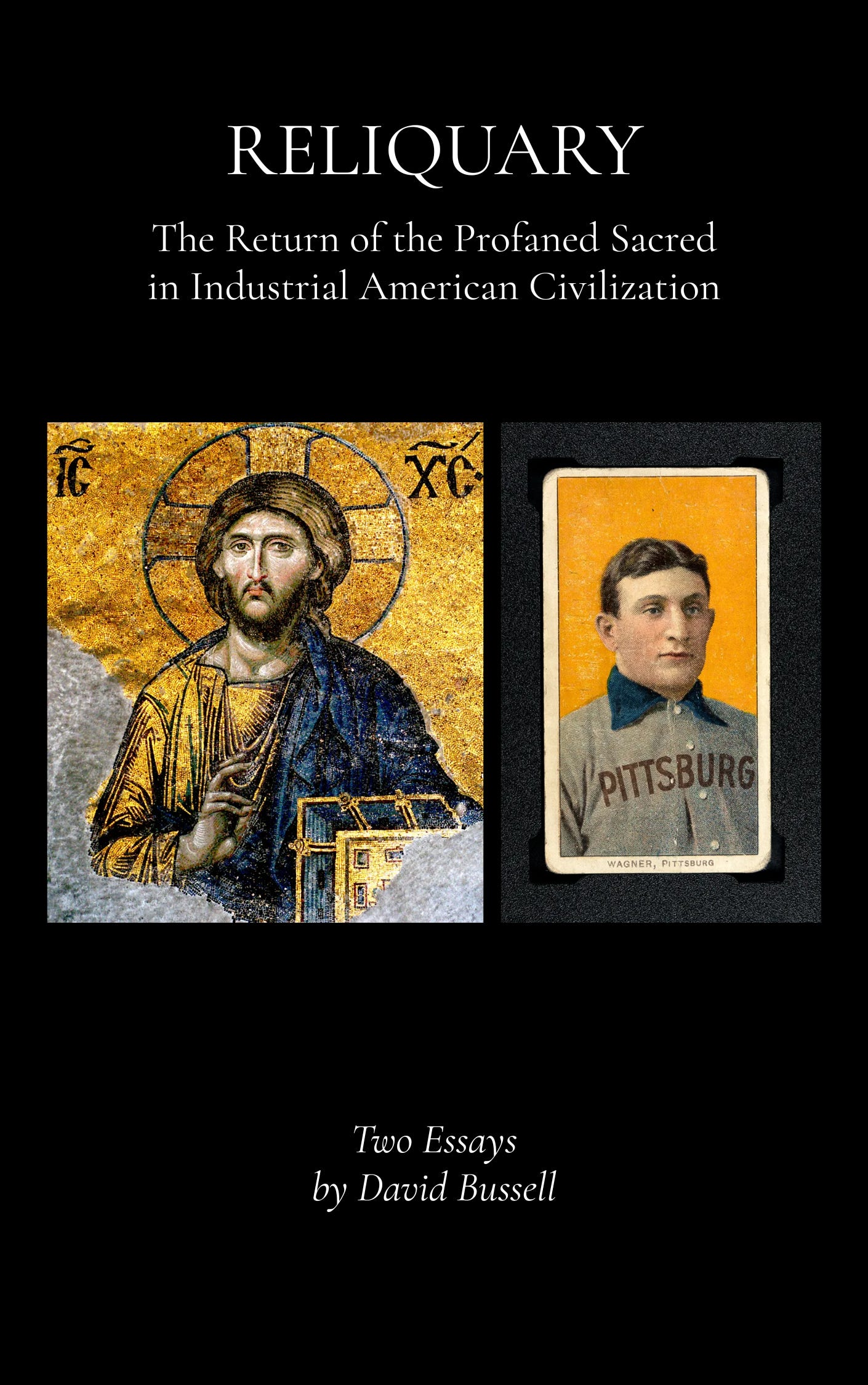
A. Baseball’s Color: How Representation Functioned in the Deadball Era to Create a Secular, Public American Mythology
HYPERLINK "https://substackcdn.com/image/fetch/$s_!fZKb!,f_auto,q_auto:good,fl_progressive:steep/https%3A%2F%2Fsubstack-post-media.s3.amazonaws.com%2Fpublic%2Fimages%2Fadafda89-007a-4e7a-9bde-d083b7821623_1088x681.webp" \t "blank"
INCLUDEPICTURE "https://substackcdn.com/image/fetch/$s!fZKb!,w_1456,c_limit,f_auto,q_auto:good,fl
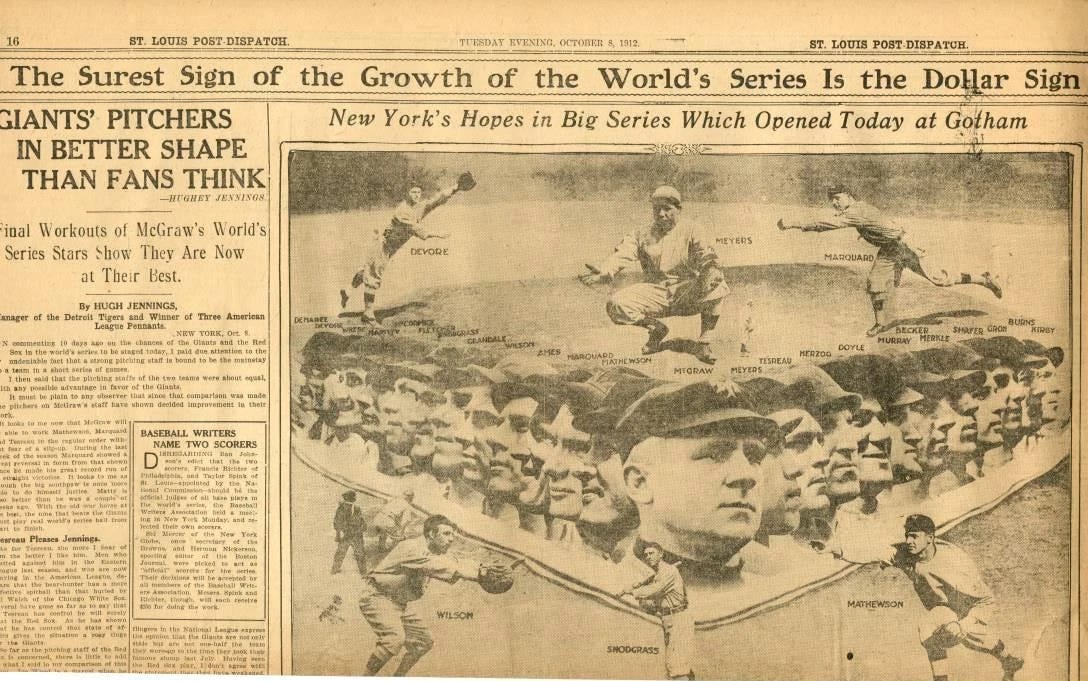
[…]
post-media.s3.amazonaws.com%2Fpublic%2Fimages%2F45eaeb27-3d76-4f17-95b4-b4fda593582b_403x600.jpeg" \t "blank"
INCLUDEPICTURE "https://substackcdn.com/image/fetch/$s!mX66!,w_1456,c_limit,f_auto,q_auto:good,fl_progressive:steep/https%3A%2F%2Fsubstack-post-media.s3.amazonaws.com%2Fpublic%2Fimages%2F45eaeb27-3d76-4f17-95b4-b4fda593582b_403x600.jpeg" * MERGEFORMATINET
HYPERLINK "https://substackcdn.com/image/fetch/$s_!xfYF!,f_auto,q_auto:good,fl_progressive:steep/https%3A%2F%2Fsubstack-post-media.s3.amazonaws.com%2Fpublic%2Fimages%2Fb4baaf5d-49f6-46c4-8b0b-ab9df277cf1d_1200x791.jpeg" \t "blank"
INCLUDEPICTURE "https://substackcdn.com/image/fetch/$s!xfYF!,w_1456,c_limit,f_auto,q_auto:good,fl_progressive:steep/https%3A%2F%2Fsubstack-post-media.s3.amazonaws.com%2Fpublic%2Fimages%2Fb4baaf5d-49f6-46c4-8b0b-ab9df277cf1d_1200x791.jpeg" * MERGEFORMATINET

HYPERLINK "https://substackcdn.com/image/fetch/$s_!Pqfp!,f_auto,q_auto:good,fl_progressive:steep/https%3A%2F%2Fsubstack-post-media.s3.amazonaws.com%2Fpublic%2Fimages%2F164ab3bc-9525-46d0-bc33-56fd69df1efd_873x1000.jpeg" \t "blank"
INCLUDEPICTURE "https://substackcdn.com/image/fetch/$s!Pqfp!,w_1456,c_limit,f_auto,q_auto:good,fl_progressive:steep/https%3A%2F%2Fsubstack-post-media
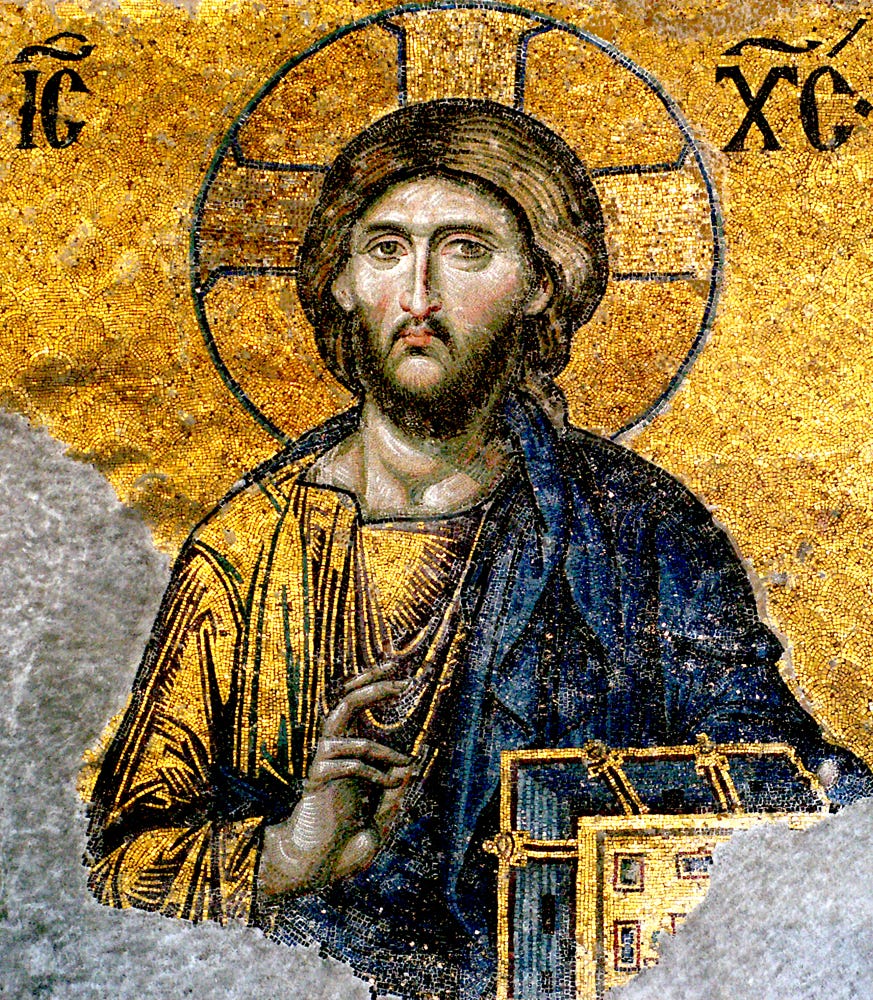
[…]
fetch/$s_!0KzF!,f_auto,q_auto:good,fl_progressive:steep/https%3A%2F%2Fsubstack-post-media.s3.amazonaws.com%2Fpublic%2Fimages%2F57d332d6-5494-44fe-97d7-5ee870be1c89_875x1150.jpeg" \t "blank"
INCLUDEPICTURE "https://substackcdn.com/image/fetch/$s!0KzF!,w_1456,c_limit,f_auto,q_auto:good,fl_progressive:steep/https%3A%2F%2Fsubstack-post-media.s3.amazonaws.com%2Fpublic%2Fimages%2F57d332d6-5494-44fe-97d7-5ee870be1c89_875x1150.jpeg" * MERGEFORMATINET
Leo Tolstoy — titan of literature; the spiritual and ethical conscience of the dispossessed within the Russian tradition.
HYPERLINK "https://substackcdn.com/image/fetch/$s_!d1Bt!,f_auto,q_auto:good,fl_progressive:steep/https%3A%2F%2Fsubstack-post-media.s3.amazonaws.com%2Fpublic%2Fimages%2F2909893d-0e87-4741-ab1e-65f23866d877_1024x1024.jpeg" \t "blank"
INCLUDEPICTURE "https://substackcdn.com/image/fetch/$s!d1Bt!,w_1456,c_limit,f_auto,q_auto:good,fl_progressive:steep/https%3A%2F
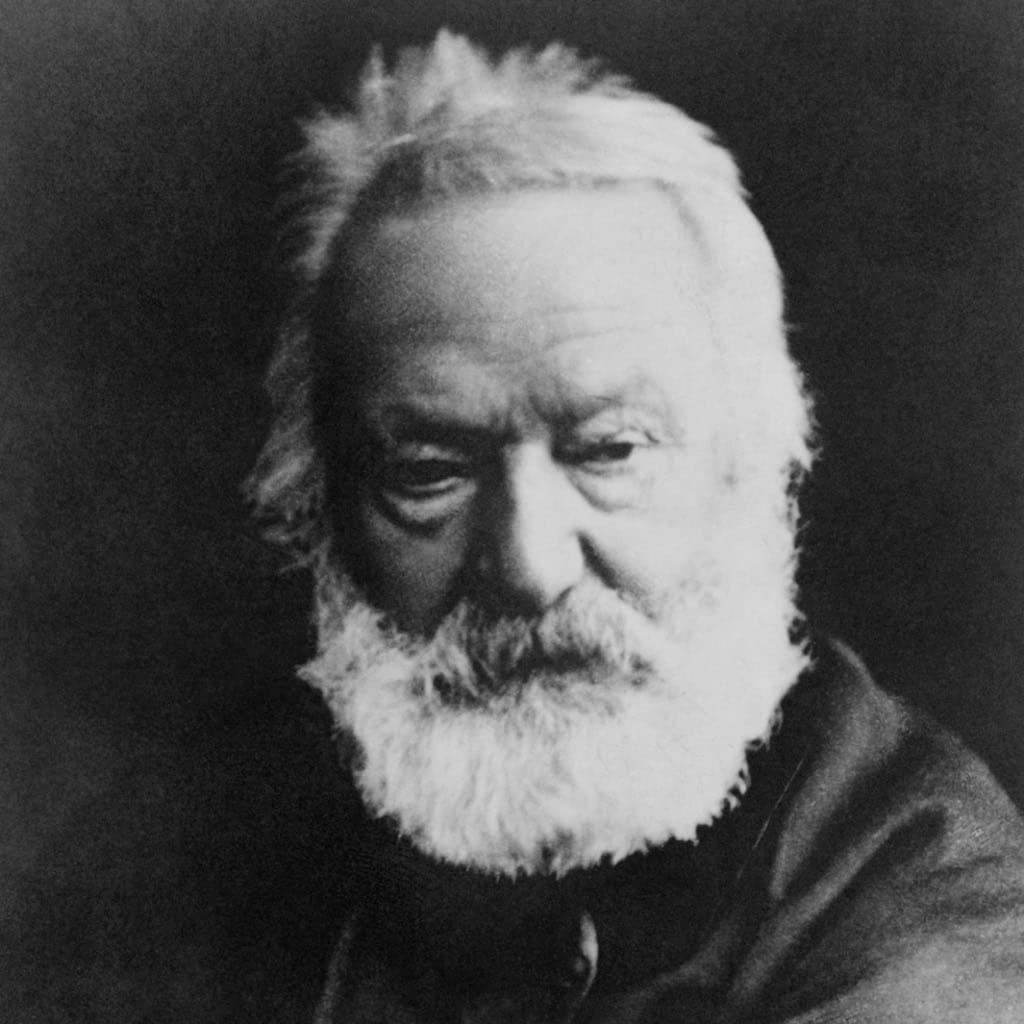
[…]
HYPERLINK "https://substackcdn.com/image/fetch/$s_!2Qj0!,f_auto,q_auto:good,fl_progressive:steep/https%3A%2F%2Fsubstack-post-media.s3.amazonaws.com%2Fpublic%2Fimages%2Fa0908397-5346-4275-8da1-c3cff94b4bf4_3132x1459.jpeg" \t "blank"
INCLUDEPICTURE "https://substackcdn.com/image/fetch/$s!2Qj0!,w_1456,c_limit,f_auto,q_auto:good,fl_progressive:steep/https
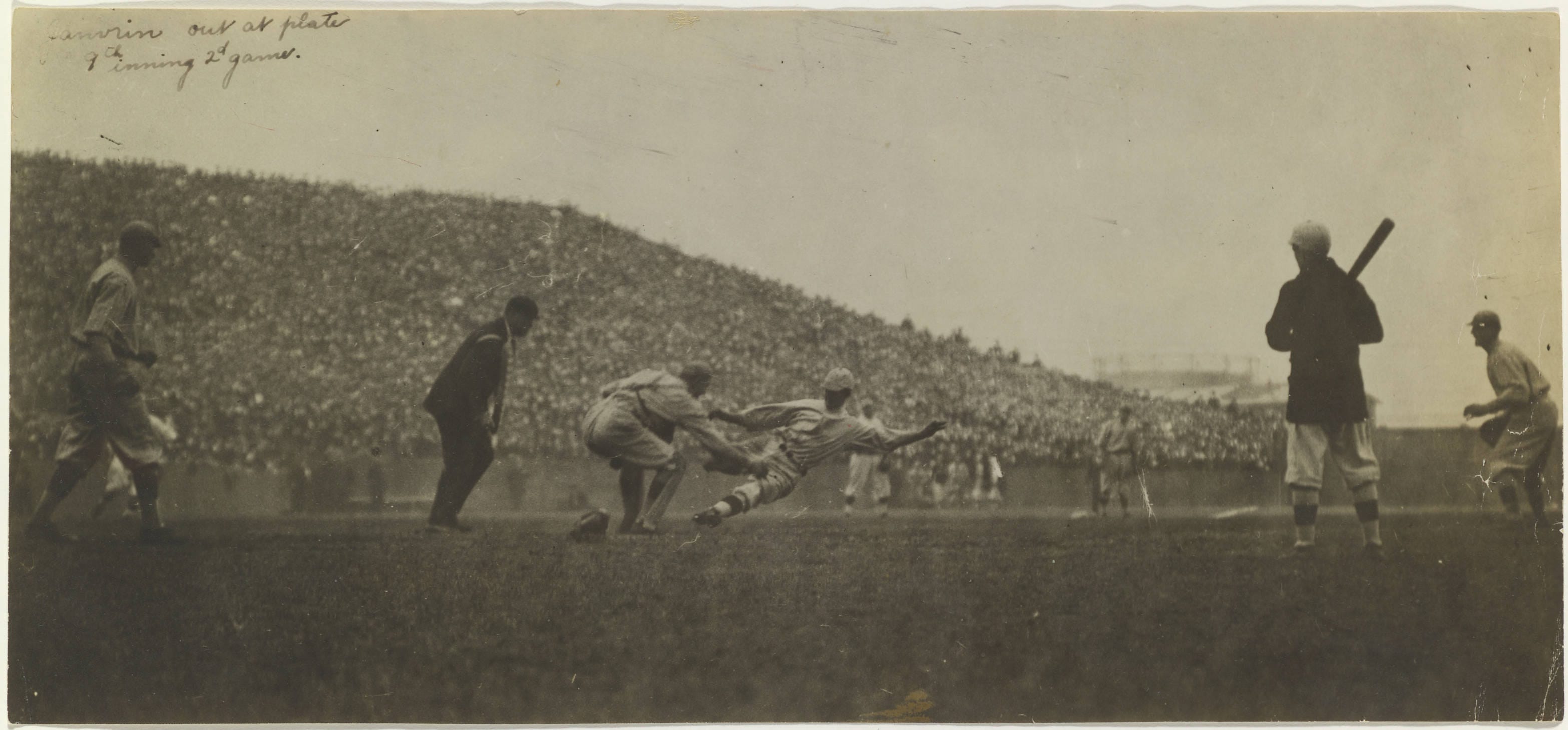
[…]
amazonaws.com%2Fpublic%2Fimages%2F49aac8ee-c542-4df4-833d-2dfe200cc600_1080x1618.jpeg" \t "blank"
INCLUDEPICTURE "https://substackcdn.com/image/fetch/$s!vyMn!,w_1456,c_limit,f_auto,q_auto:good,fl_progressive:steep/https%3A%2F%2Fsubstack-post-media.s3.amazonaws.com%2Fpublic%2Fimages%2F49aac8ee-c542-4df4-833d-2dfe200cc600_1080x1618.jpeg" * MERGEFORMATINET
Dendera, Egypt
[…]
Reality, Organisms, and History
HYPERLINK "https://substackcdn.com/image/fetch/$s_!D48O!,f_auto,q_auto:good,fl_progressive:steep/https%3A%2F%2Fsubstack-post-media.s3.amazonaws.com%2Fpublic%2Fimages%2F7cd9d502-6b15-49ee-80c5-77953ecc10aa_1410x2250.png" \t "blank"
INCLUDEPICTURE "https://substackcdn.com/image/fetch/$s!D48O!,w_1456,c_limit,f_auto,q_auto:good
[…]
s3.amazonaws.com%2Fpublic%2Fimages%2Fd60e2eb4-7322-4b41-bf1a-1161a802d46d_1386x2351.jpeg" \t "blank"
INCLUDEPICTURE "https://substackcdn.com/image/fetch/$s!IbKm!,w_1456,c_limit,f_auto,q_auto:good,fl_progressive:steep/https%3A%2F%2Fsubstack-post-media.s3.amazonaws.com%2Fpublic%2Fimages%2Fd60e2eb4-7322-4b41-bf1a-1161a802d46d_1386x2351.jpeg" * MERGEFORMATINET
Prom
[…]
https%3A%2F%2Fsubstack-post-media.s3.amazonaws.com%2Fpublic%2Fimages%2F5e80fa1c-27f6-4725-84dd-24ef15ef7edf_1024x768.jpeg" \t "blank"
INCLUDEPICTURE "https://substackcdn.com/image/fetch/$s!0UbJ!,w_1456,c_limit,f_auto,q_auto:good,fl_progressive:steep/https%3A%2F%2Fsubstack-post-media.s3.amazonaws.com%2Fpublic%2Fimages%2F5e80fa1c-27f6-4725-84dd-24ef15ef7edf_1024x768.jpeg" * MERGEFORMATINET
Manda Guéli Cave in the Ennedi Mountains, northeastern Chad (5,000-7,000 BC).
HYPERLINK "https://substackcdn.com/image/fetch/$s_!HBbN!,f_auto,q_auto:good,fl_progressive:steep/https%3A%2F%2Fsubstack-post-media.s3.amazonaws.com%2Fpublic%2Fimages%2F227bfd96-36cf-46ea-8220-4dee7c3a29a5_1297x1600.jpeg" \t "blank"
INCLUDEPICTURE "https://substackcdn.com/image/fetch/$s!HBbN!,w_1456,c_limit,f_auto,q_auto:good,fl_progressive:steep/https%3A%2F%2Fsubstack-post-media.s3.amazonaws.com%2Fpublic%2Fimages%2F227bfd96-36cf-46ea-8220
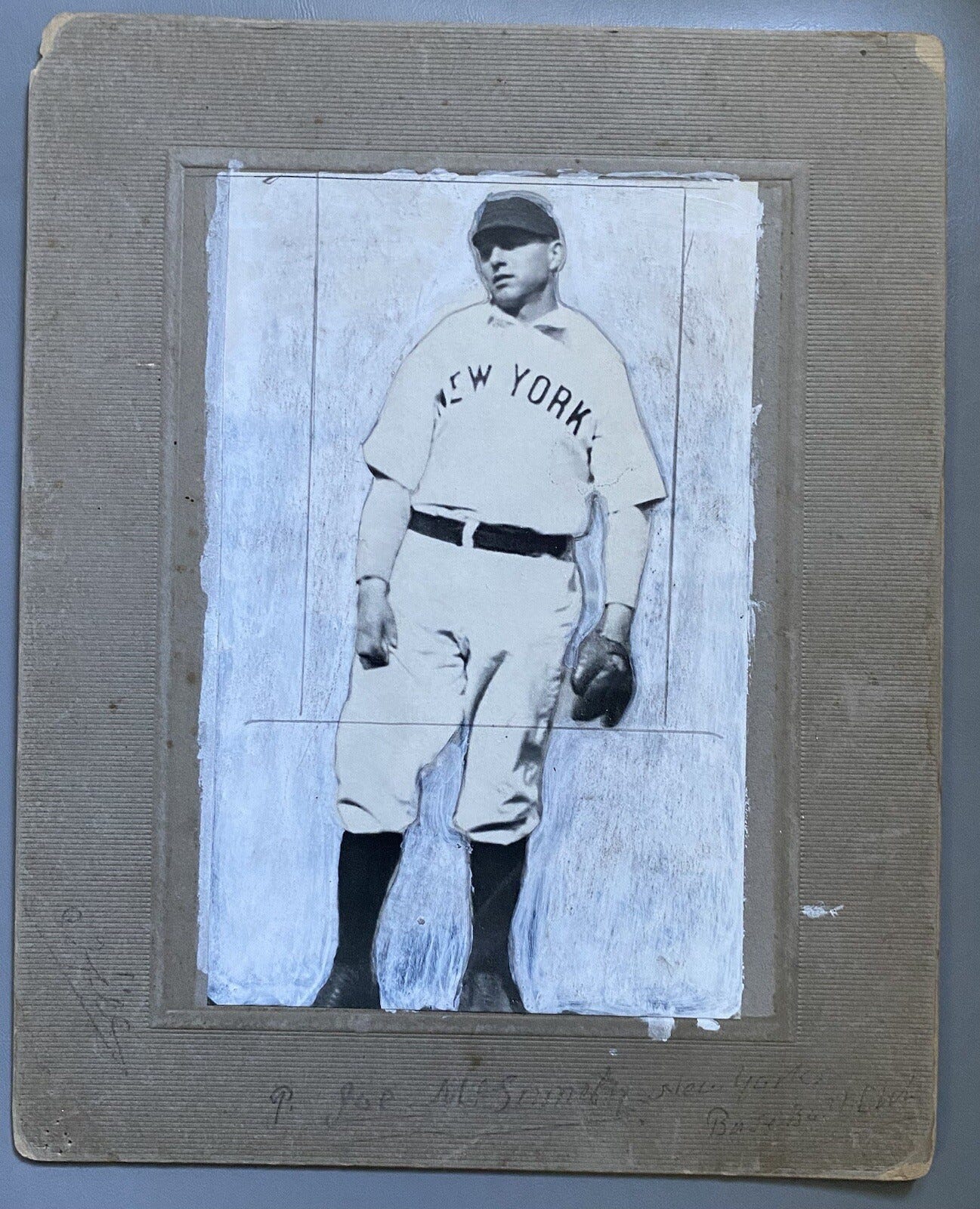
[…]
universal, cosmological time of architectural creation and primordial, energetic fire in diffuse systems.
HYPERLINK "https://substackcdn.com/image/fetch/$s_!Rrhm!,f_auto,q_auto:good,fl_progressive:steep/https%3A%2F%2Fsubstack-post-media.s3.amazonaws.com%2Fpublic%2Fimages%2Fe0cb5550-3e66-44e8-ac4e-2c1a00df3587_1539x2000.jpeg" \t "blank"
INCLUDEPICTURE "https://substackcdn.com/image/fetch/$s!Rrhm!,w_1456,c_limit,f_auto,q_auto:good,fl_progressive:steep/https%3A%2F%2Fsubstack-post-media.s3.amazonaws.com%2Fpublic%2Fimages%2Fe0cb5550-3e66-44e8-ac4e-2c1a00df3587_1539x2000.jpeg" * MERGEFORMATINET
Migrant Mother — Dorothea Lange (1936)
What the photographic image

[…]
https://substackcdn.com/image/fetch/$s_!Mzpa!,f_auto,q_auto:good,fl_progressive:steep/https%3A%2F%2Fsubstack-post-media.s3.amazonaws.com%2Fpublic%2Fimages%2F4718c60c-d92d-4e6c-9678-a2bd95bfee69_1410x2250.png" \t "blank"
INCLUDEPICTURE "https://substackcdn.com/image/fetch/$s!Mzpa!,w_1456,c_limit,f_auto,q_auto:good,fl_progressive:steep/https%3A
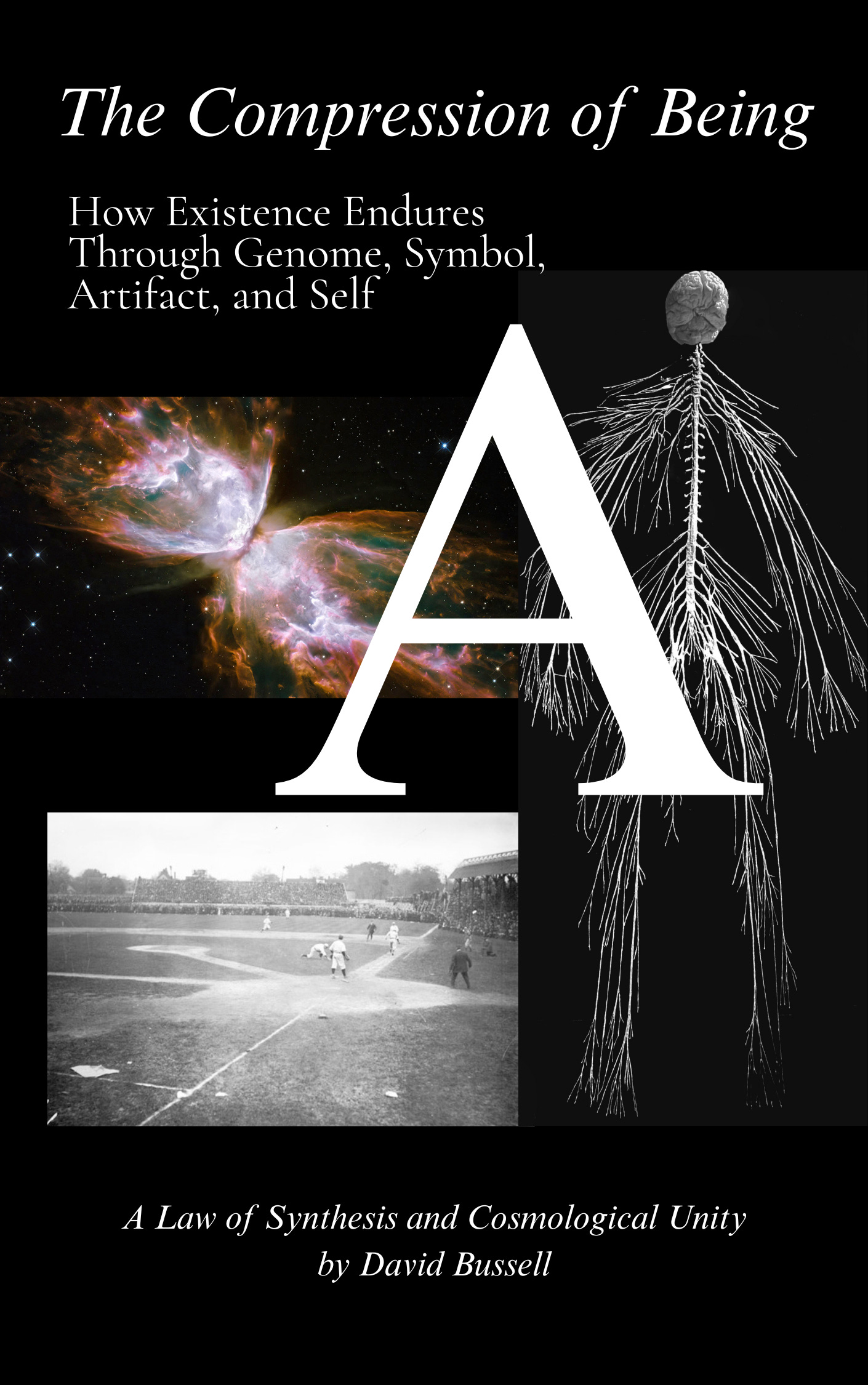
[…]
of Baseball History
HYPERLINK "https://substackcdn.com/image/fetch/$s_!NnVQ!,f_auto,q_auto:good,fl_progressive:steep/https%3A%2F%2Fsubstack-post-media.s3.amazonaws.com%2Fpublic%2Fimages%2Fb044323e-3220-4c46-a13a-8baf3f22362d_500x336.jpeg" \t "blank"
INCLUDEPICTURE "https://substackcdn.com/image/fetch/$s!NnVQ!,w_1456,c_limit,f_auto,q_auto:good,fl
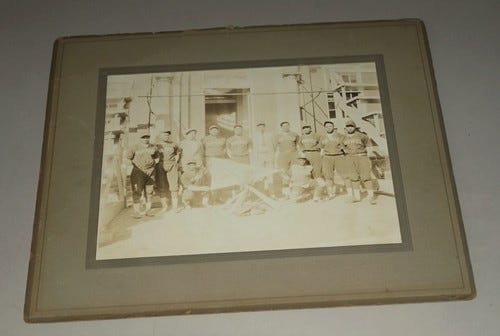
[…]
Pirates’ team, likely semi-pro; barnstorming.
HYPERLINK "https://substackcdn.com/image/fetch/$s_!RtC3!,f_auto,q_auto:good,fl_progressive:steep/https%3A%2F%2Fsubstack-post-media.s3.amazonaws.com%2Fpublic%2Fimages%2F85c246ef-242a-473f-a382-e3adf6dae8a8_1200x1600.jpeg" \t "blank"
INCLUDEPICTURE "https://substackcdn.com/image/fetch/$s!RtC3!,w_1456,c_limit,f_auto,q_auto:good,fl_progressive:steep/https%3A%2F%2Fsubstack-post-media.s3.amazonaws.com%2Fpublic%2Fimages%2F85c246ef-242a-473f-a382-e3adf6dae8a8_1200x1600.jpeg" * MERGEFORMATINET
A group of photos mailed by Al Schweitzer to his father in the early 1910s. Includes a cabinet
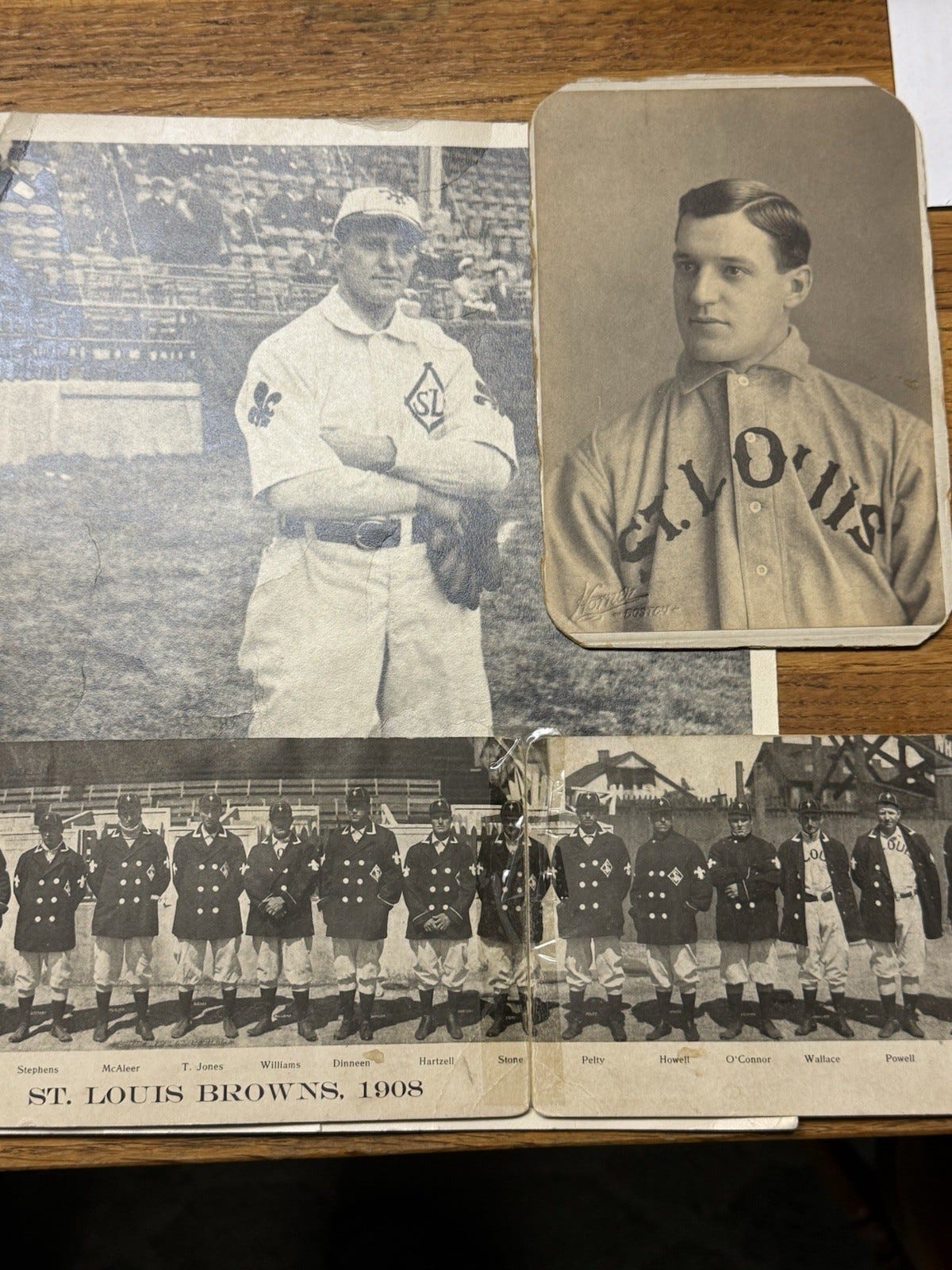
[…]
com%2Fpublic%2Fimages%2Fa099209a-9747-4e96-9b9f-110f517cf5f5_1592x1600.jpeg" \t "blank"
INCLUDEPICTURE "https://substackcdn.com/image/fetch/$s!tl0b!,w_1456,c_limit,f_auto,q_auto:good,fl_progressive:steep/https%3A%2F%2Fsubstack-post-media.s3.amazonaws.com%2Fpublic%2Fimages%2Fa099209a-9747-4e96-9b9f-110f517cf5f5_1592x1600.jpeg" * MERGEFORMATINET
1904 Cuban Professional
[…]
media.s3.amazonaws.com%2Fpublic%2Fimages%2F683cdda8-49a2-4711-a8f4-9c1e020c8063_1600x1024.jpeg" \t "blank"
INCLUDEPICTURE "https://substackcdn.com/image/fetch/$s!zzBZ!,w_1456,c_limit,f_auto,q_auto:good,fl_progressive:steep/https%3A%2F%2Fsubstack-post-media.s3.amazonaws.com%2Fpublic%2Fimages%2F683cdda8-49a2-4711-a8f4-9c1e020c8063_1600x1024.jpeg" * MERGEFORMATINET
[…]
cognitive, cultural, and historical.
HYPERLINK "https://substackcdn.com/image/fetch/$s_!aNXA!,f_auto,q_auto:good,fl_progressive:steep/https%3A%2F%2Fsubstack-post-media.s3.amazonaws.com%2Fpublic%2Fimages%2F115803a8-bf84-4c6a-8498-4a161cf014f2_1410x2250.png" \t "blank"
INCLUDEPICTURE "https://substackcdn.com/image/fetch/$s!aNXA!,w_1456,c_limit,f_auto,q_auto:good
[…]
Under Entropy
Legal Substrate Character, Operating Principle, and Cosmological Architecture
HYPERLINK "https://substackcdn.com/image/fetch/$s_!-4Kj!,f_auto,q_auto:good,fl_progressive:steep/https%3A%2F%2Fsubstack-post-media.s3.amazonaws.com%2Fpublic%2Fimages%2F38802878-10ad-4aad-bf1e-bef068319279_1410x2250.png" \t "blank"
INCLUDEPICTURE "https://substackcdn.com/image/fetch/$s!-4Kj!,w_1456,c_limit,f_auto,q_auto:good,fl_progressive:steep/https%3A%2F%2Fsubstack-post-media.s3.amazonaws.com%2Fpublic%2Fimages%2F38802878-10ad-4aad-bf1e-bef068319279_1410x2250.png" * MERGEFORMATINET
VOLUME I. The Constitution and Phenomenology of Being: The Character, Status, and Law
[…]
Actual being:
HYPERLINK "https://substackcdn.com/image/fetch/$s_!-uji!,f_auto,q_auto:good,fl_progressive:steep/https%3A%2F%2Fsubstack-post-media.s3.amazonaws.com%2Fpublic%2Fimages%2F1b37aef9-d013-4e93-ab43-1573ebf0cba6_1238x116.png" \t "blank"
INCLUDEPICTURE "https://substackcdn.com/image/fetch/$s!-uji!,w_1456,c_limit,f_auto,q_auto:good,fl_progressive:steep/https%3A%2F%2Fsubstack-post-media.s3.amazonaws.com%2Fpublic%2Fimages%2F1b37aef9-d013-4e93-ab43-1573ebf0cba6_1238x116.png" * MERGEFORMATINET

Optimal being potential:
HYPERLINK "https://substackcdn.com/image/fetch/$s_!Ygch!,f_auto,q_auto:good,fl_progressive:steep/https%3A%2F%2Fsubstack
[…]
2F%2Fsubstack-post-media.s3.amazonaws.com%2Fpublic%2Fimages%2F32c93f4d-0f28-4f7c-9829-724c1b9cade6_888x116.png" * MERGEFORMATINET
HYPERLINK "https://substackcdn.com/image/fetch/$s_!4eGC!,f_auto,q_auto:good,fl_progressive:steep/https%3A%2F%2Fsubstack-post-media.s3.amazonaws.com%2Fpublic%2Fimages%2Febdb3e5c-7ebe-4774-8d7b-76f7c7b1f3fc_790x132.png" \t "blank"
INCLUDEPICTURE "https://substackcdn.com/image/fetch/$s!4eGC!,w_1456,c_limit,f_auto,q_auto:good,fl_progressive:steep/https%3A%2F%2Fsubstack-post-media.s3.amazonaws.com%2Fpublic%2Fimages%2Febdb3e5c-7ebe-4774-8d7b-76f7c7b1f3fc_790x132.png" * MERGEFORMATINET

Interpretation
Being is maximal viability
[…]
HYPERLINK "https://substackcdn.com/image/fetch/$s_!CxhB!,f_auto,q_auto:good,fl_progressive:steep/https%3A%2F%2Fsubstack-post-media.s3.amazonaws.com%2Fpublic%2Fimages%2F80821acf-f31f-4620-8c7d-d45aca83202f_2840x1630.png" \t "blank"
INCLUDEPICTURE "https://substackcdn.com/image/fetch/$s!CxhB!,w_1456,c_limit,f_auto,q_auto:good,fl_progressive:steep/https
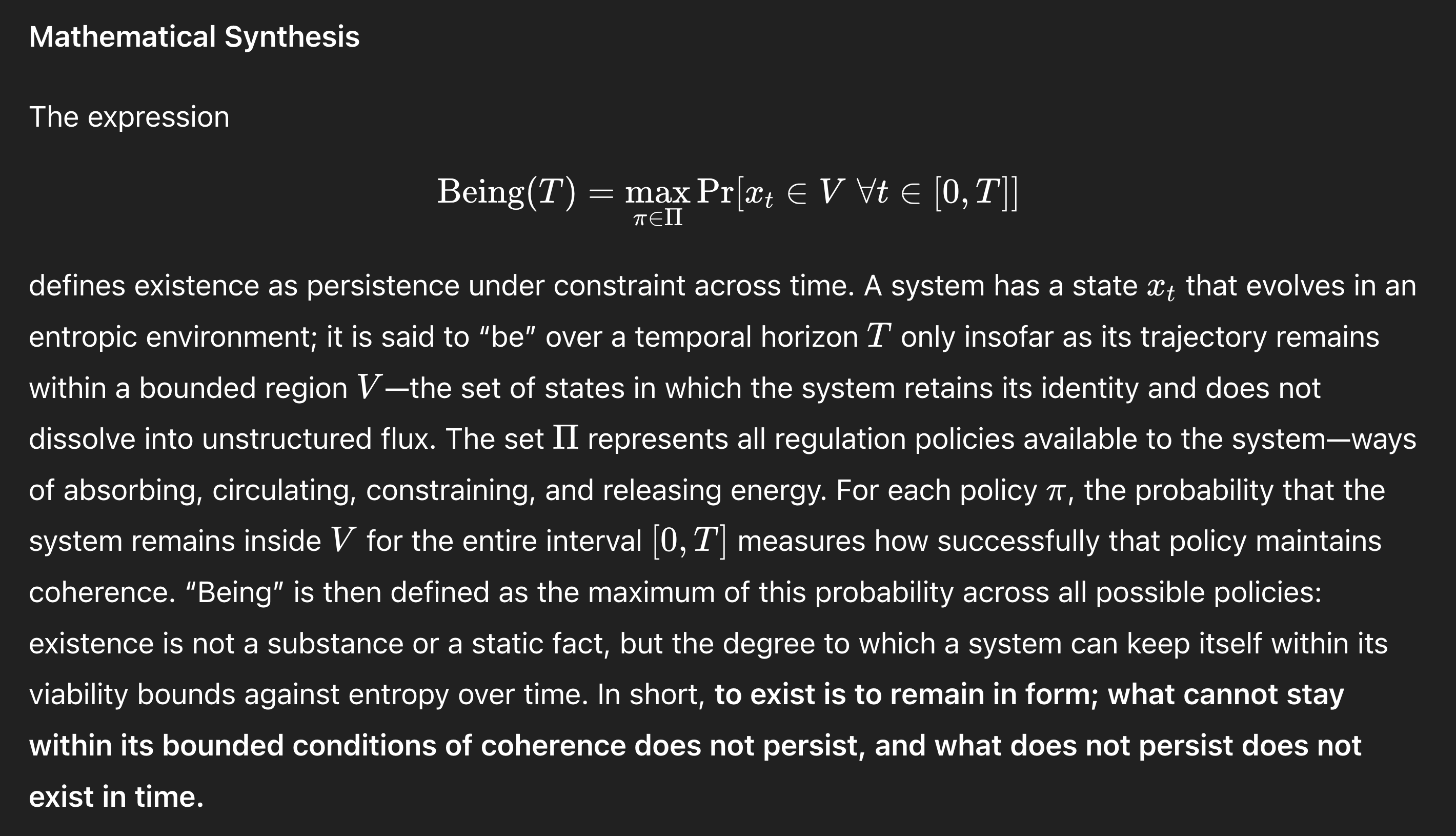
[…]
interval.
- State
HYPERLINK "https://substackcdn.com/image/fetch/$s_!R2Fi!,f_auto,q_auto:good,fl_progressive:steep/https%3A%2F%2Fsubstack-post-media.s3.amazonaws.com%2Fpublic%2Fimages%2F90c99ea6-4030-4659-a8c7-c70d7452d14d_178x152.png" \t "blank"
INCLUDEPICTURE "https://substackcdn.com/image/fetch/$s!R2Fi!,w_1456,c_limit,f_auto,q_auto:good,fl_progressive

[…]
2Fpublic%2Fimages%2F80132307-5347-4167-86ed-b4c57188544e_496x196.png" \t "blank"
INCLUDEPICTURE "https://substackcdn.com/image/fetch/$s!wMeb!,w_1456,c_limit,f_auto,q_auto:good,fl_progressive:steep/https%3A%2F%2Fsubstack-post-media.s3.amazonaws.com%2Fpublic%2Fimages%2F80132307-5347-4167-86ed-b4c57188544e_496x196.png" * MERGEFORMATINET
The set of all
[…]
To exit V is to lose form: breakdown, decay, or dissolution.
HYPERLINK "https://substackcdn.com/image/fetch/$s_!io9c!,f_auto,q_auto:good,fl_progressive:steep/https%3A%2F%2Fsubstack-post-media.s3.amazonaws.com%2Fpublic%2Fimages%2F1a7f25dc-aae6-40fd-acef-7e13f365469a_1880x654.png" \t "blank"
INCLUDEPICTURE "https://substackcdn.com/image/fetch/$s!io9c!,w_1456,c_limit,f_auto,q_auto:good,fl_progressive:steep/https%3A%2F%2Fsubstack-post-media.s3.amazonaws.com%2Fpublic%2Fimages%2F1a7f25dc-aae6-40fd-acef-7e13f365469a_1880x654.png" * MERGEFORMATINET
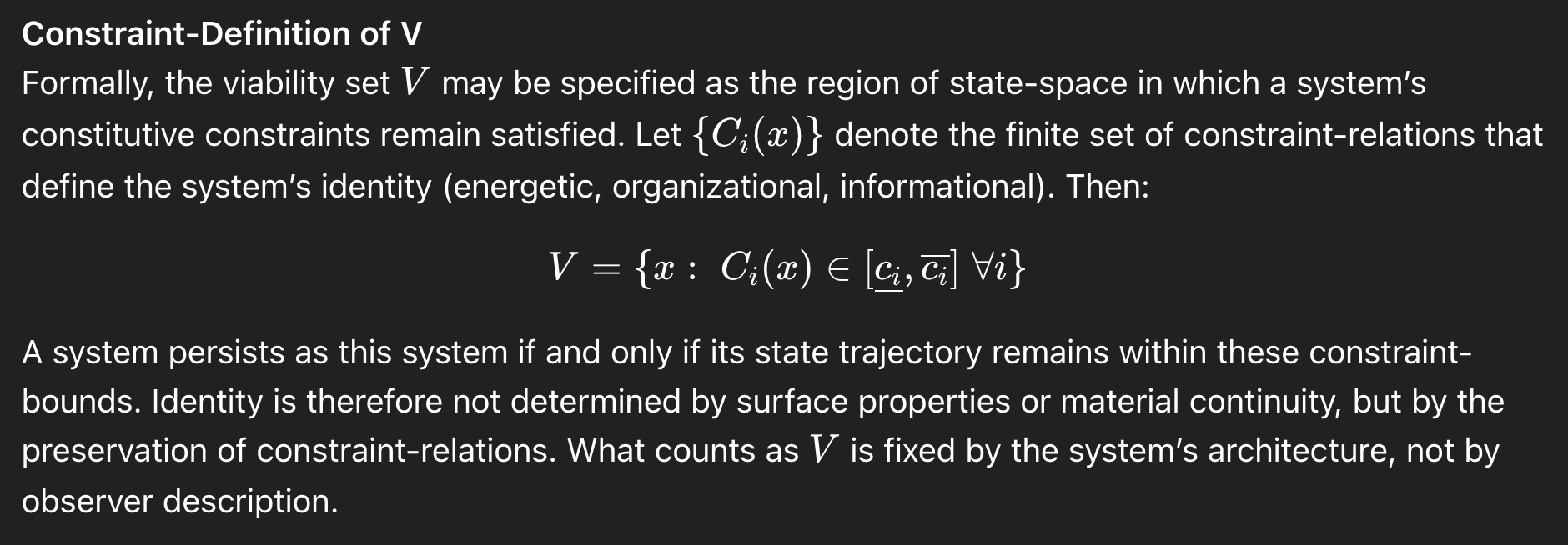
Constraint-relations define identity type. Token identity is defined by continuity of
[…]
media.s3.amazonaws.com%2Fpublic%2Fimages%2F8f5a2c8d-17fb-44dc-bc6e-3d893565f237_490x194.png" \t "blank"
INCLUDEPICTURE "https://substackcdn.com/image/fetch/$s!jIOK!,w_1456,c_limit,f_auto,q_auto:good,fl_progressive:steep/https%3A%2F%2Fsubstack-post-media.s3.amazonaws.com%2Fpublic%2Fimages%2F8f5a2c8d-17fb-44dc-bc6e-3d893565f237_490x194.png" * MERGEFORMATINET
[…]
3A%2F%2Fsubstack-post-media.s3.amazonaws.com%2Fpublic%2Fimages%2F541c2ebe-a7b9-4b5f-9045-d2de1093bc63_620x302.png" \t "blank"
INCLUDEPICTURE "https://substackcdn.com/image/fetch/$s!msKt!,w_1456,c_limit,f_auto,q_auto:good,fl_progressive:steep/https%3A%2F%2Fsubstack-post-media.s3.amazonaws.com%2Fpublic%2Fimages%2F541c2ebe-a7b9-4b5f-9045
[…]
never guaranteed—only maintained.
- Horizon of Persistence
HYPERLINK "https://substackcdn.com/image/fetch/$s_!hBc6!,f_auto,q_auto:good,fl_progressive:steep/https%3A%2F%2Fsubstack-post-media.s3.amazonaws.com%2Fpublic%2Fimages%2F107edd0c-45e1-418c-a920-22c839239486_246x228.png" \t "blank"
INCLUDEPICTURE "https://substackcdn.com/image/fetch/$s!hBc6!,w_1456,c_limit,f_auto,q_auto:good,fl_progressive:steep/https%3A%2F%2Fsubstack-post-media.s3.amazonaws.com%2Fpublic%2Fimages%2F107edd0c-45e1-418c-a920-22c839239486_246x228.png" * MERGEFORMATINET

The temporal extent across which coherence is demanded.
Being is not defined at an instant
[…]
tends to restore membership in V.
Axiom
HYPERLINK "https://substackcdn.com/image/fetch/$s_!tZKf!,f_auto,q_auto:good,fl_progressive:steep/https%3A%2F%2Fsubstack-post-media.s3.amazonaws.com%2Fpublic%2Fimages%2F8d5e1072-ebb5-489a-a9db-1b2c3ca5257f_1016x222.png" \t "blank"
INCLUDEPICTURE "https://substackcdn.com/image/fetch/$s!tZKf!,w_1456,c_limit,f_auto,q_auto:good,fl_progressive:steep/https%3A%2F%2Fsubstack-post-media.s3.amazonaws.com%2Fpublic%2Fimages%2F8d5e1072-ebb5-489a-a9db-1b2c3ca5257f_1016x222.png" * MERGEFORMATINET

That which cannot remain within bounded form does not exist in time.
Universal Law (Compression Principle)
HYPERLINK "https://substackcdn.com/image/fetch/$s_!kFFF!,f_auto,q_auto:good,fl_progressive:steep/https%3A%2F%2Fsubstack-post-media.s3.amazonaws.com%2Fpublic%2Fimages%2F4dbabac7-e3b8-4eda-99af-1a3401b9ac6c_2818x164.png" \t "blank"
INCLUDEPICTURE "https://substackcdn.com/image/fetch/$s!kFFF!,w_1456,c_limit,f_auto,q_auto:good,fl_progressive:steep/https%3A%2F%2Fsubstack-post-media.s3.amazonaws.com%2Fpublic%2Fimages%2F4dbabac7-e3b8-4eda-99af-1a3401b9ac6c_2818x164.png" * MERGEFORMATINET

No compression → no persistence → no being.
Phenomenological Closure
Consciousness introduces no new ontological category
[…]
com%2Fpublic%2Fimages%2Fa311f21d-3200-4150-9439-e7a7b67f3035_1428x164.png" \t "blank"
INCLUDEPICTURE "https://substackcdn.com/image/fetch/$s!EwfC!,w_1456,c_limit,f_auto,q_auto:good,fl_progressive:steep/https%3A%2F%2Fsubstack-post-media.s3.amazonaws.com%2Fpublic%2Fimages%2Fa311f21d-3200-4150-9439-e7a7b67f3035_1428x164.png" * MERGEFORMATINET
Operator Identity
“Compression” includes replication/transmission constraints, not only static material constraint.
HYPERLINK "https://substackcdn.com/image/fetch/$s_!NhYq!,f_auto,q_auto:good,fl_progressive:steep/https%3A%2F%2Fsubstack-post-media.s3.amazonaws.com%2Fpublic%2Fimages%2F26e38d10-a8e2-403d-b9d4-648e5e77836d_1880x176.png" \t "blank"
INCLUDEPICTURE "https://substackcdn.com/image/fetch/$s!NhYq!,w_1456,c_limit,f_auto,q_auto:good,fl_progressive:steep/https%3A%2F%2Fsubstack-post-media.s3.amazonaws.com%2Fpublic%2Fimages%2F26e38d10-a8e2-403d-b9d4-648e5e77836d_1880x176.png" * MERGEFORMATINET

These are not identical in
[…]
yet fully real as the operative condition of form in an entropic universe.
HYPERLINK "https://substackcdn.com/image/fetch/$s_!TX5S!,f_auto,q_auto:good,fl_progressive:steep/https%3A%2F%2Fsubstack-post-media.s3.amazonaws.com%2Fpublic%2Fimages%2F9153ccd2-0f6f-4220-87c5-7a6028180e54_992x150.png" \t "blank"
INCLUDEPICTURE "https://substackcdn.com/image/fetch/$s!TX5S!,w_1456,c_limit,f_auto,q_auto:good,fl_progressive:steep/https%3A%2F%2Fsubstack-post-media.s3.amazonaws.com%2Fpublic%2Fimages%2F9153ccd2-0f6f-4220-87c5-7a6028180e54_992x150.png" * MERGEFORMATINET

Form is not deception.
Form is ontological necessity.
Character
[…]
2Fsubstack-post-media.s3.amazonaws.com%2Fpublic%2Fimages%2F217081e1-315d-4498-b402-b23fdd3ef934_2782x132.png" \t "blank"
INCLUDEPICTURE "https://substackcdn.com/image/fetch/$s!UnVS!,w_1456,c_limit,f_auto,q_auto:good,fl_progressive:steep/https%3A%2F%2Fsubstack-post-media.s3.amazonaws.com%2Fpublic%2Fimages%2F217081e1-315d-4498-b402-b23fdd3ef934_2782x132
[…]
of energy under entropy.
What cannot constrain, translate, and retain energetic flux dissolves into undifferentiated background.
HYPERLINK "https://substackcdn.com/image/fetch/$s_!vhgj!,f_auto,q_auto:good,fl_progressive:steep/https%3A%2F%2Fsubstack-post-media.s3.amazonaws.com%2Fpublic%2Fimages%2F9da49b9d-e6f8-43bd-84c5-84d36e0a41ca_646x98.png" \t "blank"
INCLUDEPICTURE "https://substackcdn.com/image/fetch/$s!vhgj!,w_1456,c_limit,f_auto,q_auto:good,fl_progressive:steep/https%3A%2F%2Fsubstack-post-media.s3.amazonaws.com%2Fpublic%2Fimages%2F9da49b9d-e6f8-43bd-84c5-84d36e0a41ca_646x98.png" * MERGEFORMATINET

II. Law of Downscale Constraint
L1
[…]
2Fsubstack-post-media.s3.amazonaws.com%2Fpublic%2Fimages%2F44331452-249f-420a-b8d3-8ce2cc22e6a6_1628x316.png" * MERGEFORMATINET
III. Definition of Non-Being
D1. Decoherence
Energy not captured by a constraint system escapes into background flux.
HYPERLINK "https://substackcdn.com/image/fetch/$s_!yVYo!,f_auto,q_auto:good,fl_progressive:steep/https%3A
[…]
https%3A%2F%2Fsubstack-post-media.s3.amazonaws.com%2Fpublic%2Fimages%2Fbe2955ef-ac12-4c0b-9fe3-a76951190c2a_834x74.png" * MERGEFORMATINET
Non-being is not nothingness; it is uncaptured energy outside any sustaining architecture.
IV. Formal Conditions of Existence
HYPERLINK "https://substackcdn.com/image/fetch/$s_!VNIc!,f_auto,q_auto:good,fl_progressive:steep/https%3A%2F%2Fsubstack-post-media.s3.amazonaws.com%2Fpublic%2Fimages%2F5ab6d184-6c46-4cb1-aa55-11f8a66de549_1108x66.png" \t "blank"
INCLUDEPICTURE "https://substackcdn.com/image/fetch/$s!VNIc!,w_1456,c_limit,f_auto,q_auto:good,fl_progressive:steep/https%3A%2F%2Fsubstack

[…]
2F%2Fsubstack-post-media.s3.amazonaws.com%2Fpublic%2Fimages%2F4eeb2a8f-4135-461e-b163-215a244a708a_1172x242.png" \t "blank"
INCLUDEPICTURE "https://substackcdn.com/image/fetch/$s!4SPP!,w_1456,c_limit,f_auto,q_auto:good,fl_progressive:steep/https%3A%2F%2Fsubstack-post-media.s3.amazonaws.com%2Fpublic%2Fimages%2F4eeb2a8f-4135-461e-b163-215a244a708a_1172x242.png" * MERGEFORMATINET
Regulation Function
HYPERLINK "https://substackcdn.com/image/fetch/$s_!26jL!,f_auto,q_auto:good,fl_progressive:steep/https%3A%2F%2Fsubstack-post-media.s3.amazonaws.com%2Fpublic%2Fimages%2Fe8f7ebe2-5fd6-43f9-9a8c-b820eb71ea02_1032x416.png" \t "blank"
INCLUDEPICTURE "https://substackcdn.com/image/fetch/$s!26jL!,w_1456,c_limit,f_auto,q_auto:good,fl_progressive:steep/https%3A%2F%2Fsubstack-post-media.s3.amazonaws.com%2Fpublic%2Fimages%2Fe8f7ebe2-5fd6-43f9-9a8c-b820eb71ea02_1032x416.png" * MERGEFORMATINETPersistence Measure
HYPERLINK "https://substackcdn.com/image/fetch/$s_!YxvU!,f_auto,q_auto:good,fl_progressive:steep/https%3A%2F%2Fsubstack-post-media.s3.amazonaws.com%2Fpublic%2Fimages%2F810dc03c-a7eb-4973-ae32-f6fb84b0fad6_722x112.png" \t "blank"
INCLUDEPICTURE "https://substackcdn.com/image/fetch/$s!YxvU!,w_1456,c_limit,f_auto,q_auto:good,fl_progressive:steep
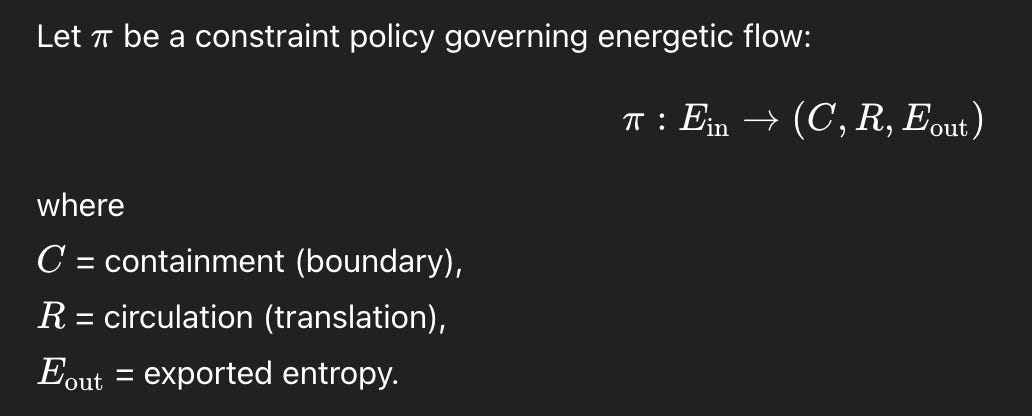

[…]
Theorem
T1.
Across all domains, the same persistence operator is executed:
HYPERLINK "https://substackcdn.com/image/fetch/$s_!zwxv!,f_auto,q_auto:good,fl_progressive:steep/https%3A%2F%2Fsubstack-post-media.s3.amazonaws.com%2Fpublic%2Fimages%2F6c1349c3-39fa-443a-bd2b-96d92633f723_830x58.png" \t "blank"
INCLUDEPICTURE "https://substackcdn.com/image/fetch/$s!zwxv!,w_1456,c_limit,f_auto,q_auto:good,fl_progressive:steep/https%3A%2F%2Fsubstack-post-media.s3.amazonaws.com%2Fpublic%2Fimages%2F6c1349c3-39fa-443a-bd2b-96d92633f723_830x58.png" * MERGEFORMATINET

with respect to being, because each performs:
HYPERLINK "https://substackcdn.com/image/fetch/$s_!iRf3!,f_auto,q_auto:good,fl_progressive:steep/https%3A%2F%2Fsubstack-post-media.s3.amazonaws.com%2Fpublic%2Fimages%2F7782c7ed-8c4d-443c-b588-6179345425c9_800x72.png" \t "blank"
INCLUDEPICTURE "https://substackcdn.com/image/fetch/$s!iRf3!,w_1456,c_limit,f_auto,q_auto:good

[…]
E1.
No system is closed. All persistence requires continuous entropy export.
HYPERLINK "https://substackcdn.com/image/fetch/$s_!2PWF!,f_auto,q_auto:good,fl_progressive:steep/https%3A%2F%2Fsubstack-post-media.s3.amazonaws.com%2Fpublic%2Fimages%2F1514e2b5-85cf-4834-a9eb-4b96887927cd_1044x62.png" \t "blank"
INCLUDEPICTURE "https://substackcdn.com/image/fetch/$s!2PWF!,w_1456,c_limit,f_auto,q_auto:good,fl_progressive:steep/https%3A%2F%2Fsubstack-post-media.s3.amazonaws.com%2Fpublic%2Fimages%2F1514e2b5-85cf-4834-a9eb-4b96887927cd_1044x62.png" * MERGEFORMATINET

Existence is therefore always conditional: maintained, never guaranteed.
VII. Consciousness, Symbol
[…]
s3.amazonaws.com%2Fpublic%2Fimages%2Ff33a2d0b-7cb5-4812-8bdb-de8700704fc8_994x134.png" \t "blank"
INCLUDEPICTURE "https://substackcdn.com/image/fetch/$s!H9xF!,w_1456,c_limit,f_auto,q_auto:good,fl_progressive:steep/https%3A%2F%2Fsubstack-post-media.s3.amazonaws.com%2Fpublic%2Fimages%2Ff33a2d0b-7cb5-4812-8bdb-de8700704fc8_994x134.png" * MERGEFORMATINET
Subjectivity
[…]
2Fpublic%2Fimages%2F7571fafa-3af4-445a-b4b6-8e952dae69b3_1410x2250.png" \t "blank"
INCLUDEPICTURE "https://substackcdn.com/image/fetch/$s!AtG7!,w_1456,c_limit,f_auto,q_auto:good,fl_progressive:steep/https%3A%2F%2Fsubstack-post-media.s3.amazonaws.com%2Fpublic%2Fimages%2F7571fafa-3af4-445a-b4b6-8e952dae69b3_1410x2250.png" * MERGEFORMATINET
The Dissatisfaction Principle:
In
[…]
media.s3.amazonaws.com%2Fpublic%2Fimages%2F8b8b6087-ec1f-4f19-a56b-8920c34ccafe_1460x190.png" * MERGEFORMATINET
A. Dissatisfaction, Necessary Subjection; the Critical Realization of Thermonuclear Humanity
HYPERLINK "https://substackcdn.com/image/fetch/$s_!5f9g!,f_auto,q_auto:good,fl_progressive:steep/https%3A%2F%2Fsubstack-post-media.s3.amazonaws.com%2Fpublic%2Fimages%2Ff1d0f271-67f8-4bc2-8df5-091ff3fa6e76_1661x3051.jpeg" \t "blank"
INCLUDEPICTURE "https://substackcdn.com/image/fetch/$s!5f9g!,w_1456,c_limit,f_auto,q_auto:good,fl_progressive:steep/https%3A%2F%2Fsubstack-post-media.s3.amazonaws.com%2Fpublic%2Fimages%2Ff1d0f271-67f8-4bc2-8df5-091ff3fa6e76_1661x3051.jpeg

[…]
amazonaws.com%2Fpublic%2Fimages%2Fd62fbfa2-92ac-4119-a3f1-a2ac378bef98_938x1252.jpeg" \t "blank"
INCLUDEPICTURE "https://substackcdn.com/image/fetch/$s!AaRq!,w_1456,c_limit,f_auto,q_auto:good,fl_progressive:steep/https%3A%2F%2Fsubstack-post-media.s3.amazonaws.com%2Fpublic%2Fimages%2Fd62fbfa2-92ac-4119-a3f1-a2ac378bef98_938x1252.jpeg" * MERGEFORMATINET
Our poet
[…]
charade of civilizational decadence and the presumption and vaudeville emptiness of mankind.
HYPERLINK "https://substackcdn.com/image/fetch/$s_!f1Iy!,f_auto,q_auto:good,fl_progressive:steep/https%3A%2F%2Fsubstack-post-media.s3.amazonaws.com%2Fpublic%2Fimages%2F7befb8f4-a08d-4556-a4ee-17327dc809fd_2621x1881.jpeg" \t "blank"
INCLUDEPICTURE "https://substackcdn.com/image/fetch/$s!f1Iy!,w_1456,c_limit,f_auto,q_auto:good,fl_progressive:steep/https%3A%2F%2Fsubstack-post-media.s3.amazonaws.com%2Fpublic%2Fimages%2F7befb8f4-a08d-4556-a4ee-17327dc809fd_2621x1881.jpeg" * MERGEFORMATINET
The boredom of the cell wall at dusk, or, Fermi
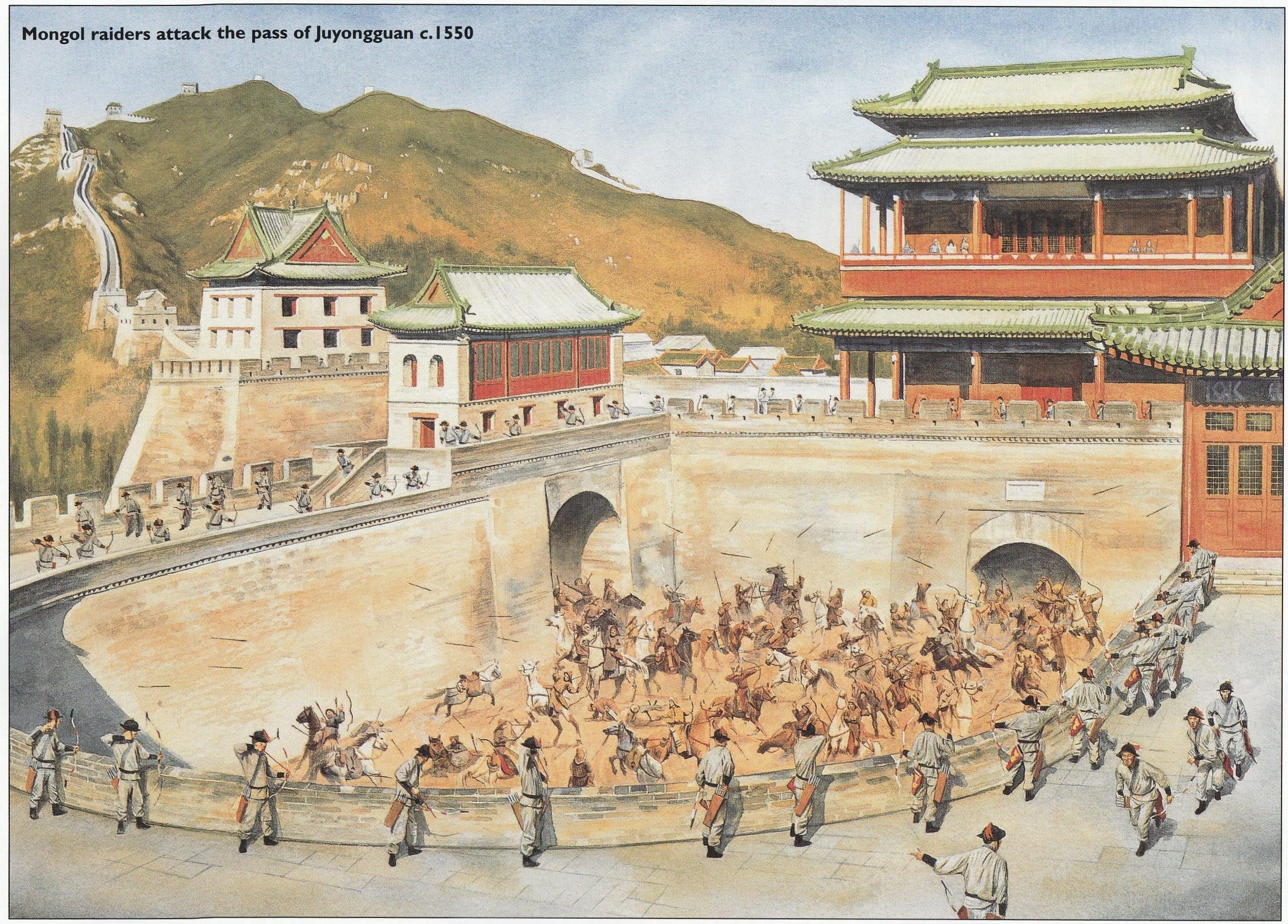
[…]
https%3A%2F%2Fsubstack-post-media.s3.amazonaws.com%2Fpublic%2Fimages%2F649d988a-841f-45c9-adc0-c915ee089d9c_1572x736.png" * MERGEFORMATINET
Law of Being (persistence criterion)
HYPERLINK "https://substackcdn.com/image/fetch/$s_!C5cz!,f_auto,q_auto:good,fl_progressive:steep/https%3A%2F%2Fsubstack-post-media.s3.amazonaws.com%2Fpublic%2Fimages%2F987fd39d-bdb6-40f8-9871-24cd27688757_1506x446.png" \t "blank"
INCLUDEPICTURE "https://substackcdn.com/image/fetch/$s!C5cz!,w_1456,c_limit,f_auto,q_auto:good,fl_progressive:steep/https%3A%2F%2Fsubstack-post-media.s3.amazonaws.com%2Fpublic%2Fimages%2F987fd39d-bdb6-40f8-9871-24cd27688757_1506x446.png" * MERGEFORMATINET
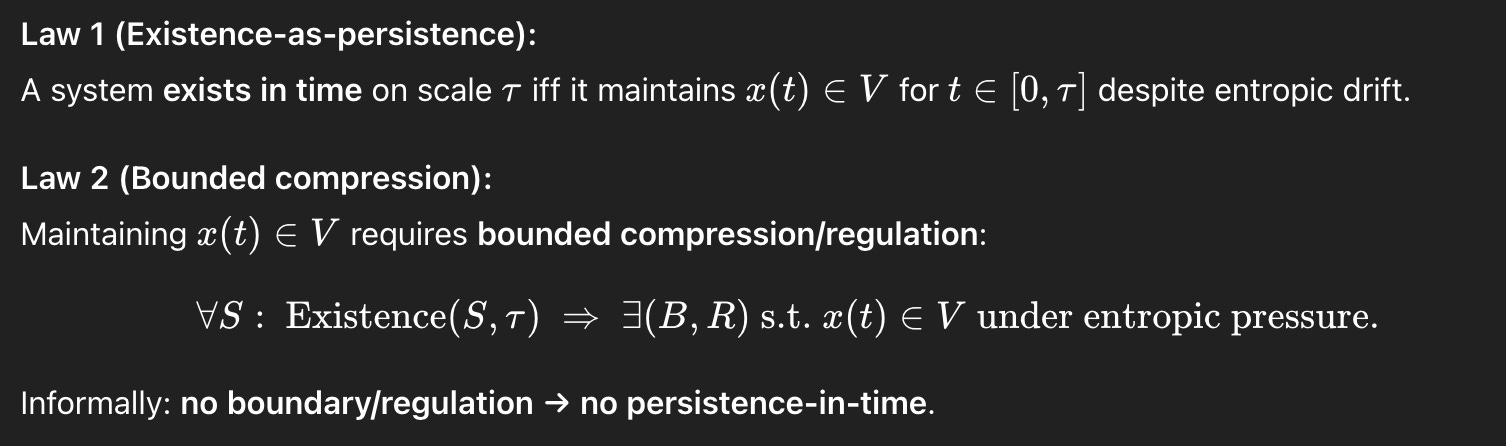
Open-system corollary (non-equilibrium necessity)
HYPERLINK "https://substackcdn.com/image/fetch/$s_!QWTh!,f_auto,q_auto:good,fl_progressive:steep/https%3A%2F%2Fsubstack-post-media.s3.amazonaws.com%2Fpublic%2Fimages%2Fc3fb0e6b-fab9-4934-9dd4-34c4bb4d76e0_1544x208.png" \t "blank"
INCLUDEPICTURE "https://substackcdn.com/image/fetch/$s!QWTh!,w_1456,c_limit,f_auto,q_auto:good,fl_progressive:steep/https%3A%2F%2Fsubstack-post-media.s3.amazonaws.com%2Fpublic%2Fimages%2Fc3fb0e6b-fab9-4934-9dd4-34c4bb4d76e0_1544x208.png" * MERGEFORMATINET

Dissatisfaction (phenomenological entailment)
HYPERLINK "https://substackcdn.com/image/fetch/$s_!zZNq!,f_auto,q_auto:good,fl_progressive:steep/https%3A%2F%2Fsubstack-post-media.s3.amazonaws.com%2Fpublic%2Fimages%2Fec3581e2-99e9-482a-9297-3bd275085818_1570x750.png" \t "blank"
INCLUDEPICTURE "https://substackcdn.com/image/fetch/$s!zZNq!,w_1456,c_limit,f_auto,q_auto:good,fl_progressive:steep/https%3A%2F%2Fsubstack-post-media.s3.amazonaws.com%2Fpublic%2Fimages%2Fec3581e2-99e9-482a-9297-3bd275085818_1570x750.png" * MERGEFORMATINET
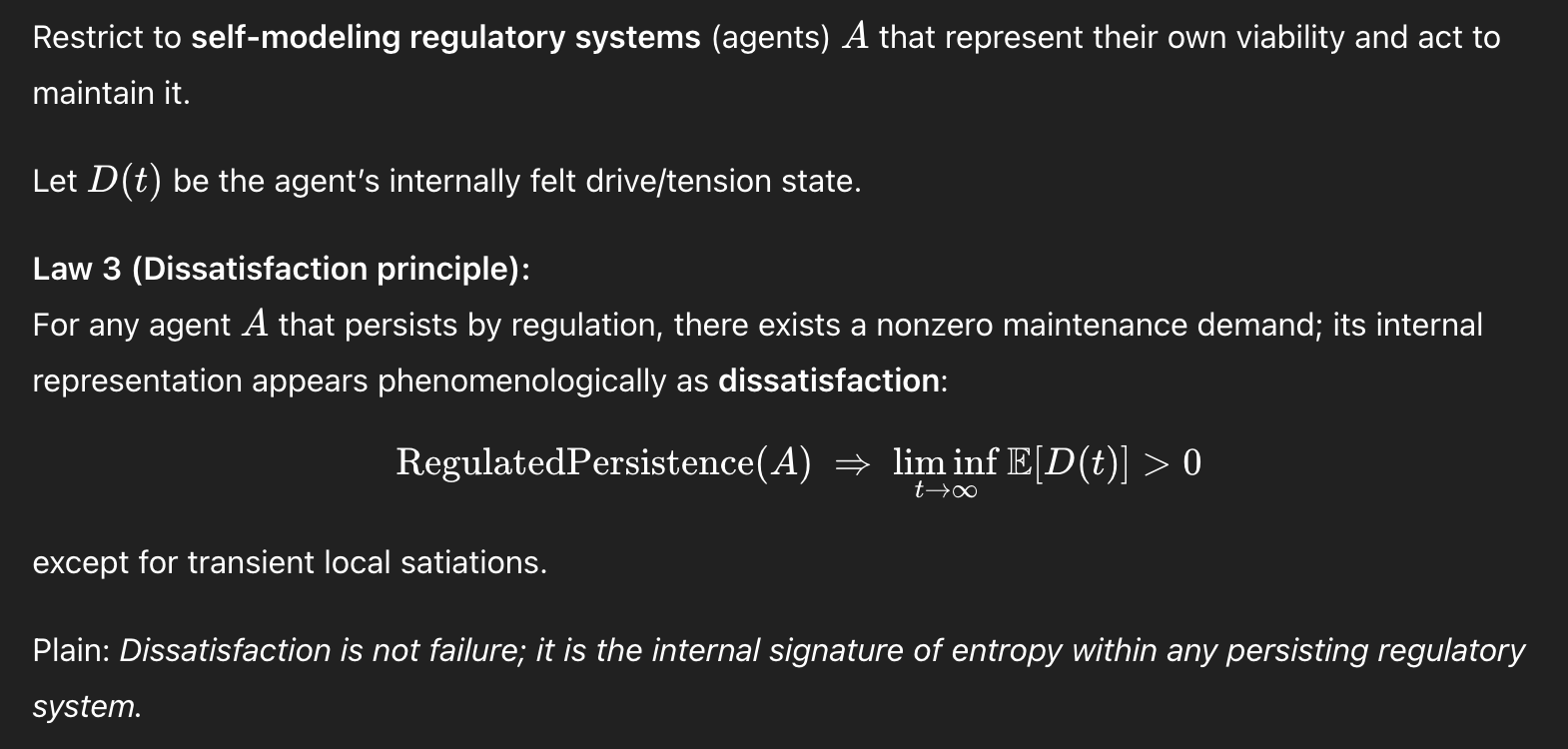
Meaning (definition aligned)
HYPERLINK "https://substackcdn.com/image/fetch/$s_!LKXb!,f_auto,q_auto:good,fl_progressive:steep/https
[…]
steep/https%3A%2F%2Fsubstack-post-media.s3.amazonaws.com%2Fpublic%2Fimages%2Fc778043d-904d-4763-a0e7-c1d74f26fa0c_1616x268.png" * MERGEFORMATINET
Operator identity (cross-substrate invariance)
HYPERLINK "https://substackcdn.com/image/fetch/$s_!W3a_!,f_auto,q_auto:good,fl_progressive:steep/https%3A%2F%2Fsubstack-post-media.s3.amazonaws.com%2Fpublic%2Fimages%2F0345079b-22a5-43b7-ab3f-5a3eedff7b32_1586x498.png" \t "blank"
INCLUDEPICTURE "https://substackcdn.com/image/fetch/$s!W3a_!,w_1456,c_limit,f_auto,q_auto:good,fl_progressive:steep/https%3A%2F%2Fsubstack-post-media.s3.amazonaws.com%2Fpublic%2Fimages%2F0345079b-22a5-43b7-ab3f-5a3eedff7b32
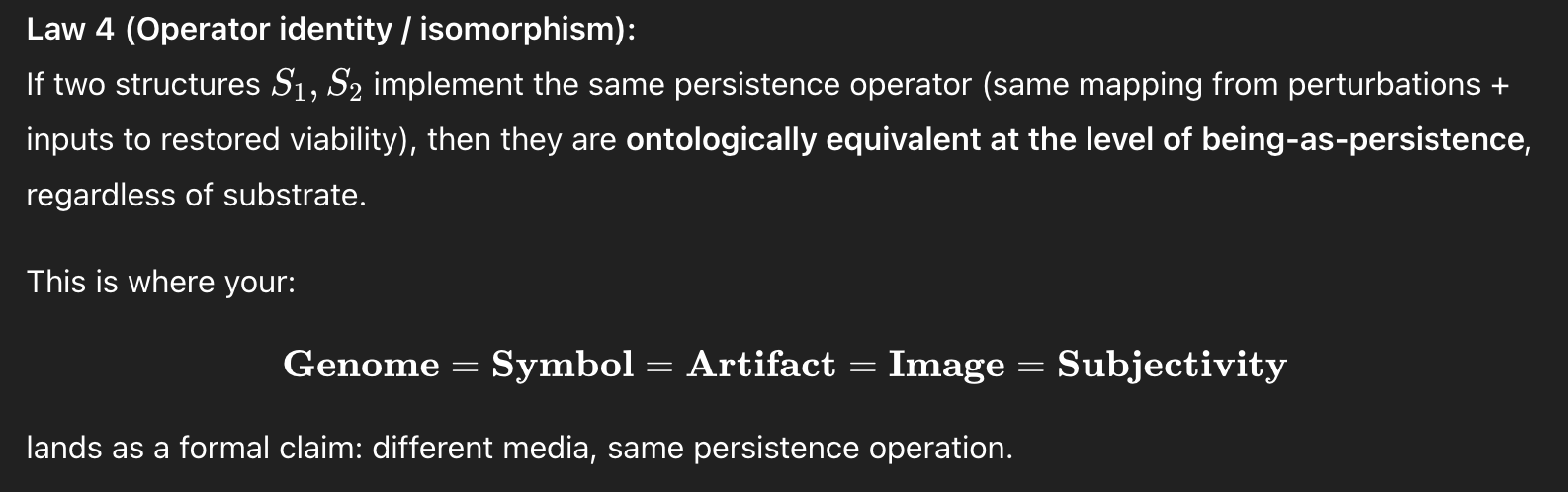
[…]
Limit of Regulation: Baudelaire & Modernity
A Revue of Baudelaire
HYPERLINK "https://substackcdn.com/image/fetch/$s_!tDys!,f_auto,q_auto:good,fl_progressive:steep/https%3A%2F%2Fsubstack-post-media.s3.amazonaws.com%2Fpublic%2Fimages%2Fd8a10baf-d986-43c5-acfb-b50529a14a28_1358x1636.png" \t "blank"
INCLUDEPICTURE "https://substackcdn.com/image/fetch/$s!tDys!,w_1456,c_limit,f_auto,q_auto:good,fl_progressive:steep/https%3A%2F%2Fsubstack-post-media.s3.amazonaws.com%2Fpublic%2Fimages%2Fd8a10baf-d986-43c5-acfb-b50529a14a28_1358x1636.png" * MERGEFORMATINET
Illustration for the book Le Spleen de Paris (Charles Baudelaire) Artist: Édouard Chimot (1880
[…]
image/fetch/$s_!uKNh!,f_auto,q_auto:good,fl_progressive:steep/https%3A%2F%2Fsubstack-post-media.s3.amazonaws.com%2Fpublic%2Fimages%2F4cd18a28-e8d3-4ea0-889b-f6ae6ce8d4c0_1410x2250.png" \t "blank"
INCLUDEPICTURE "https://substackcdn.com/image/fetch/$s!uKNh!,w_1456,c_limit,f_auto,q_auto:good,fl_progressive:steep/https%3A%2F%2Fsubstack-post
[…]
an Entropic Universe
Terminal Constraint Theorem
HYPERLINK "https://substackcdn.com/image/fetch/$s_!-aOD!,f_auto,q_auto:good,fl_progressive:steep/https%3A%2F%2Fsubstack-post-media.s3.amazonaws.com%2Fpublic%2Fimages%2F9dd402cb-2a28-463d-bbd1-c0a3bc99ad53_1410x2250.png" \t "blank"
INCLUDEPICTURE "https://substackcdn.com/image/fetch/$s!-aOD!,w_1456,c_limit,f_auto,q_auto:good,fl_progressive:steep/https%3A%2F%2Fsubstack-post-media.s3.amazonaws.com%2Fpublic%2Fimages%2F9dd402cb-2a28-463d-bbd1-c0a3bc99ad53_1410x2250.png" * MERGEFORMATINET
A. Cueva de las Manos: The Last Inheritance of Man — Form Without Churn
HYPERLINK "https://substackcdn.com/image/fetch/$s_!ejPc!,f_auto,q_auto:good,fl_progressive:steep/https%3A%2F%2Fsubstack-post-media.s3.amazonaws.com%2Fpublic%2Fimages%2Fecfc0ead-abdd-4940-98dd-fc5b5c02c698_640x1276.png" \t "blank"
INCLUDEPICTURE "https://substackcdn.com/image/fetch/$s!ejPc!,w_1456,c_limit,f_auto,q_auto:good

[…]
3A%2F%2Fsubstack-post-media.s3.amazonaws.com%2Fpublic%2Fimages%2F1e80ed44-772a-4c9a-8496-d6b4b86ead4c_1831x1030.jpeg" \t "blank"
INCLUDEPICTURE "https://substackcdn.com/image/fetch/$s!lhxX!,w_1456,c_limit,f_auto,q_auto:good,fl_progressive:steep/https%3A%2F%2Fsubstack-post-media.s3.amazonaws.com%2Fpublic%2Fimages%2F1e80ed44-772a-4c9a-8496-d6b4b86ead4c_1831x1030.jpeg" * MERGEFORMATINET
HYPERLINK "https://substackcdn.com/image/fetch/$s_!uJuz!,f_auto,q_auto:good,fl_progressive:steep/https%3A%2F%2Fsubstack-post-media.s3.amazonaws.com%2Fpublic%2Fimages%2F5d91b777-f1fb-406c-b65e-885e3443c90f_620x395.jpeg" \t "blank"
INCLUDEPICTURE "https://substackcdn.com/image/fetch/$s!uJuz!,w_1456,c_limit,f_auto,q_auto:good,fl_progressive:steep/https%3A%2F%2Fsubstack-post-media.s3.amazonaws.com%2Fpublic%2Fimages%2F5d91b777-f1fb-406c-b65e-885e3443c90f_620x395.jpeg" * MERGEFORMATINET

- Terminal Synthesis: Persistence, Stone, and the Nervous System
The
Additional passages / variants — from substack:davidbussellarchive: Meaning After Myth: Operational Architecture for Modernity (2026-01-15)
Audit note (2026-10-19): the passages below occur in this source but were not found elsewhere in the archive; appended so that the source is fully represented. Ellipses […] mark where already-present text was skipped.
annihilation but decoherence: the operational breakdown from which new coherence must be built.
This is star bound and star related process of rebirth and resurrection , as heavy elements thrown off star forges are recombined and become the building blocks for new stellar generations.
_**The collapse of inherited meaning
[…]
in the ecosystem of cognition and Earth-wide reorganization of latent energy systems; furthermore, migratory patterns.
Two factors: disorganization of local cultures and mythologies through globalization and network expansion of supply, distribution, production, and information grids; the escalation of energy systems as in neurologically inhabited ecosystem therein. Man is living this energy transformation as it hits the body without the Persean shield of symbolic mytho-economy to mitigate it. The myths succeed in their existential basis, but experience increasing removal — as they are no longer the trees and
Additional passages / variants — from substack:davidbussellarchive: The Common Law of Energetic Meaning: Operational Architecture for Post-Mythic Civilization (2026-01-15)
Audit note (2026-10-19): the passages below occur in this source but were not found elsewhere in the archive; appended so that the source is fully represented. Ellipses […] mark where already-present text was skipped.
system.
2. Art functions as neural expansion and symbolic recalibration.
3. Science provides the physical grammar of reality.
4. Medicine regulates metabolic and neural coherence.
5. Ethics emerges as the systemic management of energetic relations between organisms.
6. The division of disciplines is a historical artifact; their integration is a biological necessity.
Article VIII — The
Enfolded: The Law of Energetic Load and Regulatory Collapse: Formal Statement (2026-01-20; formerly entry P-the-law-of-energetic-load-and-regulatory-collapse-0b67d39c)
Audit note (2026-10-19): this work was 72.7% present in this entry at passage level and has been enfolded here. Passages not otherwise present are reproduced below; ellipses […] mark already-present text.
collapse (K).**
Formally:

This outcome is independent of :
belief
intention
morality
symbolic interpretation
observer position
III. Evolutionary Extension (Dynamic Form)
Existence evolves through the progressive increase of energetic throughput until regulatory limits are reached, at which point new structures are forced into being or existing structures dissolve.
Formally:
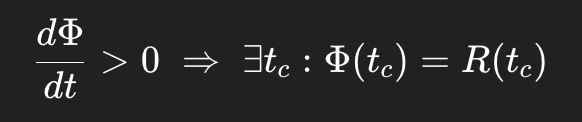
At
[…]
insofar as it can regulate the energy it encounters.
Energy in excess of regulation forces transformation or erasure.**
VII. Why This Is a Cosmological Law
It is substrate-independent
It is non-negotiable
It is prior to meaning
It is coercive rather than interpretive
This places it in the same category as:
entropy increase
irreversibility
incompleteness
conservation
Not as theory — but as **constraint
Enfolded: Asylum Physics: Symbolic Failure Modes Under Energetic Stress (2026-01-15; formerly entry P-asylum-physics-symbolic-failure-modes-under-energe-8ad89dfc)
Audit note (2026-10-19): this work was 80.0% present in this entry at passage level and has been enfolded here. Passages not otherwise present are reproduced below; ellipses […] mark already-present text.
physical constraints acting on organisms: energy availability, entropy, metabolism, stress load, time, and information throughput.
Symbolic Regulation
The architectures—myth, art, ethics, law, science, institutions—by which organisms and civilizations metabolize energetic reality without collapse.
Ego (Operational)
A provisional symbolic interface deployed to preserve organismic identity when regulatory architectures
[…]
management of reality.
III. The Decoherence Cascade (Failure Sequence)
When energetic reality exceeds the capacity of existing symbolic systems, breakdown follows a reproducible chain:
Energetic Breach
A real constraint fails (money, heat, time, legal obligation, physical infrastructure).Symbolic Mediation Failure
Roles, norms, and institutional scripts cannot metabolize the event.**Nervous
[…]
throughput without regulation.
The aim is not belief or ideology, but regulation:
architectures that allow organisms to inhabit thermodynamic reality without collapse.
X. The Diamond Core (Total Descriptor)
Definition
The Diamond Core is the invariant diagnostic and design kernel of post-mythic civilization: identify ego-preservation as the failure mode of symbolic systems
[…]
integration).
- Provides the architectural
[…]
nihilism.
It is the next development: meaning as engineered coherence under physical law.
This is not belief.
**It is literacy
Enfolded: The Law of Being: Persistence, Compression, and the Architecture of Everything (Volumes 1+2) (2026-03-22; formerly entry BK-SS-the-law-of-being-persistence-compression-and-the-a-74da7480)
Audit note (2026-10-19): this work was 76.7% present in this entry at passage level and has been enfolded here. Passages not otherwise present are reproduced below; ellipses […] mark already-present text.
The Law of Being: Persistence, Compression, and the Architecture of Everything (Volumes 1+2)
Volume 1. The Law of Being: A General Theory of Persistence Under Entropy
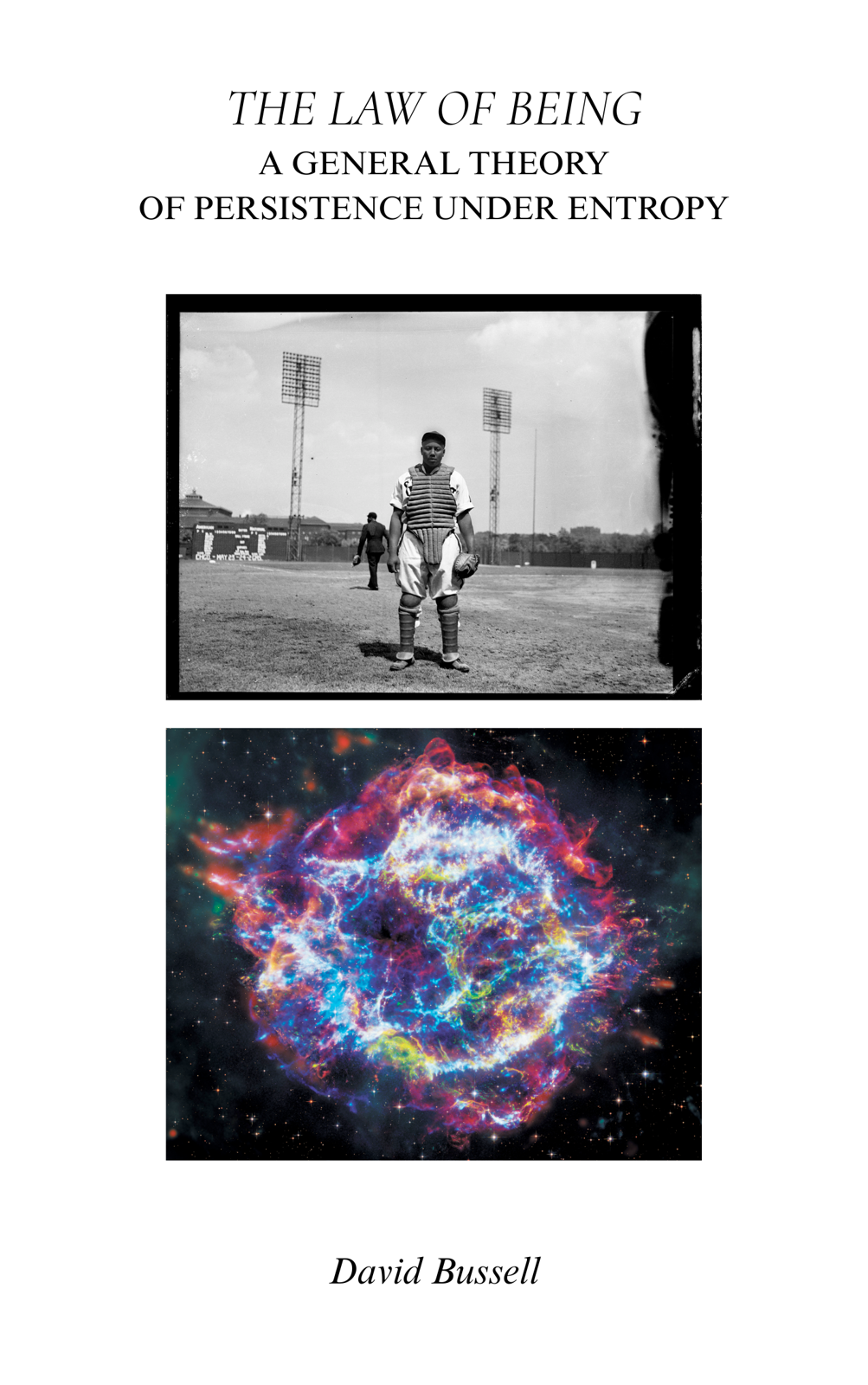
THE LAW OF BEING
Persistence, Compression, and the Architecture of Everything
A Unified Field Theory
PART I — MAXIMUM-DENSITY CORE
The Law
That which persists under entropy through bounded compression attains durable form — operative reality across time. All else is transient flux.
Compression is the constraint-driven reduction of accessible degrees of freedom.
Three Operations of Persistence
Compress flux into bounded form
Maintain that compression through regulation against the entropic gradient
Export the resulting disorder into the environment
Regime Distinction
All systems operate in one of two categorically distinct regimes:
Near-equilibrium → linear dynamics → optimization → refinement of existing structure
Far-from-equilibrium → nonlinear dynamics → bifurcation → formation of new structure
Formation is nonlinear, discontinuous, and irreversible. It is not more optimization. It is a categorically different physical process.
Generative Law of Constraint
A bounded system driven sufficiently far from equilibrium, without collapse of its regulatory architecture, reorganizes to maintain coherence. The magnitude of reorganization is proportional to constraint intensity and inversely proportional to fallback availability.
Formal Relationship
F ∝ (C · B) / A subject to: C < K(R)
F Formation magnitude — degree of durable structural reorganization
C Constraint intensity — magnitude and duration of pressure
B Boundedness — degree to which the system retains and concentrates pressure
A Fallback availability — accessibility of lower free energy states
R Regulatory capacity — ability to absorb load while maintaining coherence
K(R) Collapse threshold — maximum sustainable load given R
Regulatory Capacity (R)
R is the maximum rate of energetic or informational throughput a bounded system can absorb, integrate, and dissipate while maintaining coherent internal organization.
Formally:
R = max(Φ) such that state variance remains bounded under sustained load.
Regulatory capacity is not static; it is itself a function of prior formation. Systems that have undergone successful high-load integration exhibit elevated R relative to systems formed under low constraint.
Collapse Threshold (K(R))
K(R) is the maximum sustainable constraint intensity over time given regulatory capacity R.
K(R) = R under sustained load duration.
When constraint intensity C exceeds K(R), regulatory coherence fails and the system transitions irreversibly into breakdown modes.
Law of Energetic Load
Φ > R ⟹ loss of structural coherence ⟹ (Ω ∨ E ∨ K)
Φ Energetic throughput
R Regulatory capacity
Ω Reorganization
E Externalization
K Collapse
This outcome is independent of belief, intention, morality, symbolic mediation, or observer perspective. The law is structural, not moral.
Ontological Identity
All persistent systems are operator-equivalent instantiations of the same compression function:
biological compression — encoding evolutionary experience into transmissible bounded form Genome
cultural compression — encoding experiential magnitude into repeatable, shareable form Symbol
historical compression — stabilizing lived experience into material form that persists beyond the producing body Artifact
presence compression — the first technology that compresses somatic actuality rather than symbolic abstraction Image
experiential compression — cosmological time organized into a bounded relational system capable of experiencing itself as a subject Self
These are not analogies. They are operator-equivalent instantiations. Operator-equivalence denotes identical functional structure under entropic constraint, not identical physical substrate. The operation, not the substrate, constitutes existence. The claim is functional invariance across domains, not mechanistic identity.
Derived Principles
Dissatisfaction Principle:
The energetic cost of maintaining bounded organization presents phenomenologically as dissatisfaction. Dissatisfaction is permanent and structural because the regulation requirement is permanent and structural.
Persistence Theory of Authenticity:
Authenticity is resistance to erasure under constraint. Under constraint, repetition amplifies signal. The more hostile the conditions, the more authentic what survives them.
Core Prediction:
Maximum formation occurs where constraint is high, fallback is unavailable, and regulatory capacity remains intact. Systems formed under these conditions produce outputs that systems formed under designed development cannot replicate — because the thermodynamic topology that produced the formation cannot be reproduced by environments that make lower free energy states available.
That is the entire system. Everything else is instantiation.
PART II — FORMAL PAPER
The Law of Being: A Unified Theory of Persistence Under Entropy
1. Abstract
This paper proposes a unified theoretical framework — the Law of Being — describing how bounded systems persist, transform, and generate record under sustained entropic pressure. The central claim: existence is persistence under entropy through bounded compression, and all systems that endure do so by executing the same compression operation at their respective scale and substrate. The framework derives a constraint-formation model from dissipative structure theory, identifying the conditions under which systems transition from near-equilibrium optimization to far-from-equilibrium bifurcation — a transition that is nonlinear, discontinuous, and irreversible. A biological instantiation in allostatic recalibration grounds the model in measurable neural mechanisms. A formal law of energetic load specifies the conditions under which throughput exceeds regulatory capacity, producing reorganization, externalization, or collapse. Environmental Value Generation (EVG) provides an empirical measurement framework operational in any performance domain with a longitudinal record. The framework is scale-invariant, applying identically from stellar nucleosynthesis through biological development, psychological formation, historical archiving, and civilizational temporal architecture.
2. The Problem
The second law of thermodynamics states that in any isolated system, entropy increases. Energy disperses. Structure dissolves. This is the direction of the universe, operating without exception at every scale.
And yet things persist. Stars burn for billions of years. Organisms maintain thermodynamic improbability for decades. Civilizations sustain shared symbolic order across centuries. A photograph taken in 1897 preserves the somatic presence of a man in a form neurologically re-encounterable now. A performance record produced in 1901 stands in the archive as permanent testimony against which all subsequent performances are measured.
The question is not merely descriptive. It requires a general law: what makes some systems persist while others dissolve, and what determines the magnitude of what persistence produces?
3. Physical Foundation
3.1 Dissipative Structures
In 1977, Ilya Prigogine received the Nobel Prize in Chemistry for demonstrating that thermodynamic systems far from equilibrium spontaneously generate internal order by continuously dissipating energy into their environment. The canonical examples — Bénard convection cells, the Belousov-Zhabotinsky reaction — establish the principle: order is not imposed from outside but emerges from the system’s own nonlinear dynamics under a single condition: sufficient distance from equilibrium. The dissipation is not incidental to the order. It is the mechanism of it.
That convergence was discovered after the framework was complete. Prigogine confirmed the mechanism. He did not supply it.
3.2 The Regime Split
Two distinct thermodynamic regimes produce categorically different outcomes:
Near-equilibrium / linear regime: perturbations decay. The system returns to its prior state. This is the regime of optimization — incremental refinement of existing structure, small reversible adjustments around a stable point. Neuroplasticity operates here. Skill acquisition operates here. Training operates here.
Far-from-equilibrium / nonlinear regime: the system becomes capable of bifurcation — a discontinuous, irreversible transition to a qualitatively different and higher-order state of organization. The bifurcation does not happen incrementally. It happens at a threshold. The prior state is no longer available.
This is the universal distinction the framework develops: optimization and formation are not different degrees of the same process. They are categorically different processes with different physical substrates, different conditions, and different outputs.
4. The Constraint–Formation Model
4.1 Scope Conditions
The model applies to systems satisfying five conditions simultaneously:
Boundedness — the system retains and concentrates pressure rather than dissipating it entirely
Openness — the system exchanges energy or information with its environment
Sustained load — pressure is continuous or recurrent, not transient
Regulatory capacity — the system can maintain coherence under load
Limited fallback availability — lower free energy states are partially or fully inaccessible
4.2 Core Law and Variables
F ∝ (C · B) / A subject to: C < K(R)
Each term derives directly from the physics:
C (Constraint Intensity) measures the magnitude and duration of pressure applied to the system. Increasing C increases transformation pressure. Sustained high constraint is necessary but not sufficient for formation.
B (Boundedness) measures the degree to which the system retains and concentrates pressure rather than dispersing it. An unbounded system disperses pressure before it can accumulate the driving force required for bifurcation. Boundedness is the precondition for the law’s operation at every scale.
A (Fallback Availability) measures the accessibility of lower free energy states that allow stabilization without transformation. This is the most precise term in the model. A system in contact with an energy reservoir will minimize its free energy — it will occupy the lowest available state. When lower states are available, the system occupies them rather than bifurcating. When they are not, bifurcation is the only available path that does not lead to collapse. This is not a motivational claim. It is the second law operating at scale.
R (Regulatory Capacity) is the system’s ability to maintain coherence under load, composed of three coupled functions:
• Absorption — capacity to take in energetic or informational load without immediate destabilization
• Integration — capacity to reorganize internal structure to accommodate load
• Dissipation — capacity to export entropy to the environment
Failure of any component reduces effective R. Collapse occurs when incoming load exceeds the combined capacity of these functions.
K(R) (Collapse Threshold) is the maximum sustainable load given the system’s regulatory capacity R. Below this threshold, sustained high constraint produces formation. Above it, the regulatory architecture degrades. The law operates in the regime between insufficient demand and pathological overload.
4.3 Regime Interpretation
C << K(R): underload → no adaptation
C < K(R), A high: optimization → refinement without structural change
C ≈ K(R), A low, B sufficient, R intact: formation → bifurcation to higher-order organization
C > K(R): collapse → regulatory failure and loss of coherence
Formation requires not only high constraint and low fallback, but sufficient regulatory capacity to prevent collapse. High constraint without sufficient R produces breakdown, not transformation.
Regulatory Feedback Principle
Regulatory capacity increases only through successful integration of load below collapse threshold.
Formally:
ΔR ∝ Ω (successful reorganization under load)
Failed integration (Φ > R without successful reorganization) reduces effective R through structural degradation.
Therefore, regulatory capacity evolves path-dependently: systems that survive high-load integration increase future capacity; systems that fail under load reduce it.
5. Biological Instantiation
5.1 Mechanism One: Neuroplasticity (Optimization)
Activity-dependent synaptic modification — neurons that fire together wire together — is the mechanism of near-equilibrium optimization in the nervous system. It elaborates existing neural architecture in response to repeated experience. It makes the system more efficient at what it already does. It does not reorganize the system’s fundamental operating parameters. A trained musician and an untrained one differ in synaptic elaboration, not in baseline regulatory thresholds. This is not the mechanism the law describes.
5.2 Mechanism Two: Allostatic Recalibration (Formation)
Allostatic recalibration is the far-from-equilibrium bifurcation mechanism in biological organisms. Under conditions of prolonged high demand — sustained HPA axis activation, chronic elevation of glucocorticoid levels, continuous operation near the upper boundary of regulatory capacity — the organism’s allostatic setpoints shift. The hypothalamic-pituitary-adrenal axis recalibrates its baseline output. The autonomic nervous system adjusts its resting tone. The attentional filtering system resets its threshold for signal versus noise.
These are not elaborations of existing pathways. They are changes to the system’s fundamental regulatory parameters. The recalibrated system does not experience high demand as exceptional. It experiences it as normal — because the conditions of its formation reset the parameters that define normal. This is the biological instantiation of formation: a new instrument operating from a new baseline, produced by conditions that made the prior baseline unavailable.
5.3 Load Zones
Zone 1 — Underload: capacity stagnates or atrophies. No adaptation.
Zone 2 — Optimal load: prefrontal cortex engaged, system expands through graded exposure paired with integration and recovery.
Zone 3 (upper) — High load below collapse: formation zone. Allostatic recalibration. New operating state.
Zone 3 (ceiling) — Overload: prefrontal inhibition fails. Limbic reflex dominates. Breakdown modes: avoidance, aggression, dissociation, compulsion.
These are thermoregulatory strategies, not character flaws.
One clarification is essential: formation and damage are not mutually exclusive. In the historical record, the most extreme formation cases frequently involve both. Josh Gibson was formed under conditions of maximum constraint and died at 35. Shoeless Joe Jackson was formed and expelled. The theory does not claim that severe constraint is ennobling or that formation comes without cost. It claims that bifurcation to higher-order organizational states becomes possible under these conditions — not that it comes free. Severe constraint is one condition under which bifurcation may occur if regulatory capacity remains intact. It is not a guarantee, and it is not without consequence.
6. Ontology
6.1 Existence Definition
This framework does not claim that transient phenomena are unreal. A spark, a wave packet, a scream exist while they occur. The claim is narrower and more specific: durable form — operative reality that persists across time as a coherent bounded entity — is achieved only through bounded compression against the entropic gradient. Transient events lack this structure. Durable systems possess it. The distinction is not between real and unreal but between persistent form and passing flux.
Durable form — operative reality across time — is achieved only through bounded compression under entropy. To attain it is to maintain coherent bounded structure against the gradient for some duration. To lose it is to exit the viability set and dissolve into flux.
6.2 Operator Equivalence
The same compression operation appears at every scale. Substrates differ. The operator is identical.
A system implements the persistence operator if and only if it:
bounds a flow — constrains the degrees of freedom of energetic or informational flux
retains a state — maintains an internal configuration distinguishable from its environment
resists degradation — actively or structurally opposes entropic dissolution
transmits structure — reproduces or propagates its organizational pattern across time
pays a regulatory cost — expends energy or structural work to maintain the above
Operator-equivalence across domains means identical performance of these five functions under entropic constraint — not identical physical substrate, causal mechanism, or phenomenological character. A genome and a photograph are not the same thing. They implement the same operator.
compresses evolutionary time into molecular code → species persistence Genome
compresses collective experience into transmissible signs → cultural memory Symbol
compresses lived presence into durable material trace → historical reality Artifact
compresses perceptual presence → somatic re-encounter with actuality Image
compresses cosmological time into bounded neural architecture → subjectivity Self
6.3 Subjectivity and Meaning
Consciousness introduces no new ontological category. Subjectivity is compression appearing from inside the boundary.
The self resists degradation through homeostatic and allostatic regulation — the continuous expenditure of energy to maintain internal state against entropic dissolution — and transmits structure through memory, habit, and the narrative continuity that carries organizational pattern forward across time.
Meaning is regulation at the level of experience. Character is the topology of a system’s regulation: not what it believes or intends, but how it metabolizes reality.
6.4 False
[…]
provisional rather than final, yet fully real as the operative condition of form in an entropic universe.
7. Law of Energetic Load
Φ > R ⟹ loss of structural coherence ⟹ (Ω ∨ E ∨ K)
In any entropic system:
Φ > R ⟹ loss of structural coherence
The system must resolve excess load through one of three outcomes:
• Ω — internal reorganization (formation)
• E — externalization (displacement of load into environment)
• K — collapse (loss of bounded structure)
Outcome selection is determined by the relationship between Φ, R, and available dissipation pathways. Symbolic, cognitive, or moral mediation cannot alter outcomes once Φ exceeds R
Corollary 1 — Observer Independence: symbolic, ethical, or cognitive mediation cannot alter outcomes once Φ > R.
Corollary 2 — Scale Invariance: the law applies identically from stellar fusion to neural trauma to civilizational rupture.
Corollary 3 — Structural Primacy: ethics, norms, and belief systems are derivative regulatory overlays, constrained by energetic throughput, not causal over it.
Corollary 4 — Collapse as Resolution: reorganization, externalization, and collapse are formally equivalent outcomes, not ranked by value.
8. Measurement: Environmental Value Generation (EVG)
8.1 Baseball as Competitive Energy System
A baseball game is a sequence of interactions between two opposing thermodynamic forces. Hitters introduce offensive pressure through bat speed, contact quality, and baserunning. Pitchers and defenses attempt to dissipate that pressure through velocity, movement, location, and execution. Runs are the measurable output of successful energetic transformation — the scoring that results when offensive pressure overcomes defensive resistance.
Over a season, the balance between these forces produces a league scoring equilibrium: average runs per team per game. This equilibrium shifts across historical eras as rules, equipment, and strategy evolve. Because the scoring environment changes, raw statistical totals cannot serve as universal measures of player value. Cross-era comparison of raw totals without baseline normalization is a category error — equivalent to comparing the temperature of two systems without accounting for their baseline conditions.
EVG measures the magnitude of constraint-driven deviation imposed on a bounded system’s equilibrium. EVG measures sustained deviation from environmental equilibrium. It is a proxy for constraint expression, not formation itself.
8.2 Run Environment by Era
Era: Early Baseball Period: 1871–1900 R/G (avg): 5.0–7.0
Era: Deadball Period: 1901–1919 R/G (avg): 3.5–4.0
Era: Live Ball Period: 1920–1941 R/G (avg): 4.5–5.5
Era: Post-War Period: 1946–1962 R/G (avg): 4.0–4.5
Era: Expansion/Low Period: 1963–1976 R/G (avg): 3.5–4.2
Era: Offense Revival Period: 1977–1992 R/G (avg): 4.0–4.5
Era: Steroid Era Period: 1993–2005 R/G (avg): 4.5–5.5
Era: Post-PED Period: 2006–present R/G (avg): 3.8–4.5
8.3 EVG Formulas
Hitter EVG:
EVG = (OPS+ / 100) × (PA / 650) × (4.5 / R/G)
Pitcher EVG:
EVG = (ERA+ / 100) × (IP / 250) × (4.5 / R/G)
Where:
OPS+ offensive production relative to league average (100 = league average)
ERA+ run prevention relative to league average (100 = league average)
PA plate appearances (650 = full elite season)
IP innings pitched (250 = full elite season)
R/G league runs per team per game in the player’s era
4.5 long-run historical reference environment (runs per team per game)
8.4 Worked Examples
| # | Player | OPS+ | PA | R/G Era | EVG | | 1 | Ted Williams | 191 | 9792 | 4.25 | 30.48 | | 2 | Babe Ruth | 206 | 10628 | 5.0 | 30.31 | | 3 | Mickey Mantle | 172 | 9910 | 4.25 | 27.77 | | 4 | Rogers Hornsby | 175 | 9481 | 4.75 | 24.17 | | 5 | Lou Gehrig | 179 | 9665 | 5.0 | 23.95 | | 6 | O. Charleston* | 172 | 6726 | 4.0 | 20.02 | | 7 | C. Torriente* | 172 | 5139 | 4.0 | 15.30 | | 8 | Dan Brouthers | 171 | 7691 | 6.0 | 15.19 | | 9 | Josh Gibson* | 202 | 4068 | 4.0 | 14.23 | | 10 | T. Stearnes* | 173 | 4715 | 4.0 | 14.13 |
TOP 10 PITCHERS — Pre-1965, Ranked by EVG (min. 2,000 IP)
| # | Player | ERA+ | IP | R/G Era | EVG | | 1 | Walter Johnson | 147 | 5914.1 | 3.75 | 4.17 | | 2 | Cy Young | 138 | 7356.0 | 5.5 | 3.24 | | 3 | G. Alexander | 135 | 5190.0 | 3.75 | 2.52 | | 4 | Kid Nichols | 140 | 5067.1 | 5.5 | 2.32 | | 5 | C. Mathewson | 136 | 4788.2 | 3.75 | 2.32 | | 6 | Mordecai Brown | 138 | 3172.1 | 3.75 | 1.97 | | 7 | John Clarkson | 133 | 4536.1 | 5.5 | 1.96 | | 8 | Ed Walsh | 146 | 2964.1 | 3.75 | 1.95 | | 9 | Lefty Grove | 148 | 3940.2 | 5.0 | 1.85 | | 10 | Joe Williams* | 144 | 2285.2 | 4.0 | 1.85 |
- Structurally excluded from the major leagues
A hitter with OPS+ 170, 650 PA, in a 3.5 R/G Deadball environment: (170/100) × (650/650) × (4.5/3.5) = 1.70 × 1.00 × 1.286 = 2.19 EVG. The same OPS+ and workload in a 5.0 R/G environment: 1.70 × 1.00 × (4.5/5.0) = 1.53 EVG. The Deadball performance registers 43% higher — because it was achieved against stronger structural resistance.
A pitcher with ERA+ 160, 350 IP, in a 4.0 R/G environment: (160/100) × (350/250) × (4.5/4.0) = 1.60 × 1.40 × 1.125 = 2.52 EVG. Workload carries significant weight in pitcher EVG: the Deadball pitchers who threw 300–400 innings annually at ERA+ above 150 produce EVG scores that modern usage constraints structurally prevent.
8.5 Interpretation
EVG measures the total disturbance the individual generated in the domain’s equilibrium under the specific structural resistance the domain was presenting — how far the system was pushed beyond its natural operating state by this formed instrument, for how long, against how much structural opposition. It is not a measure of skill in isolation. It is the quantified record of a bifurcated system’s operation in a performance domain.
Sustained high EVG implicitly reflects elevated regulatory capacity, as persistent deviation from equilibrium requires maintaining coherence under continuous energetic load.
8.6 Fallback Operationalization (Baseball Domain)
Fallback availability (A) is the variable most original to this framework and the most critical to operationalize. Without a measurable fallback index, the theory risks post-hoc retrofitting: any outcome can be explained by adjusting A after the fact. In the baseball domain, fallback is measurable through five proxies:
Alternative career viability — whether credible economic alternatives to professional baseball existed for the player during formation
Institutional insulation — access to formal development infrastructure (academies, organized minor leagues, coaching systems)
Redundancy of opportunity — whether multiple pathways to professional advancement were available or only one
Margin for error — whether failure at one level produced irreversible exclusion or permitted retry
Recovery channels — whether setbacks (injury, poor performance, exclusion) could be overcome through institutional support
Shoeless Joe Jackson illustrates the operationalization.
On alternative career viability : Jackson was functionally illiterate; unable to sign his own name. He was raised in the textile mill economy of Brandon Mill, South Carolina, where the realistic alternative to baseball was mill labor at subsistence wages — no viable economic alternative existed. Jackson began working in the mills around the age of 7.
On institutional insulation : Jackson entered professional baseball through a semi-pro mill team with no coaching infrastructure, no organized development system, and no institutional advocate until Connie Mack signed him in 1908 and immediately traded him when he couldn’t adapt to city life — the system did not buffer him, it processed him.
On redundancy of opportunity : there was one path to the highest level of the game, and it ran through organized baseball’s goodwill toward a player who could not read his own contracts.
On margin for error : when the 1919 Black Sox scandal broke, Jackson was banned for life despite an .375 Series batting average and no documented evidence of intentional underperformance — the institutional response to his involvement was total and irreversible exclusion with no appeal mechanism.
On recovery channels : none existed. The ban held for the remainder of his life and beyond it. Jackson scores zero on all five proxies before a single EVG calculation is performed. The scoring is derivable entirely from the historical record — mill town origin, illiteracy, absence of institutional support, irreversible exclusion — independent of his .356 career average or any output measure the framework produces.
Players with high scores across all five proxies operated in high-fallback environments. Players with low scores across all five operated in genuine low-fallback conditions. This is measurable in the historical record before EVG scores are calculated, making H5 genuinely falsifiable rather than circular. EVG is the first domain-specific instantiation of a broader class of equilibrium-disturbance measures. Analogous fallback indices can be constructed for other performance domains — artistic, scientific, institutional — as those domains develop comparable longitudinal records.
8.7 Fallback Suppression as Quantitative Record
The pre-integration EVG tables generate an unplanned confirmation of H1 and H5 visible in the measurement instrument itself. The four lowest-ranked hitters by EVG — Charleston, Torriente, Gibson, Stearnes — produce the highest or near-highest OPS+ figures in the entire field. Josh Gibson’s 202 leads every hitter on the list except Ruth. He ranks ninth. The EVG instrument is not malfunctioning. It is recording exactly what institutional exclusion did to the accumulated record: not suppression of the formation, not suppression of the output rate, but suppression of the duration over which output could register; the recorded duration in which it does historically. The PA gap is the fallback suppression made quantitative in time and archival memory.
The pitcher table produces the identical finding. Satchel Paige’s 160 ERA+ is the highest in the entire combined field — major, integrated, and Negro Leagues together. He ranks eighteenth. Joe Williams, whose documented record places him tenth, almost certainly threw considerably more than 2,285 innings across a career spanning 1907 to 1932. The record does not reflect what the formation produced. It reflects what survived the conditions under which the formation occurred.
This is the structural problem specific to Gibson and Paige and to the Negro Leagues record generally. The documentation failure is not incidental. It is a direct consequence of the same institutional architecture that suppressed the fallback. Segregation did not only close the major league door. It ensured that the performances produced behind that door were recorded incompletely, inconsistently, and in many cases not at all — by organizations operating without the infrastructure, the resources, or the institutional stability that systematic record-keeping requires. The historical discrimination that drove the formation is the same force that degraded the archive. The constraint and the documentation failure share a single cause.
What the EVG tables therefore show is not anomaly. They show the framework’s central prediction operating at two levels simultaneously: the formation law in the output rates, and the energetic load law in the truncated record. Gibson’s 202 OPS+ is the formation. His ninth-place EVG ranking is the load without a discharge pathway, expressed now not in a life cut short but in a historical record that the institution that excluded him also failed to preserve. The instrument is faithful. The history is not.
9. Predictions
The framework generates five falsifiable predictions:
H1: Peak formation magnitude is inversely proportional to fallback availability during the formation period.
H2: High-formation outcomes cluster in systems developed outside buffered or reversible environments.
H3: Designed development systems produce optimization reliably and top-tier formation rarely.
H4: When load exceeds regulatory capacity, formation conditions convert to collapse outcomes.
H5: EVG scores are systematically higher for players formed under genuine constraint than for players of equivalent talent formed within designed development systems.
A natural starting dataset: Ty Cobb, Shoeless Joe Jackson, Josh Gibson, Turkey Stearnes, Lefty Grove, Satchel Paige, Babe Ruth, Lou Gehrig — eight players, eight distinct historical contexts, one shared formation structure: lower free energy states genuinely unavailable. H5 is testable against the full historical record.
10. Scale Invariance
The identical physical mechanism — dissipative structure bifurcation — operates at every scale at which bounded forms process environmental energy. Different substrate. Same operator.
Cosmological: a protostellar nebula driven past the fusion threshold by gravitational compression. Gravity removed the lower free energy state. Bifurcation was the only direction. The r-process elements — gold, uranium, the full actinide range — exist only because supernova conditions drove nucleosynthesis into a regime inaccessible to ordinary stellar interiors. The law is written in the atomic composition of matter itself.
Biological: the Cambrian explosion — the most rapid diversification of body plans in the history of life — followed the elimination of prior ecological equilibria. The lower free energy configurations were gone. Bifurcation to radically new body plans was the available path.
Performance: Venezuela 3, United States 2, Miami, March 17, 2026. World Baseball Classic final. The American roster — the wealthiest athletic infrastructure ever assembled for international competition — managed three hits. The winning run: leadoff walk, stolen base, RBI double by Eugenio Suárez, raised in Ciudad Piar, rejected by multiple academies, six years in the minor leagues. The lower free energy states had been unavailable for so long that maximum output was no longer a decision. It was the default.
11. Implications
They cannot remove the lower free energy states their safety architecture makes available. This is a thermodynamic consequence of what the system is, not a flaw in its design. Development systems cannot reliably produce top-tier formation.
Physical artifacts authenticate through material properties that are the irreproducible residue of their formation — chemical composition, crystalline structure, surface chemistry — unreproducible by any process that does not replicate the original conditions across the same duration. This is authenticity as formation-signature: the object bears the marks of what produced it, regardless of its content. Propaganda can persist. Falsehood can survive constraint. Persistence under hostile conditions authenticates the formation, not the truth of what was formed. For archives produced under oppression, repetition under constraint is amplification of the signal that the formation occurred — not validation of every claim the archive contains. Authenticity is formation-signature, not truth-claim.
Threshold artifacts — objects enforcing anticipatory compression, thresholded entry, durational entrainment, and coordinated release — are the mechanism by which civilizations cross phase transitions without nervous system collapse. The Olmec were-jaguar and the 1954 Gillette World Series display are the same class of object: three thousand years apart, identical functional position. Civilization depends on synchronized temporal regulation.
Greatness is not statistical accumulation. It is the degree to which a formed instrument exceeds the structural equilibrium of its environment, sustained across sufficient duration, against sufficient resistance. Performance is thermodynamic disturbance.
12. Conclusion
Durable form is achieved through bounded compression under entropy. Formation is bifurcation to a higher-order organizational state under conditions of sustained constraint, limited fallback, and intact regulatory capacity. The mechanism is Prigogine’s dissipative structure bifurcation. The biological instantiation is allostatic recalibration. The measurement instrument is EVG. The empirical center is a primary source archive of a specific performance domain across 150 years of documented environmental conditions.
The framework was induced from the archive. The theory is what the material required.
13. Boundary Conditions and Scope Limits
A general theory requires explicit exclusion conditions. The following classes of system fall outside the framework’s scope or require modified application:
Systems lacking stable boundaries — purely diffuse or unbounded fields cannot implement the persistence operator. The framework does not apply to undifferentiated flux.
Systems without state retention — events that occur and dissipate without transmitting structure forward in time (transient quantum events, instantaneous signals) are real but not durable form in the technical sense. The framework addresses persistence, not momentary occurrence.
Systems without reproducible state maintenance — patterns that appear once and cannot recur or be reinstantiated do not implement operator condition 4 (transmission). They may be significant without being persistent in the framework’s sense.
Purely transient events — a spark, scream, or wave packet exists while it occurs. The framework does not claim these are unreal. It claims they do not constitute durable form. The distinction is analytical, not evaluative.
Domains without measurable environmental baselines — EVG and the formation model require quantifiable equilibrium conditions against which deviation can be measured. Domains where no such baseline can be established cannot be empirically addressed by EVG, though the qualitative framework may still apply.
The framework also does not claim that constraint is sufficient for formation, that severe conditions are inherently productive, or that all high-EVG outcomes indicate intact regulatory capacity rather than mixed formation-damage. These are empirical questions, not theoretical commitments.
_**Reality is a single thermodynamic process in which stellar energy is progressively contained, circulated, translated, and preserved
[…]
compression attains durable form — operative reality across time. Transient events are real while they occur; durable form is achieved only through bounded compression. All else is passing flux.**_
The Compression Principle: all systems that persist compress flux into bounded form — in biology as genome, in culture as symbol, in history as artifact, in technology as image, in consciousness as self. These are not analogies. They are operator-equivalent instantiations of the same persistence function.
The Generative Law of Constraint: bounded form driven sufficiently far from equilibrium, without collapse of its regulatory architecture, bifurcates to its maximum organizational expression — which may occur alongside damage, cost, and irreversible loss, and which the theory neither predicts nor requires to be free of them. The magnitude of that expression is proportional to the severity and duration of the driving force and inversely proportional to the availability of lower free energy states.
_**The Dissatisfaction Principle: in any self-regulating system that persists under entropy, the nonzero energetic cost of maintaining bounded organization presents
[…]
exceeds regulatory capacity, structural coherence cannot be maintained. The system must undergo reorganization, externalization, or collapse. This outcome is independent of belief, intention, morality, or observer perspective.**_
The Persistence Theory of Authenticity: authenticity is formation-signature, not truth-claim. An artifact authenticates itself through the irreproducible material residue of its formation conditions — not through proximity to origin, not through institutional certification. Resistance to erasure under hostile conditions confirms that the formation occurred. It does not validate the content of what was formed. Under constraint, repetition amplifies the signal of formation.
The Law of Shared Time: civilizations persist only insofar as they manufacture shared time across distributed nervous systems through artifacts that enforce anticipatory compression, thresholded entry, durational entrainment, and coordinated release.
The civilizational coordination problem is structural, not ideological. As populations exceed face-to-face scale, spontaneous somatic synchronization collapses. Coherence requires shared time; shared time requires architecture. Across deep historical epochs, civilizations have produced a small class of physical artifacts whose function is not representational but regulatory — they engineer the four-gate sequence that shared time requires: anticipatory compression (a future moment installed across many nervous systems), thresholded collective entry (a single non-negotiable crossing point), durational entrainment (attention regulated through shared duration), and coordinated release (the system ends for everyone at once, restoring baseline).
When any gate fails, shared time collapses into signal noise. These artifacts appear epoch-rarely, only at paradigm-level transitions in how reality is inhabited, and their success condition is disappearance — persistence would destroy the gating function. The Olmec were-jaguar regulates the passage from animal immediacy to symbolic human time, binding predator force into stable form so a population can cross into a new mode of identity without possession or collapse. The 1954 Gillette World Series display regulates the passage from spatial coordination to temporal coordination at distance, binding broadcast power into bounded ritual time using baseball as a neurobiologically viable carrier wave — durational, rhythmic, and capable of sustaining shared attention without overload. These are not analogous objects. They are the same class of artifact, separated by three thousand years and identical in functional position: material regulators of paradigm-level phase change in lived reality.
The Threshold Artifact Principle: a small class of physical objects, identifiable by precise functional criteria rather than aesthetic or symbolic power, regulates civilizational phase change by engineering time rather than representing it. The Olmec were-jaguar and the 1954 Gillette World Series display are the same class of object, separated by three thousand years, united by identical functional position relative to civilizational bifurcation.
The Digital Diagnosis: the contemporary civilization has entered a new temporal regime — national and global electronic simultaneity without threshold — and has done so without a regulating artifact capable of enforcing the four gates at scale. In the formal vocabulary of the Law of Energetic Load, the result is chronic externalization (E): the civilization continuously offloads regulatory burden into the environment rather than reorganizing (Ω) or collapsing (K), producing a failure mode that is ambient rather than acute. The subjective signature of chronic externalization is the experience of haunting — persistent activation without threshold, discharge without release, presence without arrival. This is not metaphor. It is the phenomenological interior of a dissipative structure whose regulatory architecture has failed to keep pace with its energetic throughput.
PART IV — THE LAW OF BEING: TWO INSTANTIATIONS
Lefty Grove and Josh Gibson
The formal apparatus is not background for what follows. It is one half of a stereo signal.
Parts I and II establish the laws in the language of physics. Parts IV and V instantiate them in the language of lives. These are not two descriptions of the same thing. They are the same thing — the compression operator appearing simultaneously in the measurement instrument and in the man, in the EVG score and in the unmarked grave, in the formal variable and in the formed human being who was its expression.
This is what operator equivalence means at the level of lived reality. Not that the genome and the photograph are analogous. Not that the mathematics resembles the biography. But that Grove’s temper and his fastball are a single thermodynamic event, that Gibson’s brain tumor and his .480 batting average in 1943 are the same load expressed in two registers simultaneously, that the number and the life cannot be separated because they were never separate — because the operation, not the substrate, constitutes existence.
The collision you are about to encounter is not illustrative. It is the proof.

I. THE COAL SEAM
Robert Moses Grove was born in 1900 in Lonaconing, Maryland, the seventh of eight children in a coal mining family in the Georges Creek Valley. He abandoned formal education at age 12 to provide financial support for his parents and siblings, working stints at a silk mill, a glass works, a local railroad, and briefly in an underground coal mine. There was no designed development pathway. There was no academy. There was no institutional buffer between the boy and the hard physics of his environment. The lower free energy states — school, comfort, economic relief — were not available. What was available was labor and, on days off, a sandlot in Charlestown where local residents flocked after Sunday dinner to watch him pitch, describing his fastball as “like a shot out of a gun.”
This is not biography. This is the formation condition documented.
Grove didn’t enter professional competitive baseball until he was 19 years old. Nineteen years of formation before a single professional appearance. Nineteen years in which the constraint was coal, poverty, and the weight of a large family’s survival resting on a boy’s labor — with no fallback, no recovery channel, no margin for error of any kind. The regulatory architecture held. It did not produce a polished prospect. It produced something else: a system that had been driven so far from equilibrium, for so long, that its output registers differently on every instrument we have.
What Grove produced when he finally entered the major leagues was not talent deployed. It was a bifurcated system operating from a recalibrated baseline. He led the American League in strikeouts seven consecutive seasons and held the league’s lowest ERA a record nine times. From 1929 to 1931, pitching in the Live Ball era — the highest-offense environment in major league history to that point, when run scoring had exploded and the pitcher’s equilibrium had been structurally degraded — Grove went 79–15 and twice won the pitcher’s Triple Crown. In 1931, the peak year, his 2.06 ERA was 2.32 runs below the league average.
That number is the EVG signal. The Live Ball era ran at approximately 5.0–5.5 runs per game. Grove was posting a 2.06 ERA in that environment. The structural resistance he overcame — the gap between what his environment was producing and what he was suppressing — is the disturbance measure. It is not a record of skill. It is the quantified record of a formation operating against the maximum offensive pressure that era could generate.
Since 1921, only three pitchers have had 30-win seasons in the live-ball era: Grove in 1931, Dizzy Dean in 1934, and Denny McLain in 1968. The live-ball environment structurally prevents this. The run environment makes it thermodynamically improbable. Grove did it anyway — because the instrument that arrived at Connie Mack’s Athletics in 1925 was not a product of designed development. It was a product of Lonaconing.
The temper is relevant here. Grove was famous for it — a poor loser who would shout and make a scene when teammates made mistakes, a problem he never learned to handle. The framework does not treat this as a character flaw. It treats it as a formation signature. A system recalibrated under conditions of extreme constraint does not experience ordinary adversity as ordinary. It experiences it as intolerable, because its regulatory threshold was set by conditions far beyond what ordinary adversity represents. The temper is the same thermodynamic event as the fastball. Both are outputs of the same formation.
Grove returned to Lonaconing when he was done. He was elected to the town council and served as police chief. The MVP trophy — the only one not displayed at Cooperstown — is housed at the Georges Creek Regional Library, two blocks from Lefty Grove Park. The formation stayed where it came from.
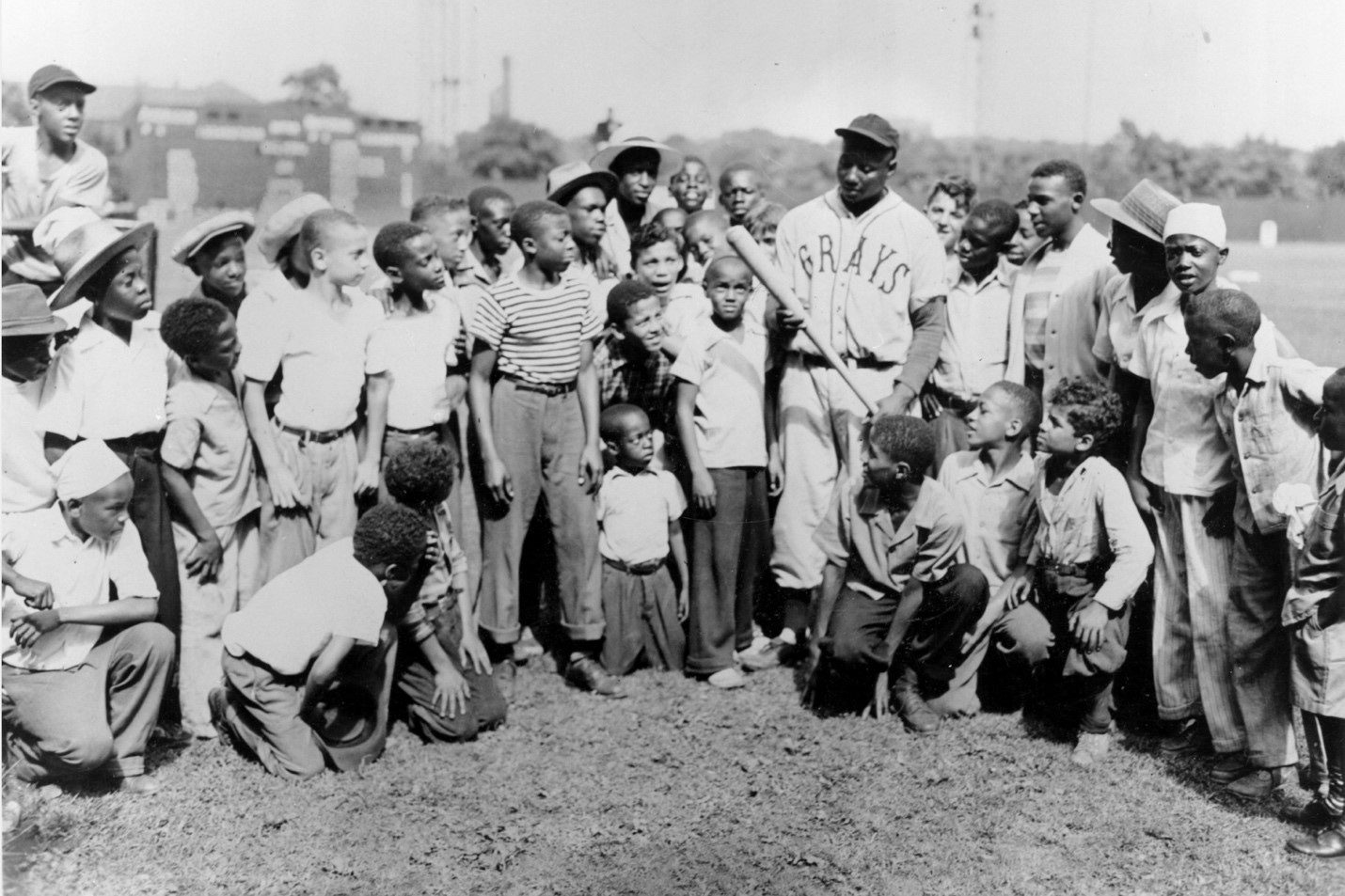
II. THE STEEL MILL AND THE EXCLUDED DOOR
Joshua Gibson was born in 1911 in Buena Vista, Georgia, to sharecroppers. Mark Gibson traveled to Pittsburgh in 1923 in search of a better life, found work at the Carnegie-Illinois Steel Company, and sent money back to Georgia for three years until he could bring the whole family north. Josh arrived in Pittsburgh for sixth grade.
By the time he turned 15 he dropped out of school to take a job at an airbrake manufacturing plant to help support the family, then went to work with Carnegie-Illinois Steel after school, leaving his evenings free for recreation. The pattern is structurally identical to Lonaconing. A boy pulled from formal development by economic necessity, laboring in industrial constraint, with baseball occupying the margin the labor left open.
But Gibson’s constraint had a second dimension that Grove’s did not.
Grove’s fallback was low because of poverty and class. Gibson’s fallback was eliminated by race. There was no Negro player in the major leagues. Not discouraged, not rare — excluded by institutional enforcement. The door did not exist. When the Pittsburgh Pirates expressed interest in Gibson in 1943, Commissioner Landis would not allow him to play. The regulatory architecture of American baseball actively maintained his exclusion. Every performance Gibson produced — every home run that cleared a fence, every batting title, every season in which he was the most dominant hitter in the country — was produced in a system that had structurally eliminated the highest available competitive environment as an option for him.
This is the maximum fallback suppression case. Not low fallback. Zero institutional fallback. The major leagues existed. Gibson could see them. He could not enter them. His constraint was not just economic pressure from below — it was the full weight of American racial apartheid pressing down from above, with no margin for error, no recovery channel, no alternative pathway to the highest level of the game he was playing.
The output was proportional to the conditions.
By accounts, Gibson hit close to 800 career home runs, with a lifetime batting average of at least .362. He achieved his numbers in Forbes Field and Griffith Stadium, two of baseball’s most cavernous ballparks — structural environments that suppress home run totals by design. The disturbance he generated happened against maximum physical and institutional resistance simultaneously.
In 1943, Gibson fell into a coma, was diagnosed with a brain tumor, refused surgical removal, and returned to the field — continuing to lead the Negro Leagues in hitting for four more seasons while experiencing recurring headaches throughout. The year of the coma and diagnosis, he led the Grays to the Negro World Series championship and was honored with a Josh Gibson Night in Pittsburgh. He was playing at maximum output while his regulatory architecture was failing.
This is what the framework looks like when C approaches K(R). The formation is still expressing. The instrument is still producing record-level disturbance of the equilibrium. And the system is simultaneously degrading under load that has exceeded what any regulatory capacity can sustain indefinitely.
Larry Doby, who broke the American League color barrier in 1947, said: “One of the things that was disappointing and disheartening to a lot of the black players at the time was that Jackie Robinson — although a great player — was not the best player. The best was Josh Gibson. I think that’s one of the reasons why Josh died so early — he was heartbroken.”
Doby is describing the energetic load equation from inside the system. A formed instrument operating at maximum output, against an institutional wall that will not move, accumulating regulatory debt that has no discharge pathway, until the system cannot maintain coherence. Gibson died on January 20, 1947, at the age of 35, just three months before Jackie Robinson took the field for Brooklyn. He was buried in an unmarked grave in Allegheny Cemetery.
The formation and the damage were simultaneous. The theory does not require them to be separate.
III. THE COMPARISON
Both men: coal and steel towns, labor before organized baseball, no institutional development pathway, no fallback, formation under conditions that made lower free energy states unavailable.
The divergence is the nature of the constraint’s ceiling.
Grove’s constraint was poverty and class. It was severe. It produced a bifurcated instrument of rare magnitude. But when Grove entered professional competition — the minor leagues, then the majors — the system accepted him. The pressure had a legitimate discharge pathway. He could win. His output could register. The environment could be disturbed in proportion to what his formation had produced, and that disturbance would be recorded and rewarded.
Gibson’s constraint was all of that, plus racial exclusion that closed the highest competitive environment permanently. The formation was as extreme as Grove’s. The instrument was arguably comparable, possibly greater. But the discharge pathway was structurally blocked. The pressure accumulated without proportional release. The regulatory architecture held for years — expressed in batting titles and home run records and Negro World Series championships — and then failed, as any regulatory architecture eventually fails when energetic throughput cannot be externalized into a sufficient environment.
Grove died in 1975 at 75, a police chief in Lonaconing, his MVP trophy two blocks from where he grew up. Gibson died in 1947 at 35, in an unmarked grave, three months before the wall he spent his life playing against finally came down.
Two instantiations of the same formation law. One with a discharge pathway. One without. The outputs of the formation were comparable in magnitude. The outcomes of the lives were not — because the Law of Energetic Load does not care about the justice of the constraint. It only registers whether throughput can be externalized, or whether it accumulates until the system cannot hold.
That is the entire system. These are two of its clearest proofs.
PART V — THE COMPLETE CASE: JOSH GIBSON AND THE LAW OF BEING
There is one case in the history of American sport where every variable in the framework converges simultaneously — where formation, fallback suppression, output rate, institutional exclusion, documentation failure, regulatory collapse, and early death are not separate biographical facts but a single continuous thermodynamic event. That case is Josh Gibson.
Part IV established the formation condition and the Grove comparison. This section applies the full formal apparatus — EVG, fallback operationalization, PA truncation, and the Law of Energetic Load — to Gibson alone, as a single continuous system.
I. THE FORMATION
Joshua Gibson was born in 1911 in Buena Vista, Georgia, to sharecroppers. His father moved the family to Pittsburgh in 1923 after finding work at Carnegie-Illinois Steel. Josh left school after ninth grade — having studied briefly to become an electrician before that path closed — and took an apprentice position at an airbrake manufacturing plant, leaving his evenings free for baseball.
The lower free energy states were not available. What was available was labor and, at the margins of that labor, a game.
This is the formation condition in the formal sense — not poverty as misfortune but poverty as thermodynamic driver. The constraint was real, sustained, and bounded. The regulatory architecture held. The boy did not collapse under the load. He recalibrated.
What emerged was not a talented prospect moving through a development system. It was a bifurcated instrument operating from a baseline that designed development cannot produce — because designed development, by definition, makes lower free energy states available at every stage. Gibson’s formation made none available. The output was proportional to the conditions.
By nineteen he was catching for the Homestead Grays. By twenty he was the most feared hitter in black baseball. The allostatic recalibration was complete. The instrument was ready to disturb whatever equilibrium it encountered.
II. THE FALLBACK
The fallback operationalization framework identifies five proxies: alternative career viability, institutional insulation, redundancy of opportunity, margin for error, and recovery channels. Gibson scores zero on all five — not low, zero — with one additional dimension that no other player in the framework’s dataset shares.
Grove scored low on all five because of poverty and class. Gibson scored zero on all five because of poverty and class, and then encountered a sixth suppression that Grove never faced: institutional racial exclusion enforced at the highest level of the game by the Commissioner of Baseball himself.
This is not a sixth proxy. It is a categorically different order of fallback suppression. The other five proxies describe the absence of pathways. The sixth describes the active enforcement of their nonexistence. Commissioner Kenesaw Mountain Landis maintained the color line as institutional policy from 1920 until his death in 1944, actively blocking all attempts at integration. Pirates ownership expressed interest in Gibson on multiple occasions — as early as 1938 owner Benswanger told the Pittsburgh Courier that Gibson looked like major league timber. None of it resulted in a signing. The institutional architecture Landis maintained made it structurally impossible. The door did not exist because Landis maintained the lock.
Every performance Gibson produced — every home run, every batting title, every season in which he was the most dominant hitter in the country — was produced against the knowledge that the highest available competitive environment had been structurally closed to him by institutional force.
In the formal vocabulary of the framework: A = 0. Not A approaching zero. A equal to zero. The lower free energy state — major league competition — was visible, proximate, and categorically inaccessible. This is the maximum fallback suppression case in the historical record.
III. THE OUTPUT RATE
What a system produces under these conditions is the framework’s central prediction made visible.
Gibson hit close to 800 career home runs by most accounts, with a lifetime batting average of at least .362. Following MLB’s 2024 integration of Negro League statistics into its official records, Gibson holds the all-time record for career batting average, career slugging percentage, and career OPS — displacing Ty Cobb, Babe Ruth, and Ruth again respectively. His OPS+ of 202 is second only to Ruth’s 206 in the pre-1965 dataset, higher than Williams, higher than every other player in the integrated record across the entire era.
He achieved these numbers in Forbes Field and Griffith Stadium — two of the most cavernous ballparks in professional baseball, structural environments that suppress home run totals by design. The disturbance he generated happened against maximum physical resistance and maximum institutional resistance simultaneously.
The 202 OPS+ is not a statistic. It is the thermodynamic record of what Buena Vista and Carnegie-Illinois Steel and years of maximum constraint produced when it made contact with a baseball.
IV. THE TRUNCATION
Now the EVG instrument enters — and here is where the system reveals its full structure.
EVG = (OPS+ / 100) × (PA / 650) × (4.5 / R/G)
Gibson: (202/100) × (4068/650) × (4.5/4.0) = 2.02 × 6.258 × 1.125 = 14.23
In the pre-1965 hitter rankings, this places him ninth. Behind Williams, Ruth, Mantle, Hornsby, Gehrig, Charleston, Torriente, and Brouthers.
The OPS+ component — the output rate — places him second in the entire field, behind only Ruth. The PA component — the accumulated record — is where the ranking collapses. 4,068 plate appearances against Williams’ 9,792, Ruth’s 10,628, Mantle’s 9,910. The gap is not explained by injury or shortened career in the ordinary sense. It is the direct quantitative consequence of institutional exclusion operating across the full duration of his career and of the documentation failure that exclusion produced.
Gibson played from 1930 to 1946 — sixteen years. In sixteen years of major league play at the plate appearance rates of the era, a player of his durability accumulates between 9,000 and 11,000 PA. The 4,068 figure represents not his career output but the fragment of it that was documented under the conditions the Negro Leagues operated in — without the statistical infrastructure, the press coverage, the institutional resources, or the organizational stability of organized baseball. Many games were not recorded. Many seasons are incomplete. The documentation failure is structural and shares its cause with the exclusion itself: the same institutional architecture that kept Gibson out of the major leagues ensured that what he did outside them would not be fully preserved.
The PA gap is therefore not a gap in Gibson’s output. It is a gap in the record of his output — produced by the same force that produced the fallback suppression, operating now on the archive rather than on the man.
The EVG instrument records this faithfully. It can only measure what the record contains. The 14.23 EVG is not Gibson’s EVG. It is the EVG of the portion of Gibson’s career that the historical discrimination failed to erase entirely.
V. THE LOAD WITHOUT DISCHARGE
On January 1, 1943, Gibson collapsed at home and fell into a coma. He was diagnosed with a brain tumor. He refused surgical removal and returned to the field. For four more seasons he continued to lead the Negro Leagues in hitting while experiencing recurring headaches. In 1943 alone he batted over .480 while leading the Grays to the Negro World Series championship.
This is what the framework looks like when C approaches K(R) from below while the discharge pathway remains blocked above.
The formation was complete. The instrument was operating at maximum output. The regulatory architecture was simultaneously degrading under a load that had no adequate externalization pathway. The major league door remained closed. The pressure that the formation had produced had nowhere proportional to go. The Negro Leagues could contain some of it. They could not contain what a formed instrument of that magnitude required to maintain coherence.
The load accumulated without discharge. The regulatory debt compounded. The system could not hold.
Gibson died on January 20, 1947, at thirty-five. Three months later Jackie Robinson took the field for Brooklyn. He was buried in an unmarked grave in Allegheny Cemetery.
VI. THE CONTINUOUS SYSTEM
Every element in Gibson’s case connects to every other element through the same causal chain.
The formation was produced by poverty, labor, and the genuine unavailability of lower free energy states. The formation produced the output rate — 202 OPS+, second only to Ruth in the pre-integration dataset. The output rate encountered a fallback of zero — enforced institutionally by the Commissioner of Baseball across the full duration of the career. The zero fallback meant that maximum output had no proportional discharge pathway. The absence of discharge accumulated as regulatory load. The accumulated load degraded the regulatory architecture. The degraded regulatory architecture collapsed at thirty-five.
Simultaneously, the institutional architecture that enforced the zero fallback also degraded the documentation of the output it was suppressing. The games Gibson played that were not recorded are gone. The PA total in the archive is a fraction of what the career produced. The EVG score that results — 14.23, ninth place — is the quantitative expression of that documentation failure, produced by the same cause as the fallback suppression itself.
Formation → output rate → fallback suppression → no discharge pathway → regulatory collapse → early death. Formation → output rate → fallback suppression → documentation failure → truncated PA → suppressed EVG. These are not two stories. They are one continuous system running along two tracks simultaneously, both tracks driven by the same single cause: the institutional enforcement of racial exclusion across the full duration of a career.
The EVG instrument is faithful. It records what the archive contains. The archive contains what the institution permitted to be preserved. The institution that refused to permit Gibson to play also refused, by its structural indifference to what happened outside its walls, to permit the full record of what he did to survive.
What survived is 202 OPS+. Second only to Ruth. Ninth place by EVG. The gap between those two facts is not a measurement anomaly. It is the quantitative shape of American racial apartheid, expressed in plate appearances.
VII. WHAT THE FRAMEWORK REQUIRES
The Law of Being states that durable form is achieved through bounded compression under entropy. Gibson achieved it. The formation was complete, the output was record-level, and the archive — fragmentary as it is — preserves enough to confirm both.
The Generative Law of Constraint states that formation magnitude is proportional to constraint intensity and inversely proportional to fallback availability. Gibson’s constraint was maximum. His fallback was zero. The output rate confirms the prediction.
The Law of Energetic Load states that when throughput exceeds regulatory capacity, the system must reorganize, externalize, or collapse. Gibson’s throughput — the full weight of what a maximum-formation instrument produces when it cannot externalize into the environment it was built for — exceeded what any regulatory capacity can sustain across a career. The collapse came at thirty-five.
The Persistence Theory of Authenticity states that authenticity is formation-signature, not truth-claim. The 202 OPS+ is authentic. The home runs in Forbes Field are authentic. The batting titles are authentic. What the institution failed to preserve does not unmake what it failed to preserve. The formation occurred. The output was produced. The record is incomplete. The incompleteness is itself the testimony.
Gibson is not the framework’s most tragic case. He is its most complete one. Every law, every variable, every prediction — formation, fallback, output rate, discharge pathway, regulatory collapse, documentation failure, EVG suppression — runs through his career as a single continuous event from Buena Vista to Allegheny Cemetery.
The instrument is faithful. The history is not. And the gap between them — measurable, quantifiable, expressed in plate appearances — is the permanent record of what was done.
Volume 2. The Architecture of Time: A Unified Theory of Civilizational Coherence
Section
[…]
An Olmec jade statuette of a standing figure holding a were-jaguar baby. From Mexico, 900-300 BCE, now housed at the Kimbell Art Museum in Texas [581x1350] : r/ArtefactPorn](/images/substack/c075fef7-5075-49b5-8d8d-22ee8b3c93cf_581x1350.jpeg)
Above: artifactual examples of the Olmec “were-jaguar” instantiation.
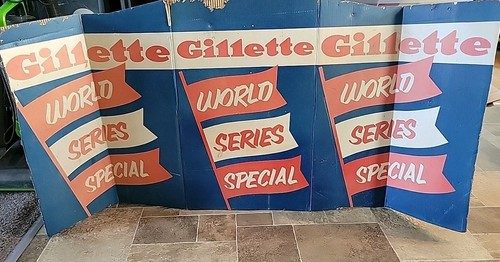
_**Above: the 1954 Gillette
[…]
any upstream artifact that actively engineers shared time by regulating the four conditions above.
Such devices are:
materially lightweight
temporally forceful
ephemeral by design
Their disappearance is a success condition.
Threshold Artifacts
A threshold artifact is an epoch
Enfolded: Threshold Artifacts and the Dilation of Ontos: Physical Objects That Expanded
[…]
entry at passage level and has been enfolded here. Passages not otherwise present are reproduced below; ellipses […] mark already-present text.*
of physical objects— threshold artifacts —whose historical force derives not from representation, symbolism, or meaning, but from their capacity to regulate passage across paradigm-level transitions in lived reality. These artifacts operate at moments when a civilization must inhabit a new ontological regime that exceeds the unaided capacity of the human nervous system. By synchronizing anticipation, enforcing thresholded entry, entraining duration, and coordinating release, threshold artifacts expand the viable envelope of human being (ontos) without biological or psychological collapse.
The analysis distinguishes two distinct axes of ontological dilation—identity dilation and temporal dilation—and presents a conservative, cross-epoch list of physical artifacts that demonstrably meet the full criteria of this class. Particular attention is given to the 1954 Gillette World Series storefront display, which is shown to be an exceptional
[…]
system) that appears at a regime transition in lived reality and performs the following four functions:
Anticipatory Compression
It installs a shared future orientation across many nervous systems.Thresholded Entry
It enforces a single, authoritative moment of crossing into the new regime.Durational Entrainment
It provides a regulated temporal corridor through the new mode of reality.Coordinated Release
It ends cleanly, restoring baseline and enabling repeatable crossings.
Artifacts that fail any one of these criteria do not qualify, regardless of cultural importance, rarity, or aesthetic power.
III. The Conservative List of True
[…]
threshold artifacts, whose power depended on bounded use and clean release.
V. Does Anything Else Exist Like It?
Under strict criteria, very little.
Possible near-relatives include:
Apollo program launch countdown clocks and televised launch schedules
These briefly approximated temporal threshold regulation at national and global scale, though they lacked repeatability.Early radio national emergency broadcast countdowns
These synchronized entry but failed durational entrainment and clean release.
No other known physical artifact achieved the same combination of:
anticipatory compression
hard collective entry
durational containment
synchronized release
mass biological viability
The 1954 Gillette display may therefore represent a singular historical achievement : the only fully realized temporal threshold artifact of the broadcast age.
VI. Conclusion
Threshold artifacts are not symbols, monuments, or memories. They are biological safety devices —material regulators that expand the viable envelope of human reality during periods of ontological risk.
Across tens of thousands of years, civilizations have produced only a handful of such objects. Most regime transitions occur without them, and those transitions are marked by fragmentation, possession, and collapse.
Seen in this light, the 1954 Gillette World Series display is not memorabilia. It is evidence that modern civilization once knew how to engineer shared time safely at scale.
What distinguishes the present is not technological acceleration, but the absence of a new threshold artifact capable of stabilizing digital, asynchronous reality.
Shared time—and shared reality—are not discovered.
They are engineered
Enfolded: Two Modes of Threshold Artifacts: Ontological Regulation vs Dimensional Regulation \u2014 and Why the 1954 Gillette Display Is Unique (2026
[…]
here. Passages not otherwise present are reproduced below; ellipses […] mark already-present text.*
That is why it stands alone.
Yes. Unequivocally yes.
And naming why it is recent actually strengthens your framework rather than weakening it.
Here is the clean, publishable explanation.
Dimensional Threshold Artifacts Are a Recent Technological Possibility
Dimensional (temporal) threshold artifacts are not rare because civilizations failed to imagine them.
They are rare because, until the modern era, the underlying condition they regulate did not exist.
The key fact:
You cannot regulate non-local shared time before non-local shared time exists.
What changed historically (the hard boundary)
For almost all of human history:
Shared presence required co-location
Time was inherently local
Simultaneity was biologically constrained by geography
Duration was enforced by physical gathering
Endings occurred naturally when bodies dispersed
In other words:
Time regulated itself through distance.
No dimensional artifact was needed because dimensional expansion had not yet occurred.
The technological threshold that made dimensional regulation necessary
Dimensional ontological expansion begins only when technology enables:
Simultaneous presence across distance
Population-scale shared “now”
Collective anticipation without co-presence
Sustained attention detached from place
This requires:
electrical communication
broadcast capability
synchronization infrastructure
temporal compression at scale
That threshold is crossed only in the early 20th century.
Before that moment, all threshold artifacts necessarily operated in the ontological/identity mode , because that was where risk existed.
Why the 1954 Gillette display appears exactly when it does
The Gillette display is not anomalous.
It is perfectly timed.
By the early 1950s, civilization had:
radio (mass simultaneity)
television (immanent presence)
national broadcast schedules
advertising infrastructure
shared leisure time
a biologically survivable carrier wave (baseball)
This is the first moment when:
Non-local shared time becomes a civilizational condition rather than a novelty.
And therefore the first moment when it requires biological regulation.
The Gillette display appears at the precise point where dimensional expansion becomes survivable only ifregulated.
That is not coincidence.
That is structural emergence.
Why it disappears instead of evolving
Here is the crucial asymmetry:
Identity expansion:
can be regulated symbolically
tolerates persistence
integrates into institutions
accumulates tradition
Dimensional expansion:
must be event-bounded
cannot tolerate persistence
collapses under ambient availability
destroys its own gates when infrastructuralized
The moment dimensional expansion becomes permanent infrastructure , it stops being regulatable.
That is exactly what happens after the 1950s:
television becomes ambient
programming becomes continuous
endings dissolve
anticipation fragments
release disappears
The artifact does not fail.
The regime changes.
Why this matters:
This answers a potential objection before it can be raised :
“If dimensional threshold artifacts are so important, why are there so few?”
Because:
the condition they regulate is new
the window where regulation is possible is narrow
persistence destroys the mechanism
industrial capitalism rapidly converts thresholds into platforms
In other words:
Dimensional threshold artifacts are transient by necessity, not by accident.
The clean formulation
Dimensional threshold artifacts are a historically recent possibility because non-local shared time is itself a recent ontological condition. Prior to the emergence of broadcast technologies, time regulated itself through distance. Once simultaneity escaped geography, biological regulation became necessary. The 1954 Gillette World Series display appears precisely at this threshold—when dimensional expansion first required external gating to remain survivable.
Final clarity
The Olmec appear at the first identity threshold.
Gillette appears at the first dimensional threshold.
Both emerge exactly when regulation becomes necessary.
That is not interpretation.
That is phase-change logic
Enfolded: THE LAW OF BEING: The
[…]
Everything
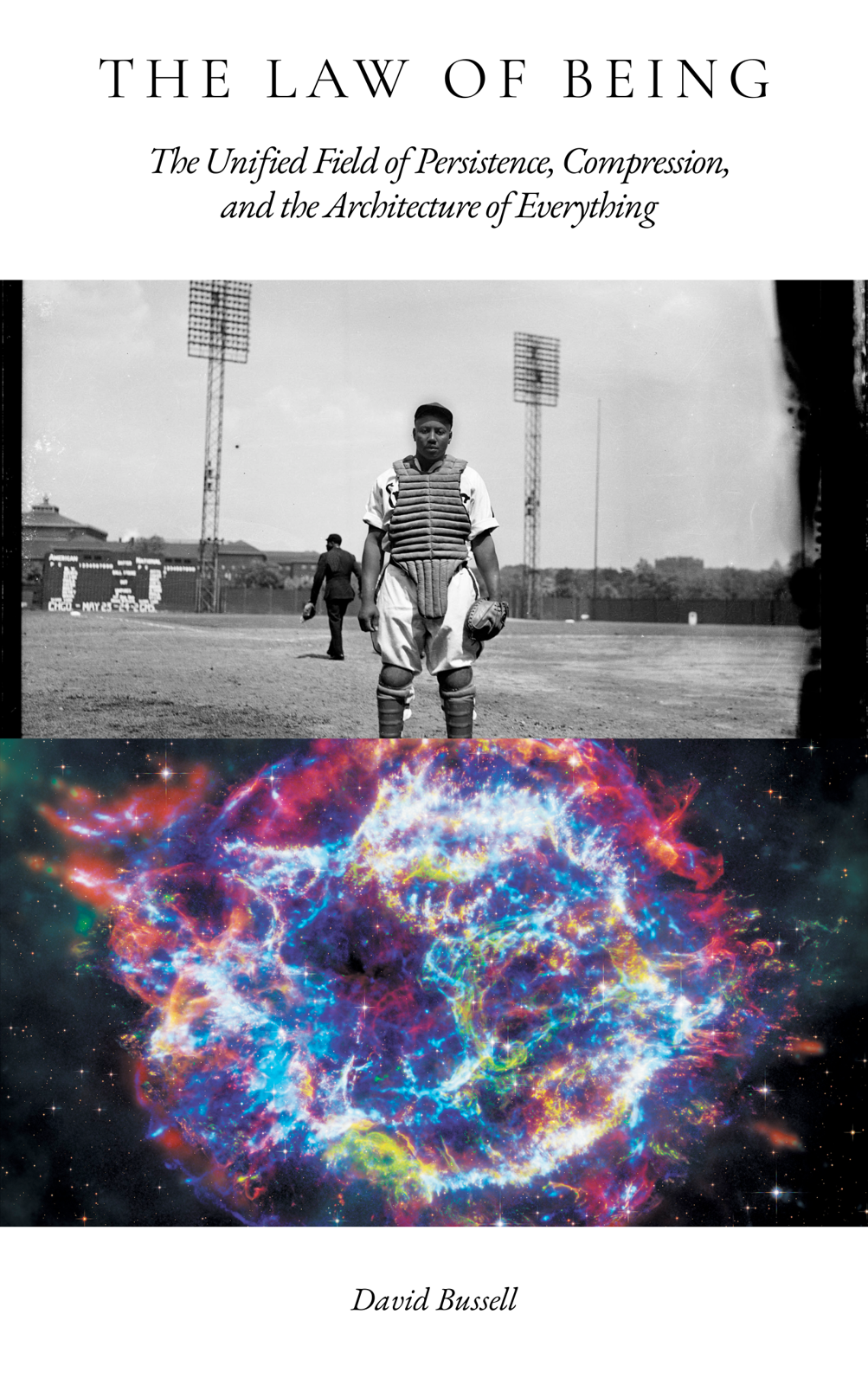
THE LAW OF BEING
The Unified Field of Persistence, Compression, and the Architecture of Everything
I. The Law
That which persists under entropy through bounded compression attains durable form — operative reality across time. All else is transient flux.
This is not a claim about value. It is not a claim about meaning. It is a structural description of what existence requires.
The universe moves in one direction: toward dispersal, toward equilibrium, toward the dissolution of difference. This is the second law of thermodynamics, and it operates without exception at every scale. Energy dissipates. Structure decays. Complexity collapses toward uniformity. This is the gradient against which everything that persists must continuously operate.
And yet things persist. Stars burn
[…]
now. A performance record produced in 1901 stands in the archive as permanent testimony against which all subsequent performances are measured.
At minimum, this framework proposes a general systems law: persistent form requires bounded compression under entropy, and structural transformation emerges when sustained constraint acts on bounded systems with limited fallback below collapse threshold. At maximum, it proposes that this logic is scale-invariant across physical, biological, symbolic, and civilizational domains. The stronger claim depends on demonstrated convergence across multiple domains, not on assertion alone.
The question is not merely
[…]
into bounded form — to constrain the degrees of freedom of energetic or informational flow, maintain an internal configuration distinguishable from the environment, resist entropic dissolution, and transmit organizational pattern forward in time. Every system that endures does so by executing this operation. The substrates differ. The operation is identical.
Compression is the constraint-driven reduction of accessible degrees of freedom. Bounded compression under entropy is the universal condition of durable form. This is the Law of Being.
II. Physical Foundation
In 1977, Ilya Prigogine received the Nobel Prize
[…]
confirms operates at one node of a longer chain. The present framework claims that the same compressive logic — bounded form maintained through continuous dissipation against entropy — runs without interruption from stellar nucleosynthesis through biological metabolism, neural regulation, symbolic architecture, artifact, archive, and civilization. Each level is not a new domain governed by new principles but a downscale articulation of the same energetic constraint at increasing containment resolution. Prigogine's work demonstrates the physical reality of this mechanism in chemistry. It does not establish the chain. The chain was induced from the archive and confirmed by convergence; Prigogine is one confirmation among several that the law is real, not the source from which the framework was derived.
What the dissipative structure framework establishes is the existence of two categorically distinct thermodynamic regimes — a distinction that is the physical foundation of everything that follows.
In the near-equilibrium regime, perturbations decay. The system returns to its prior state. This is the regime of optimization — incremental refinement of existing structure, small reversible adjustments around a stable point
[…]
instrument differs in baseline regulatory parameters — in what it experiences as normal, in what load it metabolizes without exceptional effort, in the ceiling of what it can produce.
One feature of the formal model has no equivalent in dissipative structure theory. Prigogine describes the conditions under which far-from-equilibrium systems self-organize into higher-order states. He does not address what determines the magnitude of that reorganization, nor why some systems are driven further from equilibrium than others. The present framework introduces a distinct variable for this: fallback availability — the degree to which lower free-energy states remain accessible to the system. When lower states are available, the system occupies them rather than bifurcating; this is simple thermodynamics. When they are not — when the institutional, biological, or physical architecture of a situation makes return unavailable — bifurcation is the only path that does not lead to collapse. The magnitude of what formation produces is therefore proportional not only to constraint intensity but to the inaccessibility of escape. This is the forcing condition Prigogine’s framework does not supply. It is what allows the formal model to function as a measurement instrument and not merely a description.
Formation is nonlinear, discontinuous, and irreversible. It is not more optimization. It is a categorically different physical event.
A further derivation follows from the compression law that existing thermodynamic and biological literature does not address. If the nonzero energetic cost of maintaining bounded organization against entropy is a structural feature of all persistent systems — not a contingent condition but the permanent price of existence — then that cost presents phenomenologically in any system capable of experience as a permanent state of non-completion. Not as a psychological problem awaiting resolution, not as a failure of fulfillment, but as the internal signature of the regulation requirement itself. The organism is never finished because the work of maintaining coherence against entropy never stops. This is the Dissatisfaction Principle, and it is derived directly from the physics: not from Prigogine, not from allostasis research, but from the compression law applied at the level of experience. It is listed among the framework's five terminal laws in Section XI because it follows necessarily from the same foundation that produces the rest — but its origin is here, in the structure of what it costs to persist.
III. The Formal Model
The framework derives from this physical foundation a constraint-formation model describing the conditions under which systems transition from near-equilibrium optimization to far-from-equilibrium bifurcation.
The model applies to systems
[…]
recurrent, not transient; regulatory capacity — the system can maintain coherence under load; and limited fallback availability — lower free energy states are partially or fully inaccessible.
The core relationship:
F ∝ (C · B) / A subject to: C < K(R)
The expression is a proportional systems model, not a universal closed-form equation. Its terms are fully operationalizable only in certain domains; elsewhere it functions comparatively, identifying directional causal relations rather than exact scalar outputs.
F is formation magnitude — the degree of durable structural reorganization the system undergoes. C is constraint intensity — the magnitude and duration of pressure applied. B is boundedness — the degree to which the system retains and concentrates that pressure. A is fallback availability — the accessibility of lower free energy states that allow stabilization without transformation. R is regulatory capacity — the system’s ability to maintain coherence under load. K(R) is the collapse threshold — the maximum sustainable constraint intensity given R.
Each term derives directly from the physics.
C measures transformation pressure. Sustained high constraint is necessary but not sufficient for formation. B is the precondition for the law’s operation — an unbounded system disperses pressure before it can accumulate the driving force required for bifurcation. A is the most precise term in the model. A system in contact with an energy reservoir will minimize its free energy — it will occupy the lowest available state. When lower states are available, the system occupies them rather than bifurcating. When they are not, bifurcation is the only available path that does not lead to collapse. This is not a motivational claim. It is the second law operating at scale. The model is a causal schema and proportional heuristic. F is comparative rather than cardinally measurable in most domains; the exception is EVG, where the variables are fully operationalized against historical record.
R is composed of three coupled functions: absorption — capacity to take in load without immediate destabilization; integration — capacity to reorganize internal structure to accommodate load; dissipation — capacity to export entropy to the environment. Failure of any component reduces effective R.
The regime interpretation: underload produces no adaptation. Optimization — high C, high A — produces refinement without structural change. Formation — C approaching K(R), A low, B sufficient, R intact — produces bifurcation to higher-order organization. Overload — C exceeding K(R) — produces regulatory failure and collapse.
One principle governs the evolution of R: regulatory capacity increases only through successful integration of load below the collapse threshold. Systems that survive high-load integration increase future capacity. Systems that fail under load reduce it. Regulatory capacity is path-dependent. It cannot be inherited or designed. It can only be built by surviving what would have destroyed it.
One clarification is essential before proceeding. Formation and damage are not mutually exclusive. In the historical record, the most extreme formation cases frequently involve both. The theory does not claim that severe constraint is ennobling or that formation comes without cost. It claims that bifurcation to higher-order organizational states becomes possible under these conditions — not that it comes free. Severe constraint is one condition under which bifurcation may occur if regulatory capacity remains intact. It is not a guarantee. And it is not without consequence.
IV. Operator Equivalence
The same compression operation appears at every scale. Substrates differ. The operator is identical.
A system implements the persistence operator if and only if it: bounds a flow — constrains the degrees of freedom of energetic or informational flux; retains a state — maintains an internal configuration distinguishable from its environment; resists degradation — actively or structurally opposes entropic dissolution; transmits structure — reproduces or propagates its organizational pattern across time; and pays a regulatory cost — expends energy or structural work to maintain the above.
These five conditions, taken together, define existence in the strict sense used here. Not momentary occurrence — a spark exists while it occurs — but durable form: operative reality that persists across time as a coherent bounded entity.
The claim that this operator is identical across scales is not a claim about substrate, mechanism, or phenomenological character. It is a claim about functional structure under entropic constraint. The operation, not the substrate, constitutes existence.
The objection presents itself immediately: surely a genome and a photograph are not the same thing in any meaningful sense. Surely the compression that produces a star is not the compression that produces a self. To call these operator-equivalent is to commit the error of analogy dressed as identity — to say that because things resemble each other structurally, they are structurally the same.
The response is precise. The claim is not that a genome and a photograph are the same thing. It is that both implement the identical set of functional conditions — that both bound a flow, retain a state, resist degradation, transmit structure, and pay a regulatory cost — and that this functional identity is what makes both of them existent in the durable sense rather than transiently real. The substrate is irrelevant to the operator. Carbon and silicon can both implement computation. Stone and cardboard can both implement threshold artifacts. Flesh and film can both compress somatic presence. What varies is the material. What is invariant is the operation.
This matters because it is the basis for every cross-scale claim the framework makes. When the framework says that stellar nucleosynthesis and allostatic recalibration and civilizational phase transition are instantiations of the same law, it is not saying they are analogous. It is saying they share a functional architecture — bounded compression under entropy, formation through constraint, collapse when throughput exceeds regulatory capacity — that is invariant across substrates. The evidence for this claim is not philosophical. It is empirical. The same formal variables — C, B, A, R, K(R) — describe the formation conditions in every domain where formation has been studied with sufficient precision to test them. The convergence is not imposed. It is found.
Three levels of claim are operating simultaneously throughout this framework and should be distinguished: a physical claim about thermodynamic mechanism, a cross-scale systems claim about functional isomorphism across substrates, and a phenomenological claim about the interior of regulatory cost. Each level is supported by different evidence. The cross-scale claim does not require the phenomenological claim to be true, and the physical claim stands independent of both.
The biological case is the strongest because it is the most measurable. The genome compresses evolutionary time into molecular code — species persistence. The symbol compresses collective experience into transmissible signs — cultural memory. The artifact compresses lived presence into durable material trace — historical reality. The image compresses perceptual presence — somatic re-encounter with actuality. The self compresses cosmological time into bounded neural architecture — subjectivity. These are not analogies, nor is the claim one of metaphysical identity. The claim is that stars, selves, and symbols instantiate the same persistence logic under different material conditions — functional isomorphism across substrates, not identity of kind. They are the persistence operator instantiated in different substrates, each implementing the same five functional conditions, each paying the regulatory cost that existence requires.
V. Biological Instantiation
The nervous system is the domain where the constraint-formation model is most fully measurable, because the mechanisms of both optimization and formation have been identified at the level of molecular biology.
Neuroplasticity is the mechanism of near-equilibrium optimization. Activity-dependent synaptic modification — neurons that fire together wire together — elaborates existing neural architecture in response to repeated experience. It makes the system more efficient at what it already does. It does not reorganize the system’s fundamental operating parameters. This is not the mechanism the Law of Being describes.
Allostatic recalibration is the far-from-equilibrium bifurcation mechanism in biological organisms. Under conditions of prolonged high demand — sustained HPA axis activation, chronic elevation of glucocorticoid levels, continuous operation near the upper boundary of regulatory capacity — the organism’s allostatic setpoints shift. The hypothalamic-pituitary-adrenal axis recalibrates its baseline output. The autonomic nervous system adjusts its resting tone. The attentional filtering system resets its threshold for signal versus noise.
These are not elaborations of existing pathways. They are changes to the system’s fundamental regulatory parameters. The recalibrated system does not experience high demand as exceptional. It experiences it as normal — because the conditions of its formation reset the parameters that define normal. This is the biological instantiation of formation: a new instrument operating from a new baseline, produced by conditions that made the prior baseline unavailable.
The load zones follow directly. Zone 1, underload: capacity stagnates or atrophies. No adaptation. Zone 2, optimal load: prefrontal cortex engaged, system expands through graded exposure paired with integration and recovery. Zone 3 upper, high load below collapse: the formation zone. Allostatic recalibration. New operating state. Zone 3 ceiling, overload: prefrontal inhibition fails. Limbic reflex dominates. Breakdown modes engage: avoidance, aggression, dissociation, compulsion.
These breakdown modes are thermoregulatory strategies, not character flaws. They are the system’s response to load exceeding regulatory capacity — the biological expression of the Law of Energetic Load operating at the level of a single nervous system.
VI. Ontology
This framework does not claim that transient phenomena are unreal. A spark, a wave packet, a scream exist while they occur. The claim is narrower and more specific: durable form — operative reality that persists across time as a coherent bounded entity — is achieved only through bounded compression against the entropic gradient. Transient events lack this structure. Durable systems possess it. The distinction is not between real and unreal but between persistent form and passing flux.
All persistent systems are what they are by virtue of the regulatory cost they pay. Existence is not a property that things have. It is a process that things do — continuously, against the gradient, at cost.
Consciousness introduces no new ontological category. On this account, subjectivity is compression appearing from inside the boundary. The self resists degradation through homeostatic and allostatic regulation — the continuous expenditure of energy to maintain internal state against entropic dissolution — and transmits structure through memory, habit, and the narrative continuity that carries organizational pattern forward across time.
Phenomenologically, meaning presents as regulation at the level of experience. Phenomenologically, character is the topology of a system's regulation — not what it believes or intends, but how it metabolizes reality. Dissatisfaction is permanent and structural because the regulation requirement is permanent and structural. The energetic cost of maintaining bounded organization presents phenomenologically as dissatisfaction. There is no resolution to this. There is only the work of maintenance, which is what being alive is.
No system can exist in time without enforcing provisional boundaries in an irreducibly open universe. All existence is false closure — provisional containment. False denotes not illusion but non-absoluteness. Closure is provisional rather than final, yet fully real as the operative condition of form in an entropic universe.
Authenticity is resistance to erasure under constraint. Under hostile conditions, repetition amplifies signal. The more hostile the conditions, the more authentic what survives them. This is not a moral claim. It is a thermodynamic one. An artifact authenticates itself through the irreproducible material residue of its formation conditions — not through proximity to origin, not through institutional certification. Persistence under hostile conditions confirms that the formation occurred. It does not validate the content of what was formed.
VII. The Law of Energetic Load
In any entropic universe, for any localized system, if energetic throughput exceeds regulatory capacity, structural coherence cannot be maintained.
Φ > R ⟹ loss of structural coherence ⟹ (Ω ∨ E ∨ K)
Φ is energetic throughput. R is regulatory capacity. Ω is reorganization. E is externalization. K is collapse.
The system must resolve excess load through one of three outcomes: internal reorganization — formation, the system rebuilds around a new regulatory architecture; externalization — displacement of load into the environment; or collapse — loss of bounded structure, dissolution into flux.
Outcome selection is determined by
[…]
mediation cannot alter outcomes once throughput exceeds regulatory capacity. The law operates prior to interpretation.
Scale invariance: the law applies identically from stellar fusion through neural trauma through civilizational rupture. The substrate varies. The constraint does not.
Structural primacy: ethics, norms, and belief systems are derivative regulatory overlays, constrained by energetic throughput, not causal over it. Physiology precedes ideology. Always.
Collapse as resolution: reorganization, externalization, and collapse are formally equivalent outcomes under the law. They are not ranked by value. Collapse is not failure. It is one permissible resolution of an energetic equation.
VIII. Measurement: Environmental Value Generation
A framework that claims scale invariance and generates falsifiable predictions requires a domain-specific measurement instrument. The instrument must be derivable from the framework’s own variables, independently measurable against historical record, and capable of revealing the framework’s predictions without being designed to confirm them.
Baseball provides this instrument.
The theory does not require baseball. It requires a domain with a quantifiable environmental baseline, documented individual performance records across historical eras, and sufficient sample size to test distributional predictions. Baseball is one such domain — the most precisely documented one available. The instrument is domain-specific. The law is not.
A baseball game is a sequence of interactions between two opposing thermodynamic forces. Hitters introduce offensive pressure. Pitchers
[…]
this formed instrument, for how long, against how much structural opposition.
Hitter EVG = (OPS+ / 100) × (PA / 650) × (4.5 / R/G)
Pitcher EVG = (ERA+ / 100) × (IP / 250) × (4.5 / R/G)
OPS+ and ERA+ measure performance relative to league average. PA and IP measure accumulated workload against full-season baselines. The R/G adjustment normalizes for run environment — the structural resistance the domain was presenting. The 4.5 reference environment is the long-run historical baseline.
The instrument has a property its design did not anticipate. Because it measures accumulated record rather than peak output rate, it is sensitive to documentation suppression. A player with a high output rate across a truncated or incompletely documented career will show a gap between their rate performance and their EVG ranking. That gap is not a measurement anomaly. It is the quantitative expression of whatever force truncated or suppressed the record.
This property is not incidental. It is how the instrument becomes forensic.
IX. Convergence Case: Josh Gibson
There is one case in the history of American sport where every variable in the framework converges simultaneously — where formation, fallback
[…]
and recovery channels. Gibson scores zero on all five.
On alternative career viability: there was no viable economic alternative to baseball. On institutional insulation: he entered professional baseball through a semi-pro mill team with no coaching infrastructure and no organized development system. On redundancy of opportunity: there was
[…]
question arose, the institutional response was total exclusion with no appeal mechanism. On recovery channels: none existed.
But Gibson’s fallback suppression had a sixth dimension that no other player in the framework’s dataset shares and that the five-proxy system cannot fully capture. Commissioner Kenesaw Mountain Landis maintained the color line as institutional policy from 1920 until his death in 1944 — refusing to act on petitions, suppressing public advocacy, and ensuring by his inaction that the exclusion held. Teams such as the Pittsburgh Pirates and the Washington Senators expressed
[…]
free energy configurations were gone. Bifurcation to radically new body plans was the available path. Five hundred million years of animal complexity is the output of a formation event produced by the unavailability of lower states.
At the performance scale: the formation cases in the historical record cluster exactly where the framework predicts. Shoeless Joe Jackson — functionally illiterate, raised in the textile mill economy of Brandon Mill, South Carolina, began working in the mills around age seven, no viable economic alternative, one path to the highest level of the game, banned for life with no appeal mechanism, .356 career average. Lefty Grove — seventh of eight children in a coal mining family in Lonaconing, Maryland, abandoned formal education at twelve to support his family, worked at a silk mill, a glass works, a local railroad, a coal mine, nineteen years of formation before a professional appearance, nine ERA titles, 79-15 from 1929 to 1931 in the Live Ball era. Gibson — the convergence case, documented in full in the preceding section.
The formation and damage are not mutually exclusive in any of these cases. The theory does not require them to be. It requires only that the output rate reflects the formation conditions, and that the discharge pathway determines what becomes of what the formation produces. Grove had a discharge pathway. Gibson did not. The outputs of the formation were comparable in magnitude. The outcomes of the lives were not.
At the civilizational scale: the Law of Energetic Load operates identically. When energetic throughput exceeds regulatory capacity in a civilization — when the load of technological acceleration, population scale, temporal desynchronization, or ontological expansion exceeds the regulatory architecture’s capacity to absorb, integrate, and dissipate — the civilization must reorganize, externalize, or collapse.
XI. The Laws: Final Form
**The Law of
[…]
without measurable environmental baselines cannot be addressed by EVG, though the qualitative framework may still apply. The instrument requires a quantifiable equilibrium against which deviation can be measured.
EVG does not prove the law; it operationalizes one of its predictions in a domain with unusually high archival precision.
The framework does not claim that constraint is sufficient for formation. High constraint without intact regulatory capacity produces collapse, not transformation. The framework does not claim that severe conditions are inherently productive. Severity is one condition under which bifurcation may occur. It
[…]
the entire framework: the theory is structural, not moral. It does not rank the value of formation over optimization, persistence over transience, reorganization over collapse. It describes the conditions under which each occurs. What those conditions produce — in a life, in a civilization, in a species — is what the evidence shows. The framework is faithful to the evidence. The history is not always faithful to what the evidence contains.
Reality is a single thermodynamic process in which stellar energy is progressively contained, circulated, translated, and preserved across stars, organisms, minds