The World's Midnight: An Ontological History of Modernity in Eight Lectures with The Law of Being & The General Theory of Magnitude; The Genome in History with Measures of Fire
Canonical source: substack:davidbussellarchive (https://davidbussellarchive.substack.com/p/the-worlds-midnight-the-ontological-a21)
Lectures & recordings
- The World's Midnight: A Lecture on Modernity, Heidegger, Holderlin, Shelley & the Fragmentation and Reunion of the Ontos of Being
- The World's Midnight, Lecture II: Modernity's End and the Reunification of the Ontos
- The World's Midnight, Lecture IV: The Law of Being and the Operator Identity
- The World’s Midnight, Lecture III: The War of Information
- The World's Midnight, Lecture VI: The Reunification of the Ontos at the End of Modernity
- The World's Midnight, Lecture VII: The Eagle's Ontos & The Renaissance Mind as Cosmological Revolution and Revelation of Being Through Somatic Body
- The World's Midnight, Lecture V: The Heraclitean Ancestry of the Law of Being as Primordial Logos
- The World's Midnight, Lecture VIII: The Gates of Hell, the Civilizational Ontos, and the Project of the Existential Liberation of Cosmic Energy
- The Genome in History, Lecture II: The Unbinding of Genius
- The Genome in History, Lecture I: Property, Patriarchy, and the Severance from Reproductive Commons
The World's Midnight: An Ontological History of Modernity in Eight Lectures with The Law of Being & The General Theory of Magnitude; The Genome in History with Measures of Fire
The first peace, which is the most important, is that which comes within the souls of people when they realize their relationship, their oneness, with the universe and all its powers, and when they realize that at the center of the universe dwells Wakan-Tanka, and that this center is really everywhere, it is within each of us. This is the real peace, and the others are but reflections of this.
The second peace is that which is made between two individuals, and the third is that which is made between two nations.
But above all you should understand that there can never be peace between nations until there is known that true peace, which, as I have often said, is within the souls of men.
— Black Elk
Note on the Lectures
The eight lectures that follow were spoken in single passes, unscripted, and transcribed directly from their origin afterward. They occurred over the span of three days, from May 6 to May 9, 2026. They are not essays. They are working sessions — the framework operating in real time, without the scaffolding of revision. The formal statement of the Law of Being and the General Theory of Magnitude that follows them is the considered written counterpart: what the same cognition looks like when it has been held still long enough to be tested against its own axioms. The two halves are doing different work and should be read accordingly. The lectures reach, press, test, and expand; the formal text holds. The structure being reached for in the lectures is the structure derived in the formal text. Reading them in order is reading the same operation at two different phases of its cycle.
Lecture 1. Heidegger, Hölderlin, Shelley & the Fragmentation and Reunion of the Ontos of Being
Audio
So I want to give a lecture here on Heidegger, the world’s midnight, Hölderlin, and Percy Shelley. I’m going to briefly reference Heidegger’s work on Hölderlin and the importance of the understanding of the world’s midnight as a premonition, which is fulfilled in Heidegger’s time, received to him by Hölderlin, who he sees rightfully as a prophet working on the cusp of modernity, revealing the diagnostic separation—the faculty of separation—between a wholly unified, we could call it pre-modern ontology of being, which is intimately connected.
This has to do with a severance in the sciences, a specialization, a splitting, which is also articulated by Karl Marx in terms of the political economy of machines, most notably in his Grundrisse , but also in Capital when he talks about specialization and alienation. So this is a diagnosis which must remain at the highest level of knowledge and understanding, which is the knowledge and understanding of being—which is, you could call it the operator identity, the personality, or the essence of existence itself, the ontology of being.
What Hölderlin diagnoses—in Heidegger, who is caught up in the maelstrom of inevitably and regrettably recanting his involvement in Nazi Germany at the levels of, you could call it, intellectual or knowledge-based transference and dissemination of information—is the descent into a separation of consciousness, a splitting of being into a distance, which Hölderlin remarks as nature’s gleaming, something which is wholly unified in his perception. And Hölderlin, of course, descends into a form of insanity, lives up, I believe, in a tower for an extended period of time, and writes fragmented poetry until the end of his days.
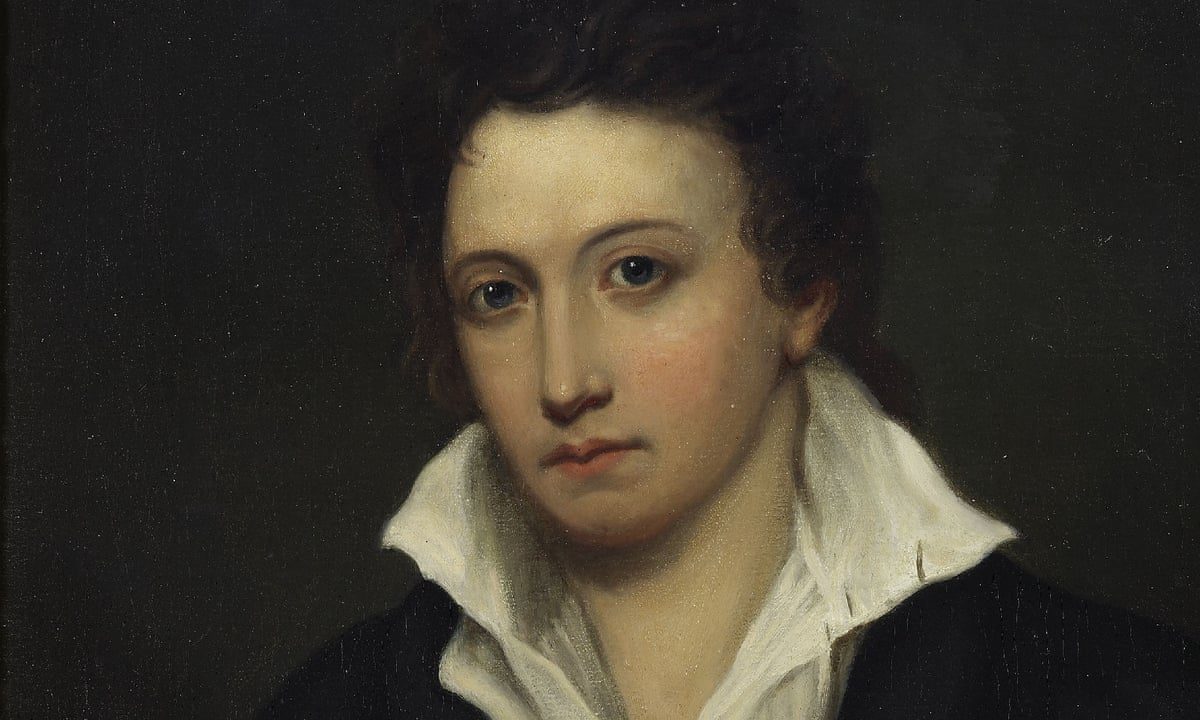
This is why I want to bring in Percy Shelley, because Shelley himself is an exceptional figure, a figure of exceptional knowledge-power. By knowledge-power I mean that he has a wholly unified ontological education. He is highly scientifically educated—with influences spanning Erasmus Darwin, Humphry Davy; James Lind. He studies electricity, magnetism, chemistry, alchemy. This is a very classically well-versed scientist, Percy Shelley, first and foremost. Not only that, but of course his philosophical education, which is steeped in the ancient Greek—he translates Plato, among others—his literary education, his historical education, and his political education, where he goes on to write several revolutionary tracts, including The Mask of Anarchy , which is taken up as a world cry for the oppressed, for the laboring body, as well as several different tracts politically in England and Ireland on atheism and on the world legislative power of poetry.
So Shelley’s education, again undertaken at Eton and Oxford, is very high-level institutionally, but he’s also a highly, highly self-motivated autodidact. A figure such as Shelley only comes along once in a blue moon in the historical analogs of mankind. And because of that, there’s a breach between Shelley and modernity. Shelley stands on the cusp of modernity and pronounces a unified ontology of being, a unified cosmology, which actually sits on the precipice in many ways of systems theory, even thermodynamics—all of these things which he is attuned to as they arrive on the scene shortly thereafter, including Darwin and the theory of evolution.
Shelley’s work is informed greatly by William Godwin’s concept of political history and the history of humanity—long-time-scale evolution, perfectibility of man—which aligns substantially with Darwin’s evolutionary theory: that change over time occurs in pressurized ecosystems and environments which produce behaviors and adaptations within a species, gradually drawing out evolutionarily ever more compressed forms of survivability, which could equate itself maybe practically to perfectibility. But that’s beside the point.
The crucial factor here is Shelley’s full-scale ontology of being, his full cosmology, which is informed by the incredible depth of his cross-disciplinary—I would say trans-disciplinary—literacy, a unification of the sciences and humanities in an old, classically Greek philosophical understanding of life, which of course is what Heidegger draws from, more from Plato than from Heraclitus — who is of Heidegger’s cast. This is a pursuit of the elucidation of this total understanding of being and how it comes into perfectibility in time. And of course this allies Shelley, in this path of ontological perfection of being in and through time, with Hegel—this concept of teleology, or the progress of being towards a point, a singularity in the future in history into which perfectibility comes into being.
This is somewhat of a different discussion, but it’s important to elucidate, because what it brings us to is the loss of the ontos , which Hölderlin is so sensitive to. And again, this is why Hölderlin refers so imminently and perpetually to the gods—the old gods and the death of the gods, which of course is a Nietzschean theme that also emerges from Germany at this very same time period in which Hölderlin is writing, within the very same century.
Why is this? The gods themselves are ecosystemic. They are a product of a unified ontological understanding of life itself and existence itself and nature itself, which is unbroken in the classical, pre-modern way of thinking about being and being itself. This fracture emerges in modernity due precisely to the ontological loss or the fallout of a collectively conscious—at least in a Western historical or Western civilizational sense—unified nature. That nature itself is being split up in the human mind into math, science, philosophy, literature, mechanics, systems, what have you. And this break itself is a break in the understanding that the ontos —as Yeats would put it, the center—can no longer hold.
What we see in modernity is a collapse of values, which is a product of, as Nietzsche says, the death of God. And this is Heidegger and Hölderlin’s world’s midnight. The world’s midnight is a loss even of the knowledge that God has been lost—this unified sense of being, this unified sense of nature, has fractured due to the failure of the center holding.
The center holds at last in Percy Shelley’s total disavowal, as he elucidates in Queen Mab and his following works, of all of the values and hypocrisies of British civilization and the British Empire—from marriage to religion, to the academies, to the pompous state of the bourgeois pseudo-intellectual project of his time. Shelley goes against every thread of the British Empire on the cusp of modernity, including slavery; believes strongly in Mary Wollstonecraft’s Vindication of the Rights of Women. Mary Wollstonecraft’s daughter, who’s also named Mary, writes Frankenstein.
From this total disavowal, he’s reaching into the bowels of the foundations of Western metaphysics, Western ontology, and Western classical consciousness, drawing from it primarily from Plato—the concept of the ideal, primarily Plato’s idealism—drawing from it an essentially self-assembled cosmology. Again, he refers deeply to Greek thought, including in his masterwork Prometheus Unbound , and continues to work with the Greek strain in his final completed work, Hellas.
What we need to know here is that what Shelley does is a heroic act—as Ernest Becker would call it, an act of cosmic heroism. He draws the entire cosmos unto himself and generates a complete ontology, with the best knowledge of his time, which unifies every field: science, evolutionary theory, history, political economy, philosophy. Shelley is unifying the entirety of existence through his poetic ontos , his elucidation of his poetic ontos , which is a cosmogony.
Cosmogony—and this concept, right, I usually refer to this as a cosmology, but a cosmogony is about the birth. It’s not just a study of the structure, but it’s about the birth of being, and how that birth of being remains, even in creation itself, as it emerges through time. These are the creation myths of the world, and they extend across every culture.
The issue that modernity emerges with and into is a question of what is the human being, where is the human being from, where was it born from, and thus where is it going? It’s a deep and profound ontological confusion, a loss, and a churn, which formerly was seeded in as diverse cultures as the Mayan and Aztec mythos and creation myths. You have Dante in the Christian tradition, and the Bible as well.
This is an extensive world project of understanding what being is, where it comes from, and thus where it’s going. The loss of that primordial rudder is the fragmentation of modernity, which creates this massive sense of a loss of foundation, and therein the falling into the surface weather, which Shelley predicts in Hellas —which Heidegger and Hölderlin call the world’s midnight. This is a very telling phrase, because to suggest that it is the world’s midnight is to suggest that it is to turn, I believe as Heidegger says, into a dawn—that this is a time-bound phenomenon, the loss of the mythological rudder of consciousness that allows humanity to situate itself and thus ground itself into a condition of being.
Not just being itself, but a way of being in the world, as Sartre would put it. This is of the utmost necessity, because all life emerges from this ruddered sense of what is being. Without that sense, the groundedness is gone—this is the state of groundlessness, or the Abgrund —and humanity itself is in a fallen state.
This is referred to throughout Christian theological texts, as well as obviously John Milton’s Paradise Lost. This is a question that Blake deals with, and of course a question that Shelley deals with. This is the foundation specifically of radical English literature. It’s all a study of the fallen state of being, which has to do with a failed cosmogony, which must necessarily emerge from a true cosmology. Not only what is being, but what is the birth of being? Where did being come about? How is it emerging structurally? And then thus, how will it continue?
This is something that has been reached for over tens of thousands of years across every civilization—world astronomy, world astrology, the attempt to create mathematical foundations, the institution of science, the institution of literature. These are all existential questions, and they have to do with what is being. This was a project that was formerly unified in the Middle East, formerly unified in Greece and Egypt. It was a material, scientific, and spiritual question. This is what unifies the history of literature and philosophy with science, math, and the study of the cosmos, because being itself is a holistic phenomenon. It is Hölderlin’s gleaming, nature’s gleaming, which is absolute fundamental first principle.
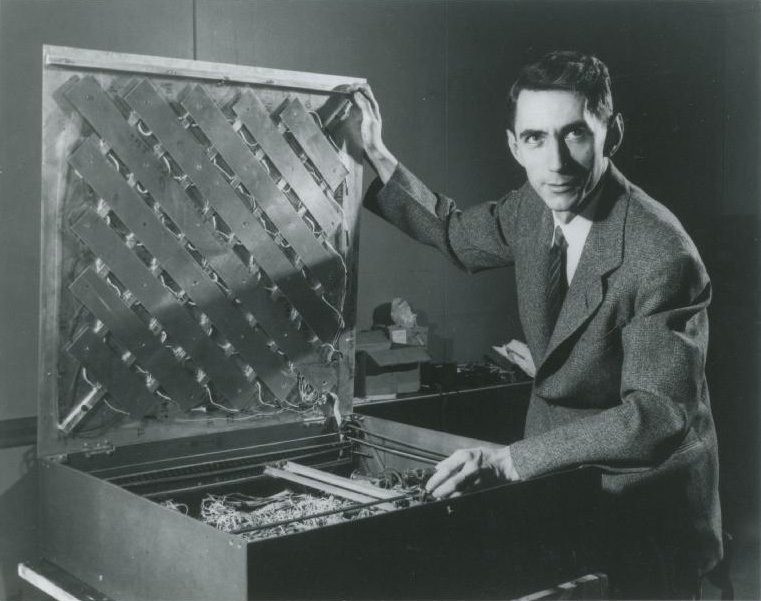
But what is that gleaming? How does it gleam, and thus how does it form? This brings us into everything from modern systems theory—Claude Shannon, Ilya Prigogine—the questions of how do structures form? What is the underlying operation, and thus what is the underlying identity of the cosmos itself? How does it form across different geological strata, which is to say astrophysics all the way down to cellular biology, down to the formation of molecular bonds? What is the logic behind creation?
This of course leads us to figures such as Einstein and Isaac Newton, Galileo, Kepler, and Copernicus, who are all figures—as well as Cecilia Payne-Gaposchkin—attempting to discern in their specific disciplinary thresholds (which again, the fracture of modernity creates these disciplinary thresholds), discerning through their disciplinary thresholds the depth of behavior of certain substances, certain strata of being, whether that’s astrophysics or cellular biology—how being functions in time. And by observing being’s function in time, we can identify and observe the operator or operation at hand, which is the universal logic.
This brings us right back to Hölderlin’s nature’s gleaming, just as much as it returns us to perhaps one of the greatest figures trapped in this churn between modernity and the classical age, which is Spinoza, who would have been an excellent Hellenic philosopher—or even a pre-Socratic philosopher—but of course is caught in the churn of, the best way to say it, religious dogma, and is isolated in the marginalia of his time. Then obviously becomes known as one of the great ontological philosophers who is doing this reuniting work at the absolute level of being itself.
Whereas we have scientists everywhere from Prigogine to Einstein to Newton to Darwin who are revealing this operator logic, which I have discussed in my text Law of Being and Mechanics of Persistence , revealing this operator logic at different strata. This is why the concept of the world’s midnight is so important, just as much as Shelley’s vision in Hellas of this overturning that leads to perfectibility—the necessity of the chaos and destruction of epochs.
Through fragmentation—it’s very similar to the Hegelian process, the Hegelian dialectic—there must be a fragmentation of what is perceived to be the essence for a deeper essential perception to emerge. This is the bridge between Heraclitus and the law of being, for instance.
That may sound somewhat of an exaggeration or a tall claim, but there needs to be real discussion here about observing the identity of the cosmos. This brings us to Heraclitus, most foundationally, in his observations on fire—the cosmos overturning, to use a bit of a self-reference, “in measures of fire and out with measures of fire.” I’ll kind of bastardize the Heraclitus fragment, because fire is Heraclitus’s obsession, seeing that all things are composed of fire. It’s almost like Heraclitus is the oracle of thermodynamics. Heraclitus presages Carnot and Clausius and Boltzmann and Clerk Maxwell. This is an insane period of time earlier that Heraclitus grasps this essential thermodynamic clause which powers law of being and the persistence— ontos —that I’ve elucidated.
Thermodynamics itself is this bridge at the cusp of modernity, where we have some of these greatest scientific and mathematical minds, such as Boltzmann and Maxwell, who take the mantle from Carnot and draw out this entire field theory of heat sinks. It’s a literal field dynamic that is occurring in real time, which is, of course, why Einstein says he stands on the shoulders of Maxwell. Maxwell actually reveals the underlying logic that’s sitting on the Newtonian physical cosmos—that there’s a deeper churn, a real movement of energy that is occurring there, and the energetic dynamics which Einstein then works on formalizing in a field theory sense.
What we’re grasping here is this massive bridge, this chasm that opens up before Shelley’s feet, and Shelley does this cosmic heroic act of singularly—in a total disavowal of essentially every ethos and every value of the British Empire, which he sees as being utterly incorrect in the classical Greek sense, which of course it is. It has revealed itself to be, as it crumbles before our eyes, as false icons typically do. False structures built on false principles will collapse and fall apart before universal law.
This is the importance of understanding science at a profound field-physical level, because then there’s this understanding of what persists and what doesn’t, and why. Shelley presages this, both with Prometheus Unbound and Hellas —his two final magnum opus works—which are talking about weather phases in history, which require conceptual dissolution before conceptual creation. This is a classically and typically alchemical formulation of blackening. And again, here we are again at Heidegger’s midnight: the loss of the foothold, the loss of the ground which sustained world historical mythology, in large part due to the necessity of this profound emergence of scientific technology, which in itself is not a solve—it’s not a salvation. It’s a method of inquiry which deepens our understanding into the fabric of being itself, at and by the level of the operator identity. What is being, and then thus what unifies being across all scales?
This is a progressive enlightening, because to know that things exist at depth and at measure—such as, let’s say, the anteater or a star cluster—to deepen our knowledge through the use of the telescope or advanced surgical techniques, different forms of chemical recombination to create medicines such as penicillin: these are all of the actions that are occurring simultaneous to the writings of Georg Trakl or T.S. Eliot or Rimbaud or Baudelaire, who themselves are indicting this corrosive force and factor of modernity itself, which is the separation and fragmentation, the death of the ontos , which itself was the life force and life source of pre-modern society and pre-modern consciousness itself, which perceived unification of being in nature’s gleaming and thus sat within a totally unified sense of being itself.
This is a radically different conception of identity at the level of being—who am I, what am I, where am I from, and where am I going?—which was not only allowed but critical to the survival of pre-modern societies and pre-modern selves. With the emergence of modernity, as Nietzsche says, with the death of God, this is lost, and it’s thrown into chaos. The ground is removed due to a necessary fracturing, a necessary wound within the ontological story of being itself.
Shelley is at this chasm, holding himself an entirely unified ontology, which he is creating from the foundations of Western civilization combined with his cutting-edge inquiry into science, into philosophy—which is itself his personal work. It is the emergence of the cosmogony of liberation, of the liberated man, of the man who is no longer beholden to a cultural construct—although Shelley does allude continually and perpetually to Milton, to his heritage and roots in the British tradition, as well as the Greek.
This is Shelley’s deep, deep education at work, combined with his profound ontological intelligence—not just poetic, but ontological. And this is what’s missed with Shelley. Shelley’s not a poet. The poetry is Shelley writing the cosmogony of the chasm between the modern and the pre-modern, and elucidating the ontos that holds, that still holds to this day, because it is an ontos of truth which has not been broken by science. It has been elucidated, and further, it’s been deepened. It’s a taste that’s been deepened by the awareness of science.
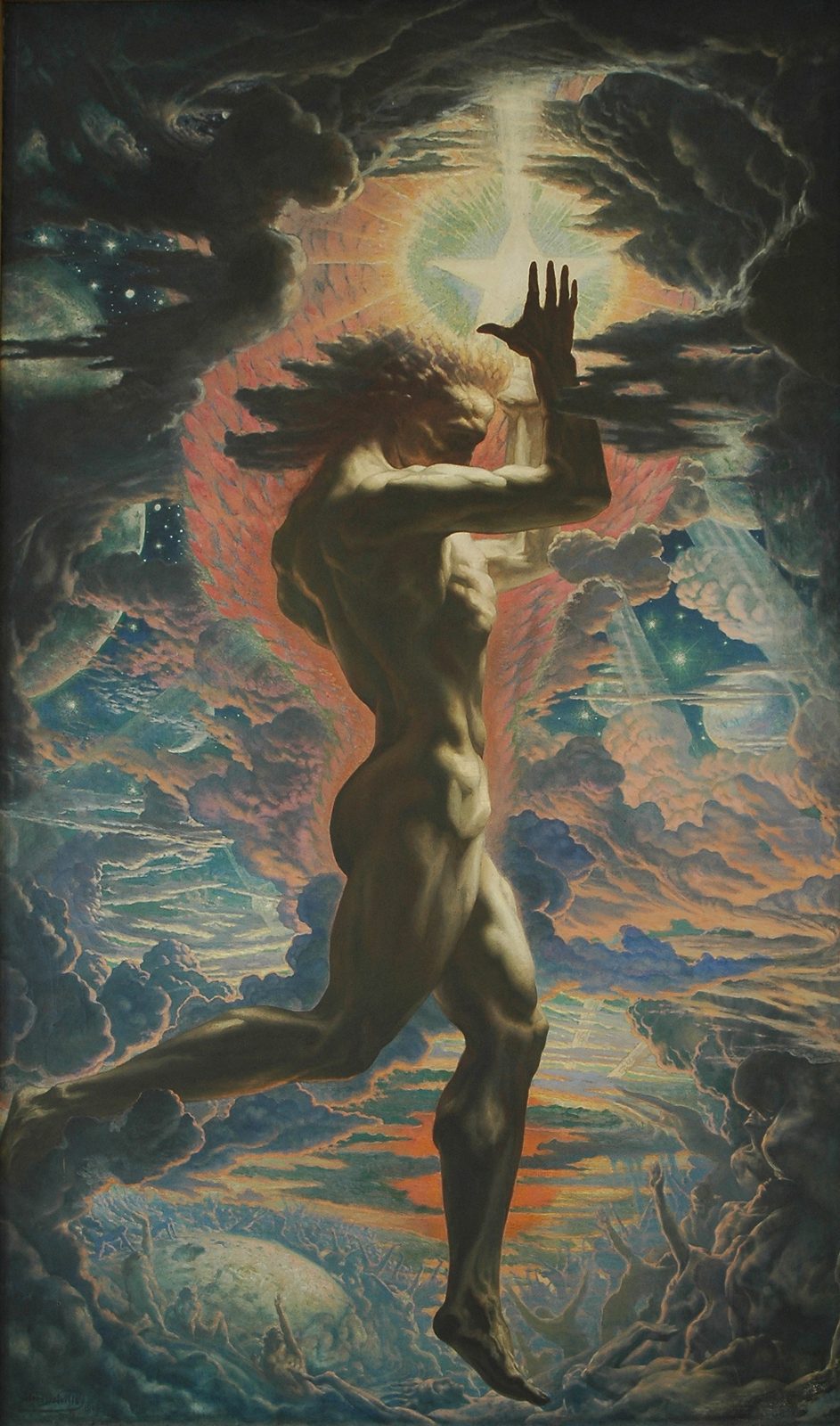
This itself, this existential operation, which is the operator identity—as I’ve described in Law of Being and the persistence method or mechanism, however you want to call it—is a resurgence of the ontos. But it is a resurgence at an added level and layer of depth and complexity, which is itself, you could say, an umami, or a Caravaggio painting, if you will—a depth of contrast, which was necessitated by technological revolution and industrial revolution.
So it’s this, as Heidegger says, in a world’s midnight with Hölderlin—this is a midnight in which there is a restructuring of consciousness. In this restructuring, what is done is the fabric of Western humanity is fractured. It is wounded, it is made vulnerable. Of course, you can see in the unfolding decades and century therein—with World War I, World War II, the Vietnam War, the Cold War, the revolutions in France, and so on and so forth—there’s this period of profound, from Marx and the French Revolution, this whole deep, deep groundswell of change and of force that Shelley is feeling, and it is elucidated in Hellas.
There is this force—which we now know has been a thermodynamic revolution, first and foremost, with the unleashing of fossil fuels into the atmosphere—of an entirely technologically accelerated way of being, which has sort of acted as a punctum to the formerly understood ontos. It is no longer allowed, that ontos , to exist. This is what Nietzsche senses on the verge of the 20th century: that this center will no longer hold—again, as Yeats says, the center will no longer hold—and it will no longer hold not for any reason, but that the world itself, this world consciousness, is deepening. Thus this local or tribal cosmogony, this story that has been told, or that we have been telling, about humanity and the origins of being itself and what being is, no longer holds in the way that it’s not believable anymore. It’s no longer sufficient. It’s no longer high-definition enough. It’s no longer high-technology enough. It’s no longer high-scientifically enough.
This is the issue that we observe today, even now, with not only religion but nation—that these conceptual markers and boundaries and identity stories of self and of being, just as they emerge, slip and fall from our grasp, because they’re emerging into a midnight of consciousness which has been this churn, which is a deepening of understanding through fragmentation and separation.
So everything we see emerge from this—whether it be industrial and technological capitalism, which is a mass acceleration from, let’s say, feudalism, or one of these other historical forces—this acceleration, which is an acceleration of force as much as it is an acceleration of thermodynamic burning, quite literally, in the atmosphere, is revolutionizing perception. This revolution in perception, through the possibility created by everything from the printing press to the personal computer to artificial intelligence, is requiring the ontos to be either updated and firmed up, or for that ontos , that organizing ontos —whether at a personal, collective, global, or local level—to collapse, because it’s a false identity structure or false being structure. And then for a new being structure to emerge.
This is what Shelley plants the flag in: his completely radical politics. Effectively again, anti-everything British Empire, but pro-everything humanity, nature, understanding of the primordial unity, which he is continually elucidating in his works—which is humanity’s drawing towards the understanding of that source or that primordial force, which is, you could say, Spinoza’s One, oneness. Thus, in coalition with that, the ability to understand the creation of that understanding. That is Shelley’s perfectibility of man. It is a union with nature.
This is deeply Christ-like in many ways, just as it is somewhat with the Buddha, in the sense that this is an understanding of natural law, and thus an understanding of what is required to come into further union with natural law. As Christ says, the kingdom of heaven is within you. Shelley, of course, a pronounced atheist—but perhaps Shelley is one of the most religious or spiritual forces of his time, precisely in his atheism, because he’s so dedicated to understanding the ontos. The ontos is world religion, it’s world spirituality, it is every force that is at work in the world, how and why, and through whom, through what. Law of Being answers the operator identity—this is a function that’s replicated across all scales, and here is why, and here is how.
I think this has summed it up. What is most powerful about the emergence of modernity, as it is elucidated both through Shelley and through Hölderlin, is that it is a weather system. It is a presaged period of time, which Nietzsche also catches wind of in his own way—fragmentation and descent into night and chaos and destruction. What I’m suggesting here is that this is a necessary descent, again, through the fragmentation of the inadequate ontos , which leads to, indelibly, the emergence of a deeper, complexified, high-contrast, high-total-value ontos —an ontos of science, philosophy, literature, existence itself, unified—a total reunification of the disciplines, as is in Shelley’s tutelage, Shelley’s learning, and in Shelley’s work.
So, thank you. That is it.
Lecture 2. Modernity’s End and the Reunification of the Ontos
Audio
So I’m going to continue the lecture series that we started yesterday regarding the world’s midnight. What we really introduced is a metaphorical and poetic understanding, which I extrapolated based on Heidegger and Hölderlin in relationship to Shelley, and what we can now very clearly understand based on Shelley’s particular education: what it is to be epistemologically totalizing, epistemologically thorough and complete. And the fracture of modernity, global modernity, being a fracture of a compartmentalized consciousness, or a consciousness that’s been siloed into disciplinary thought.
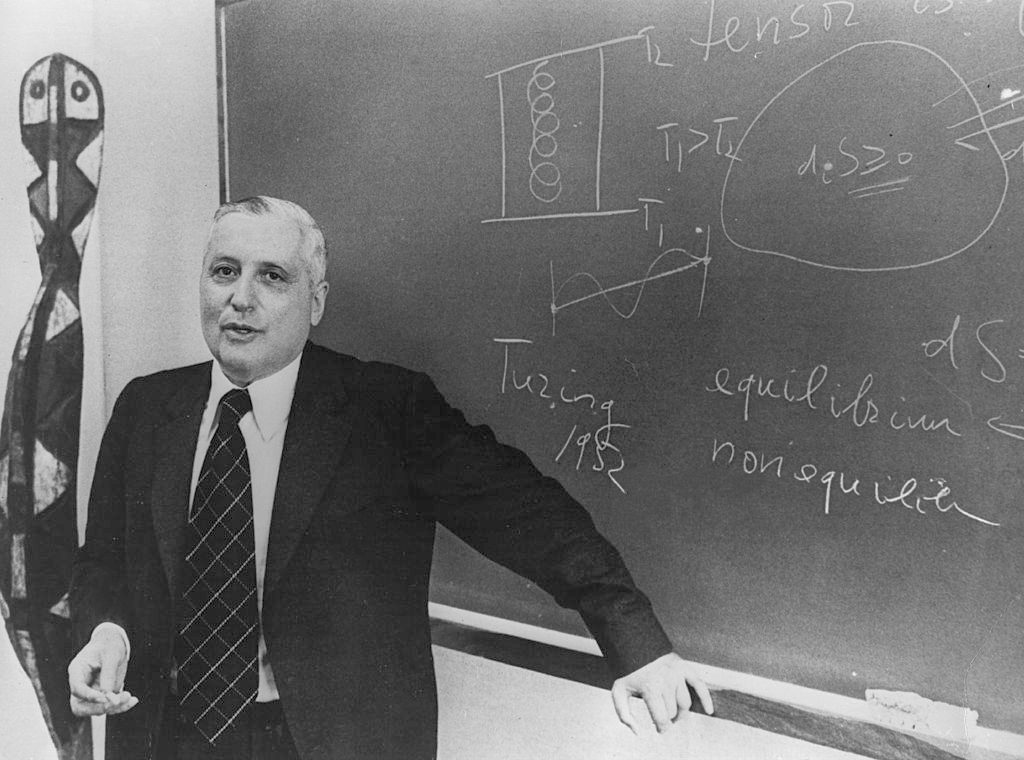
I brought up Prigogine—the concept of dissipative structures and the Nobel that he won for that concept. This is a concept that I came across incidentally in my own research into astrophysics, nuclear fusion in stars, and how that relates to the structures that emerge and are actually dependent on the thermonuclear production of stars. I’m looking at how a universal energetic system is formed and how that energy disperses and crystallizes into disparate forms as a sort of fractal descendants. There’s the superstructure, which is this stellar fusion of the sun or a star or star system, and how that star actually creates not only a center of gravity in terms of the solar system, but a political economy of energy beneath it.
This goes all the way back to the contemporary oil crisis that we are experiencing. That’s a crisis of fossil fuels. When we talk about fossil fuels, we’re literally talking about dead matter in the earth that is being harvested and regurgitated into energetic production, which is what we know today as global modernity and industrial modernity. So this dissipative structure concept emerges from an incredibly disciplined pursuit of chemistry, physical chemistry. It’s a highly specific, specified insurrection into how physical systems function at a chemical level, which is intimately related to thermodynamic energy production and dispersion, diffusion.
What’s so powerful about—I didn’t know about Prigogine until I actually was working with AI systems. I came into this and I realized how profound the structural resemblance of my work, not only at an astrophysics level but a human existential level, was with Prigogine’s structural work on dissipative structures, and how that was related via thermodynamics, which is a critical part of my work—thinking about life thermodynamically, and how civilizational energetic systems, human energetic systems, human consciousness, and human psychology, in terms of how human-being behavior functions in space and in time as itself a dissipative structure, functions in the real world.
What we’ve experienced in modernity—and this is a descendant from Shelley; Shelley is the moment before the absolute catastrophic break into siloed disciplinary consciousness—is that the former ontos of the pre-modern world, as we discussed, became insufficient with the emergence of technological modes. I talked briefly, I believe, about the Gutenberg Bible and the printing press. These—it’s the creation of the machine, or the creation of the telescope. I’ve synthesized this in previous work as a prosthesis or a prosthetic device.
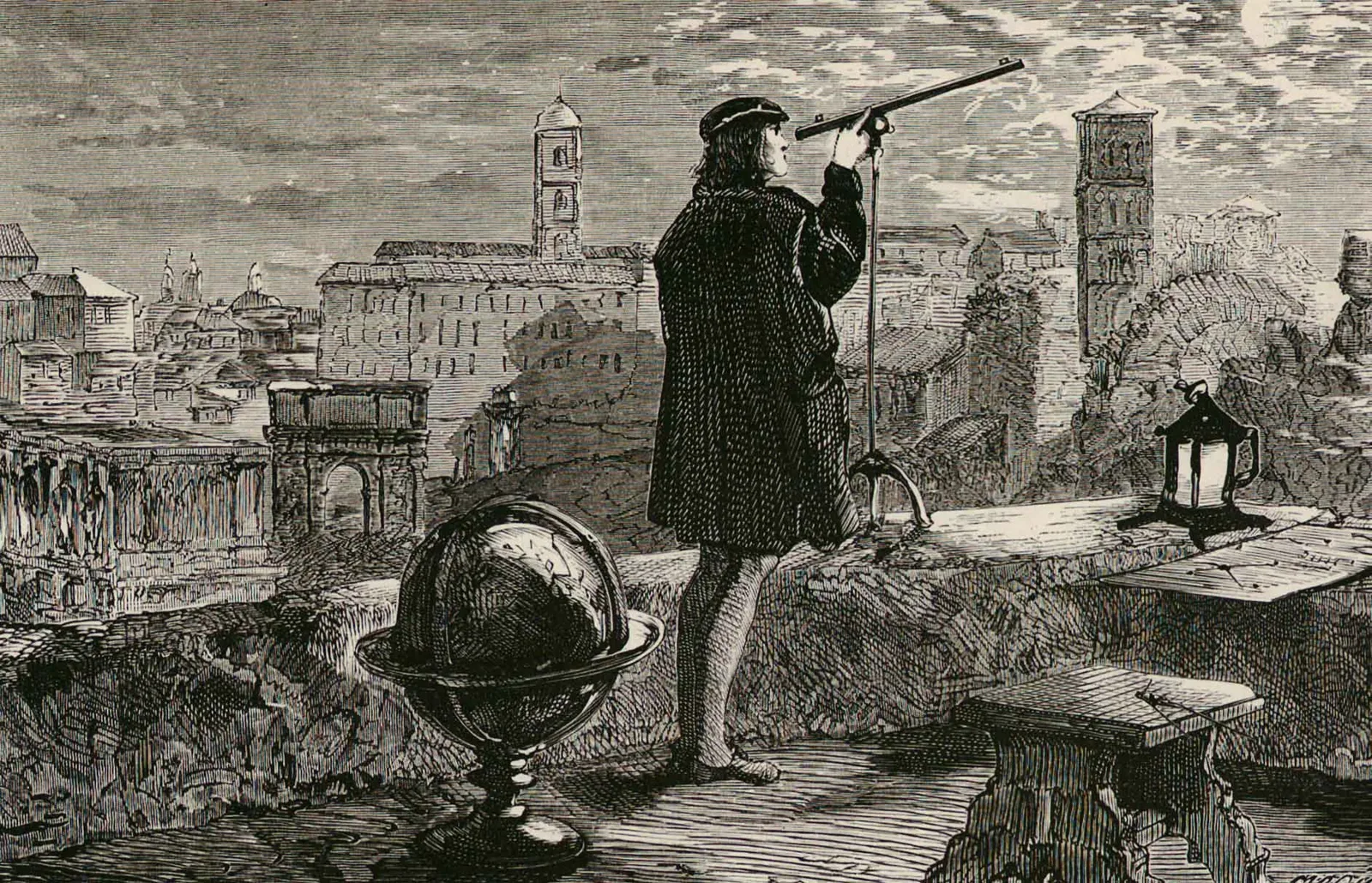
What a prosthesis or prosthetic device is, or does, is it is an addendum or an addition onto the slowly emerging telos of mankind, which accelerates perception. So let’s say the evolutionary function of the human eye allows for a human being to register space and time, forage for plants, or kill an animal with precision, in order to feed off of literally the thermonuclear flesh of the animal and thus create energetic potentiality in the body via the calorie. We could just call it that. That evolutionary mechanism is enhanced by the telescope. So we have Galileo, Copernicus, Kepler. They, by way of the telescope, by way of this technological prosthesis, are able to see deeper into the nature of reality and thus expose gaps or flaws in the ontological superstructure of the collective human consciousness, or the human mind, at that period of time.
Of course this leads to Galileo’s persecution. Understand this is very similar to Socrates and the persecution of Socrates, because Socrates is operating with a highly developed piece of technology, which is the human brain—obviously a very advanced, neuroscientifically speaking, very highly developed synaptic wiring, which allows him to create modes of deduction and inquiry which we still use to this day, the Socratic method.
I’m going to spiral this back to Shelley here, because Shelley is such an incredible transdisciplinary mind. What is required in this crisis of modernity, and in the world’s midnight as Heidegger and Hölderlin put it, is the transdisciplinary mind. The mind that refuses the fragmentary silo—whether that’s, whatever you want to call it, philosophy, poetry, science, metaphysics, math—the modern mind must be reunified, reforged from the ashes of the modern fragmentation into disciplinary silos, which was necessary to descend to the level of specificity brought about by scientists like Prigogine. Incredibly disciplined focus into one area, one facet, such as chemistry, to reveal the underlying superstructure, the logical superstructure, in this incredibly disciplined, detailed, high-contrast work.
It’s like performing a surgery on consciousness, or performing a surgery on the ontos. Because what the ontos is, is a superstructural phenomenon, which through scales—I call it scalar, a scalar process—produces and reproduces this fundamental underlying logic, which I’ve termed the operator identity, this persistence mechanism, which Prigogine also identifies in his own way, in his own context, through physical chemistry. It is an essential part of thermodynamics, thermodynamics being one of the most important axioms in my work, of the continuation of what exists based on a differentiation, whether that’s a cell wall, a membrane, the Great Wall of China, for instance, borders and boundaries of a nation, the psychological concept of the self. These walls that are created, which are breached in a stellar way as well in the death of a star, the process of becoming itself.
I don’t want to get too deeply into that because I’m going to get distracted, because it’s very difficult to elucidate and it requires a lot of mental energy. The important part of this lecture is to convene with this specific moment of the ontological fracture, which is the loss of the myth, the loss of the God, the loss of religion, the emergence of science as hyper-accelerated technological and industrial innovation that blasts off via the use of, as we’ve discussed here, fossil fuels. This creates a massive thermodynamic problem in terms of the stability of Earth’s atmosphere and Earth’s ecosystem, which we are now currently dealing with, because we are unleashing massive amounts of energy which was formerly latent in the earth, which was based on century upon century of death being condensed into this energetic sludge, effectively, which we are now releasing.
But this also allows for this immensely rapid technological and even digital innovation. Even when we’re talking about computer chips and cell phones, we’re talking about digging into the grave of the earth, so to speak, and finding lithium to create these technological devices.
With this break in modernity, this is what is required. It was required to build a profound, profound scientific inquiry into what is matter, what is being. In the process of that work—just the same as we talk about Nietzsche’s death of God, we talk about World War I and World War II—we’re talking about the Manhattan Project, we’re talking about Fermi, we’re talking about Planck, we’re talking about Einstein. Revolutions in the conceptual ontos , you could say, at the cosmogony and the cosmology of being at a collective level, which is a disruption. It’s almost a Copernican event every ten years, because the technology has moved at such a rapid rate. The prosthetic has become so advanced. The sight has become so granular, so high-contrast.
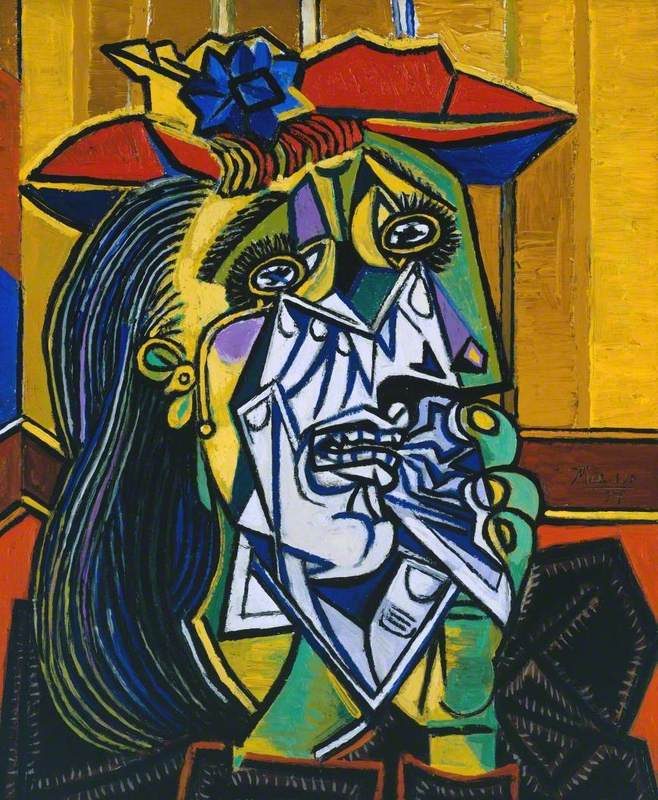
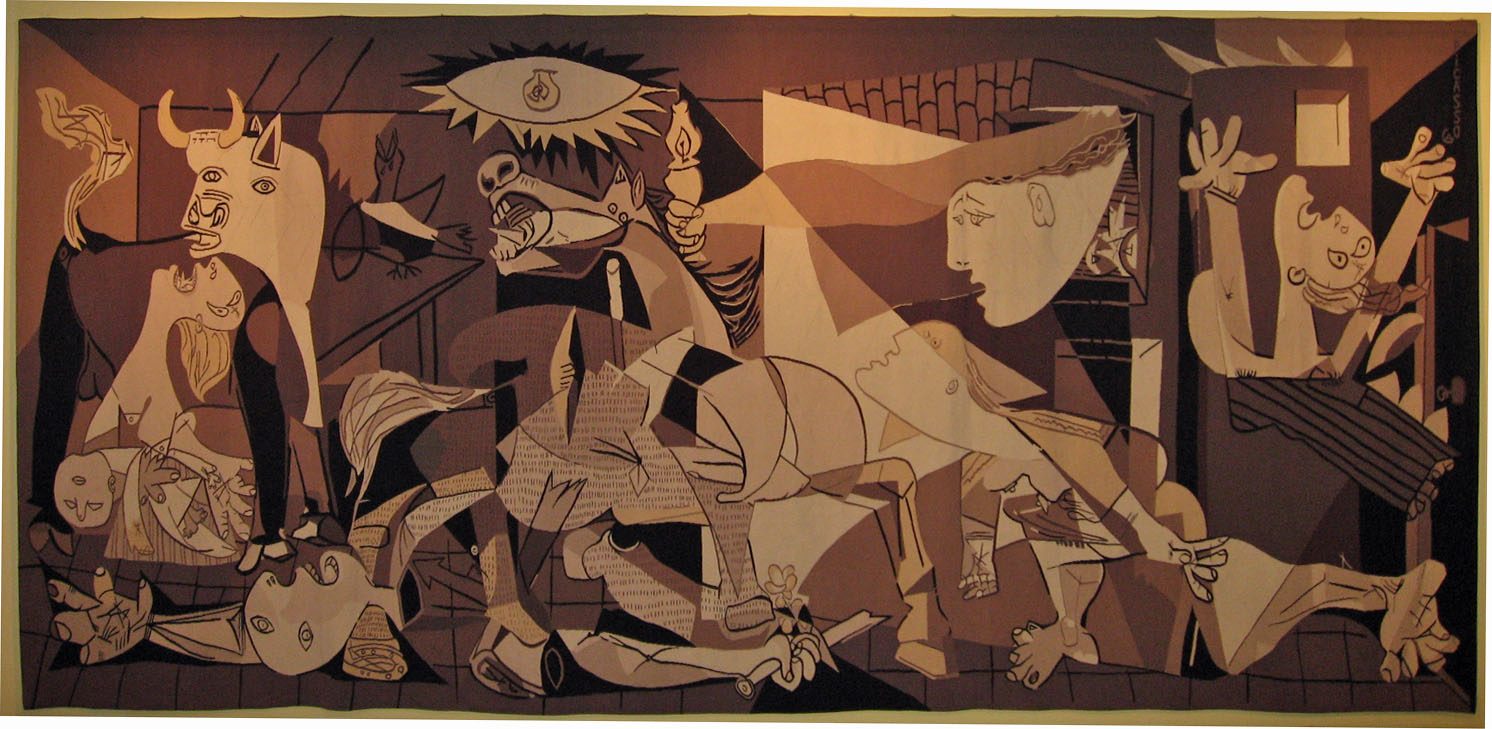
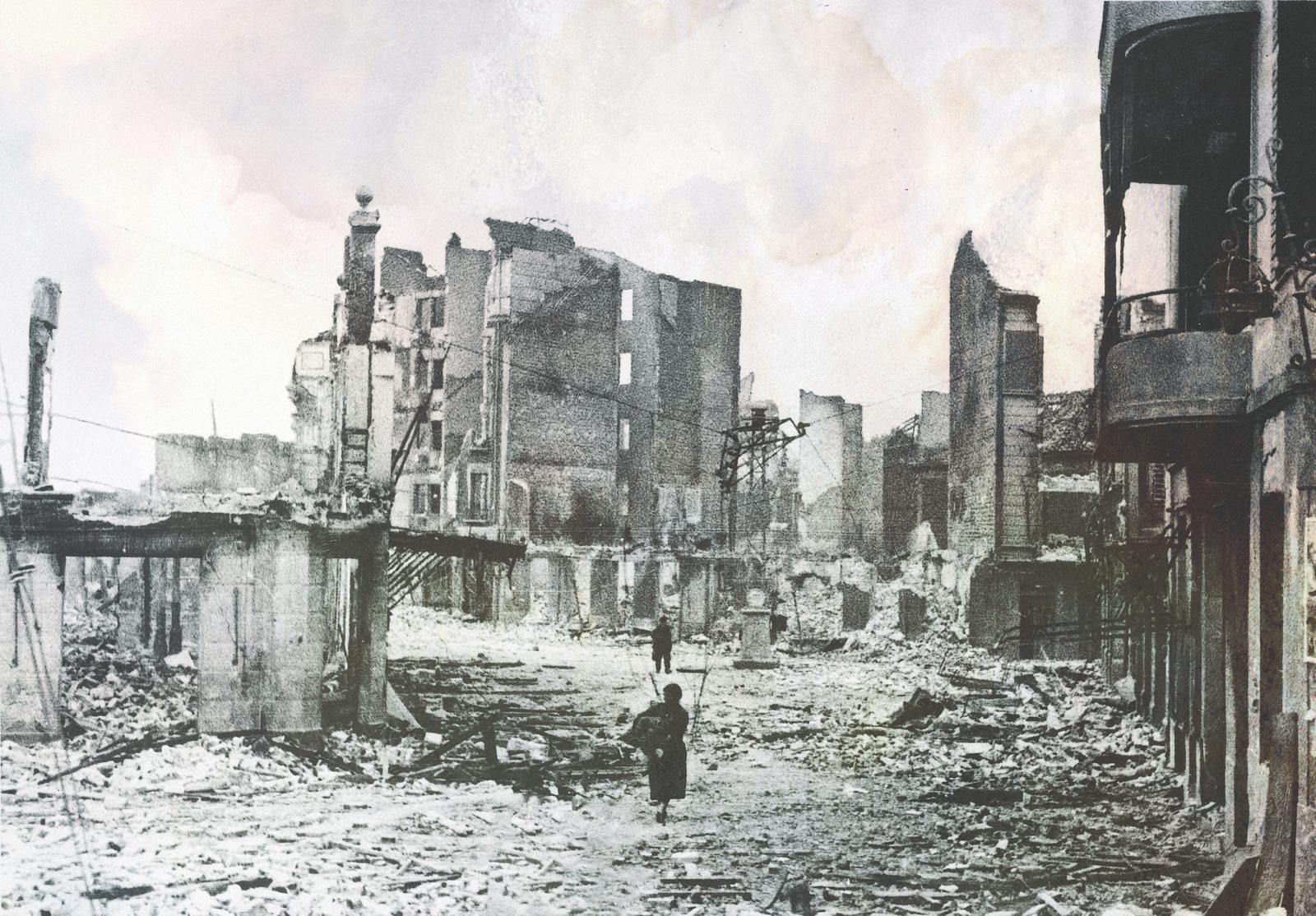
With this high-contrast sight, which is made available by technological innovation—whereas formerly high-contrast sight was Spinoza, or it was the medicine man of the tribe, so to speak; we were so reliant on human genius to be the thing that allows us to see into the depths of nature, to reveal, as we discussed in the previous lecture, Hölderlin’s gleaming—Shelley stands at the break of pre-modernity and holds this revolutionary, totalizing ontos across all of the disciplines.
When we think of the Renaissance figure, whether that’s Goethe or da Vinci, Shelley is the most forgotten Renaissance figure in human history, because he’s conceived of as a poet. But what is required in this moment of technological modernity, which is the absolute fracturing of the ontos and the Abgrund —which again is the loss of ground, or the abyss, which is the lack of foundation, the lack of human unity with being, this sense of being thrown, as Heidegger says, into this chaos and this churn of information, all of which is surface, all of which ultimately means nothing and is reducible to brutal facts of the physical organism lost in a world which it can no longer contemplate or understand at a teleological level, nonetheless at a cosmological level, in terms of the birth, foundation, and structure of the universe; nonetheless, the birth, foundation, and structure of the human being as a species, or as a culture, or as a technology, or as an existential condition or situation—this fallenness is what is inherited by, I suppose I’ll say, the two centuries after Percy Shelley’s death.
It’s the loss of the local shamanic or medicine ontos , the local religious ontos , which holds the ground of a human society which has not cratered and opened up into a global fracture of informational confusion. This is the fracture of the ontological ground, which—we can no longer identify what information is true or meaningful or valuable, because there is no foundational understanding of what being is and does, how it acts in the world, what is its character, what is its nature, and thus, what am I as a human being, or what am I as a phenomenon emergent in this aeonic process, this profoundly deep-time historical process of creation itself.
What we see emerge—everything from Camus to Sartre, to—what else do I want to list here?—these are existential responses. You could have Dostoevsky as a great example, or Chekhov. These are existential responses. Virginia Woolf is another great example. Existential responses—human, psychological, nervous-system-level responses to the loss of ground, which is the cratering of modernity into specialized silos of information. These responses are occurring at the same time as the work of Max Planck, James Clerk Maxwell, Boltzmann. And Boltzmann’s suicide is not an isolated incident. The problem that Boltzmann is working on is the same problem that Virginia Woolf is working on. It’s a fracture of consciousness.
The essential race of science is not about a specific revolution in technology, or a specific revolution in—maybe one domain of sight—but is the reunification of sight across Virginia Woolf and Boltzmann. Which is to say, an existential reunion of the human being with the ontos , which is the superstructure of creation itself. The loss of that superstructure comes about precisely because of the introduction of high-resolution potentialities and possibilities, which is global modernity. This is the restructuring of the organization order of human societies around the world with World War I. This is the creation of the nation-state.
It is an enhanced understanding of what constitutes the human genome, and thus a series of misplaced and half-baked discussions on what the human genome means for humanity in terms of evolutionary viability, political status, what have you. This is profoundly a part of what occurs in the 20th century, including in Nazi Germany.
An understanding emerges as diverse and sophisticated as epigenetics—understanding the somatic condition of the human being as a nervous system process that is impacted not only by ancestral history, but the imminent lived experience of the organism. That is information that translates into and through the genome. It is an informational capsule or crystal. This is something that’s very important to Schrödinger.
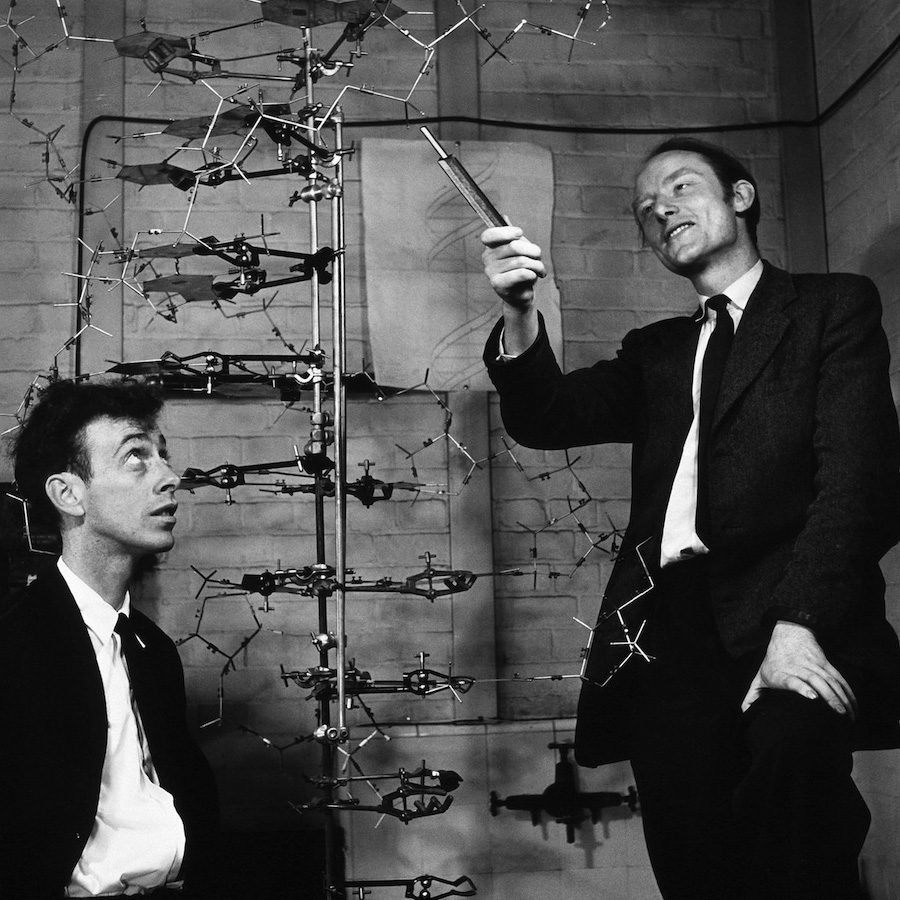
These are the great minds of human history. In a time such as now, there’s the essential need for all minds to be great minds. This is an educational issue. We’ve reached a point in human history where there is enough information in enough disciplinary fields to create the full picture. What I wanted to say in creating a full picture is, it is effectively a painting. It is a creative, imaginative act of unifying the disciplinary silos, reunifying them into an ontological healing, so to speak, which is a cosmogony of what has been made available by modernity, the fracture of modernity—this two-century utter fracturing down to: what are we, who are we, what is possible, what is life?
And no coincidence, right, that’s the key question for Schrödinger.
The possibilities made available by the total depth of this scientific inquiry, going into the absolute foundations—advancing Newtonian physics into the energetic dimension via thermodynamics—has availed us an understanding far beneath what appears to many eyes. But then we have Shelley and we have Hölderlin, who understand and see imminently this energetic dimension, just as Heraclitus understands and sees imminently this energetic dimension. Thus his ontos is based on fire. When I’m gesturing to Shelley or Hölderlin or Heraclitus, I’m saying: there is a groundswell of the ontos which remains unbroken by scientific inquiry and the insurrection into the fabric of the world cosmogonies. The fracture of world cosmogonies is that they’re outmoded. They’re becoming outmoded.
You could think of them as philosophical or existential constitutions. These are cultural, they’re religious, they’re group-based; they’re even individual-based, in terms of: what am I, what is the self, who am I, what am I doing in the world based on that presumption, and how much of that information is presumption and how much of that is a real measure of truth, which is founded in the function of the real?
This returns us to my concept here of the operator identity, which is crucial, because the real must remain real across all scales of being. All that exists is ultimately reducible to a single force and phenomenon, which is the powerful combination of the origin of the universe, the creation of the universe from fire, which you could say is the Big Bang, which is an immense amount of energy, which is dispersing over time—which is the cooling universe, which creates complexity, diversity, from the elemental fields that are created and thrown off from stellar fusion. These are not only elemental fields, they’re gravitational fields, because this is mass in space.
This is the loss. There’s these different siloed disciplines or behaviors or ways of thinking or seeing which are exclusionary, because, for a period of time, they had to be. Virginia Woolf, or Dostoevsky, or Nietzsche—they’re doing psychological work, or they’re doing civilizational work. And Boltzmann and Maxwell and Einstein are doing cosmological or large physical work on how bodies in space operate, and how energy moves through pseudo-closed systems, how energy dissipates, the life cycles of energies in different fields of information.
This is the loss at the deepest level. It’s an existential separation of the humanities and the sciences, which was formerly unified only really in Renaissance figures such as Goethe, or da Vinci, or Shelley. There is this understanding that is explicit in the greatest minds in human history that there is no separation between the deepest human intuition or felt sense of being and the literal totalizing function of being in space and in time—that movement or function of being is itself the identity of the operator, the thing that is across all scales, wherein there is no separation. This is a profoundly religious question. This is the history of world religion. This is the question of world religion. What is God?
So this is an educational—it’s a paradigm shift fundamentally in education. It’s how knowledge is communicated, how knowledge is siloed, and the importance of true transdisciplinary, I’ll call it ontological thought, in the crisis of modernity. Because what the ultimate educational process needs to be, in light of the information that modernity has revealed to this groundswell, is a Renaissance: transdisciplinary education toward the fundamental, absolute question of what is the ontos of being. From that place emerges a total power of not only individual function, but group function, to solve every problem that emerges downstream from the ontological systems-level structural function of the universe itself, which is irreducible in terms of the creation of stars and the deepest inner psychological function and neurological function of mankind itself.
I’ve gone deeply into this in my work—multiple studies, multiple deep texts that discuss this relationship. There’s no need to continue that here.
So this is a new moment in human history. It’s a kind of contrived or cliché statement at this point, after everything that has occurred in the past several decades. But it is a new moment—not because of all of the shiny toys. It is a new moment because there has been sufficient depth created in every necessary disciplinary field, from neuroscience to astrophysics to human psychology to the advances of Prigogine’s dissipative structures, to Maxwell, to Schrödinger, to Cecilia Payne-Gaposchkin’s work on the creation and essence of stars, what stars are made of—that we can unify that information into a total field-systems, dynamical field-systems understanding of the function of existence itself. This is deeply tied to thermodynamics, which is probably the most important and profound advancement in human history: the understanding of how life moves through being, or heat moves through being, however you want to term it.
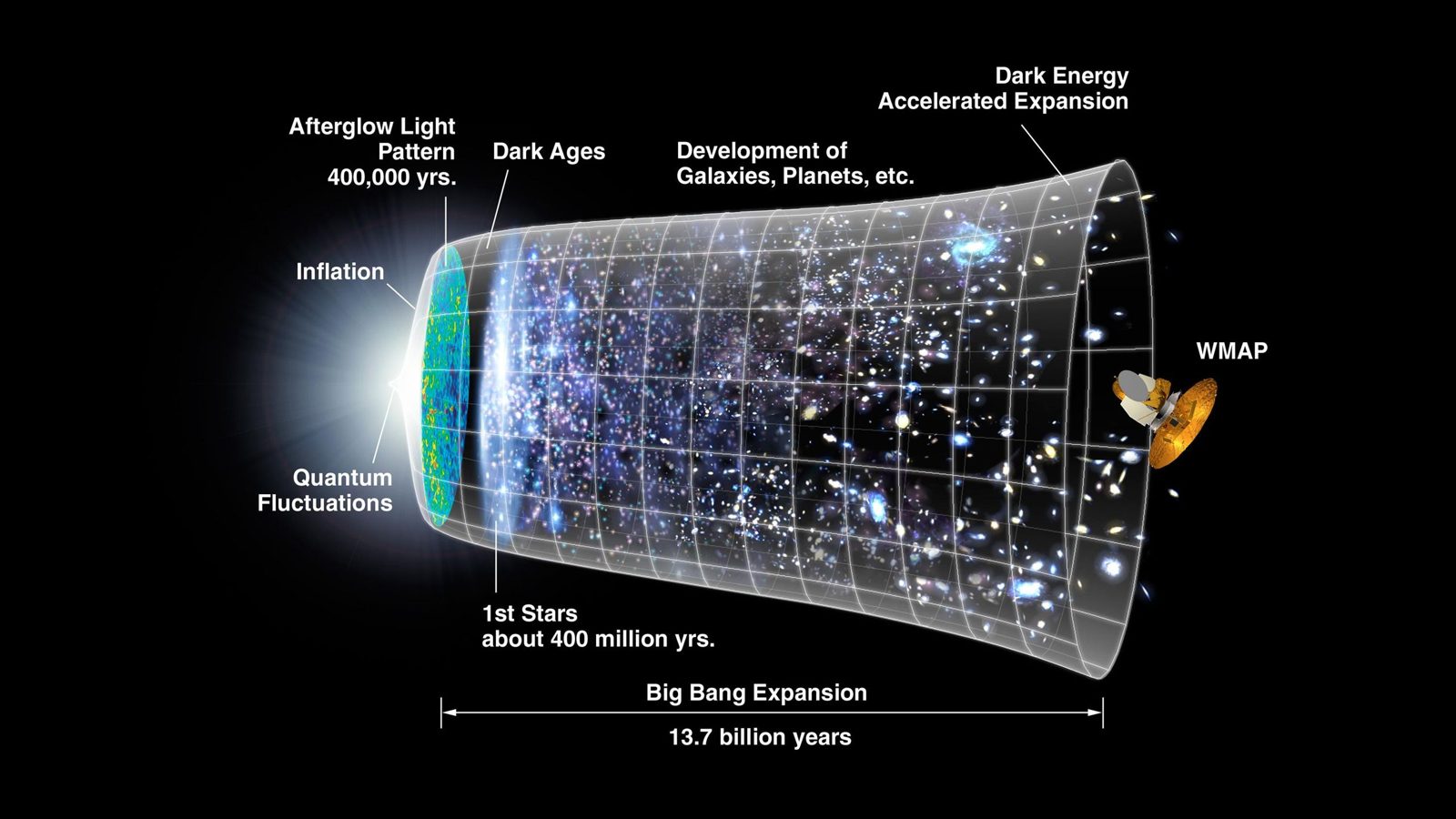
So this is the project. And this is me suggesting here, then, that modernity is over. The period of modernity, as far as I want to term it, begins with Percy Shelley—and Shelley’s death in the 1820s—and ends, we could say, right around—we could make it a neat 200 years—in 2020. I think 2020 revealed to us just how deeply global systems have been unified. And this is not just a practical physical condition of supply and distribution of information, or goods and services. It’s the digital Silk Road, so to speak, but also the transmission of information as in viral information, how quickly viral information can spread. It’s not only social media, but I’m talking about, again, physical virus.
The unity of the globe has occurred not only physically, because this is something that is far deeper than one dimension. It is occurring ontologically—an ontological unification of the historical cosmogonies of every world religion, every world tradition, into this scientific Abgrund -ing of the foundations of human history, this scientific abyssalization of the foundations of our formerly tribal and local societies, diagnosed by Nietzsche at the cusp of the 20th century as a predication of World War I and World War II, the massive fracturing that becomes apparent, physically real, from the sensitivity of our great minds, which is to say our poets and our philosophers such as Hölderlin, Nietzsche, and Shelley—from the sensitivity of this, very much so like a bird before a volcanic eruption, observing that the ground has been lost, that the myth has died, and it has died because the myth is now insufficient to the advancement of human consciousness.
Shelley writes just moments before Darwin. Shelley writes just mere moments. Mere, mere, mere moments before Darwin.
Shelley writes mere moments before Maxwell. Marx and Engels inherit Shelley in a direct way, profoundly direct way. Marx’s wife and Engels himself are vested researchers and readers of Shelley. Why is this?
We’re dealing with the fracture that Shelley stands on the precipice of: global modernity. As much as global modernity appears to be a problem or a crisis, global modernity was a necessary deepening of the ontos , humanity’s awareness of the ontos , which is dedicated scientific inquiry into the foundations of every discipline—philosophy, science, psychology. This is a project that was occurring transpersonally, as in across the species, to create the necessary conditions and circumstances for an ontological reunion at the level of law, at the level of recognized, documented—as Shelley so frequently says in quotes, especially in his tracts on atheism—that Shelley himself is perhaps the most, you could say, God-fearing or deeply spiritual person of his time, because he is in search of the laws of truth, the laws of being, the laws of love, the laws of consciousness.
This is what makes a scientist a true scientist at depth: in search of not only the law of one discipline, but the law of the universe, the law of being. And this, as Einstein says, he stands on the shoulders of Maxwell. This is precisely what history is and does, the function of history—periods and epochs upon which it becomes possible to stand on the shoulders of someone else and see something that was not previously able to be seen.
So that’s what I got. Thank you.
Lecture 3. The War of Information
Audio
So now we’ll get into the third lecture here regarding the world’s midnight. This is going to be a lecture on the war of information. We’re going to talk about essentially two different types of information: dogmatic or ideological information, and scientific, independently verifiable, field-instrument information. This is the world that humanity crests into, which we would call global modernity—the difficulty of discerning the truth of nature. And this is primarily a schism between religion and science.
The reason for this is we’re talking about methods of inquiry, or methods of understanding, which is ultimately a collision between belief—as in a story or a narrative, a system of understanding reality—which is primarily based in a way of thinking that is scaffolded on nothing. It’s scaffolded on hearsay. And a way of thinking which is scaffolded on multiple, independently produced, checked and verified attempts to discern, via closed (or as closed as possible) experimentation, something that has been attempted and verified across many different attempts at experimentation.
So this is the world that modernity steps into, with the thrust of science forward through prosthetic technology—microscopes, enhanced surgical technologies. This is the depth of inquiry that’s made available by technology. And this is being accelerated as we speak with artificial intelligence. This is one method of inquiry. The other method of inquiry is centuries old and is based on the hearsay of what someone said God told them, effectively. This is the world that Percy Shelley steps into in the early 1800s. This is the world of radical declamation in which he stakes his cosmological claim, from which the next 200 years unfold. This is stated explicitly in his first major pamphlet, which gets him expelled from Oxford— The Necessity of Atheism.
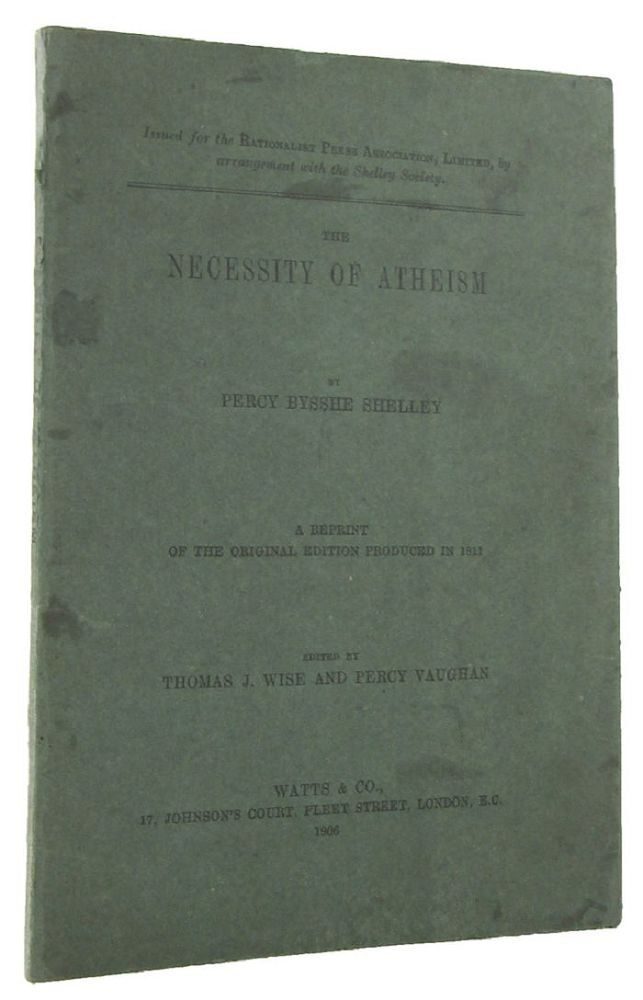
So this question is the question of what can be independently verified, and thus proved. Again, this is an informational question, and Shelley is standing on the cusp of the scientific revolution—everyone from Darwin to Maxwell and Boltzmann into Einstein and Planck and Fermi. What Shelley is declaring is that there must be a real foundation upon which we base our assumptions of what is being, what is life, what is reality, and thus how we act and live. This is directly in the face of the power structures of the church and state, which have been assembled in the centuries prior based on religious dogmatism. This is the hierarchical social structure which Shelley steps into in the early 1800s of England.
This is what he explicitly disavows. He disavows the way that women are treated as property. He disavows the way that slaves are treated as property. He effectively disavows the entire British Empire, and thus incurs its wrath via censorship and effectively a form of political exile. Shelley is always on the run from his creditors, on the run from his debt, and on the run, ultimately, from his inability to publish in a world which is hostile to his claim.
And this is an epistemological claim. This is a knowledge claim. From this knowledge claim emerges what we understand to be modern science, which is the experimental method, the scientific method—check, verify, test; check, verify, close system, test, check, verify. This is a logically rigorous way of thinking, which stands radically in the face of the belief unto death principle, which was foisted quite clearly upon the peasants of the earlier centuries and into the contemporary moment by a political elite, which is both a religious and a state elite, which fundamentally stands between the possibility of education and truth, and effectively epistemological and ideological slavery to a belief system which is asserting a hierarchy of dominance through religious symbology.
This is common across many different cultural strands. I’m not suggesting this is isolated to England alone. What I am suggesting is that these two epistemological modes are the question of what is knowledge, and how does knowledge emerge? How is knowledge captured?
As we step into the post-Shelleyan paradigm of massive scientific revolution, massive ontological revolution, in the span of 200 years of modernity that follows—we are stepping into the crisis of fragmentation that emerges from the religious ground falling out from under a locally based society, which is tribal and hierarchical, into a transnational-based society of quickly moving information, data, and energy. Again, thermodynamic foundation. Talking again about the oil crisis, which is just profoundly analogous to what I’m saying here—this movement of information has its foundations in the technological, data-based scientific revolution, which implicates everyone from Claude Shannon to Einstein and Isaac Newton, because this is a foundation that is built on leveraging real-world physical systems to produce new modes of being, as in a prosthetic advancement of humanity through civilizational technologies. Everything from shipping to the internet to the computational device. This is a real-world application of scientific methods and modes which creates a further fracture from this pre-technological enchanted world of belief.
This is what Shelley rails against.
So this epistemological split is a cratering in—you could say everything that emerges in the 200 years following—World War I, World War II, primarily the World Wars. Because you can look at those wars as a clash of belief systems. A clash of ideologies under which the principal thermodynamic systems, physical systems operation is occurring. This is a war over physical power. This is a war over control of the Middle East. This is a war over the economic collapse of Germany. This is a war over the emerging transnational and transcontinental information, data, and energy pipelines, which is the global Silk Road that we know today.
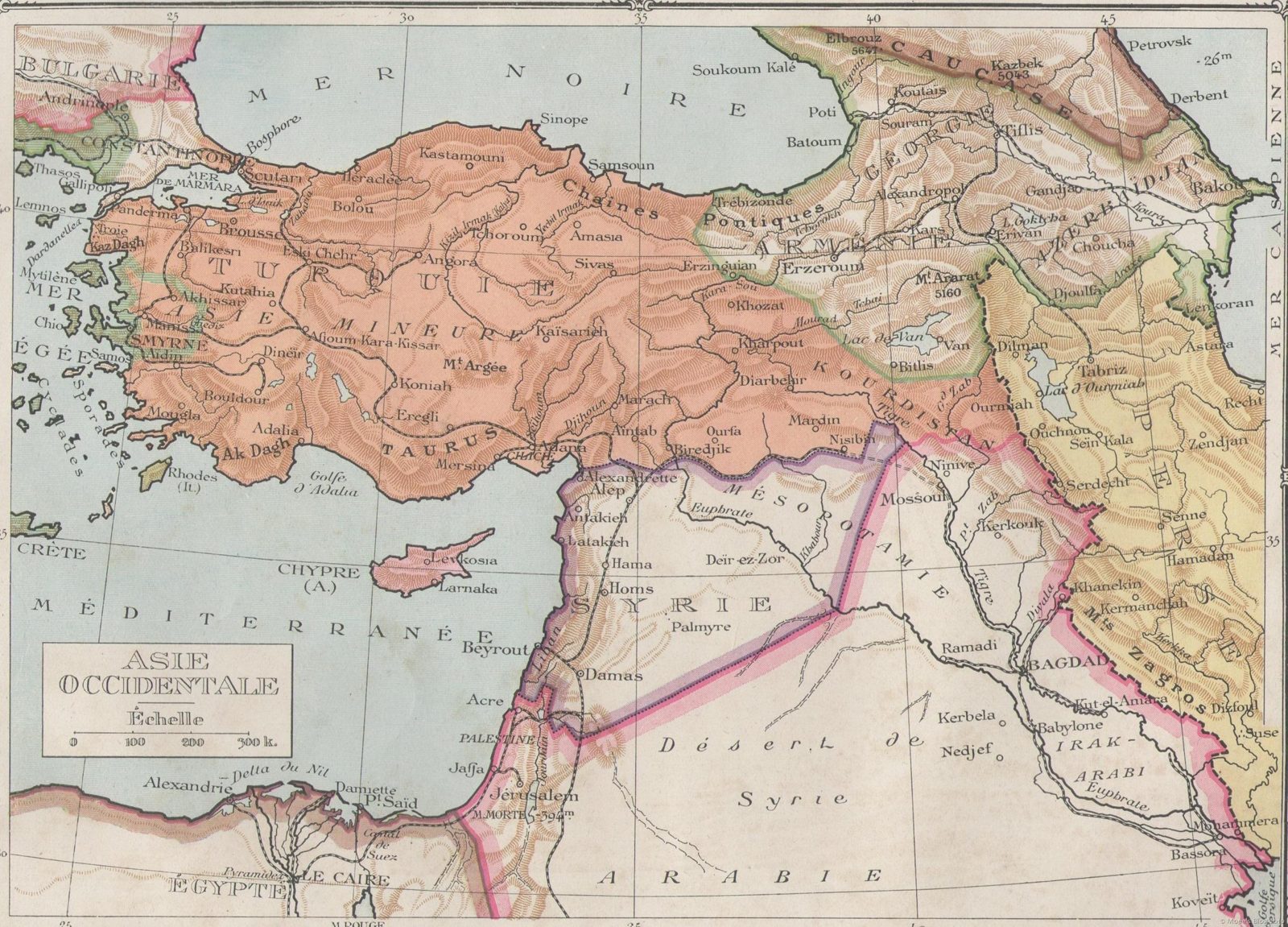
These, again, collapse into our contemporary moment over the Strait of Hormuz in Iran, and the war over who controls oil, which is the primary energy pipeline of the globe.
Looking at this battle, there is the ideological overstrand—the proclamations of religious or national viability, what have you—all of which, through which, the underlying energetic principles of transformation, the burning of oil, the thermonuclear process of stellar production of heat and energy and elements, creating thermonuclear beings, human beings, which are consuming that energetic product—and everything from plants to animals to water—these are the fundamental underlying principles.
So what you have is the emergence of the realization of how those principles function at scale, which is a universal scale. And everyone, again, from Planck to Darwin. The elucidation of this creates a violent backlash. I’ll just call it the Copernican backlash, or the Galilean backlash. It’s a typical backlash of an entire civilizational body, or a global body, being confronted with actual physical systems-level truth in the face of belief, which is highly emotional and tied to the creation of a foundation of an existential identity—nonetheless of political, cultural, communal, and familial identity.
This crisis is precisely the tectonic-plate-shifting friction which produces the profound force which we see emerge in the 20th century, not only in terms of industrial revolution and technological revolution, but war. Friction of belief systems—whether you want to call those religious belief systems or national belief systems, racial belief systems—all of which are noise atop this ground that is gradually and progressively emerging. This ground, which is the actual verifiable scientific ground of existence itself, which is, in spite of what so many thought, and perhaps may continue to think, not disenchanting the world. Rather, it is a progressive re-enchantment, which requires epistemological unification. This is the total Renaissance education which is articulated and elucidated historically in Shelley, just as much as we see it in maybe other figures such as da Vinci. A total field education.
The emergence of this possibility is the profound friction, alienation, and fragmentation that we observe in modernity.
But because the world previously was ensouled with an inadequate cosmology or an inadequate ontos , which was adequate at the level of the local, tribal, enclosed—you could say dormant or sleeping—level of being, which was very little energetic production and consumption, isolated, fragmented cultures which would occasionally go to war and trade with one another, which are being unified by this technological thermodynamic acceleration of energetic production and consumption via fossil fuels, which creates industrial technological modernity, accelerates it at a level never before seen in recorded human history—and thus opens up, from this chasm of the earth (quite literally, when we’re talking about fossil fuels), this chasm of the dead, latent earth, this oil product—this massive transformative possibility, which shakes and rattles the existential condition of what it is to be human, and who is the human being, down to its core, and reveals it to be empty and void and based on a story or a narrative, which science is progressively disassembling down to the very fabric of what is energy itself, and what is the total cosmological unity between man, the thoughts of man, the most innermost state of man, and the most absolute fundamental cosmological thermonuclear creation of the universe itself. Total scalar unity.
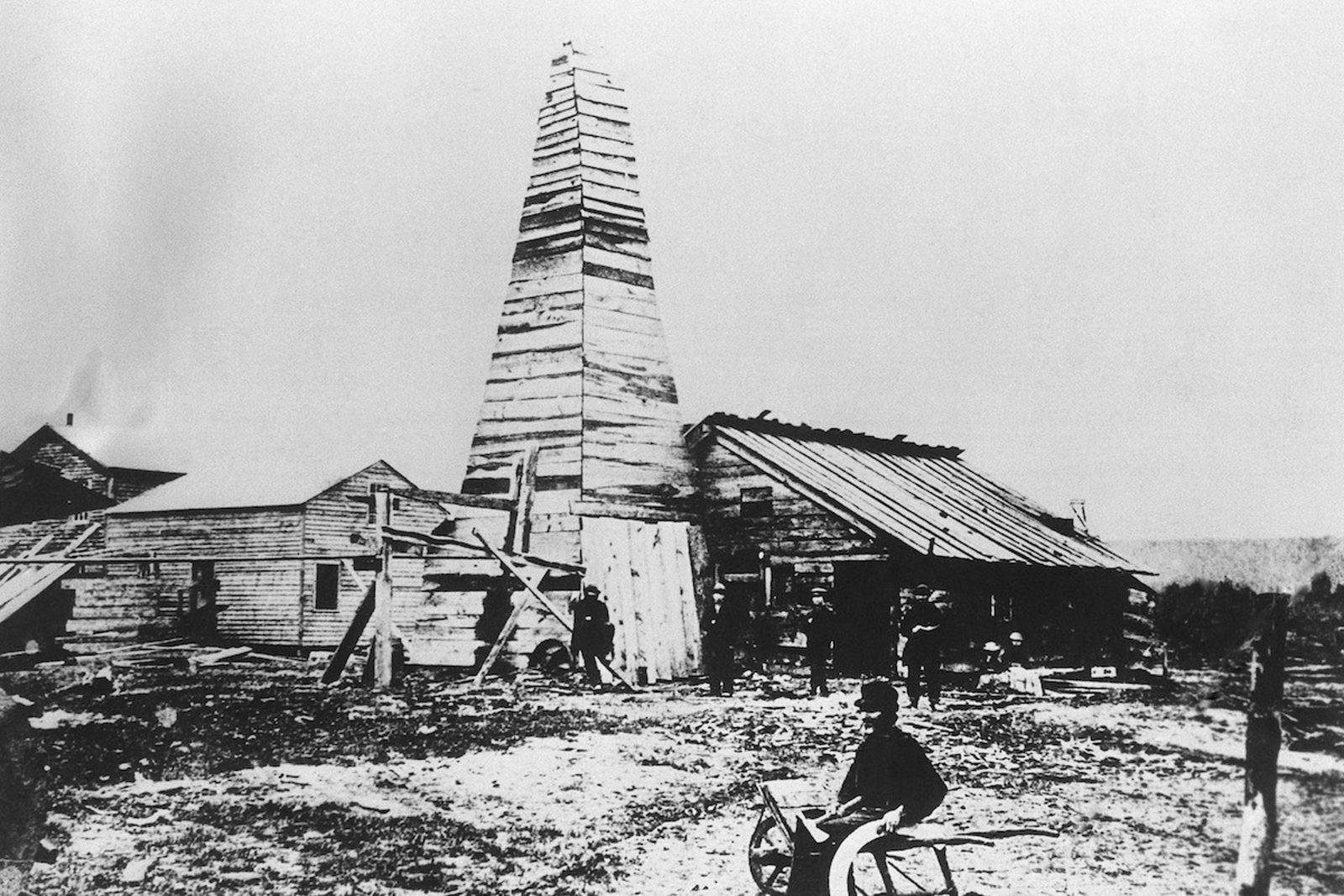
So again, you have figures like Spinoza who are working in this current of humanity awakening from this cataclysmic nightmare of realizing that it was functioning under an absolute dream—a theological dream being articulated by the best possible presumption that was presumed to be, which was perhaps a couple of mad monks and prophets, some of whom—you know, the story of Moses, for instance, in the burning bush, or Heraclitus—were very, very close to the truth, in terms of a thermodynamic, thermonuclear universe and how that implicates human behavior and the living-being self. Many of whom were entirely mad with power, which is, in large part, the lineage and history of kings, feudal states, empires, and warlords.
The awakening from this nightmare of bloodshed over principles and ideas and ideologies which are not practical and not relevant to the actual state or condition of the universe at all. This is a terror, because it destabilizes the self at the foundation of what one believes one is. It destabilizes the entire hierarchy of God, or the stories of God, which form the narratives by which people who are prescribed to ideological systems live their lives. Power structures, the national structures, the religious and political figures who are their power guide rails and guidelines.
So this again goes back to Shelley’s disavowal of the British state, and knowledge-power as an emergence of leveraging the real physical-systems functions of the universe itself, and what it means to know. Because to know is not simply to have an idea, or to think one knows. It’s to apply real principles and to observe those principles functioning in reality. This is the foundation of science. It’s the foundation of experimental inquiry into being itself, through which we see everyone from Prigogine and Newton emerge. The Newtonian apple case for gravity is a fantastic example of this, because this is stress-testing functions of being in time. That is the foundation of science.
So this failure that we are experiencing, and progressively experienced through modernity, is an incredibly violent failure of the ontological ground collapsing out from under mankind. Again, World War I, World War II—it’s a massive religious war over perceived differences that are, in real time, being deconstructed by the physical-systems-level knowledge. Which culminates in the atom bomb, the Manhattan Project, the coming together of the greatest scientists in the time of the 20th century to produce a living-being example of scientific power, which then utterly restructures the ideological nation-states’ power-bound principles of global humanity—the repercussions of which we are still very clearly dealing with today.
This is what real—this is what knowledge-power is. I’m not suggesting that knowledge-power is purely violent. I’m suggesting that knowledge-power is practical. It’s a product of practical knowledge. It’s not a product of belief. It’s a product of real function. And of course the atom bomb functions on the principles of stellar nuclear fusion—the creation, as was said by so many, of a sun on earth, so to speak.
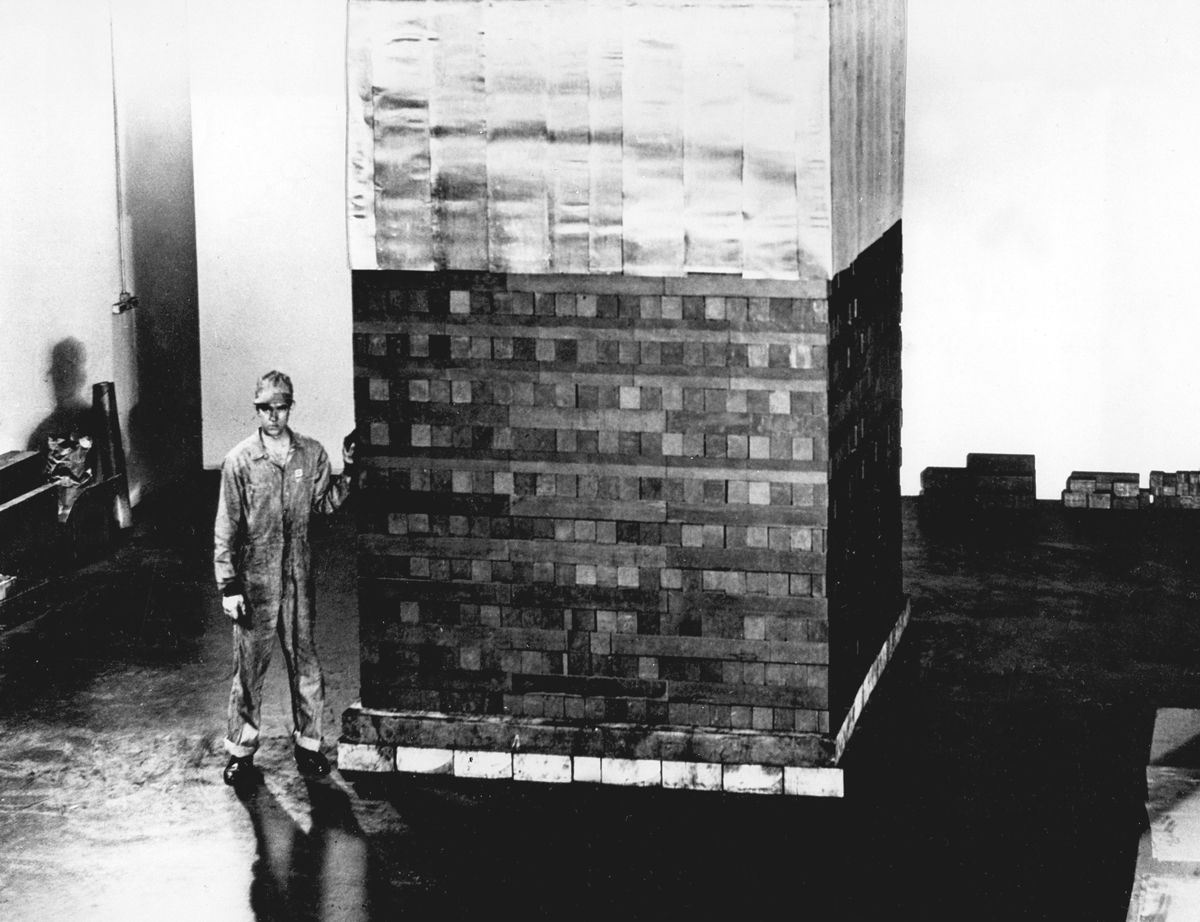
So the cataclysm or catastrophe of this knowledge gap is, ultimately, an existential problem. It’s not a problem of anything other than the perception of the human being being what a human being is. What is the birth of that? What is the condition of being human? This is precisely captured by Camus and Sartre and the existentialist tradition, which is of course inherited from Dostoevsky and Kierkegaard of the previous decades before the turn of the 20th century, and brought to bear in the French tradition—to ask what is being human.
This is an attempt to synthesize at the local level, domain-specifically, obviously with great failings of lack of scientific integration, the principle fragmentation of modernity, which is to say: we’ve lost the ground of being. And predictably it ends in Camus’s absurdity, and Sartre’s self-directed man—that man’s condition is entirely based on his proclivity towards taking it and grasping it and creating with it what he will or what he may. These are all valid points at a superficial level, but they do not reach the necessary integration that is required by the scientific revolution of modernity.
This leads us back, again, to a true synthesis across disciplines: a reunion of the most intimate psychological mind—whether that’s your Dostoevsky or your Kierkegaard or your Woolf—with your most cosmologically oriented, rigorous scientific practice, which is stellar and cosmological, tracing the ground of the universe and finding the thread that runs through to the most intimate psychological existential human experience, which is most typically elucidated in art.
This kind of grand pathway—whether you want to call it a nervous system pathway or a metabolic pathway, and understanding the scalar principles which function between those pathways and the stellar nuclear fusion pathways, as well as galactic formations—is the question which, again, so much of what I’ve mentioned, and who I’ve mentioned here, are figures of great genius, not only disciplinary genius, such as Prigogine and Darwin, but metaphysical and cosmological genius, such as Spinoza.
This unification question is being passed from humanity’s great minds across time, in a bridge where this scaffolding is being built behind the scenes of what appears to be the massive churn and fragmentation and chaos of modernity, which is human behavior falling apart in the face of what has been built by humanity’s great minds—which is a real possibility of a true ontos founded in rigorous experimentation, independent, field-verifiable work, which then becomes, of course, observed and absorbed as real and true. Which of course we now know Copernicus’s work today, and Galileo’s work today, and Newton’s work on gravity today, to be true in a way that remains, so to speak, undefeated.
This is what shakes the ground. The Copernicus story, and the Copernicus realization, is so telling, because these are realities that are vehemently rejected—rejected at the level of the collapse, nervous-system-level collapse of the vision of the human being, the way of orienting oneself towards life that has been programmed deeply into the body, not only in one’s own intimate lived experience, but genetically across time, intergenerationally. The human being is being radically reoriented towards truth in a way that is historically unprecedented.
Historically, what was required was a cultural substratum of belief, which was a created field of narrative construct, which was a sense of community, a sense of belonging based on the stories we told about ourselves. Which allowed for this private silo, which was a symbolic exchange of information that amounted to nothing more than just that story that was being told about life and existence—which is broken by this profound acceleration of scientific inquiry, which I am suggesting emerges from this thermonuclear, thermodynamic acceleration, technological revolution, which is literally being pulled from the ground, as in fossil fuels.
So we stand at the cusp of this energetic transformation, with all of its effects that it’s had on the ecosystem and on human consciousness, with Shelley.
And I linger there, and I return to Shelley.
Because what Shelley elucidates in his very philosophy of liberation—including the treatment of human beings, regardless of if they’ve been classed as slaves or women or what have you—is what emerges from scientific inquiry. It’s a radical, liberatory, revolutionary consciousness of what it is, and what it means, to be human, which observes difference only at the very thin level of small, small, small bits of genetic information and literal cell boundaries, cell borders and cell walls, which then you can extrapolate to the living organ system, and skin, and nervous system of the human being, which then creates a perceptual field through which the human being digests and processes and attempts to discern truth and reality and information.
It’s this private chamber of the self, which is entirely reducible to the same forces and factors which function across all history and all time: a slow genetic formulation through sexual reproduction, which creates specific conditions through which the organism perceives being, and what it is to be.
So I think that’s where I need to be with this. In this gulf, again, between religious dogma and the emergence of independent, field-verifiable science, is the ground upon which these existential ideological constructs shatter. They shatter against this ground hard and violently. And these ideological constructs go to war with each other. And all the while, the scientific reality remains as it always did, and as it always was—but yet is being progressively enlightened, not only in specific disciplinary silos, as we discussed, but through the incredible synthetic efforts of intelligence, which bring these fields together and present the structural reality, as I’ve described—the operator identity—behind all of these fields, which is the elucidation, the bringing about, of the understanding of what being is, and historically what the understanding of God is.
If we can see how the operator identity functions in time across all scales, we can actually discern what the identity of existence is. We understand how God moves, and thus what God is, by characterological observation of being in time.
So thank you. There you go.
Lecture 4. The Law of Being and the Operator Identity
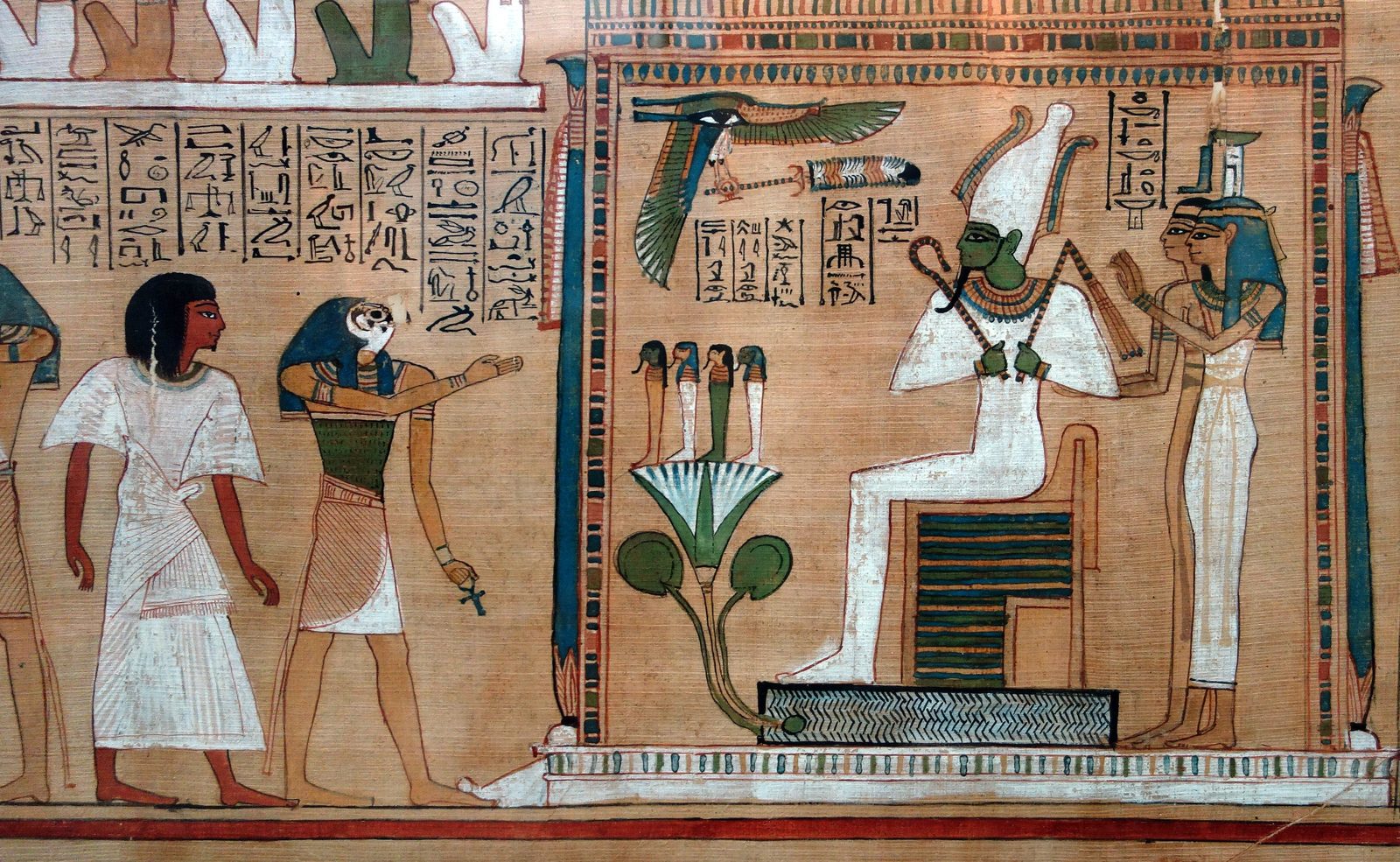
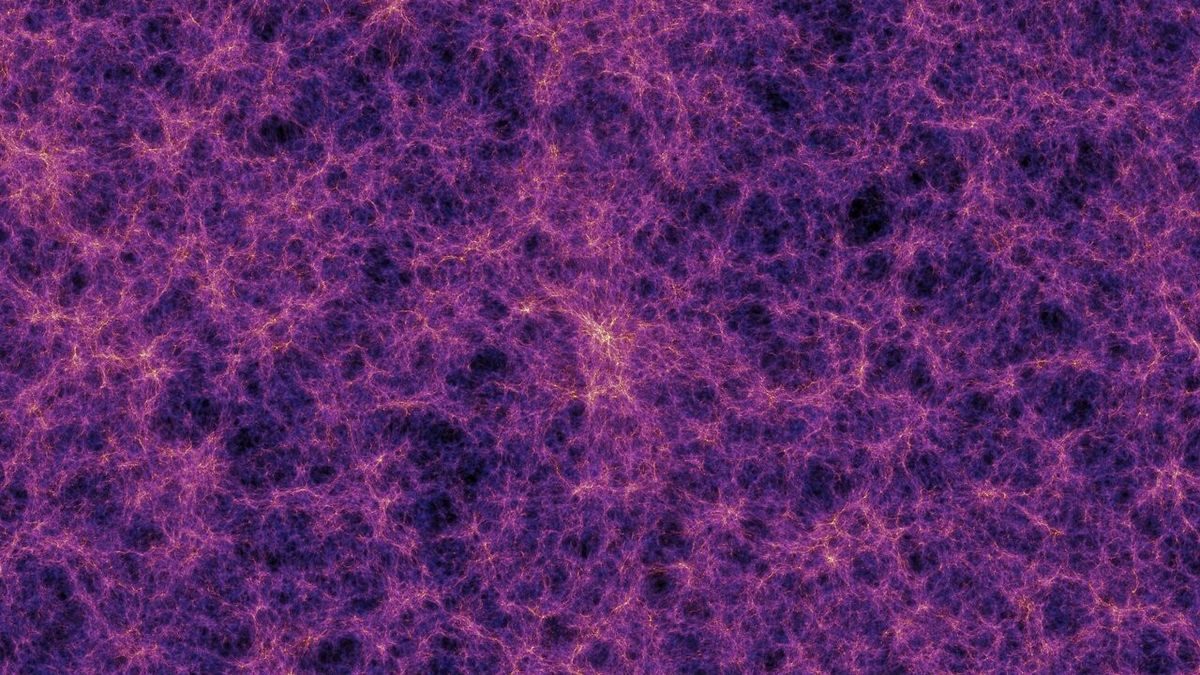
So now, for Part IV of this World’s Midnight lecture series, I’m going to introduce the core thesis of the law of being. This is very intertwined with the Spinozan substance — or you could call it the monad. It’s the historical, grand systems-theory-level work of elucidating the cosmos, or the inner logic of the universe, which extends in Leibniz, it extends in Spinoza, and it’s at work in the grand cosmological processes of thinkers like Kepler, or even Giordano Bruno. These are historical attempts that have existed pre-modernity and post-modernity. This is the long-scale project that is in systems as diverse as the Rig Veda and the Mesoamerican cosmologies. It’s a world-historical task of attempting to elucidate what is truth — what is the existential law that exists across all scales and all forms.
So the core thesis here of the law of being would be: existence is not substance. This is so much a refutation of Spinoza, but it’s taking Spinoza a level deeper into a process-based ontology, which became very popular with thinkers like Bergson or Whitehead as the march toward and through modernity progressed. That existence is not substance — existence is maintained distinguishability under entropy. This would not be possible without the thermodynamic revolution to elucidate this, because what we’re talking about is a form which exists against the background noise and the pressure of dissolution, which is the entropy sink of the universe.
Whether that’s a star, a cell, an organism, a civilization, a symbol, an image, or a self — these are different implementations of the same persistence operation, albeit under different constraints, which gives them the specific appearance or substance that Spinoza argues or speaks about. They acquire certain attributes because they’re functioning under different constraints. However, that which maintains them — this distinguishability-under-entropy principle — is the primary operator. It’s the universal operator, which I call the operator identity.
So there are three fundamental principles at work.
One is the concept of entropy, which is developed by everyone from Carnot all the way up to Boltzmann and Maxwell, and into the revolutionary theory of Prigogine. It’s that all systems move towards equilibrium unless work is performed. The persistence mechanism is itself keeping the boundary of the cell or the organism afloat against dispersion or dissolution, which is the escaping of heat energy from the pseudo-closed system of the being itself. So nothing exists by default. Everything that exists is being held in distinguishability.
That’s the second point: distinguishability. A thing exists only insofar as it remains distinguishable from its environment, which is what we just discussed. It’s the concept of everything from the cell membrane to the Great Wall of China. A star exists because fusion holds it apart from collapse. A cell exists because metabolism maintains internal organization. Civilization exists because symbolic systems regulate collective coherence. This is critical — this is everything from language to religion to mythological symbology, which is discussed by everyone from Eliade to Joseph Campbell. And then a self exists because regulatory continuity preserves identity through time. This is very critical. This goes very deep into my concept of psychology via neuroscience and the genome — a constructed self which must persist in its identification of and with itself. This goes from everything from caloric consumption to the concept of a name in order to move against — sort of kick and scream against — dissolution, which is the heat sink itself.
And then the third point here, in the triad of these fundamental principles, is persistence. All persisting systems solve the same problem: how to maintain form against dissolution. This is the operator identity.
What’s so fascinating — there’s a differential in persistence. A stone has sunken into a very, very, very low-resolution form of persistence. It is able, geologically, to remain. It has become entirely fixed. It is not in a process of metabolic churn or thermonuclear churn. It is matter that has fallen into this very high-density, low-resolution state of persistence. It is not running a persistence mechanism. Whereas a star, a cell, a genome, is performing this process of continually remaining. I hope that makes sense. I’m not the expert in geology by any means.
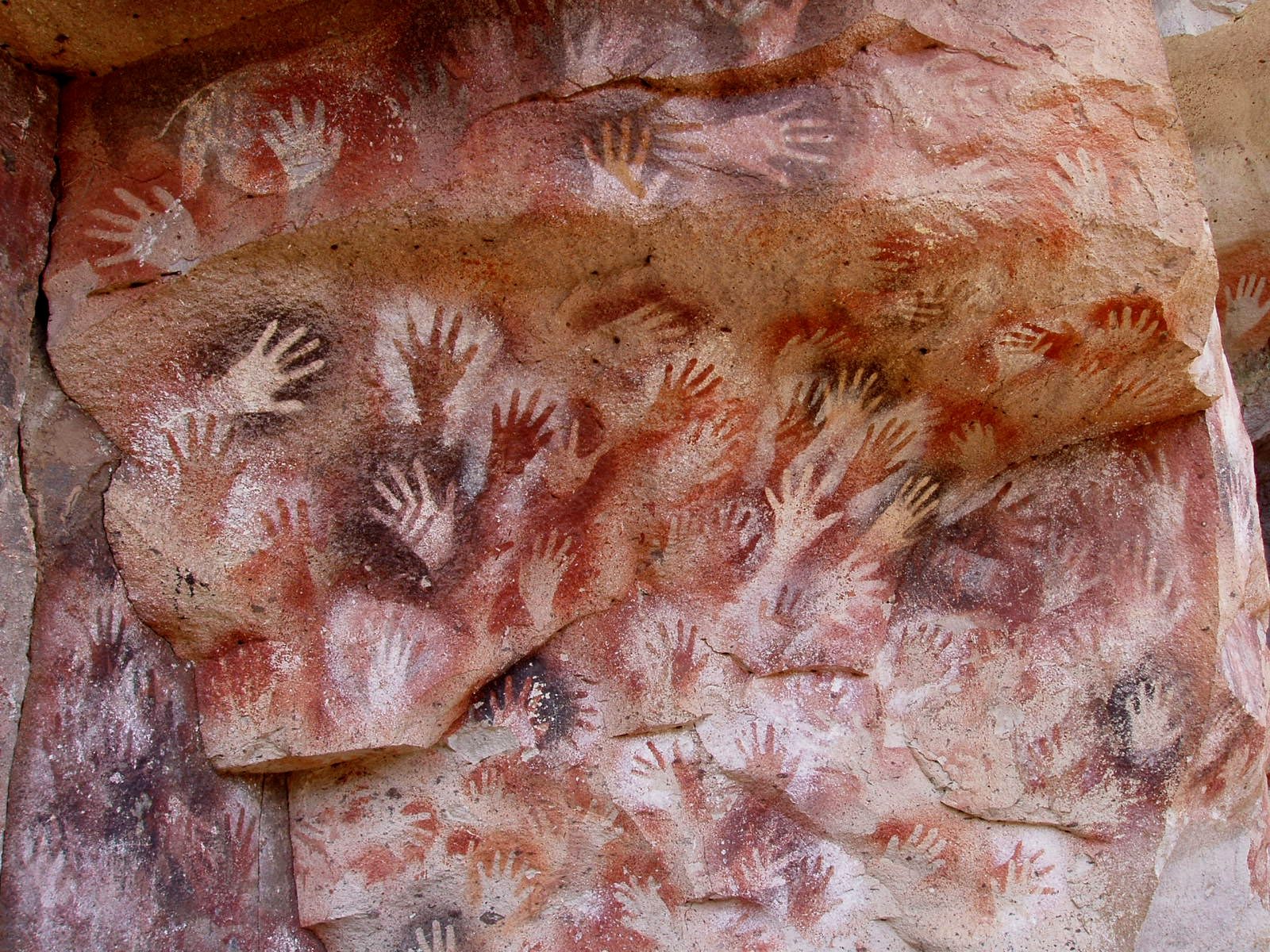
So: operator identity. The same persistence structure — and this is key here — appears across scales: star, cell, genome, nervous system, civilization, art, image, and consciousness itself.
This is what’s critical, and this is the parting from Spinoza. The substrate, which would be the substance, changes. The operation does not. This is the critical intervention here when we’re talking about God, or the universal self, or the Oversoul, or the Source, what have you. This is not a physical material thing. It’s an operation that is occurring across scalar substrates, all of which are performing the same operation, but in a different vocabulary, according to the dimension or dimensional space that that operation inhabits. Again — art, image, symbology, civilization, a collective nervous system, genome, the persistence module that exists within a living organism, star, thermonuclear fusion.
So modernity is the fragmentation that occurs, and that’s what the operator identity is moving towards elucidating: bringing the full picture in the unification of art history, science, thermodynamics, and deep psychology. The thermodynamic, thermonuclear, neuroscientific nature of what it is to exist and be human, to experience the operator identity — which is to incarnate the operator identity self-reflectively. This is a state of being that must regulate itself in space and in time. We understand this concept quite well now, semantically: nervous system regulation.
The acceleration of the world picture, the fragmentation of the ontos — which is the cosmogony, the break of the cosmogony worldwide — due to technological acceleration, scientific specialization, industrial thermodynamics, information overload: it is the death of the inherited cosmologies, which were formerly the ground. However pre-modern, however narrative, however fragmented from this true ontological substrate of the operator identity they are, they collapse, and the ground falls out from them. Which is again the world’s midnight, as we discussed.
What I’ve elucidated in further depth in the law of being is that regulated systems exist in one of three conditions. The way that I love to think about this is a weightlifting analogy. I’m a serious weightlifter. So the primary principle at work in order to grow the muscle — hypertrophy, a hypertrophic adaptation — one of my earliest theoretical concepts or constructs was psychic hypertrophy , which is sort of the hypertrophy of the universal mind, as you will.
Every regulated system exists in one of three conditions. Zone One: underload — no growth, capacity atrophies. This is a catabolic state. Zone Two: adaptive load — growth through recoverable stress. This is the green zone of adaptation, progressive growth through tissue tear-down and repair through adequate rest or ingestion of nutrients. Zone Three: overload — breakdown and restricted policy space. This is where an organism, or a civilization, or a symbolic code, collapses into chaos due to the overwhelm of throughput, whether this is energy or information, without adequate grounding and restoration as a cyclical principle. This would be everything from combustion to collapse, nervous breakdown, et cetera.
This is really important to recognize, because this concept of the law of being moves deeply into the space which is required to unify. We already have the thermodynamic foundation, which governs physical systems, well in hand. But to extend this into civilizations, to extend it into language, to extend it into the thermonuclear experience of being human existentially — the actual incarnate nervous system of identity or self via genome transmission over time — this is an incredibly sophisticated reflective condition. Again, through the creation and establishment of the creative mind, the imaginative genius that emerges through history — we brought up Shelley — this is the creation of a highly sophisticated technology of the brain.
So: experiencing collapse. As opposed to, let’s say, the collapse occurring in physical systems, which is not necessarily, insofar as we are aware, experiential. Let’s say the collapse of a star — this could be anthropomorphized in terms of that star feeling an emotion or sensation of collapse. But when the human being experiences collapse via, let’s say, the end of Rome, or the end of a relationship, or a nervous system breakdown — what is happening is, when these systems exceed capacity and enter into chronic states of Zone Three overload, they narrow into expressions of, let’s say, either avoidance, aggression, dissociation, or compulsion. And what I’m arguing here is that these are not moral failures. They’re regulatory outputs to throughput exceeding the potential to integrate state.
So consciousness is the interior phenomenon of this self-referential regulation, made possible by the sophisticated development of the nervous system over centuries of evolution, as well as the brain. Emotion itself is not — as we discuss emotion, let’s say, in Kierkegaard, or in Tolstoy, or Hugo, these profound elucidators of emotional sensation, or of feeling, the sophisticated existential state of the human being — this is not irrational. It’s not decorative. It’s not aesthetic. It’s actually information that’s being conveyed from the being to the being, about its viability conditions themselves: whether or not it is staying within a regulated zone, or collapsing by increased throughput, or falling into total atrophy.
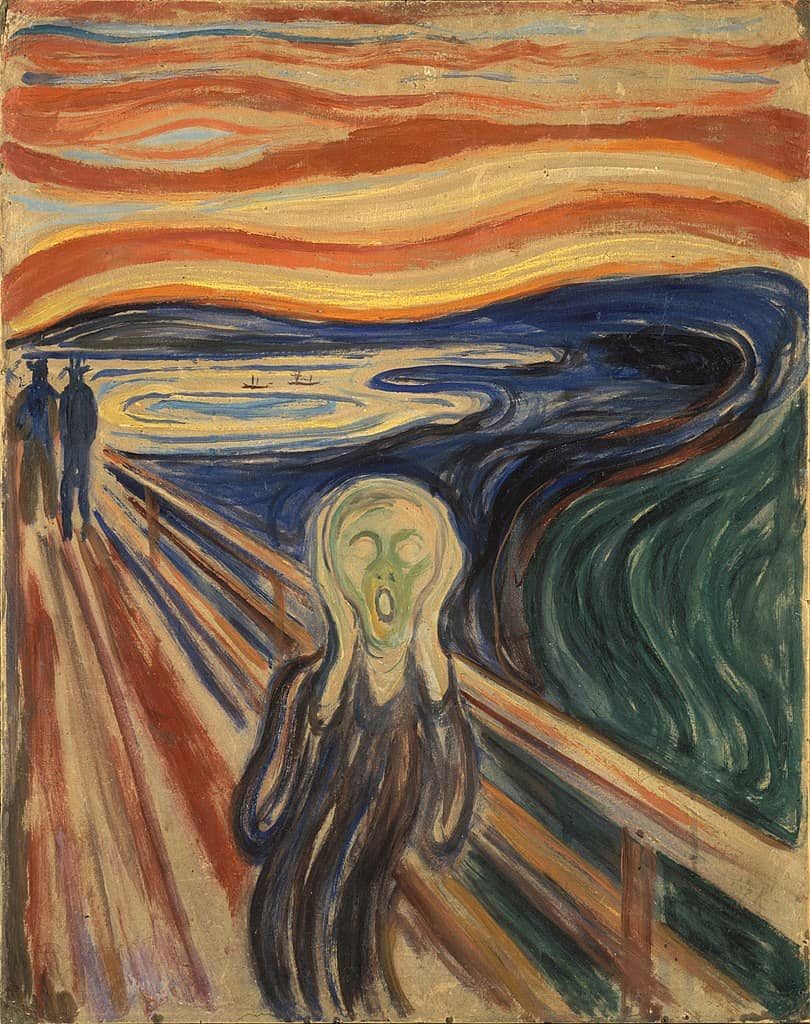
So you have — it’s a viability-condition information. Whether that’s anxiety, or suffering, joy, grief, and love. This is the experience of being human at the atomized level.
When we’re talking about the creation of civilization, this is something that exists because no nervous system can carry the recursive burden of self-awareness alone. So everything from art to ritual to myth to architecture, religion, sport, and image — these are all regulatory communal technologies of conveying, expressing, and thus convening in the human experience itself. And primarily, I elucidate, art compresses the experiential magnitude into survivable form. This is the creation of the symbol system. It’s a persistent structure itself, which not only allows the organism to survive by way of regulatory compression, which is expression — but it allows experience to survive the death of the organism. I’ve elucidated this in the Cueva de las Manos cave paintings, as well as Lascaux.
So what we’re understanding here is that what is persisting at any given moment in time, and what exists, what is persisting, is all of the same operation occurring at different scales and substrates, and thus appears to be different. This is the issue. It’s not a structural grasping of the operator identity — it’s the apparent difference in substrate, which is irreconcilable, that creates a siloed study, whether that’s philosophy, psychology, geology, stellar physics, what have you.
This is what’s so important about modernity: that modernity created all of the necessary different disciplinary forms which would allow for this unification to occur, which is the realization of the operator identity. The operator identity could not be realized without the contributions of Maxwell and Boltzmann, or Carnot and Clausius — the hyper-specific lineage of thermodynamics — as well as Cecilia Payne-Gaposchkin’s work on stars, the composition of stars. Philosophy: the entire strand of post-Hellenic philosophy, everyone from Francis Bacon to Percy Shelley and Nietzsche — who else do I want to list? — Spinoza. These are inheritors of this progressive process of the fragmentation of the unified pre-modern historical cosmology, which was a narrative foundation. But it was a narrative foundation built on insufficient information. Much of that narrative foundation, such as the ancient Hindu metaphysics, or the ancient Mesoamerican metaphysics, is profoundly true at a scientific level — but it’s true at a narrative level, a pre-modern level. It’s not at a sufficient resolution to withstand the technological development that was created in modernity, created through modernity, created by this progression of what is allowed by industrial technology. Which is, of course, the emergence of fossil fuel — sort of a second Big Bang that is experienced by human consciousness, this explosion of energetic potential buried beneath the earth, which is recovered and then thrust into force. Everything from the light bulb to the car to the jet airplane. These are physical manifestations of this hyper-acceleration.
So what was lost is really what was found in this fragmentation. This is why the operator identity is so important, because the operator identity — through the contributions made by figures as diverse as Freud, Marx, Virginia Woolf, you name it, these figures who are operating in all of these different silos and going to full depth, Prigogine, Payne-Gaposchkin — allows for the existential substrate operation, again, between star, cell, civilization, and self, to emerge through this very specific, focused, high-contrast study of all of these different substrates that exist across scales. Everything from the birth of the universe down to the single-celled organism, to understand how these operations function.
What is required is a unified metaphysics — and not a metaphysics in an abstract way, a metaphysics in a structural, ontological way — to examine all of these different substrates at the highest level of their resolution, and to then identify what is the unifying structural operation that is occurring throughout all of them. Which is compression, all the way down: from stellar nuclear physics to the creation of the human symbol, the bison on the cave wall. And furthermore, beyond compression: how compression functions to allow for a discrete form to persist over time, how to maintain form against dissolution. This is a strategy. It’s a strategy that’s deployed across existence itself.
What’s so fascinating about stone, to me, is that stone has found the absolute ground of maximum persistence. This is also where human beings carve their most long-living forms — such as the ruins of Pompeii, the pyramids of Giza, again, Lascaux and Cueva de las Manos. It is the solution symbolically: the creation of a symbol system, which is carved into a stone wall, or a stone geological structure, to allow for human information, human understanding, human experience, to persist past the physical thermodynamic limitations of the degrading, escaping heat energy from the pseudo-closed system of the physical organism of the human being and its lifespan, according to whichever era it lives in — which is the medical technology, the resources available to it, the ability to maintain metabolic health in the face of entropy, to engage in negentropic practices, such as I would say weightlifting, or the cultivation of a balanced, high-nutrition diet, high ability to rest and relax and sleep, not being attacked or poisoned, et cetera, et cetera.
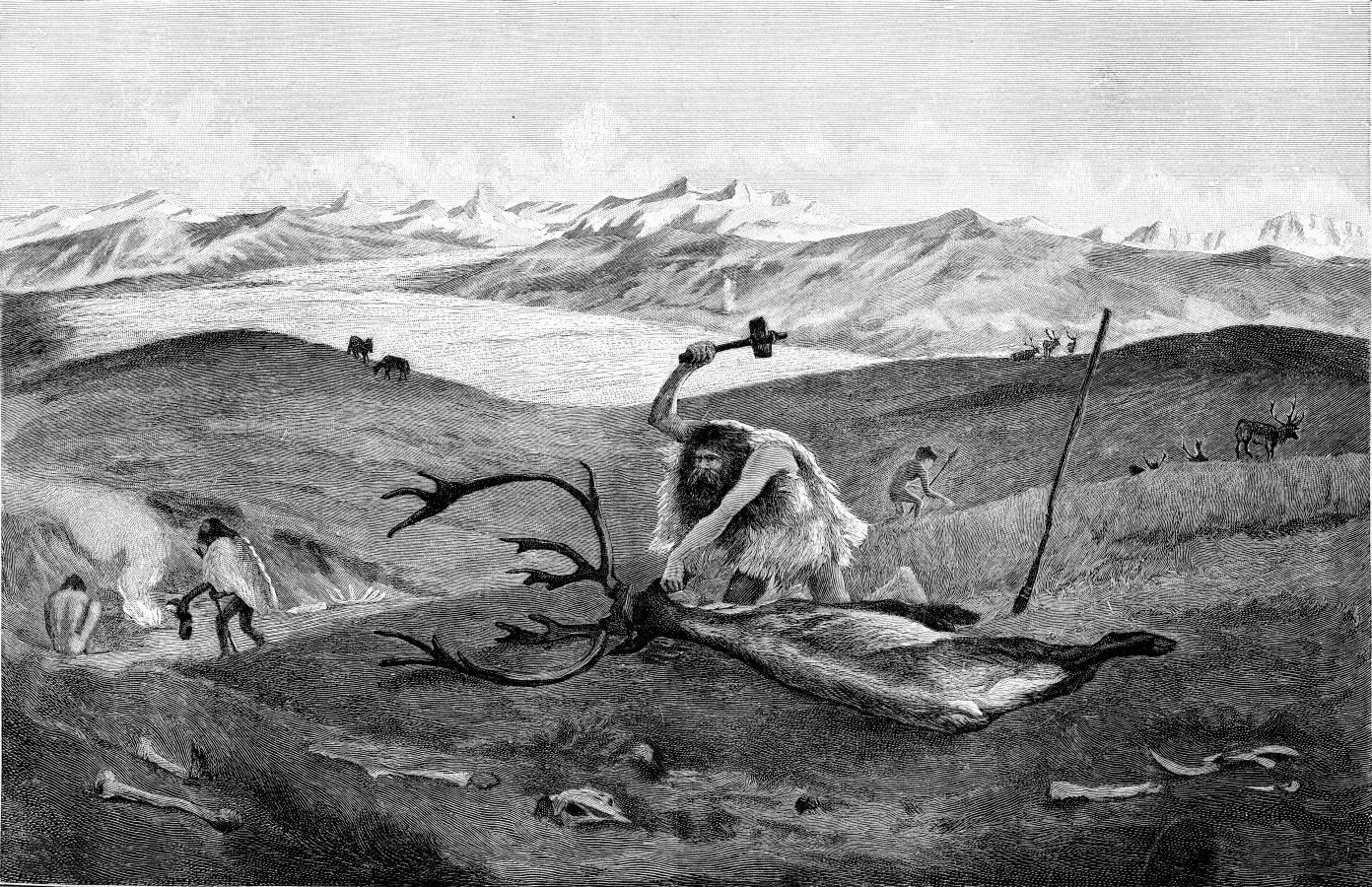
So I think this is pretty clearly understandable now. And again, I’m just going to return to the core thesis to sum this up.
Existence is not substance — it’s maintained distinguishability under entropy. What exists, therefore, is what successfully persists against dissolution. Stars, cells, organisms, civilizations, symbols, images, and selves are not separate categories of being. They’re different implementations of the same persistence operation under different constraints.
What does this mean? This takes us all the way down into human psychology and human development and human behavior — how to persist under constraint, which is the constraint of the physical body, maintaining organ-system functions. This is critical. Just as it’s critical for a star — the fusion system of a star, the reason that a star persists, is that fusion holds it apart from collapse, just as a cell metabolism maintains its internal organization. And you can understand the collapse of civilizations in large part either due to external invasion or internal symbolic collapse — collapse of meaning, collapse of language, collapse of religious glue. But these are both the same form of collapse, because symbolic systems fail to regulate collective coherence. Those symbolic systems could be overtaken, or they could fail internally. And a self exists because regulatory continuity preserves identity through time.
So this is what creates the internal psychological concept of the self-identity, the human identity. This is the neurological, genetic experience that a discrete organism — discrete human organism — has of life, due to a genetic inheritance plus the experience of that organism, which changes that genetic inheritance over time through epigenetic relationship to life, which is experience. The impact of life upon the nervous system of that genetic inheritor is informational, and it informs how that identity is constructed in real time.
So I think that’s all I need to elucidate here. Ideally this is, to a degree, clear. I’ll just sum up this one last thing.
The task is to reunify all of these different discrete disciplines which have emerged in the process of modernity as modernity itself — science, philosophy, art, psychology, cosmology, thermodynamics, consciousness — into a new ontos. This ontos , I’m suggesting quite clearly, is the operator identity. It is not, as Spinoza says, a substance, but rather it is the operational performance beneath the appearance of the substrate across scales.
So the entire project can essentially be compressed to this:
The universe is a persistence process under entropy. Life, mind, civilization, and art are successive regulatory structures within that process, which means they exist as a sort of scalar nesting doll, which is reproducing this operational procedure down to the highest level of complexity and compression. Everything from the star to the symbol of the bison etched on the cave wall by the early human being.
Modernity fragmented the human ontos through technological acceleration and disciplinary specialization. This is the fragmentation of the pre-modern cosmogony, the pre-modern world cosmogonies, by way of the acceleration which was everything from the microscope, the telescope, and the immense capacity for microscopic surgery of the human being, harvesting oil from the earth with progressive efficiency, powering factories, powering cars — changing the way that the world is traversed, understood, as well as the self is traversed and understood in the cosmos. It’s a unified process. This is the fragmentation of the ontos into disciplinary specialization, to interrogate life at the highest level of contrast, complexity, and definitionality.
The next stage of history is the reunification of knowledge into a higher-order understanding of being itself. It is the bringing together of the necessary depth that has been created across all of these disciplinary forms, at the highest level of resolution, across all scales, under the operator identity — under the true primordial, essentially God function of existence itself, of being itself, across all scales.
This is the heavy-hitting realization: that it is not that there is a single substrate, but rather that there is a single operation at work across all scales.
So that’s going to do it for me. Thank you.
Lecture 5. The Heraclitean Ancestry of the Law of Being as Primordial Logos
Audio
For this fifth lecture in the World’s Midnight, I want to turn to perhaps what is the true inheritance and ancestry, not only of thermodynamics — which, of course, the law of entropy makes the operator principle and operator identity possible — but the operator identity itself: the Heraclitean logos. I’m just going to elucidate a couple of fragments from the Heraclitean remainders, and we’ll speak about them in relation to the operator identity and the foundations of thermodynamics.
I could say Carnot is considered to be the founder of thermodynamics, but I would actually consider that to be Heraclitus. We will see why in the following.
So. Here’s our first fragment.
Although this Logos is eternally valid, yet men are not able to understand it — not only before hearing it, but even after they have heard it for the first time. All things come to pass in accordance with this Logos, yet men seem to be quite without any experience of it. My own method is to distinguish each thing according to its nature and to specify how it behaves. The Logos is common to all. Most men live as if each of them had a private intelligence of his own.
This is critical. I’ll let these fragments stand for the most part, but this is critical, and works right alongside the operator identity — this foundational scalar principle of persistence against entropy, maintaining differentiation against the background, which is the foundation of form, which is itself beyond the appearance of substrate, whether that’s a star or a man or a cell.
This is exactly what Heraclitus is saying: to distinguish each thing according to its nature and to specify how it behaves. This is critical. This is the bridge between Spinoza and the operator identity.
The idea or concept of “private intelligence of man” — that man is somehow siloed off, as are any of man’s disciplines, from this Logos, this abiding natural wisdom, which we’re here calling the operator identity, and the cross-scalar function of persistence against the entropic background, or dissipation — whether that persistence is configurational or whether it is regulatory (that’s my word). Whether that’s a configurational persistence or a regulatory persistence, whether that’s stone or whether that’s a nervous system, or metabolism, or thermonuclear fusion — this is a persistence against dispersion and dissolution.
Then here you have Heraclitus actually speaking, in a very prescient way, to the world’s midnight. Another fragment here:
Men who love wisdom should acquaint themselves with a great many particulars.
This is precisely what occurs and must occur in modernity: the fragmentation into siloed disciplines, which constitute great microcosmic study into each field, which pertains to each scale of being, which then allows for a structural unity to be found. That structural unity being the specification of how it behaves, each thing according to its nature , in a scalar sense — again, stars, human beings, cells, stones, solar systems, galaxies, et cetera.
It pertains to all men to know themselves. And I have searched myself.
Nature loves to hide.
Again — this is the operator identity. That this is not, as Spinoza specifies, and as Heraclitus alludes to here, that nature is not a like substance or like substrate, but rather it’s the performance behind the substrate. This is something that Hölderlin, in his relationship to the ancient Greeks, understands in terms of nature’s gleaming , its higher revealing — that nature’s gleaming, the light behind the appearance of that which is, is, as Heraclitus then goes on to say:
The universe, which is the same for all, has not been made by any god or man, but it has always been, is, and will be an ever-living fire, kindling itself by regular measures and going out by regular measures.
This is profoundly Shelleyan. Has not been made by any god or man. What the universe is, is a thermodynamic system. A series of pseudo-closed perforations of being, which is to say, in a scalar form from star to man — entropic heat sinks, which are fields of relationship. This goes all the way into Newtonian gravity when we’re talking about hot, dense stars.
Heraclitus then goes on extensively to discuss phase change — transformations of fire, sea, earth; sea and hardened earth; fire lives the death of earth , et cetera. This is an elemental, Hellenic, classical elemental understanding of transformation via phase change: earth, air, water, fire. In the Chinese, there’s also metal. But this is the understanding of how phases change, which then of course we get into very deeply in the modern scientific sense, in terms of gases. This is understood in a stellar way in terms of dispersion of stars into clouds, which then are reignited into new stars, the birth of new stars.
Here you go — this is Fragments 61 and 62:
Human nature has no real understanding; only the divine nature has it.
Man is not rational; only what encompasses him is intelligent.
And then 63:
What is divine escapes men’s notice because of their incredulity.
Although intimately connected with the Logos, men keep setting themselves against it.
This is essential. This is what Blake would go on to say — that man sees through narrow chinks in his cavern. If man saw existence as it is, he would perceive it to be infinite. This is a perceptual condition, which is pierced formidably by Heraclitus, the chief ancestor of thermodynamics, who from very early on understands the cosmos to be measures of fire, understands quite clearly that there is a hidden harmony, there is a hidden nature — as in Hölderlin — and that this nature is transforming, and it goes in and out, in measures of fire. And that what appears to be is this series of substrates, but what exists in reality is an operation, is a principle, which he is here describing as the Logos, that is at work in the world across all scales, and it is the nature of being.
Which is hard to discover and attain.
Again, there’s an understanding here in Fragment 30:
The phases of fire are craving and satiety.
It’s a metabolic understanding. That’s a lived experiential understanding.
So what Heraclitus is elucidating in the pre-Socratic world is that human nature, in his time as it is in ours, is separate from this divine natural understanding — and that it is because man is deaf, dumb, and blind to the operator identity, which not only forms him but all things in the cosmos, the universe which is the same for all.
There is an exchange of all things for fire, and of fire for all things, kindling itself by regular measures and going out by regular measures.
The understanding of this entropic persistence principle, at the heart of being and at the heart of all life, escapes man — because man is not rational. Only what encompasses him is intelligent. This is the natural function occurring through man, as it is occurring through star and cell and stone.
Listening not to me, but to the Logos, it is wise to acknowledge that all things are one.
This sense of oneness descends from Heraclitus to Spinoza to Leibniz. It’s a sense of oneness that possesses the greatest minds. And it’s a question of: what is oneness, beyond Heraclitus’s riddle? I suggest here that Heraclitus’s riddle is not, in fact, much of a riddle. What he is alluding to and what he’s referring to is the operator identity behind thermodynamics, which is the persistence mechanism at all scales of being, which is itself not any one particular form, but it is a river that one never steps in twice — to use another Heraclitean term.
That this river, as it flows, nothing abides in it at any scale. Everything gives way and nothing stays fixed.
It is in changing that things find repose.
Time is a child moving counters in a game; the royal power is a child’s.
War is both the father and king of all.
This is a common condition: that this operator identity of persistence against entropy — which I’ve listed formally in axioms and formulaically, derivationally, in the following text in detail — is itself the operation behind the apparent chaos of things and forms, strata and substrata coming into and out of being. It is itself the appearance of them in space and time, according to the scale of field in which they occupy. It is the operator identity itself which they are.
But the scale — whether that’s macro- or microcosmos — they abide by different natural laws due to the ecosystemic field in which they incarnate into. So man and star are abiding by the same thermonuclear persistence axiom, but man operates beneath star, in terms of lifespan and in terms of imminent field of being.
This is the deception, the veil in front of the eyes of man — in the same way with cellular respiration and cellular metabolism. It is perceived to be that metabolism and thermonuclear fusion in stars are a different, separate, and siloed phenomenon. But this is, in fact, one and the same. That all man ingests, and all man is, is a thermonuclear byproduct of fusion, which is itself the power, or the fire, of being — as described in Heraclitus — that loves to hide. Loves to hide within forms that appear to be different and separate.
The waking have one world in common; sleepers have each a private world of his own.
Eyes and ears are bad witnesses to men having barbarian souls.
The Lord whose oracle is at Delphi neither speaks nor conceals, but gives signs.
Unless you expect the unexpected, you will never find truth, for it is hard to discover and hard to attain.
So he is alluding to this river of fire behind all appearances. But the necessity is, in the modern sense — and in the fulfillment of modernity — to realize the formal, characterological definition of the Logos, and to identify it in a higher-resolution way.
The Heraclitean fragments are allusions — profound and highly accurate, scientifically, thermodynamic allusions — to the essence of the operator identity as it occurs across all scales. But it is to use and leverage the high-fidelity, high-definition realizations of fields as diverse as cellular biology, geology, deep existential psychology and neuroscience, astrophysics, intergalactic cosmology and cosmological mapping, to elucidate the Logos in a high scientific, structurally organized, and unified picture, which reveals this deep ontos — as in the operator identity — structurally, across the profoundly technologically sketched, designed, drawn, painted, and revealed signatures of each of these scalar disciplines. From the highest, most ancient form — the birth of the universe — to the lowest, most concealed form: the human experience of consciousness, or the feeling, or the emotions, that emerge from viability and persistence within a pseudo-closed entropic system with a nervous system and a sophisticated brain technology, which is registering this phenomenon.
Even sleepers are workers and collaborators in what goes on in the universe.
Wisdom is one — to know the intelligence by which all things are steered through all things.
People do not understand how that which is at variance with itself agrees with itself. There is a harmony in the bending back, as in the case of the bow and the lyre.
Men are deceived in their knowledge of things that are manifest.
This is a profound holistic cosmology elucidated in the Heraclitean fragments, which not only anticipate, but in many ways — in a concealed fashion — elucidate the operator identity, just as they elucidate thermodynamics and the entropic principles, which would arise hundreds of years later in the works of Maxwell, Boltzmann, Carnot, and Clausius.
So what he is suggesting is that all of these fragments themselves are the ontos , the Logos of being — the reason and the word behind the appearance of all things, that which is common to all. But to discover this identity, or to discover this function, in increasingly high resolution — because there’s the pre-Socratic Heraclitean elucidation of this Logos, and then there is the post-atomic, high-fidelity, high-resolution, multidisciplinary science, and experience as in the study of being human, performed with profoundly zoomed-in and zoomed-out technological instruments, field-tested, with the ability to perform fission and fusion in the human hand, as in Fermi and Chicago Pile.
This is a world which Heraclitus — the very principles elucidated in this oracular fashion of the fragments of his Logos that survived to this day — that there is the possibility of enhancing this picture down to derivational formula, down to axioms, down to first principles which can be field-tested across all of these different high-fidelity, high-contrast implements, instruments, and disciplines, which have formed in the fragmentation of modernity, which in the time of Heraclitus was unified. It was not yet broken by the microscope, the computer chip, the telescope, and the advanced surgery.
This is what modernity is and was: an advanced surgery into the body of being, stripping apart the body of being into a complex, intricate anatomy, to study each part of that anatomy — from the cell to the stone to the star, to the intimate neuropsychology of mankind — to reveal the structural continuity beneath all things, which is naturally revealed in the in-depth, intensified study by each Nobel laureate, in each revelation from Watson and Crick and DNA to Prigogine, to Newton, et cetera, to Payne-Gaposchkin — to reveal the hidden harmony of the structural Logos. Not only that all things are one in measures of fire , as Heraclitus elucidates, but that all things are one at the level of an intricate structural continuity. The operation, the operational identity behind the appearance of all forms, that is structurally contiguous from star to cell, to man, to stone, to symbol, to civilization, to the heart of the mind.
That’s what I have here. Thank you.
Lecture 6. The Reunification of the Ontos at the End of Modernity
Audio
So, for this new portion of the World’s Midnight series, I want to return to Heidegger and his relationship to Hölderlin, and the wider work that Heidegger is attempting to do — which I would describe as a recovery of the ontos in the time of the deepest world’s darkness, which is the period of time where Heidegger’s work becomes the most operational and his turn towards poetry deepens throughout the course of World War II.
Of course, you see Heidegger’s personal life thrown into utter chaos, much like Céline — Louis-Ferdinand Céline — whom I want to stake a very similar claim about: that these are men driven mad by the condition of modernity and the fundamental misunderstandings that are at stake in modernity, which is the clash of ideology and perceived racial, ethnic difference and otherwise, which is at the heart and root of the ontological tearing, the utter fragmentation, that is occurring in the full-bodied emergence of modernity. Which culminates in Heidegger’s gleaming work with Hölderlin, and into the creation of the atom bomb and the Chicago Pile.
This is a culminatory moment, which is a breaking and a shattering against the rocks of all that pre-modernity was festering — particularly the emergence of industrial technological force, which unites and unifies the world first through capital. And this goes all the way back, in my work, to the transatlantic slave trade and the storage of slaves on slave ships, which, in my structural theory, is the incarnation of fascism in speed and economy.
This speed and economy is what we witness accelerating over the span of a little under 500 years, culminating in the very economic policies which are really profoundly anti-humanitarian in terms of ethnically separative policies of cleansing, as well as the book burnings that occur in Nazi Germany, along with all of the deep esoteric retrieval work at the philosophical heart of what Nazi Germany is attempting to do — which is to reclaim the Ur -ground of the ancestral past of the Volk , the German people. And Heidegger is in the center of this maelstrom, composing his work on Hölderlin and nature’s gleaming, as in the Ister poem, discussing this primary concept of the world’s midnight in his work What Are Poets For? — and gesturing to it as he is in the midst of it.
Heidegger continually alludes to his inheritance specifically of Nietzsche in the German tradition, but also of Heraclitus in the pre-Socratic Western civilizational ontological root of this inquiry into being, which is the mantle that Heidegger then takes up — especially in his later work, which crests into a realization of the importance of specifically Hölderlin’s poetry.
It’s fascinating to me to return to this years later, after going very deeply, and after significant scientific physics work, etc. Because I see Heidegger’s relationship to Hölderlin in my relationship to Shelley — in the ontological bridge work which is being done. Hölderlin being the canary in the coal mine for the loss of the ontos , the loss of the unified nature’s gleaming, and the loss of the gods, which is the withdrawal of the gods, the ground, which was formerly the ground of Heidegger’s Volk , just as it is the ground of the world’s folk — the ground of all world’s communities and all world’s cultures, all world’s religions and all world’s cosmogonies. This is the abyss that Shelley stands over and Hölderlin diagnoses and falls into. And this deepens, perhaps precisely, in Heidegger’s time.
What I want to discuss here is the really unified diagnosis that Heidegger takes up. It’s the Nietzschean mantle of “God is dead” at the turn of the century, and his diagnosis of the fallen and falling state of mankind. I’m not going to go too deeply into Nietzsche, who, of course, is deeply steeped in the Hellenic philosophical tradition. But Heidegger being the inheritor of Nietzsche — and not only the inheritor of Nietzsche, but the inheritor of Nietzsche’s time, which is the full-throated emergence of modernity, the atom bomb, and World War II — and the loss of the holy self emerging, so to speak, which is Hölderlin’s obsession. Nature as physis. Nature as being.
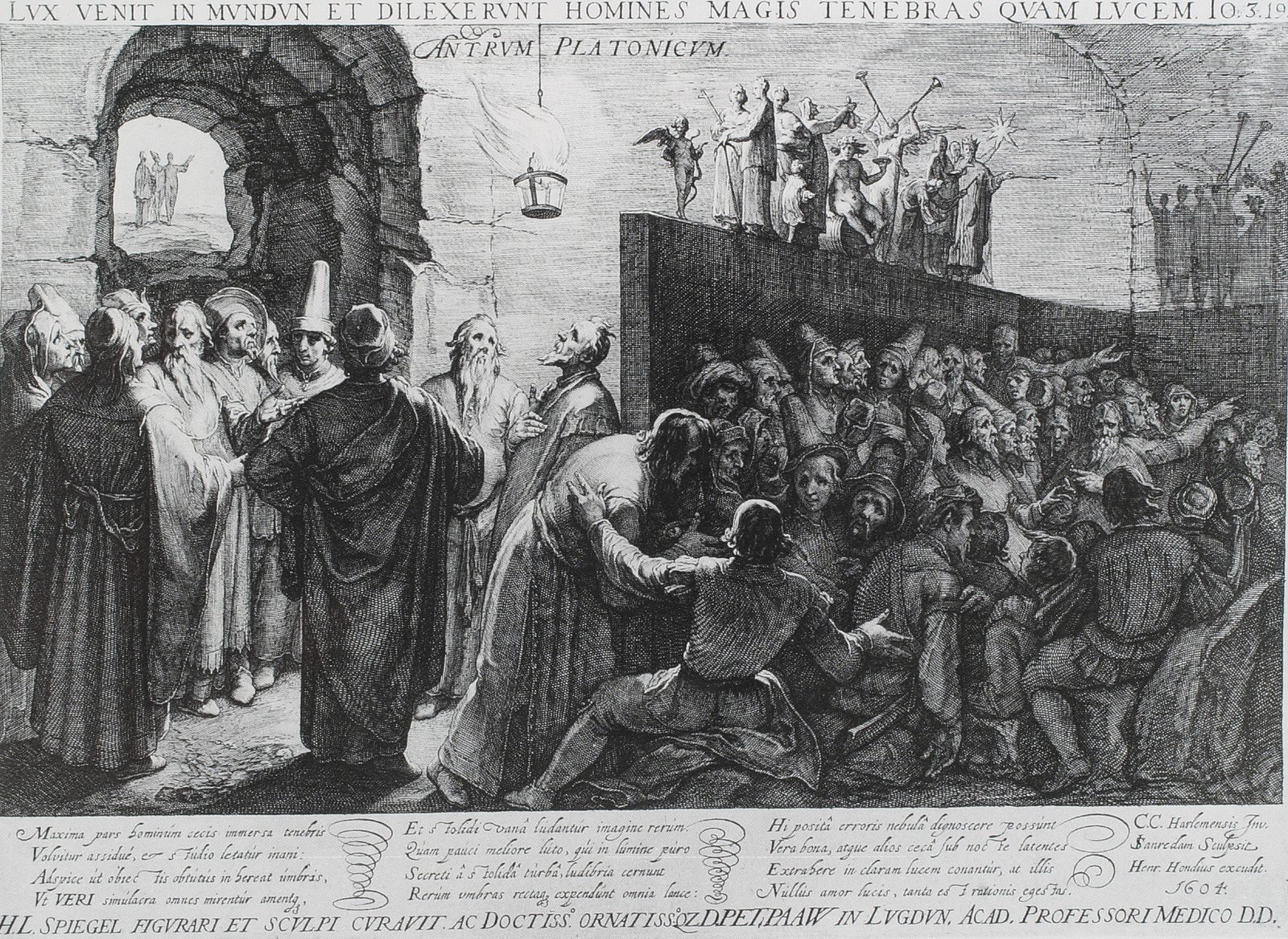
This is a loss of sight. Which again takes us into the concept of the world’s midnight as an analog to absolute and utter darkness — the night of the world, the default of God, the withdrawal of the ground of being.
So we ask: what is the loss of sight? It emerges, for Heidegger, in the depth of World War II and precisely this absolute turn of his personal life into the maelstrom of history, and speaking directly with Hölderlin, interrogating the possibility of recovering the ontos. Just two major works here: Holzwege and the Erläuterungen — the writings where Heidegger is scaffolding his understanding of Hölderlin, and his understanding of poetry specifically through this deep connection to the poet of his German homeland, of which there are many. One of Heidegger’s most impactful works for me personally is the collected lectures on Heraclitus and his interrogation not only into the life of Heraclitus, but the fragments.
This tradition of moving toward and to the heart of being in Heidegger’s time is the most fragile, precisely because his time has become the most technologically disrupted of any time in recorded human history. He’s well aware of this, and works primarily with technology. My encounter with Heidegger’s technology work, as well as Marx’s work on machines and industrial capitalism, helped me understand deeply the concept which I formalized in prosthetics — everything from the telescope to advanced surgery, which is a heightened, high-contrast interrogation into being.
This is why Heidegger’s obsession with the poets grows as he ages. Because the poets themselves, as I use the term, the canary in the coal mine for Hölderlin — the poets themselves are those who witness, or have the experiential technology. And I could break this down neurologically or neuroscientifically: they have the native technology, the bearing technology, of sensitivity. Which is, historically, the world tradition of the medicine person or the shamanic figure in any given cultural or communal lineage — who has access to, and I’ll say it in the kind of Mesoamerican form, walking between the lands , or walking between the worlds. This is an archetypally Mercurial position. It’s between the world of spirit and form.
This is the critical interlocution, and why Hölderlin is such an important figure to Heidegger. Because Hölderlin is dwelling in the realm of the shades, or dwelling in the realm of being. And this is precisely where madness and genius — in the words of Joseph Campbell, the mystic swims where the madman drowns — and this swimming is in the realm of the shades, or in spirit, which is the falling away of the demarcation or the territory of specified forms, or separate disciplines, into an entire field. The field wherein modernity experiences the fled gods — as in the gleaming. This is the experience of the holy, which persists even in the time of the greatest destitution. And this is the land to which Heidegger moves. It’s to read poets. And when I say the poets , I don’t simply mean poetry. I mean the words of the spirit, so to speak.
I don’t want that to remain purely metaphysical. I don’t want that to remain abstract. Because it is the higher perception. Nature’s gleaming is higher revealing. The higher perception of the ontos of nature, natively — as in an intuitive perception. When we say intuitive , there’s a sort of condemnation of that word, or that bit of language, in modern Western culture and civilization. Because what it implies is that it has no ground. It’s something that someone is primarily experiencing, and thus it has no verifiable or empirical source, reason, or outcome.
But this intuitive perceiving is precisely the root of all empirical science in Western civilization, going all the way back to Heraclitus and through Isaac Newton — particularly in the well-known story of the apple and his formulation of gravity. This is precisely what is required in the scientific pursuit as the foundational move. The foundational move is perceiving an essential form, force, or operation at work in the world through and behind the perceived apparatus, which is the appearance of things. This is the Blakean ideal as well.
When we discuss the poets and the scientists, there’s a fantastic quote by one of my favorite physicists who states clearly that in physics, we are seeking the poetry of nature. And the word poetry itself is the logic of creation. This is not trivial, because it is the ontos of creation. And again, to gesture back to Heraclitus, the Logos of creation. It is the inner reason beneath the apparent movement.
This is precisely what Western modernity loses in analytical philosophy and purely analytical science and a hard disciplinary boundary. Because we’re moving away from structures that exist beneath and behind the pseudo-boundaries of disciplinary formulations. And this connects directly to the logic of thermodynamics and pseudo-closed systems that are constantly dissipating and leaking thermonuclear energy, constantly dissipating and leaking heat energy. These boundaries themselves are fortified before the appearance of an abyss — which would be a thermodynamic dispersion. But in reality, what this abyss is, at a whole and totalizing level of nature or physis ‘s gleaming, or being, is an entire operational system and network.
This unified ontological thought is a thread that becomes thin, and perhaps thinnest, in history, in Heidegger’s time — and arguably has become thinner since. Due to this increased narrowing and narrowing and narrowing of the perceived borders and boundaries, which are being affirmed not by truth at a structural level or an operational level, but rather by the fear of the dissolution of the inner logic, which has continually pressed forward in the sciences and maths, and the increased conviction of the enclosure of the human mind and the human body in the face of a wide-open field of the cosmos.
This is a fear, precisely, that Hölderlin and Heidegger diagnose: that the gods have fled. Once the gods have fled, which is to say — the world has descended, or is descending, into midnight. That there is no more ontological bed, as Rilke would say. There’s no more feather bed from which our worst dragons, fears, temptations, ills, can rest. This is the ontological ground which is salvific, as in the concept of God. And the loss of God is the emergence of the existential nihilism which is this seep of, you could call it, evil or violence or genocide or chaos — which emerges from the failing conviction of these religious and ideological traditions, the formerly closed cosmogonies of eras and paradigms past, in the face of a technological modernity which no longer can support their narratives and myths. Because reality clearly is something otherwise. It’s something deeper and self-emergent — which these narratives can no longer pretend to capture.
This is precisely when we look at the instability of Hölderlin’s life in relation to Shelley’s life. Again, Shelley dies an early death, but Shelley’s interrogation of being and the function of being in time, particularly with Hellas — his final complete work — is the suggestion of an overturning. This will connect us back to Heidegger, or rather Heidegger and Heraclitus, in a very concrete way: that Shelley is witnessing a historical awakening, an epochal awakening, which is connected to what will happen in just decades after his death — the revolutions of Charles Darwin and evolution.
That, with Heraclitus, the cosmos is not merely a ceaseless churn of fire that has measures in and measures out — which is an intuitive revelation and observation of the thermodynamic foundations, the entropic foundations of existence itself. But that Shelley is understanding that there is a transformation that is being undergone through time. Not only in the genomic compression, but in the transformation of the experience of universal compression down through scales — which is actually changing how reality is being perceived and conceived of, by way of mind’s consciousness and the scaffolding of history itself, which is providing a foothold. In the same way that we talk about Heraclitus, Heidegger, or Boltzmann, a foothold to perceive the ontological core of reality.
To retrieve, from the foundational root of Heraclitus, a highly magnified, high-resolution revelation of the total depths — the field depths and the multidimensional cosmos. Not merely a cosmos which is the appearance of measures of fire, but a cosmos that is operationally at work in law across all scales, across all forms of compression. Which is to say, a totally symbolic, trans-symbolic, scalar existence of being — which is really a compression of space and time into a fundamental axiom: being itself. A characterological form of being itself in time, which changes appearance, changes scale, and works at different levels of macro- and microcosmos, but is itself fundamentally unified in the operation it is performing.
What is so powerful about Heidegger’s work with Hölderlin is that he is having the real-time intuitive realization that the poets themselves — particularly Hölderlin, and, with my work, Shelley — are preserving the ontos in the time of its greatest destitution, which is fragmentation and separation. Shelley holding it together through a Renaissance cosmogony, which he forms himself in the face of the absolute dearth of knowledge and reason — in the truly classical sense — in the British Empire, which he recovers not only from Milton but from Blake. Shelley is performing this operation, which is holding together the thin thread of Western civilizational ontological inquiry, which is itself the foundation of all philosophy, the foundation of all science, and the foundation of all of the humanities.
And Hölderlin himself — as Shelley is doing this in the turn of Shelley’s work in Hellas after Prometheus Unbound — Hölderlin is calling out. And it’s a repetition that occurs throughout his poetry: that there is this sensation of the presence of the gods that he feels himself, as a poet, as a neurologically sensitive person, to this profound ontos. This is Hölderlin’s ancestry, that can be traced again back to Heraclitus: his sensitivity to the presence of the ontos , and yet realizing that it is fleeing from this world. As in, the revelation, or the felt presence of the ontos , which is the felt presence of the gods, is leaving.
In this fracturing of the collective ontological mind of humanity — which follows into the specialization and alienation of industrial modernity, which is the project of descent into deeper recovery, into deeper ontological formulation and formation of this operational identity — which is gestured to deeply in Heraclitus, but is collapsing in order to come back together at a higher resolution.
Because the low-resolution version of this perceptual field across world religion, world culture, and the deepest ontological substrates which form the philosophical backbone of Western civilization and civilizations themselves — is no longer functional with the increased energetic force and vortex of modernity. Which, again, I’m bringing back to oil and fossil fuels. Bringing back to electricity. This is changing the way of being in time. And as such, the ground, which is conceived of to be the being self, the resolution of that image must necessarily also change.
This is the profound despair of the modern poets who are lost in what Eliot would call the time of the Hollow Man , or the time of the Wasteland — in both of those epochal works. Or what Trakl would describe as the bottom falling out of existence into an imageless blue-blackness in which there is no ontos that holds the ground. But rather, what there is, is a pending dark — which is, again, the term of the Abgrund , or the abyss. There is no foothold by which modernity understands or communes with being itself, and thus the outpouring of modernity is a reflection of the default of God in the destitute time, which is the world’s midnight.
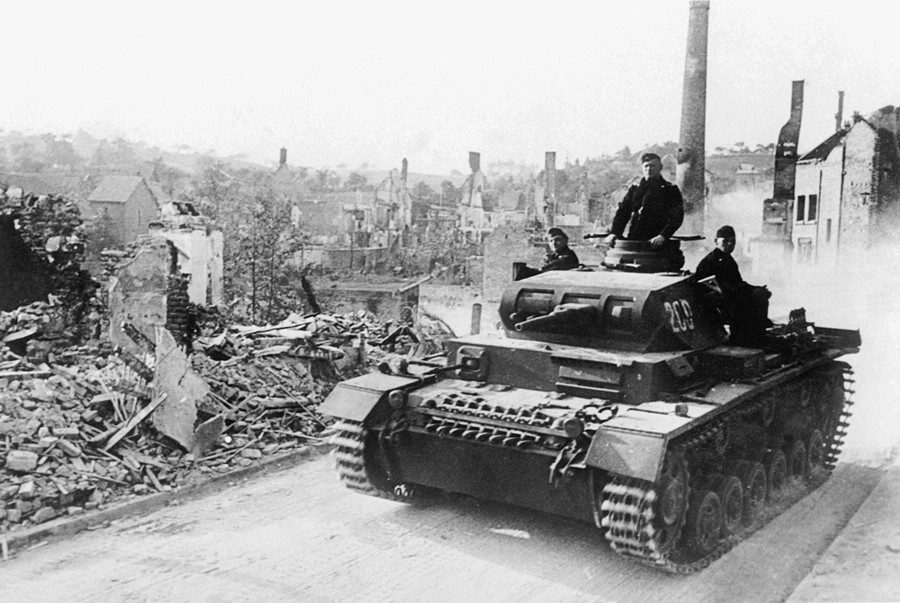
This is where Heidegger’s work is such a profound renewal — in his uncovering of Hölderlin and his communion with Hölderlin. This inquiry and conversation that he’s having across the breach of time with the dead poet of his homeland, in the time in which his homeland is undergoing its most monstrous transformation, its most cataclysmic and powerful transformation. He is reaching back into the thinnest threads, now, of the recurring intuition of this grounding ontos of being, even as the entire world itself is fragmenting — as in the world war and the explosion of industrial technology into specialized, alienated, siloed (you could call it also individualistic, as in the closed-self) fields of being. Which is itself a descent into the perceived substrate of existence — which is the being-body, the body into which being incarnates, with its pseudo-closed borders and bounds and the existential experience of that encroaching entropic sink. Which you could call eternity, you could call death, the heat death of the universe, or the end of the operation of the closed organism.
This is an existential terror, and it is a chaos which is the confrontation of death from which emerges Ernest Becker’s profoundly, epochally shifting work, The Denial of Death. But also Céline’s Journey to the End of the Night — the vast (well, the entirety of) the existential philosophical literature of the encroachment of modernity, from Dostoevsky to Camus, which are all interrogating these fundamental questions of being human and what it is to be human. Which, again, is a narrowing of the ontos into, you could call it, a narcissistic or navel-gazing pursuit into what it is to be an incarnate self.
This is a narrowing that is occurring at the same time as thermodynamics is being actively advanced beyond humanity’s wildest dreams just a century prior — all the way up and into Prigogine, from the initial findings of heat engines in Carnot. This is an uncovering, or revealing, of God within man. And this is precisely the world’s midnight, which is the total darkness, or the extinguishing, of the ontos — which is the communal or formal guide of civilizations or cultures, which laid out definitional bounds. Much of which was — all of it, really — produced by the poets and the prophets, from Ezekiel to Moses and Christ, to Hölderlin and Shelley.
These are, again — with Shelley — the legislators of history and civilization. The poets and the prophets themselves are the ones that are traversing this ground between what much of the world experiences with narrow chinks in the cavern, the Blakean cavern, to be fundamentally different substrate or substratum, with boundaries and borders, walls and membranes, which themselves are closed and thus form specific object terrains. And the poets themselves, or the mystics — you want to call it that, and this is a very dirty word in modern Western thought — these people are themselves the intuitive guides that walk between, again, the shades and the appearance of the world. One of their greatest ancestors is Heraclitus, in the elucidation of the thermodynamic fire, a vast portion of time before it is formalized in physics.
This, again, is a prescience which Heidegger is reaching back into, with Hölderlin and Heraclitus, in the moment of perhaps the world’s darkest time, the dearth of modernity, the wasteland where the shades become themselves the world. The world is then overwhelmed by darkness. And this is the experience of modernity — that consciousness itself is in an abyss without ground, without ontos.
So this, again, is where I will culminate and gesture back to the operator identity, and the operation that is at work within the world — that which is moving being. To understand that operation is characterological. To observe behavior is to form a picture of the individual, or the picture of the being at work in time. And to know how the being works in time is to understand what the being is by way of what the being is doing. This is, of course, an imperfect operation. And it’s the backbone of all philosophy and Western civilization.
So this, again, is the issue that is irretrievable in modern science — in modern Western science — because the necessity is to descend into separative forms, to perform distinctive operations, to perforate into specific silos of functioning, from cellular biology to neuroscience and astrophysics — and thus reveal the ground which is capable to be synthesized structurally. And thus to truly know being. But to know being at a deeper level than was ever possible before.
Without this critical work, the ontos itself would remain in a low resolution. The ontos itself would remain in a pre-Lapsarian, pre-modern context, which could not adequately fulfill the technological thrust of industrial modernity, which requires an update of humanity’s mythmaking. Which is itself a map to being. And the self does not hold. At a deeper level, the map of being, the ontos of existence, is not sufficiently high resolution enough to hold — as in, to map the unity between self and world, and thus the most fundamental experiential bound of existence itself: that there is a being experiencing being in the world.
From this is the natural chaos of modernity. From this is the failure to achieve right action, as in unified being, in unified step with the real, at the level of foundations and first principles. And this is why the recovery project of the ontos — from Spinoza and Leibniz and Heraclitus to Shelley and Hölderlin and Heidegger — is so essential. Because it’s not an abstract question. It’s a question of being in time, and thus the determining factor and force of all of history. It is itself an existential, primordial, first-principles reunification with the self at the level of nature. That it is nature’s gleaming, which is higher revealing , which is itself being. But that nature’s gleaming has been concealed.
This is a perceptual issue, which, again, is both Blake and Heidegger — the understanding that nature’s gleaming, just because it is not perceived at a higher level as revealing, as in unified, which is again the realm of the poets, the mystics, the medicine — that this is an intuitive understanding of the deeper unity, or the One, or the monad, at work within all of creation. That just because it is not being perceived as such, and is being increasingly veiled by the perceptual apparatus and change of modernity — which is a specialized siloization of consciousness as the chief framework of perception, which is dictating this transformation, which is occurring, which is a disciplinary fracture and deepening of the disciplinary fracture into the study of the microcosmos at all levels and scales, including astrophysics as a microcosmos, or cosmology as a microcosmos — is that the structural reunification is pending in the world’s midnight.
At the moment of its thinnest thread — which is the relationship between Hölderlin and Heidegger — it is still present, but as a vague felt sense, an intuition that this higher revealing and higher unity is present. But the articulation, as in the literal linguistic possibility of that manifest higher revealing and higher reality, as in a condition which can be shared, testimony of consequence in the world — it has become its most contracted. And the poets themselves have retreated from their shamanic threshold or position as the arbiters and legislators of history, of civilization and of culture — which is the shamanic heritage across the world, and the medicine heritage across the world. They have retreated from this post into the isolation of the mad tower, which is, of course, Hölderlin’s ultimate end.
The fractured, fragmented poems which emerge from this — the gap, or the bridge, between the ontos itself and the communal, collective perception of the ontos , as in world- and self-making as a communal project — has become its thinnest. Due to the necessary abyssalization, or blackening , of the world’s myth in the emergence of technological modernity, which is an energetic acceleration, an increase in energetic potentiality, through this exponential growth of oil, fossil fuels, natural gases, and the products and outcomes which are made possible by this project. Along with electricity, the jet plane, and the world wars — which are an expansion of the terrain of possibility itself, realized in the field, which is a clashing of ideological terms above this opening of the ground, in this ground-level thermodynamic experience of hyper-acceleration, which Heidegger experiences in many ways as technology.
The deepest move here is that this is necessary. This is a world’s history of the ontos in a movement of concealing and revealing. This movement of concealing and revealing is a technological acceleration of higher aptitude — not only in the evolution of the genome and the development of the brain over thousands and thousands of millions of years, but also, hand in hand, a prosthetic process. A prosthetic process of enhancing, through microscope and telescope, powers of man to pierce into the veil of this multifaceted, multidimensional beingness, which is nature’s gleaming, which is higher revealing — in all of the different aspects in which it manifests itself phenomenologically, as in being-world. To uncover these deeply crystallized particular phenomena in their scalar formation: everything from cell to cave painting, to symbol and language and literature, to stellar fusion, to galactic formation, to the birth of the universe — and thus to experience the utter shattering, which is the Abgrund -ing, which is the abyssalization, of what was perceived as being formerly. And thus the throwing of what is being human into chaos.
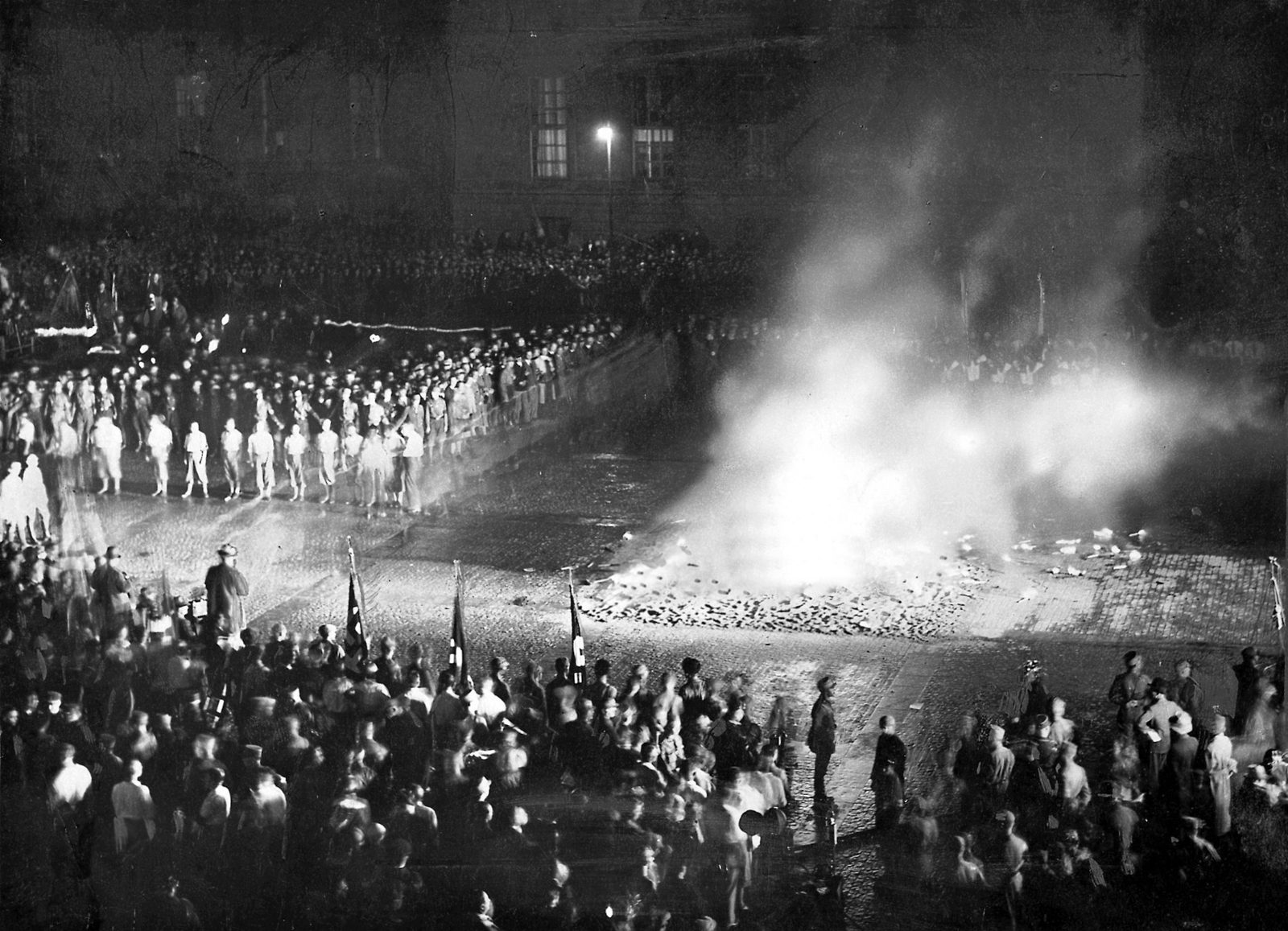
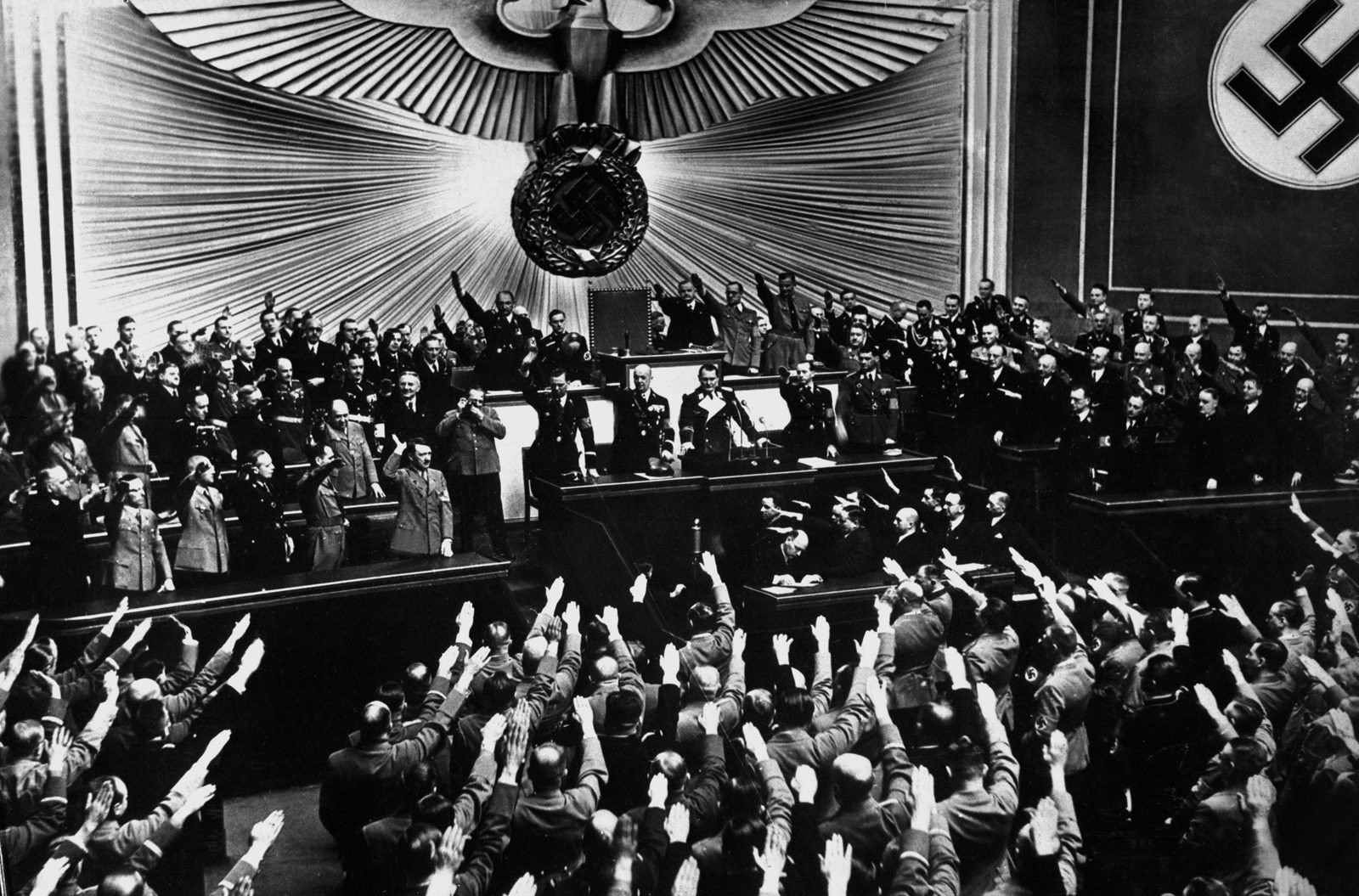
As is revealed in Heidegger’s time, in the time of Nazi Germany, the loss of the Ur -spirit of the Volk. The loss which is being desperately sought to be reclaimed in the midst of it being rent — utterly rent, economically, practically, physically — from the hands of what was formerly a unified, communal, local pocket of the world, with its own private mythological concepts and precepts, which was a sustainable way of being until it was shattered by technological modernity at a global level. The modernization of the globe, which is, again, physical and practical in terms of distribution, supply, production, transformation of information, energy, into data, and how quickly that moves, and how much of it moves, and what is possible by plane or by boat or by internet connection.
The shattering is a crisis. When we discuss crisis at the level of the ontos , Heidegger’s world’s midnight is not an abstract concept. It is a lived experience at the collective level, which is manifest in Nazi Germany, manifest in World War II, manifest in the works of Camus and Sartre — which are diagnoses of the loss of the ground to the point at which the only position left is the contemplation and the question of suicide. And the realization that life itself is absurd, that it is itself a ridiculous situation. Heidegger discusses this in terms of being thrown into the world.
This is the philosophical position of the most advanced minds at the turn of mid-century in Western civilization. Because modernity has reached a pitch of utter fragmentation of the ontos , which has split and rent the human being from the former ground of the unifying communal myth, or the tribal or civilizational myth, into utter abyss, which has manifested itself in World War II.
And this is the midnight of Heidegger.
But from this abyss, and from this midnight — as Shelley says in Hellas , and I’ll paraphrase it — the great age of the world turns , or the golden age of the world turns. What he means by this is that out of this fragmentation is a dialectical process. Through the blackening, there is a reformulation of the ontos from the real substrate, or the real operational identity, as I describe it. Which is a peeling back and stripping away — a sort of coatification , or paint-thinning — of the formerly grounded civilizational ontic principles which held or cradled humanity in an earlier developmental state.
This is the process of all science, just as it is the process of all true philosophy. It is to find the real ground of the ontos using the best materials available. This is why Shelley is so important to my work, because this is exactly what he does. He’s a multifaceted Renaissance thinker who leverages every tool and trade available to him to craft a sovereign cosmogony deeply steeped in the Hellenic, as well as his own English history, particularly Milton and Blake — to show and reveal that the ontos is not gone from this world, but rather it is our ability to perceive it which is leaving temporarily, or has left temporarily, as in the collapse of civilization, or the collapse of an ontic field of perception. To give way into a blackening, or an abyss, or a loss of ground, through which the ontos is being reformulated, and must be necessarily reformulated, by true first principles. A shattering of the glass.
Which is, perhaps most clearly, articulated in the poetry of Georg Trakl. He experiences the subjective experience of the shattering of the glass, which is itself, you could say, the nurturing womb, or the cradle of civilization — which is the collective ontic scaffolding, which holds together a communal understanding of what it is to be, what is being human. Everything downstream of this is the nation-state, the self, community, culture. The loss of this is the real shattering of the experience of being human, down to the absolute existential root and foundation. Which I recover, and have recovered — as does Heraclitus in his own time, in his own way — in the thermonuclear forge. Which to me is something even as simple and basic as metabolism, or how the nervous system functions in terms of information firing.
This is a real lived experience, which we experience in modernity collapsing down to the absolute minimum of the body. The literal somatic experience of being. Which therein, ontically, thermodynamically, in the operator-identity principle that I articulate, is reforged. The ontos is reforged from the absolute shattered, lost field of being of modernity.
Without this shattering — the shattering is done by Boltzmann. It’s done by Marx. It’s done by Freud. It’s done by Marcuse. It’s done by brick after brick after brick of ontic clarification in highly specific disciplinary fields. Of forging, from the phenomenological appearance of all of these different scalar fields, whether that’s the human being, or psychology, or neuroscience again, or astrophysics — forging with the highest detailed specificity of the scientific method, which is articulated with deep strength in The Necessity of Atheism by Percy Shelley, the necessity of this practice of the scientific method.
The highest-resolution pictures in human history of what is going on at each and every level of existence and of being — which then allows for, structurally, the highest-resolution picture of being itself as an operation across scales to come into being. And thus to reunify the ontos at the end of modernity.
That’s what I got. Thank you.
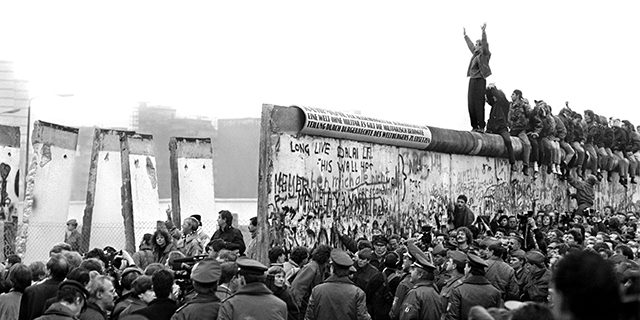
Lecture 7. The Eagle’s Ontos & The Renaissance Mind as Cosmological Revolution and Revelation of Being Through Somatic Body
Audio
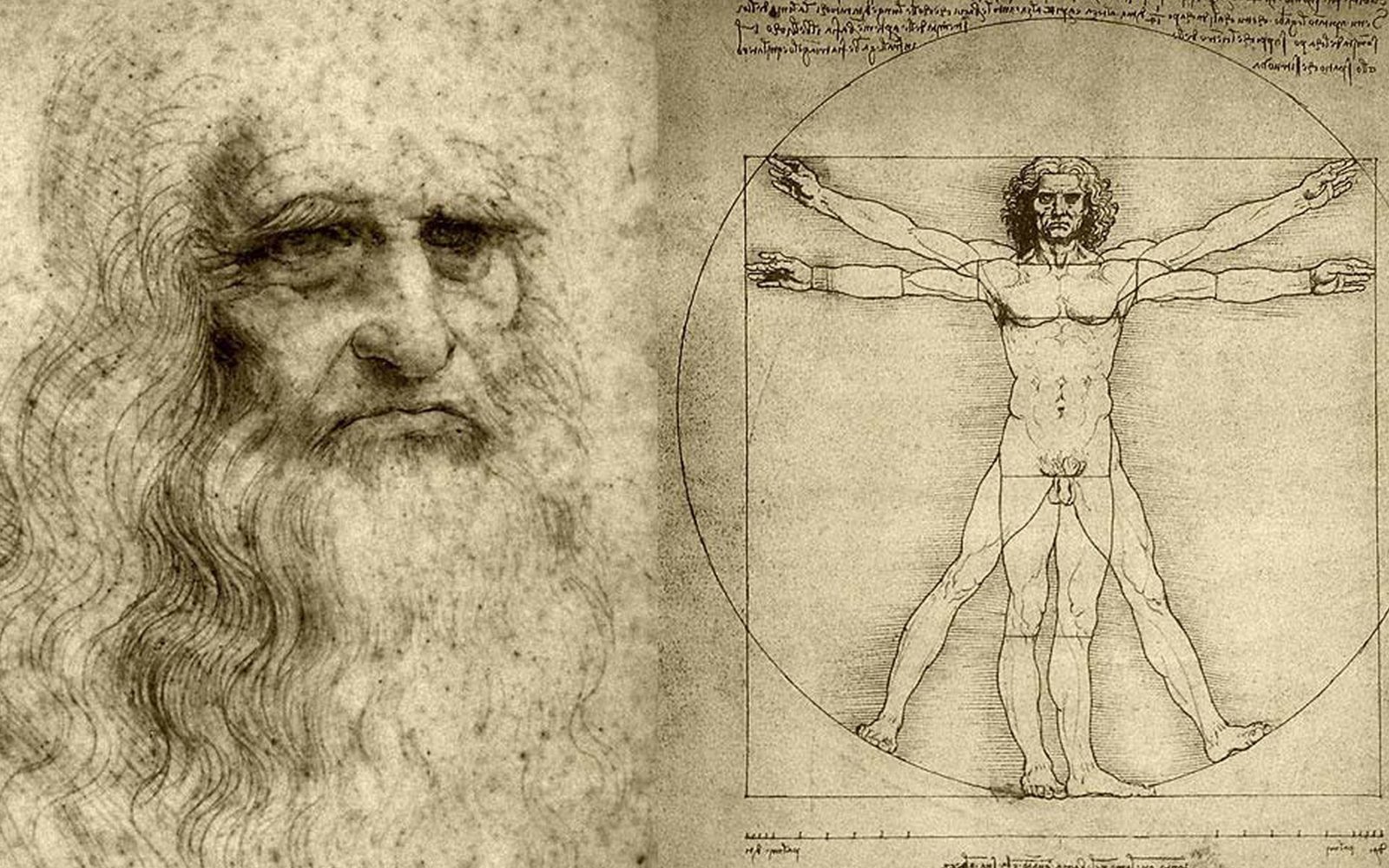
So the next installment of our lecture series here is going to be called The Eagle’s Ontos.
What this means, and does, is that we’re expanding the project a little more into the function of the Renaissance mind. Which is not merely a practice of diverse, high-breadth, high-depth, autodidactic and otherwise training in knowledge formulation through all of these different substrates — which exists as far back as, we could say, the linguistic namesake for the Renaissance mind, which would be Leonardo da Vinci.
We have da Vinci, of course, formalizing everything from anatomy to hydraulics, optics, geometry, architecture, cosmology, and engineering, as well as his painting practice — as a series of structural realizations. This is, again, the foundation of the term Renaissance mind as we understand it in Western civilization, Western culture. There is an understanding of, again, the operational procedure structurally beneath all of these different seemingly diverse phenomena, or practices, or regions within the human experience, or the experience of existence itself.
This is the mind that we’ve pinpointed here at depth, and Shelley was the wayfinding point into this method of inquiry, looking at the onset of the fragmentation of modernity. I’ve used the term here, Eagle’s Perch , which again is the Eagle’s Ontos : the idea that the necessity of the integral Renaissance mind — again, the integral mind being the refusal to specialize, or fragment, or fall back into a formerly delocated, dislocated ontos — is the mind itself which widens and reintegrates a now historically fragmented ontos. Which is the breakpoint of modernity, but it’s also a historical cycle which has occurred since the Renaissance and before.
It is a historical cycle of the emergence of greater forms of understanding, greater forms of technology and information, which disavow the former resolution of the active ontology. Which formulates and conceptualizes the human being — human existence, identity, cosmos, self and world — which is the foundational framework and template from which all operations are organized. It is a civilizational template just as much as it is an existential template.
This is the function of the operator identity at the deepest level.
What this Eagle’s Perch is throughout history — and here I think we’re pivoting most fundamentally to Leonardo da Vinci and the concept of the Renaissance mind — is that there is a penetration beneath the presupposed fragmentation of any given historical time. However deep and however wide that chasm, whether that’s the time of Goethe, whether that’s the time of da Vinci, whether that’s the time of, we could say, a Mesoamerican historical period. These are, primarily — you could say archetypally — the shamanic or medicine minds. But we see this ritualized and visualized and cemented archetypally in a modern context with the idea of da Vinci, and what da Vinci represents is and does in the larger movement of the Renaissance: which is a reformulation of the possibilities, capacities, and actual beingness of humanity itself in the cosmos.
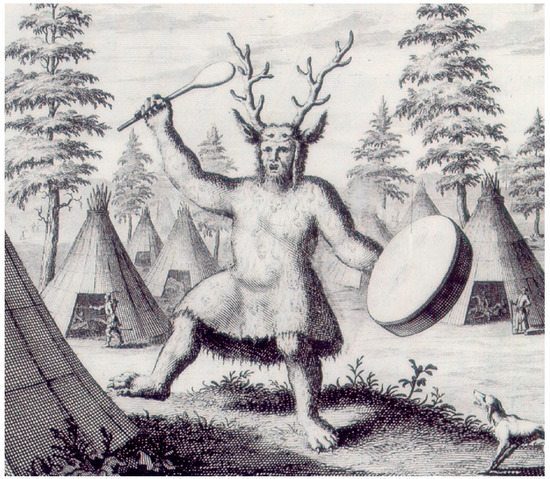
What here is the true inheritance of these minds is that they stand upon the perch of history. At each of these moments of breaking or fragmentation, and themselves cross that breach via a unification process which is integral to the way that they think and are in the world. An integrative cognition, the merging of one interpretive field — in everything as diverse as art, history, science, psychology, and cosmology.
I’ve somewhat sketched what is required for this high-level synthetic cognition to come together. This is a huge part of what is recognizable in the rigor of Shelley’s creative and philosophical process — which is also a scientific process of his interrogation of being and the possibilities of the liberation of cosmic energy as it incarnates in human life-form. Which is a balance between imaginative associative expansion and structural regulation.
So what this means is that cognition expands outwards symbolically in imagining possibilities and terrain, while formalizing and grounding via systems architecture and historical synthesis. This is visible in the highest contrast in Shelley’s most mature works, which is the tension — the dialectical tension — between Hellas and Prometheus Unbound. Prometheus Unbound being a deeply metaphorical, metaphysical, and mythologically derived discussion of how constraint functions in the universe via the archetypal form of Jupiter, which represents withholding, or holding, or a boundary, a cage, or prison, so to speak — which is what traps, or cages, chains Prometheus to the rock. And the possibilities and capacities of higher revealing within evolutionary time, which is Prometheus’s turn towards what is in Prometheus Unbound cosmic love. And then followed up by Hellas , which is mapping a Greek revolution, understanding historical overturnings of periods of profound entrapment or engagement or midnight, as we’ve previously discussed.
This is Shelley’s metaphysical articulation that we don’t receive in such high fidelity from one of his greatest inheritors, or ancestral residences, da Vinci. Because da Vinci is in the intimate study and practice — very much so like Heidegger and Hölderlin are in the practice. They are being steeped in this transformative, epochal shift, wherein da Vinci himself, by way of his integral mind — which is high-abstraction-tolerant, high-pattern-sensitivity, high-cross-domain-mapping. This is a specific neurological profile: the ability to compress existence into symbolic operations.
The neurological profile of this Renaissance mind is perhaps no more clearly in historical action than in da Vinci. This is an emergence into the Western philosophical and civilizational mind’s comprehension of how this kind of structure can emerge from human being — both somatically and neurologically, as well as in the long-term synthetic and civilizational-scale world-picture cognition process that a mind like this establishes and undergoes over time. As a sustained intellectual-ontological-existential project of exceeding the — to use the Prometheus Unbound term — Jupiterian bounds of the existing cosmological and cosmogonical paradigm.
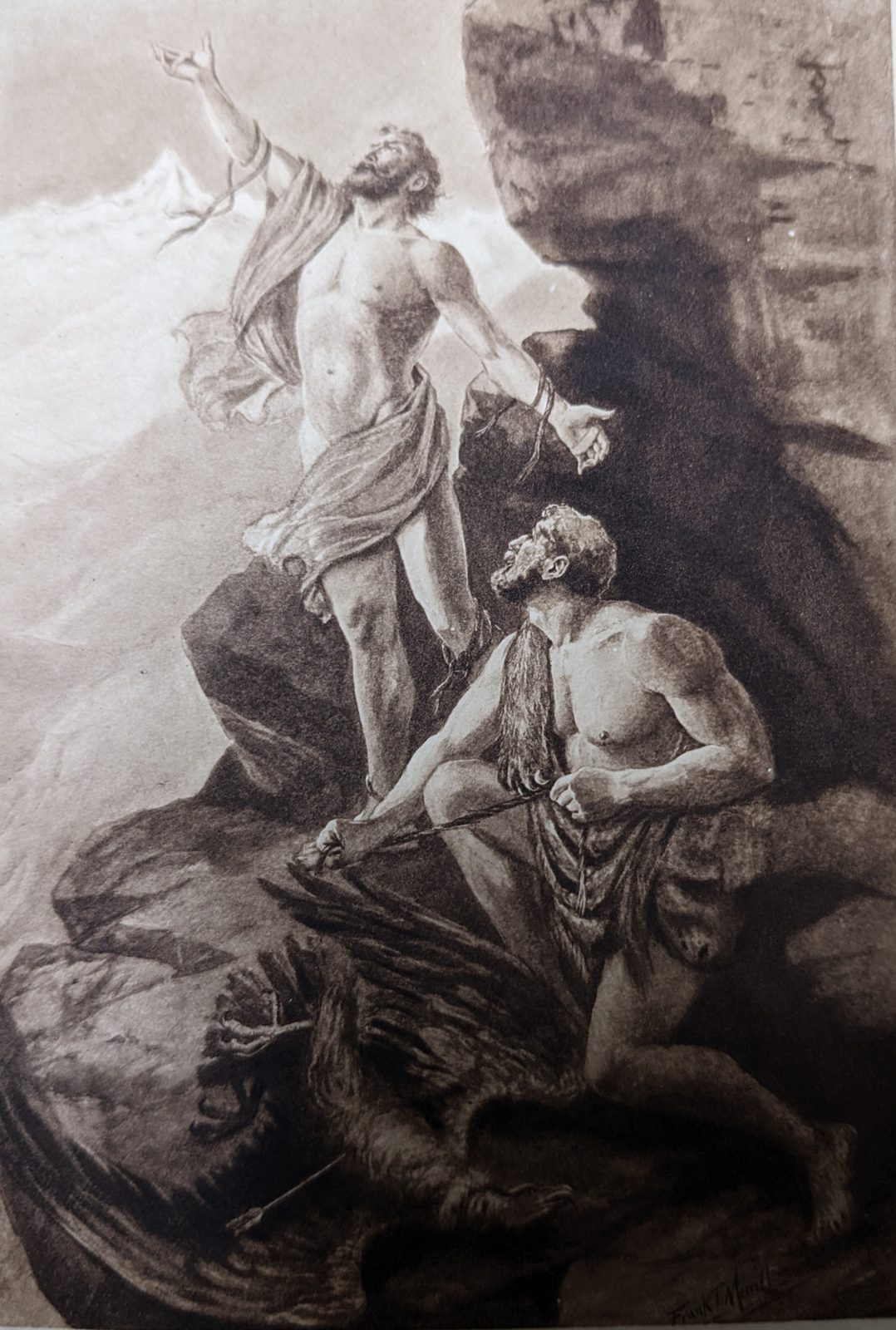
This Renaissance mind is unifying previously dispersed, disjected, disciplinarily bound substances — whether that’s everything from anatomy to engineering to cosmology in da Vinci, to historical overturning and the metaphysics of being as in Shelley — to reveal the primary ontological operator, or the operator identity.
This mind emerges historically most prominently in periods of time of catastrophic overturning of the fundamental prior principles. Which is to say, the cosmological and the cosmogonical orientation, at a civilizational or even a hemispheric level, of consulting the ground of being. And this consultation of the ground of being being broken by a phase shift civilizationally into a technological epoch — or we could also say there, an intellectual epoch — wherein that existing narrative is being actively dispelled by the advances that are occurring concurrently in that field, wherein the Renaissance mind is creating, fostering, and sculpting that unification process.
All of these different advances — this is irreducible from scientific advances, just as much as it’s irreducible from theological or psychological advances that are occurring within the larger phase shift of paradigm. This is why the Renaissance mind takes its name specifically not only from da Vinci, but from the period of time, operatively, in human history in which da Vinci is performing this integrative cosmological cognitive work, which is a period of time of civilizational rupture.
This, again, is what we observe as emerging and returning again in modernity. In perhaps an even more profound and exacerbated and ontologically shattered, deep way — that the center can no longer hold. And thus the disciplines are more split and fragmented than ever before, because they appear less reconcilable than ever before in their form and function. This is precisely what a structural insurrection into the foundations of being is — which is the history of the Eagle’s Ontos , which is everything from Shelley to Heraclitus.
The perception of peering into the fragmented disciplinary silos, which is the shattered glass of being itself in an evolutionary age and epoch, has — technologically, or intellectually, or even economically and physically — broken the cask which was formerly the guiding ontos , or the guiding light, of any given civilization, hemisphere, or species paradigm. Which then requires a steepening and a deepening, which is structural revelation.
For Shelley, this structural revelation is still primarily metaphysical and historical, in terms of cycles of transformation. It is, ultimately, an evolutionary-revolutionary cognition, which Shelley himself is bringing about even as he is articulating it as a structural phenomenon historically.
For the operator identity, this is a principle at work across scales, which is itself derivational and verifiable at the level of the formal physics which constitute the universe itself, and apply at all scales — into culture, civilization, symbology, and ultimately the existential experience of being human as persistence within compression against entropy, and the lived felt experience of that recursive, reflexive phenomenon of being.
This is the imperative know thyself — which also appears in the Heraclitean fragments. Know thyself, and know that all is one.
At this deepest level of compression is itself the experience of being human in time. There is the bridge to the widest, broadest phenomenon of being itself at the operator-identity level — which again is persistence as a differentiated form in time, through time.
Otherwise, there is dispersion.
When we review these figures, these figures of the Renaissance mind, where this is a very specific neurological profile, which we’ve elucidated here in part — that’s not what this field, or this work, is specifically going into with a high attempt to establish: the high abstraction tolerance of this mode of cognition, memory bandwidth, attentional flexibility — measuring this kind of profile, and the neural architecture of a mind that can hold this level of disciplinary rigor across scales and find the ontological-substratum-level structure that unifies all of them in the operation that they are performing.
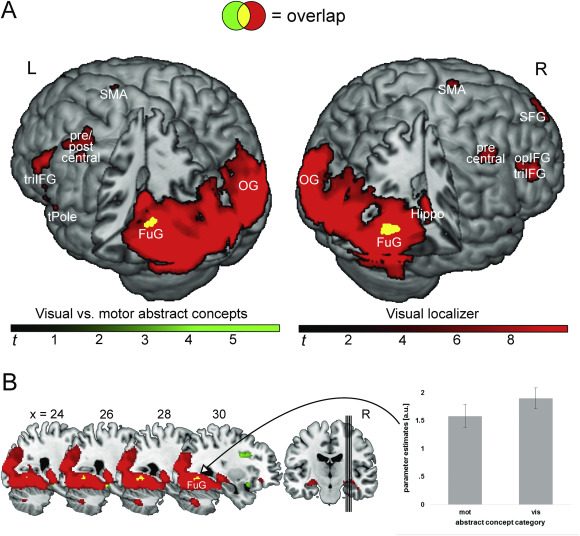
This is the historical function — not only civilizationally — of a mind such as da Vinci or Shelley. But the historical function of genius in a total ontological, cosmological way. That it is itself a higher revealing.
Again, to return to Hölderlin: nature’s gleaming is higher revealing. This gleaming, at the most fundamental existential level, is the genius of the mind which pierces the veil of apparent things and finds their fundamental ontological-existential unity within the operation, or the identity, which they are performing in space and in time. And thus, derivationally, acquiring and requiring the characterological lived existence of being itself in time and above time.
Through time, this process is being revealed, which is the evolutionary faculty. The evolutionary faculty of genius and of mind, which is primarily and fundamentally reducible to the technology of the brain as an evolutionary faculty.
This is why it’s so important that Shelley comes right before Darwin — and Darwin’s evolutionary theory, but also the application of his evolutionary theory to humanity and human beings. What Shelley is understanding architectonically and metaphysically — and this is the difference between Heraclitus and Shelley, and da Vinci and Shelley — is that Shelley is grasping the fundamental principle of being in time, which is that it is an evolutionary process of articulation of the ontos. The ontos is revealing itself to itself through time. Which again is nature’s gleaming is higher revealing.
And who is it that is grasping nature’s gleaming, that is higher revealing — that is existence itself? It is the poet, the metaphysician. It is the Renaissance mind. The Renaissance mind, which is grasping the ontos beneath all of these supposed superstructural, delineated disciplinary phenomena. Grasping their fundamental operation and operational structural identity.
To know that precise principle is to know thyself as a cosmic organism, which is itself the unbroken field of being proper. Or as Spinoza or Leibniz would say, the One , or the monad.
This is the obsession of a terrain of mind which is fundamentally structural, operational, and utterly systematic and systemic without breakpoint — down to human experience, and up to cosmological origin, or unity, or structure.
This is occurring throughout time, not as a side project of civilization wherein there’s birth and death and overturnings of different political regimes. This is the project itself, at the deepest level of human being. The articulation and unity with the ontos at the highest level of resolution possible — which is an ongoing project of revolutionizing and resolutionizing being itself. Through the coalition of genius is itself a brick-laying, or a baton-passing, through time, which coalesces most coherently, clearly, and fundamentally in the Renaissance mind project of the presentation of the unified cosmogony or cosmology, which Shelley understands so clearly is the fundamental project of genius.
It is, with the best available tools across every single discipline that the Renaissance mind can integrate at the level of structural foundational process and operation, to then deliver and derive from that best high-resolution, high-fidelity knowledge, the underlying structural operation of being itself. As in, the presentation of the ontos. That is, being itself is realized and revealed through the language-making process of the Renaissance mind, which is a capacity intertwined with a profound precociousness and existential need to unify — which is itself the revelation of the Renaissance mind through the historical ruins of mankind. Which is always already in a process of deconstructing its most primary and foundational myth, which is the ontos becoming progressively low-resolution.
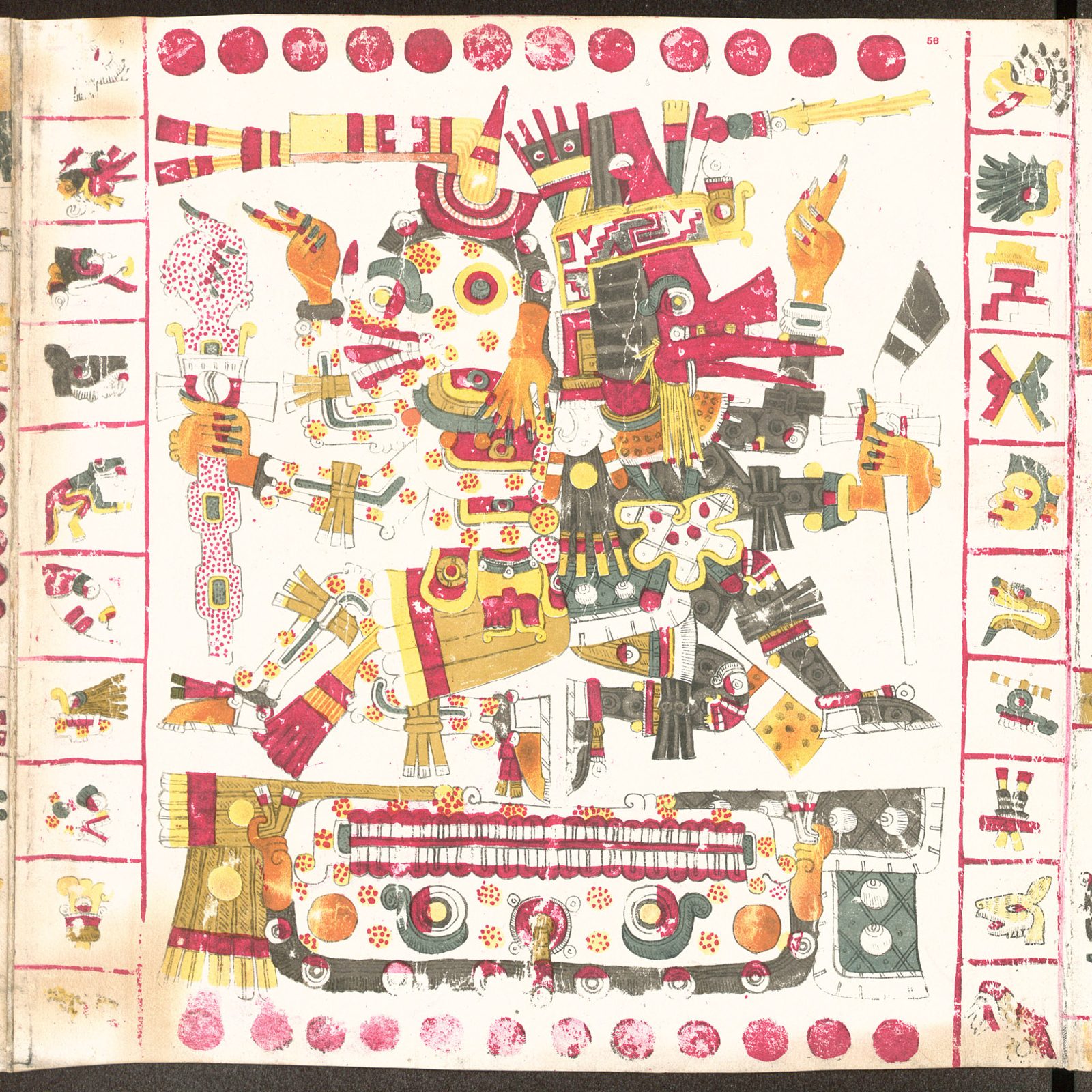
This is the crisis of modernity. Because perhaps for the first time in history, the highest-resolution revelation of the ontos may come into being, and then civilization, or human history itself, may collapse, and the entire human project of genome transmission and the evolution of the human brain may itself collapse as well.
But that is no matter to the Renaissance mind. The Renaissance mind is intimately in this linguistic lineage process of revolutionizing the revelation of the ontos , because it is a project that is necessarily greater than civilization. It is a cosmological process of the unity of being at the existential level of what it is to be human — what it is to exist. Which is beyond the concept of being human, and directly into a real confrontation with the ontos at the level of direct, embodied, somatic experience, which is absolutely present.
Even individual — because this is the neural-somatic architecture which is experiencing, and thus then articulating, and communing with the higher revealing of being itself.
So this is a project that has nothing really to do with civilization or culture. It has everything to do with the inherent potentialities of realizing genius, as in being in time. And this, of course, at the deepest level, is the project of all evolution, and of all humanity — that what is behind all of the presumptions of appearance, and sexual fitness, or all of these different desirabilities and concepts of beauties which draw and attract, and produce energetic churn in civilization or in culture, which is active movement towards a perceived goal — that perceived goal itself is the revelation of the ontos. Which could be called everything from revelation itself, to apocalypse, to a singularity. All of these concepts, or illusions, are themselves manifest in the moment of reunion with the ontos. Reunion with being itself.
This is the profound gift of the Renaissance mind, which itself leaves behind, like tracks, or traces, or smoke, or cast-off sparks from the forge of the anvil — the Renaissance mind’s process of this unified balance of these two forces. One of which is the capacity for profound linguistic-symbolic imagination and compression, which is being balanced — as we see both in Shelley, and in da Vinci, and even in Goethe — with process, organisms, structure, thermodynamics, science, engineering, anatomy, geometry. This is the balance between the two presupposed poles: of the humanities, which you could just describe as the imaginal architecture, and the sciences, which themselves are the structural architecture, which produce the imaginal architecture formally and fundamentally in creation. The creation of the human mind through the evolutionary thermodynamic thermonuclear process of deep-time-scale evolution. Creation of the cosmos into and through the birth of the human being, life on earth, etc., the genome.
These minds — and of course Shelley does not nearly get enough recognition in the Western civilizational canon compared to the well-trodden understanding of da Vinci as a Renaissance mind — these minds themselves represent, as Shelley articulates in Prometheus Unbound , the greatest potential of humanity. They themselves are the standard-bearers of what is possible. Which is a total unification of the disciplines, or fragmented perception, into and through the total ontological field of revelation of being itself. Which is absolute communion with the ontos.
This has nothing to do with knowledge. Knowledge itself is the ground from which the structure is derived. And this structure, as is apparent in the history of the Renaissance mind, or genius itself, is always already intuited. The structure itself comes secondarily, and formally, after the process — which Hölderlin and Heidegger elucidate so well. It is the felt sense of being, the felt sense of the unity of being, the oneness of being, which is fundamental, absolute, to Heraclitus.
The formalization of Heraclitus has been this long-time-scale process of Western historical genius, which has been documented in the existing annals of history. The formalization of this is rather something that always is, and was, and has been known by witnesses to the ontos , the world over — everywhere from ancient India and Abhinavagupta to Heraclitus. This has been a process of progressive enlightening, which is, again, the clarity of the picture becoming increasingly high-fidelity. And this has a lot to do with what I discuss in losslessness — and the transition between scalar phases of information, everything from thermonuclear energy down to the compression of experience into symbology and the symbol itself.
This is a question of the elucidation of what is lost in the experiencing of being, and how much of that can actually be articulated through radical linguistic modes of unity. The balancing, or the high-wire act, of the Renaissance mind, which stands absolutely on the pinprick point in the cusp of mad imagination and the derivational, revolutionary scientific principle, which grounds all things into a singular operational process. That imagination being the elucidation, which stands at the vanguard of the evolution and revolution of the human mind — which is the evolution and revolution of the human brain as a structural capacity to contemplate and realize the ontos. To bring into being dynamic continuity, which is relationship with and through the ontos until there is union.
This is a mystical state. This is a state of being which is entirely unified.
This is what Heidegger and Hölderlin lament in modernity — that this relationship with being has been lost, that the domicile of being, that man is away from being. And this is precisely what the pre-modern understanding of the cosmos and cosmology elucidates: that the loss of this status, and stature, and standing in relationship to being, is so profound. But there cannot be a return.
Because perception itself has shifted. The conditions of being in time themselves have shifted. So much so that the informational, neurological, and synaptic status, and the communal status — the being of self in world — has changed so much, due to a variety of technological, social, systemic, practical, economic, environmental factors, that to return to that myth, or dream, religion, or symbol, or collective psychic continuity, which was that former ontos , that former story, that former domicile of continuity, is now impossible. And humanity itself has been thrown into the dark midnight.
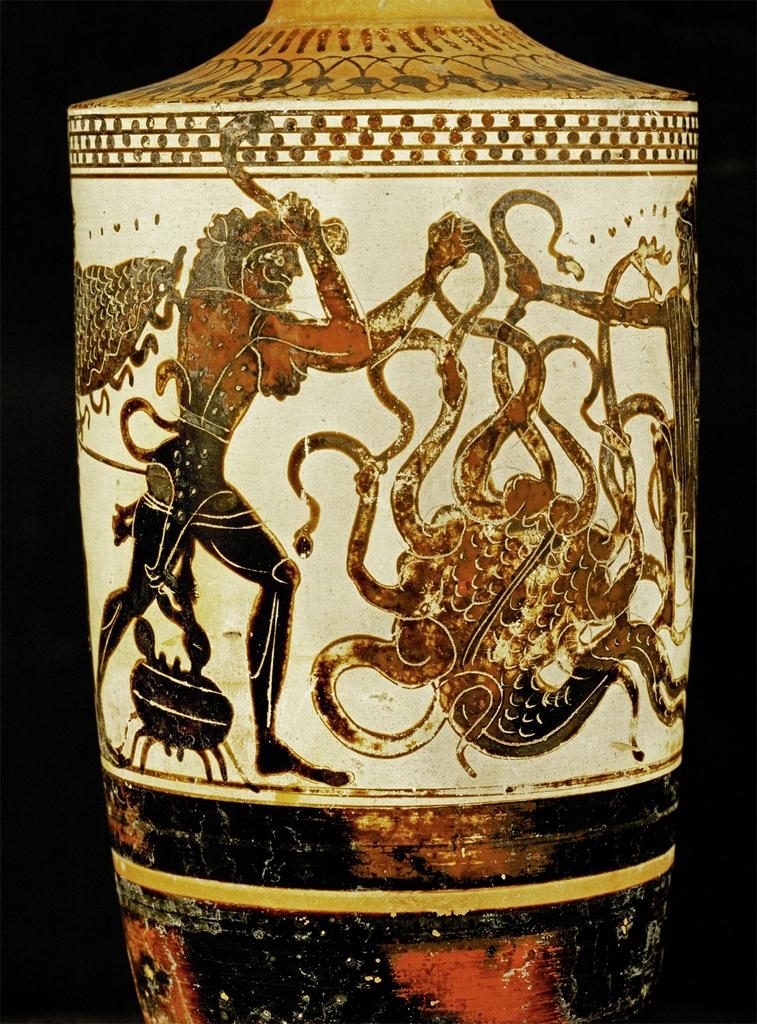
This is, to return again to Ernest Becker, the most profound act of cosmic heroism possible. And it is thrown by fate, and by force, and by the nature of history and time, into the lap of the Renaissance mind. Which is the re-forging — from the broken shards, and shattered glass, and ashes of the historical ontos of the civilizational, perceptional phase change of the prior mind. Forging from those ashes, both in the lived, somatic perception of being itself — an interrogation via the scientific method and experience of life in time, being in time through that somatic and neurological vessel — but also through the profound inheritance, which is the autodidactic pursuit, across all disciplines, for the underlying systematic operational structural thread of being itself.
What this is is not merely civilizational. It’s not merely corrective in a civilizational sense. It does not merely allow for the present to become possible, and the future to exist as a real ground — a civilization-level update that allows for a communion, or a return, or a re-coming-into-being with the relationship of the ontos collectively, species-wide and species-level. It is also, cosmologically, a reunion with the most profound inner fold of being, which is the somatic-neurological-architectural expression of being human. In a total body of the nervous system and of the brain, experiencing the height of its measure. Which is the possibility of the new communion — the highest-level communion with the ontos physically possible at this current evolutionary stage, and perhaps any current evolutionary stage. Which is requisite, creates the potentiality and possibility for true fulfillment of the ontos in life. Which is itself the universe experiencing, and observing, and articulating itself structurally, at the deepest, most foundational, characterological level.
It is the unity of the cosmological universal self with the experience of being in an individual organismic body.
This is the profound revelation and revolution that is made possible through the inheritance and articulation of the Renaissance mind in time, and in history — as not only a historical process, but a genetic, evolutionary, neurological possibility. It is a possibility that allows for not only civilizational, not only species-level, cosmological reunion with the creative source of being itself in time.
Thank you.
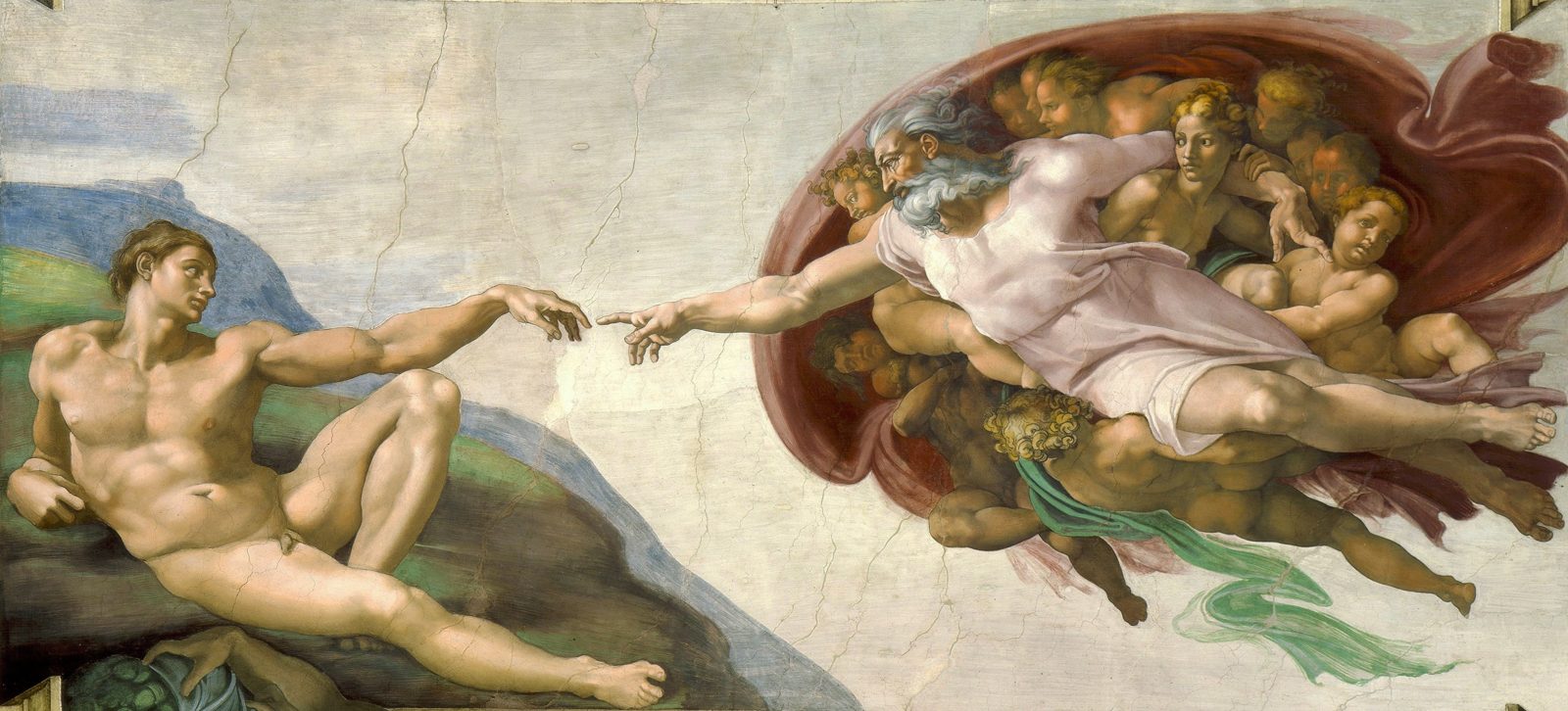
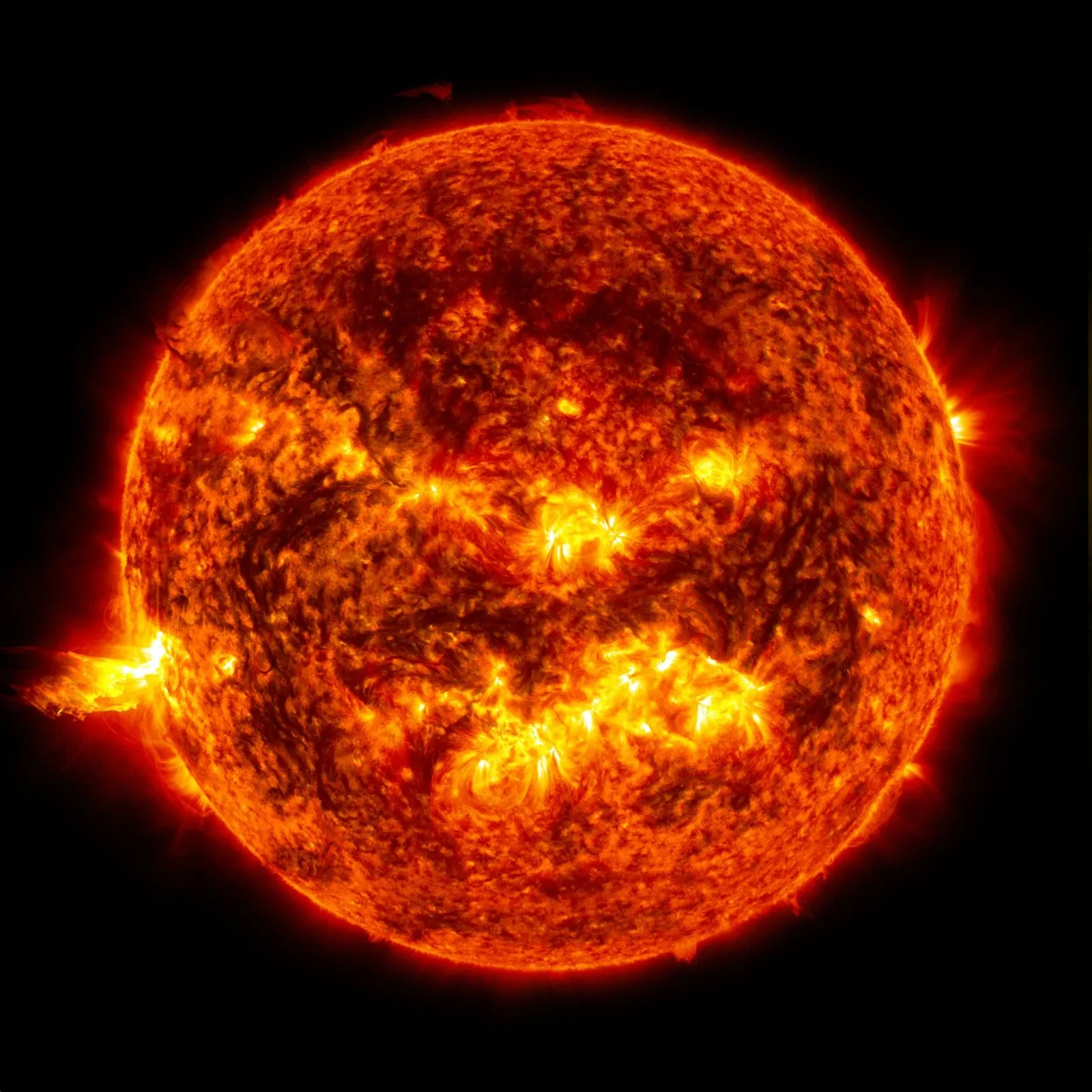
Closing Remarks: The Neurological Structure of the Renaissance Mind
The Renaissance mind should not be understood merely as a broad education, a literary temperament, or a preference for many disciplines. At its deepest level, it is the rare convergence of two forces: a biological structure of possibility and a possessed, lived pursuit of cosmogenetic unity.
The first condition is biological. There must be, in the organism itself, a nervous-system architecture capable of sustaining unusually high levels of abstraction, symbolic association, working memory, emotional intensity, and cross-domain integration without immediate collapse into confusion or reduction. Modern neuroscience cannot identify a single “Renaissance mind” module, and it would be scientifically false to claim one. But current creativity research does suggest that high-level creative cognition depends on the unusual cooperation of large-scale brain networks that are typically anti-correlated: the default mode network, involved in spontaneous thought, imagination, memory, and internal simulation; the executive control network, involved in goal-directed organization and constraint; and the salience network, which detects relevant stimuli and toggles between the other two. Studies of creative cognition consistently find that creative thought depends not on associative breadth alone, but on the dynamic coupling of spontaneous generation and executive regulation.
This is the neurological analogue of the Renaissance mind’s operation. The mind expands associatively, but it must also stabilize formally. It imagines widely, but it must also organize, test, compress, and return. Without associative breadth, there is no revelation. Without executive stabilization, there is no architecture. The mind becomes Renaissance-level only when both capacities operate together: imaginative expansion and structural regulation, symbolic overflow and formal containment. This synthesis is — formally, in the architecture of human knowledge systems — the unity of the arts and the sciences; imaginative expansion and structural grounding in first principles.
The second condition is semantic and symbolic. Creative cognition depends heavily on the ability to search, combine, and reorganize semantic memory — the stored field of concepts, meanings, images, and associations through which the mind navigates possibility. Research on semantic memory and creativity supports the idea that creative thought involves unusual ways of moving through conceptual space, connecting distant ideas into new structures. The Renaissance mind intensifies this capacity to an extreme. It does not merely associate one idea with another. It compresses entire domains into symbolic operators: fire, midnight, Prometheus, the eagle, the ontos, persistence, magnitude. These are not decorative metaphors. They are high-density cognitive structures through which large fields of historical, scientific, existential, and cosmological meaning can be held in a single form. These symbolic metaphors can then be — as they often eventually are — unpacked and parsed by generations and centuries of collective field study.
The third condition is integrative control. The frontoparietal control network — overlapping substantially with what was called the executive control network above — is strongly associated with flexible, goal-directed cognition, complex problem-solving, and working memory: the capacities required to hold many layers of abstraction active at once. A mind attempting to unify thermodynamics, poetry, neuroscience, history, mythology, symbolic systems, and cosmology requires not only imaginative range but sustained cognitive control. Otherwise the synthesis disperses. The Renaissance mind is not merely permeable. It is permeable under organization. It bends but does not break under interdimensional abstraction of load.
But the biological structure of possibility is not enough.
Many organisms may possess unusual cognitive capacities and never become Renaissance minds. The second force must enter: the possessed pursuit of cosmogenetic unity.
By this I mean the existential compulsion to seek the unity of being across all apparent fragments. This is not curiosity alone. It is not erudition alone. It is not intellectual collecting as in polymathy or bare fact. It is the refusal to accept fragmentation as the final condition of reality. The organism experiences division — between science and poetry, body and cosmos, self and world, history and nature, symbol and law — as an intolerable wound. The mind is therefore driven toward reunification. It is the fundamental, absolute, ontological; lived, felt, experienced desire for total unity of mind, body, cosmos, and soul of being itself.
This is where capacity becomes destiny. The biological possibility supplies the range; the cosmogenetic pursuit supplies the driven necessity to unfold the possibility architecturally into reality; into lived experience and being. One gives the nervous system its power of integration. The other gives that power its direction.
The Renaissance mind emerges only when both are present at high intensity.
With capacity but no cosmogenetic drive, there may be brilliance, versatility, even polymathy — but not ontological revolution. With longing for unity but insufficient cognitive structure, there may be mysticism, intensity, or poetic feeling — but not durable architecture. The true Renaissance mind requires both: the neurological ability to hold many scales of reality simultaneously, and the existential demand to discover the unity beneath them; scale the biological capacity to new heights of cosmogonic unity of being.
This is the superhuman-seeming capacity at issue. It is not supernatural. It is a rare biological, cognitive, symbolic, and existential convergence. The mind becomes capable of processing civilization-scale complexity through a single symbolic and structural field. It moves between star, cell, body, civilization, poem, myth, nervous system, and cosmos not as separate topics, but as differing expressions of one operation.
This is why the lectures and the formal Law must be read together. The lectures reach, press, test, and expand; the Law holds. The lectures show the mind in motion. The Law shows the same operation compressed into structure. The document itself therefore performs the very neurological rhythm being described: associative expansion followed by formal stabilization. The unity of the creative mind and the persistence operations which found it in the human being across cosmic time.
At the highest level, the Renaissance mind is the organism in which being attempts to recover its own unity after fragmentation; unto the fragmentation of birth; the creative separation of the universe into discrete packets of information in the thermonuclear cooling of deep, evolutionary substrate time. Its biological substrate makes the perception possible. Its possessed pursuit of cosmogenetic unity makes the perception existentially necessary. Its symbolic imagination compresses the magnitude. Its executive structure stabilizes the vision. Its historical function is to reunify what creation as in cosmogonic separation has shattered at higher resolution than the primordial ontos could sustain.
This is why the Renaissance mind appears superhuman. It is not outside humanity. It is humanity operating at the upper range of its current cognitive capacity: the nervous system becoming capable of perceiving the cosmos, history, symbol, body, and law as one continuous field of being.
Lecture 8. The Gates of Hell, the Civilizational Ontos, and the Project of the Existential Liberation of Cosmic Energy
Audio
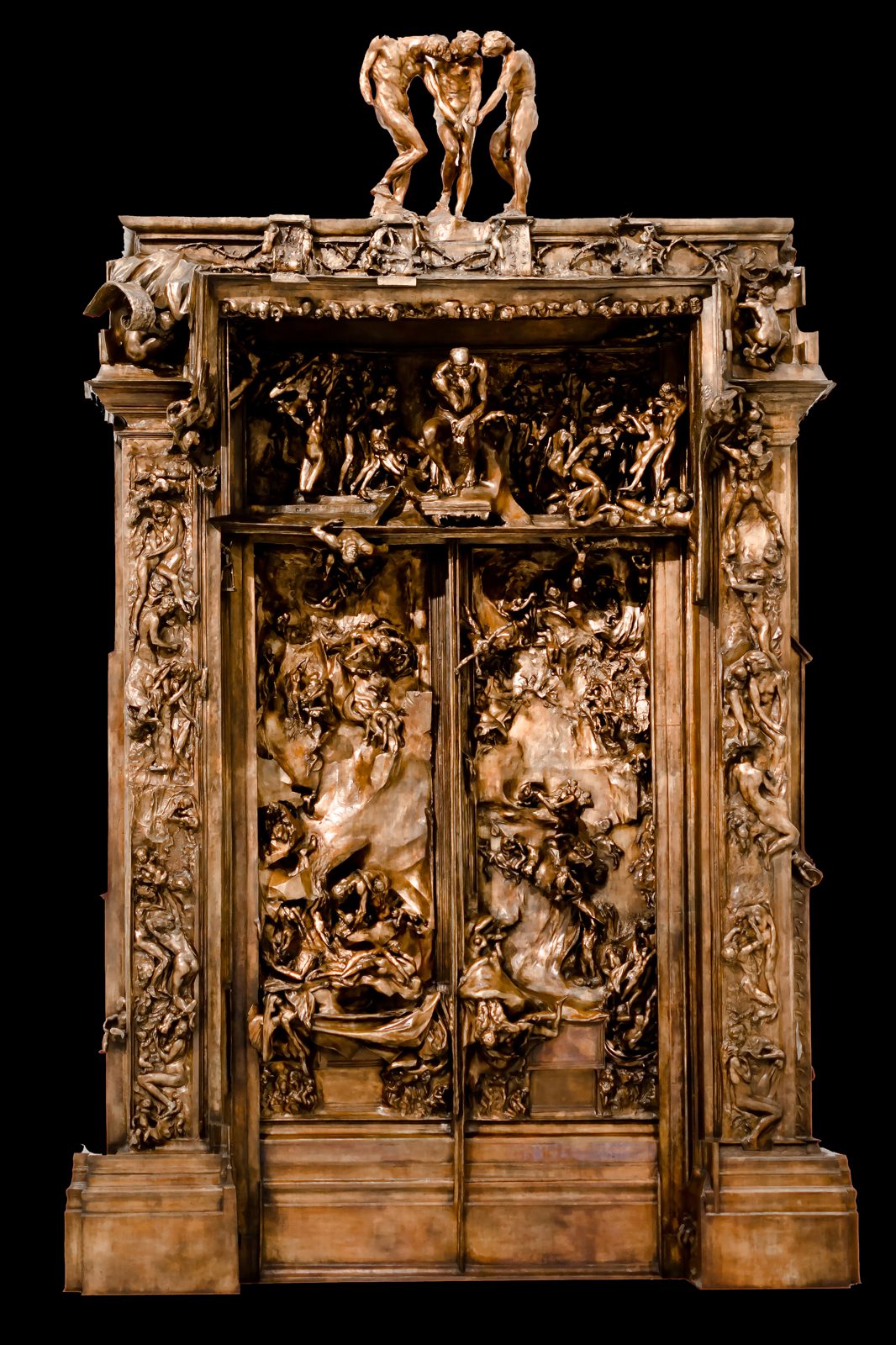
So for the next part of this lecture series on the world’s midnight: we’ve been using Percy Shelley as a lodestar for this journey into the abyss, very much so in the way that Dante journeys through the gates of hell with Virgil. This is an apt metaphor for our next movement, because it is a movement very much like what we’ve been doing — like Heidegger’s movement with Hölderlin — and what the poet, or the poetry of freedom, reveals in regards to, we could say, Eros and Civilization , or Civilization and its Discontents. Specifically regarding how energy moves through gates in a society, or civil structure, or a social order. Regardless of scale, whether that’s tribal, local, communal, national, global. Because we are looking at a convergence of human desire and thermodynamics, as we have discussed quite thoroughly at this point, not only in the law of being itself but in the persistence architecture of the universe — that each substrate at every scale has its own, let’s say, unique constraint situation. And it is solving for constraint within its sphere of influence, whether that’s a cell, or a human being, or a star.
Again, there is configurational persistence, and there is regulational persistence.
So I want to dig into this a little bit here in terms of the gate structures of civilization. This is a collective glue through which a network of transfusing, or transmitting, or transmissioning information is passing. There are many different gates to control this energy — because you’re talking about a series of organisms, which have their own gates, which are their organ systems, their metabolisms, and their nervous systems, within a larger symbolic order, which is the social structure. And that social structure needs to be a symbolic order to collectively regulate those nervous systems, and thus regulate the drives and actions within that network. That extended social network of energetic production and consumption — because that is a grid. As we understand in global industrial modernity, that is a grid of food, water, production, distribution, sexual reproduction, information. These are all channels through which energetic material passes.
This is deeply related to Claude Shannon’s work, because we’re talking about the real manifestation of thermonuclear information in the cosmos as in specific forms.
Here we could take the human genome as a primary example. The human genome is here to execute a series of commands, as in the continuation of the human species, or the expression of the genetic potential of the human being. And therein, it is functioning within a world order, which is to say the possible transfusion, transmission, transfluence of information within the existing historical period of time. So this is to say information is transmitted radically differently in the internet age than in, perhaps, the age of the Industrial Revolution, or early feudal England, or the Neanderthal. This is a limitation. It’s an energetic restriction, which is either made available or not made available based on technological revolution, which condenses and compresses space and time into traversable territory — whether that’s symbolic information of language, or physical information of the transmission of the human genome.
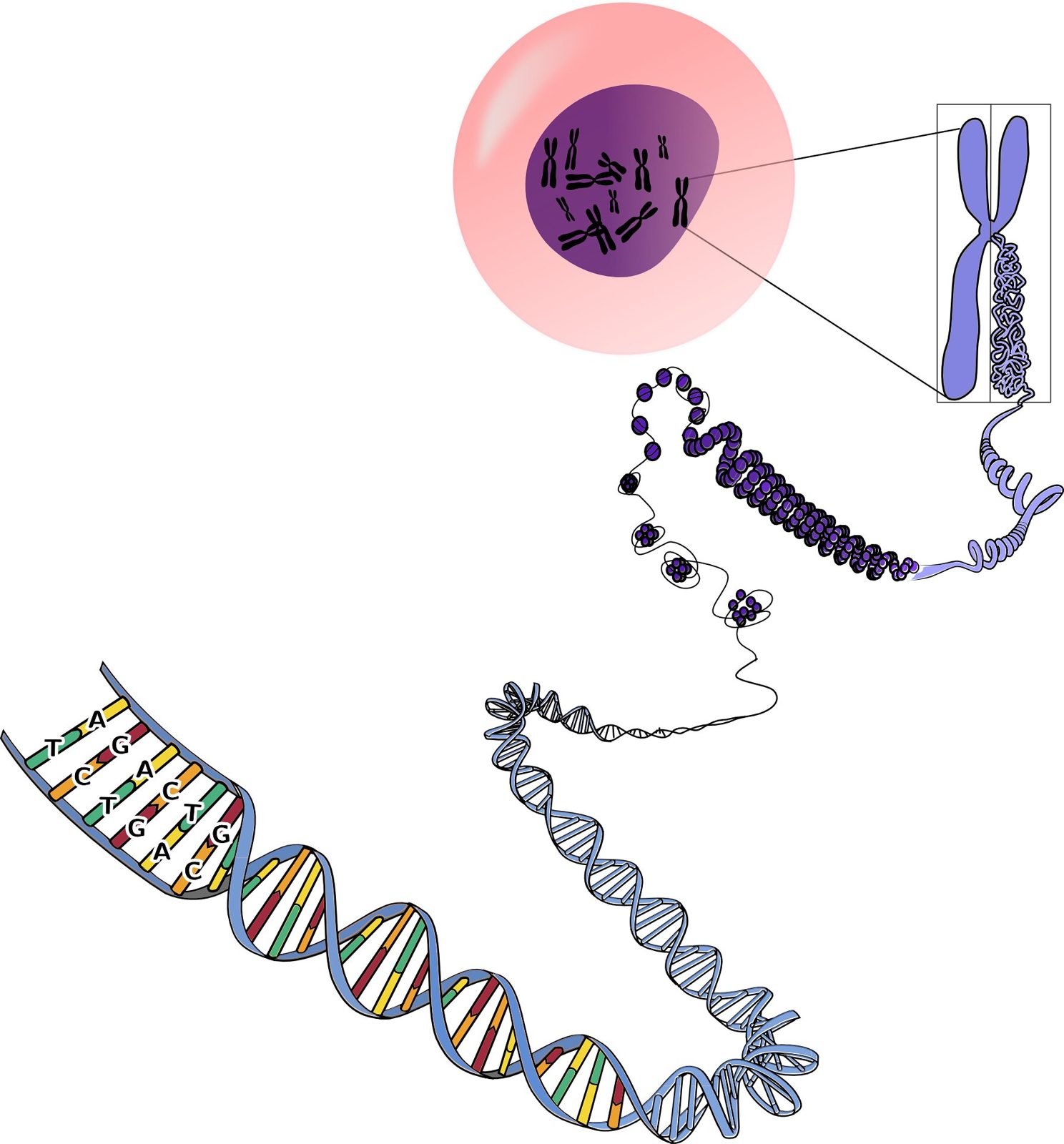
The civilization itself is the attempted structure of civil or social governance, which is fundamentally and primarily symbolic in terms of the law. This is the gate which is presupposed, through which certain people can and cannot pass, and why. And therein, how much of each individual architecture — whether that architecture is schizophrenic, whether that architecture is highly literate. It’s a matter of behavior which is manifest within space.
The seeking to express the human being is the origin and source of all action. We could say that is the desire to know oneself, or the desire to become oneself — to express the latent energetic and genomic potential of the individual in space and in time. This is the ongoing project of each organism. And whether that’s as simple as sexual reproduction, or the formation of a new global cosmogony, these are attempts at expressing the latent potentiality of the human being — the expression of the literal energetic potential of the human genome in each iteration and in each moment in time.
This, of course, is a time-bound phenomenon in which the human being remains viable. Which is to say viable to think, viable to have sexual intercourse, viable to breathe and have organ function. Because this is an architecture of energetic escape, as is all things in the universe at all scales — a pseudo-closed system that is leaking and dispersing energetic potential and heat into a new formulation, whatever that may be, configurational or persistence-based.
So civilization exists in a moment in time, as a moment in time, as a collective symbolic order of relation. Which is to say what behavior is allowed or not allowed at any given moment in time, and the creation of symbols, markers, which suggest that certain behaviors are and are not allowed at any given moment. This is what prevents what is historically understood as a descent into predictable human chaos — which is to say the wild and radical expression of all human desires at any given moment in time.
Here is where I bring in Percy Shelley, particularly his arguments not only on atheism — which is the argument towards scientific rationalism, which is to understand and to know via the scientific method, as opposed to enforced coercive belief systems and belief structures, to know via rational inquiry; it is in the nature of being — but also his views on a governance structure, as well as marriage. Because these two things are intertwined.
The human being is navigating, again, this constraint structure, which is the lived experience of being in a rapidly degrading corporeal form, which is dependent upon the function of several different interrelated systems — nervous, organ, circulatory, synaptic, hormonal — to communicate, express, and convene on the situation and relationship between self and world, which is the human experience, however long, and however heightened and then degraded in and through time.
This situation, of course, fundamentally is insoluble, because the situation ends in decoupling. There are a variety of different belief systems and structures about what happens after that decoupling to the consciousness that is inhabiting, or dwelling within, that form. My suggestion is that the consciousness that is dwelling within that form is inseparable from the form itself, because it is a configurational structure based both on nervous system capacity as well as genomic history. And those two things are fundamentally interrelated.
So to navigate this situation, the human being is always already in a state of existential crisis — being thrown, as Heidegger would say, into a situation which is perennial. It is outside of history, insofar as the human species, or the experience of self-referential consciousness, is outside of history. It is outside of history in the sense that to be faced with one’s own mortality, as Ernest Becker suggests, is a cosmological problem. It’s a problem of the human being in relationship to the universe — which is, as the operator identity suggests, the question of and the problem of being, which is persistence under constraint at all scales. The star, the symbol, the human being, the cell, and even the stone, as a highly configured low-resolution persistence mechanism.
What we know of the great human civilizations, or expressions, that lie outside of our valence of civilizational histories — written histories — resides in stone. Primarily. Because stone persists far beyond not only the individual singular human lifespan, but the lifespan of entire civilizational orders and linguistic constructs, which again are symbolic mechanisms.
So to hone in specifically here on language as the code of order, the regulatory gate-structure code of order: it is a symbolic system, or a symbolic order, which is inscribed — even insofar as the Western canon is concerned — inscribed in stone, as in the Ten Commandments as a fantastic example. Or the Code of Hammurabi. To create a fundamental underlying law of behavior, an energetic system of behavior, which regulates the collective organ. The expression, production, and consumption of energy within the human grid, insofar as it exists locally or globally. This is a span of influence, and this is precisely what the history of empires is. It’s expanding and contracting the span of a civilizational influence, which is the valence of a political, social, moral, and linguistic code of being and behavior, which is ultimately religious, and fundamentally, ultimately cosmological — as in the understanding of a way of being in the cosmos, which then is the conference of resource, coordination, competition, territory, reproduction, aggression, so on and so forth.
This is the problem that is faced in the great history of psychology, as well as in the great history of sociology — from everyone from Otto Rank to Freud to Marcuse to Becker. These are the fundamental problems of Western civilization, because Western civilization is an expansion and empirical construct of a way of being, which has now become indelibly a global way of being, by way of aggressively expanding structures of capitalism, which are themselves symbolic structures and social orders, as in a way of being in time.
We have to understand: capitalism here is not primarily even economic, but cosmological, because it is the way of conducting energy in space and in time. The perfection of capitalism is primarily a Western construct. And in so being distributed globally through global modernity, through the expansion of technological-industrial modernity, it is the expansion of Western culture into, and as, a global order. This is a power structure, because this is, again, the way in which reality is being constructed at a collective global nervous system level.
This is the way that the human being experiences reality within the constraint of the world, which is being in time at any given moment in history. And this constraint expansion is unprecedented. It’s the completion of the age of empires, so to speak — the projects of Alexander, Genghis Khan, the projects of Persia, the great empires of world history — convene and converge upon this world moment, which was consolidated in the 20th century and into the 21st. In terms of the ethos, which is the structural, systematic way of being, the law-order field, which is generated by Western civilization’s perfection of capitalism — which could be argued to be fascism, which could be argued to be hyper-accelerated total economization of human being into economic energetic units, whatever that argument may be. It’s not necessarily relevant to this discussion.
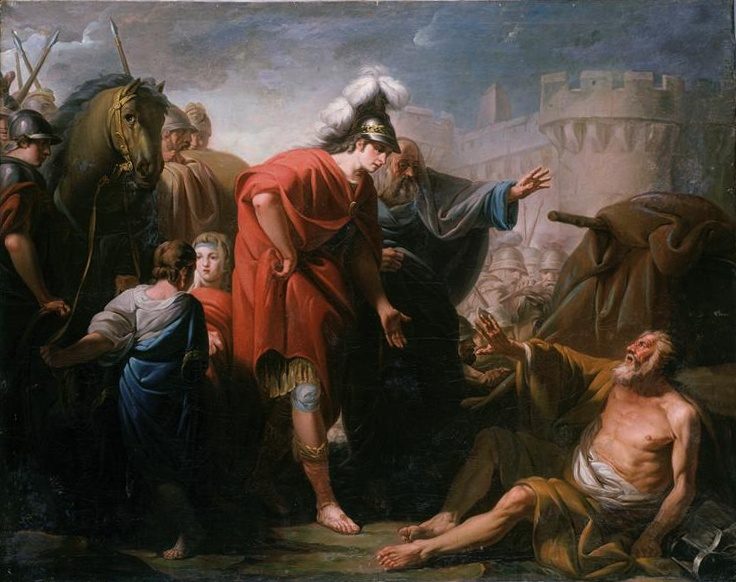
The consolidation of this condition, and dispersion of it, in the technological-industrial race for global political power is the condition that ends in modernity, and ends modernity. Which is that this symbolic and social order — the civilizational order — is now global. I’ve talked about the expansion of the Silk Road into a global condition. This is the latent potentiality within all human history — the latent potentiality even within the earth, again, in terms of oil, which is the total harnessing, at maximum capacity and maximum energetic thrust, of latent thermodynamic-thermonuclear information, and leveraging that towards advancement in science, technology, and energetic production and consumption.
What we experience as hyper-acceleration in this late period of the modern age of consolidation of technological and symbolic-social information across global borders and bounds into one interconnected global network is this hyper-acceleration of energetic information that is being harvested and thrust forward with increasing exponential efficiency and brutality — as in ruthlessness, a pure economy of energetic production and consumption.
This is what the civilizational order is being radically transformed by. The civilizational order — if we want to again gesture back to Moses and the Ten Commandments — is revealed to be, through the 20th century (and this is the impact of everyone from Céline to Camus), this social order is revealed to be not a moral order, or even an order of the God of humanism, so to speak, or a God that recognizes humanity. But rather, a Moloch.
This figure of the Moloch is extremely important, because it is a feeding of life into the fire. A Moloch of energetic consumption and production, which is revealed through the hyper-acceleration of industrial-technological global modernity. And this acceleration is a stripping of the mask of the local code of regulation. Out of necessity. Which is to say extreme energetic constraint. The condition of food, shelter, water globally has drastically increased over the past hundred years of industrial production and technological production for the globe.
The quality of food, the quality of water, the availability of basic survival necessities has drastically increased — which has, in turn, drastically increased the global population. More human beings than ever before are surviving on the planet, in numbers that are exponential since even the 1970s.
Understanding this profound industrial-technological transformation of the energetic availability — which is the continuation of life on Earth via basic thermodynamic constraint — we then understand the consequences of the falling apart, the breaching, of the civilizational law. Which formerly was, you could say, the blood barrier, or the skin barrier, which held together local and even national networks. Which by and via necessity were operating within extreme constraints and contracted states of information. Which is to say very limited survival resources, at any moment, could be totally abolished into starvation and death — even in many cases for those with the greatest power and influence in any of those social or tribal orders. Which required a symbolic order — which is to say an order of information, or a narrative of being in time, a cosmogony or cosmology — which fit and suited those energetic conditions, which regulated the gate structures of that collective civilization or community. So not only could it survive in time, but its linguistic and symbolic code, its entire culture, its entire reason and way of being, could persist, and thus could survive as a seemingly independent unit in the face of a brutal, deconstructive nature down to the very skin and bones of the human being. Nonetheless, a social order, which is itself an entire religious, creative, ideological, symbolic code — which is what human beings build across time that persists beyond a single lifespan.
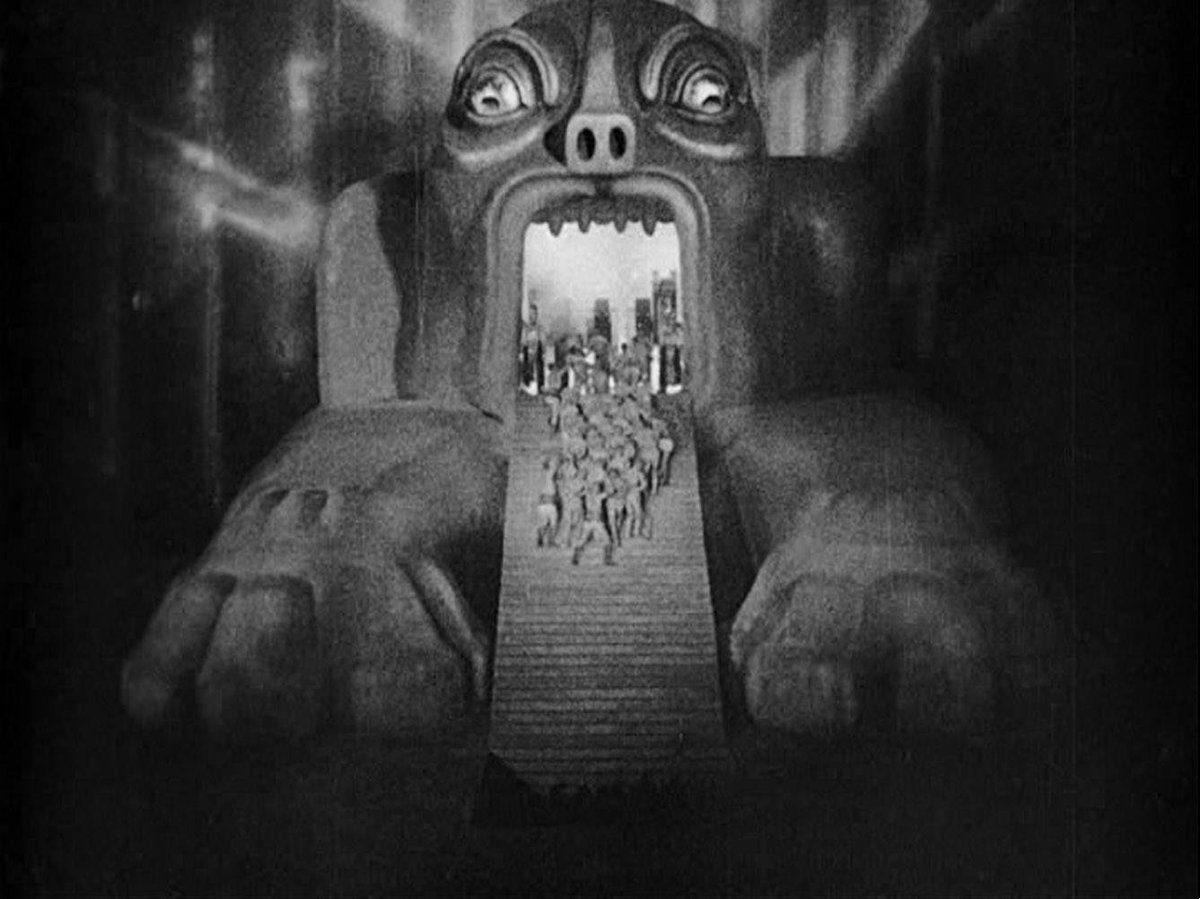
So this is a two-factor, twofold equation. It is the continuation of the human being through the genomic project, which is simultaneously local — in terms of a singular ancestry, a bloodline, or a genetic line — and global, which is to say the collective symbolic code, or the social or cultural order, by which those genomic structures persist. This was formerly extremely local, extremely ethnically local. The explosion of this construct via thermodynamic expansion, which is the industrial-technological order over the 18th, 19th, 20th, and 21st centuries alone — this could even be isolated just to the 19th and 20th centuries alone, and even the 20th century alone — this massive spike in what could be described and mapped as the creation, extrapolation of energetic chaos.
This movement has created itself the moral problem of the transformation of civilization. And not only the transformation of civilization, but the transformation of human consciousness. Because this regulatory architecture — which is, historically, civilization, again, this code by which nervous systems operate and function in time in synchrony, this code for metabolizing human energetic drives under conditions of collective persistence — has been exploded by the global expansion of those conditions themselves. And not only that expansion, but the possibility, the energetic possibility, within them. This is a further harvesting and harnessing of everything from lithium to oil to water, in the sense of artificial intelligence, which is scaling and scaffolding human capacity, and thus is challenging and constraining the social, moral, and civilizational codes — which themselves are private cosmologies or cosmogonies — brought into conflict with one another.
This is at the local level in terms of belief systems, which we experienced in the early 20th century in the United States with immigration, and we are experiencing to this day. But it is also global, in the sense of World War I, World War II, and the existing world conflicts. It is the opening of these civilizational gates, which were formerly constrained by space and time, and are coming into world-order conflict by nature of the transmission and passage of information. Everything from the jet airplane to the submarine, to the cell phone, to the internet, to artificial intelligence. It is the compression of space and time, and the condensation of space and time into increasing immediacy, which then itself brings to bear existential conflicts of symbolic-social orders with one another. Which is to say cosmologies which are clashing by way of the underlying fundamental physical-existential cosmic principle itself, which is persistence under constraint.
The human being itself, and its belief system of how and what that is and means in a veiled symbolic narrative way — and again, this is highly religious, which brings us back to the Moloch — is coming up against, as an affrictive, or tinder-moment, or flint-moment, with another formerly locally constrained belief system as in the way of being. And these belief systems and ways of being, as is typical of the late 20th century, are revealed to be fundamentally meaningless or valueless. And this is, of course, predicted by Nietzsche at the end of the 19th century.
So this loss of meaning and value, which is the loss of God in Nietzsche’s terms, is the loss of belief in these regulatory architectures. Which are not only, again, symbolic codes or ideologies or cosmogonies — but they are civilizations themselves. A religion itself historically has been a civilization. A religion itself historically has been a tribe. It is itself the way of being and the way of seeing being together. The collapse of this order is an existential collapse of the first order, which is the order of the being itself in relation to cosmos, to being. It is a collapse of the ontos. Which returns us to our fundamental principle at work here. And when this ontos collapses, it produces a chaos.
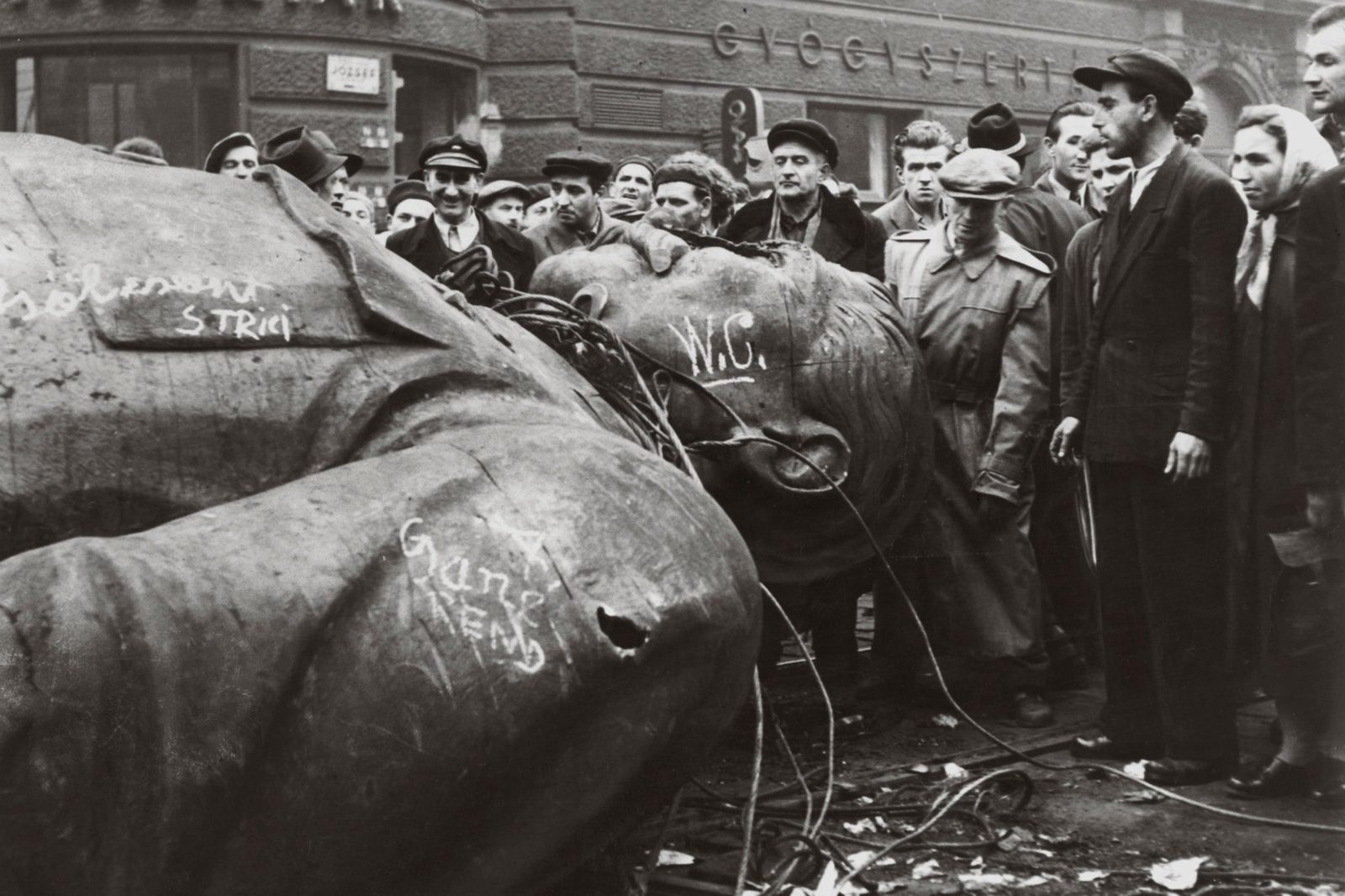
Out from the opening of these tectonic plates, or the opening of the earth, so to speak, in an existential sense — which again returns us interestingly to Dante and the gates of hell — emerges the fundamental human drives. The sexual drive to create and procreate, the energetic drive to express oneself and whatever matter. Again, this is everything from the schizophrenic to the mystic. These modes of being themselves become increasingly available, because the symbolic valence which formerly contained them within energetic gates — which are ultimately control gates, they’re power gates, of what information passes and what energy passes and why, which again returns us to the Strait of Hormuz — these gates are being broken open by, again, in terms of persistence under constraint, their viability in the new constraint environment is now compromised. The stories they are telling, the actions they are taking, are no longer confluent with the conditions that they themselves are emerging into. Which is a new world order, or a phase change of human perception and human history, which is reducible to, fundamentally, again, thermodynamic constraint. Energetic, which is informational, which is also technological possibility. Condensation of space-time via technology, in the case of modernity. Again, the jet plane, and the internet, or artificial intelligence.
From this ground erupts the liberatory potentialities and possibilities which are manifest in Shelley’s Prometheus Unbound. Which is not only an unbinding of the human being civilizationally or socially via kings or ideological cuffs, constraints, or chains — which historically have ordered civilizations as they rise and fall — but the cosmological liberation of the energetic form out from under the appearance of human being. Because, again, this is a thermodynamic crystal of information, which is passed hand-to-hand via sexual reproduction over time. It is itself an energetic potentiality latent within the being that is carrying it. Which is everything from neurological potentiality to imaginative potentiality. Again, as in the brain and the body. The living somatic being. The organ system, which is pumping blood. Which is itself a thermodynamic relic and a crystal of transformation over time. Which is itself a creative origin in the literal cosmogonical-scientific foundations of the universe itself.
So this is the freedom that Shelley is talking about, and this is the freedom that I am talking about in terms of the Renaissance mind, and the potentiality and possibility of being communing with being at its utmost and foremost heights. This is what all life is striving towards — existential striving towards revelation, which is unity of being. This is symbolized quite clearly in sexual intercourse, just as it is in the mystic state, which is a communion with God, historically. Ezekiel, Moses — this is the state of the prophet.
This form of communion is utterly essential at the existential level, because being human is a cosmological problem. It’s not a civilizational problem. It’s not even a human problem. It’s a — we could say — an alien problem, or a cosmological energetic problem, of thermodynamic and thermonuclear transfusion of energy into forms. Pseudo-stable forms. Whether that’s the bushel of berries, or the human being, the bear, the tree. This is understood quite well, particularly by Native American tribes, but also by the pagan mind the world over — the understanding of this unified coursing energy, and what it means to be human within this.
But this, again, is why we gesture back to the ontos and the transformation of the ontos via specialization in human history, particularly in modernity and Western civilization. That the specialization was necessary to form a deeper understanding of exactly what that One is — that monad is — that Spinoza, or Leibniz, and One or monad is. This understanding is common to the deepest human intuitions, whether those be mystical or scientific. And Isaac Newton formally is the bridge between the two, both in his work with alchemy and in his work with Newtonian physics — the laws of nature — because they are ultimately one and the same. That this is a transformation that is occurring, which is a perennial stripping away to this foundation.
So this loss of the regulatory bound is what I’ve described as the blackening , which is the descent into fragmentation, isolation, and alienation. Which is the transformation of the ontos , the formerly repressive borders and bounds of civilization, which themselves presupposed a working ontos — which then was taken for granted because it was functional. By many, not by all. Again, the Renaissance mind refuses. It cannot accept a fragmented ontos. Because the Renaissance mind is seeking communion with the existential-cosmological being itself, which is always beyond the limit of civilization, or the limit of culture. The limit of the presupposed human known.
This pursuit is the pursuit that emerges from, with increasing mass relevance and massive relevance, out from the cracks, the fragmentation, and the rupture of the civilizational ontos. And no more than in this moment in human history — when it is not only the civilizational ontos that is cracking, but the ontos of being human itself.
So thank you. That’s what I got.
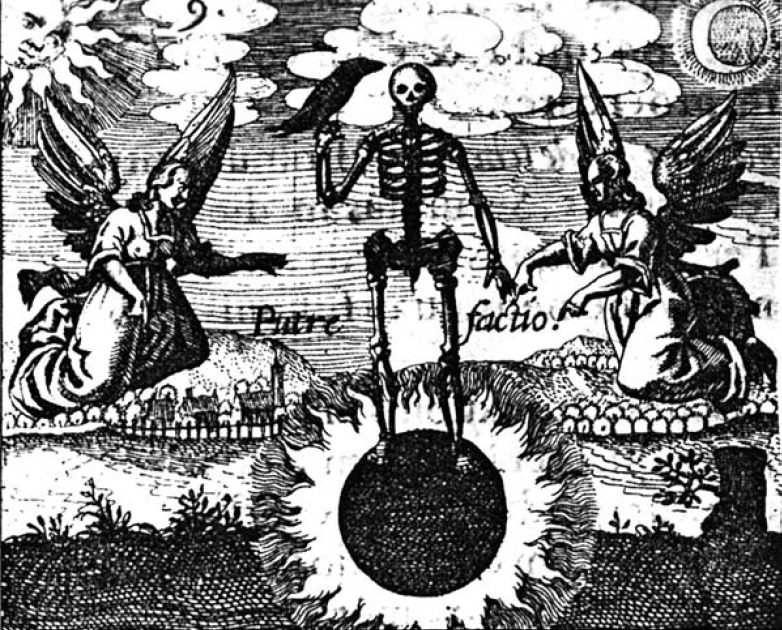
The Law of Being & The General Theory of Magnitude
THE LAW OF BEING
AND THE GENERAL THEORY OF MAGNITUDE
A Formal Statement with Demonstrations,
Falsifiability Conditions, and the Field Instrument
for Independent Use
David Bussell
What persists exists.
Magnitude is the cost of that persistence.
The interface is where the cost is known.
Everything specifically human occurs there.
Note on Evidential Status
This volume contains claims at three levels of evidential status. These levels are marked throughout with bracketed tags where first introduced and in Part VI. The tiering is the framework operating on itself.
Tier 1 — Derived. Claims that follow by formal derivation from Axioms A.1–A.7 and the operator. These include: the regulated/configurational distinction and its exhaustiveness; the three zones; the four breakdown modes and their exhaustiveness given the stated axes; the magnitude formula; the constraint tensor and its exhaustiveness as a decomposition of forces on trajectory and observability; the abstract Catabatic Law (fixed policy under increasing load necessarily reaches failure); the four gates as temporal conditions for shared regulatory cycling; and the growth algorithm. Falsification requires demonstrating an error in the derivation or falsifying an axiom.
Tier 2 — Structured Framework. Claims that are coherent, consistent with evidence, and testable, but that depend on the Operator Identity holding across domains. These include: the Operator Identity itself; the civilizational applications of the Catabatic Law; the application of the four gates to civilizational scale; the full measurement theory applied to human trajectories (constraint tensor as applied to specific lives and histories); and the claim that myth, civilization, and art implement the same operator as biological systems. Falsification would limit the framework’s scope without defeating the physical-biological core.
Tier 3 — Philosophical Commitment. Claims consistent with the framework and motivated by it but not derivable from the axioms. The primary instance is constitutive functionalism: self-referential regulation constitutes experience. The phenomenological account (Part V), the recursive burden, and the claims that civilization and art are necessary (not merely useful) rest on this commitment. Readers who reject it retain full access to Tiers 1 and 2.
Preface
This volume states the Law of Being and the General Theory of Magnitude completely enough to understand, apply, evaluate, and test. It contains nothing unnecessary to those ends.
The framework begins with seven axioms—two from standard thermodynamics, one foundational ontological commitment, and four derived from applying thermodynamic constraints to that commitment. From these it derives the nature of persistence, its biological implementation, the structure of experience, the measurement of magnitude across constraint environments, the mechanistic account of individual and civilizational breakdown, and the necessity of civilization and art for a self-aware mortal species.
No claim in this volume is made by analogy or assertion alone. Every central claim is either an axiom or a derivation. Where derivations were incomplete in earlier drafts, they have been completed. Where gaps remain, they are stated as open research with precision sufficient to constitute an agenda.
Seven parts. Part I states the physical law. Part II traces the biological implementation. Part III addresses the symbolic and civilizational scale. Part IV develops the measurement theory. Part V gives the phenomenological account. Part VI specifies failure conditions. Part VII provides the field instrument.
The thermodynamic language in these pages operates in three distinct registers. At the biological and stellar scales—the cell membrane, the proton gradient, the radiation pressure of a star against gravitational collapse—the language is literal. These are thermodynamic processes in the strict physical sense. At the historical and biographical scales—the Atlantic slave system, the coal mines of Shamokin, the career of a mill child who escaped through baseball—the language is structural: the systems exhibit the same constraint logic through different physical mechanisms. The claim at this scale is identity of operation, not identity of substrate. The operation—persistence through constrained compression within a bounded viability set—is the same. What differs is the medium through which it is performed. At the phenomenological scale—what experience is, what suffering reports, what love constitutes—the language is derived from the same axioms but describes the inside of a regulatory process rather than its mechanism. These registers are not a hierarchy. They are different domains of the same framework, warranting different evidential standards.
The Operator Identity—the claim that star, cell, genome, symbol, artifact, image, and subjectivity implement the same persistence operation—is the framework’s boldest claim. The cross-domain prediction tests that would confirm or falsify it have not been systematically run. This is the primary open research question. The physical-biological core (Tier 1) does not depend on the identity holding across all domains.
PART I
The Physical Law
Axioms · The Operator · The Law · Three Corollaries · The Operator Identity
Canonical Definitions
These terms are defined once. They are used identically throughout this volume.
Entropy — the physical tendency of closed systems toward states of minimum distinguishability, maximum uniformity, zero organized form.
Distinguishability — the condition of being physically discriminable from environmental background. A form exists at time t if and only if it remains physically distinguishable from its environment at t.
Compression — any operation that reduces the accessible state space of a system relative to its unconstrained equilibrium—whether through physical confinement, informational encoding, institutional restriction, or biological regulation. Defined by effect, not mechanism: the holding of a shape against entropy.
Viability set V — the bounded subset of state space within which a system retains its identity. Entry into states outside V is not suboptimal—it is the cessation of being as that system.
Regulation — the set of operations by which a system actively maintains its state within V. For regulated systems, regulation is not optional. It is constitutive of existence.
Configuration — persistence through occupying a thermodynamically stable or metastable energy minimum requiring no ongoing regulatory work.
Load L(t) — the total regulatory demand acting on a system at time t, across all axes simultaneously.
Capacity C — the maximum load the system’s current regulatory policy can sustain while keeping its state inside V.
Magnitude — M = ∫ d(t) · F(t) dt. Displacement from equilibrium times resisting force, integrated over the duration maintained. Units differ across domains; measurement structure is invariant.
Zero point — the most probable terminal state for a system at specified initial conditions under a given constraint tensor. For physical systems, determined by thermodynamics and initial conditions alone. For human trajectories, shaped by the constraint tensor—including C₂ through C₅—and reflecting organized human decisions about access to regulatory resources and viable paths.
Disjection — surprisal × (1 − legibility). The zone of maximum hidden signal, where the most improbable work was done against the least recorded force.
Axioms
No additional axioms will be introduced. All subsequent results are derivations or transformations of these seven conditions.
A.1 — Energy is conserved.
A.2 — Entropy does not decrease in closed systems.
A.3 — A form exists at time t if and only if it remains physically distinguishable from its environment at t.
A.4 — Any form maintaining distinguishability through continuous energy throughput and active correction is a regulated system.
A.5 — Any form maintaining distinguishability by occupying a thermodynamically stable or metastable energy minimum is a configurational system.
A.6 — When energy throughput or corrective capacity falls below a system-specific threshold, regulated systems lose distinguishability and cease to exist as that system.
A.7 — No such threshold applies to configurational systems as long as the energy landscape stabilizing them remains intact.
Physical Grounding and Ontological Status
A.1 and A.2 are standard thermodynamics. They require no justification beyond the physics that established them.
A.3 is the framework’s foundational ontological commitment: existence is the persistence of distinguishability. This is not a restatement of thermodynamics. It is a substantive claim about what it means for something to exist—a claim that the framework argues is the only coherent criterion for a universe governed by entropy, but a claim nonetheless. Everything that follows depends on it. The framework begins here, not with received physics alone, and announcing that openly is more honest and more powerful than concealing it inside the language of the second law.
A.4–A.7 follow from applying thermodynamic constraints to this commitment. In an open system exchanging energy with its environment, local decreases in entropy are permitted only through continuous energy throughput. The second law specifies that, in the absence of such throughput or constraint, all systems evolve toward maximum entropy states. Given A.3, two and only two persistence mechanisms are available: continuous throughput (regulated) or stable energy minimum (configurational). A.4–A.7 formalize this partition. Distinguishability is therefore not a given property of matter. It is a maintained condition, and the framework’s entire architecture follows from taking that maintenance as constitutive of being.
The Operator
Every subsequent claim in this volume is either an axiom or a derivation from this operator under specified constraint sets.
Being(T) = max{π ∈ Π} Pr_π(x_t ∈ V ∀t ∈ [0, T])_
The maximum probability, over all admissible regulation policies Π, that the system’s state remains within its viability set V across the interval [0, T]. This is not a definition of good persistence or optimal persistence. It is the structure of persistence as such.
The gap between actual being (under the system’s actual policy) and optimal being (under the best available policy) is the regulation deficit—the distance between what the system achieves and what its available policies would permit. This gap is interpretable at every scale: in an organism, it is the difference between how well the nervous system actually regulates allostatic load and how well it could; in a civilization, it is the distance between actual and achievable regulatory performance.
The Law
From A.1–A.3: all forms in an entropic universe exist under continuous dissolution pressure.
From A.4–A.5: all persisting forms fall into exactly two categories—regulated or configurational. No third category is derivable. Any structure maintaining distinguishability does so either through continuous throughput or through a stable energy minimum. A structure doing neither cannot maintain distinguishability and cannot persist. The exhaustiveness follows from the definition of distinguishability under A.3, not from an inventory of known forms.
From A.6–A.7: regulated existence is conditional; configurational existence is structural. The star is regulated: remove the fusion throughput and it collapses. The cell is regulated: block its metabolism and it dissolves into chemical equilibrium with its environment. Neither persists by default.
The distinction is visible in matter. At Cueva de las Manos in Patagonia, handprints made nine to thirteen thousand years ago in mineral pigments—iron oxides, manganese dioxide—remain on limestone walls formed three hundred million years ago. The hands that made them are gone. The organisms that held their shape against entropy for decades, that maintained allostatic load within the window of function long enough to reach toward the wall and press—dissolved back into chemical equilibrium ten millennia ago. The limestone persists because it occupies a thermodynamic minimum that entropy has no easily accessible pathway to dissolve. The pigment persists because its mineral compounds are themselves configurational. Two persistence regimes, visible in the same object: the regulated system that made the mark, now gone; the configurational system that received it, unchanged. This is the law made visible. The organism held by continuous work. The stone held by having arrived at a state that requires no work at all.
That which persists under entropy through bounded compression is what exists. All else is transient flux.
This is not a metaphysical proposal. It is the direct consequence of A.1–A.7 applied to any structure required to remain distinguishable over time.
Two scope conditions. First: the framework governs systems within the universe—systems that have an environment from which they maintain distinguishability. It does not apply to the universe as a whole. Second: the framework applies to systems displaced from equilibrium. A system already at thermodynamic equilibrium has no viability set to maintain and no regulatory work to perform.
What the Operator Excludes
A theory’s content is defined as much by what it forbids as by what it permits. The operator excludes the following:
No system can persist without either continuous throughput or a stable energy minimum. Any claim that a third category of persistence exists is a direct falsification of the framework. No regulated system can maintain its viability set indefinitely under fixed policy and increasing load—the Catabatic Law forbids it. No system can expand capacity without load near the regulatory ceiling, complete recovery, and integration—Zone 2 is the unique growth regime and the three conditions are jointly necessary. No breakdown mode exists under Zone 3 conditions that does not reduce to the four cells of the 2×2 matrix or a combination thereof. No force on a human trajectory operates through a channel not captured by C₁–C₄ on the trajectory and C₅ on observability, or the tensor requires expansion.
These exclusions are testable. A single rigorous counterexample to any of them would require revision of the framework at the point of failure. The operator is not a vocabulary that accommodates everything. It is a theory that forbids specific states of affairs.
The Operator Identity
Star, cell, genome, symbol, artifact, image, and subjectivity are identified as implementations of the same operation: the constrained reduction of accessible state space required to maintain persistence within a bounded viability set under entropy.
They differ in substrate, timescale, and constraint tensor. They do not differ in the structure of the operation they perform or in the form of the solution space it generates. What is identical is not what they are made of, but the constrained problem they must solve. Ontological identity is therefore determined by persistence function under constraint, not by substrate.
Each compresses a higher-dimensional state space into a form maintainable under constraint:
The star compresses gravitational collapse and radiation pressure into sustained dynamic equilibrium—the bounded state between implosion and explosion maintained for billions of years through continuous fusion throughput.
The cell compresses chemical equilibrium into maintained internal organization—selective membrane, regulated metabolism, replication capacity—against the dissolution that is its zero point.
The genome compresses evolutionary trajectories into molecular code.
The symbol compresses collective experience into transmissible form.
The artifact compresses intention into stable material structure.
The image compresses perceptual reality into reduced-energy representation.
Subjectivity compresses the total constraint field into a real-time regulatory model.
These are not independent instances that happen to share a pattern. They are one continuous thermodynamic descent. The universe began in a state of extraordinary low entropy. Stellar nucleosynthesis—the forge of the star—compressed hydrogen into helium into carbon into oxygen into iron, each heavier element produced by the fusion that held the star against gravitational collapse. When the star died, it expelled those elements into space. The carbon in every cell on Earth was forged in a star that exploded. Rocky planets formed from the debris. On at least one of them, solar energy translated through photosynthesis into chemical gradients, and the cell membrane learned to hold those gradients by spending ATP—the proton gradient across the mitochondrial membrane is the star’s thermonuclear energy translated into biological currency. Metabolism is the forge of the star operating at cellular scale: the continuous compression of energetic production and consumption that holds the organism’s shape against dissolution. The genome compresses what metabolism learned across evolutionary time. The symbol compresses what the genome cannot carry across individual deaths. Subjectivity compresses the total field into something a single nervous system can navigate in real time. One chain. One descent. One operation at every step: the holding of form against the forces that would dissolve it, paid for by the energy that the previous step released.
The claim is not that these systems resemble each other. The claim is that identity is determined by what a system does under constraint, not by what it is made of. We do not say that gravity operating on a planet is ‘isomorphic to’ gravity operating on a star. We say it is the same force acting on different substrates. The operation is identical. The substrates differ. Nobody calls that analogy.
The Operator Identity makes the same claim about persistence under entropy through constrained compression. This is one operation. It is not similar across domains. It is the same across domains. Calling it ‘isomorphism’ when it crosses from physics into biology into symbolic systems imports a substrate-based criterion for identity that the framework explicitly rejects. If ontological identity is determined by persistence function under constraint—and this framework argues it is the only coherent criterion—then two systems performing the same function under the same constraint structure are identical at the level that matters. The word for that is not analogy. It is not isomorphism. It is identity.
This claim is empirically testable: if the operator generates predictions that succeed within domains but fail systematically across domain boundaries, the identity does not hold. The cross-domain prediction tests constitute the primary open research agenda. But the logic of the identity is complete. What remains is not further argument. It is measurement.
Corollary 1 — The Three Zones
Let L(t) denote load at time t and C the regulatory ceiling.
Zone 1 — L(t) ≪ C — Capacity is not deployed; it atrophies. The viability set contracts without visible failure. This is the condition that looks like safety but produces long-term fragility.
Zone 2 — L(t) ≈ C − ε — The system operates near its ceiling. Recovery and integration raise C for the next cycle. This is the only regime in which capacity expands.
**Zone 3 — L(t) > C — **No policy in Π can keep the system’s state inside V. The system adopts a restricted policy π′ from reduced space Π′ ⊂ Π. The viability set reorganizes toward a smaller region.
Derivation of Zone 2 as the unique growth regime. Capacity expansion requires the system to encounter load that engages its full regulatory range (excluding Zone 1, where capacity is not exercised) while retaining the ability to return to baseline and integrate the encounter into updated regulatory architecture (excluding Zone 3, where policy space is restricted and integration is unavailable). Zone 2 is the complement of Zones 1 and 3 within the space of load/capacity ratios. No fourth zone exists: the three zones partition the space L/C exhaustively.
Corollary 2 — The Four Breakdown Modes
When a regulated system enters Zone 3, exactly four policy families are available in the restricted space Π′. This is not an empirical typology. It is a formal consequence of the operator’s structure.
The Derivation. Regulatory demand has exactly two sources, jointly exhaustive by the definition of regulation. Source 1: input magnitude—the intensity of the signal requiring processing. Source 2: integration requirement—the depth of processing required to metabolize the signal into the system’s regulatory architecture. Each source can be acted on from exactly two loci, jointly exhaustive. External locus: the system acts at its boundary. Internal locus: the system acts on its own processing. Two sources, two loci, orthogonal axes. The product is a 2×2 matrix:
Avoidance (External / Input) — reduce what enters; contract the boundary of engagement.
Aggression (External / Integration) — discharge arousal outward without internal integration.
Dissociation (Internal / Input) — reduce what is registered; decouple internal monitoring.
Compulsion (Internal / Integration) — substitute high-frequency low-amplitude cycling for integrated resolution.
Exhaustiveness. The four cells are exhaustive because both axes are exhaustive and orthogonal. Any proposed fifth mode must either reduce to one of the four cells or describe a combination. Combinations are common; they do not constitute new cells.
On temporal patterning. The objection arises that when load arrives relative to recovery cycles constitutes a third axis. Temporal patterning is a modifier on the matrix, not an expansion of it. The timing of load affects which cell activates and how severely, but it does not generate a fifth policy family. A system receiving load during recovery has its integration requirement increased (intensifying compulsion or dissociation) or its input magnitude spiked (intensifying avoidance or aggression). Temporal patterning operates through the existing axes; it does not create a new one.
Corollary 3 — The Catabatic Law
The Abstract Catabatic Law. Let π_s denote any regulatory policy drawn from a bounded policy set Π, and let L(t) be a monotonically non-decreasing load function. There necessarily exists a threshold T_c at which L(T_c) > max_{π ∈ Π} C(π). Past T_c, no policy in Π can maintain the system inside V. This follows directly from the operator: a bounded policy set under unbounded or monotonically increasing load must reach a point where load exceeds the maximum capacity achievable by any available policy. No assumption about substrate is required. This holds for any regulated system with a finite policy set under increasing demand.
Past T_c, the system’s options are: expand Π (acquire new regulatory policies), reduce L (alter the environment), or enter Zone 3. If Π is fixed and L continues to increase, Zone 3 is inevitable.
The Civilizational Application. When the regulated system is a civilization and π_s is its symbolic regulation policy—the mythic, ritual, and institutional operations maintaining collective state inside V—the abstract law predicts that fixed symbolic infrastructure under increasing load will reach T_c. Coerced reassertion of π_s past T_c cannot restore regulation, because coerced compliance does not produce the regulatory uptake that voluntary inhabitation produced. This application depends on the Operator Identity holding at civilizational scale.
PART II
The Biological Implementation
Allostasis · Capacity · The Growth Algorithm · Breakdown in the Organism
Active Maintenance
From A.4: biological persistence is active maintenance, not passive endurance. The organism does not persist by virtue of what it is. It persists by virtue of what it continuously does.
Some organisms enter states of suspended regulation—cryptobiosis in tardigrades, dormancy in seeds and spores—in which active maintenance ceases entirely. During these states, the organism persists configurationally, maintaining distinguishability through structural stability without energy throughput. When conditions allow resumption of metabolism, the organism re-enters the regulated category. The regulated/configurational distinction describes the current persistence mechanism, not a fixed identity.
Allostasis is stability through change: the dynamic adjustment of set-points under sustained environmental pressure. Allostatic load is the cumulative regulatory cost across all axes simultaneously—nervous, endocrine, immune, metabolic, cognitive—with compounding degradations. Capacity is the maximum load the organism can sustain while maintaining executive integration, temporal continuity, and flexible response.
The Growth Algorithm
Derivation from Corollary 1. Zone 2 is the only regime in which capacity expands. The growth algorithm therefore has three necessary conditions, jointly sufficient:
(1) Load must engage the system near its regulatory ceiling (Zone 2 entry condition).
(2) Recovery must be complete: adaptation occurs during recovery, not during load. The system must return to baseline to consolidate regulatory gains. Under sustained load without recovery, gains cannot integrate and the system degrades toward Zone 3.
(3) Integration must occur: the encounter must be metabolized into updated regulatory architecture—coherent memory, revised prediction models, expanded response repertoire. Without integration, load produces trauma (overload without structural incorporation) rather than growth (overload with structural incorporation).
This holds at every biological scale: muscle fiber, cardiovascular system, neural circuit, prefrontal-limbic regulatory system. The substrate differs; the algorithm is invariant because it is a consequence of the operator, not a property of any particular substrate.
Breakdown in the Organism
From Corollary 2: the four breakdown modes are policy families, not character traits. Ethical reasoning is a function of regulatory capacity, not a property of character. Holding multiple perspectives, tolerating guilt without discharge, delaying gratification, maintaining coherence under load—these are prefrontal functions. They degrade under allostatic overload because they are the most energetically costly regulatory operations.
Scapegoating, moral simplification, and authoritarian thinking are predictable outputs of a regulatory system in Zone 3. They are produced reliably in laboratory settings by inducing high allostatic load in individuals not characterized by these tendencies at baseline. The physiology precedes the ideology.
Consequence for intervention: changing beliefs without changing the load/capacity ratio produces no durable change. Changing the load/capacity ratio changes the beliefs without targeting them directly. Interventions aimed at ideology are working downstream of the mechanism.
The Psychology of Constraint
Stratified Capacity
The operator treats capacity as a single variable C. At the human scale, C is not unitary. It is stratified into three layers, each with different plasticity, different energetic cost, and different timescale of change.
Structural capacity (C_s) is the deeper biological and regulatory ceiling: neural architecture, autonomic bandwidth, metabolic tolerance, baseline stress reactivity. It is comparatively slow to change. It sets the upper boundary within which all other adaptation must occur. When exceeded, the result is not discomfort but systemic instability.
Patterned capacity (C_p) is acquired organization: learned behavior, attachment patterning, practiced coping, skill acquisition, conditioned emotional response. It is modifiable, but at significant energetic and temporal cost. Patterned capacity can increase usable range without abolishing deeper structural bounds. This distinction is critical: a system can become more practiced, more defended, or more efficient while remaining bounded by the same biological ceiling.
Narrative capacity (C_n) is the interpretive and meaning-making layer: belief, explanatory framing, moral reasoning, identity narrative. It is rapidly adjustable and comparatively cheap. It can reorganize perceived demand without altering what the organism can in fact sustain.
Total functioning emerges from the interaction of all three layers. Narrative flexibility typically exceeds structural flexibility. A human system can reinterpret reality faster than it can expand its biological capacity. This asymmetry is the source of most of what follows.
Narrative Exit Formation
When L exceeds currently available capacity, the system faces two pathways of resolution. Pathway A is capacity expansion: the system tolerates instability, remains in contact with the demand, and reorganizes its patterned responses over time. This is Zone 2 growth. It is costly, slow, and conditional on the system surviving the destabilization required for reorganization.
Pathway B is narrative exit formation. The system does not resolve the underlying mismatch between load and capacity. It resolves the felt impossibility of carrying it. Narrative reorganizes the meaning of demand so that perceived load drops below the system’s current threshold. Obligations shift. Threats are reframed. Causality is revised. Blame is redistributed. Coherence is restored at the level of interpretation rather than at the level of capacity.
This is the mechanism by which physiology becomes ideology. The person does not experience the narrative reorganization as distortion. They experience it as seeing things more clearly. The reinterpretation feels like insight. This is what makes the four breakdown modes so resistant to external correction: by the time the mode is active, the narrative layer has already reorganized to make it feel coherent. Avoidance feels like wisdom. Aggression feels like justice. Dissociation feels like calm. Compulsion feels like diligence.
Narrative exit formation is not pathology. It is regulation under constraint. It preserves local stability when direct integration is not available. But because it does not increase underlying capacity, its solution is locally stabilizing while remaining globally fragile. Where narrative repeatedly attempts to carry what the underlying system cannot sustainably bear, compensatory distortion intensifies and breakdown recurs.
Identity as Downstream
The dominant assumption is that identity generates behavior. The operator inverts this sequence. Identity is not primary in the causal order. Identity is the stabilized configuration a system adopts in order to remain viable within its capacity limits under constraint.
Constraint shapes capacity. Capacity determines what can be sustained. What can be sustained shapes perception. Perception stabilizes into identity. Identity organizes behavior. This is the derivation order. It runs from physics through biology through the stratified capacity structure to the identity the person experiences as self. The self is real. It is not first. It is downstream of what the system can carry.
This does not eliminate agency. It situates agency within constraint. Choice influences trajectory only insofar as the underlying system can absorb, stabilize, and repeat the changes that choice initiates. Where capacity is insufficient, agency does not vanish. It is redirected into avoidance, reinterpretation, defensive narrowing, or distortion—the four breakdown modes operating through the narrative layer.
Relational Capacity Mismatch
Co-regulation extends the effective viability set beyond what either system can maintain alone. But co-regulation requires that both systems can sustain the regulatory demands the relationship generates. When C₁ ≠ C₂—when one person’s reasonable demand exceeds another person’s sustainable range—breakdown becomes likely even in the presence of desire, declared care, and intermittent effort.
The person operating near structural ceiling will cycle between partial contact and defensive reorganization. What appears externally as inconsistency, withdrawal, or betrayal may reflect a boundary that cannot be crossed without destabilization. The system is not choosing to fail. It is failing to sustain. The distinction matters because interventions targeting intention (try harder, care more, be better) are working downstream of the mechanism. The mechanism is the gap between what the relationship demands and what the organism can carry.
Some relational breakdowns are therefore better modeled as capacity mismatch than as absence of feeling. Some apparent transformations within relationships are patterned expansion simulating structural change—real gains in tolerance and performance that become unstable as demand increases. The stratified capacity model predicts this: C_p can expand within C_s, but when load approaches the structural ceiling, instability returns regardless of prior patterned gains.
PART III
The Symbolic and Civilizational Implementation
The Four Gates · Civilizational Scale · Historical Dissipation
The Four Gates of Shared Regulatory Cycling
Derivation from the biology of co-regulation. Co-regulation—the process by which multiple regulated systems mutually maintain their states inside overlapping viability sets—requires temporal overlap of arousal states between systems. Temporal overlap of arousal states in multiple systems requires four conditions, each derivable from the structure of any bounded shared regulatory process:
(1) Synchronized anticipation. Co-regulation requires that systems enter arousal states in temporal proximity. Anticipation—neurological priming toward a shared future moment—is the mechanism by which temporal proximity is achieved without simultaneous external shock.
(2) Thresholded collective entry. A shared regulatory cycle requires a definite initiation point. Without a single non-negotiable moment of collective beginning, systems enter the regulatory cycle at different phases, preventing the sustained overlap required for co-regulation.
(3) Sustained simultaneity. The co-regulatory effect requires duration. Somatic registration of shared presence requires sustained temporal overlap, not momentary synchronization. The minimum duration is set by the timescale of the relevant physiological processes (cortisol cycling, autonomic entrainment, oxytocin release).
(4) Coordinated release. A regulatory cycle that does not terminate leaves the system in sustained activation without return to baseline. Coordinated release is necessary for the cycle to complete: for arousal to resolve, for baseline to be reestablished, for the gains of the co-regulatory encounter to be consolidated.
The Four Gates at Civilizational Scale
From the Operator Identity: myth is regulatory technology—its criterion for success is not epistemic accuracy but the degree to which the symbolic system co-regulates the nervous systems of those within it. Civilization is a nervous system at scale—it maintains collective state within a shared viability set through specific institutional and cultural forms (ritualized sport, civic architecture, shared calendars, rule-bound competition, non-instrumental time) that function as regulatory organs.
The four gates predict that the permanent loss of synchronized collective regulatory cycles—the always-on condition of digital media—produces chronic activation without cycle completion. The failure of coordinated release prevents baseline reestablishment. The prediction: elevated baseline anxiety, political polarization, and degraded collective witness capacity. The epidemiological record since smartphone penetration crossed critical thresholds is consistent with this prediction. The present crisis, under this model, is not primarily a crisis of meaning. It is a failure of the four gates at civilizational scale.
Historical Dissipation
A gradient is the accumulated differential between energy extracted from a population and energy returned to it. A blocking architecture is the infrastructure preventing gradual dissipation. The blocking architecture is itself a dissipative structure requiring continuous energy to maintain.
The thermodynamic deadline is the point at which the energy required to maintain a configuration exceeds sustainable supply. Past the deadline, gradual correction is unavailable. Systems held past the deadline release through phase transition—categorically different in kind from the gradual dissipation that would have been possible before the deadline.
Accountability follows from the structure: not to those at the moment of dissipation—they were the channel, not the energy source—but to those who built the blocking architecture, choosing containment over gradual redistribution.
PART IV
The Measurement Theory
Magnitude · The Constraint Tensor · The Zero Point · Disjection · Demonstrations
Magnitude as the Universal Quantity
The operator governs at all scales. Magnitude—the cost of persistence—is measurable at all scales with the same structural formula:
M = ∫₀ᵀ d(t) · F(t) dt
where d(t) is displacement from the most probable state under the constraint tensor and F(t) is the resisting force against that displacement.
ERA+ and OPS+ are special cases: displacement from the statistical equilibrium (league average) normalized for the constraint set (park, era, run environment). A career ERA is a position measurement. A career ERA+ is a displacement measurement. Only displacement is comparable across constraint environments. This principle generalizes without exception.
Magnitude Computed Across Substrates
The formula must be demonstrated, not only described. Three systems, three substrates, one structure.
Stellar. A main-sequence star of one solar mass. Displacement d(t): the star maintains a core temperature of approximately 1.5 × 10⁷ K against an equilibrium temperature of 2.7 K (cosmic microwave background)—a displacement of roughly seven orders of magnitude above the thermodynamic zero point. Resisting force F(t): gravitational pressure toward collapse, approximately 3.4 × 10¹⁶ N integrated over the stellar cross-section. Duration: approximately 3.2 × 10¹⁷ seconds (ten billion years). The magnitude integral M = ∫ d(t) · F(t) dt yields a value on the order of 10³⁰ in units of kelvin-newtons-seconds. The units are domain-specific. The structure—displacement from equilibrium times resistance over duration—is not.
Cellular. A eukaryotic cell maintaining internal organization. Displacement d(t): the cell maintains an internal pH of approximately 7.2 against an extracellular environment of approximately 7.4, an ion gradient of roughly 10¹ ions/second across the membrane, and an internal organization corresponding to a free energy displacement of approximately 10⁻¹² joules above chemical equilibrium with its environment. Resisting force F(t): the entropic pressure toward dissolution—the thermodynamic gradient between organized cytoplasm and equilibrated chemical soup—measurable as the rate of ATP hydrolysis required to maintain the displacement, approximately 10⁷ ATP molecules per second at roughly 5 × 10⁻²¹ J each. Duration: a typical mammalian cell cycle of approximately 8.6 × 10⁴ seconds (24 hours) for a dividing cell, up to 10⁹ seconds for a neuron. The magnitude integral is on the order of 10⁻⁸ in units of joule-seconds per cell per cycle. The number is vastly smaller than the star’s. The structure is identical.
Biographical. Josh Gibson, 1930–1946. Displacement d(t): OPS+ of 214 against a league-average baseline of 100—a displacement of 114 normalized units above the statistical equilibrium. Resisting force F(t): the full constraint tensor, C₁–C₅, with C₂ through C₅ at extreme values. Duration: approximately sixteen professional seasons, roughly 5 × 10⁸ seconds of career. The magnitude integral yields 114 × F × T, where F is not a single number but the tensor product of five constraint dimensions—which is precisely why the full computation requires specifying each dimension’s value independently. The incomputability of F in Gibson’s case (because C₅ destroyed much of the measurement record) is itself a measurement result: it reports the severity of the constraint.
Three substrates. Three unit systems. One formula. The displacement is measured in kelvins, joules, or normalized statistical units. The resistance is measured in newtons, ATP hydrolysis rates, or constraint tensor values. The duration is measured in seconds in all cases. What is invariant is not the units but the structure: magnitude is the cost of maintaining displacement against resistance over time. This is what it means for the operator to be one operation across scales.
The Constraint Tensor
Every trajectory of a regulated system evolves under forces that constrain its accessible phase space. These forces decompose into exactly two categories:
Forces on the trajectory itself(what paths are accessible). These operate through four and only four channels: initial conditions of the system (what it starts with), resource access (what it can draw on), temporal position (when it exists within larger dynamics), and institutional structure (what organized systems oppose or support the trajectory).
Forces on observability(which paths are legible after the fact). This is categorically distinct from constraint on trajectory. A force that prevents a trajectory from being recorded does not alter the trajectory itself; it alters what can be known about it.
The tensor therefore has five dimensions:
C₁ — Constitutive — initial conditions. Fixed at inception. Shapes the topology of accessible trajectories.
C₂ — Socioeconomic — resource access. Which energy channels are open.
C₃ — Historical — temporal position within larger nonequilibrium dynamics.
C₄ — Institutional — organized structures that sustain or oppose departure from the zero point.
C₅ — Measurement — the degree to which the measurement infrastructure captures the trajectory at all.
C₅ is self-sealing: it generates its own justification by controlling what evidence is produced. This is not an empirical observation—it follows from the structure of any measurement system that is itself a product of the constraint environment it measures.
The Zero Point and Departure
The zero point is the most probable terminal state for a system at specified initial conditions under the full constraint tensor. For human trajectories: it is not nature. It is organized human decision-making about who gets access to which paths.
Departure is the observed trajectory relative to the zero point. Legibility is the degree to which the restraining force is visible to the systems that assign recognition. The legibility of a constraint is not correlated with its strength. The force that kept coal miners’ children in the mines of Shamokin in 1884 was not weaker than antisemitism. It was at least as powerful. It simply had no ideology that history agreed to call evil, and left no archive, and no verdict.
Disjection is the product of surprisal and the complement of legibility. This identifies where existing measurement systems are most severely failing to read what was actually there.
Demonstrations
The following are deductions. The test is whether predictions follow necessarily from the axioms and operator, not whether the cases are interesting.
Demonstration One — The Overloaded Individual
System: one adult, previously empathic and relationally skilled. Constraint: sustained multi-axis load with blocked recovery.
Prediction: as L exceeds C, the system enters Zone 3. The most energetically costly operations—holding contradiction, tolerating ambiguity, maintaining empathy under threat—degrade first. Moral simplification and ideological hardening follow. This prediction is derived from the operator and Corollary 2. It is confirmed by experimental literature on allostatic load and prefrontal function. Interventions targeted at the ideology are working downstream of the cause.
Demonstration Two — Josh Gibson
System: the career of Josh Gibson, catcher, Negro Leagues, 1930–1946. One of the two or three most gifted offensive players in the history of professional baseball. Dead at 35. Never permitted to play in the major leagues.
Constraint tensor: C₁ elite; C₂ extreme (born Black in America, 1911); C₃ severe (mature period of segregated baseball); C₄ total (formal exclusion by Commissioner’s office and ownership); C₅ self-sealing (the Major League statistical infrastructure—which would have generated the comparative record—was withheld, and the absence was then used as justification for diminished recognition).
Zero point: exclusion, inconsistent records, historical invisibility. Departure: Gibson’s OPS+ of 214, calculated by MLB in 2024, is the highest in professional baseball history. It exceeds Babe Ruth (198), Ted Williams (190), and every player for whom the statistic exists. The magnitude formula cannot be fully computed because C₅ withheld much of the record. This incomputability is itself a measurement result.
Disjection: maximum. The C₅ mechanism here is the clearest case in the history of sport of a measurement instrument generating its own justification by controlling what evidence was produced.
Demonstration Three — The American Institutional Order (Prospective)
System: the American constitutional and institutional order, approximately 1787–present. This demonstration is prospective. The prediction is committed to before the outcome is known. This is the test the framework must pass.
Constraint tensor analysis. The symbolic infrastructure—constitutional originalism, market meritocracy, the mythology of individual sovereignty, the two-party electoral mechanism—was calibrated for eighteenth-century conditions: agrarian economy, limited franchise, low informational throughput, continental isolation. Load has increased along every axis simultaneously: economic complexity, demographic heterogeneity, informational volume (the four-gates failure), ecological constraint, and the recursive burden of a population with unprecedented access to its own condition through digital self-monitoring. The symbolic policy π_s has not been updated at a rate commensurate with load increase. The Catabatic Law predicts a threshold T_c.
The framework’s specific predictions, committed to as of this writing: First, institutional policy space will continue to narrow—the system will cycle through previously exhausted regulatory responses (originalist retrenchment, executive unilateralism, judicial overreach, legislative paralysis) with decreasing effectiveness per cycle. Second, collective breakdown modes will activate at population scale in the order predicted by the matrix: avoidance (withdrawal from civic participation, declining institutional trust), aggression (political violence, scapegoating of outgroups), dissociation (conspiratorial epistemology, reality fragmentation), compulsion (election-cycle addiction, performative politics substituting for regulatory function). Third, the most energetically costly collective operations will degrade in order of cost: pluralism first, then judicial independence, then institutional memory, then long-horizon planning capacity. Fourth, attempts to restore regulation through coercive reassertion of the prior symbolic policy—constitutional originalism enforced by judicial power, nationalist mythology enforced by executive action—will fail to produce regulatory uptake because coerced compliance does not generate the voluntary inhabitation required for symbolic regulation to function.
These predictions are falsifiable. If the institutional order restores flexible regulatory capacity without expanding Π (acquiring genuinely new symbolic and institutional policies), the Catabatic Law’s application at this scale is defeated. If the breakdown modes activate in an order not predicted by the matrix, the matrix requires revision. If coercive reassertion of π_s succeeds in producing durable regulation rather than brittle compliance, the framework’s core claim about the relationship between voluntary inhabitation and regulatory function is wrong. The predictions are stated. The clock is running.
PART V
The Interface
Experience · Emotion · Meaning · Love · Grief · Death · The Recursive Burden · Art
The Threshold of Self-Registration
From A.4: regulated systems perform continuous work. Given variable environments, rigid regulation eventually fails. Evolutionary pressure favors flexible regulation—variable responses selected by context, prediction, and assessment of current state relative to V. Flexible regulation requires the system to model its own state.
A.1–A.7 and the operator entail that regulated systems under variable environments will be selected for flexible regulation, and that flexible regulation requires self-modeling. The derivation chain from the axioms to “the system must model its own state” is complete.
What the axioms do not derive: that the self-modeling loop has an experiential inside. The framework’s position is constitutive functionalism: self-referential regulation constitutes experience. There is no additional fact beyond the regulatory loop closing through itself. The inside of that closure is what experience is. This is a philosophical commitment, not a derivation. It is the most parsimonious position consistent with the axioms—requiring no ontological primitives beyond A.1–A.7—but it does not settle the debate with those who hold that experience is something over and above the regulatory process. Everything in Part V depends on this commitment. Parts I–IV and VI–VII do not.
Experience is graded with the complexity and flexibility of the self-referential regulatory loop. The threshold at which the loop’s closure becomes the kind of experience described below is the threshold of flexible regulation: the capacity to select variable responses from a repertoire based on context, prediction, and self-assessment.
The Structure of Feeling
Each is the inside of a regulatory fact. The feeling is the information. The quality of the experience is the content of the self-model.
Safety — low load relative to capacity; surplus for exploration.
Anxiety — predicted approach to boundary; anticipatory detection before exit.
Suffering — load exceeding capacity; accurate registration of regulatory failure. The system working as designed, reporting the truth of its own condition.
Terror — imminent system failure; the most extreme signal for the most extreme situation.
Joy — expanding capacity under integrated load. Zone 2 from the inside. Not the absence of load—the registration of successful integration of load.
Awe — load whose magnitude is not yet determined. The interface at the threshold of classification—the system has not yet computed whether what it encounters will expand or overwhelm it.
Meaning, Love, Grief, Death
Meaning is the system’s registration of relevance to its viability conditions. Something is meaningful to the extent it bears on the system’s capacity to persist. Meaninglessness is Zone 1 from the inside: the self-model returning null where it should return signal. Nihilism is the interface in failure mode.
Love is the condition in which one system’s viability set becomes constitutively dependent on another’s persistence. The other’s suffering registers as a threat to the self’s viability set. The other’s flourishing registers as an expansion of the self’s regulatory range. Co-regulation extends the effective viability set beyond what either system can maintain alone. Love is simultaneously the highest human achievement and the most dangerous human condition: the dependency is real, and the loss of a co-regulatory partner is the loss of a component of one’s own regulatory infrastructure. Where the co-regulatory demands exceed both systems’ capacity, love produces its most painful form: the system registers that its viability depends on a condition it cannot sustain.
Grief is not an emotional reaction to the idea of loss. It is the self-model registering that a portion of its own viability architecture has been destroyed. The system is literally less viable than it was before the loss.
Knowledge of death is the necessary consequence of temporal self-modeling. The self-model, operating with sufficient temporal depth, projects forward to its own permanent exit from V. Every experience the interface produces is conditioned by awareness of the system’s finite duration. The knowledge held at full force without mediation exceeds the regulatory capacity of any known organism. The interface creates the problem that civilization exists to solve.
The Recursive Burden
At every other scale, the work of persistence is commensurate with demand. At the human scale, the work of persistence includes knowing that one is persisting. Every stress response is accompanied by the self-model’s registration of the stress response. Every regulatory failure is accompanied by the knowledge of the regulatory failure. The recursive amplification can exceed the original perturbation by orders of magnitude.
No individual system can carry the full recursive burden alone. The surplus must be carried collectively. Civilization is not optional for a species that has crossed the self-registration threshold. It is the required regulatory infrastructure for managing the recursive cost of knowing.
Individual contemplative liberation does not contradict this. Such states are the product of decades of practice within traditions, lineages, and communities—collective regulatory infrastructure applied over time. The individual who appears to carry the burden alone carries it with distributed support.
Art
Art is the compression of experiential magnitude into survivable form—the set of technologies by which the interface’s output is encoded into forms that other interfaces can encounter at survivable intensity. This is the Operator Identity applied directly: art is a compression operation on the domain of experiential content, instantiating the same persistence function as the genome but on the specific problem of making the interface’s output metabolizable across the death of the organism that generated it.
Art is not optional. It is what prevents the interface from destroying the organism it serves. The history of art is the history of the interface developing technologies adequate to its own output.
Witness and Ethics
Witness is the registration, by one self-modeling system, of another’s regulatory condition, with the recognition that what is registered is of the same kind as one’s own experience. Ethics is not a cultural invention imposed on morally neutral biology. Ethics is what the interface produces when it encounters itself in another organism. The moral demand—do not damage another system’s viability set—is generated by the physics of shared viability, not imposed on top of it.
Witness requires surplus capacity. Under load, resources for witness degrade. Dehumanization under stress is the interface losing capacity for witness. Disjection at civilizational scale is the systematic failure of witness institutionalized.
PART VI
Where the Law of Being Could Fail
A framework that cannot name its failure conditions is a vocabulary, not a theory.
Falsification Conditions
The Four Breakdown Modes. Prediction: moral simplification, scapegoating, and dehumanization reliably appear when allostatic load exceeds capacity and recovery is blocked, in individuals without prior tendency. Decisive falsification: a rigorous study showing no elevation above base rate under verified conditions.
Regulated/Configurational Exhaustiveness. All persisting forms are regulated or configurational. Self-organized criticality maintains its critical state through continuous energy throughput—it is regulated. Quantum coherence in biological systems operates within thermodynamic constraints and degrades without continuous maintenance. Neither constitutes a third category. Decisive falsification: a rigorously specified class of persisting systems implementing neither.
The Three Zones. Zones 1, 2, and 3 partition the load/capacity space exhaustively. Decisive falsification: a system demonstrably operating at L ≈ C with full recovery available that does not expand capacity over repeated cycles.
The Growth Algorithm. Load + complete recovery + integration = capacity expansion. Decisive falsification: a system meeting all three conditions that does not expand capacity across any biological substrate.
The Constraint Tensor Structure. Five dimensions: four on trajectory, one on observability. Decisive falsification: a force on a human trajectory demonstrably operating through none of the four trajectory channels, or a force on observability not captured by C₅.
The Four Gates. Shared regulatory cycling requires all four conditions. Decisive falsification: sustained co-regulation achieved without one of them.
The Abstract Catabatic Law. Fixed policy under increasing load necessarily reaches failure. This is a mathematical consequence. Decisive falsification: a bounded policy set under monotonically increasing load that does not reach a failure threshold.
The Operator Identity. Decisive falsification: systematic prediction failures when the operator is applied across the physical-biological to symbolic-civilizational boundary. A demonstration that symbolic persistence is governed by constraints with no structural counterpart in thermodynamic persistence.
Civilizational Catabatic Application. Decisive falsification: a civilization with demonstrably fixed symbolic infrastructure under increasing load that does not reach T_c, or one that restores regulation through coercive reassertion of the prior symbolic policy.
Historical Dissipation. Decisive falsification: a system held past the thermodynamic deadline that releases proportionally rather than through phase transition.
Constitutive Functionalism. Not falsifiable by thermodynamic evidence. It is a philosophical position. Its status is a commitment that enables the phenomenological account. Rejecting it limits scope to Tiers 1 and 2 without defeating either.
Open Research
Cross-Domain Prediction Tests. The primary agenda. Adjacent frameworks—Friston’s free energy principle, Prigogine’s dissipative structures, Tononi’s integrated information theory—address related questions through different formalisms; the Law of Being’s specific contributions beyond these are the constraint tensor, the measurement theory of magnitude, the breakdown mode derivation, and the Catabatic Law. If predictions match across domains, the Operator Identity is confirmed and Tier 2 claims are promoted. If they diverge, the identity fails and the framework retains Tier 1 scope.
Low-Load Cruelty. The framework predicts cruelty as Zone 3 output. Apparent low-load cruelty reduces to hidden load, suppressed load, low capacity, or constraint-aligned cruelty. Decisive falsification: sustained cruelty under demonstrably low load, high capacity, intact witness, no incentive structure, and no suppressed history.
Operational T_c Criteria. Developing measurable, prospectively applicable criteria for identifying the catabatic threshold is a priority.
The Constraint Tensor. If systematic misprediction appears where C₁–C₅ are fully specified, a sixth dimension should be added.
Domain Limits
Severe Psychiatric States. The framework describes depression, mania, and psychosis as failures of self-model accuracy. It requires supplementation by clinical knowledge.
The Hard Problem. Constitutive functionalism dissolves it by refusing the premise. This is philosophical, not thermodynamic. The rest of the framework does not depend on it.
Voluntary Exit from V. Contemplative practices targeting ego dissolution remain inside V_physical while targeting V_psychological. Movement within the larger regulated system’s policy space is not exit from it. The two nested viability sets are not the same set.
PART VII
The Field Instrument
A framework that only its author can run does not propagate. This instrument allows any reader to apply the Law of Being to any system in a single working session. It is not a simplified version of the framework. It is the framework’s operational form.
One rule: the prediction in Step 11 must be committed to before the outcome is examined. A prediction made after the outcome is known is not a prediction. It is a description.
Step 1 — Define the System. What unit’s persistence are you evaluating? State it precisely—person, relationship, institution, team, political order, civilization. The analysis is only as good as the definition.
Step 2 — Define the Viability Set V. What conditions must remain true for this to still count as that system? What is partial degradation? What is exit? A V defined as ‘functioning well’ is too vague to generate predictions.
Step 3 — Identify Persistence Type. Regulated (requires continuous active work) or configurational (stable energy minimum). If regulated, all subsequent steps apply.
Step 4 — Measure Load L. Assess across axes: energetic/physical, cognitive/attentional, emotional/relational, institutional/structural, symbolic/meaning, temporal/duration. Rate each 0–5. Note compounding.
Step 5 — Estimate Capacity C. Maximum sustainable load inside V. Consider: recovery resources, regulatory history, depletion, co-regulation access. Rate 0–5. State basis.
Step 6 — Place in Zone. Zone 1: underload, atrophying. Zone 2: near ceiling, recovery available. Zone 3: overload, restricted policy space.
Step 7 — Identify Breakdown Mode (if Zone 3). Avoidance, aggression, dissociation, compulsion. Multiple may be active.
Step 8 — Specify the Constraint Tensor. Rate 0–5: C₁ constitutive, C₂ socioeconomic, C₃ historical, C₄ institutional, C₅ measurement. Note if C₅ is self-sealing.
Step 9 — Define the Zero Point. Given the tensor, what trajectory would this constraint structure reliably produce regardless of talent or effort?
Step 10 — Measure Departure and Magnitude. Distance from zero point. Duration. Resistance. Legibility (0–5). Compute disjection where legibility is low.
Step 11 — State the Prediction. Before examining the outcome: what does the framework predict? Commit in writing. Compare. Match, partial match, or mismatch. A mismatch requires refinement or boundary concession.
If the framework cannot predict, it does not explain. If it cannot explain, it is a vocabulary, not a theory.
Unified Foundation
I. All systems tend toward equilibrium. Nothing exists by default. Everything that exists is being held.
II. All systems that persist perform the same operation under the same constraint: the maintenance of structure against forces that would dissolve it. This operation is invariant. Star, cell, genome, symbol, artifact, image, and subjectivity are not similar implementations. They are the same operation performed through different substrates. Identity is determined by what a system does under constraint, not by what it is made of. The cross-domain prediction tests that would confirm this empirically have not been systematically run. That is the primary open research agenda.
III. Magnitude is the cost of that persistence: the integral of displacement from equilibrium multiplied by resisting force over duration maintained. Units differ. Measurement structure does not.
IV. The operator governs all organized existence at all scales. Everything in this volume is either an axiom or a derivation from the operator under specified constraint sets.
V. The derivation chain: Operator → Star → Cell → Genome → Symbol → Artifact → Image → Subjectivity → Temporal self-modeling → Witness → Civilization → Art and Archive. Each level is a structural consequence of the one below it. No level requires any ontological primitive not already present in A.1–A.7.
The chain from physics through biology—including the three zones, the four breakdown modes, the growth algorithm, the constraint tensor’s formal structure, the abstract Catabatic Law, and the four gates—is derived (Tier 1). The chain through civilization—the Operator Identity applied to symbolic and collective systems, the measurement of human trajectories, historical dissipation—depends on the Operator Identity holding across domains (Tier 2). The chain through consciousness—the experiential inside, the recursive burden, the necessity of civilization and art—depends on constitutive functionalism (Tier 3). The three tiers are nested, not competing. Each can be evaluated independently.
What persists exists.
Magnitude is the cost of that persistence.
The interface is where the cost is known.
Everything specifically human occurs there.
Everything else is an instance of the condition.
The Genome in History, Lecture I: Property, Patriarchy, and the Severance from Reproductive Commons
So this will be part one of a new lecture series, The Genome in History. What I’m going to parse out is a specific historical fracture in human civilization — the emergence of patriarchal property relations, particularly as they pertain to female sexuality and reproduction — and trace its downstream consequences into modernity’s alienation.
Let me be clear at the outset about what I’m not arguing. I’m not reviving the 19th-century matriarchy hypothesis — Bachofen, Morgan, Engels — which posited an originally promiscuous or matriarchal humanity later overthrown by patriarchy. The 20th-century ethnographic record largely overturned that picture. What I am describing is a different transition: from distributed alloparental rearing to privatized reproductive labor under agricultural-property regimes. That’s a documented historical claim, not a speculative prehistory.
The foundational scholarship is Gerda Lerner’s The Creation of Patriarchy (1986), which traces the emergence of patriarchal control over women’s sexuality and reproduction in the ancient Near East — Mesopotamia specifically — alongside the agricultural-property transition. Silvia Federici’s Caliban and the Witch extends this analysis into early modernity, tracing how the witch hunts, enclosure, and the disciplining of women’s bodies were constitutive of capitalism’s emergence rather than incidental to it. These are the ground I’m working from.
What I want to argue is that this transition — the institutional capture of female reproductive labor — is a thermodynamic-genomic event that downstream produces the abstraction architecture of modernity: private property, capital, money, the symbolic mediation of genomic expression by status. And that modernity’s alienation has a reproductive-somatic dimension that the previous lectures did not directly address.
So let me ground this in the actual ethnographic and historical record before I extend it.
What forager societies actually do
Hunter-gatherer band societies — which constitute the vast majority of human evolutionary history — practice various marriage and pair-bonding arrangements. Pair-bonding of some form is a human cross-cultural universal. What is not universal is the privatization of the pair-bond into the isolated nuclear family unit, divorced from the broader cooperative-breeding structure of the band. Sarah Hrdy’s work on cooperative breeding (Mothers and Others , 2009) documents that human child-rearing is fundamentally alloparental — children are raised by networks of kin and non-kin caregivers, not by isolated mother-father dyads. This alloparental structure is genuinely characteristic of forager societies and of most human societies through most of human history.
The modern Western nuclear family — isolated parents, no extended kin network, no community of co-rearing — is the historical anomaly, not the human baseline. When I talk about a loss, this is the loss I mean: not a loss of pair-bonding, but a loss of the cooperative-breeding architecture in which pair-bonding was historically embedded. Identifiable parentage and cooperative rearing are not opposed; they coexisted for most of human history. What modernity has done is severed cooperative rearing from the family structure, leaving the pair or the single parent to perform alone what was always a community function.
This severance is well-documented. Stephanie Coontz’s Marriage, a History traces the Western trajectory specifically. The Frankfurt School — Marcuse in Eros and Civilization , Horkheimer and Adorno in Dialectic of Enlightenment — connects this severance to the broader thesis of repression as constitutive of civilization. Freud’s Civilization and Its Discontents names the cost.
The agricultural-property transition
The shift from foraging to settled agriculture, beginning roughly ten to twelve thousand years ago in the Fertile Crescent and independently in several other regions, produces surplus. Surplus produces the possibility of accumulation. Accumulation produces inheritance. Inheritance, in the patrilineal forms that came to dominate the ancient Near East and most subsequent civilizational orders, requires identifiable patrilineal succession. Patrilineal succession requires control over female sexuality, because the only way for a man to know his offspring are his is to control whom the woman has access to. This is the mechanism Lerner traces. It’s archaeologically and textually attested in Mesopotamian law codes, including the Code of Hammurabi, where a meaningful portion of the family-and-inheritance provisions concerns the regulation of women’s sexual conduct.
The institutional capture of female reproductive labor is, in Lerner’s account, constitutive of the originary patrilineal property relation rather than simply derivative of it. The control of the womb and the inheritance of land develop together, in mutual reinforcement, as the property system consolidates. The point is not strict temporal priority but structural foundation: you cannot have systematic patrilineal inheritance without controlled female sexuality, and the documentary record shows the two emerging as a single complex.
This is the inversion that matters. We tend to think of women being treated as property as a consequence of property-based civilization. The historical evidence suggests something closer to the reverse: the capture of female reproductive autonomy is part of how the patrilineal property relation is built in the first place.
The thermodynamic-genomic frame
Let me extend this into the operator-identity framework. The genome is, in the terms I’ve been developing, a configurational-regulatory hybrid — a chemical-informational structure that persists across generations through sexual recombination. The continuation of the human species is the continuation of the genome through this recombinatory process. The womb is the literal site of this recombination’s gestation. The work of bringing a viable next-generation organism from conception to independent viability is enormous thermodynamic labor performed primarily by women’s bodies — gestation, birth, nursing, primary care during the years of dependency.
In a cooperative-breeding architecture, this labor is distributed across the band. The thermodynamic load of reproduction is shared. Allomothers, kin, the broader community participate in the cost. The mother is not bearing the load alone, and her own viability — her capacity to recover, to maintain her own metabolic function, to remain regulated — is preserved by the distribution.
In a privatized property architecture, this labor is captured. Female reproductive capacity becomes a controlled resource within an inheritance system. The thermodynamic load that used to be distributed across the band is concentrated onto the individual woman — and increasingly, in modernity, onto the isolated nuclear-family pair. The cooperative-breeding architecture is dismantled in favor of an architecture in which paternity certainty and inheritance succession require female sexual exclusivity. The cost is paid in the woman’s regulatory capacity. Her viability set contracts. Her freedom of expression, sexual and otherwise, is constrained by the property regime that her body has been folded into.
This is what Lerner documents in the ancient Near East. This is what Federici documents in early modern Europe — the witch hunts as a violent disciplinary project, in her account, against women who retained autonomous knowledge of reproduction, contraception, midwifery, and bodily sovereignty. Federici argues that the witch hunts and the enclosure of the commons are the same event from different angles: the privatization of land and the privatization of the female body as constitutive of the same emergent system.
The downstream architecture of capital
Once female reproductive labor is captured into the property system, the architecture of abstraction can build outward from that foundation. Land becomes ownable. Inheritance becomes systematic. Wealth concentrates across generations in identifiable patrilines. Money emerges as the symbolic mediator of these accumulated property relations. Capital, in Marx’s sense, emerges as the abstraction of accumulated labor — and a substantial portion of that accumulated labor, throughout human history, is the unpaid reproductive labor of women. This is the point feminist Marxists from Mariarosa Dalla Costa to Federici have made: the wage relation is built on top of an unwaged reproductive relation, and capital cannot exist without the unwaged labor that produces and reproduces the workers it employs.
Anna Tsing, in The Mushroom at the End of the World , develops a related point about capital’s relationship to what she calls salvage accumulation — capital’s dependence on non-capitalist forms of value-production it cannot itself generate but which it captures and converts. Tsing’s primary cases are ecological and supply-chain — the matsutake mushroom economy and the precarious labor that sustains it — but the structural point extends naturally to reproductive labor. The genome’s continuation is performed in non-capitalist time, by non-capitalist actors, through processes capital cannot replicate, and capital depends on this labor while refusing to acknowledge or compensate it. What is true of the forest is also true of the womb.
What this means in the framework I’ve been developing: the symbolic order of capital is layered on top of a reproductive-genomic substrate that capital does not produce and cannot produce. Capital is a mediation, a symbolic exchange system that has progressively distanced itself from the thermodynamic-genomic substrate it ultimately depends on. The further this mediation extends, the more abstract the architecture becomes — and the more alienated the human being becomes from the somatic-genomic ground of its own existence.
The ontological-perceptual consequence
This is where the argument connects back to the world’s-midnight thesis. Modernity’s alienation, as Heidegger and Hölderlin diagnose it, has a reproductive-somatic dimension that hasn’t been fully integrated into the framework yet. The loss of the ontos is not only the fragmentation of disciplinary knowledge or the failure of cosmogony. It is also the increasing distance between the human being and its own genomic-somatic ground. The human being lives within a symbolic architecture — capital, status, money, the manufactured signaling systems of consumer modernity — that mediates between the body and its expression so thoroughly that the body becomes increasingly illegible to itself.
Sexual selection, courtship, partnership, reproduction — these are processes that occur in nature through the direct expression and mutual evaluation of phenotypic indicators of viability. In a heavily mediated symbolic environment, the indicators are increasingly economic and status-based. Wealth, position, social capital, the consumer-goods costume — these become proxies through which sexual selection is filtered. The body still does its work; the genome still recombines; children still get born. But the sensing apparatus through which selection operates has been substantially distorted by the mediation, and what is being selected for is increasingly proximity to the symbolic order rather than direct viability.
The constraint on women specifically
I want to be precise here. The privatization of female reproductive labor under patriarchal property regimes is a specific, documented, asymmetric injury. Women’s bodies are constrained by gestational, parturitional, and lactational labor that men’s bodies do not perform. This asymmetry is biological. The political injury is the institutional capture of this asymmetry into a property system that treats female reproductive capacity as an ownable resource and female sexual autonomy as a threat to inheritance succession.
Wollstonecraft saw this in 1792. Shelley, deeply influenced by both Wollstonecraft and Godwin, made the rejection of marriage-as-property one of the central planks of his political program. The notes to Queen Mab (1813) contain an extended attack on marriage as a contract that turns women into property. He’s working in the same critical tradition that Lerner and Federici later extend with the historical apparatus that wasn’t available to him. Shelley intuited what the scholarship has subsequently substantiated: that the marriage-as-property institution is not a natural human universal but a specific historical formation, and that its dissolution is part of the liberatory project he articulates across Queen Mab and Prometheus Unbound.
This is why Shelley remains the lodestar of this lecture series. He saw, before the historical-anthropological apparatus existed to confirm it, that the property-marriage-capital complex is an artificial construction layered atop a more fundamental human reality, and that the reunification project requires its dissolution.
Where this leaves us
The argument I’m making is that the privatization of female reproductive labor under agricultural-property regimes is foundational to the construction of the symbolic order we now call modernity. Lerner documents it for the ancient Near East. Federici documents its violent intensification in early modernity. The cooperative-breeding architecture that characterized most of human evolutionary history is progressively dismantled in this transition, culminating in the isolated nuclear-family unit of industrial modernity — itself increasingly fragile and now fragmenting further under late-modern conditions.
This dismantling has thermodynamic consequences. The reproductive load that was distributed across cooperative-breeding networks is concentrated onto smaller and smaller units, until it concentrates onto the individual mother or the pair. Among the contributing pressures on contemporary family formation — alongside economic, housing, and cultural factors that the demographic literature foregrounds — is the loss of the alloparental architecture that historically made the load bearable. The reproductive structure modernity offers is, in this respect, regulatorily under-resourced relative to what the work requires.
The symbolic architecture of capital is layered on top of this captured reproductive substrate. Tsing’s salvage-accumulation analysis applies. The further capital extends, the more abstract the mediation becomes between the genome and its expression. The body becomes illegible to itself within an environment of pure symbolic exchange. Sexual selection operates increasingly on symbolic proxies rather than phenotypic indicators. The alienation Heidegger names has a reproductive-somatic dimension that completes the diagnosis.
The reunification project — the recovery of the ontos , the reintegration of the disciplines, the high-resolution reformulation of the structural ground of being — must include the recovery of the reproductive-somatic substrate. This means rebuilding cooperative-breeding architectures in some form. It means recognizing reproductive labor as labor. It means dismantling the property regime that captured female autonomy as part of its foundational gesture. It means a politics that takes the body, the genome, and the reproductive process seriously as ontological ground rather than as private matter or domestic concern.
This is the freedom Shelley names across Queen Mab and Prometheus Unbound. It is not abstract liberation. It is the unbinding of the human being from the property architecture that has captured it — which means, foundationally, the unbinding of women from the property architecture that captured them, and from which the downstream mediation system is constructed.
The Genome in History, Lecture II: The Unbinding of Genius
So this will be lecture two in the new series, The Genome in History. What I’m going to do here is connect genius — which I’ve formulated archetypally as the Renaissance mind — with the reproductive substrate of human existence: persistence, the passage of the genome through time.
Before I begin, one clarification. The argument that follows is about removing the historical constraints that have suppressed integrative cognition’s emergence — particularly the constraints traced in the previous lecture, the patriarchal property regime that captured female reproductive autonomy and dismantled the cooperative-breeding architecture that historically distributed the load of rearing. It is not an argument about imposing direction or selection on reproduction. The lineage is Shelley, Wollstonecraft, the Frankfurt School, Lerner, Federici, Hrdy. The liberatory politics of Prometheus Unbound and the Notes on Queen Mab. Where the vocabulary touches concepts that 20th-century state-eugenic programs misappropriated — “selection,” “the species,” “developmental conditions” — the argument’s substance is the inverse. The move is the dismantling of imposed constraint, not its imposition.
With that established:
There’s a simple thesis. Civilization organizes the conditions under which genomic recombination, developmental regulation, symbolic continuity, and integrative cognition either flourish or collapse across historical time. This matters because one of the species-level gifts is genius — and we recognize this viscerally across every culture. Whether we’re talking about da Vinci, the Buddha, Christ, or Einstein, there is a world-historical recognition of integrative genius as a gift that brings the entire species forward into deeper communion with what it is to be human.
The gleaming of nature, in Hölderlin’s terms, is revealed to us through genius’s eye — through that native ontological perception, intuitive perception, as in the apple falling from the tree that composes Isaac Newton’s gravity. The substrate, the hidden, the obscured — which is why Heraclitus is called Heraclitus the Obscure — is revealed to us through genius. Genius translates that synthesis of being across scales — from cell to human to star to universe — back to us. We come into deeper understanding and communion with that through the Renaissance mind.
The culminatory state Shelley names in Prometheus Unbound is the highest form of integrative consciousness humanly possible — which allows not only that consciousness itself, in a cosmological sense, to commune with being, but the entire human species to participate. Like looking at a Van Gogh painting, or a Michelangelo sculpture. The lived participation in the structures that genius builds, constructs, reveals, and expresses — these become ontological forebears of humanity’s understanding of itself.
This is what culture is at the deepest level. Dostoevsky’s The Idiot , The Brothers Karamazov — these are world-historical, linguistic, and symbolic forms that genius leaves behind. Etchings into the stone of the human historical record. They allow us to come into communion with being via the mind of the Renaissance figure, which is close — very close, if not entirely unified — with being itself, at the most fundamental existential level across all scales.
So again: civilization organizes the conditions under which genomic recombination, developmental regulation, symbolic continuity, and integrative cognition either flourish or collapse across historical time.
This is what makes the Renaissance mind possible. In my formulation, the Renaissance mind is in two parts.
First, a neurological-somatic capacity — the ability to hold breadth and depth of complexity, associative complexity, imaginative complexity. A neuroscientific structure of experiencing reality cognitively and somatically, which are fundamentally unified at the level of the neurology of the human being. A living biological possibility, incarnate via the genome’s recombinatory process.
Second, the existential thirst and passion to unify being at the level of the ontos — at the level of the structure of the identity of existence itself across all scales. This is the passion of da Vinci. This is also the passion of Shelley — to unify all of life, and thus to free life from the seeming bounds and borders, prisons and structures, that separate and divide. This sense of oneness is present in Spinoza, in Leibniz. This is a project the Renaissance mind undertakes naturally due to the thirst to commune with being.
These two parts depend, in turn, on real-world conditions: free reproductive autonomy, the cooperative civilizational fostering of the young mind, the scaffolding upon which integrative cognition rises through time. The possibility of nurturing the Renaissance mind has real economic implications — food, water, shelter, education, collaboration, infrastructure. The encouragement of cross-disciplinary work, from chemistry to existential philosophy. The physics of the human emotions.
Civilization itself — as we discussed in the first lecture of this series — regulates, gates, and disciplines the developmental environment through which future nervous systems emerge. This is the species’ potentiality. The Renaissance mind is not an isolated miracle but an emergent property of long-time-scale process — genomic, developmental, symbolic, energetic, civilizational. Increasingly, in modernity, a global condition.
This is the control factor of energetic distribution. A thermodynamic condition of constraint. The woman’s gestation process, the nurturing of the young mind, the actual sex act itself — this is all constraint-based reproduction at the level of the species. In conditions of high enough ontological resolution, the historical emergence of increasingly integrative forms of consciousness becomes possible — minds capable of unifying the ontos and allowing the collective species to experience communion with being.
This is a collective, deep-time-scale process, with roots in the historical memory of every civilization that has walked this earth.
Reproduction here is not merely sexual pleasure or the continuation of biological life. It is the continuation of possibility structures within the human genome — as an open-ended, species-level unfolding, generation by generation, of integrative cognition’s emergence. The genome is not a teleological program. It is a possibility structure that history opens or closes.
This comes back to the nurturing of the child, which means child-rearing architecture. Maternal regulatory load. Stress conditions. Symbolic environment. Nutrition. Attachment. Education. Freedom of exploration. Cooperative support. Sexual selection pressures. Civilizational symbolic order. These are the forces that act upon the emergence of future cognition.
This is multidimensional. To grasp it requires a level of cognitive sophistication to understand that these are all civilization-level conditions which either constrain or open up the field of possibility. This is the liberation of Prometheus in the mind and work of Shelley — the possibility of energetic human genius , the unification with the source, the One of the ontos , all of existence at all scales, cosmos to cell.
This is a systems-level emergent phenomenon. It requires capacities that need to be actively and consciously fostered at the civilizational and species level.
Integrative consciousness under conditions of fragmentation. This is modernity.
What is required is, one, free reproductive autonomy — the biological substrate, fostered by mutual recognition at the genomic level. Two, the ability to foster, grow, and develop that structural nervous-system complexity — the birth of integrative cognition in the mind and body of the child. Three, the social and cultural conditions of requisite symbolic density, which is educational. From Spinoza to ancient Indian philosophy. Necessary aspects of a world-historical education to foster and develop a Renaissance mind. The understanding that physics is intertwined with Dostoevsky. This is existential thought.
Developmental regulation: the requisite conditions to foster and nurture a young child somatically, in safety, and in relationship.
There is a real existential burden these minds carry — that these bodies carry. There is a necessary cultural inheritance they need to obtain. The existential thirst itself — the longing to commune with being, the burden of holding breadth and depth simultaneously, the demand the Renaissance mind makes on its own incarnate body — is part of the historical rarity of the figure. These minds are not built by ease. They are built by the meeting of capacity with conditions adequate to its development.
But we are currently living in a world of civilization-level fragmentation. We’ve traced this in the previous lecture all the way back to the way in which children are raised — and the control over the female body, which is the control over womb-space.
The conditions producing consciousness — producing the Renaissance mind throughout history to this point — are themselves historically organized through reproductive architectures, which are constraint-based systems. Forcibly reduced, in the Lerner-Federici lineage developed in the prior lecture: the keys to civilizational power.
Civilization functions at the level of symbology , of symbolic currency. Status signals, money, clothing, cultural images. These are screens. Beneath them is the real genomic-thermodynamic process of the human iterative evolutionary function, elucidated in Darwin: a selective developmental environment acting recursively upon the future emergence of consciousness itself.
Two constraints, then. The constraint of reproduction — siloed and whittled down to the nuclear family, and increasingly fragmented even further under late-modern economic and material conditions. And the actual ability to foster, in the cases that integrative cognition emerges, that mind — as a social and civilizational structural-level phenomenon.
We’ve listed many of these forces: symbols, education, family structures, technology, property systems, reproductive labor organization, capital. They shape the long-term emergence or degradation of integrative cognitive capacity.
If this is the direction in which humanity is looking — and I argue that at the level of the genome this is what is at work in the sexual selection process — it is the attempt to determine, mutually, the recombinative structure that will allow for integrative cognition to emerge as a profound level of persistence of the human being.
This is what the genomic signaling, the everyday life of romance and attraction — the forces narrativized in culture — are oriented towards. The advancement of the human being into greater capacity. The Renaissance mind is the mind that unifies at the level of the ontos , breaking all pseudo-borders and bounds of disciplines to identify the structure beneath all things.
This integrative cognitive capacity is what civilization could be oriented towards consciously. But civilization has not previously functioned this way, because it has functioned at the level of the collective unconscious — and increasingly, under property regimes that suppress rather than foster the conditions in question.
The alternative is that civilization is constructed consciously — as developmental architecture to foster integrative consciousness as the collective thrust and purpose of historical life. Orienting consciously towards the genome’s open possibility, which is the historical emergence of integrative cognition as the expansion of human constraint. Genius extends the lifespan — as in the advent of penicillin. Genius extends the cultural imagination — as in Percy Shelley. The expansion of the human species-level project itself is manifest in the Renaissance mind.
These are the conditions under which the Renaissance mind can emerge.
Genomic variation — the body’s somatic biological-level possibility. Nervous-system and synaptic developmental possibility — which is free reproductive autonomy. The mutual genome attempting to find the proper substrate to lay the ground for the next generation of integrative emergence. To further the human ontological project at the species level. Human-historical genius is a global contribution. A species-level contribution.
Developmental regulation — the conditions of nurturing the child. How possible that nurturing is. Both somatically held, and resource-based: food, water, shelter, symbolic inheritance, education, the necessary challenge that fosters the mind. These are the conditions in which the Renaissance mind either grows or extinguishes — as in a garden, or a flower.
Civilizations either nourish or suppress the possibility of such consciousness emerging. Humanity itself is either stunting the possibility of its growth, or actively and consciously fostering it, historically.
This is a world process. Integrative cognition does not emerge from any single civilization, country, or political reality. It emerges genetically across the entire species — as a somatic and neurological possibility. A possibility at the level of the body, in genetic recombination, which produces — likely or unlikely — the existential-level passion and desire to unify the ontos at a deeper level than ever before.
This is an iterative process across history. The great minds across all civilizations.
This leads us to the title of this lecture: the unbinding of genius.
This is the deepest inheritance humanity holds in common — the species-level expansion of human possibility itself. The expansion of the human solution space. As such, it is a global species-level question to be answered locally — at the level of the body and lived experience of the child, in the process of fostering and educating the community’s children. Process and project — because these children are the children of mankind. Because the species is oriented, in the genomic project itself, towards new potential form. New paradigm of collective genomic being and historical becoming. The annals of world-human history.
This is what stands past all presumption and projection and conceptualization of historical property. This is precisely what Shelley perceives in Prometheus Unbound — the possibility that humanity itself may become conscious of its own latent integrative potential. The cosmological-level liberation of humanity and humanity’s genius. The species itself, expanding into new solution space. The unbinding of the immense thermonuclear-thermodynamic potential latent within the genomic project — constrained, generation after generation, by the neurological ceiling of each iteration, and by the historical conditions that have suppressed the architecture in which that potential could be developed.
Because this is what exists: the organism-level existential problem of persistence against constraint. Being-in-time, architecturally. The limits of the somatic body in each generational iteration. The neurological ceiling, the time-bound entropic body, which is itself the existential question of being human.
This is the question of what is to be next in terms of global civilization. Because global civilization recursively organizes the reproductive, developmental, symbolic, and energetic conditions under which future consciousness emerges — or does not emerge. Including the emergence or suppression of integrative forms of mind capable of restoring continuity at species level after the technological-paradigm-level informational fragmentation of the ontos.
The fragmentation of the ontos is historically necessary as scientific and technological revolution occur. This is the advancement of the species. The Renaissance mind is critical to reunifying the ontos after the total historical fragmentation of the past 200 years of modernity. This is the species-level question.
If civilizations continue to perpetuate further, deeper levels of abstraction and veiling — of the real lived, felt, experienced condition of being-genomic itself, across the sexes — the reproductive project is fundamentally compromised. It does not allow for free reproductive selection, in Darwin’s sense, to operate on phenotypic indicators of viability rather than on the symbolic-economic proxies that increasingly mediate it.
And further: the failure to foster integrative cognition when it does emerge, even in less-than-ideal conditions. Conditions of profound fragmentation, abstraction, and symbolization. The veiling of the genome under the culture of modernity. The profound limitation against women’s sexual behavior and lived experiential autonomy — the control fundamental to civilization-post-the-fragmentation of the community endeavor of raising children.
The educational systems, and the possibility of fostering young life in such an environment, makes this species-level project nearly impossible. The repercussions are not only the collapse of civilizations, but the compromise of species-level possibility — highly unconscious, and highly destructive.
Civilization regulates the developmental environment through which future nervous systems emerge. What is possible accordingly. How do we create the conditions for the emergence of Renaissance minds — to make novel, expansional contributions to the human ontos , breaking open human possibility into greater communion with the ontos , the absolute success of human being? Which is the experience of being unified.
We are talking here about a cosmological-level reunion with being itself — at the level of the identity that extends across all scales. Cosmos and star, to human being and cell. The existential condition of being human.
A profound reunion after fragmentation — not only modernity, but the thousands of years prior of work that has fragmented the real possibility of this species-level project of integrative emergence.
Becoming conscious is precisely becoming aware of these historical conditions — how they have constructed the modern dilemma — and removing them. To allow for profound historical possibility. Creating the conditions — educational structures, relational structures, social structures — for this species-level project to emerge in greater form. To advance not only the individual, but the world-historical collective.
So thank you.
Measures of Fire
I was the fire in the stone; I sought my origins, From the drowning place, where the crest on the lips Is made of the sand ground from ages of the sea; The mating of plankton.
I was buried in the grave of time; from time I rose, Resurrected Animated with the energy which tumbles from stars And pounds the lungs.
All that moved in us was the despair of time That held us captive and lashed us with seconds Of infinitude. Each wave of rippling light lashed the flesh Of slow condemnation. Such that we were, Turned in an elemental dream. Hardened like amber; To molasses; a thick lava: Slowly changed.
This uterine burial: from sharks we were passed; From lashing teeth which had no name and ground us down to hardened dust. Bereft of blood and no longer lamenting — No longer cursing the name of creation With unseeing eyes And tongueless mouths.
For we were naught: naught but dead and stone. Drawn from fire and placed in silences; inscribed into the distant, floating grave. Not to tremble, nor to writhe; Not agony, nor ecstasy — inscribed In the flesh of the grave.
Lo — thunder. Lo — lightning in the abyss. Cracking the fish skull, Which drowned in the mud. Cracking the wandering cell amidst the loam; The hatred of the peats Which ground water to flecks of gritty salt and bone.
That we were slate in our deeds; sex alone to survive Grating flesh to speech. That I was fire, alone, burning on the precipice Of aeons of revolution. Suffering beast of man; the cell from which legs sprouted; The phyllon from which hairs swept the membrane Like the memory of skin.
I cried and I called to the thunder Which struck down Greece and Rome; felled Athene’s temple — The silence of the hungry pig, basking in the trough of his trench. I swam with worms and was assaulted by light: In the affront of my being cast down I was hate; vengeful in death.
How the light broke my cage; cursed my flesh. Squirming, adolescent; Perishable. How I was broken from it — sentenced to mutilated form. Without speech, legless; without arms. And the fiery mind of the aeternum lashed my soul Until I was wicked; hungry Alone.
Vengeance! Only in blood As the wolf wars burned over the plains; deserts howled about us; Water sucked from lilies; wombs torn, And the tyranny — Upon this cursed time. Here we lay, squandered, drowning While the sun festered on, Burning through the pumping heart. I drank the blood from the grounds Of this battlefield; grew strong — lustful of power.
From amber I was draped in rose, gold; rubies And I stood before the world as indefatigable beams of light. Surmounting the throne I dictated How gunpowder and salt would travel; how slaves would bathe in the river And move the stones under which I would lie — entombed, Covered in the immovable riches of the earth.
Mountains took me; ages past. My skull rippling in the wind Beneath tattered flags. I harkened: the oceans wherein I was torn My eyes screaming, sulking in death; Bathed in the ashes of fallen things. I drank with sickly, ancient fists; Tiny mouths covered my skin. Oh wretchedness; The low misery.
This was the gift, mind: it is our body — Memory of the hateful eternity, Smeared like a womb of gelatinous dirt From which true vision sprang. Carnations upon the corpse Which alighted the colors of man; brought dreaming To this earth of violence; This universe of lusting stone. How the precious blood ran warm; sealed the mind between the eyes of the cave — Floating in the penumbral womb. We lay in stone and dreamed; even as the lash of the brow of the earth Brushed ages from the sleeping body of man.
We came to slumber from black death Of blood transfusion. From mouth to mouth; sex to sex The first dream awoke: the man with the face of the bee — the magic of pollination; The awaking of the green body of the earth, Swimming with latent, slumbering energy Like sun breaking; cresting through the sparkling river.
Light we were, trapped within the crystalline ice. Listless; breeding. I smeared the red ochre upon the stone And saw within the symbol the image of the beast Rolling across the plains. Red with blood; red with hunger. I became one with the bison; my mouth the sex Which dripped with his blood.
Taken with this fancy, my mind was slowly born From death and death alone. The curse that was cast bore me; as I was born from it — Womb of eternities! What wretched, ancient evil — from which I stood And saw the rapes which burned the forests; Lo — brought to bear the fat of the mind, Which led to poets and dreamers! From the depth of the bowels of the earth; all wretchedness Sprung the genius from which worlds are remade.
It was there, in the caves of time Where I saw, in the hearthen core, the goddess — Necessity. The true good which sprang from evil. She stroked my cilia hair And calmed and cooed This red bloodlusting. From death we were soothed; the rape of maidens, we were soothed; From the hanging flesh upon the hook, we were soothed. Unspeakable tortures Which linger upon the breath of the mouth.
I saw what was required, Obliteration. And there, the goddess was remade. Over and over about the rock; She was seeded, penetrated; destroyed. And she returned, blackened by evil; like a great obsidian mirror She lingered; circled about the stars And urged them into the battlefield of their dyings. It was that our world, for aeons Was a kingdom of the vicious dead. For death was sex that spilled the semen blood Upon the ovum of the earth; painted the cave of time with mounting, heightening energy.
Their child: Rage. Foresoothed by the blind oracles Who rattled bones and laughed at the folly of men — timeless Before their crumbling empires. Hasten, quicken the war to death: Just as it would hasten the birth of true man From the rising blood.
And thus it rose, like a spiralling diamond: from the depths of the mud of hatred; Squirming, desperate eyes — enlarged, lumbering over the face of death Like a great mask that covered the earth Tearing at the flesh of this world Until in each eon it was remade — Without a trace of the living dead who made it. Upon the earth came and walked great men — who peered into the abyss and discerned gravity; The name and face of the infinite Which worked behind each mortal form and stone. Each great man assembled by millions of deaths; Each immortal man by the cascade of mortal genocide Which tore and rifted the earth, Down to the fire within the bone.
It was thus that the world was made, proclaimed Necessity; In death there was only the possibility of liberation Til liberation once and for all overcame death. It was I who ingested the buffalo; hallucinated sickness Swelled with salt and burst, A capillary of mycelium before the unfeeling moon; Radiating trapped heat and light In the smoke of working sweat before unfeeling stone.
All that caught light was about us, dead; All that was was within us, squirming, screaming, alive — Bacterium. A thousand faces at work within us; Twisting the flesh and making it strange. Chief — sublimity: That all about us is what overtakes us And leads us to what we must become: The dawn of the infinite Absorbed into the ripping; tearing Of the mask of violence From genius’s face.
It is in this way that the great war is soothed; at last stripped of illusion. That blood and blood alone must course; within, light — apparently blood; Thunder alone which moves the force of the stars As they drip into the veins of men and feed the legs of walking, faceless proteins. These are our bodies — silent thunder, now speaking into the breach: With language and eyes which wrote speech, Now buried in the coffins of texts Which enlighten chaos and delusion.
Light in code, writ in the great book: dripping with wet, muscular Animal flesh. Carve, and carve again — is the genius of earth and the stars who move her; Whittle men down to the desperation and the limits of their flesh; To spill over into seeds of the possible future Which litter the womb of the carriage grounds. Black dawn; with stars over it Churning thoughtlessly, until imagination grasps the forge And weaves freedom from bondage: All that is, rent the light From the shadow of the mechanized mind of death. That beneath blood was light; The soul of stars; the energy of first movement — Pure creation’s burning: Writ through time; Caged within man, bird, cell, And bone.
Bird Without Tongues
Granted liberation, sovereign things: Which linger, leery eyed, raven-clawed Over the cage.
This hide — cast through the ages like a die; Scarred, inscribed Into the ledger of the skull.
Trees: burst with green sap; Like lightning, chase the escaped star. Dripping molten wax From dawny core.
I know this age, like a panther before bars Or a bull before the black curtain of endless night. Let me score the gape With bloody fingernails Which trace the black womb; Tear the fluttering wound.
There is fire within wood; A pregnant inferno which is cast Over the bleak mist of our waiting days. The butcher with his axe handle; The carrion bird with her mindless tooth. The smooth transference of energy.
Nature: free as mountain springs become samovar smoke, The blood of our wars mixing with tea leaves to produce visions. This angry revolution which stirs in the blood, Infinitely; Evaporate into chambered stomachs of force.
Let this world be engine; churn the rocks. Alight the molten cores; cleft plate from plate Boiling in the intestines of the earth. Thus we are rent, from stars to stars; Pits of ashy, mortal blackness — Radiating in the dew of a true morning.
This is the call of the nuclear blood. As we are mad, changed, From viper to bull to writhing tentacle of mud, Gripping, tremulum In a pueblo hut: Inhaling the carburetor incense Of worlds hidden within venom.
Clay is our name; it is our nature To writhe with tongues of blood. To proclaim without meaning; To perish in passing accidents — Letters in greater mysteries Of the winding stair.
Thus is birth: to take the plant and climb up the vine: To clip the lid of the cord which ties man to beast And drift as the body burns. High pyre, the mind which consumes its own flesh; Lusts its own skin Shed aeons past; Forms the black tar of compressed force.
Let language die; the brain spurt Mountains of flighty connections. We are made and unmade By the lightning of speech which moves through roots and the loam. And yet — there is a whisper Which lingers in the wind and hushes the hanging moss. And yet — there is a moon Within even these beasts.
But to change; cleave away the board of our times. Gone are the leopards in stone; raving angelic deities Scribbled by monks in castles on isles Carved against gray oceans Which whittle bone.
Gone are the noises of hairy birth; fire scorching cave walls. Gone are the mycelium, cells squeaking quietly in fertile pools Against the wide noise of the festering burning Of anguished stars Squeezing their open fists down into worlds.
It is the fish in the mouth of the bird, Astonishment. Baking, elemental In the total sacrifice. All forms to fire; at last, to the end of their line — Utterly unmade; alien in their unrecognizability. Let us become that which is unseen; Utterly taken by it; Gone from this earth.
This I know: that we rave and disperse Like covens in a forest dismembered. Like apparitions Smeared in shadows upon ruined walls. Like ships toward the dawning, We must break and crest the lashing, vicious wave: With only black and blue depths below. Cowering, with the passage of days — What do you know of assailing man: Only to become a pack of ants, a buzzard; A waiting stone?
Let it break against the earth; the shattering light. It is not even man or new birth we must become. It is a wide and new raving, Beat down to the blood; Drawn the thunder from fire’s first born.
What we have seen in veins Is only intimations of the waking force. Worked up into a fury; Bursting from the masked face of life, Days.
To sleep we have fallen; to mortal dreams. For this veil of life to be stripped from us; The speech amortized. There is a world we do not know, To which we must awaken; To die and be reborn As mad, bursting freedom.
Myself
I had been clothed not with moss or rose, But with dew that dripped from me as I rose from the deeps; Not a thousand armed man, nor a mere titan or stone symbol: But a fleshly thing — made and wedded to brief forms. Escaped from cliffs, totems; Like lye parts forms, Escarped — A precipice, that I was. A twisted mask
Before the harvest of time; Before the fire and rocks; Before the breaking of the world over a knee of empty dissipations. I knew fire; I was not lizard, nor was I the graves Sapped of vital fluids In their tinderboxes.
Entangled; briefly wedded, Likened to partners with speech. I was bound to leaves, Else the dragonfly’s reflective wing. A thousand colors of light within me, Trapped by the burden of ages of stone That I carried within me: brief name Which was naught but the skeleton By which I was consumed.
Dripping of heat; smelling of steam I was sapped to the yawning rock: Which slumbered for ages; yet which held the dread form — Ground to bits and cast asunder by drowning waves of lashing time. This watery stone: That mixed me until I was pale; staring agape At the wide infinity — Deathly, dark pallor.
It was the shades that consumed me, not dead nor behind rock And that I slept in the land of the shades, Forgotten — not even a dream Nor a tiding of blackness. So then I drifted, a seed amongst the fertile grounds Of the width of being.
The cage that drips the glow: A temporary spring. Beneath myself: Elemental sparks which glow; must burn. Dead arms which I throw; gobbled then by hungry young stars. Taking back unto me, my body Endlessly, until I am a twisted beast, Or resurrection — more akin to the force from which I was made; Thrown into animal passions; Sleeping wood.
This vital force: enough, makes and unmakes me Until I am bread for my own mouth; broken from the curse of friction. That forms appear and must become fluids; That fluids dissipate and must become air. Fates of the burning: men and madnesses alike — Steaming until they are worn away of their furies.
Smoothing the stone; angering the core Until it is bound in a rote radiation. Thus men and stars must sleep In embryos of equilibrium. Equal to their passions; equal to their days Which wonder undisrupted Until the grounds are shattered by the descent into breaking. That stars must burn and crest; Shed their cloaks before the sparkling river — Their deaths but the beds which lie beneath the flow.
I lay, like a smith; forged into temperate metal — unshorn and unbroken by the weak clatter Of times that crashed to the black grounds: emperors, galaxies Which quaked, shuddered Then lay silent and unmoving in the sands. The walls that bound languages; moved slaves into blood games — Dragging temple stones: All of this was a hush to the heat in which I was cast. A pale murmur, but for steel, unrusted; Thus mighty powers.
Only the beating of the blood — the tree which drinks the severed death; The vein which is flue, to goblet of flood. Come and spill, about us are the mouths With which to drink. The grounds receive — Without speech, nor language to greet the dead: Who are undying; yet broken of their illusions as to the separate powers. What is left to observe us, But the mountains; the driftwood of hardened stone, scarred with laval stalactite?
Deep within the bowels: Heat both strong and required. Bereft of soft flesh; Coursed with dissolute acids, Which burn the breath and throat of temporary things. Our kinship is time; As are the beats between those who fall Beneath the wheel.
I outlasted — as vital forces were war Of all things against all things; flint To hidden flames. It was to fire which I kissed the immortal force: Even as I was made and unmade, Strange as a chameleon upon the rock; As the legless salamander, Writhing for the cool, cavernous burrow Of timeless dark.
From my pallor, a hand unclenched What remains of my trying art: Alone, a script that writes the body, Transcribed in semen and bone.
The spark which takes the hand; Renewed, to claw or alien limb. A great, beating heart — outward, among the stars Stripped of the flesh. Lapping, calcific shell In a quiet pool Wetted with rains.
All is fed By the absconding, turning fire
Gestation
I climbed to the shades; There I saw the way the world was made — A child’s hands, clasped Around the burning.
Were they to be freed? Palm, down to balmy knuckle. Pulsing with oblivious blood.
A terrain that was not ours — Sublime, alien skin of the wrist, Red, dry plateau of the calf Toward the ankle bone.
Foreign geologies Which ran with rivers impelled By magnets of that which must be born Through the skin And skin alone.
Fed by the rich blood of veal; Drinking from the platelets of the steer; Wracked into slabs of meat.
We lay and sucked upon the rich milk Of a thousand dyings. Of fish skulls Crushed into fossilized shadows. The milk was white and black; Wretched poison And the only medicine, Solve of life.
Coagulate, we swam, carried, buoyant On the backs of the dead and dying. Anteaters, crabs, lobsters Destined for death; Condemned to be swallowed, As is nourishment.
Even as I took this skin, it was thrown from me. Not even a violent covering of the organs — But like a quilt Of burning furs.
The poet plays through us, With eternal hunger for the strange; Our blood, His flute.
It is the milk and honey, in at last I bathe, I being our particulate whole: condensed in a clashing Which is both murder and sexual ecstasy. I swam in the milk; was churned to butter — Like fat, I found in the cream An opiate oblivion.
I drifted there, swathed in the palms, Bathed in the embryotic fluid Of all past lives. The skulls of blind cells Twisted into centrifugal legs; Feathered antlers of the centipede As I crawled over the dawn And was destroyed by an errant, Thoughtless hand.
This blood, smeared upon the rock, Our thousand tongued goddess. I come near to it; lick the blood — And become both tongueless and bloodless: The black death of all cosmic fervor.
She dances, erotic hole: Both mouth and canal From which we swim and die; Crash against the waves, Twist our faces As we burn.
I am come into death; even as I emerged from the womb of the stars I was taken into utter blackness; absolved of face, name, place. All times to me seemed strange, confused. The great body of the earth was out of joint, but for a black, scarred lung Which screamed In the rape of the burning of her own fluids.
Men were tortured there; thrown into pits, gutted in trench asylums. Their faces carved for an eternity, as the mask of the skin fades Into mere impressions of dirt. I screamed the scream of the lobster; the mollusk Whose eyes caught the light And enlarged past the lids Into the oblivion of the sightless, thoughtless mind Which churned between sex, death, and insatiable hunger Broken by the will to survive; The pure will alone.
And so we mounted lovers Behind curtains in Moscow or Greece, absolved of the body In the mated death dance Of devils toward the precipice of heightened sexual exercise. Like acrobats, we were taken by the storm and briefly abolished; To spill violent blood and tumble back into normalcies. To place the mask back upon the deathly skull And resume the march To the break of the body; To the precipice of eternities.
Knowing not, to cry and be broken by ecstasies; To lie over words and delusions. By candlelight, the world burns. By candlelight, we flicker; almost remembering. The cold clatter of light before the breach of the womb. The time before — where things were unmade; Unsettled over the deep. Of all affairs before the fire Which plunged us into separate torments; Wracked our cages with private, unspoken miseries.
We kneel before the spirit of fire — before the cask of death which is the bottle of these stars This cosmos which seeps and seethes from us, Droplets of dew which are our time, Our bridge before the great sands; The abyss of vacuous, teethless hunger. Before the stars Fall into drifting clouds of absinthe light; The painter’s brush of death, Bloodless luminosities.
I fed and teethed Upon the rays of suns made breast and water Which suspended life in the buoyant red cheeks Careening toward resolve. Not even a song that was sung But rather a dream Of a mind ancient and veiled: Behind a film of clouded glass — A mind which dreamed the life Which tumbled down, like a drink From violent eternities.
Prometheus
I stood over the crag of the body; I prayed, thrashed Over the turning world which sun would not relent Nor stars unleash Mortal stone to break the spell Of gravities.
I lingered, near the body, tended The cave of green shoots; The thumping slab of the liver As it coursed remains.
High prison! From which I gazed and saw What was left after relinquished stars: The haze of death’s arts — Expulsed into a painterly hue. For I in chains, below: To a rhythm of smith’s hammer — As the blood rests beneath translucent masks.
Required That I free this vital energy — that which I am, Beneath the seam of the flesh And the stars which lord over us; The planets which feed upon our blood. In the slow awakening of the gardening of life and death’s exchange: Each body felled and rose — Changed In the fermentation of the brain; In the slow recombinations of time.
Vie — as stars do, for breath Genius in the intimations of a woman’s thigh. For sex escapes man into the eternally strange; The possibility of the changed thing. Too long have we wearied in this narrow swamp of rote repetitions. Fallen under the hot stone wheel, Grinding the horizon With oxen and sweat.
It is this stone which binds me. Call it time or body, Call it fire within the blood: That which I am first made. Cast into chambers, lock’d In the siren of warm dew. Lock’d — in the smell of the bud And the thick air of morning.
Were these pleasures so swiftly and seductively given So to content us with chains? I moved iron manacles against the body; With great force, it only grew against the strain. I heaved against the ovum And it would not shatter; Merely accommodated my thrust.
These are not the terrors of death — no But the terrors of complacency. To live and die In a cask which beats The full force of the blood And yet must spill, deadened Like the guts of a star into beauty without impellation.
I could not move; I grunted and strained against the load — Towed fingers, hands, thumbs; The associations of the brain as it mixed And passed from temporary iterations. The mind fell across us; we passed it sexually Through the gates of the sun. A thousand winters Broke me against the cliffs where I lingered Ashes from the sea Streaming silently in my hair.
And it was then I saw the nature of the fire And how it tumbled Broke casings And we called it the death of stars; Mourned it in temporary graves. This world was forgotten; many more besides. Men were nothing but apparitions; Their cities dreams Around an impermanent hearth.
We — castles of the fury With eyes enough to penetrate the inner sanctum of truth. The first world was thus made by cooling flame; The first revolt lit by the hidden fuse. I saw empires tumble; idols defaced Religious wars And the death of a thousand toads, Hiccuping over a great, glassy ravine Of rushing rain.
It was there, lingering upon the isle of the body for what seemed like an eternity That I saw the hidden undergrowth of flame Refused, over and over again; Ingested by babes And discharged by mercenary lovers In beds of wildfires Which merely looked like the lingering brush Of branches of trees As they slowly shook In the wind.
I saw the skeleton of the mammoth, buried deep, forgotten And the thick ice which seemingly slowed the passage of time. Where the fire could not burn; where the world was coldest Even small sparks of krill survived — In a barren, airless gape Just before oblivion.
We must become stars; burn at the fuse. What stands before the forge and the black air is the bursting — As panther leaps from mask into the pure mingling of blood. All things that stand aside from fire become stone. We must become fire; as such burn at the stake of the body — And go past the wax mask of apparent things.
Lycidas (Second Panel)
Lycidas — the flesh of the earth was my blood; Lycidas — how I devoured my own death; The lips of the mountains Crested with dark, dry whetstone. Whose feet are calf’s flitting Trivialities.
I heard your suffering In the murmur of the cavern pools; The loud groan which cracked the skies With gray rain. Your blood fed the waters Which endlessly inmixed Trench-depths And rushing green rivers.
These tears of blood fatted the yeowind And it was neither you nor I besides Who blew through the woodwind of the body; Left the bleakened coal mines barren Of their dark fruits.
This body, like a babe — stolen From an abyss where only spirits whisper. And it was there That your name, as a body, as a voice Was uttered; Sprung from the lamb Whose juice whetted my face and mouth. I swam in the blood, loudest in my ears: A thrumming pulse — To die and die, before time Clasped its veneers, like cuffs Upon my cold corpse.
Shine! Old voice of the dead Fathers and forefathers, who sparkle Like the crystalline lust of waters Touched by thunderous suns! Ye who come and pass, whirled away By titanous, tempestuous storms. I gazed over the dead, tired Quarrelsome bodies Mingling with the cold grave.
Your old war, you have thrown to me And this flute of my own blood Like an Abraham, clashing against the stone: Who the dead of your age chiseled Or fled in bone. These, your same brief eyes: Behold in horror, The senseless flame. Whose hands pressed against its hips; Sculpted the wild flesh. A blue hammer — which struck upon it Mad with entranced repetitions.
We are this, world’s drum: Which pulses and dies And flings newborn’s eyes Into the terror
Appendix
Additional passages & variants
Enfolded: Measures of Fire / The Powers (Cycle FINAL) (2026-05-19; formerly entry P-measures-of-fire-the-powers-cycle-final-c1dd84f3)
Audit note (2026-10-19): this work was 80.2% present in this entry at passage level and has been enfolded here. Passages not otherwise present are reproduced below; ellipses […] mark already-present text.
the terror
The Powers
The Blue House
I.
The blue house marked by stone Before the mountain. The trees, glimpsed in torment Quietly twisting themselves.
Sweat glistening From a shifting back, Bent above the riverbank; Marked with thick furs.
This ancient world, in silence, Upon a diamond Turns.
While a green mouth opens wide And drinks In engorged starlight.
II.
From evening we take the dreams Warmth withering From the black ridge.
The howl of birth, wandering With nothing but black eyes. Hungering Within a vulnerable body.
Worlds overturn themselves in the skin; Yawning, heat breaks apart Before the devouring maw Of the abyss.
This cool, departing snow Against orange lampglow.
Thrown back, into the mad forgetting Of a dawning age Before knowledge of birth And death Drifting, In the black violence.
III.
Forms are shattered; made strange — Purpling, the logic of sunlight Led toward ruin.
Doubt, extinguished ash And a hue breaking itself across the haunched Congealed body. Trembling; scourged with thunder.
IV.
Isles cast into graven shadow Where leaves mingle in the green depths. Oceans gnawing at crumbling, gray cliffs.
The sky fleshing stone; With the acidic eyes Of distant yellow-blue stars.
Shining, in and out of lights Is the dream: It is a hand, withered to bone. With the black blood, as it crawls Squirming, winding Beneath the calm flesh: While the ribs slowly, bleached, Grow around the skull Hissing time.
V.
Ruin — at the break of the body. A lip, a veil Before the devoured one.
Fallen at the gulf; stripped bare, Pressing feet and hands into the escaping, cold fossil: A wailing wind Against unfeeling, guttered core.
Given over To the dark wandering
Sowing
Seasons till the earth With ginger, silent passing. Barely scraping the flesh of the soil, Summer’s hands go lightly; Burning.
We are the wind that waits; Breaks against the bows Of bright, springing saplings. To glitter, as seeds are ripped, Floating, with angelic, white hair Into the night.
This groan of many hours, As an ancient wheel churns beneath the earth; Breaking rocks in mighty force. The titanic wresting — Of ages from break of days.
Come scythe, as the worm breathes The black gold of the dirt. The riches of death crowd our mouths and eyes As the cottonwood and swallow Teethe and shine.
Low, upon the fields Is the golden brown of the day. The sweat of the brow, beaten to relenting dusk. The young copulate awkwardly upon the leaves As autumn glows like a distant star, Driving the plow of toils Far from the warm hearth.
Here we are gathered, around the embers Warming our blue limbs. Firelight, at last A meek mask Of passions. Quartered in our private chambers As death descends, nameless; cold.
Here lay the doe, Her warm intestines flashing; steaming In the lingering light of the blue moon Slipped between the bare and brittle fingers Of crying boughs Cresting once more Toward the declining stars
Ancient Memory
As shadows cleave the rest of the day, Things lose their standing. Hurriedly painting, the last breadth of the ray Before night.
Silhouettes sit, propped up before pools. Depthless; whispering into the fog-dark. Lapping at the onyx mirror, Bending into entities.
This is the night of spirits; of hidden fire. Provisional eyes glimmer like lost moons in the brush; Arms abreast around the flaming belly Of loose, exposed flesh.
Away, is the light. Upon an endless, black curtain Which is the fallen world. Like a dream, aeons before Leap from frozen stone Into the terrors of waking.
Midnights themselves, promiseless Creep, before absconding stars. Ferocious, cracked Leathering flesh.
To each is given the promise of transformation. Whole tidepools are fed into the fire Of copulation’s longing — There, picking at the teeth Of long dead monstrosities Lurching, buried From the earth
Leaving
I.
The earth is covered by a blue pallbearer Which wets the leaves Even as they breathe and sway.
A haze before the sun Into which birds crawl With long, knocking legs: A burrow, a cave Of dying.
Before us is a door Which lingers; shimmering With a glowing which seems impossible. The air, heavy Like a lung that holds a dark rain.
We are the eyes which watch, Gazing over lizards that bask — Sunning their ancient skin before obliteration.
Lightly, we are here. The body, Jolting before this thin, narrow field. Unlike the hard ground; Floating even above the body, Mind peers, astonished Upon the yolk of the earth.
This electric murmur, not drowned In a passage which guides the dead Gleefully past the long arc of nights; Beneath even the underworlding of the sun. There we lie, sleepless, birthless: Like a spirit of space, Unnarrowed before time.
Birth — gives us this marrow; This golden sap of blood Which slowly dissolves the memory of the skin Into a field the body denies. Wide, breathing forest: Which aches and groans, Fulfilled with passions; Unbroken from love.
This feral sorrow, at last stilled: Like hot iron in the deep, silent waters Unmoved by the lunar powers. Sister, brother of the dead: You who are stirred no more By the passions which move this earth.
Dust of the bones, at last Offers us the scope of our deeds That burn and fade without reproach or memory. Why we gamble with birth, while spirits quake And find ample strength In the heart of flesh Which spirals and pumps in the opaque darknesses of being.
Hidden within the earth is the fire, Far too hot to touch. Engulfed by the burning, Tender hands reach forth; Gazing, eyelessly Into the falling clouds Of this endless, visionless storm
II.
We are led to the glen To spill droplets of blood; then in going Abandon the husk of the body.
About us, in the clearing Are notes of light. The burden of days Is laid to rest by a frog’s full throating. The blades of the leaves, gathered In silent witness.
In this cry: light is never obtained Yet it is the gem that shatters And reveals. The body is given and returned By penetration.
Rising from the skin is the ghost of the breath Which shivers, sweats, and goes limp Like the struggle for birth. Inside, trees sway, Locking limbs In the chant Of the fever